Department of International Health Bloomberg School of Public Health Johns Hopkins University Contact: [email protected] OPPORTUNITIES AND CONSTRAINTS TO EQUITABLE IMPLEMENTATION OF THE REVISED INFANT FEEDING GUIDELINES FOR PREGNANT AND LACTATING PERSONS LIVING WITH HIV IN THE UNITED STATES: A QUALITATIVE STUDY
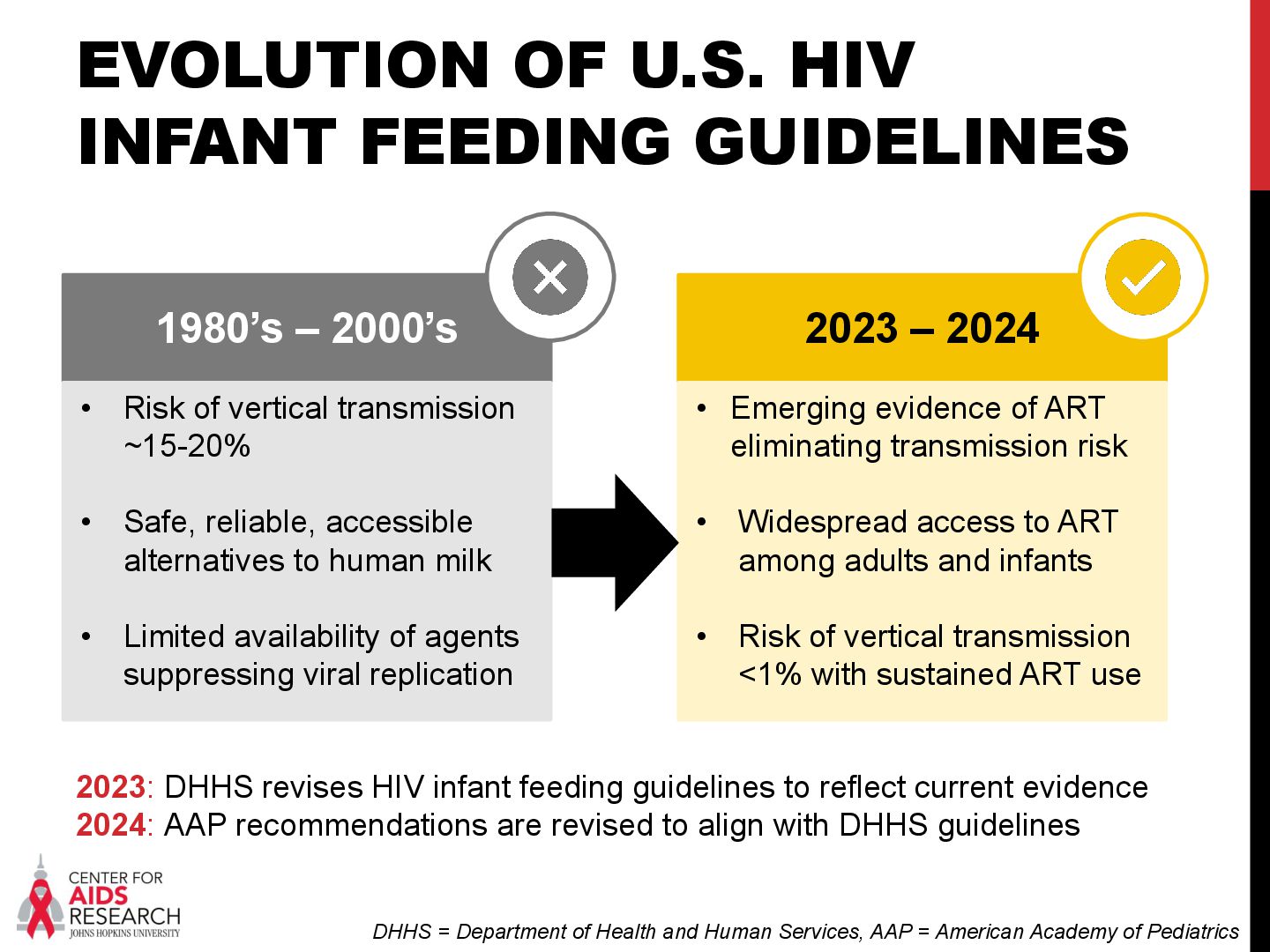
2023 – 2024 • Risk of vertical transmission ~15-20% • Safe, reliable, accessible alternatives to human milk • Limited availability of agents suppressing viral replication • Emerging evidence of ART eliminating transmission risk • Widespread access to ART among adults and infants • Risk of vertical transmission <1% with sustained ART use 2023: DHHS revises HIV infant feeding guidelines to reflect current evidence 2024: AAP recommendations are revised to align with DHHS guidelines DHHS = Department of Health and Human Services, AAP = American Academy of Pediatrics
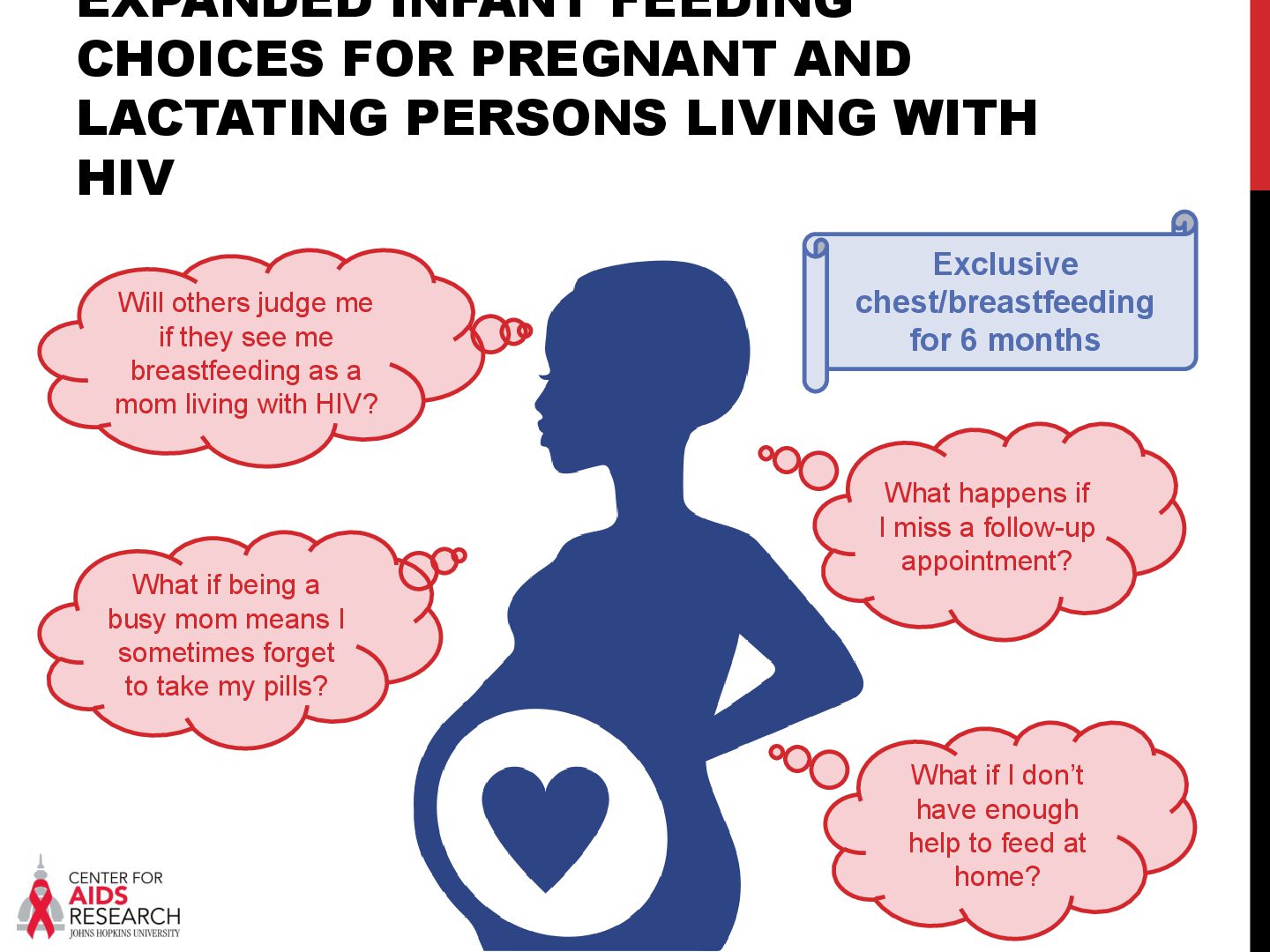
WITH HIV Exclusive chest/breastfeeding for 6 months What if being a busy mom means I sometimes forget to take my pills? What happens if I miss a follow-up appointment? Will others judge me if they see me breastfeeding as a mom living with HIV? What if I don’t have enough help to feed at home?
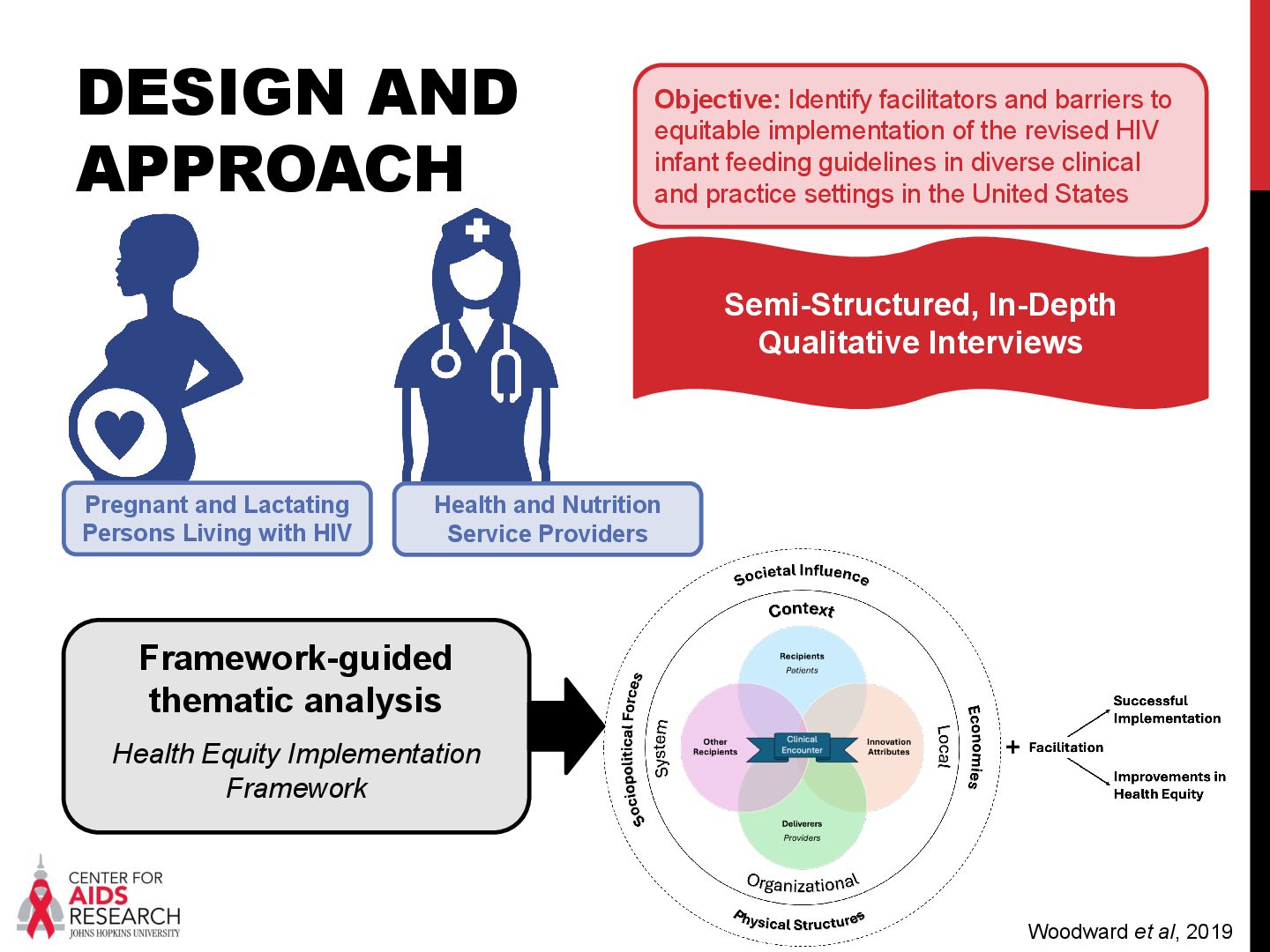
implementation of the revised HIV infant feeding guidelines in diverse clinical and practice settings in the United States Semi-Structured, In-Depth Qualitative Interviews Framework-guided thematic analysis Health Equity Implementation Framework Woodward et al, 2019 Pregnant and Lactating Persons Living with HIV Health and Nutrition Service Providers
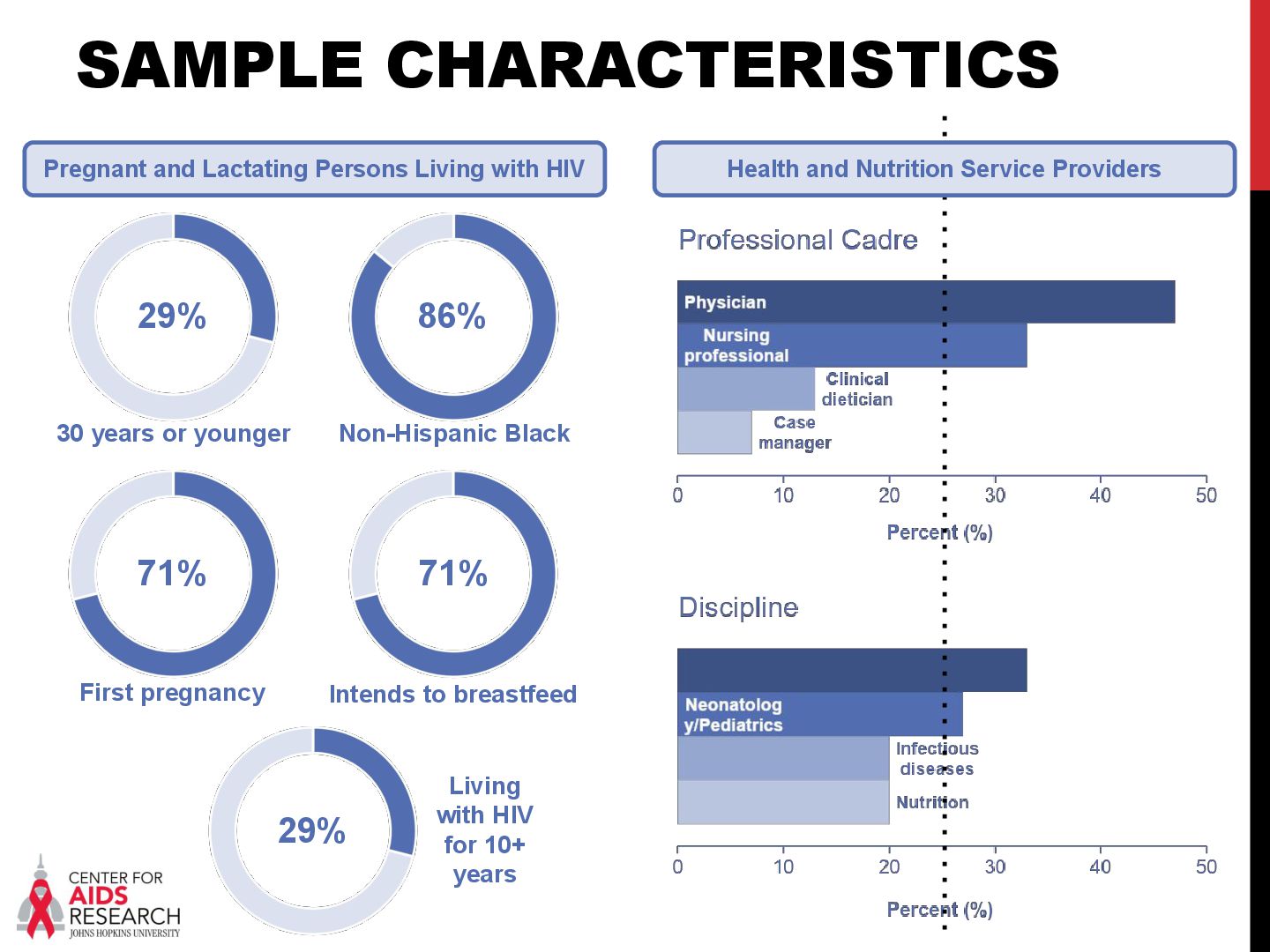
with HIV SAMPLE CHARACTERISTICS 29% 86% 71% 71% 29% 30 years or younger Non-Hispanic Black First pregnancy Intends to breastfeed Living with HIV for 10+ years
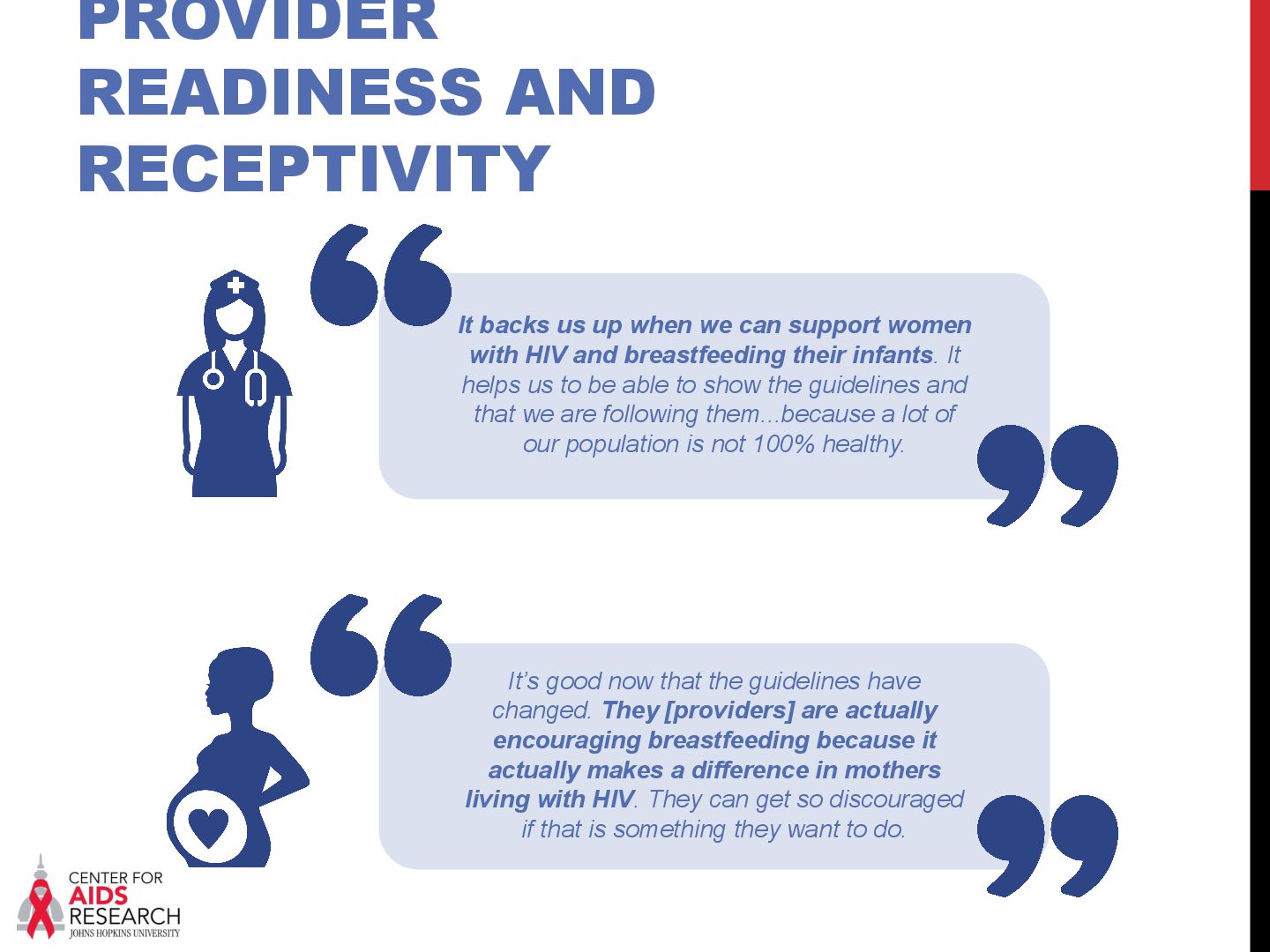
can support women with HIV and breastfeeding their infants. It helps us to be able to show the guidelines and that we are following them...because a lot of our population is not 100% healthy. It’s good now that the guidelines have changed. They [providers] are actually encouraging breastfeeding because it actually makes a difference in mothers living with HIV. They can get so discouraged if that is something they want to do.
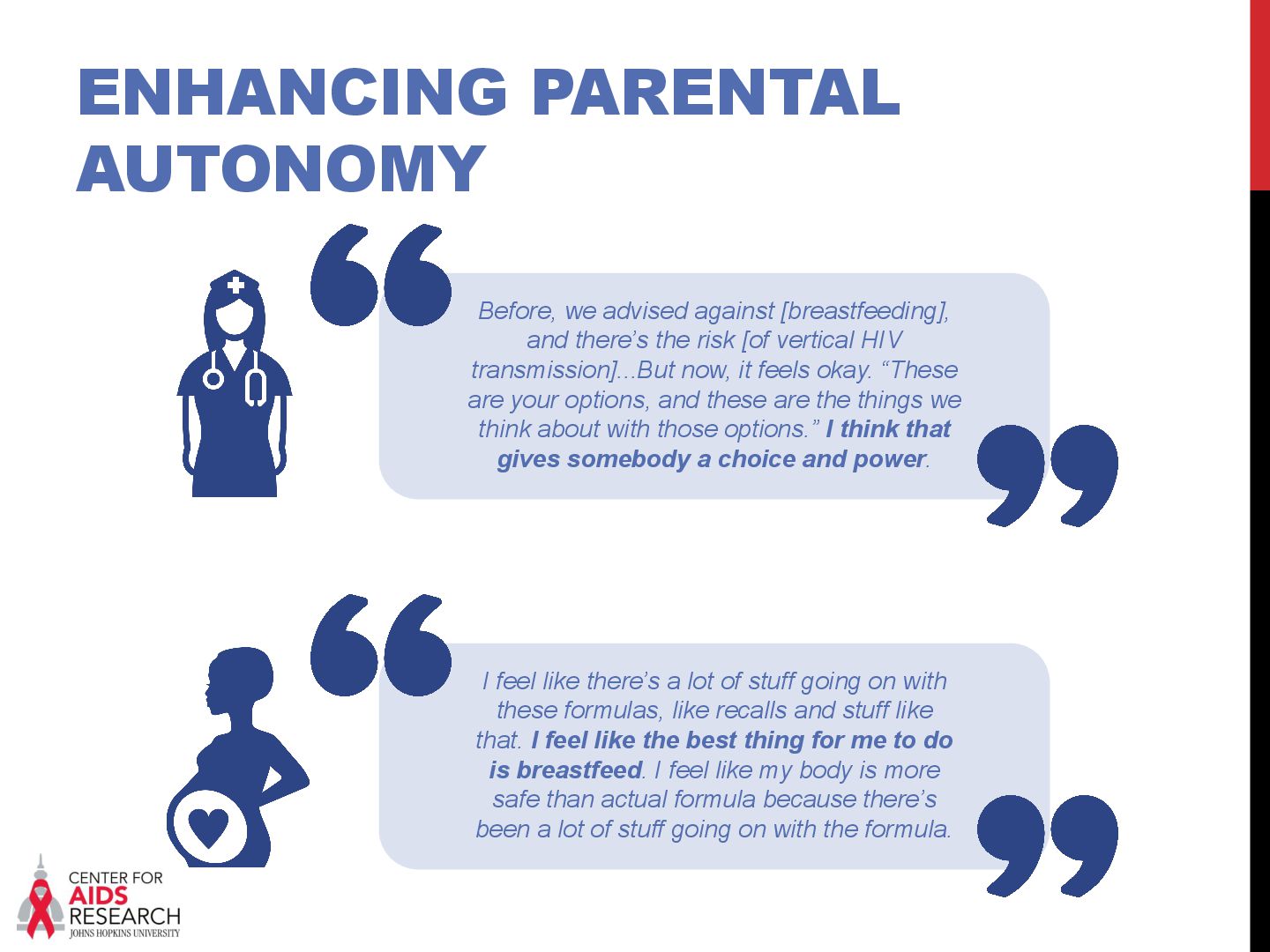
the risk [of vertical HIV transmission]...But now, it feels okay. “These are your options, and these are the things we think about with those options.” I think that gives somebody a choice and power. I feel like there’s a lot of stuff going on with these formulas, like recalls and stuff like that. I feel like the best thing for me to do is breastfeed. I feel like my body is more safe than actual formula because there’s been a lot of stuff going on with the formula.
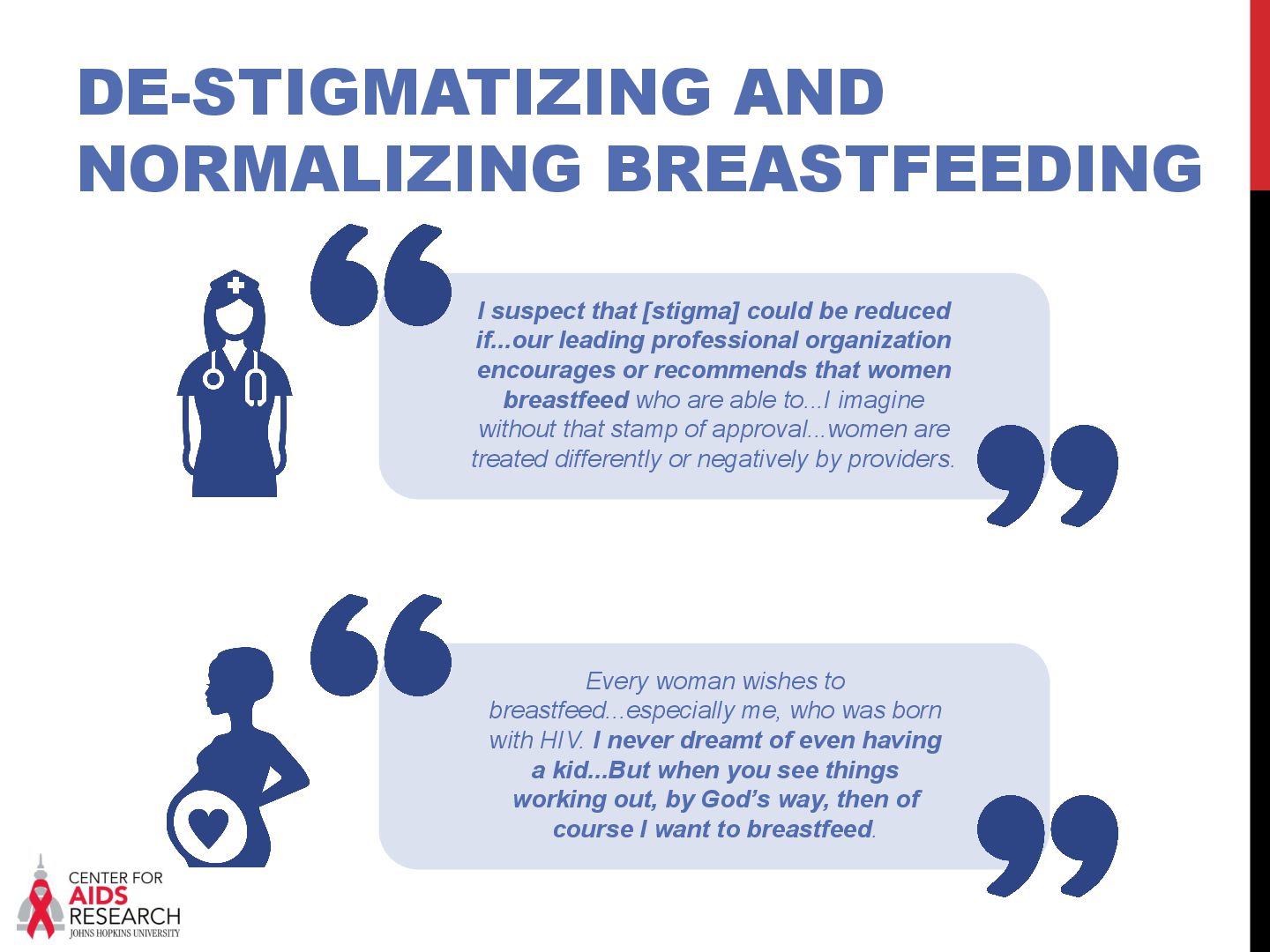
reduced if...our leading professional organization encourages or recommends that women breastfeed who are able to...I imagine without that stamp of approval...women are treated differently or negatively by providers. Every woman wishes to breastfeed...especially me, who was born with HIV. I never dreamt of even having a kid...But when you see things working out, by God’s way, then of course I want to breastfeed.
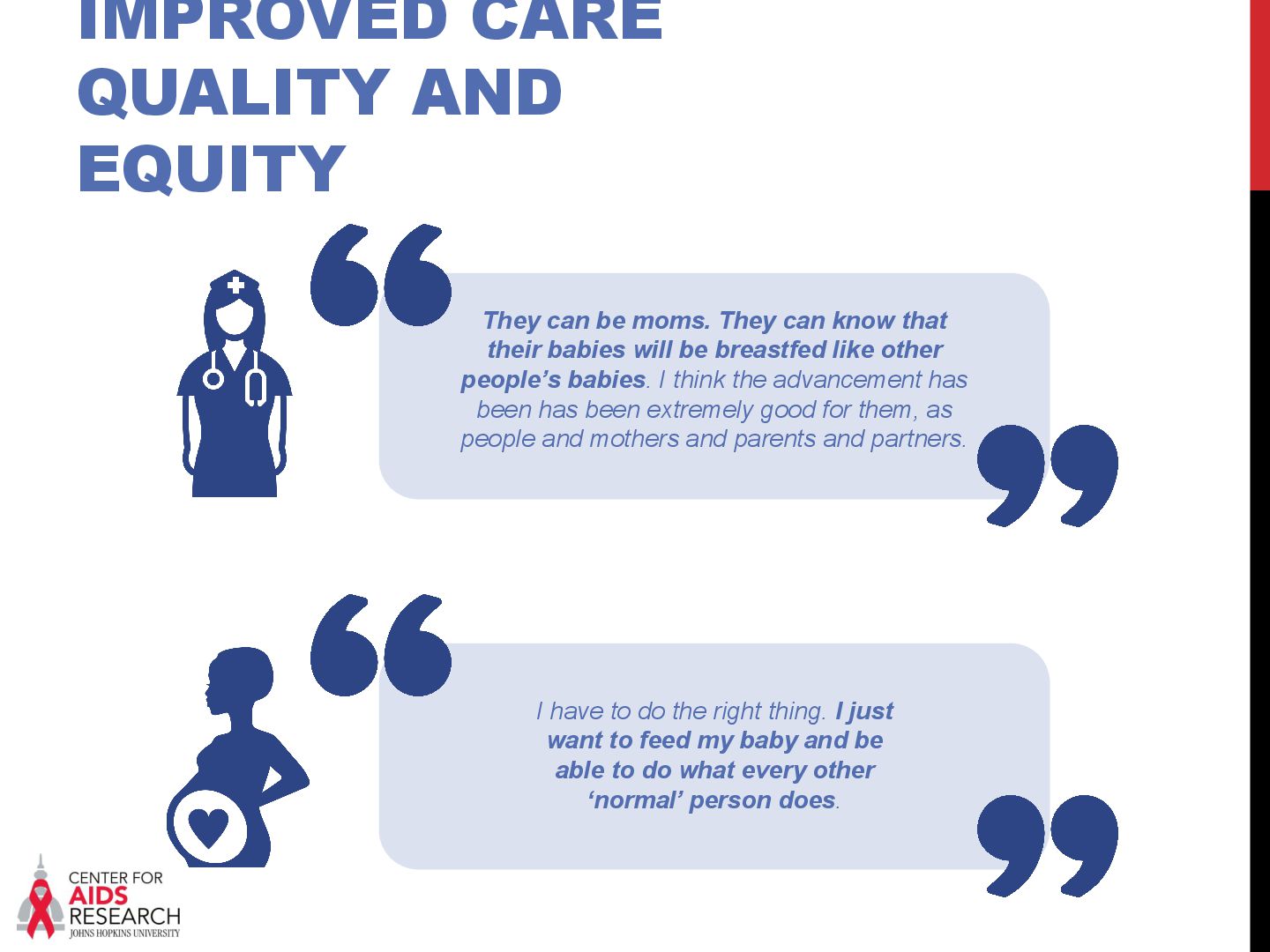
can know that their babies will be breastfed like other people’s babies. I think the advancement has been has been extremely good for them, as people and mothers and parents and partners. I have to do the right thing. I just want to feed my baby and be able to do what every other ‘normal’ person does.
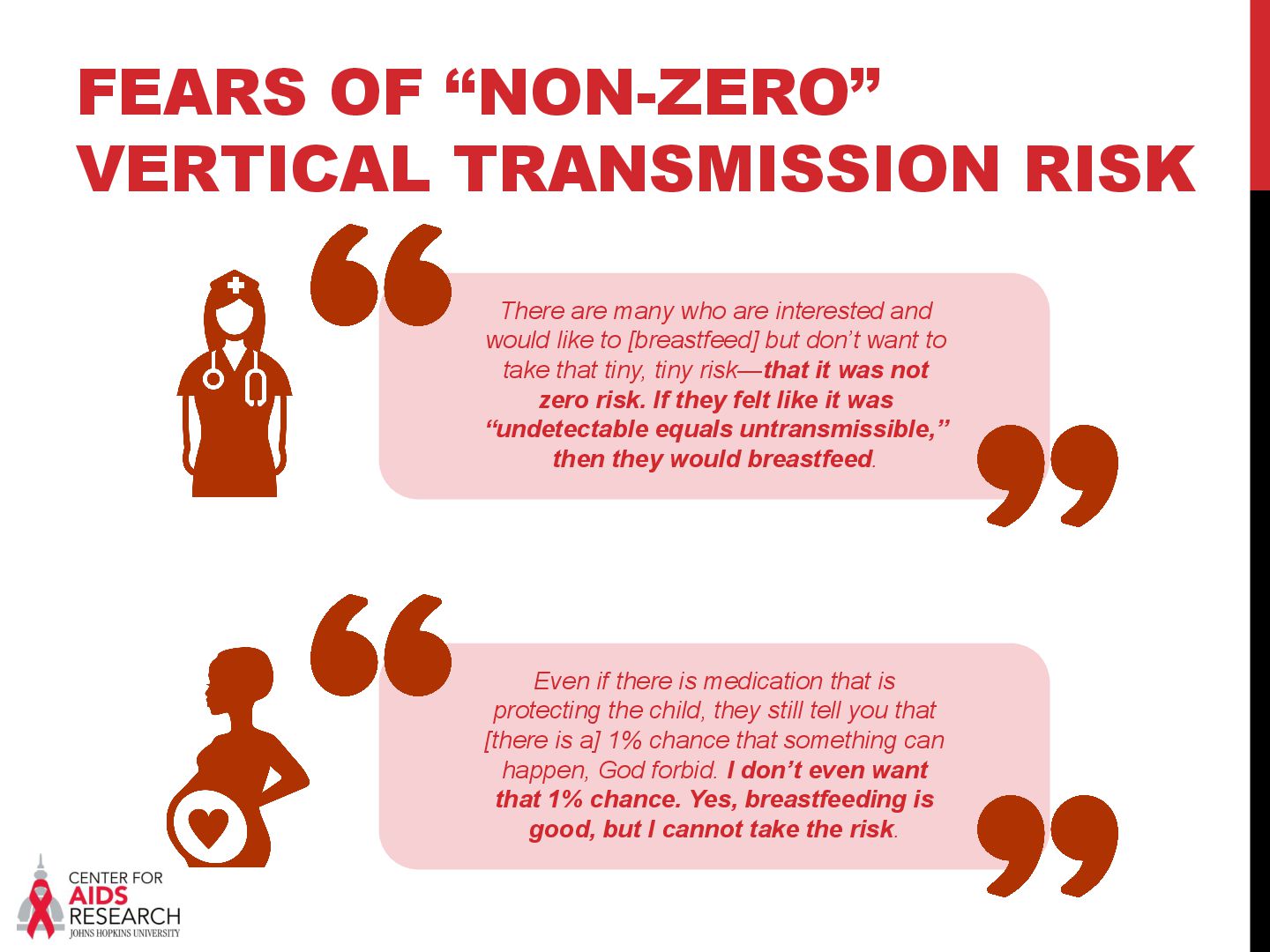
are interested and would like to [breastfeed] but don’t want to take that tiny, tiny risk—that it was not zero risk. If they felt like it was “undetectable equals untransmissible,” then they would breastfeed. Even if there is medication that is protecting the child, they still tell you that [there is a] 1% chance that something can happen, God forbid. I don’t even want that 1% chance. Yes, breastfeeding is good, but I cannot take the risk.
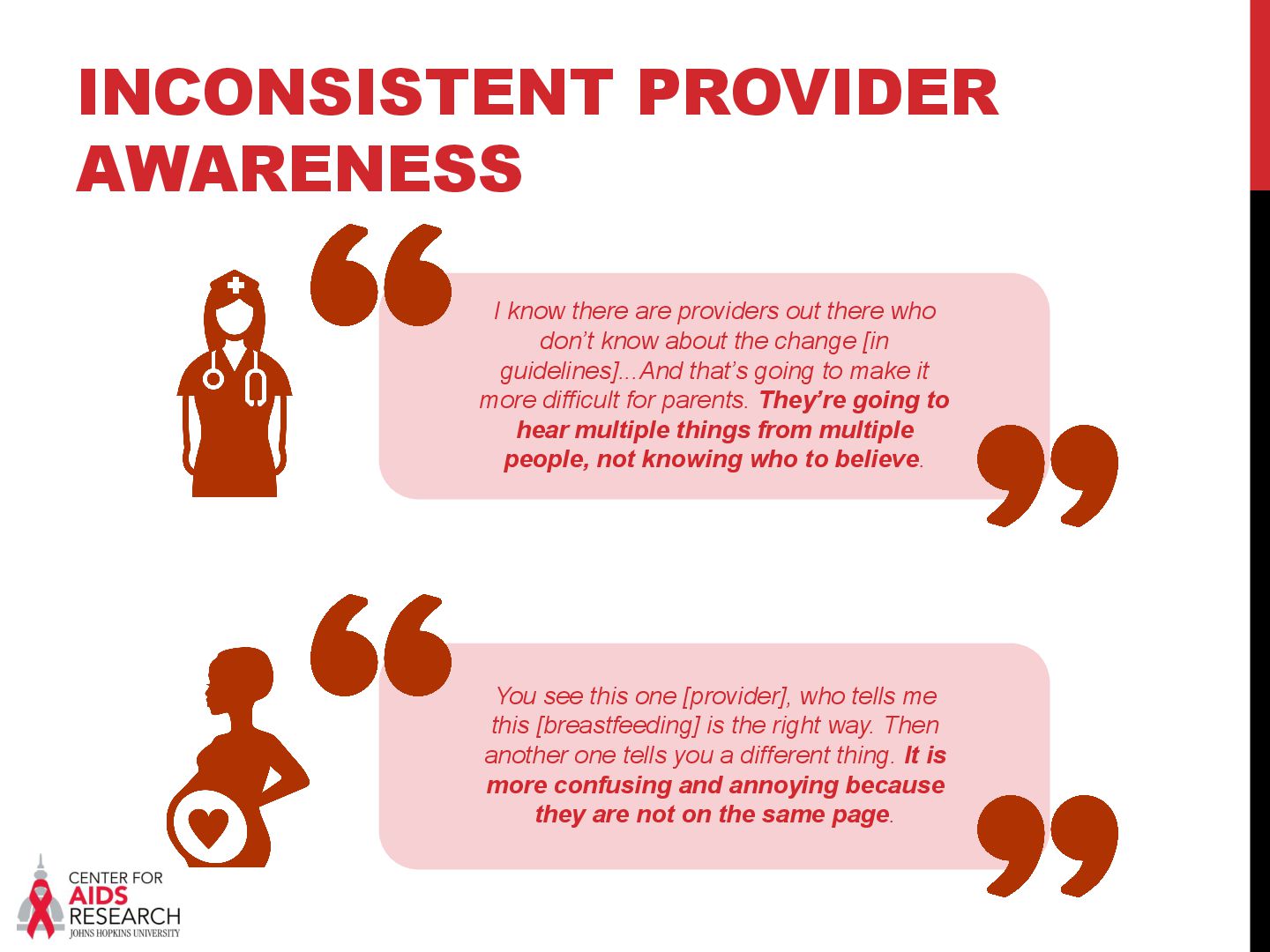
who don’t know about the change [in guidelines]...And that’s going to make it more difficult for parents. They’re going to hear multiple things from multiple people, not knowing who to believe. You see this one [provider], who tells me this [breastfeeding] is the right way. Then another one tells you a different thing. It is more confusing and annoying because they are not on the same page.
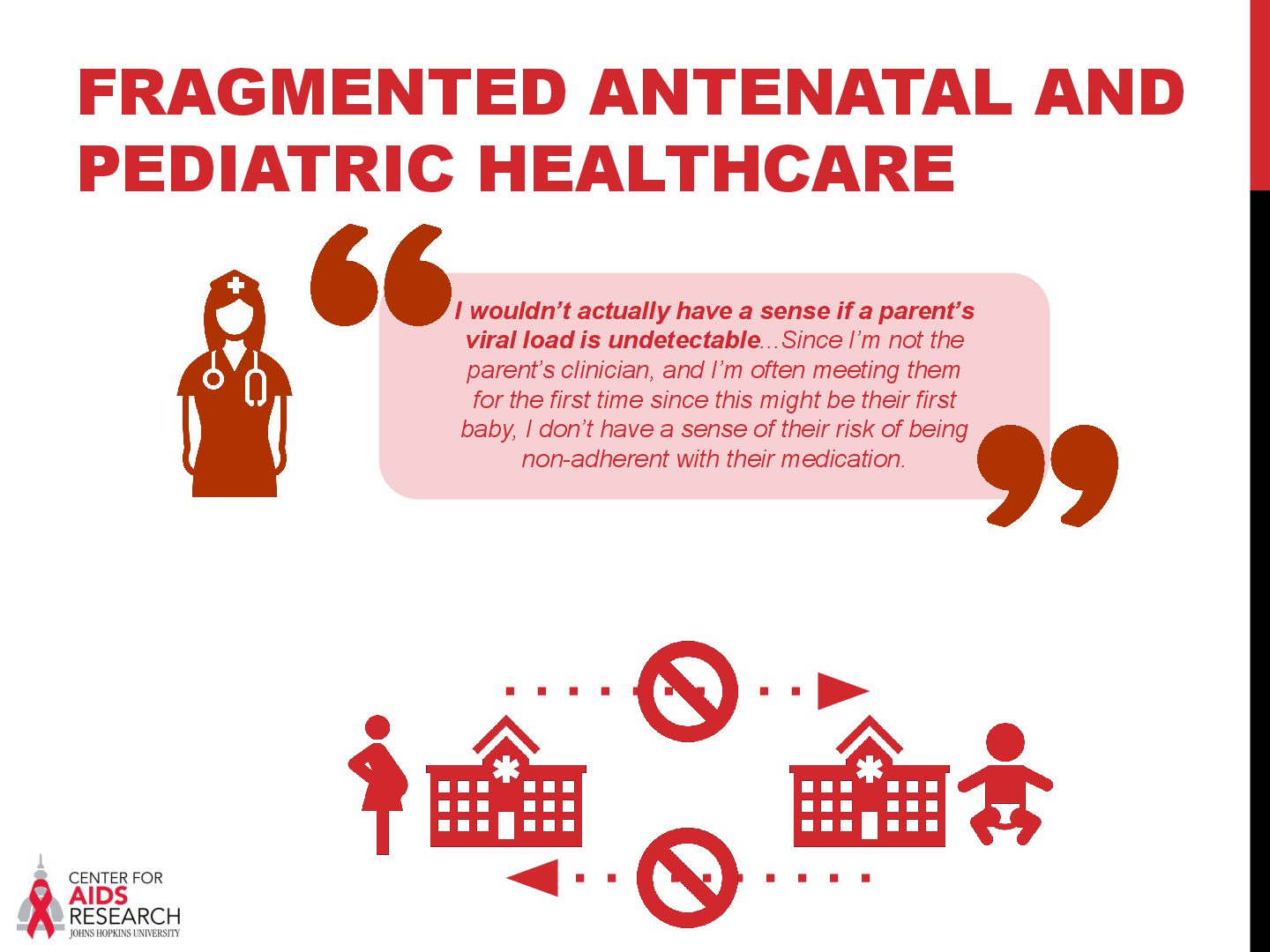
sense if a parent’s viral load is undetectable...Since I’m not the parent’s clinician, and I’m often meeting them for the first time since this might be their first baby, I don’t have a sense of their risk of being non-adherent with their medication.
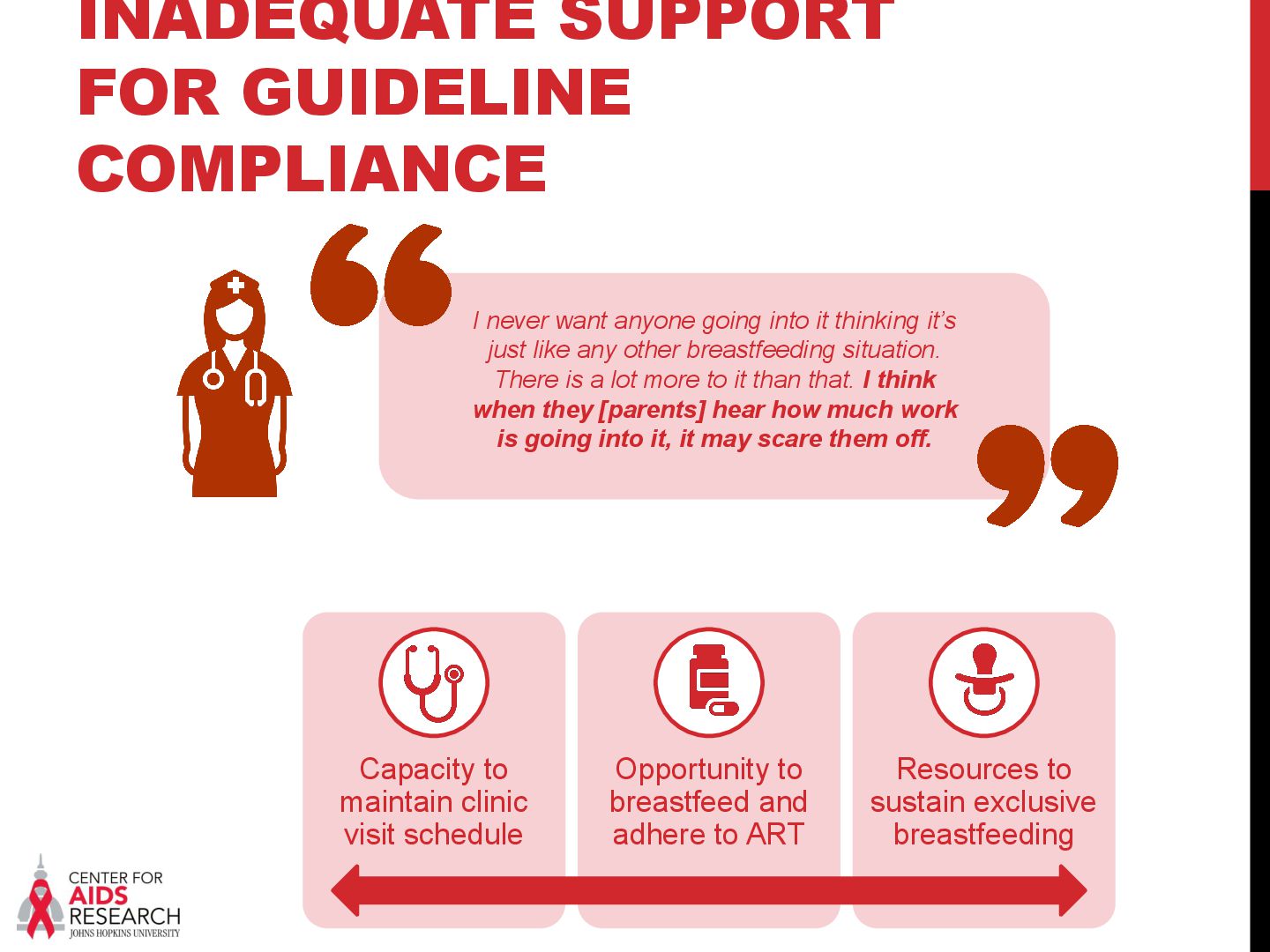
into it thinking it’s just like any other breastfeeding situation. There is a lot more to it than that. I think when they [parents] hear how much work is going into it, it may scare them off. Capacity to maintain clinic visit schedule Opportunity to breastfeed and adhere to ART Resources to sustain exclusive breastfeeding
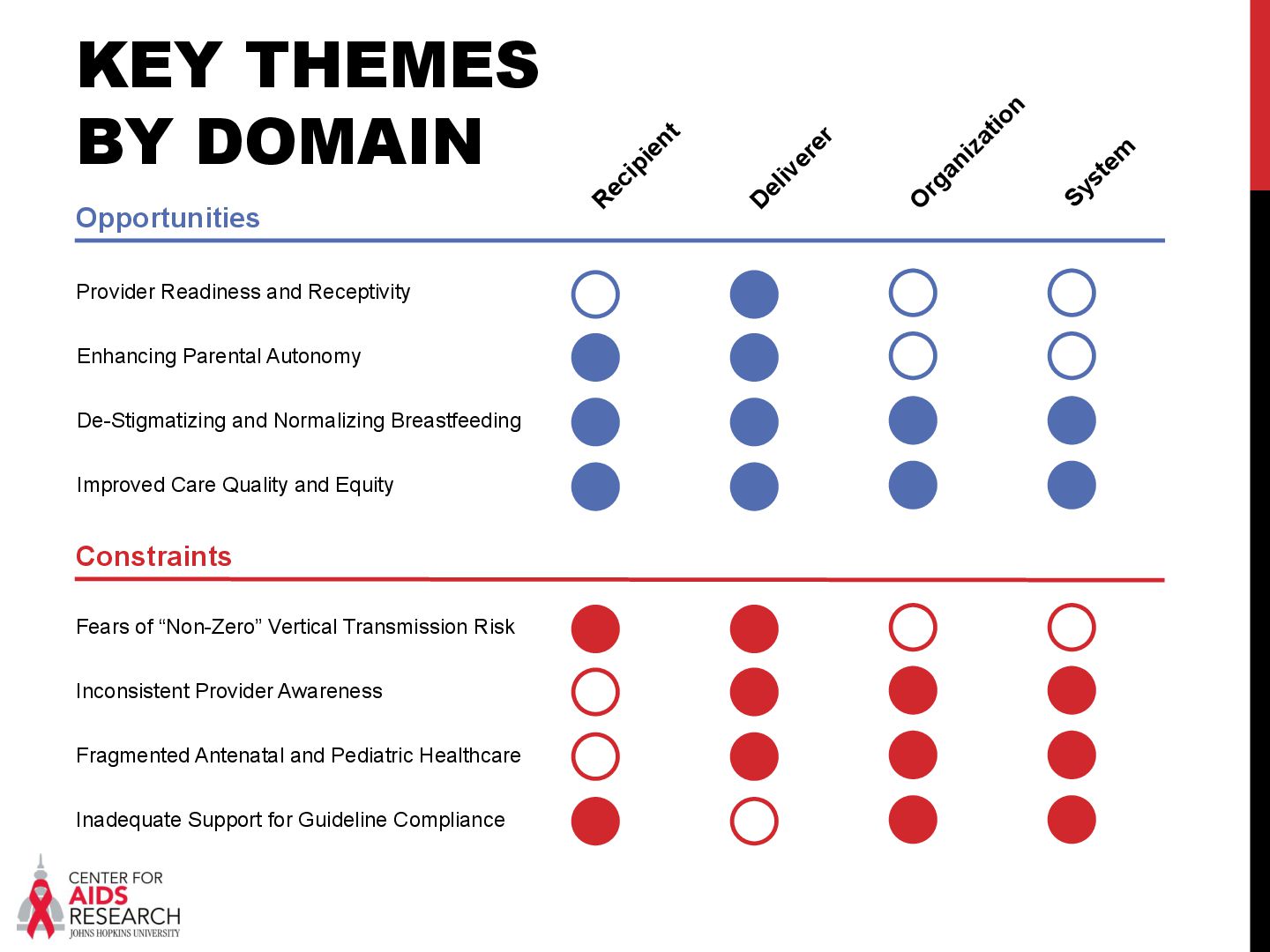
Readiness and Receptivity Enhancing Parental Autonomy De-Stigmatizing and Normalizing Breastfeeding Improved Care Quality and Equity Fears of “Non-Zero” Vertical Transmission Risk Inconsistent Provider Awareness Fragmented Antenatal and Pediatric Healthcare Inadequate Support for Guideline Compliance KEY THEMES BY DOMAIN
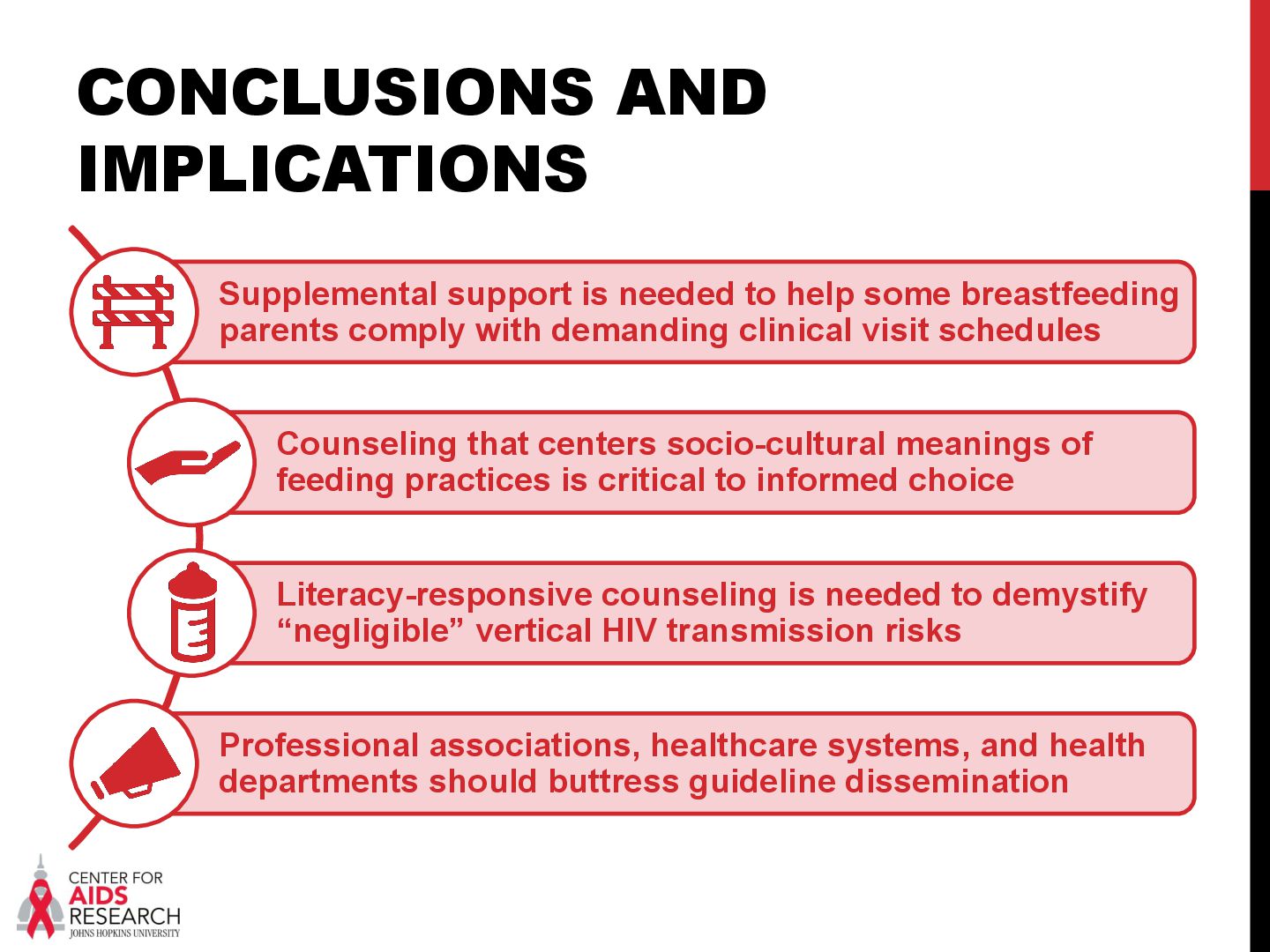
breastfeeding parents comply with demanding clinical visit schedules Counseling that centers socio-cultural meanings of feeding practices is critical to informed choice Literacy-responsive counseling is needed to demystify “negligible” vertical HIV transmission risks Professional associations, healthcare systems, and health departments should buttress guideline dissemination
Audrey J. Buckland, PhD, MSPH • Susan M. Gross, PhD, MPH • Abinethaa Paramasivam, MSPH • Andrea J. Ruff, MD • Helen Schmedtje, MPH, RN • Beatrice Wendling Study Participants Johns Hopkins University School of Medicine • Allison L. Agwu, MD, ScM • Christina Bunch, MPH • Laura R. Clark, PA-C • Mary Glenn Fowler, MD, MPH • W. Christopher Golden, MD • Alison Livingston, RN • Anna M. Powell, MD, MS


 summershiiiii9
 morganepeng
 trishagee
 szymonslowik
 bkeepers
 sferik
 sarafernandez
 cassininazir
 addyosmani
 rasagy
 stuffmc
 katarinadahlin