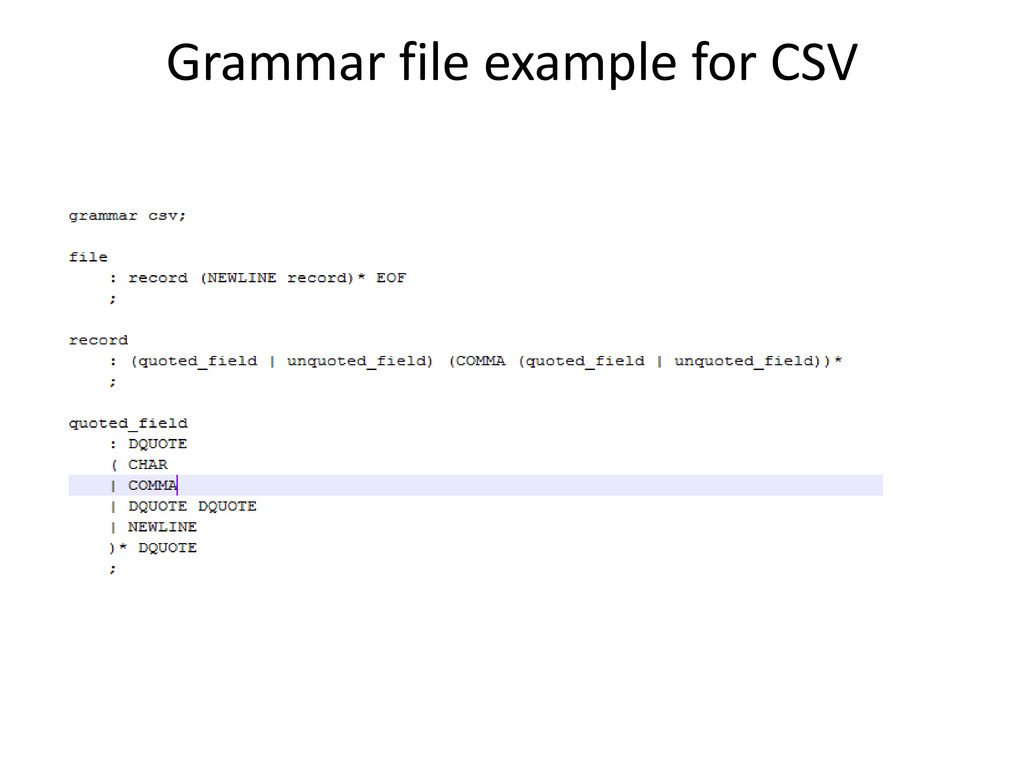
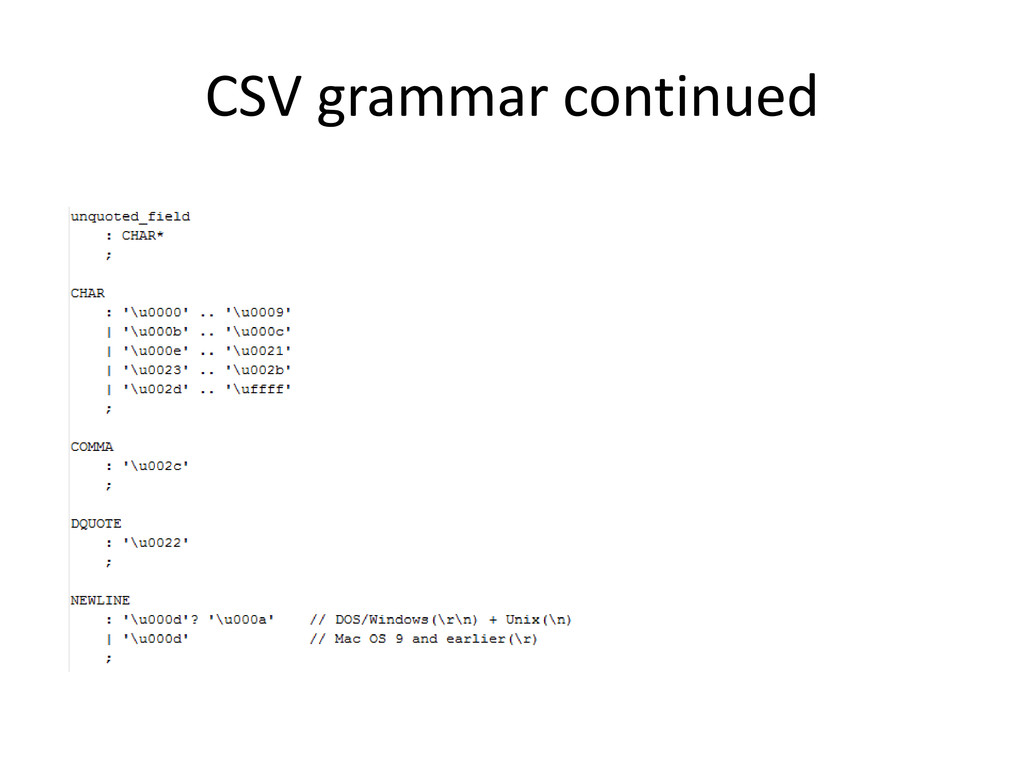
for parsing languages like css , javascript ,Java. • A Custom parser we cannot use ready made parser techniques like bottom up or top down parsers • Context free grammar – you can define a grammar file in BNF
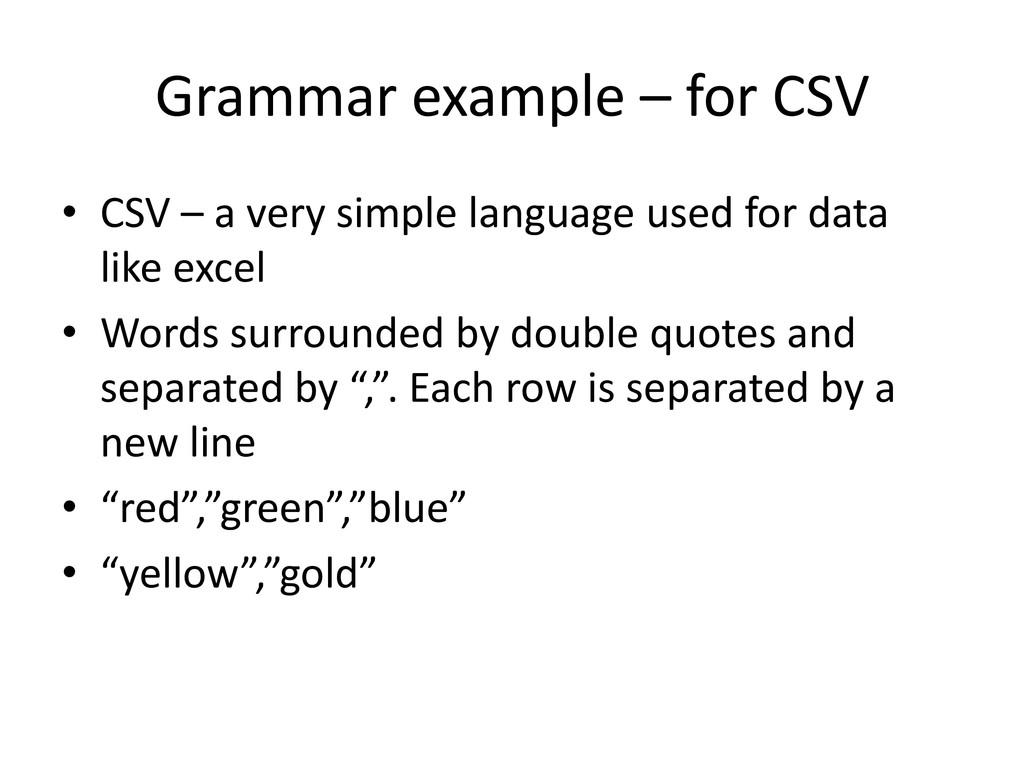
simple language used for data like excel • Words surrounded by double quotes and separated by “,”. Each row is separated by a new line • “red”,”green”,”blue” • “yellow”,”gold”
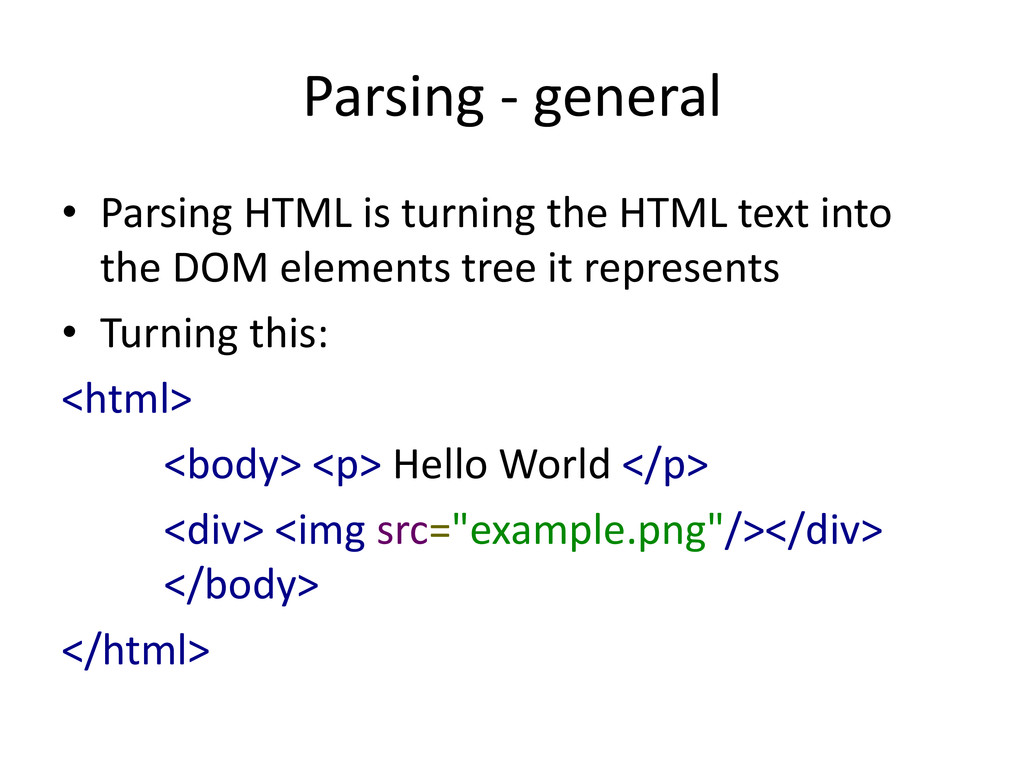
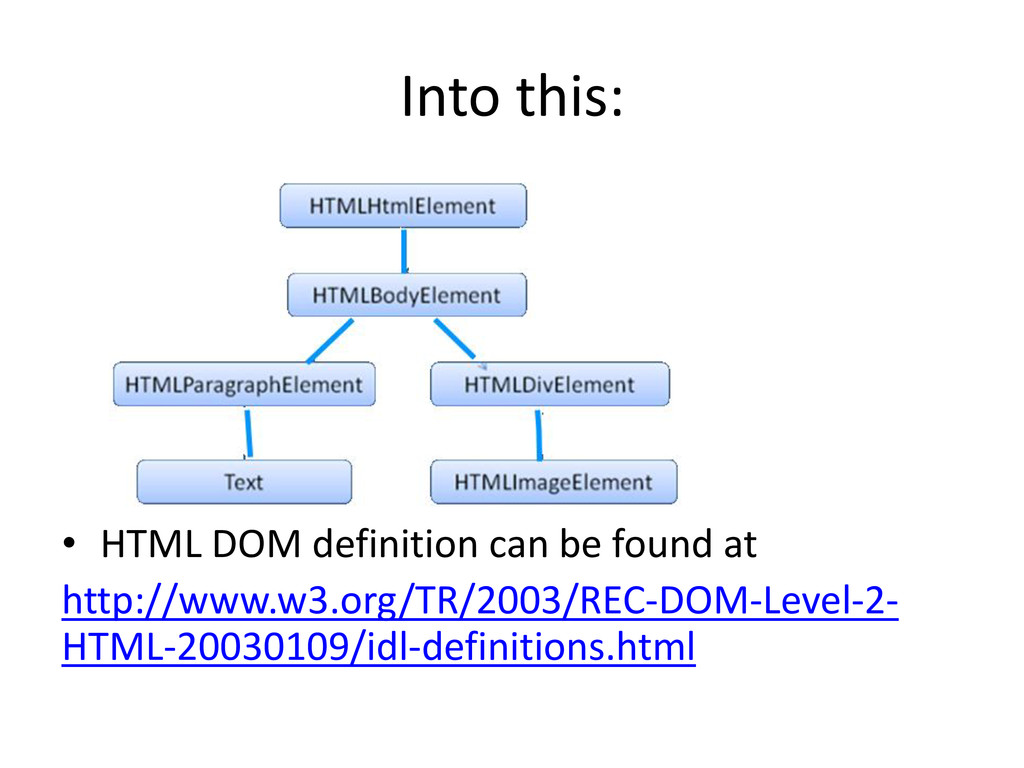
described fully by a grammar file • Flexible syntax - extremely error tolerant • Reentrant – you can use “document.write” – This means that more text is added to the parsed text in the middle of parsing! – This is like adding more source code in the middle of compilation – more demanding of the parser
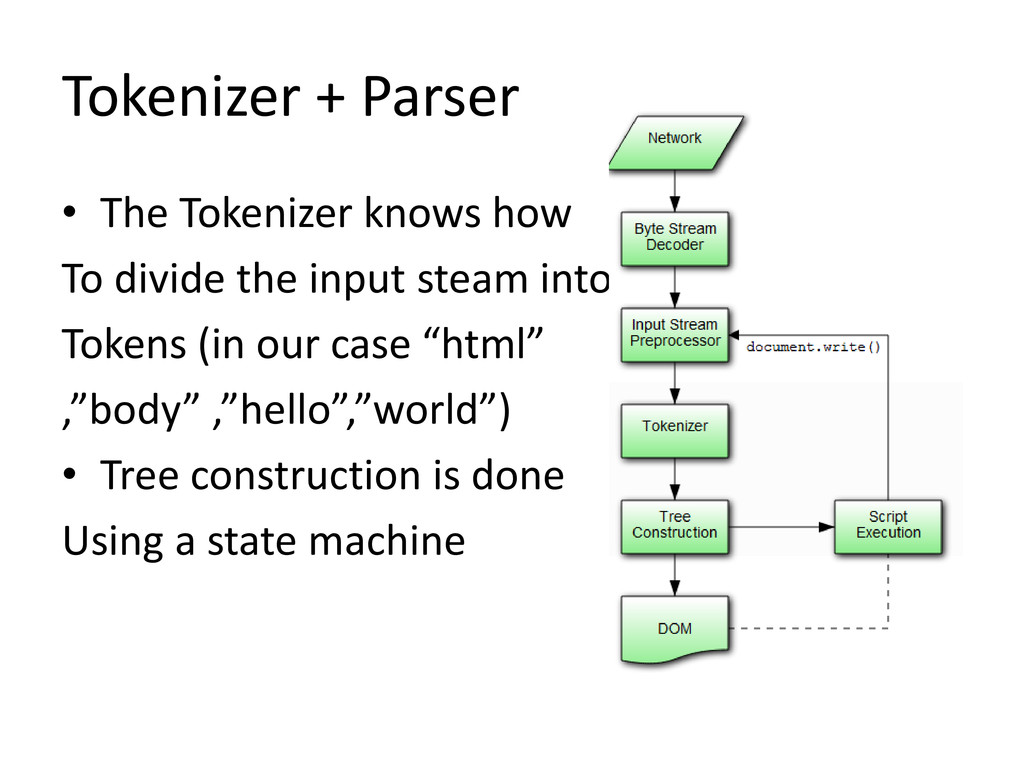
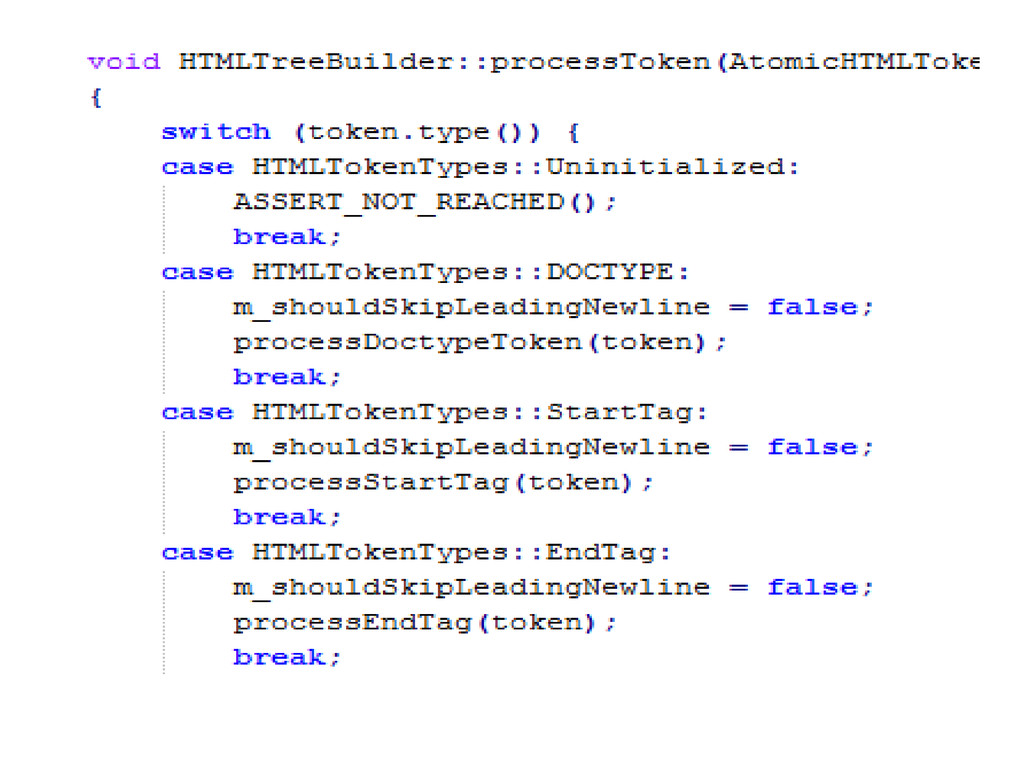
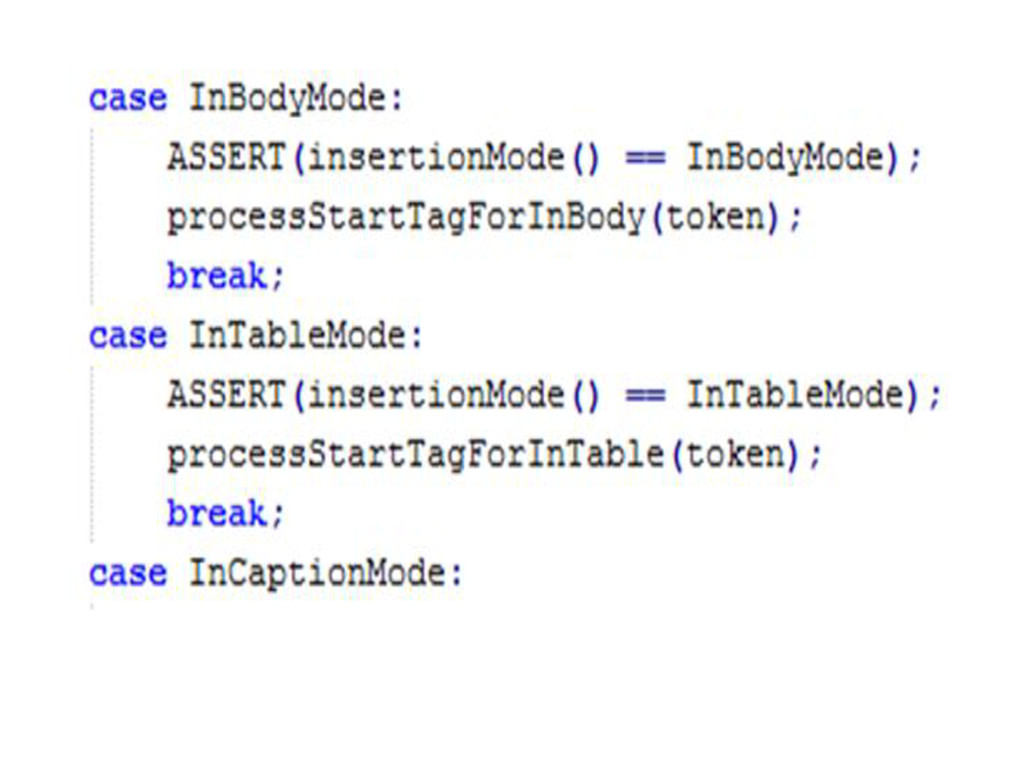
algorithm how the browsers should parse the HTML • HTML5 workgroup does have such specification - http://www.whatwg.org/specs/web- apps/current-work/multipage/parsing.html#the- list-of-active-formatting-elements • Parsing is done in co-working of a tokenizer and the parser while every “document.write” can add more input to the input stream.
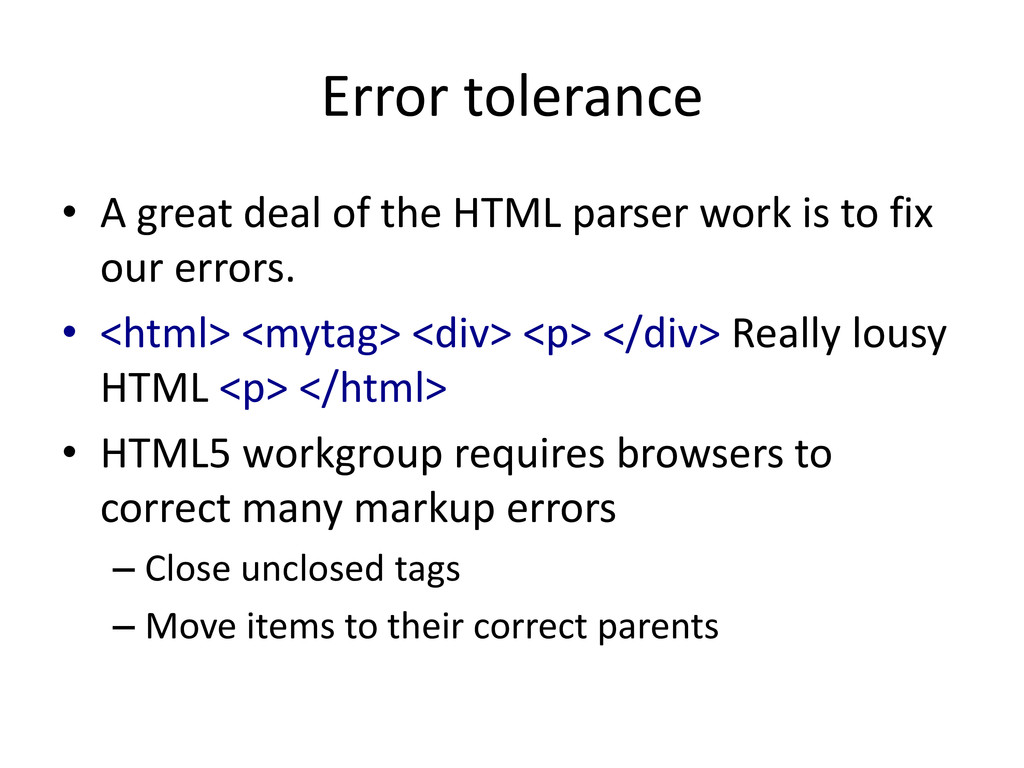
work is to fix our errors. • <html> <mytag> <div> <p> </div> Really lousy HTML <p> </html> • HTML5 workgroup requires browsers to correct many markup errors – Close unclosed tags – Move items to their correct parents
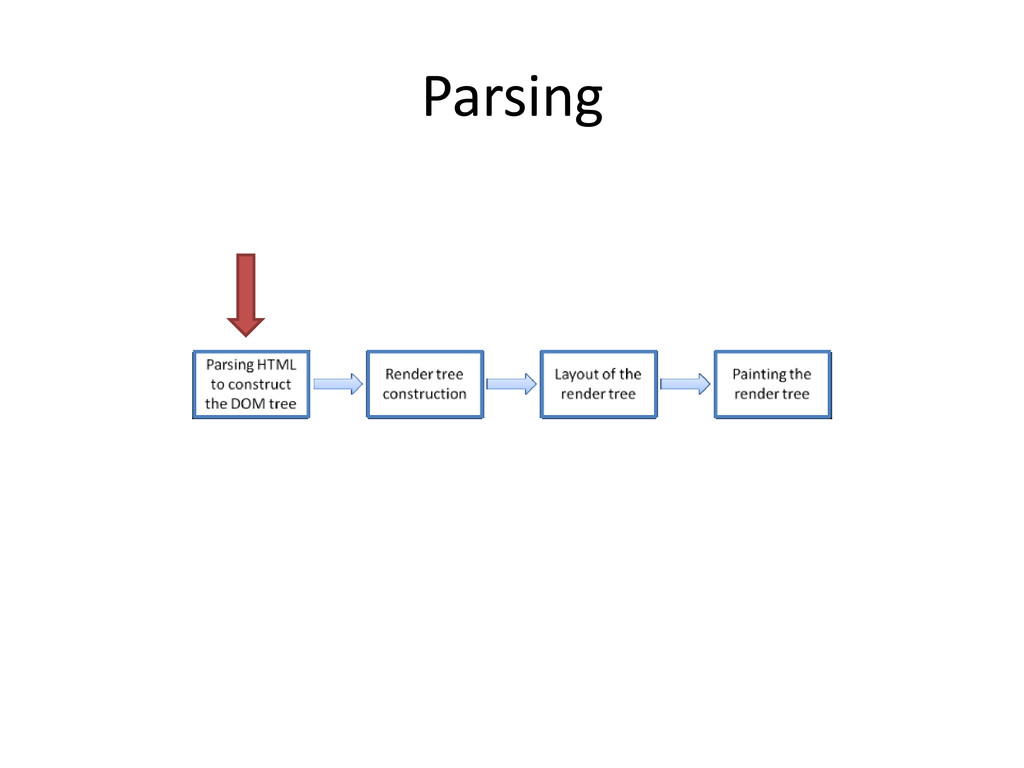
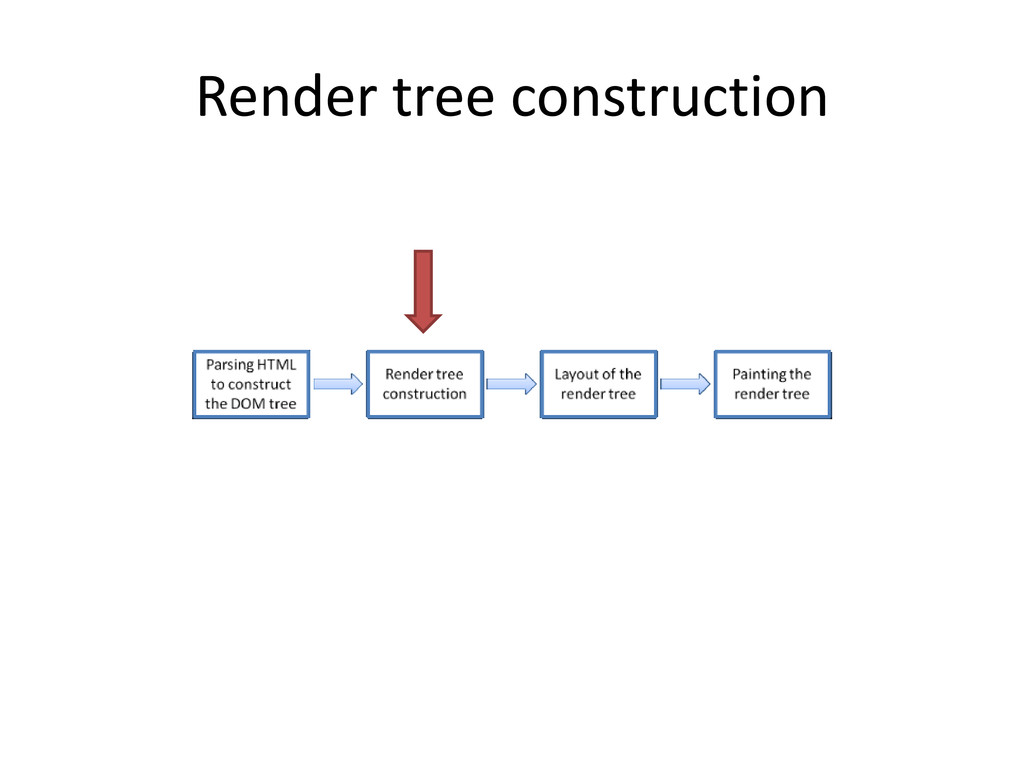
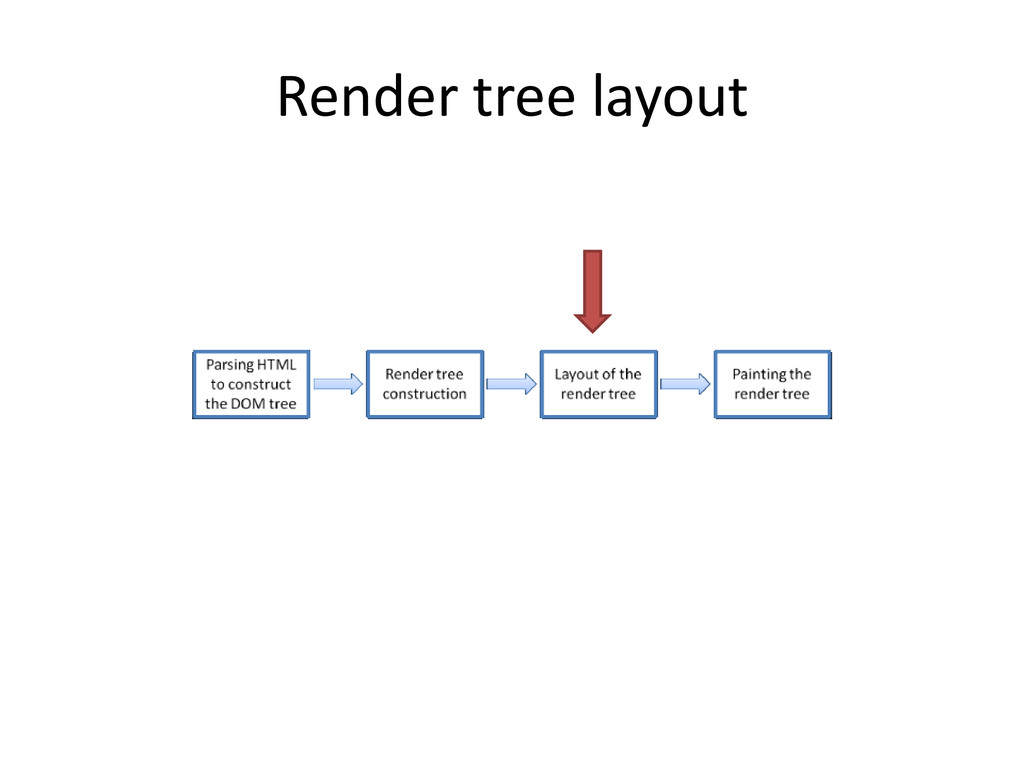
boxes • Root node position is 0,0 and its dimensions are the viewport • Recursive – the parent box calls the child nodes to calculate their height • It than adds the accumulative heights + margin + paddings to het its own height
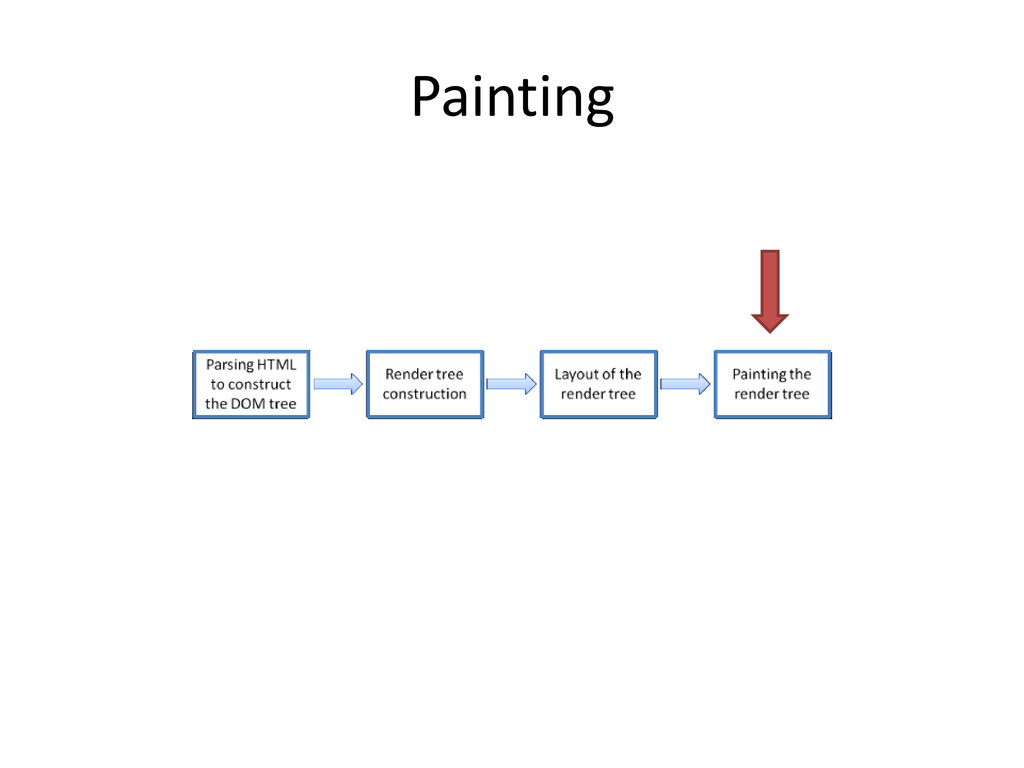
to paint itself • Using the UI infrastructure component • Some boxes can have the same position with different z-index , they are held in a stack and painted bottom – up • CSS defines painting order , background color, background image , border and than child nodes
• Window resize , scripts that adds , hides or resizes a node will trigger a re-layout • Non geometric changes will trigger only a repaint • Browsers try to minimize the changes –dirty bits system • They batch the changes
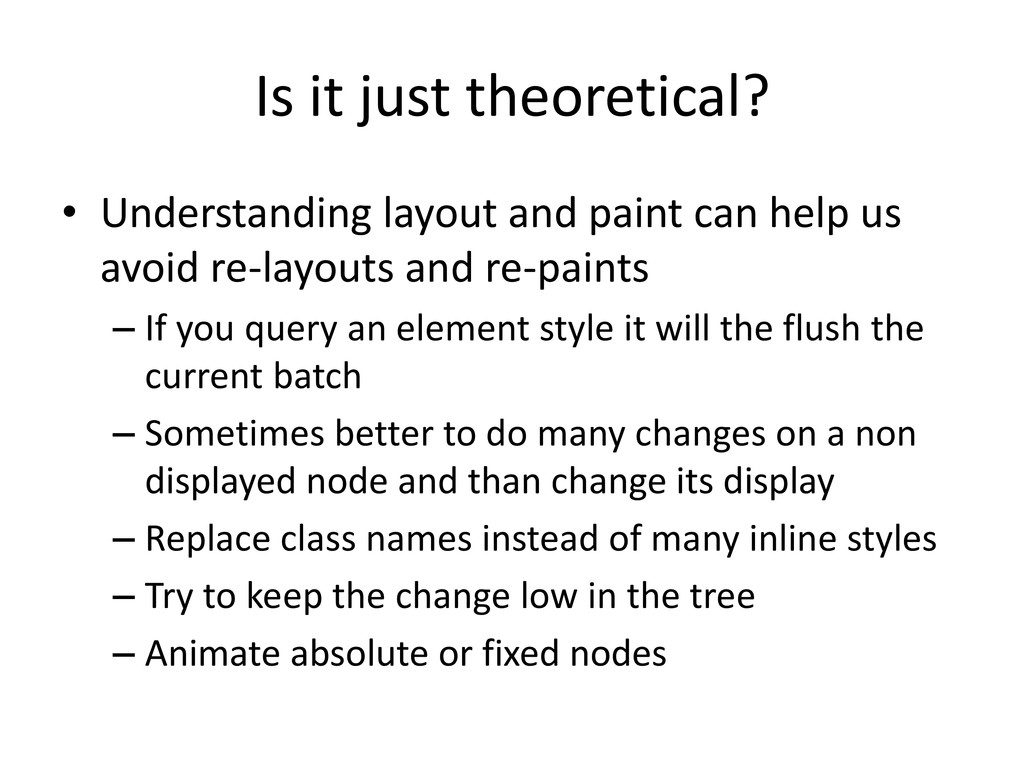
help us avoid re-layouts and re-paints – If you query an element style it will the flush the current batch – Sometimes better to do many changes on a non displayed node and than change its display – Replace class names instead of many inline styles – Try to keep the change low in the tree – Animate absolute or fixed nodes
Instructions - http://www.chromium.org/developers/how- tos/build-instructions-windows • Do everything they say… • Make sure your machine is strong enough • It still will take hours
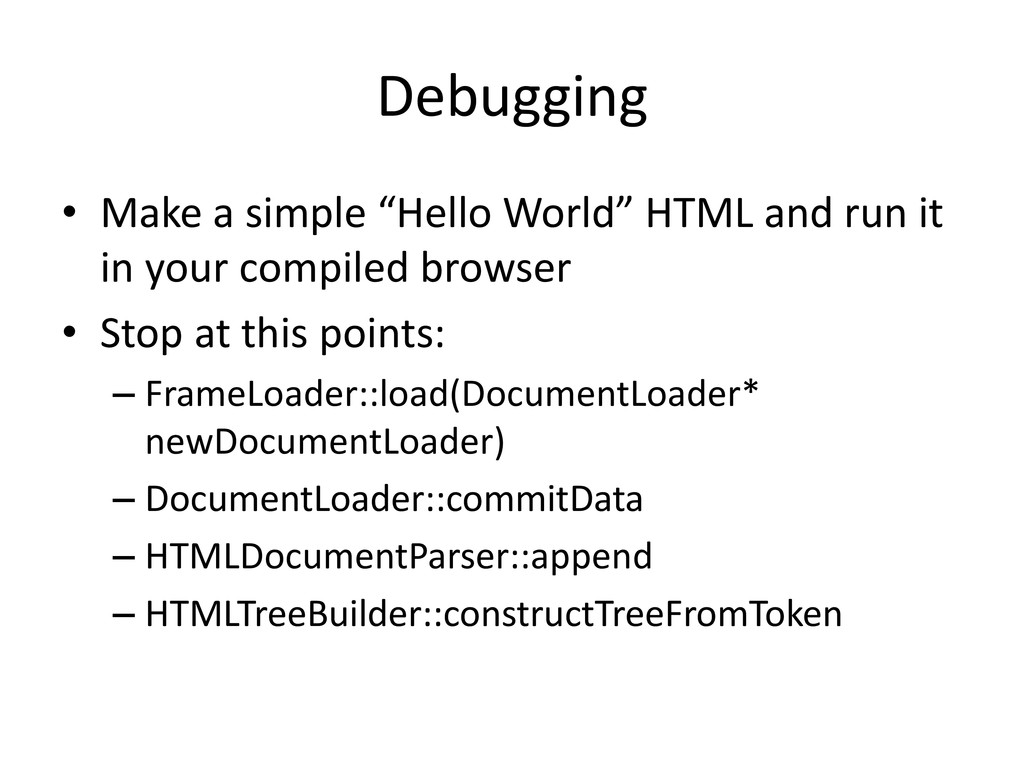
it in your compiled browser • Stop at this points: – FrameLoader::load(DocumentLoader* newDocumentLoader) – DocumentLoader::commitData – HTMLDocumentParser::append – HTMLTreeBuilder::constructTreeFromToken


 ichirokano2
 kmars0605
 akihisaikeda
 optim
optim
 econanringo
 yukiny
 seike460
 guaca
guaca
 kaityo256
.jpg) yumnumm
yumnumm
 ryu1013
 iwatsukayura
 mayunak
 aemeredith
 schlessera
 katiecoart
 soysaucechin
 aleyda
 sonatard
 aarron
 rocio
rocio
 garrettdimon
 reverentgeek
 tmiket