Upgrade to Pro — share decks privately, control downloads, hide ads and more …

Handling High-Load Async Systems on AWS

Avatar for Tamara Furmanova Tamara Furmanova
November 19, 2025
10

Handling High-Load Async Systems on AWS

Handling High-Load Async Systems on AWS, or some methods to deal with tricky failures while building backend apps based on AWS services.

The presentation was prepared for the Vona Tech Community event "Backend Architecture and Design" held on 18.11.2025 - https://www.linkedin.com/company/vona-tech-community

Avatar for Tamara Furmanova

Tamara Furmanova

November 19, 2025
Tweet

Transcript

  1. Hi, I’m Tamara, a software backend developer at Pwrteams with

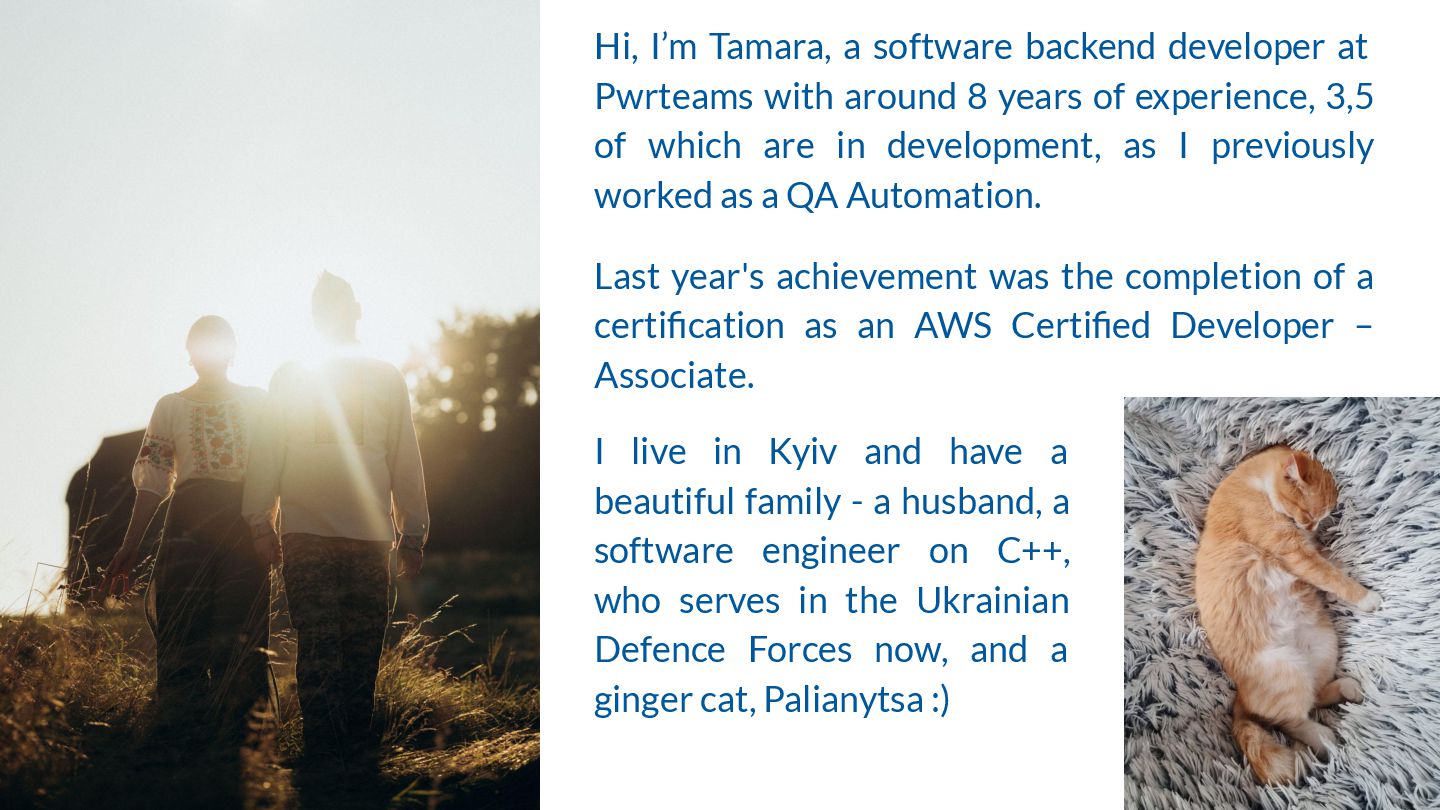
    around 8 years of experience, 3,5 of which are in development, as I previously worked as a QA Automation. Last year's achievement was the completion of a certification as an AWS Certified Developer – Associate. I live in Kyiv and have a beautiful family - a husband, a software engineer on C++, who serves in the Ukrainian Defence Forces now, and a ginger cat, Palianytsa :)
  2. Agenda The approach is to move from general description to

    specific cases from personal experience. ➔ Overview Brief overview and revision of AWS and the most used services. ➔ Business context Cloud and microservices to build high-load systems. ➔ Issues and solutions Provide a simple unifying message for what is to come.
  3. Cloud and microservices in big projects Cloud Computing Services can

    help build big and robust applications based on Serverless architecture.
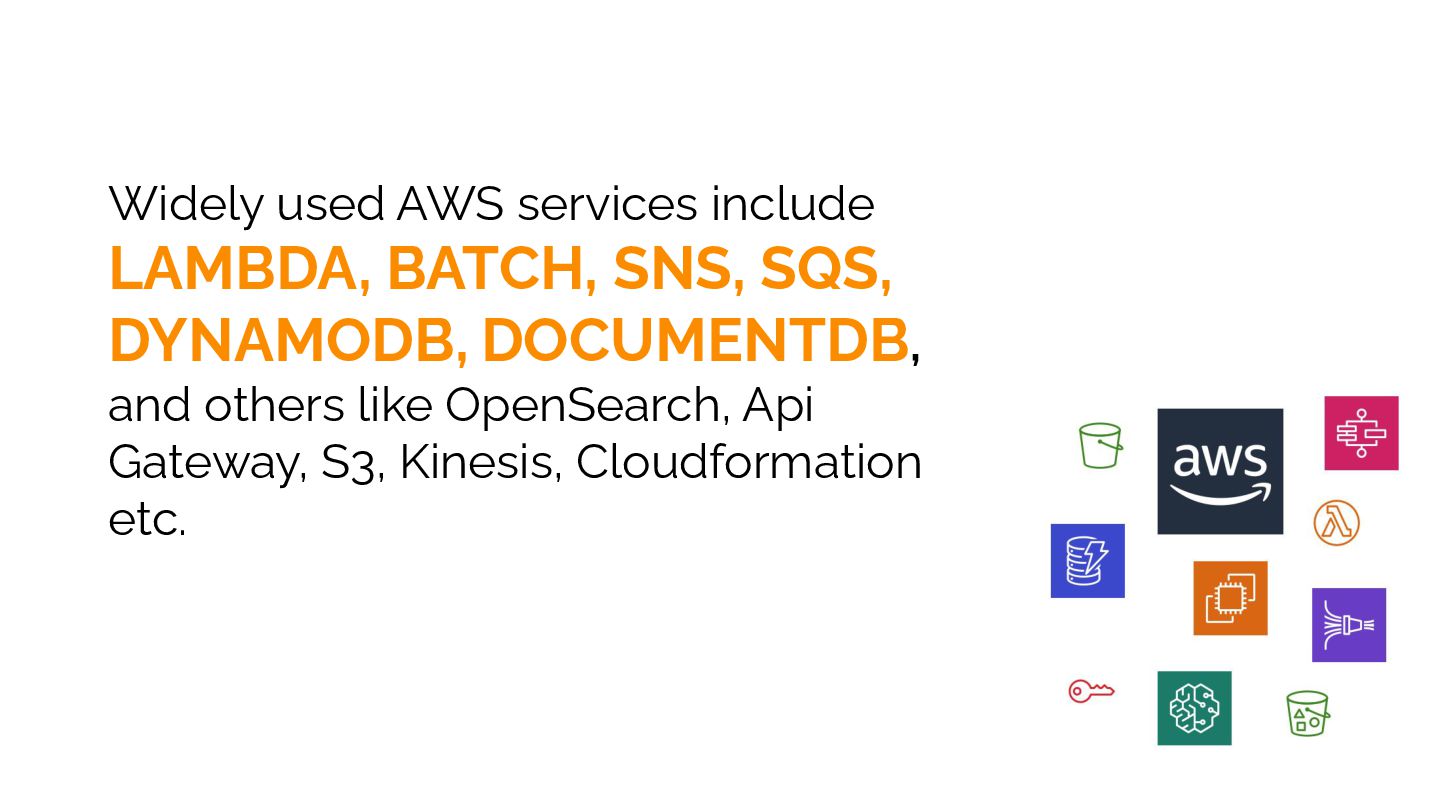
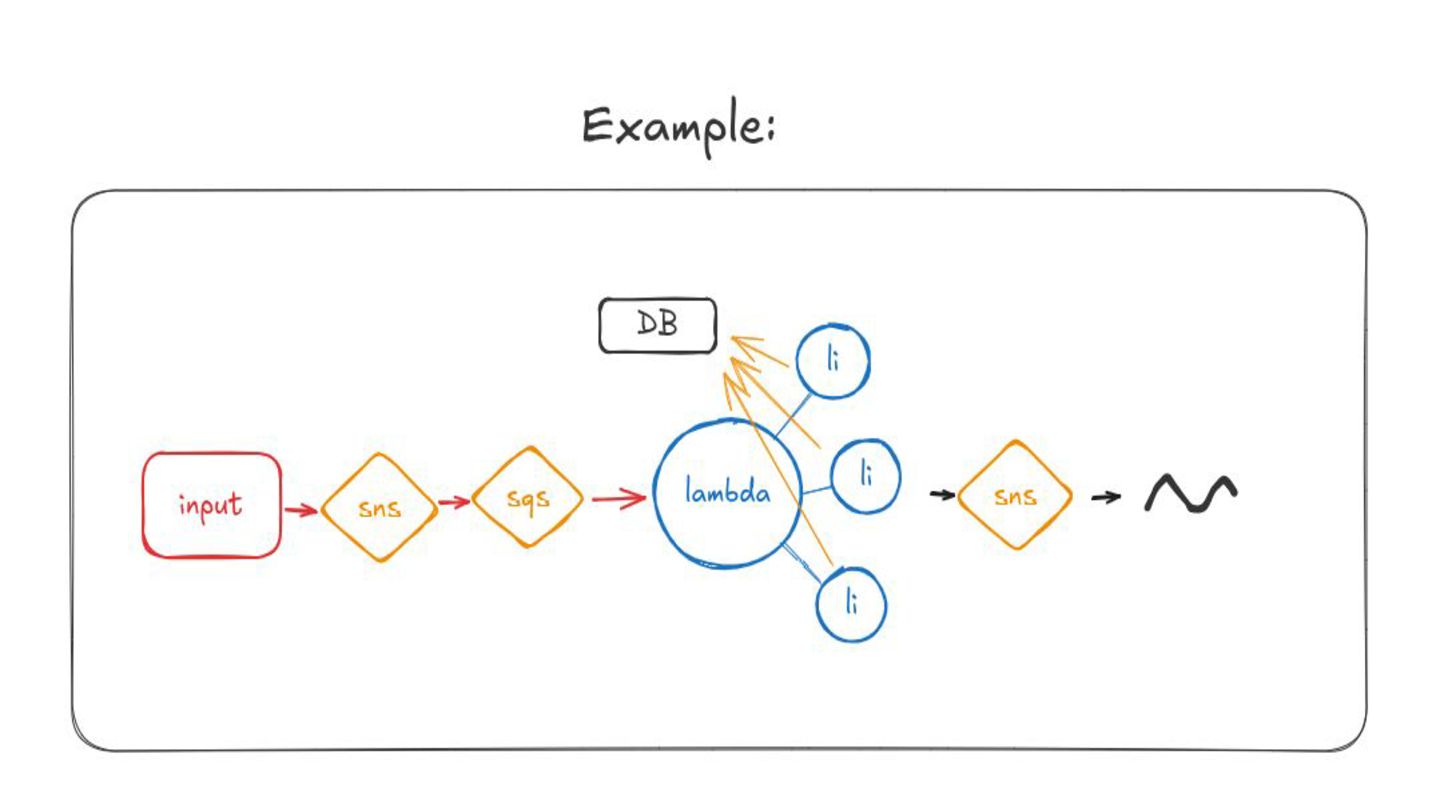
  4. Widely used AWS services include LAMBDA, BATCH, SNS, SQS, DYNAMODB,

    DOCUMENTDB, and others like OpenSearch, Api Gateway, S3, Kinesis, Cloudformation etc.
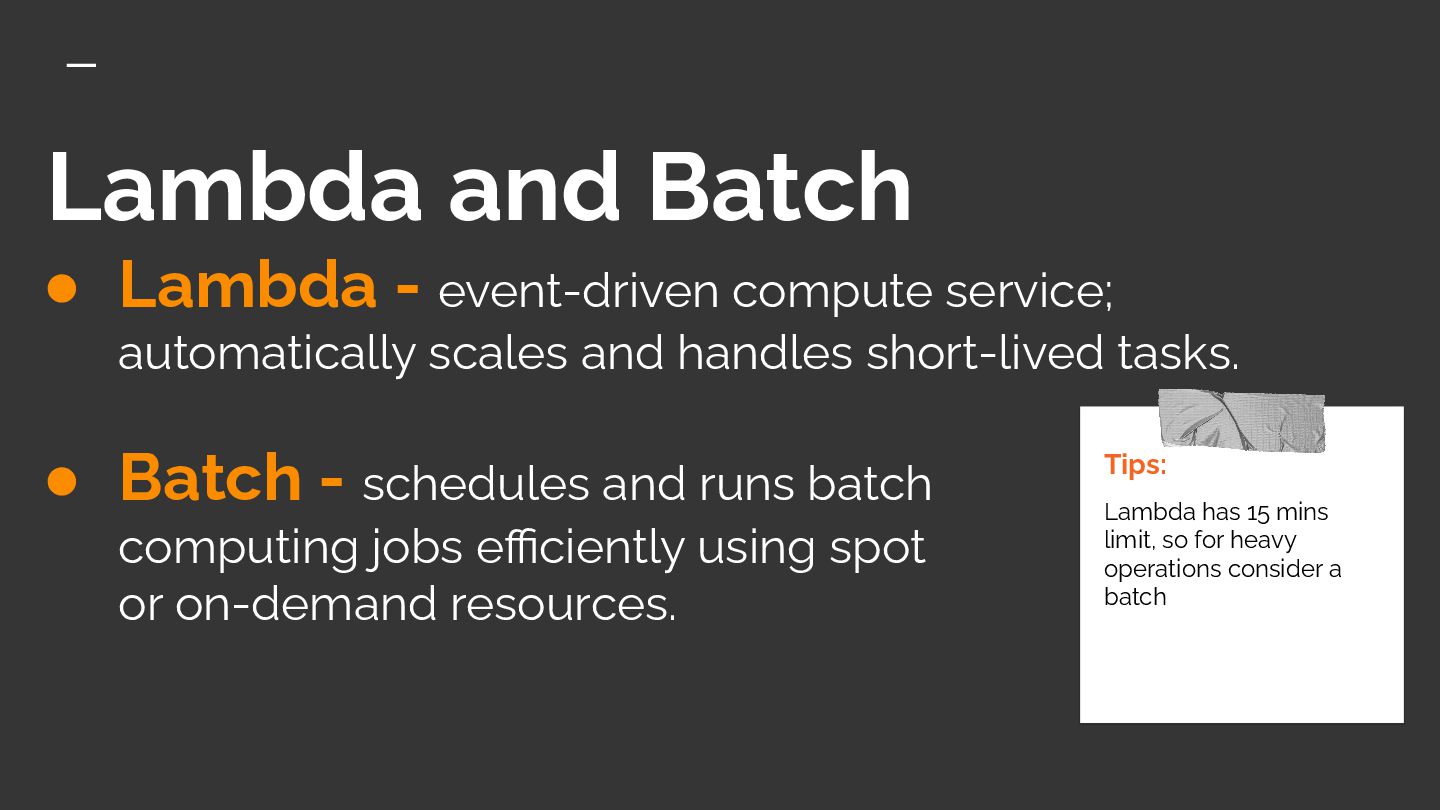
  5. Lambda and Batch • Lambda - event-driven compute service; automatically

    scales and handles short-lived tasks. • Batch - schedules and runs batch computing jobs efficiently using spot or on-demand resources. Tips: Lambda has 15 mins limit, so for heavy operations consider a batch
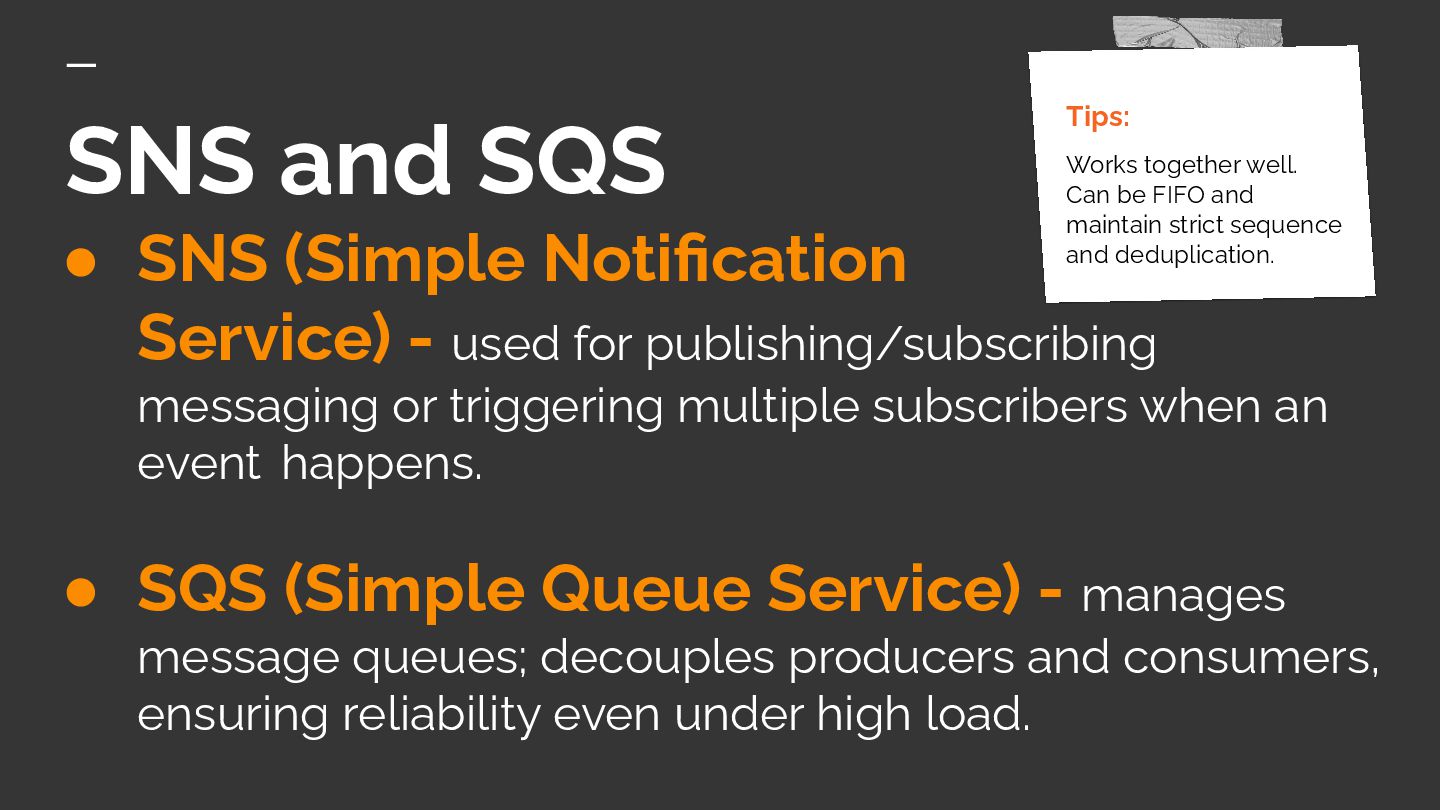
  6. SNS and SQS • SNS (Simple Notification Service) - used

    for publishing/subscribing messaging or triggering multiple subscribers when an event happens. • SQS (Simple Queue Service) - manages message queues; decouples producers and consumers, ensuring reliability even under high load. Tips: Works together well. Can be FIFO and maintain strict sequence and deduplication.
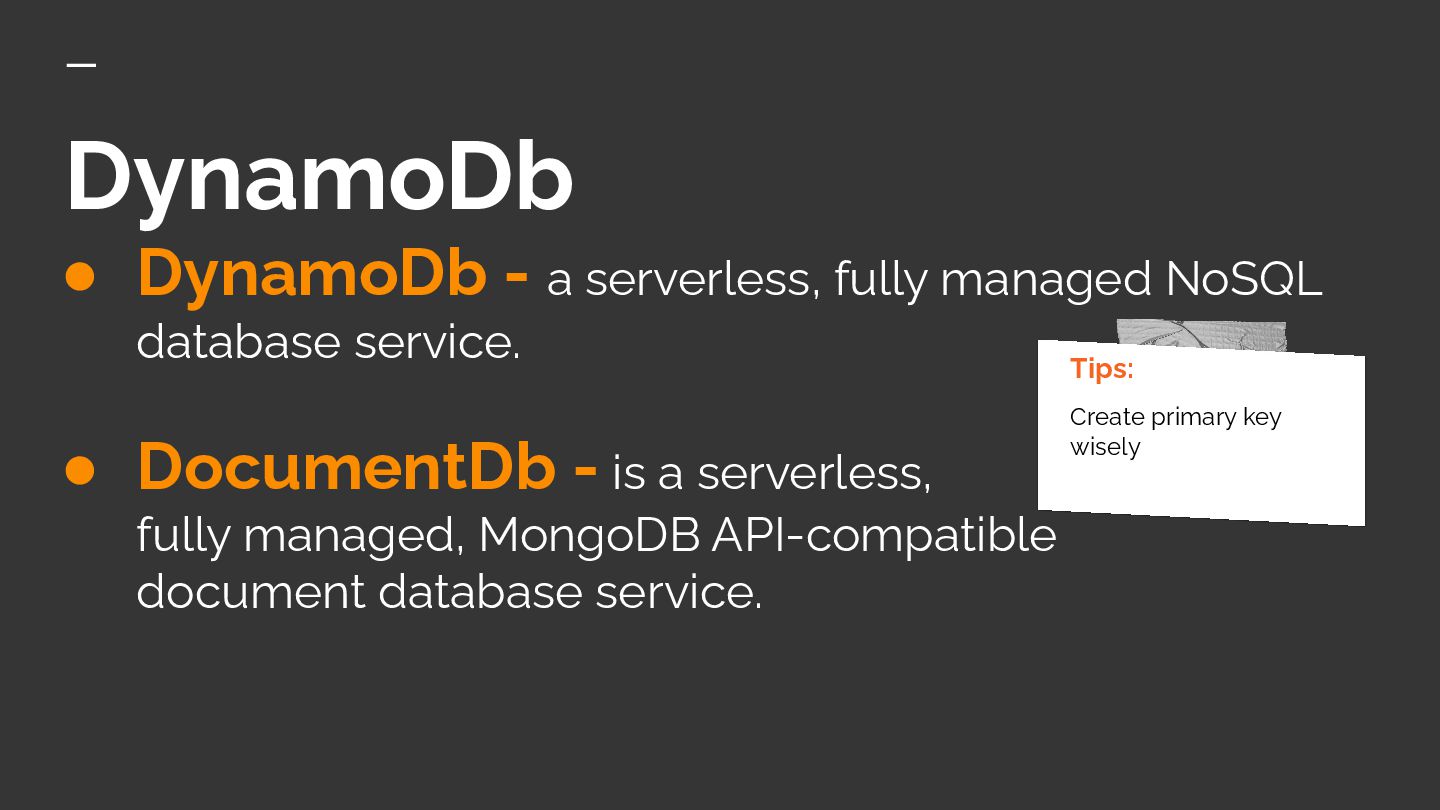
  7. DynamoDb • DynamoDb - a serverless, fully managed NoSQL database

    service. • DocumentDb - is a serverless, fully managed, MongoDB API-compatible document database service. Tips: Create primary key wisely
  8. Asynchronous systems . An asynchronous system processes tasks independently and

    often in parallel, rather than waiting for one step to finish before starting the next.
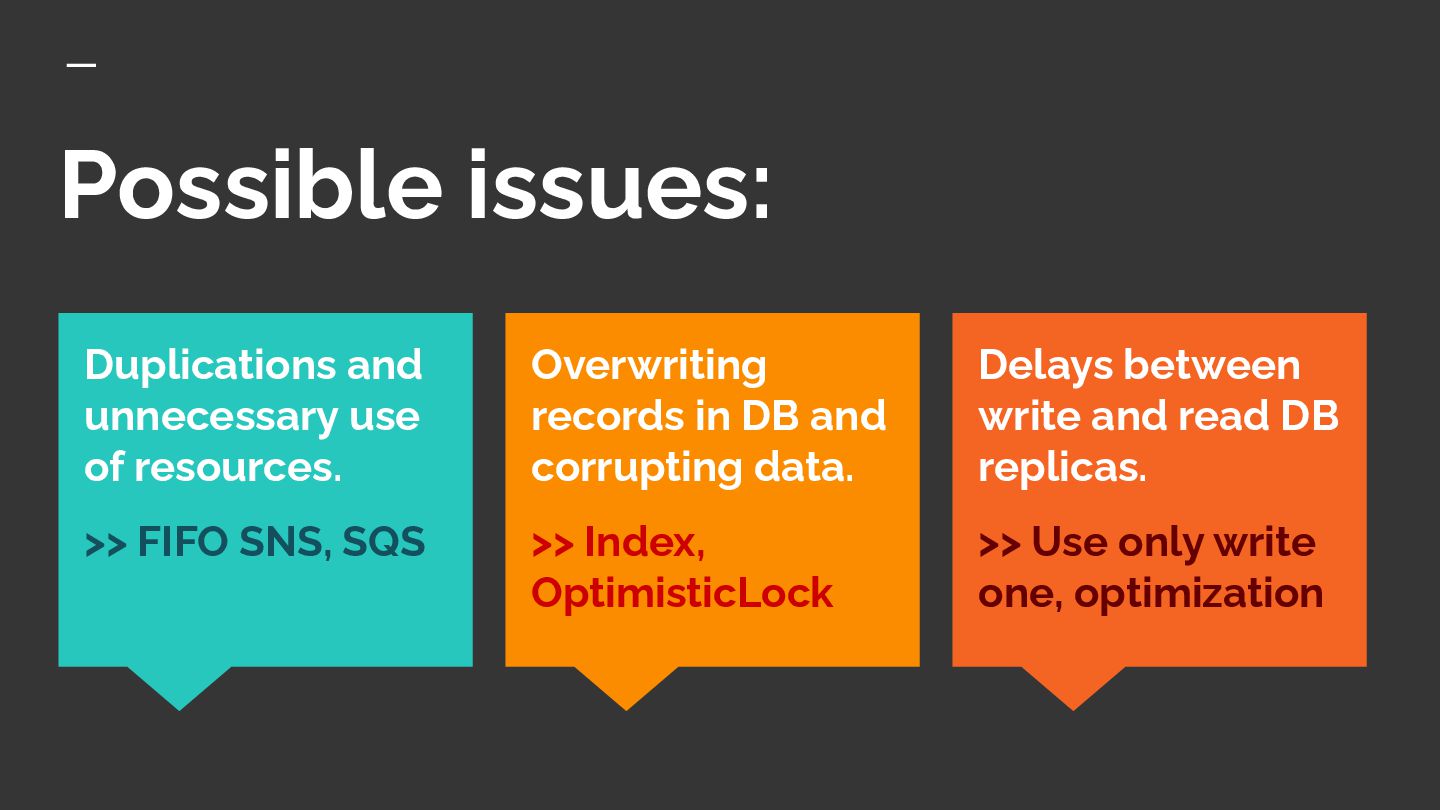
  9. Possible issues: Delays between write and read DB replicas. >>

    Use only write one, optimization Duplications and unnecessary use of resources. >> FIFO SNS, SQS Overwriting records in DB and corrupting data. >> Index, OptimisticLock
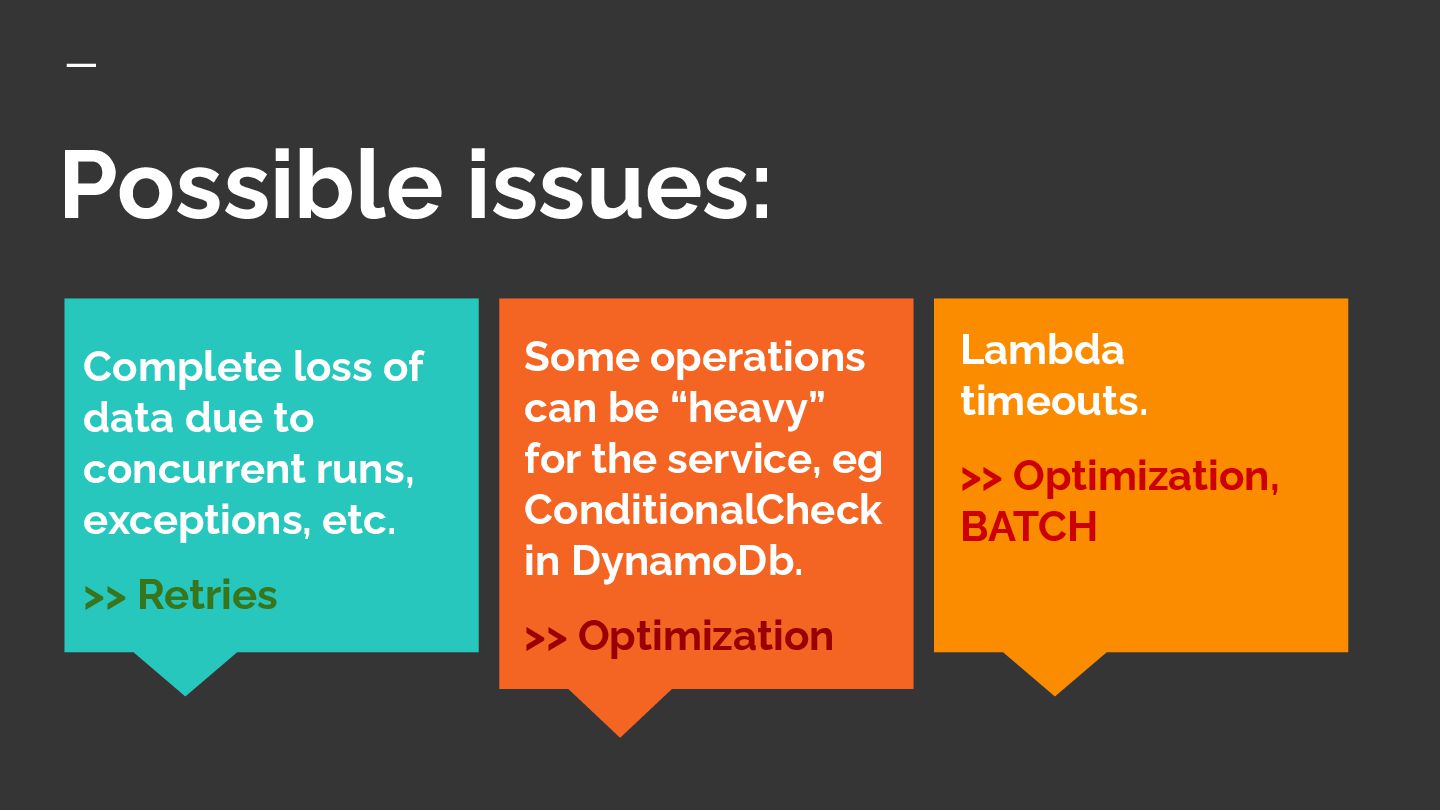
  10. Possible issues: Complete loss of data due to concurrent runs,

    exceptions, etc. >> Retries Some operations can be “heavy” for the service, eg ConditionalCheck in DynamoDb. >> Optimization Lambda timeouts. >> Optimization, BATCH
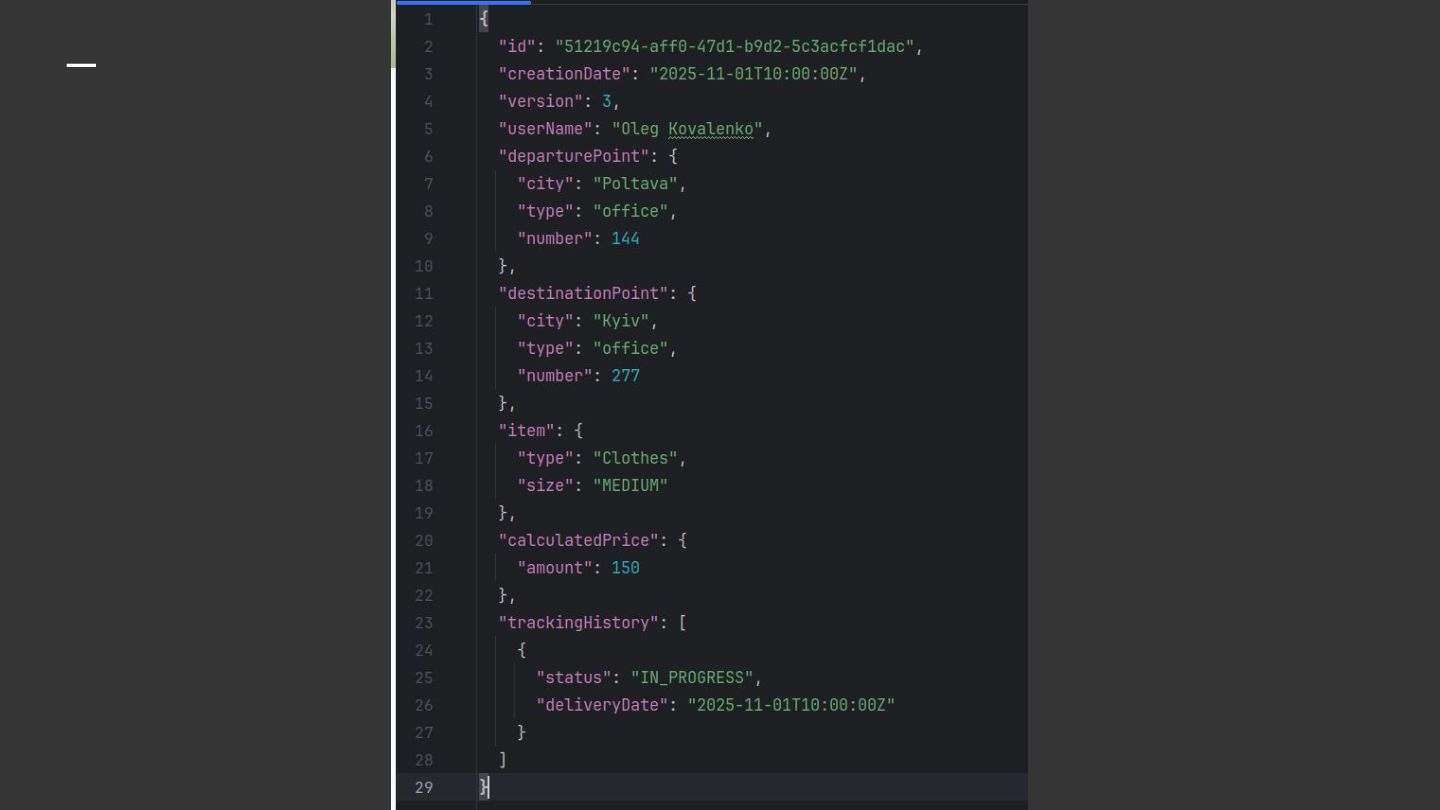
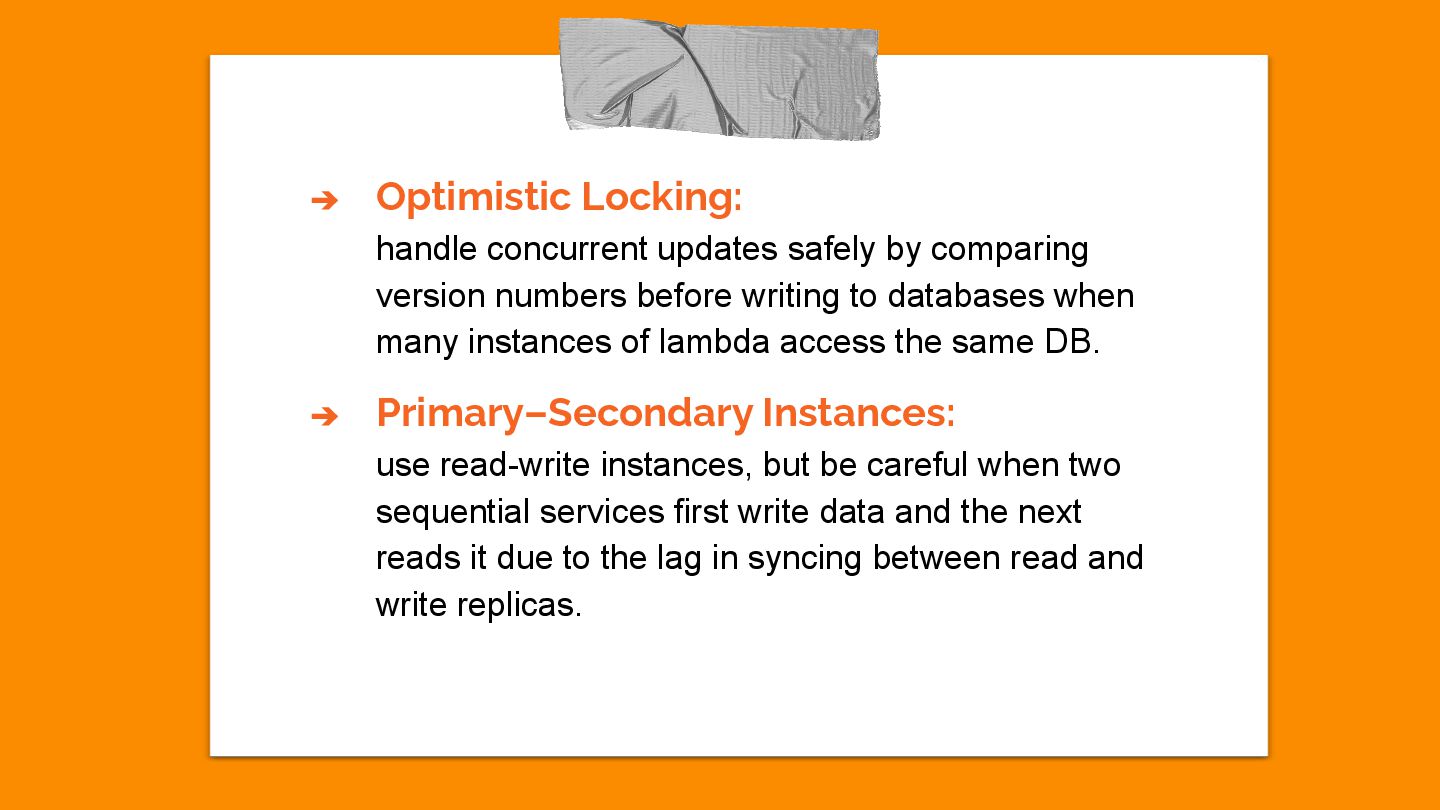
  11. ➔ Optimistic Locking: handle concurrent updates safely by comparing version

    numbers before writing to databases when many instances of lambda access the same DB. ➔ Primary–Secondary Instances: use read-write instances, but be careful when two sequential services first write data and the next reads it due to the lag in syncing between read and write replicas.
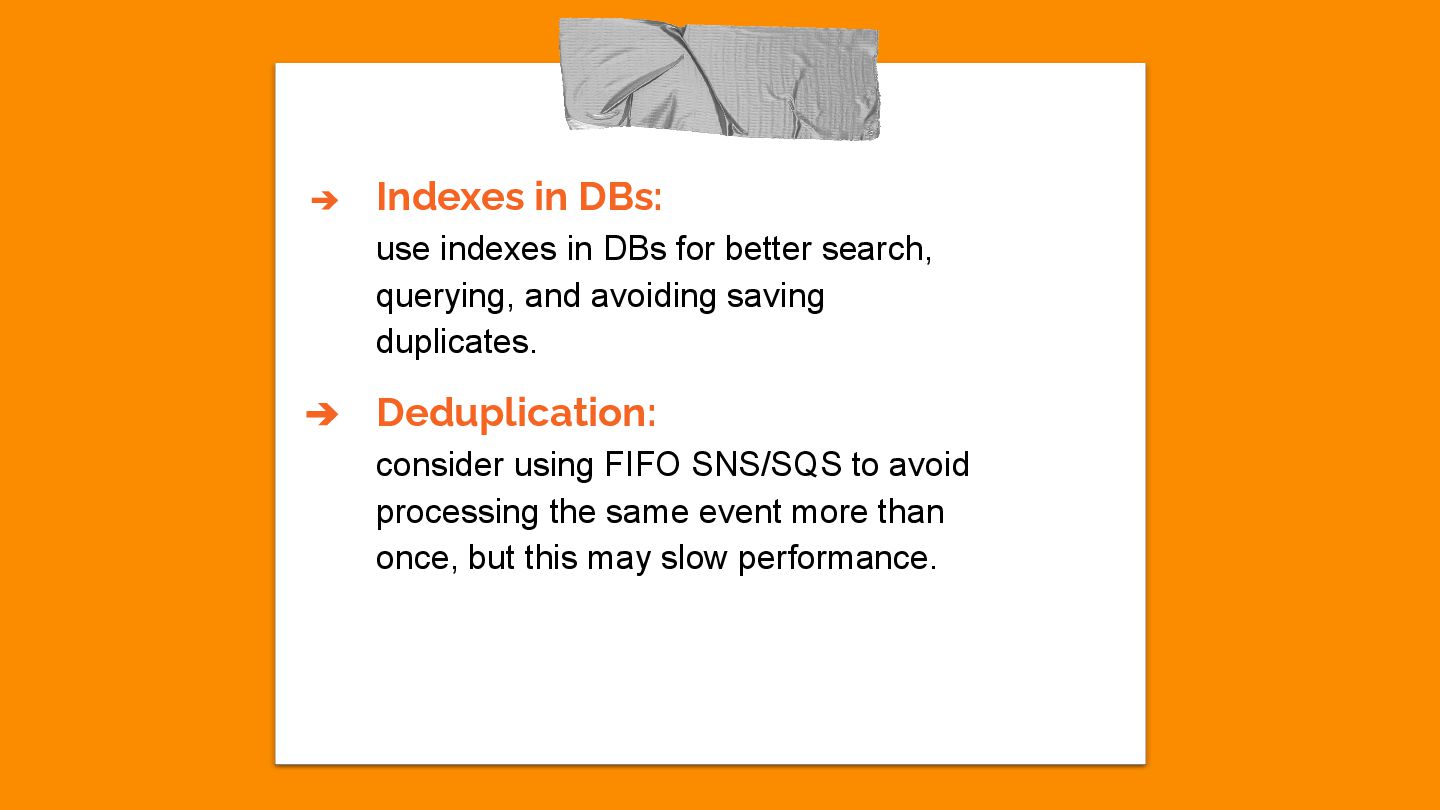
  12. ➔ Indexes in DBs: use indexes in DBs for better

    search, querying, and avoiding saving duplicates. ➔ Deduplication: consider using FIFO SNS/SQS to avoid processing the same event more than once, but this may slow performance.
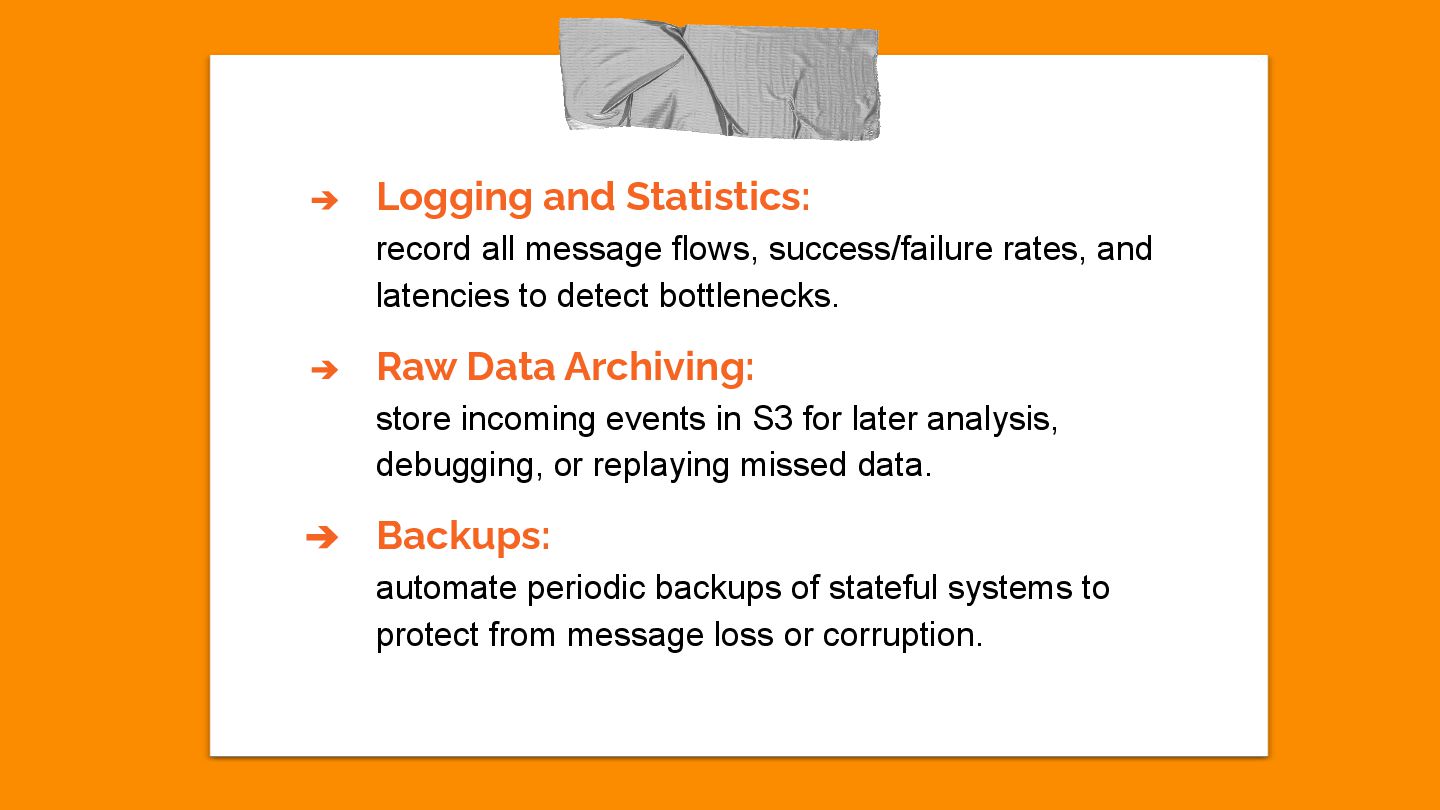
  13. ➔ Logging and Statistics: record all message flows, success/failure rates,

    and latencies to detect bottlenecks. ➔ Raw Data Archiving: store incoming events in S3 for later analysis, debugging, or replaying missed data. ➔ Backups: automate periodic backups of stateful systems to protect from message loss or corruption.
  14. Conclusion Building high-load asynchronous systems with cloud services, particularly in

    AWS, sometimes requires creativity — and it’s not always covered by documentation or can be easily googled. Especially if it’s a complex, unique business scenario. But with careful monitoring, applying best practices, and reasonable architectural decisions, you can create a system that can fulfill any business needs.