Upgrade to Pro — share decks privately, control downloads, hide ads and more …

Tech-Empowered Leadership: Transforming Organiz...

Avatar for Param Tassos Param Tassos
December 10, 2025
2

Tech-Empowered Leadership: Transforming Organizations Through Innovation and Digital Intelligence

Modern leadership thrives on leveraging technology to enhance communication, automate processes, and enable data-driven decision-making. This presentation highlights how AI, analytics, and digital platforms boost efficiency, collaboration, and strategic insight. It also emphasizes building a culture of innovation, continuous learning, and employee empowerment. Leaders who embrace emerging technologies create agile, resilient organizations positioned for long-term success.

Avatar for Param Tassos

Param Tassos

December 10, 2025

Transcript

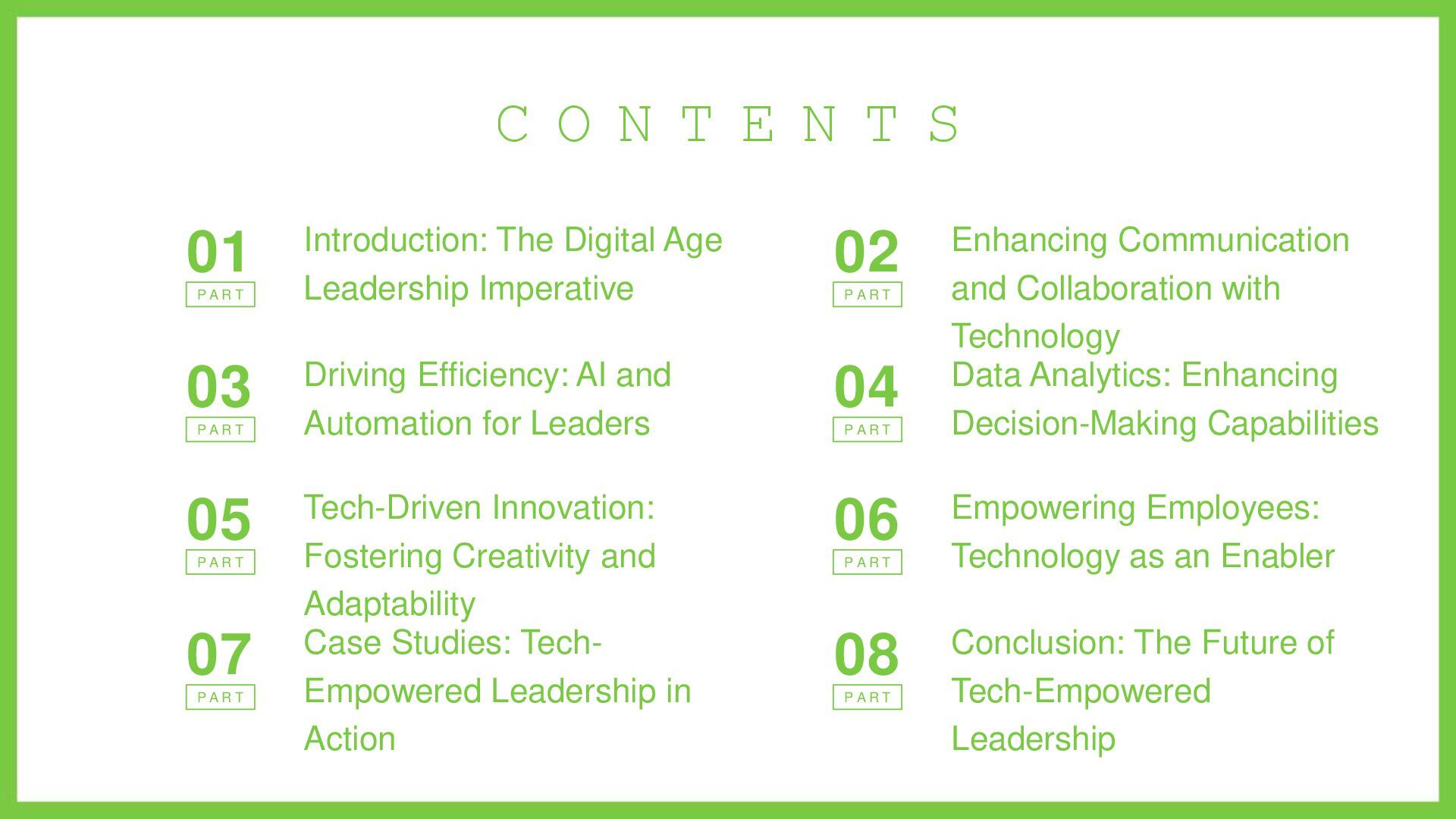
  1. C O N T E N T S Introduction: The

    Digital Age Leadership Imperative 01 P A R T Enhancing Communication and Collaboration with Technology 02 P A R T Driving Efficiency: AI and Automation for Leaders 03 P A R T Data Analytics: Enhancing Decision-Making Capabilities 04 P A R T Tech-Driven Innovation: Fostering Creativity and Adaptability 05 P A R T Empowering Employees: Technology as an Enabler 06 P A R T Case Studies: Tech- Empowered Leadership in Action 07 P A R T Conclusion: The Future of Tech-Empowered Leadership 08 P A R T
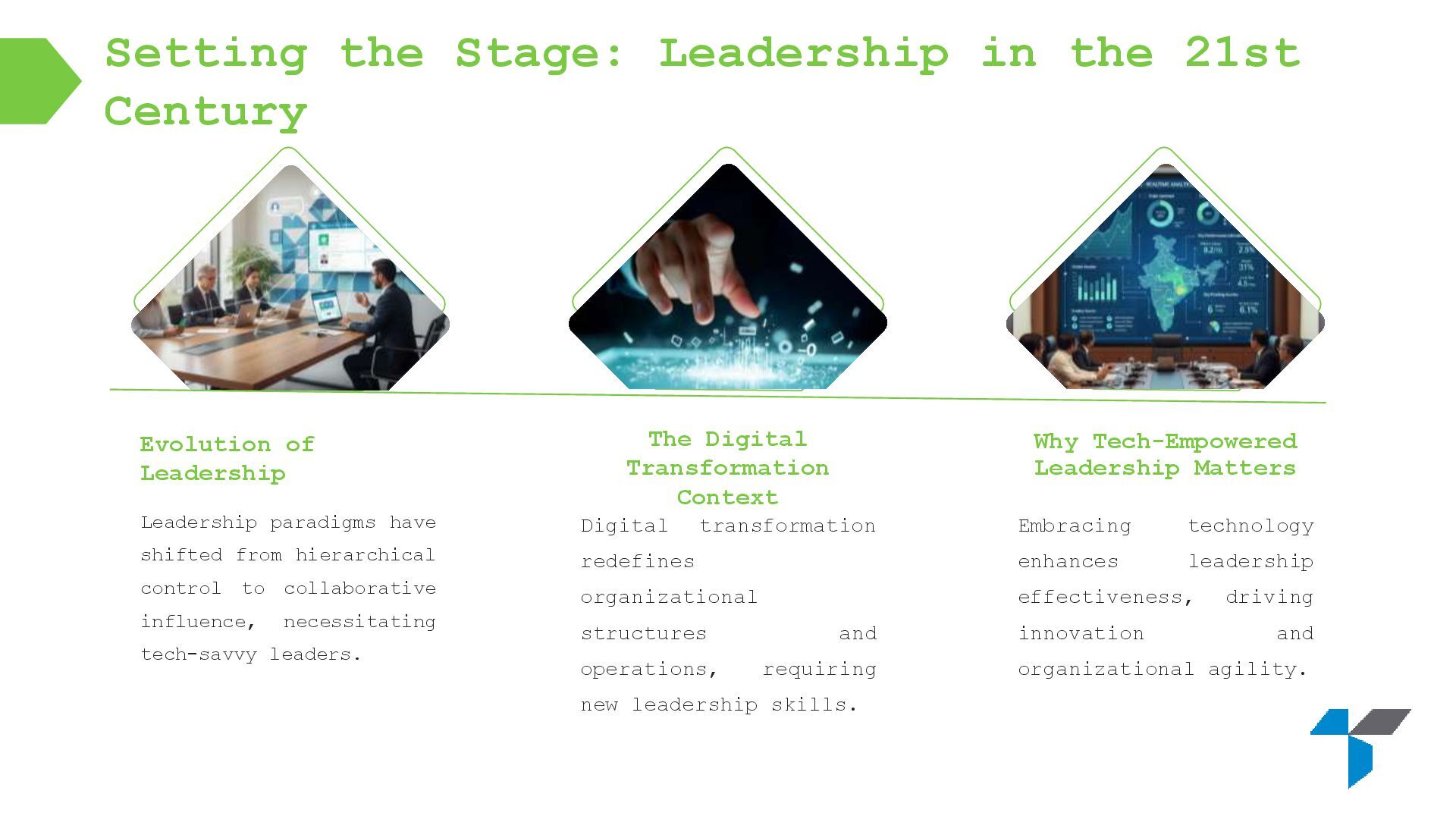
  2. Leadership paradigms have shifted from hierarchical control to collaborative influence,

    necessitating tech-savvy leaders. Evolution of Leadership Digital transformation redefines organizational structures and operations, requiring new leadership skills. The Digital Transformation Context Embracing technology enhances leadership effectiveness, driving innovation and organizational agility. Why Tech-Empowered Leadership Matters Setting the Stage: Leadership in the 21st Century
  3. Exploring digital tools that amplify communication and teamwork across diverse

    teams. Enhancing Communication & Collaboration Examining how technology enables smarter, faster decisions based on data insights. Driving Efficiency & Data-Driven Decisions Investigating how leaders can leverage tech to foster a culture of innovation and adaptability. Promoting Innovation & Adaptability Objectives: What We Aim to Explore
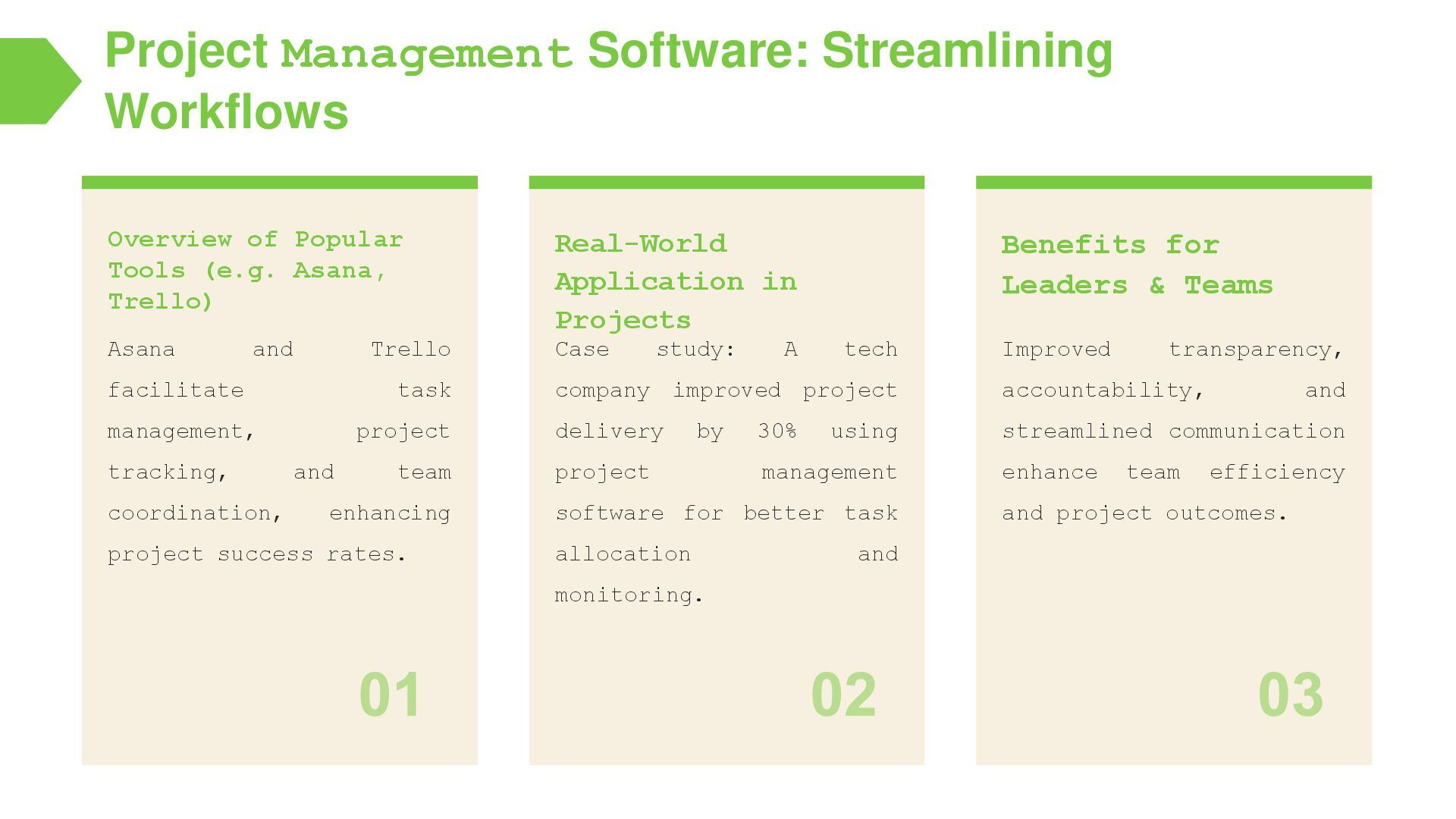
  4. Overview of Popular Tools (e.g. Asana, Trello) Case study: A

    tech company improved project delivery by 30% using project management software for better task allocation and monitoring. Real-World Application in Projects Asana and Trello facilitate task management, project tracking, and team coordination, enhancing project success rates. Improved transparency, accountability, and streamlined communication enhance team efficiency and project outcomes. Benefits for Leaders & Teams Project Management Software: Streamlining Workflows
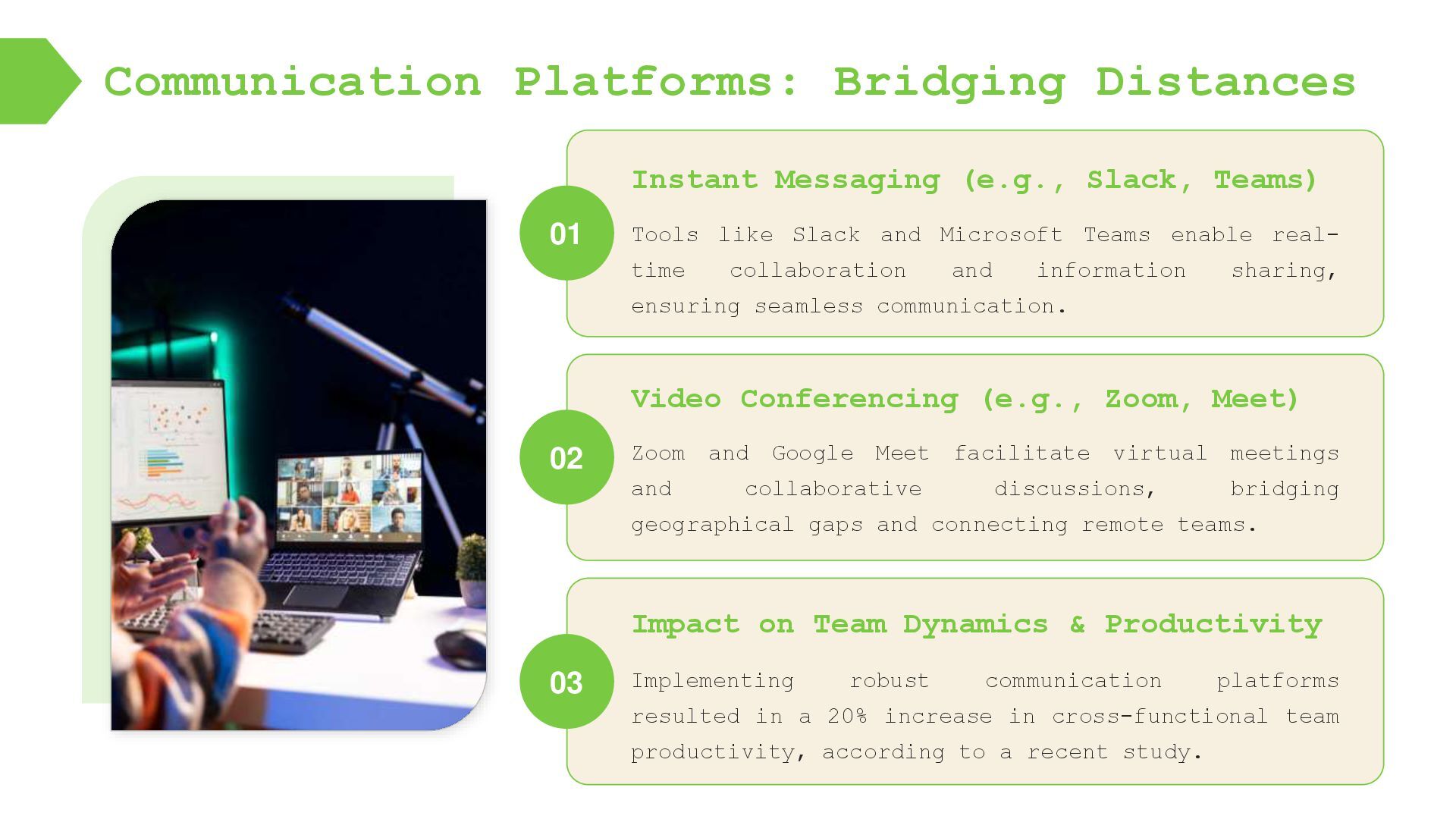
  5. 01 02 03 Instant Messaging (e.g., Slack, Teams) Tools like

    Slack and Microsoft Teams enable real- time collaboration and information sharing, ensuring seamless communication. Video Conferencing (e.g., Zoom, Meet) Zoom and Google Meet facilitate virtual meetings and collaborative discussions, bridging geographical gaps and connecting remote teams. Impact on Team Dynamics & Productivity Implementing robust communication platforms resulted in a 20% increase in cross-functional team productivity, according to a recent study. Communication Platforms: Bridging Distances
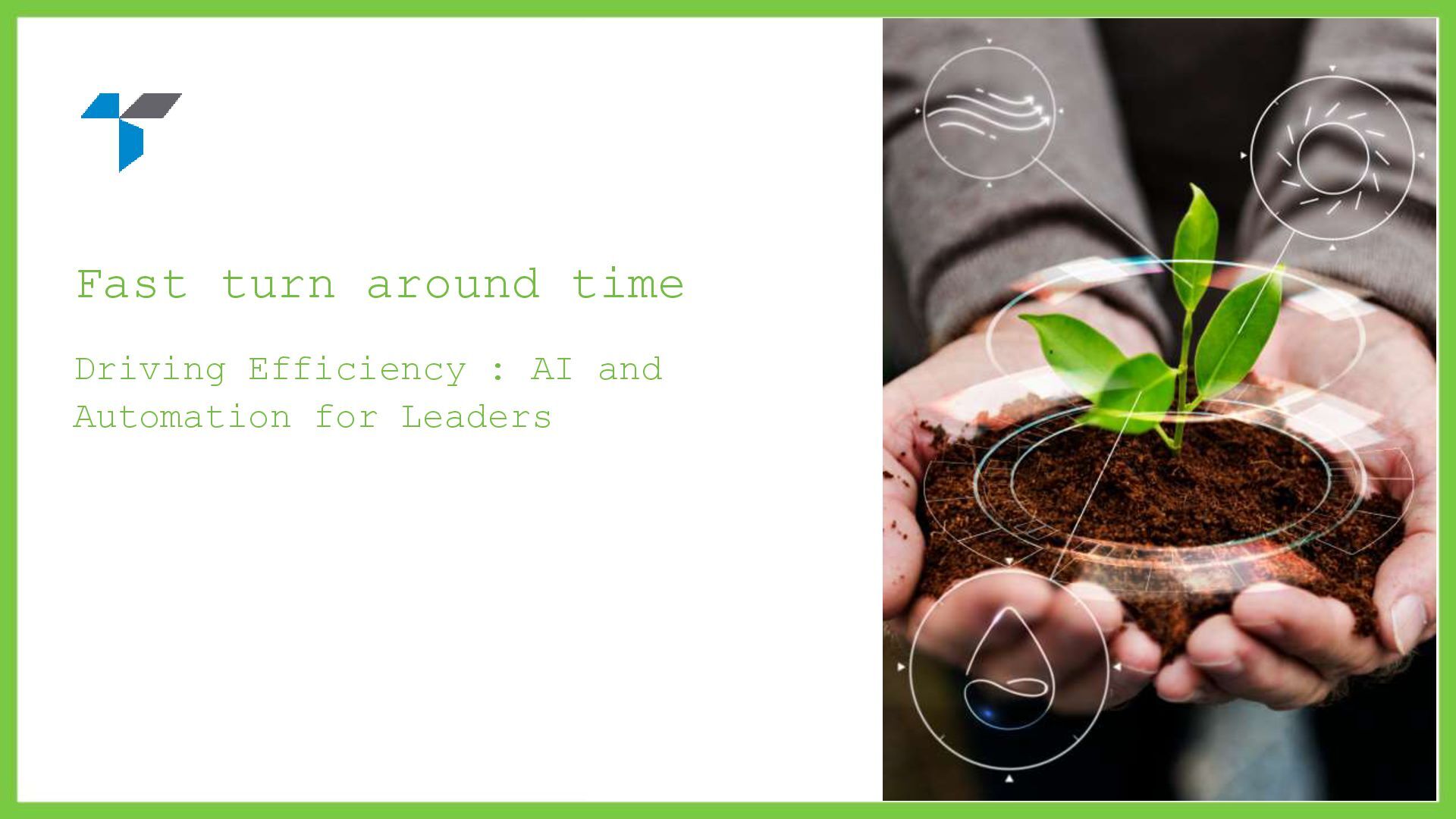
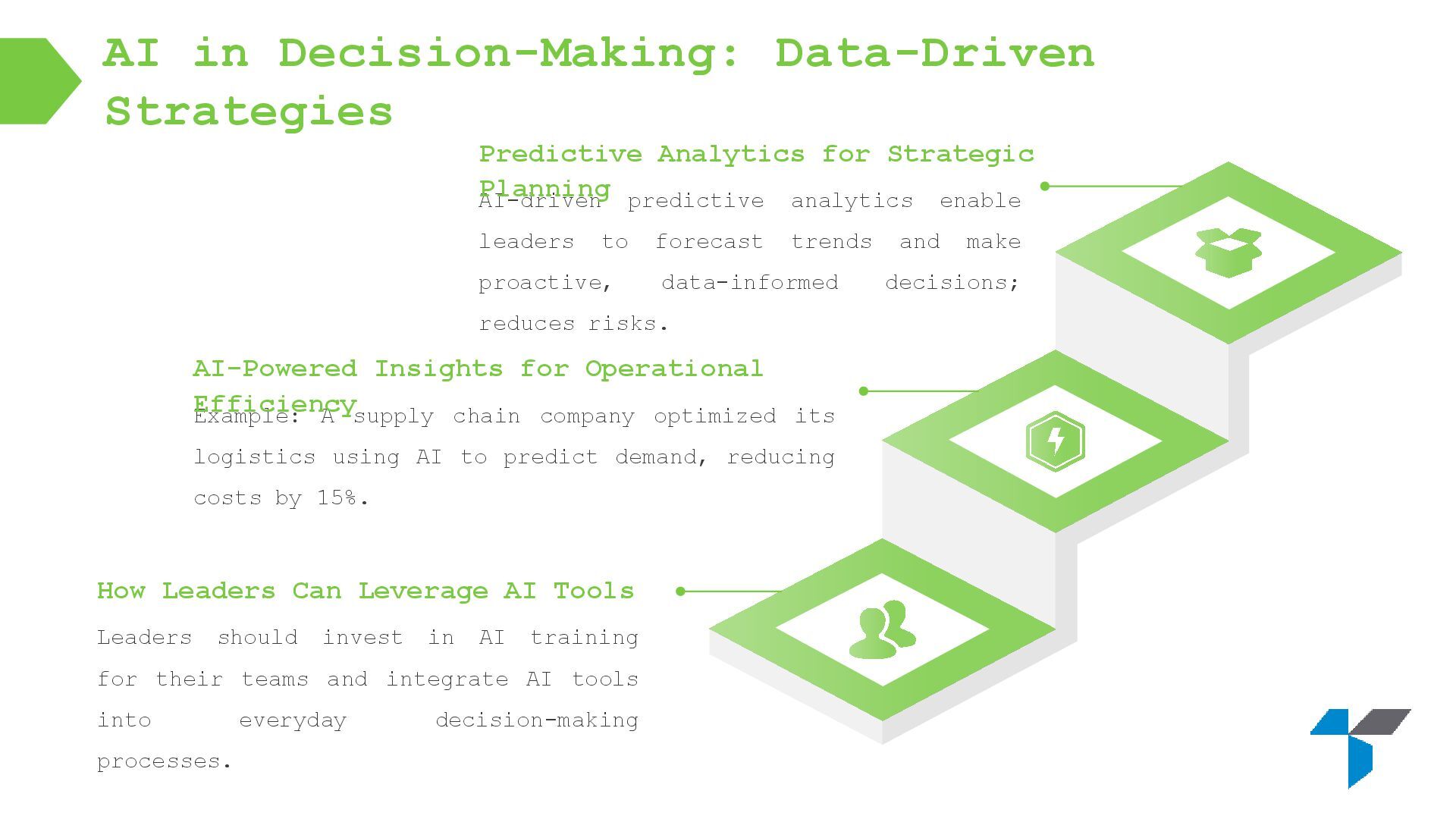
  6. Leaders should invest in AI training for their teams and

    integrate AI tools into everyday decision-making processes. How Leaders Can Leverage AI Tools Example: A supply chain company optimized its logistics using AI to predict demand, reducing costs by 15%. AI-Powered Insights for Operational Efficiency AI-driven predictive analytics enable leaders to forecast trends and make proactive, data-informed decisions; reduces risks. Predictive Analytics for Strategic Planning AI in Decision-Making: Data-Driven Strategies
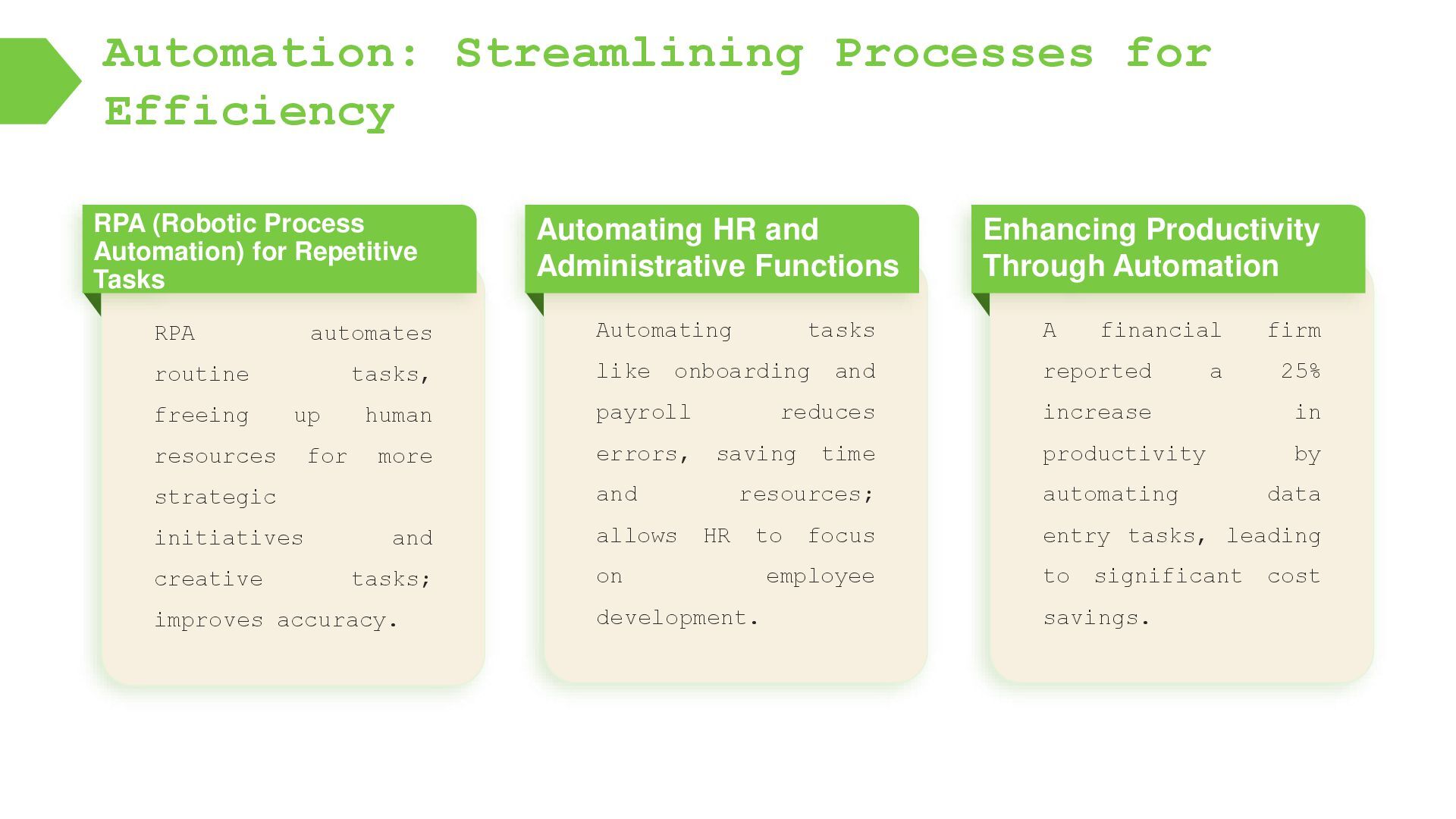
  7. RPA automates routine tasks, freeing up human resources for more

    strategic initiatives and creative tasks; improves accuracy. RPA (Robotic Process Automation) for Repetitive Tasks Automating tasks like onboarding and payroll reduces errors, saving time and resources; allows HR to focus on employee development. Automating HR and Administrative Functions A financial firm reported a 25% increase in productivity by automating data entry tasks, leading to significant cost savings. Enhancing Productivity Through Automation Automation: Streamlining Processes for Efficiency
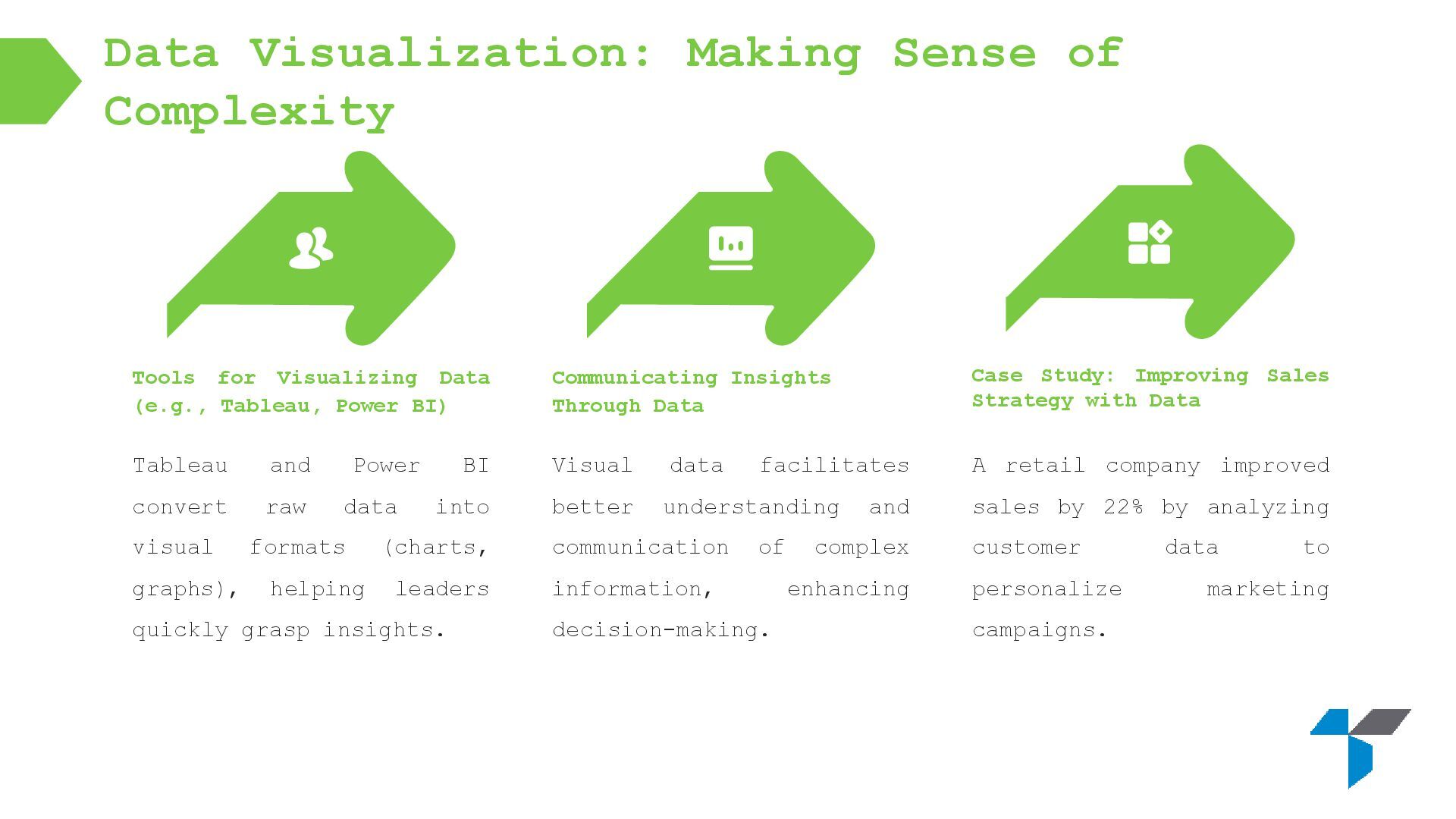
  8. Tools for Visualizing Data (e.g., Tableau, Power BI) Tableau and

    Power BI convert raw data into visual formats (charts, graphs), helping leaders quickly grasp insights. Visual data facilitates better understanding and communication of complex information, enhancing decision-making. Case Study: Improving Sales Strategy with Data A retail company improved sales by 22% by analyzing customer data to personalize marketing campaigns. Communicating Insights Through Data Data Visualization: Making Sense of Complexity
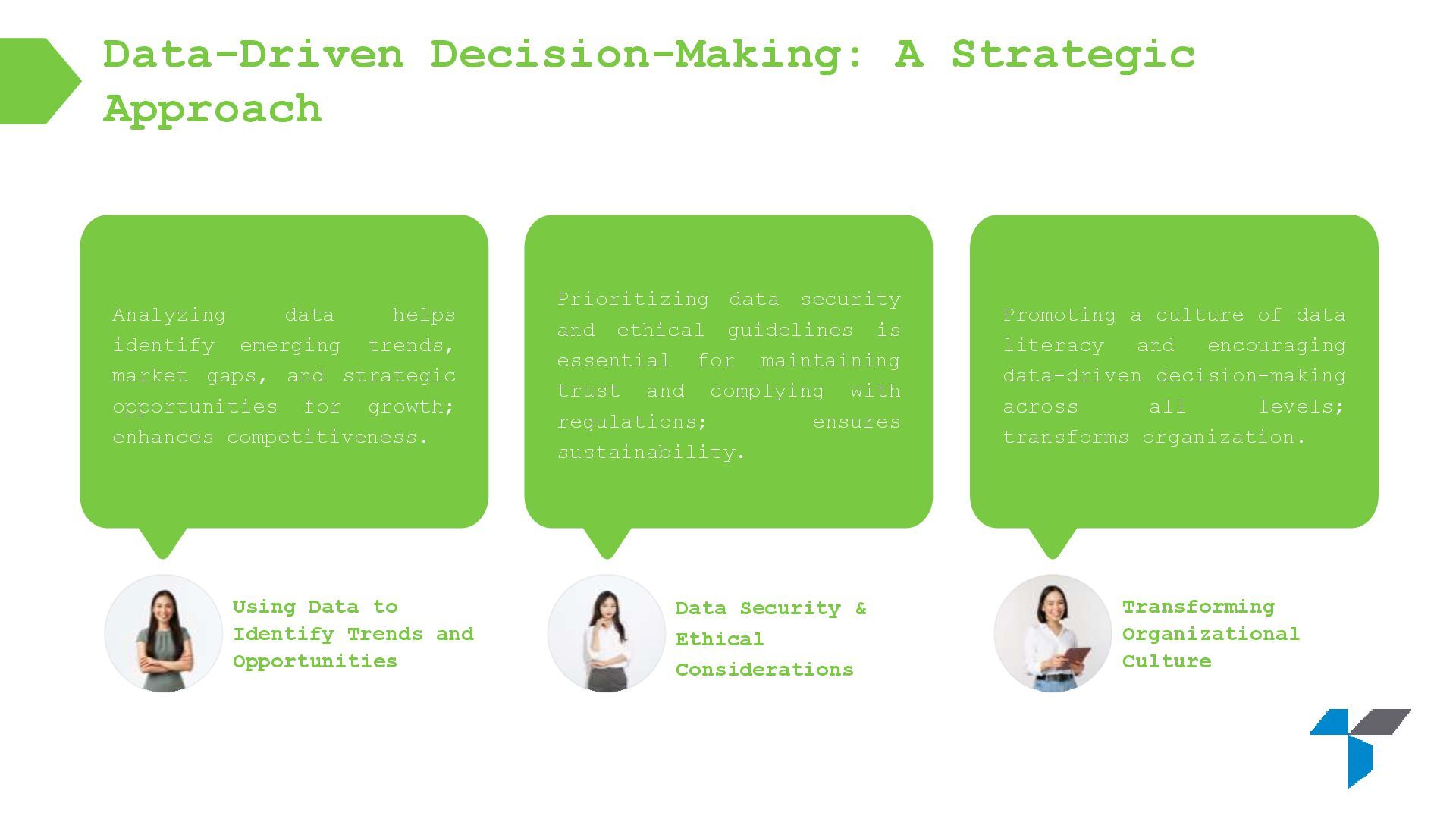
  9. Analyzing data helps identify emerging trends, market gaps, and strategic

    opportunities for growth; enhances competitiveness. Using Data to Identify Trends and Opportunities Data Security & Ethical Considerations Transforming Organizational Culture Prioritizing data security and ethical guidelines is essential for maintaining trust and complying with regulations; ensures sustainability. Promoting a culture of data literacy and encouraging data-driven decision-making across all levels; transforms organization. Data-Driven Decision-Making: A Strategic Approach
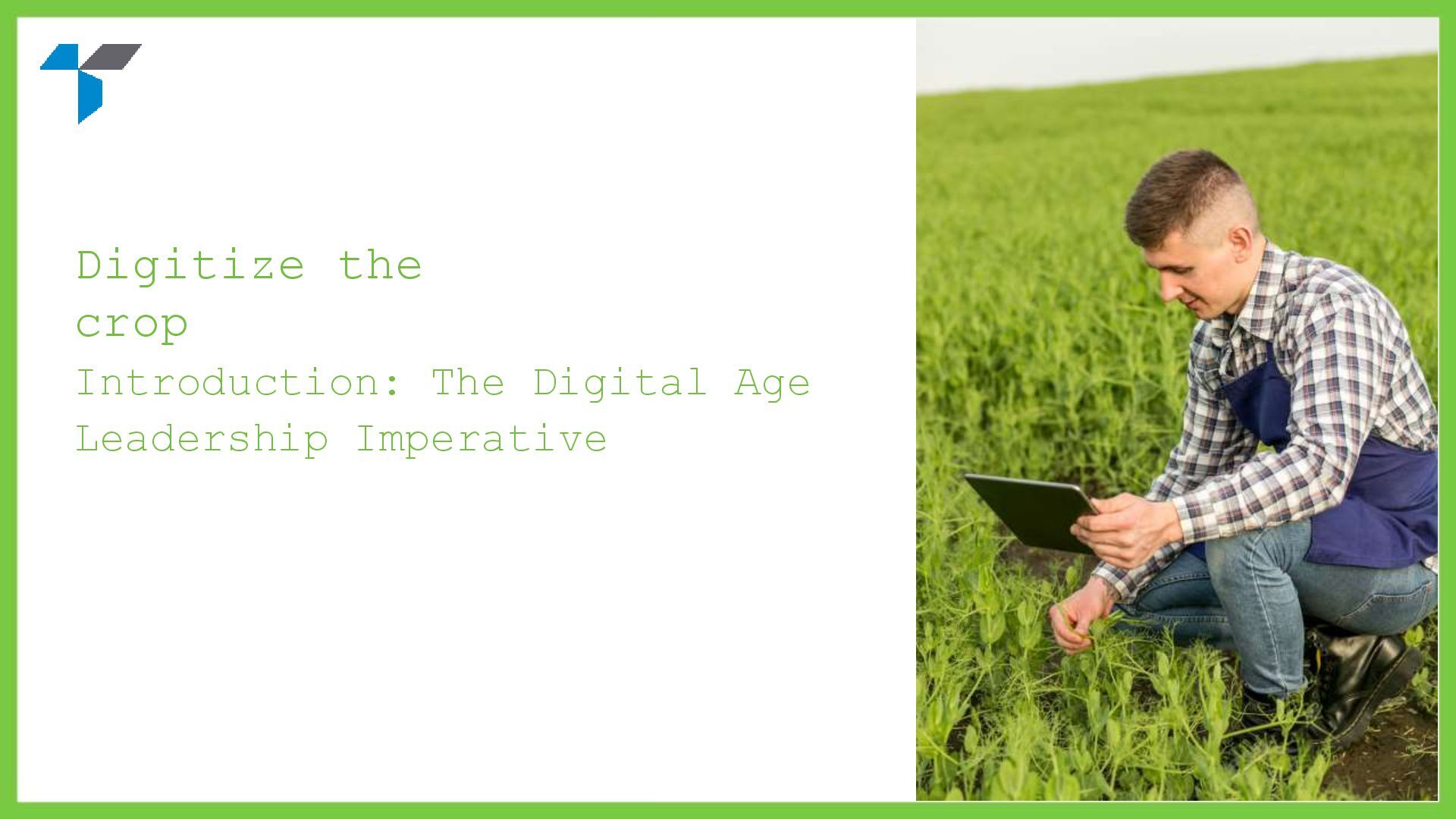
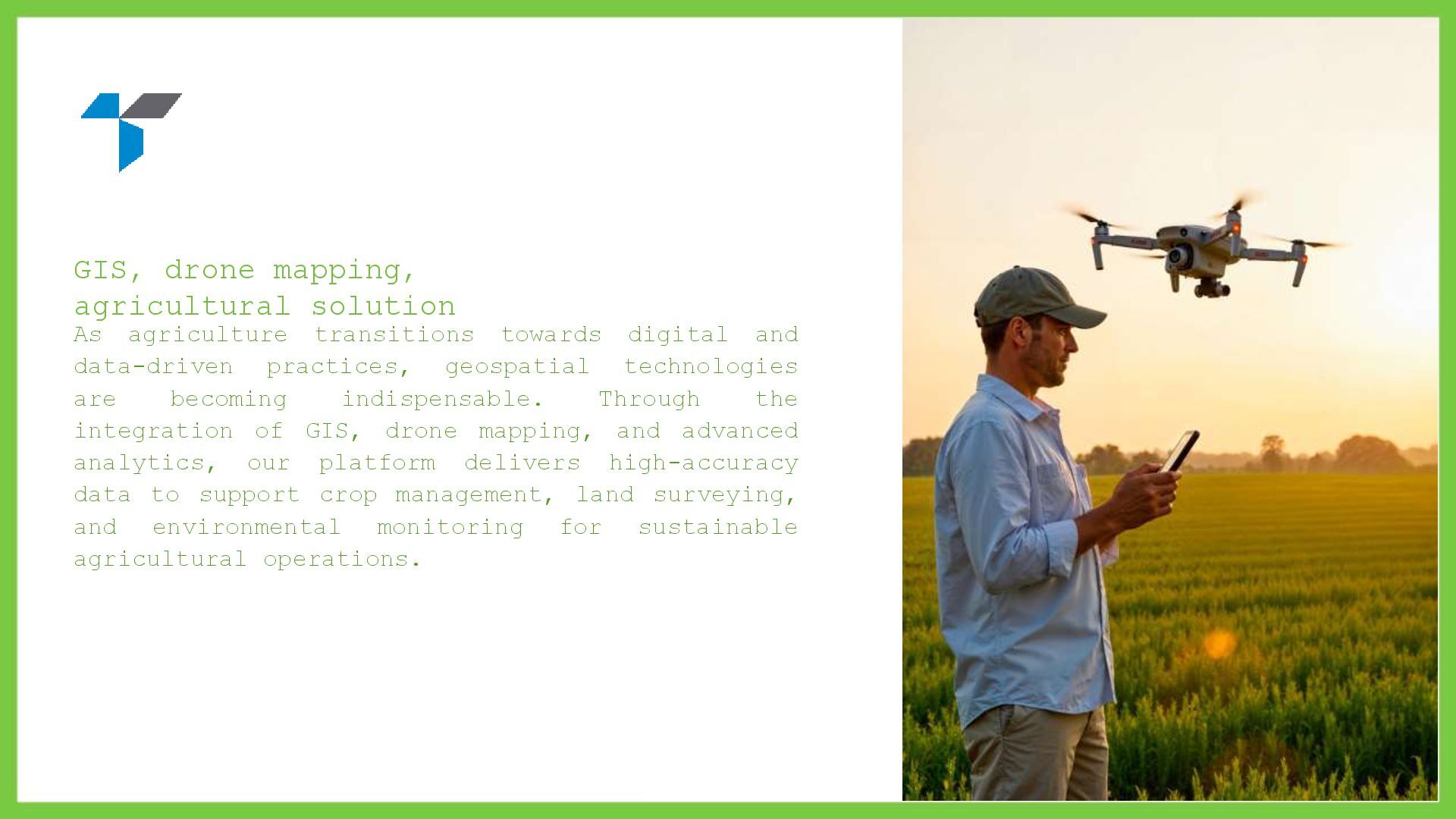
  10. GIS, drone mapping, agricultural solution As agriculture transitions towards digital

    and data-driven practices, geospatial technologies are becoming indispensable. Through the integration of GIS, drone mapping, and advanced analytics, our platform delivers high-accuracy data to support crop management, land surveying, and environmental monitoring for sustainable agricultural operations.
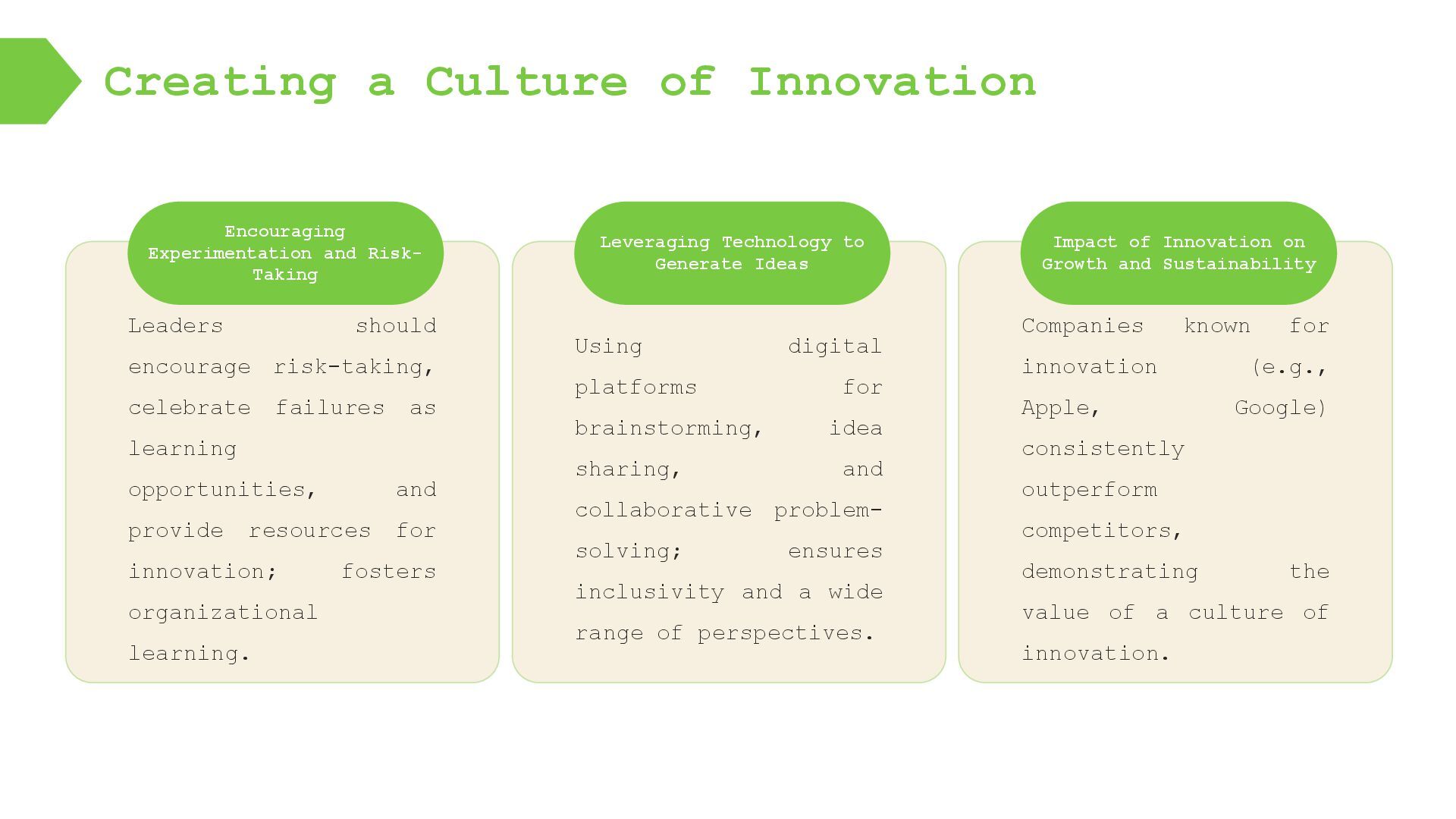
  11. Leaders should encourage risk-taking, celebrate failures as learning opportunities, and

    provide resources for innovation; fosters organizational learning. Encouraging Experimentation and Risk- Taking Using digital platforms for brainstorming, idea sharing, and collaborative problem- solving; ensures inclusivity and a wide range of perspectives. Leveraging Technology to Generate Ideas Companies known for innovation (e.g., Apple, Google) consistently outperform competitors, demonstrating the value of a culture of innovation. Impact of Innovation on Growth and Sustainability Creating a Culture of Innovation
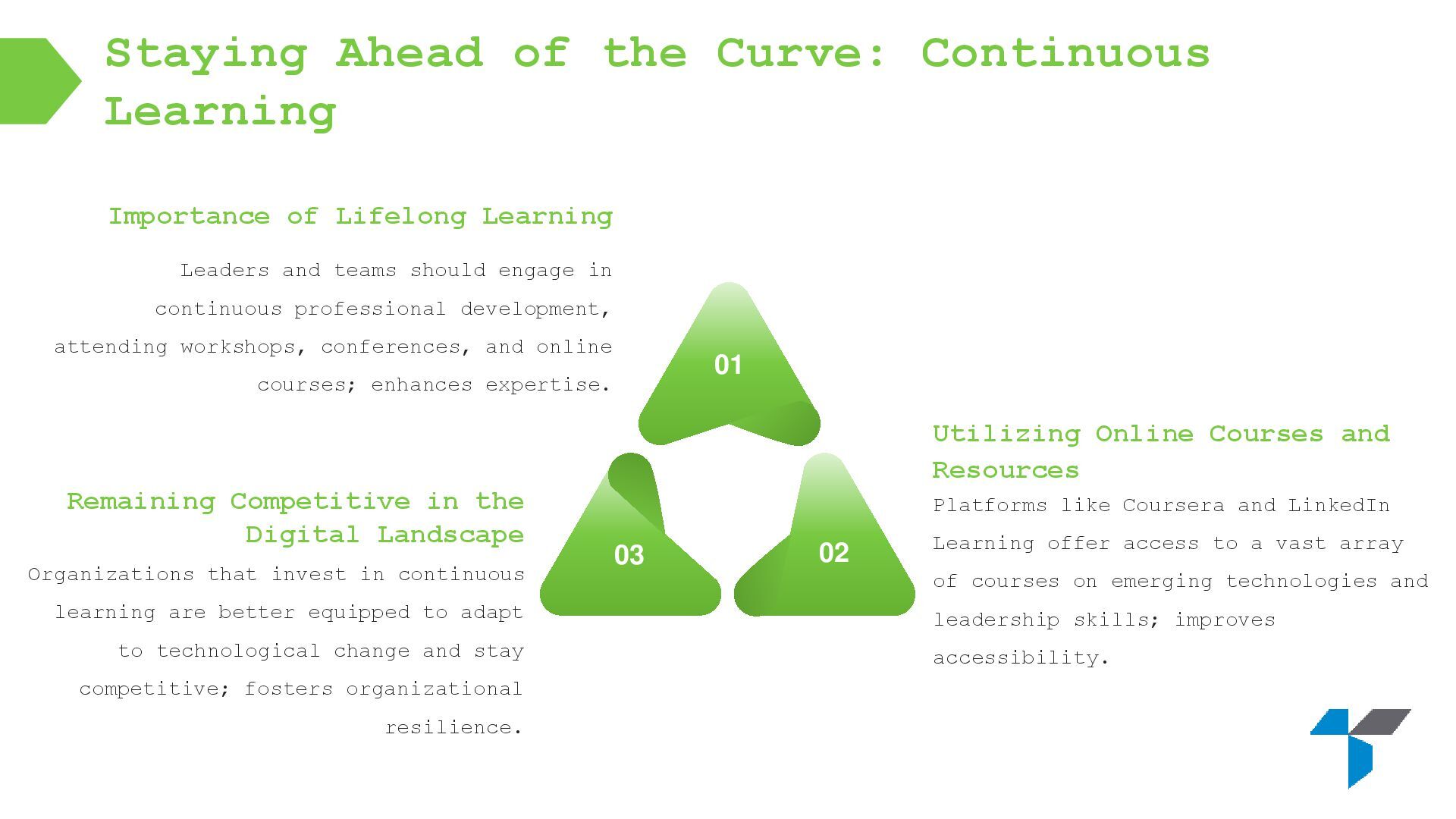
  12. 03 02 01 Importance of Lifelong Learning Organizations that invest

    in continuous learning are better equipped to adapt to technological change and stay competitive; fosters organizational resilience. Remaining Competitive in the Digital Landscape Platforms like Coursera and LinkedIn Learning offer access to a vast array of courses on emerging technologies and leadership skills; improves accessibility. Utilizing Online Courses and Resources Leaders and teams should engage in continuous professional development, attending workshops, conferences, and online courses; enhances expertise. Staying Ahead of the Curve: Continuous Learning
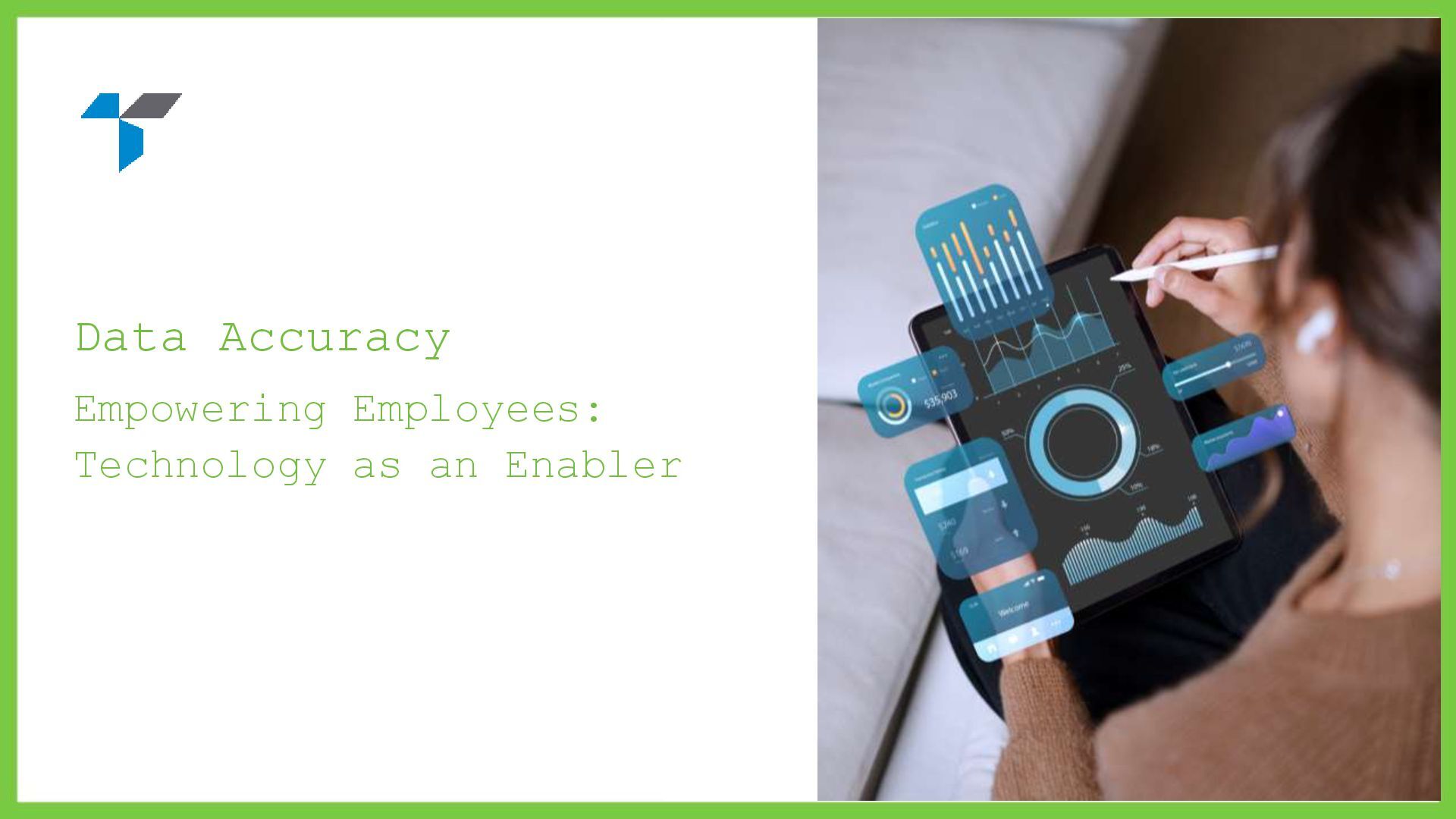
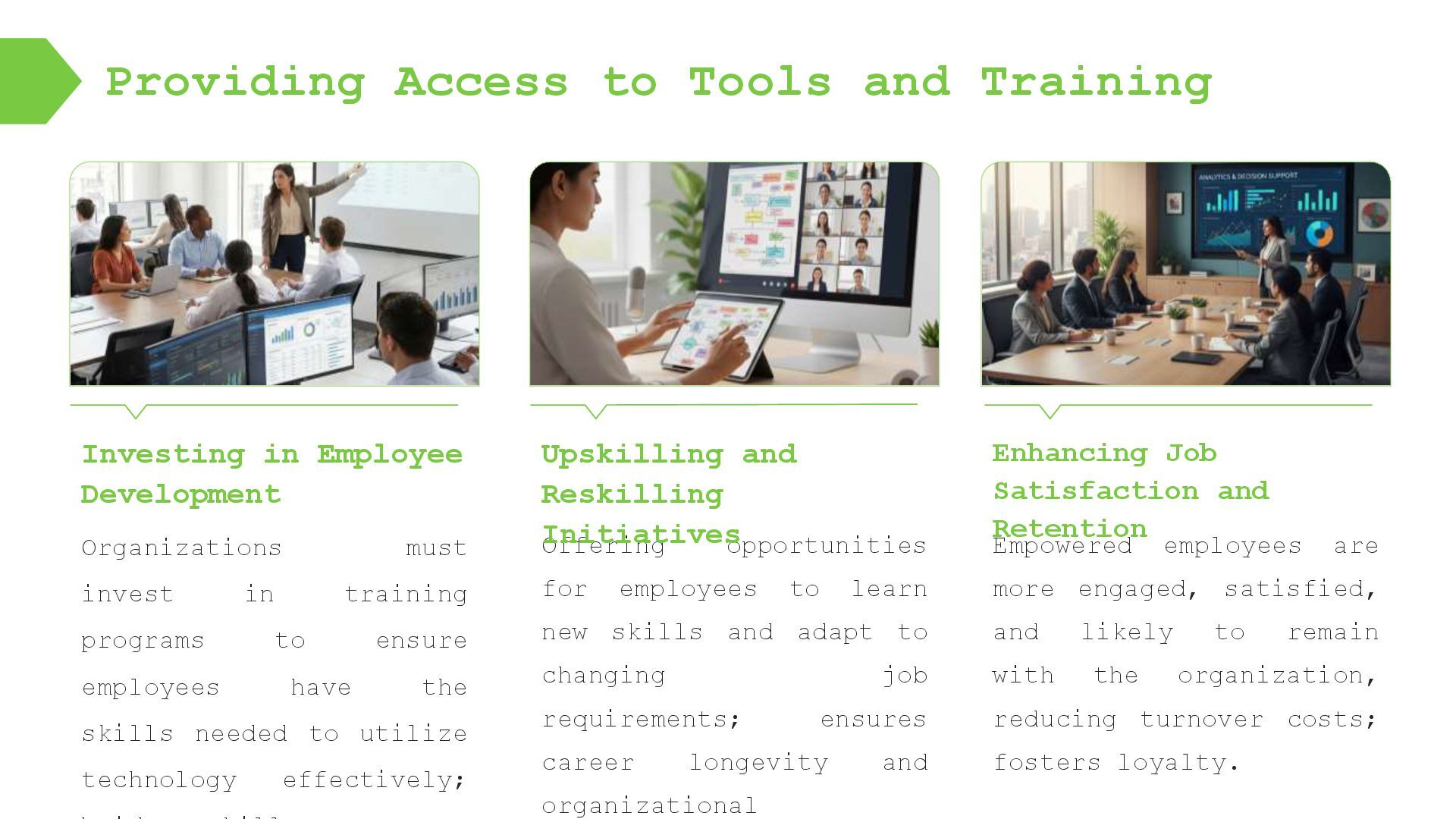
  13. Organizations must invest in training programs to ensure employees have

    the skills needed to utilize technology effectively; Offering opportunities for employees to learn new skills and adapt to changing job requirements; ensures career longevity and organizational Empowered employees are more engaged, satisfied, and likely to remain with the organization, reducing turnover costs; fosters loyalty. Upskilling and Reskilling Initiatives Enhancing Job Satisfaction and Retention Investing in Employee Development Providing Access to Tools and Training
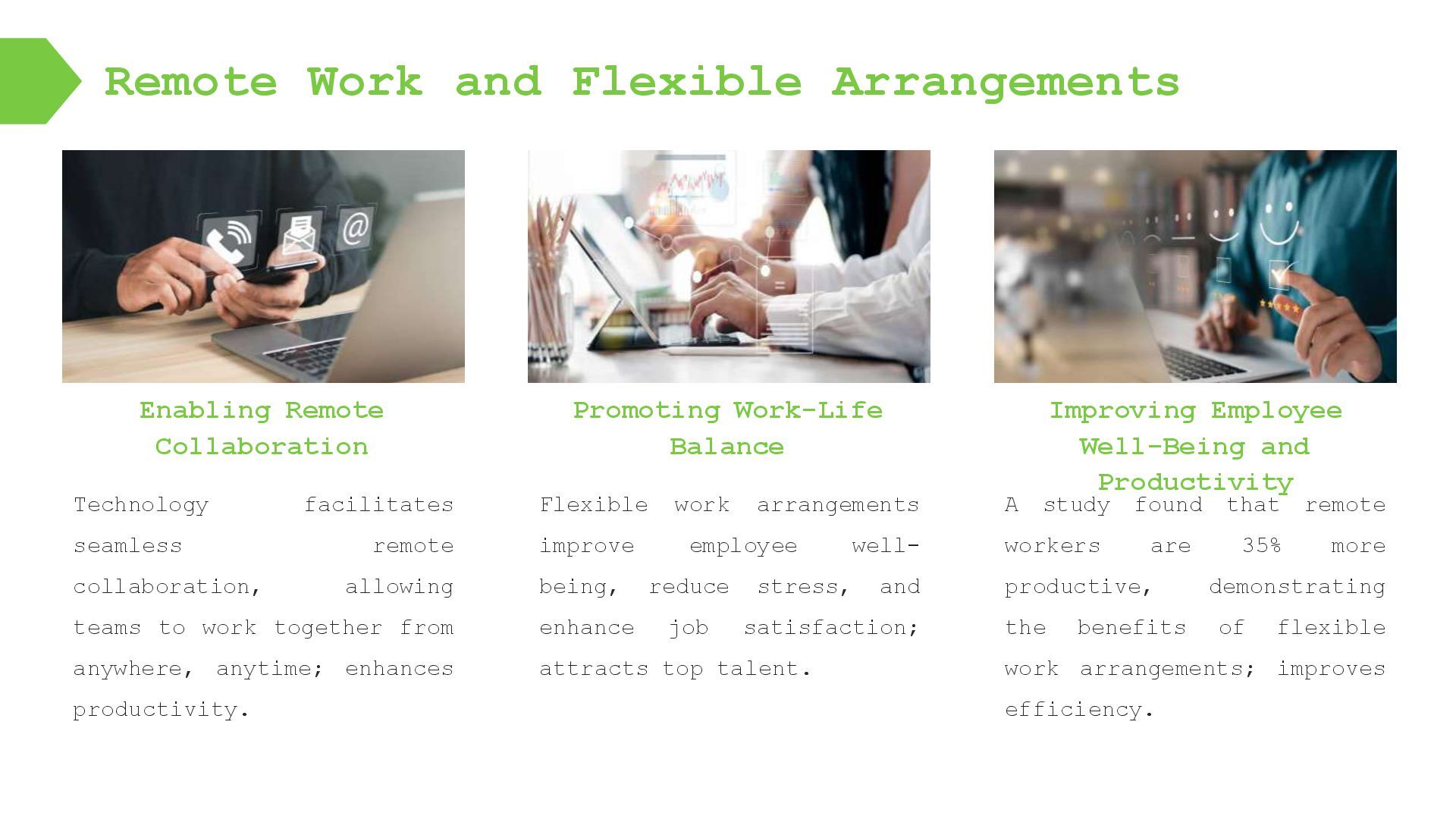
  14. Enabling Remote Collaboration Promoting Work-Life Balance Improving Employee Well-Being and

    Productivity Flexible work arrangements improve employee well- being, reduce stress, and enhance job satisfaction; attracts top talent. Technology facilitates seamless remote collaboration, allowing teams to work together from anywhere, anytime; enhances productivity. A study found that remote workers are 35% more productive, demonstrating the benefits of flexible work arrangements; improves efficiency. Remote Work and Flexible Arrangements
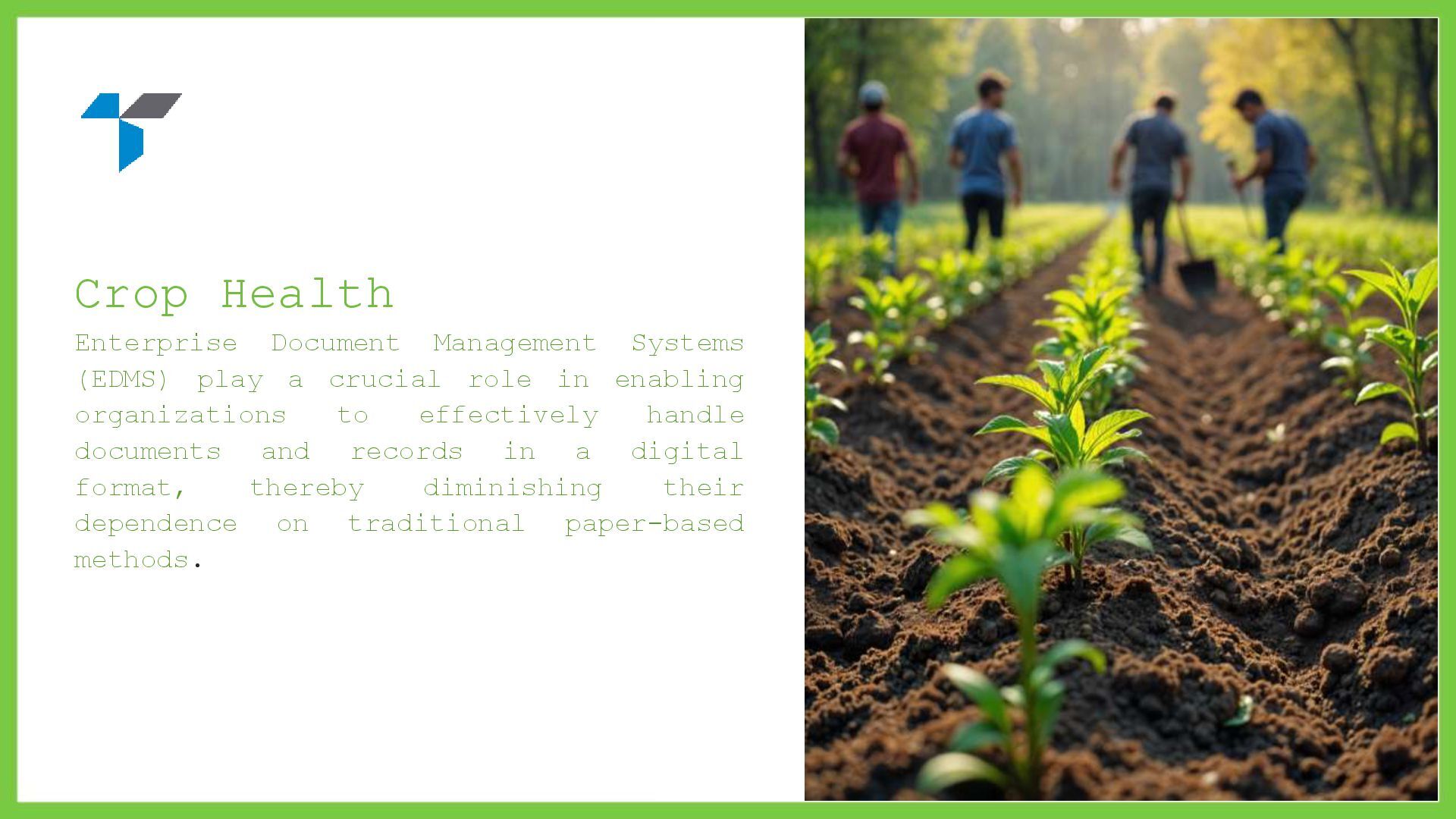
  15. Crop Health Enterprise Document Management Systems (EDMS) play a crucial

    role in enabling organizations to effectively handle documents and records in a digital format, thereby diminishing their dependence on traditional paper-based methods.
  16. 01 Overview of Strategic Initiatives Organization-wide adoption of cloud computing,

    big data analytics, and AI- driven decision-making; transforms business practices. 02 Key Outcomes and Improvements Increased market share by 20%, reduced operational costs by 15%, and improved customer satisfaction by 25% due digital transformation. 03 Lessons Learned and Future Strategies Focus on continuous technological advancement, employee empowerment, and customer-centric innovation to sustain growth. Company A: Digital Transformation Success Story
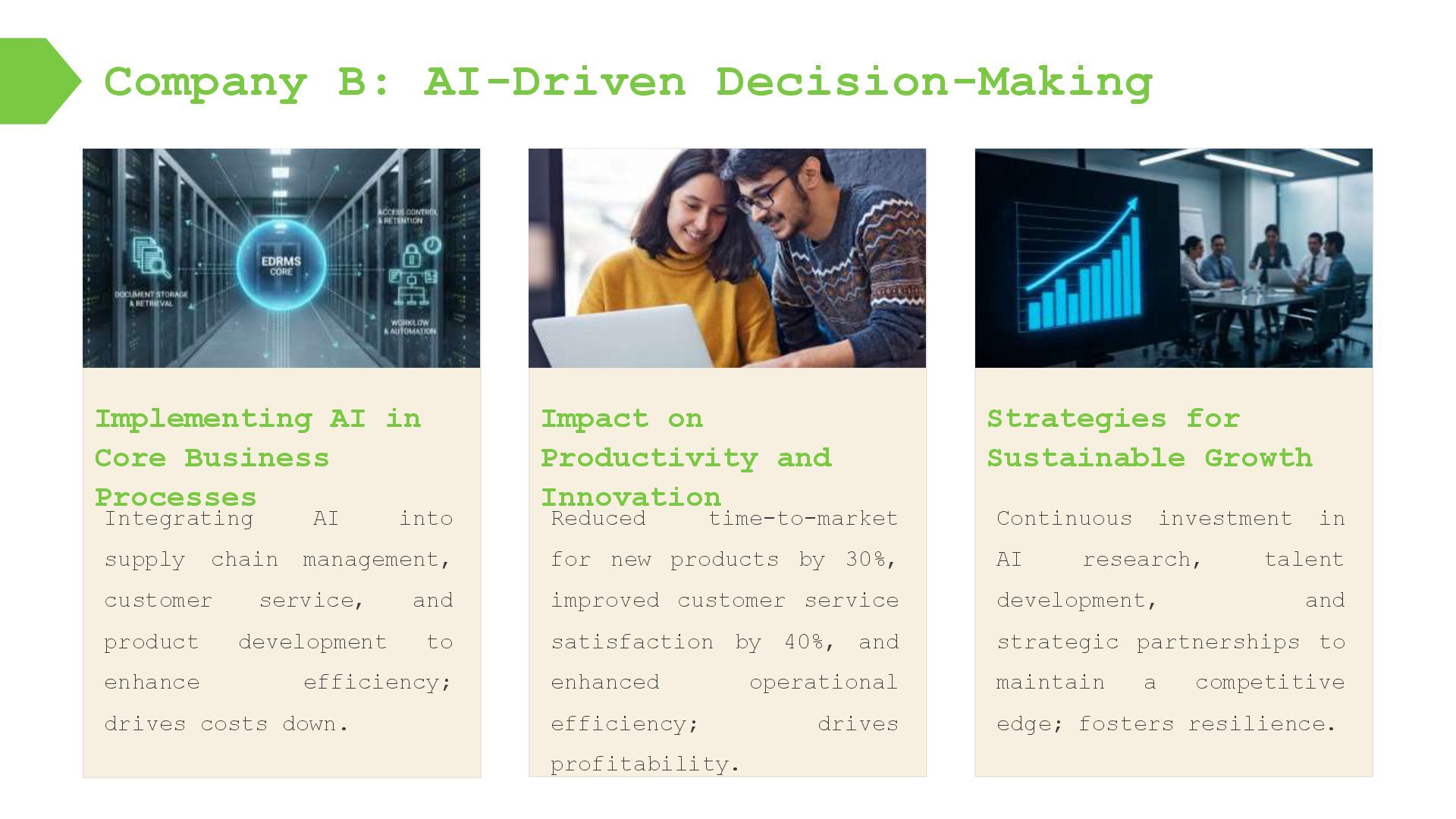
  17. Integrating AI into supply chain management, customer service, and product

    development to enhance efficiency; drives costs down. Implementing AI in Core Business Processes Reduced time-to-market for new products by 30%, improved customer service satisfaction by 40%, and enhanced operational efficiency; drives profitability. Impact on Productivity and Innovation Continuous investment in AI research, talent development, and strategic partnerships to maintain a competitive edge; fosters resilience. Strategies for Sustainable Growth Company B: AI-Driven Decision-Making
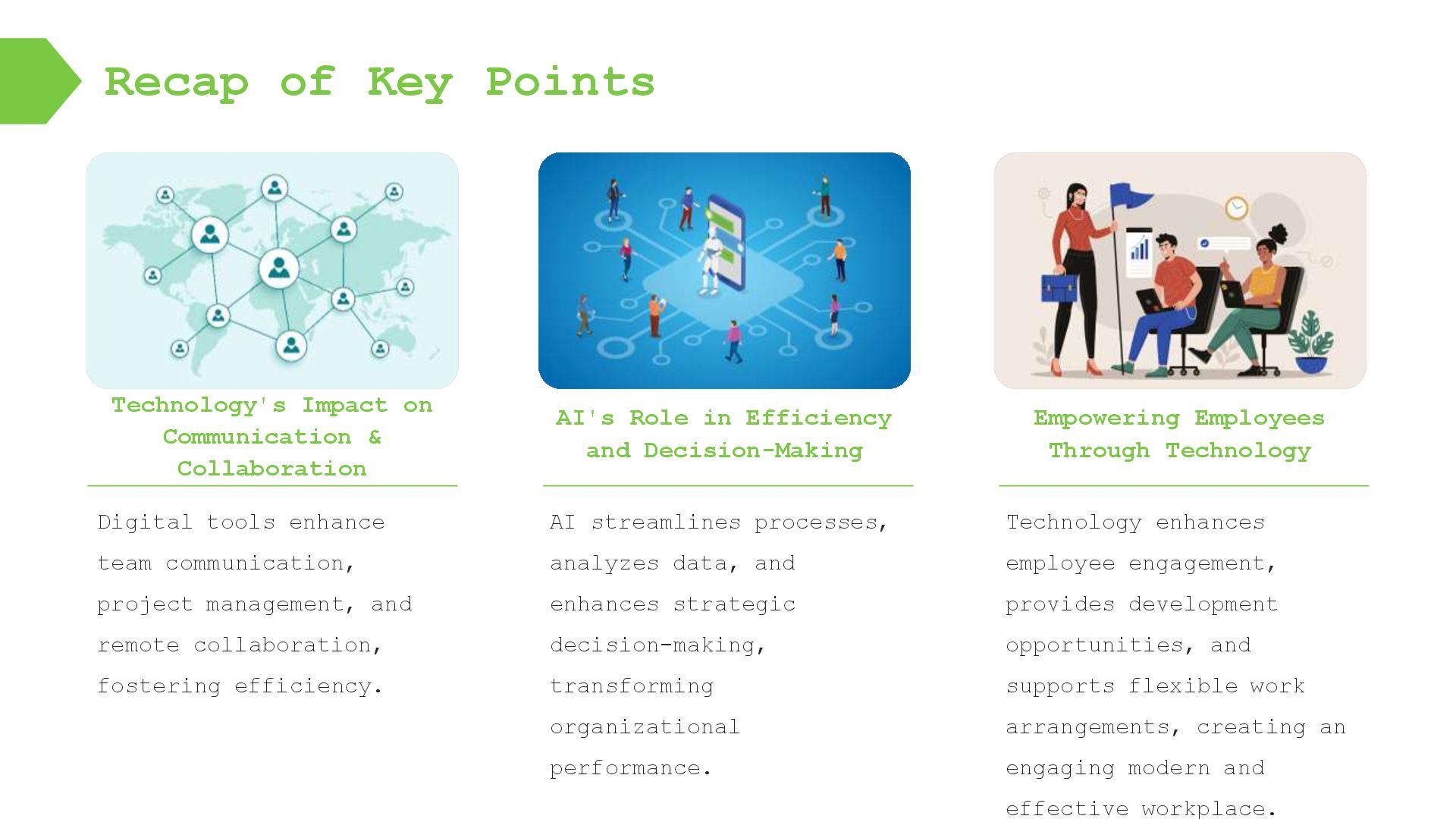
  18. Technology's Impact on Communication & Collaboration Digital tools enhance team

    communication, project management, and remote collaboration, fostering efficiency. Empowering Employees Through Technology AI streamlines processes, analyzes data, and enhances strategic decision-making, transforming organizational performance. AI's Role in Efficiency and Decision-Making Technology enhances employee engagement, provides development opportunities, and supports flexible work arrangements, creating an engaging modern and effective workplace. Recap of Key Points
  19. Leaders must embrace change, stay curious about technology, and foster

    a culture of continuous learning; ensures future readiness. Importance of Adaptability Tech-empowered leaders inspire, enable, and guide their teams through the digital transformation, fostering innovation; drives employee satisfaction and retention. Leadership in the Age of Digital Transformation Embrace technology, empower teams, and lead the way toward a thriving digital future; ensures continued organizational success. Call to Action for Leaders Final Thoughts: Embracing Change and Leading the Future