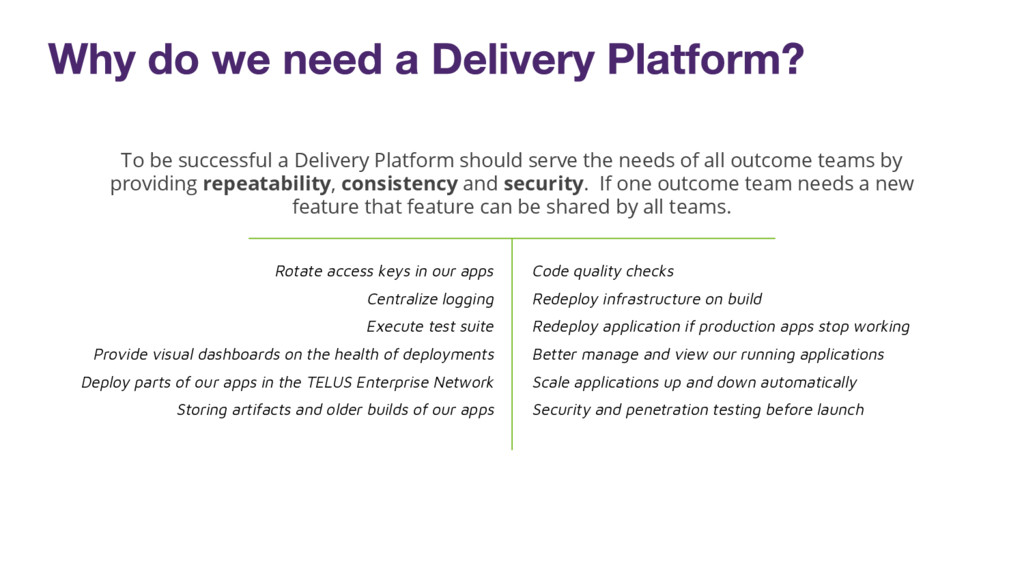
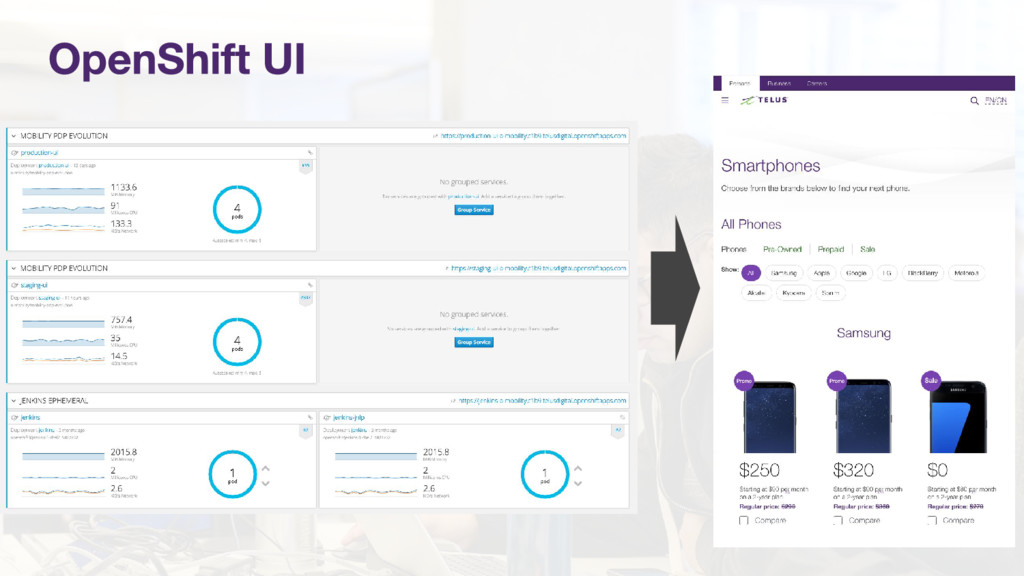
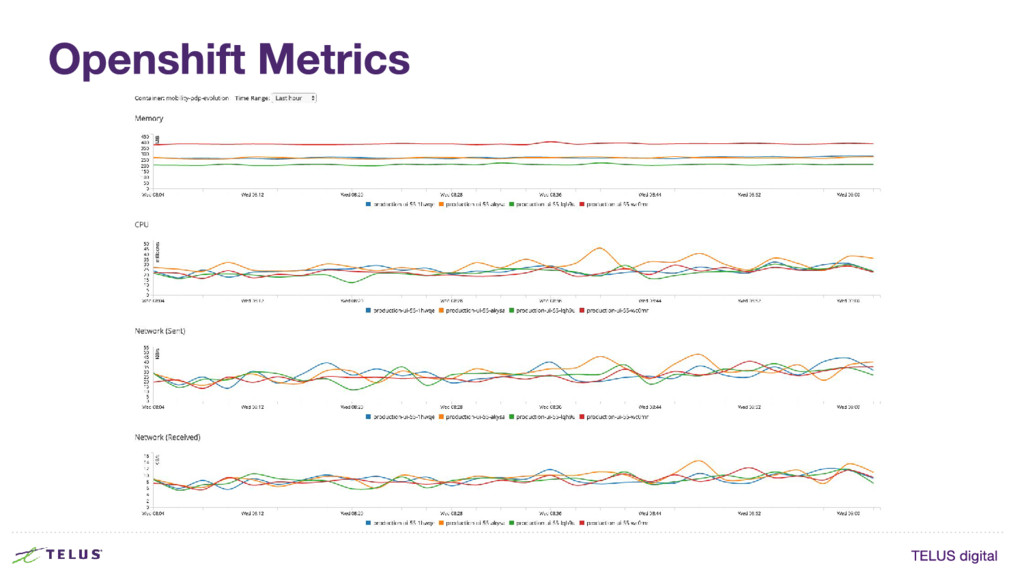
of all outcome teams by providing repeatability, consistency and security. If one outcome team needs a new feature that feature can be shared by all teams. Rotate access keys in our apps Centralize logging Execute test suite Provide visual dashboards on the health of deployments Deploy parts of our apps in the TELUS Enterprise Network Storing artifacts and older builds of our apps Code quality checks Redeploy infrastructure on build Redeploy application if production apps stop working Better manage and view our running applications Scale applications up and down automatically Security and penetration testing before launch
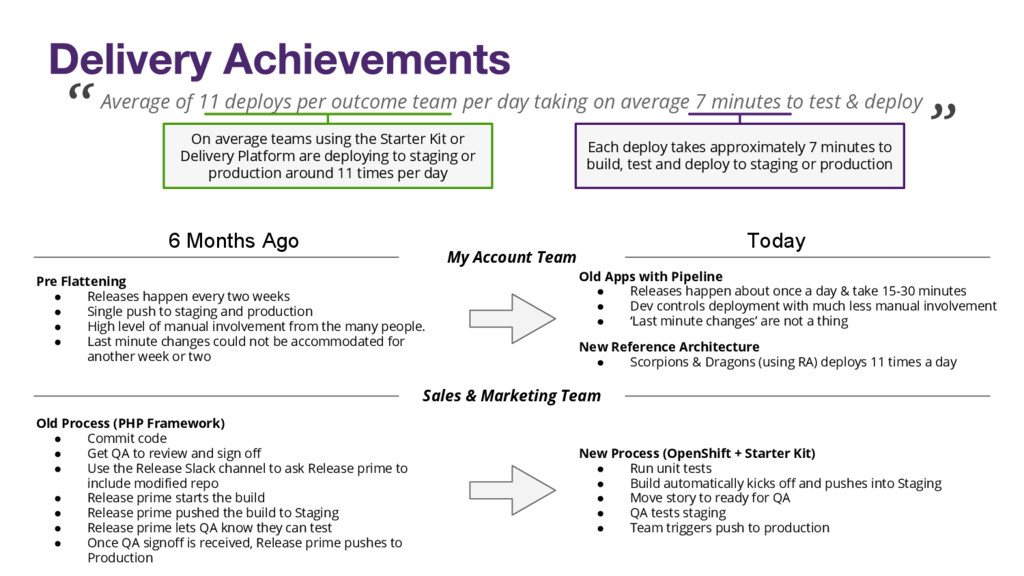
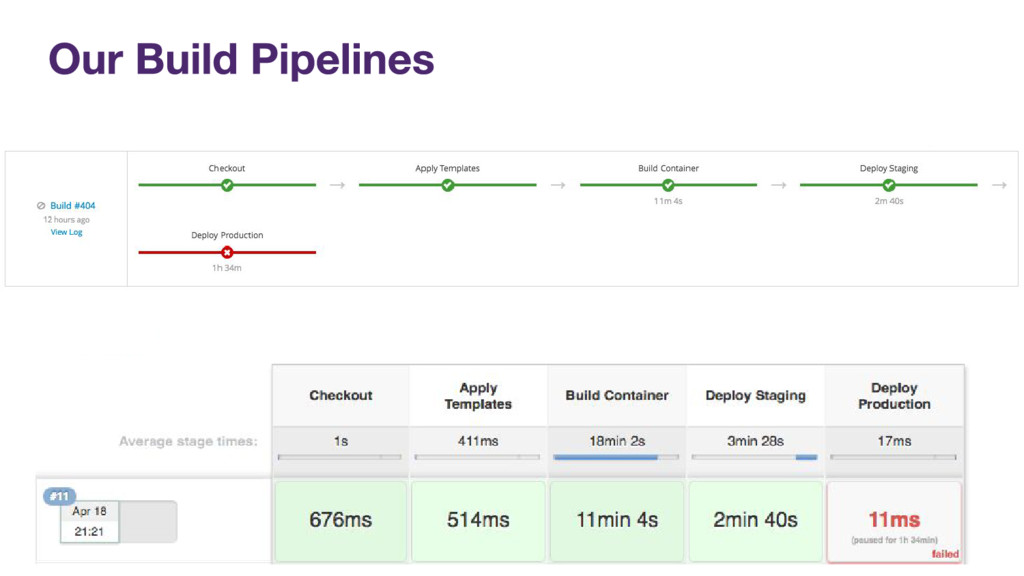
on average 7 minutes to test & deploy “ ” On average teams using the Starter Kit or Delivery Platform are deploying to staging or production around 11 times per day Each deploy takes approximately 7 minutes to build, test and deploy to staging or production Old Process (PHP Framework) • Commit code • Get QA to review and sign off • Use the Release Slack channel to ask Release prime to include modified repo • Release prime starts the build • Release prime pushed the build to Staging • Release prime lets QA know they can test • Once QA signoff is received, Release prime pushes to Production New Process (OpenShift + Starter Kit) • Run unit tests • Build automatically kicks off and pushes into Staging • Move story to ready for QA • QA tests staging • Team triggers push to production Pre Flattening • Releases happen every two weeks • Single push to staging and production • High level of manual involvement from the many people. • Last minute changes could not be accommodated for another week or two My Account Team 6 Months Ago Old Apps with Pipeline • Releases happen about once a day & take 15-30 minutes • Dev controls deployment with much less manual involvement • ‘Last minute changes’ are not a thing New Reference Architecture • Scorpions & Dragons (using RA) deploys 11 times a day Today Sales & Marketing Team
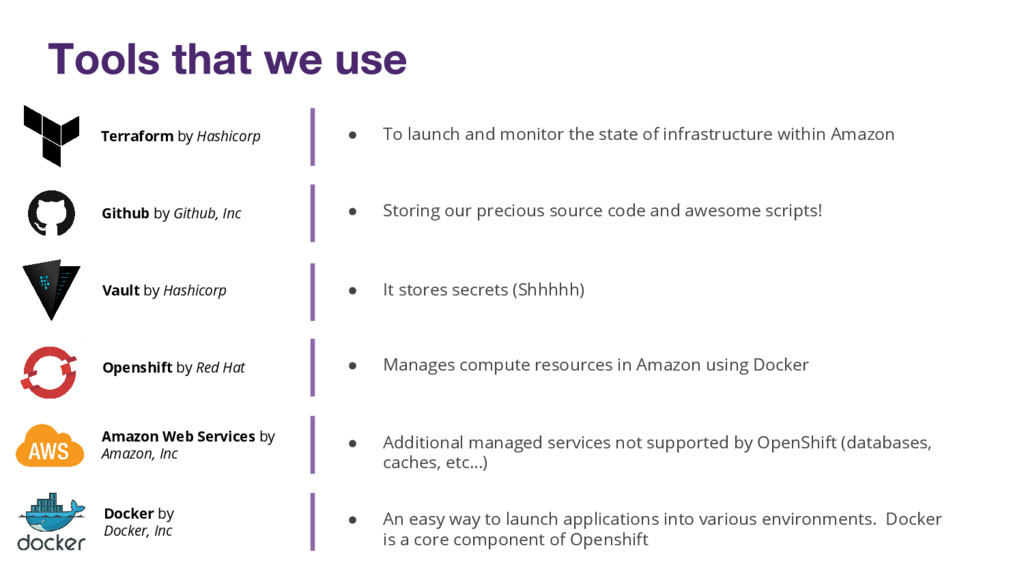
Openshift by Red Hat Amazon Web Services by Amazon, Inc • Storing our precious source code and awesome scripts! • To launch and monitor the state of infrastructure within Amazon • It stores secrets (Shhhhh) • Manages compute resources in Amazon using Docker • Additional managed services not supported by OpenShift (databases, caches, etc…) • An easy way to launch applications into various environments. Docker is a core component of Openshift Docker by Docker, Inc
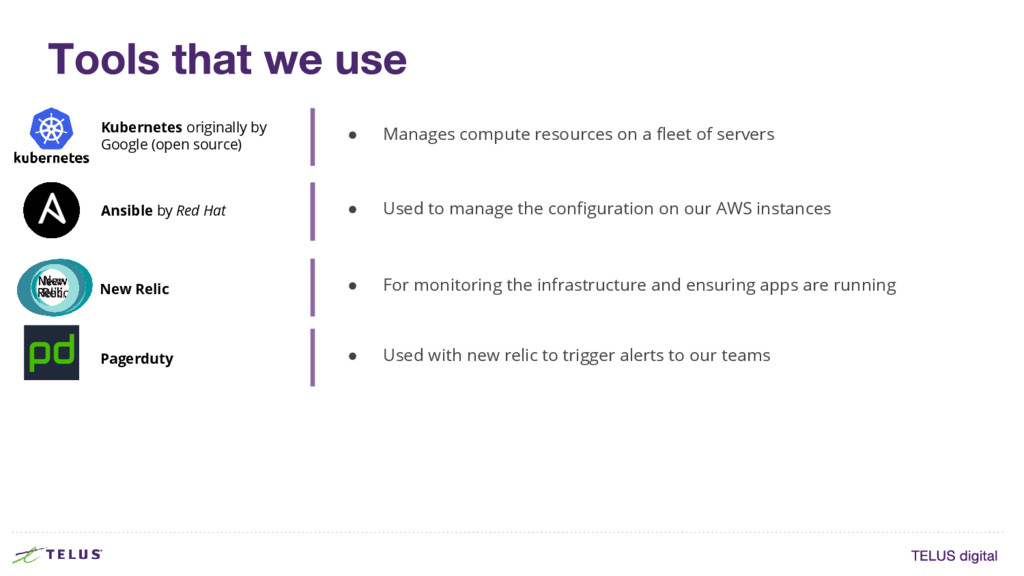
ensuring apps are running • Used to manage the configuration on our AWS instances New Relic • Used with new relic to trigger alerts to our teams Pagerduty Kubernetes originally by Google (open source) • Manages compute resources on a fleet of servers


 telusdigital
 marktimemedia
 tomoyanonymous
 ipullrank
 bryan
 jonyablonski
 skipperchong
 jeffersonlam
 rasagy
 denniskardys
 jonrohan
 palkan
 apolaine