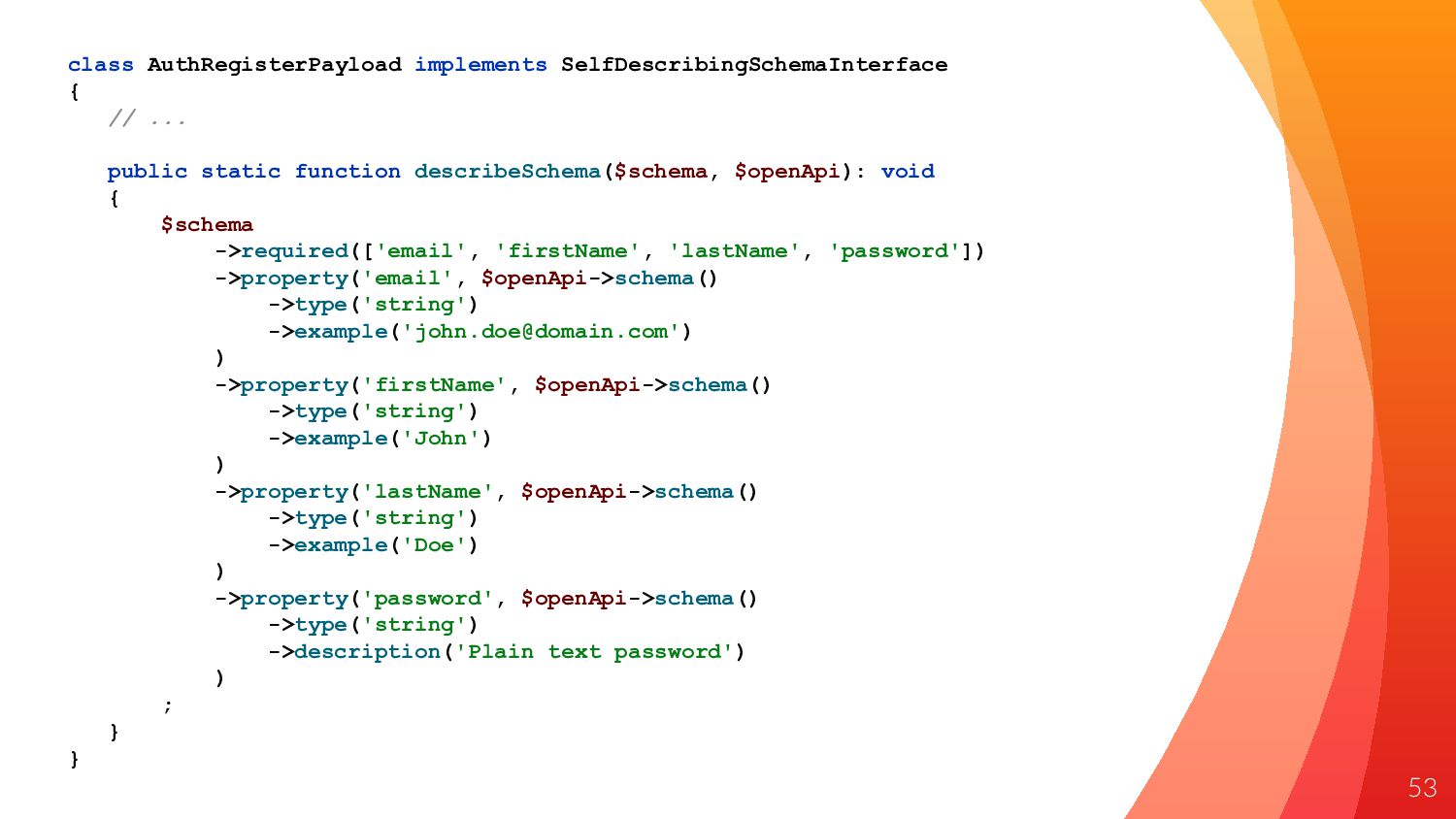
'string')] #[Assert\NotBlank] public $firstName; #[Assert\Type(type: 'string')] #[Assert\NotBlank] public $lastName; #[Assert\Type(type: 'string')] #[Assert\NotBlank] public $password; }
'string')] #[Assert\NotBlank] public $firstName; #[Assert\Type(type: 'string')] #[Assert\NotBlank] public $lastName; #[Assert\Type(type: 'string')] #[Assert\NotBlank] public $password; }
un champ optionnel ✅ Renommer un champ ❌ Supprimer (ignorer) un champ ✅ Compatibilité en output Ajouter un champ ✅ Renommer un champ ❌ Supprimer un champ ❌
public $password; } class V2\AuthRegisterPayload { #[Assert\NotBlank] public $email; #[Assert\Type(type: 'string')] #[Assert\NotBlank] public $firstName; #[Assert\Type(type: 'string')] #[Assert\NotBlank] public $lastName; #[Assert\Type(type: 'string')] #[Assert\NotBlank] public $password; }
1. Ajout du nouveau champ en optionnel 2. Dépréciation du précédent champ (si applicable) 3. Utilisation priorisée nouveau > ancien 4. Prochaine majeure : suppression ancien champ
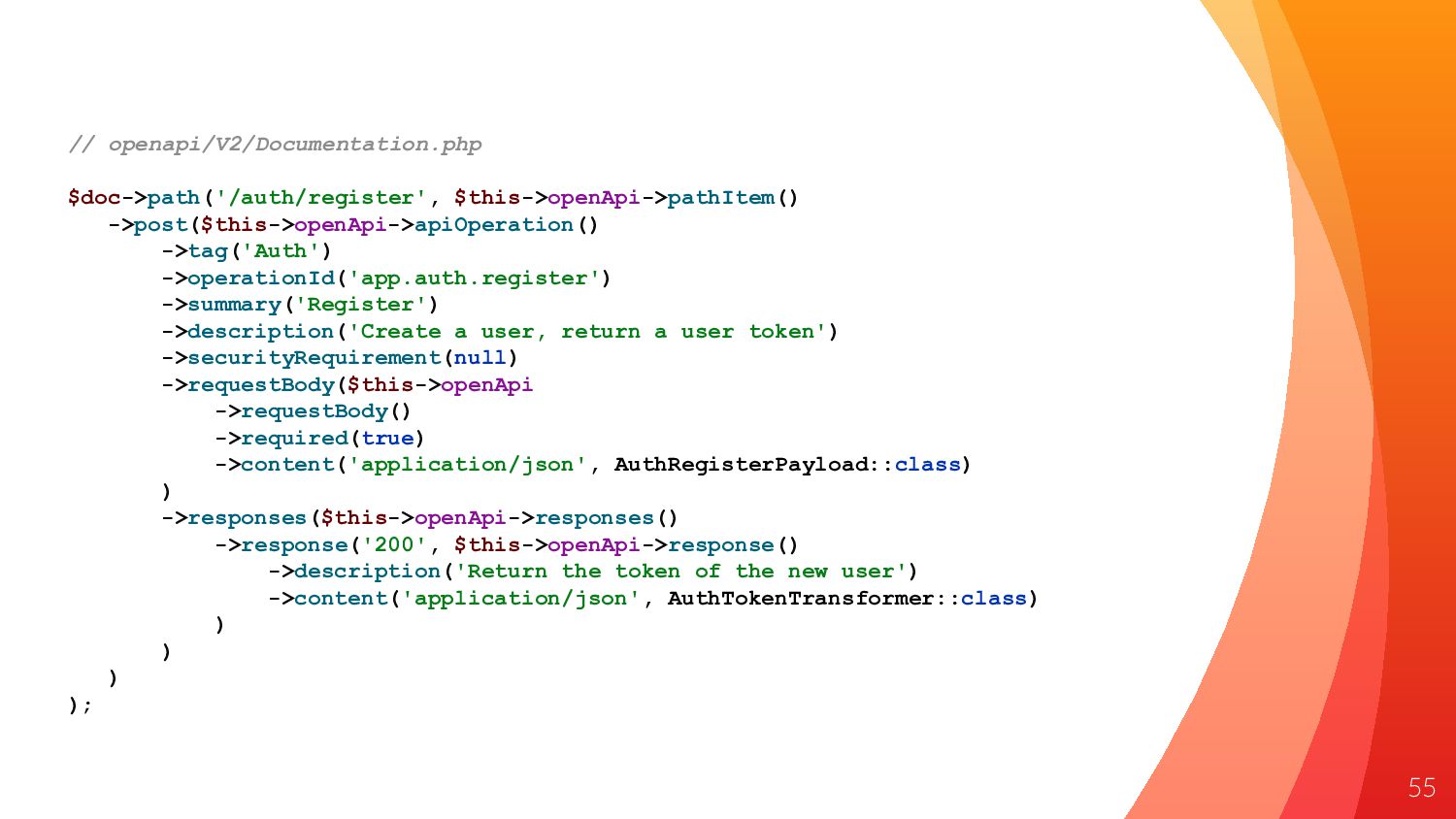
a user, return a user token') ->securityRequirement(null) ->requestBody($this->openApi ->requestBody() ->required(true) ->content('application/json', AuthRegisterPayload::class) ) ->responses($this->openApi->responses() ->response('200', $this->openApi->response() ->description('Return the token of the new user') ->content('application/json', AuthTokenTransformer::class) ) ) ) );
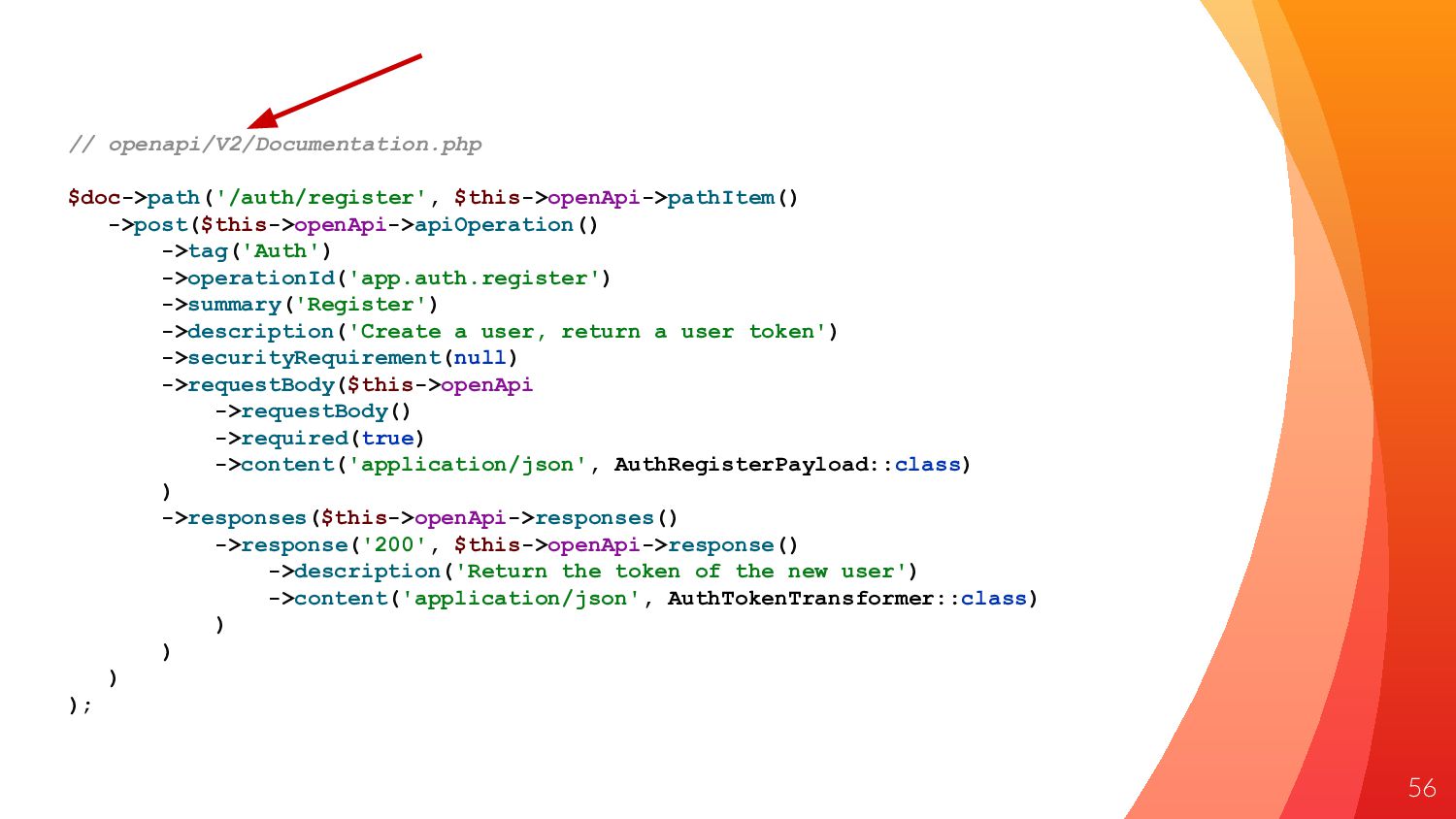
a user, return a user token') ->securityRequirement(null) ->requestBody($this->openApi ->requestBody() ->required(true) ->content('application/json', AuthRegisterPayload::class) ) ->responses($this->openApi->responses() ->response('200', $this->openApi->response() ->description('Return the token of the new user') ->content('application/json', AuthTokenTransformer::class) ) ) ) );


 tgalopin
 tetsuya28
 prog893
 fespinoza
 knishioka
 bgpat
bgpat
.png) codatum
codatum
 gogutan
 teamlab
 genda
genda
 odashi
 rfdnxbro
 greenmidori
 stephenakadiri
 skipperchong
 akashhashmi
 takai
takai
 codingconduct
 tmiket
 joshbly
 frankvandijk
 carmenintech
 tammielis
 inesmontani
 bethany


![26 class AuthRegisterPayload { #[Assert\Email(mode: Email::VALIDATION_MODE_STRICT)] #[Assert\NotBlank] public $email; #[Assert\Type(type:](https://files.speakerdeck.com/presentations/8e97b74d7a804dd3a98aa8816d7373d9/slide_25.jpg)
![27 class AuthRegisterPayload { #[Assert\Email(mode: Email::VALIDATION_MODE_STRICT)] #[Assert\NotBlank] public $email; #[Assert\Type(type:](https://files.speakerdeck.com/presentations/8e97b74d7a804dd3a98aa8816d7373d9/slide_26.jpg)
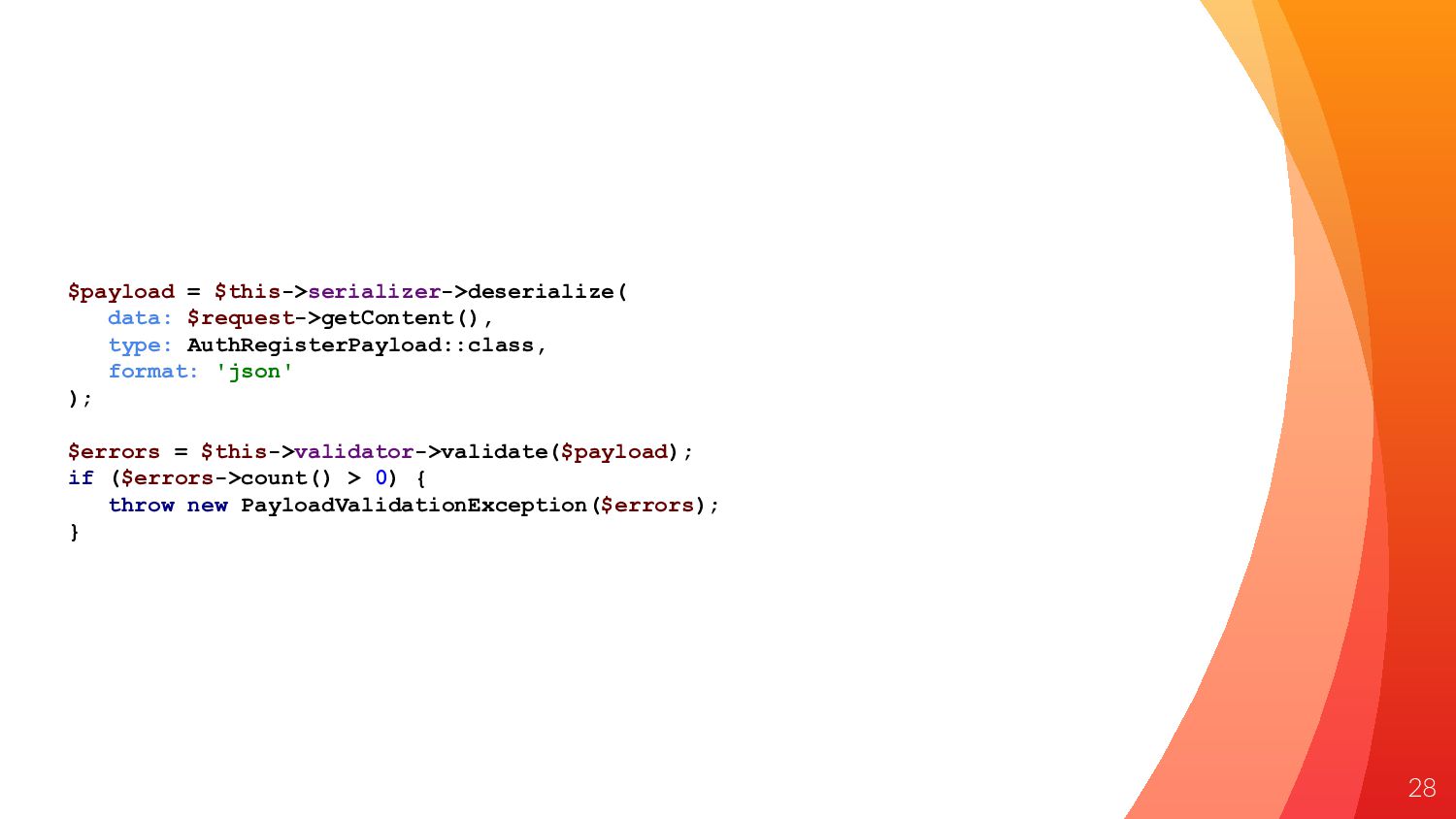




![43 class V1\AuthRegisterPayload { #[Assert\NotBlank] public $email; #[Assert\Type(type: 'string')] #[Assert\NotBlank]](https://files.speakerdeck.com/presentations/8e97b74d7a804dd3a98aa8816d7373d9/slide_42.jpg)