slides will walk you through the components of an interview guide created for a discovery research effort on how teams set and manage goals. Pay attention to the intent of each section as you create your own User Interview Guide. You can download this sample script and adjust it for your own use.
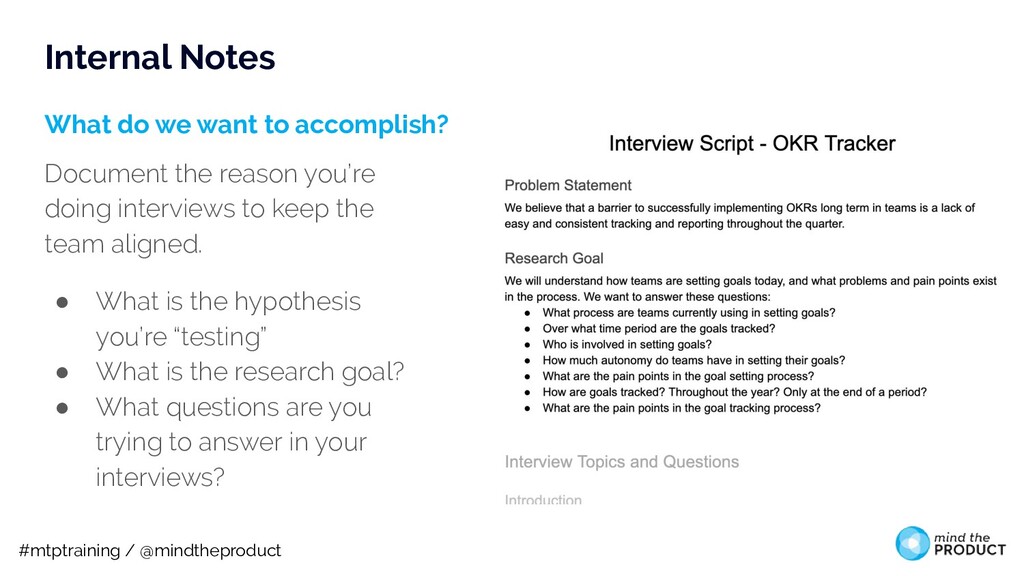
interviews to keep the team aligned. • What is the hypothesis you’re “testing” • What is the research goal? • What questions are you trying to answer in your interviews? What do we want to accomplish?
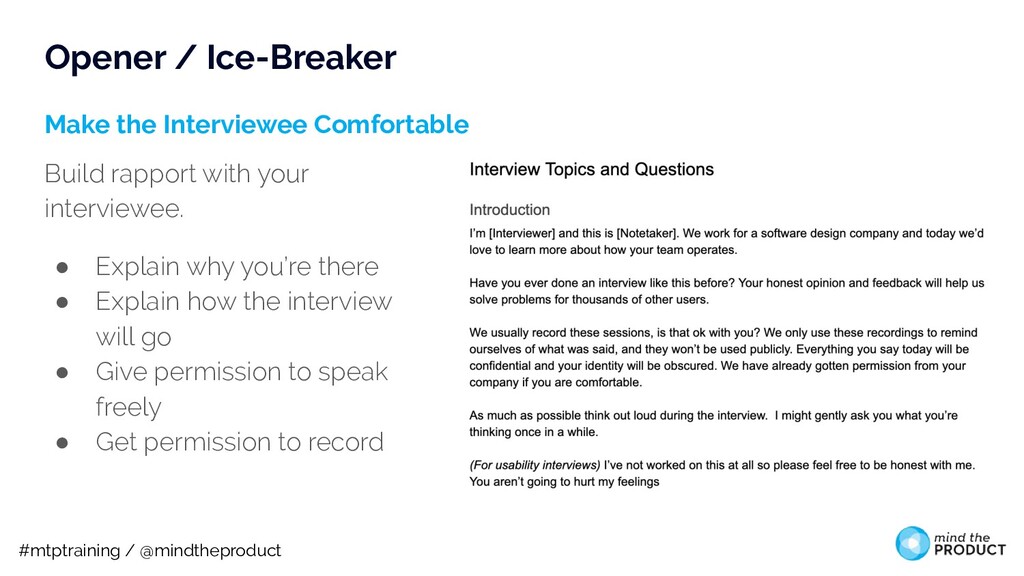
interviewee. • Explain why you’re there • Explain how the interview will go • Give permission to speak freely • Get permission to record Make the Interviewee Comfortable
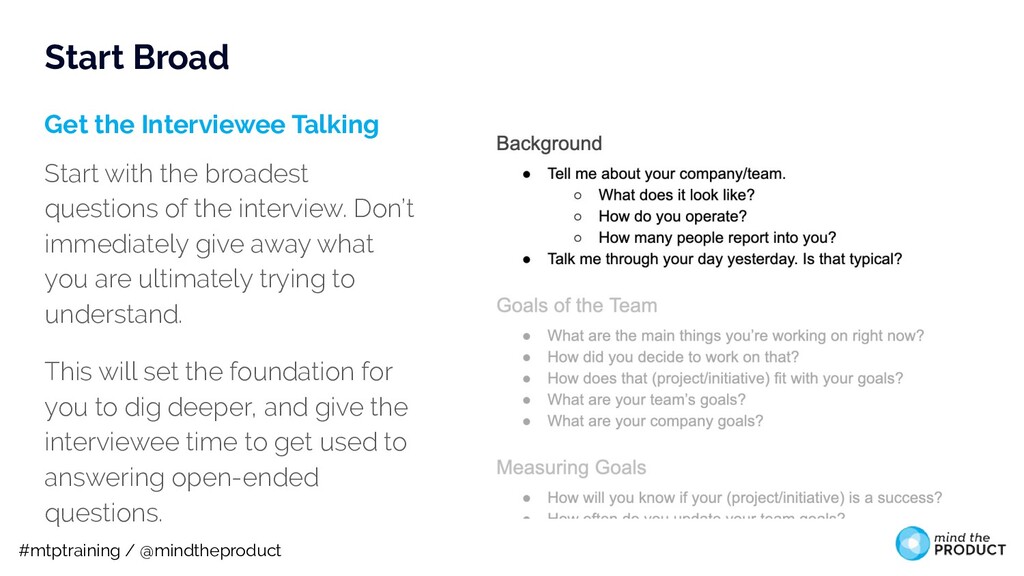
of the interview. Don’t immediately give away what you are ultimately trying to understand. This will set the foundation for you to dig deeper, and give the interviewee time to get used to answering open-ended questions. Get the Interviewee Talking
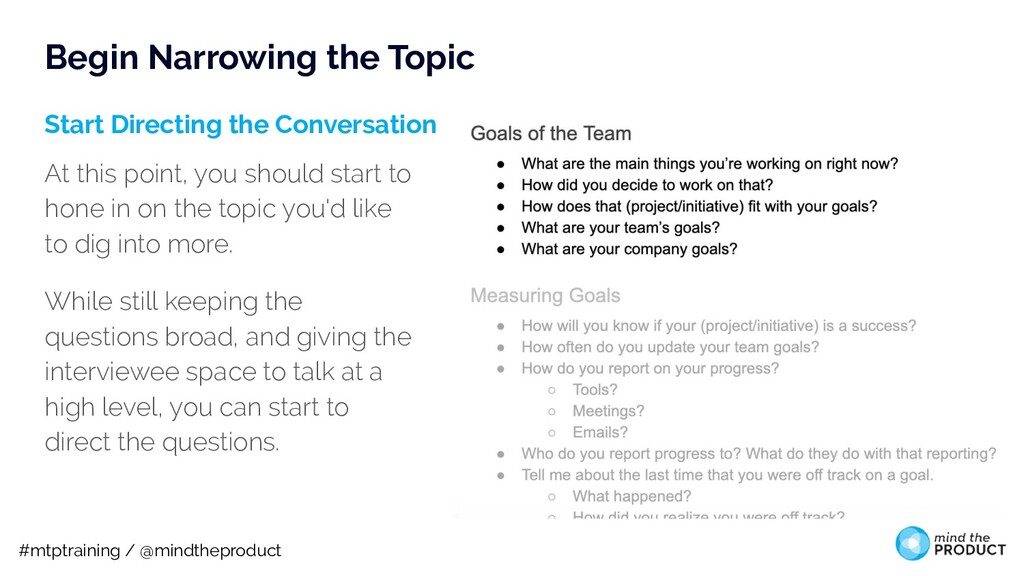
you should start to hone in on the topic you'd like to dig into more. While still keeping the questions broad, and giving the interviewee space to talk at a high level, you can start to direct the questions. Start Directing the Conversation
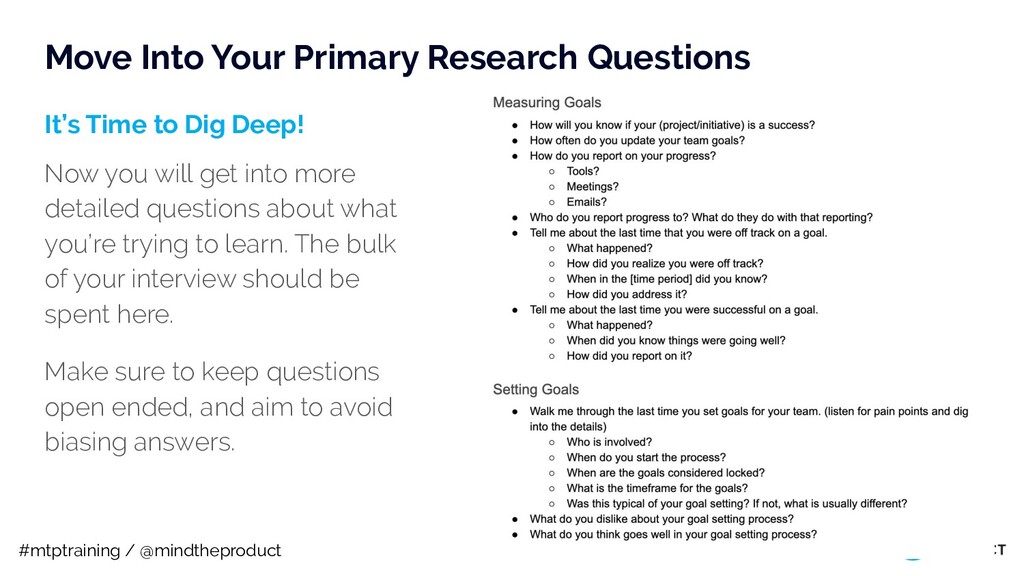
you will get into more detailed questions about what you’re trying to learn. The bulk of your interview should be spent here. Make sure to keep questions open ended, and aim to avoid biasing answers. It’s Time to Dig Deep!
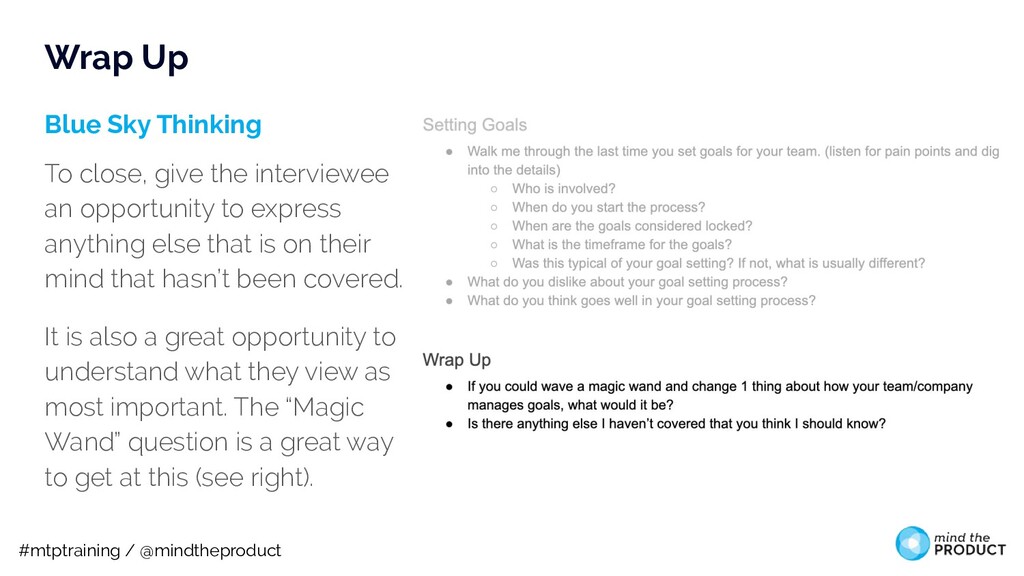
an opportunity to express anything else that is on their mind that hasn’t been covered. It is also a great opportunity to understand what they view as most important. The “Magic Wand” question is a great way to get at this (see right). Blue Sky Thinking
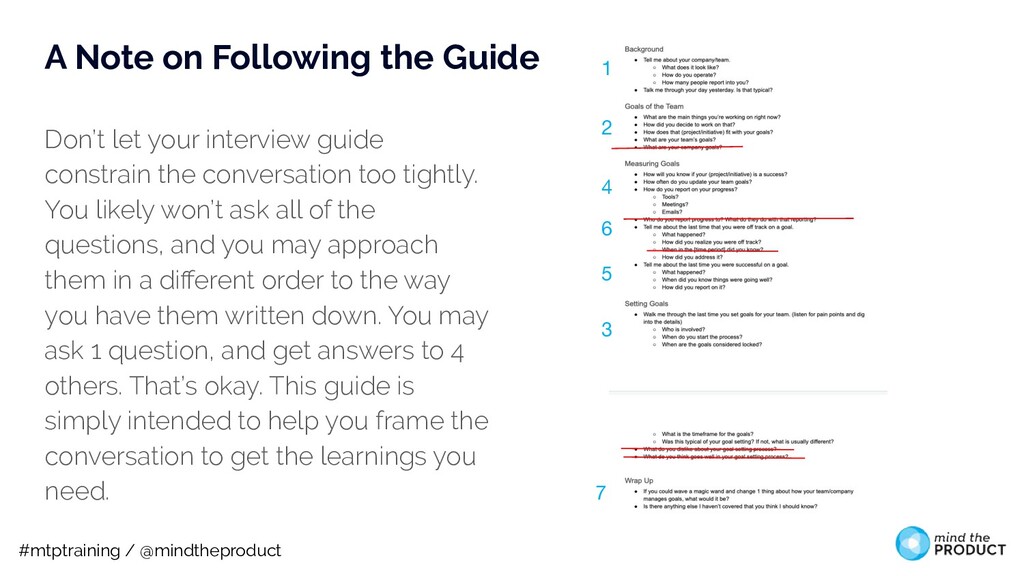
let your interview guide constrain the conversation too tightly. You likely won’t ask all of the questions, and you may approach them in a different order to the way you have them written down. You may ask 1 question, and get answers to 4 others. That’s okay. This guide is simply intended to help you frame the conversation to get the learnings you need. 1 2 3 4 5 6 7


 thedailyem
 frankvandijk
 tamaranovitovic
 aleyda
 irinanazarova
 palkan
 marcelosomers
 reverentgeek
 techseoconnect
 michaelherold
 danielanewman
 chriscoyier
 csswizardry