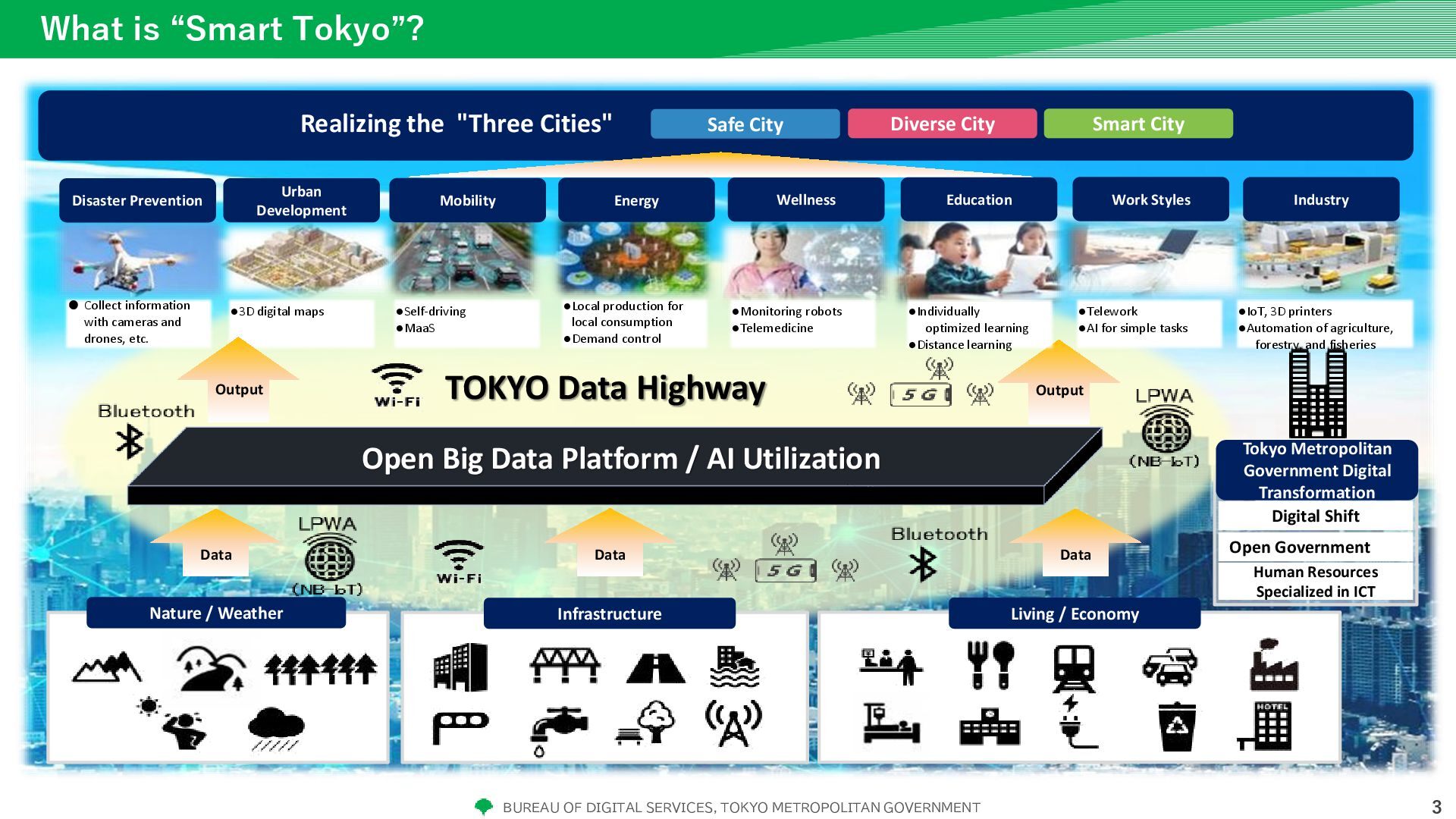
“Smart Tokyo”? 3 Tokyo Metropolitan Government Digital Transformation Open Government Human Resources Specialized in ICT TOKYO Data Highway Diverse City Smart City Safe City Open Big Data Platform / AI Utilization Nature / Weather Infrastructure Data Data Data Living / Economy Output Digital Shift Industry •Monitoring robots •Telemedicine •Local production for local consumption •Demand control Energy Disaster Prevention Urban Development •3D digital maps Work Styles •Telework •AI for simple tasks •Self-driving •MaaS • Collect information with cameras and drones, etc. •Individually optimized learning •Distance learning •IoT, 3D printers •Automation of agriculture, forestry, and fisheries Mobility Realizing the "Three Cities" Wellness Education Output
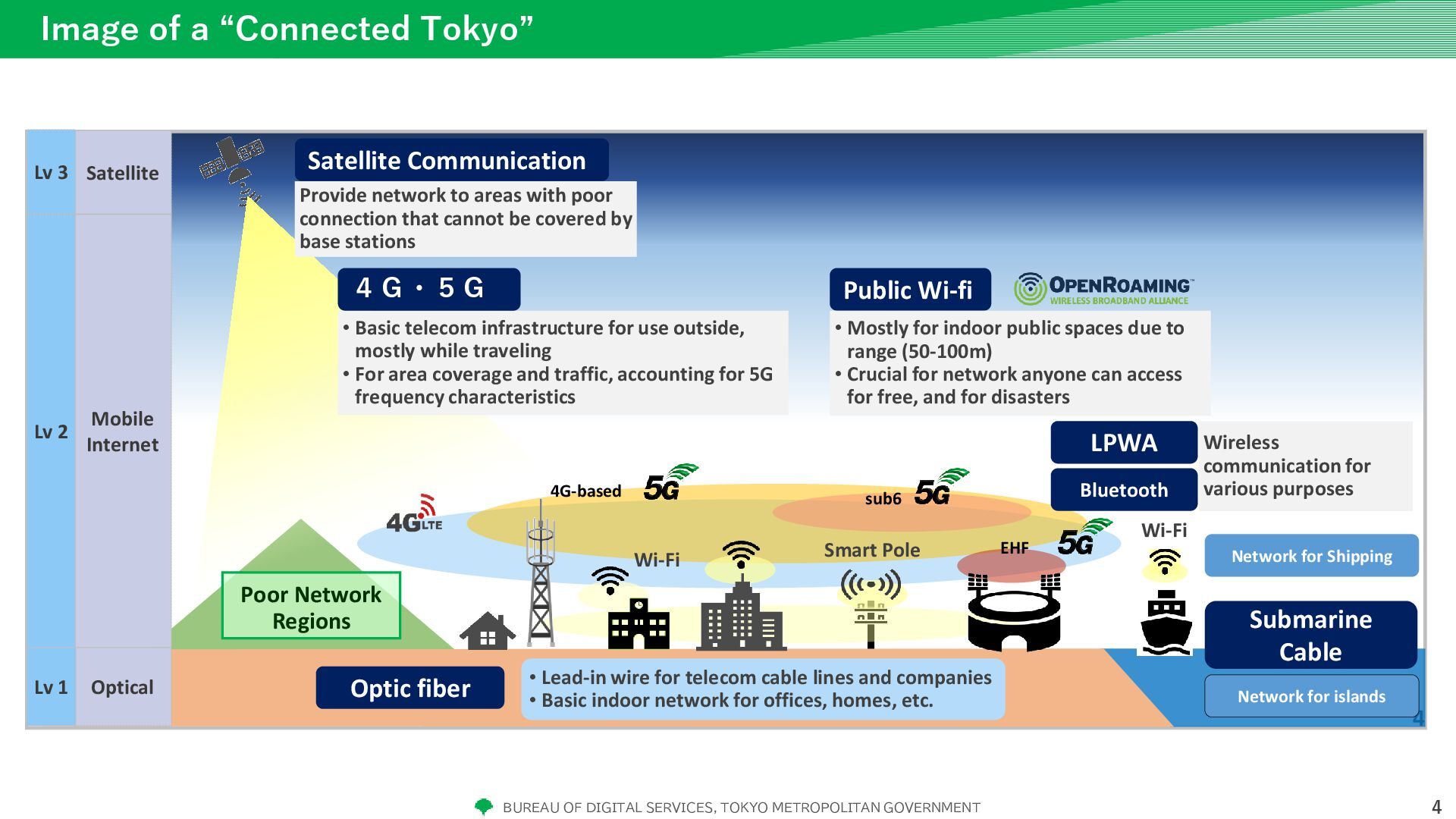
a “Connected Tokyo” 4 Satellite Communication Public Wi-fi Submarine Cable Smart Pole • Mostly for indoor public spaces due to range (50-100m) • Crucial for network anyone can access for free, and for disasters Network for Shipping • Lead-in wire for telecom cable lines and companies • Basic indoor network for offices, homes, etc. Optic fiber Poor Network Regions Wi-Fi 4G-based EHF sub6 Wi-Fi • Basic telecom infrastructure for use outside, mostly while traveling • For area coverage and traffic, accounting for 5G frequency characteristics LPWA Bluetooth Satellite Lv 3 Optical Mobile Internet Wireless communication for various purposes Lv 2 Lv 1 Network for islands Provide network to areas with poor connection that cannot be covered by base stations 4G・5G
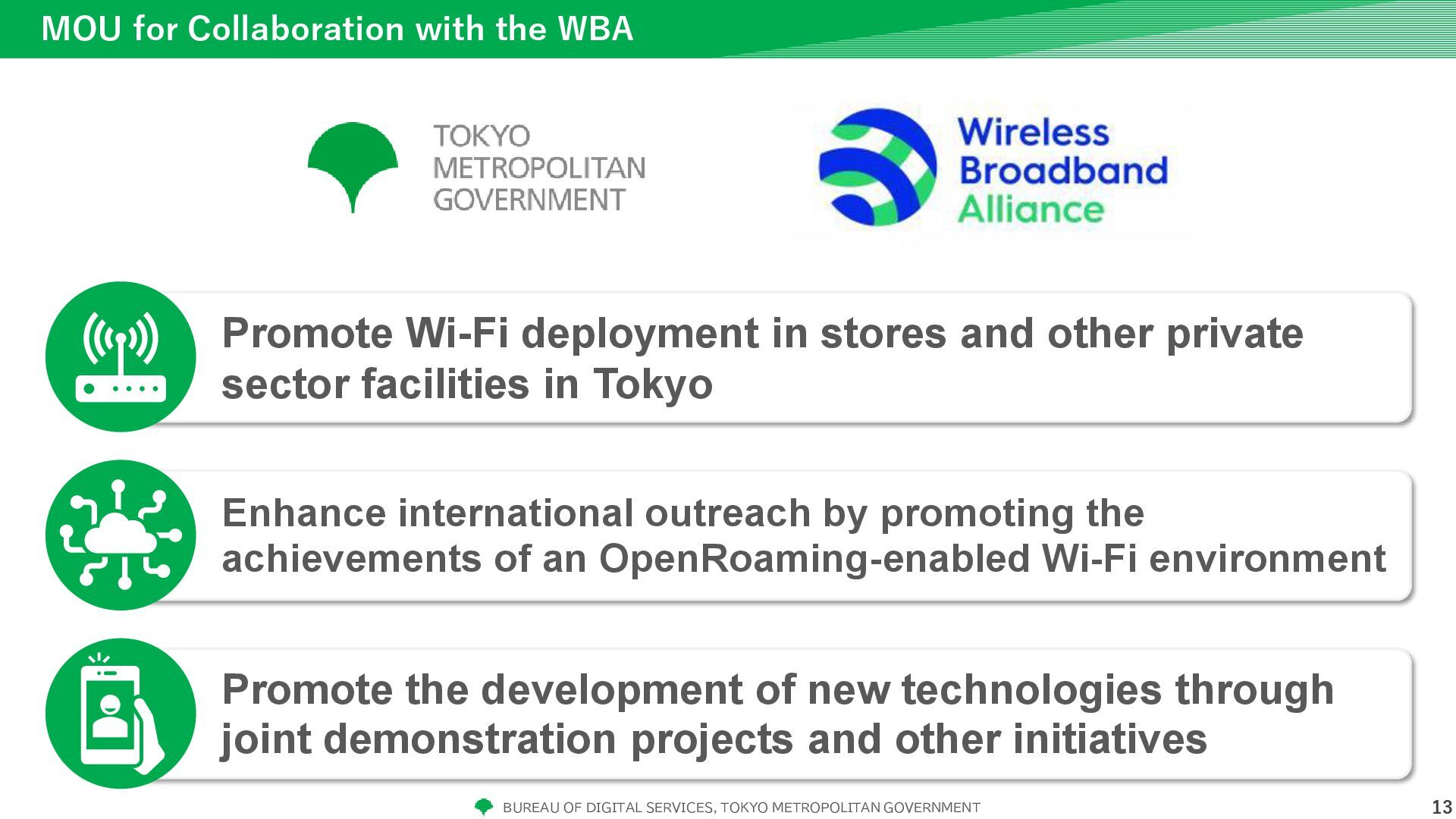
Collaboration with the WBA Promote the development of new technologies through joint demonstration projects and other initiatives Enhance international outreach by promoting the achievements of an OpenRoaming-enabled Wi-Fi environment Promote Wi-Fi deployment in stores and other private sector facilities in Tokyo


 ivargrimstad
 nmsamuel
 reverentgeek
 ryanjones
 marketingsoph
 jnunemaker
 eileencodes
 jacobtomlinson
 kimpetersen
 honzajavorek
 rabernat
 jakevdp