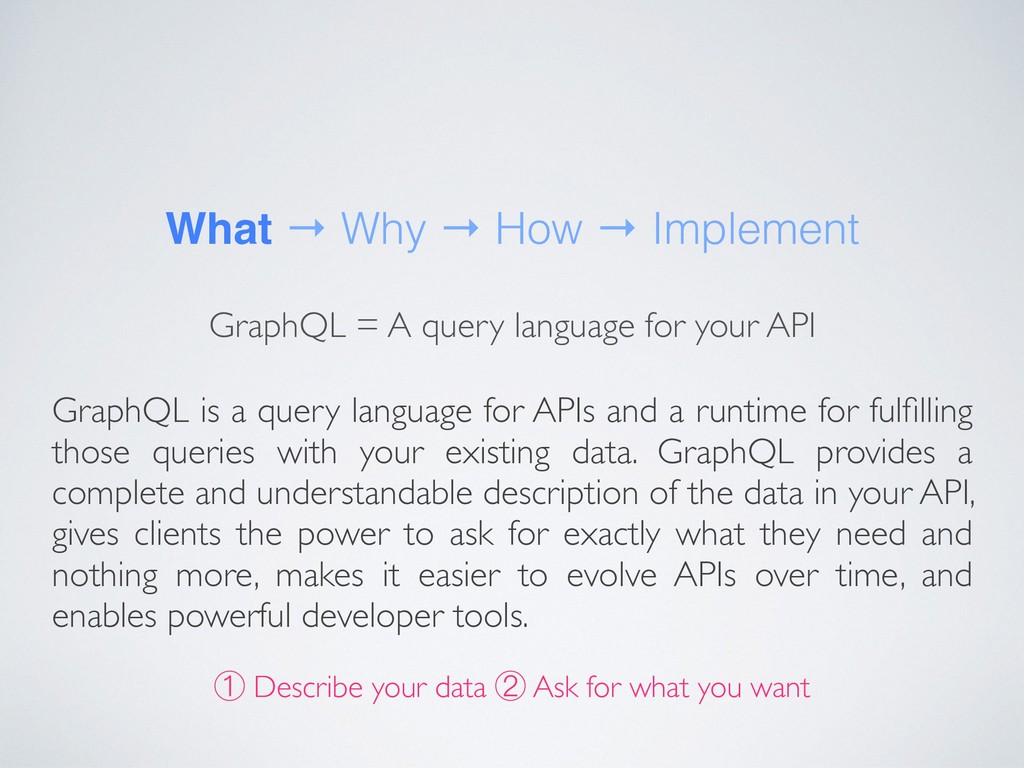
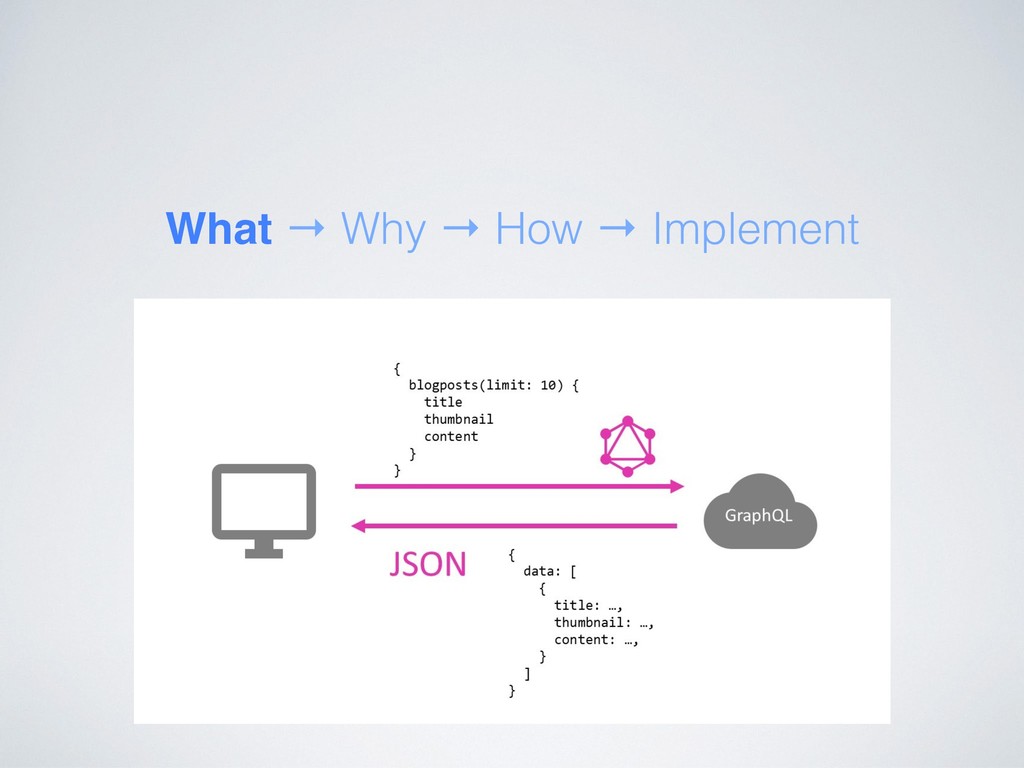
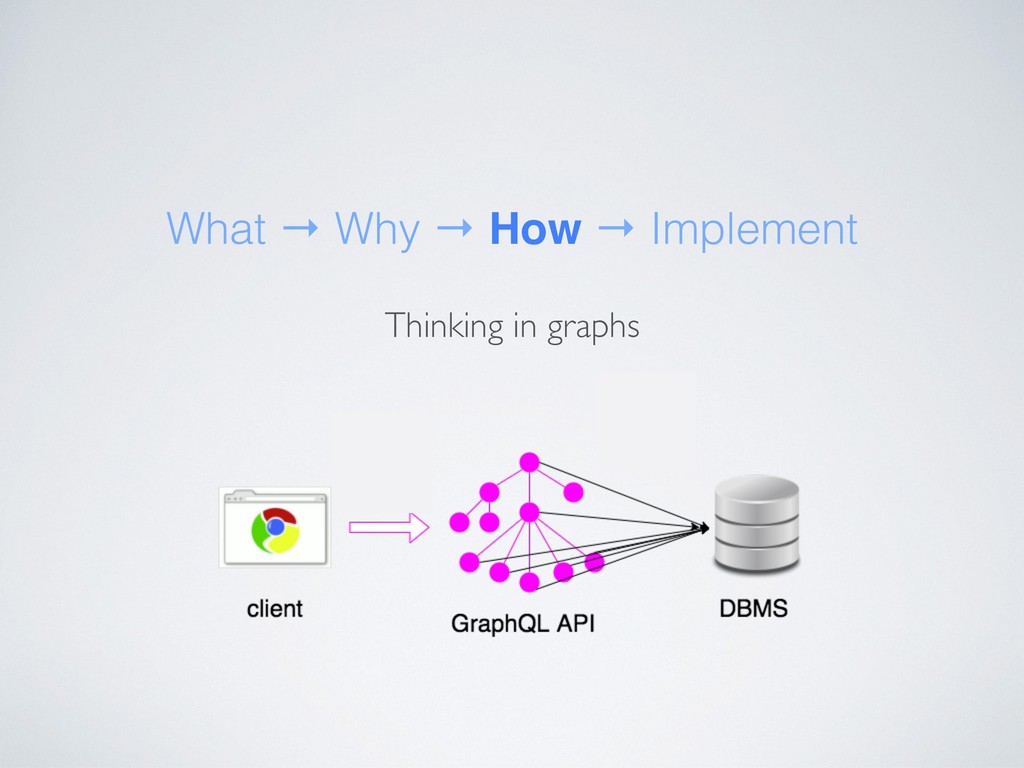
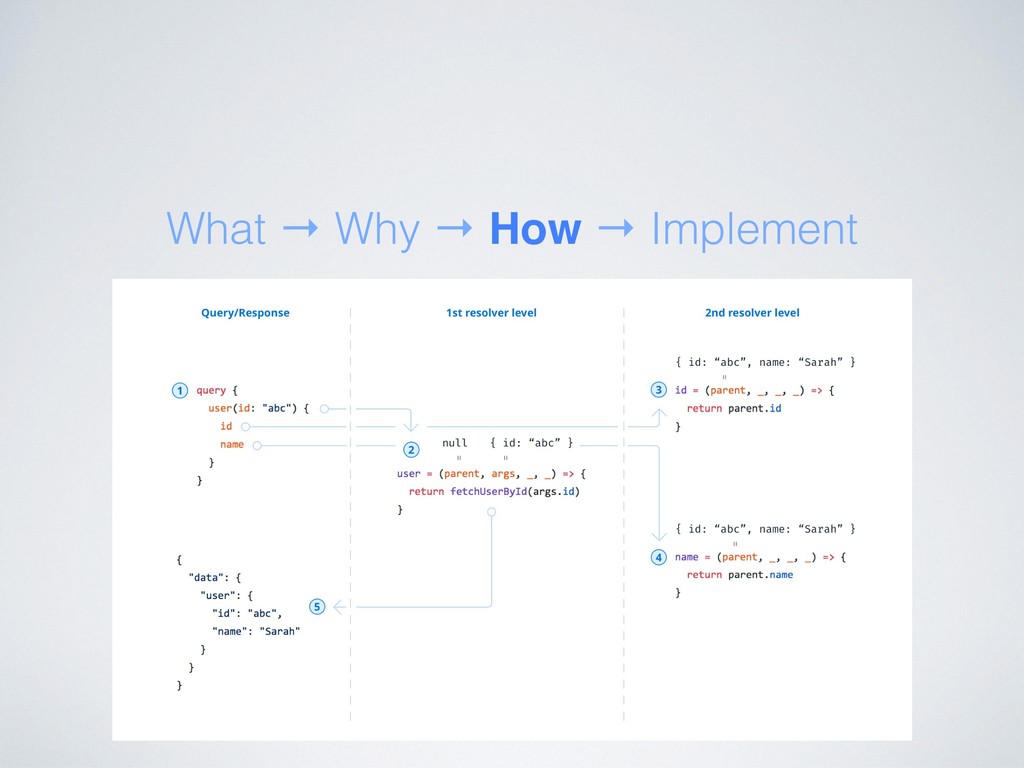
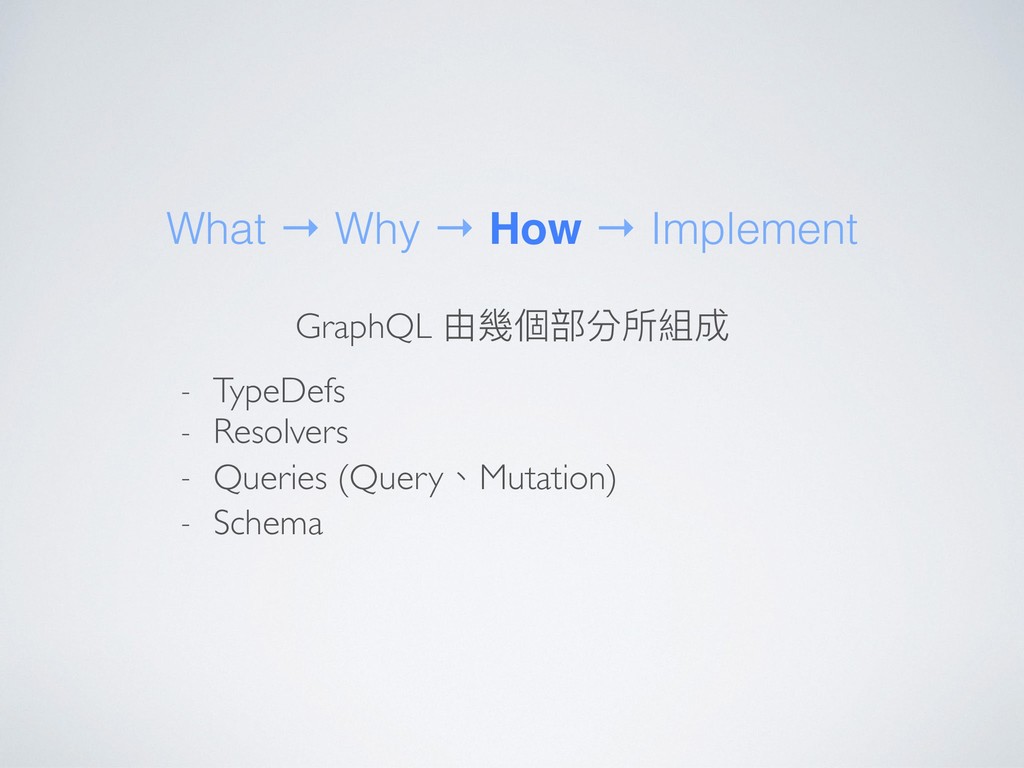
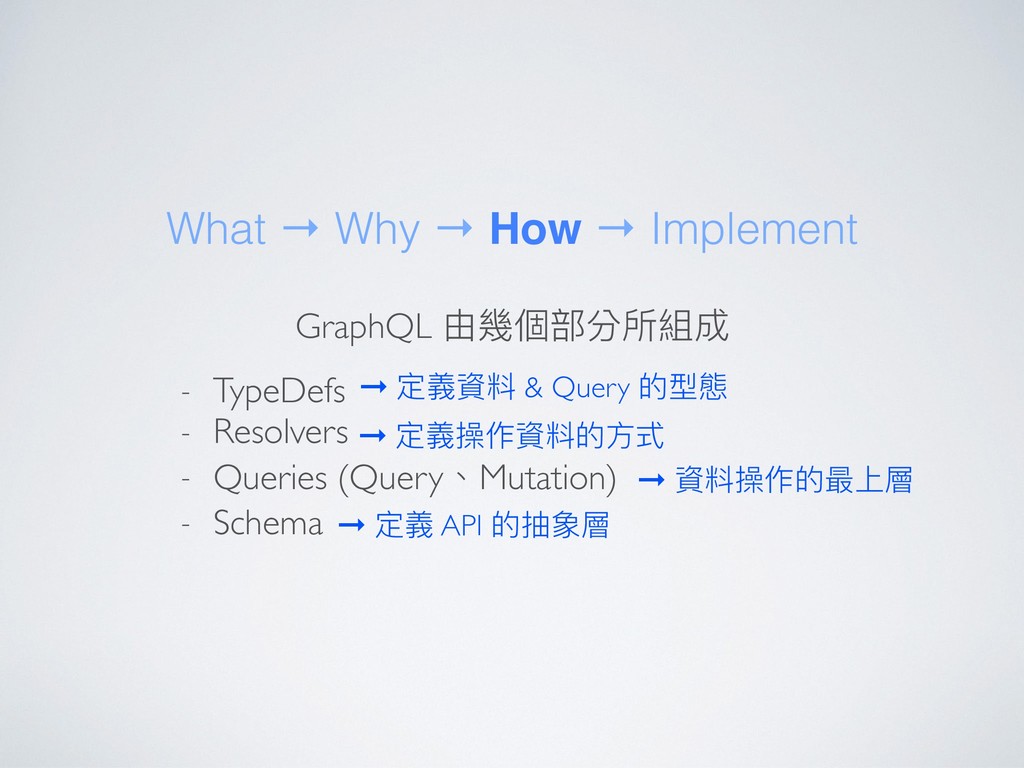
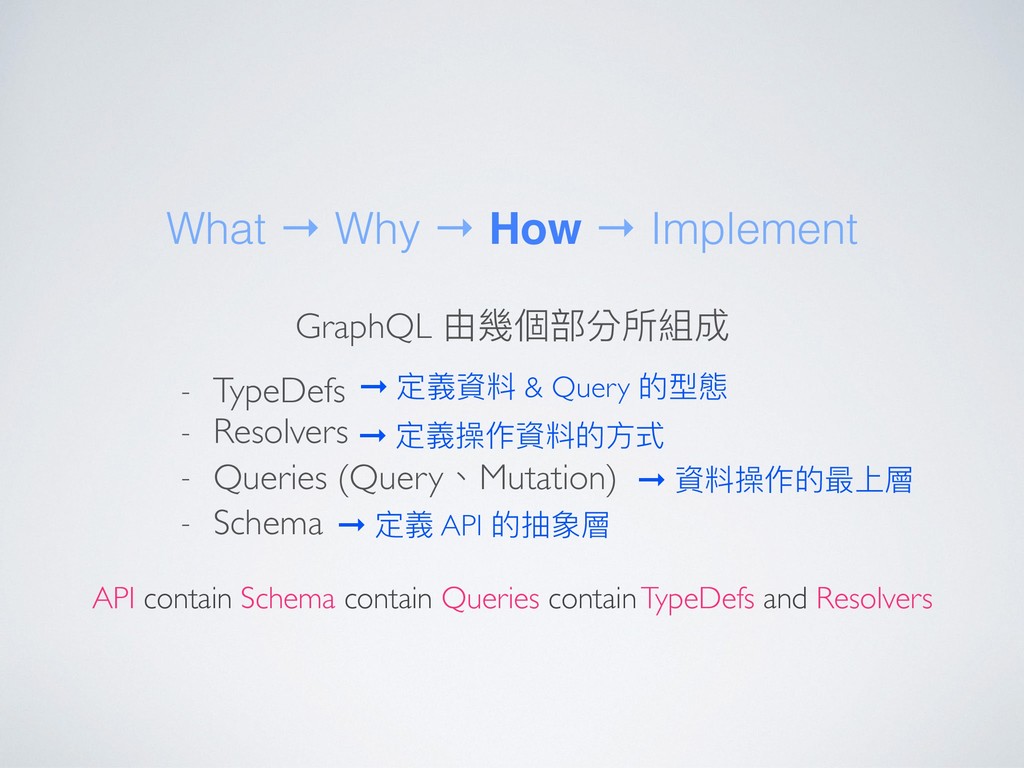
query language for your API GraphQL is a query language for APIs and a runtime for fulfilling those queries with your existing data. GraphQL provides a complete and understandable description of the data in your API, gives clients the power to ask for exactly what they need and nothing more, makes it easier to evolve APIs over time, and enables powerful developer tools.
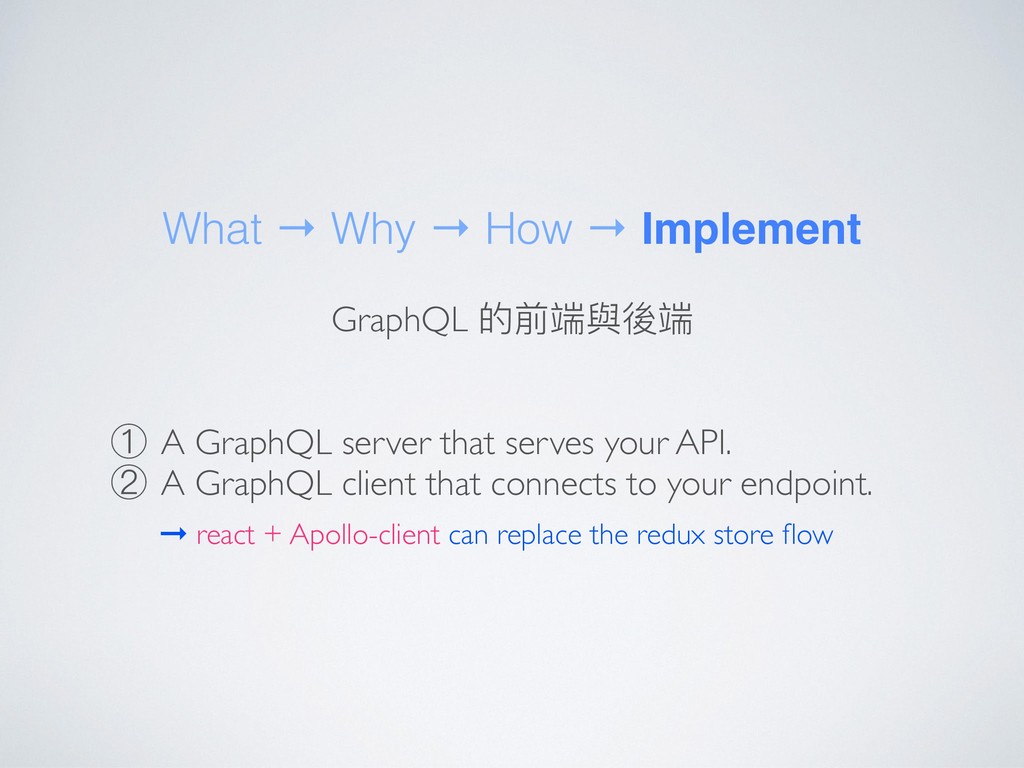
query language for your API GraphQL is a query language for APIs and a runtime for fulfilling those queries with your existing data. GraphQL provides a complete and understandable description of the data in your API, gives clients the power to ask for exactly what they need and nothing more, makes it easier to evolve APIs over time, and enables powerful developer tools. ① Describe your data ② Ask for what you want
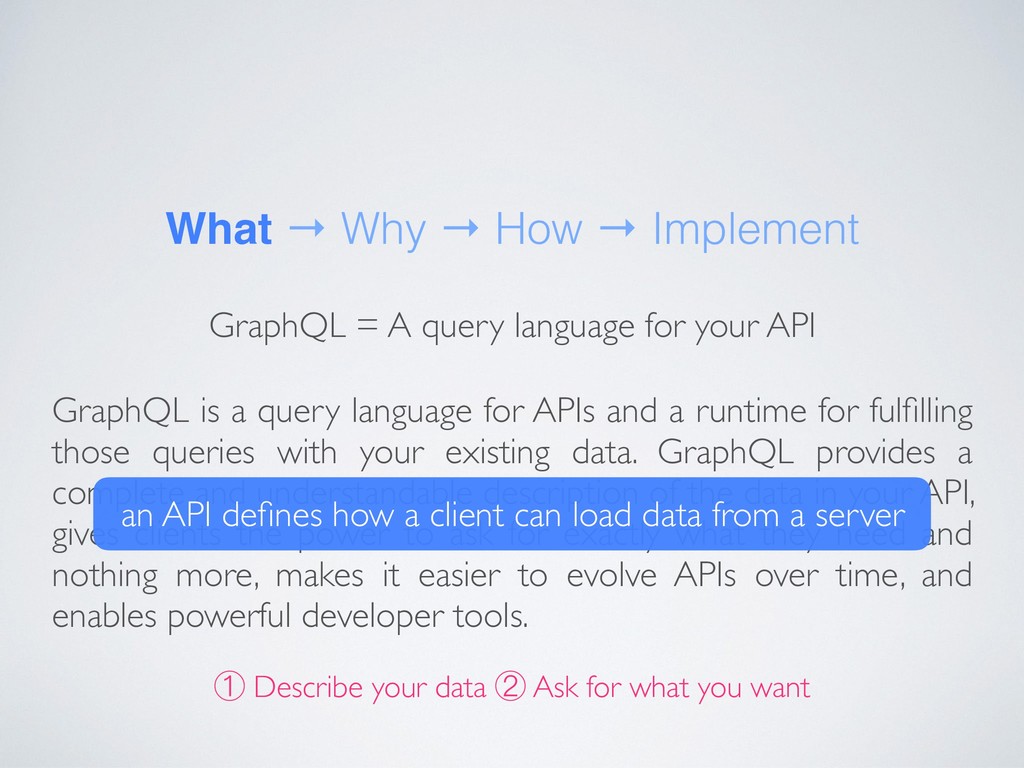
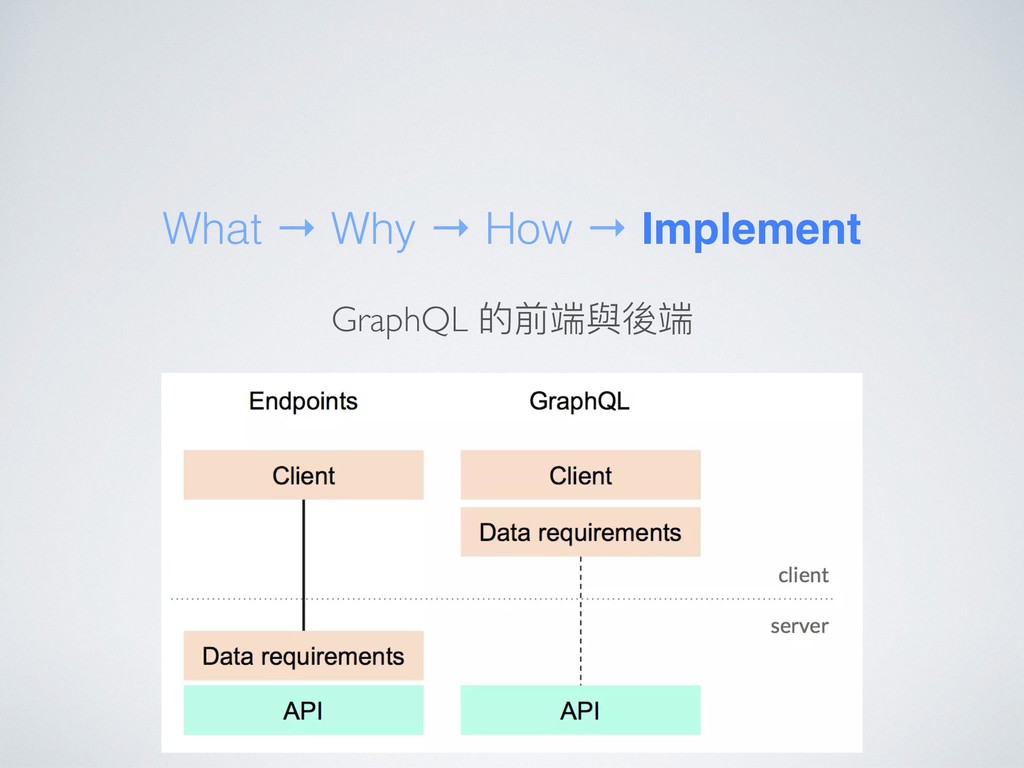
query language for your API GraphQL is a query language for APIs and a runtime for fulfilling those queries with your existing data. GraphQL provides a complete and understandable description of the data in your API, gives clients the power to ask for exactly what they need and nothing more, makes it easier to evolve APIs over time, and enables powerful developer tools. an API defines how a client can load data from a server ① Describe your data ② Ask for what you want
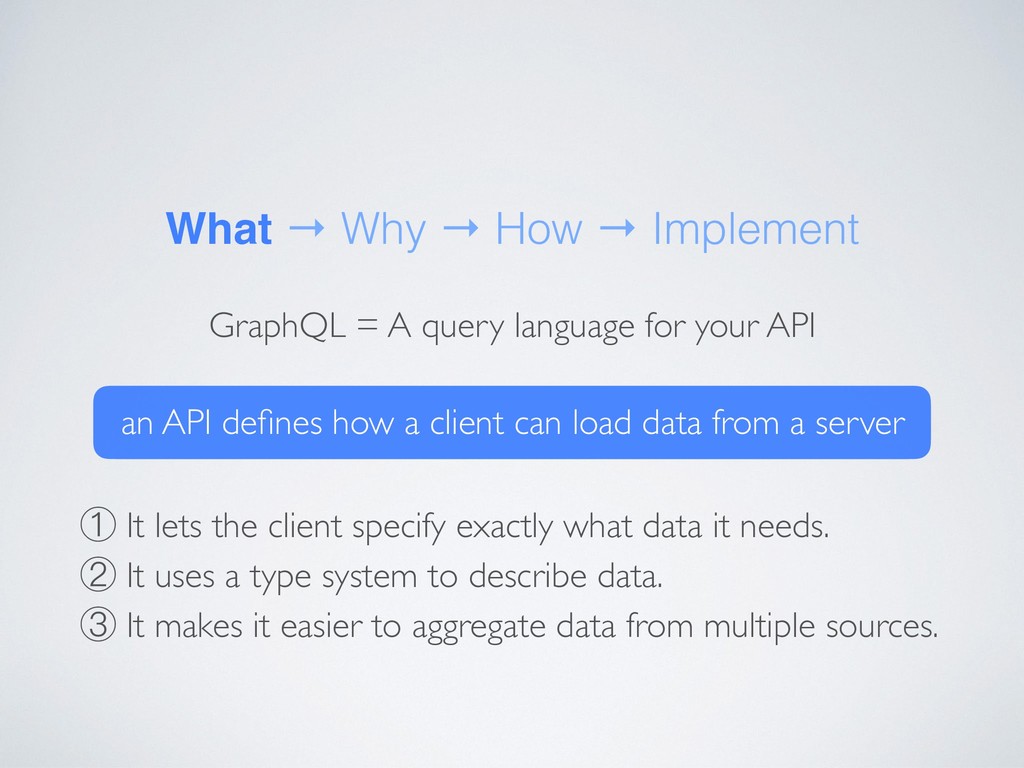
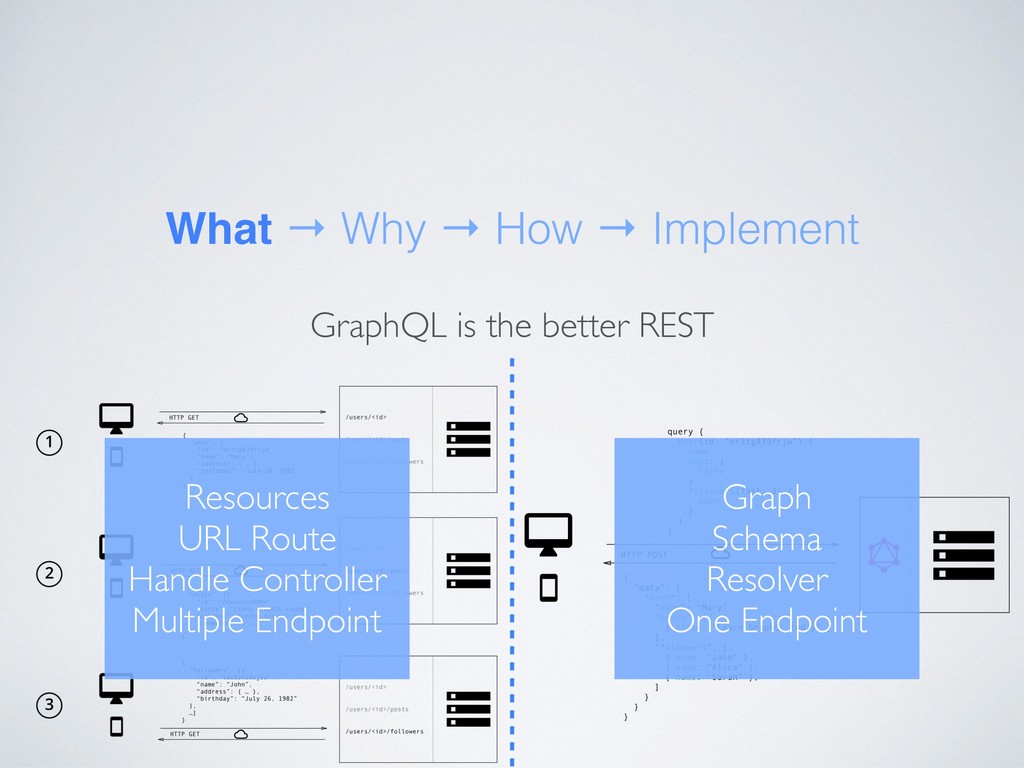
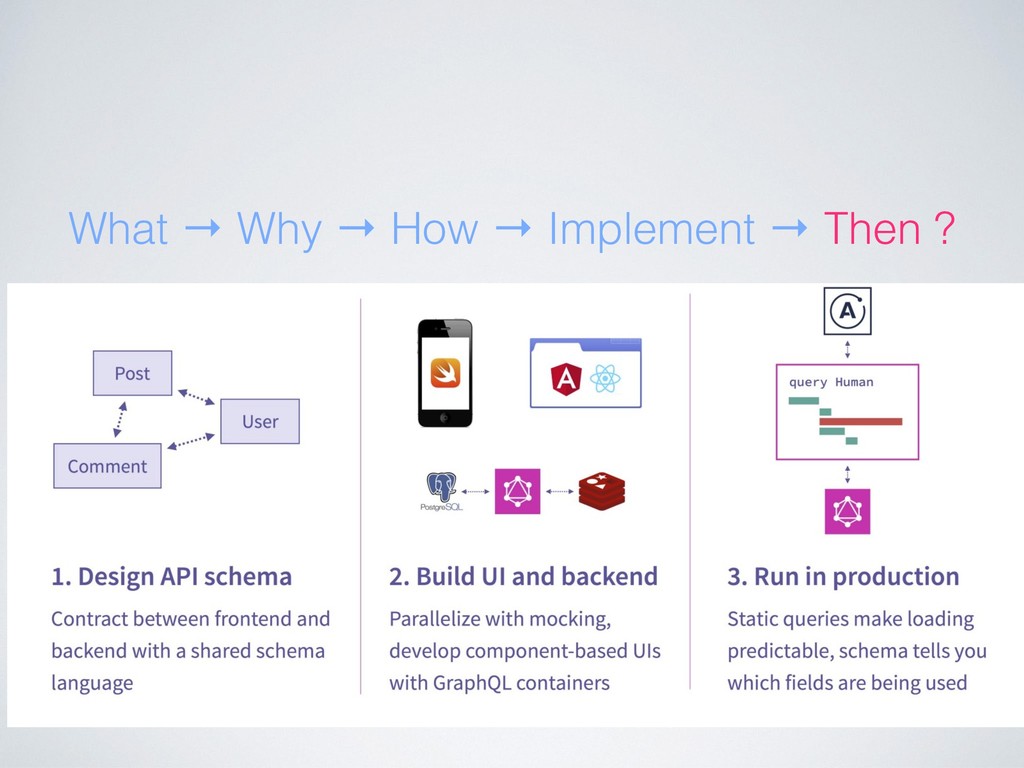
query language for your API ① It lets the client specify exactly what data it needs. ② It uses a type system to describe data. ③ It makes it easier to aggregate data from multiple sources. an API defines how a client can load data from a server
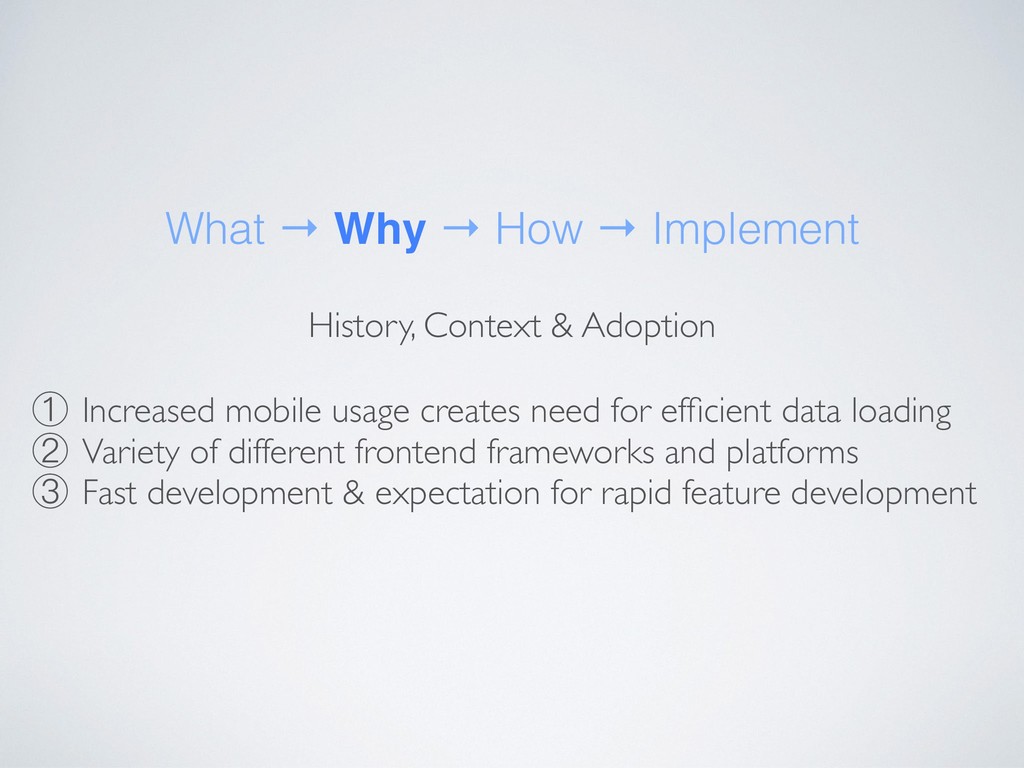
Adoption ① Increased mobile usage creates need for efficient data loading ② Variety of different frontend frameworks and platforms ③ Fast development & expectation for rapid feature development
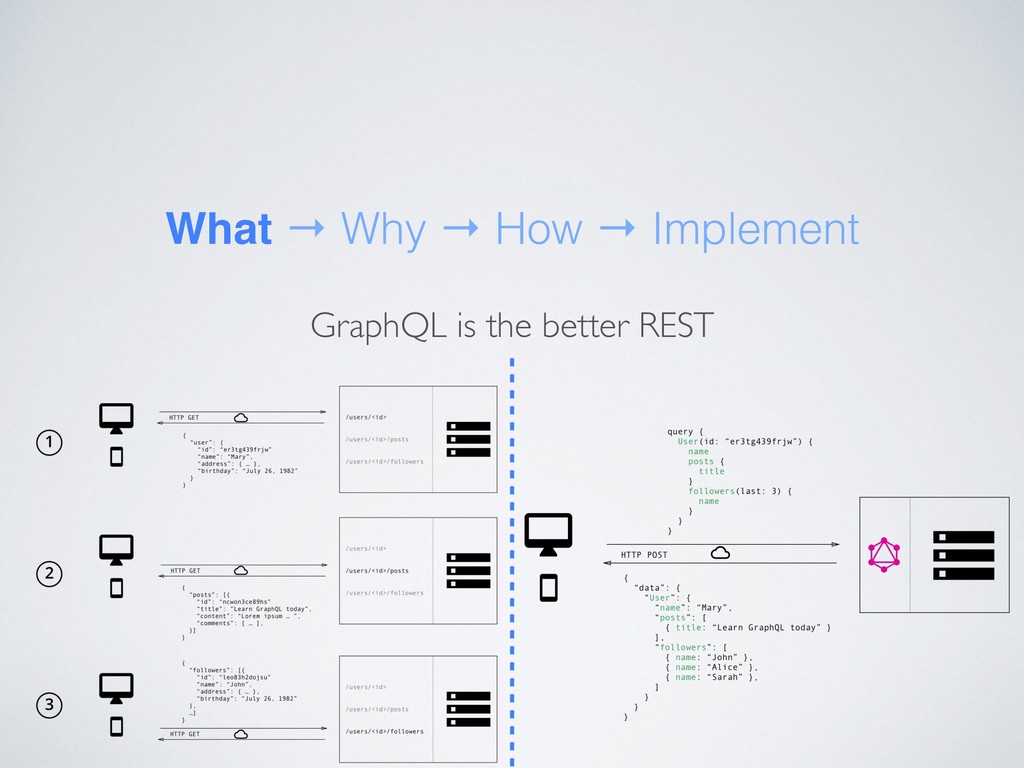
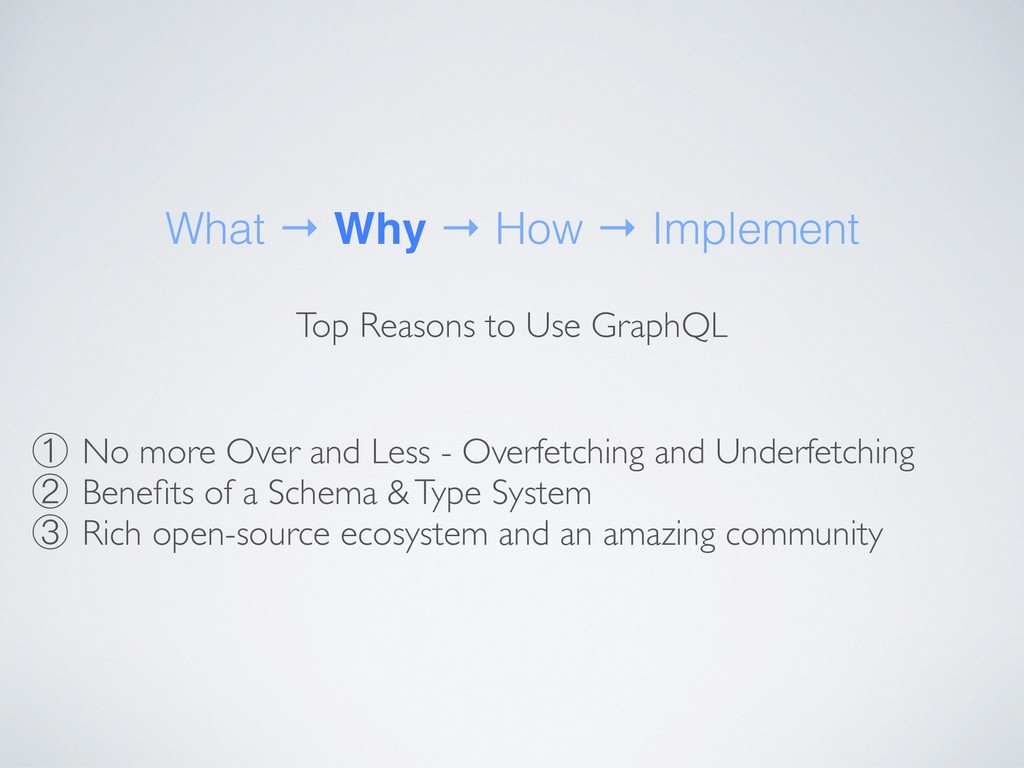
Use GraphQL ① No more Over and Less - Overfetching and Underfetching ② Benefits of a Schema & Type System ③ Rich open-source ecosystem and an amazing community
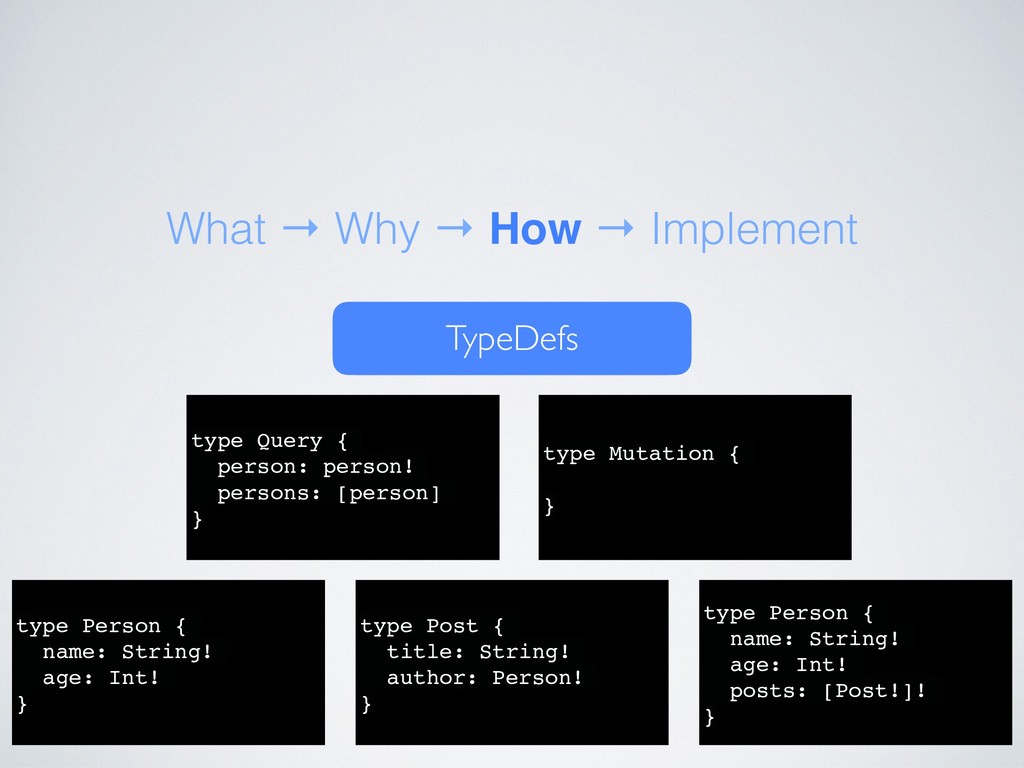
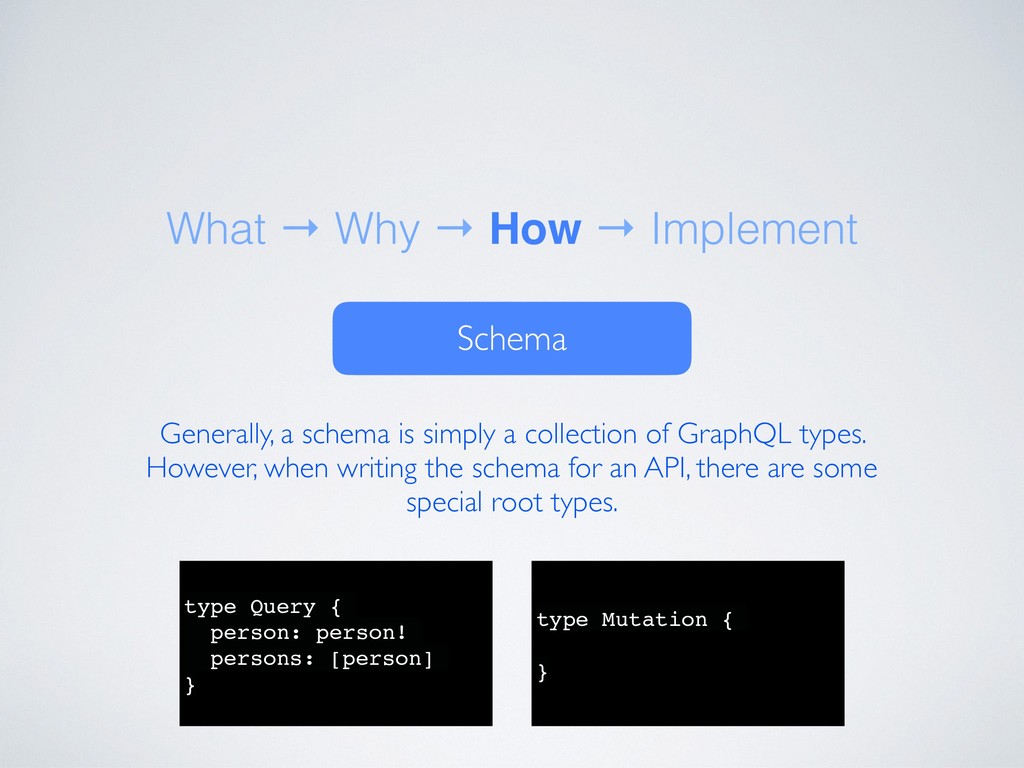
is simply a collection of GraphQL types. However, when writing the schema for an API, there are some special root types. Schema type Query { person: person! persons: [person] } type Mutation { }
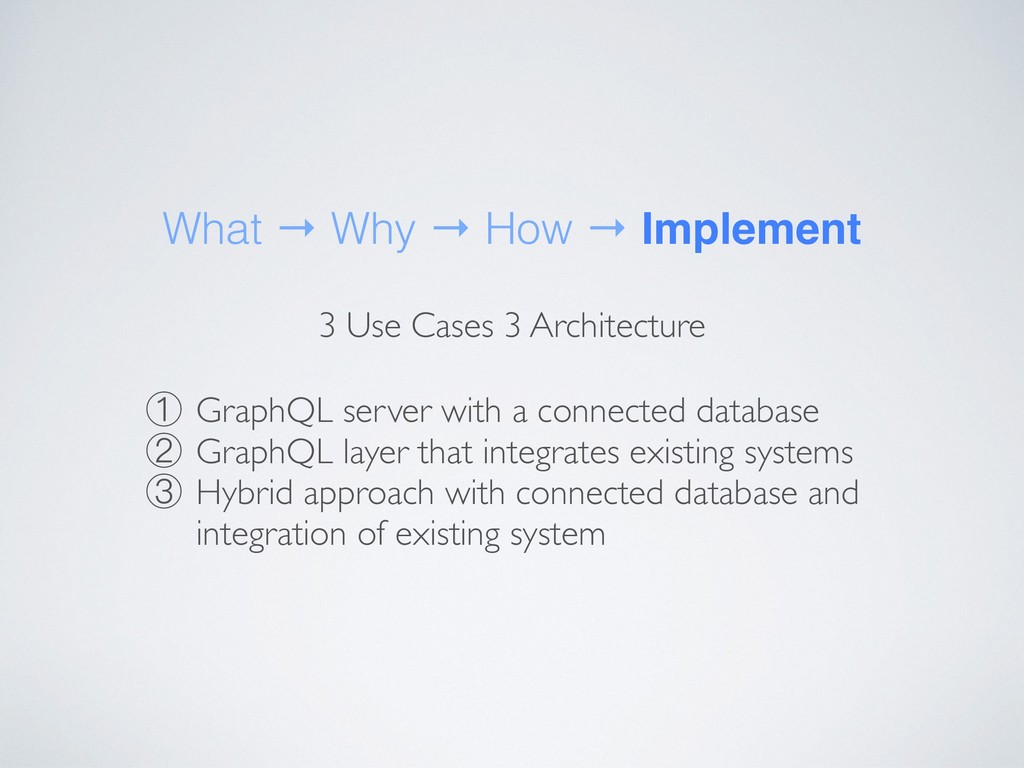
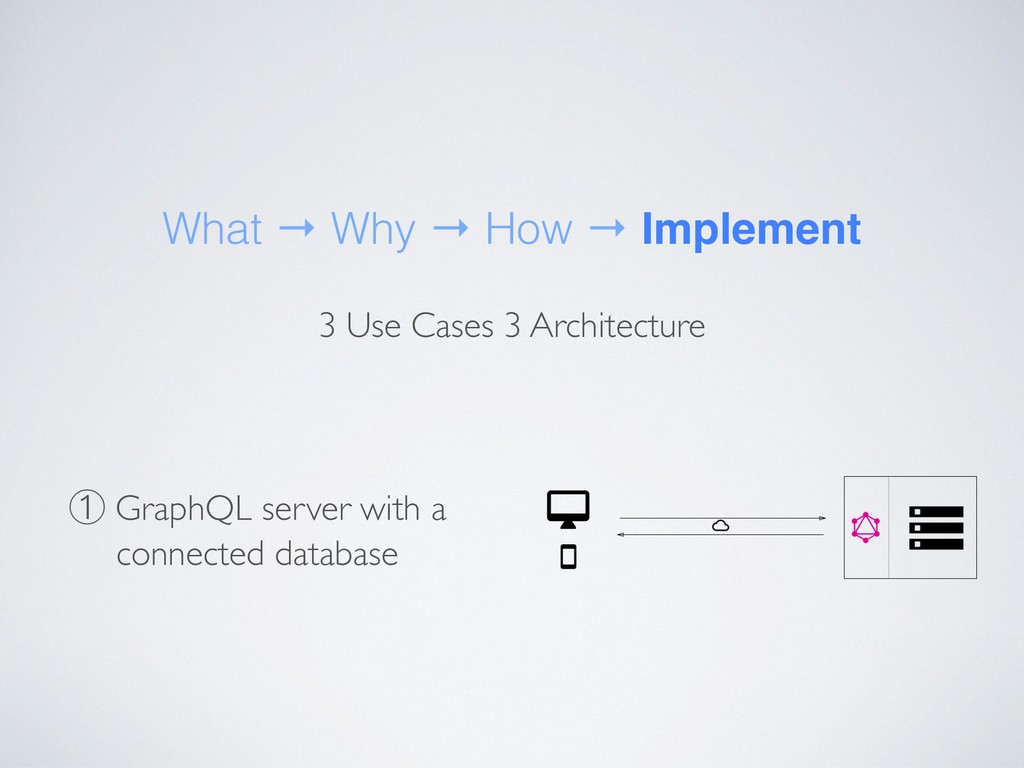
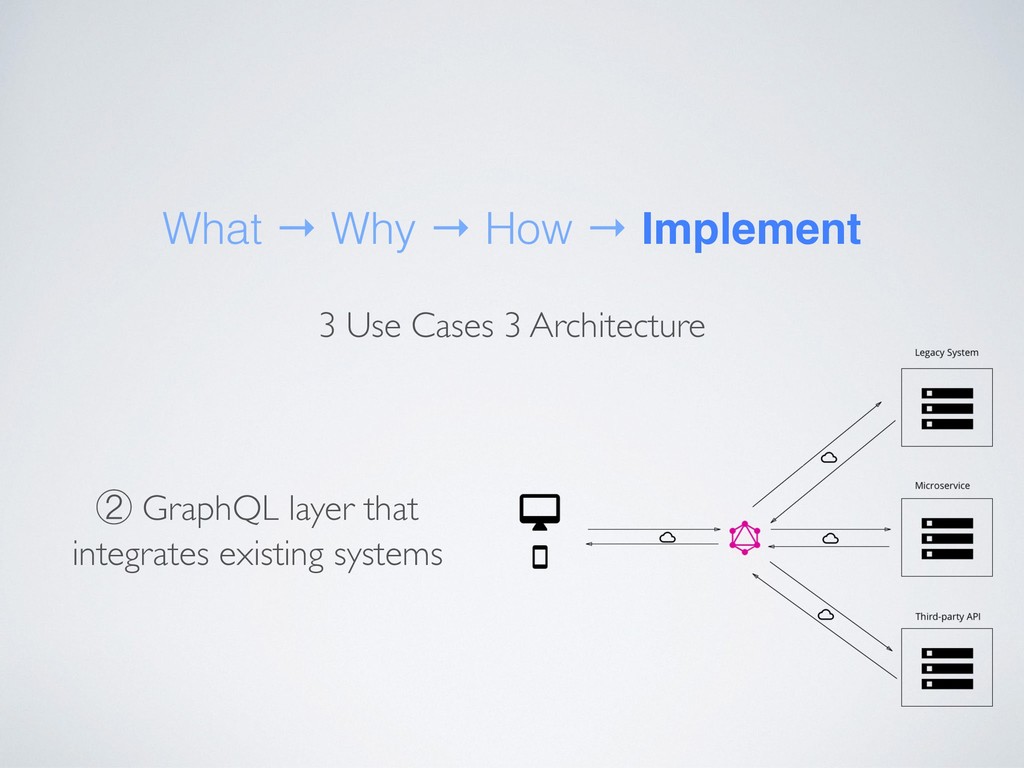
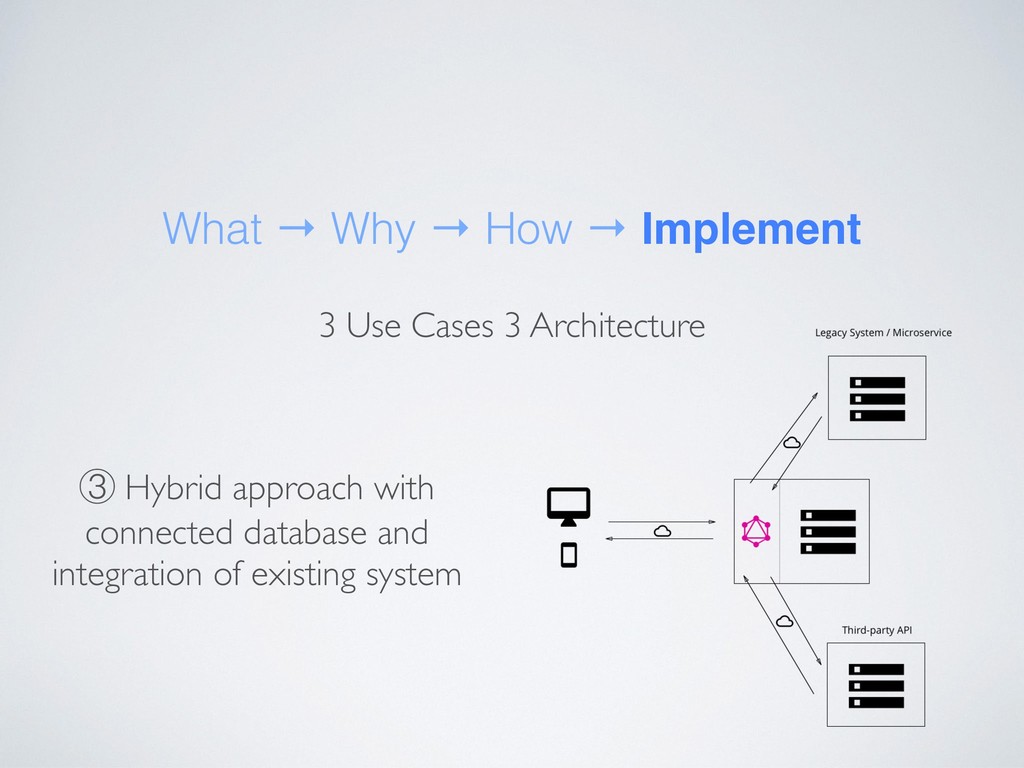
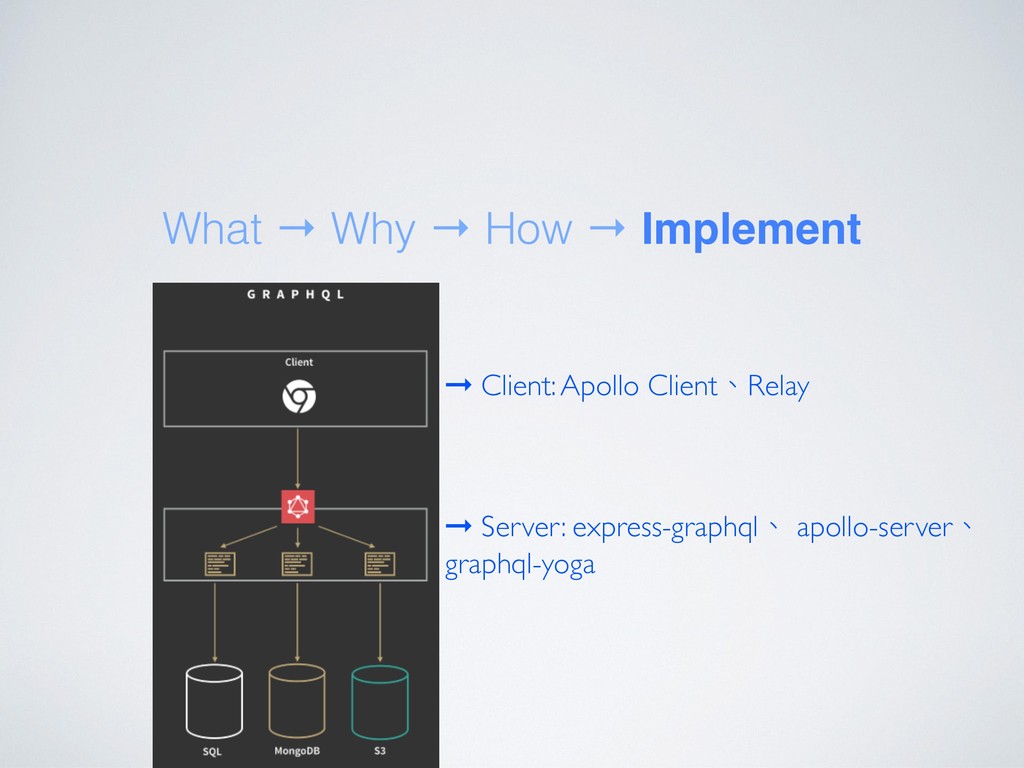
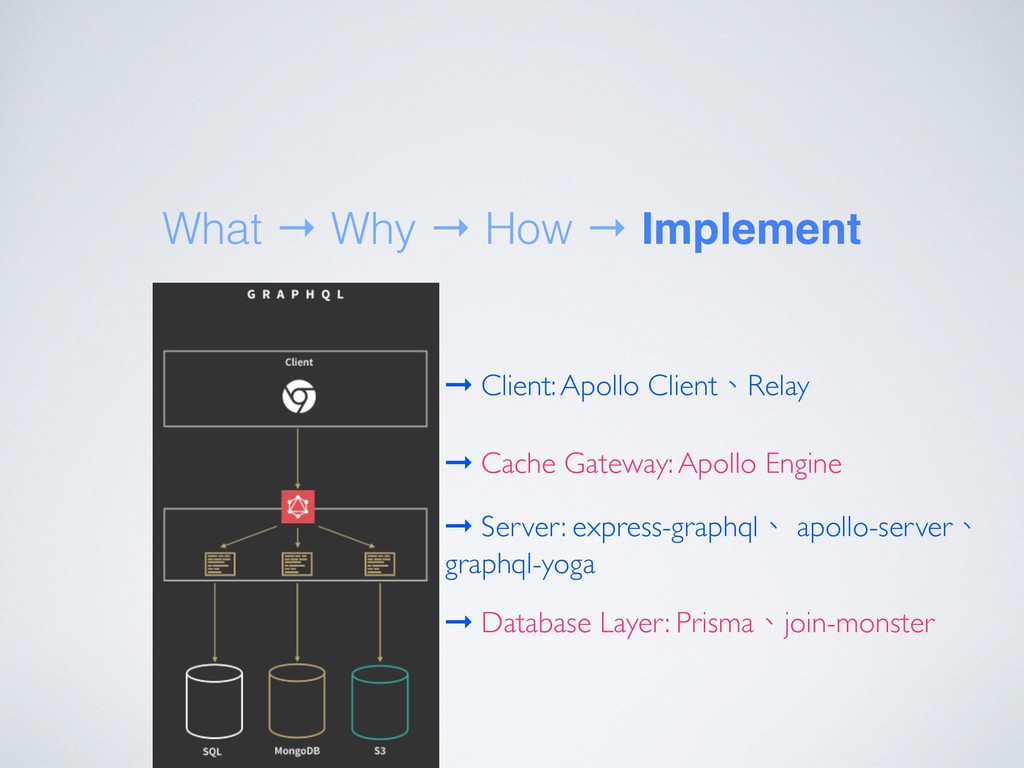
3 Architecture ① GraphQL server with a connected database ② GraphQL layer that integrates existing systems ③ Hybrid approach with connected database and integration of existing system


 v123582
 nealle
 teamlab
 pfn
pfn
 occhi
occhi
 sansantech
 yuuuuuuu168
 bgpat
bgpat
 hiracky16
 yu23ki14
 ishikawa_satoru
 takanorip
 onk
onk
 holman
 techseoconnect
 codingconduct
 malarkey
 lara
lara
 cassininazir
 jacobtomlinson
 addyosmani
 livdayseo
 tanoku
 garrettdimon
 bryan
bryan