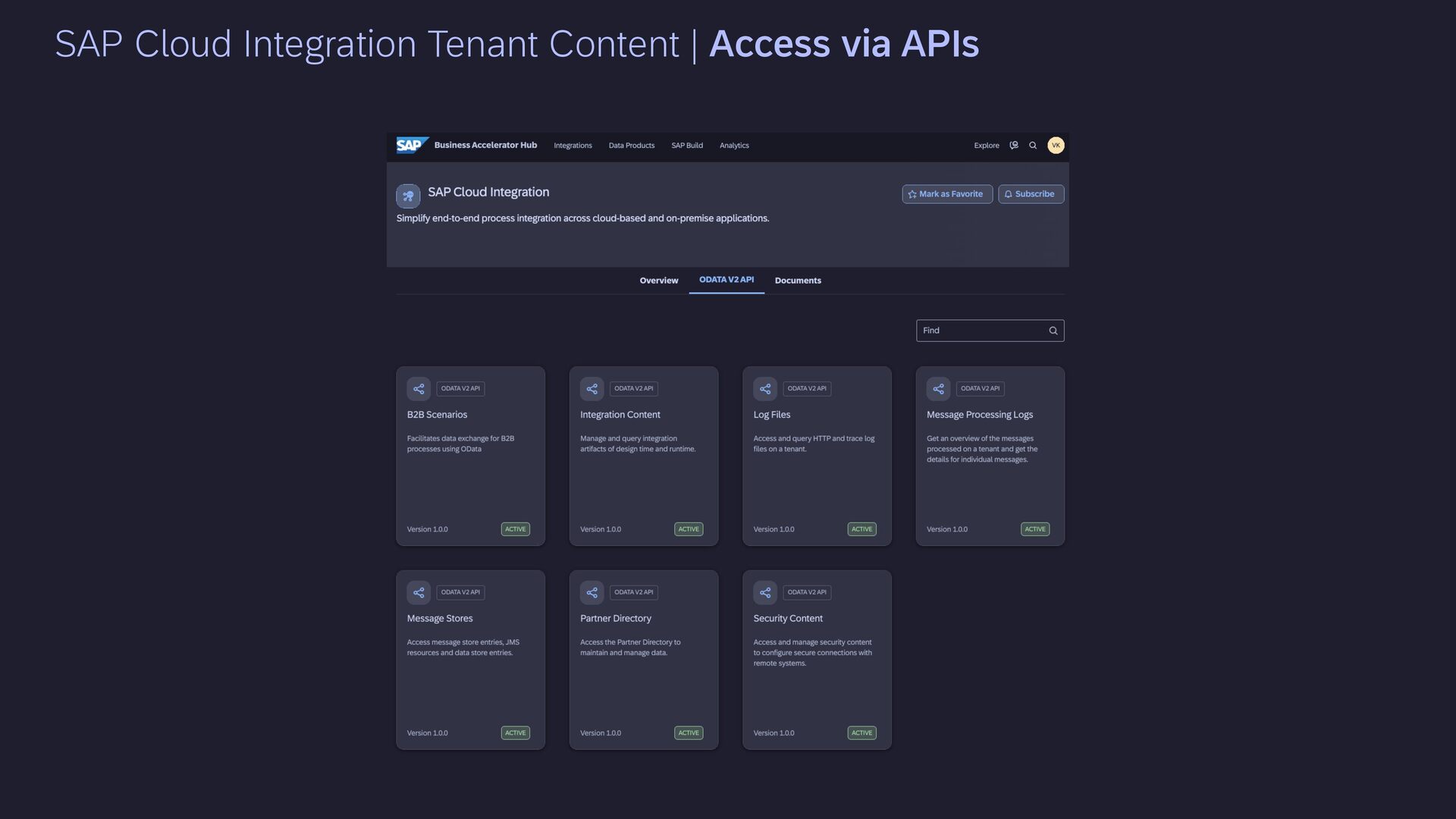
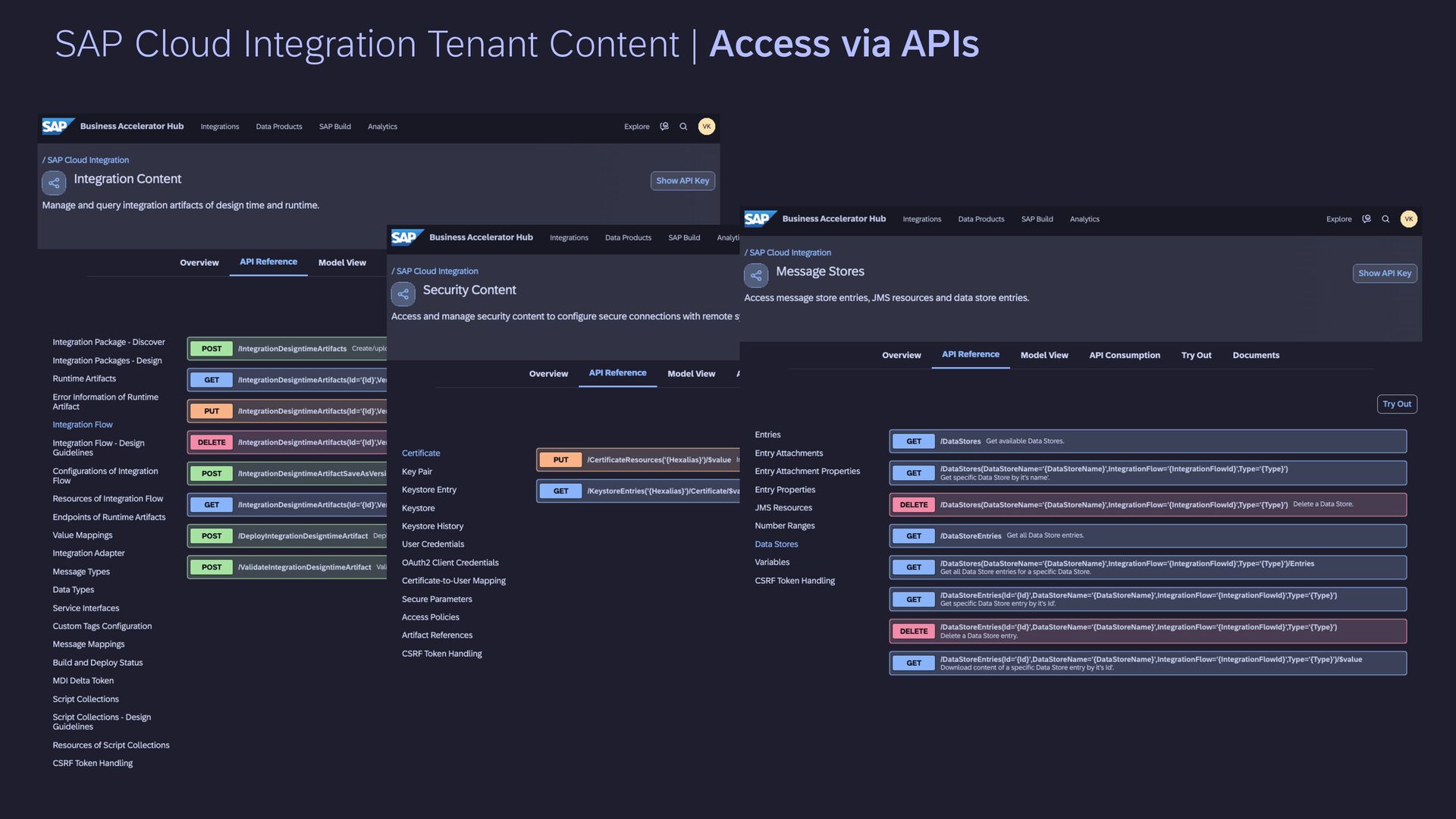
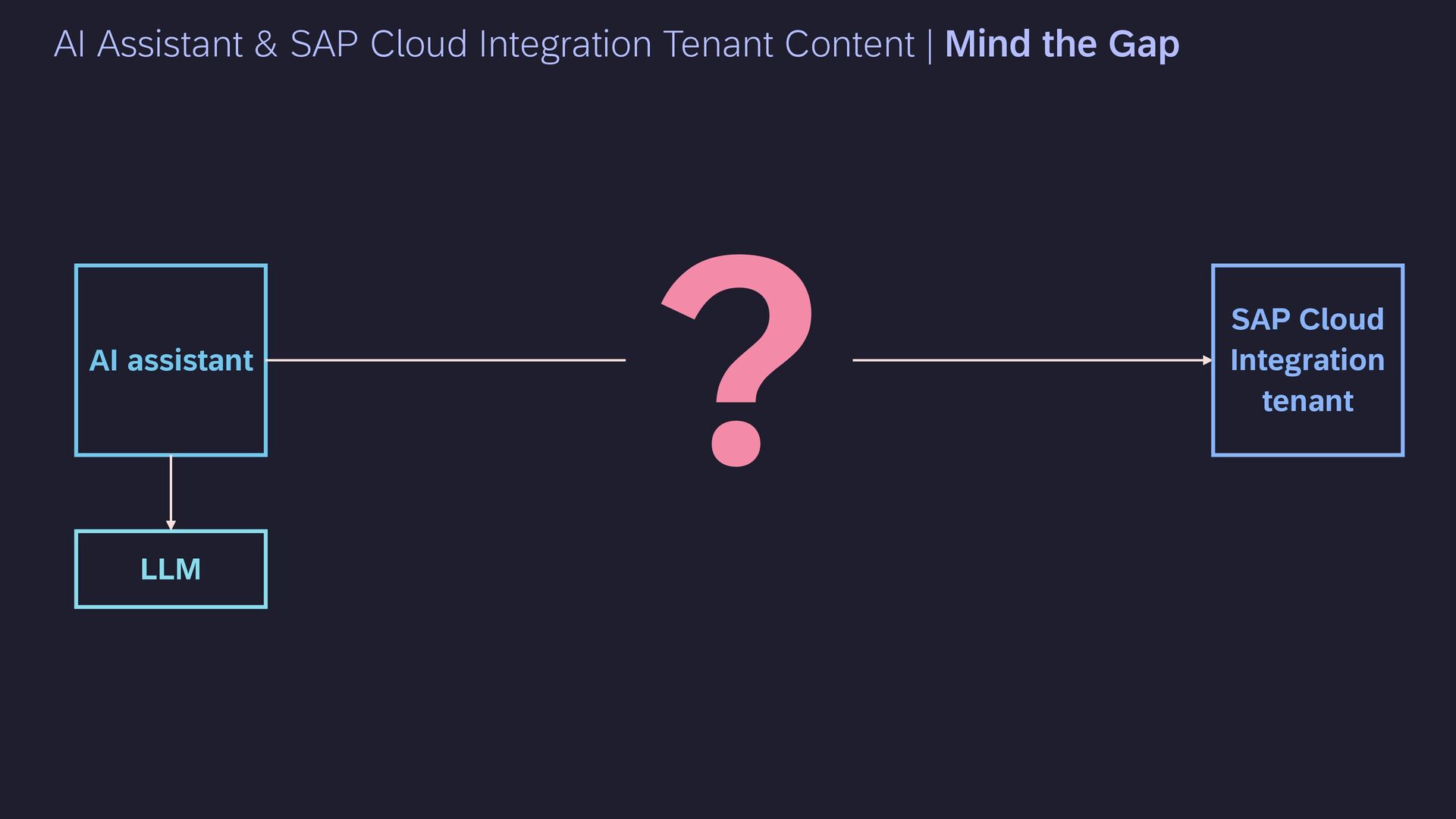
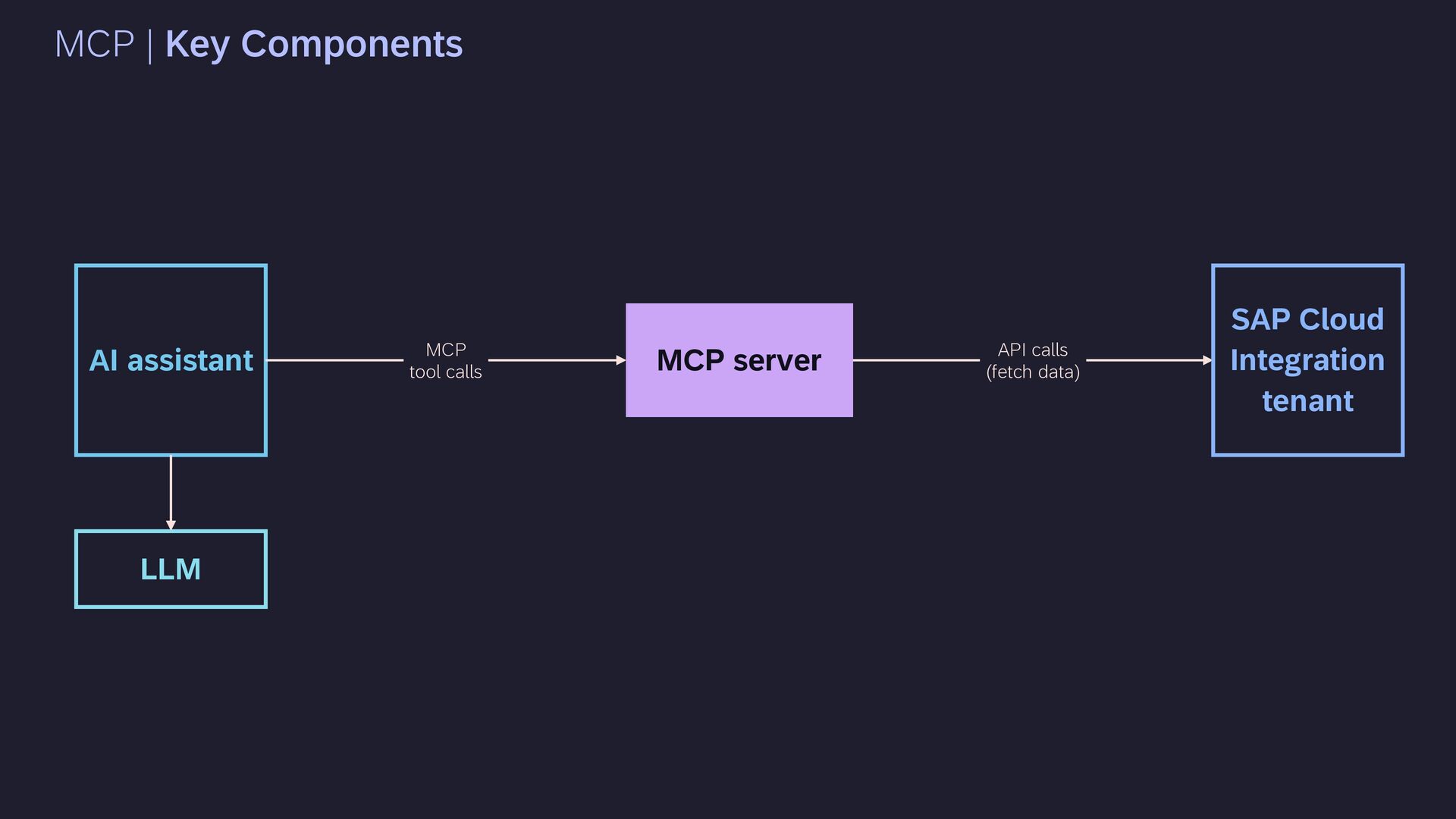
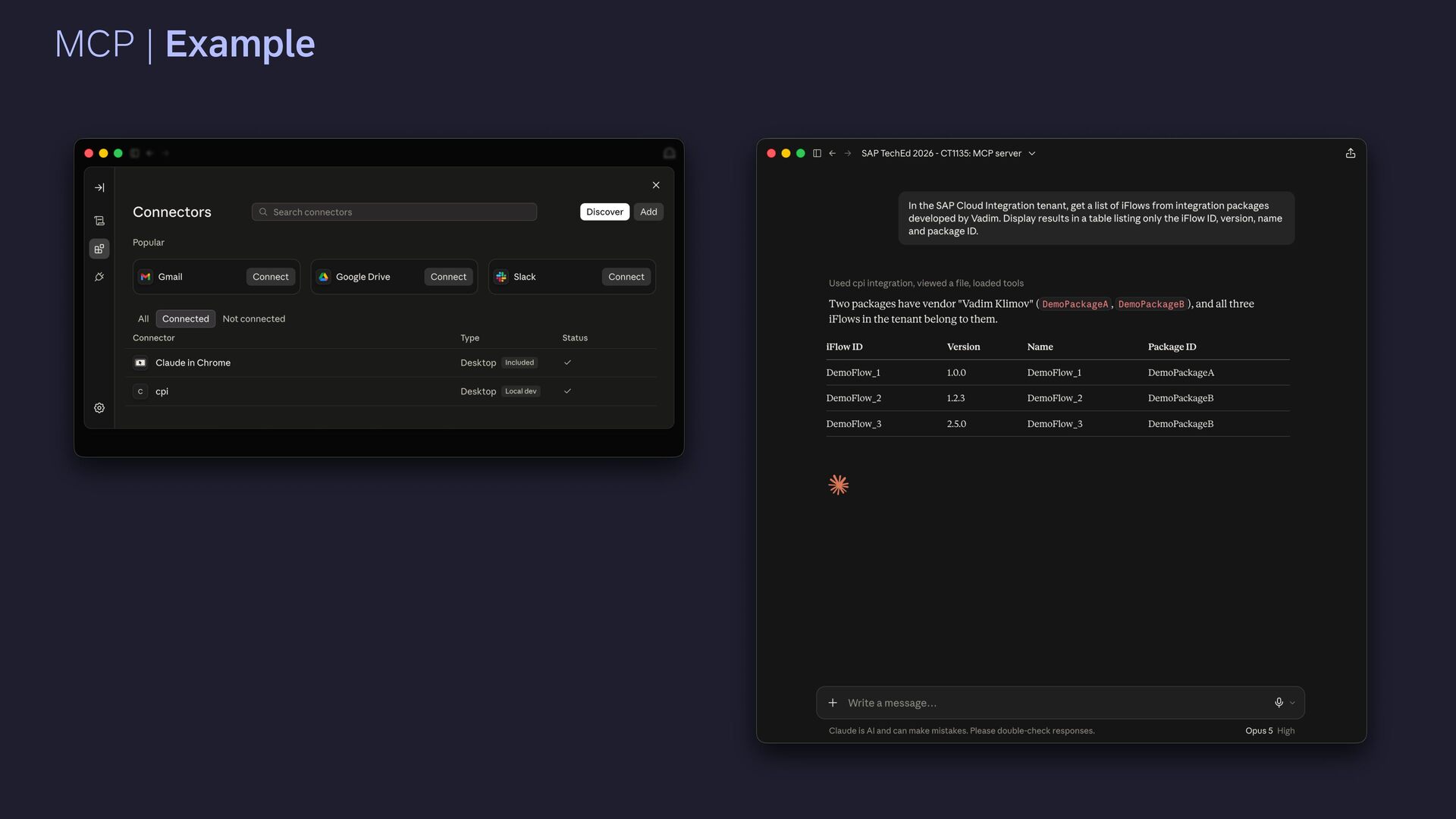
the integrations it hosts, in natural language. You want an AI assistant to help you analyze and govern what is in the tenant. Most of the data needed to find answers is already in the tenant. Bringing that data within reach of an AI assistant is the challenge. So which techniques and technologies bridge that gap?
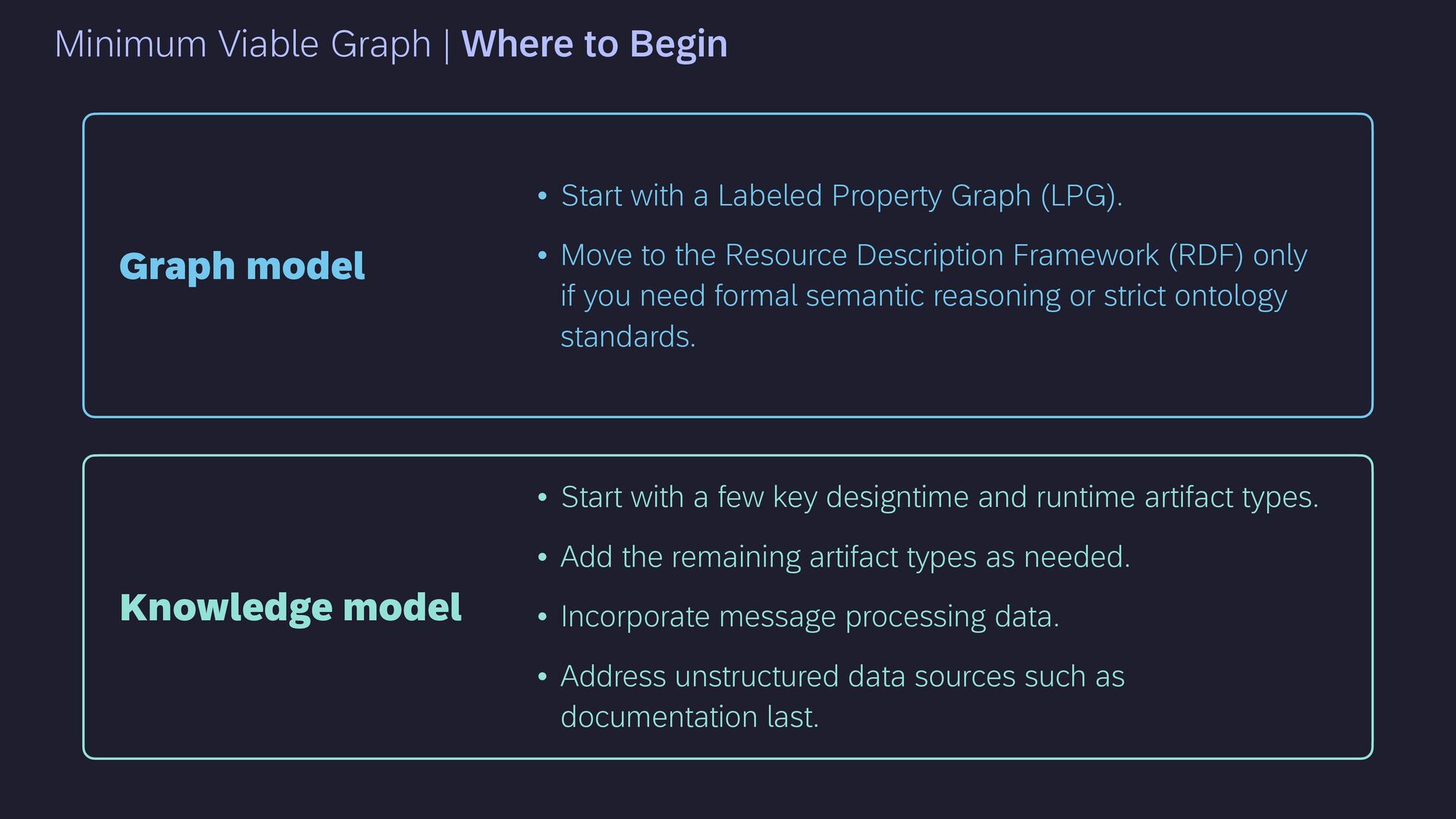
a Labeled Property Graph (LPG). Graph model • Move to the Resource Description Framework (RDF) only if you need formal semantic reasoning or strict ontology standards. • Start with a few key designtime and runtime artifact types. • Add the remaining artifact types as needed. Knowledge model • Incorporate message processing data. • Address unstructured data sources such as documentation last.
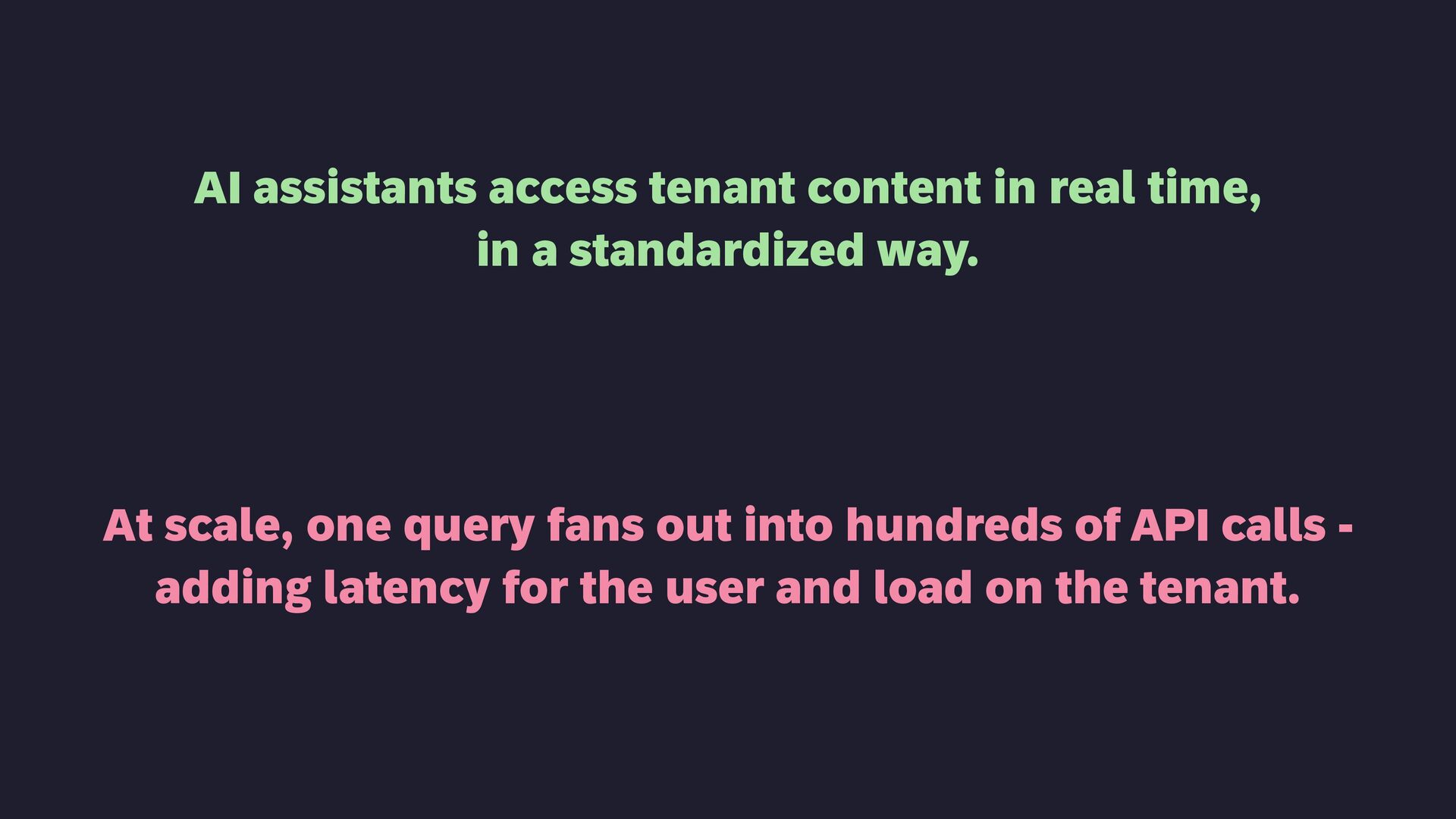
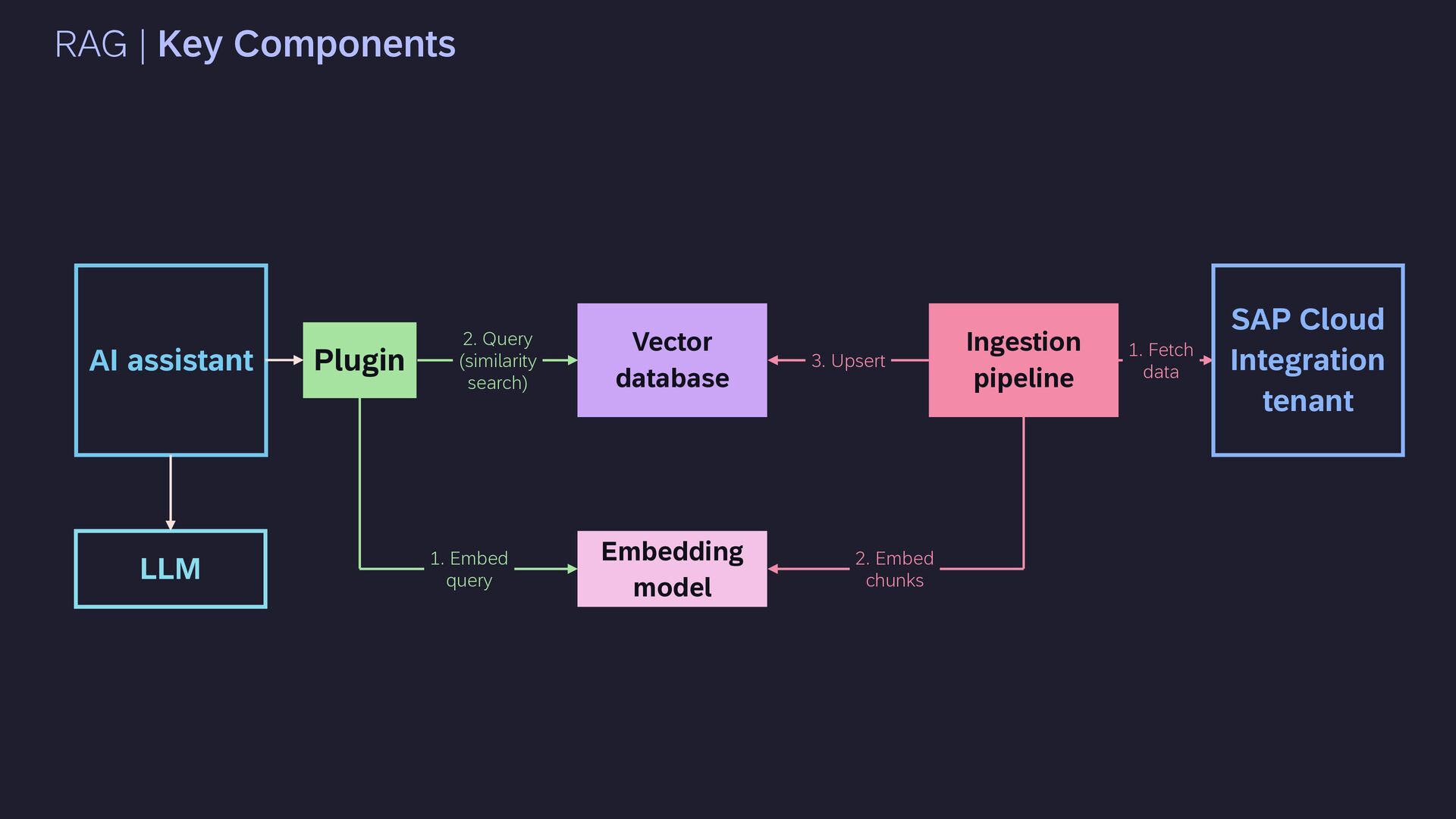
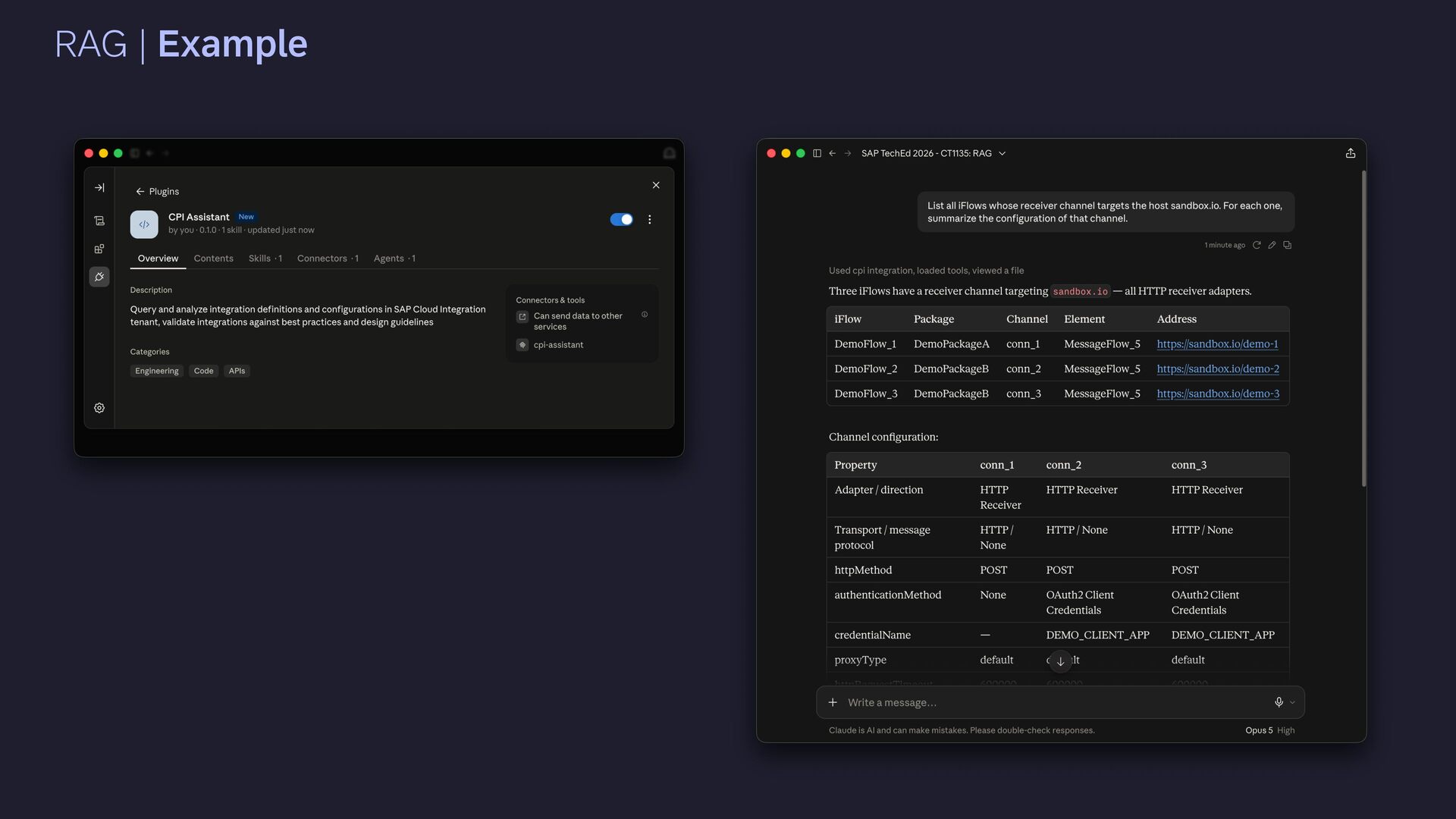
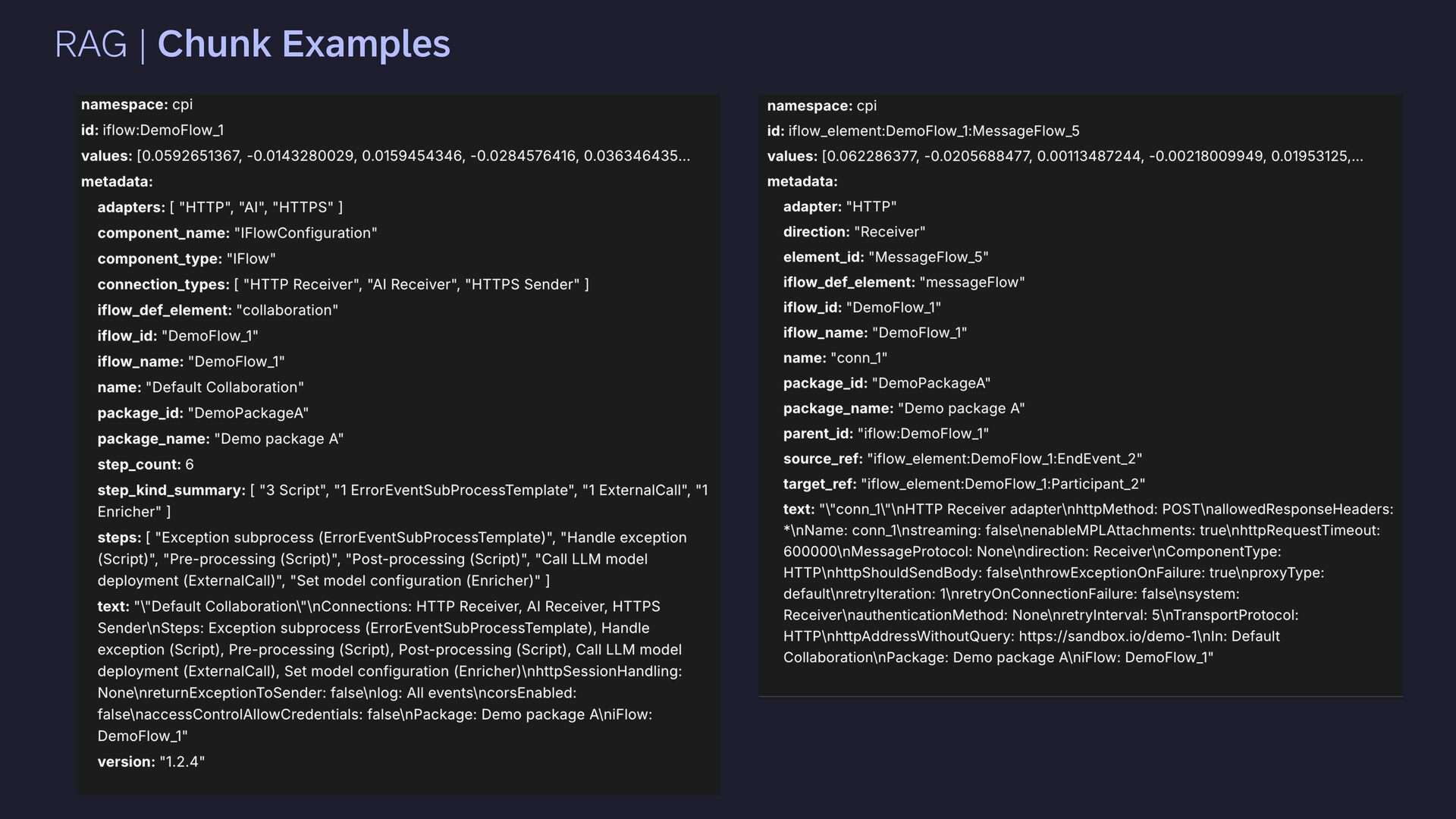
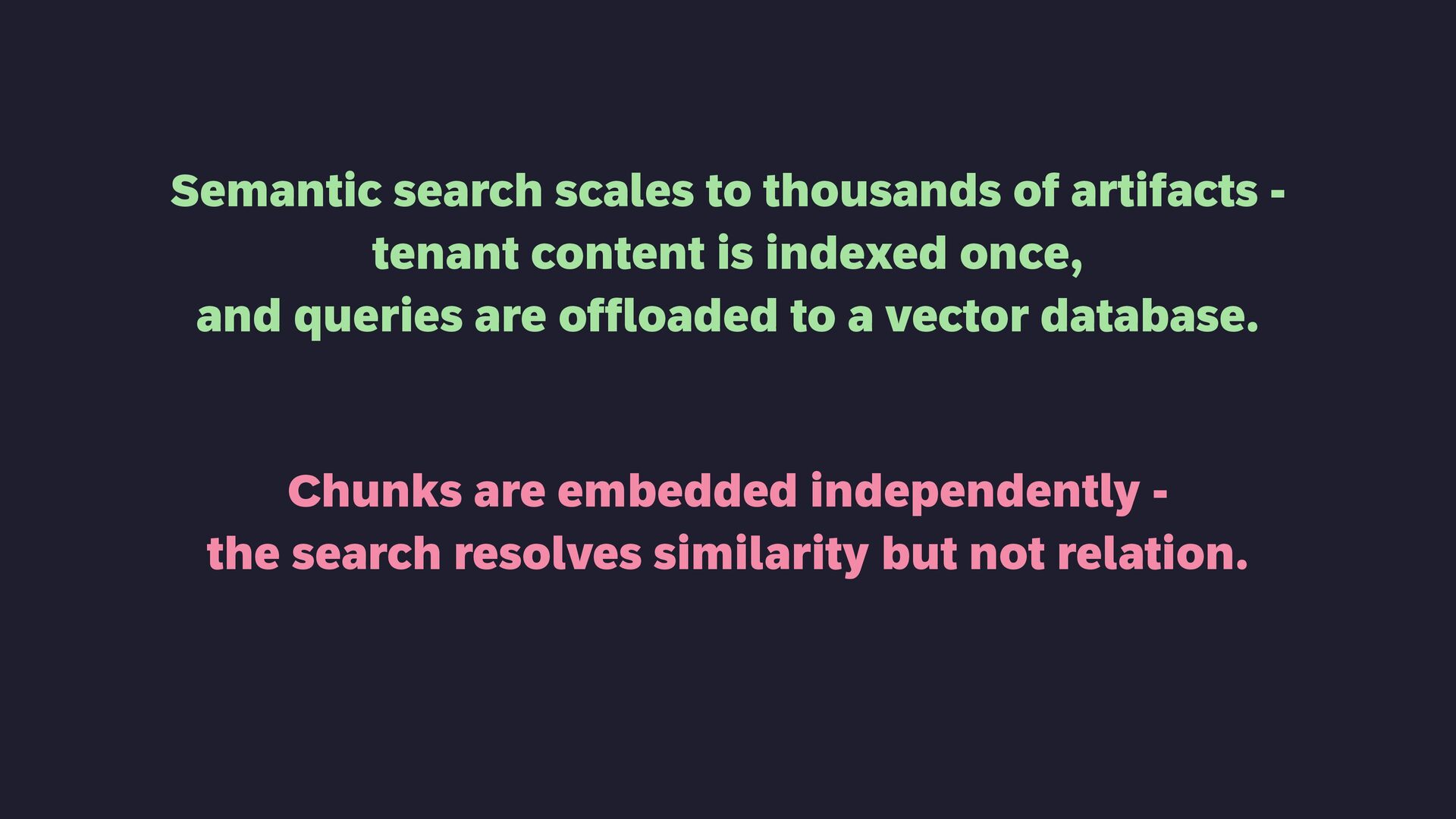
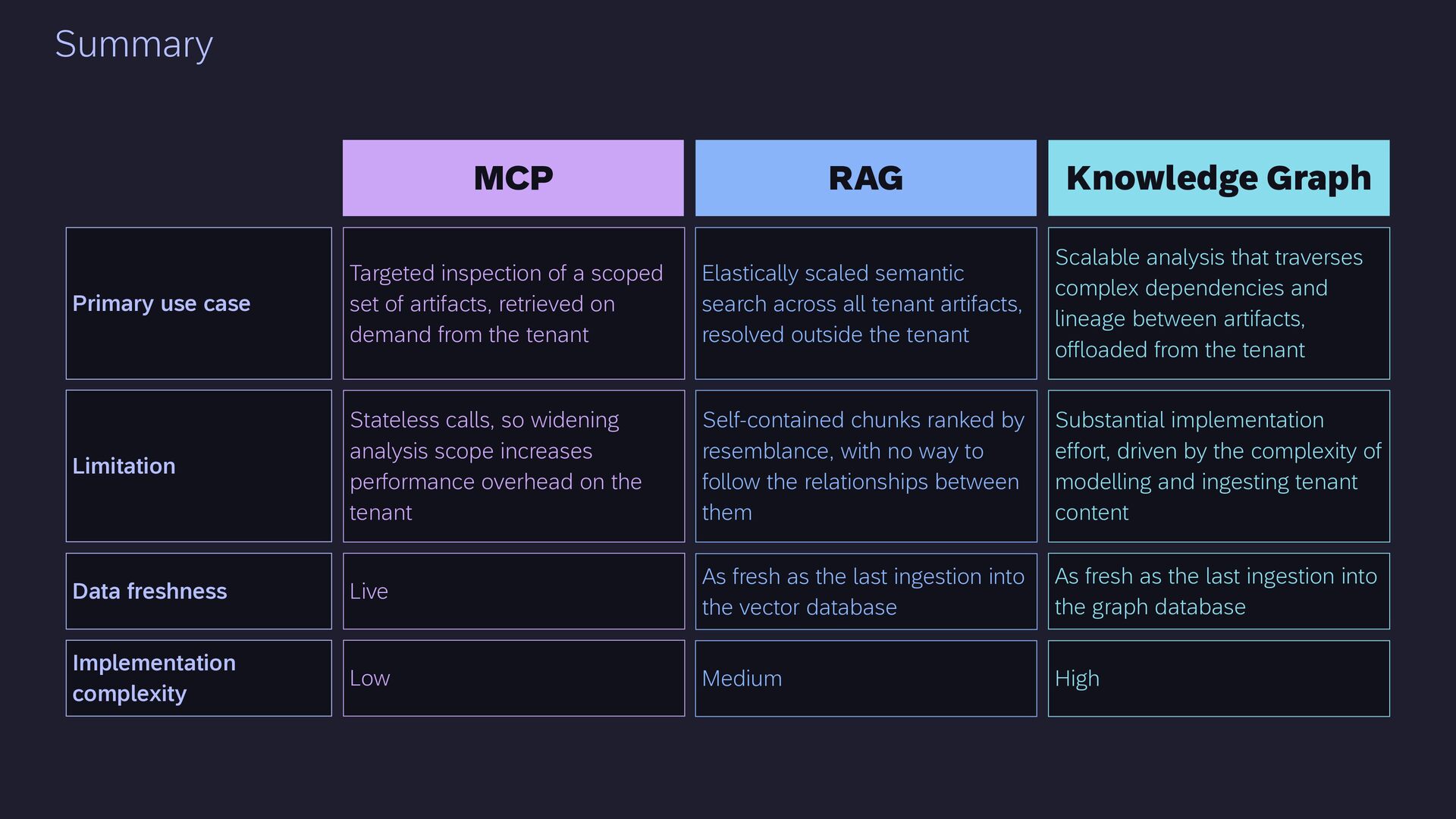
of a scoped set of artifacts, retrieved on demand from the tenant Elastically scaled semantic search across all tenant artifacts, resolved outside the tenant Scalable analysis that traverses complex dependencies and lineage between artifacts, offloaded from the tenant Limitation Stateless calls, so widening analysis scope increases performance overhead on the tenant Self-contained chunks ranked by resemblance, with no way to follow the relationships between them Substantial implementation effort, driven by the complexity of modelling and ingesting tenant content Data freshness Live As fresh as the last ingestion into the vector database As fresh as the last ingestion into the graph database Implementation complexity Low Medium High


 vadimklimov
 ivargrimstad
 axbom
 reverentgeek
 ryanjones
 jlugia
 eileencodes
 lfama
 varn
 panda_program
 csswizardry
 morganepeng