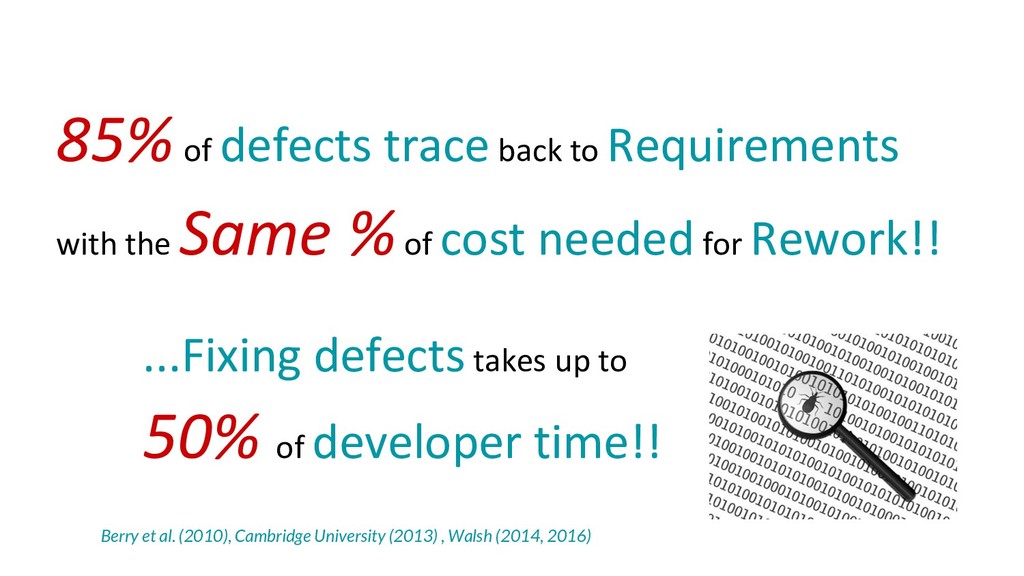
% of cost needed for Rework!! Source: Berry et al. (2010), Cambridge University (2013) , Walsh (2014, 2016) ...Fixing defects takes up to 50% of developer time!!
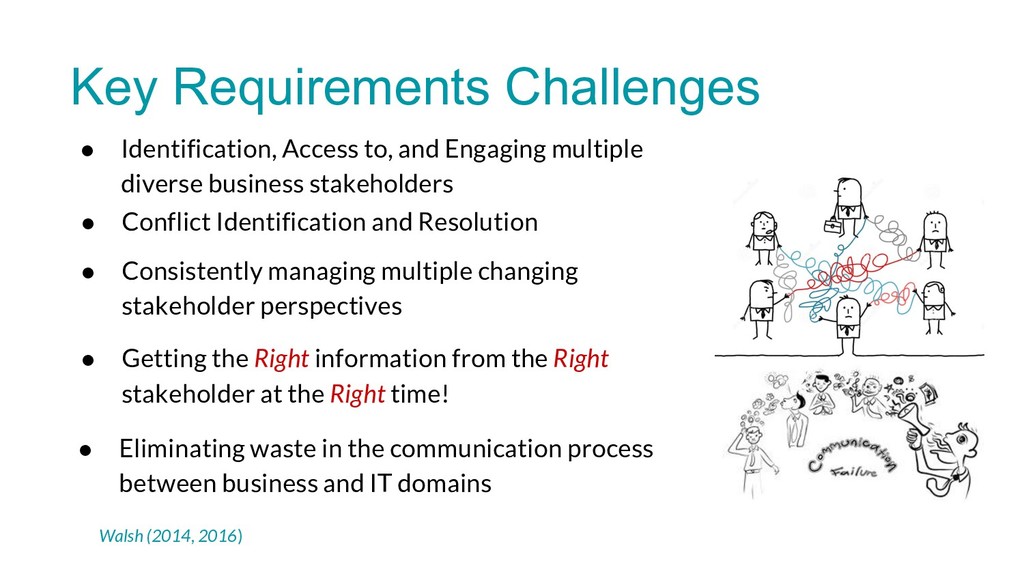
diverse business stakeholders Source: Walsh (2014, 2016) • Conflict Identification and Resolution • Consistently managing multiple changing stakeholder perspectives • Eliminating waste in the communication process between business and IT domains • Getting the Right information from the Right stakeholder at the Right time!
Requirements Activities around High Quality Effective Interaction generating a system of Successful Communication between the Business and Technology domain
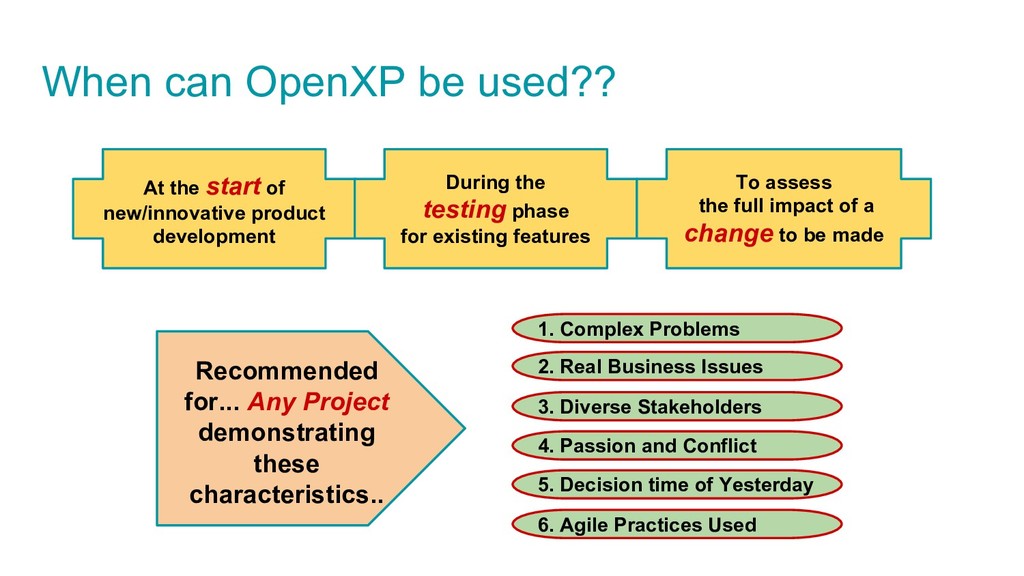
be used?? At the start of new/innovative product development During the testing phase for existing features To assess the full impact of a change to be made 1. Complex Problems 2. Real Business Issues 3. Diverse Stakeholders 4. Passion and Conflict 5. Decision time of Yesterday 6. Agile Practices Used
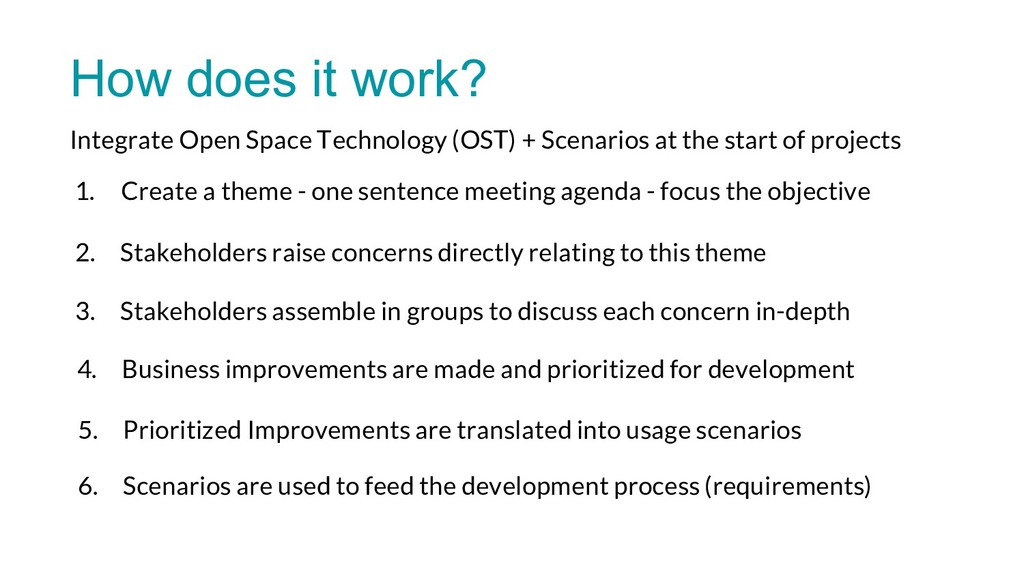
sentence meeting agenda - focus the objective 2. Stakeholders raise concerns directly relating to this theme 3. Stakeholders assemble in groups to discuss each concern in-depth 4. Business improvements are made and prioritized for development 5. Prioritized Improvements are translated into usage scenarios 6. Scenarios are used to feed the development process (requirements) Integrate Open Space Technology (OST) + Scenarios at the start of projects
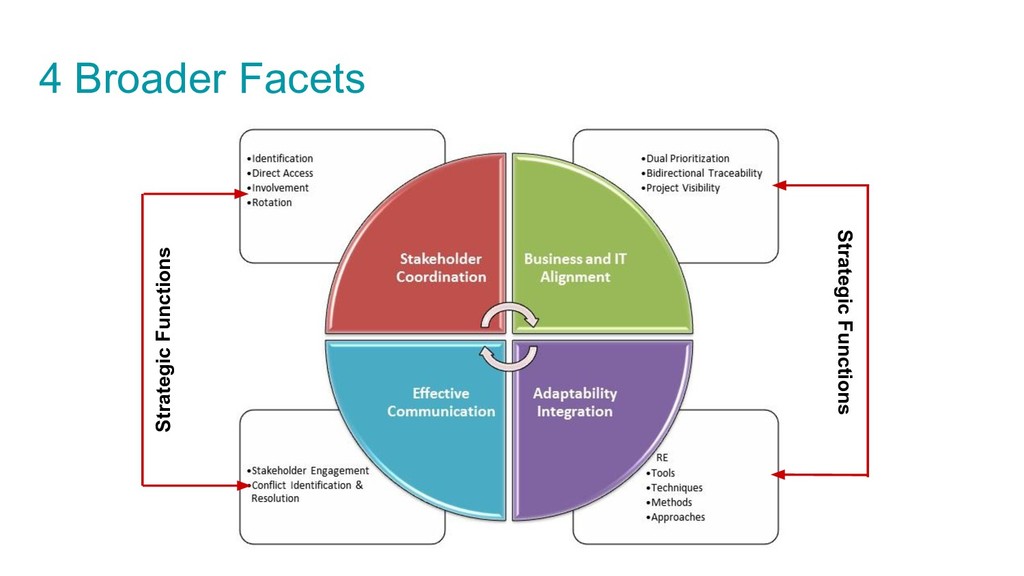
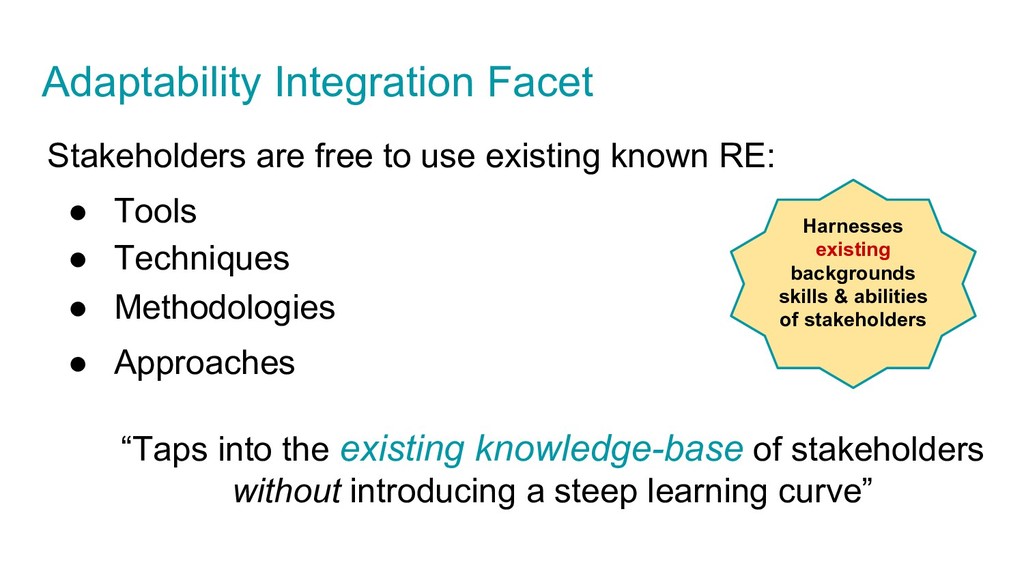
RE: • Tools • Techniques • Methodologies • Approaches “Taps into the existing knowledge-base of stakeholders without introducing a steep learning curve” Harnesses existing backgrounds skills & abilities of stakeholders
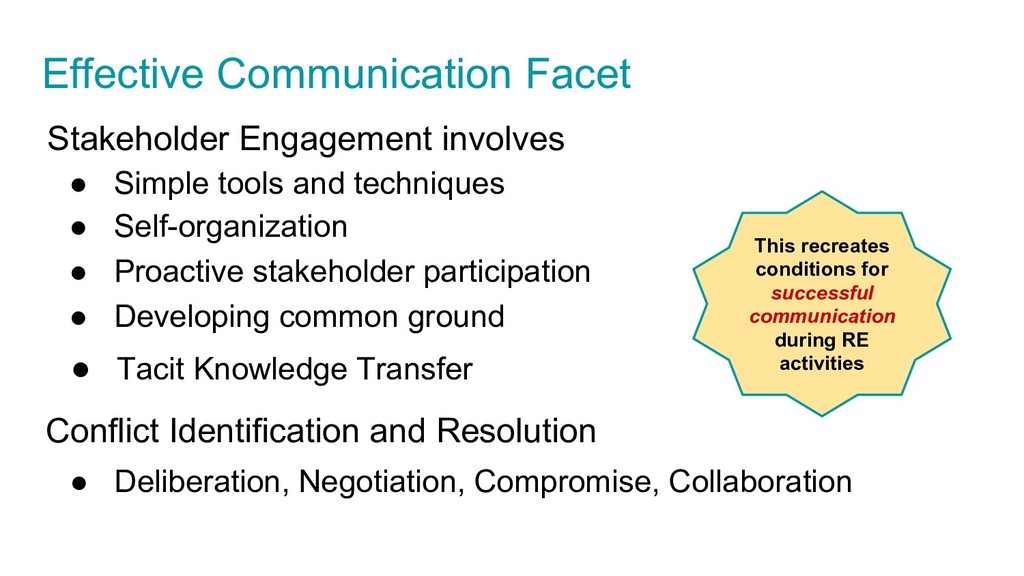
techniques • Developing common ground • Proactive stakeholder participation Conflict Identification and Resolution • Deliberation, Negotiation, Compromise, Collaboration • Tacit Knowledge Transfer • Self-organization This recreates conditions for successful communication during RE activities
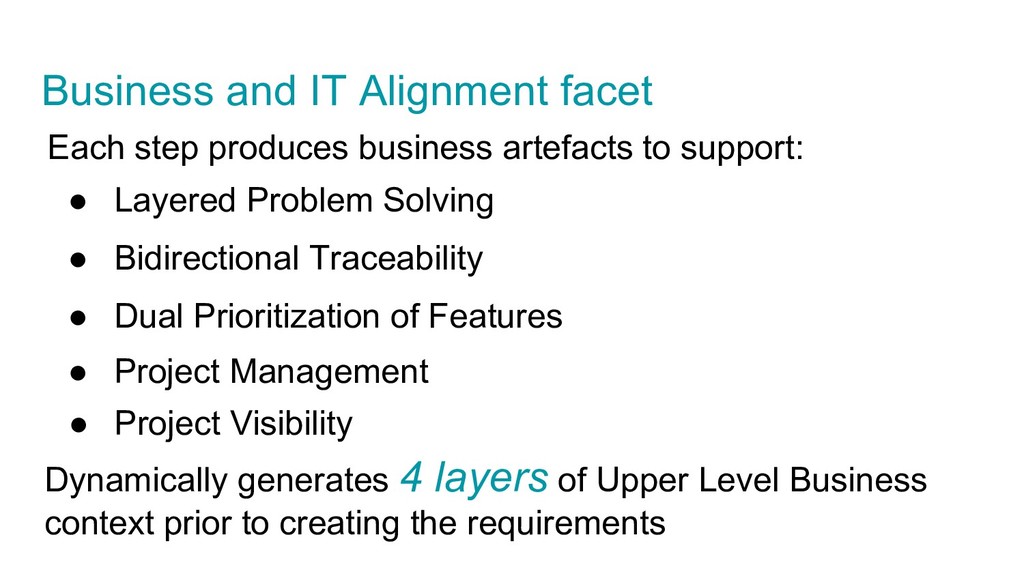
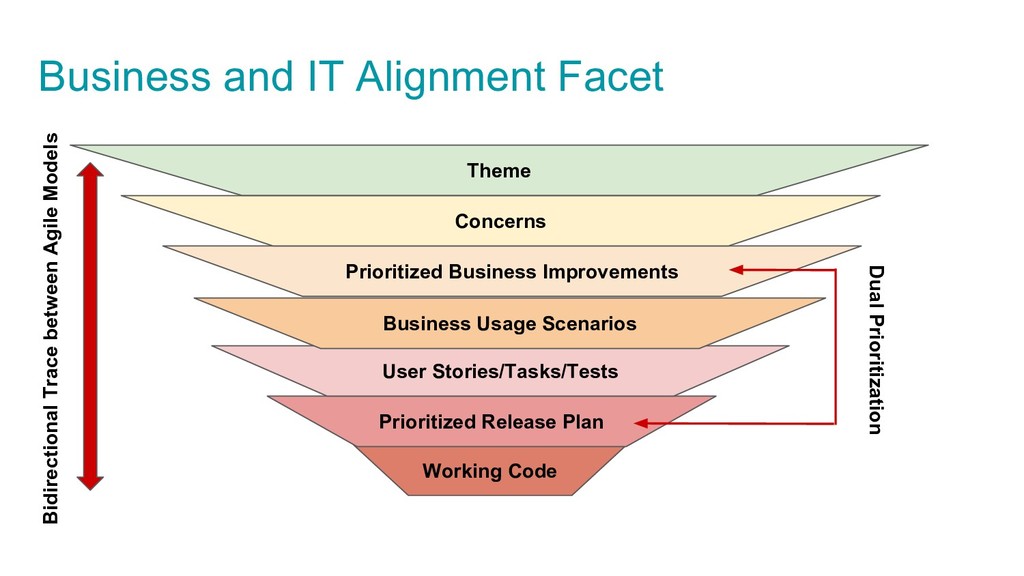
to support: • Layered Problem Solving • Bidirectional Traceability • Dual Prioritization of Features • Project Management • Project Visibility Dynamically generates 4 layers of Upper Level Business context prior to creating the requirements
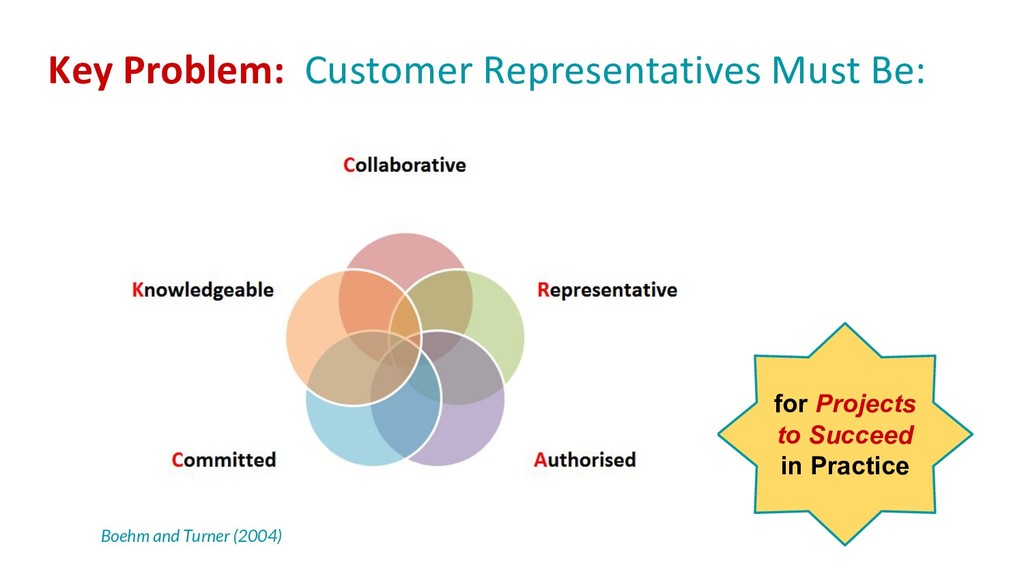
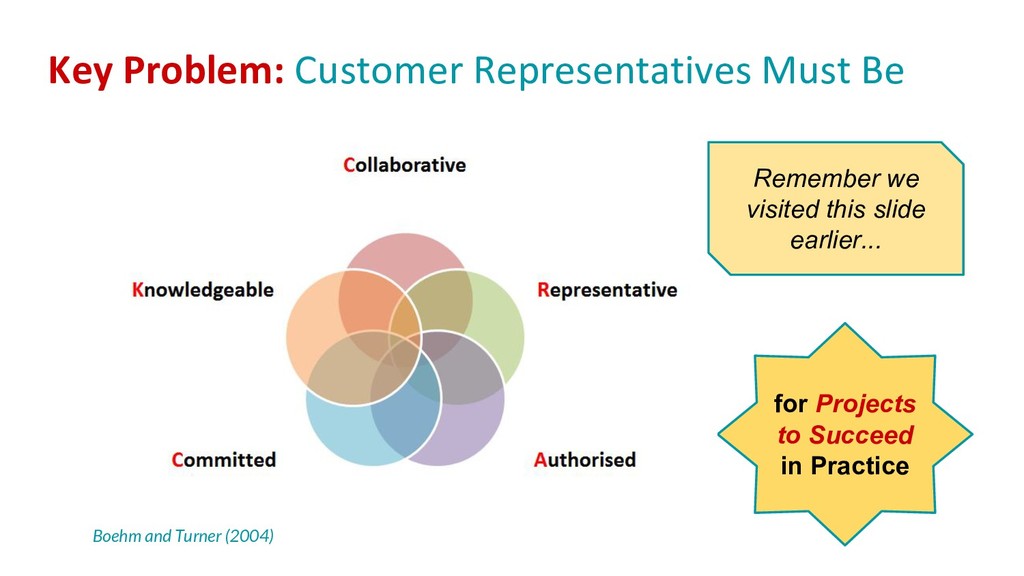
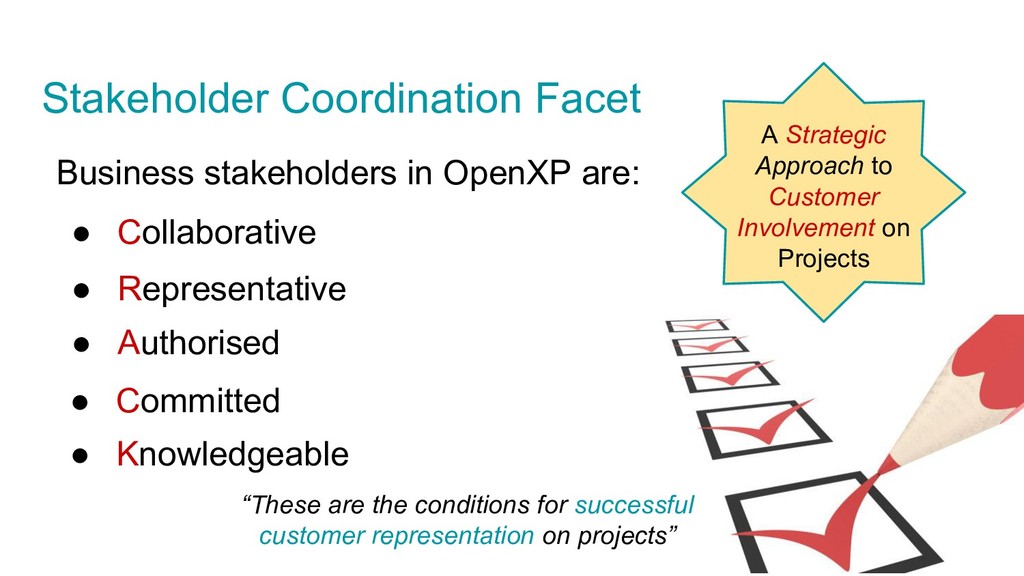
• Representative • Authorised • Committed • Knowledgeable “These are the conditions for successful customer representation on projects” A Strategic Approach to Customer Involvement on Projects
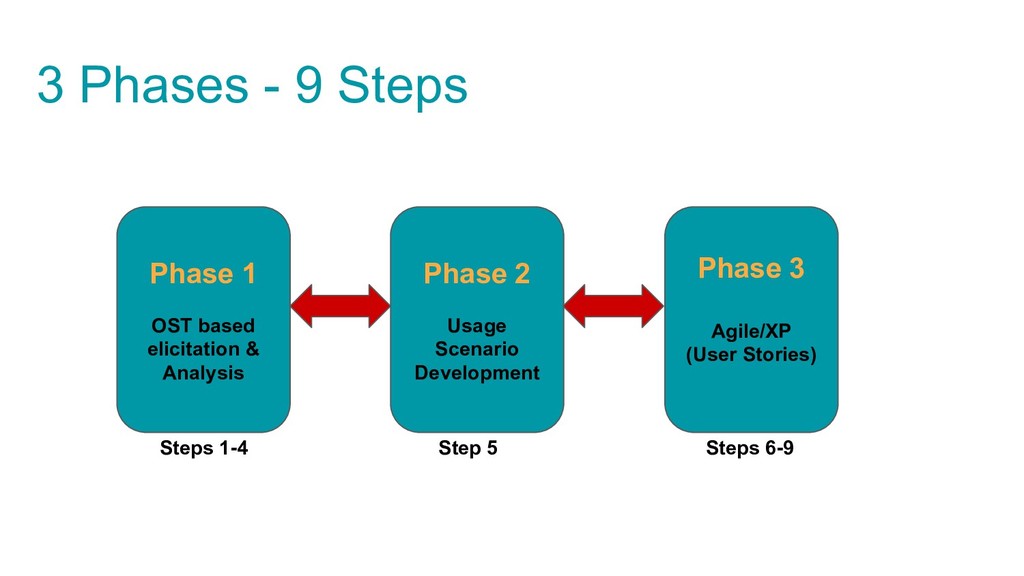
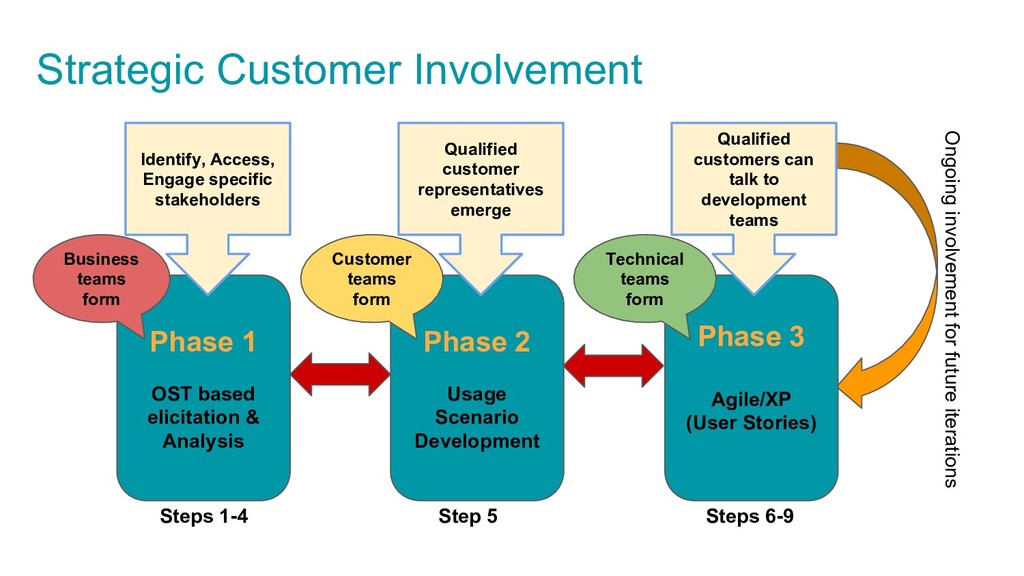
Phase 2 Usage Scenario Development Phase 3 Agile/XP (User Stories) Identify, Access, Engage specific stakeholders Qualified customer representatives emerge Qualified customers can talk to development teams Steps 1-4 Step 5 Steps 6-9 Ongoing involvement for future iterations Business teams form Customer teams form Technical teams form
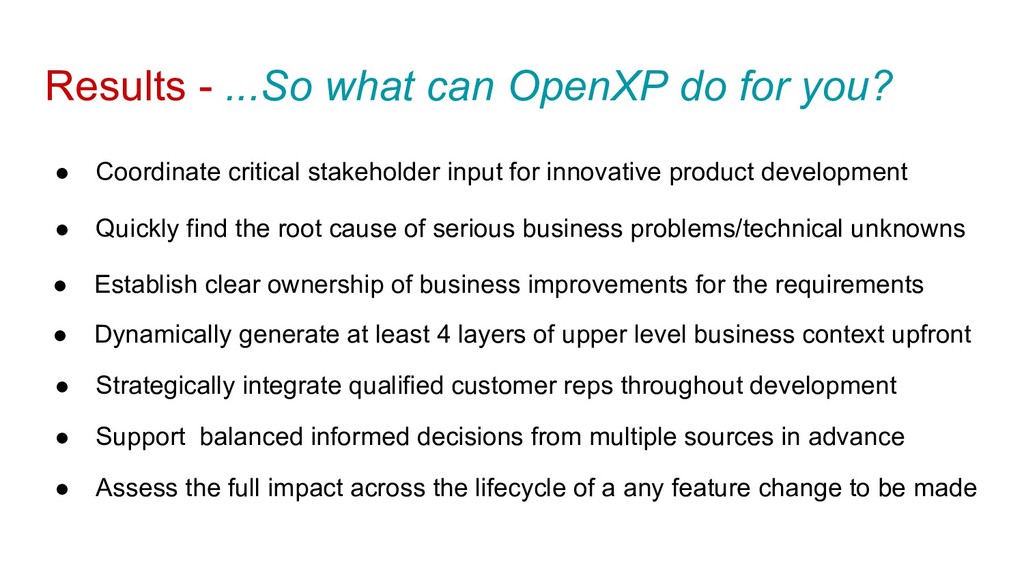
Coordinate critical stakeholder input for innovative product development • Dynamically generate at least 4 layers of upper level business context upfront • Quickly find the root cause of serious business problems/technical unknowns • Establish clear ownership of business improvements for the requirements • Strategically integrate qualified customer reps throughout development • Support balanced informed decisions from multiple sources in advance • Assess the full impact across the lifecycle of a any feature change to be made
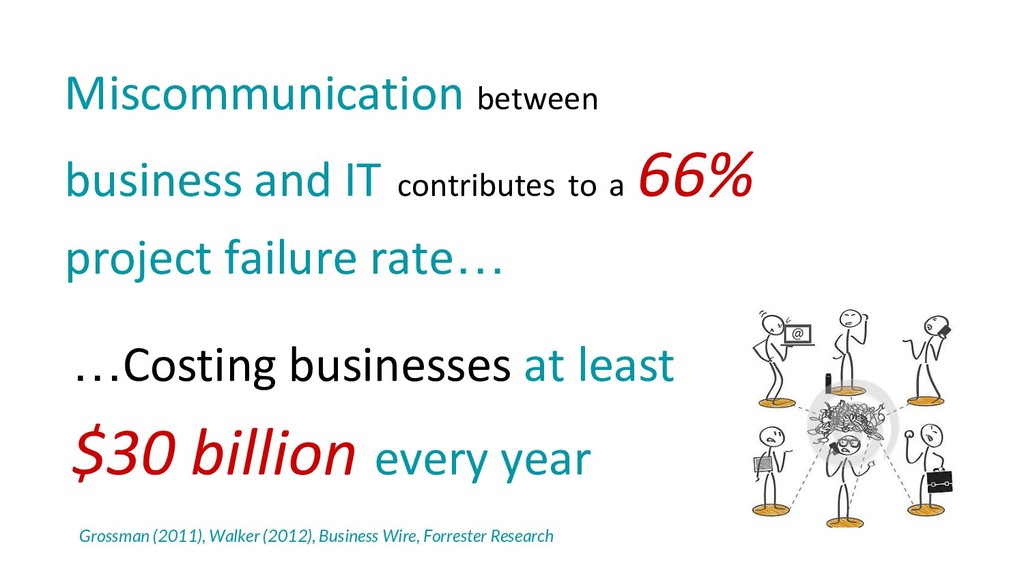
initiatives… OpenXP dynamically creates a drawbridge for effective communication between your business and IT domains • Targets the 66% of project failure caused by miscommunication between the domains • The Agile models produced support the early detection of overlapping and/or ambiguous requirements, conflict & scope creep Valuable time and cost is saved by: • Eliminating 17 specific areas of waste identified in the communication process between IT and other business departments See Appendix for details on each specific area of waste covered by OpenXP


 helmedeiros
 kimpetersen
 ipullrank
 ryanjones
 caitiem20
 moore
 quramy
 addyosmani
 jmmastey
 inesmontani
 techseoconnect
 davidcarrasco