and Backend • Complex React components (tag input, cached search paginations) • Displaying useful data to users • Quick and responsive loading • Wrote reusable components in the front end Next: What did we learn? →
Flask • Communicating between front end and back end • How to use Bootstrap with React • PostgreSQL and Flask Integration • Advance react concepts: useState, useEffect, custom hooks, context Next: What could we do better? →
of implementing styling ◦ Style modules, styled components • Linter and coding conventions • Better use of regex to clean data from an API • Code reviews • Responsiveness and accessibility • Git Collaboration • Keep code D.R.Y. Next: What puzzled us? →
costs, and setting up Database • Routing between React and Flask • Bundle React, messing with Webpack, connecting Flask with React • Render unit tests in React
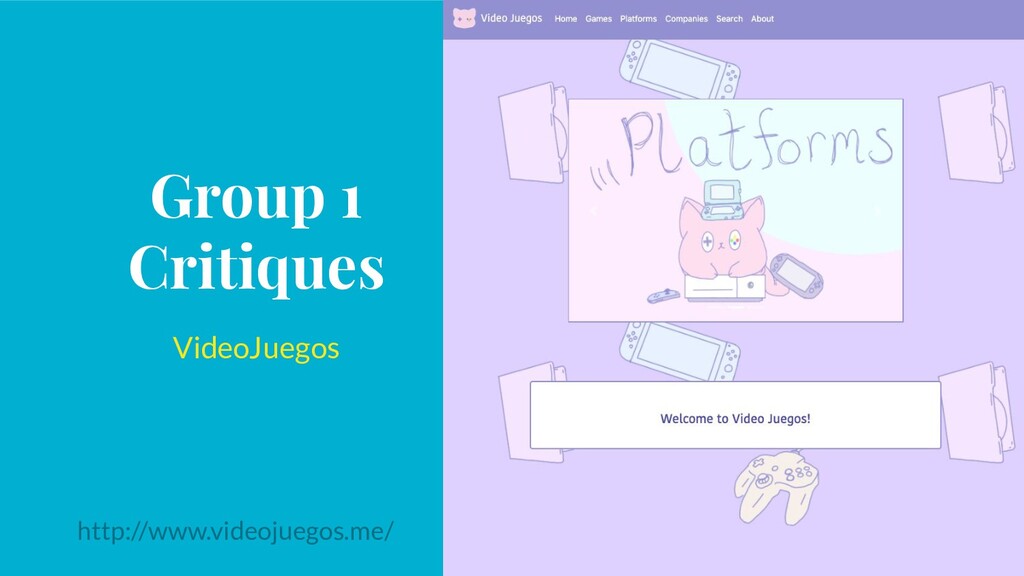
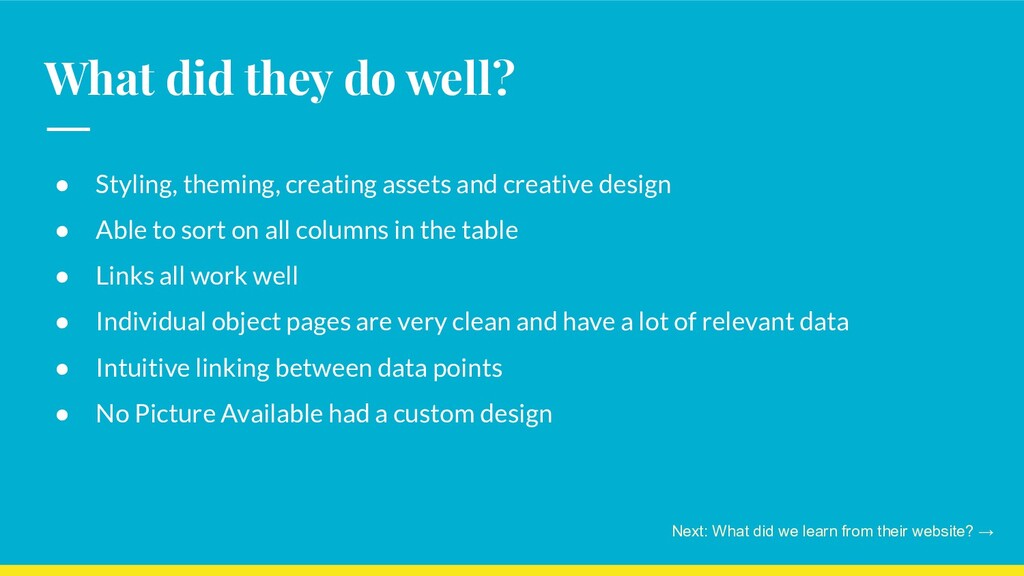
from their website? → • Styling, theming, creating assets and creative design • Able to sort on all columns in the table • Links all work well • Individual object pages are very clean and have a lot of relevant data • Intuitive linking between data points • No Picture Available had a custom design
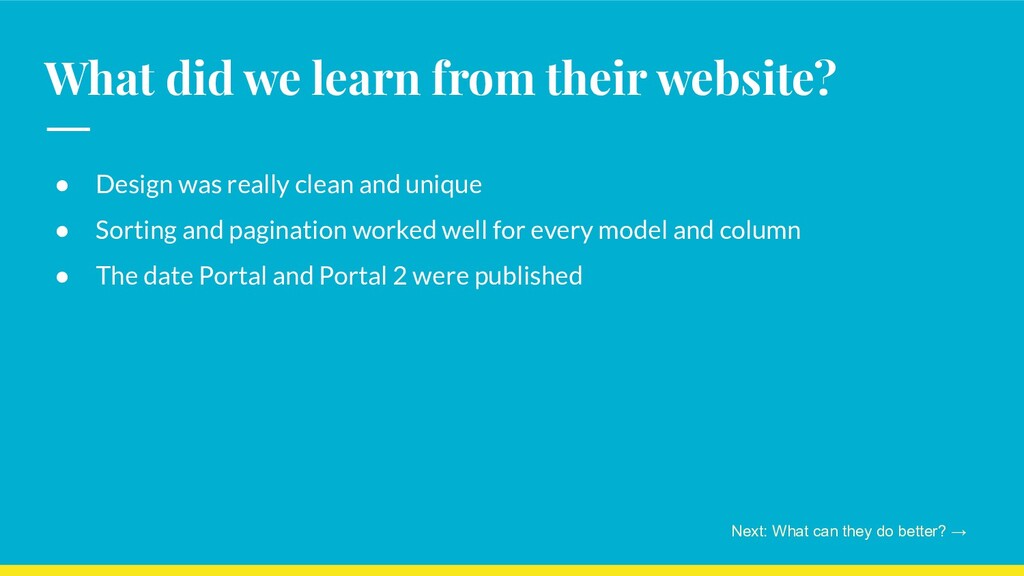
really clean and unique • Sorting and pagination worked well for every model and column • The date Portal and Portal 2 were published Next: What can they do better? →
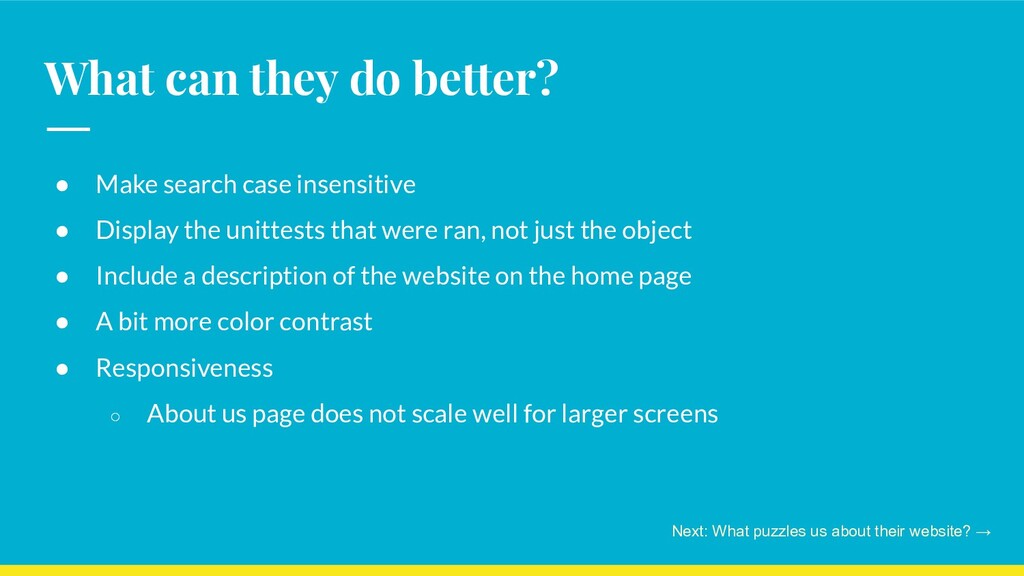
• Display the unittests that were ran, not just the object • Include a description of the website on the home page • A bit more color contrast • Responsiveness ◦ About us page does not scale well for larger screens Next: What puzzles us about their website? →
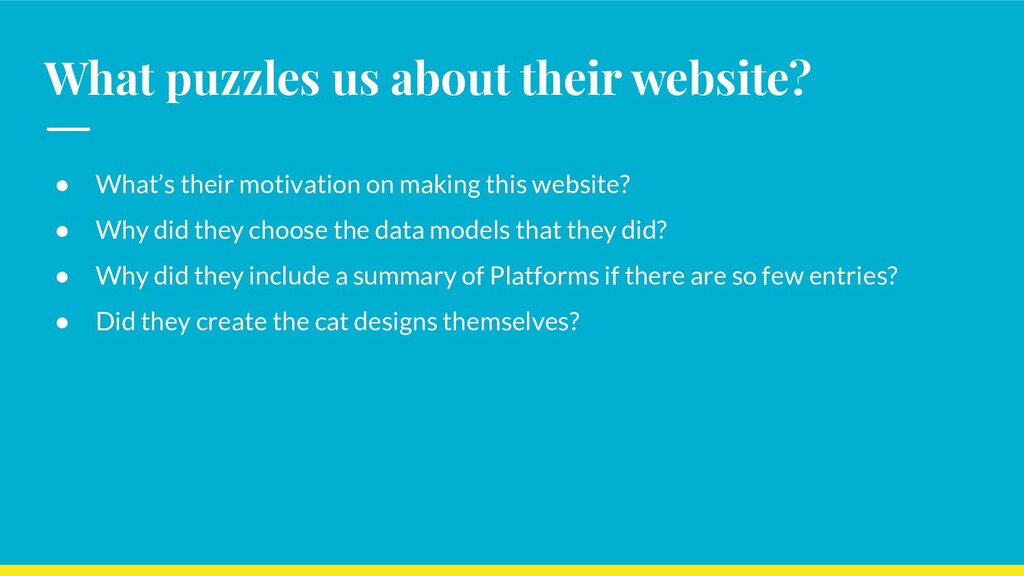
on making this website? • Why did they choose the data models that they did? • Why did they include a summary of Platforms if there are so few entries? • Did they create the cat designs themselves?


 eitanlees
 jonoalderson
 marcduiker
 skipperchong
 lindahogenes
 trallard
 kevinliebholz
 cassininazir
 bkeepers
 addyosmani
 palkan
 inesmontani