Upgrade to Pro — share decks privately, control downloads, hide ads and more …

LRUG__Lightning_Talk__11th_Feb_2013.pdf

Sponsored · Your Podcast. Everywhere. Effortlessly. Share. Educate. Inspire. Entertain. You do you. We'll handle the rest. →
Avatar for Anurag Priyam Anurag Priyam
February 11, 2013
40

 LRUG__Lightning_Talk__11th_Feb_2013.pdf

Avatar for Anurag Priyam

Anurag Priyam

February 11, 2013

Transcript

  1. Background • how does life work • why don't naked

    mole rats ever get cancer ◦ but humans do • can we contain the population of mosquitoes without the side-effect of insecticides The answers lies in genomes.
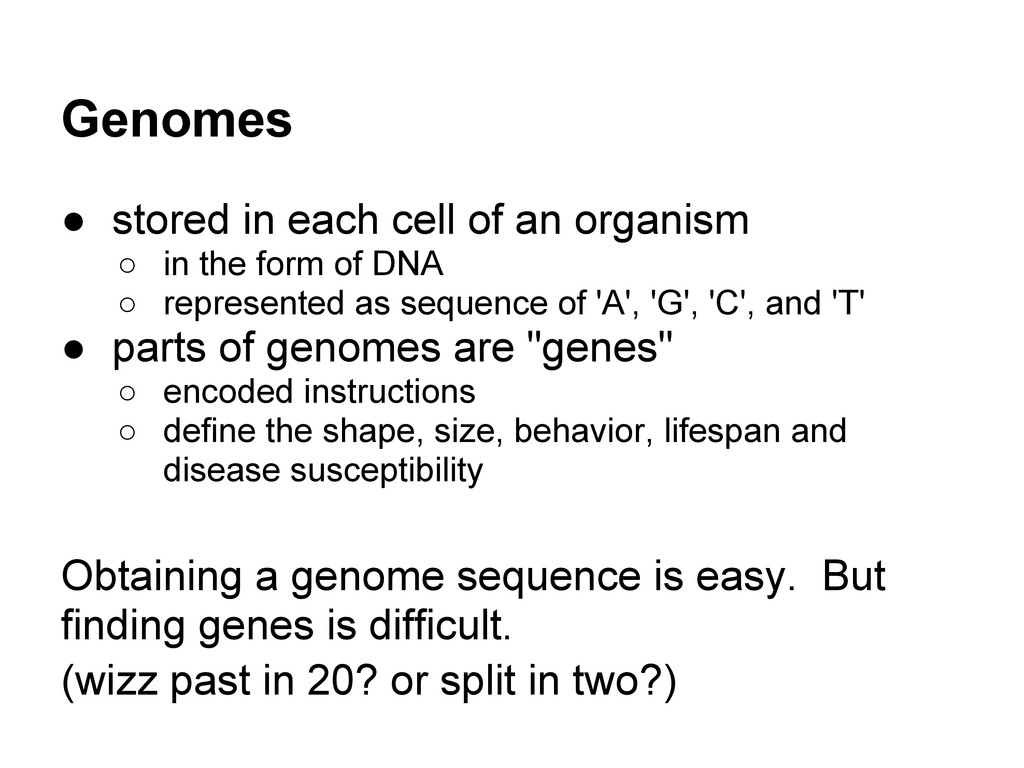
  2. Genomes • stored in each cell of an organism ◦

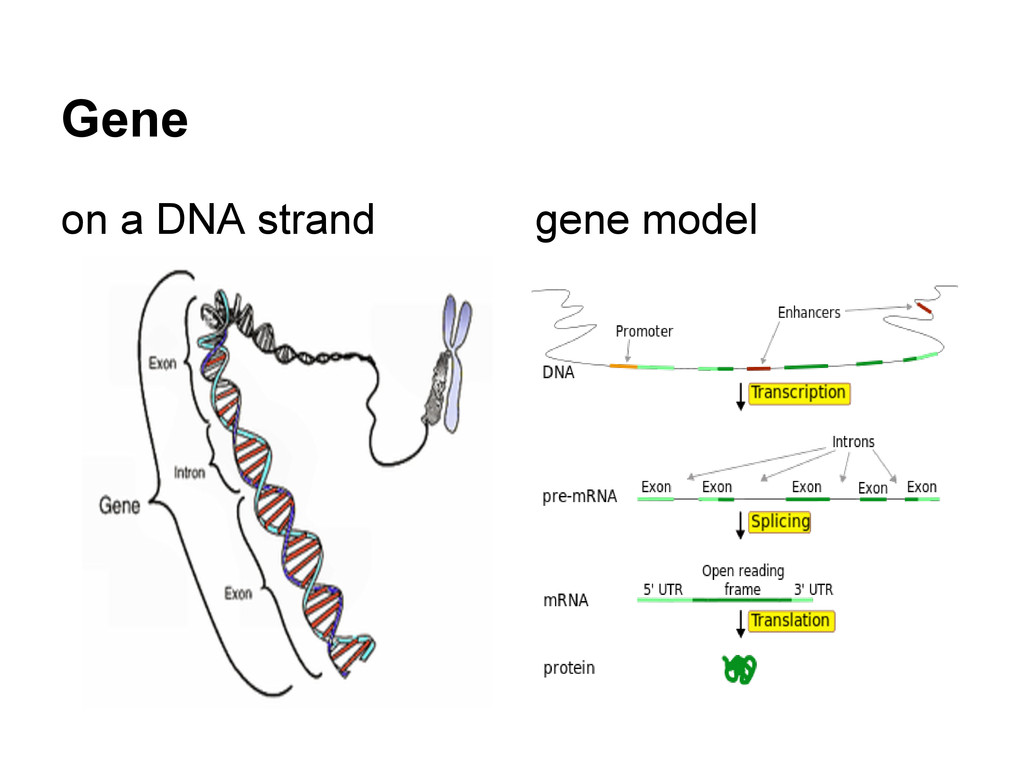
    in the form of DNA ◦ represented as sequence of 'A', 'G', 'C', and 'T' • parts of genomes are "genes" ◦ encoded instructions ◦ define the shape, size, behavior, lifespan and disease susceptibility Obtaining a genome sequence is easy. But finding genes is difficult. (wizz past in 20? or split in two?)
  3. Gene finding • genome is run through prediction software ◦

    guess the location of gene ◦ return an approximate model • predicted gene models are not accurate ◦ incorrect feature boundaries ◦ miss genes altogether ◦ combine two genes or split one
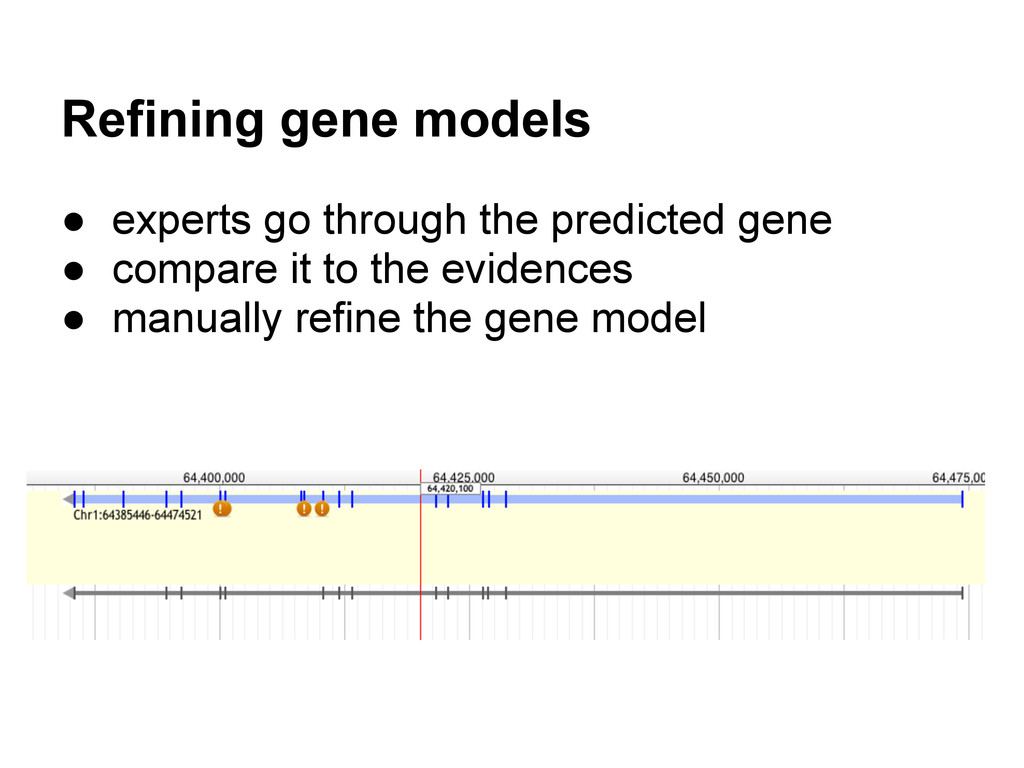
  4. Refining gene models • experts go through the predicted gene

    • compare it to the evidences • manually refine the gene model
  5. It's difficult • we need lots of humans to manually

    go through the predicted gene models Crowdsource!
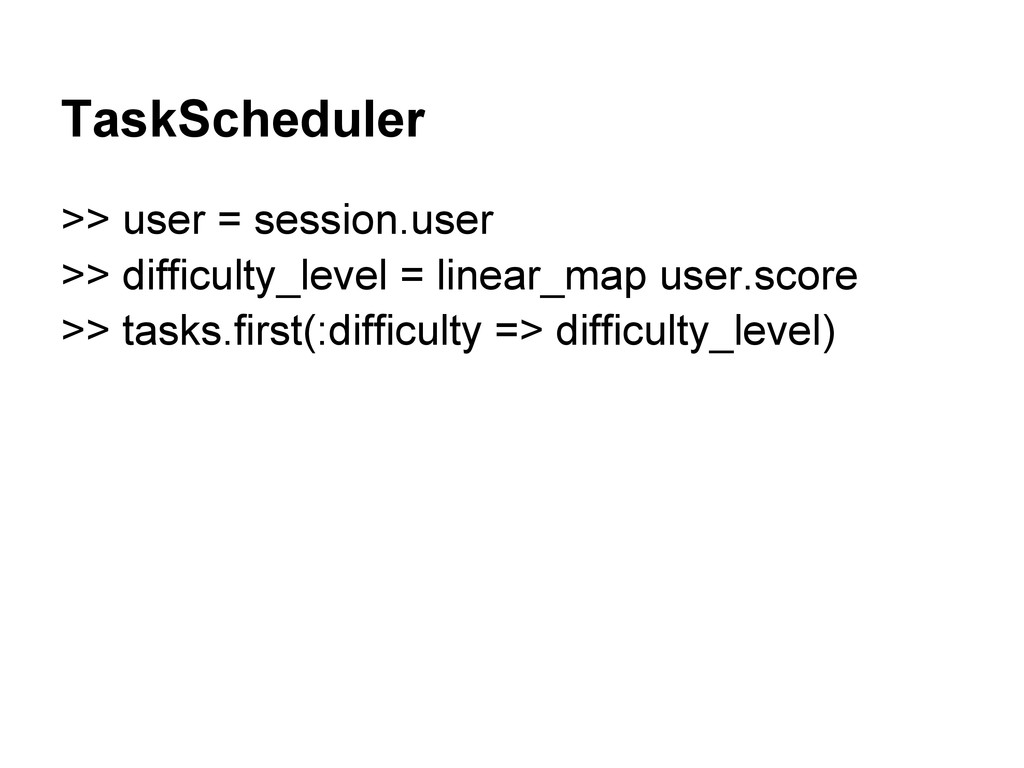
  6. How? • present gene models to users ◦ easier to

    curate models to beginners ◦ harder ones to experts • attempt to validate submissions automatically • when in doubt reach out to a more experienced user
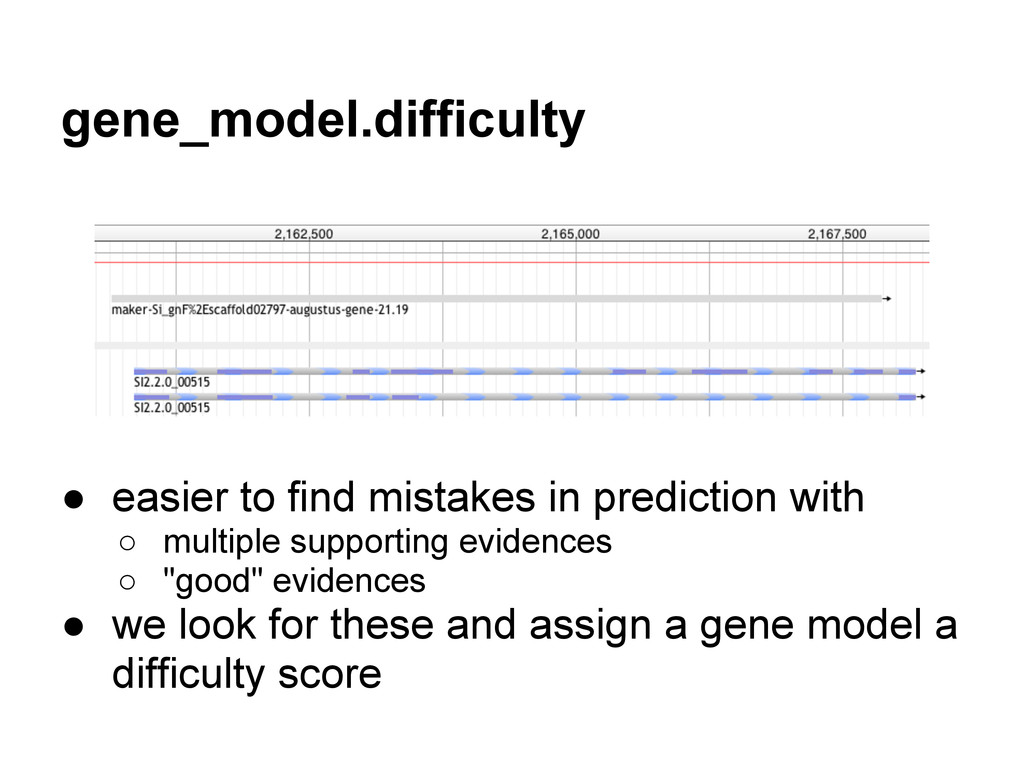
  7. gene_model.difficulty • easier to find mistakes in prediction with ◦

    multiple supporting evidences ◦ "good" evidences • we look for these and assign a gene model a difficulty score
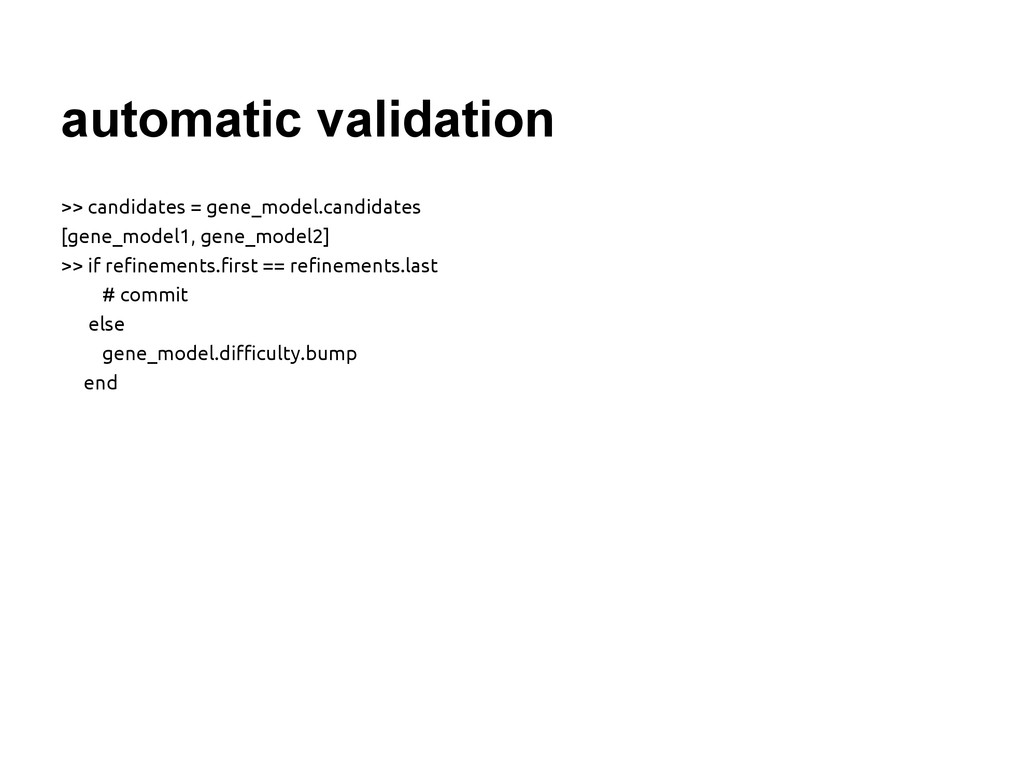
  8. automatic validation >> candidates = gene_model.candidates [gene_model1, gene_model2] >> if

    refinements.first == refinements.last # commit else gene_model.difficulty.bump end
  9. • some edits are easier to validate ◦ exon-intron boundaries

    ◦ EST alignment • validate these on the client side ◦ provide immediate feedback ◦ compute putative score
  10. • present gene models to users ◦ based on their

    interest Tag genes before-hand. On signup • ask users to pick tags of interest to him from a tag cloud {needs to be worked on}
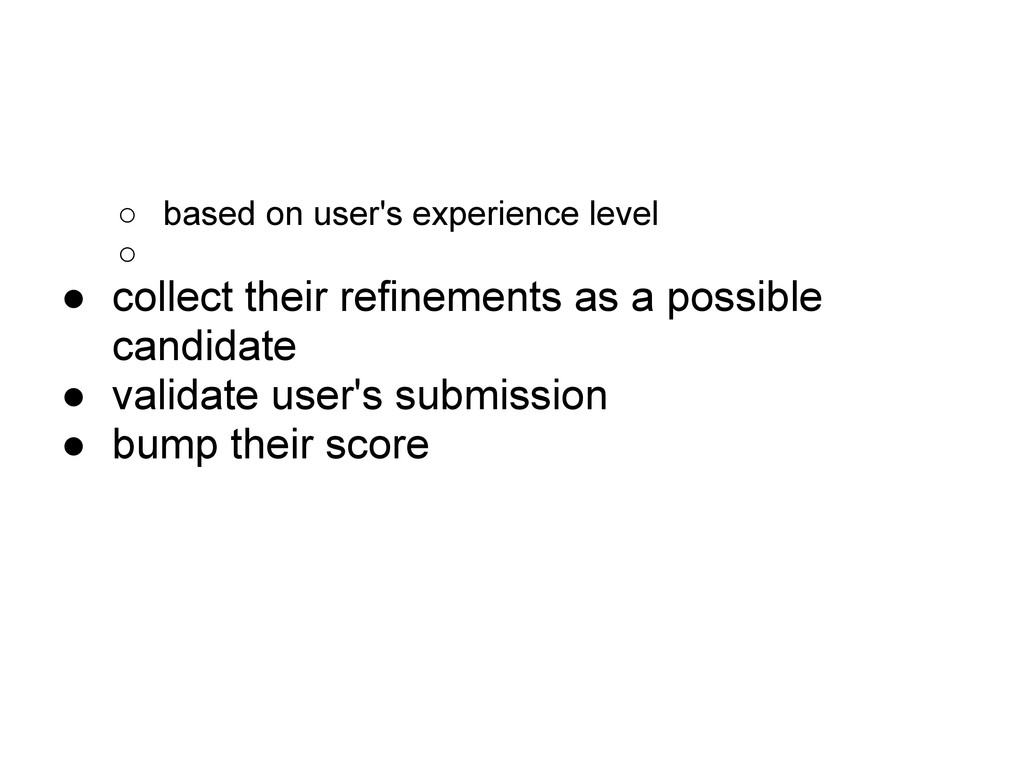
  11. ◦ based on user's experience level ◦ • collect their

    refinements as a possible candidate • validate user's submission • bump their score
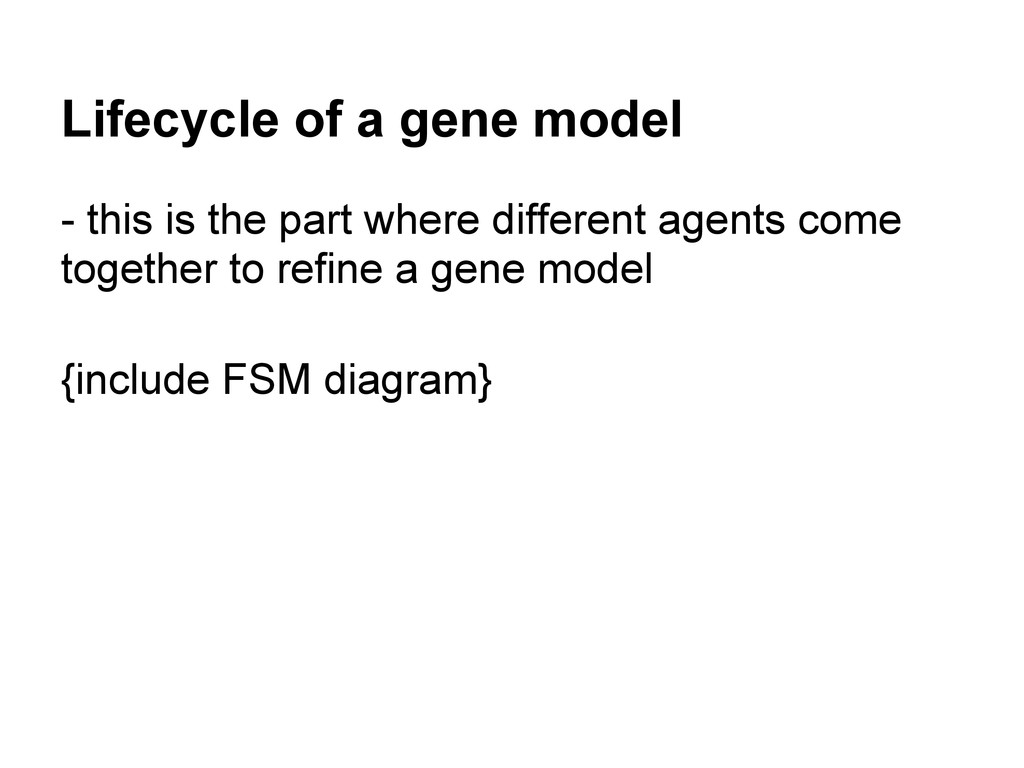
  12. Lifecycle of a gene model - this is the part

    where different agents come together to refine a gene model {include FSM diagram}