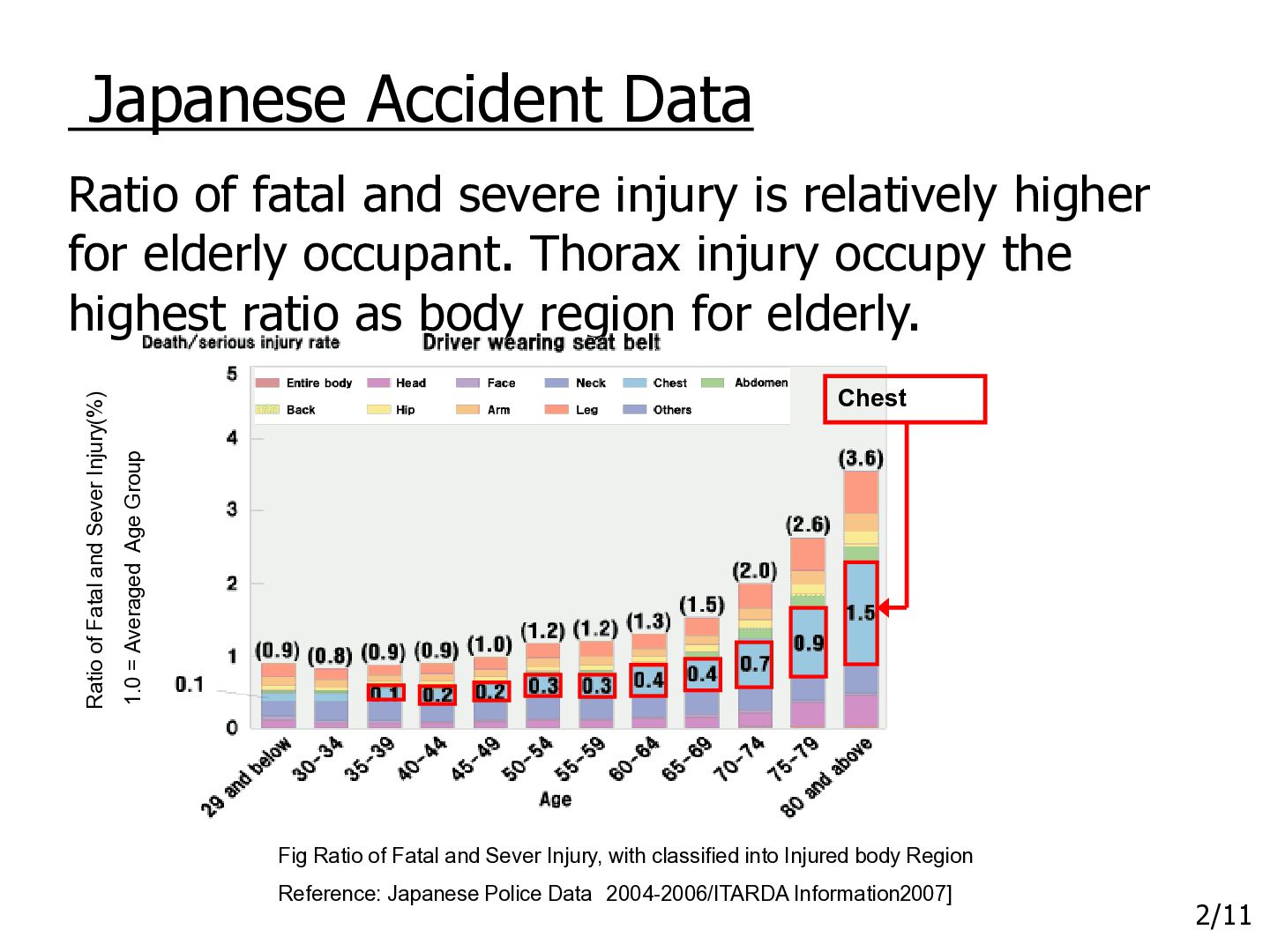
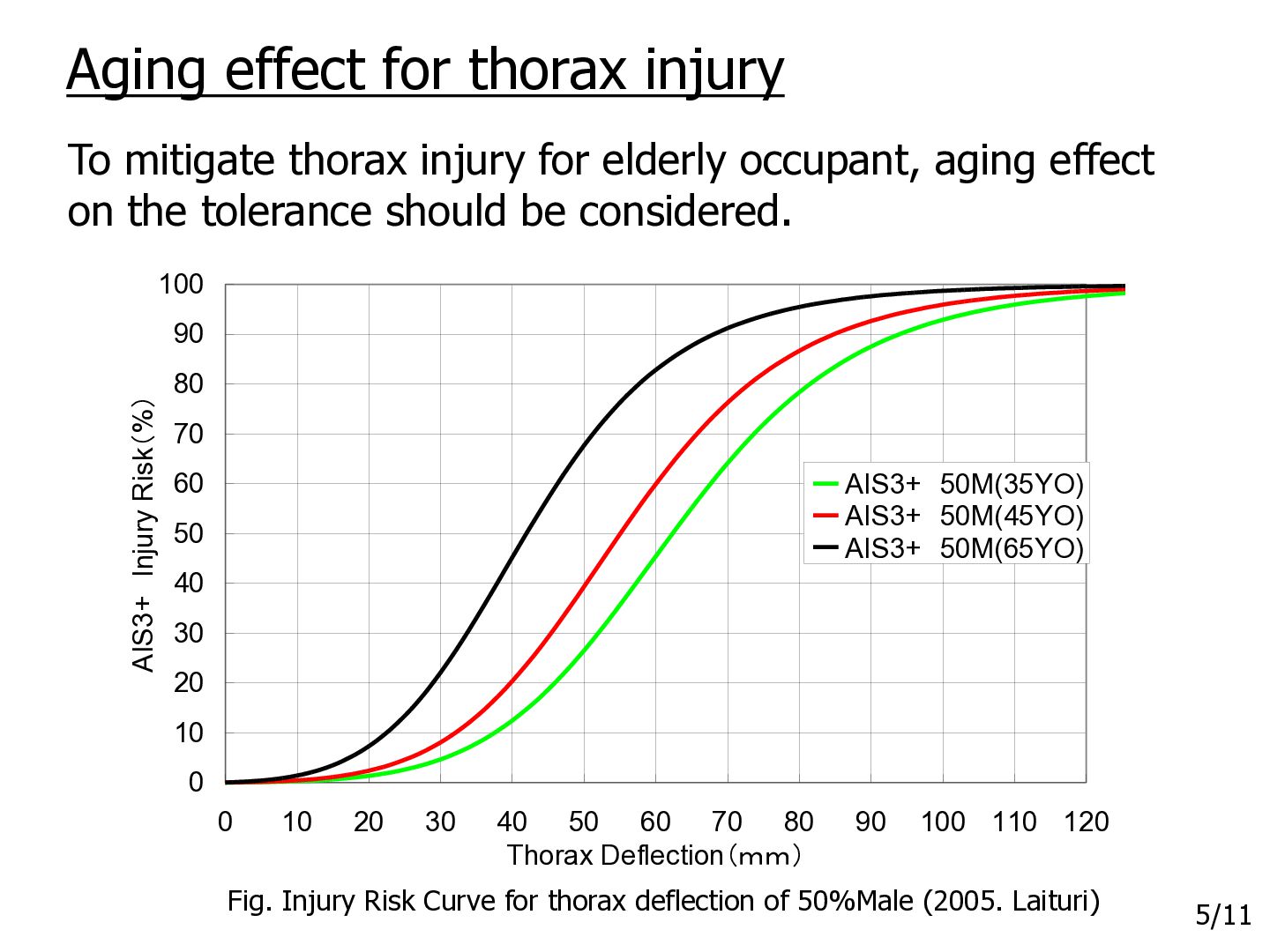
of Fatal and Sever Injury(%) Ratio of fatal and severe injury is relatively higher for elderly occupant. Thorax injury occupy the highest ratio as body region for elderly. Fig Ratio of Fatal and Sever Injury, with classified into Injured body Region Reference: Japanese Police Data 2004-2006/ITARDA Information2007] 2/11
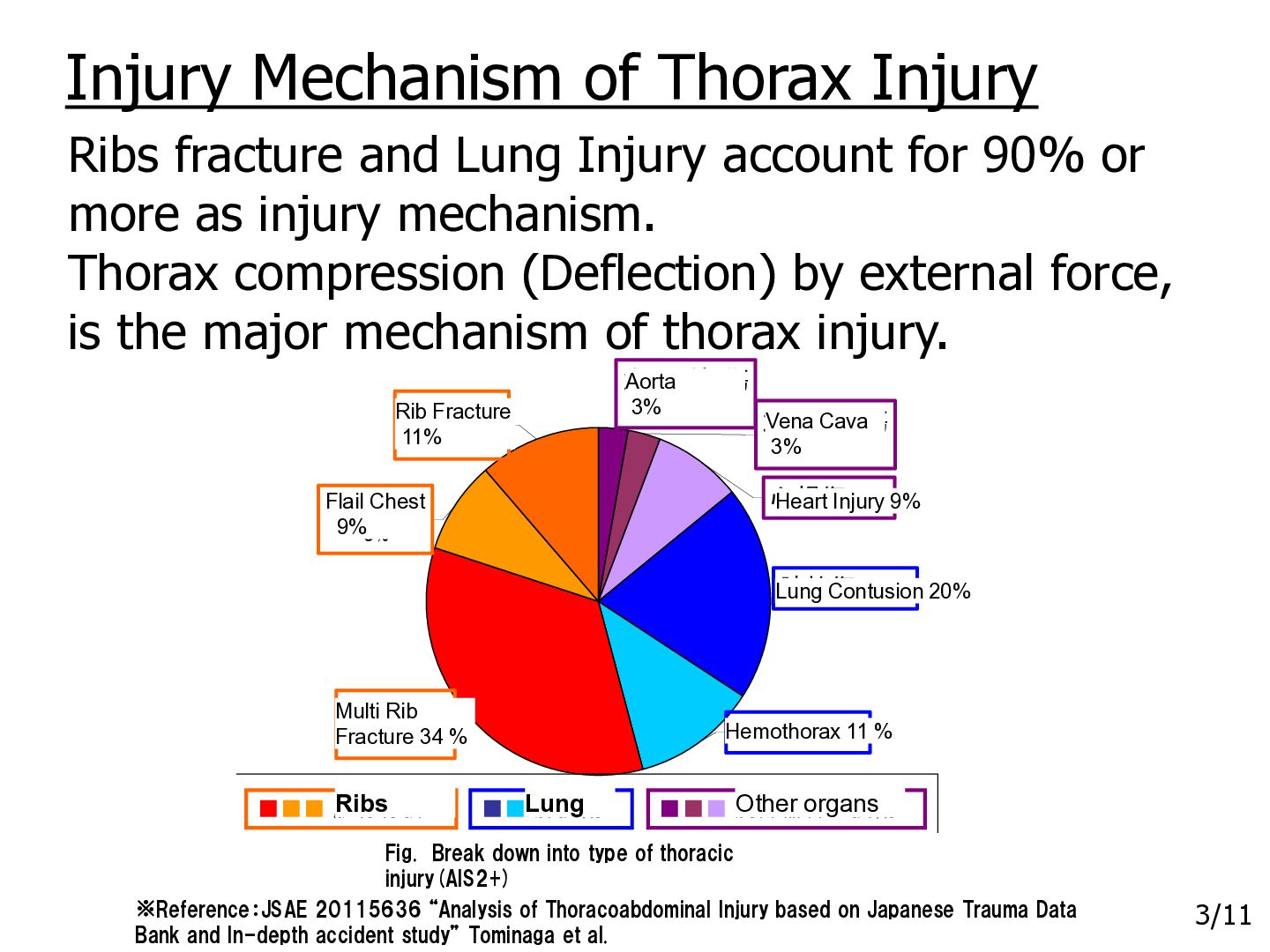
account for 90% or more as injury mechanism. Thorax compression (Deflection) by external force, 胸部AIS2以上の傷害内容とその分布 is the major mechanism of thorax injury. Rib Fracture 胸骨骨折 胸郭骨折 11%11% Aorta 大動脈損傷 3% 3% Vena Cava 大静脈損傷 3% 3% 心損傷 9% 9% Heart Injury Flail Chest 動揺胸郭 9%9% 肺挫傷 20% 20% Lung Contusion Multi Rib 多発肋骨 Fracture 34 % 骨折 34% Ribs ▪▪▪ 肋骨骨折 Hemothorax 11 % 血気胸 11% ▪▪Lung 肺損傷 Other organs ▪▪▪ 胸部器官の損傷 Fig. Break down into type of thoracic injury(AIS2+) ※Reference:JSAE 20115636 “Analysis of Thoracoabdominal Injury based on Japanese Trauma Data Bank and In-depth accident study” Tominaga et al. 3/11
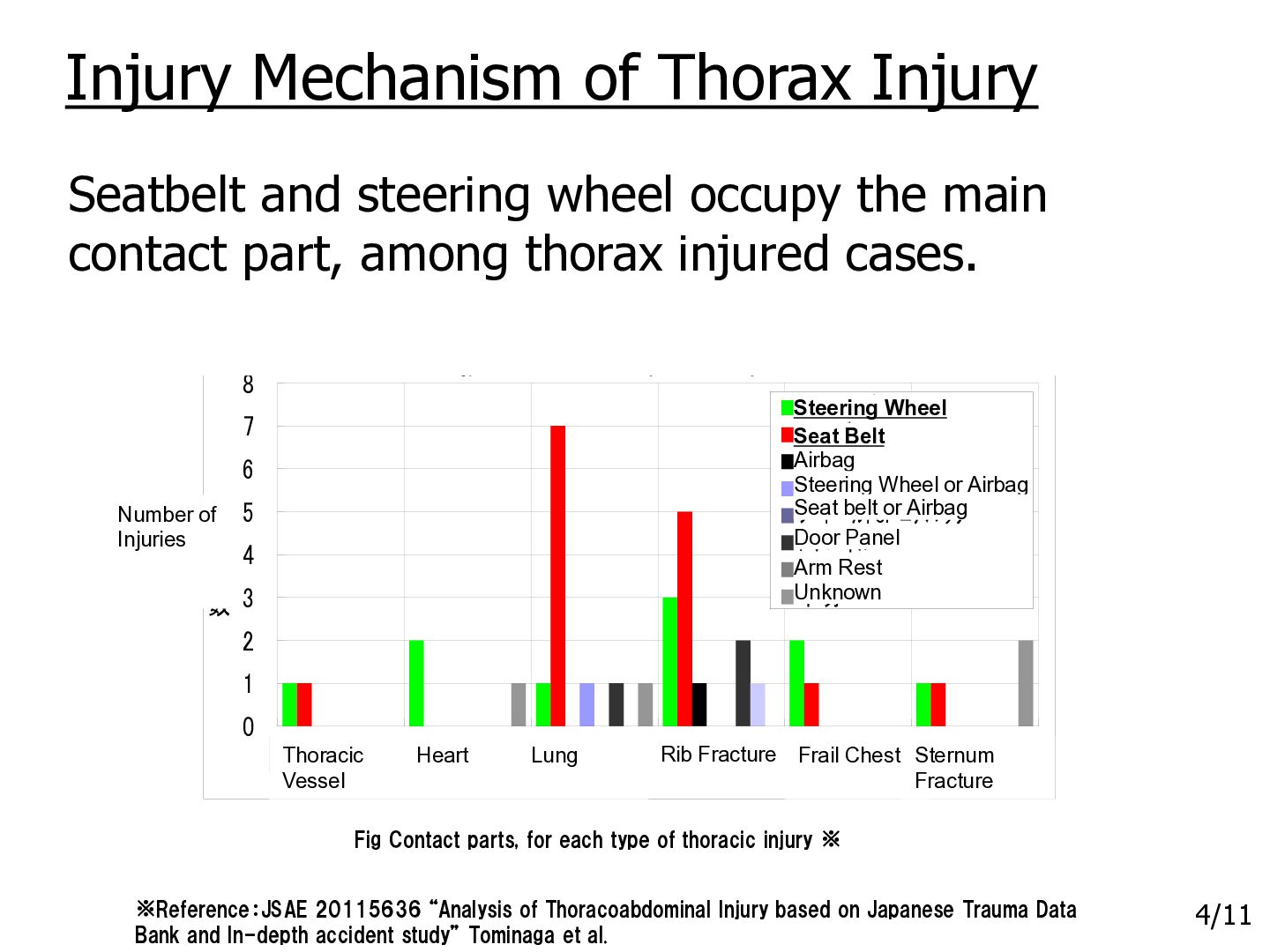
the main contact part, among thorax injured cases. 車内接触箇所別 胸部傷害内容の分布 8 ステアリングホイール Steering Wheel シートベルト Seat Belt Airbag エアバッグ Steering Wheel orエアバッグ Airbag ステアリングホイールor Seat belt orエアバッグ Airbag シートベルトor Door Panel ドアパネル Arm Rest アームレスト Unknown 不明 7 6 Number of傷 5 Injuries 害 4 件 数 3 2 1 0 Thoracic Heart 胸部血管損傷 心損傷 Vessel Lung 肺挫傷 Rib Fracture Frail Chest Sternum 多発肋骨骨折 動揺胸郭 胸郭骨折 Fracture Fig Contact parts, for each type of thoracic injury ※ ※Reference:JSAE 20115636 “Analysis of Thoracoabdominal Injury based on Japanese Trauma Data Bank and In-depth accident study” Tominaga et al. 4/11
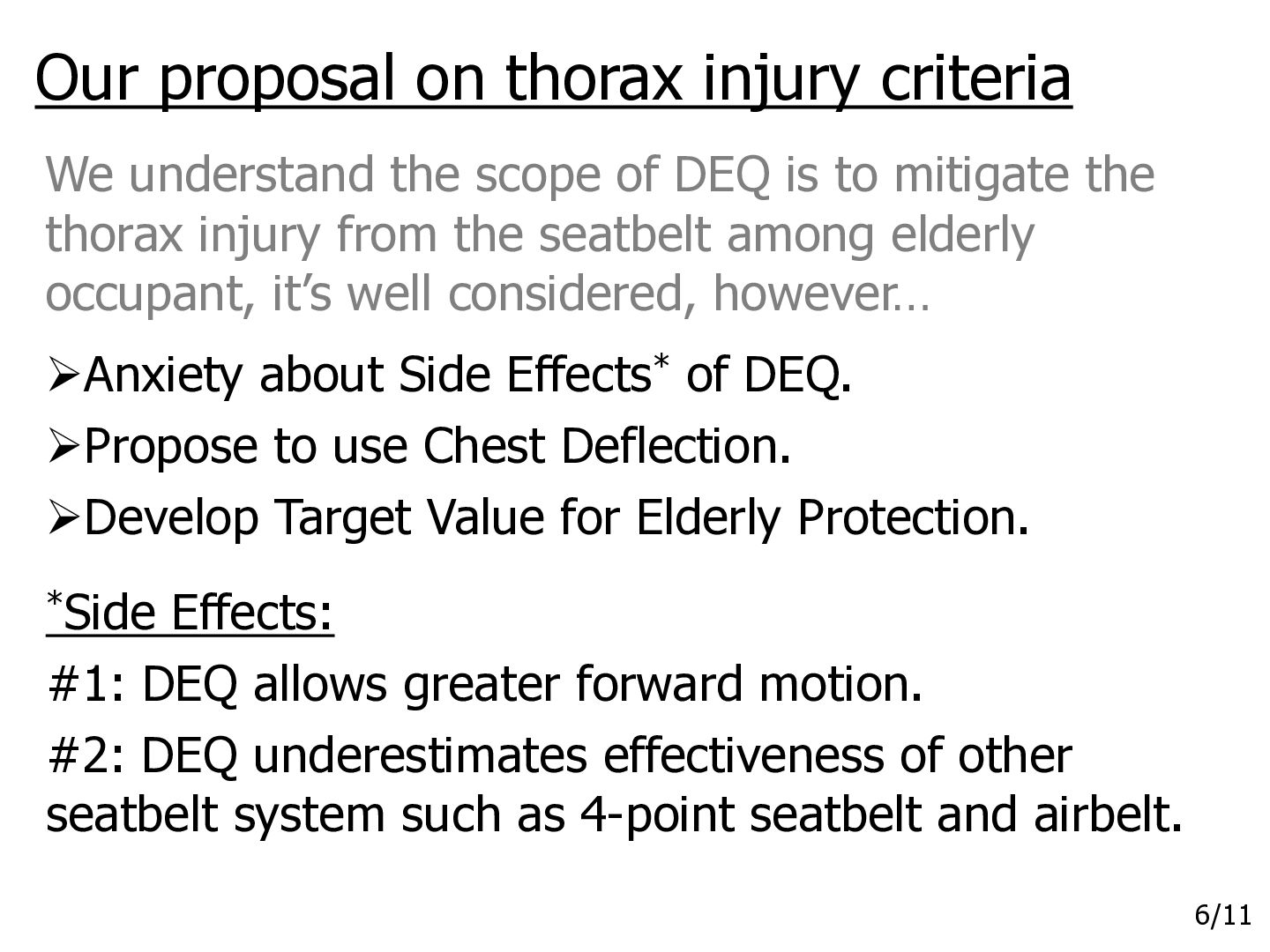
of DEQ is to mitigate the thorax injury from the seatbelt among elderly occupant, it’s well considered, however… ➢Anxiety about Side Effects* of DEQ. ➢Propose to use Chest Deflection. ➢Develop Target Value for Elderly Protection. *Side Effects: #1: DEQ allows greater forward motion. #2: DEQ underestimates effectiveness of other seatbelt system such as 4-point seatbelt and airbelt. 6/11
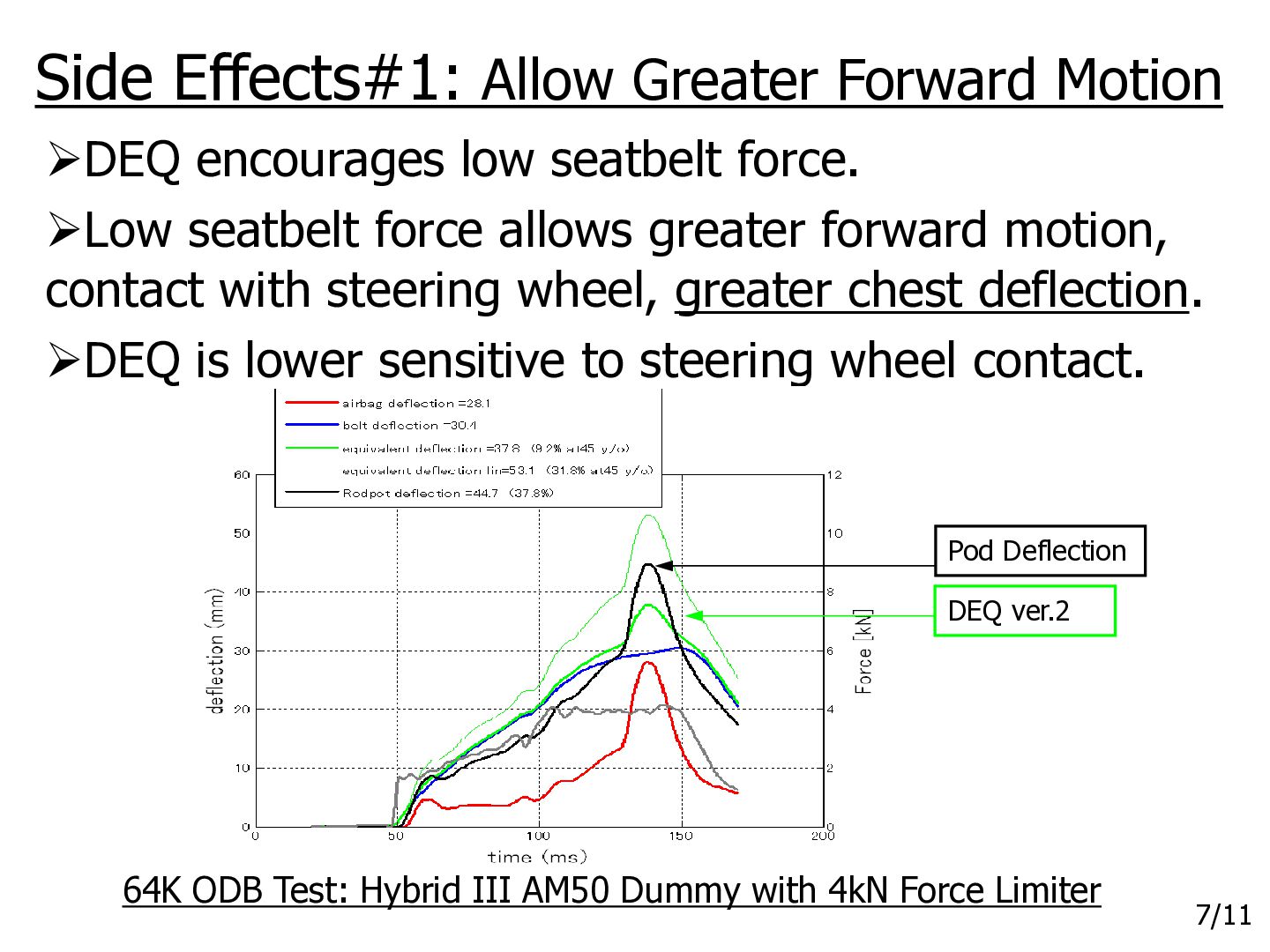
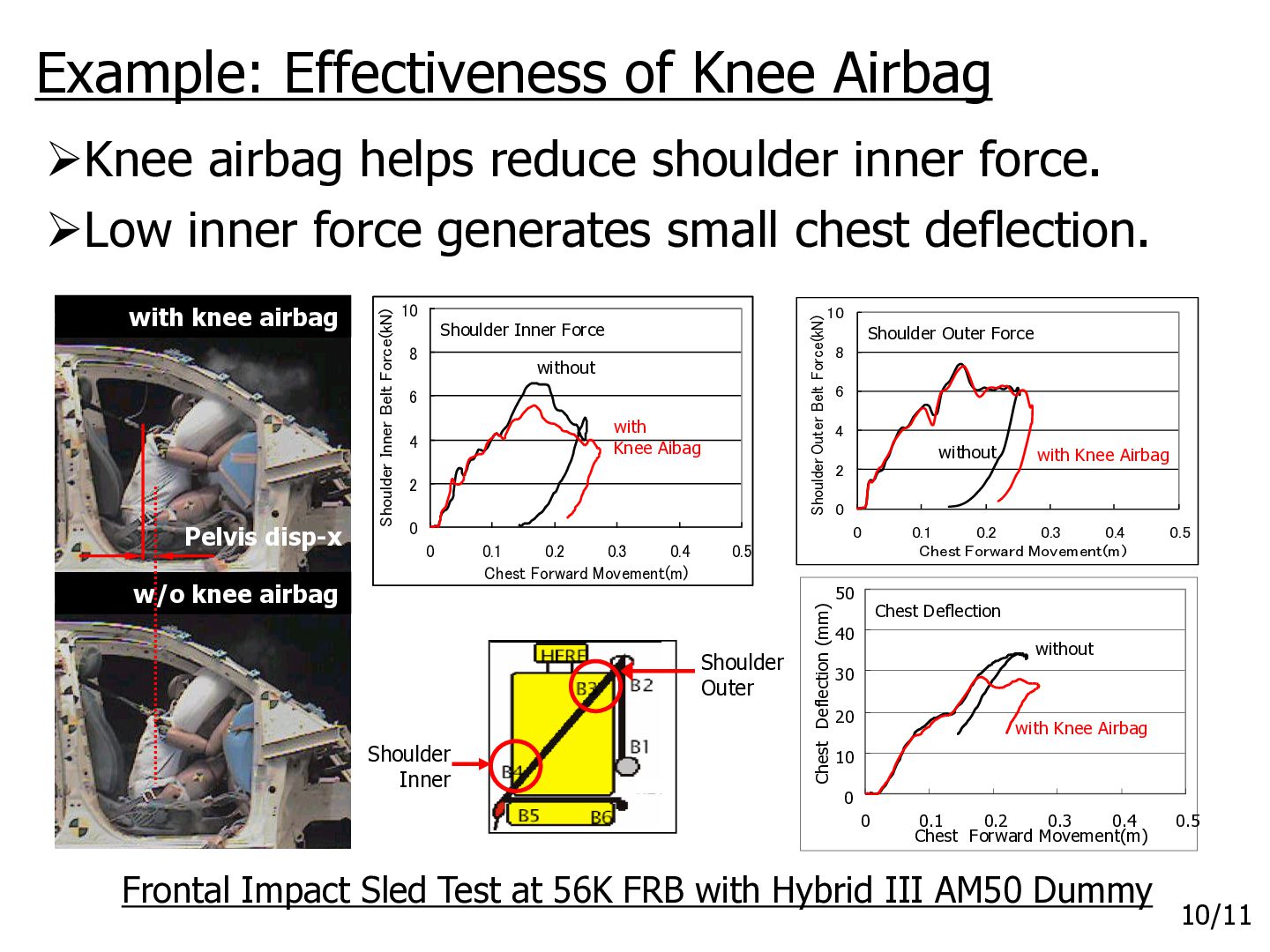
force. ➢Low seatbelt force allows greater forward motion, contact with steering wheel, greater chest deflection. ➢DEQ is lower sensitive to steering wheel contact. Pod Deflection DEQ ver.2 64K ODB Test: Hybrid III AM50 Dummy with 4kN Force Limiter 7/11
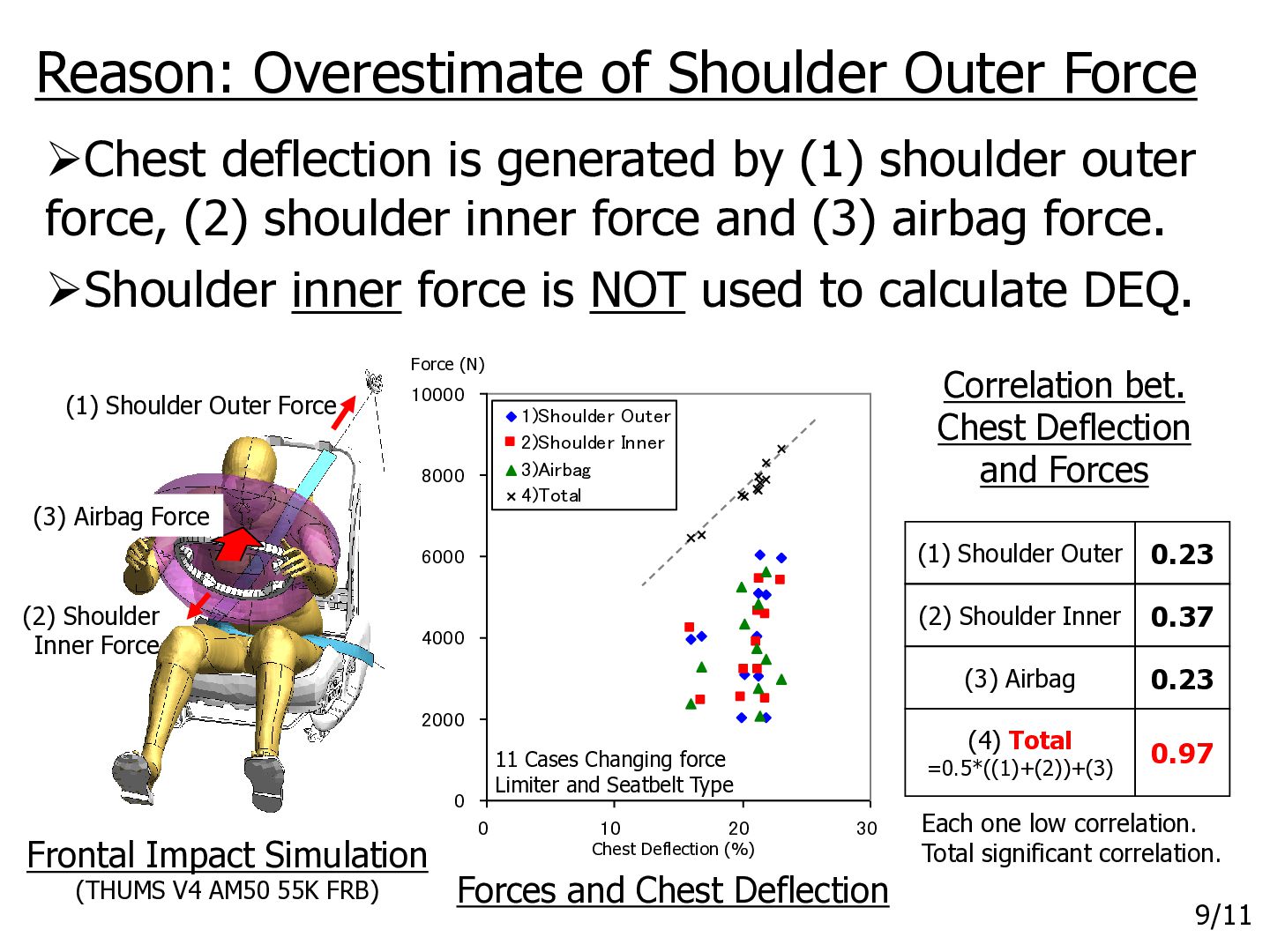
by (1) shoulder outer force, (2) shoulder inner force and (3) airbag force. ➢Shoulder inner force is NOT used to calculate DEQ. Force (N) (1) Shoulder Outer Force Correlation bet. Chest Deflection and Forces 10000 1)Shoulder Outer 2)Shoulder Inner 3)Airbag 4)Total 8000 (3) Airbag Force 6000 (2) Shoulder Inner Force 4000 2000 11 Cases Changing force Limiter and Seatbelt Type 0 Frontal Impact Simulation (THUMS V4 AM50 55K FRB) 0 10 20 Chest Deflection (%) (1) Shoulder Outer 0.23 (2) Shoulder Inner 0.37 (3) Airbag 0.23 (4) Total 0.97 =0.5*((1)+(2))+(3) 30 Forces and Chest Deflection Each one low correlation. Total significant correlation. 9/11
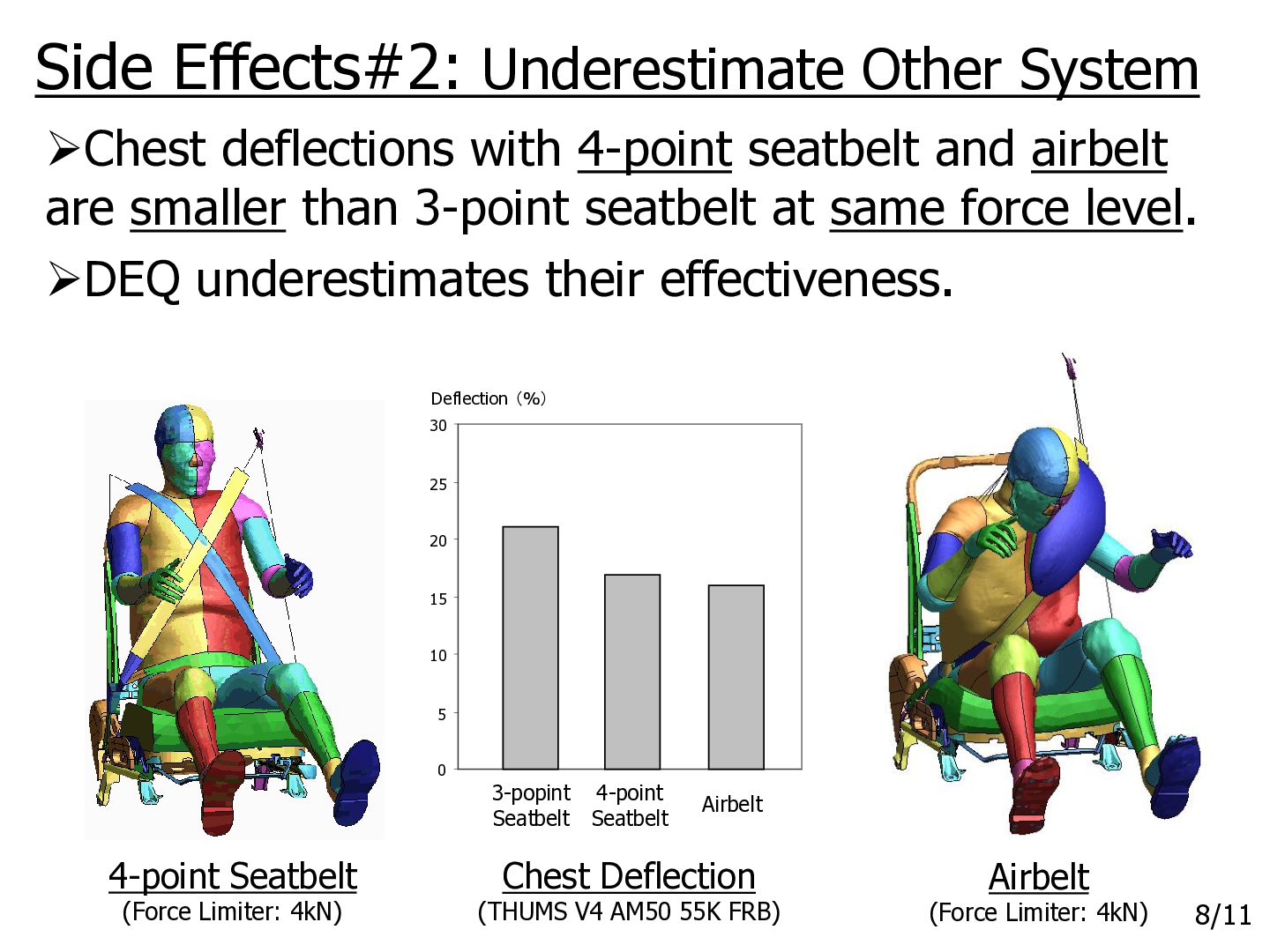
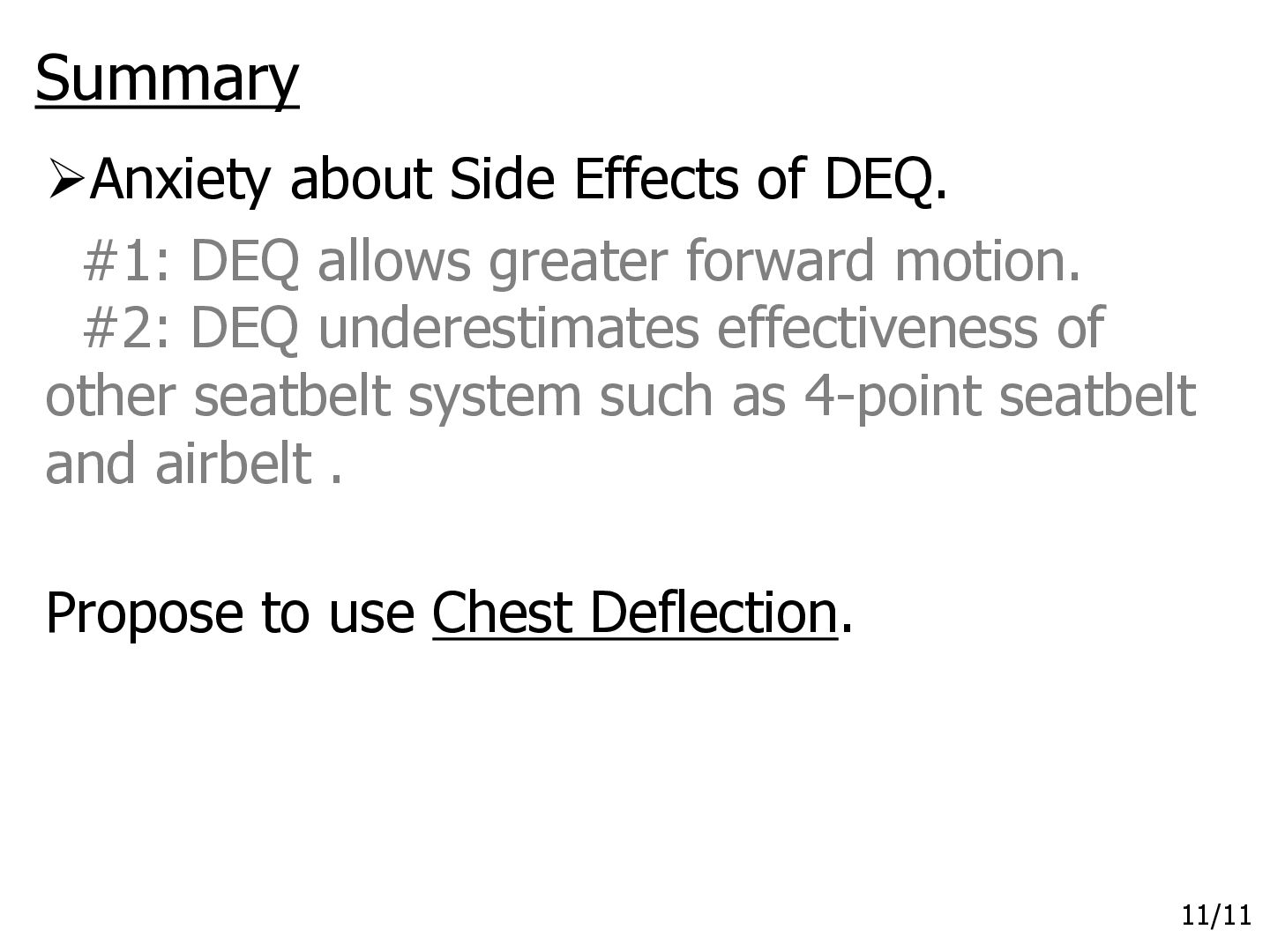
greater forward motion. #2: DEQ underestimates effectiveness of other seatbelt system such as 4-point seatbelt and airbelt . Propose to use Chest Deflection. 11/11

 Your Podcast. Everywhere. Effortlessly.


 keathley
 dougneiner
 inesmontani
 bkeepers
 trishagee
 speakerdeck
 nmsamuel
 reverentgeek
 davidcarrasco
 cassininazir
 matthewcrist
 pauljervisheath