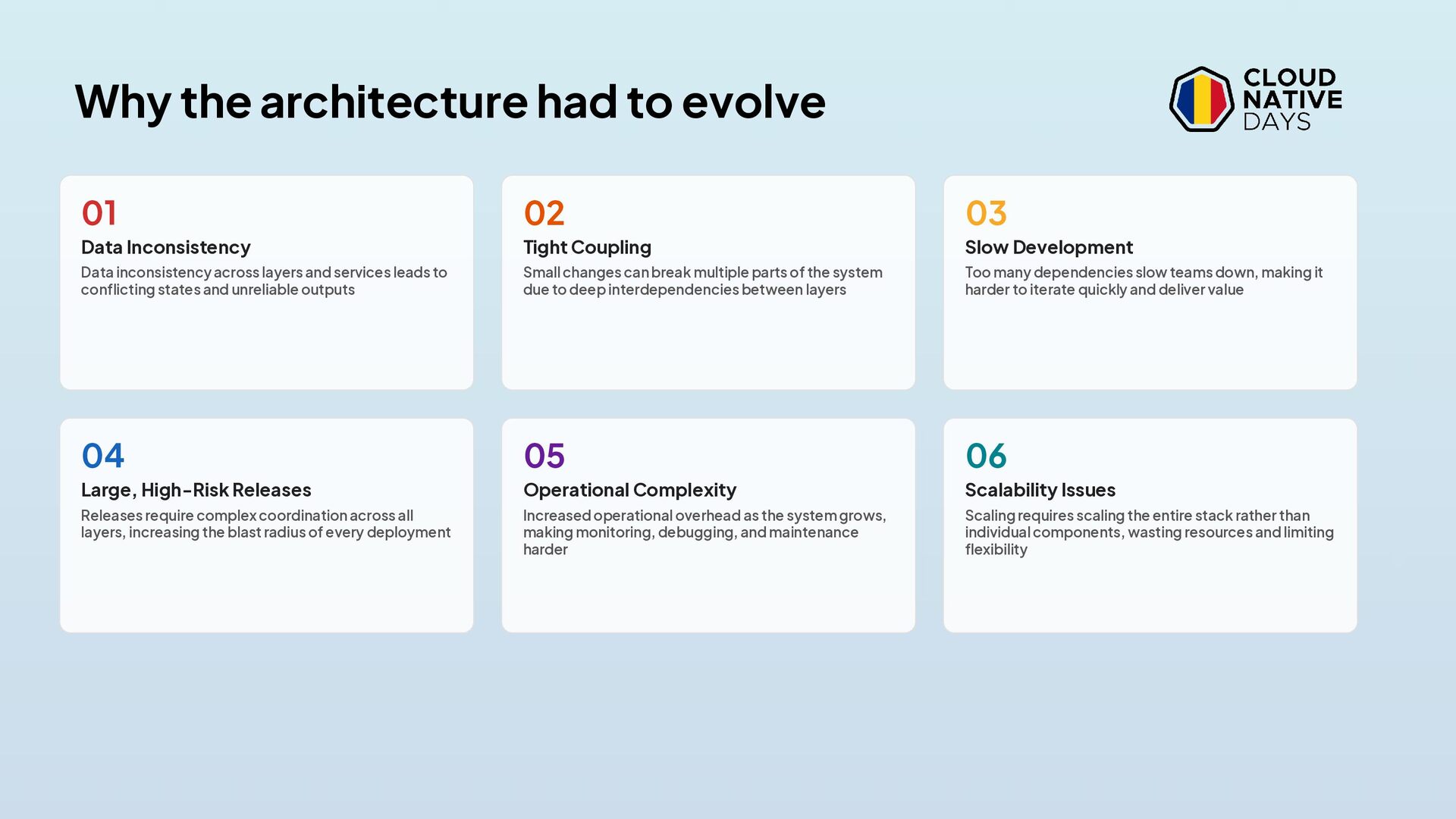
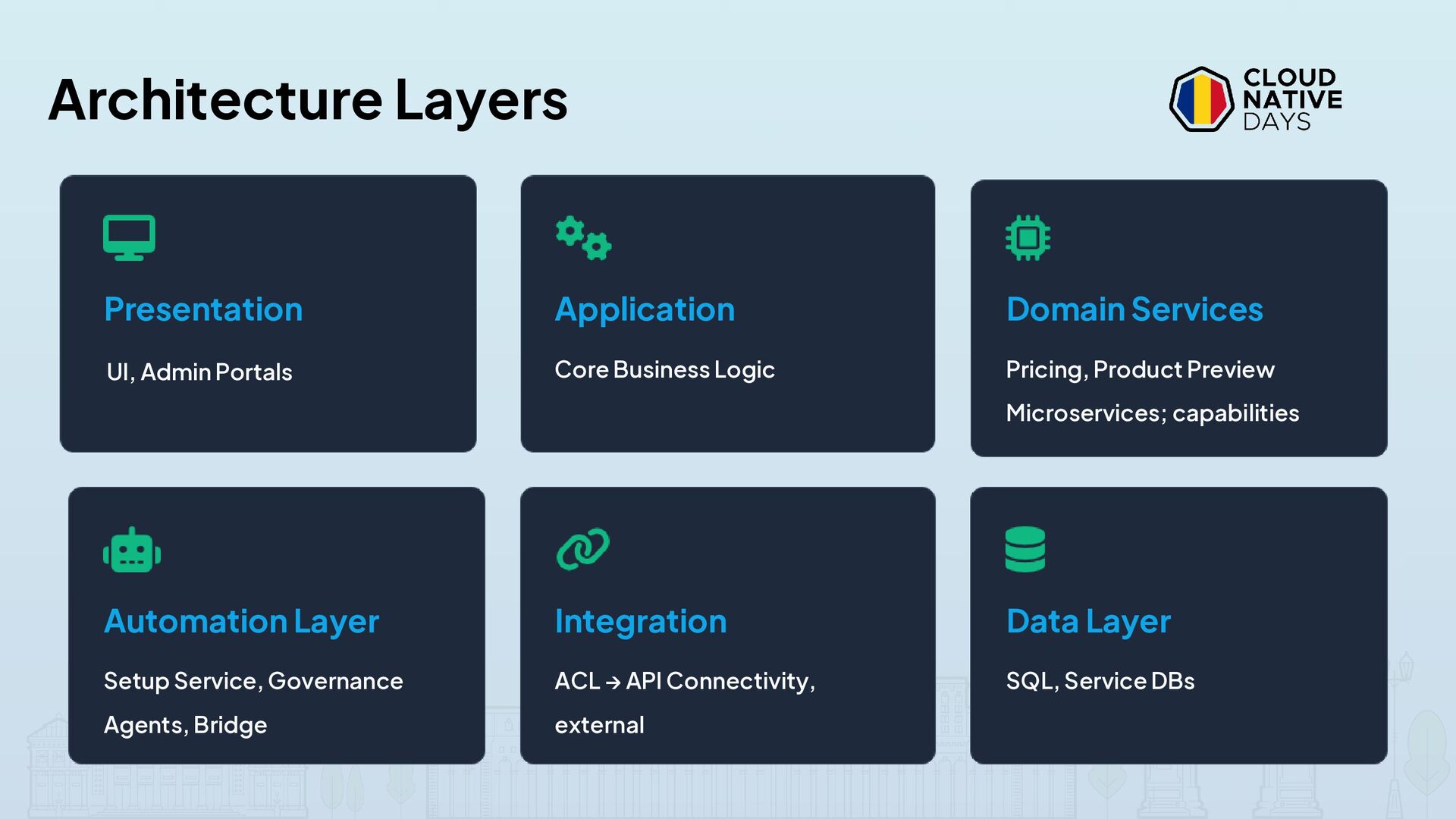
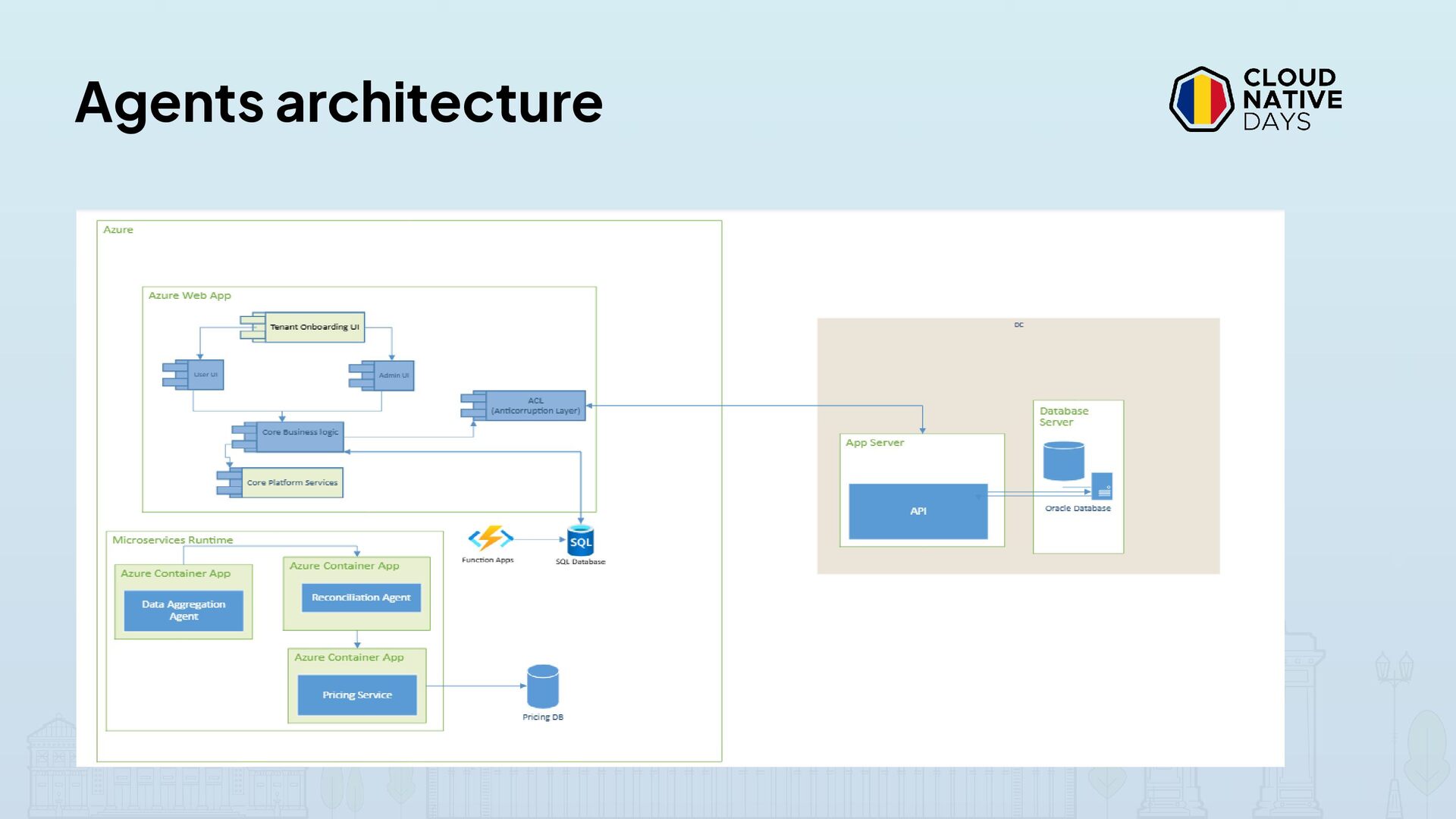
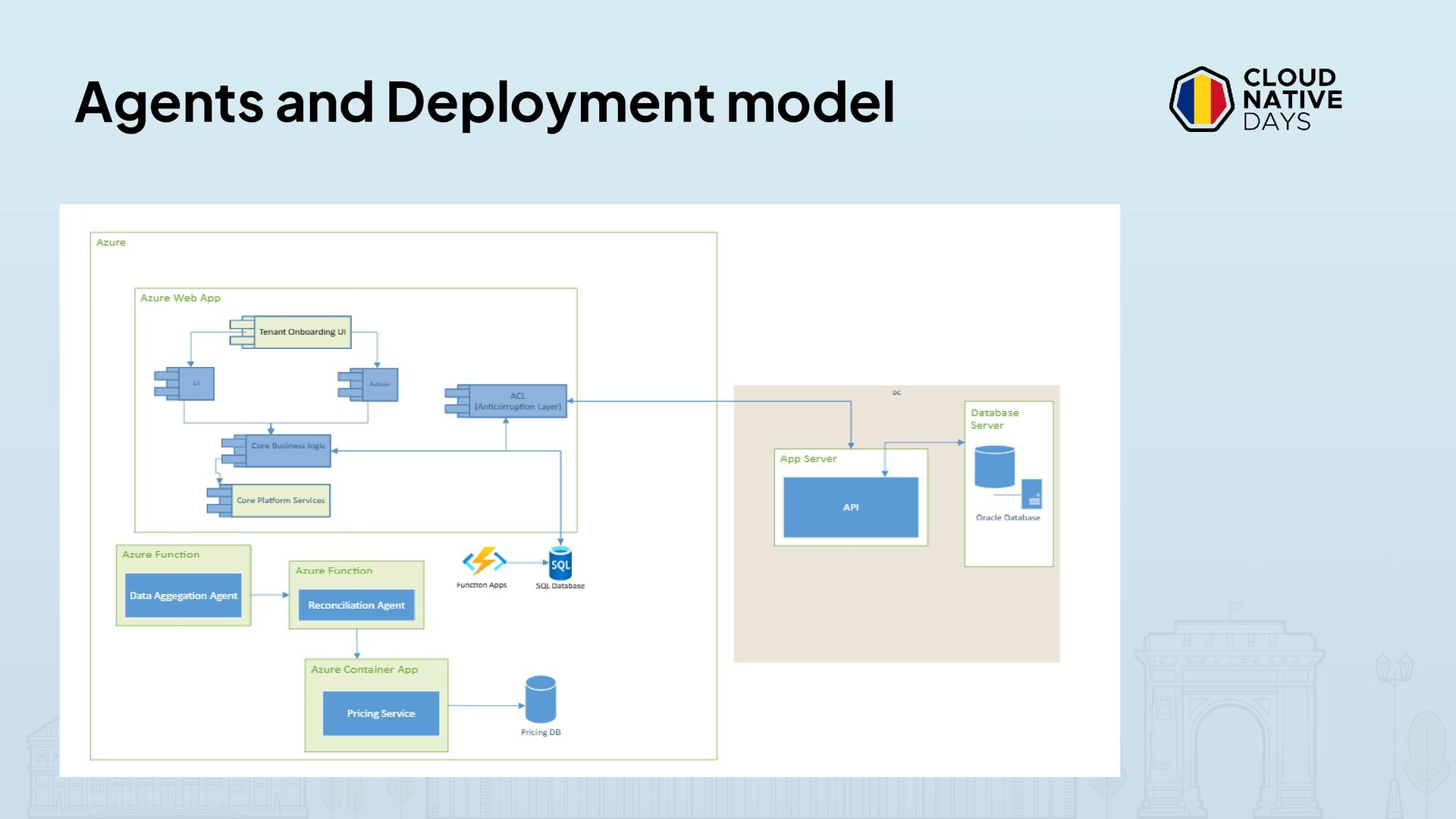
inconsistency across layers and services leads to conflicting states and unreliable outputs 02 Tight Coupling Small changes can break multiple parts of the system due to deep interdependencies between layers 03 Slow Development Too many dependencies slow teams down, making it harder to iterate quickly and deliver value 04 Large, High-Risk Releases Releases require complex coordination across all layers, increasing the blast radius of every deployment 05 Operational Complexity Increased operational overhead as the system grows, making monitoring, debugging, and maintenance harder 06 Scalability Issues Scaling requires scaling the entire stack rather than individual components, wasting resources and limiting flexibility
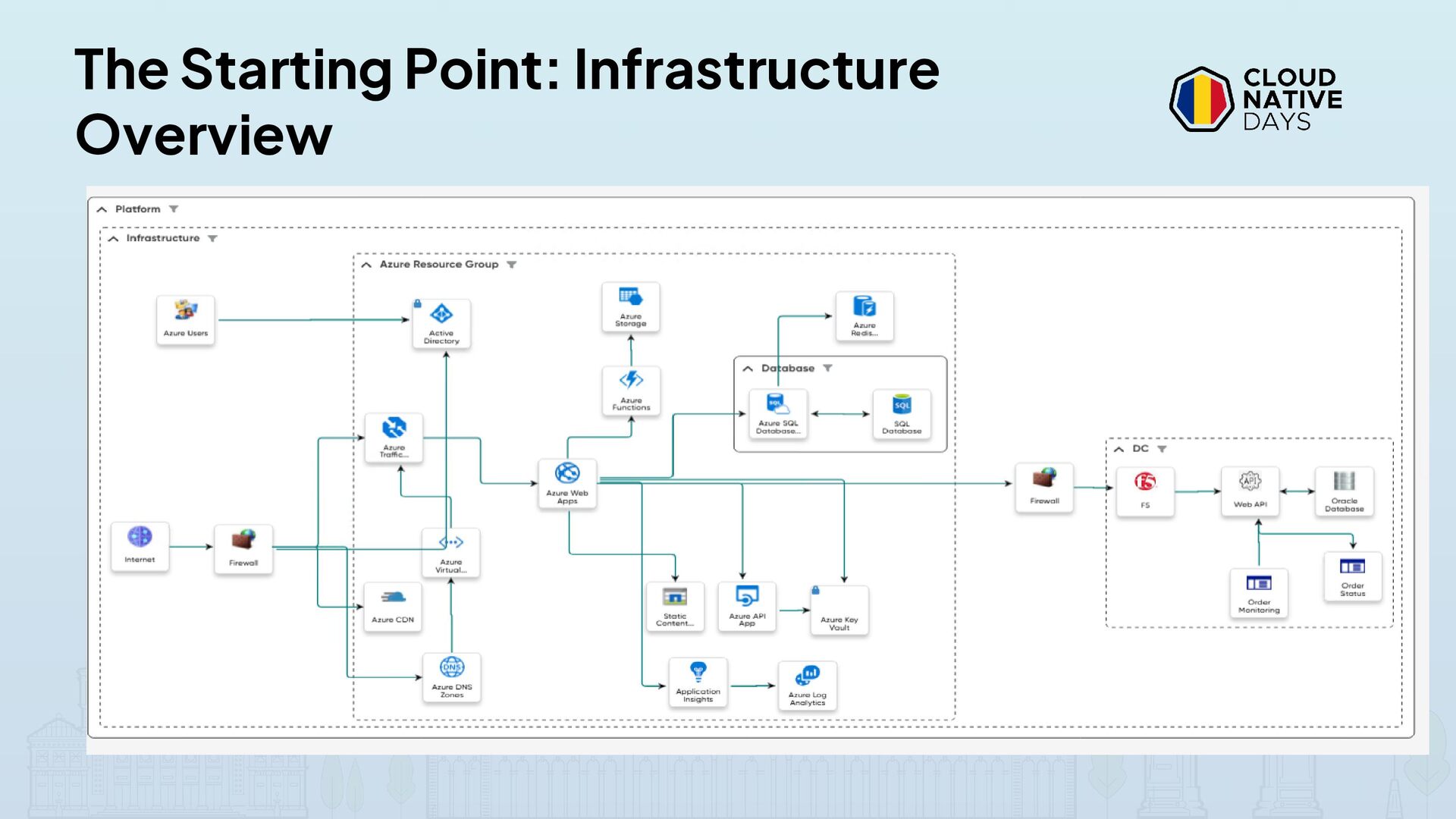
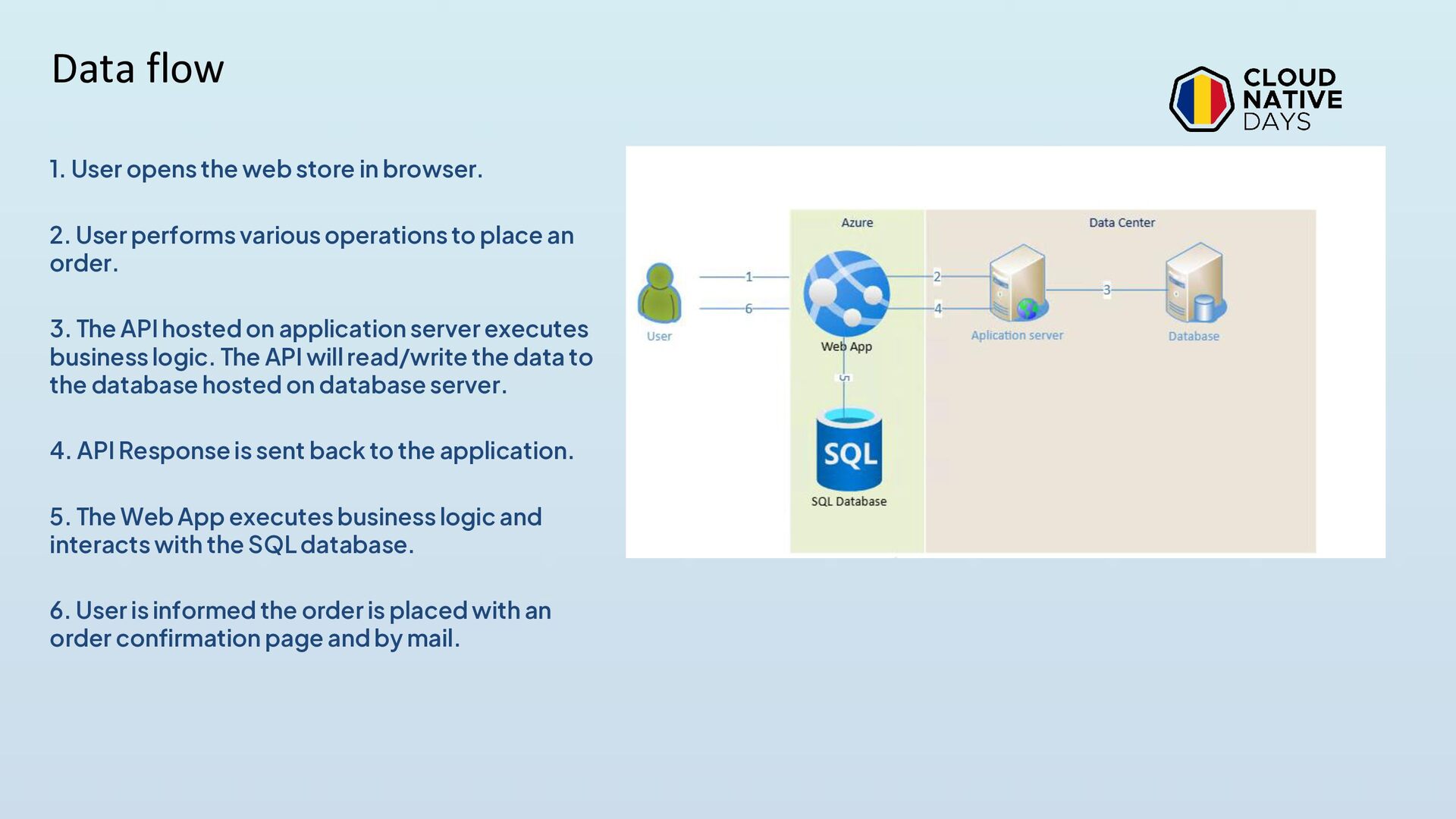
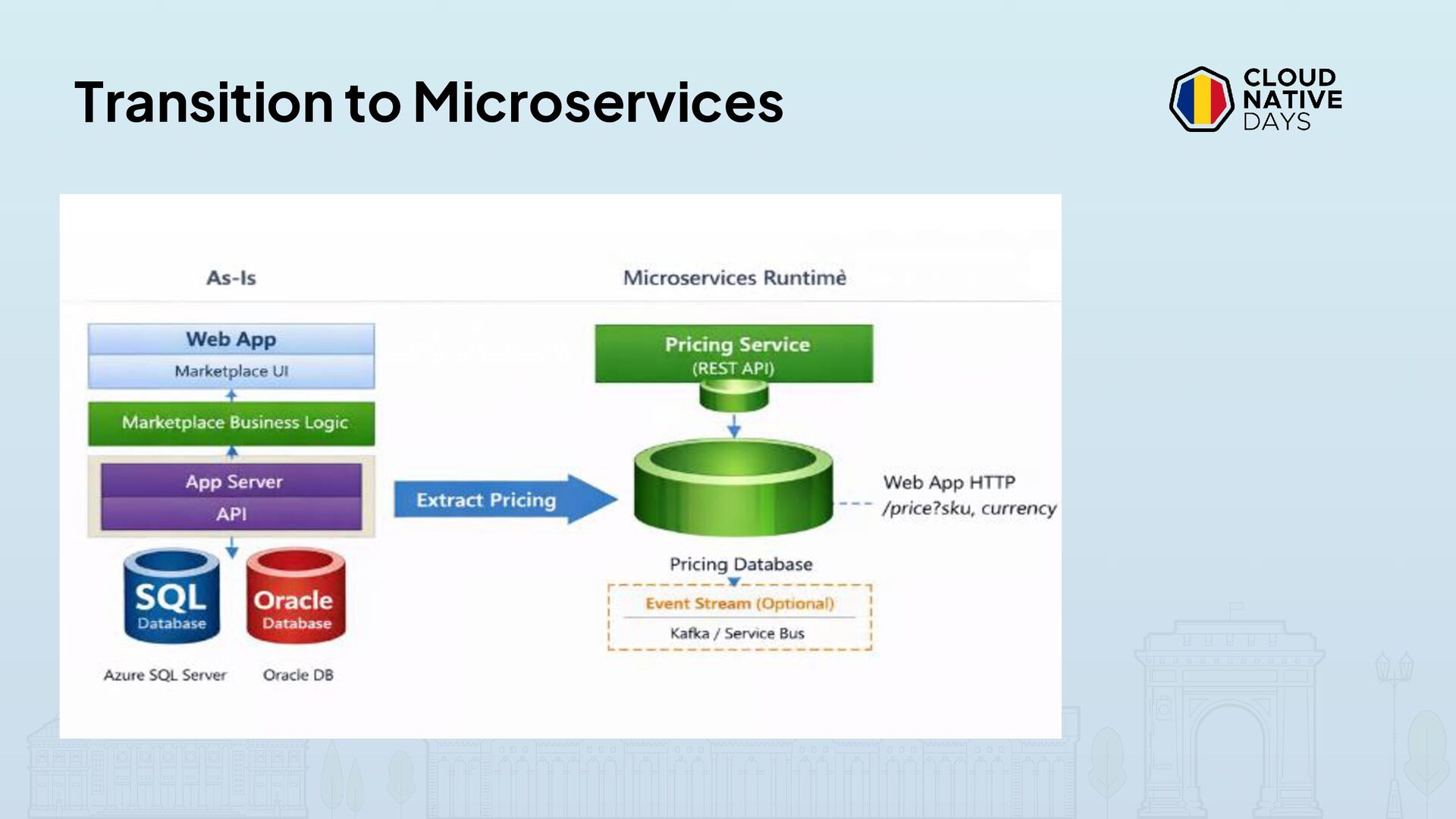
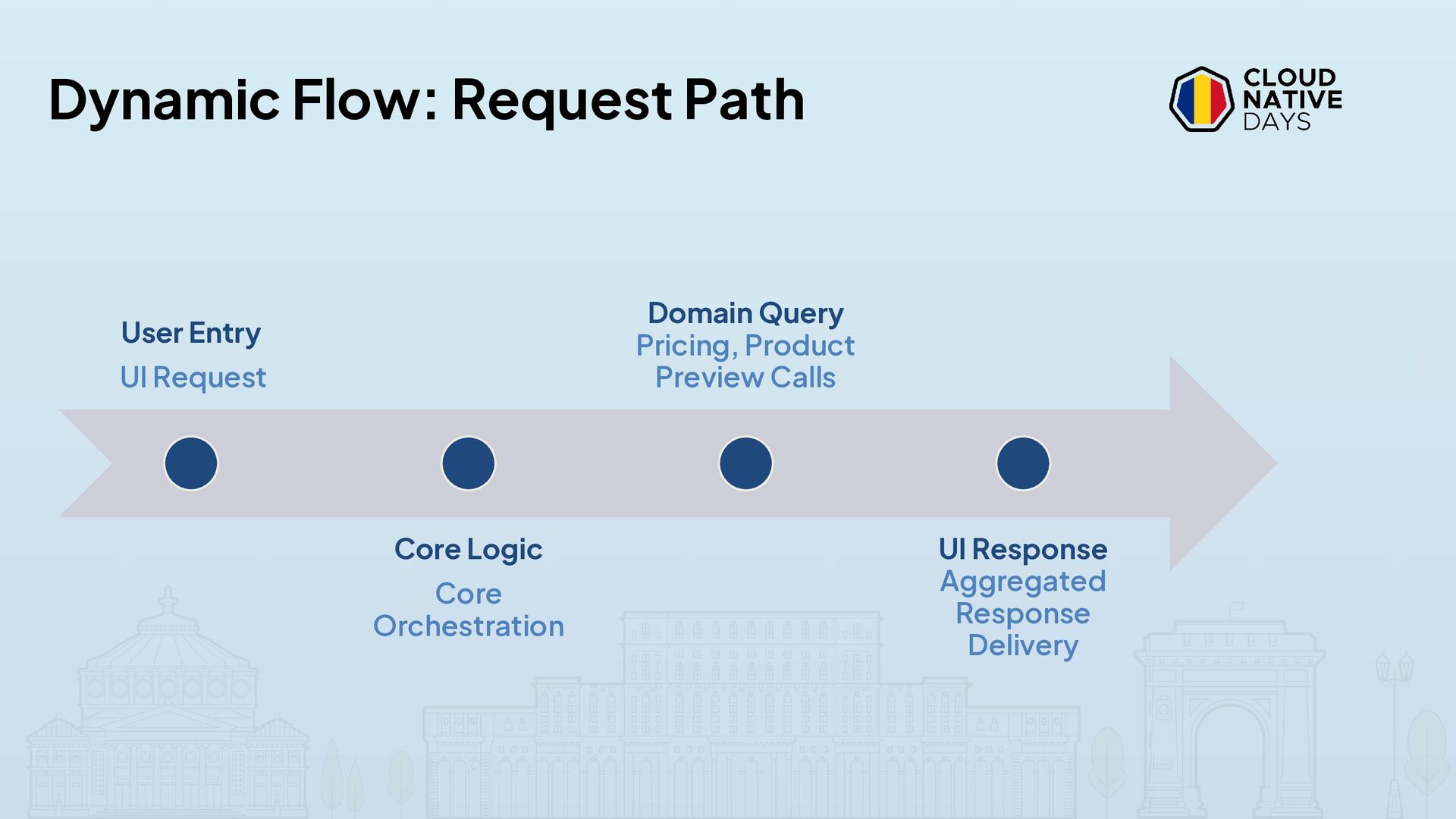
2. User performs various operations to place an order. 3. The API hosted on application server executes business logic. The API will read/write the data to the database hosted on database server. 4. API Response is sent back to the application. 5. The Web App executes business logic and interacts with the SQL database. 6. User is informed the order is placed with an order confirmation page and by mail.
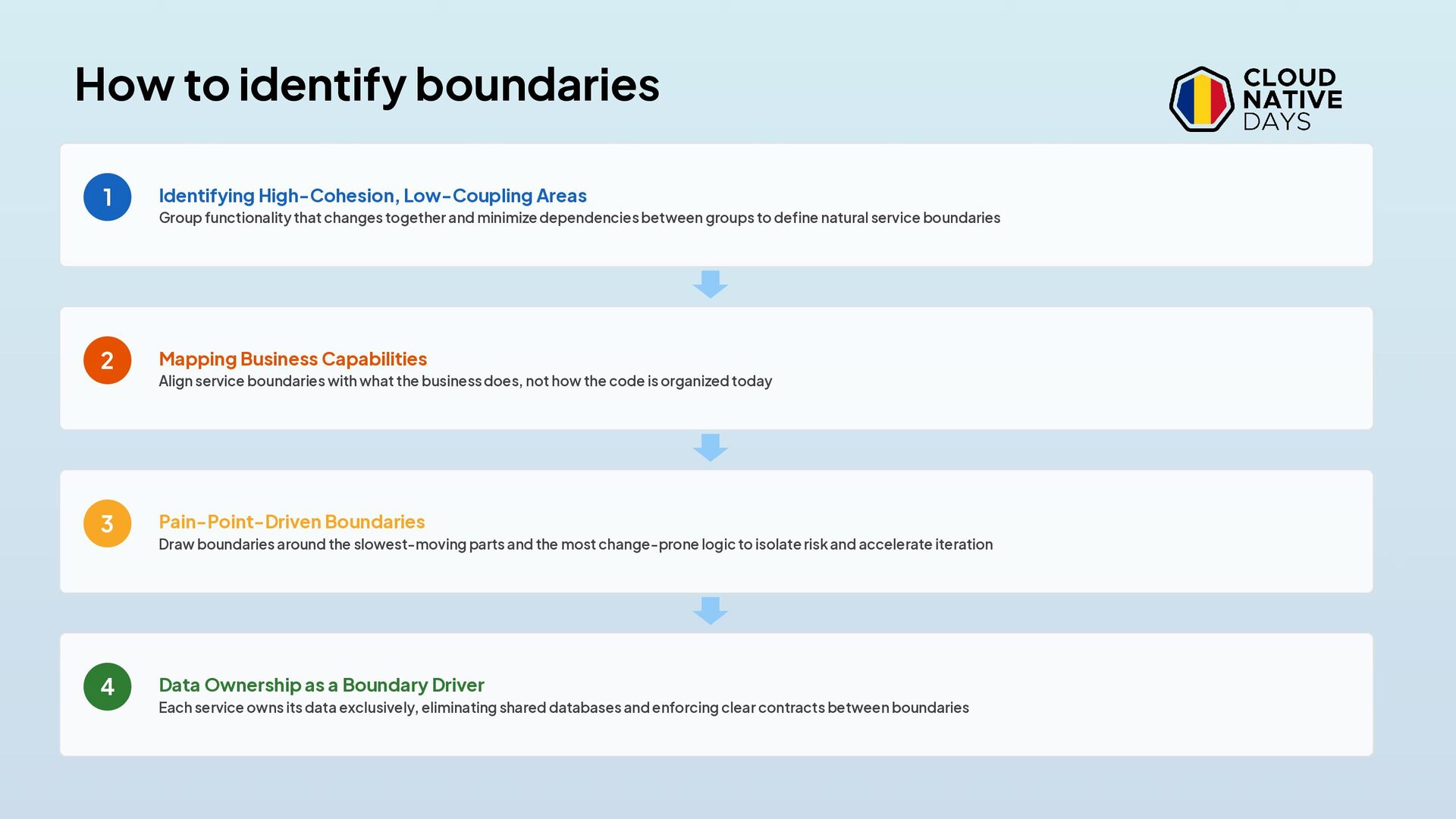
functionality that changes together and minimize dependencies between groups to define natural service boundaries 2 Mapping Business Capabilities Align service boundaries with what the business does, not how the code is organized today 3 Pain-Point-Driven Boundaries Draw boundaries around the slowest-moving parts and the most change-prone logic to isolate risk and accelerate iteration 4 Data Ownership as a Boundary Driver Each service owns its data exclusively, eliminating shared databases and enforcing clear contracts between boundaries
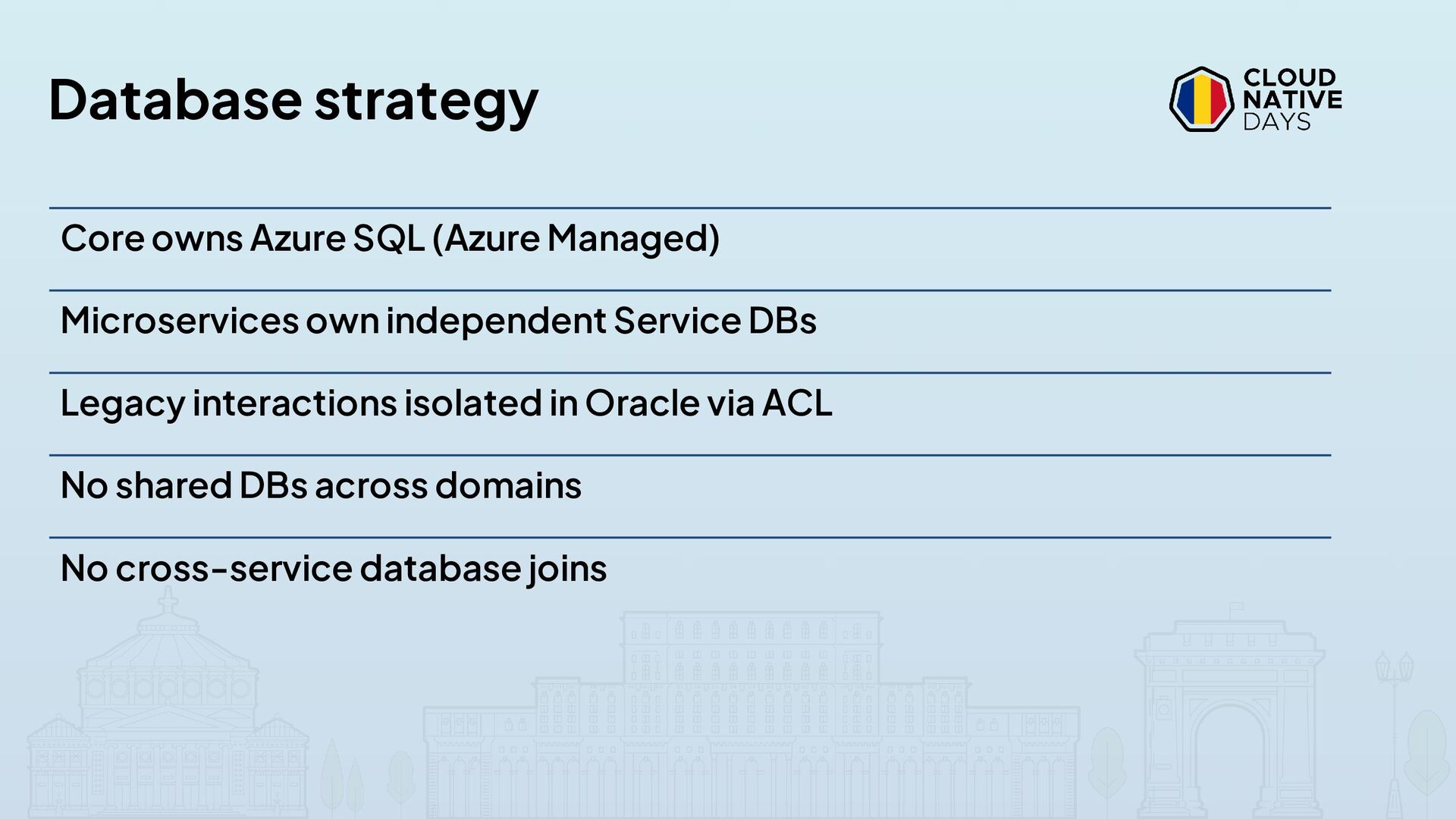
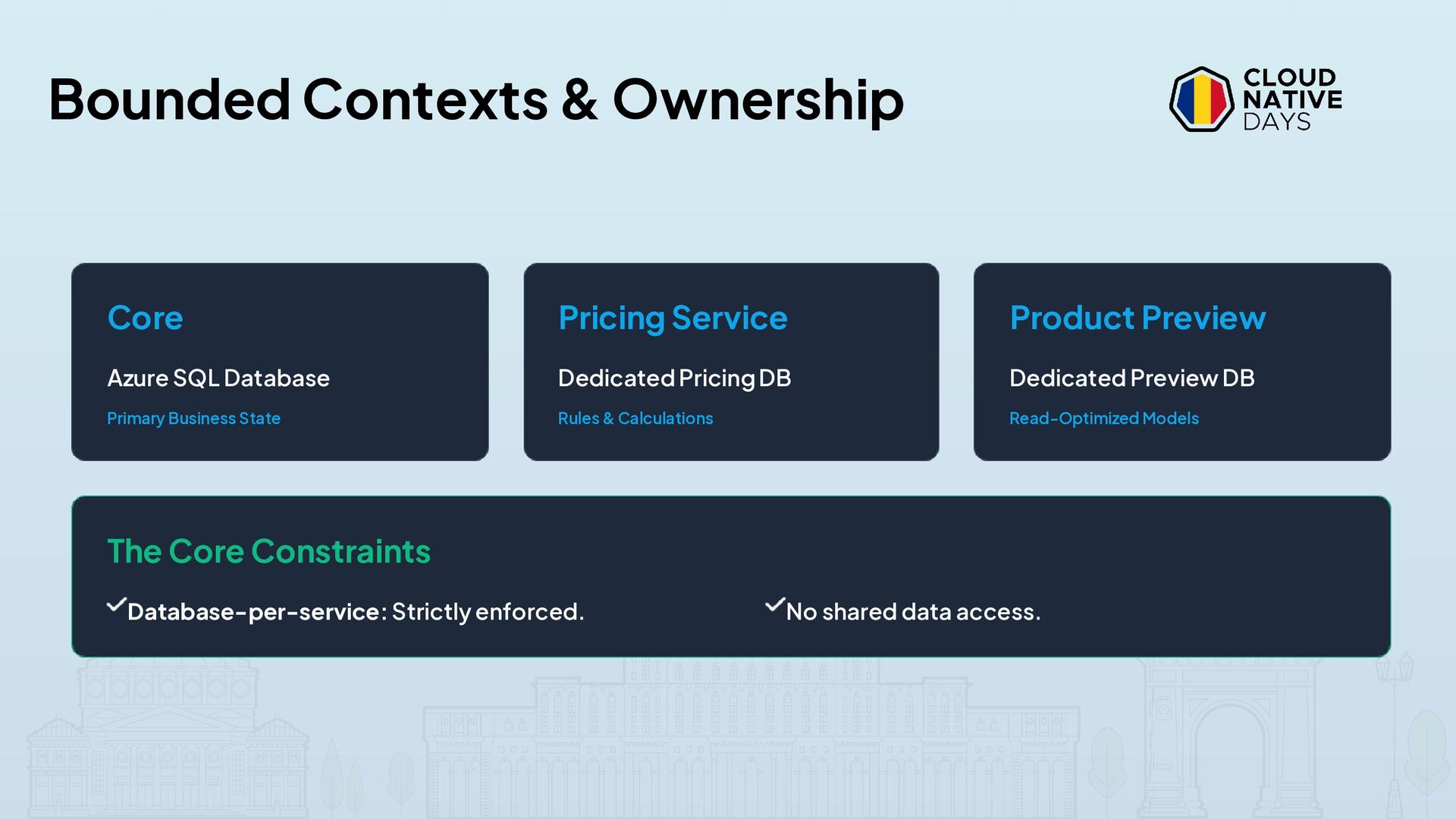
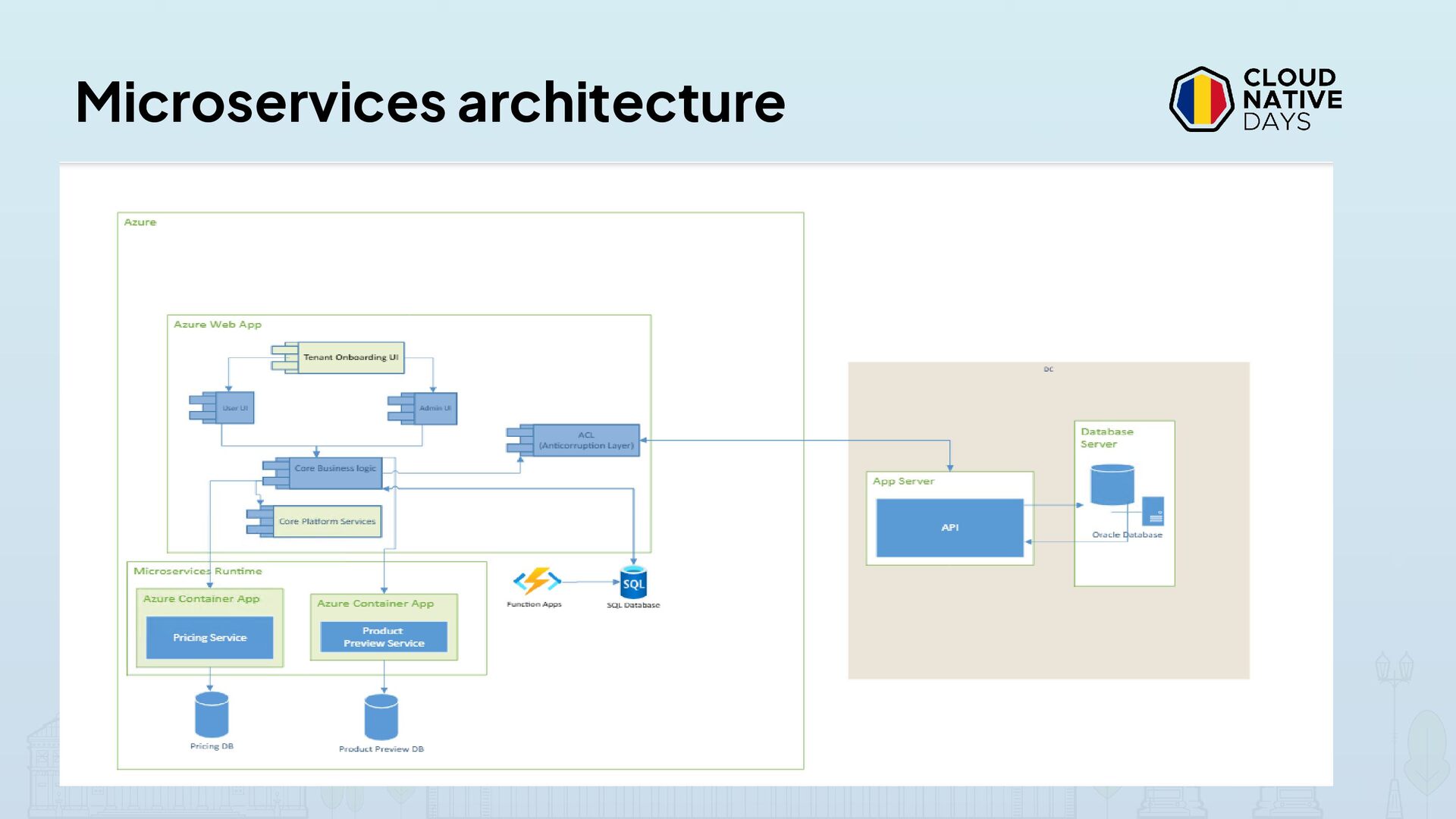
Database Primary Business State Pricing Service Dedicated Pricing DB Rules & Calculations Product Preview Dedicated Preview DB Read-Optimized Models Database-per-service: Strictly enforced. No shared data access.
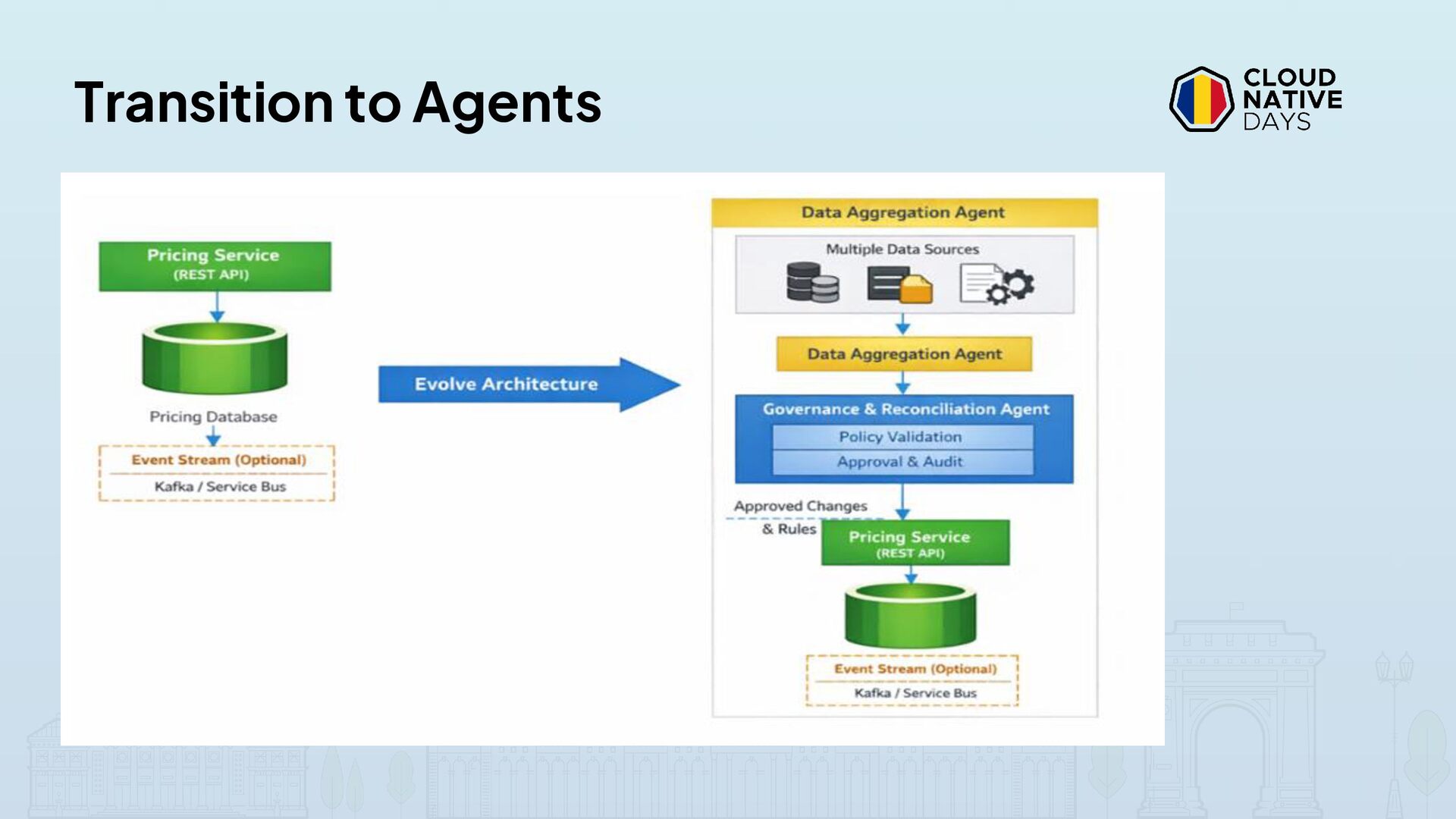
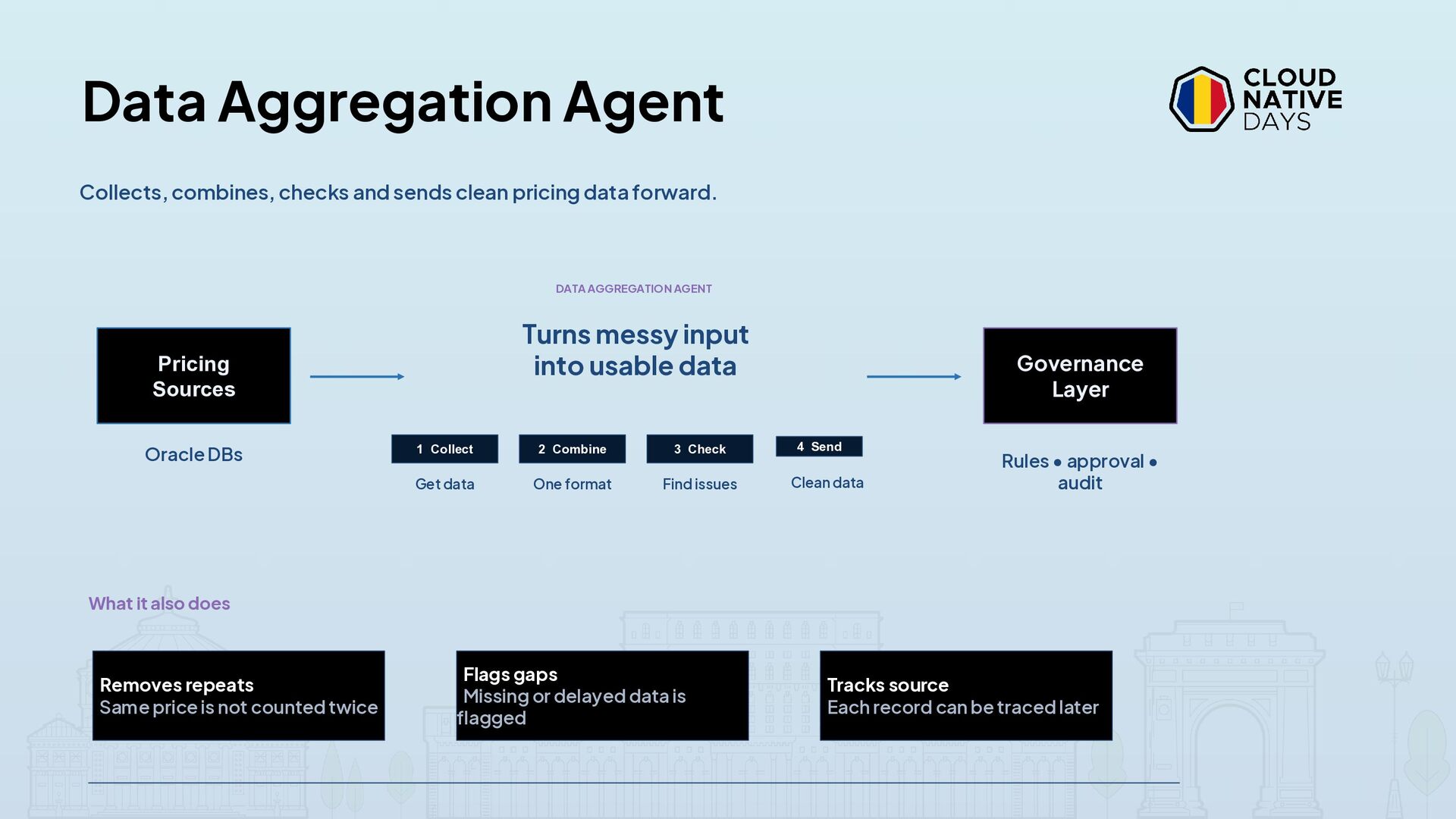
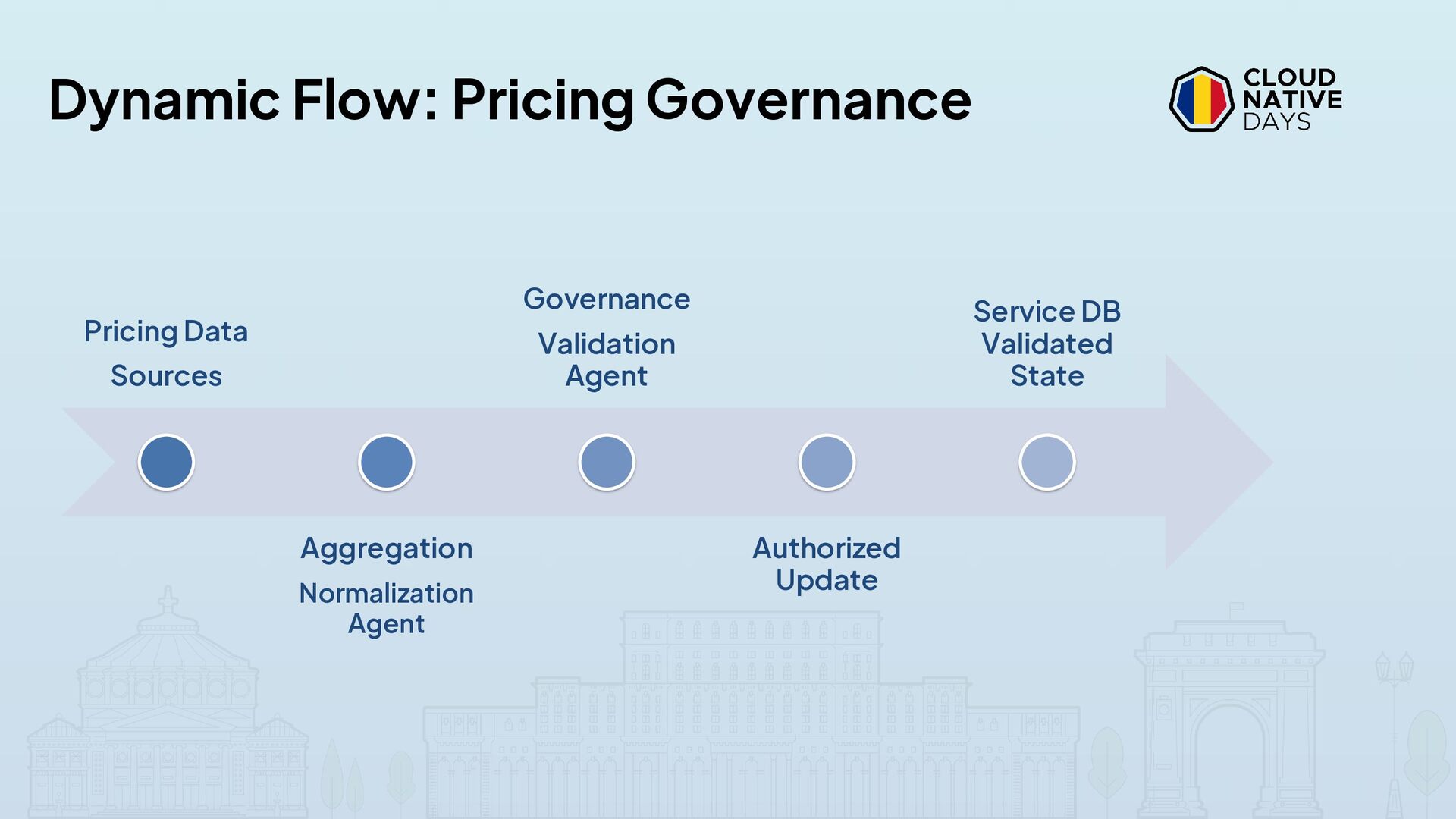
clean pricing data forward. Pricing Sources Oracle DBs DATA AGGREGATION AGENT Turns messy input into usable data 1 Collect Get data 2 Combine One format 3 Check Find issues Clean data Governance Layer Rules • approval • audit What it also does Removes repeats Same price is not counted twice Flags gaps Missing or delayed data is flagged Tracks source Each record can be traced later
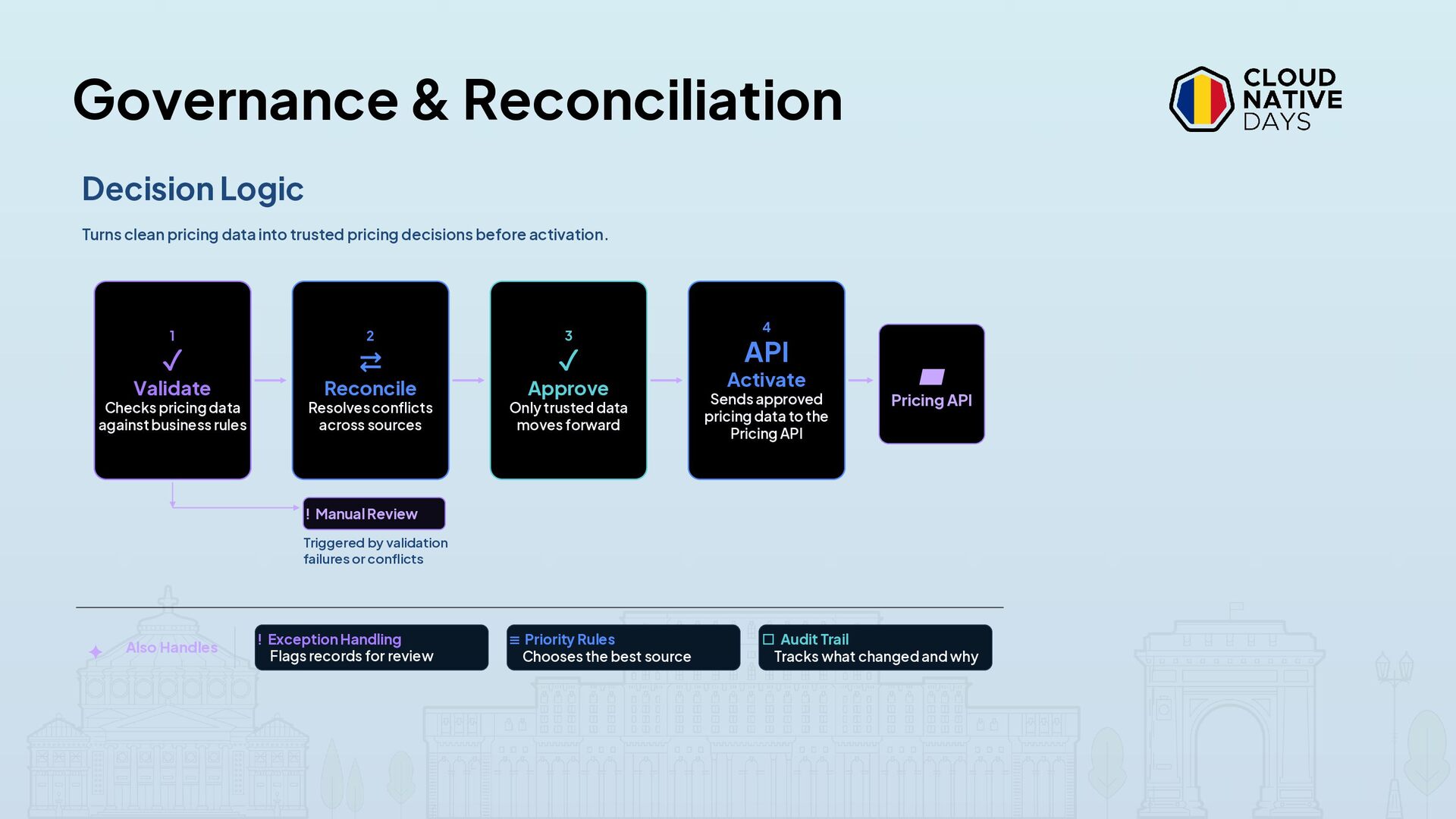
trusted pricing decisions before activation. 1 ✓ Validate Checks pricing data against business rules 2 ⇄ Reconcile Resolves conflicts across sources 3 ✓ Approve Only trusted data moves forward 4 API Activate Sends approved pricing data to the Pricing API ▰ Pricing API ! Manual Review Triggered by validation failures or conflicts ✦ Also Handles ! Exception Handling Flags records for review ≡ Priority Rules Chooses the best source □ Audit Trail Tracks what changed and why
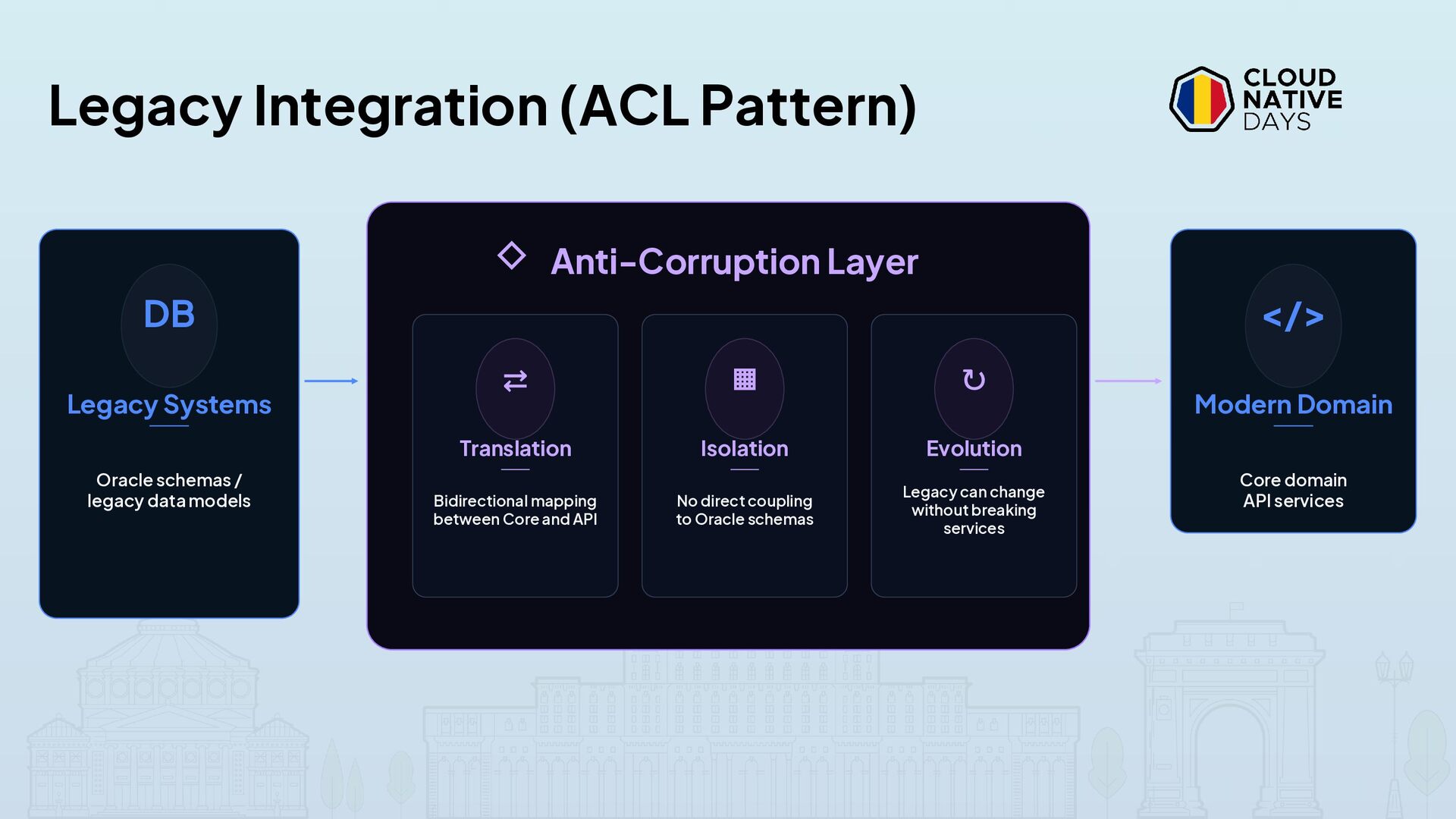
legacy data models </> Modern Domain Core domain API services ◇ Anti-Corruption Layer ⇄ Translation Bidirectional mapping between Core and API ▦ Isolation No direct coupling to Oracle schemas ↻ Evolution Legacy can change without breaking services
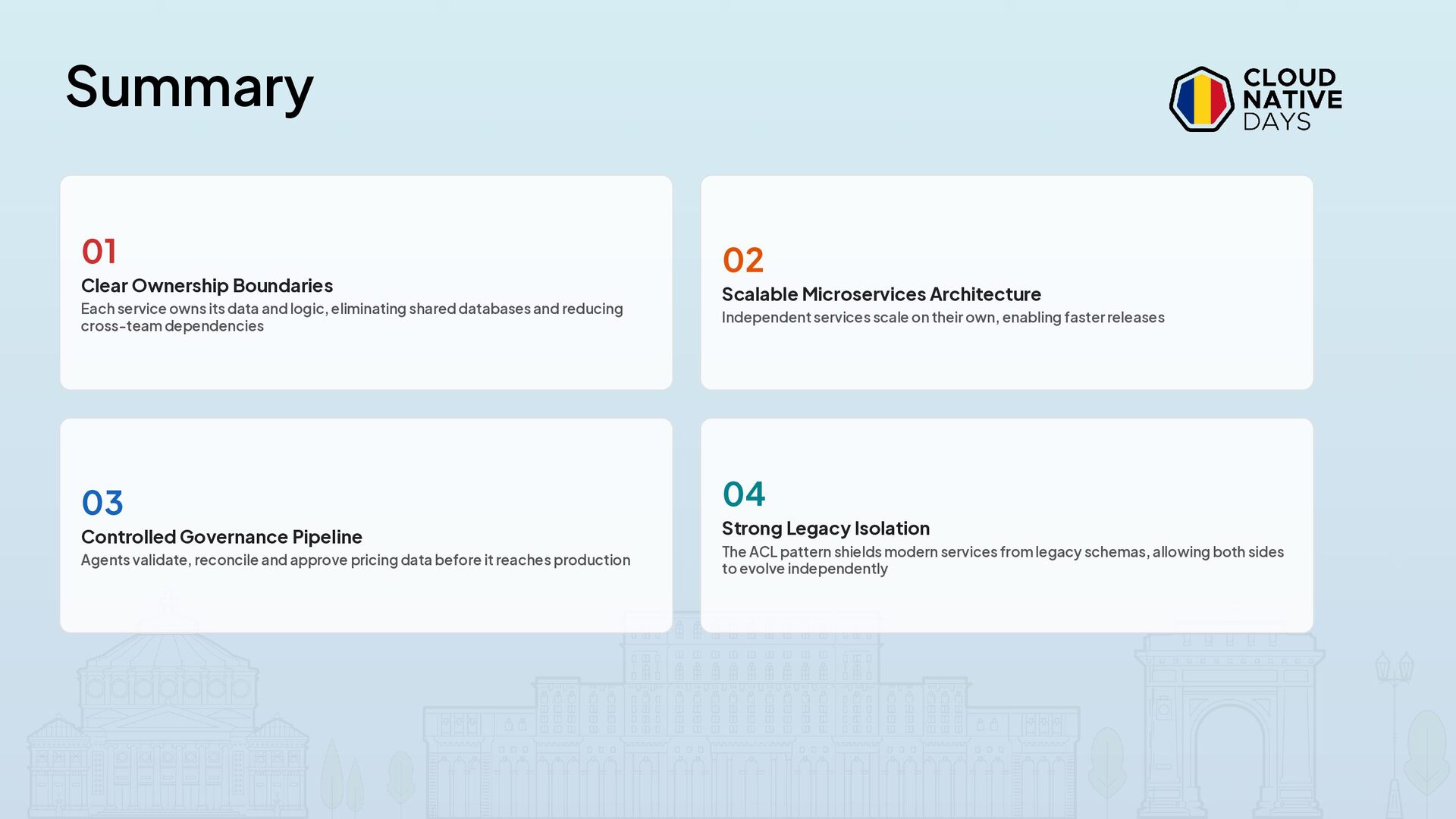
and logic, eliminating shared databases and reducing cross-team dependencies 02 Scalable Microservices Architecture Independent services scale on their own, enabling faster releases 03 Controlled Governance Pipeline Agents validate, reconcile and approve pricing data before it reaches production 04 Strong Legacy Isolation The ACL pattern shields modern services from legacy schemas, allowing both sides to evolve independently


 adelinast
 moore
 baasie
 nikkihalliwell
 rabernat
 mkilby
 destraynor
 mfonobong
 codingconduct
 frankvandijk
 shlominoach
 addyosmani
 rasagy