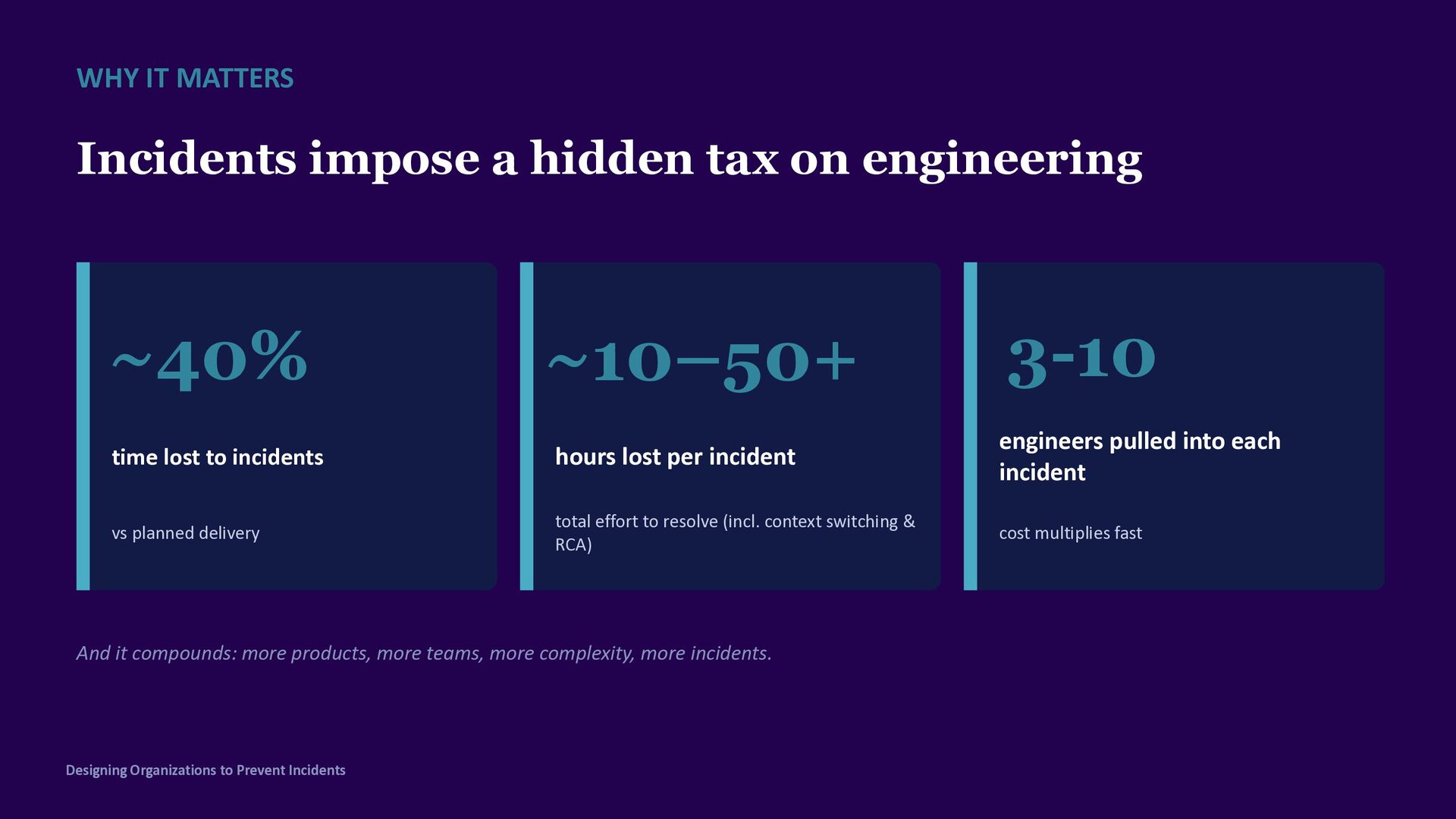
~40% time lost to incidents vs planned delivery ~10–50+ hours lost per incident total effort to resolve (incl. context switching & RCA) 3-10 engineers pulled into each incident cost multiplies fast And it compounds: more products, more teams, more complexity, more incidents. Designing Organizations to Prevent Incidents
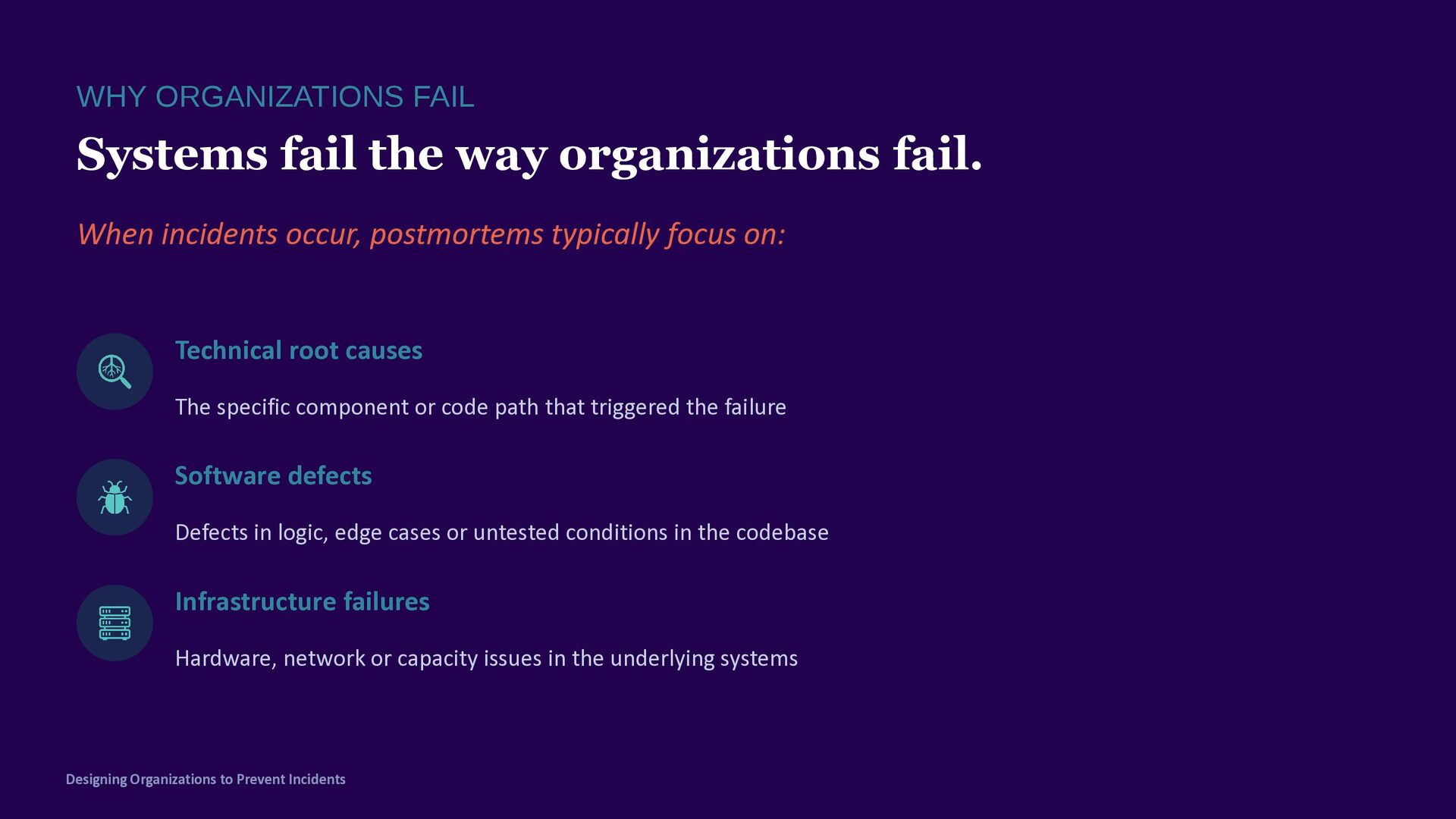
incidents occur, postmortems typically focus on: Technical root causes The specific component or code path that triggered the failure Software defects Defects in logic, edge cases or untested conditions in the codebase Infrastructure failures Hardware, network or capacity issues in the underlying systems Designing Organizations to Prevent Incidents
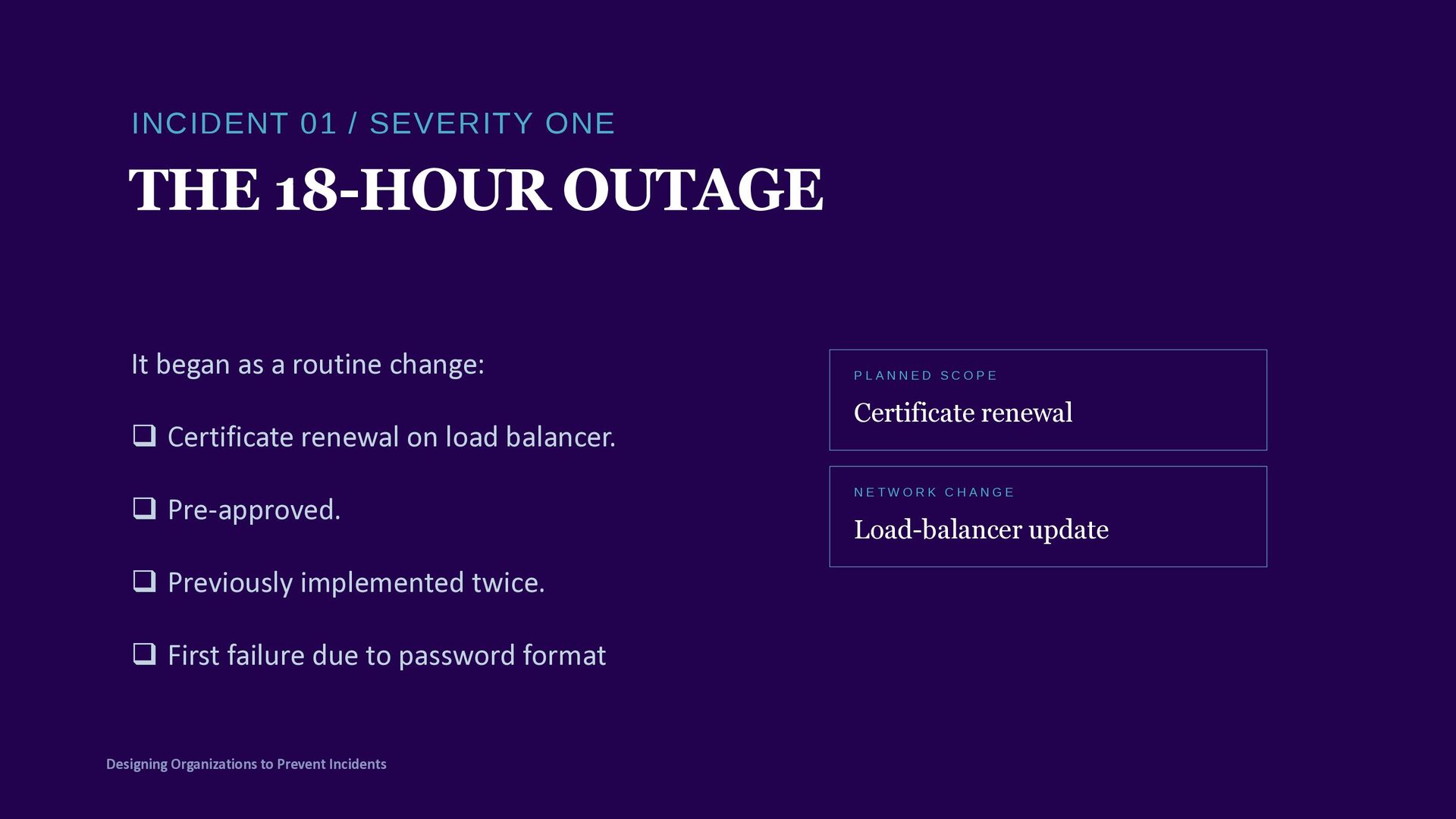
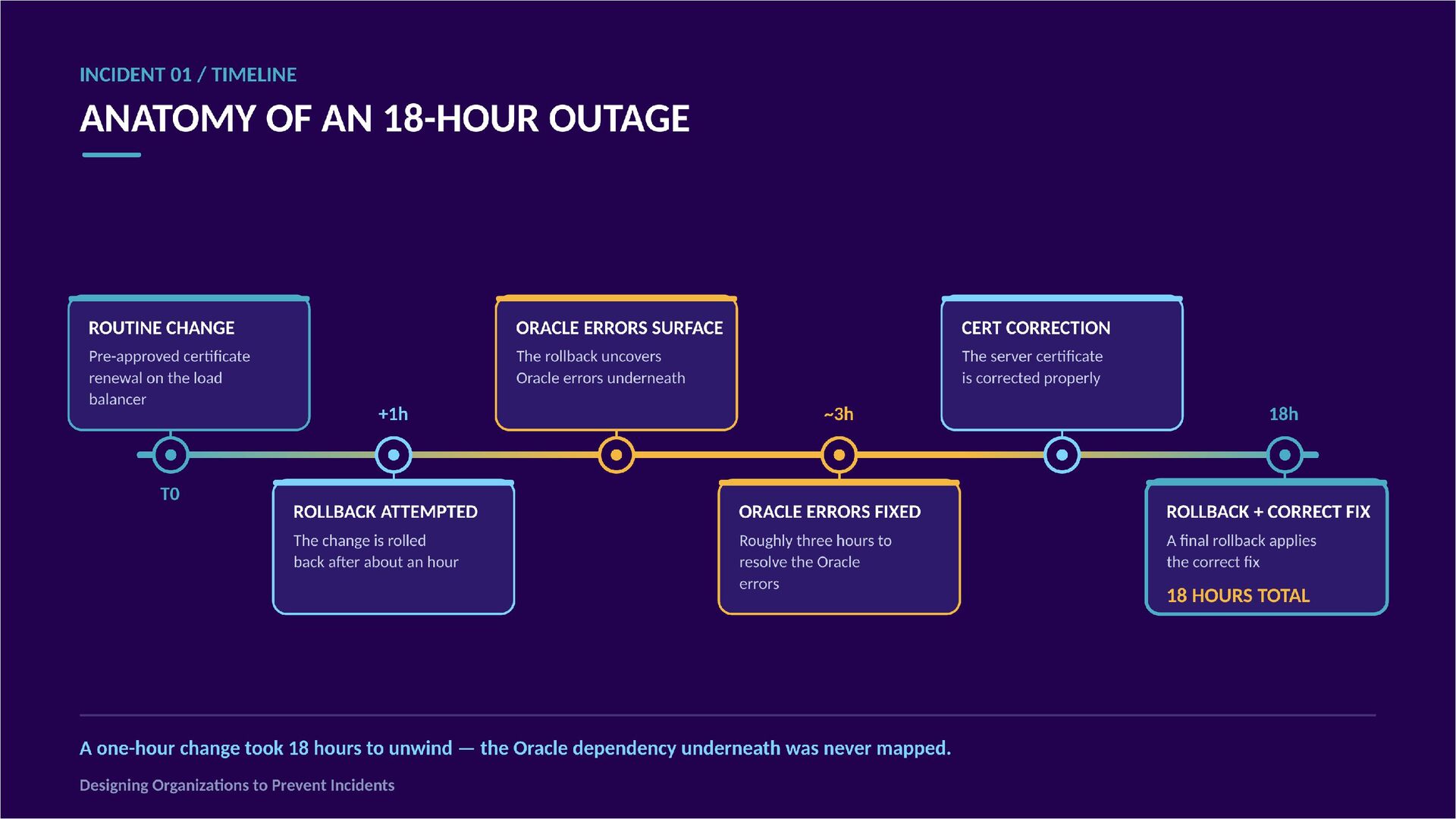
as a routine change: ❑ Certificate renewal on load balancer. ❑ Pre-approved. ❑ Previously implemented twice. ❑ First failure due to password format P L A N N E D S C O P E Certificate renewal N E T W O R K C H A N G E Load-balancer update Designing Organizations to Prevent Incidents
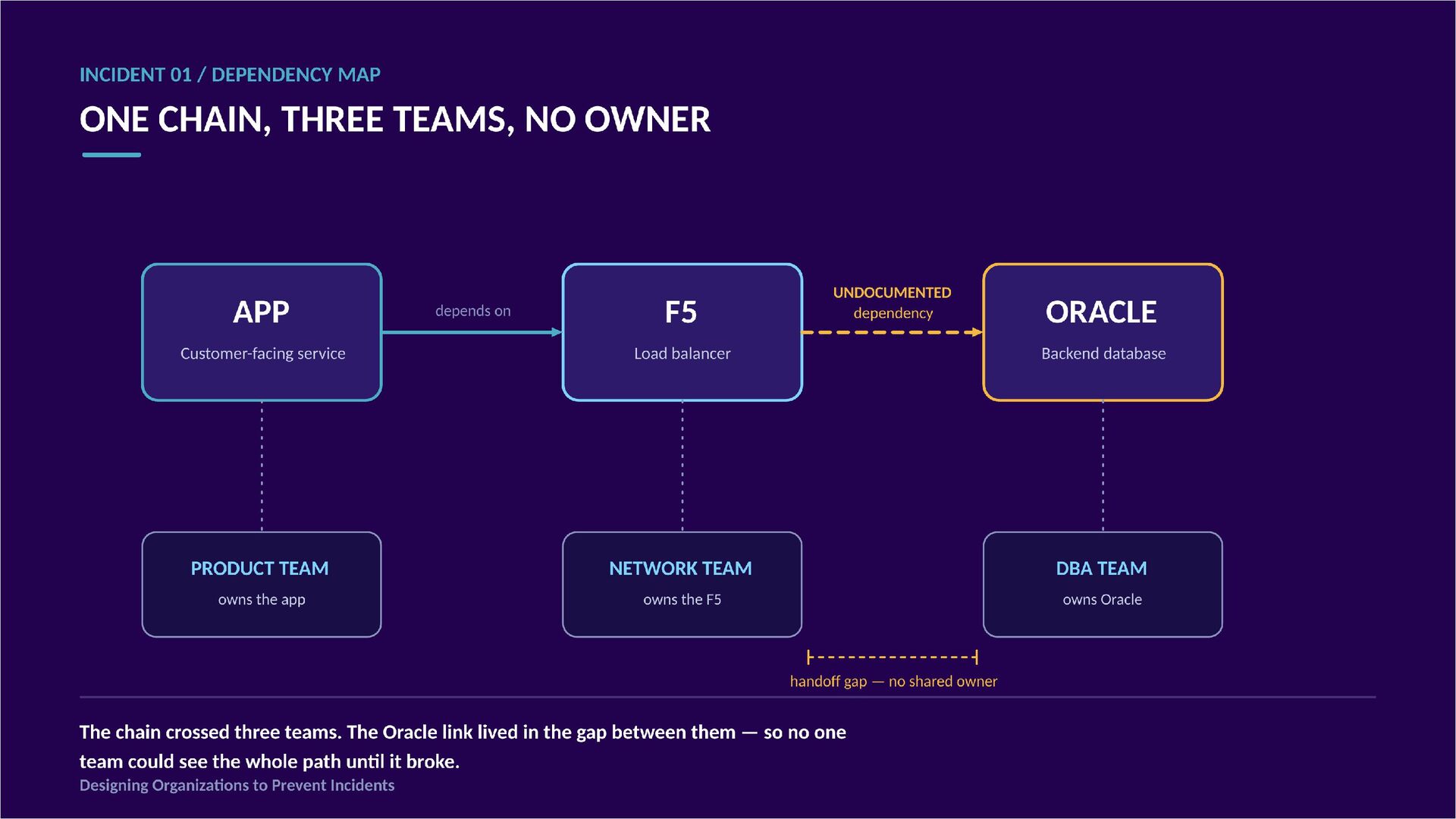
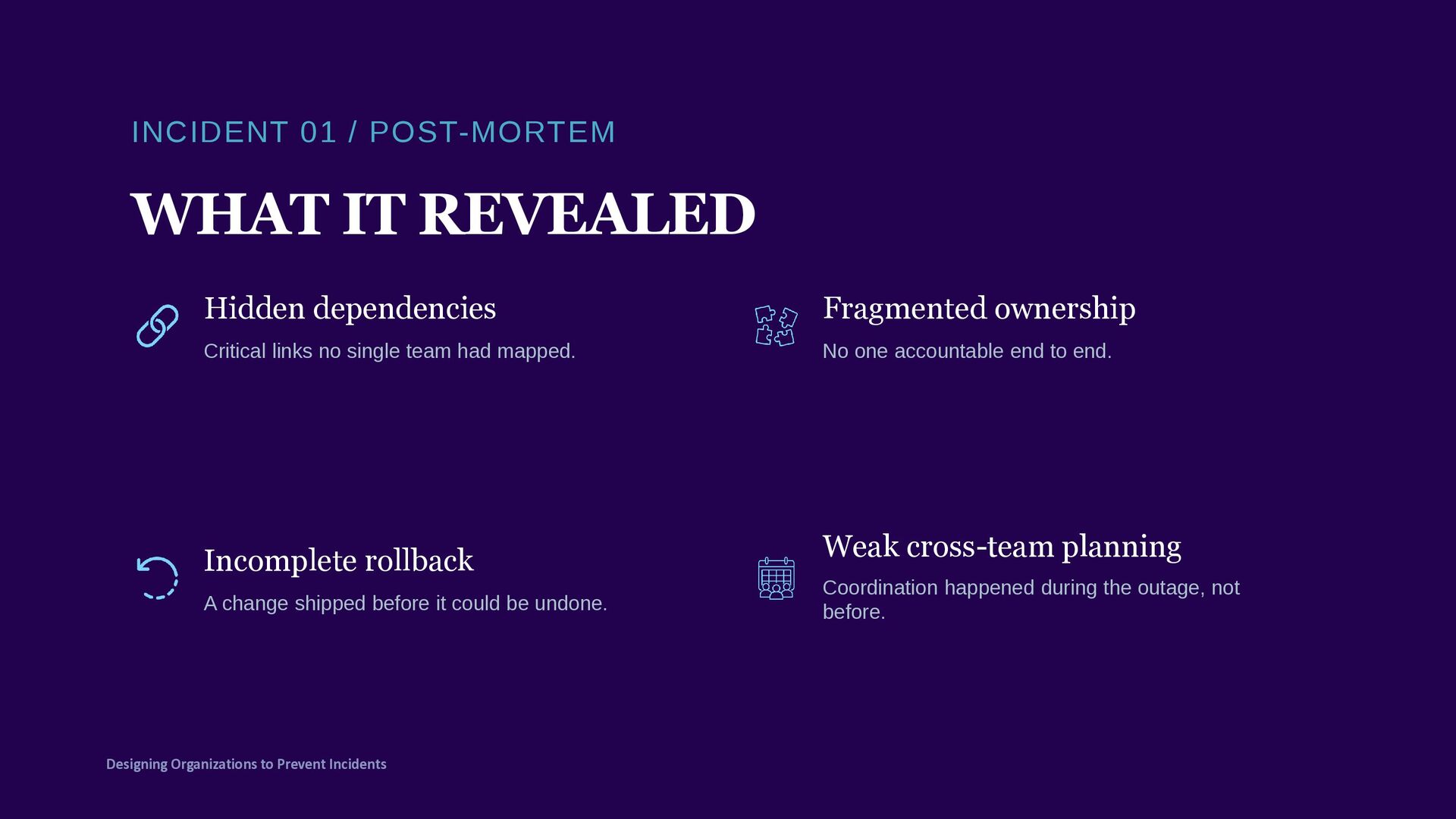
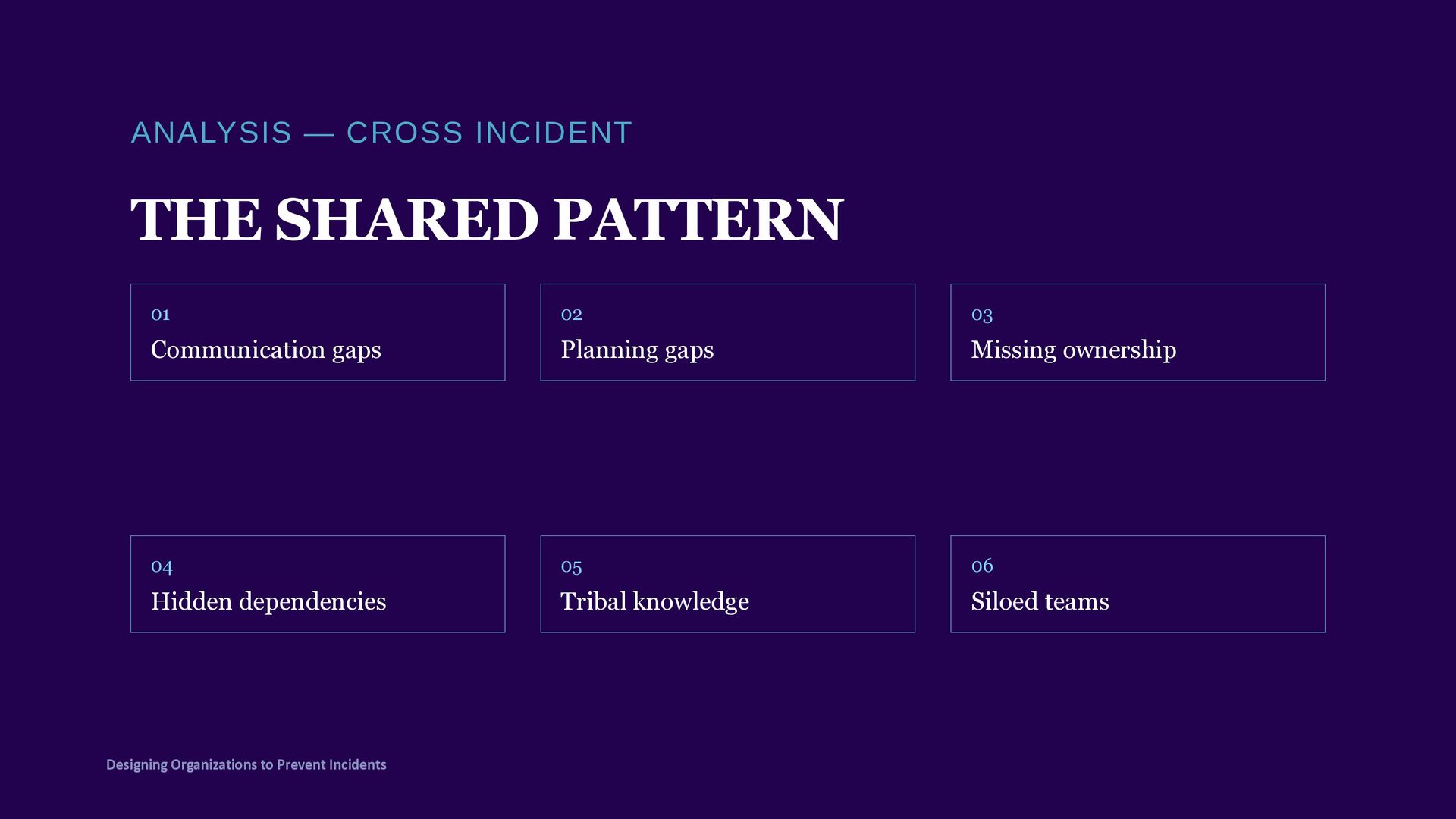
links no single team had mapped. Fragmented ownership No one accountable end to end. Incomplete rollback A change shipped before it could be undone. Weak cross-team planning Coordination happened during the outage, not before. Designing Organizations to Prevent Incidents
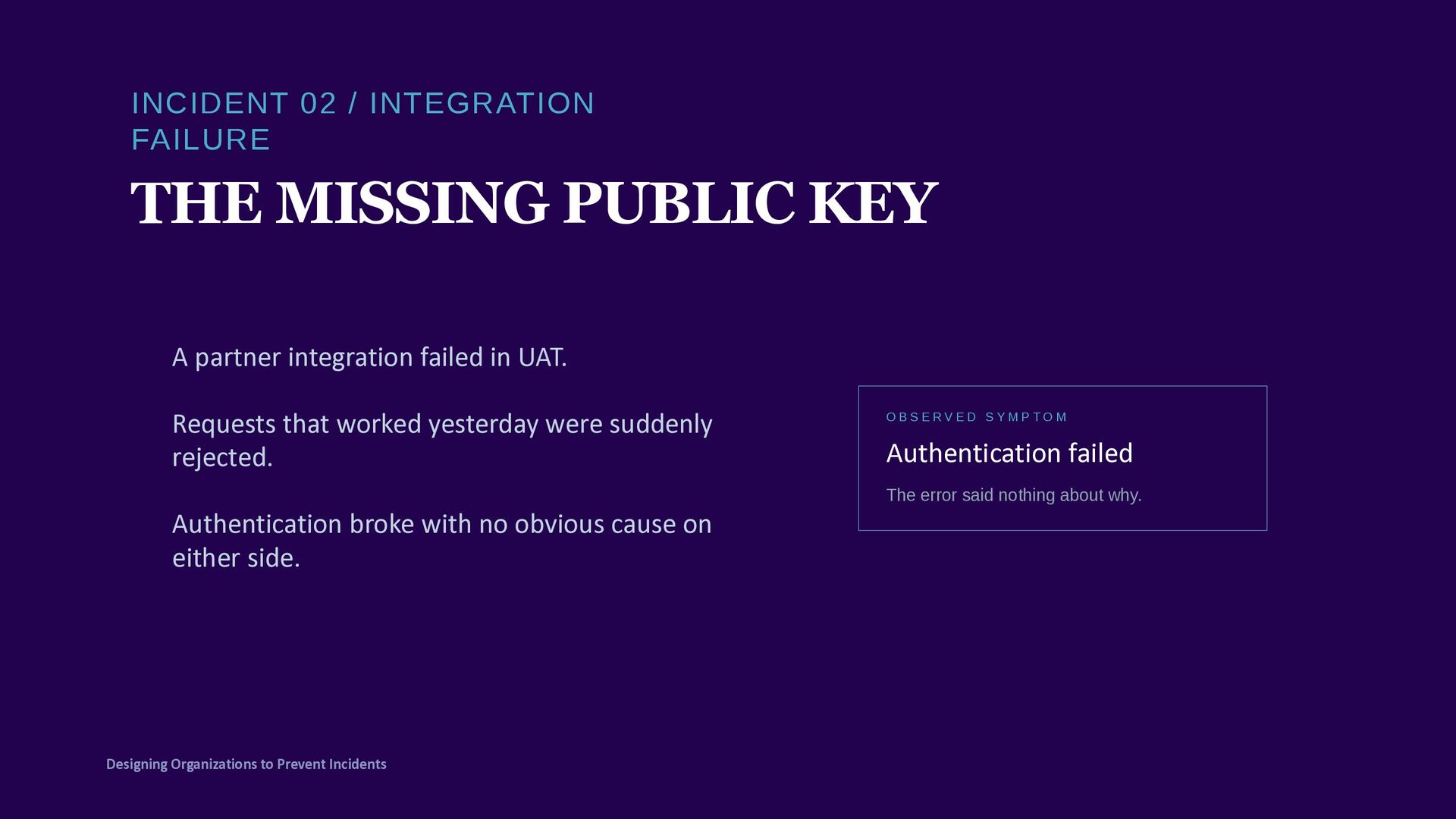
partner integration failed in UAT. Requests that worked yesterday were suddenly rejected. Authentication broke with no obvious cause on either side. O B S E R V E D S Y M P T O M Authentication failed The error said nothing about why. Designing Organizations to Prevent Incidents
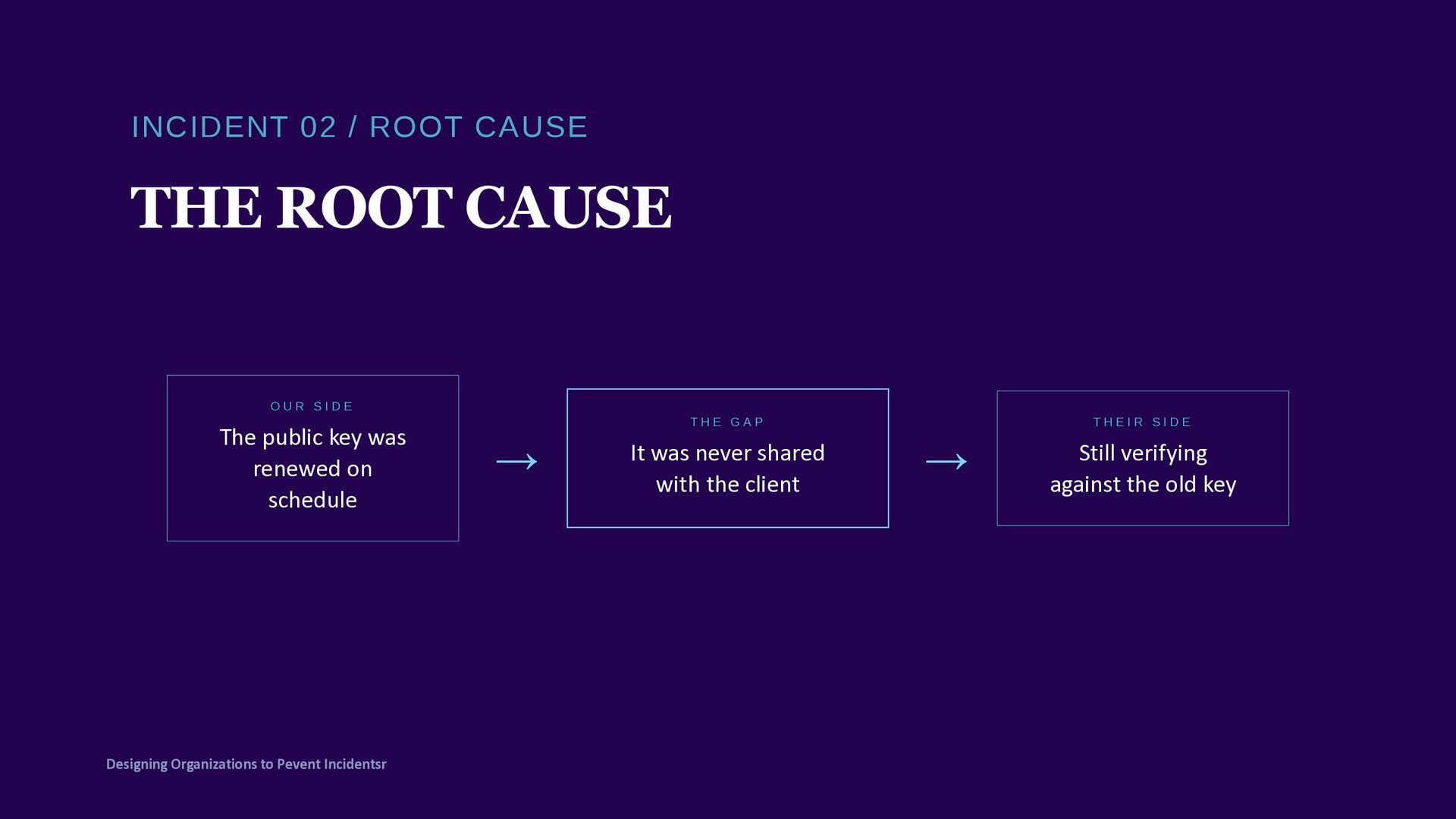
R S I D E The public key was renewed on schedule → T H E G A P It was never shared with the client → T H E I R S I D E Still verifying against the old key Designing Organizations to Pevent Incidentsr
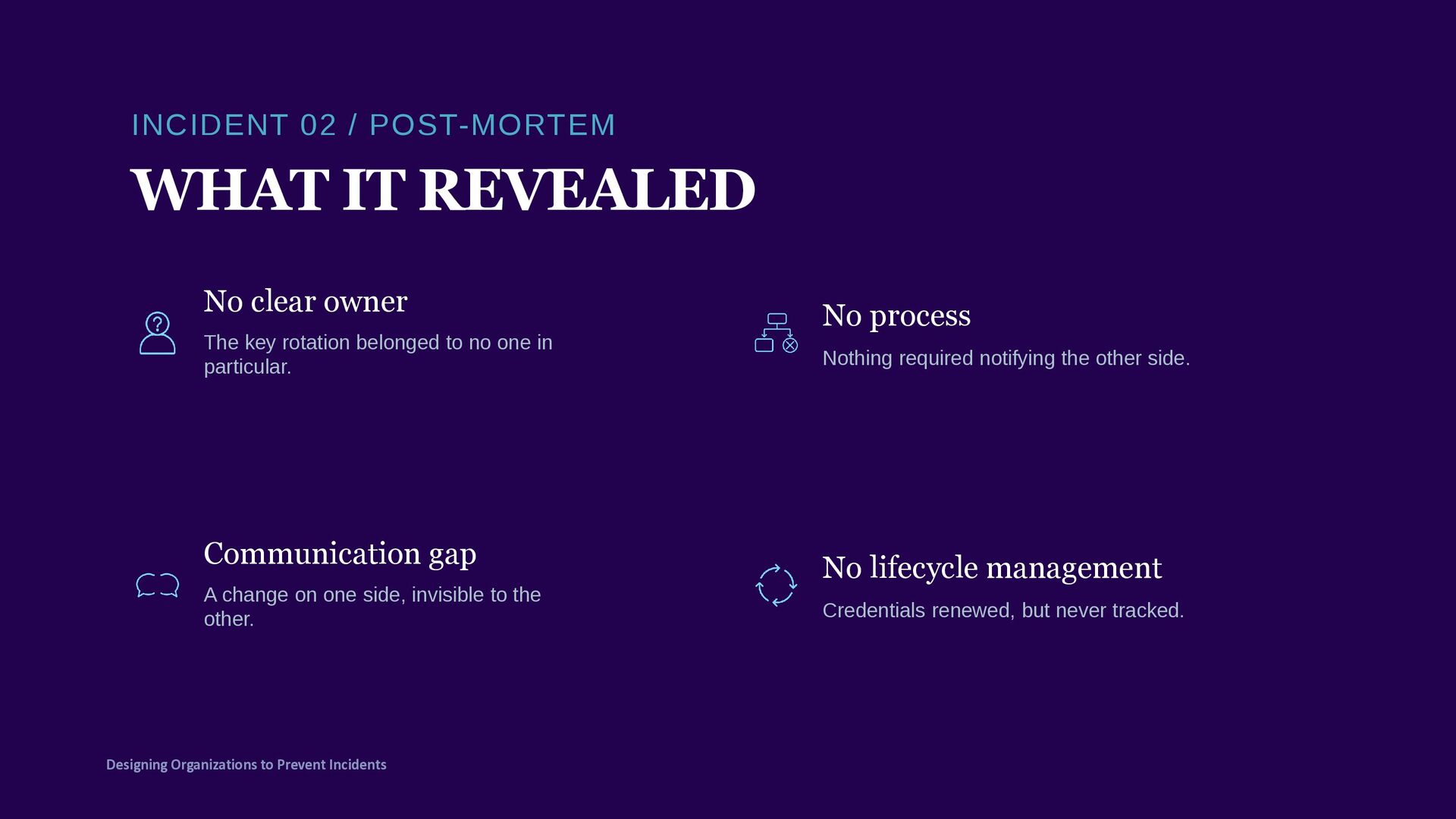
The key rotation belonged to no one in particular. No process Nothing required notifying the other side. Communication gap A change on one side, invisible to the other. No lifecycle management Credentials renewed, but never tracked. Designing Organizations to Prevent Incidents
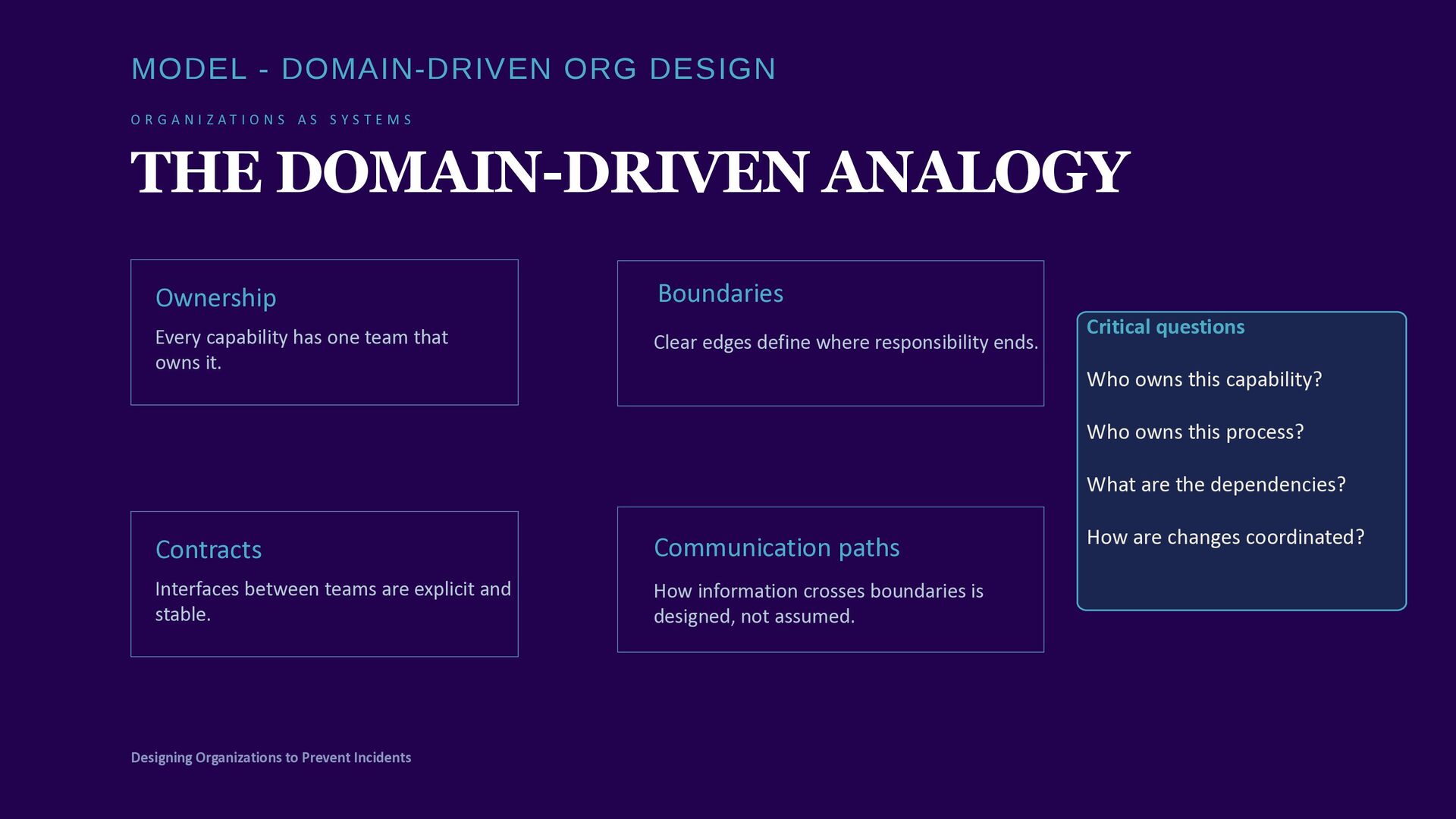
I Z A T I O N S A S S Y S T E M S THE DOMAIN-DRIVEN ANALOGY Ownership Every capability has one team that owns it. Boundaries Clear edges define where responsibility ends. Contracts Interfaces between teams are explicit and stable. Communication paths How information crosses boundaries is designed, not assumed. Designing Organizations to Prevent Incidents Critical questions Who owns this capability? Who owns this process? What are the dependencies? How are changes coordinated?
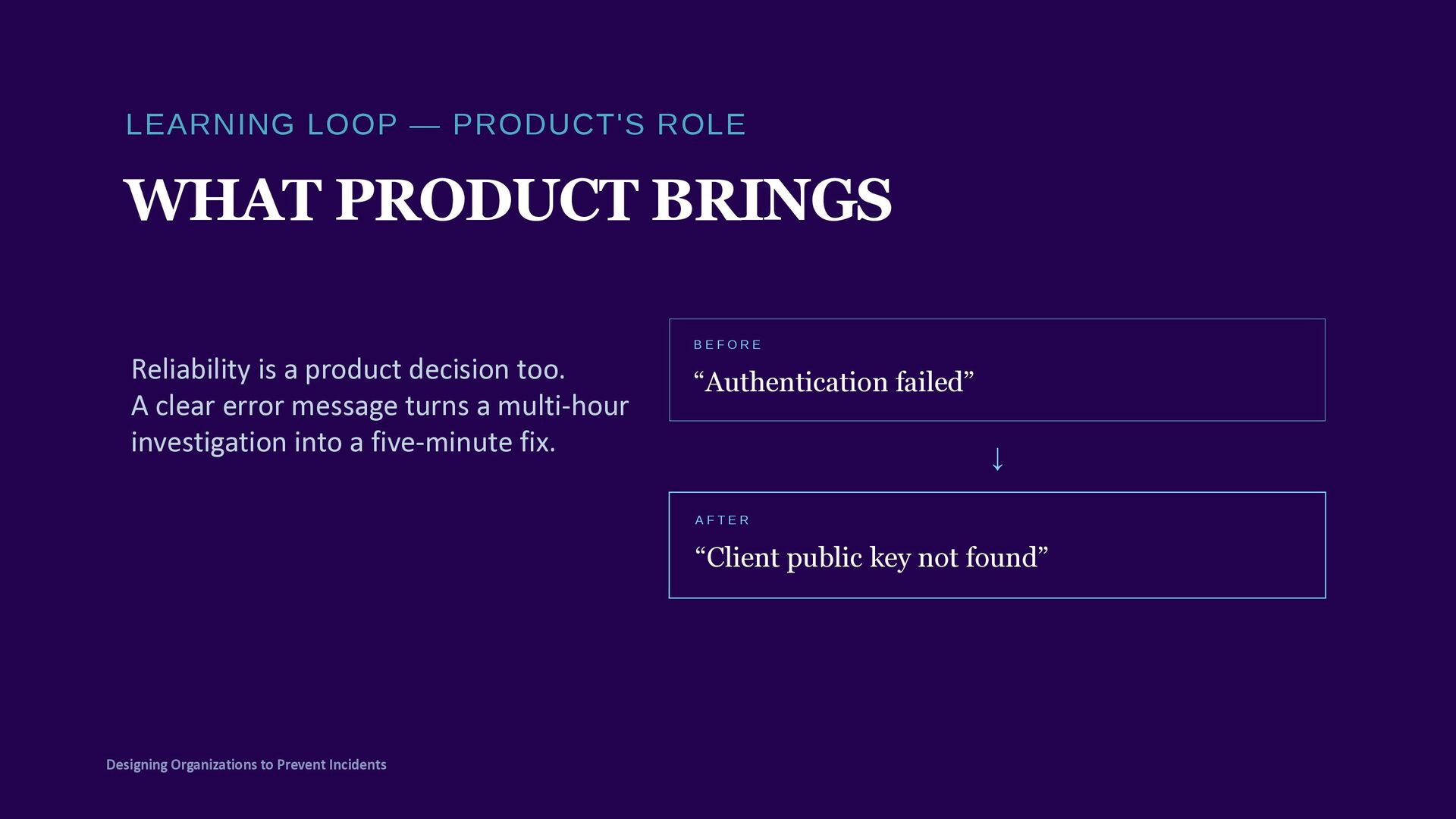
a product decision too. A clear error message turns a multi-hour investigation into a five-minute fix. B E F O R E “Authentication failed” ↓ A F T E R “Client public key not found” Designing Organizations to Prevent Incidents
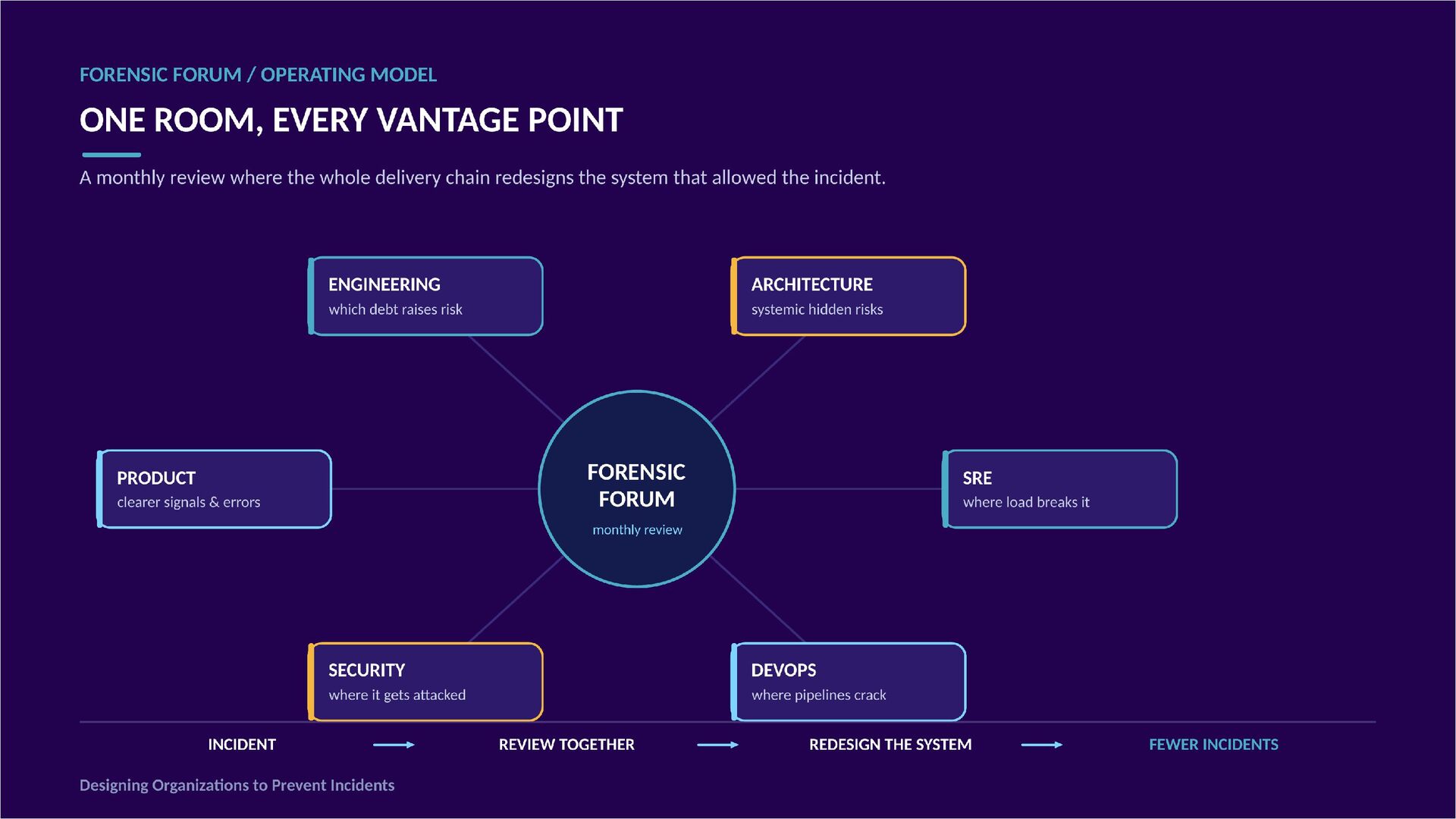
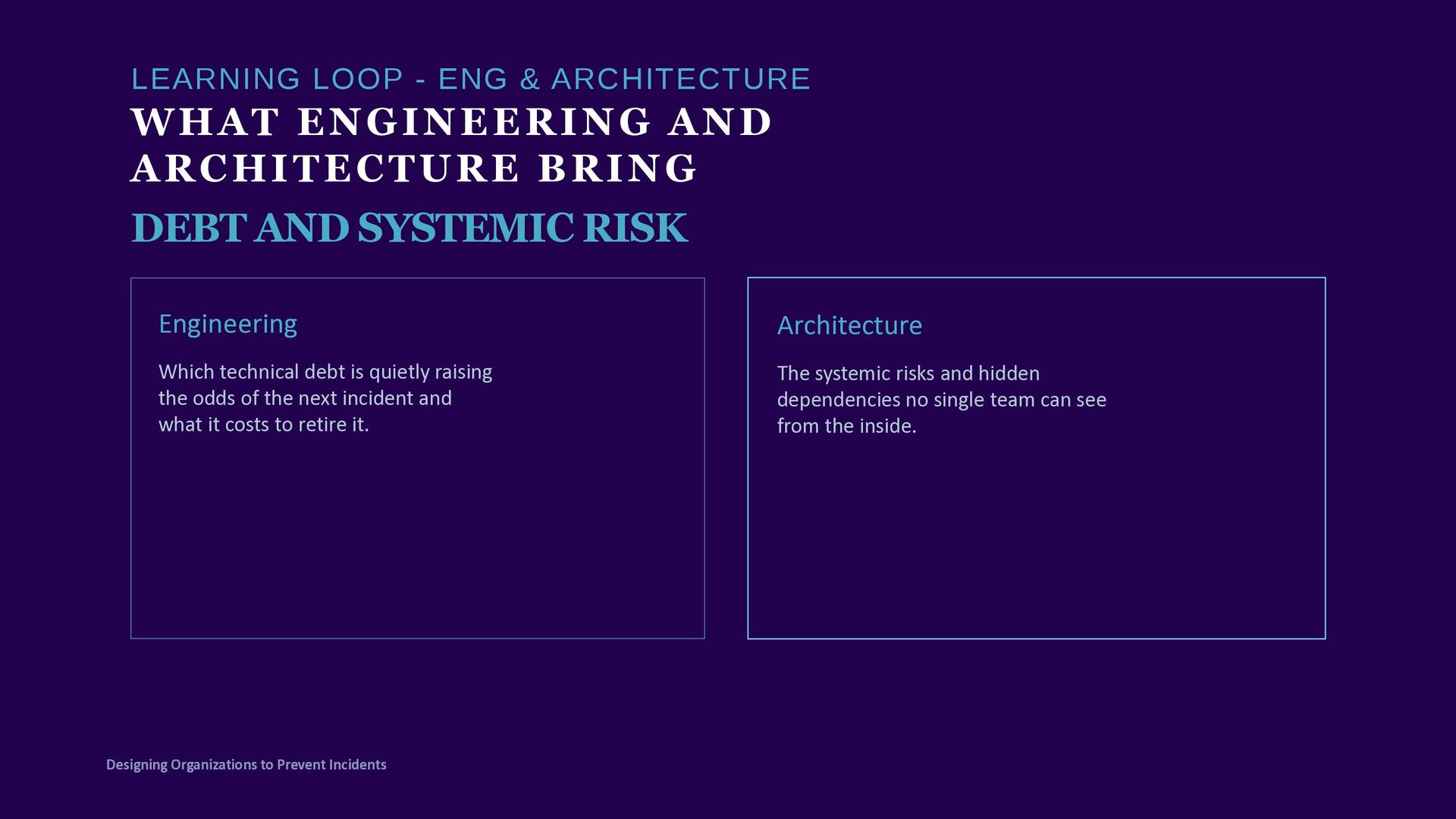
BRING DEBT AND SYSTEMIC RISK Engineering Which technical debt is quietly raising the odds of the next incident and what it costs to retire it. Architecture The systemic risks and hidden dependencies no single team can see from the inside. Designing Organizations to Prevent Incidents
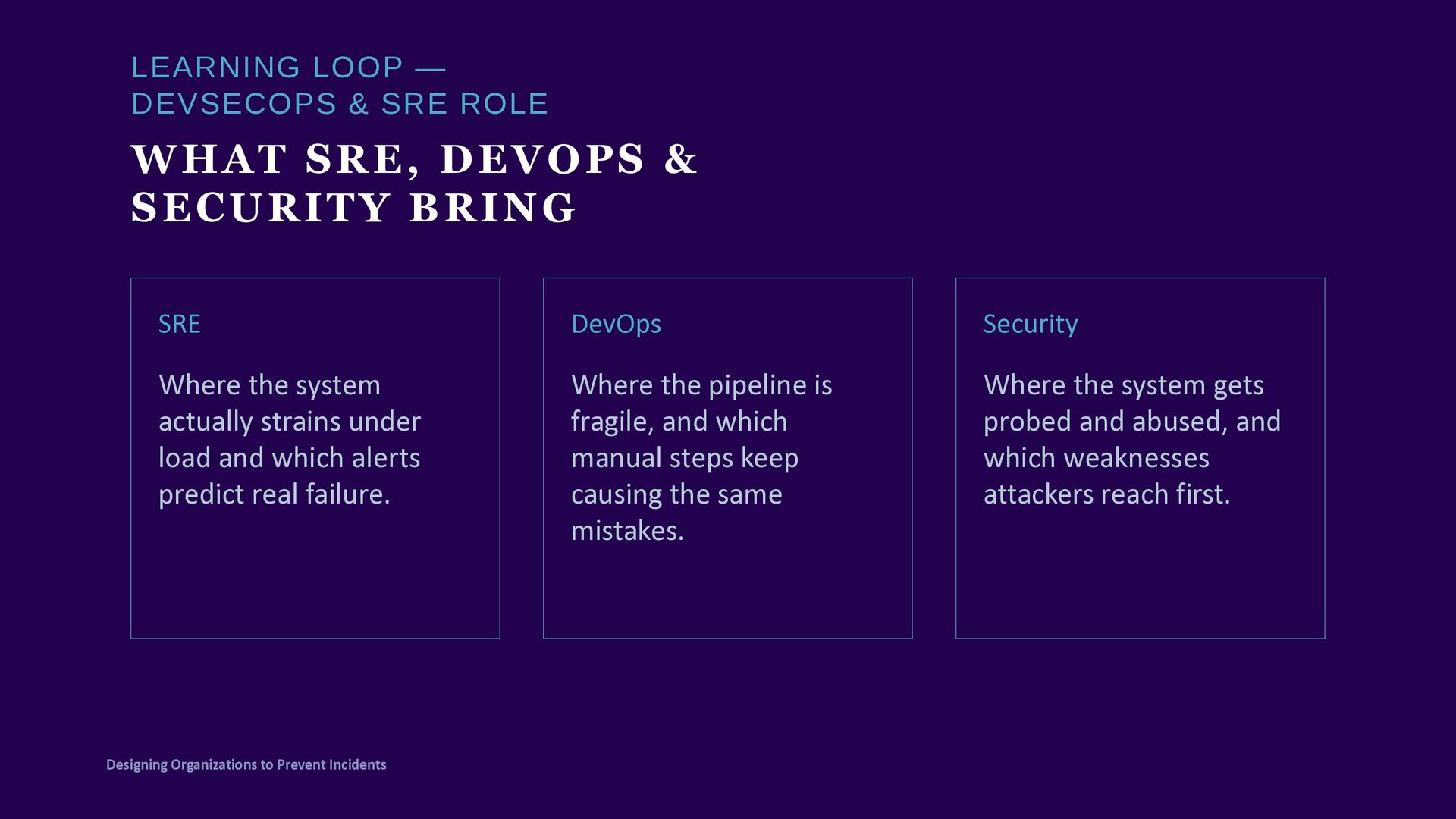
actually strains under load and which alerts predict real failure. DevOps Where the pipeline is fragile, and which manual steps keep causing the same mistakes. Security Where the system gets probed and abused, and which weaknesses attackers reach first. Designing Organizations to Prevent Incidents LEARNING LOOP — DEVSECOPS & SRE ROLE


 adelinast
 sergeychernyshev
 lara
 popppiees
 reverentgeek
 baasie
 apolaine
 sugarenia
 chrisshort
 kimpetersen
 jeffersonlam
 coloredviolet
 tammielis