Upgrade to Pro — share decks privately, control downloads, hide ads and more …

Students: Nihat Ahadov Nazrin Guliyeva Fidan Na...

Avatar for Nihat Ahadov Nihat Ahadov
September 30, 2026
5

Students: Nihat Ahadov Nazrin Guliyeva Fidan Naghiyeva Khadijah Nur Basita Verified by: Physics teacher Azerbaijan Telman Askeraliyev (Fizika Muellimi, Baku, Azerbaijan)

Synthetic data is data made by a model or simulation instead of collected from the real world. It lets decision makers test ideas before acting, fill gaps when real data is missing, protect people's privacy, and compare "what-if" options quickly and cheaply.

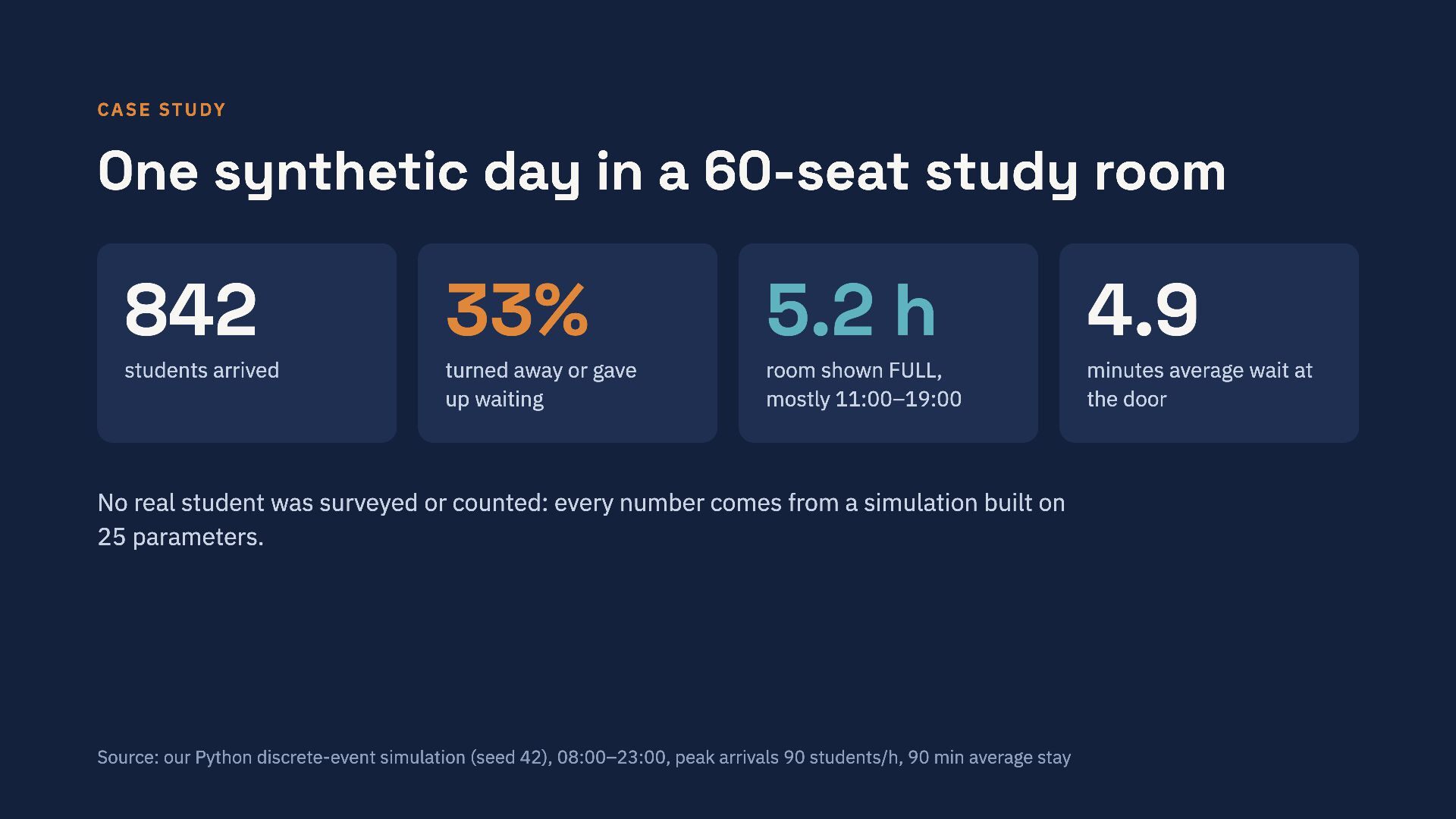
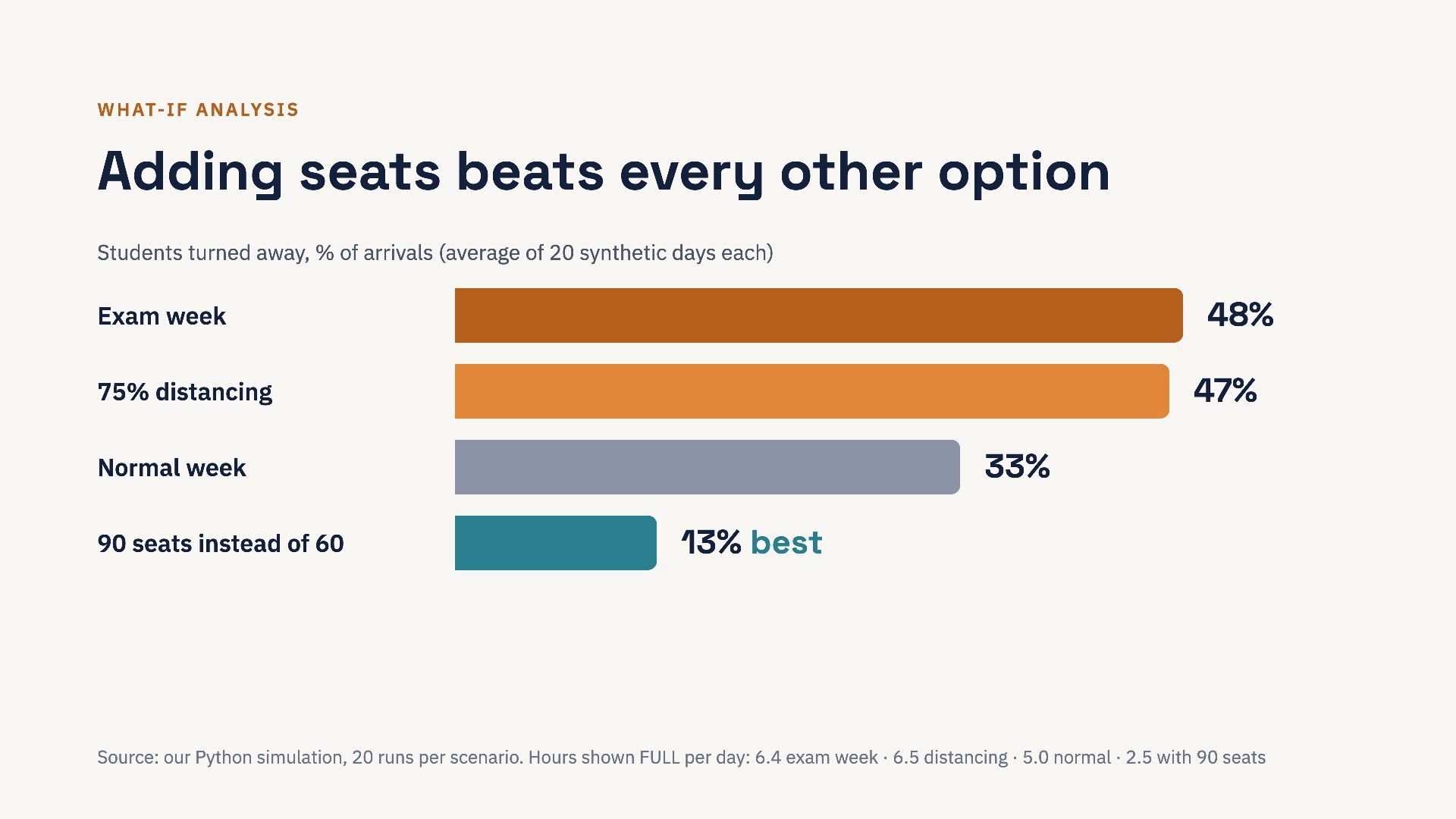
We showed this with a simulation of a 60-seat study room. One simulated day produced 842 student arrivals, and 33% of them were turned away at peak times. Testing different scenarios showed that adding 30 seats cuts the turned-away share from 33% to 13%. That is the kind of answer that would take months to find in real life.

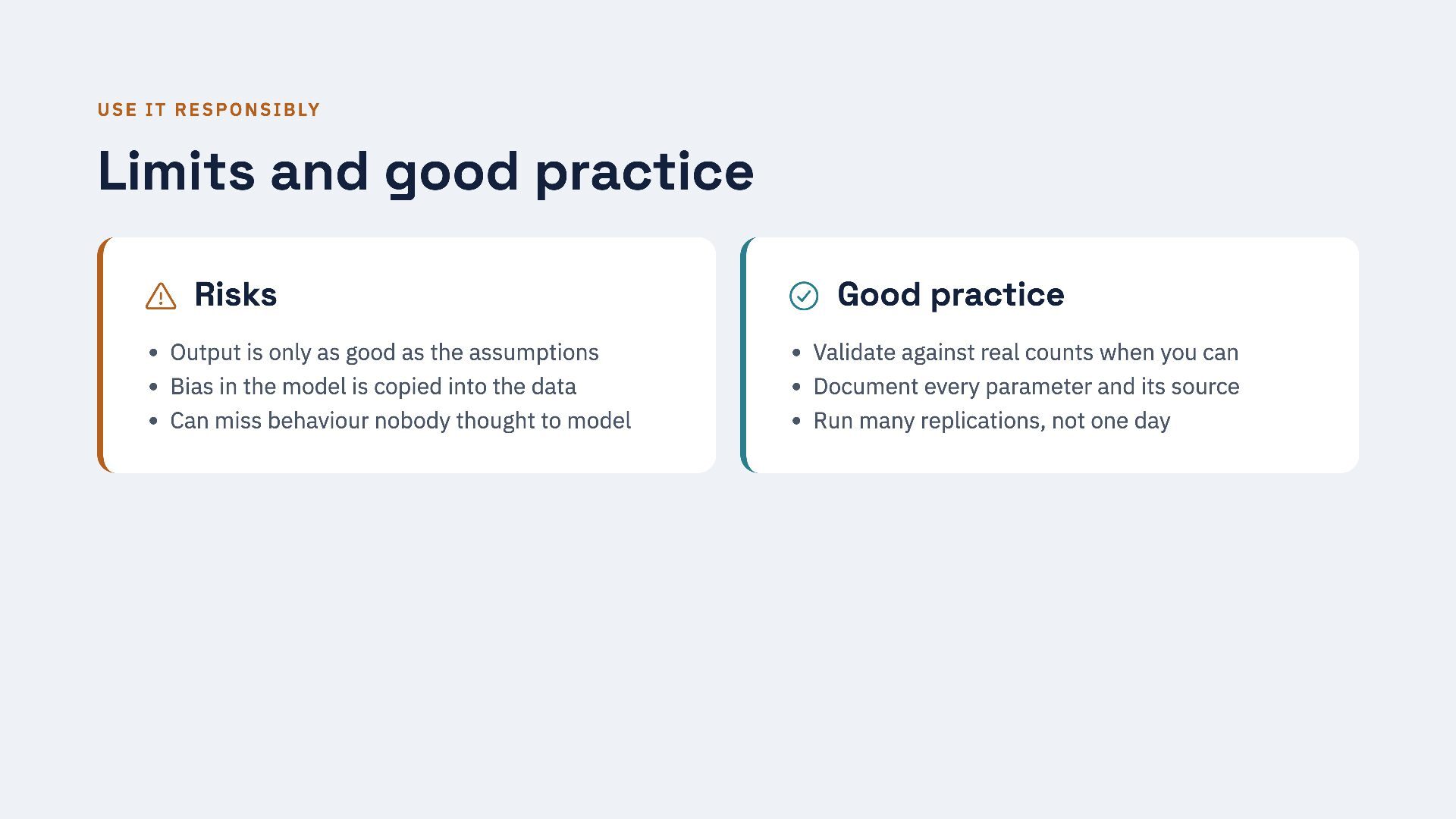
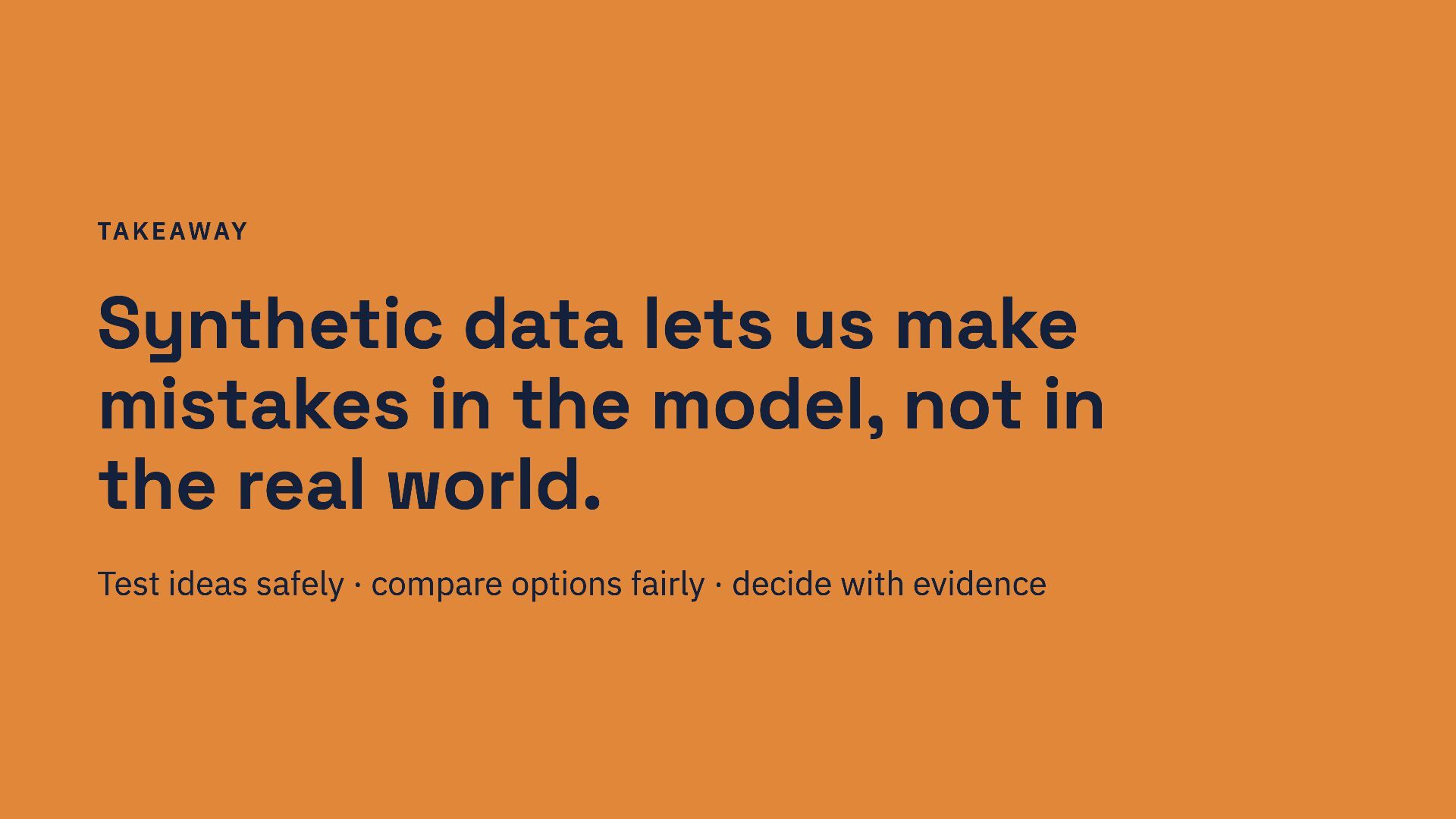
Synthetic data is only as good as its assumptions, so it should be checked against real data. Used carefully, it lets us make mistakes in the model, not in the real world.

Avatar for Nihat Ahadov

Nihat Ahadov

September 30, 2026

Transcript

  1. Infographic Synthetic Data for Decision Making How artificially generated data

    lets us test choices before they cost real time, money or people
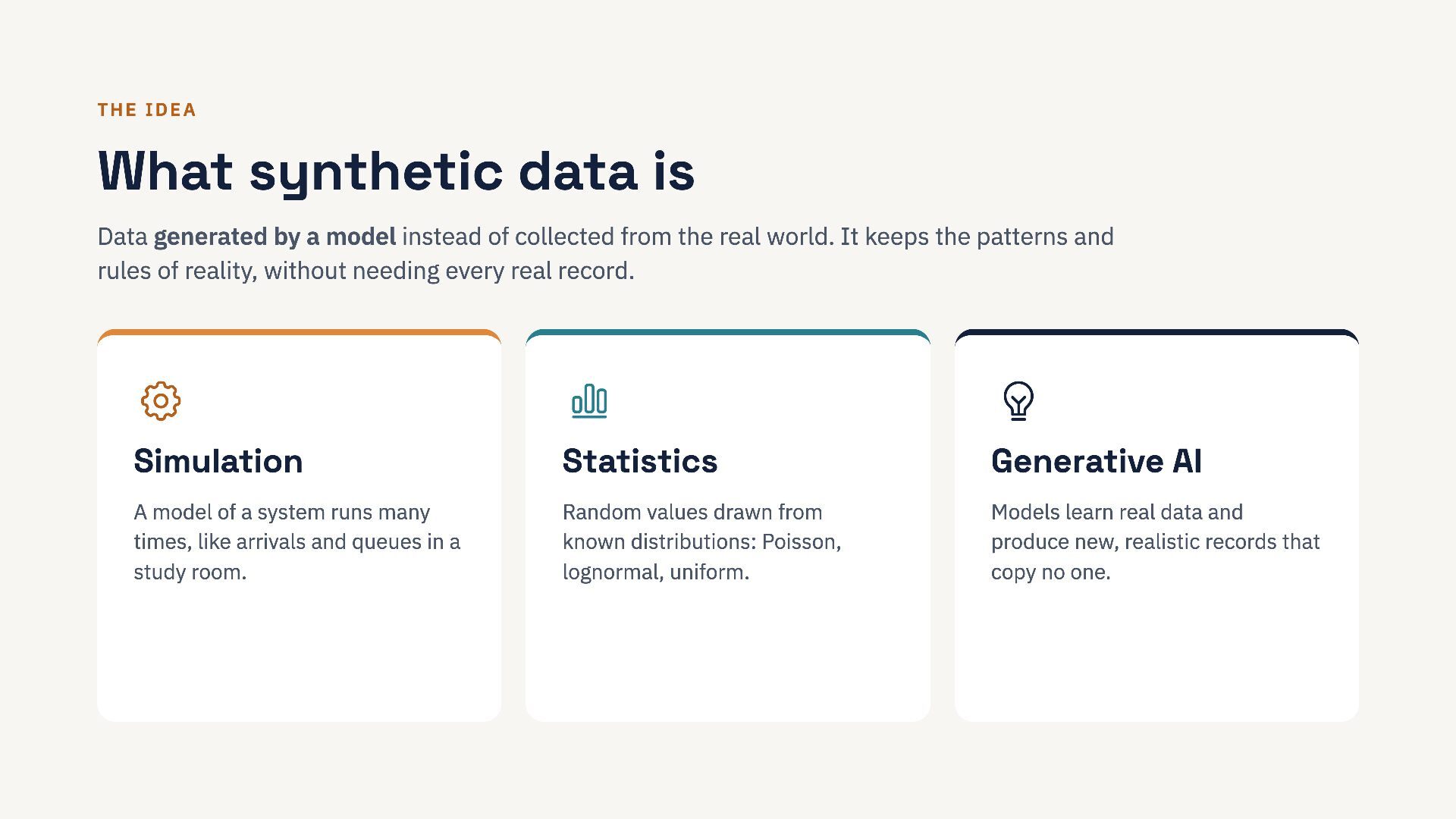
  2. The idea What synthetic data is Data generated by a

    model instead of collected from the real world. It keeps the patterns and rules of reality, without needing every real record.    Simulation Statistics Generative AI A model of a system runs many times, like arrivals and queues in a study room. Random values drawn from known distributions: Poisson, lognormal, uniform. Models learn real data and produce new, realistic records that copy no one.
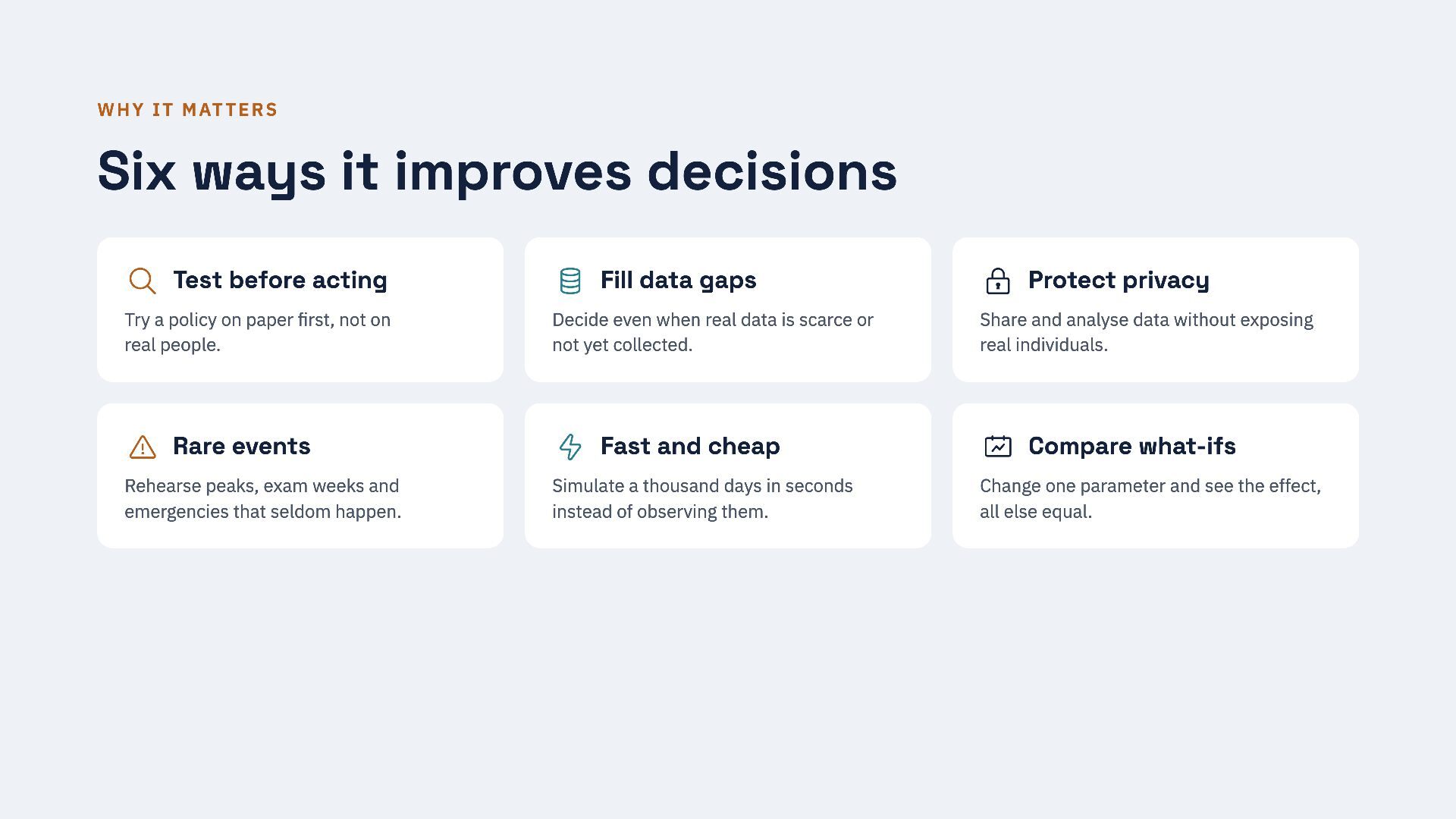
  3. Why it matters Six ways it improves decisions  Test

    before acting Fill data gaps Try a policy on paper first, not on real people.  Rare events  Fast and cheap Rehearse peaks, exam weeks and emergencies that seldom happen. Protect privacy Decide even when real data is scarce or not yet collected.  Share and analyse data without exposing real individuals.   Compare what-ifs Simulate a thousand days in seconds instead of observing them. Change one parameter and see the effect, all else equal.
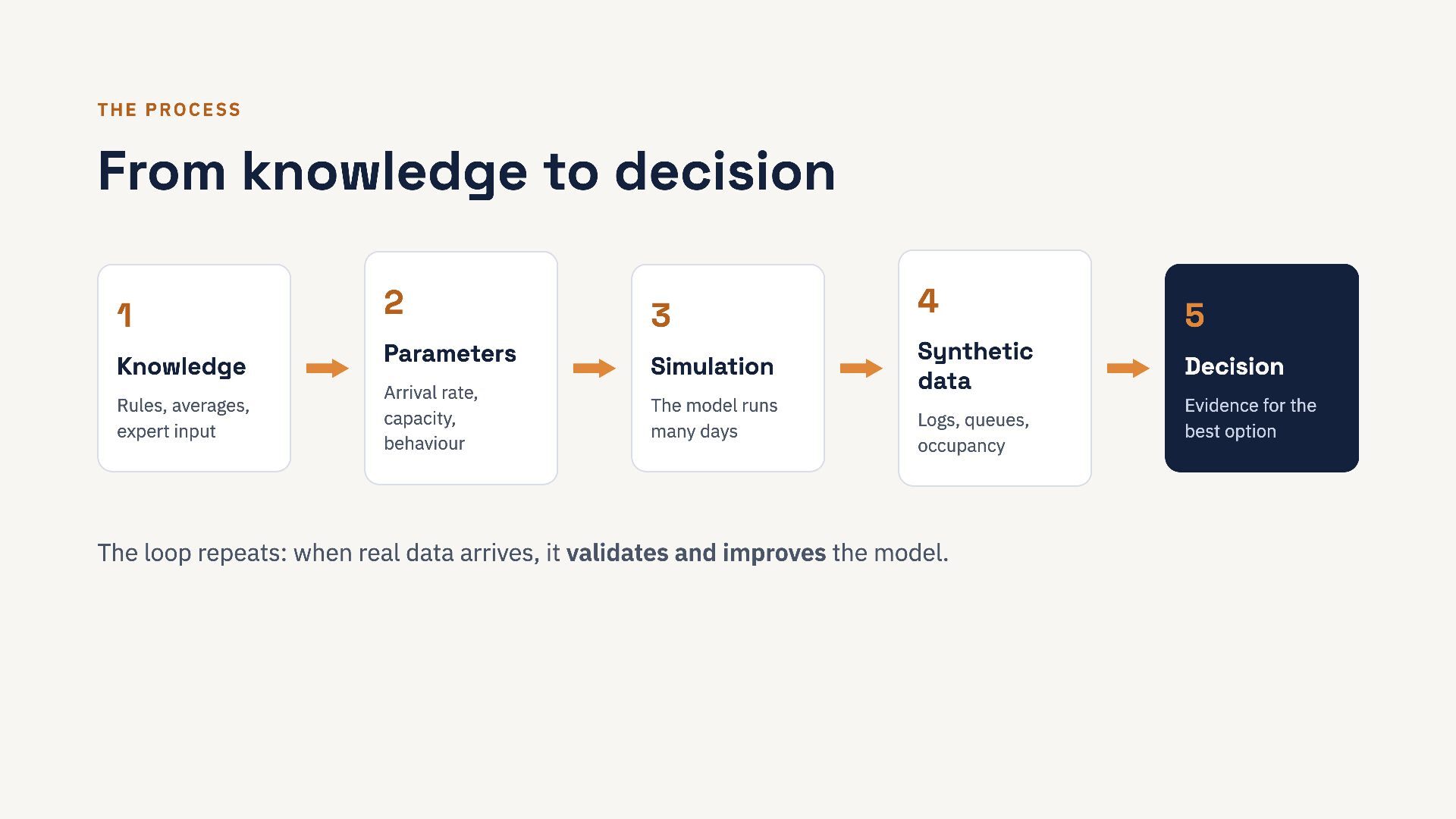
  4. The process From knowledge to decision 1 Knowledge Rules, averages,

    expert input 2 Parameters Arrival rate, capacity, behaviour 3 Simulation The model runs many days 4 Synthetic data Logs, queues, occupancy The loop repeats: when real data arrives, it validates and improves the model. 5 Decision Evidence for the best option
  5. Case study One synthetic day in a 60-seat study room

    842 33% 5.2 h 4.9 students arrived turned away or gave up waiting room shown FULL, mostly 11:00–19:00 minutes average wait at the door No real student was surveyed or counted: every number comes from a simulation built on 25 parameters. Source: our Python discrete-event simulation (seed 42), 08:00–23:00, peak arrivals 90 students/h, 90 min average stay
  6. What-if analysis Adding seats beats every other option Students turned

    away, % of arrivals (average of 20 synthetic days each) Exam week 48% 75% distancing 47% 33% Normal week 90 seats instead of 60 13% best Source: our Python simulation, 20 runs per scenario. Hours shown FULL per day: 6.4 exam week · 6.5 distancing · 5.0 normal · 2.5 with 90 seats
  7. Use it responsibly Limits and good practice  Risks Output

    is only as good as the assumptions Bias in the model is copied into the data Can miss behaviour nobody thought to model  Good practice Validate against real counts when you can Document every parameter and its source Run many replications, not one day
  8. Takeaway Synthetic data lets us make mistakes in the model,

    not in the real world. Test ideas safely · compare options fairly · decide with evidence