Upgrade to Pro — share decks privately, control downloads, hide ads and more …

Eco-friendly homes

Avatar for Albertasell Albertasell
October 30, 2025
1

Eco-friendly homes

Eco-friendly homes

Avatar for Albertasell

Albertasell

October 30, 2025

Transcript

  1. Eco-Friendly Homes A Greener Future Begins at Home The world

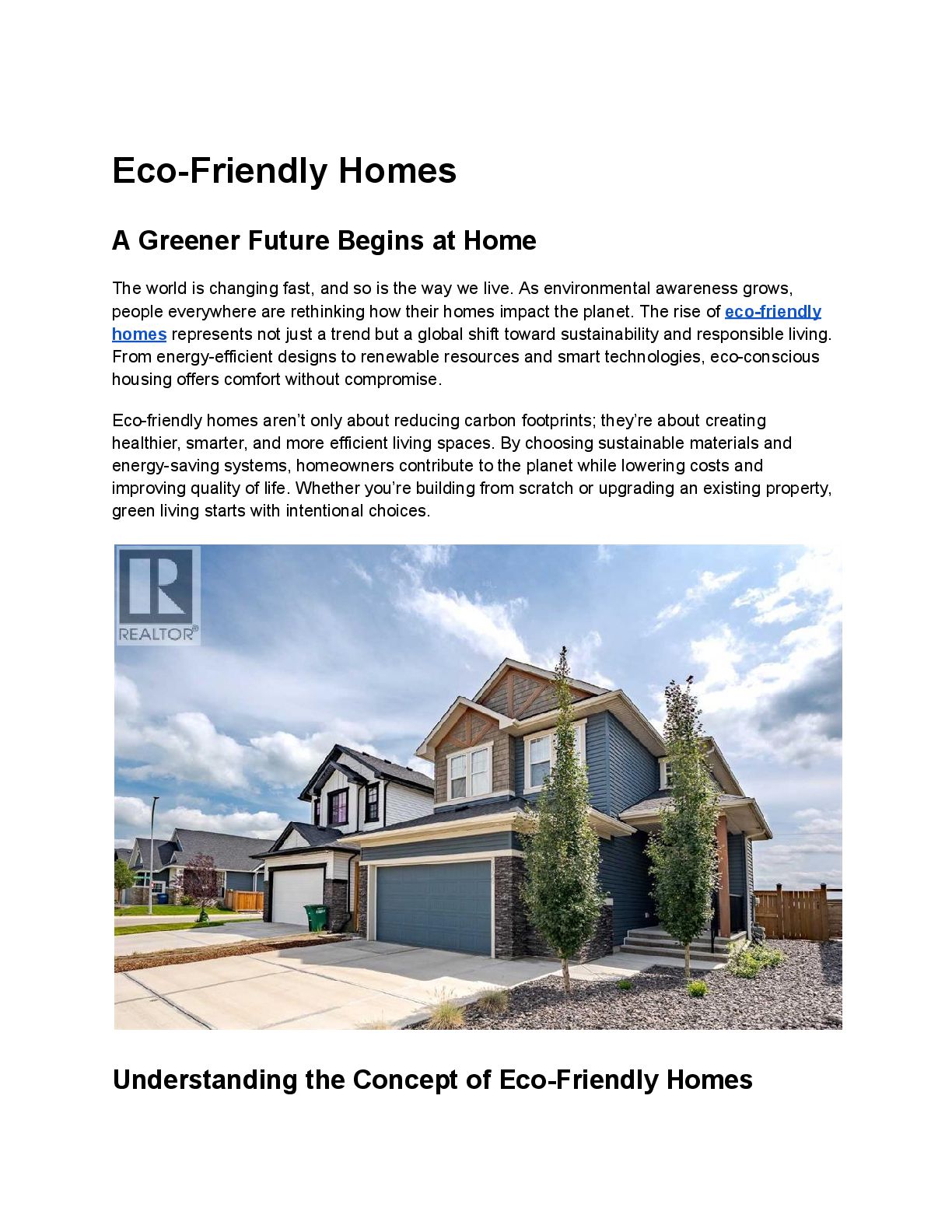
    is changing fast, and so is the way we live. As environmental awareness grows, people everywhere are rethinking how their homes impact the planet. The rise of eco-friendly homes represents not just a trend but a global shift toward sustainability and responsible living. From energy-efficient designs to renewable resources and smart technologies, eco-conscious housing offers comfort without compromise. Eco-friendly homes aren’t only about reducing carbon footprints; they’re about creating healthier, smarter, and more efficient living spaces. By choosing sustainable materials and energy-saving systems, homeowners contribute to the planet while lowering costs and improving quality of life. Whether you’re building from scratch or upgrading an existing property, green living starts with intentional choices. Understanding the Concept of Eco-Friendly Homes
  2. At its core, eco-friendly homes are designed to minimize environmental

    impact. These homes use renewable energy sources, sustainable materials, and efficient systems to reduce waste and energy consumption. The goal is to create harmony between comfort, modern living, and nature. Eco-friendly housing design focuses on several key principles energy efficiency, water conservation, material sustainability, and indoor environmental quality. These elements work together to reduce the home’s ecological footprint while enhancing durability and health. Such homes are not limited to any particular style or size. From small urban apartments to sprawling countryside estates, sustainability can be integrated into every type of residence. The Importance of Eco-Friendly Homes in Modern Society As urbanization continues, the need for sustainable housing has never been greater. Traditional construction methods consume massive amounts of resources and energy, while producing significant waste and emissions. In contrast, eco-friendly homes provide an opportunity to reverse these effects by conserving energy and supporting renewable systems. Beyond environmental benefits, green homes also address personal well-being. Natural light, cleaner air, and non-toxic materials contribute to healthier living spaces. The connection between sustainability and health has driven architects and homeowners alike to rethink what makes a home truly livable. Furthermore, with rising utility costs and global climate concerns, eco-friendly living is becoming both a moral and financial decision. Investing in sustainability today ensures a more stable, affordable, and resilient future. Design Principles Behind Eco-Friendly Homes When designing eco-friendly homes, every detail counts. From layout planning to materials selection, each element plays a role in energy conservation and comfort. Passive Design Passive design takes advantage of natural conditions like sunlight, shade, and airflow to maintain comfortable indoor temperatures. By optimizing orientation, window placement, and insulation, homeowners can drastically reduce reliance on artificial heating and cooling. Renewable Energy Integration Solar panels, wind turbines, and geothermal systems are becoming common features of eco-friendly homes. Harnessing renewable energy minimizes dependency on fossil fuels, cuts emissions, and can even generate surplus power for resale or storage.
  3. Sustainable Building Materials Eco-conscious construction uses recycled, reclaimed, or locally

    sourced materials to reduce transportation emissions and environmental harm. Bamboo, cork, reclaimed wood, and recycled steel are examples of durable and sustainable materials that bring both character and conscience to a home. Efficient Water Management Water scarcity is a growing global issue, and eco-friendly homes address this challenge with smart water systems. Rainwater harvesting, greywater recycling, and low-flow fixtures reduce waste while ensuring efficient water use. Smart Home Technology Modern green homes integrate smart systems to monitor energy usage, lighting, and temperature. These technologies optimize consumption patterns and reduce waste, giving homeowners both control and insight. The Economic Benefits of Living Green One of the biggest misconceptions about eco-friendly homes is that they are more expensive. While initial costs may be slightly higher, the long-term savings are substantial. Energy-efficient designs significantly lower utility bills by cutting heating, cooling, and electricity expenses. Tax incentives and government grants in many regions also make sustainable homes more accessible. Renewable energy systems often pay for themselves over time through energy savings and rebates. Moreover, eco-friendly properties tend to have higher resale values. Modern buyers are increasingly prioritizing sustainability, meaning homes built with green principles often attract premium prices on the market. Health and Lifestyle Advantages Sustainability is not just about the planet it’s about people. Eco-friendly homes create environments that promote physical and mental well-being. Non-toxic paints, organic materials, and natural ventilation improve indoor air quality, reducing the risk of respiratory issues. Incorporating natural light boosts mood and productivity while decreasing dependence on artificial lighting. Biophilic design connecting indoor spaces with nature through greenery and natural textures helps reduce stress and enhance emotional balance.
  4. By choosing sustainable living, families cultivate a lifestyle of mindfulness

    and responsibility. It’s a holistic approach where comfort meets consciousness. Building vs. Retrofitting Eco-Friendly Homes If you’re looking to live sustainably, you can either build a new eco-friendly home or retrofit an existing one. Building New Constructing from scratch allows for full integration of sustainable systems energy-efficient layouts, solar panels, and eco-conscious materials from the ground up. This option provides maximum control and efficiency but may require higher upfront investment. Retrofitting Existing Homes Not everyone can start from zero, and that’s where retrofitting comes in. By upgrading insulation, installing solar panels, or replacing old fixtures with energy-efficient ones, homeowners can transform traditional properties into eco-friendly homes. Even small steps like switching to LED lighting or adding rainwater collection systems make a difference. Both approaches have their merits. The choice depends on budget, location, and long-term goals. The Role of Architecture and Innovation Architects and designers play a vital role in shaping the future of eco-friendly homes. With advanced technologies and creative concepts, they’re redefining sustainable living. Green roofs, vertical gardens, and modular housing are examples of modern innovations that blend functionality with sustainability. Architectural design now emphasizes flexible spaces, natural aesthetics, and harmony with the environment. 3D printing and prefabricated eco-modules have also emerged as groundbreaking methods for constructing sustainable homes faster and more efficiently. These innovations reduce waste while promoting scalability and affordability. Community-Level Impact of Eco-Friendly Homes The influence of eco-friendly homes extends beyond individual properties. When neighborhoods adopt green practices collectively, the overall environmental impact grows exponentially.
  5. Communities powered by renewable energy, featuring shared gardens and waste-recycling

    systems, foster collaboration and sustainability. Eco-conscious neighborhoods not only preserve resources but also inspire others to follow suit. This shift toward green living strengthens local economies through eco-jobs, renewable energy industries, and sustainable construction. The ripple effect of community-level action can reshape entire cities into more resilient ecosystems. Overcoming Challenges in Sustainable Living While eco-friendly homes offer numerous benefits, challenges remain. High upfront costs, limited access to sustainable materials, and lack of awareness can deter adoption. However, technological advancements and supportive policies are rapidly closing these gaps. Governments and private sectors are investing in green innovation, driving costs down and availability up. Education campaigns and incentive programs encourage homeowners to take the first step toward sustainability. Another key challenge is lifestyle adaptation. Sustainable living requires mindfulness reducing waste, conserving energy, and maintaining eco-friendly habits daily. Over time, these practices become second nature. Global Trends and the Future of Eco-Friendly Homes Around the world, eco-friendly homes are becoming a standard of modern architecture. Countries are implementing stricter building codes, emphasizing energy performance and sustainability. Smart cities are emerging with renewable energy networks, electric transport systems, and eco-conscious housing solutions. The future home will likely be self-sufficient, energy-positive, and intelligently adaptive to its environment. Advances in materials science are introducing biodegradable insulation, solar-integrated glass, and carbon-neutral construction techniques. The combination of innovation and awareness is transforming green living into a global movement rather than a niche choice. How to Start Living More Sustainably Even if you’re not ready to build a new eco-friendly home, you can still make meaningful changes. Start by evaluating your current living habits and implementing small, practical upgrades.
  6. Switch to energy-efficient lighting, use smart thermostats, and insulate walls

    to prevent energy loss. Install low-flow taps and showers to reduce water waste. Composting and recycling household waste are simple yet effective ways to minimize environmental impact. Planting trees or maintaining a home garden not only improves air quality but also promotes biodiversity. Every action counts toward a sustainable lifestyle, regardless of scale. Emotional and Ethical Satisfaction Beyond the practical benefits, eco-friendly homes bring emotional fulfillment. Living sustainably fosters a sense of purpose and responsibility toward future generations. Knowing your daily life contributes to environmental preservation builds pride and peace of mind. Ethical satisfaction stems from aligning one’s values with one’s lifestyle. By reducing waste and conserving energy, homeowners actively participate in global efforts to combat climate change. Sustainability becomes not just an architectural feature but a moral compass guiding everyday choices. The Perfect Balance Between Nature and Modern Comfort Eco-friendly living isn’t about sacrificing convenience it’s about achieving balance. Eco-friendly homes blend technology, design, and nature into a seamless experience. Advanced energy systems coexist with organic materials, creating environments that feel both modern and natural. This harmony enhances comfort while reducing environmental strain. The perfect green home reflects a lifestyle where innovation serves sustainability, proving that luxury and responsibility can go hand in hand. Conclusion The world is moving toward a greener, smarter, and more conscious way of living, and eco-friendly homes are at the heart of that transformation. These sustainable spaces represent hope for the planet and better living for people. By combining innovative technology, renewable energy, and thoughtful design, eco-conscious housing empowers individuals to make meaningful environmental impact. Whether you’re building a new property or transforming an existing one, sustainability is more than a feature it’s a mindset. The future of housing belongs to those who value the planet as much as their comfort. Embracing eco-friendly homes today means investing in a cleaner, healthier, and more sustainable tomorrow.