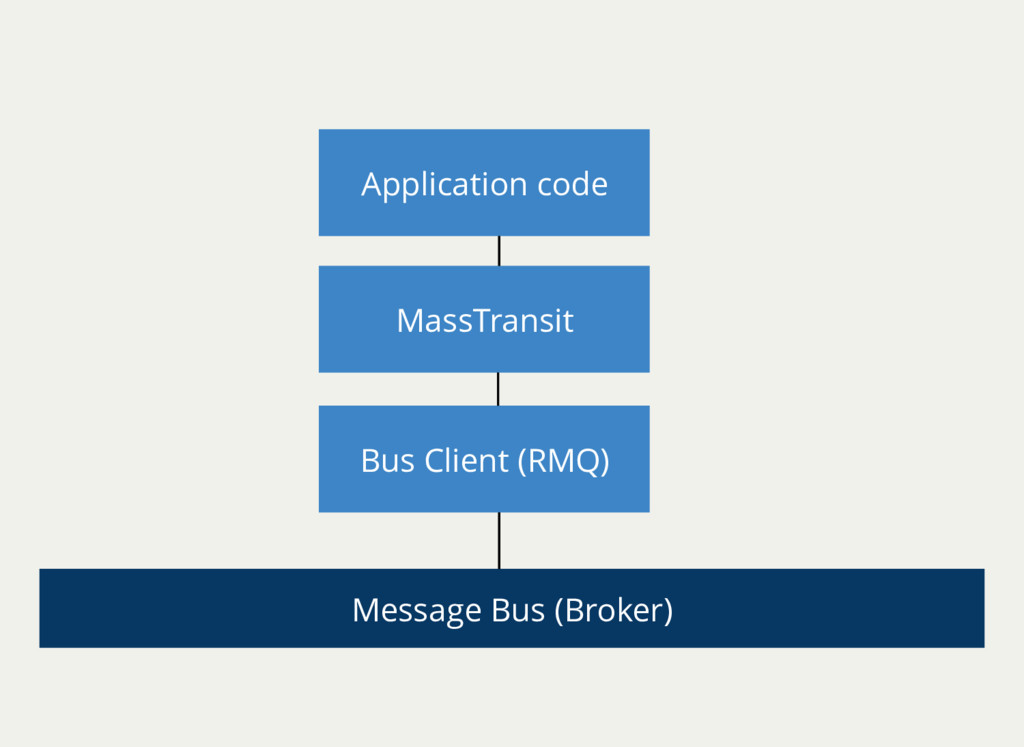
Upgrade to Pro — share decks privately, control downloads, hide ads and more …

Messaging Patterns with MassTransit

Avatar for Alexey Zimarev Alexey Zimarev
September 21, 2017

Messaging Patterns with MassTransit

Slides for the MassTransit workshop

Avatar for Alexey Zimarev

Alexey Zimarev

September 21, 2017

Other Decks in Technology

Transcript

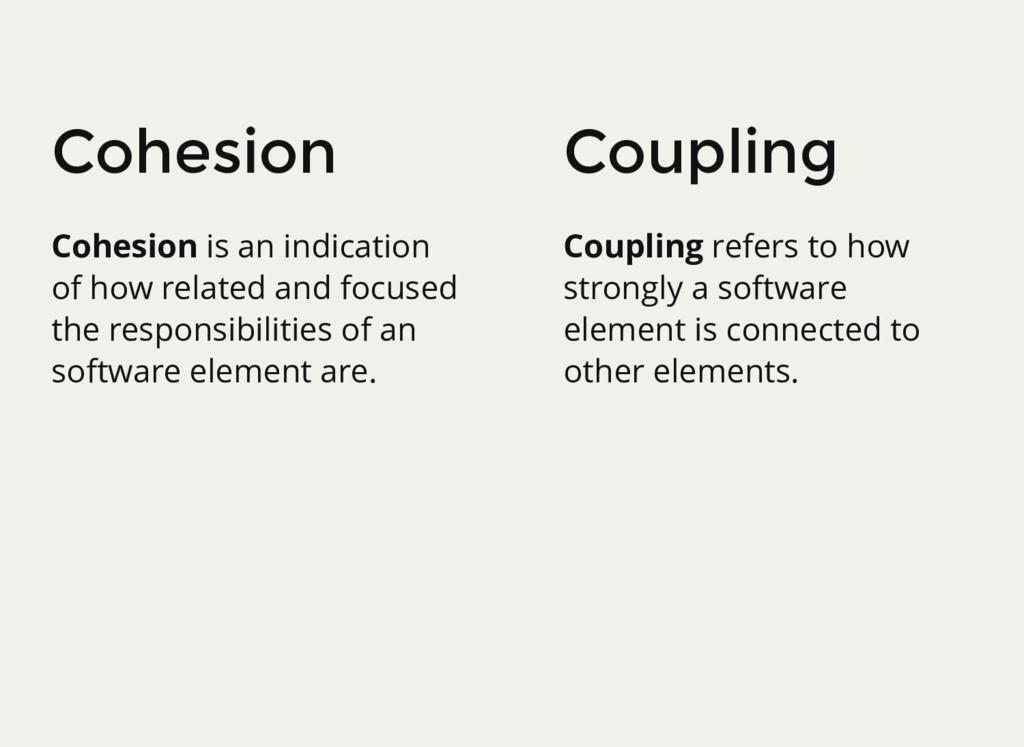
  1. Cohesion Cohesion is an indication of how related and focused

    the responsibilities of an software element are. Coupling Coupling refers to how strongly a software element is connected to other elements.
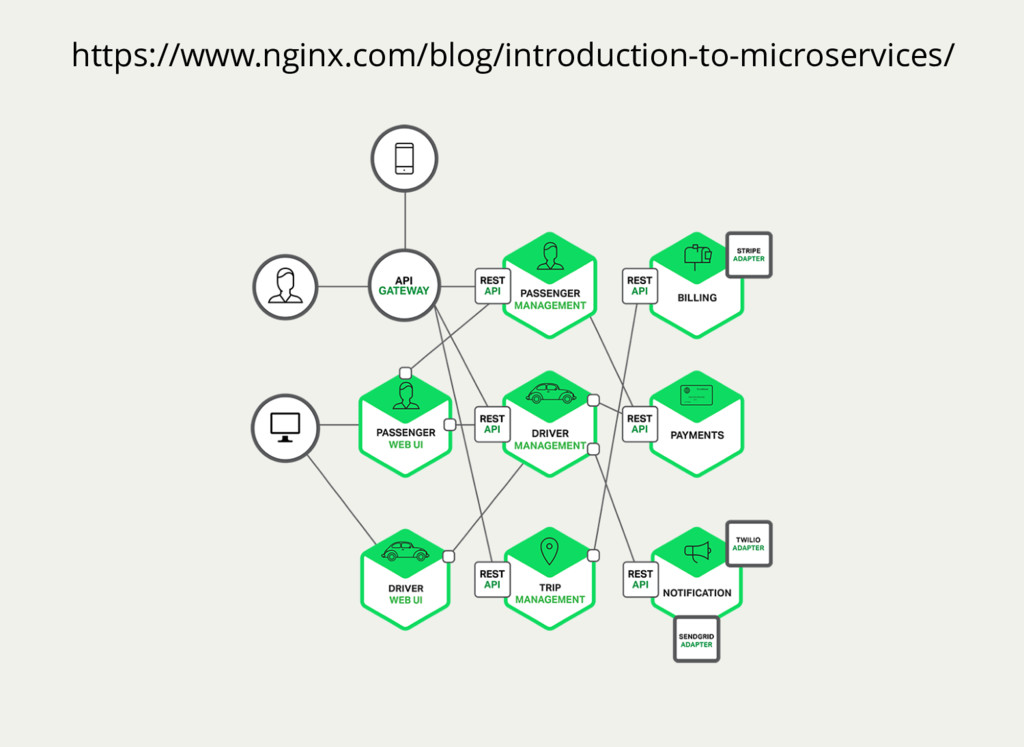
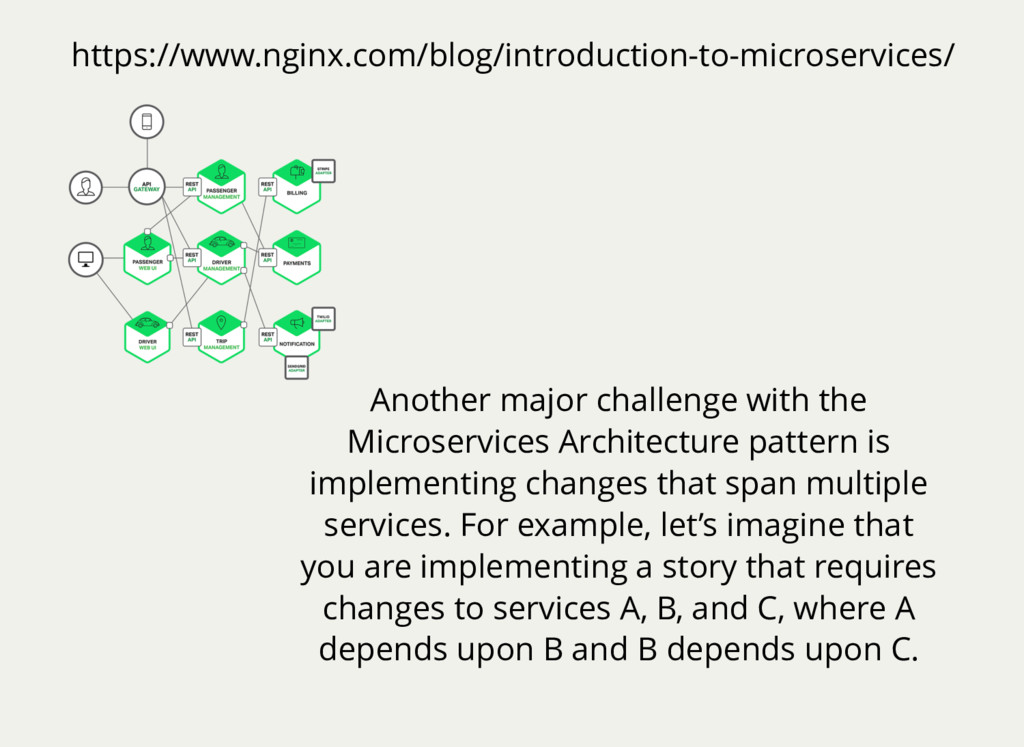
  2. https://www.nginx.com/blog/introduction-to-microservices/ Another major challenge with the Microservices Architecture pattern is

    implementing changes that span multiple services. For example, let’s imagine that you are implementing a story that requires changes to services A, B, and C, where A depends upon B and B depends upon C.
  3. Loose Coupling ...a loosely coupled system is one in which

    each of its components has, or makes use of, little or no knowledge of the definitions of other separate components. Components in a loosely coupled system can be replaced with alternative implementations that provide the same services.
  4. Loose Coupling Reduce number of assumptions two parties make about

    each other when they exchange information F. Leymann - Loose Coupling and Architectural Implications
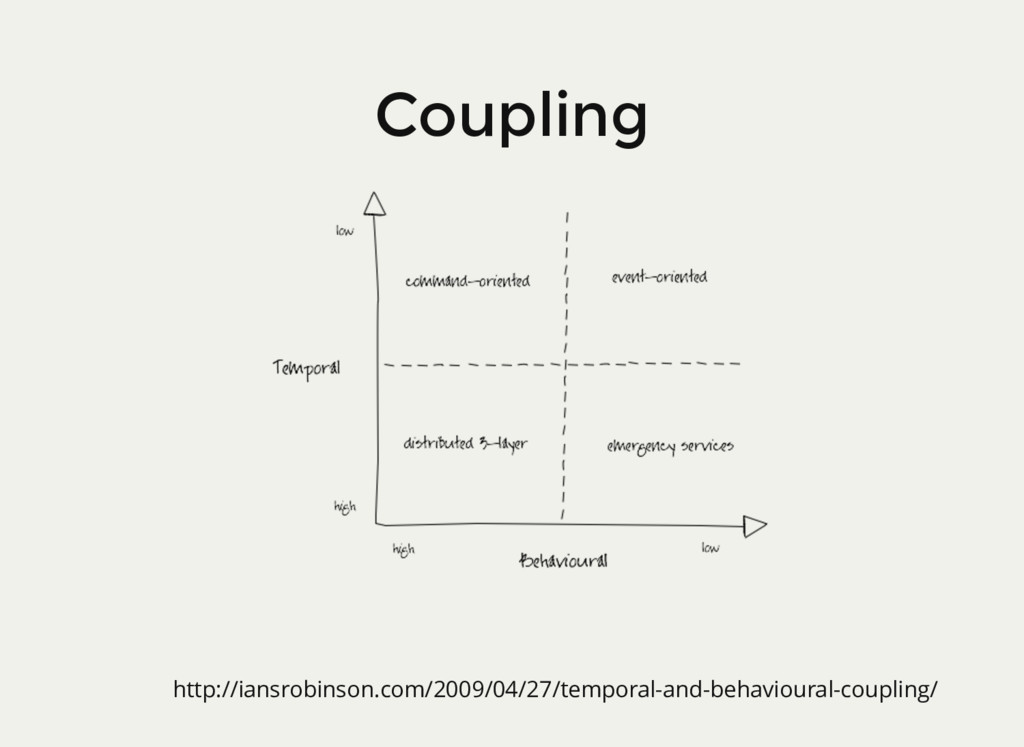
  5. Behavioural The degree to which parties share assumptions regarding behaviors

    High behavioral coupling requires a provider to evolve its service offerings in response to changed consumer requirements. Temporal The degree to which the sending and handling of a message are connected in time A sender is dependent on a receiver being available when a message is sent http://iansrobinson.com/2009/04/27/temp oral-and-behavioural-coupling/
  6. The availability of the overall system can be no more

    than that of the least available participant. The probability of failure is the joint probability of failure in any component or service. Michael Nygard - Release It!
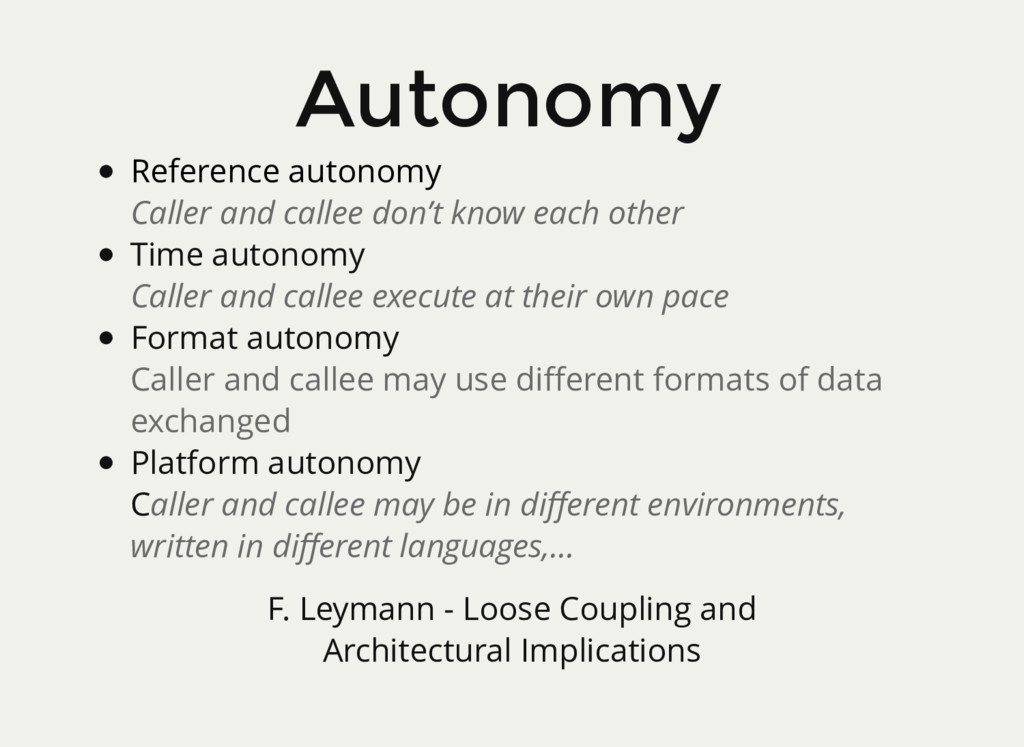
  7. Autonomy Caller and callee don’t know each other Time autonomy

    Caller and callee execute at their own pace Format autonomy Caller and callee may use different formats of data exchanged Platform autonomy Caller and callee may be in different environments, written in different languages,… Reference autonomy F. Leymann - Loose Coupling and Architectural Implications
  8. Autonomy Reference: Send information to a logical address Time: Enhance

    channel with queuing capabilities F. Leymann - Loose Coupling and Architectural Implications
  9. Messaging An enterprise has multiple applications that are being built

    independently, with different languages and platforms. The enterprise needs to share data and processes in a responsive way. How can I integrate multiple applications so that they work together and can exchange information?
  10. Asynchronous messaging is fundamentally a pragmatic reaction to the problems

    of distributed systems. Sending a message does not require both systems to be up and ready at the same time. Use Messaging to transfer packets of data frequently, immediately, reliably, and asynchronously, using customizable formats.
  11. Furthermore, thinking about the communication in an asynchronous manner forces

    developers to recognize that working with a remote application is slower, which encourages design of components with high cohesion (lots of work locally) and low adhesion (selective work remotely).
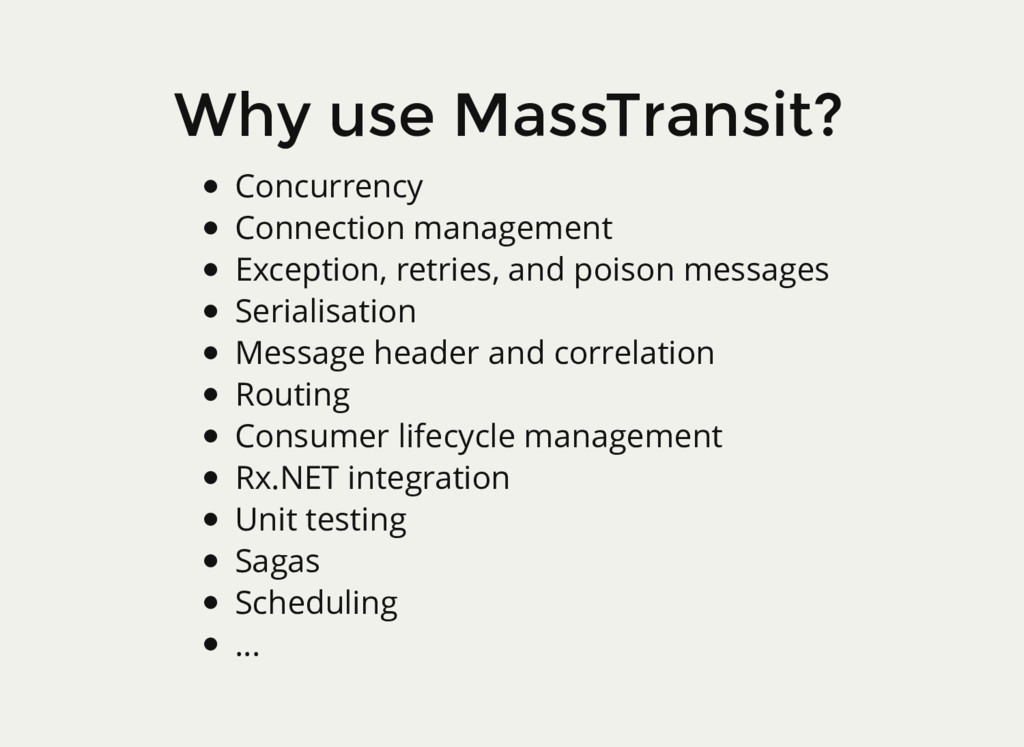
  12. Why use MassTransit? Concurrency Connection management Exception, retries, and poison

    messages Serialisation Message header and correlation Routing Consumer lifecycle management Rx.NET integration Unit testing Sagas Scheduling ...
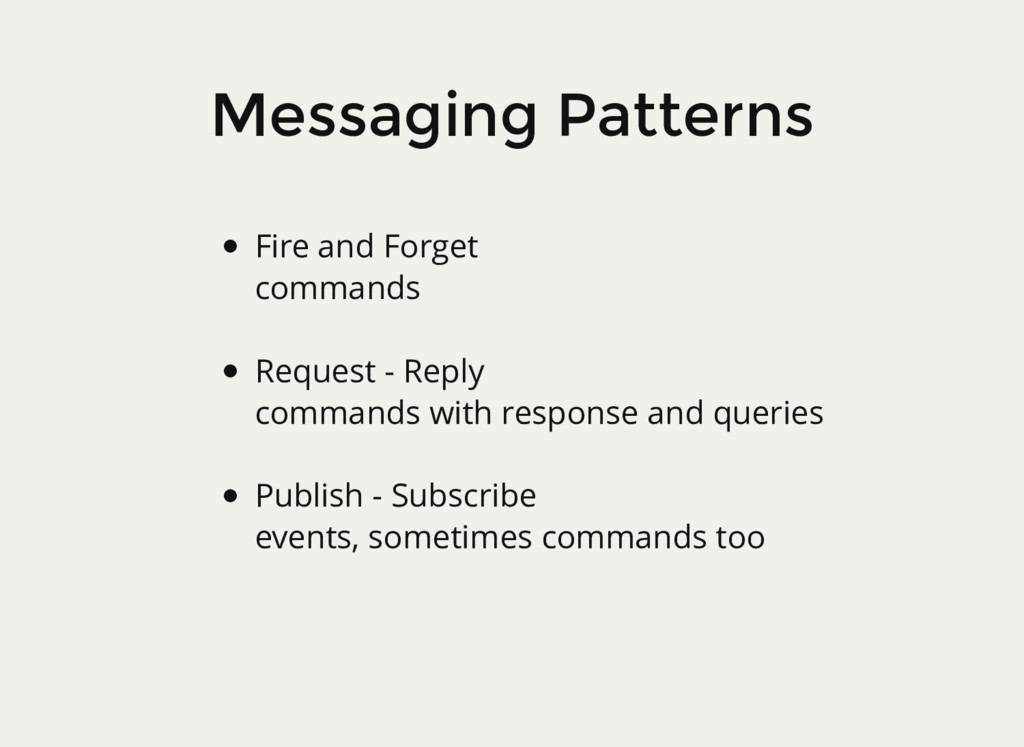
  13. Messaging Patterns Fire and Forget commands Request - Reply commands

    with response and queries Publish - Subscribe events, sometimes commands too
  14. public interface CustomerRegistered { string FirstName { get; } string

    LastName { get; } string Email { get; } string MobileNumber { get; } Address BillingAddress { get; } Address VisitingAddress { get; } }
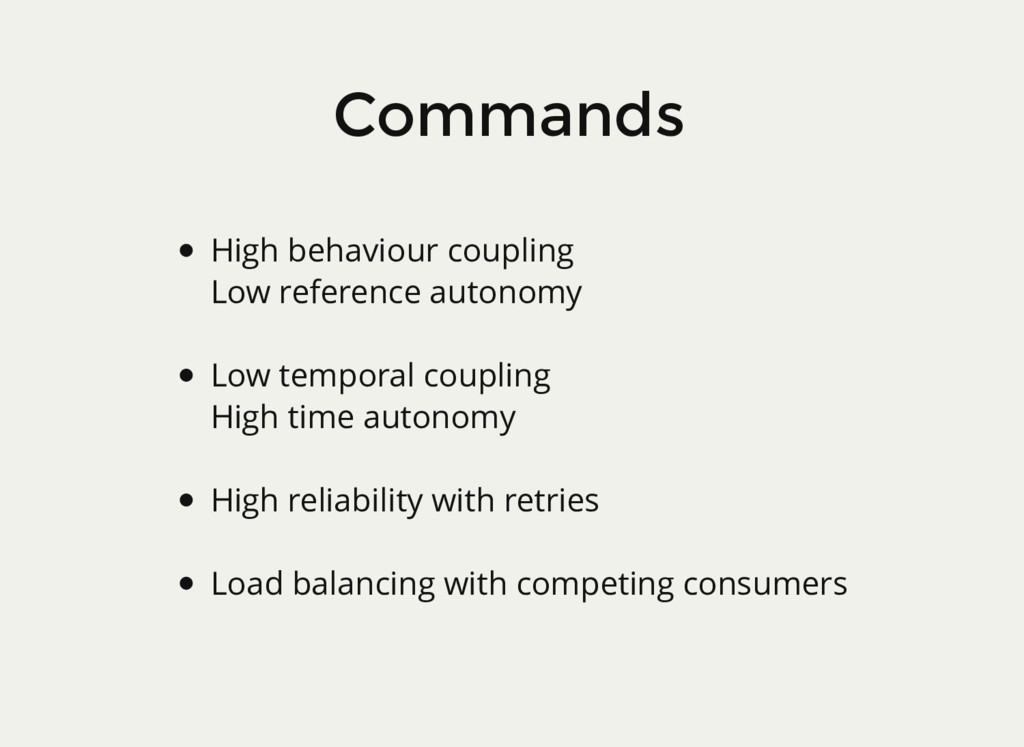
  15. Commands High behaviour coupling Low reference autonomy Low temporal coupling

    High time autonomy High reliability with retries Load balancing with competing consumers
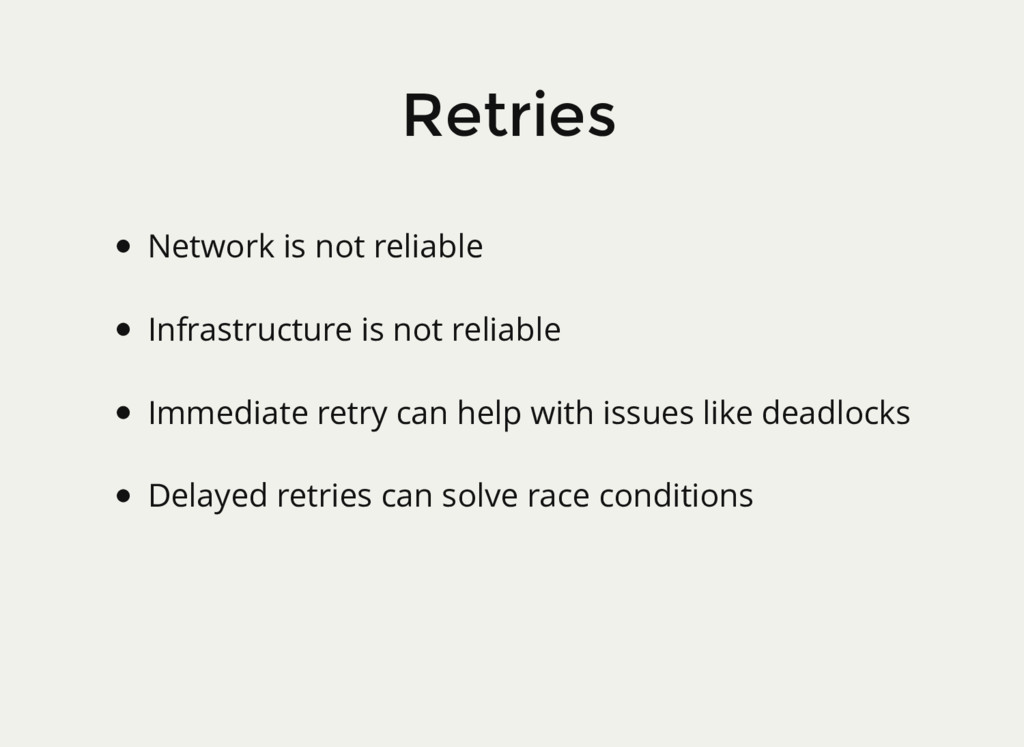
  16. Retries Network is not reliable Infrastructure is not reliable Immediate

    retry can help with issues like deadlocks Delayed retries can solve race conditions
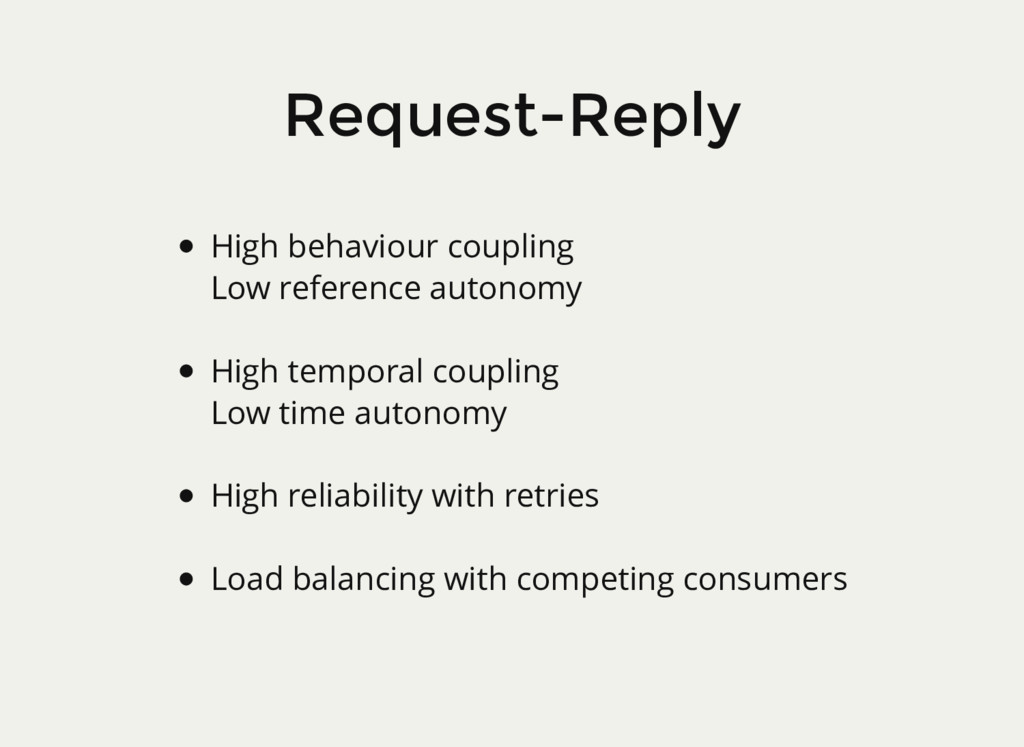
  17. Request-Reply High behaviour coupling Low reference autonomy High temporal coupling

    Low time autonomy High reliability with retries Load balancing with competing consumers
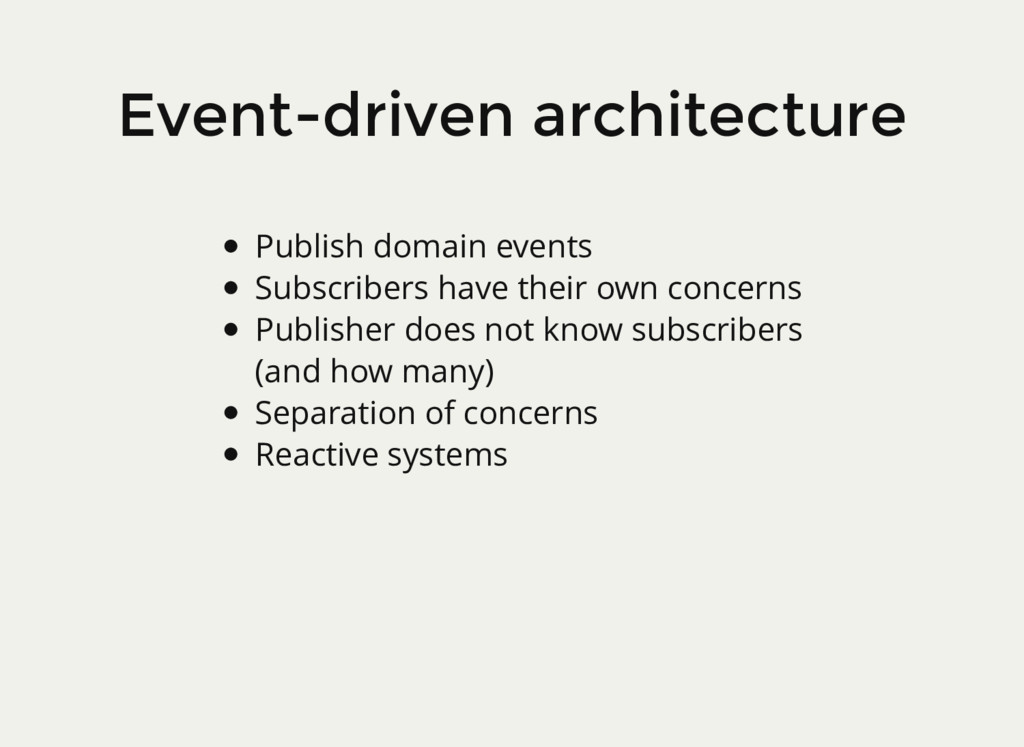
  18. Event-driven architecture Publish domain events Subscribers have their own concerns

    Publisher does not know subscribers (and how many) Separation of concerns Reactive systems
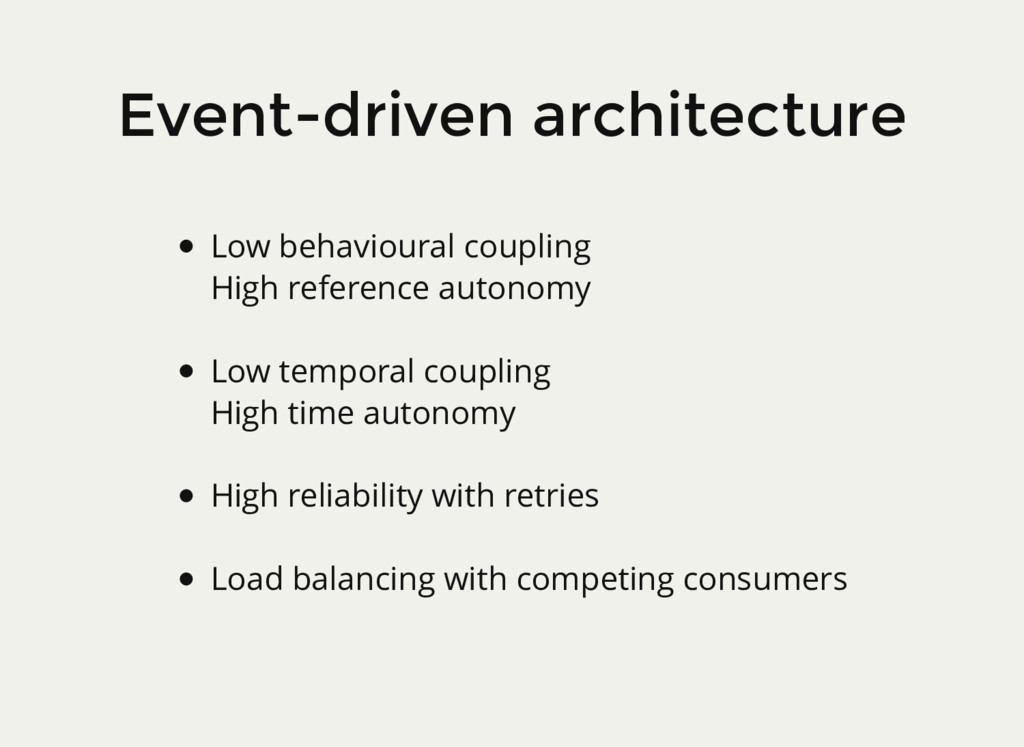
  19. Event-driven architecture Low behavioural coupling High reference autonomy Low temporal

    coupling High time autonomy High reliability with retries Load balancing with competing consumers