part of the output is returned to the input side and utilized as part of the system input, then it is known as feedback. Feedback plays an important role in order to improve the performance of the control systems. In this chapter, let us discuss the types of feedback & effects of feedback.
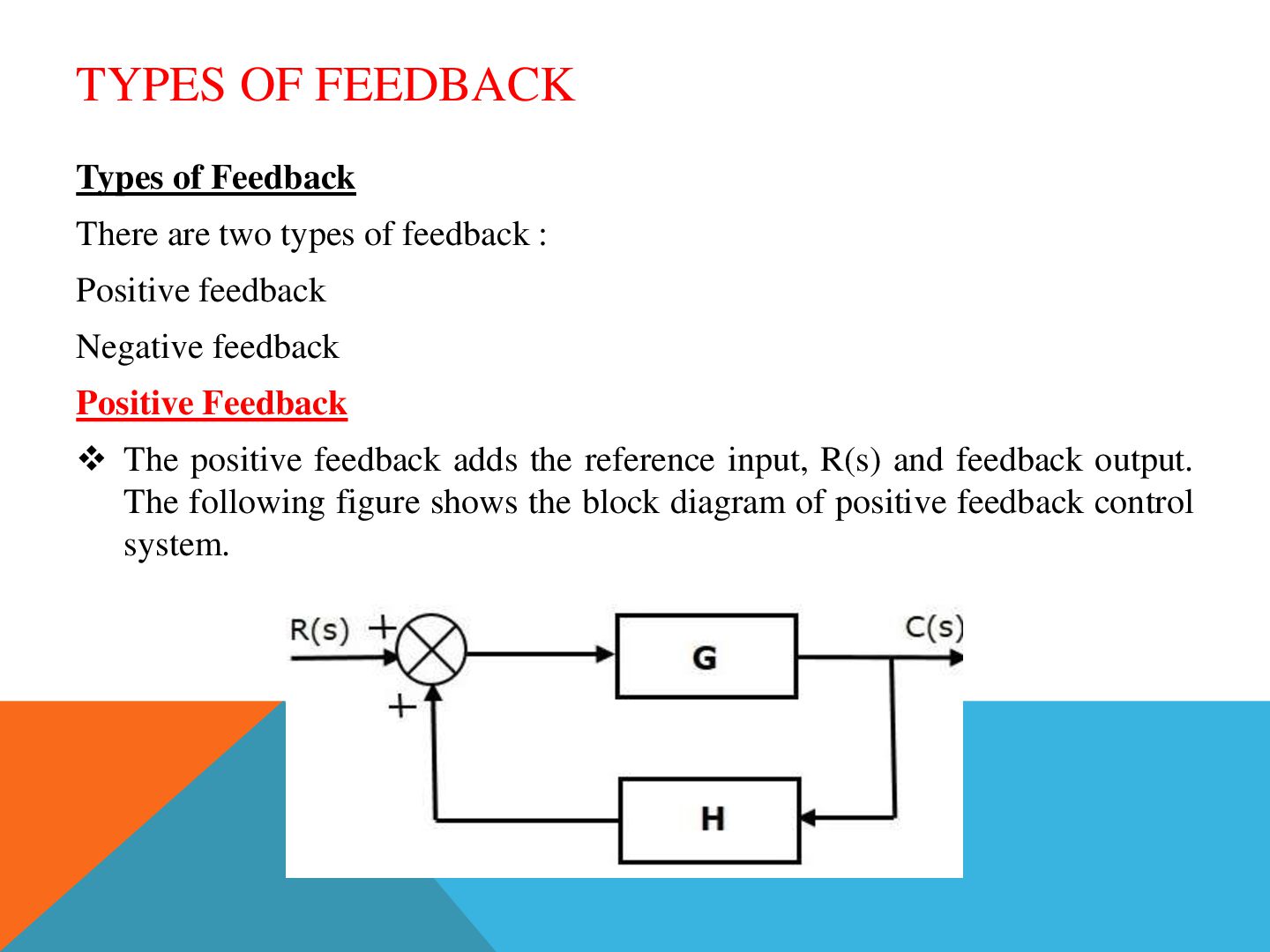
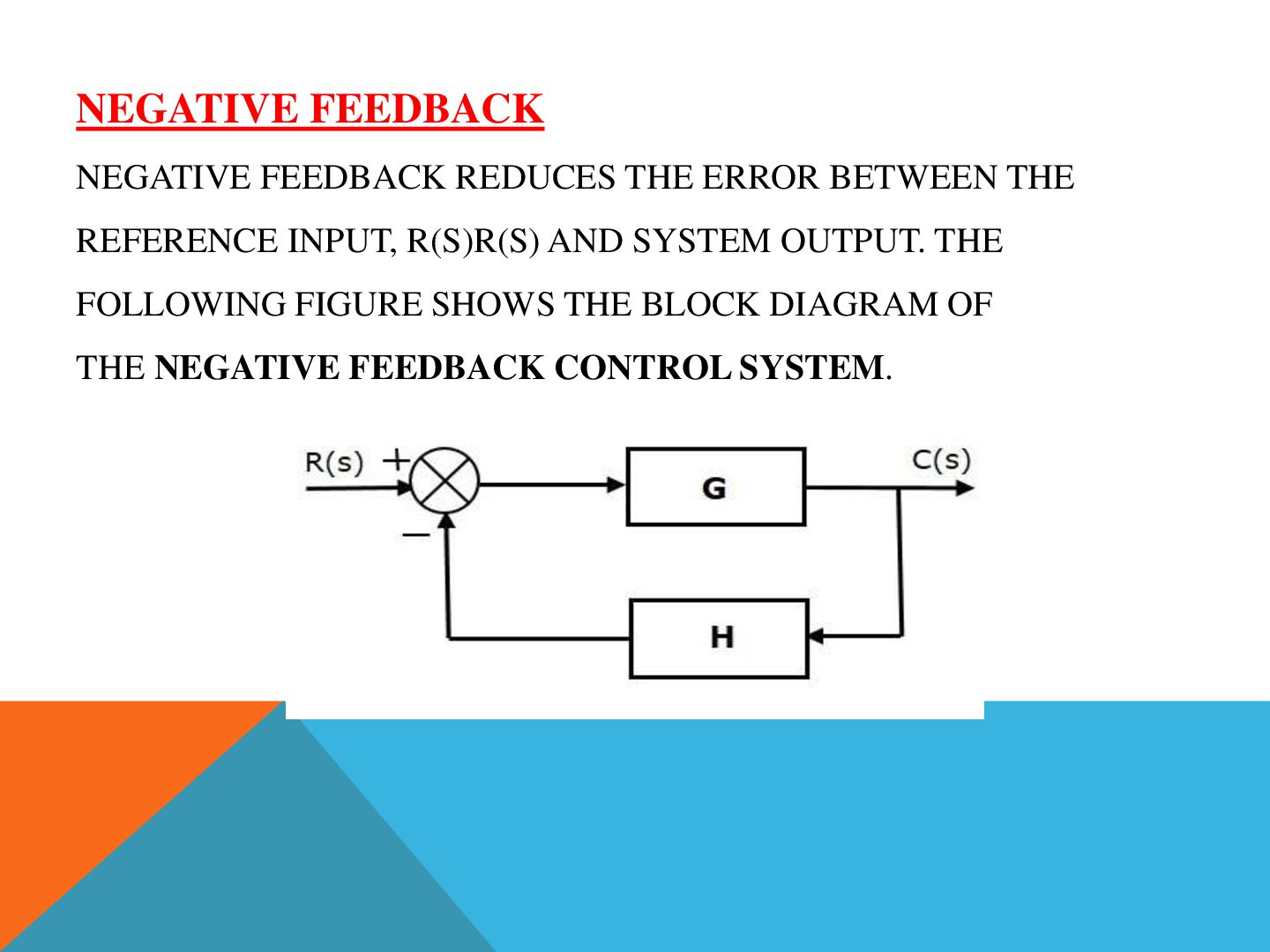
of feedback : Positive feedback Negative feedback Positive Feedback The positive feedback adds the reference input, R(s) and feedback output. The following figure shows the block diagram of positive feedback control system.
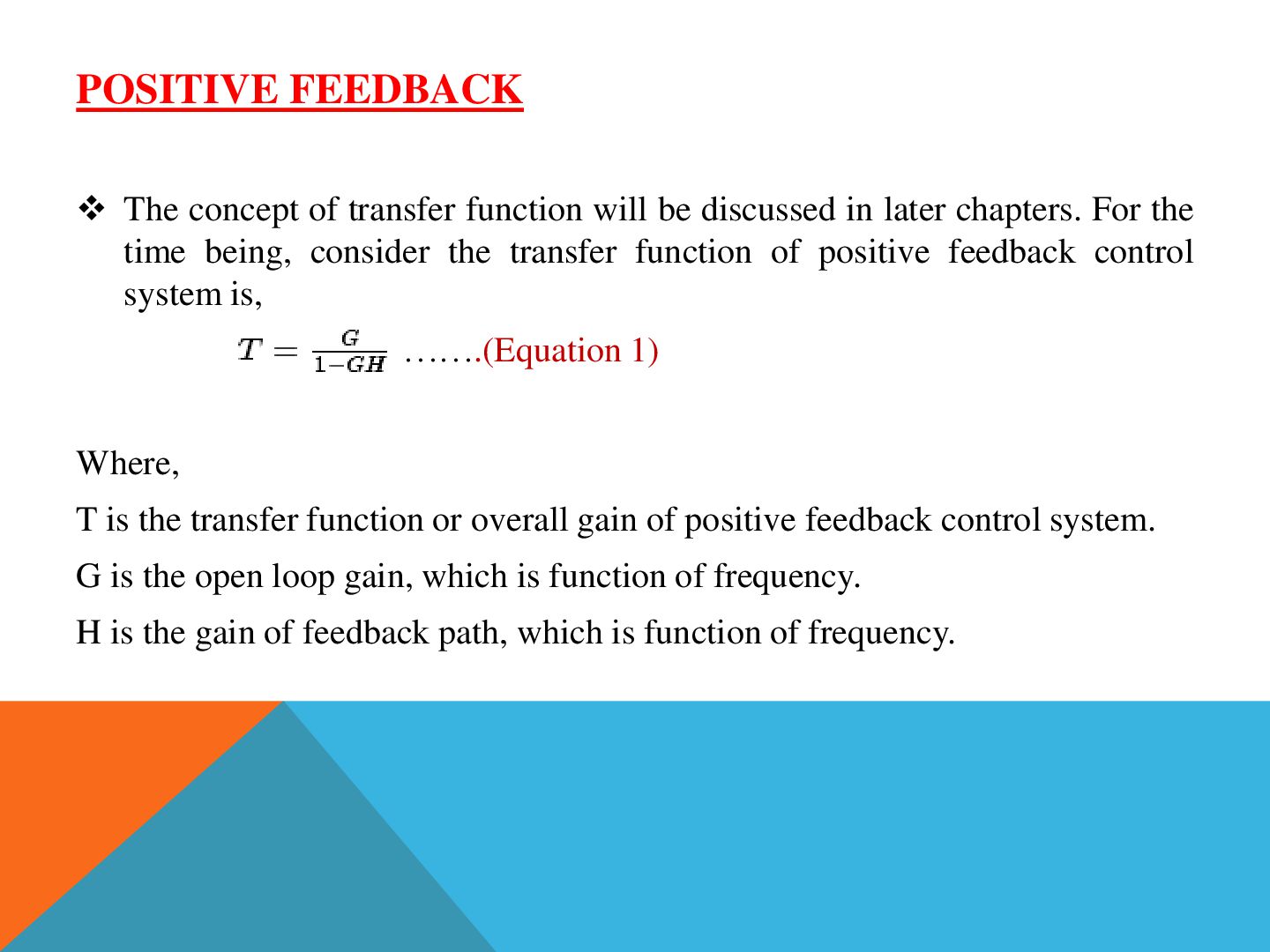
discussed in later chapters. For the time being, consider the transfer function of positive feedback control system is, …………….(Equation 1) Where, T is the transfer function or overall gain of positive feedback control system. G is the open loop gain, which is function of frequency. H is the gain of feedback path, which is function of frequency.
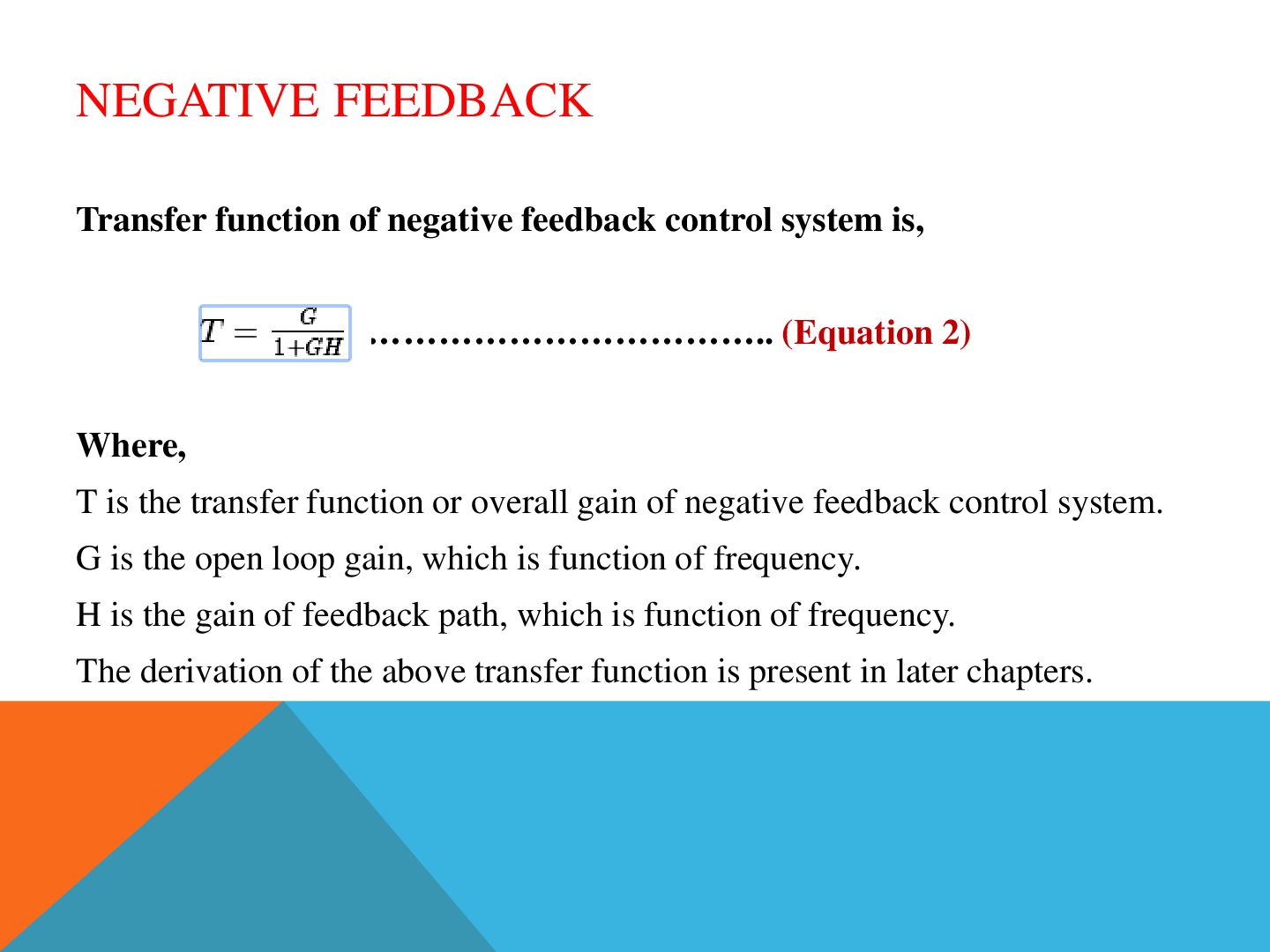
…………………………….. (Equation 2) Where, T is the transfer function or overall gain of negative feedback control system. G is the open loop gain, which is function of frequency. H is the gain of feedback path, which is function of frequency. The derivation of the above transfer function is present in later chapters.
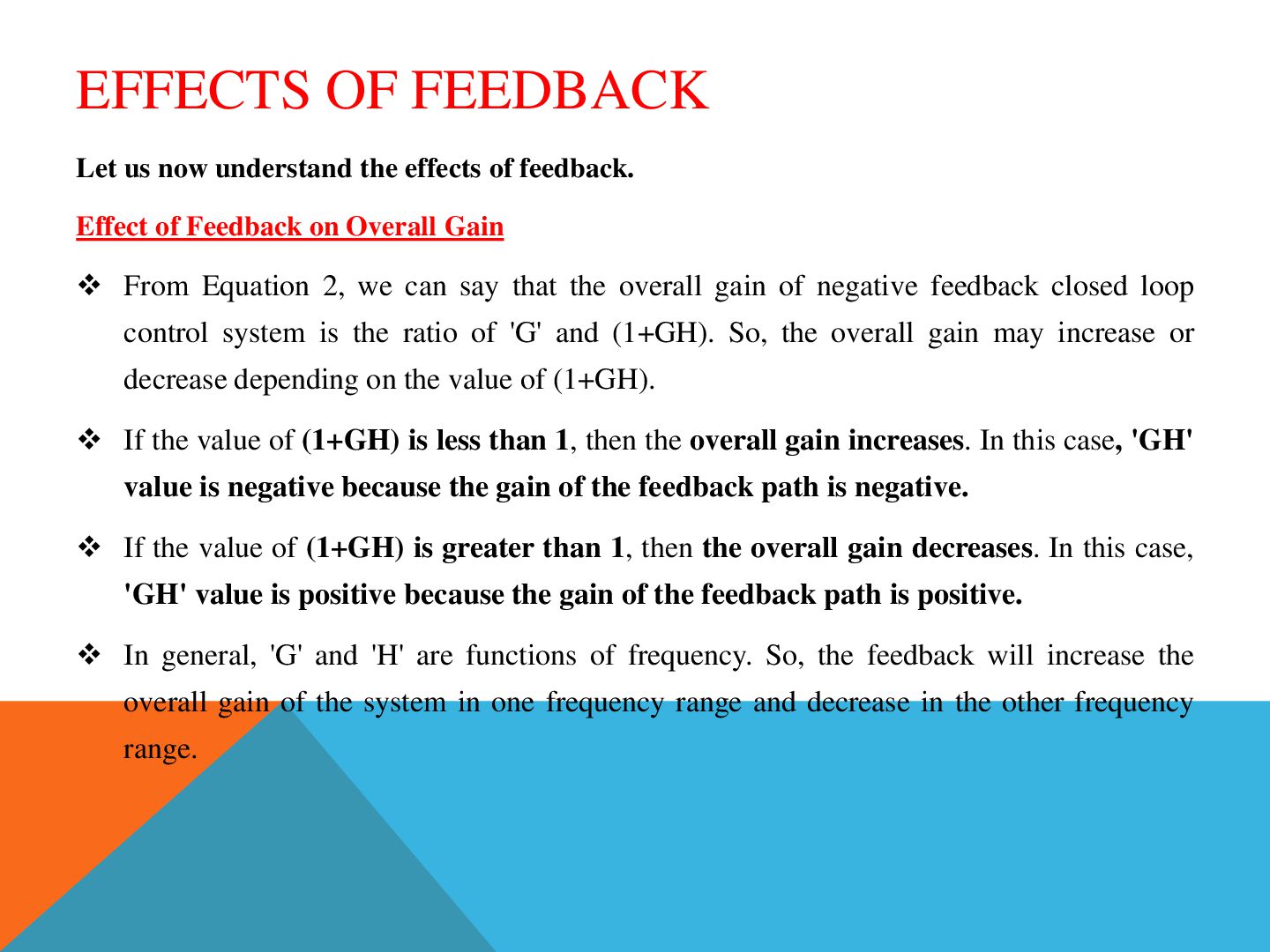
feedback. Effect of Feedback on Overall Gain From Equation 2, we can say that the overall gain of negative feedback closed loop control system is the ratio of 'G' and (1+GH). So, the overall gain may increase or decrease depending on the value of (1+GH). If the value of (1+GH) is less than 1, then the overall gain increases. In this case, 'GH' value is negative because the gain of the feedback path is negative. If the value of (1+GH) is greater than 1, then the overall gain decreases. In this case, 'GH' value is positive because the gain of the feedback path is positive. In general, 'G' and 'H' are functions of frequency. So, the feedback will increase the overall gain of the system in one frequency range and decrease in the other frequency range.
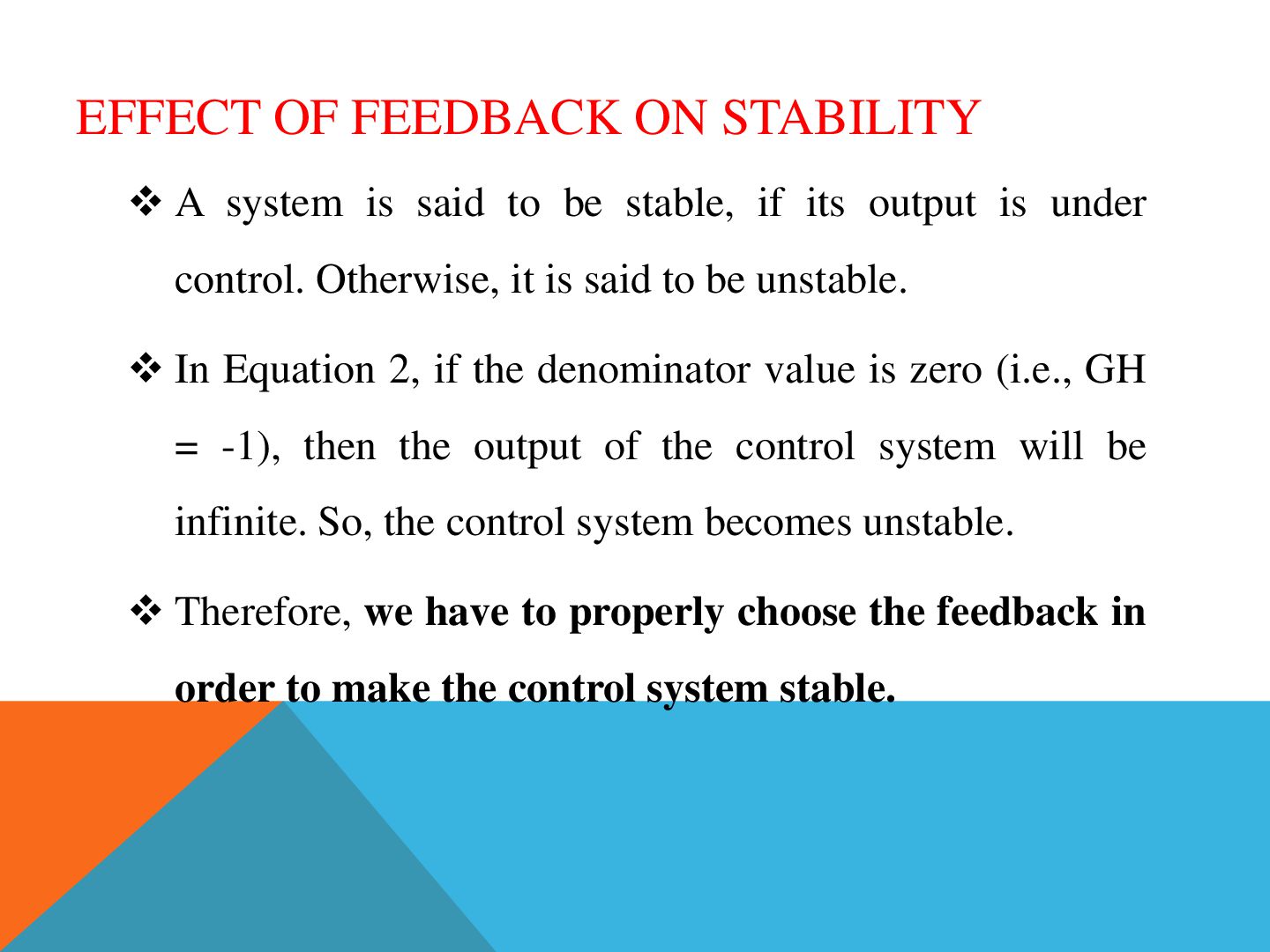
to be stable, if its output is under control. Otherwise, it is said to be unstable. In Equation 2, if the denominator value is zero (i.e., GH = -1), then the output of the control system will be infinite. So, the control system becomes unstable. Therefore, we have to properly choose the feedback in order to make the control system stable.
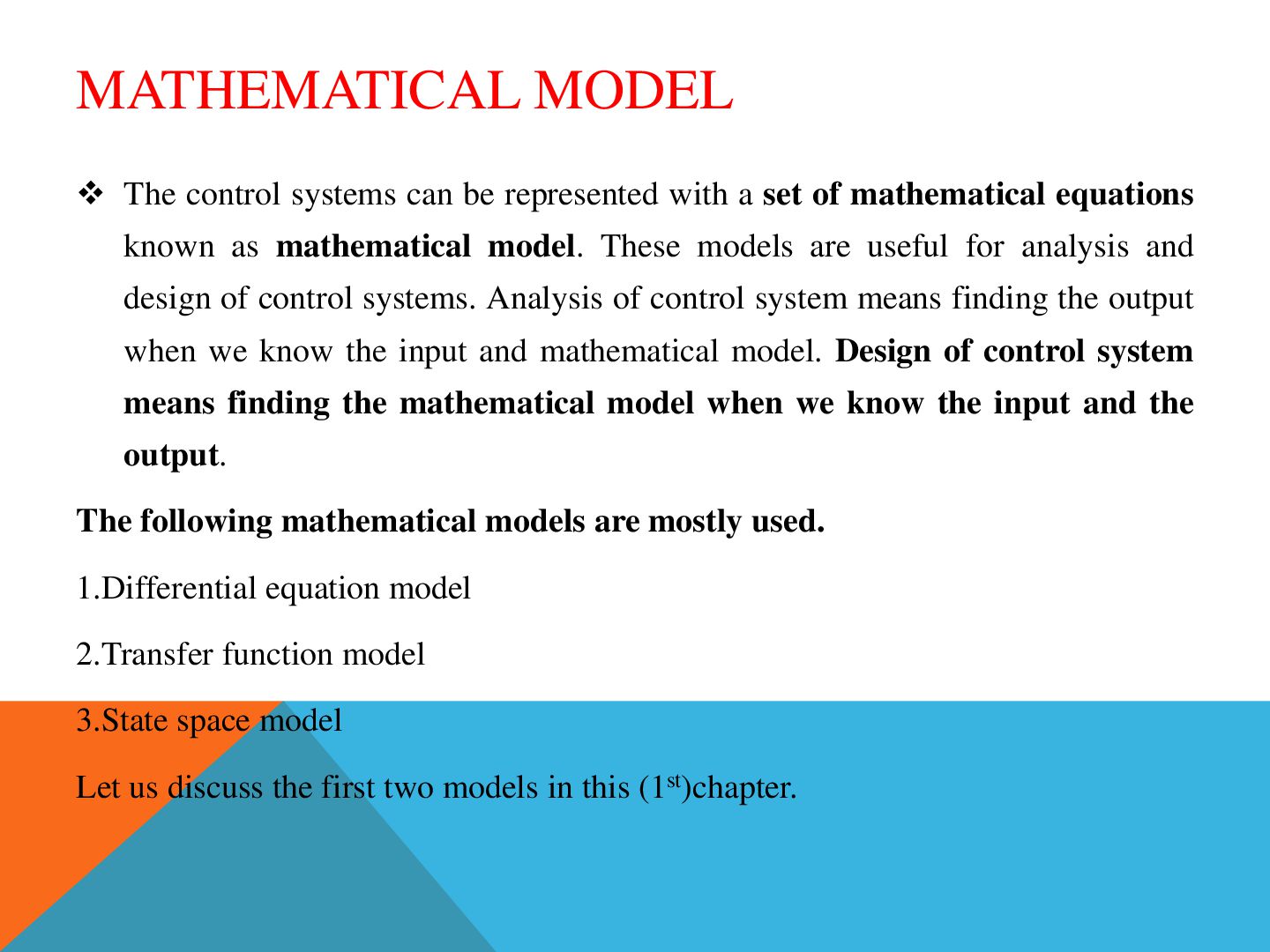
a set of mathematical equations known as mathematical model. These models are useful for analysis and design of control systems. Analysis of control system means finding the output when we know the input and mathematical model. Design of control system means finding the mathematical model when we know the input and the output. The following mathematical models are mostly used. 1.Differential equation model 2.Transfer function model 3.State space model Let us discuss the first two models in this (1st)chapter.
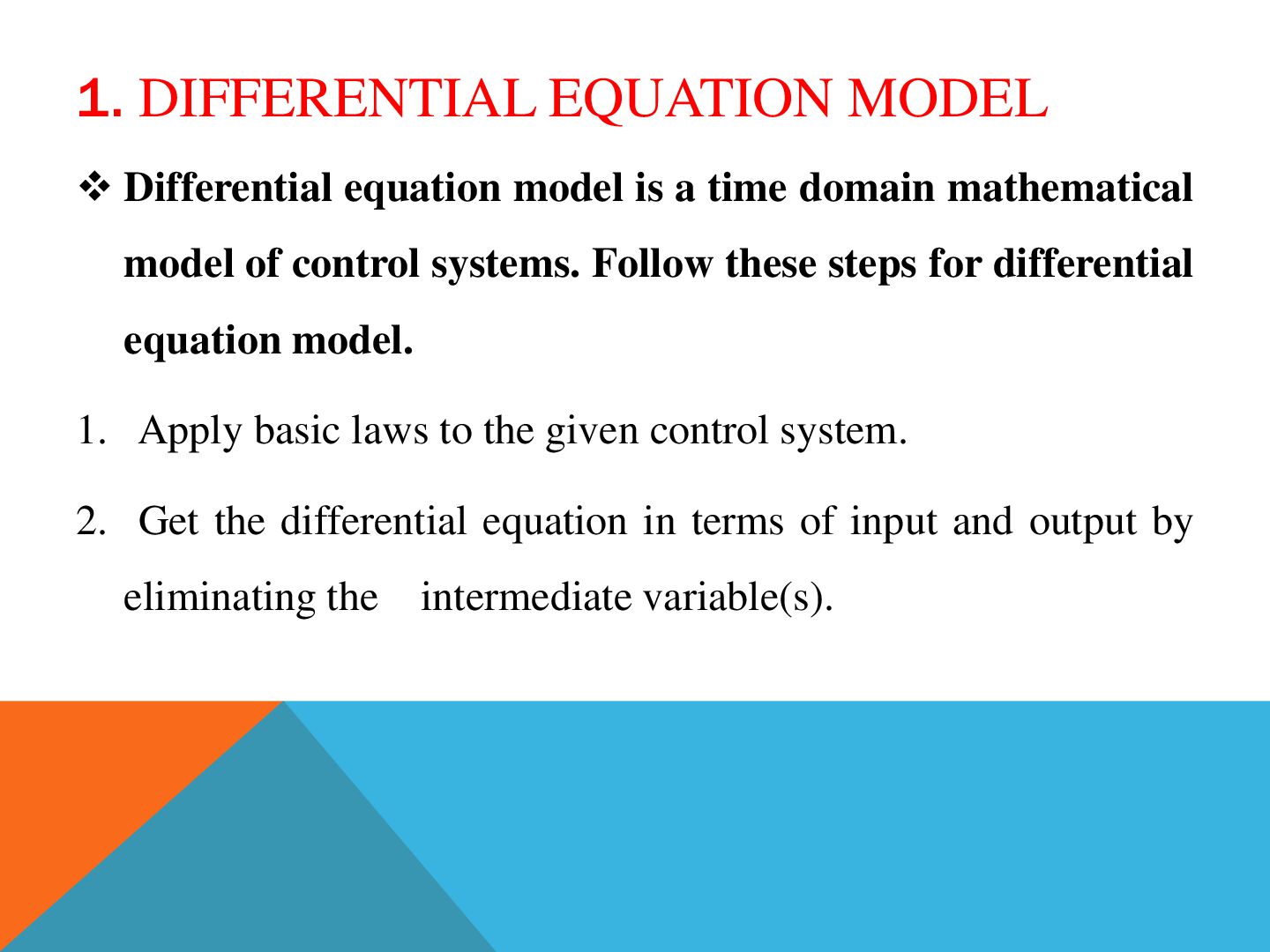
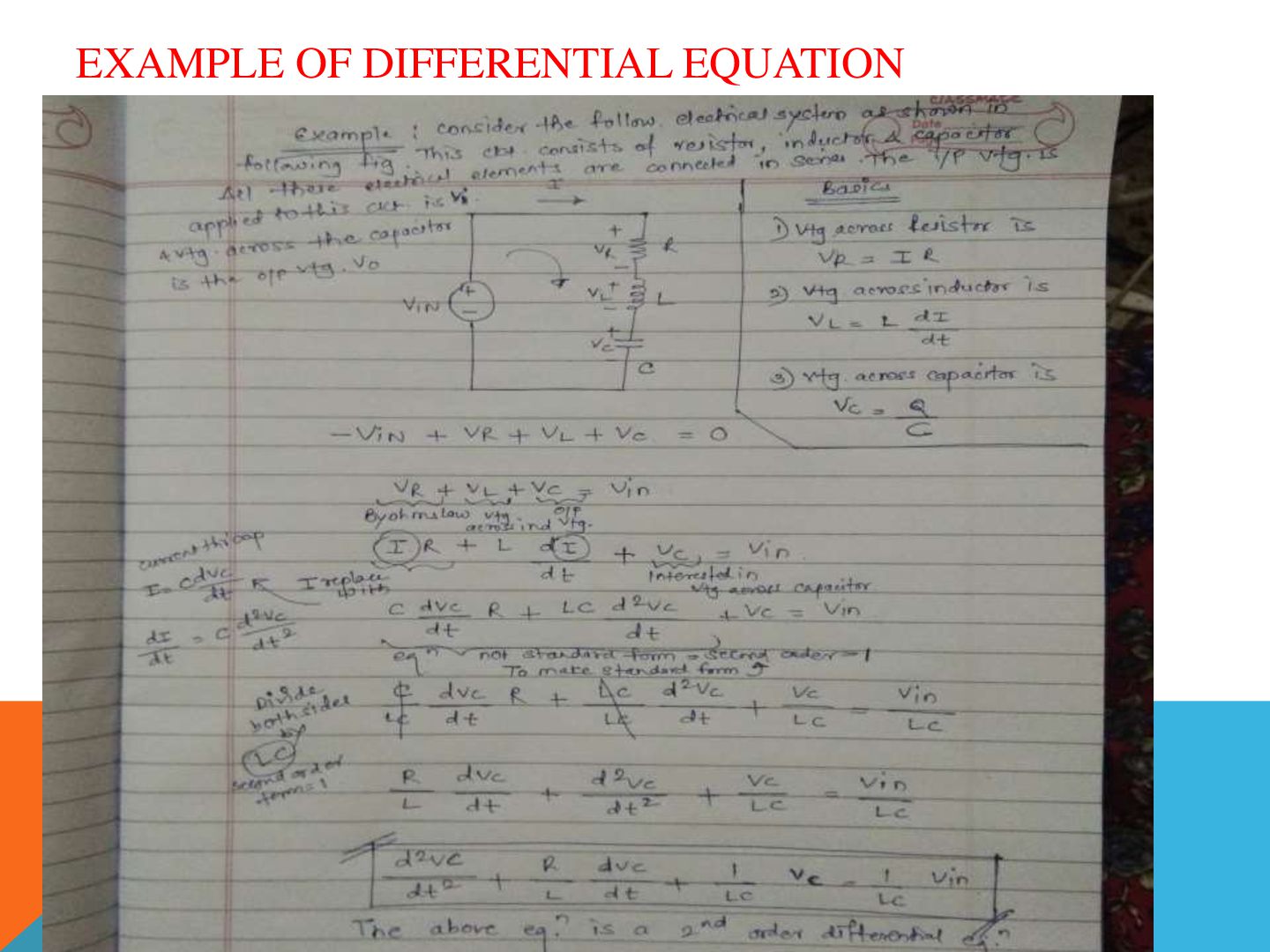
time domain mathematical model of control systems. Follow these steps for differential equation model. 1. Apply basic laws to the given control system. 2. Get the differential equation in terms of input and output by eliminating the intermediate variable(s).
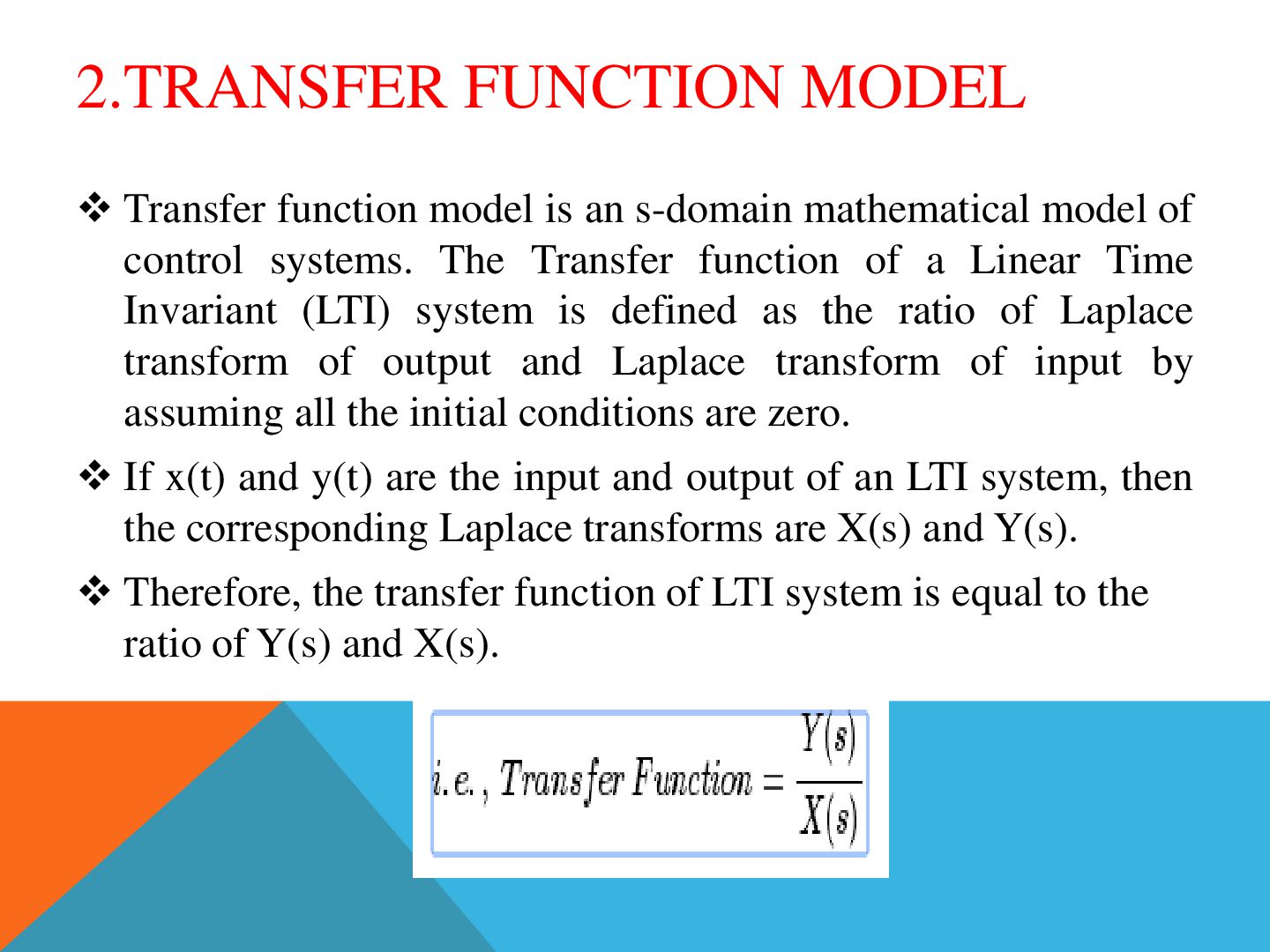
mathematical model of control systems. The Transfer function of a Linear Time Invariant (LTI) system is defined as the ratio of Laplace transform of output and Laplace transform of input by assuming all the initial conditions are zero. If x(t) and y(t) are the input and output of an LTI system, then the corresponding Laplace transforms are X(s) and Y(s). Therefore, the transfer function of LTI system is equal to the ratio of Y(s) and X(s).
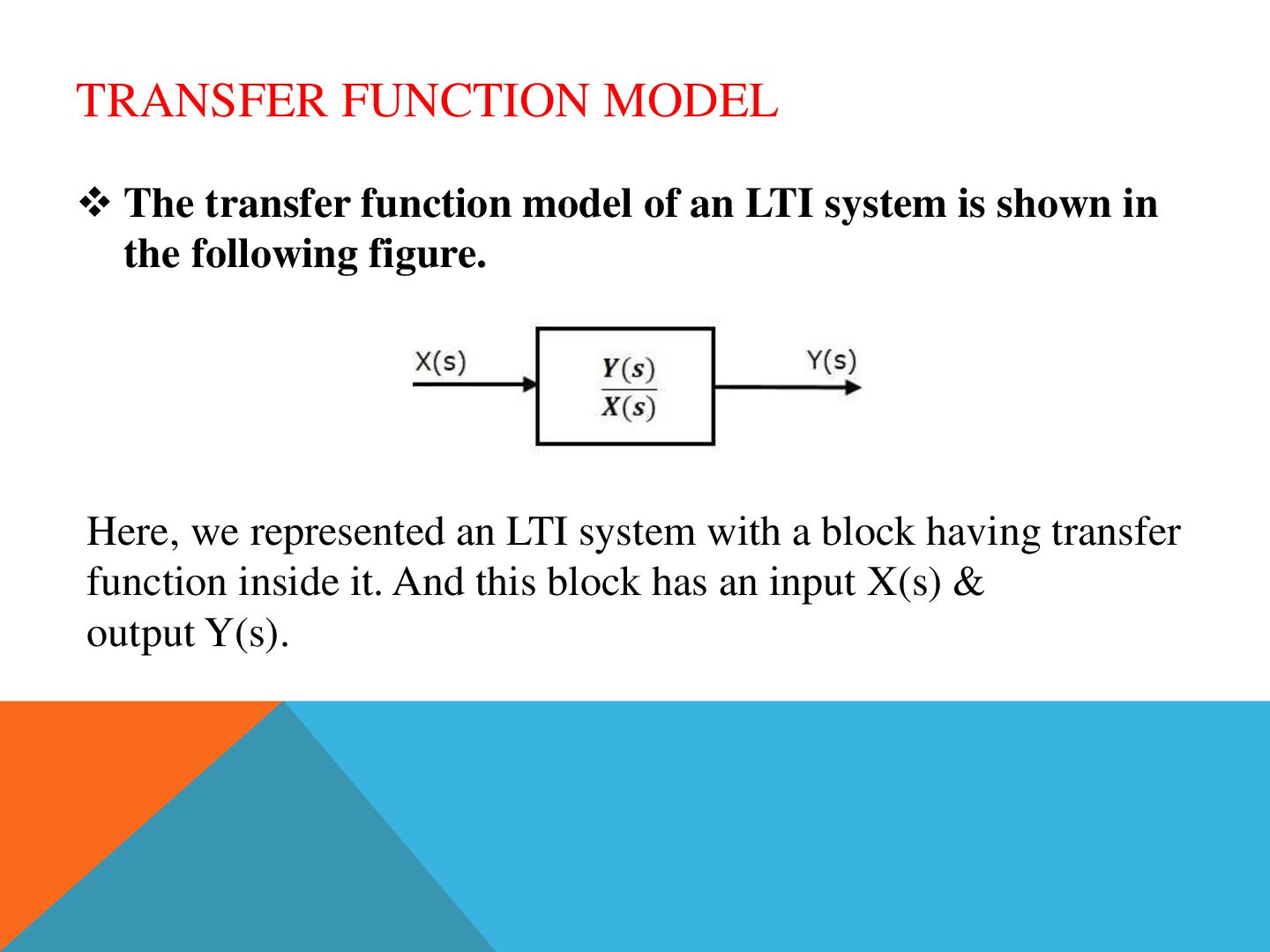
LTI system is shown in the following figure. Here, we represented an LTI system with a block having transfer function inside it. And this block has an input X(s) & output Y(s).
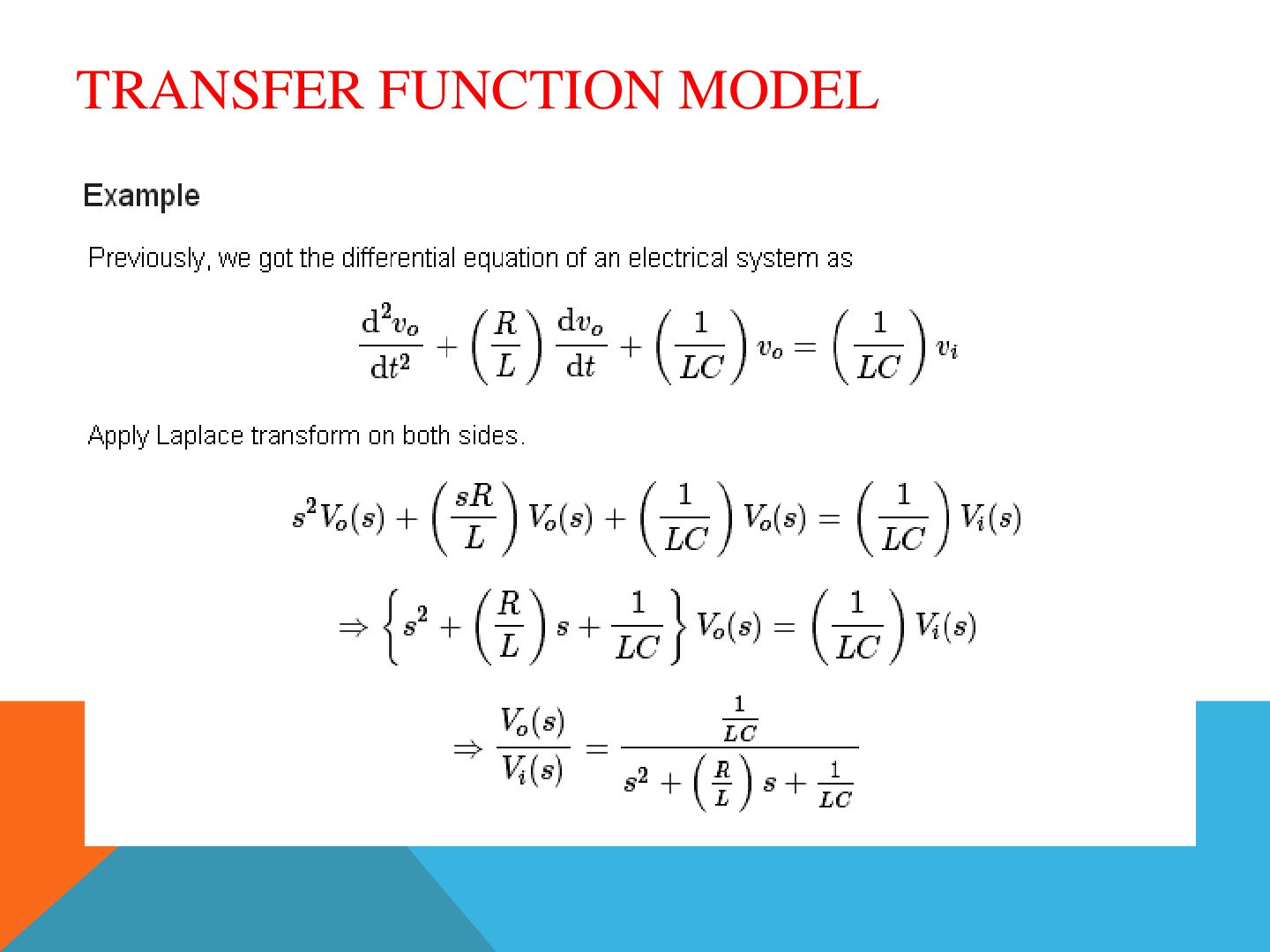
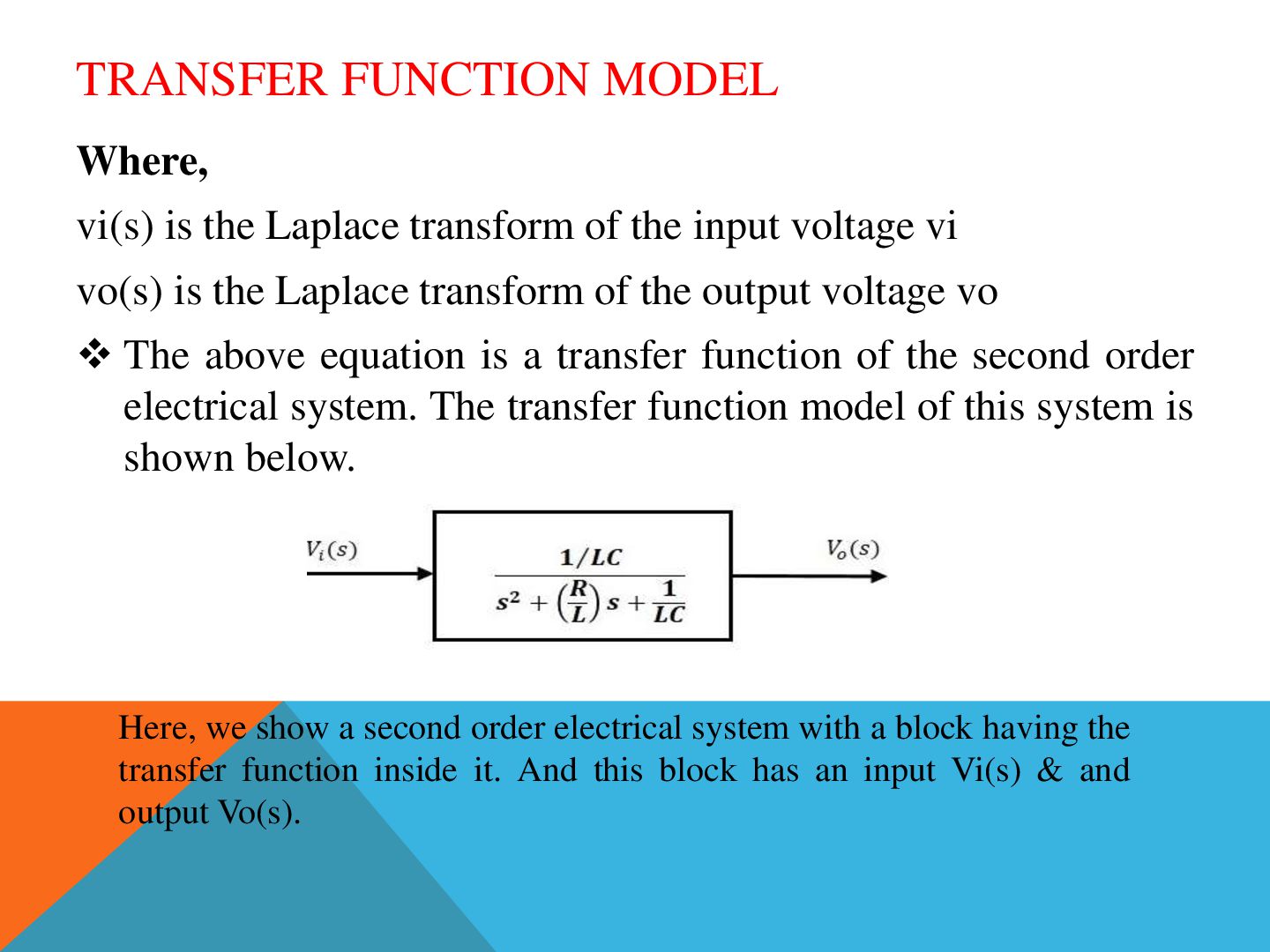
the input voltage vi vo(s) is the Laplace transform of the output voltage vo The above equation is a transfer function of the second order electrical system. The transfer function model of this system is shown below. Here, we show a second order electrical system with a block having the transfer function inside it. And this block has an input Vi(s) & and output Vo(s).
us discuss the differential equation modeling of mechanical systems. There are two types of mechanical systems based on the type of motion. 1.Translational mechanical systems 2.Rotational mechanical systems 1.Translational mechanical systems move along a straight line. These systems mainly consist of three basic elements. Those are mass, spring and dashpot or damper. If a force is applied to a translational mechanical system, then it is opposed by opposing forces due to mass, elasticity and friction of the system. Since the applied force and the opposing forces are in opposite directions, the algebraic sum of the forces acting on the system is zero. Let us now see the force opposed by these three elements individually.
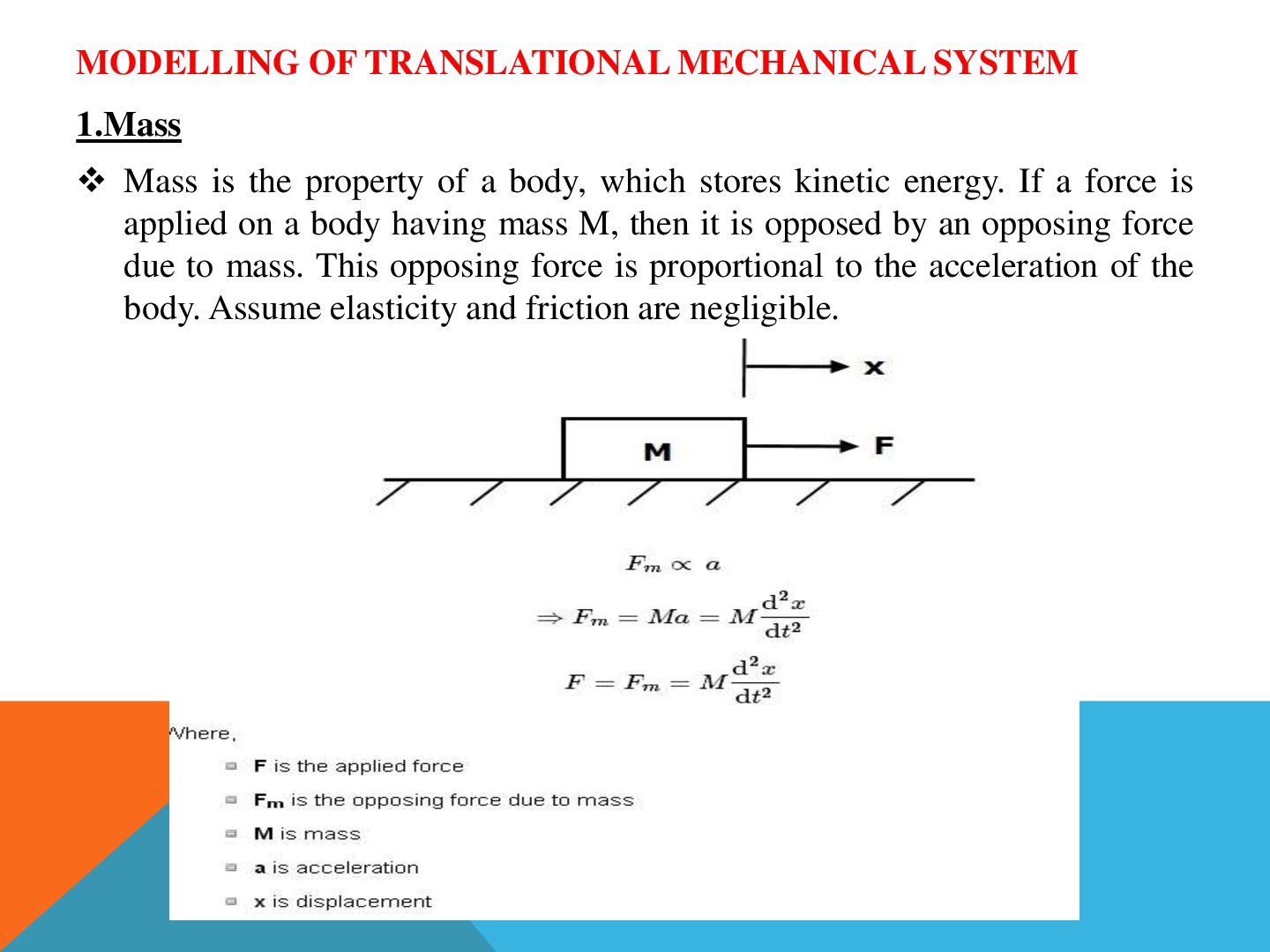
property of a body, which stores kinetic energy. If a force is applied on a body having mass M, then it is opposed by an opposing force due to mass. This opposing force is proportional to the acceleration of the body. Assume elasticity and friction are negligible.
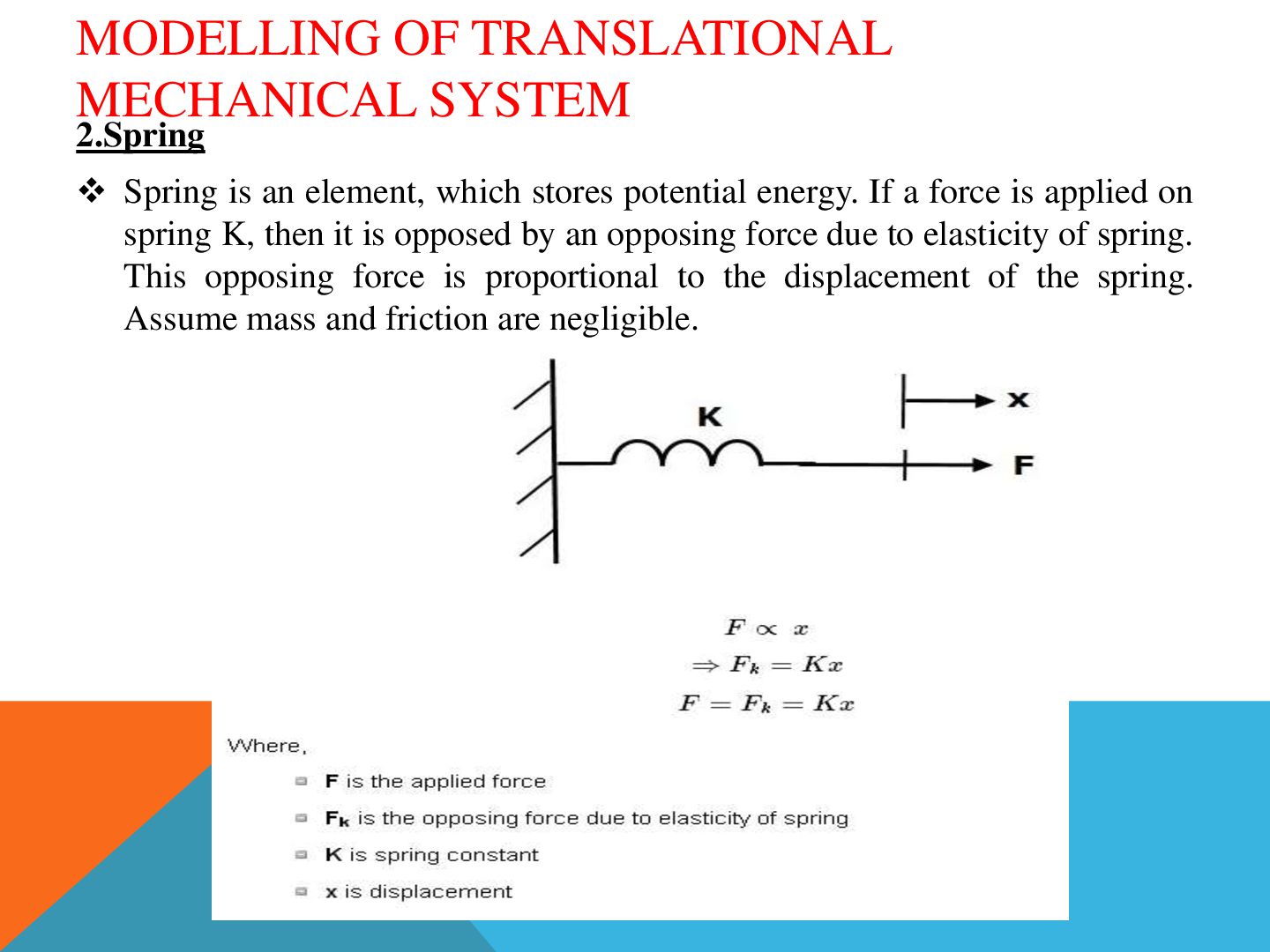
element, which stores potential energy. If a force is applied on spring K, then it is opposed by an opposing force due to elasticity of spring. This opposing force is proportional to the displacement of the spring. Assume mass and friction are negligible.
a fixed axis. These systems mainly consist of three basic elements. Those are moment of inertia, torsional spring and dashpot. If a torque is applied to a rotational mechanical system, then it is opposed by opposing torques due to moment of inertia, elasticity and friction of the system. Since the applied torque and the opposing torques are in opposite directions, the algebraic sum of torques acting on the system is zero. Let us now see the torque opposed by these three elements individually.
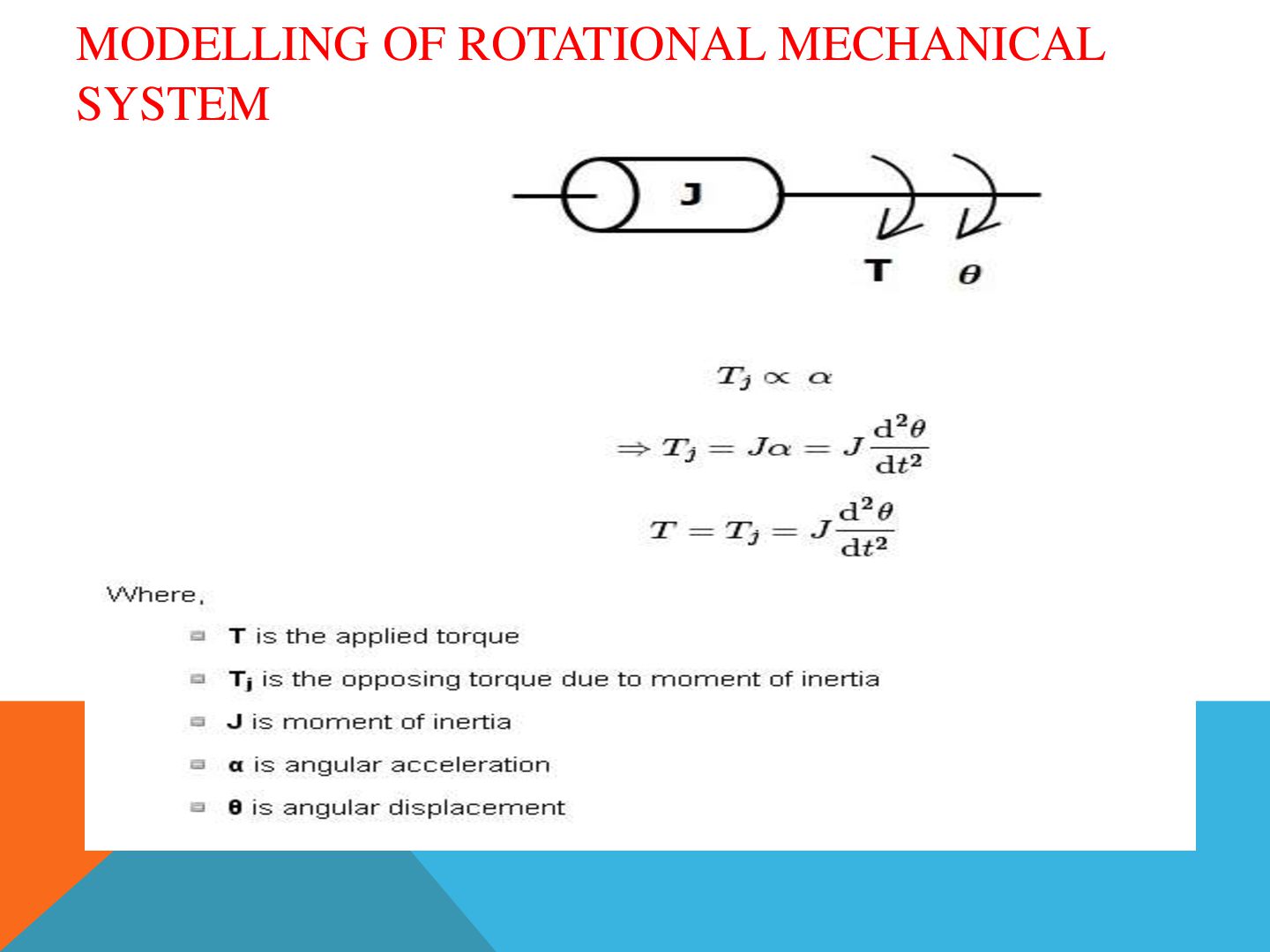
translational mechanical system, mass stores kinetic energy. Similarly, in rotational mechanical system, moment of inertia stores kinetic energy. If a torque is applied on a body having moment of inertia J, then it is opposed by an opposing torque due to the moment of inertia. This opposing torque is proportional to angular acceleration of the body. Assume elasticity and friction are negligible.


 amrut9576
 mkilby
 gr2m
 greggifford
 danielanewman
 palkan
 baasie
 asonas
 oripsolob
 davidcarrasco
 katarinadahlin
 3n