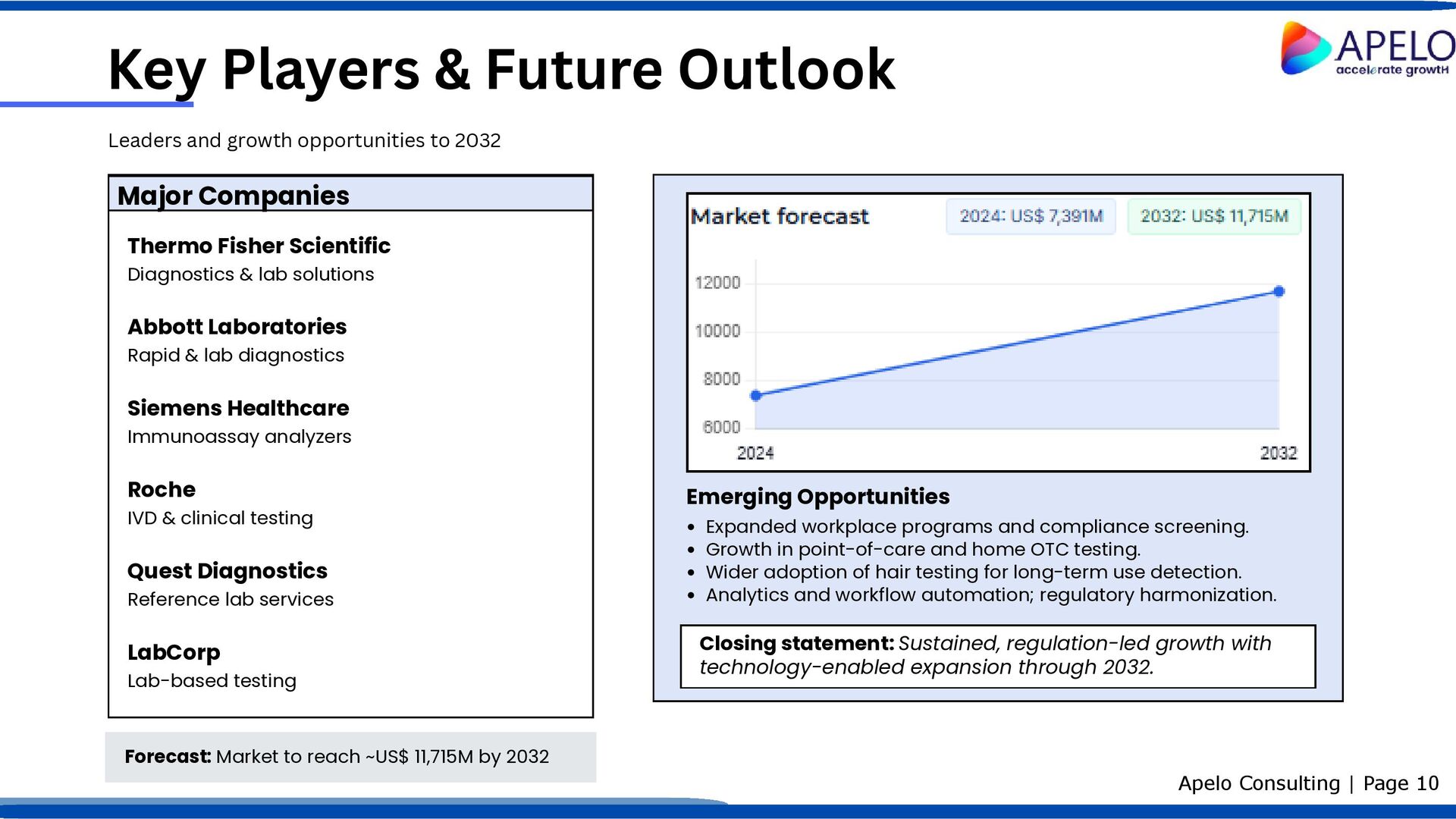
Apelo Consulting has released a report on “Drug of Abuse Testing Market (By Product Type, Sample Type, Drug Type, End Users, Region), Regulatory Status, Company Profiles and Market Dynamics – Global Forecast to 2032”
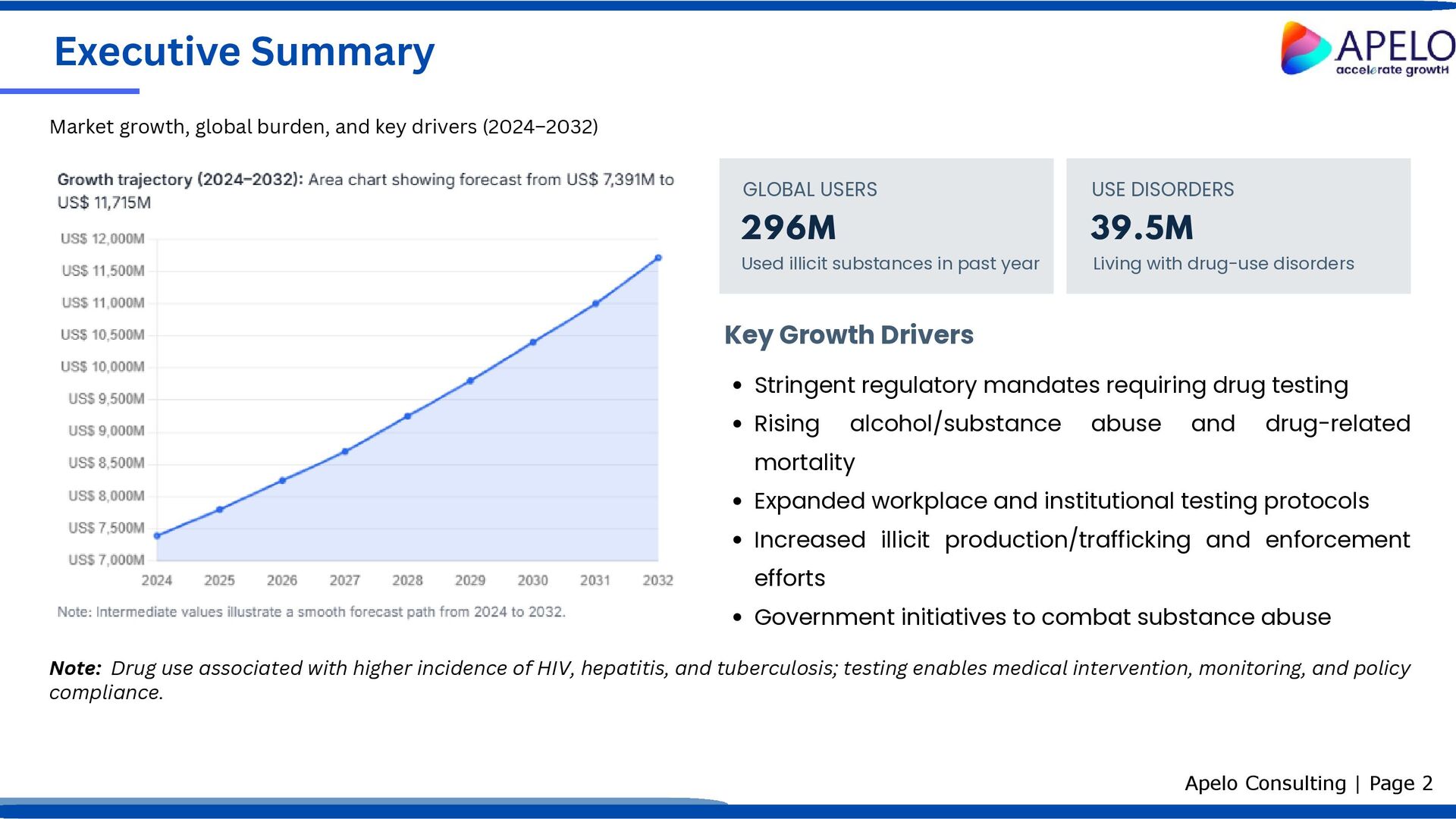
Stringent regulatory mandates requiring drug testing Rising alcohol/substance abuse and drug-related mortality Expanded workplace and institutional testing protocols Increased illicit production/trafficking and enforcement efforts Government initiatives to combat substance abuse Key Growth Drivers Note: Drug use associated with higher incidence of HIV, hepatitis, and tuberculosis; testing enables medical intervention, monitoring, and policy compliance. Market growth, global burden, and key drivers (2024–2032) Used illicit substances in past year 39.5M USE DISORDERS Living with drug-use disorders
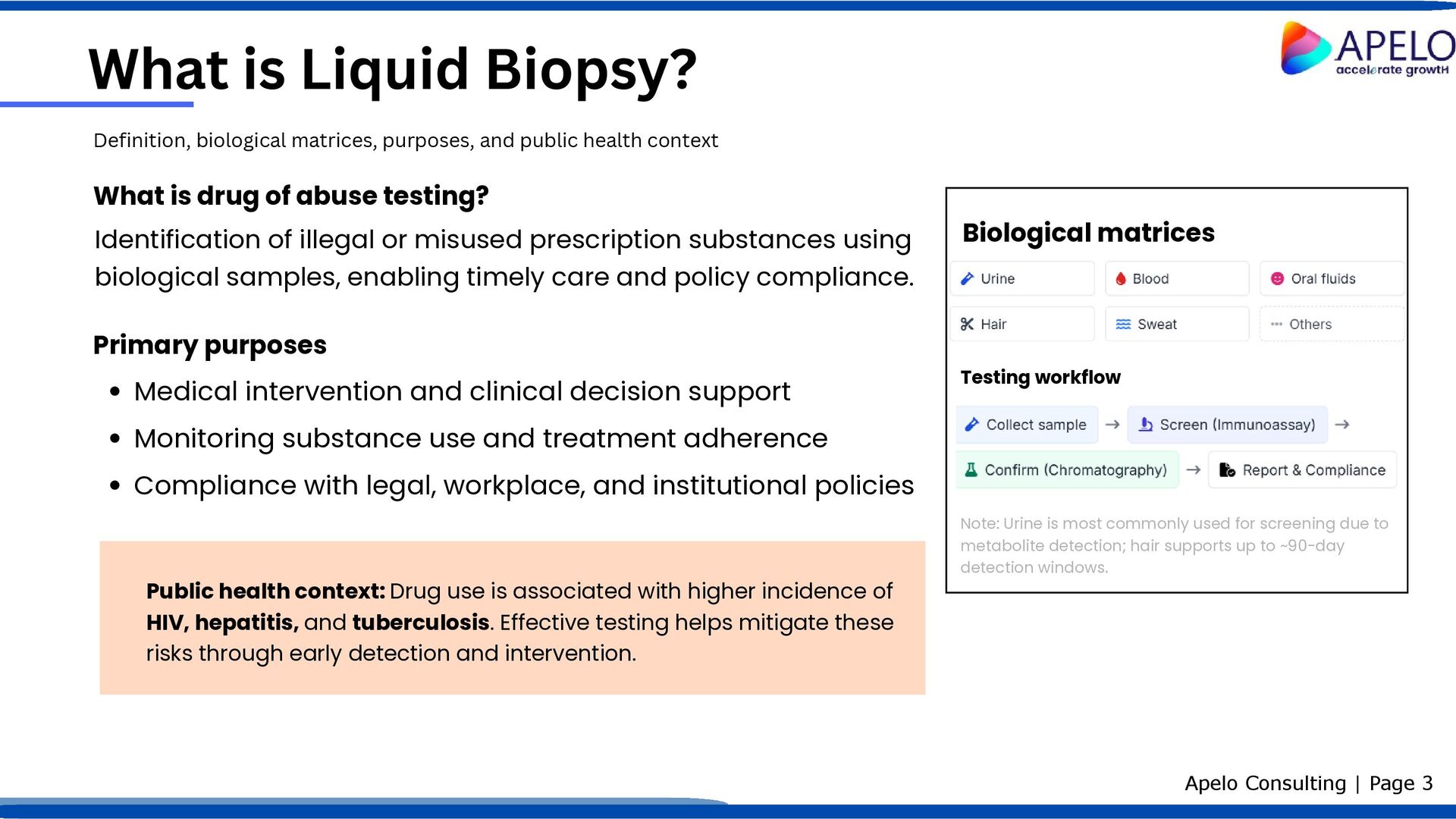
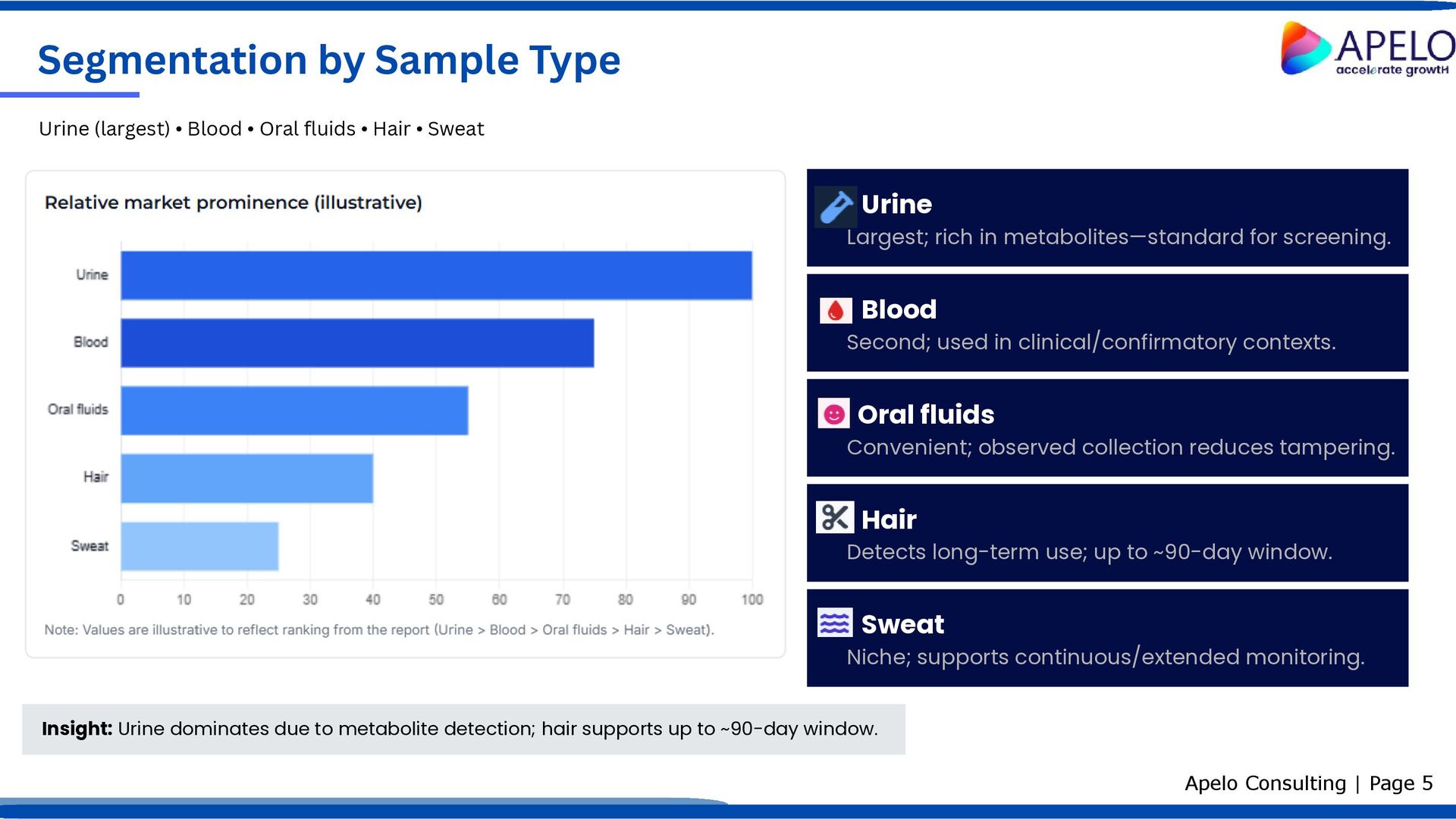
is drug of abuse testing? Primary purposes Biological matrices Medical intervention and clinical decision support Monitoring substance use and treatment adherence Compliance with legal, workplace, and institutional policies Public health context: Drug use is associated with higher incidence of HIV, hepatitis, and tuberculosis. Effective testing helps mitigate these risks through early detection and intervention. Testing workflow Note: Urine is most commonly used for screening due to metabolite detection; hair supports up to ~90-day detection windows. Identification of illegal or misused prescription substances using biological samples, enabling timely care and policy compliance. Definition, biological matrices, purposes, and public health context Apelo Consulting | Page 3
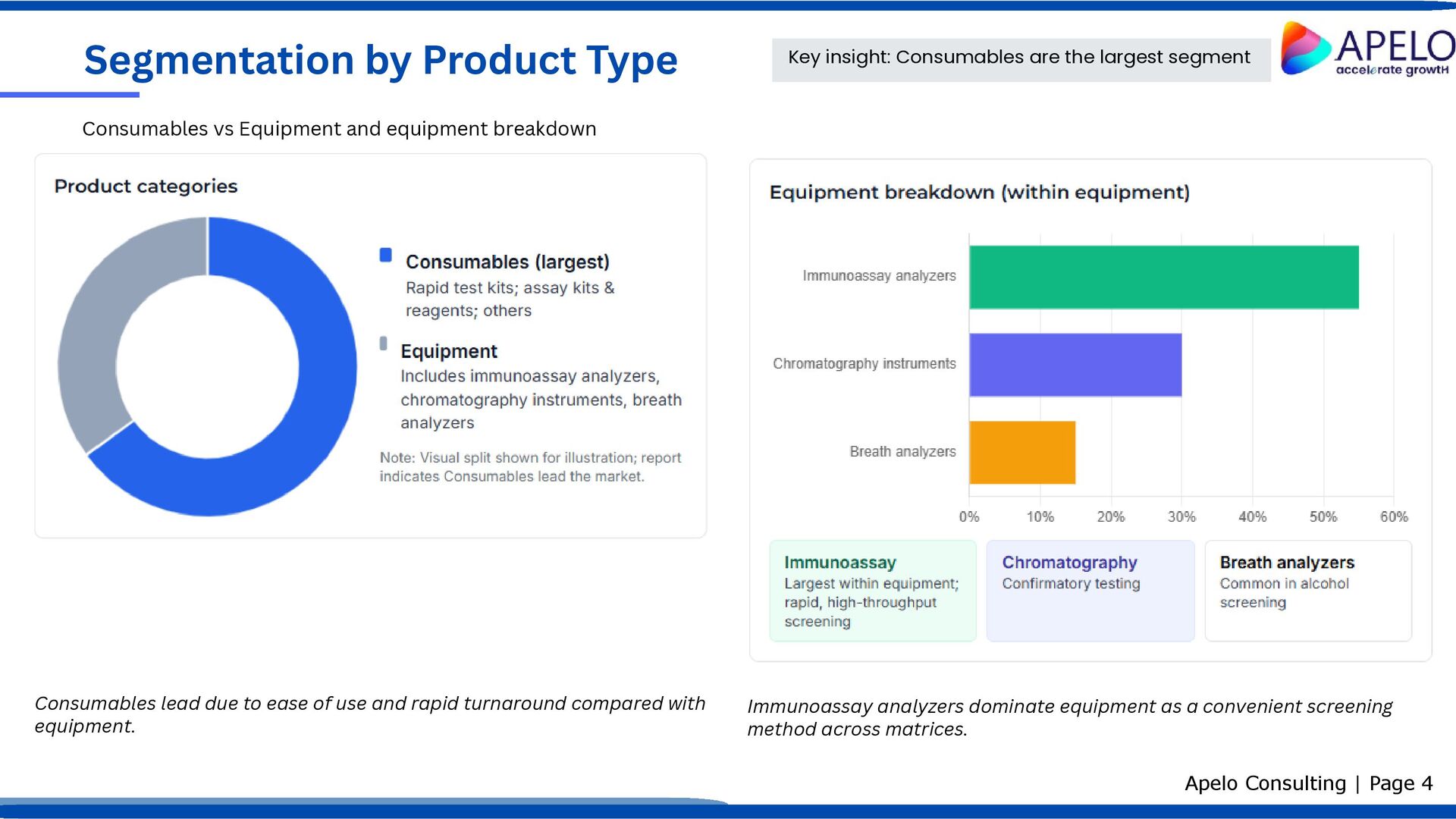
vs Equipment and equipment breakdown Consumables lead due to ease of use and rapid turnaround compared with equipment. Key insight: Consumables are the largest segment Immunoassay analyzers dominate equipment as a convenient screening method across matrices.
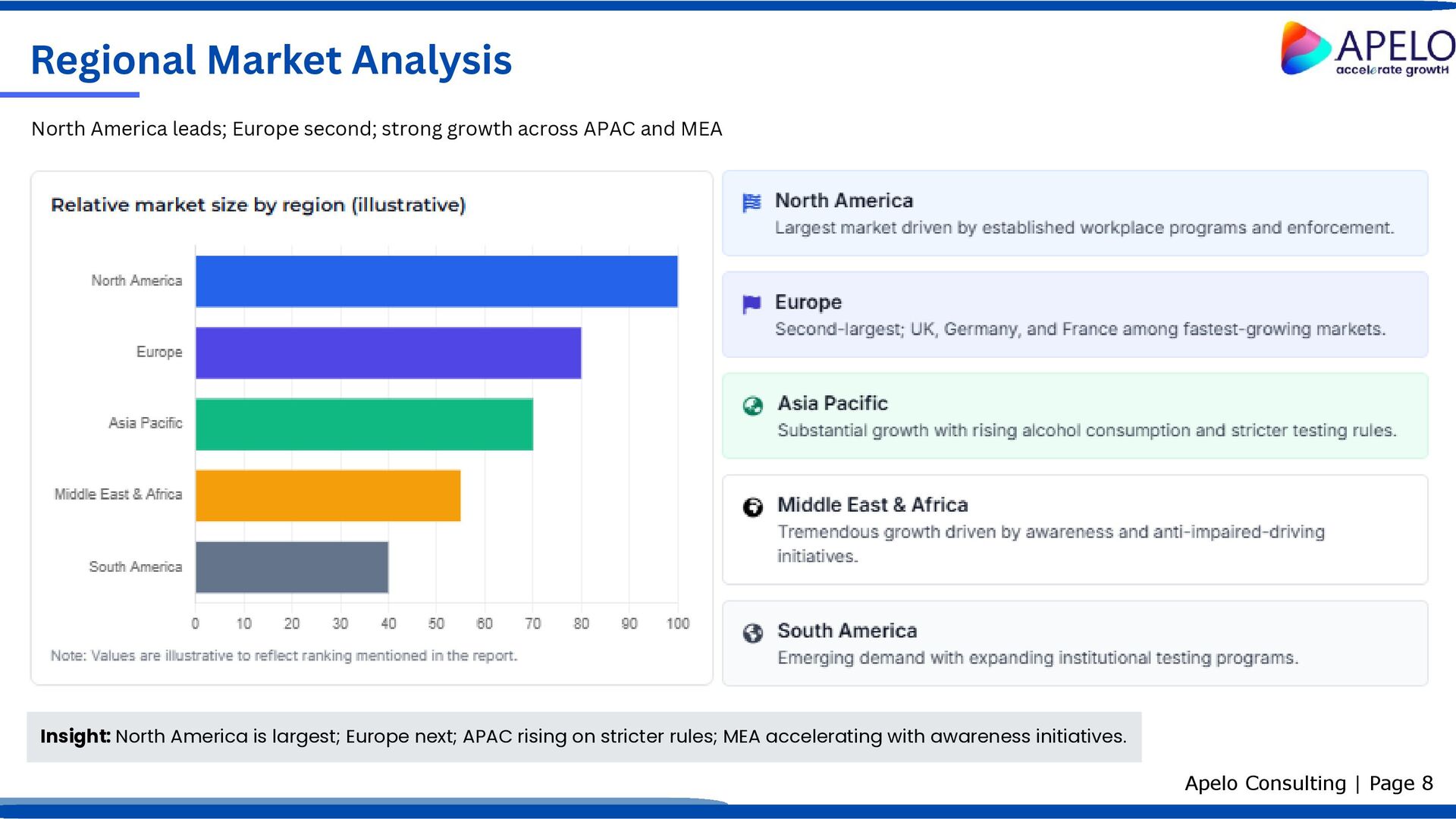
leads; Europe second; strong growth across APAC and MEA Insight: North America is largest; Europe next; APAC rising on stricter rules; MEA accelerating with awareness initiatives.
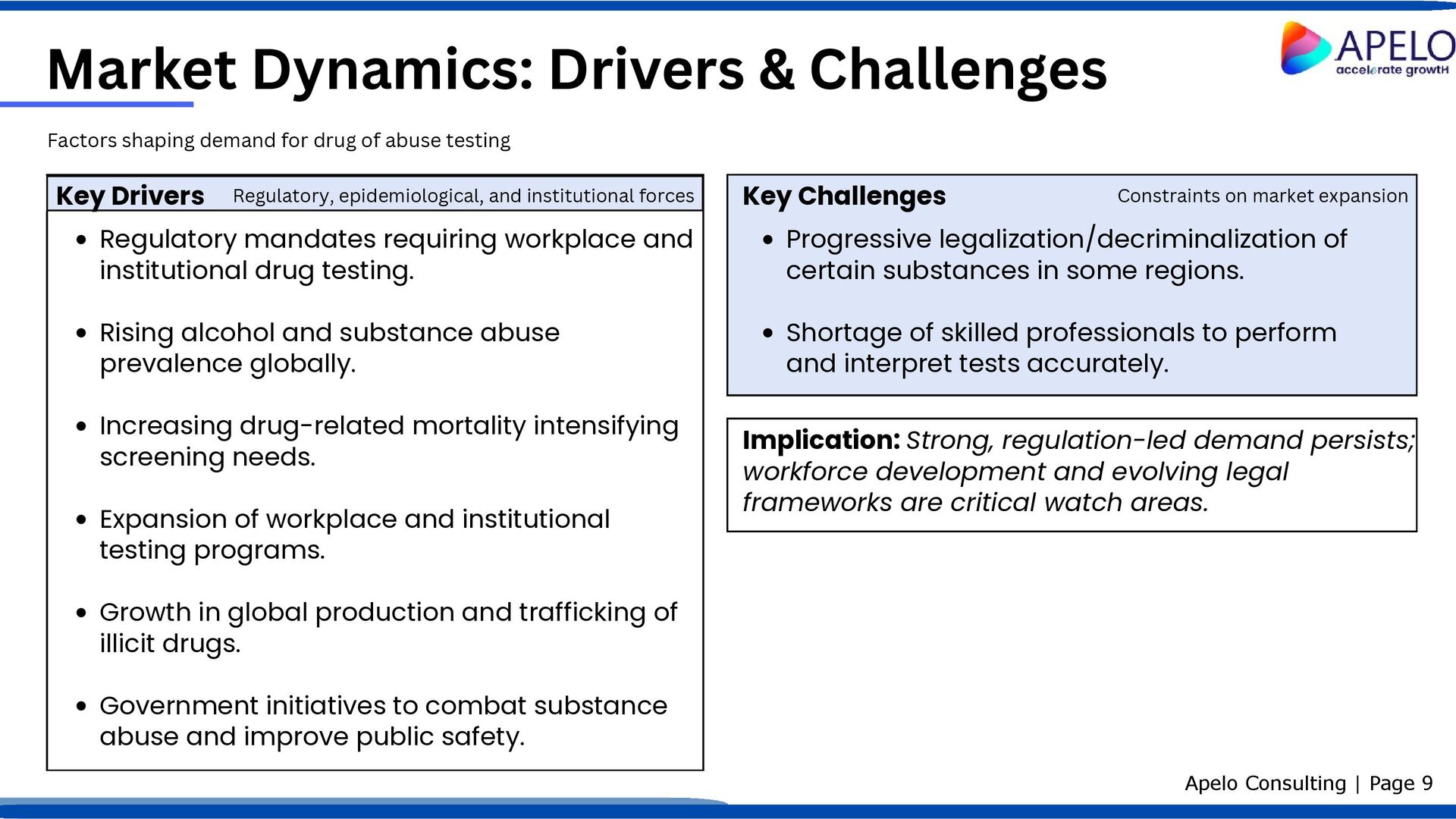
Regulatory mandates requiring workplace and institutional drug testing. Rising alcohol and substance abuse prevalence globally. Increasing drug-related mortality intensifying screening needs. Expansion of workplace and institutional testing programs. Growth in global production and trafficking of illicit drugs. Government initiatives to combat substance abuse and improve public safety. Factors shaping demand for drug of abuse testing Apelo Consulting | Page 9 Key Challenges Progressive legalization/decriminalization of certain substances in some regions. Shortage of skilled professionals to perform and interpret tests accurately. Implication: Strong, regulation-led demand persists; workforce development and evolving legal frameworks are critical watch areas. Key Drivers Regulatory, epidemiological, and institutional forces Constraints on market expansion


 apeloconsulting
 keathley
 mfonobong
 paigeccino
 sstephenson
 matthewcrist
 frankvandijk
 badams
 stuffmc
 addyosmani
 cassininazir
 tmiket
 marktimemedia