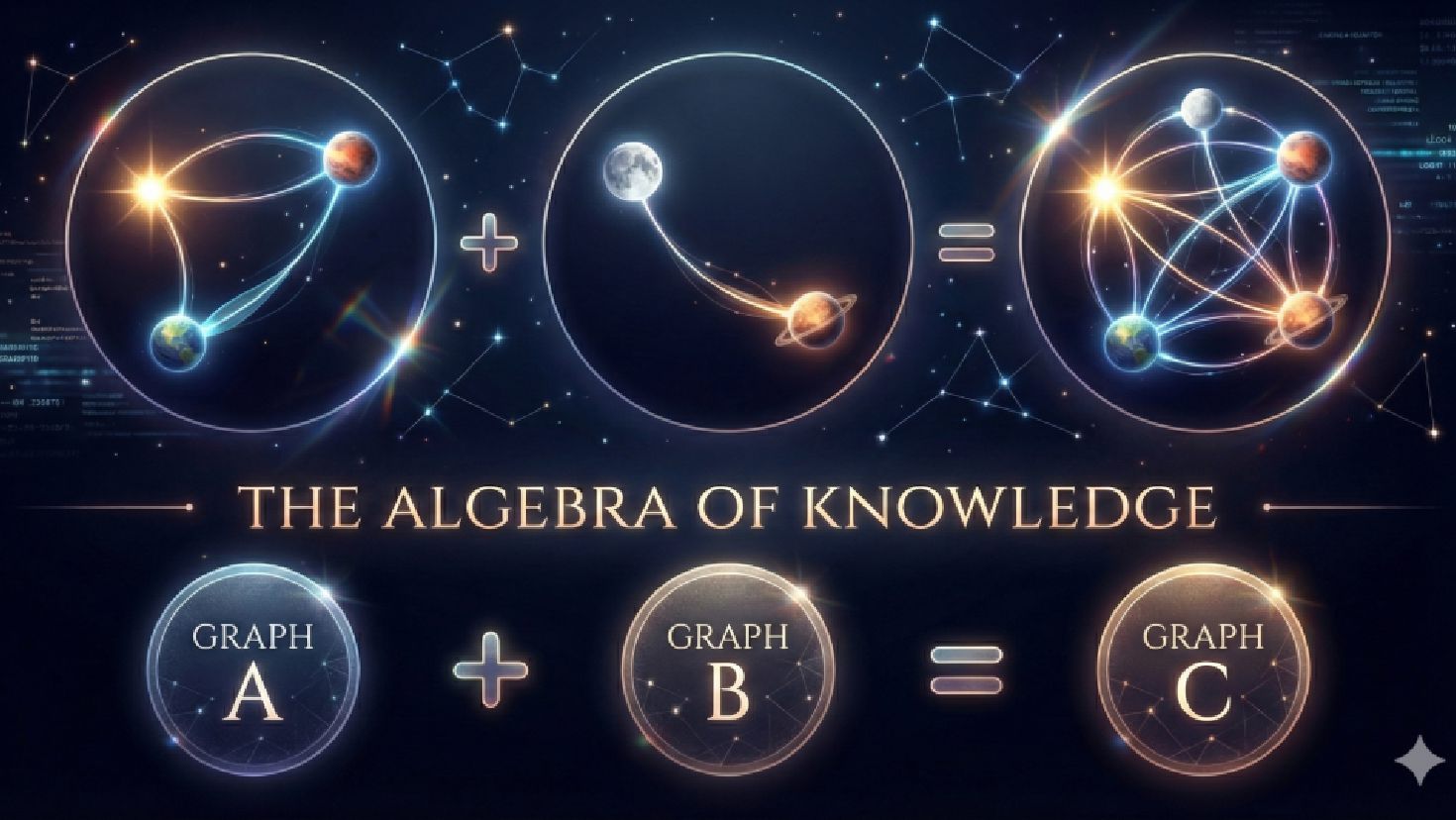
3. The Era of Data Silos 4. Not a New Problem… 5. JSON, CSV, & Roman Numerals 6. Graphs & the Hindu-Arabic Numeral System 7. The Paradigm Shift 8. The Algebra of Knowledge 9. AI’s Trillion-Dollar Opportunity 10. Thank You!
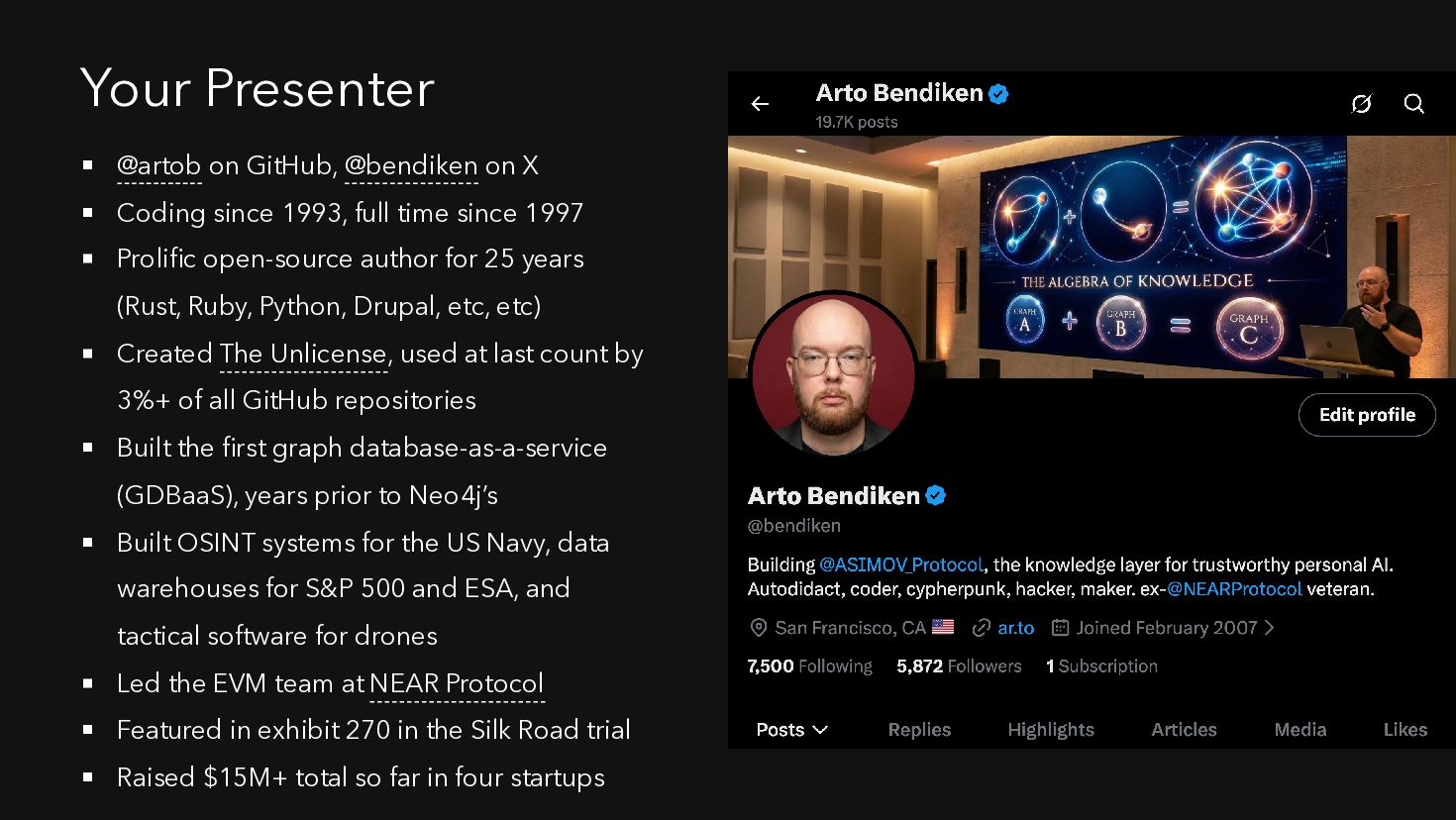
1993, full time since 1997 Prolific open-source author for 25 years (Rust, Ruby, Python, Drupal, etc, etc) Created The Unlicense, used at last count by 3%+ of all GitHub repositories Built the first graph database‑as‑a‑service (GDBaaS), years prior to Neo4j’s Built OSINT systems for the US Navy, data warehouses for S&P 500 and ESA, and tactical software for drones Led the EVM team at NEAR Protocol Featured in exhibit 270 in the Silk Road trial Raised $15M+ total so far in four startups
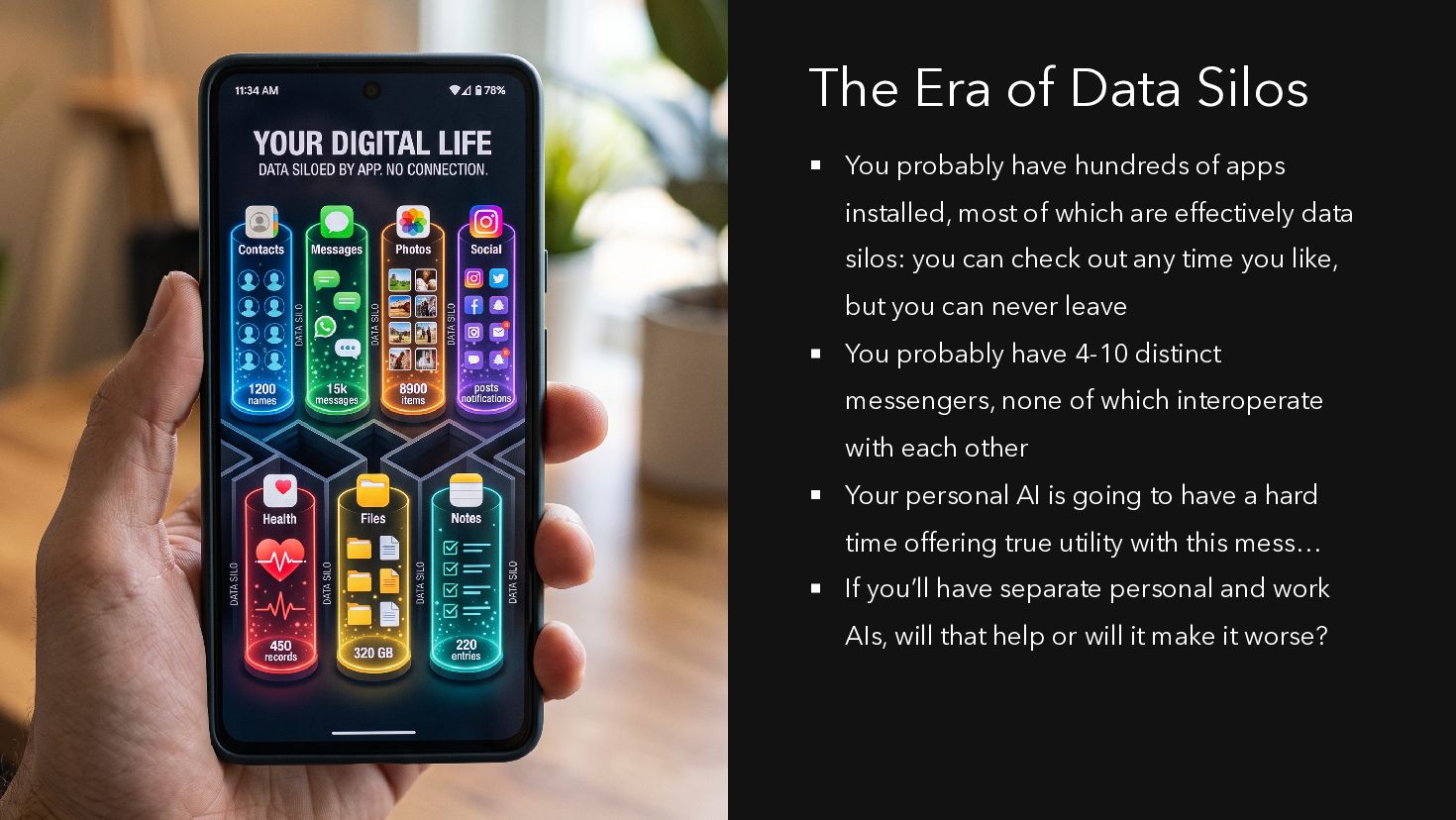
apps installed, most of which are effectively data silos: you can check out any time you like, but you can never leave You probably have 4-10 distinct messengers, none of which interoperate with each other Your personal AI is going to have a hard time offering true utility with this mess… If you’ll have separate personal and work AIs, will that help or will it make it worse?
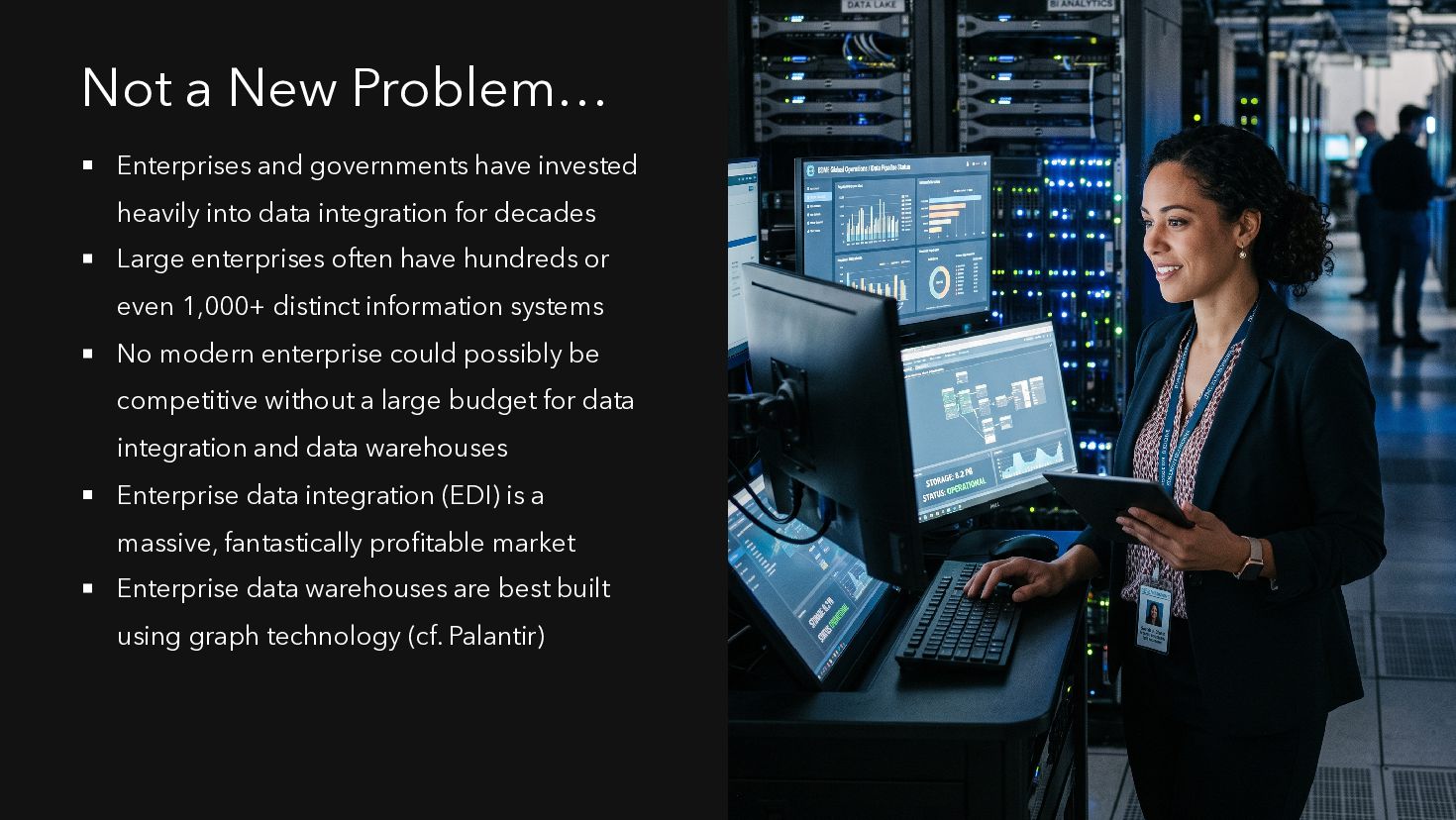
into data integration for decades Large enterprises often have hundreds or even 1,000+ distinct information systems No modern enterprise could possibly be competitive without a large budget for data integration and data warehouses Enterprise data integration (EDI) is a massive, fantastically profitable market Enterprise data warehouses are best built using graph technology (cf. Palantir)
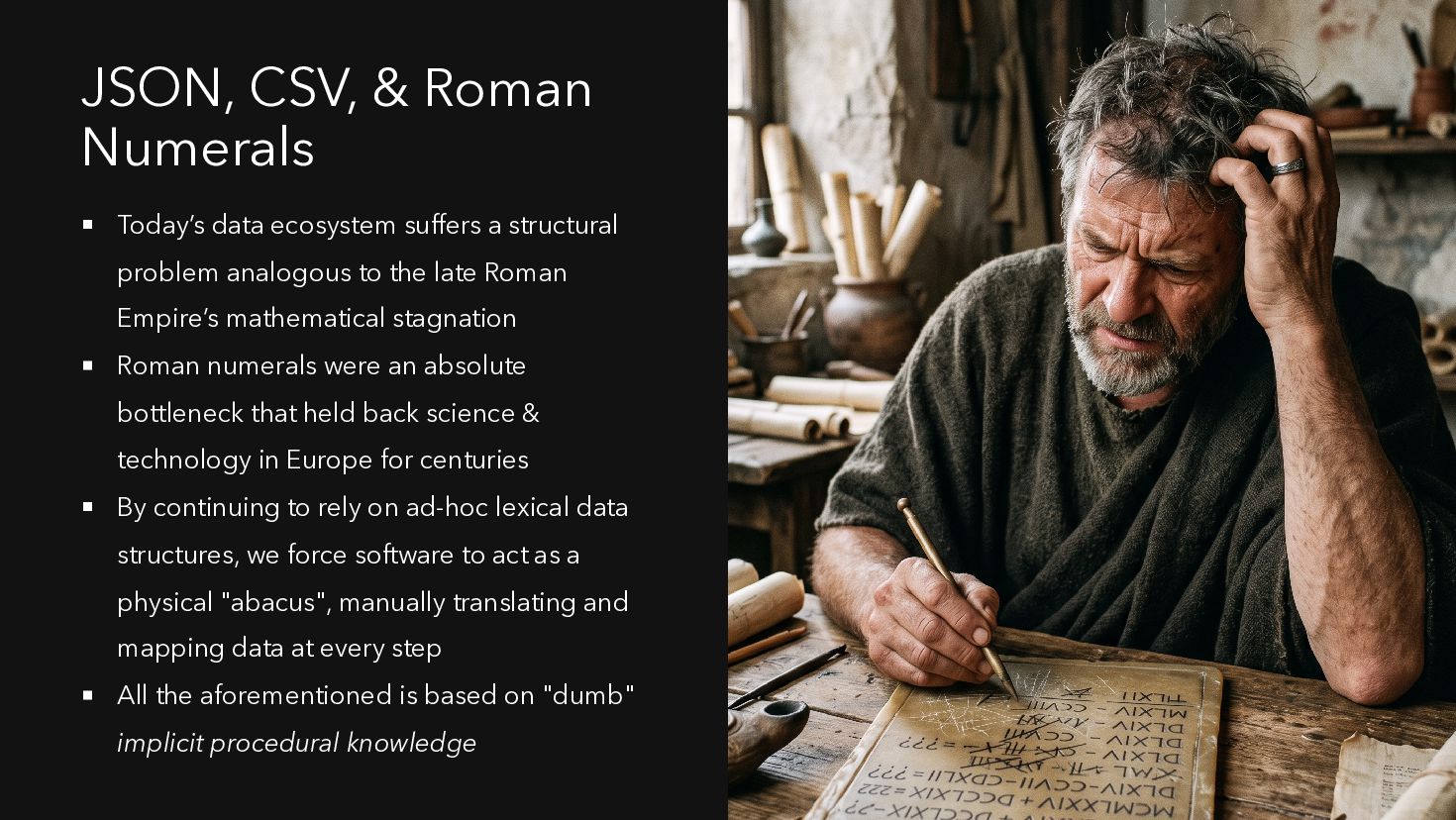
structural problem analogous to the late Roman Empire’s mathematical stagnation Roman numerals were an absolute bottleneck that held back science & technology in Europe for centuries By continuing to rely on ad-hoc lexical data structures, we force software to act as a physical "abacus", manually translating and mapping data at every step All the aforementioned is based on "dumb" implicit procedural knowledge
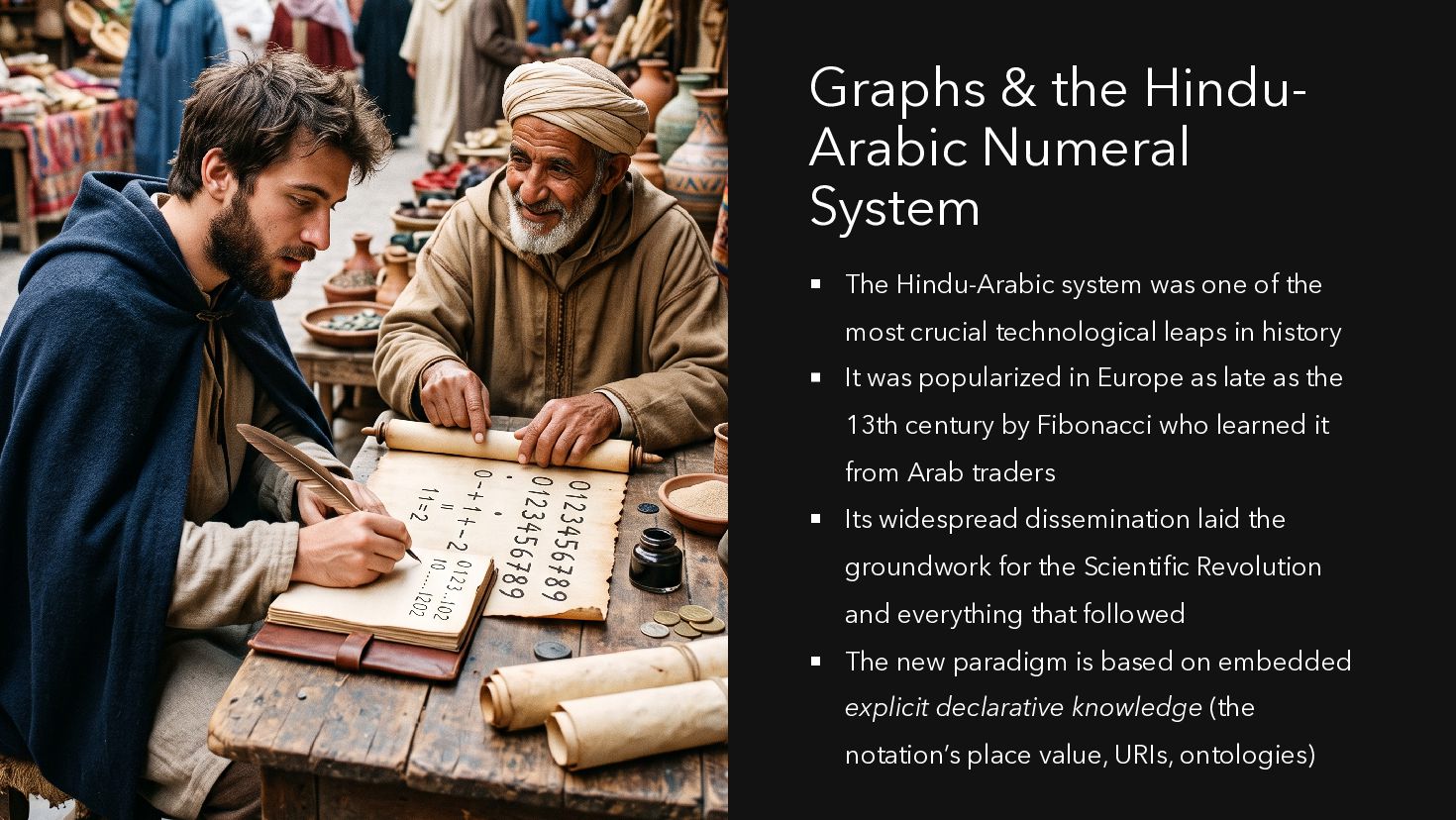
was one of the most crucial technological leaps in history It was popularized in Europe as late as the 13th century by Fibonacci who learned it from Arab traders Its widespread dissemination laid the groundwork for the Scientific Revolution and everything that followed The new paradigm is based on embedded explicit declarative knowledge (the notation’s place value, URIs, ontologies)
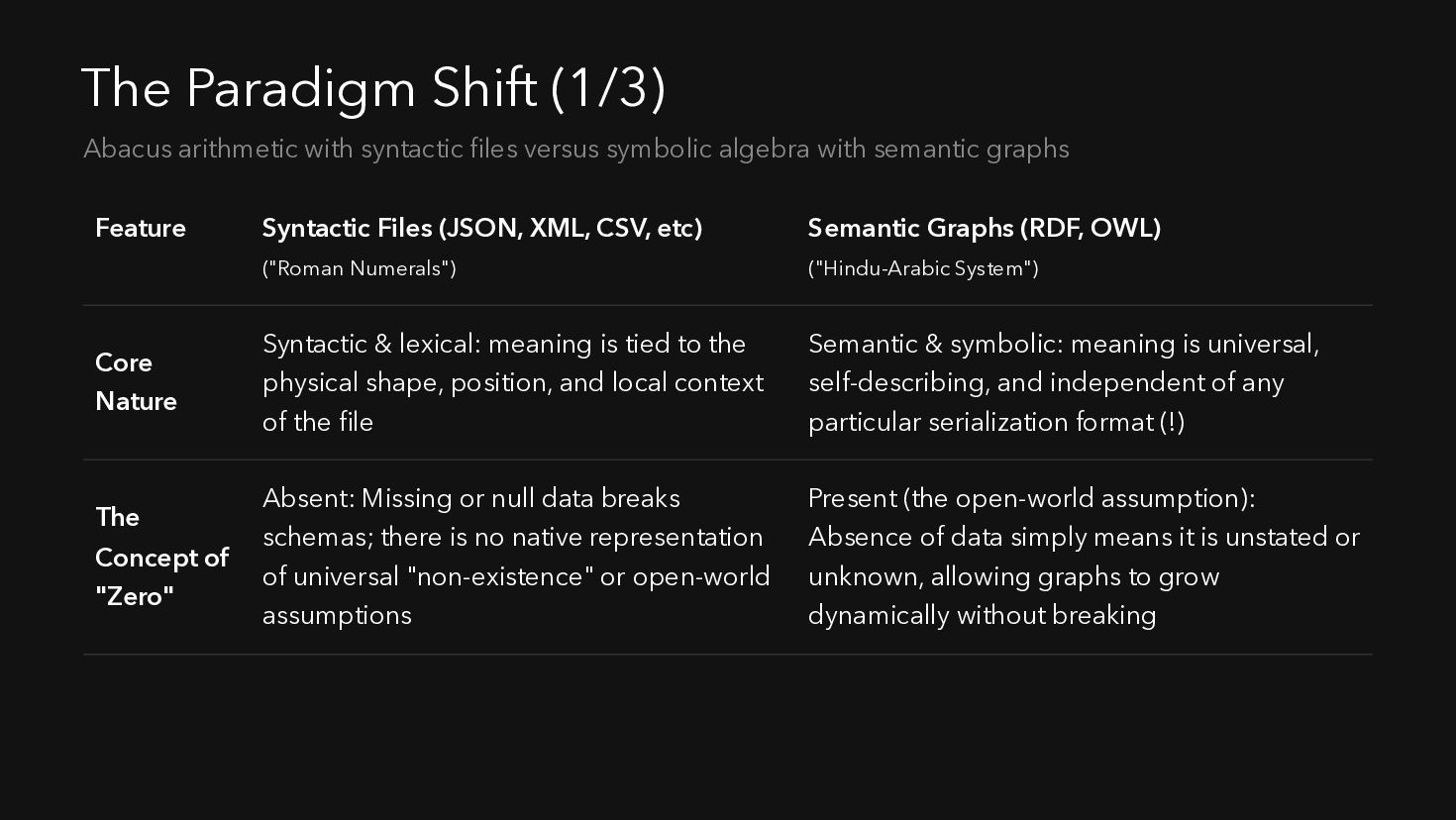
etc) ("Roman Numerals") Semantic Graphs (RDF, OWL) ("Hindu-Arabic System") Core Nature Syntactic & lexical: meaning is tied to the physical shape, position, and local context of the file Semantic & symbolic: meaning is universal, self-describing, and independent of any particular serialization format (!) The Concept of "Zero" Absent: Missing or null data breaks schemas; there is no native representation of universal "non-existence" or open-world assumptions Present (the open-world assumption): Absence of data simply means it is unstated or unknown, allowing graphs to grow dynamically without breaking Abacus arithmetic with syntactic files versus symbolic algebra with semantic graphs
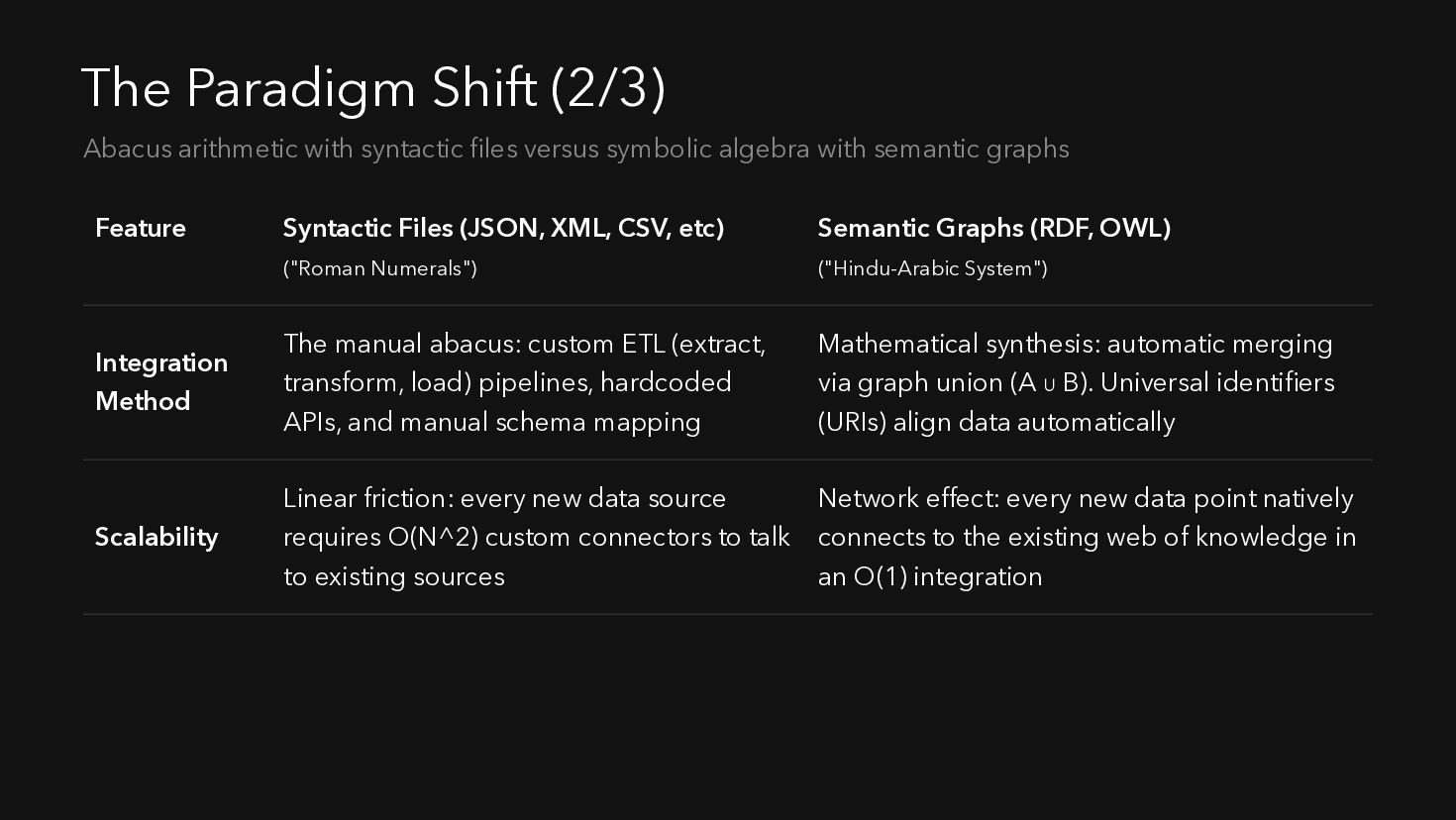
etc) ("Roman Numerals") Semantic Graphs (RDF, OWL) ("Hindu-Arabic System") Integration Method The manual abacus: custom ETL (extract, transform, load) pipelines, hardcoded APIs, and manual schema mapping Mathematical synthesis: automatic merging via graph union (A ∪ B). Universal identifiers (URIs) align data automatically Scalability Linear friction: every new data source requires O(N^2) custom connectors to talk to existing sources Network effect: every new data point natively connects to the existing web of knowledge in an O(1) integration Abacus arithmetic with syntactic files versus symbolic algebra with semantic graphs
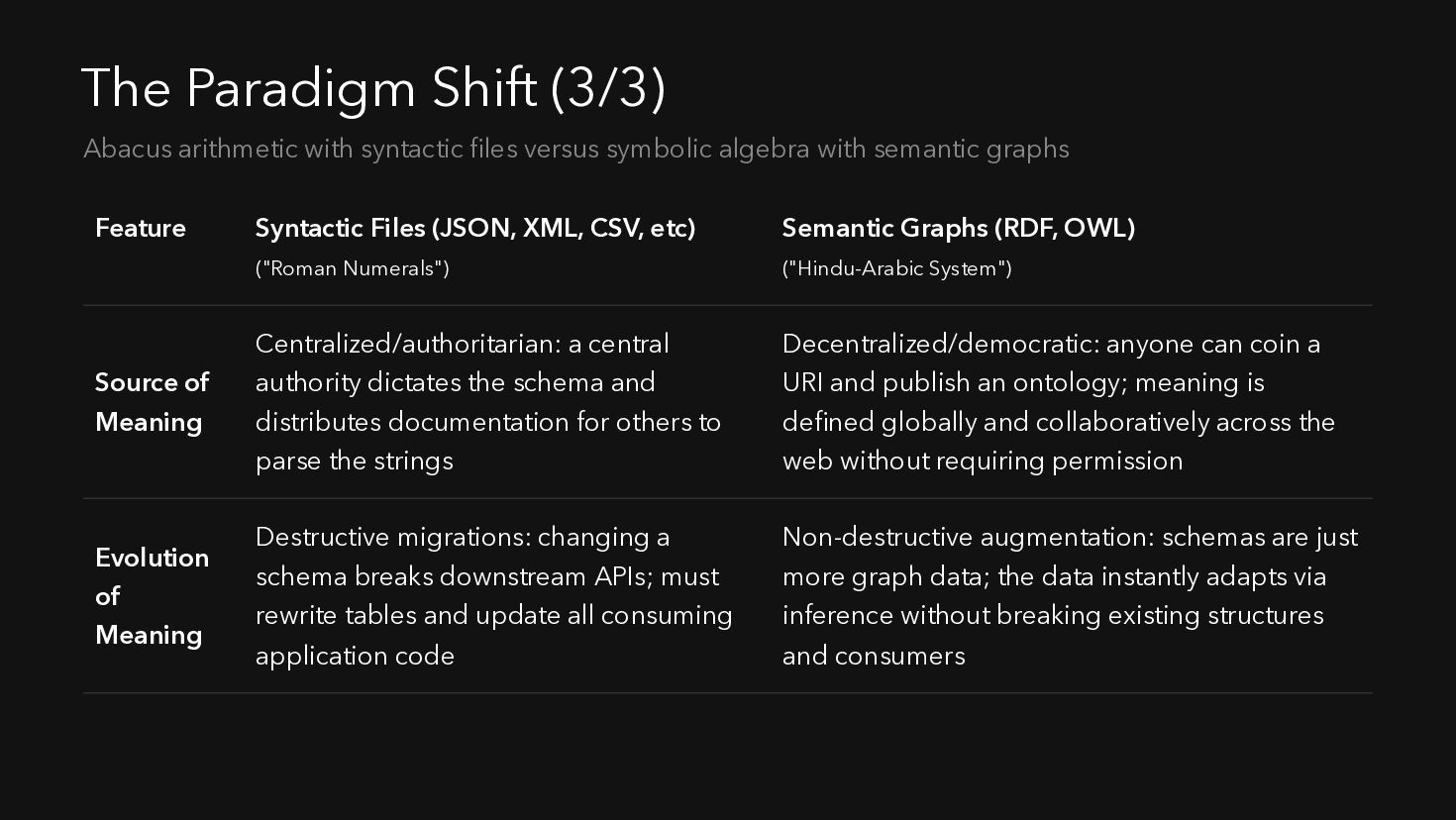
etc) ("Roman Numerals") Semantic Graphs (RDF, OWL) ("Hindu-Arabic System") Source of Meaning Centralized/authoritarian: a central authority dictates the schema and distributes documentation for others to parse the strings Decentralized/democratic: anyone can coin a URI and publish an ontology; meaning is defined globally and collaboratively across the web without requiring permission Evolution of Meaning Destructive migrations: changing a schema breaks downstream APIs; must rewrite tables and update all consuming application code Non-destructive augmentation: schemas are just more graph data; the data instantly adapts via inference without breaking existing structures and consumers Abacus arithmetic with syntactic files versus symbolic algebra with semantic graphs
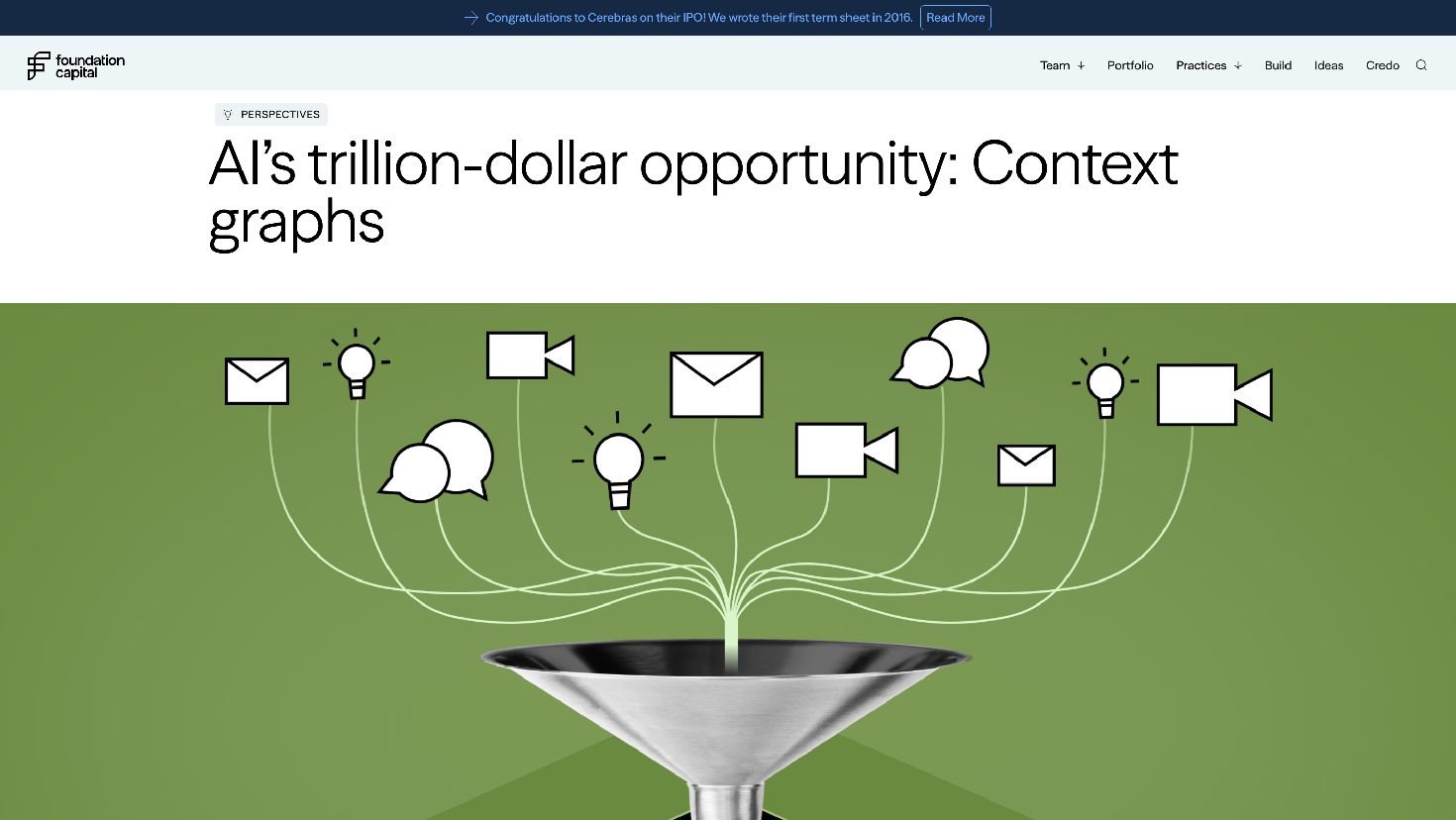
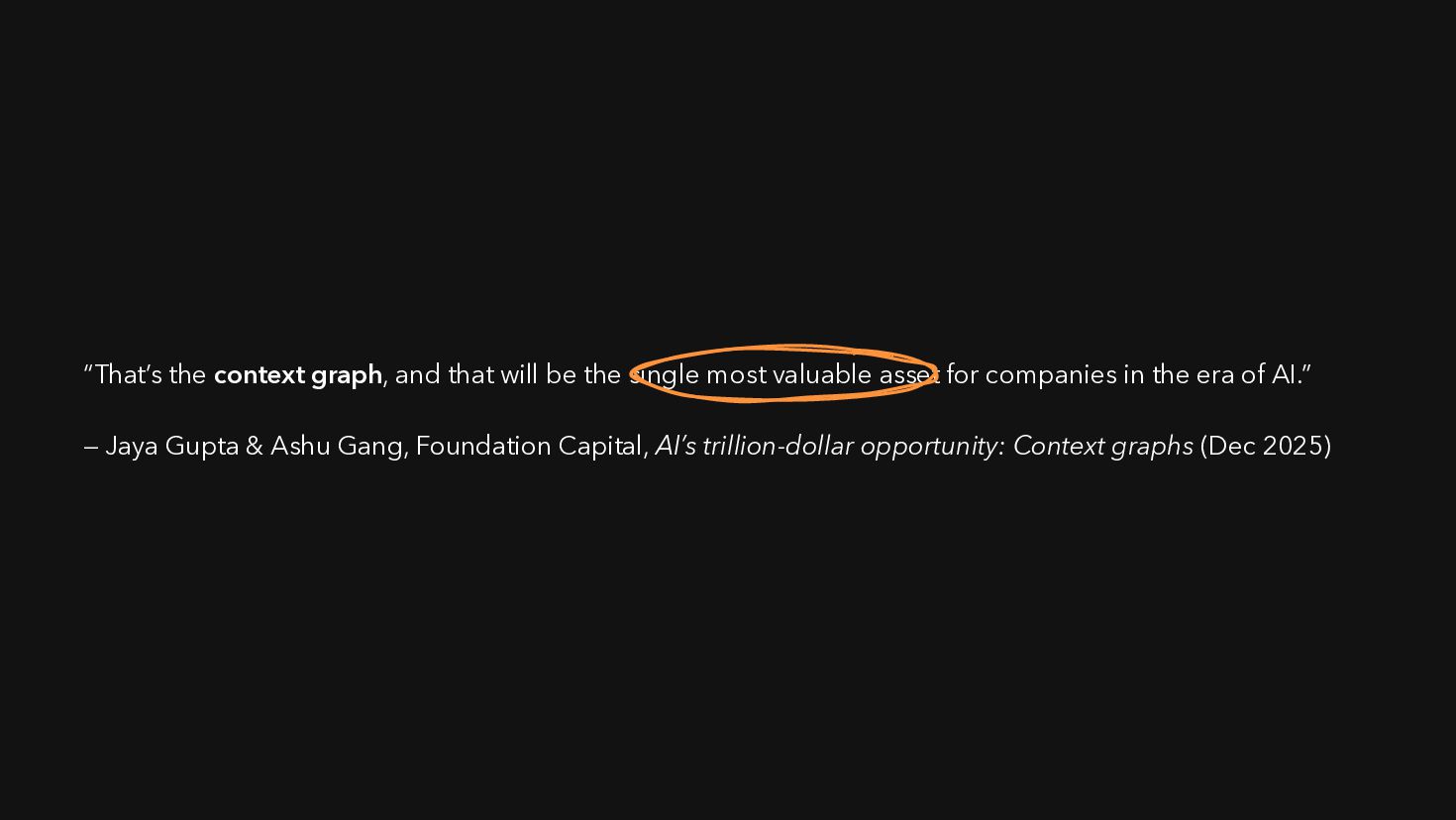
most valuable asset for companies in the era of AI.” — Jaya Gupta & Ashu Gang, Foundation Capital, AI’s trillion-dollar opportunity: Context graphs (Dec 2025)


 arto
arto
 toshimaru
 hacobu
 dtunkelang
 recruitengineers
 mot_techtalk
 taka_aki
 mtpooh
 bcantrill
 tatamiya
 masahirokawahara
 ennael
 bluesmoon
 smashingmag
 watany
 nikkihalliwell
 letsgokoyo
 bethany
 hannesfritz
 yeseniaperezcruz
.png) helenjbeal
helenjbeal
 kneath
 tammielis
 tammyeverts