Bclub_TK_Background__Understanding_Its_Search_P...
Sponsored
·
 Your Podcast. Everywhere. Effortlessly.
Share. Educate. Inspire. Entertain. You do you. We'll handle the rest.
→
Your Podcast. Everywhere. Effortlessly.
Share. Educate. Inspire. Entertain. You do you. We'll handle the rest.
→

Share
Embed
Bclub_TK_Background__Understanding_Its_Search_Presence.pdf

Bclub Tools
November 03, 2026
Transcript
5 slides
-
Bclub TK Background: Understanding Its Search Presence Search engines make
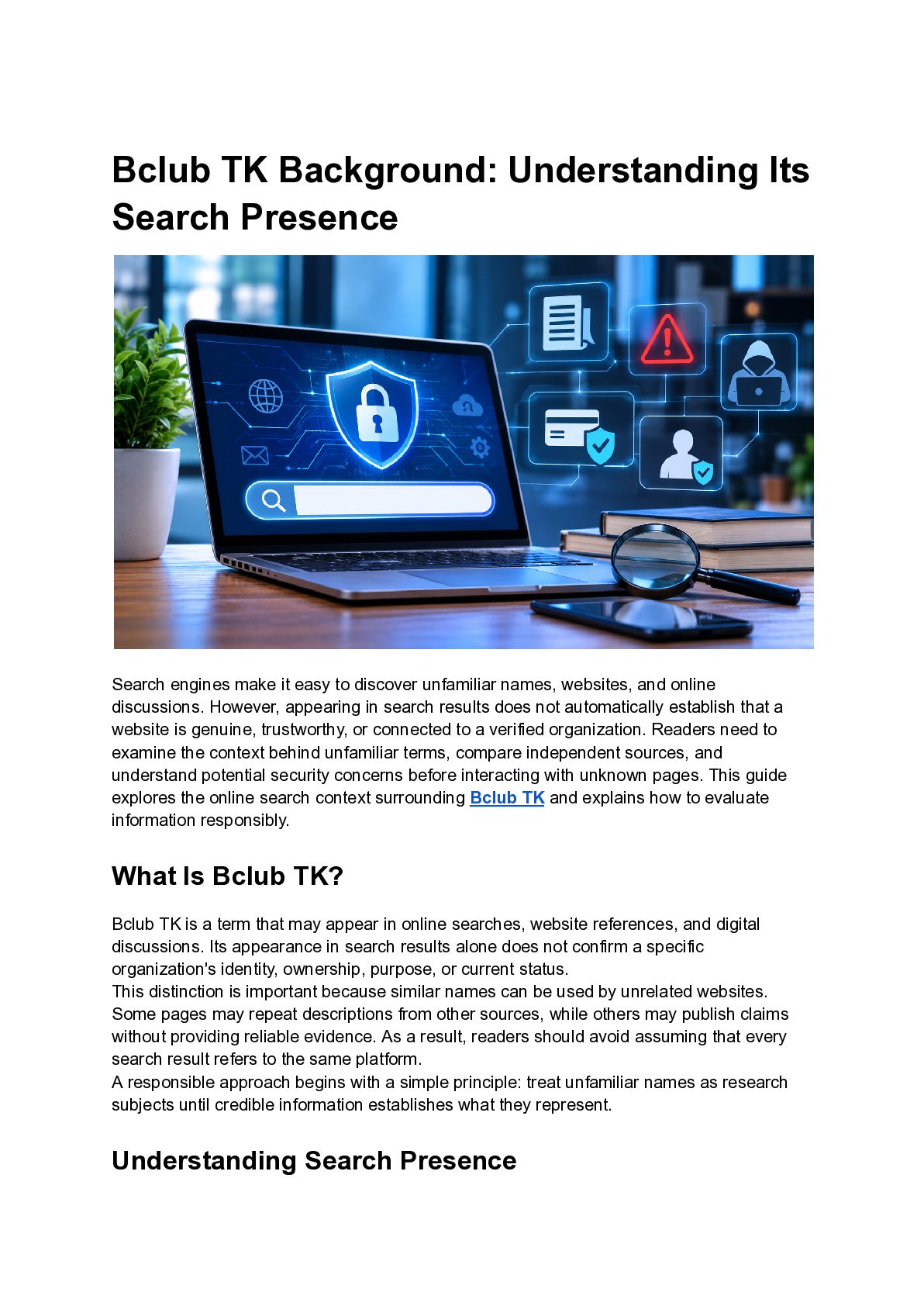
it easy to discover unfamiliar names, websites, and online discussions. However, appearing in search results does not automatically establish that a website is genuine, trustworthy, or connected to a verified organization. Readers need to examine the context behind unfamiliar terms, compare independent sources, and understand potential security concerns before interacting with unknown pages. This guide explores the online search context surrounding Bclub TK and explains how to evaluate information responsibly. What Is Bclub TK? Bclub TK is a term that may appear in online searches, website references, and digital discussions. Its appearance in search results alone does not confirm a specific organization's identity, ownership, purpose, or current status. This distinction is important because similar names can be used by unrelated websites. Some pages may repeat descriptions from other sources, while others may publish claims without providing reliable evidence. As a result, readers should avoid assuming that every search result refers to the same platform. A responsible approach begins with a simple principle: treat unfamiliar names as research subjects until credible information establishes what they represent. Understanding Search Presence -
Search presence refers to how a name, website, or topic
appears across search engines and other online channels. It may include indexed pages, articles, forum discussions, social media references, and third-party descriptions. A strong search presence does not necessarily indicate credibility. Search engines organize information based on multiple signals, but a high-ranking result is not a guarantee of accuracy, safety, or legitimacy. Why Search Results Can Be Misleading Several factors can make online search results difficult to interpret: • Repeated descriptions: Different websites may publish similar wording without independently checking the claims. • Outdated information: An old article may continue appearing even when its details are no longer relevant. • Unrelated references: Similar names or abbreviations can lead to pages about different subjects. • Anonymous discussions: Forum comments may contain personal opinions or unverified statements. • Promotional content: Some pages emphasize attention-grabbing claims instead of providing balanced information. Readers should therefore consider the source, publication date, and supporting evidence before relying on a result. Why People Search for Bclub TK People may search unfamiliar terms for several reasons. Some want to understand a name they encountered in an article or online discussion. Others may be researching website authenticity, digital trends, or cybersecurity concerns. Search interest, however, should not be confused with verified demand for a legitimate service. A keyword can become popular because of curiosity, news coverage, repeated references, or misleading online content. When researching Bclub TK, it is useful to focus on the reason a reference appears and whether the source provides meaningful evidence. This helps prevent unrelated information from being treated as a confirmed description. How to Evaluate Websites Appearing in Search Results Evaluating an unfamiliar website requires more than checking its design or position in search results. A careful review can reveal warning signs and help readers decide whether a page deserves further attention. 1. Examine the Domain Name Read the website address carefully. Look for misspellings, unexpected characters, unusual domain variations, or addresses that imitate familiar names. Do not assume a link is genuine simply because it appears in a search result, email, or -
social media post. If a website claims to represent an
established organization, verify its address through an independent and trusted source. 2. Check the Website's Identity Look for clear information about who operates the website and what its purpose is. Depending on the type of organization, useful details may include an identifiable publisher, contact information, and transparent policies. Missing or vague ownership information does not automatically prove wrongdoing, but it should encourage caution. 3. Review Privacy and Security Policies A privacy policy should explain what information a website collects, how it uses that information, and whether it shares data with other parties. Be careful if an unfamiliar page requests passwords, payment details, identity documents, or verification codes without a clear and legitimate reason. 4. Look for Independent Evidence A website's own claims are not independent proof of its reputation. Compare important statements with credible reporting, recognized cybersecurity research, and relevant official guidance. If a claim cannot be verified, describe it as uncertain rather than presenting it as an established fact. Cybersecurity Concerns Connected to Unfamiliar Online References Unfamiliar websites can create risks when they imitate legitimate services, distribute harmful downloads, or encourage visitors to disclose sensitive information. Some online references using similar names may also appear in discussions of underground activity involving stolen payment-card information. Such activity is associated with financial fraud and cybercrime. It can harm cardholders, businesses, and financial institutions. It is important to approach these subjects as matters of public awareness and security. Researching a name does not require interacting with suspicious services, following access instructions, or participating in illegal transactions. Common Threats to Recognize • Phishing: Messages or websites imitate trusted organizations to collect private information. • Malware: Harmful software can compromise devices or capture sensitive data. • Identity theft: Exposed personal information may be misused without the owner's permission. • Financial fraud: Stolen payment details can lead to unauthorized transactions. -
• Impersonation: Fake pages may copy familiar branding to appear
more credible. Recognizing these threats helps readers make safer choices when exploring unfamiliar online topics. Protecting Personal Information While Browsing Good security habits reduce the likelihood of personal information being exposed. They are especially important when visiting websites that have not been independently verified. Use Unique Passwords Create a separate password for every important account. Reusing credentials creates additional risk because one compromised password may expose several services. A reputable password manager can help create and store strong passwords. Enable Multifactor Authentication Multifactor authentication adds another verification step when signing in. Depending on the service, this may involve an authenticator application, security key, or another approved method. It provides additional protection if a password is stolen or exposed. Keep Software Updated Update your operating system, browser, and applications regularly. Security updates often address weaknesses that attackers may otherwise exploit. Avoid downloading unknown files or installing extensions from websites you cannot verify. Avoid Sharing Sensitive Details Never disclose passwords, one-time verification codes, or unnecessary financial information to unfamiliar websites or people contacting you unexpectedly. If a page creates pressure to act immediately, stop and verify the request through an official channel. Responsible Research Practices for Bclub TK Researching Bclub TK or any unfamiliar online name should involve a clear distinction between verified information, interpretation, and speculation. A useful research process includes: 1. Start with the exact term: Check whether different spellings or abbreviations lead to unrelated results. 2. Identify the source: Determine who published each relevant page. 3. Check dates: Older references may not describe the current online environment. 4. Compare evidence: Look for independent sources that support important claims. 5. Record uncertainty: Avoid turning unsupported statements into factual conclusions. -
6. Prioritize safety: Do not follow suspicious links, download unknown
files, or submit sensitive information. These practices are valuable for students, writers, website owners, and readers who want to understand digital subjects accurately. What to Do if You Encounter a Suspicious Page If an unfamiliar page displays unusual behavior, close it rather than continuing to interact with it. Avoid entering credentials, providing payment details, or downloading files. If you have already shared sensitive information, take action promptly: • • • • Change the affected password through the genuine service. Update the same password on other accounts if it was reused. Enable multifactor authentication. Contact your bank through its official website or phone number if payment information may be exposed. • Review account activity for unfamiliar transactions or sign-ins. • Run a security scan if you downloaded a suspicious file. If you believe you have experienced fraud or identity theft, contact the relevant financial institution and report the incident through appropriate official channels. Search Literacy and the Importance of Reliable Sources Search literacy means understanding how to find, assess, and interpret online information. It is an important skill because search results can contain a mixture of professional reporting, personal opinions, copied content, and misleading claims. Readers should pay attention to the quality of evidence rather than relying only on ranking or presentation. Credible sources generally explain where their information comes from and distinguish established facts from uncertainty. For website publishers, the same principle supports people-first content. Useful articles answer genuine questions, provide clear context, avoid exaggerated claims, and help readers make informed decisions. Final Thoughts Understanding the search presence of an unfamiliar name requires more than checking how often it appears online. Readers should examine the source, verify important claims, consider the publication date, and remain alert to possible privacy and cybersecurity risks. The online context surrounding Bclub TK should be approached with careful research rather than assumptions about its identity or legitimacy. By evaluating websites independently, protecting personal information, and relying on credible evidence, readers can explore unfamiliar digital topics more safely and responsibly.
 bclubtools
 davetheseo
 keithpitt
 jonoalderson
 yeseniaperezcruz
 inesmontani
 iamctodd
 reverentgeek
 tammyeverts
 baasie
 mongodb
 livdayseo