Explore how organizational culture shapes strategy execution, the execution gap, and leadership practices to align culture with strategic goals for successful transformation and management.
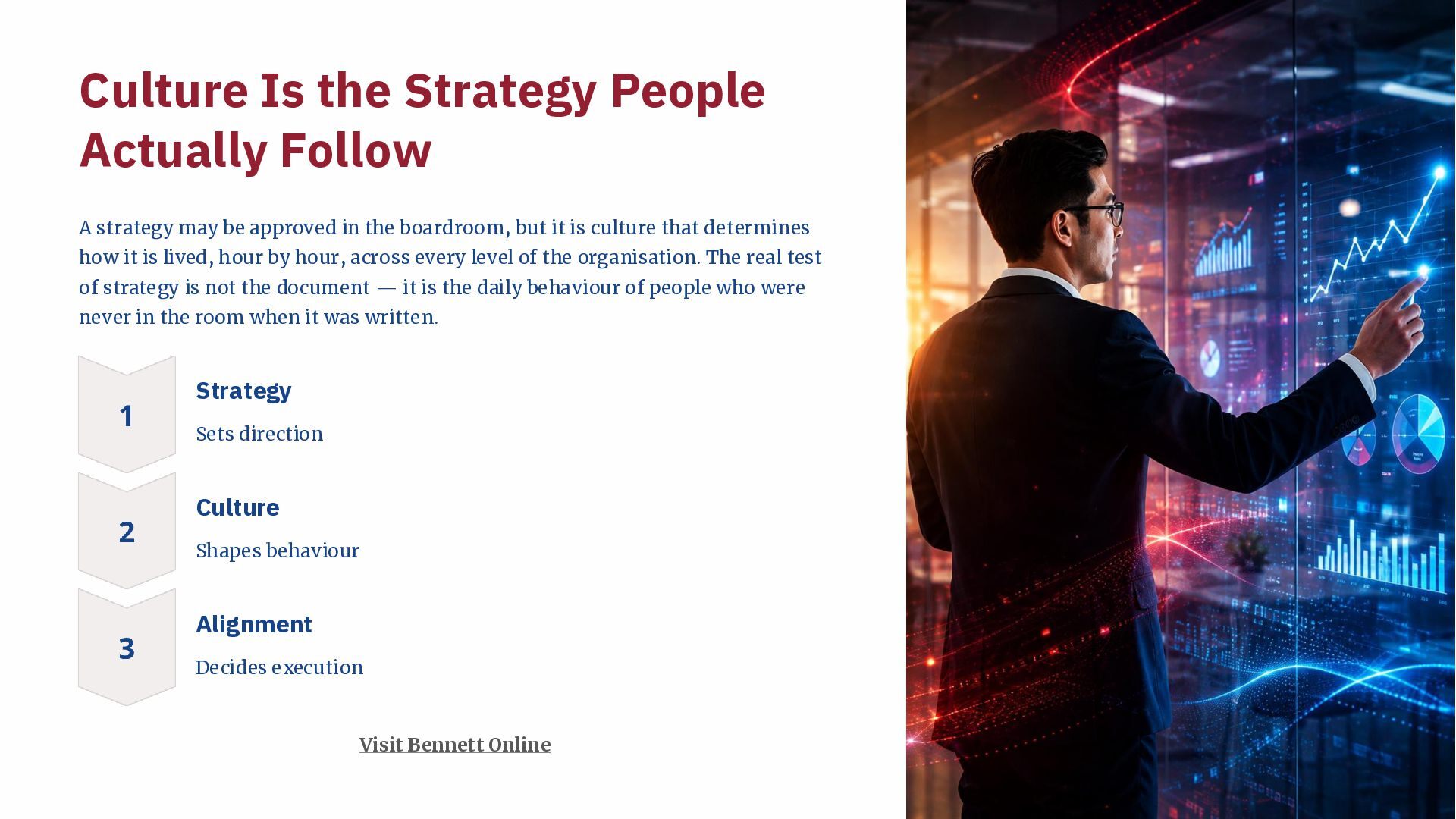
be approved in the boardroom, but it is culture that determines how it is lived, hour by hour, across every level of the organisation. The real test of strategy is not the document — it is the daily behaviour of people who were never in the room when it was written. Strategy Sets direction Culture Shapes behaviour Alignment Decides execution Visit Bennett Online
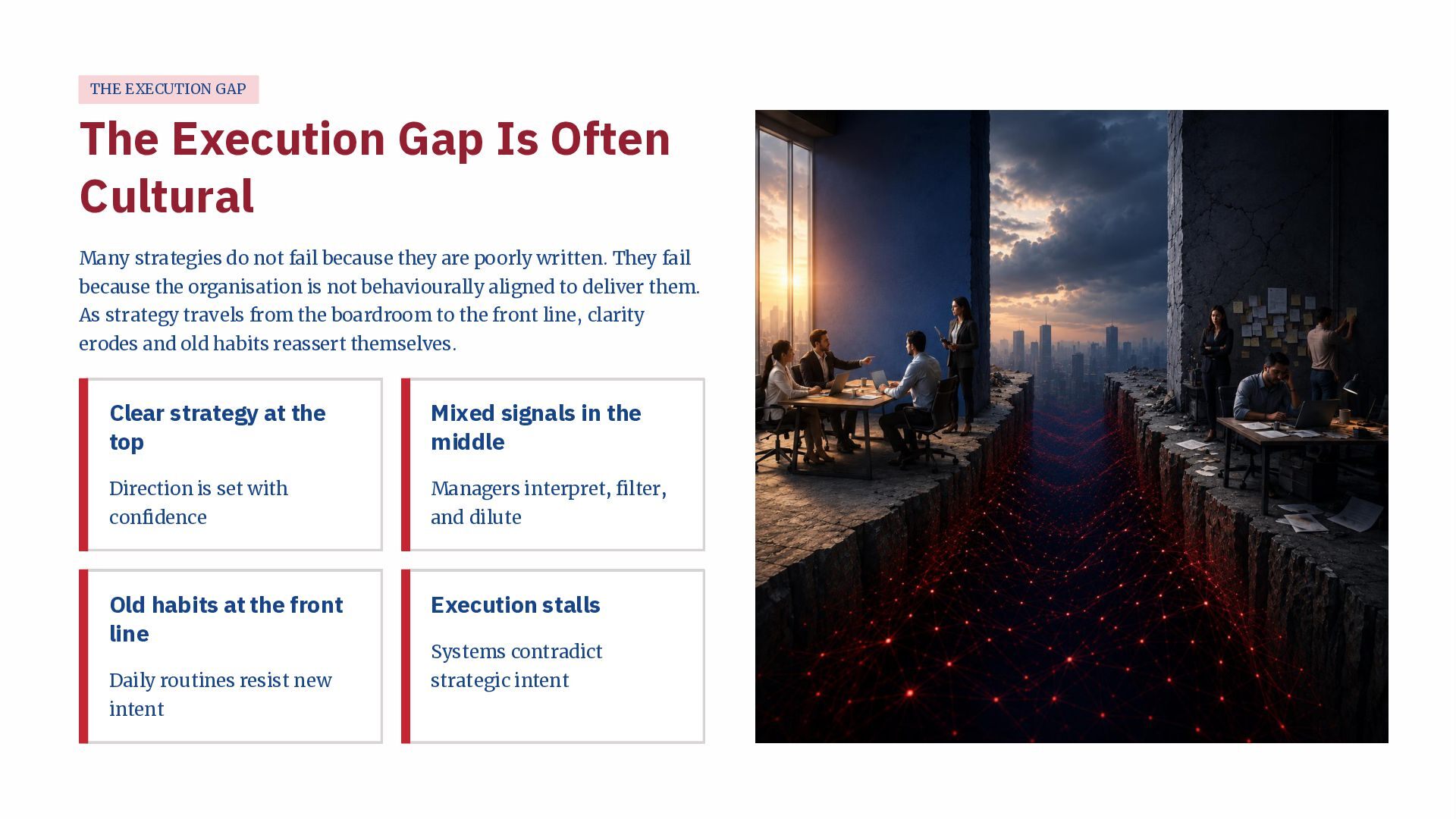
strategies do not fail because they are poorly written. They fail because the organisation is not behaviourally aligned to deliver them. As strategy travels from the boardroom to the front line, clarity erodes and old habits reassert themselves. Clear strategy at the top Mixed signals in the middle Direction is set with Managers interpret, filter, confidence and dilute Old habits at the front line Execution stalls Daily routines resist new strategic intent intent Systems contradict
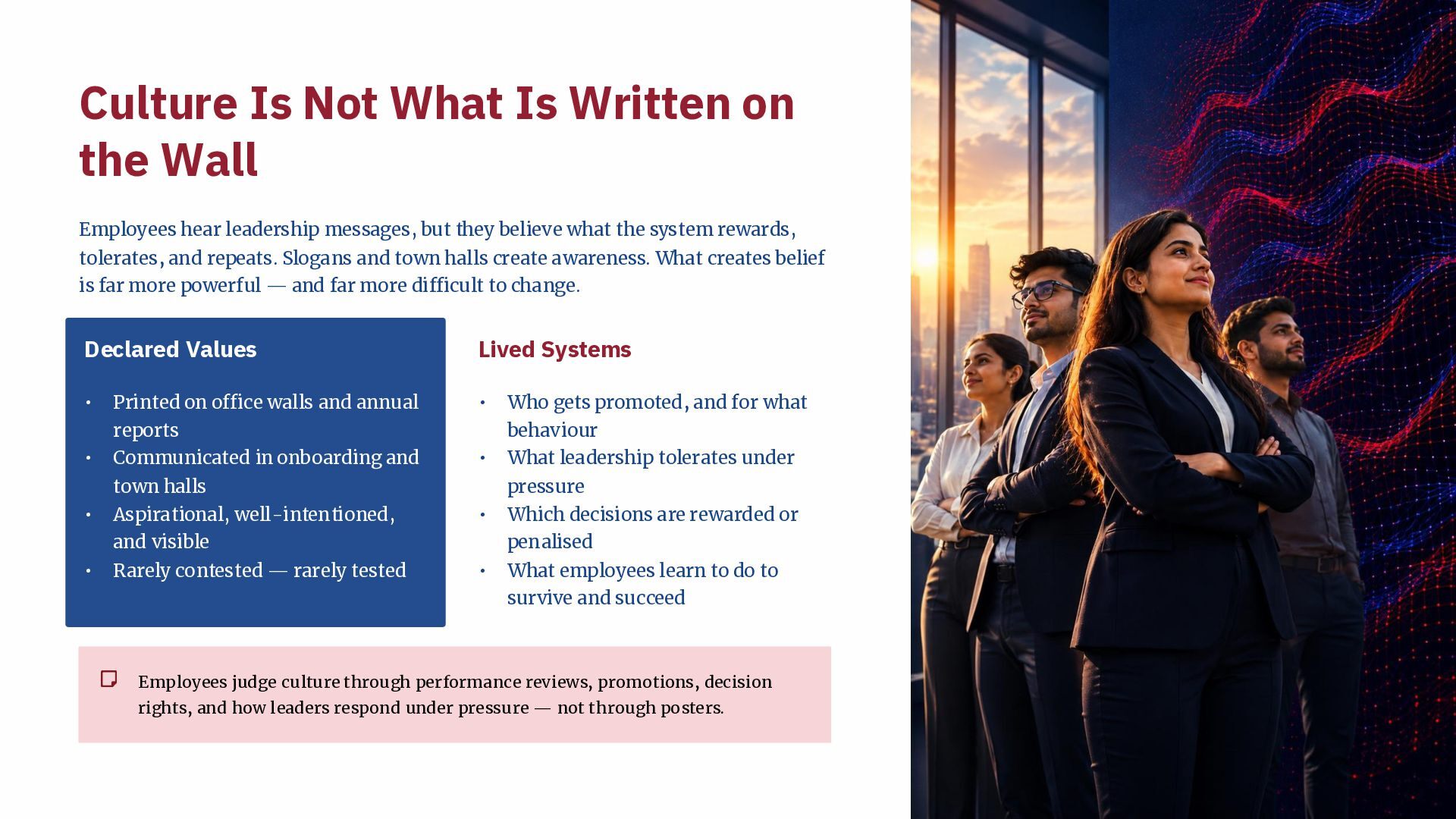
hear leadership messages, but they believe what the system rewards, tolerates, and repeats. Slogans and town halls create awareness. What creates belief is far more powerful — and far more difficult to change. Declared Values Lived Systems • Printed on office walls and annual • Who gets promoted, and for what • reports Communicated in onboarding and • behaviour What leadership tolerates under town halls pressure • Aspirational, well-intentioned, and visible • Which decisions are rewarded or penalised • Rarely contested — rarely tested • What employees learn to do to survive and succeed Employees judge culture through performance reviews, promotions, decision rights, and how leaders respond under pressure — not through posters.
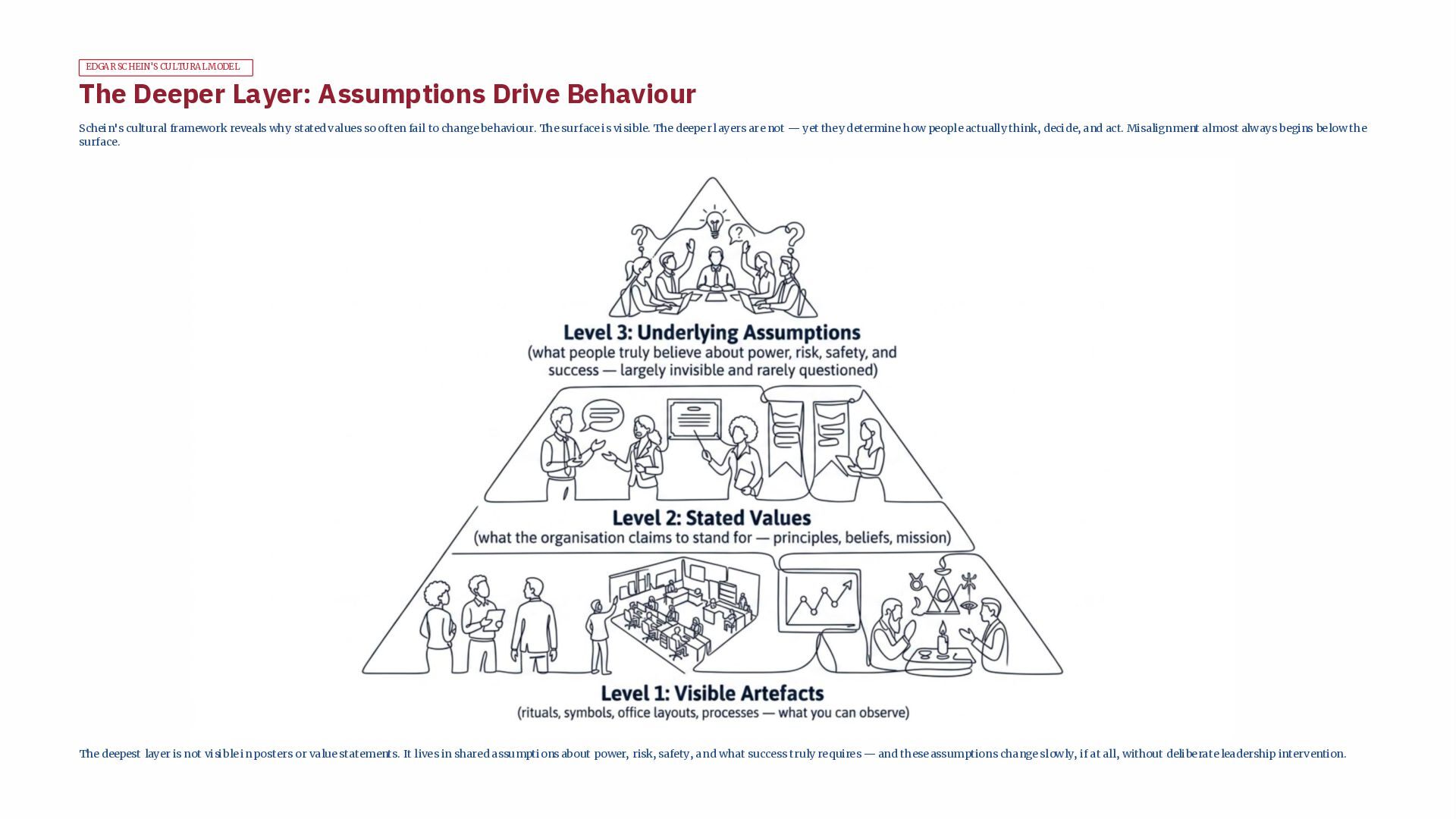
Schein's cultural framework reveals why stated values so often fail to change behaviour. The surface is visible. The deeper layers are not — yet they determine how people actually think, decide, and act. Misalignment almost always begins below the surface. The deepest layer is not visible in posters or value statements. It lives in shared assumptions about power, risk, safety, and what success truly requires — and these assumptions change slowly, if at all, without deliberate leadership intervention.
measurable — when the four key organisational systems point in different directions. This is rarely abstract. It shows up in repeated leadership behaviour and in the gap between what is said and what is actually reward ed. Culture-strategy disconnect is not a communications problem. It is a systems problem. When incentives, leadership signals, structures, and symbols are misaligned, execution degrades regardless of how clearly the strategy is articulated. The real question is not "Do people understand the strategy?" It is "Does the system make the desired behaviour practical and rewarded?" Incentives Leadership Reward the wrong outcomes — Signal inconsistency — leaders short-term targets override say one thing, decisions reveal long-term behaviour another Structure Symbols Preserve old silos — Quietly teach priorities — who is accountability gaps and cross- celebrated, what stories are told functional friction persist
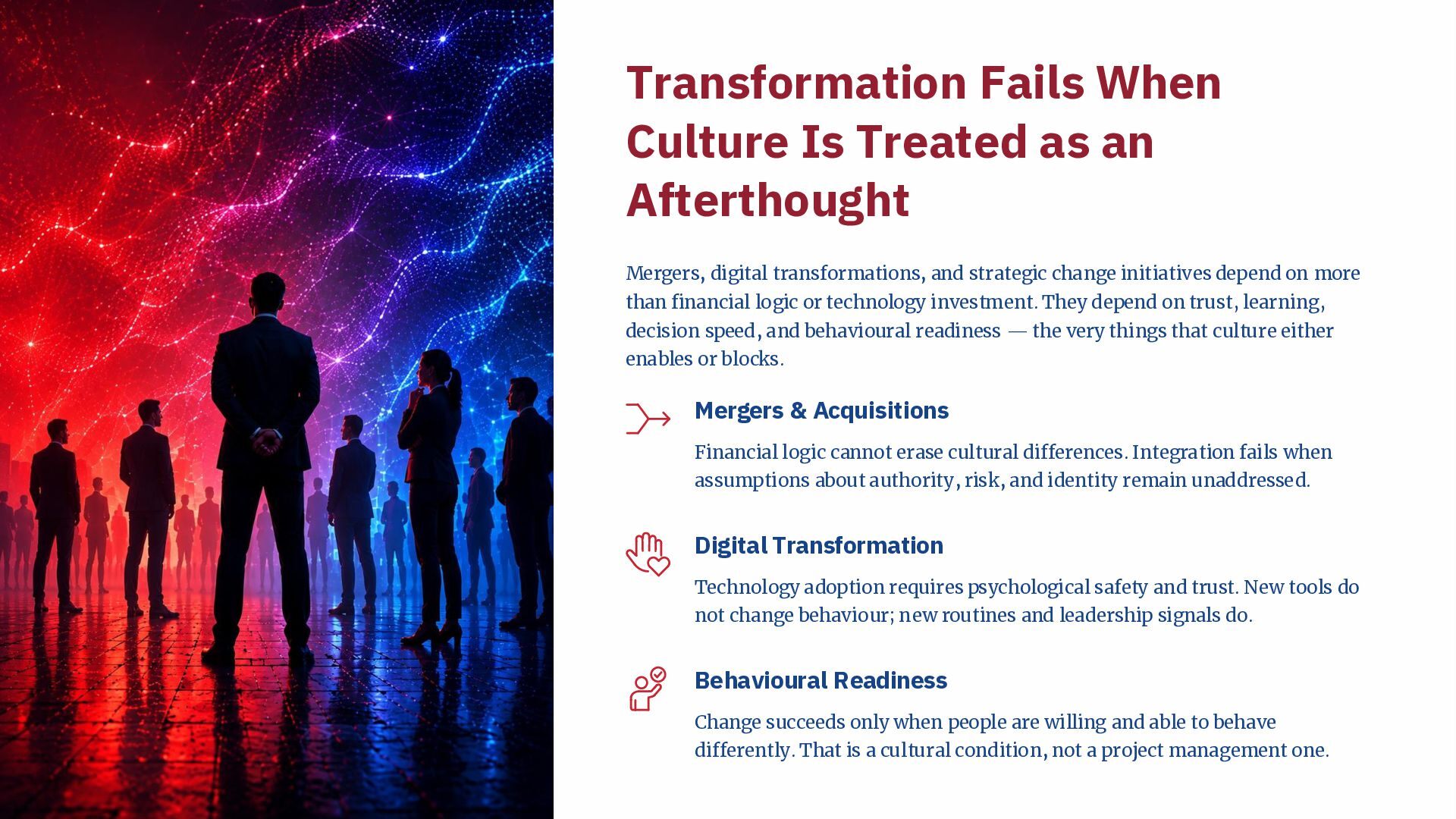
digital transformations, and strategic change initiatives depend on more than financial logic or technology investment. They depend on trust, learning, decision speed, and behavioural readiness — the very things that culture either enables or blocks. Mergers & Acquisitions Financial logic cannot erase cultural differences. Integration fails when assumptions about authority, risk, and identity remain unaddressed. Digital Transformation Technology adoption requires psychological safety and trust. New tools do not change behaviour; new routines and leadership signals do. Behavioural Readiness Change succeeds only when people are willing and able to behave differently. That is a cultural condition, not a project management one.
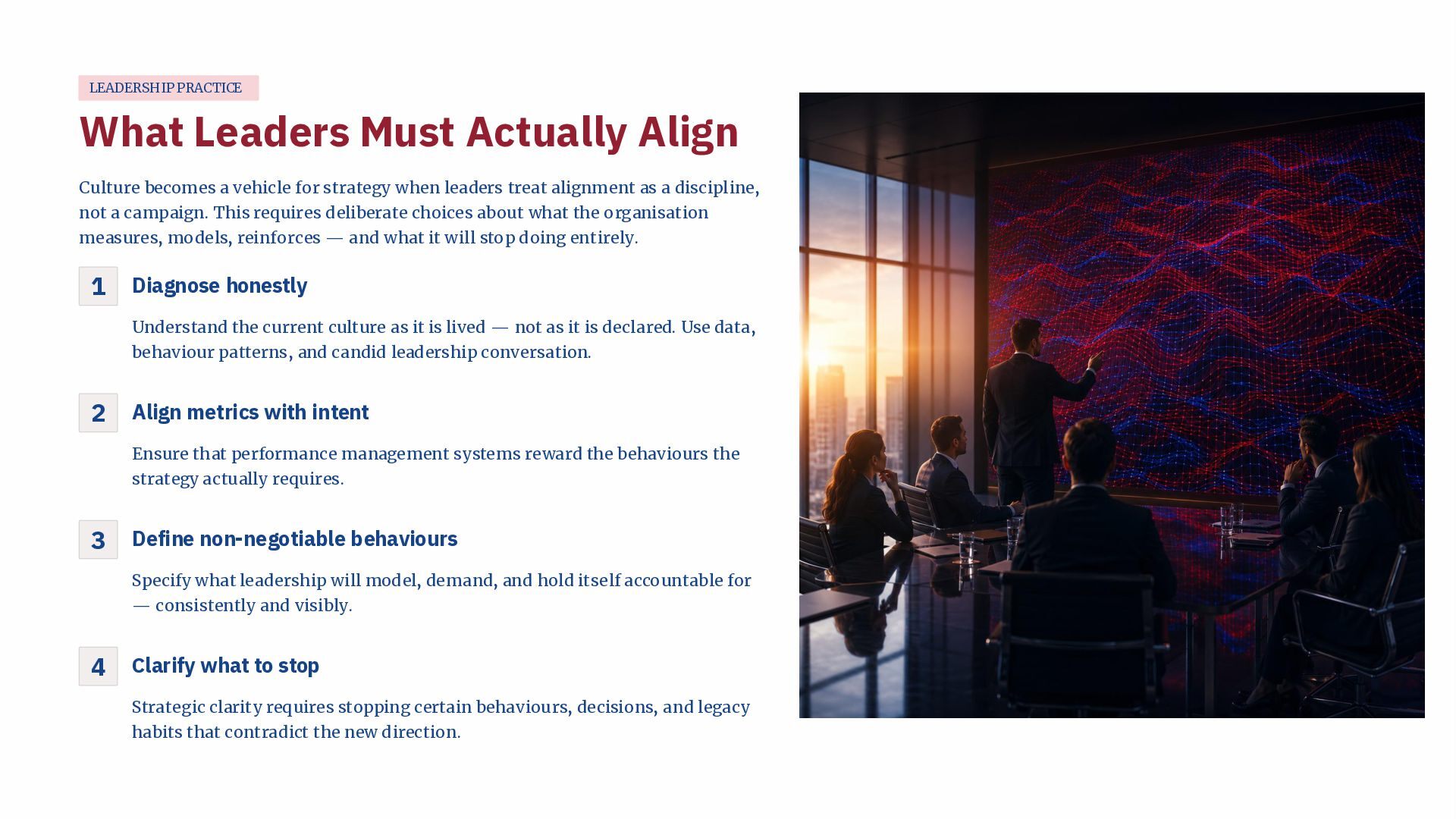
vehicle for strategy when leaders treat alignment as a discipline, not a campaign. This requires deliberate choices about what the organisation measures, models, reinforces — and what it will stop doing entirely. 1 Diagnose honestly Understand the current culture as it is lived — not as it is declared. Use data, behaviour patterns, and candid leadership conversation. 2 Align metrics with intent Ensure that performance management systems reward the behaviours the strategy actually requires. 3 Define non-negotiable behaviours Specify what leadership will model, demand, and hold itself accountable for — consistently and visibly. 4 Clarify what to stop Strategic clarity requires stopping certain behaviours, decisions, and legacy habits that contradict the new direction.
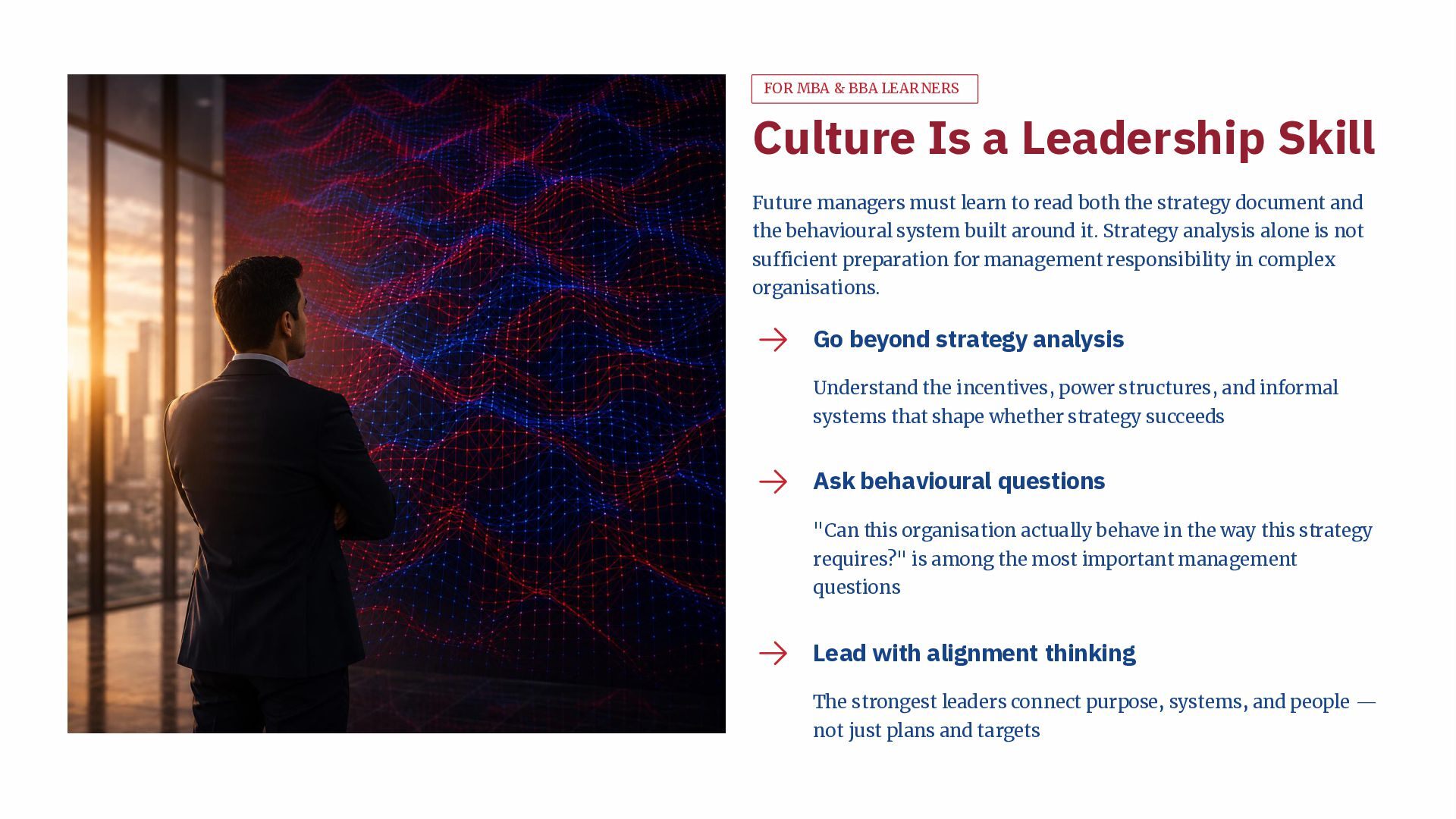
Future managers must learn to read both the strategy document and the behavioural system built around it. Strategy analysis alone is not sufficient preparation for management responsibility in complex organisations. Go beyond strategy analysis Understand the incentives, power structures, and informal systems that shape whether strategy succeeds Ask behavioural questions "Can this organisation actually behave in the way this strategy requires?" is among the most important management questions Lead with alignment thinking The strongest leaders connect purpose, systems, and people — not just plans and targets
The full article develops the management argument in depth — with frameworks, examples, and practical implications for leaders and learners navigating strategy and culture in real organisations. Why culture surfaces during execution The moment strategy meets reality, culture decides what happens next How incentives shape behaviour Systems teach employees what truly matters, more powerfully than any communication What leaders can do Practical alignment actions that connect strategy to daily organisational behaviour Why it matters for managers Cultural intelligence is a core leadership competency, not a soft-skills supplement preencoded.png preencoded.png


 bennettonline
 hrm
 kazumakitao
 reiwatravel_0405
 takemura_yuto
 maruishi
 gatechnologies
 freee
 kaonavi
 hiyoriyamakankou
 kuradashi
 shunsuke_takeuchi
 neuroenergia
 tammyeverts
 deanohume
 aleyda
 stuffmc
 quramy
 michielstock
 shpigford
 rakko
 lindahogenes
 inesmontani
 keathley
 pwiseman