capabilities, have emerged. Artificial Intelligence (AI) is a general term that refers to computer systems that can perform tasks that would previously have required human intelligence. What is AI?
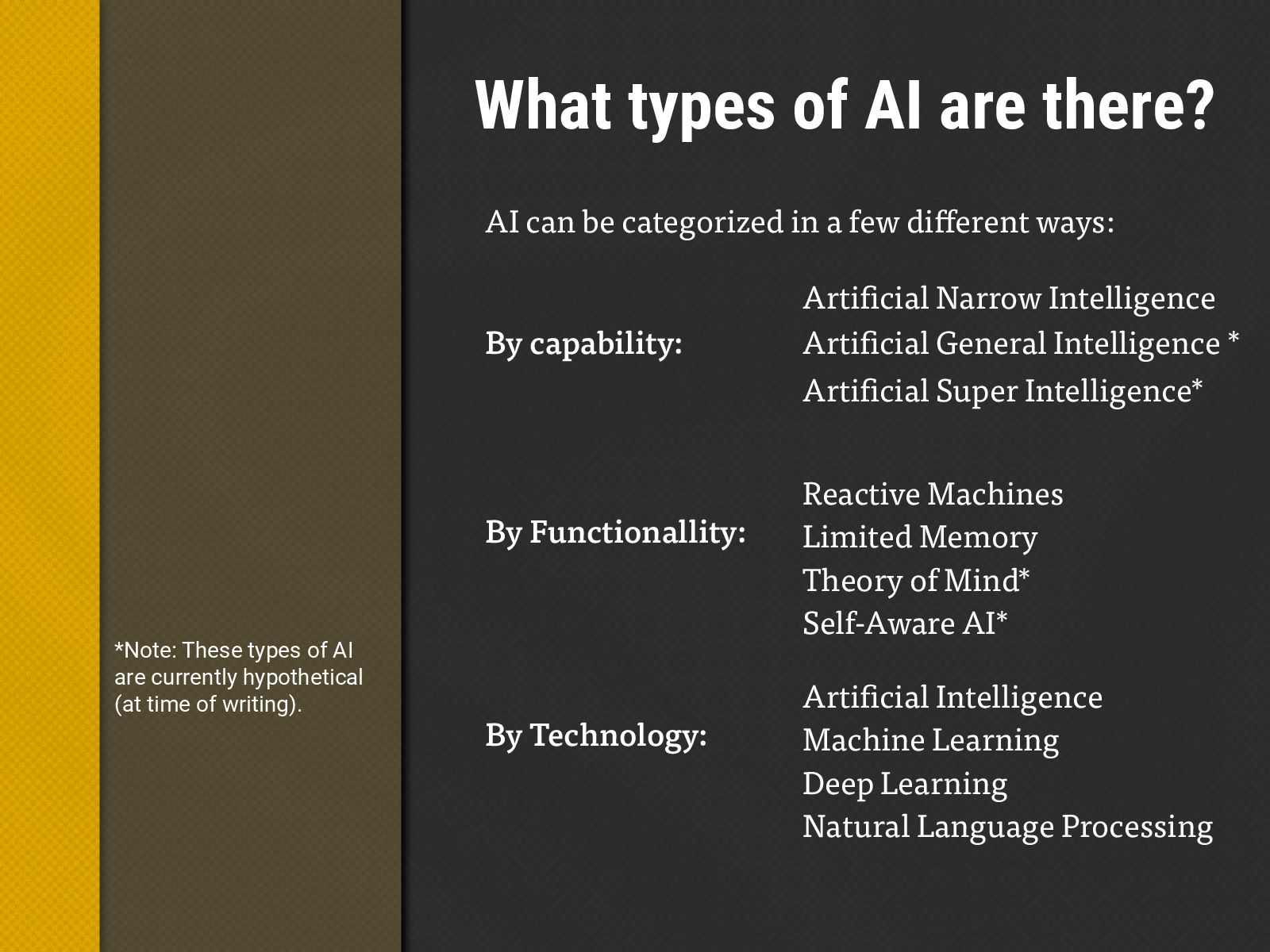
capability: Artificial Narrow Intelligence Artificial General Intelligence * Artificial Super Intelligence* By Functionallity: Reactive Machines Limited Memory Theory of Mind* Self-Aware AI* By Technology: Artificial Intelligence Machine Learning Deep Learning Natural Language Processing *Note: These types of AI are currently hypothetical (at time of writing). What types of AI are there?
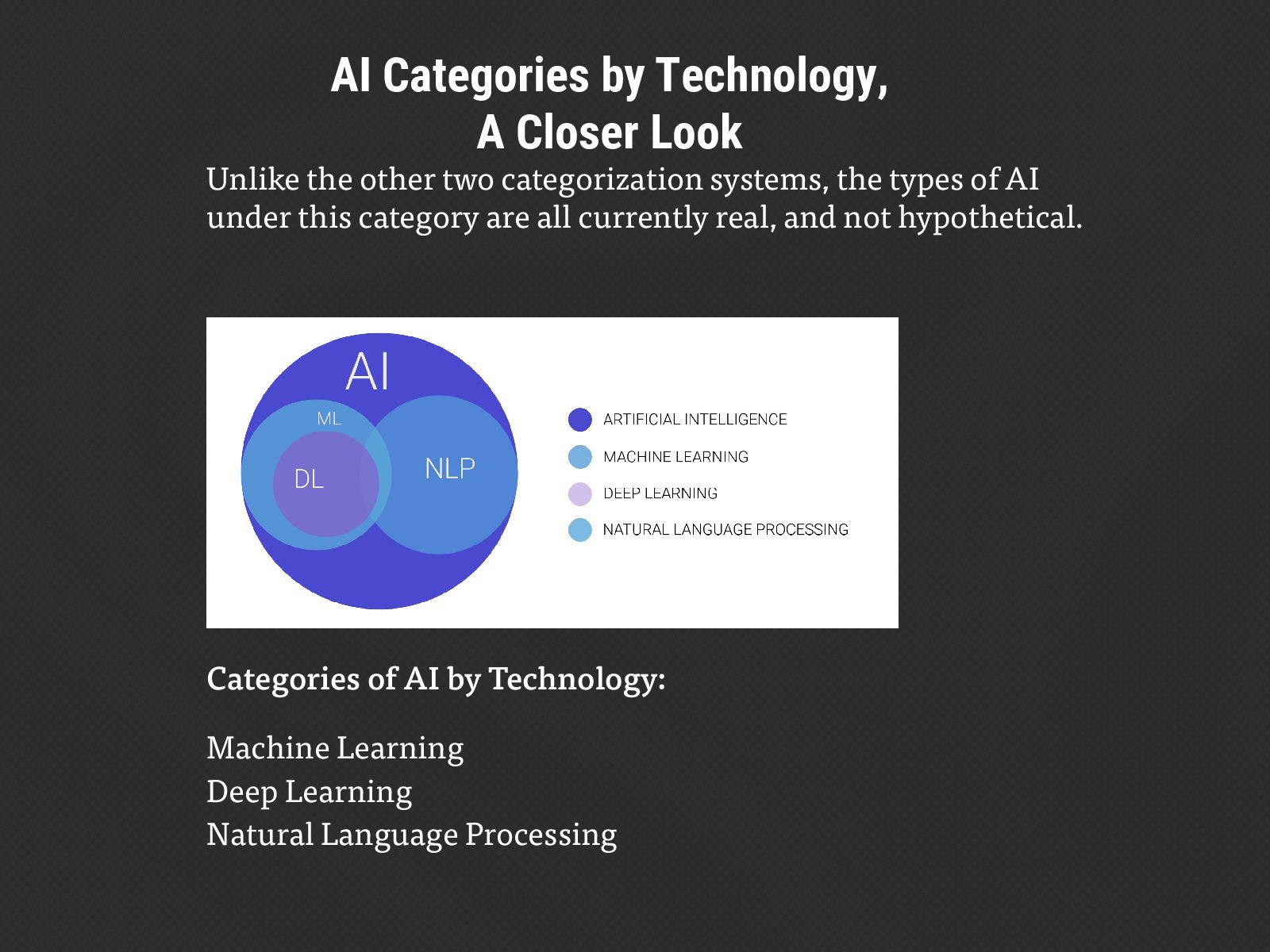
by Technology: Machine Learning Deep Learning Natural Language Processing Unlike the other two categorization systems, the types of AI under this category are all currently real, and not hypothetical.
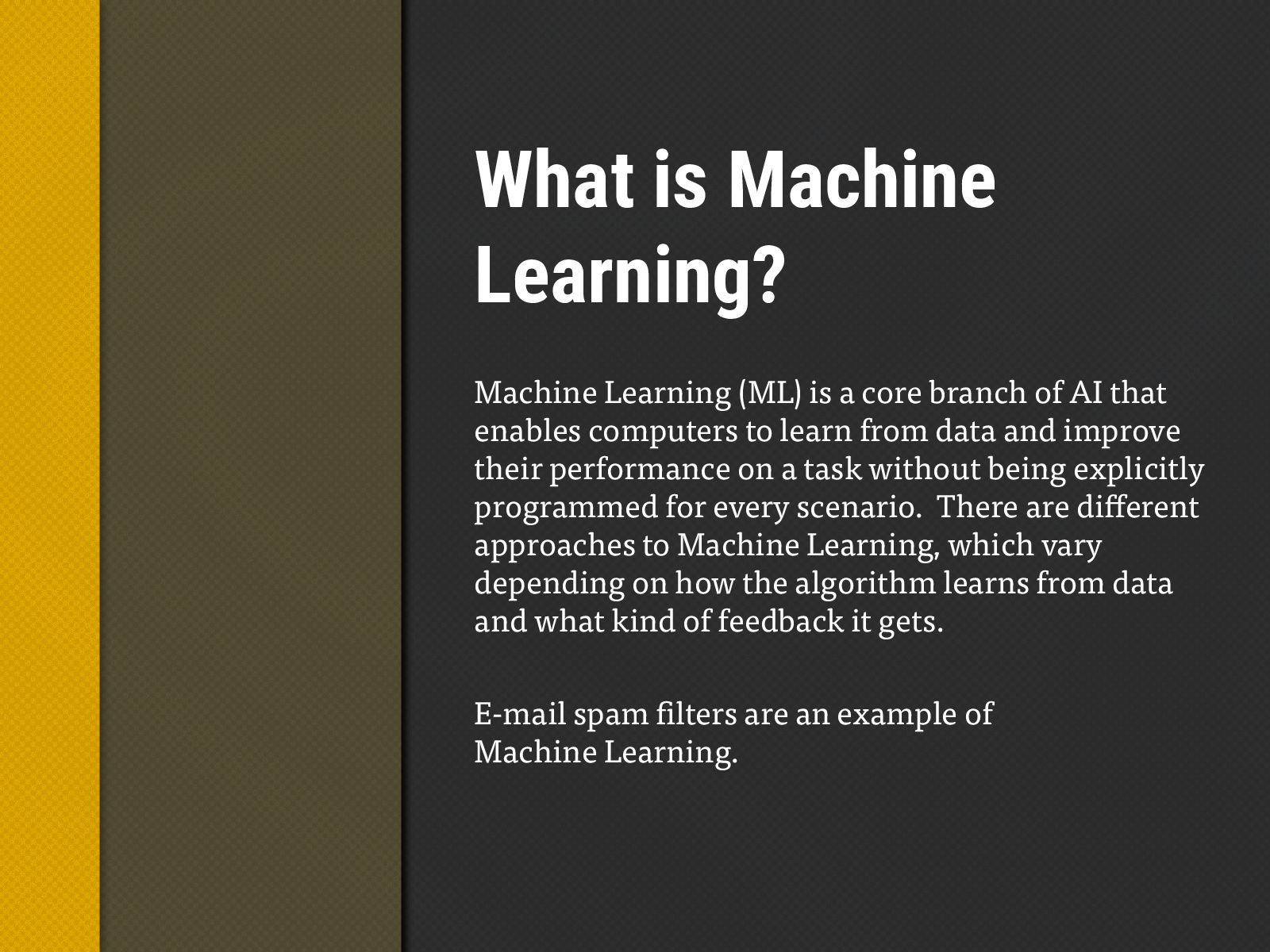
enables computers to learn from data and improve their performance on a task without being explicitly programmed for every scenario. There are different approaches to Machine Learning, which vary depending on how the algorithm learns from data and what kind of feedback it gets. What is Machine Learning? E-mail spam filters are an example of Machine Learning.
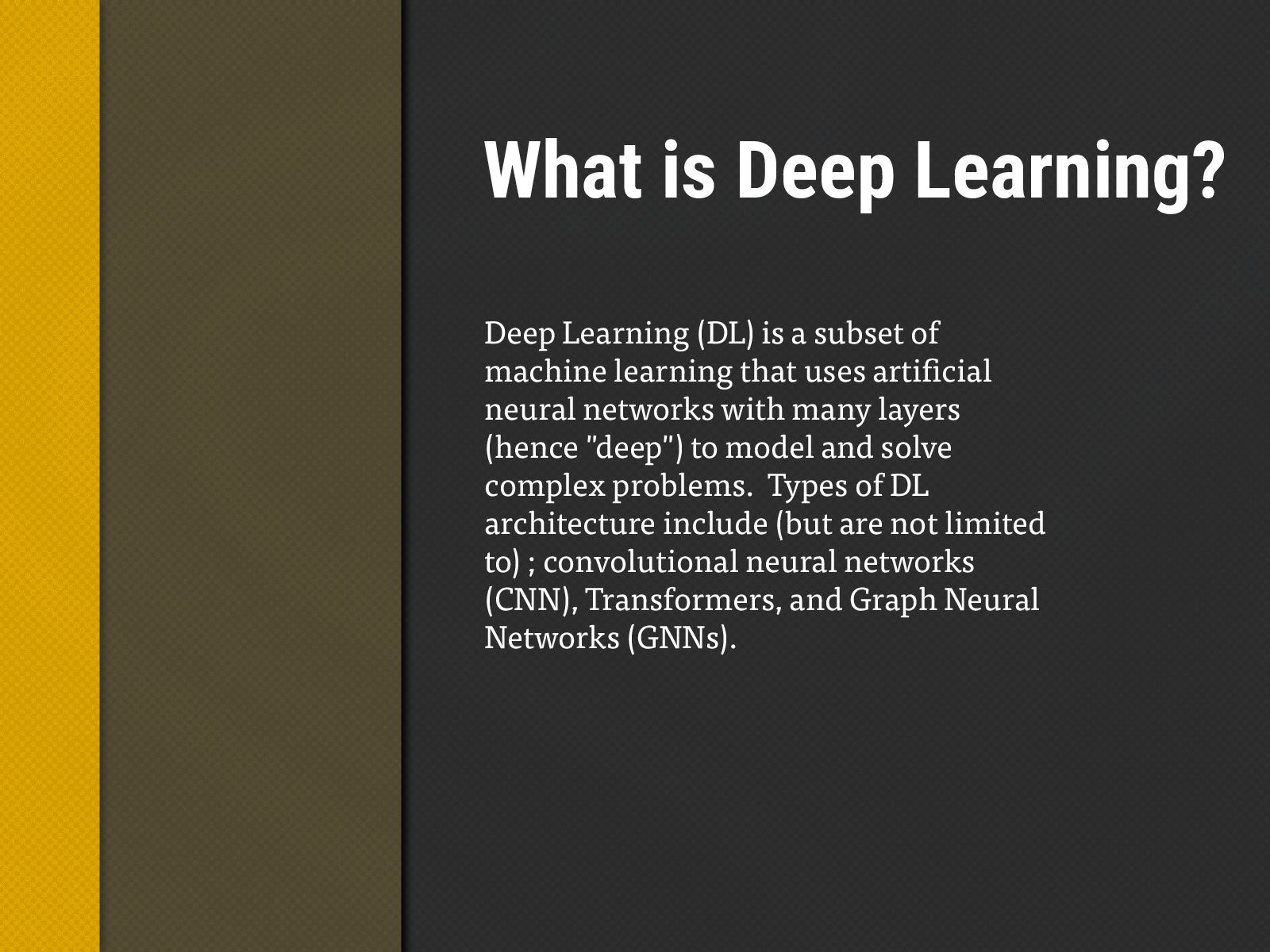
uses artificial neural networks with many layers (hence "deep") to model and solve complex problems. Types of DL architecture include (but are not limited to) ; convolutional neural networks (CNN), Transformers, and Graph Neural Networks (GNNs). What is Deep Learning?
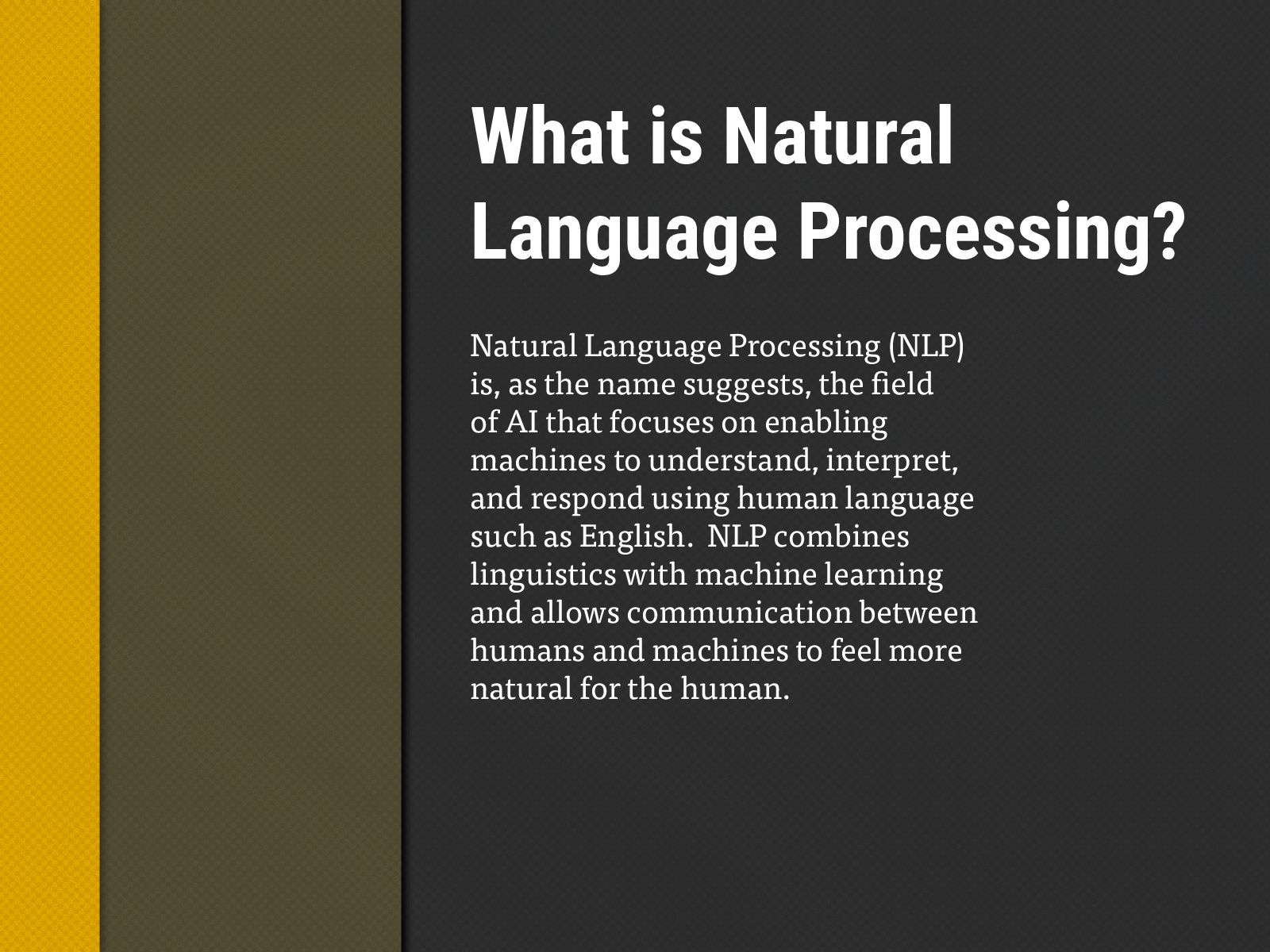
field of AI that focuses on enabling machines to understand, interpret, and respond using human language such as English. NLP combines linguistics with machine learning and allows communication between humans and machines to feel more natural for the human. What is Natural Language Processing?
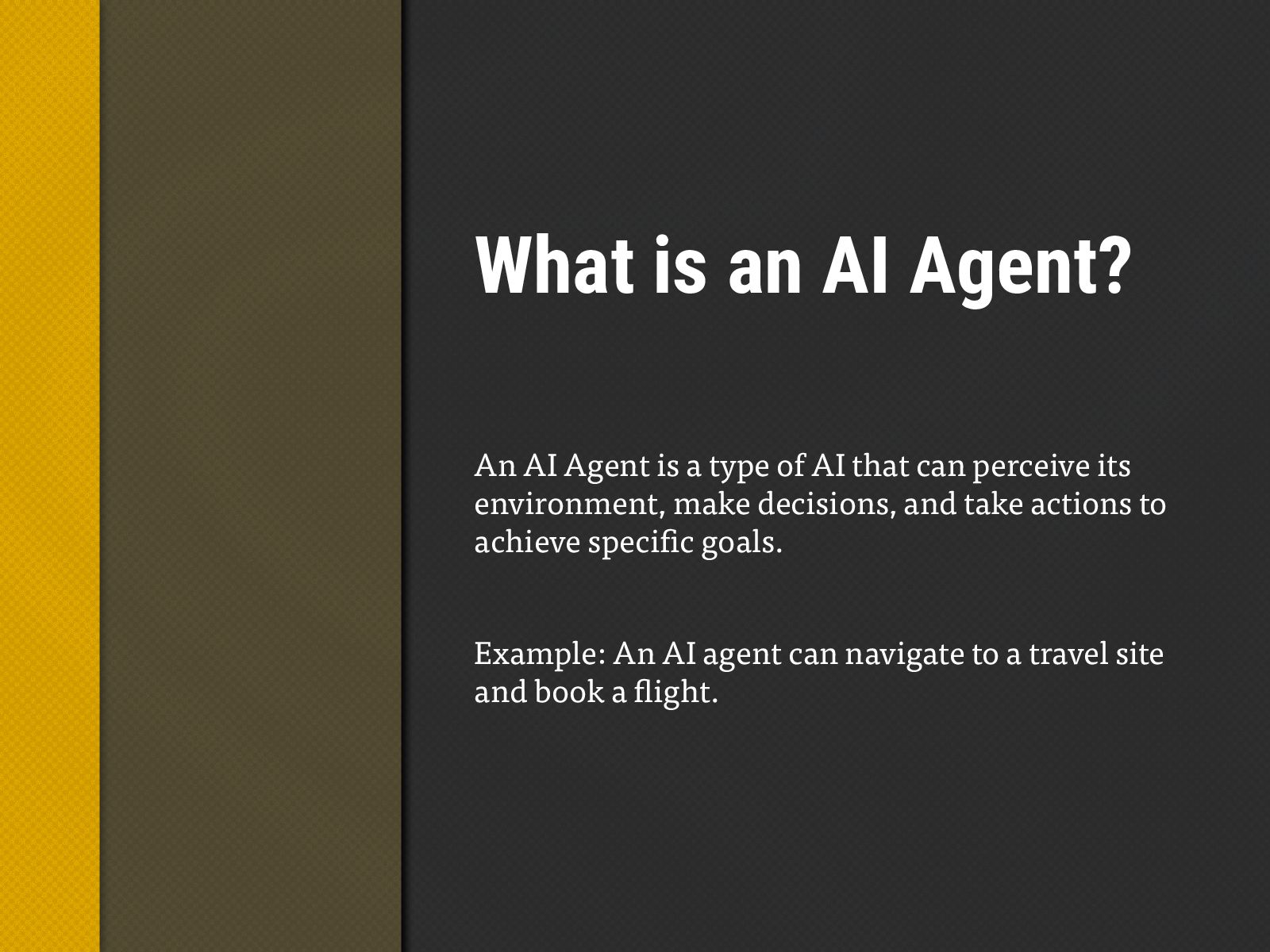
perceive its environment, make decisions, and take actions to achieve specific goals. Example: An AI agent can navigate to a travel site and book a flight. What is an AI Agent?
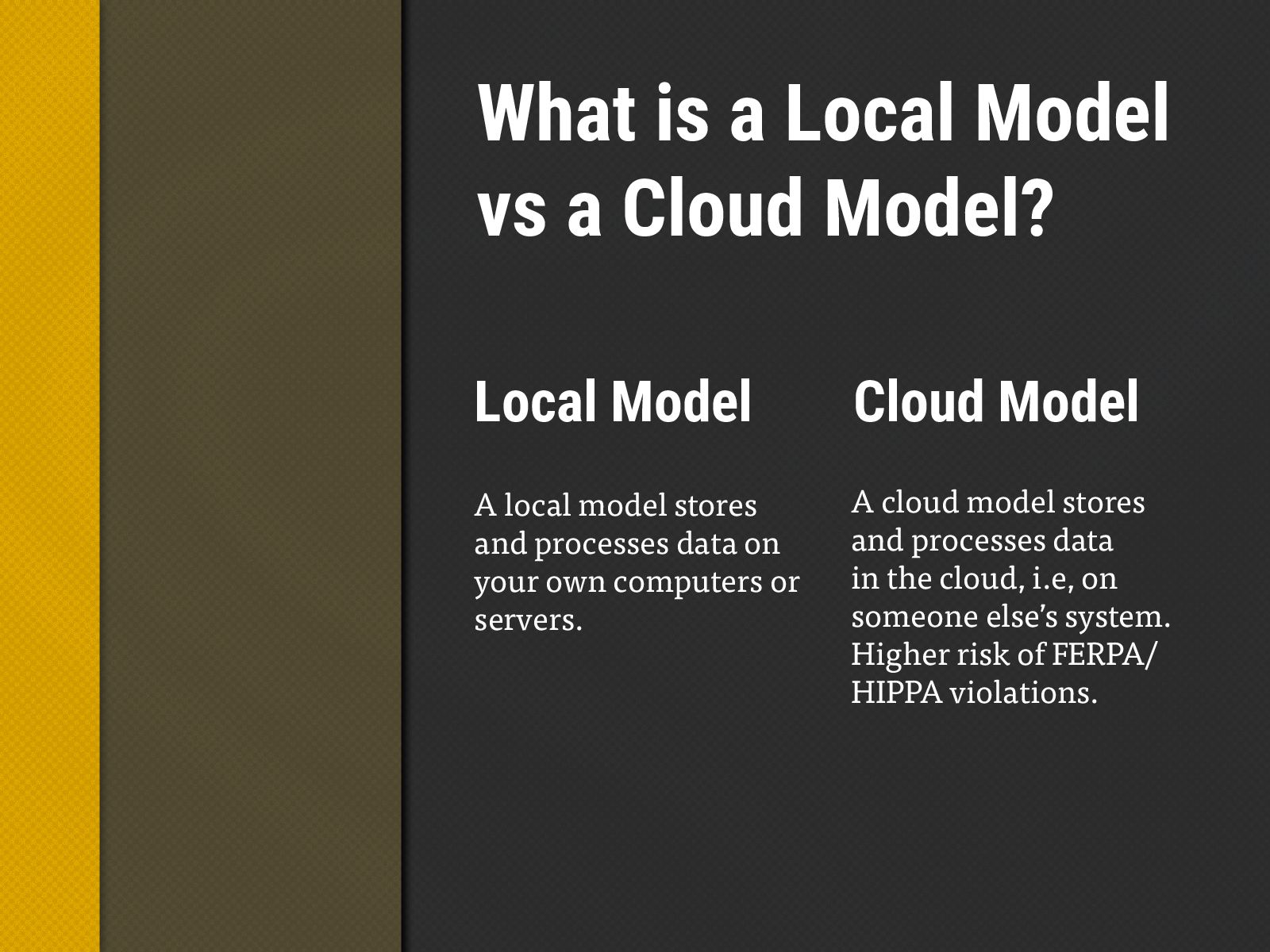
computers or servers. Local Model A cloud model stores and processes data in the cloud, i.e, on someone else’s system. Higher risk of FERPA/ HIPPA violations. Cloud Model What is a Local Model vs a Cloud Model?
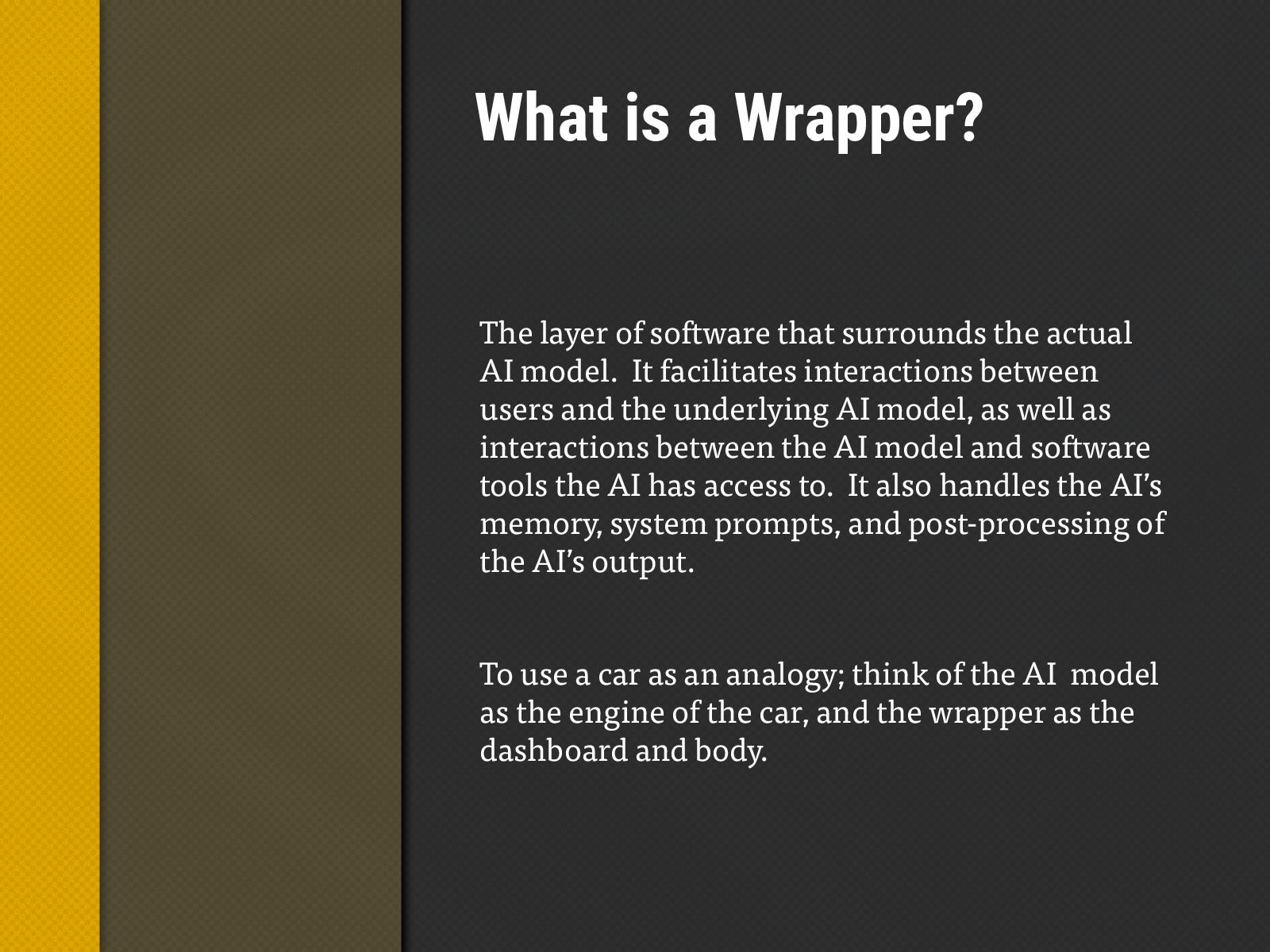
It facilitates interactions between users and the underlying AI model, as well as interactions between the AI model and software tools the AI has access to. It also handles the AI’s memory, system prompts, and post-processing of the AI’s output. To use a car as an analogy; think of the AI model as the engine of the car, and the wrapper as the dashboard and body. What is a Wrapper?
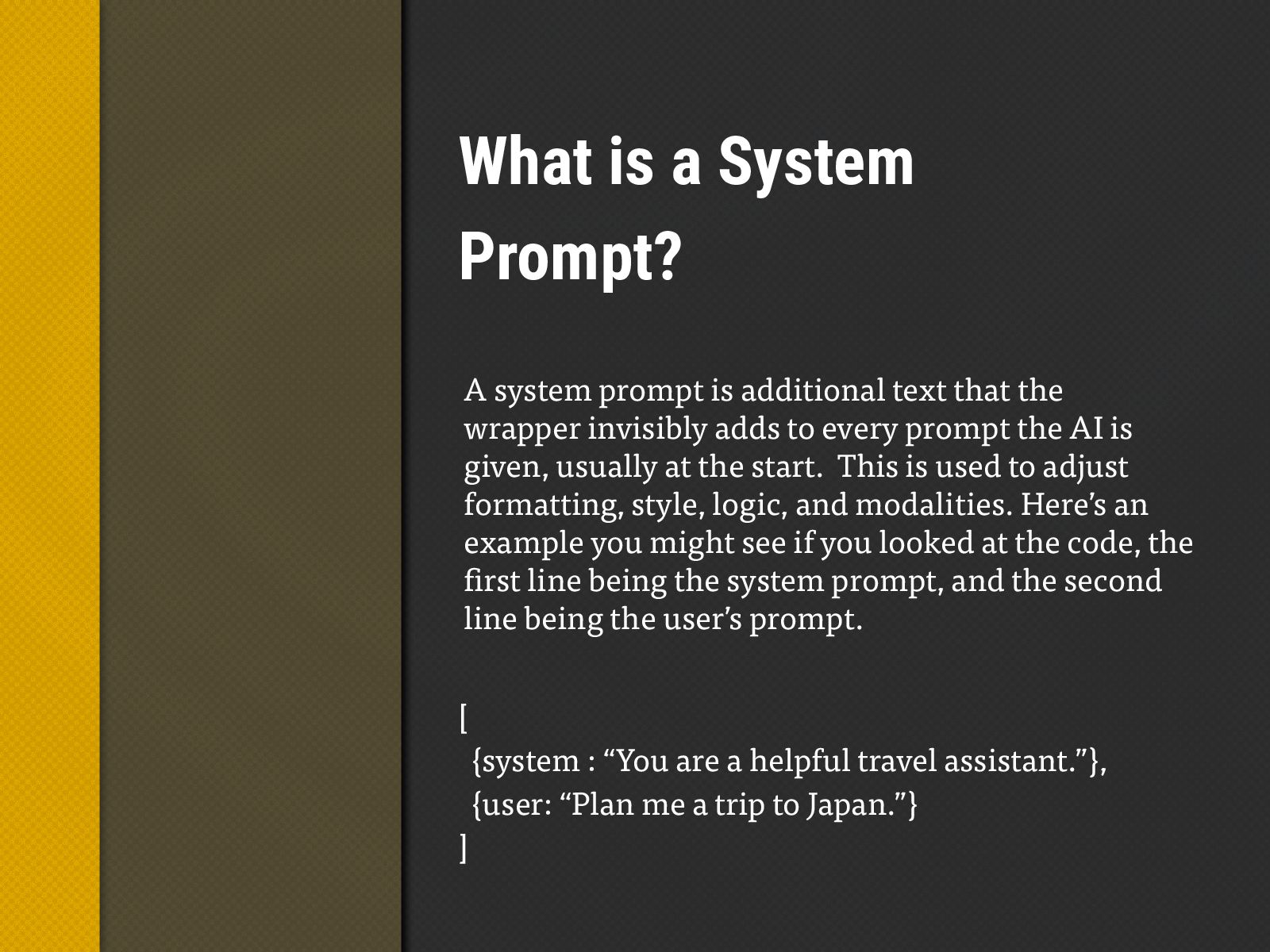
adds to every prompt the AI is given, usually at the start. This is used to adjust formatting, style, logic, and modalities. Here’s an example you might see if you looked at the code, the first line being the system prompt, and the second line being the user’s prompt. What is a System Prompt? [ {system : “You are a helpful travel assistant.”}, {user: “Plan me a trip to Japan.”} ]
learning model designed to understand, generate, and predict human language. These are what allow AIs to understand natural human language. What is a Large Language Model?
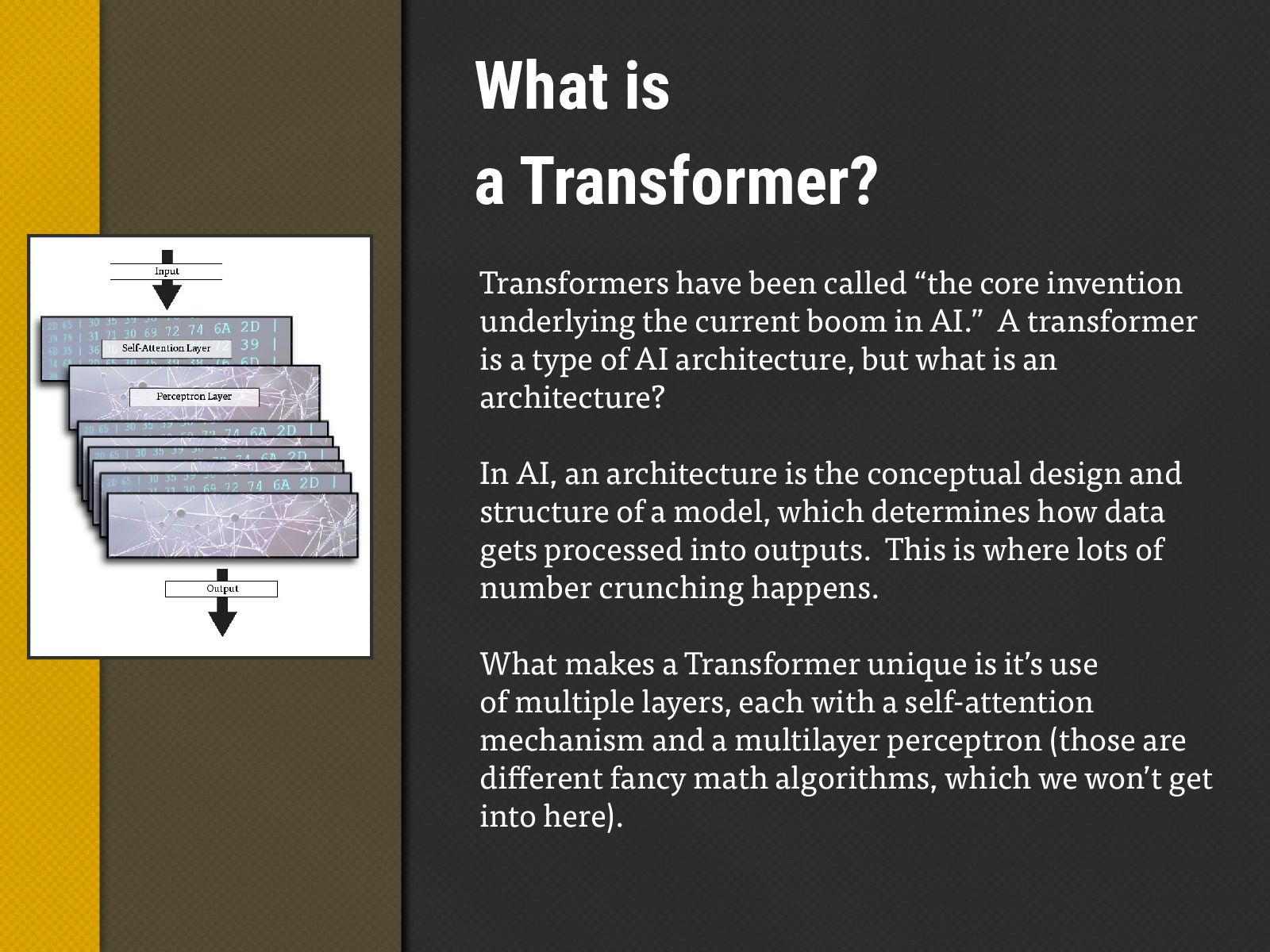
boom in AI.” A transformer is a type of AI architecture, but what is an architecture? In AI, an architecture is the conceptual design and structure of a model, which determines how data gets processed into outputs. This is where lots of number crunching happens. What makes a Transformer unique is it’s use of multiple layers, each with a self-attention mechanism and a multilayer perceptron (those are different fancy math algorithms, which we won’t get into here). What is a Transformer?
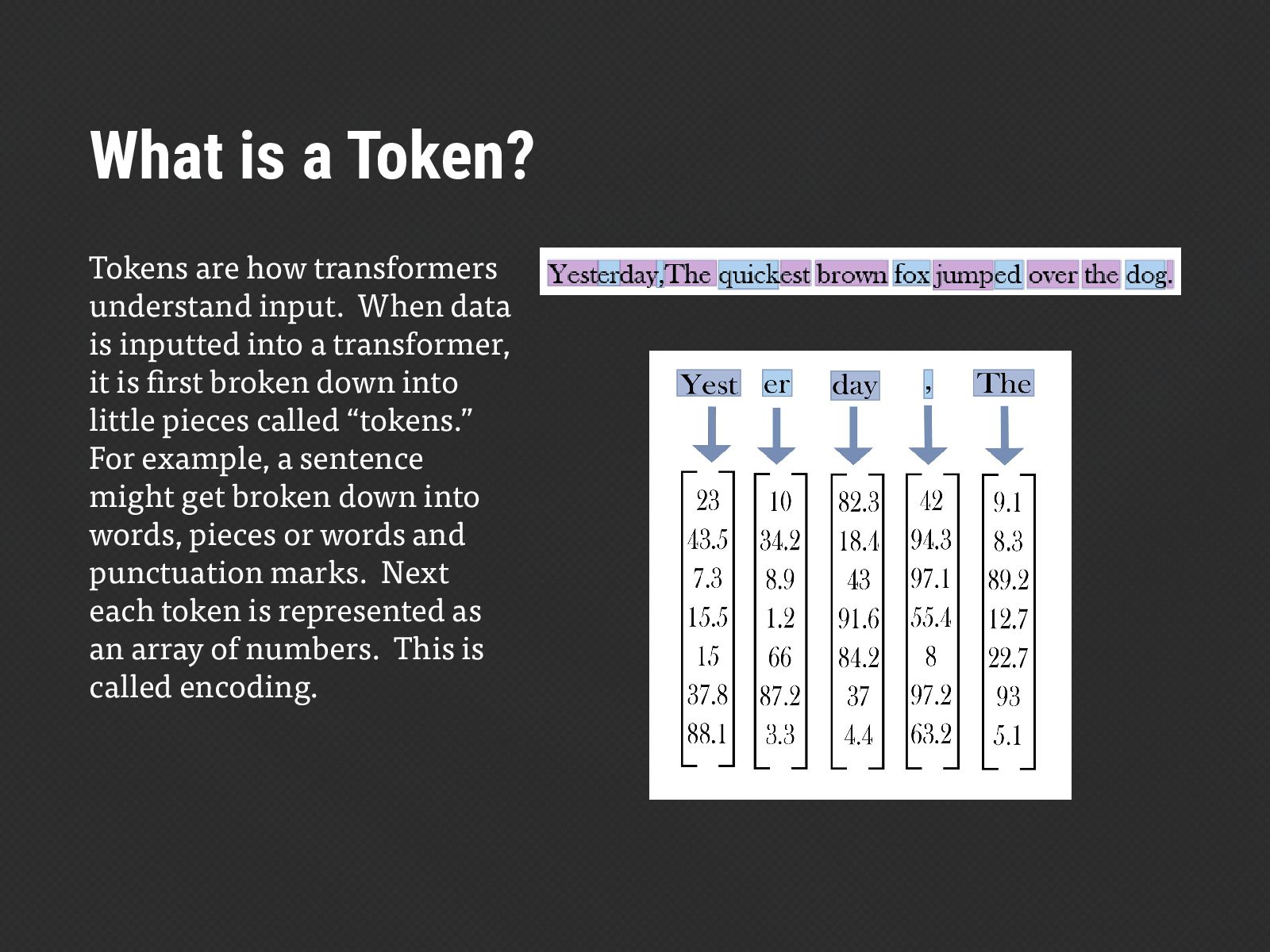
When data is inputted into a transformer, it is first broken down into little pieces called “tokens.” For example, a sentence might get broken down into words, pieces or words and punctuation marks. Next each token is represented as an array of numbers. This is called encoding.


 endonanana
 ezaki
ezaki
 pfn
pfn
 yamanoku
 teamlab
 syuchimu
 tetsuya28
 terapyon
 yazm
yazm
 kizawa2020
 takonda
 codmoninc
.png) helenjbeal
helenjbeal
 inesmontani
 stephenakadiri
 twada
twada
 aarron
 palkan
 427marketing
 codingconduct
 ivargrimstad
 shpigford
 stuffmc