Alexander TI Analyst, Kaspersky https://t.me/BlureL https://www.linkedin.com/in/ivanov-gleb/ https://www.linkedin.com/in/alexander- kirichenko/ https://t.me/N01rX
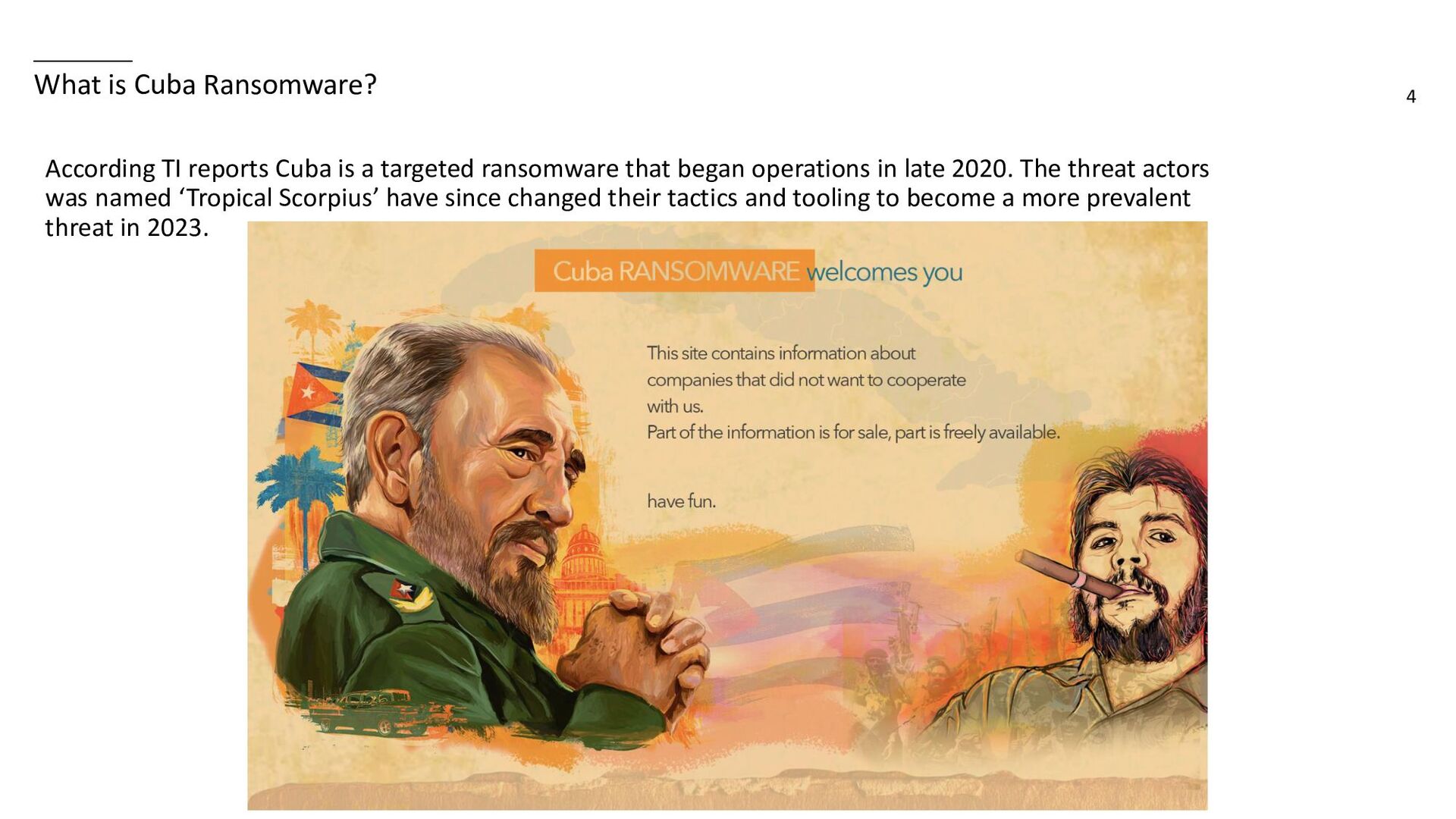
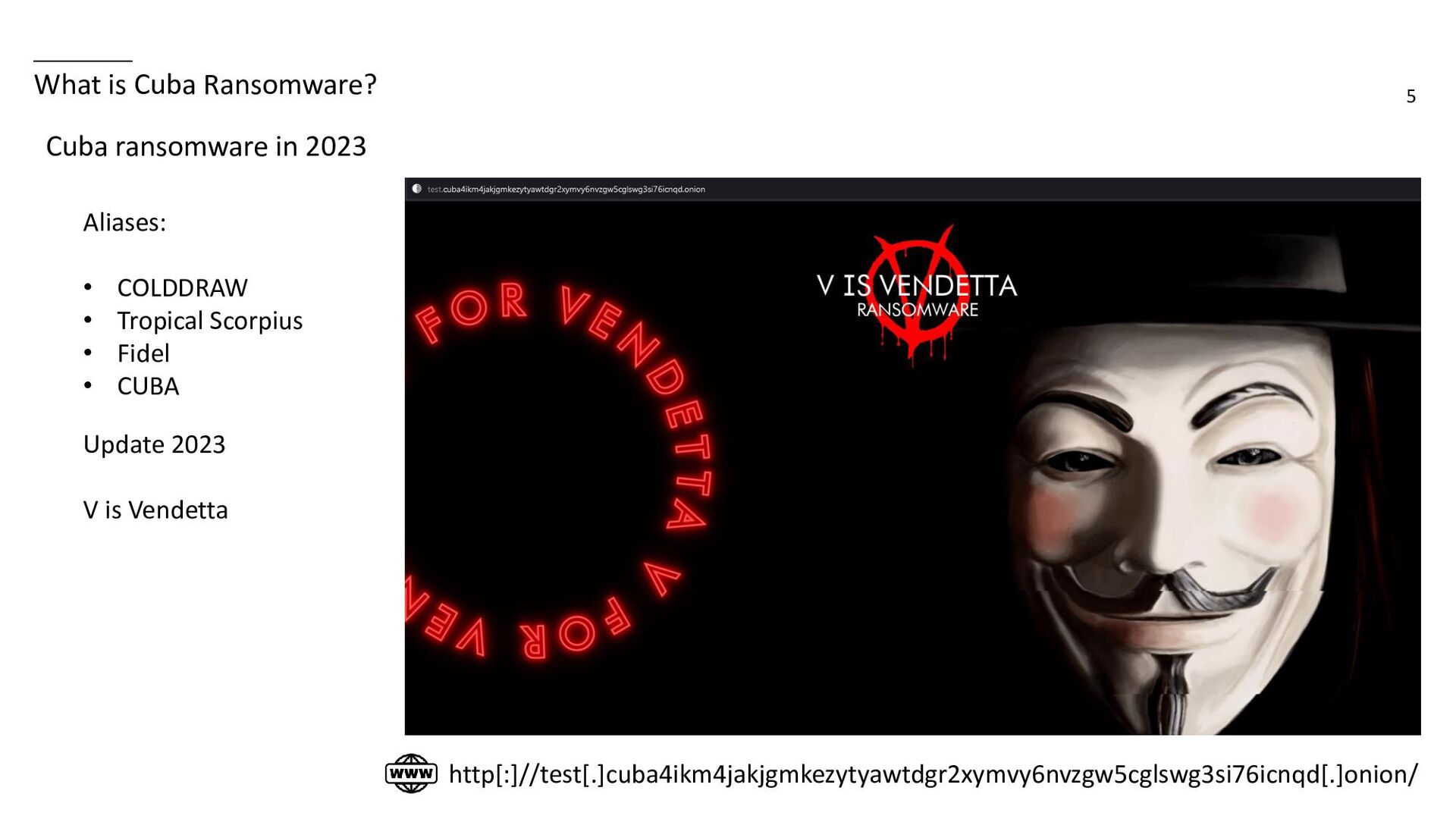
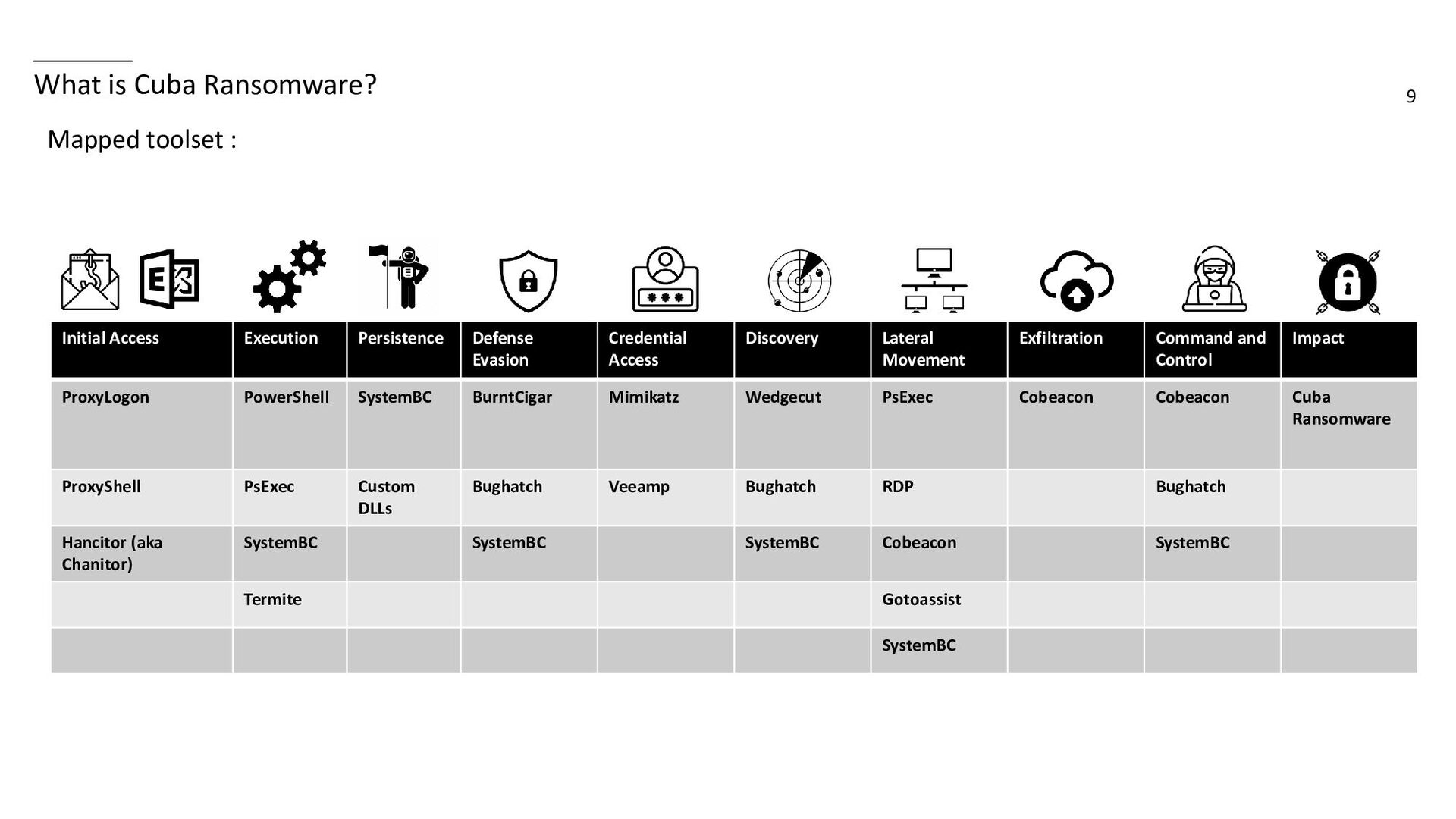
began operations in late 2020. The threat actors was named ‘Tropical Scorpius’ have since changed their tactics and tooling to become a more prevalent threat in 2023. What is Cuba Ransomware?
• COLDDRAW • Tropical Scorpius • Fidel • CUBA Update 2023 V is Vendetta http[:]//test[.]cuba4ikm4jakjgmkezytyawtdgr2xymvy6nvzgw5cglswg3si76icnqd[.]onion/
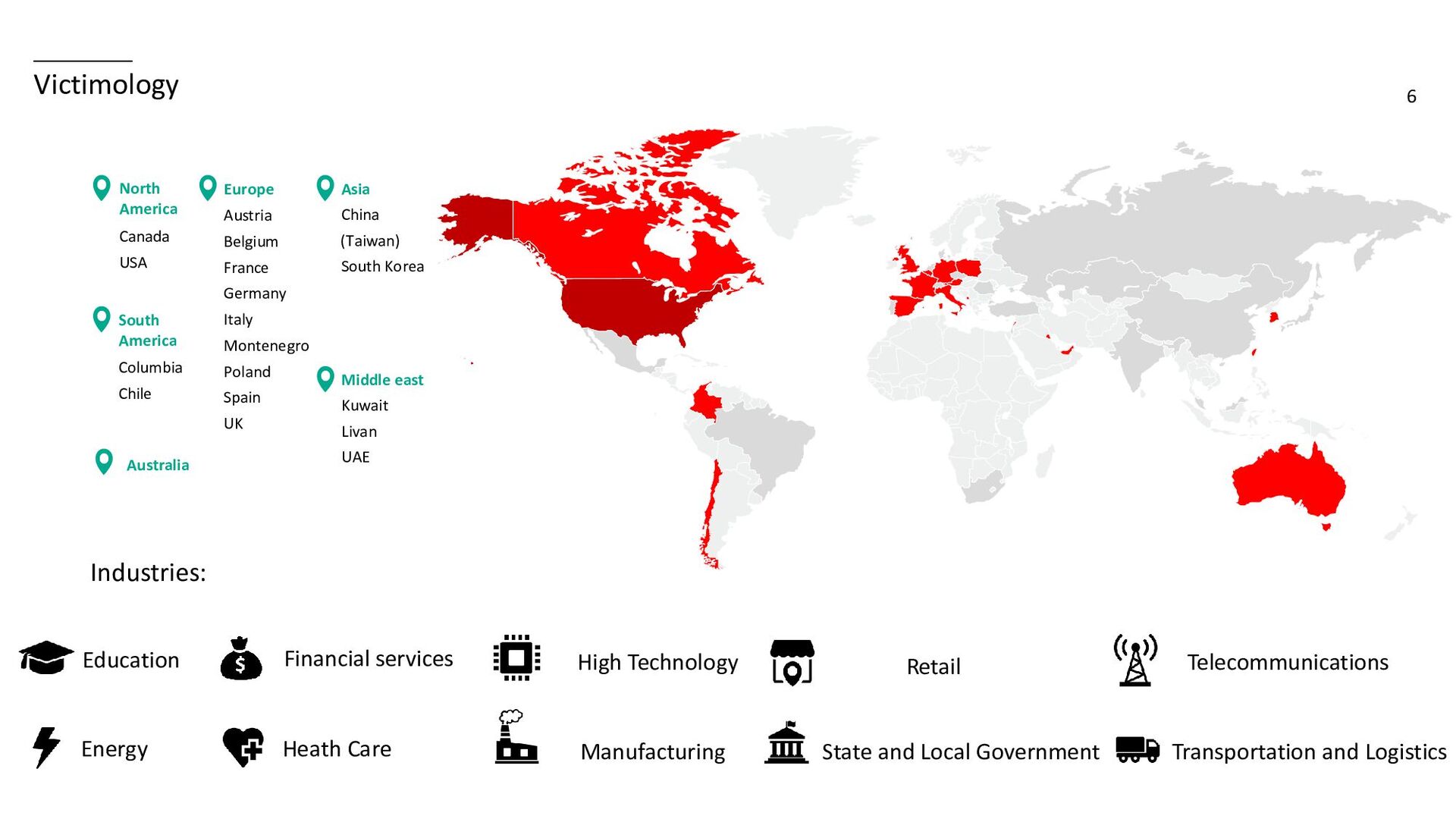
Germany Italy Montenegro Poland Spain UK Asia China (Taiwan) South Korea North America Canada USA Australia Industries: Middle east Kuwait Livan UAE Energy Heath Care Financial services Transportation and Logistics Education Manufacturing State and Local Government Telecommunications Retail High Technology
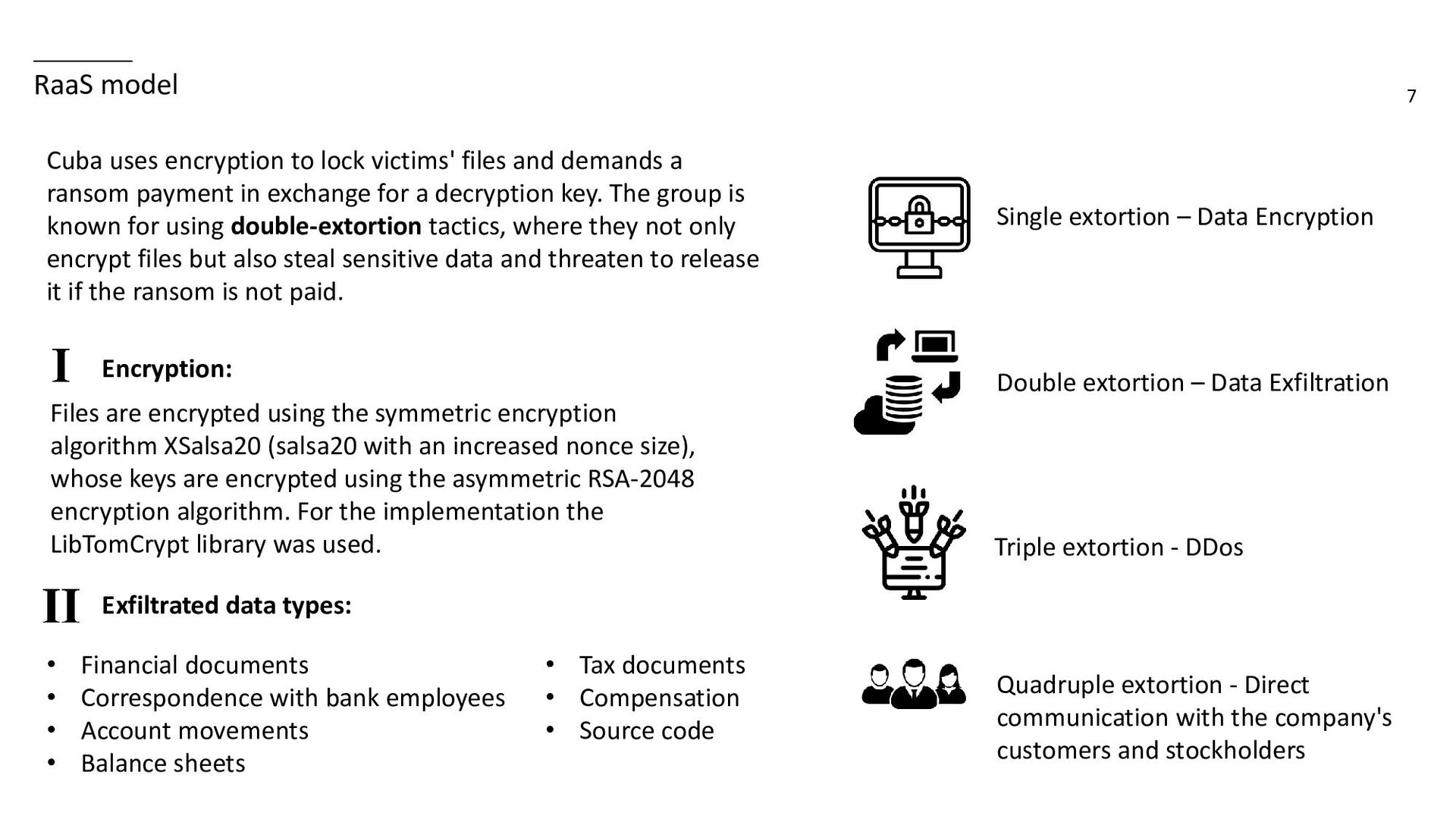
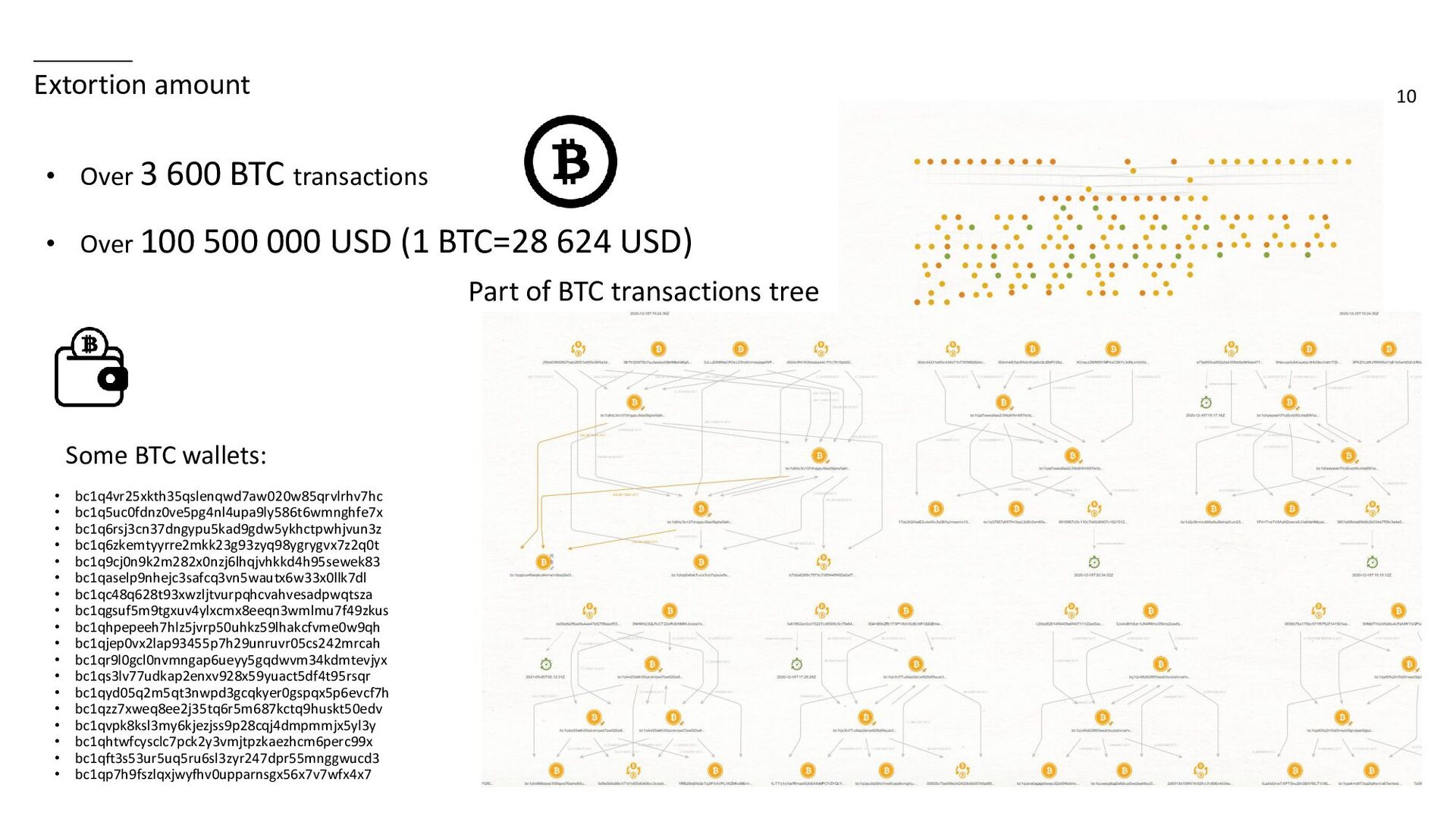
– Data Exfiltration Triple extortion - DDos Quadruple extortion - Direct communication with the company's customers and stockholders Cuba uses encryption to lock victims' files and demands a ransom payment in exchange for a decryption key. The group is known for using double-extortion tactics, where they not only encrypt files but also steal sensitive data and threaten to release it if the ransom is not paid. • Financial documents • Correspondence with bank employees • Account movements • Balance sheets Exfiltrated data types: • Tax documents • Compensation • Source code Files are encrypted using the symmetric encryption algorithm XSalsa20 (salsa20 with an increased nonce size), whose keys are encrypted using the asymmetric RSA-2048 encryption algorithm. For the implementation the LibTomCrypt library was used. Encryption:
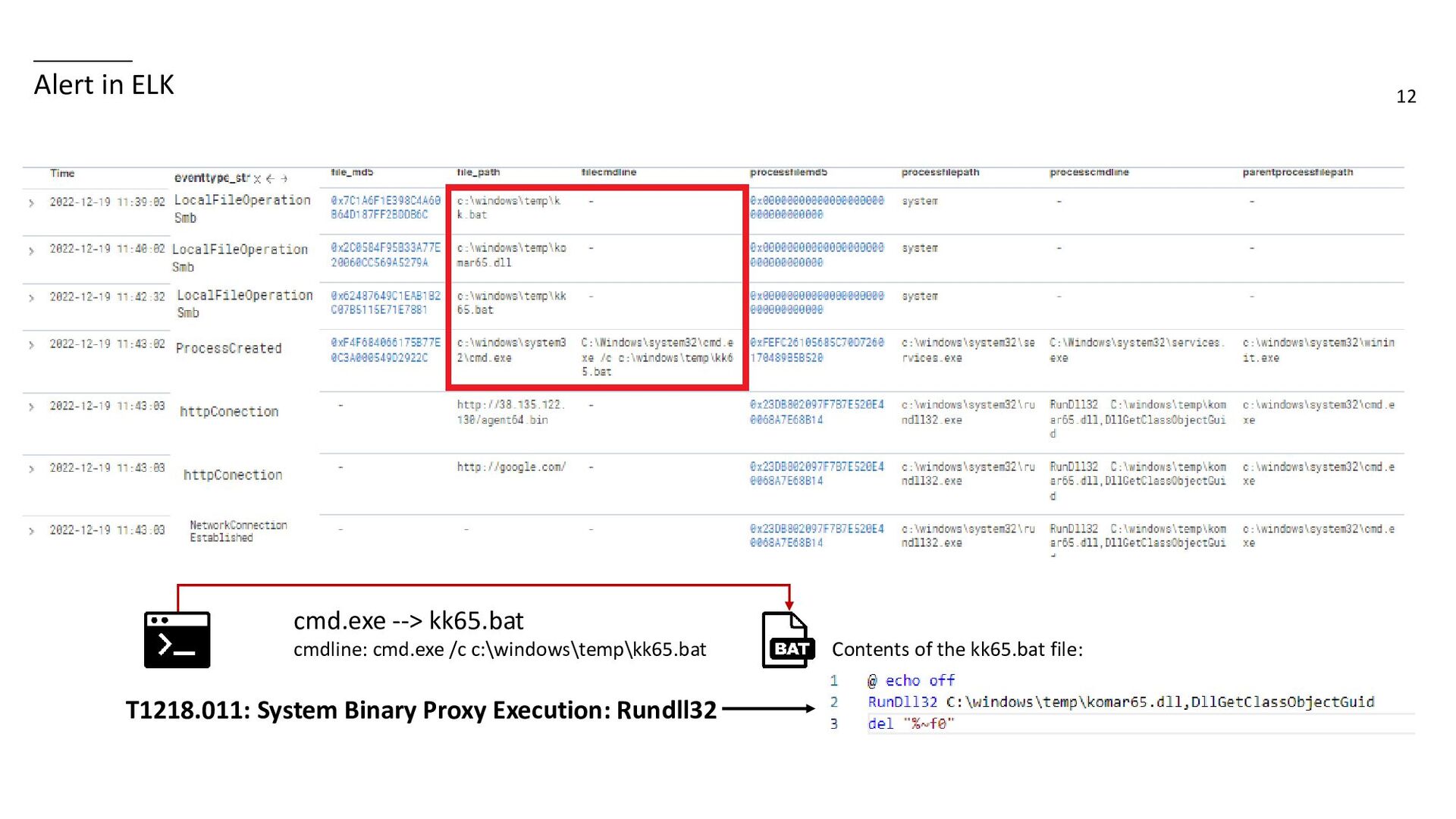
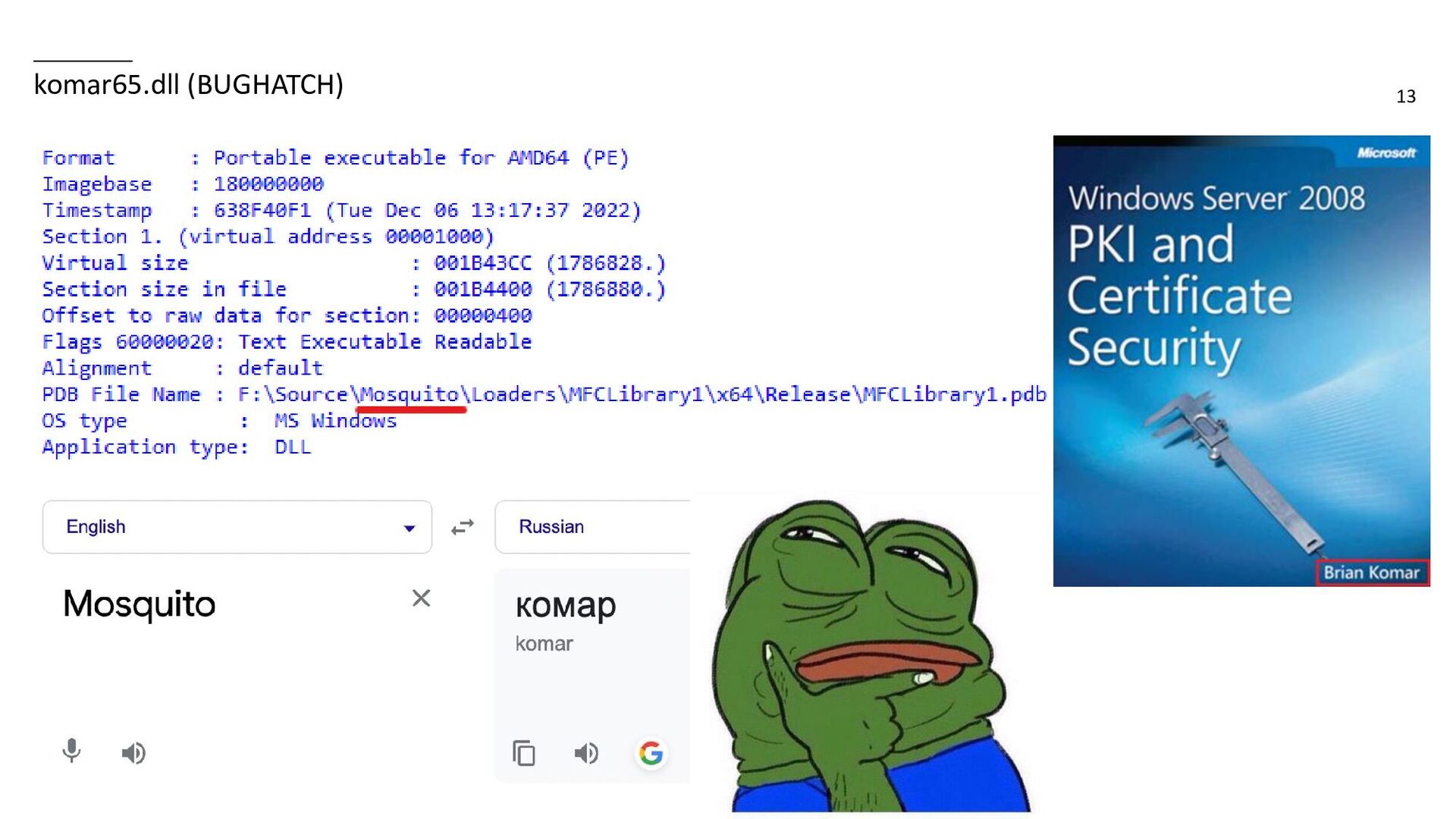
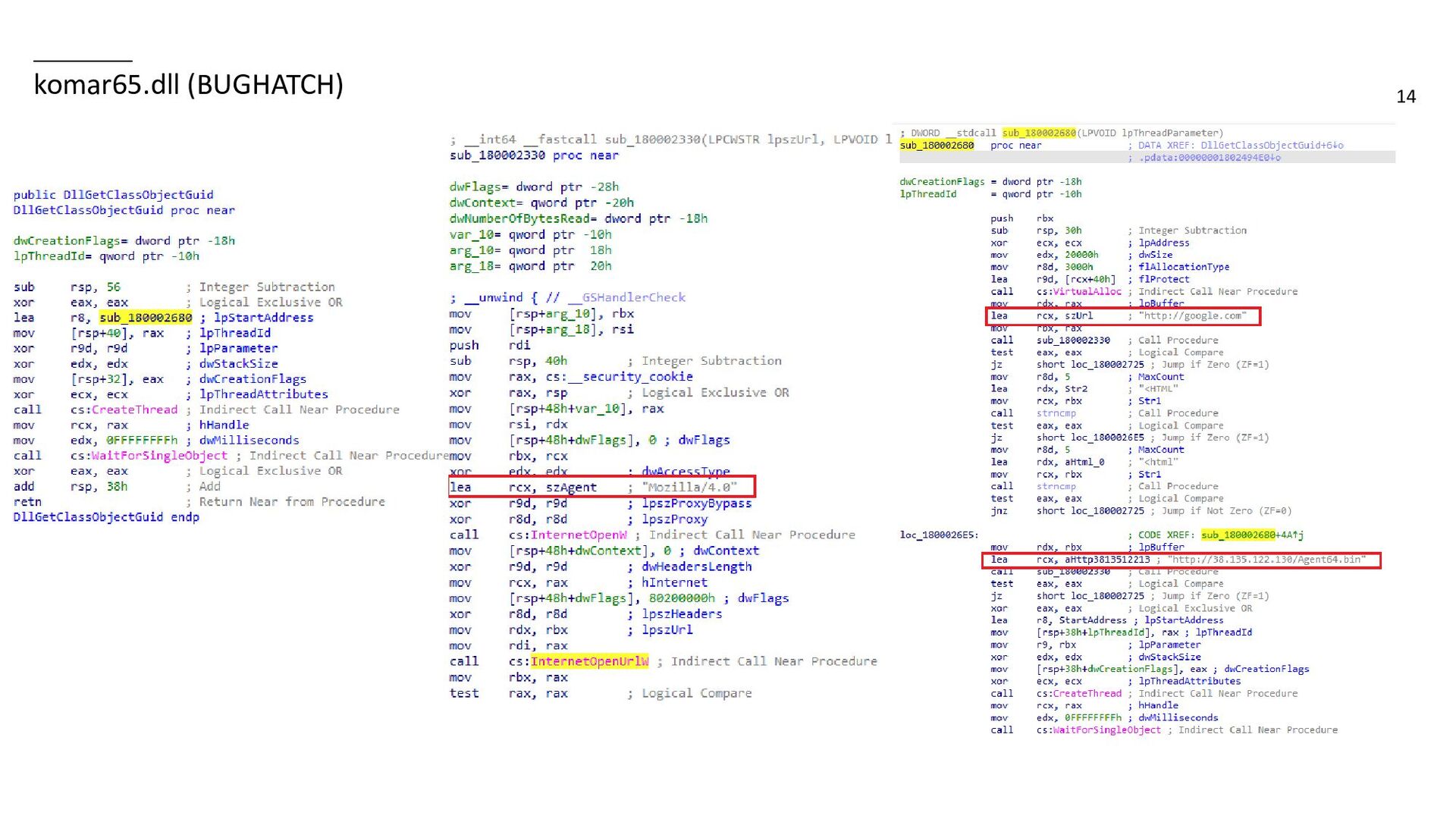
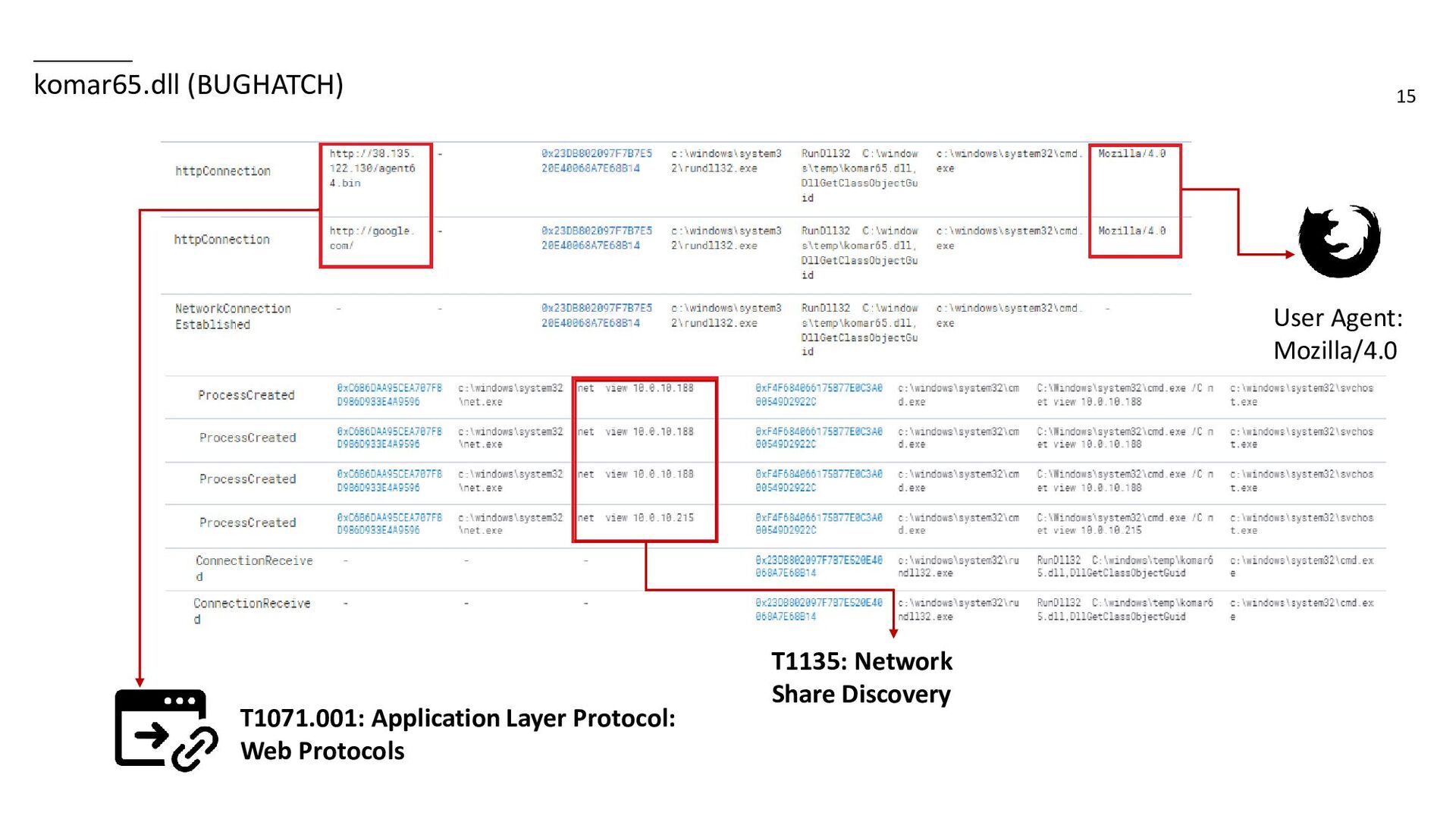
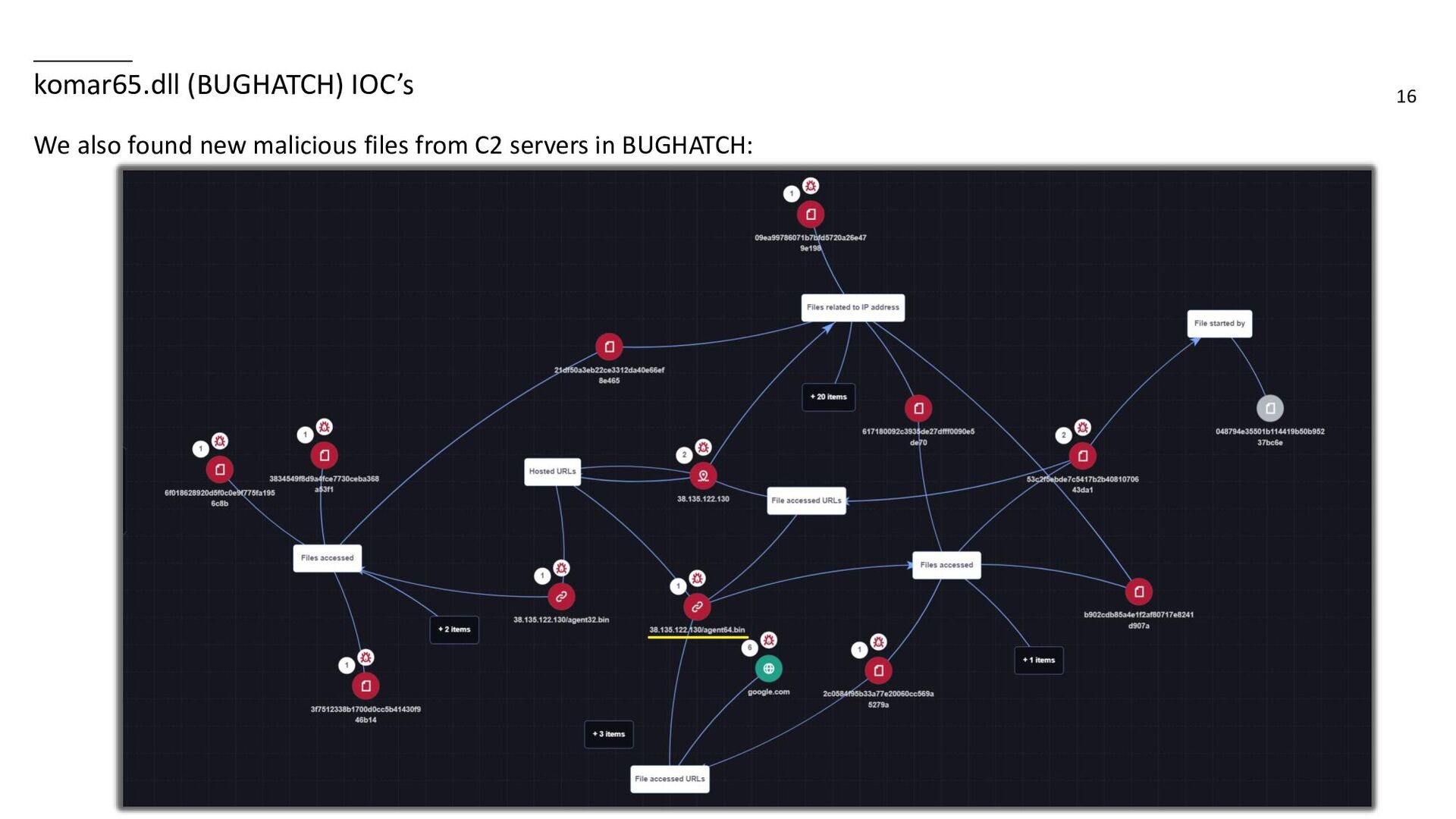
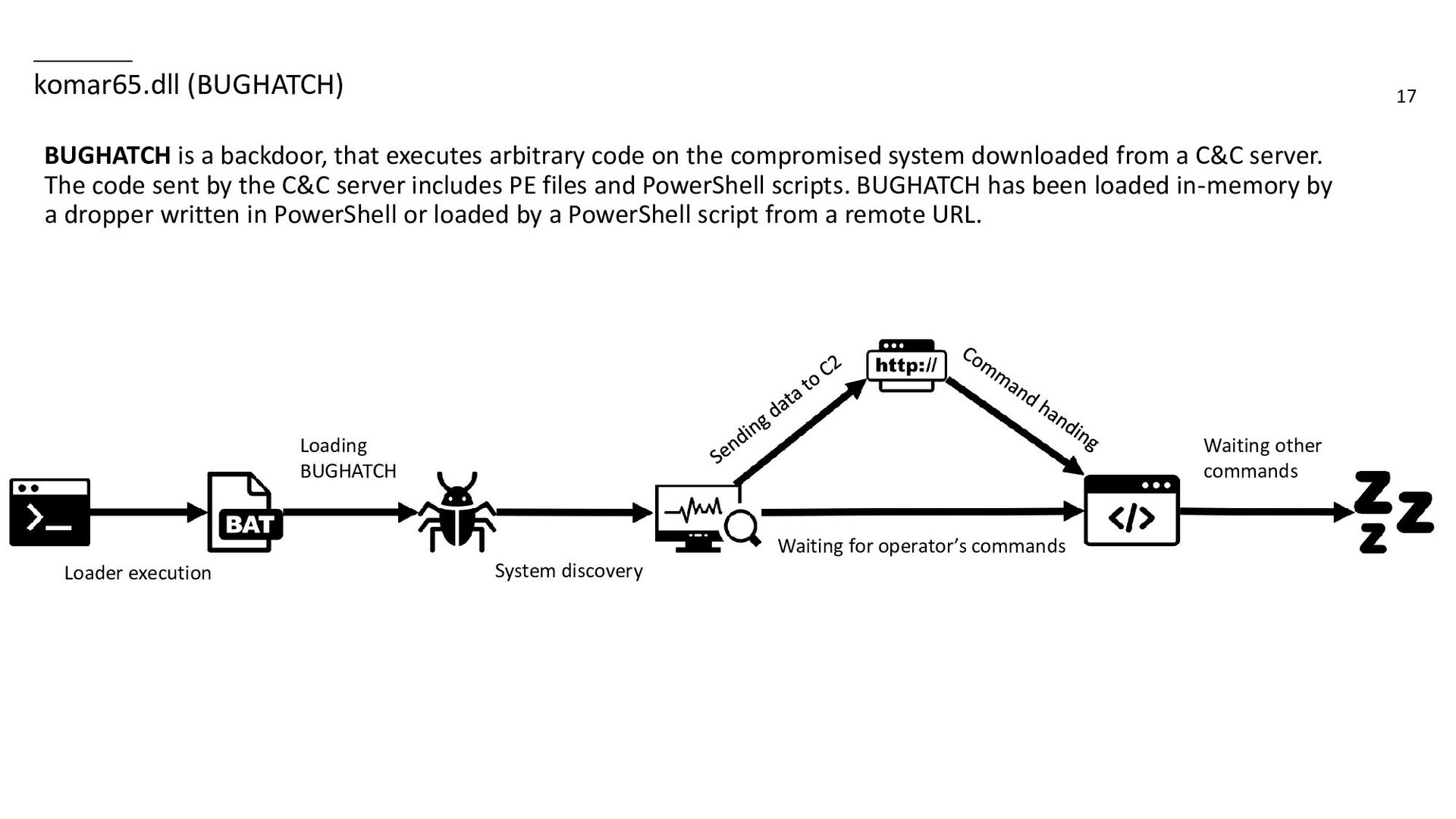
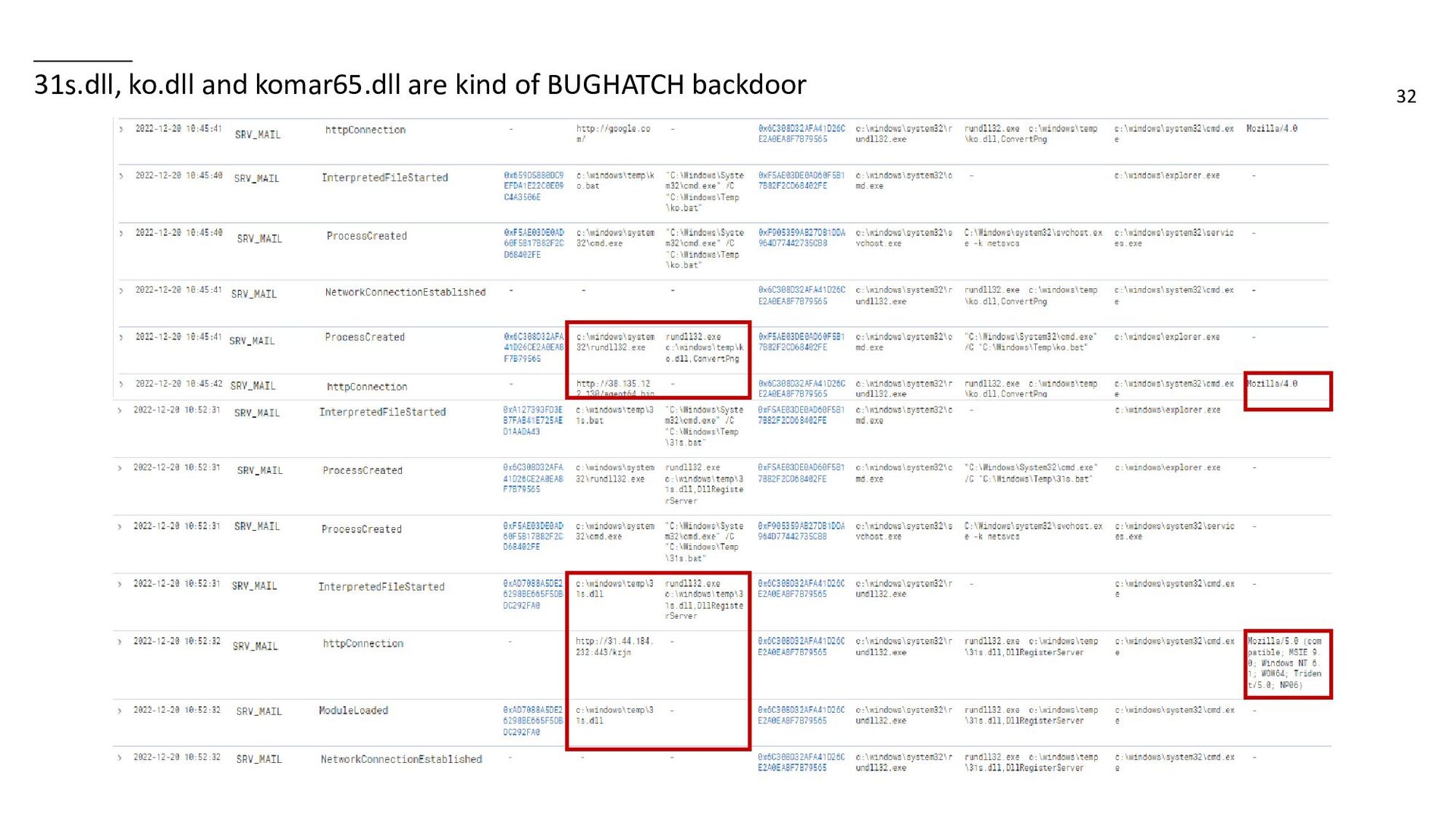
the compromised system downloaded from a C&C server. The code sent by the C&C server includes PE files and PowerShell scripts. BUGHATCH has been loaded in-memory by a dropper written in PowerShell or loaded by a PowerShell script from a remote URL. komar65.dll (BUGHATCH) Loader execution Loading BUGHATCH System discovery Waiting for operator’s commands Waiting other commands
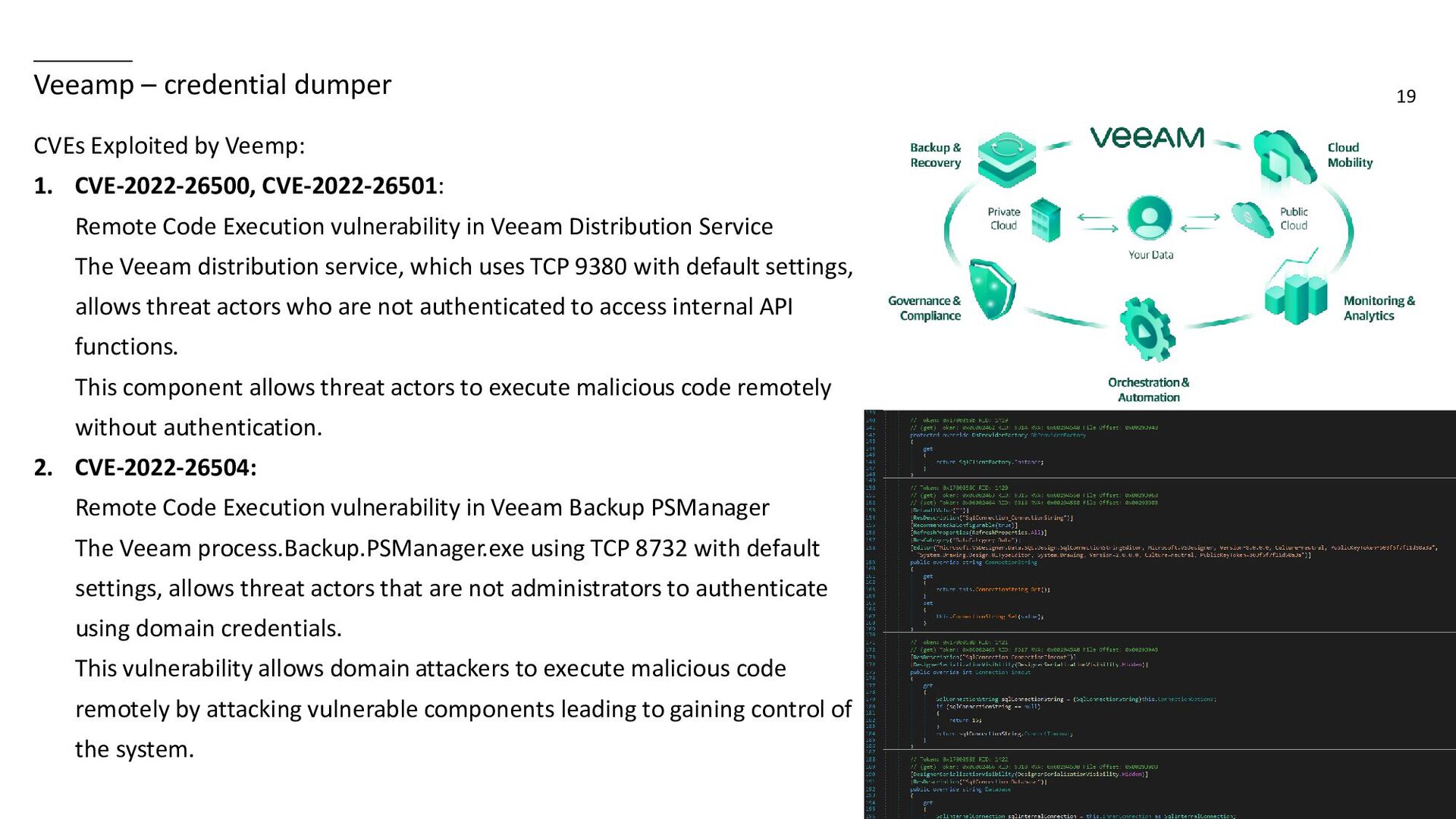
CVE-2022-26500, CVE-2022-26501: Remote Code Execution vulnerability in Veeam Distribution Service The Veeam distribution service, which uses TCP 9380 with default settings, allows threat actors who are not authenticated to access internal API functions. This component allows threat actors to execute malicious code remotely without authentication. 2. CVE-2022-26504: Remote Code Execution vulnerability in Veeam Backup PSManager The Veeam process.Backup.PSManager.exe using TCP 8732 with default settings, allows threat actors that are not administrators to authenticate using domain credentials. This vulnerability allows domain attackers to execute malicious code remotely by attacking vulnerable components leading to gaining control of the system. Sensitive files inside backups: • NTDS.dit • SAM, SECURITY, SYSTEM • Browser profiles
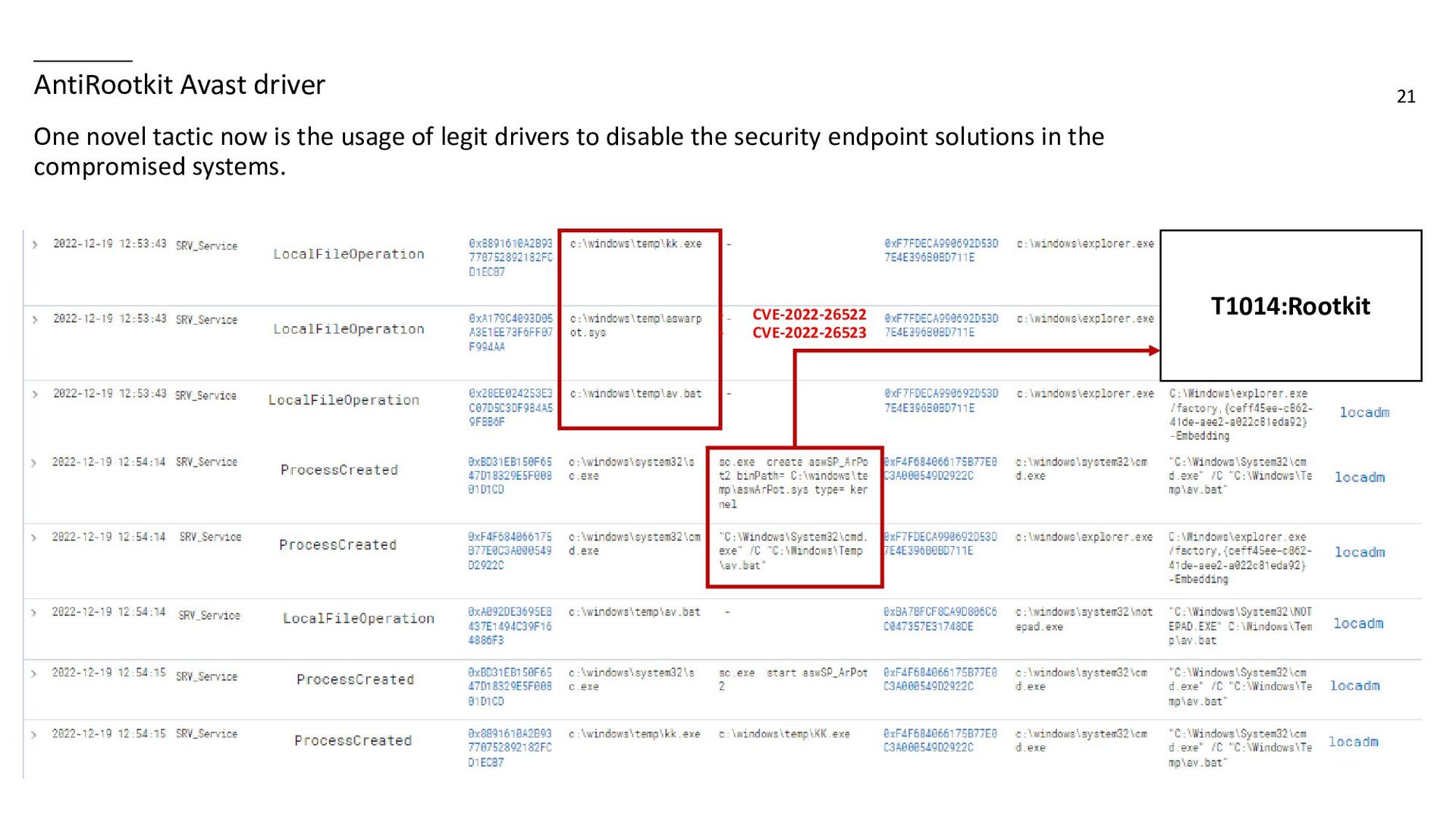
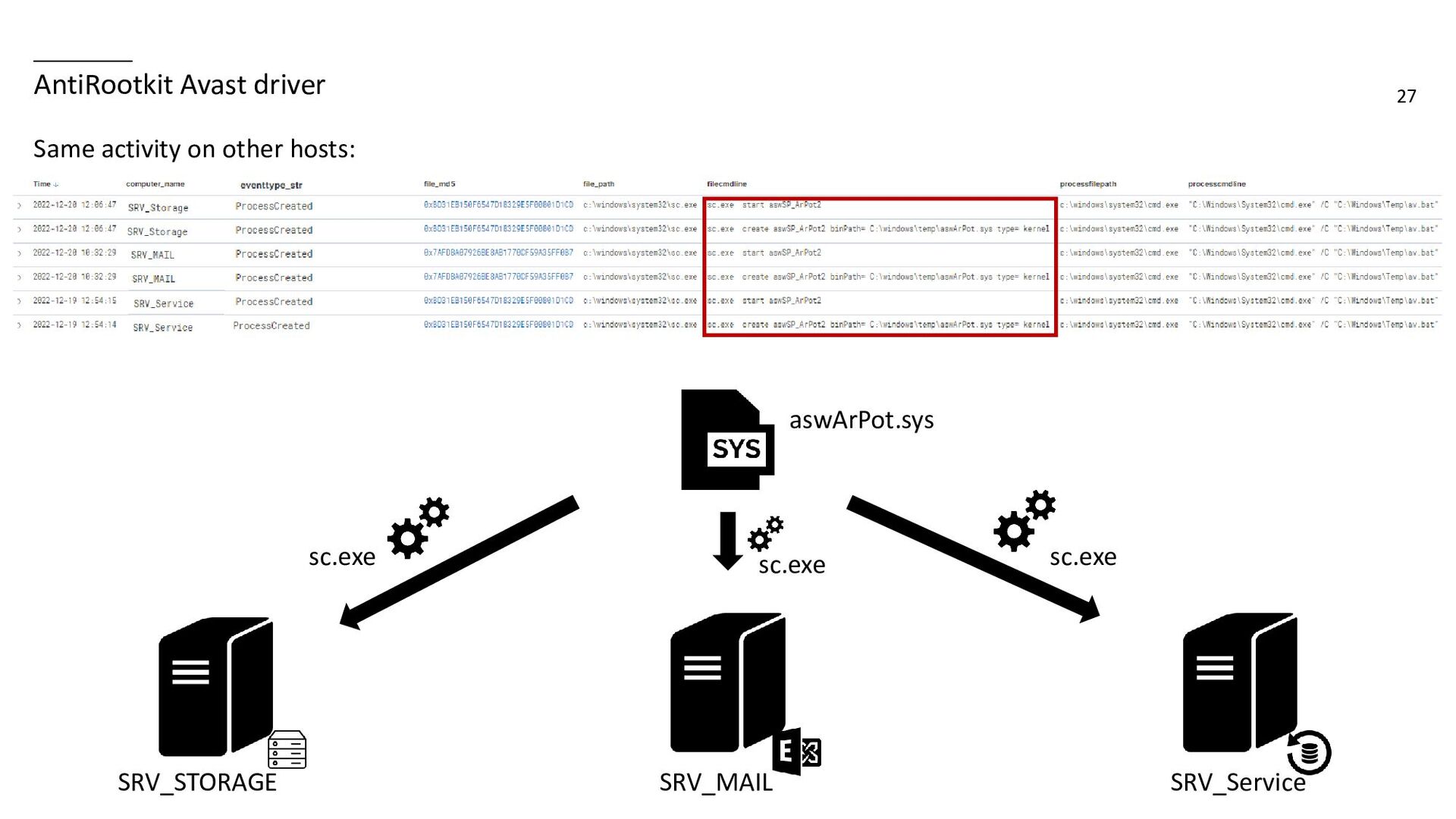
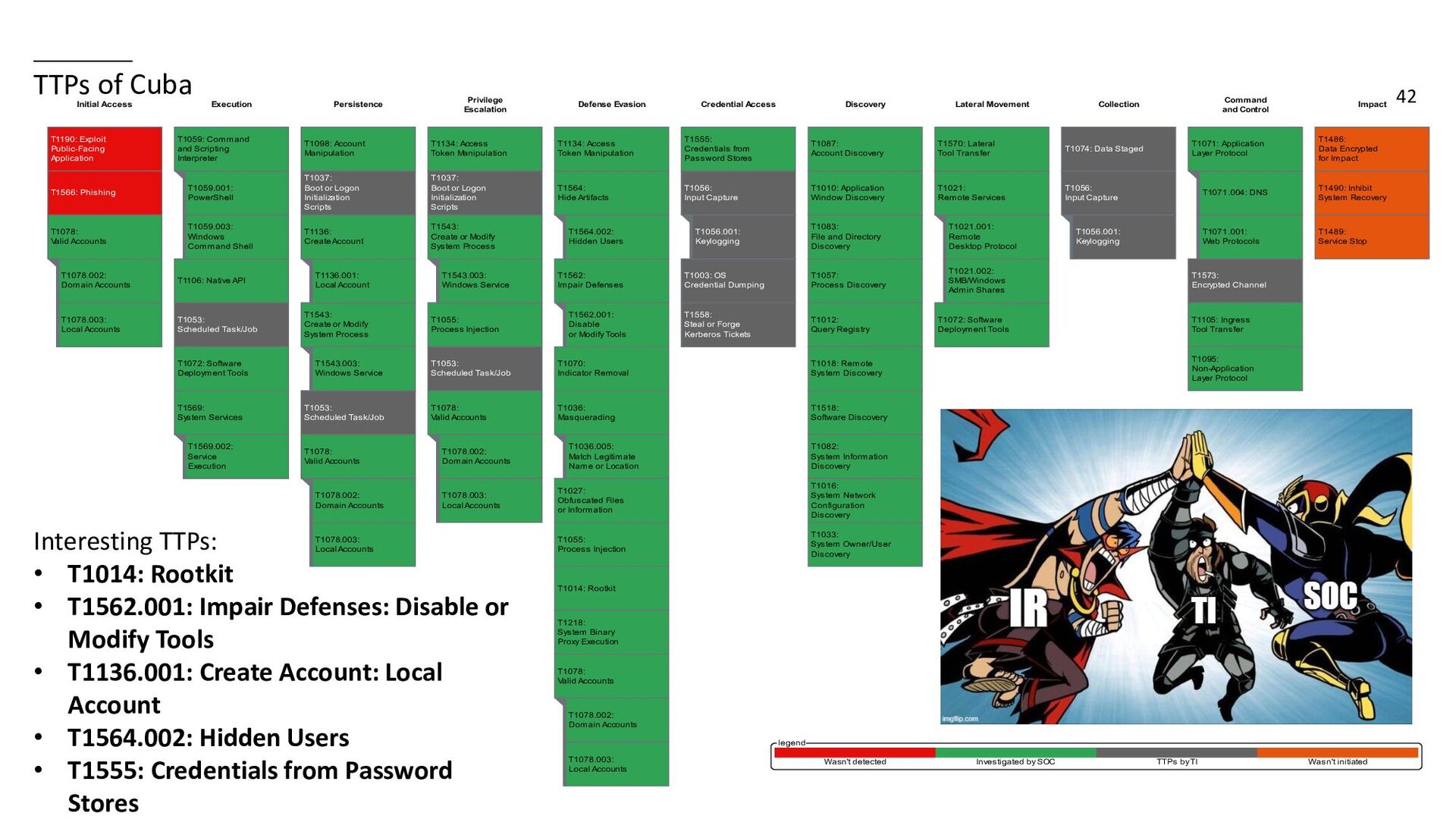
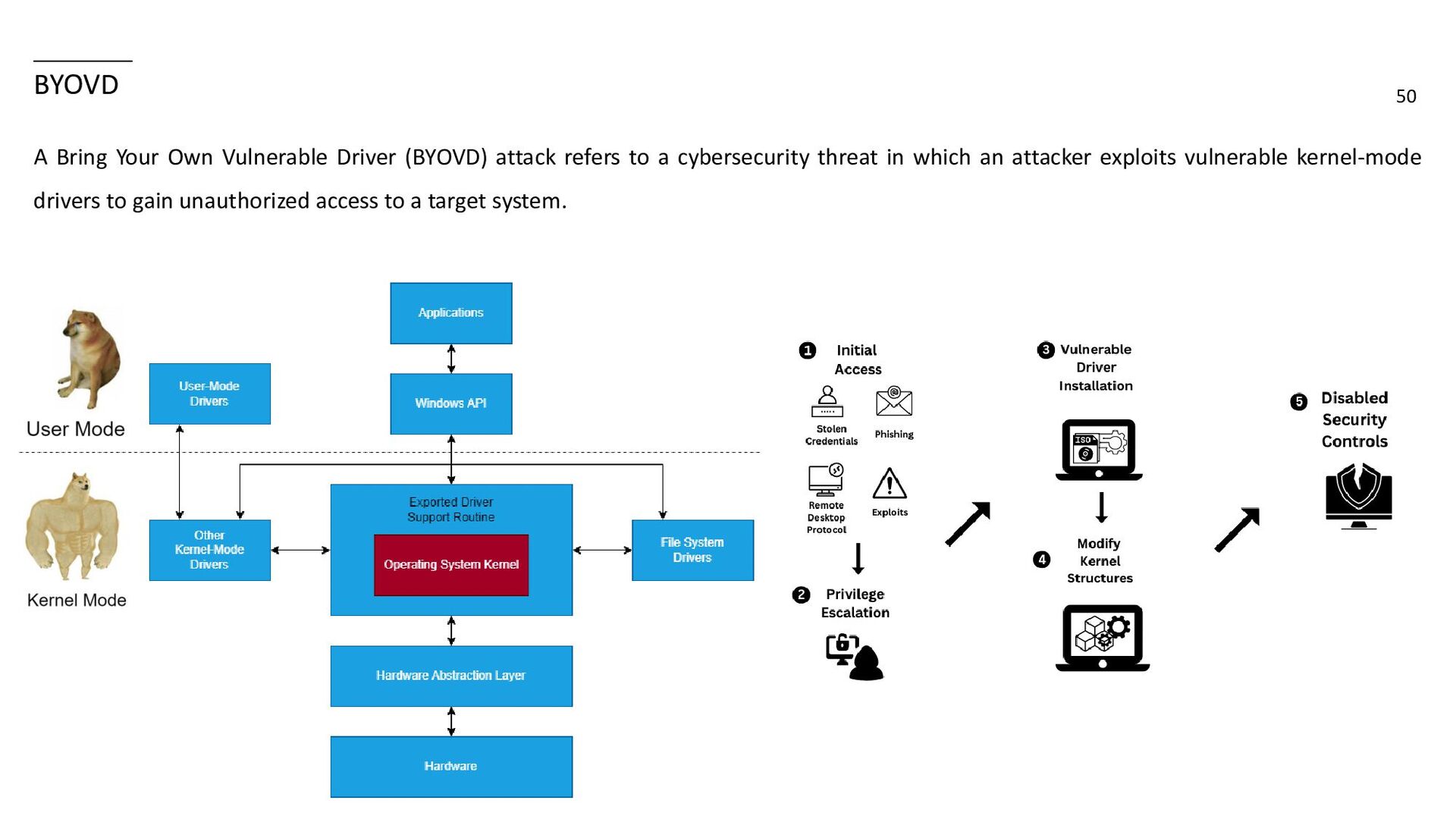
drivers to disable the security endpoint solutions in the compromised systems. AntiRootkit Avast driver - СVE-2022-26522 - CVE-2022-26523 T1014:Rootkit
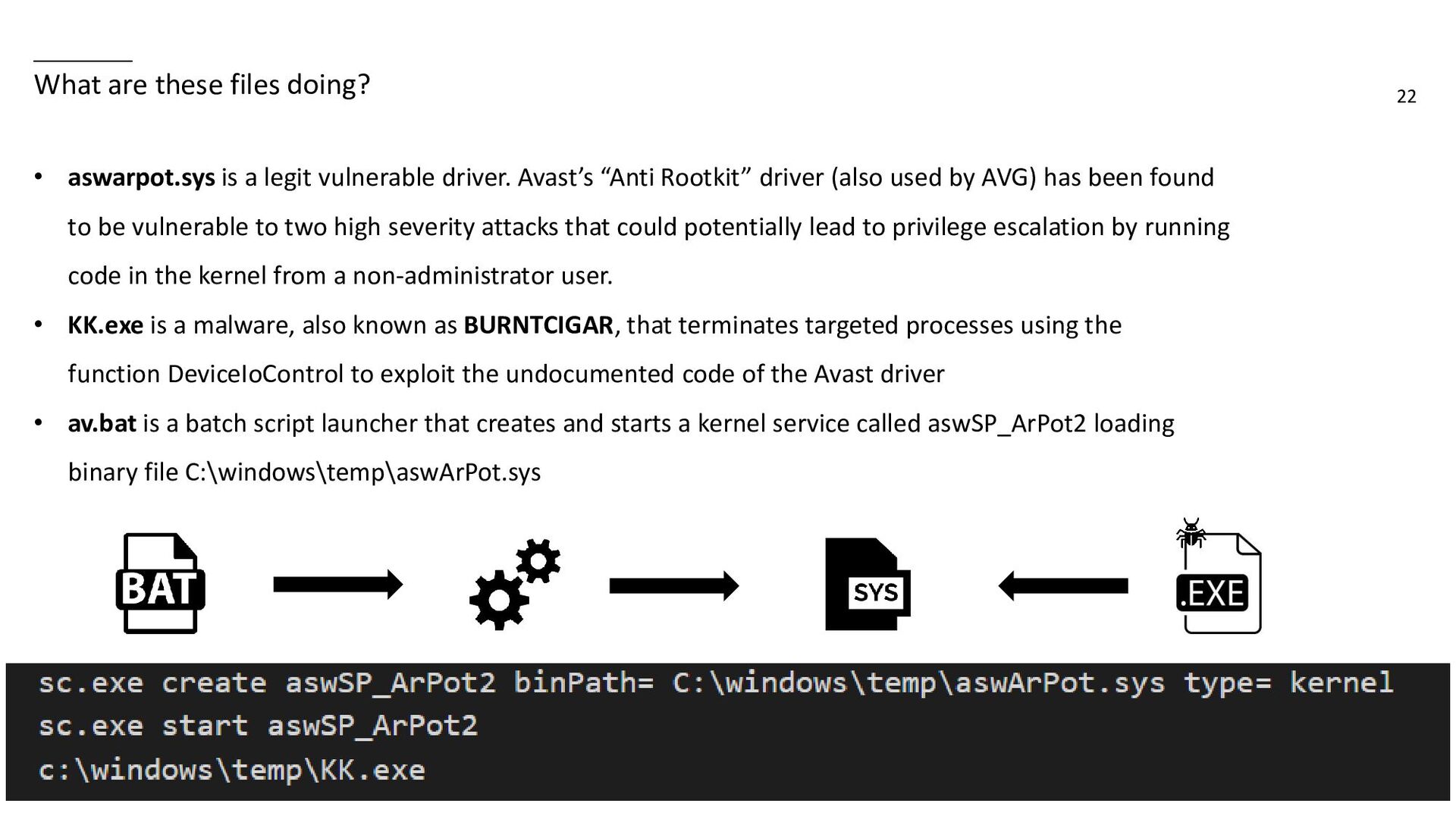
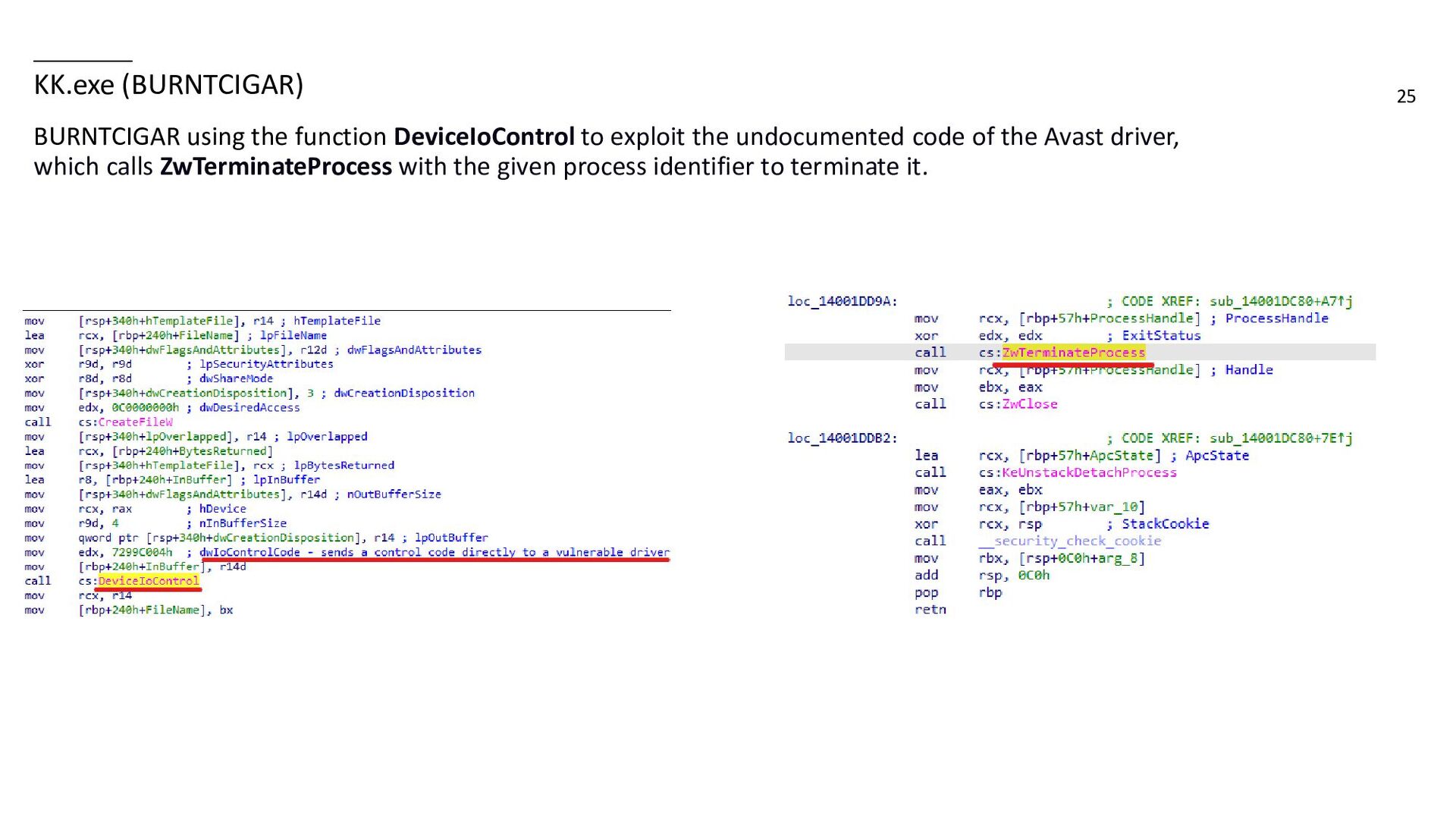
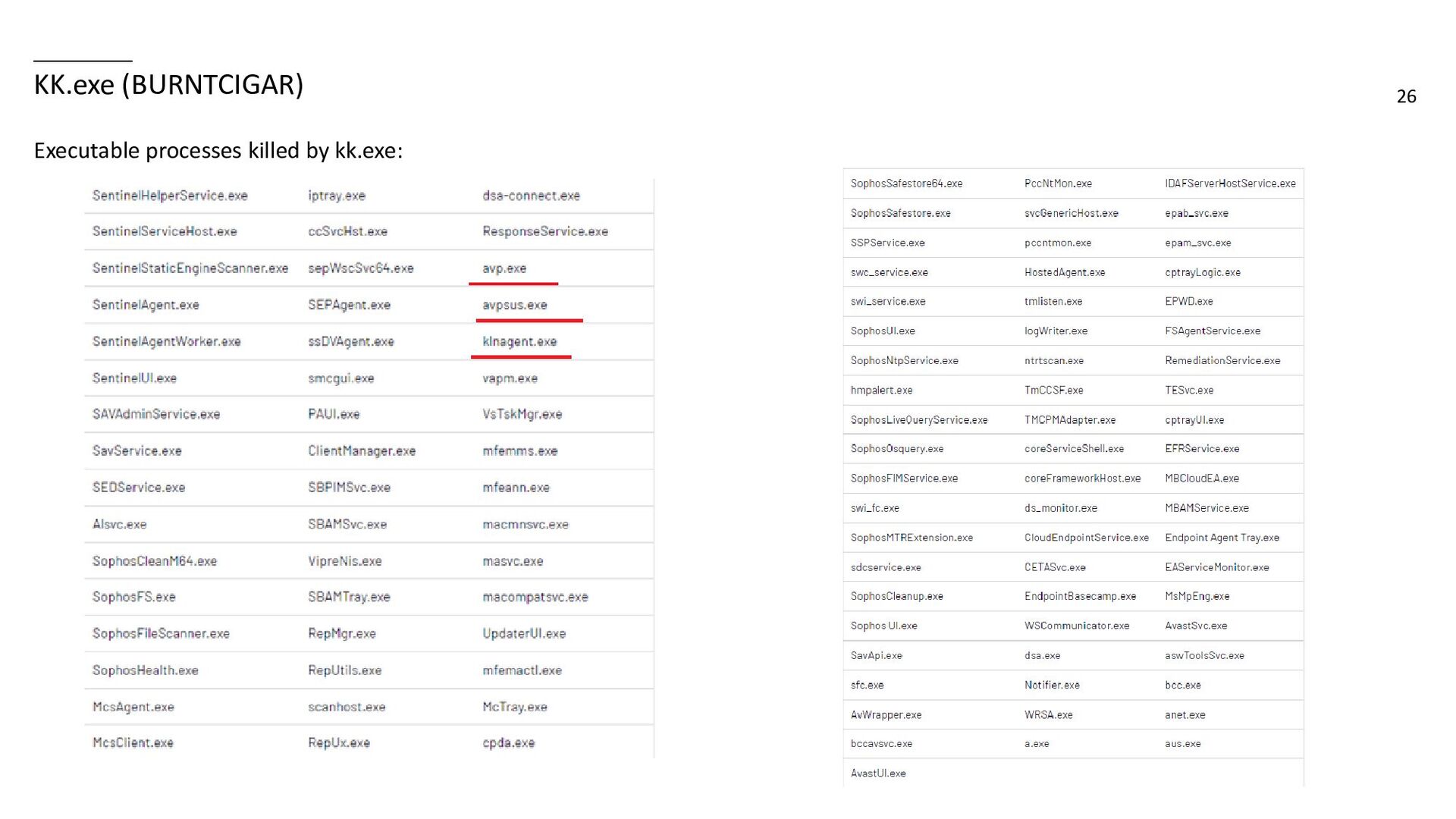
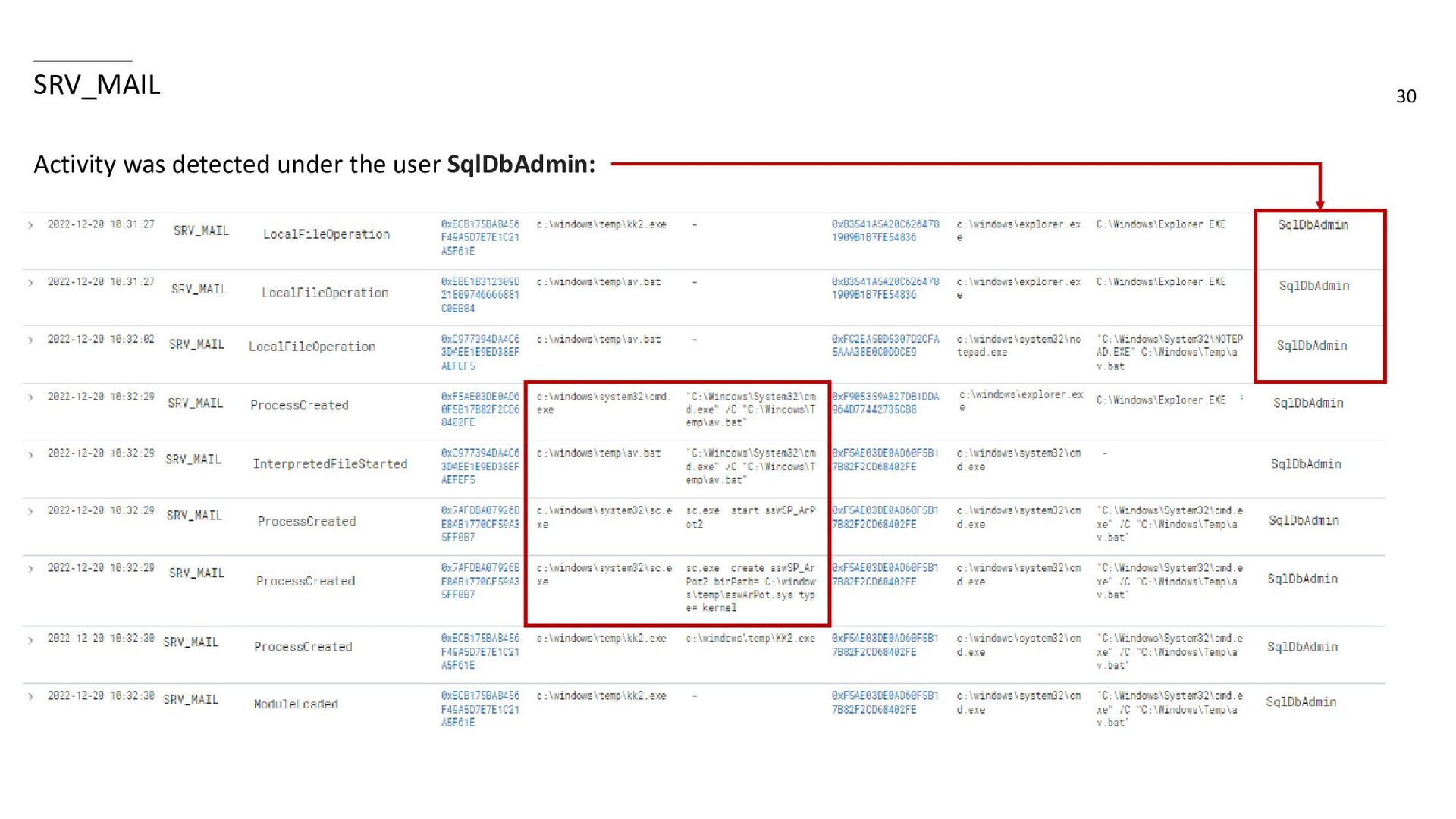
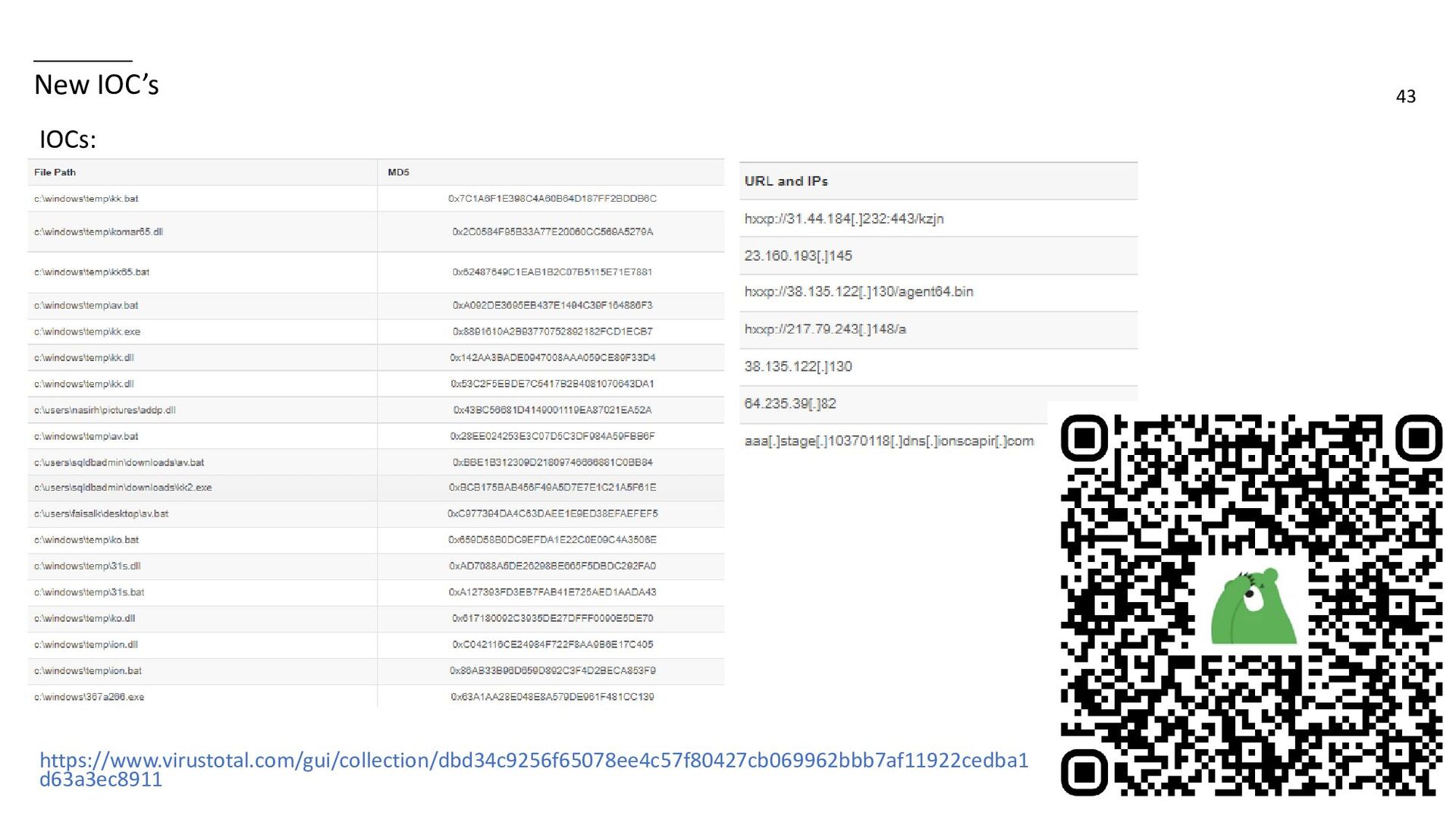
Rootkit” driver (also used by AVG) has been found to be vulnerable to two high severity attacks that could potentially lead to privilege escalation by running code in the kernel from a non-administrator user. • KK.exe is a malware, also known as BURNTCIGAR, that terminates targeted processes using the function DeviceIoControl to exploit the undocumented code of the Avast driver • av.bat is a batch script launcher that creates and starts a kernel service called aswSP_ArPot2 loading binary file C:\windows\temp\aswArPot.sys What are these files doing?
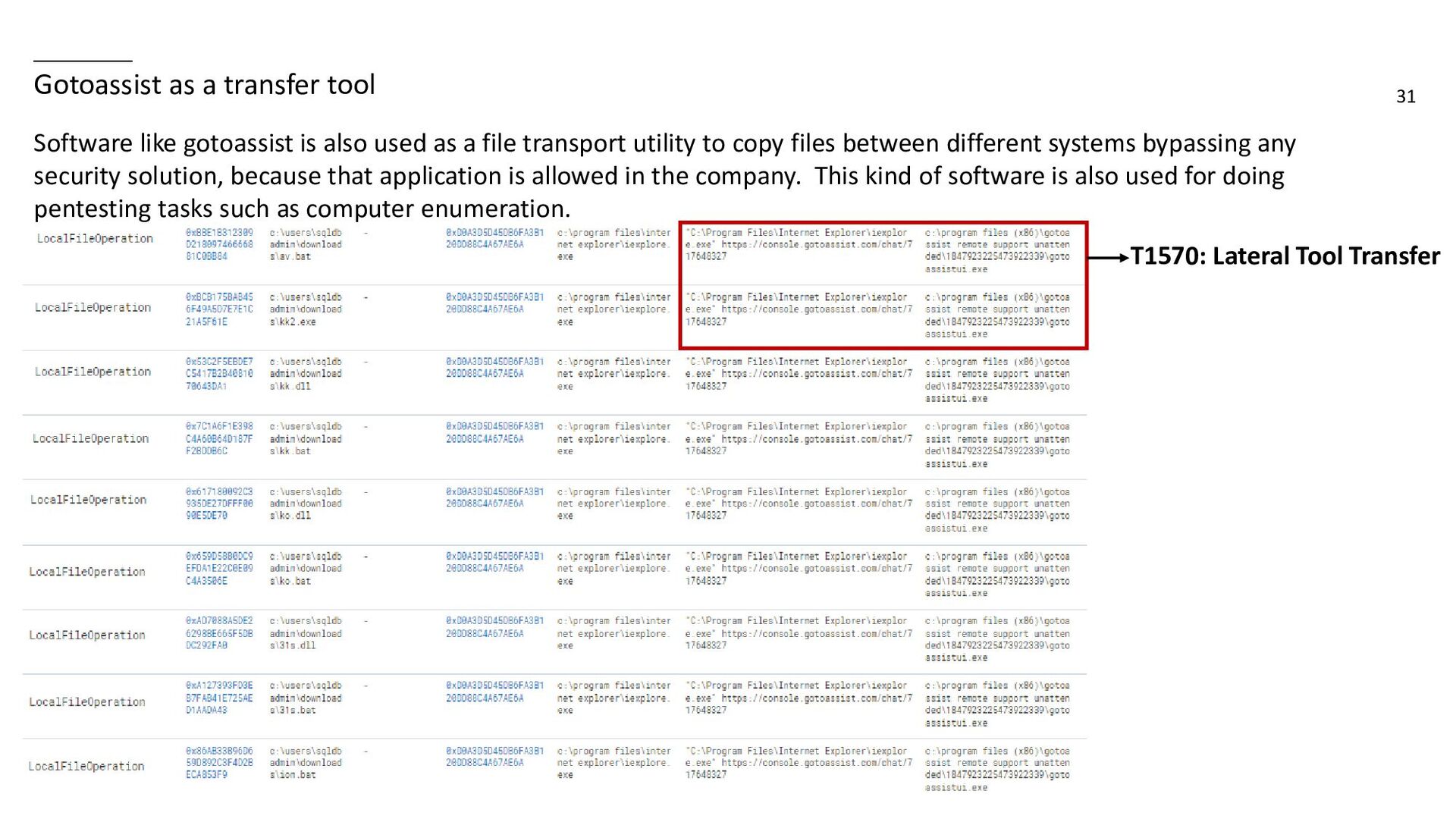
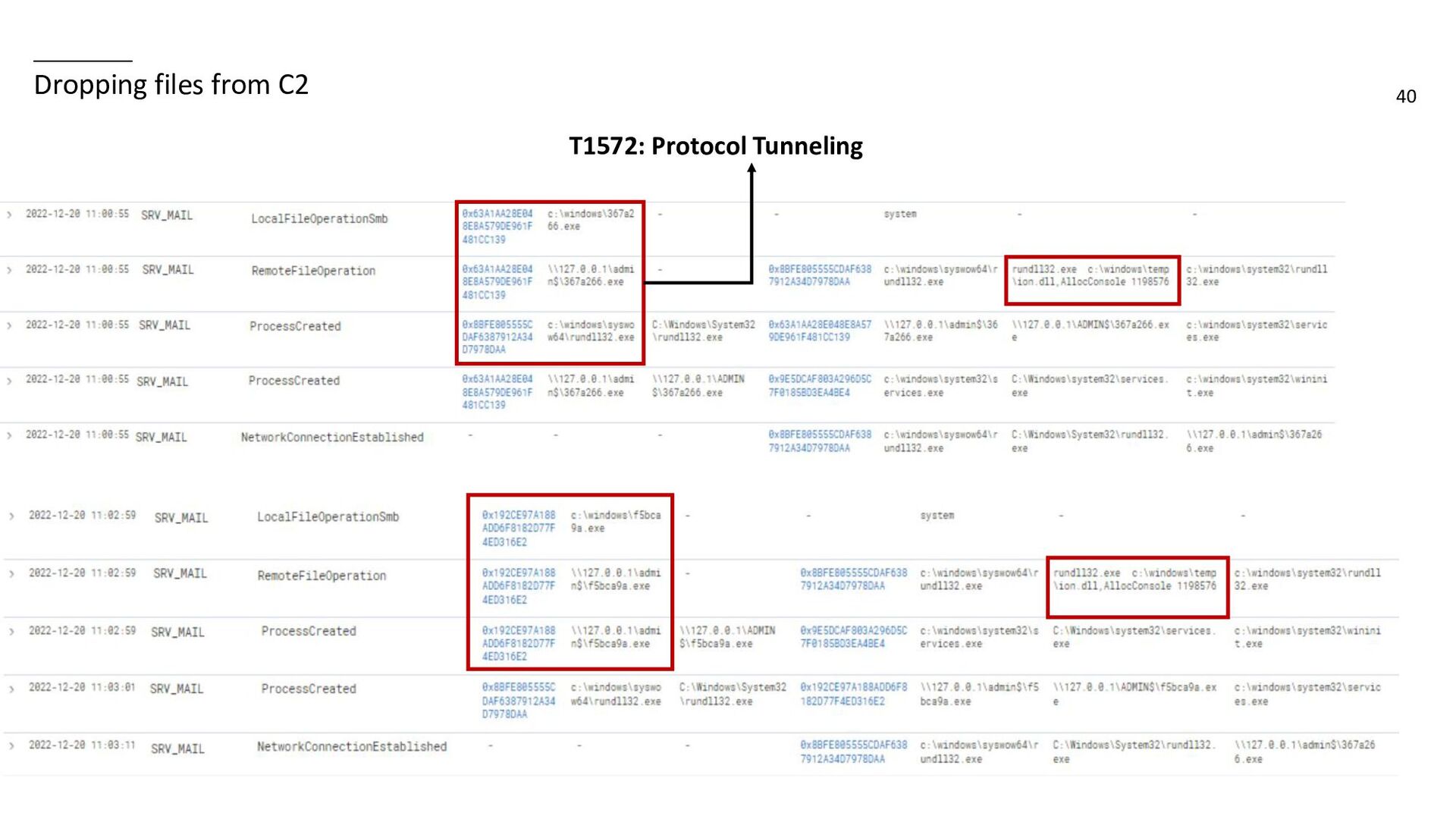
also used as a file transport utility to copy files between different systems bypassing any security solution, because that application is allowed in the company. This kind of software is also used for doing pentesting tasks such as computer enumeration. T1570: Lateral Tool Transfer
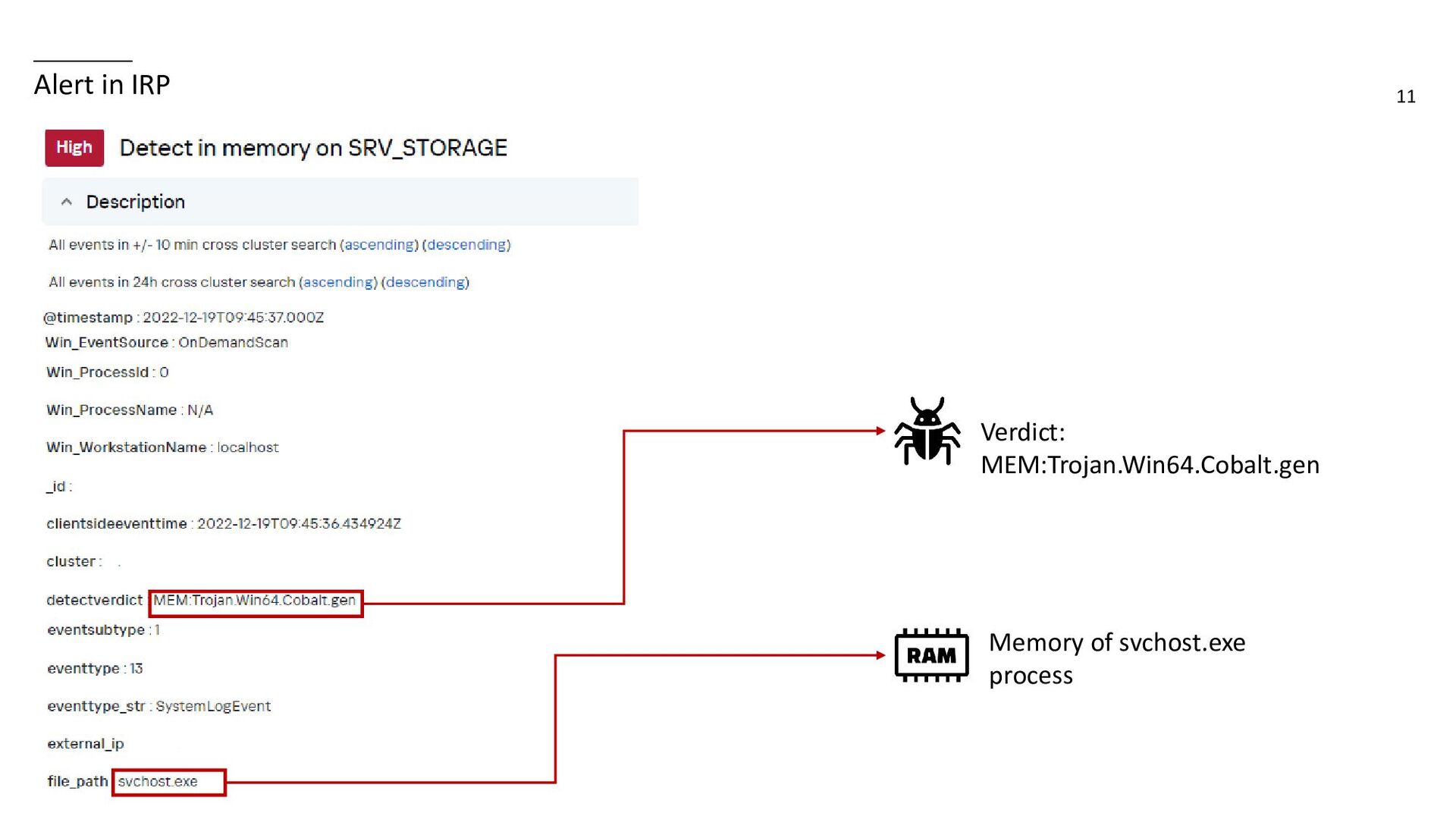
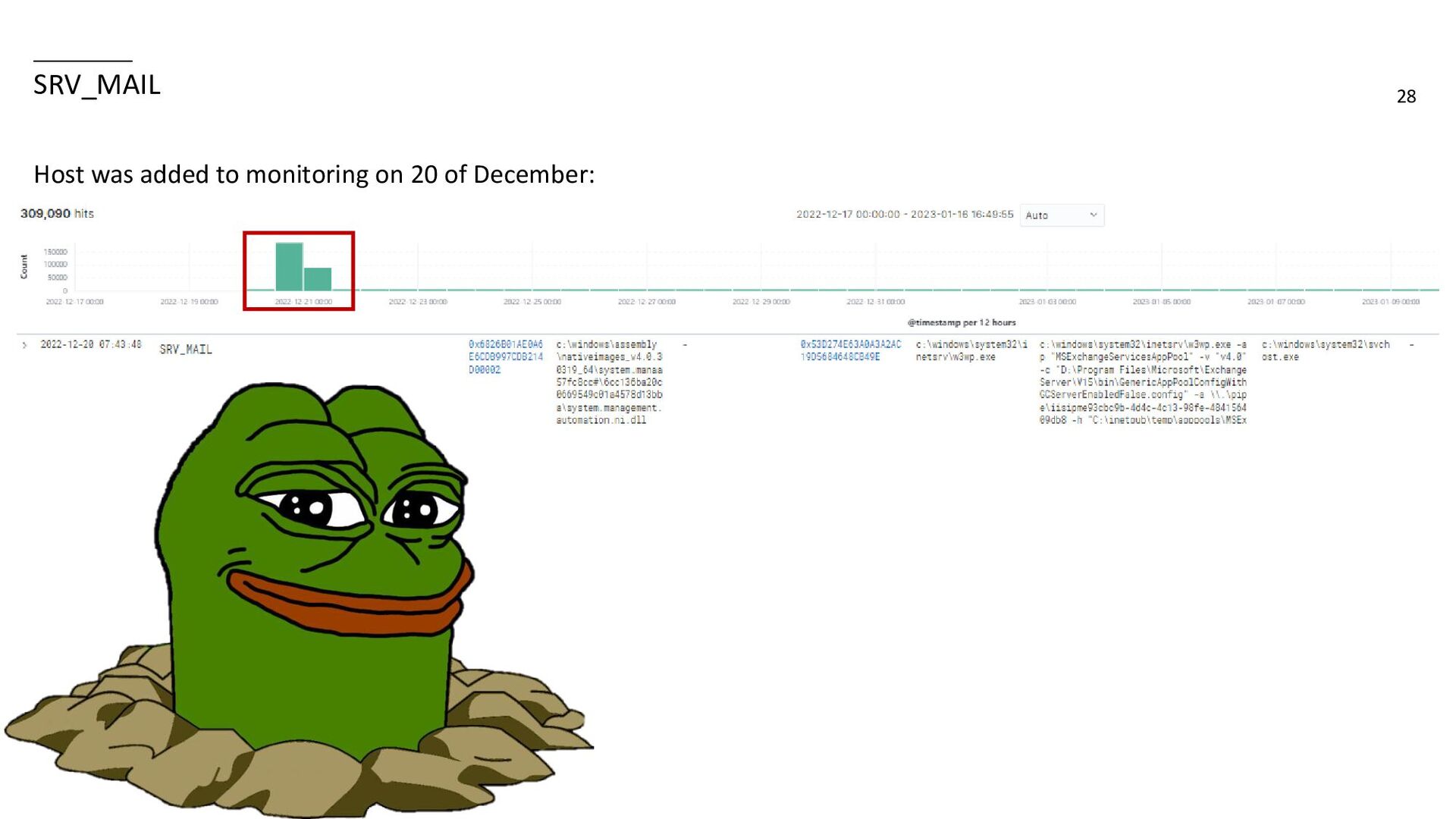
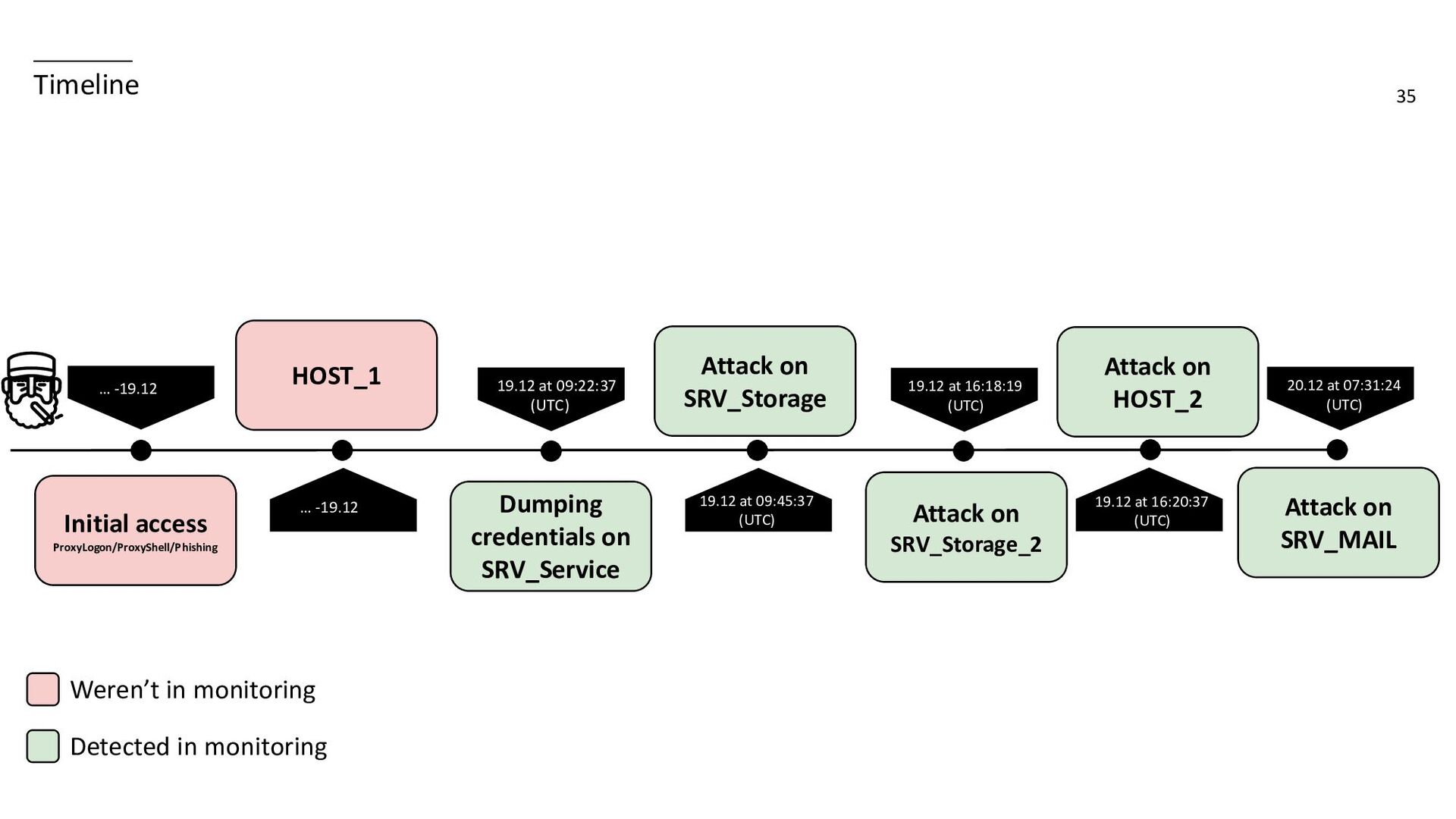
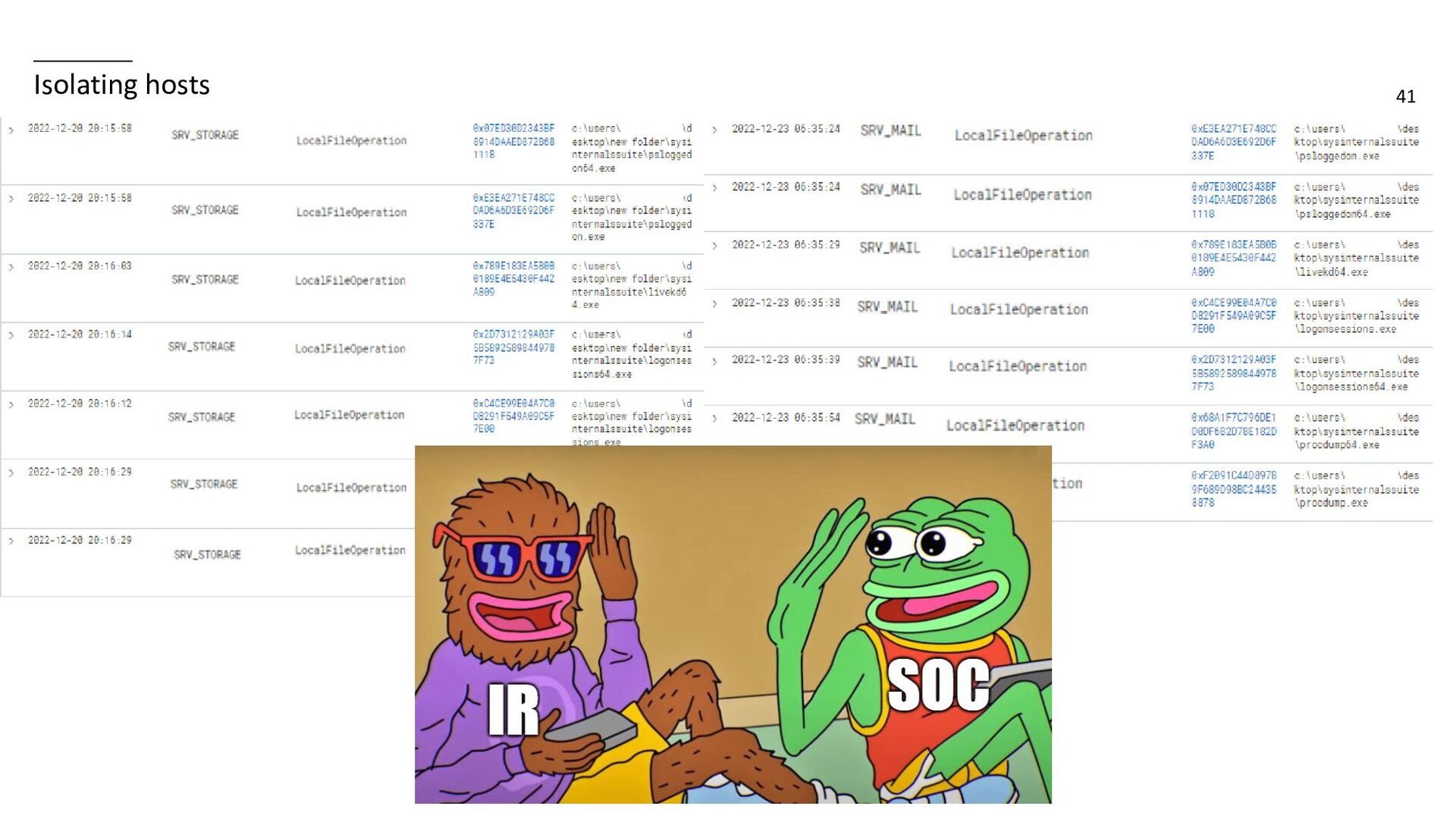
Attack on SRV_Storage Attack on SRV_Storage_2 Attack on HOST_2 Attack on SRV_MAIL … -19.12 … -19.12 19.12 at 09:22:37 (UTC) 19.12 at 09:45:37 (UTC) 19.12 at 16:18:19 (UTC) 19.12 at 16:20:37 (UTC) 20.12 at 07:31:24 (UTC) Weren’t in monitoring Detected in monitoring
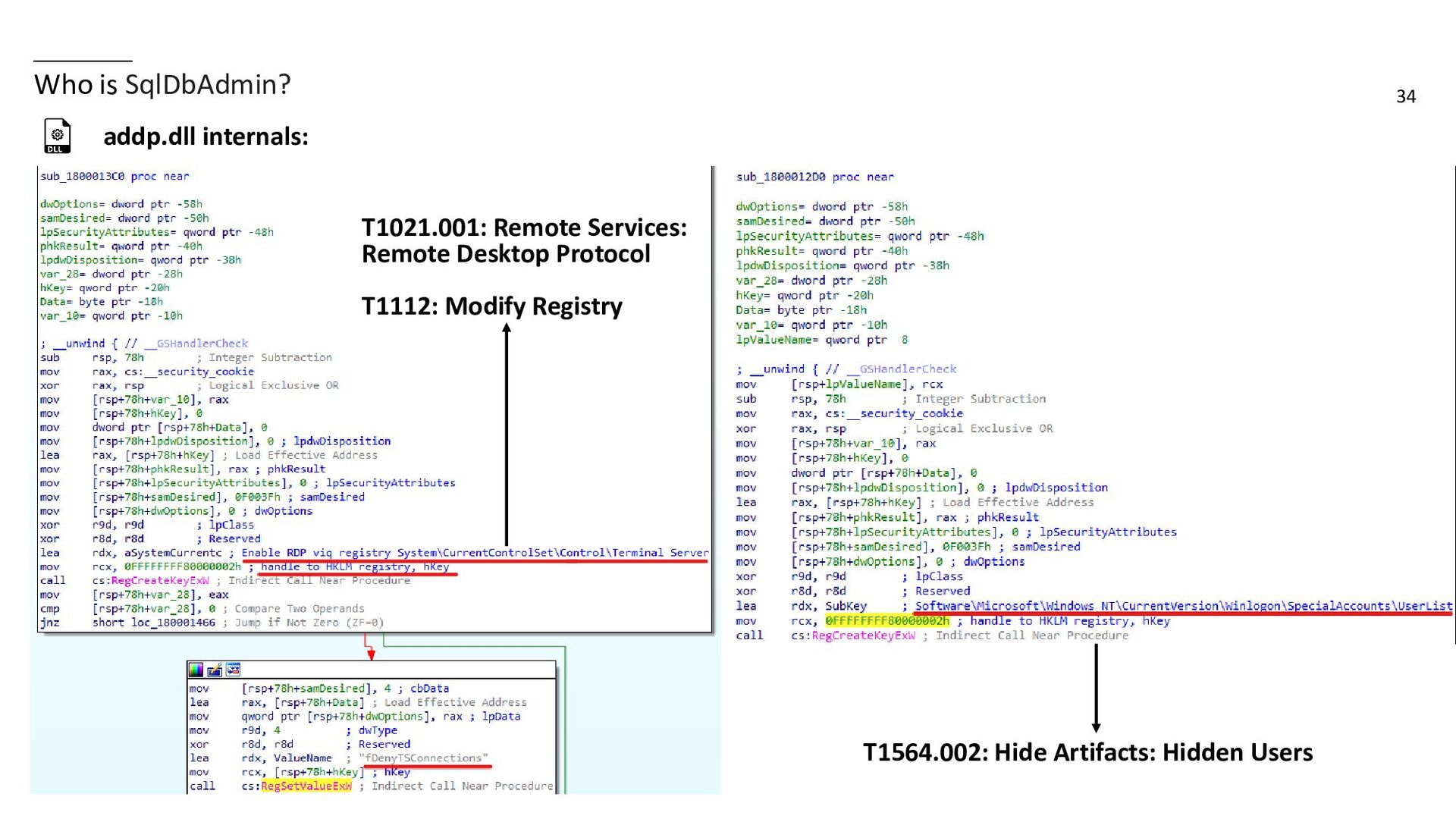
AnyDesk, GoToAssist and etc; • Patch systems to close various vulnerabilities; • Pay attention to registry changes (especially HKLM\SYSTEM\currentcontrolset\control\terminal server and HKLM\SOFTWARE\Microsoft\Windows NT\CurrentVersion\Winlogon\SpecialAccounts\UserList); • Use EDR\EPP; • Monitor list of vulnerable drivers; Protection methods:
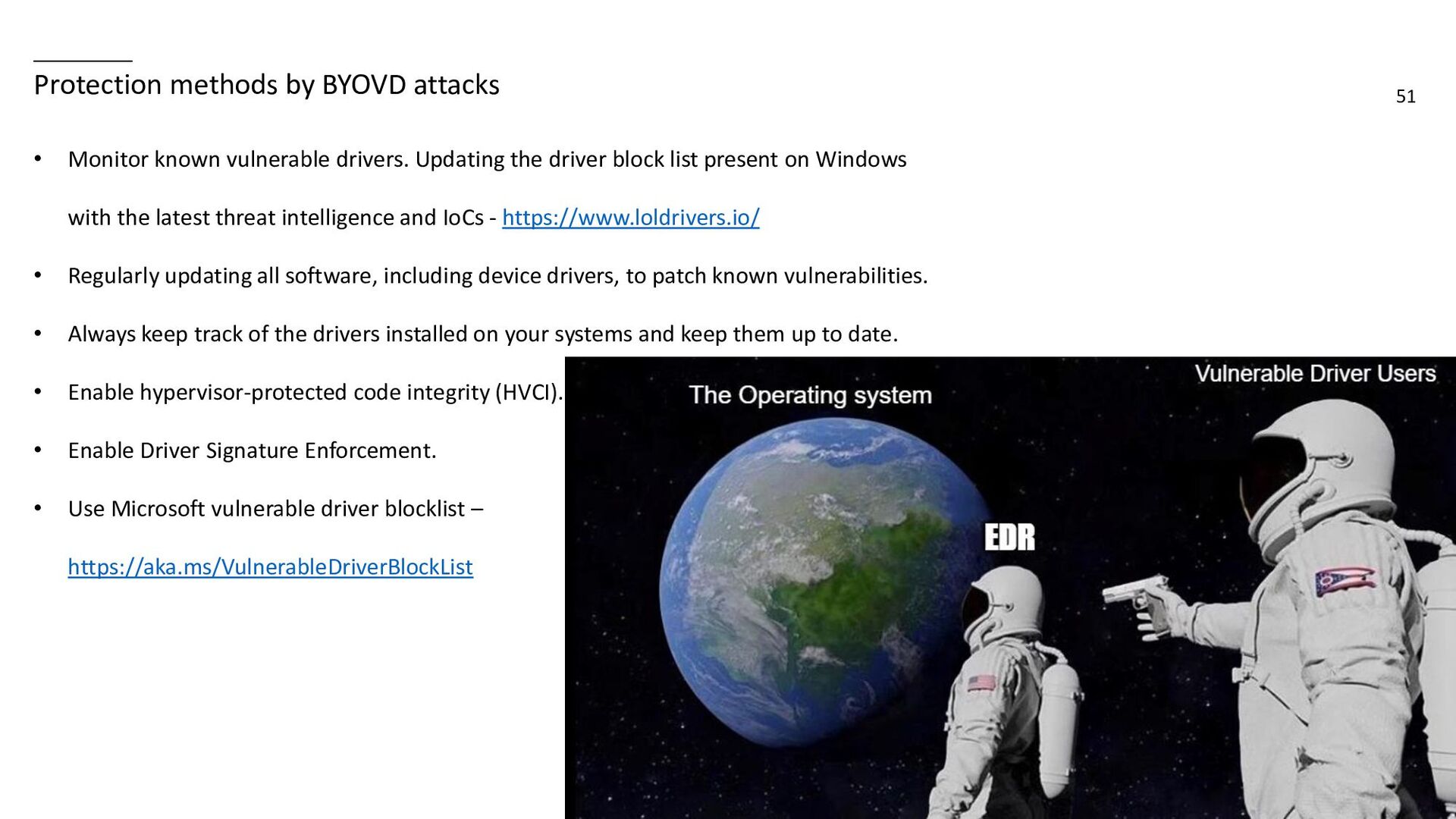
list present on Windows with the latest threat intelligence and IoCs - https://www.loldrivers.io/ • Regularly updating all software, including device drivers, to patch known vulnerabilities. • Always keep track of the drivers installed on your systems and keep them up to date. • Enable hypervisor-protected code integrity (HVCI). • Enable Driver Signature Enforcement. • Use Microsoft vulnerable driver blocklist – https://aka.ms/VulnerableDriverBlockList Protection methods by BYOVD attacks


 blurel
 rfdnxbro
 yazm
yazm
 tokuty
 syuchimu
 nttcom
 bgpat
bgpat
 bitkey
 riyaamemiya
 moznion
 tetsuya28
 onk
onk
 mhrtech
 chrisshort
 malarkey
 szymonslowik
 aleyda
 soudai
 427marketing
 minecr
 csswizardry
 lfama
lfama
 palkan
 marcelosomers
 akashhashmi