rainy season brings welcome relief from the summer heat, but it can also present unique health challenges, especially for senior citizens. Changes in temperature, increased humidity, reduced physical activity, and a higher risk of infections can all affect heart health. For older adults who already have conditions such as high blood pressure, diabetes, or heart disease, taking extra precautions during the monsoon is essential. By following a few simple heart care measures, seniors can enjoy the rainy season while keeping their cardiovascular health protected. Why Is Heart Care Important During the Rainy Season? Many people assume that heart problems are only a concern during extreme summer or winter weather. However, the monsoon season can also impact the cardiovascular system. Fluctuating temperatures and humidity levels can affect blood pressure and circulation. Additionally, rainy weather often leads to reduced outdoor activity, which may negatively impact overall heart health. Senior citizens are particularly vulnerable because aging naturally affects the heart and blood vessels. Existing medical conditions can further increase the risk of complications if proper care is not taken.
during seasonal changes. Some seniors may experience sudden increases or decreases in blood pressure due to changes in temperature, stress, or physical activity levels. Regular monitoring helps identify any unusual changes early. If blood pressure readings remain consistently high or low, it is important to consult a healthcare professional promptly. A routine check-up with one of cardiologist in Indore can help ensure that blood pressure remains under control throughout the rainy season. 2. Stay Physically Active Indoors Rainy weather often limits outdoor walks and exercise routines. However, staying physically active is crucial for maintaining a healthy heart. Simple indoor activities can include: • Walking inside the house • Light stretching exercises • Yoga • Chair exercises • Gentle aerobic movements Even 30 minutes of moderate physical activity most days of the week can improve circulation, strengthen the heart, and help manage blood pressure. 3. Follow a Heart-Healthy Diet The monsoon season often increases cravings for fried snacks and processed foods. While occasional treats are fine, excessive consumption of unhealthy foods can increase cholesterol levels and place extra strain on the heart. Seniors should focus on: • Fresh fruits and vegetables • Whole grains • Lean proteins • Nuts and seeds • Low-fat dairy products Limiting salt intake is especially important for individuals with hypertension or heart disease. A balanced diet supports cardiovascular health and helps maintain healthy blood pressure levels.
weather because they do not feel as thirsty as they do in summer. However, dehydration can still occur and may affect blood circulation and heart function. Senior citizens should continue drinking adequate fluids throughout the day unless advised otherwise by their doctor. Water, soups, and fresh beverages can help maintain proper hydration. 5. Protect Yourself from Infections Monsoon season is known for an increase in viral infections, flu, and respiratory illnesses. These infections can place additional stress on the heart, particularly in older adults. To reduce the risk: • Wash hands frequently • Avoid stagnant water • Maintain good personal hygiene • Eat freshly prepared food • Avoid exposure to individuals who are sick For seniors with existing heart conditions, preventing infections is an important part of heart care. 6. Take Medications on Time Missing medications can increase the risk of blood pressure fluctuations, irregular heart rhythms, or worsening heart disease. Create a medication schedule and ensure prescriptions are refilled before they run out. Family members and caregivers can also help seniors maintain consistency with their treatment plans. If any medication side effects occur, consult a healthcare provider rather than stopping medications without medical advice.
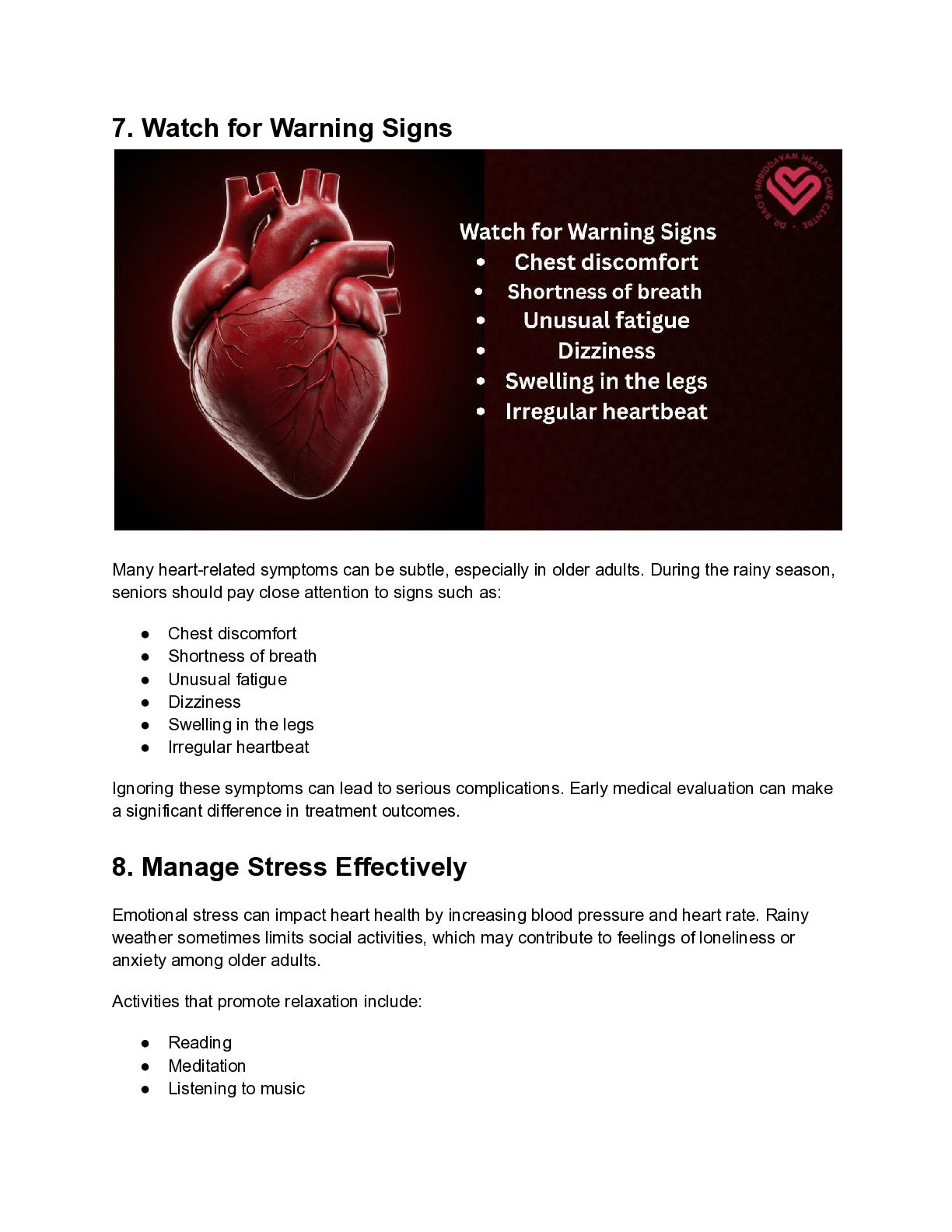
subtle, especially in older adults. During the rainy season, seniors should pay close attention to signs such as: • Chest discomfort • Shortness of breath • Unusual fatigue • Dizziness • Swelling in the legs • Irregular heartbeat Ignoring these symptoms can lead to serious complications. Early medical evaluation can make a significant difference in treatment outcomes. 8. Manage Stress Effectively Emotional stress can impact heart health by increasing blood pressure and heart rate. Rainy weather sometimes limits social activities, which may contribute to feelings of loneliness or anxiety among older adults. Activities that promote relaxation include: • Reading • Meditation • Listening to music
A positive mental outlook can support both emotional well-being and cardiovascular health. 9. Schedule Regular Heart Checkups Routine heart evaluations are important for senior citizens throughout the year, especially during seasonal changes. Regular screenings can detect potential issues before they become serious. Consulting a qualified heart specialist in Indore can help seniors assess their cardiovascular risk factors and receive personalized guidance for maintaining heart health during the monsoon. Expert Heart Care with Dr. Sarita Rao If you or a loved one has concerns about heart health during the rainy season, seeking professional medical advice is always recommended. Dr. Sarita Rao cardiologist provides comprehensive cardiac evaluation, preventive cardiology services, blood pressure management, and personalized heart care for patients of all ages. Conclusion The rainy season can be enjoyable, but it also requires extra attention to heart health, especially for senior citizens. Maintaining a healthy diet, staying active, monitoring blood pressure, preventing infections, and attending regular medical checkups can significantly reduce cardiovascular risks. By adopting these simple yet effective habits, seniors can protect their hearts and enjoy a healthier, safer monsoon season. When in doubt, consulting one of cardiologist in Indore can provide the guidance and support needed to maintain optimal heart health throughout the year. FAQs Q1. Can rainy weather affect heart health in senior citizens? Yes. Changes in temperature, humidity, and activity levels during the rainy season can influence blood pressure and cardiovascular function, particularly in older adults with existing heart conditions. Q2. When should a senior citizen visit a heart specialist during monsoon? A senior should consult a heart specialist in Indore if they experience chest pain, shortness of breath, dizziness, unusual fatigue, swelling in the legs, or significant changes in blood pressure readings.


 lynnandtonic
 bluesmoon
 elsirapls
 techseoconnect
 sabderemane
 baasie
 pwiseman
 cassininazir
 ks91
 matthewcrist
 ryanjones
 jdejongh