the use of materials at the atomic or sub-molecular scale for industrial purposes. In simpler terms, it is the study and application of extremely small materials, typically on the nanometer scale (nm), where 1 meter equals 1,000,000,000 nm. At this scale, materials and structures exhibit unique properties and applications, opening up new realms for creativity and development.
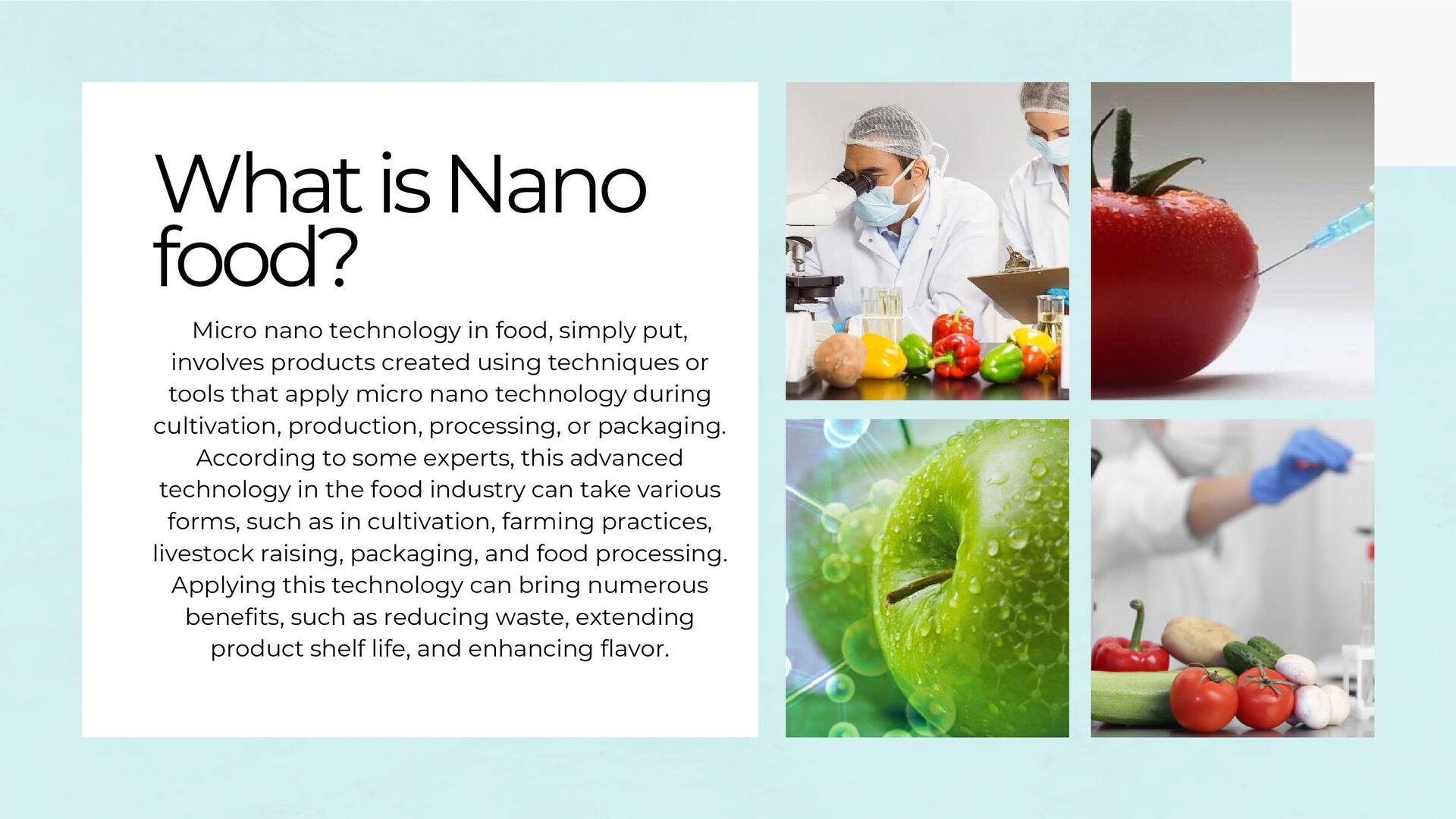
put, involves products created using techniques or tools that apply micro nano technology during cultivation, production, processing, or packaging. According to some experts, this advanced technology in the food industry can take various forms, such as in cultivation, farming practices, livestock raising, packaging, and food processing. Applying this technology can bring numerous benefits, such as reducing waste, extending product shelf life, and enhancing flavor.
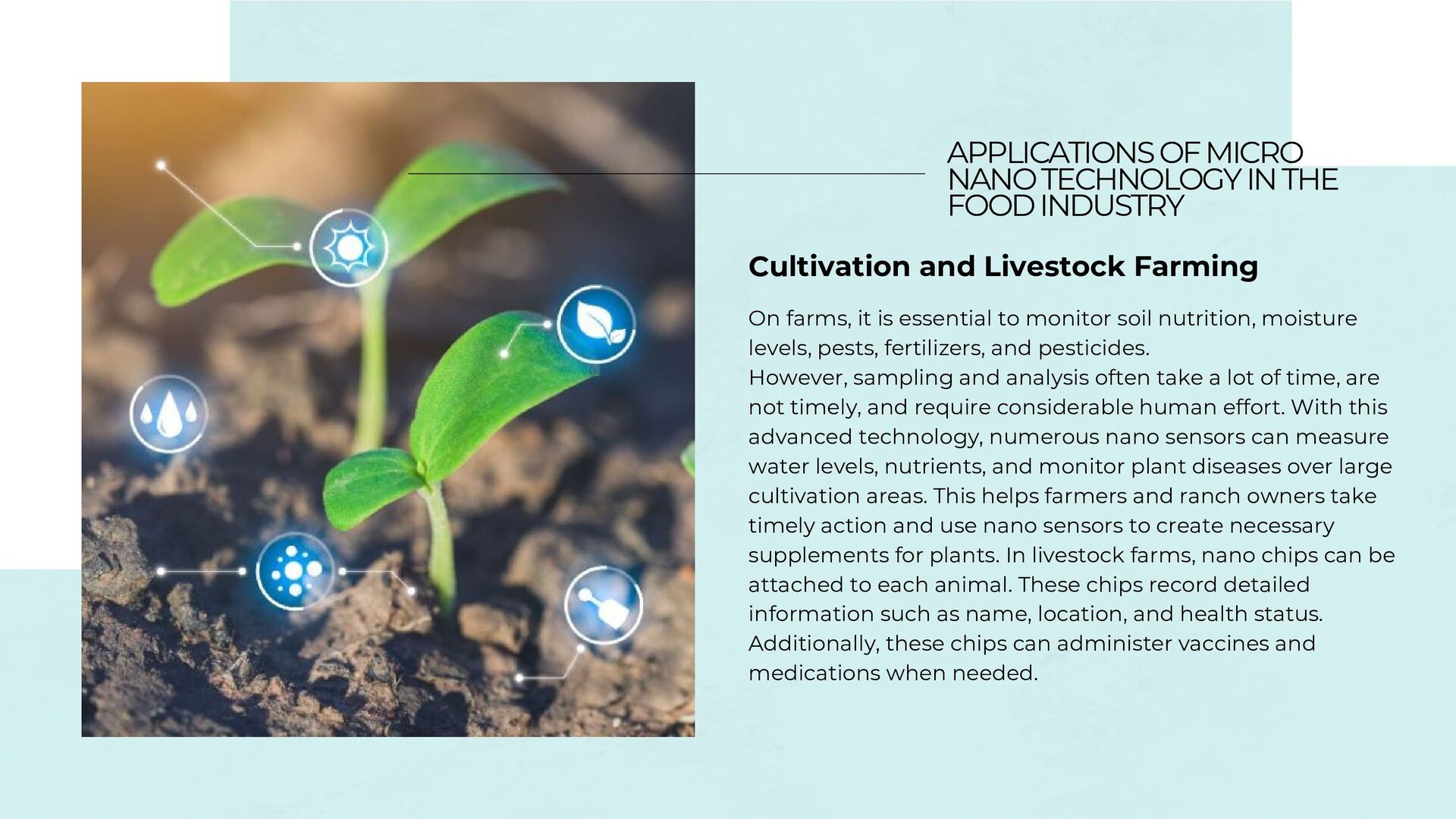
and Livestock Farming On farms, it is essential to monitor soil nutrition, moisture levels, pests, fertilizers, and pesticides. However, sampling and analysis often take a lot of time, are not timely, and require considerable human effort. With this advanced technology, numerous nano sensors can measure water levels, nutrients, and monitor plant diseases over large cultivation areas. This helps farmers and ranch owners take timely action and use nano sensors to create necessary supplements for plants. In livestock farms, nano chips can be attached to each animal. These chips record detailed information such as name, location, and health status. Additionally, these chips can administer vaccines and medications when needed.
and Food Packaging Micro nano technology allows the creation of packaging materials with properties like water resistance, antibacterial activity, and protection against environmental contamination. Nano-material layers can block harmful gases and moisture, preserving food quality and flavor for longer periods. Moreover, this technology can create smart, flexible, and easy- to-use packaging. Ex: plastic bags with an inner layer of nano-silver particles can kill bacteria, allowing food stored in them to last three to four times longer than conventional plastic bags. Food containers coated with nano-silver can also preserve food for longer periods.
Processing Nano food is a typical application of applying Micro nano technology in food processing. Nano food is understood as particles of nano-size introduced into the body by eating or drinking. Micro Nano particles are so small that they are usually mixed with many other substances rather than used alone. Nano foods can be classified into two types: Nano particles introduced into the body by eating or drinking are nutrients at the nanoscale. Nano particles entering the body are in the form of nano- sized capsules (bags); the outer capsule is a cloned shell, and the inside contains nutrients that the body needs. Nano-processed foods have the effect of reducing fat content while maintaining the desired structure. It also helps users increase calcium absorption, boost immunity, and improve nutrient absorption.
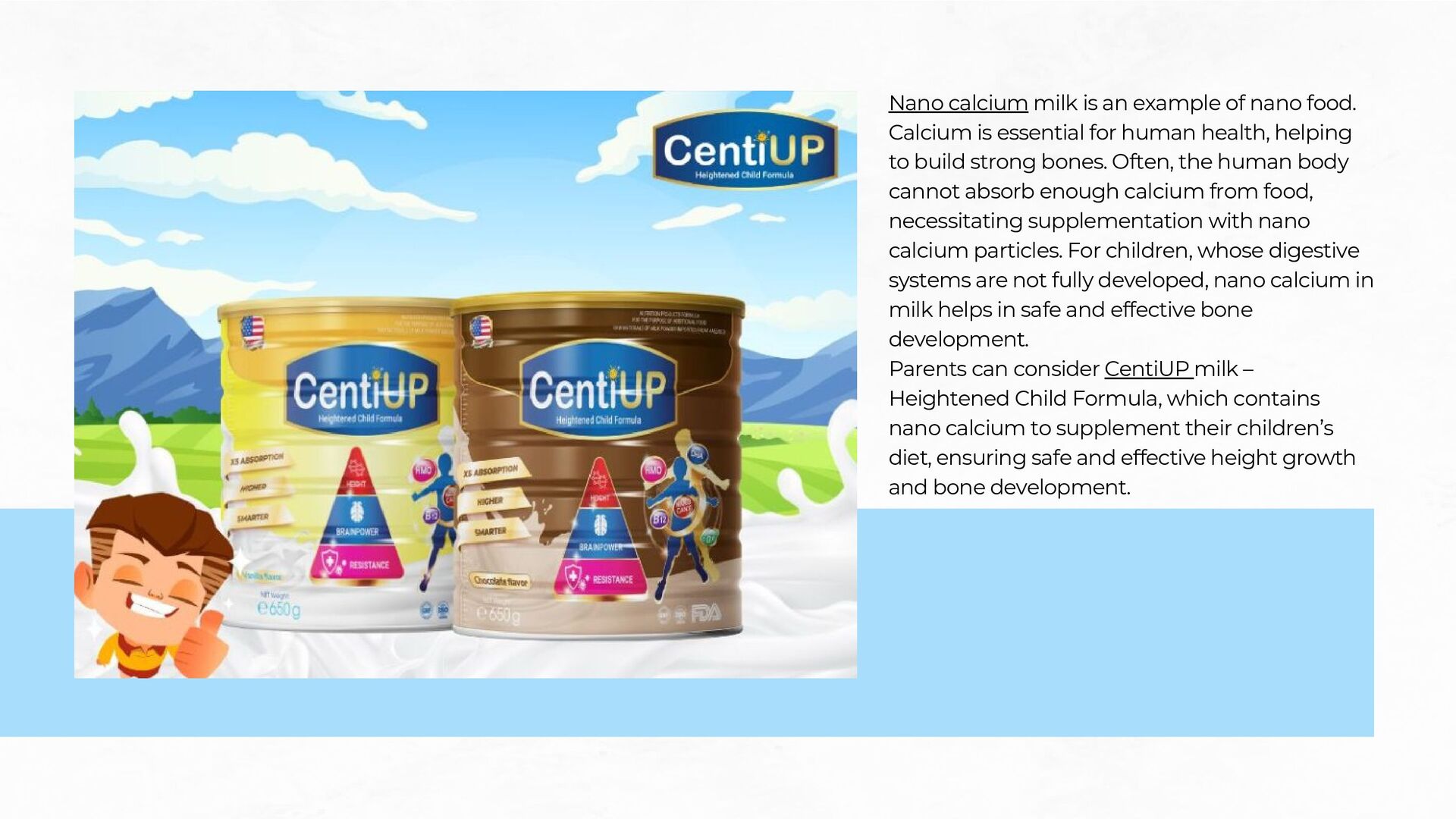
is essential for human health, helping to build strong bones. Often, the human body cannot absorb enough calcium from food, necessitating supplementation with nano calcium particles. For children, whose digestive systems are not fully developed, nano calcium in milk helps in safe and effective bone development. Parents can consider CentiUP milk – Heightened Child Formula, which contains nano calcium to supplement their children’s diet, ensuring safe and effective height growth and bone development.
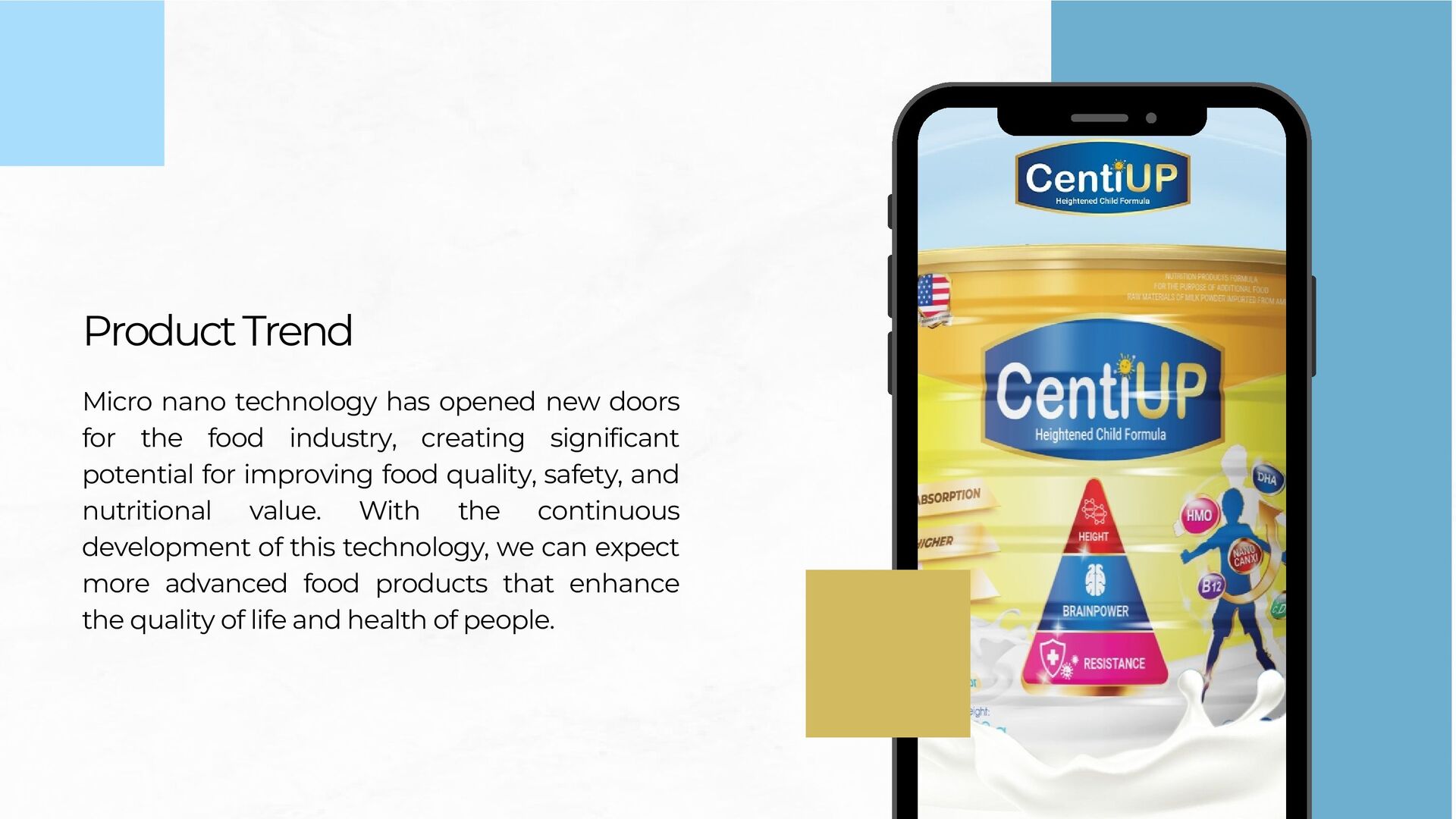
the food industry, creating significant potential for improving food quality, safety, and nutritional value. With the continuous development of this technology, we can expect more advanced food products that enhance the quality of life and health of people.


 centiup
 kristinabergwall1
 sergeychernyshev
 coloredviolet
 popppiees
 tanoku
 sachag
 zakiyama
 tenderlove
 holman
 axbom
axbom
 wayneb77
 helmedeiros