Upgrade to Pro — share decks privately, control downloads, hide ads and more …

Nasopharyngitis (Common Cold): Causes, Symptoms...

Nasopharyngitis (Common Cold): Causes, Symptoms & Treatment

Acute nasopharyngitis, more commonly known as the common cold, is one of the most frequent illnesses affecting people of all ages. While it’s usually mild, it can cause significant discomfort and disrupt daily life. In this blog, we’ll explore what acute nasopharyngitis is, what causes it, how to manage the symptoms, and when to seek medical help.

Avatar for Central Clinic

Central Clinic

May 19, 2025
Tweet

More Decks by Central Clinic

Other Decks in Science

Transcript

  1. Acute Nasopharyngitis (Common Cold): Causes, Symptoms & Treatment BY CENTRAL

    CLINIC LLC VISIT OUR SITE: HTTPS://CENTRALCLINIC.AE/
  2. What Is Acute Nasopharyngitis?  Acute nasopharyngitis is an infection

    of the nasal and pharyngeal passages. It is often caused by a viral infection, most frequently rhinoviruses, but can also be caused by other viruses such as coronavirus, adenovirus, and respiratory syncytial virus (RSV).
  3. How Do You Get a Cold?  The common cold

    is spread mainly through airborne droplets when the infected person coughs or sneezes.  Transmission can be through direct contact, for instance, by contacting infected surfaces and touching the face.  Risk of infection increases due to crowded places, lack of proper hand hygiene, and seasonality (most significantly in autumn and winter).
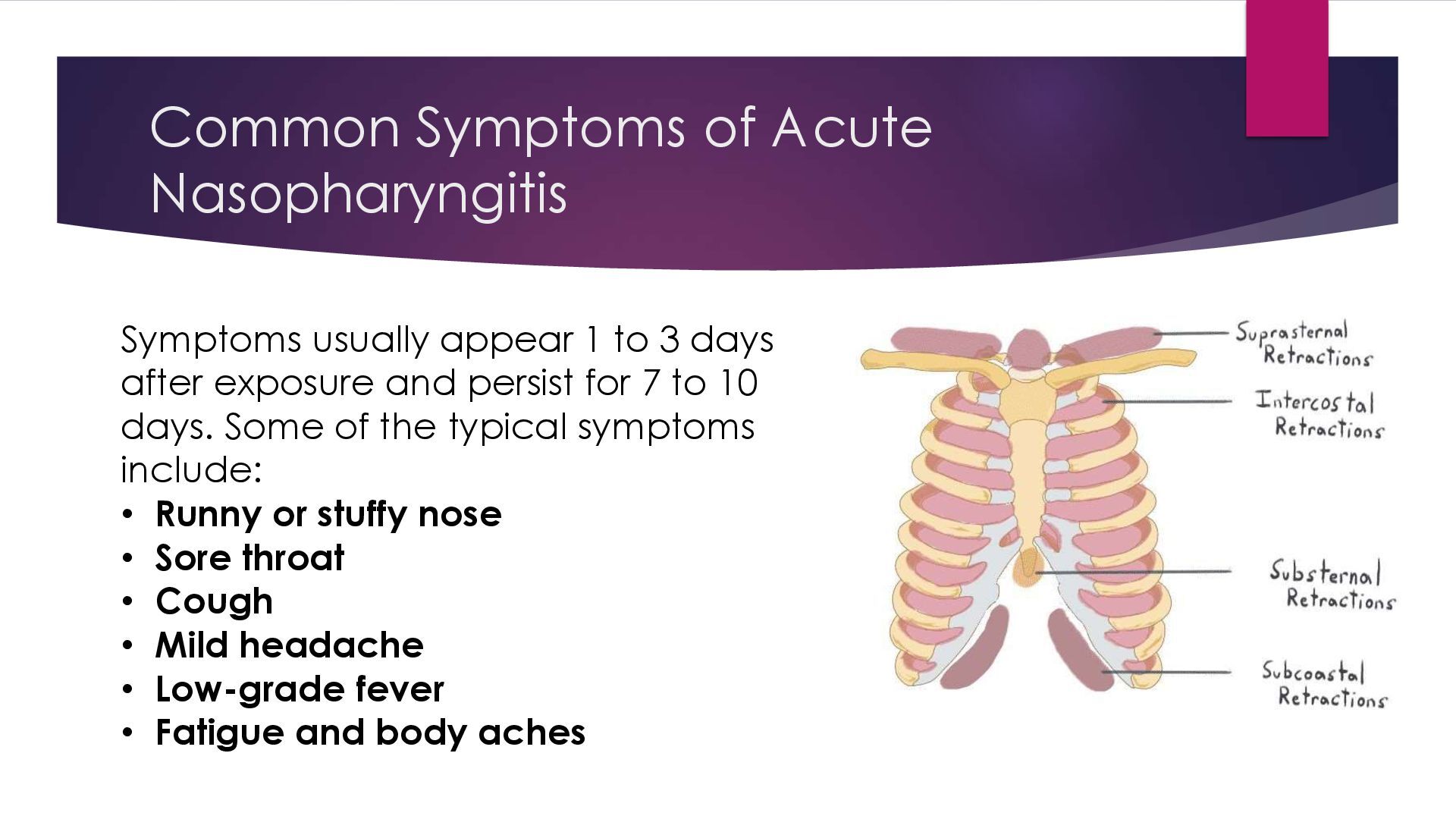
  4. Common Symptoms of Acute Nasopharyngitis Symptoms usually appear 1 to

    3 days after exposure and persist for 7 to 10 days. Some of the typical symptoms include: • Runny or stuffy nose • Sore throat • Cough • Mild headache • Low-grade fever • Fatigue and body aches
  5. How Is It Treated? It is not curable; since it’s

    viral, antibiotics will not do anything unless there’s a secondary bacterial infection. Treatment is relief from symptoms and involves:  Rest: Allow your body to recover.  Hydration: Drink plenty of fluids and stay hydrated to thin mucus.  Over-the-counter medications: Pain relievers like paracetamol or ibuprofen lower fever and pain.  Nasal sprays or salt water irrigations: Good for congestion.  Warm saltwater gargles: Soothes sore throats. Always consult a doctor before giving medicines to children.
  6. Home Remedies That Help. Natural remedies also help ease symptoms:

     Honey and lemon tea: Soothes the throat.  Steam inhalation: Eases nasal congestion.  Ginger tea: Anti-inflammatory properties can help relieve pain.
  7. When to Consult a Physician  Most colds resolve on

    their own, but you should consult a doctor if:  Symptoms last more than 7 days or worsen  High-grade fever  You find it hard to breathe or have pain in the chest  There is a persistent cough or earache (may be a symptom of a secondary infection) Contact the best medical clinic in Abu Dhabi that offers general practitioners and family medical care, which can help manage respiratory infections like acute nasopharyngitis.
  8. Prevention Tips  Wash your hands with soap and water

    often  Avoid close contact with an infected person  Disinfect touch surfaces  Have a healthy immune system through proper sleeping and nutrition.
  9. Conclusion Acute nasopharyngitis may be common, but that doesn’t mean

    it should be ignored. By understanding the symptoms and treatment options, you can recover faster and avoid complications. For personalized care, don’t hesitate to contact a healthcare provider or visit our clinic. Stay healthy, stay informed!