Upgrade to Pro — share decks privately, control downloads, hide ads and more …

Use decision trees to build drawable shortcuts

Avatar for Martin Martin
December 10, 2017

Use decision trees to build drawable shortcuts

Machine learning is not only about neural networks. You can also use decision trees to find out what a user draw on the screen. Classification algorithms are an easy starting point to understand how to make your browser smarter. We will have a look at how they work and how to use them to make easy shortcuts in your browser by drawing geometric forms on the screen.

Avatar for Martin

Martin

December 10, 2017

Other Decks in Programming

Transcript

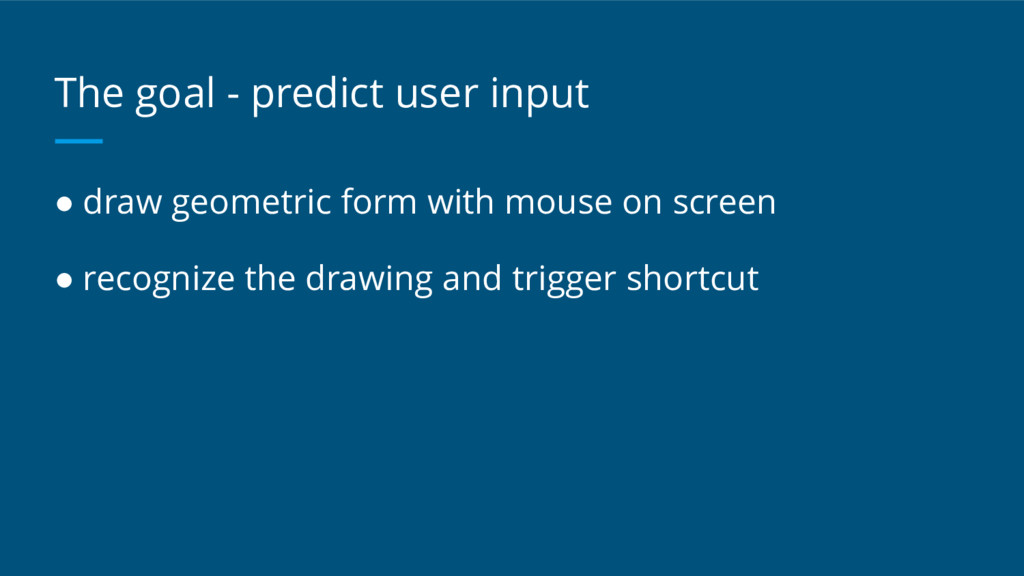
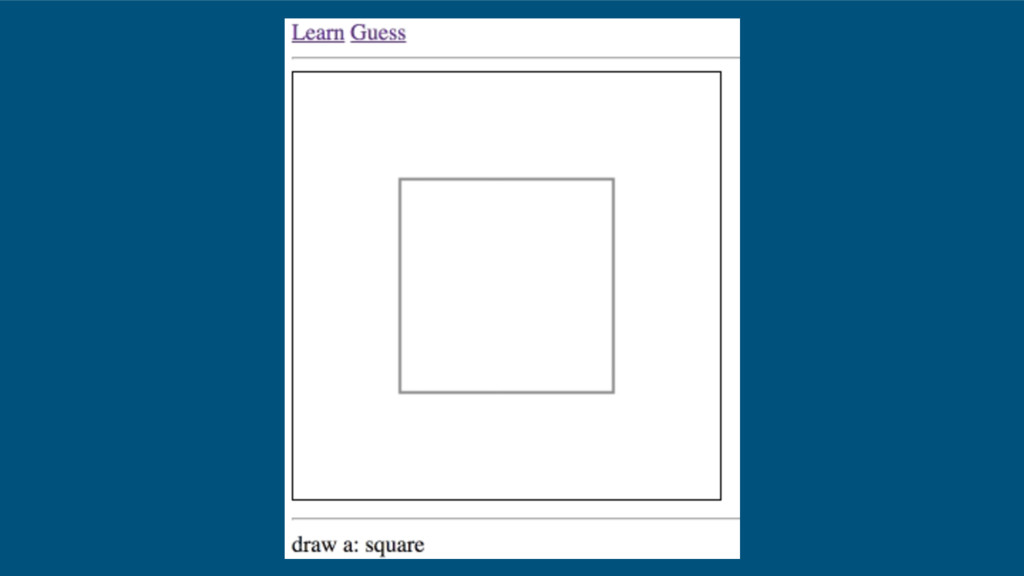
  1. The goal - predict user input ! draw geometric form

    with mouse on screen ! recognize the drawing and trigger shortcut
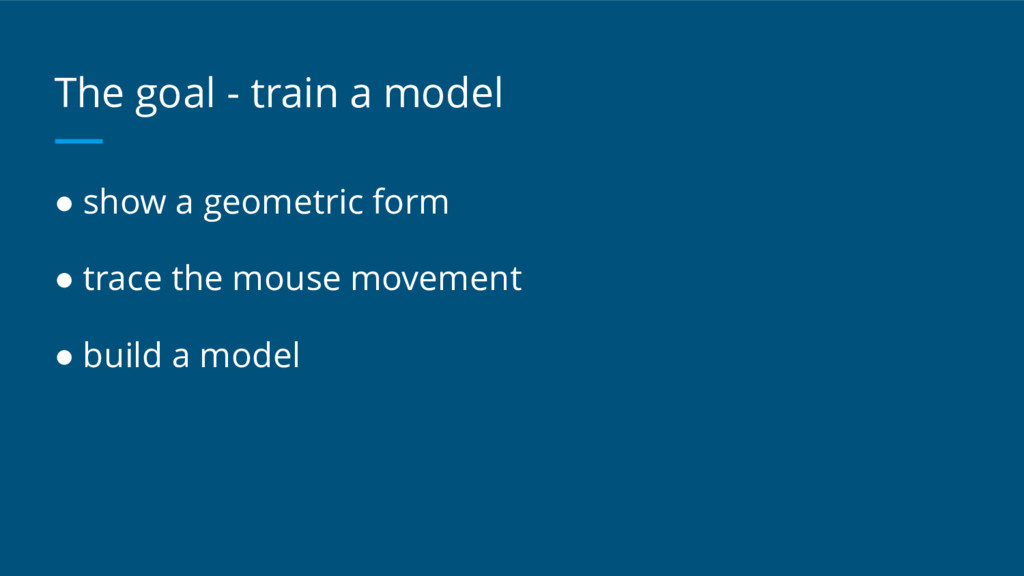
  2. The goal - train a model ! show a geometric

    form ! trace the mouse movement ! build a model
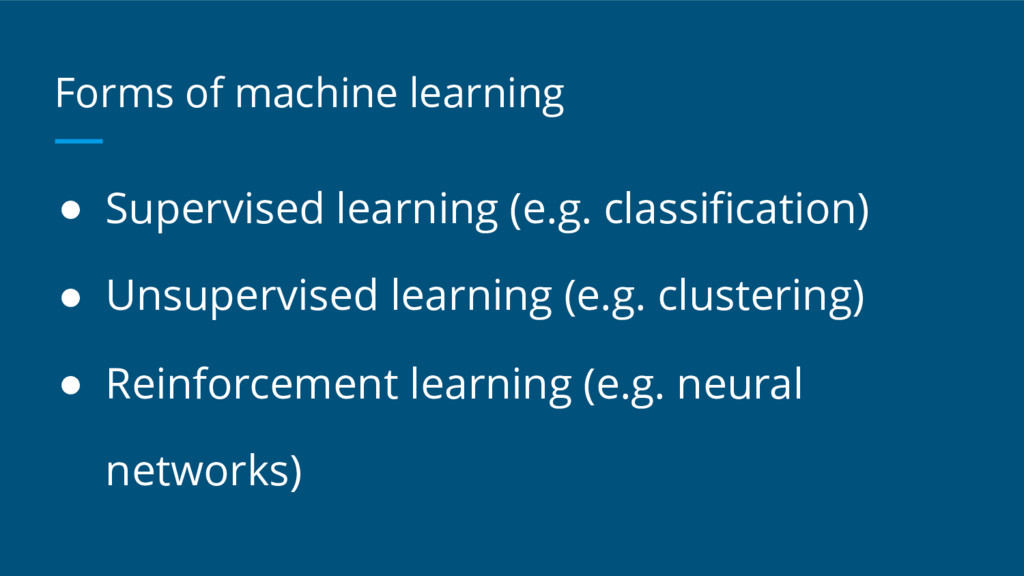
  3. Forms of machine learning ! Supervised learning (e.g. classification) !

    Unsupervised learning (e.g. clustering) ! Reinforcement learning (e.g. neural networks)
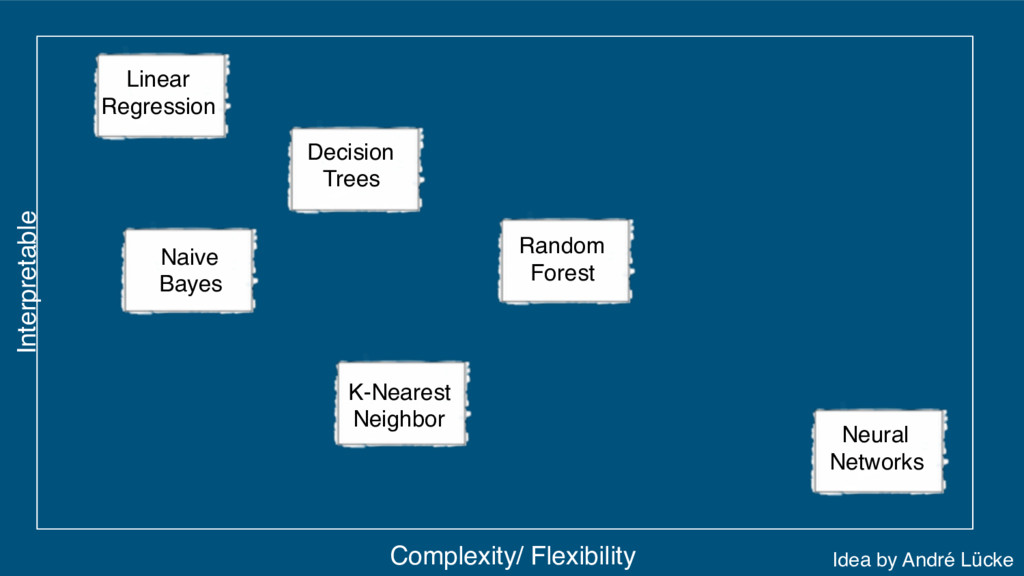
  4. Complexity/ Flexibility Interpretable Linear Regression Decision Trees Naive Bayes Random

    Forest K-Nearest Neighbor Neural Networks Idea by André Lücke
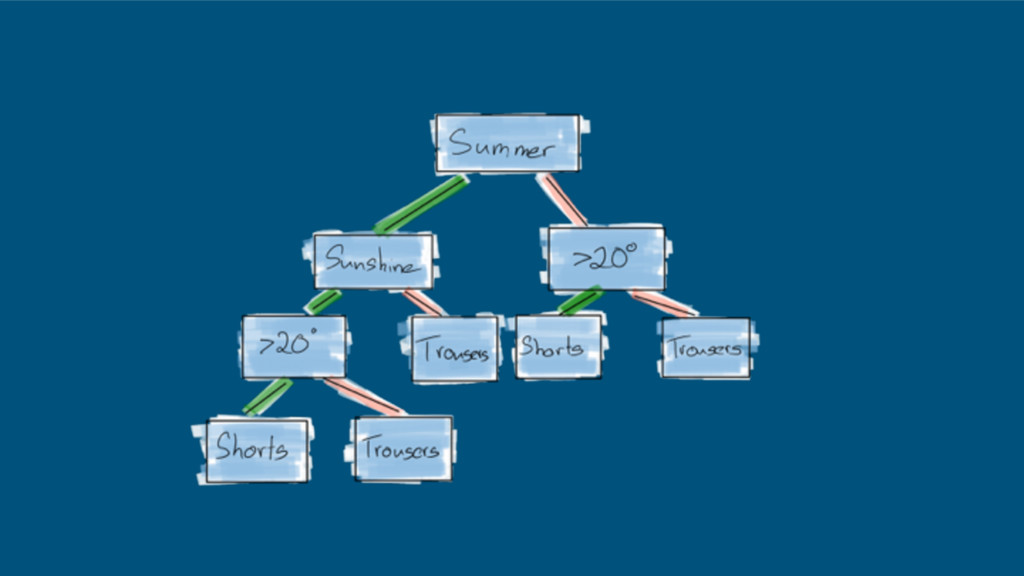
  5. Definition (Wikipedia) A decision tree is a flowchart-like structure in

    which each internal node represents a "test" on an attribute [...], each branch represents the outcome of the test, and each leaf node represents a class label (decision taken after computing all attributes). “ ”
  6. Collect data ! x, y coordinates of the „mouse“ on

    a canvas while pressed/ touched ! the currently shown geometric form, that’s the label ! many iterations to get enough data
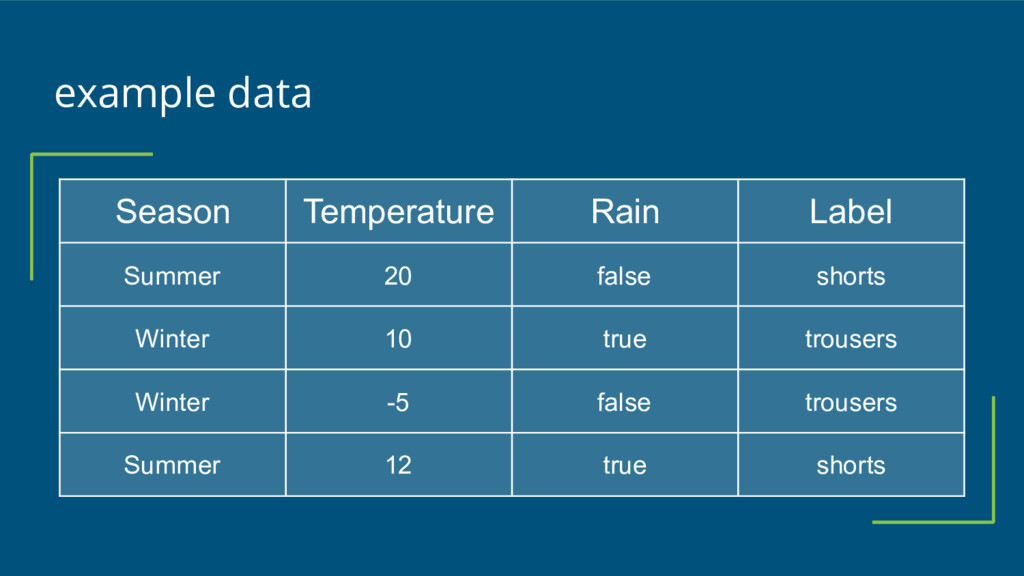
  7. example data Season Temperature Rain Label Summer 20 false shorts

    Winter 10 true trousers Winter -5 false trousers Summer 12 true shorts
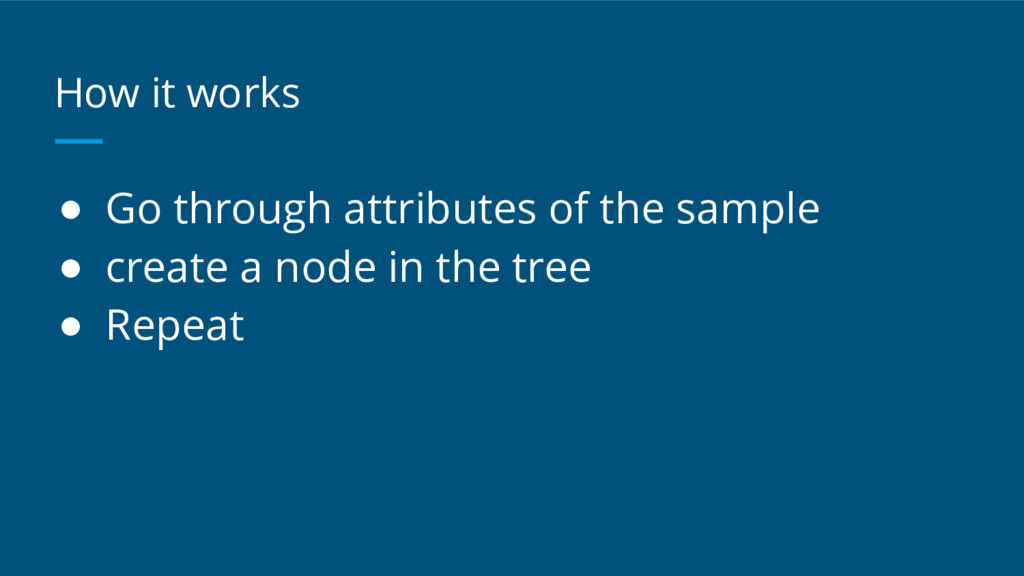
  8. How it works ! Go through attributes of the sample

    ! create a node in the tree ! Repeat
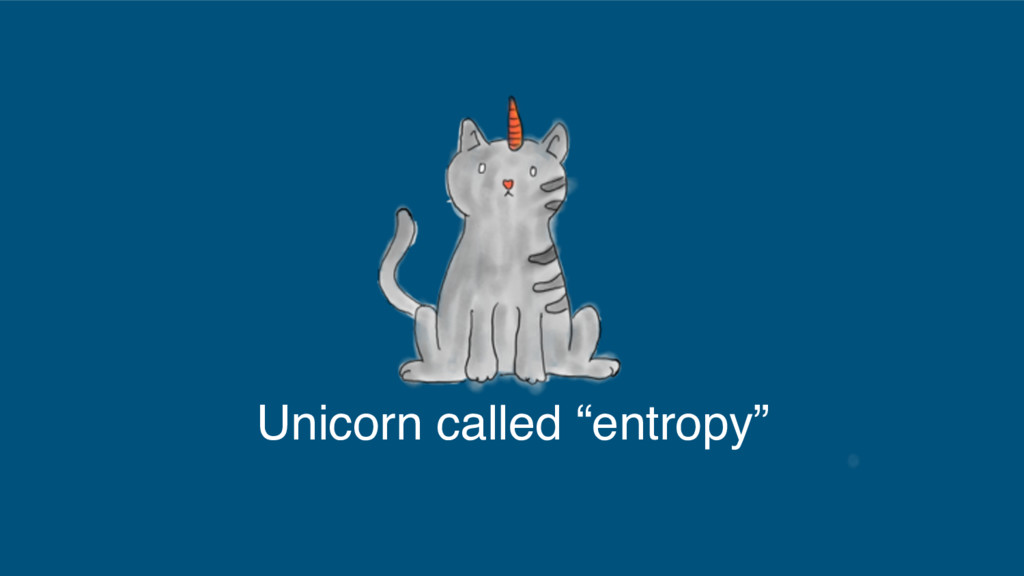
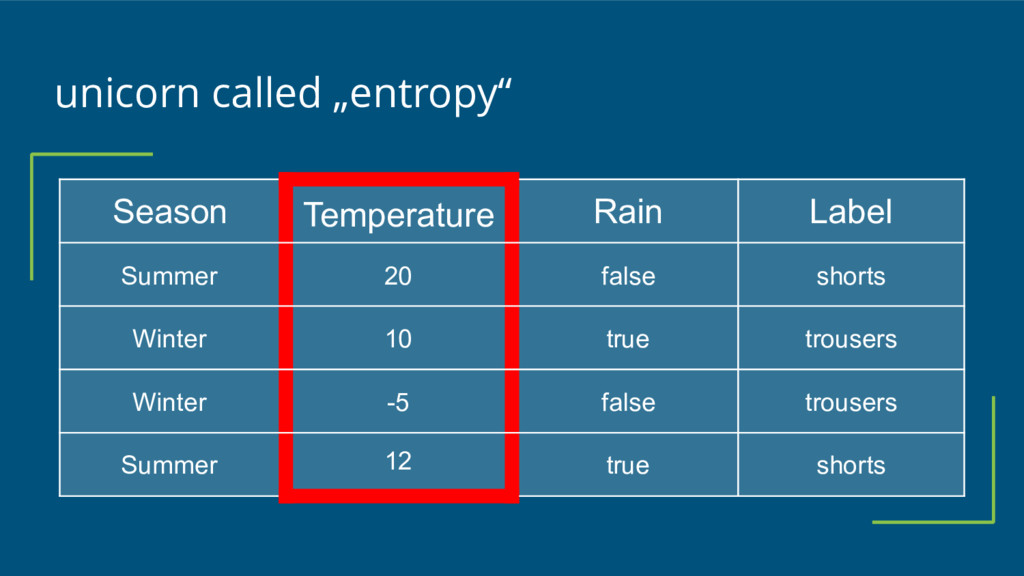
  9. unicorn called „entropy“ Season Temperature Rain Label Summer 20 false

    shorts Winter 10 true trousers Winter -5 false trousers Summer 12 true shorts
  10. Unicorn called “entropy” Unicorn called “entropy” Unicorn called “entropy” Unicorn

    called “entropy” Unicorn called “entropy” Unicorn called “entropy” Unicorn called “entropy”
  11. How do I know if it’s good? ! Test with

    another SampleSet ! Split your data set into training and testing
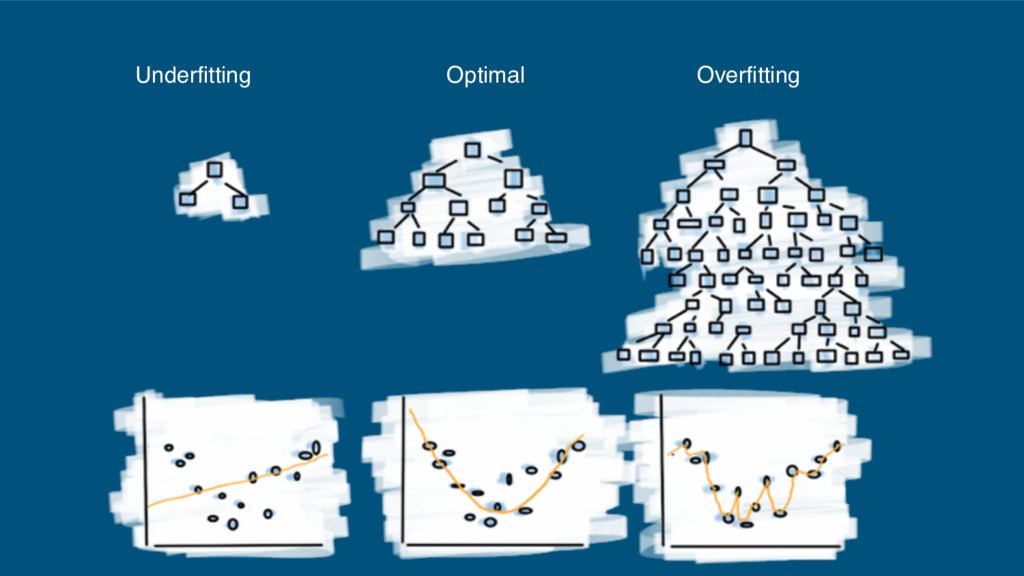
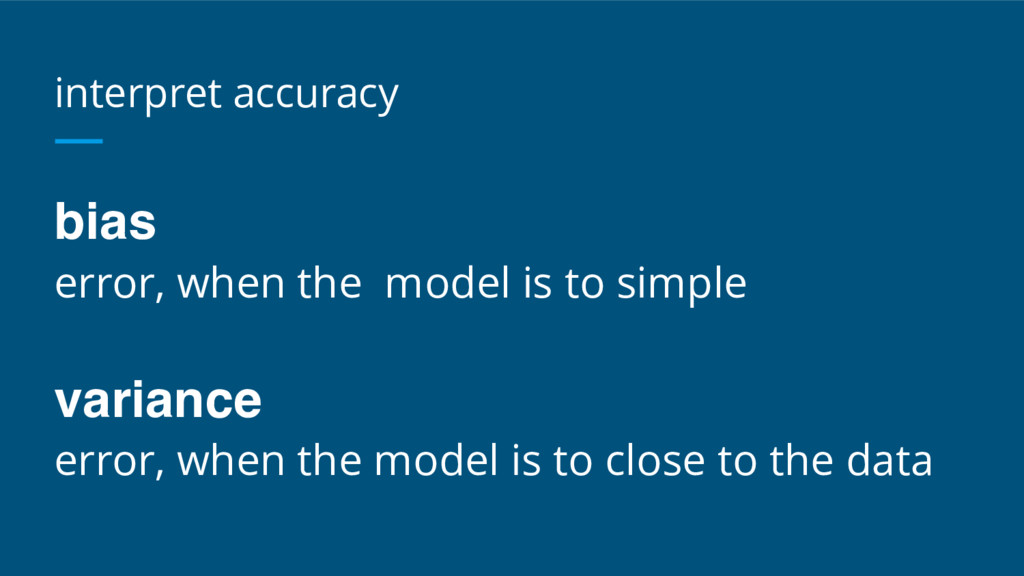
  12. interpret accuracy bias error, when the model is to simple

    variance error, when the model is to close to the data
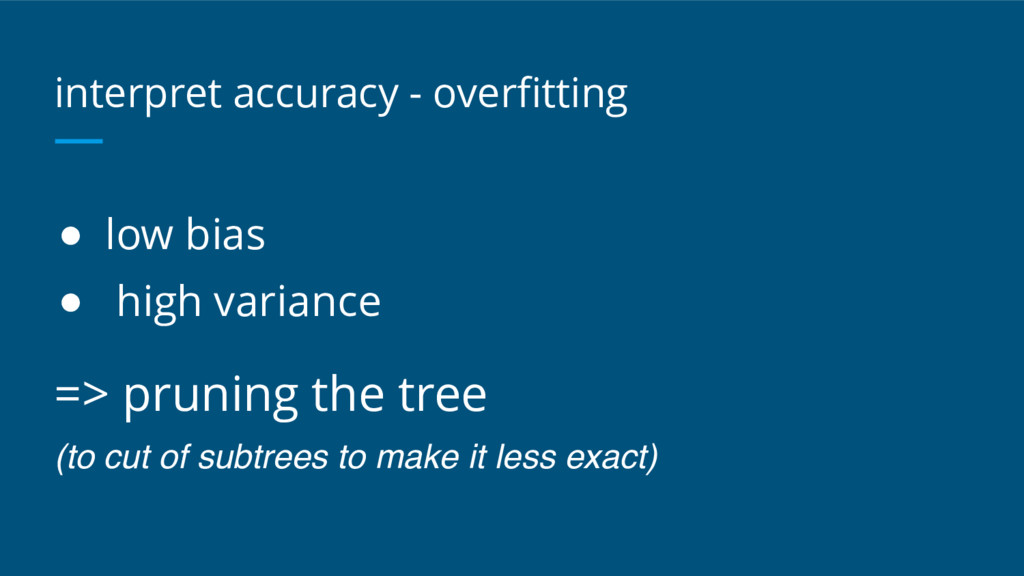
  13. interpret accuracy - overfitting ! low bias ! high variance

    => pruning the tree 
 (to cut of subtrees to make it less exact)
  14. Conclusion (so far) ! We collected data ! We created

    a model ! We tested it and know that it is good