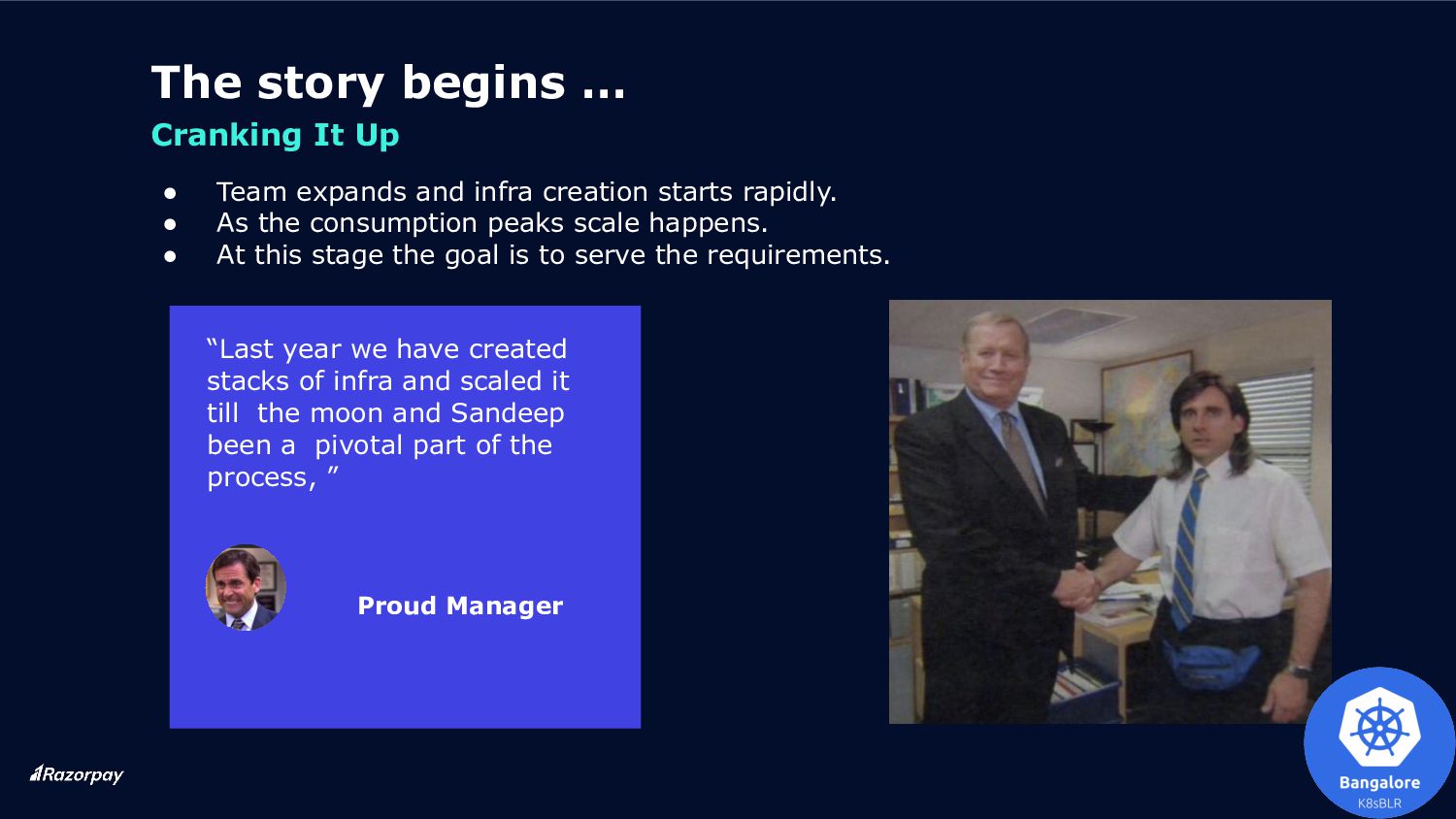
it till the moon and Sandeep been a pivotal part of the process, ” Proud Manager Cranking It Up • Team expands and infra creation starts rapidly. • As the consumption peaks scale happens. • At this stage the goal is to serve the requirements. The story begins …
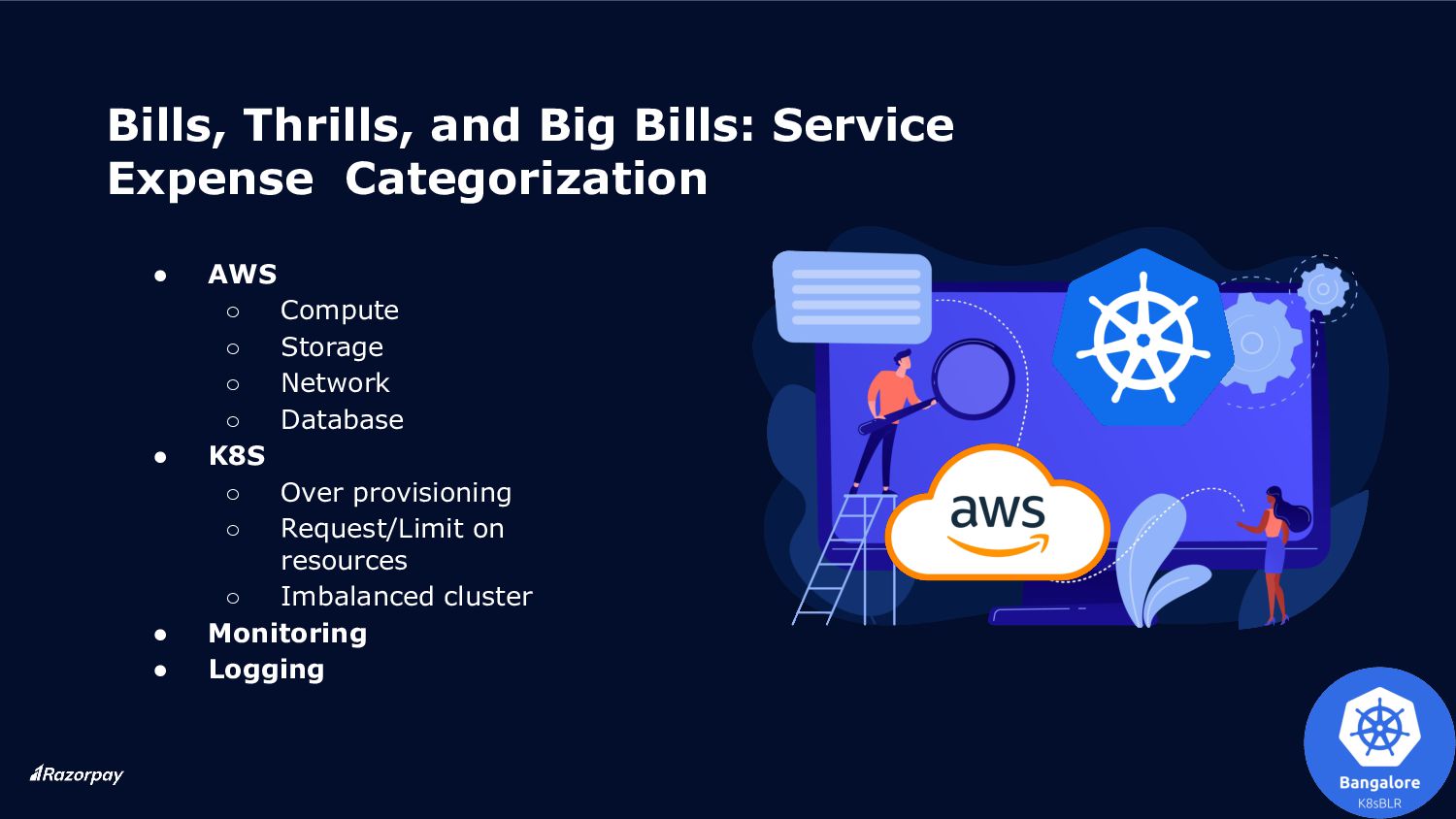
• K8S ◦ Over provisioning ◦ Request/Limit on resources ◦ Imbalanced cluster • Monitoring • Logging Bills, Thrills, and Big Bills: Service Expense Categorization
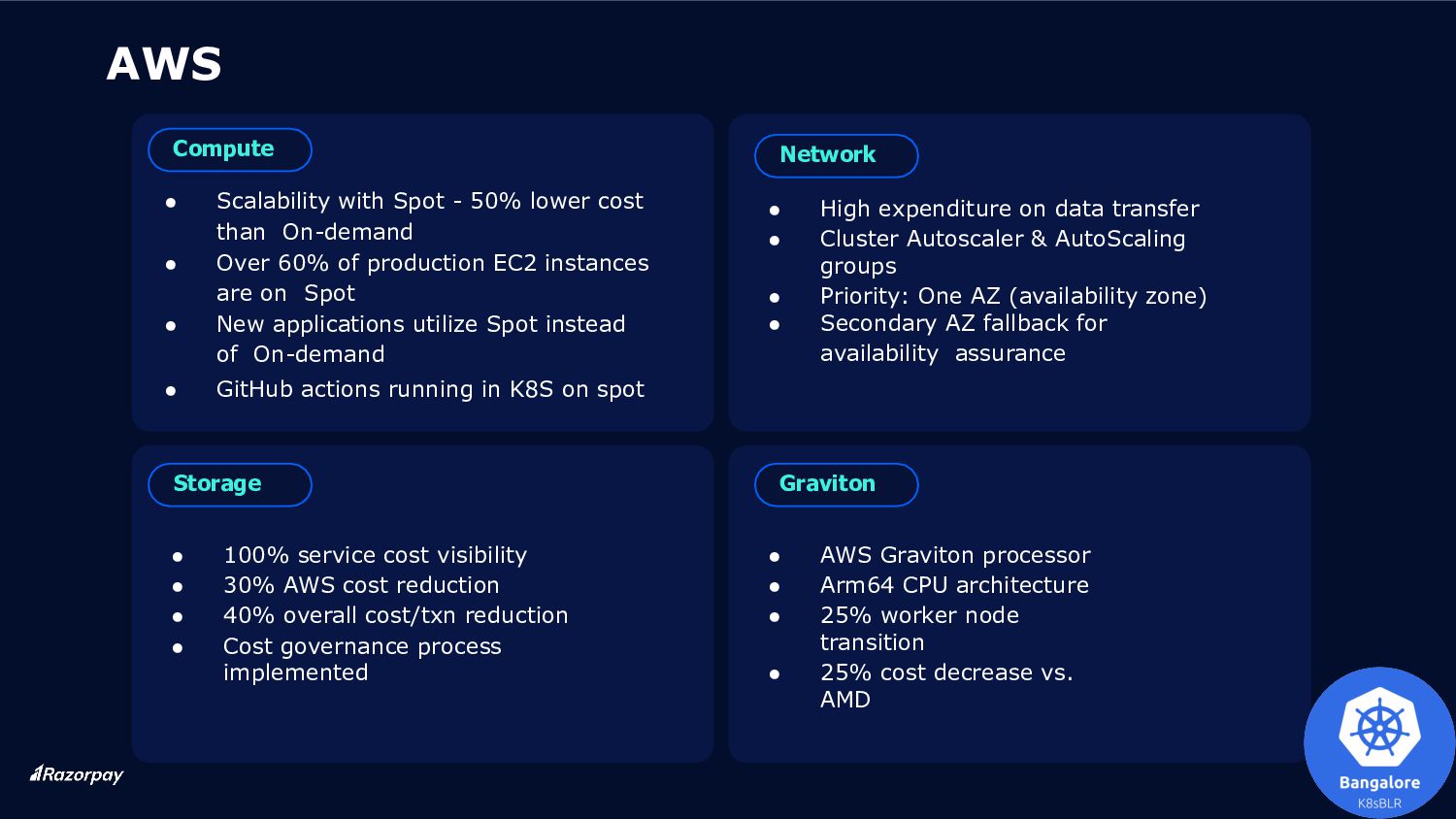
AutoScaling groups • Priority: One AZ (availability zone) • Secondary AZ fallback for availability assurance • 100% service cost visibility • 30% AWS cost reduction • 40% overall cost/txn reduction • Cost governance process implemented • AWS Graviton processor • Arm64 CPU architecture • 25% worker node transition • 25% cost decrease vs. AMD AWS Compute Storage Network Graviton • Scalability with Spot - 50% lower cost than On-demand • Over 60% of production EC2 instances are on Spot • New applications utilize Spot instead of On-demand • GitHub actions running in K8S on spot
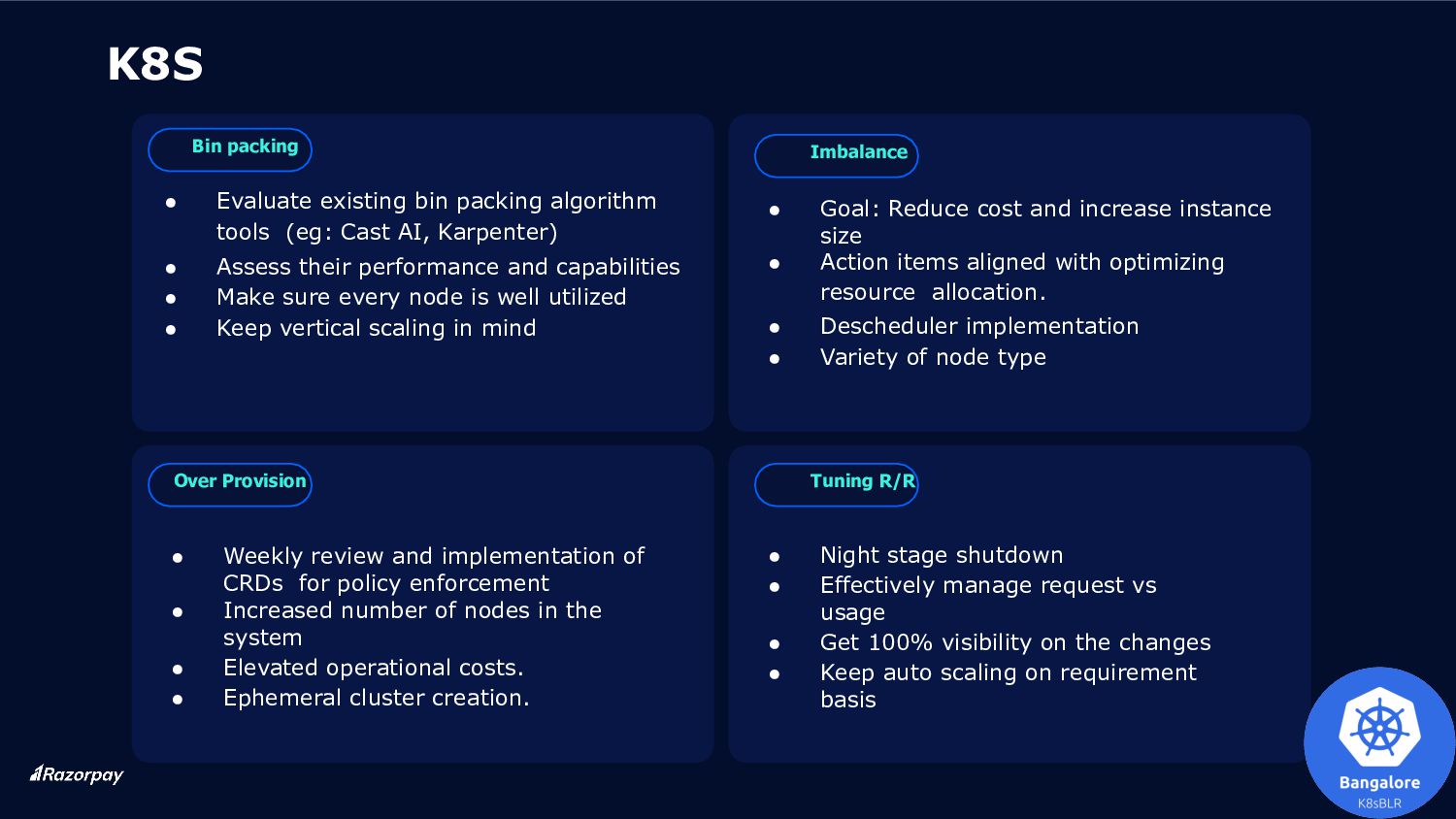
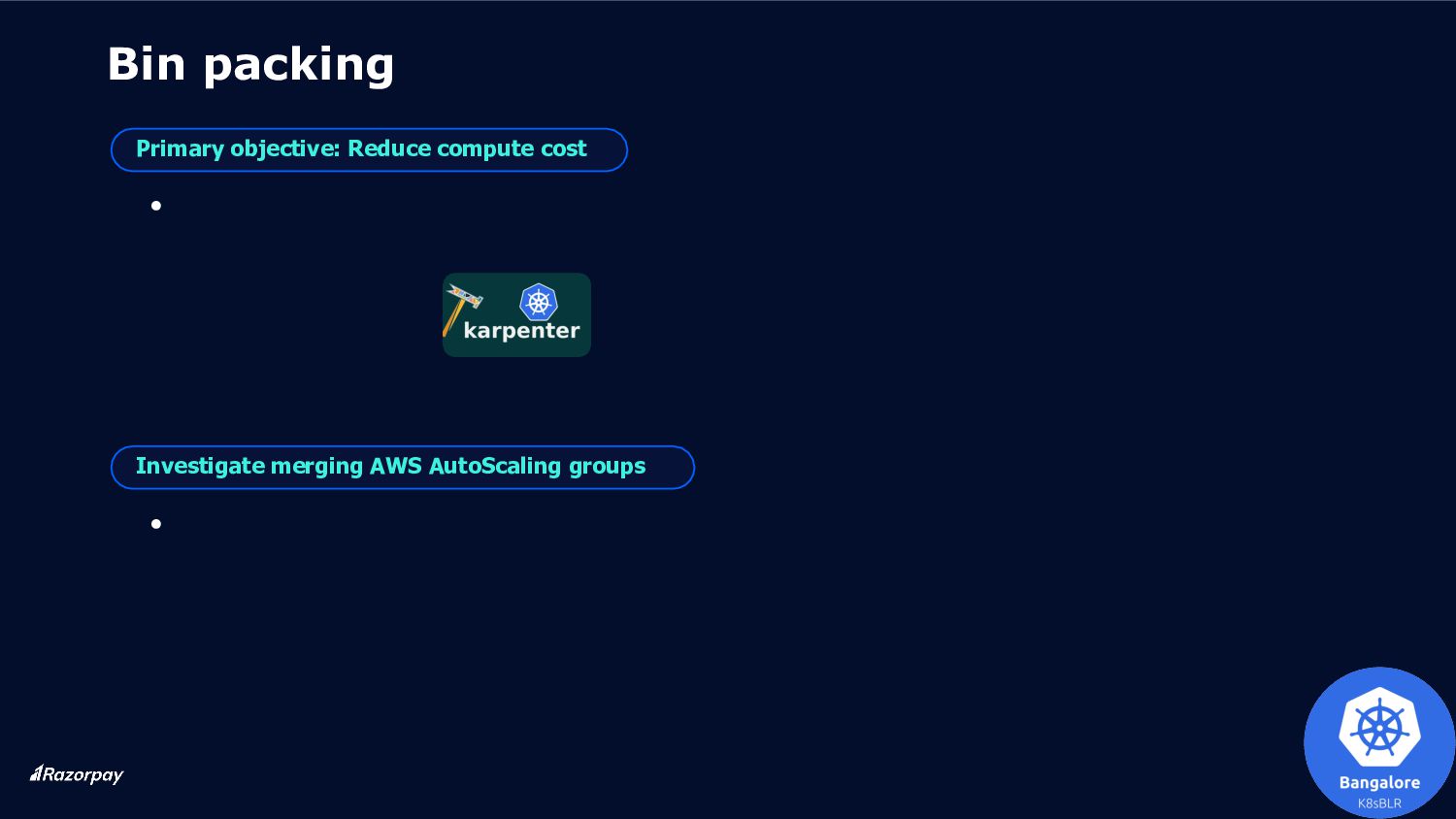
Action items aligned with optimizing resource allocation. • Descheduler implementation • Variety of node type • Weekly review and implementation of CRDs for policy enforcement • Increased number of nodes in the system • Elevated operational costs. • Ephemeral cluster creation. • Night stage shutdown • Effectively manage request vs usage • Get 100% visibility on the changes • Keep auto scaling on requirement basis Bin packing Over Provision Imbalance Tuning R/R • Evaluate existing bin packing algorithm tools (eg: Cast AI, Karpenter) • Assess their performance and capabilities • Make sure every node is well utilized • Keep vertical scaling in mind
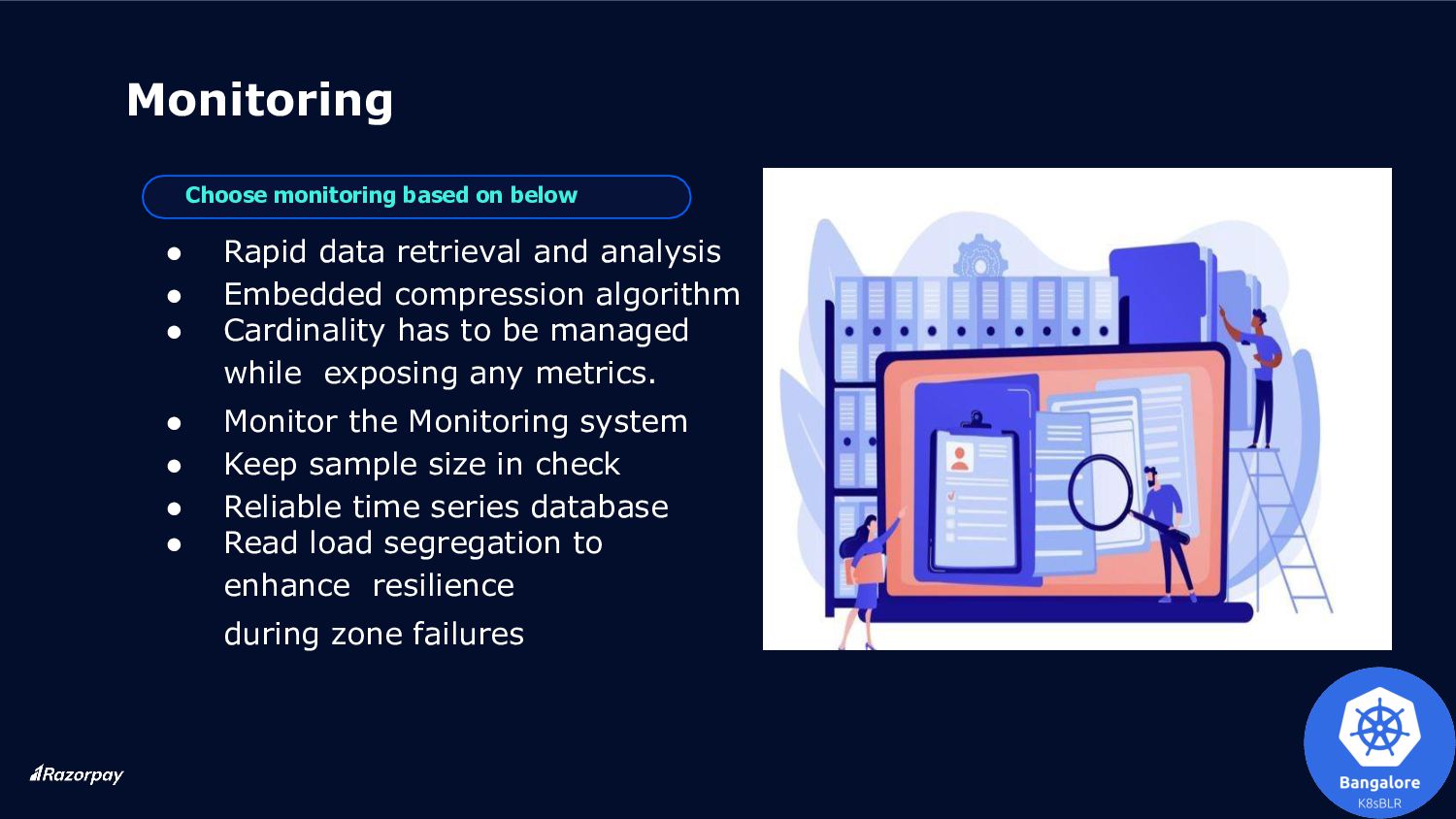
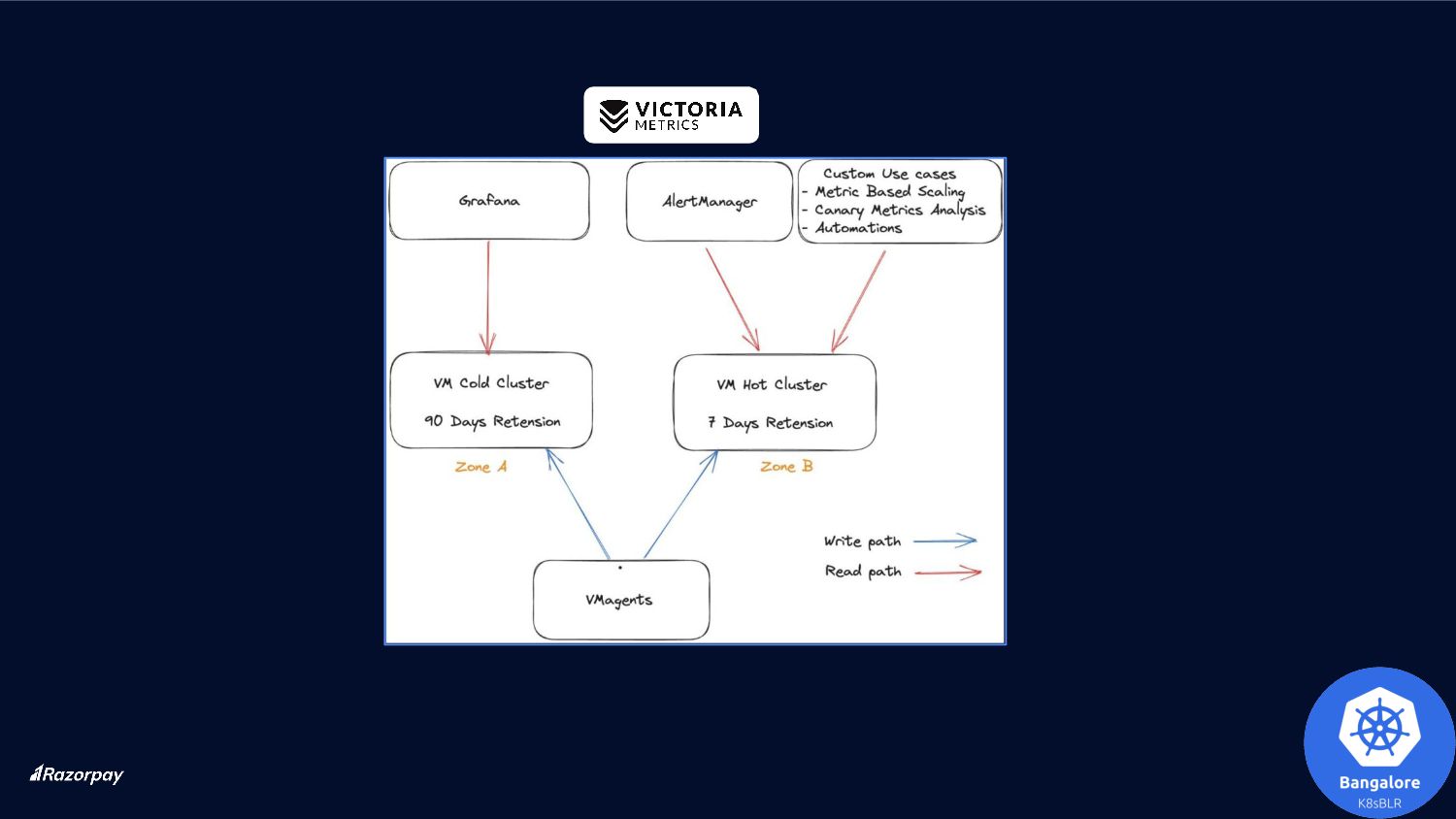
and analysis • Embedded compression algorithm • Cardinality has to be managed while exposing any metrics. • Monitor the Monitoring system • Keep sample size in check • Reliable time series database • Read load segregation to enhance resilience during zone failures
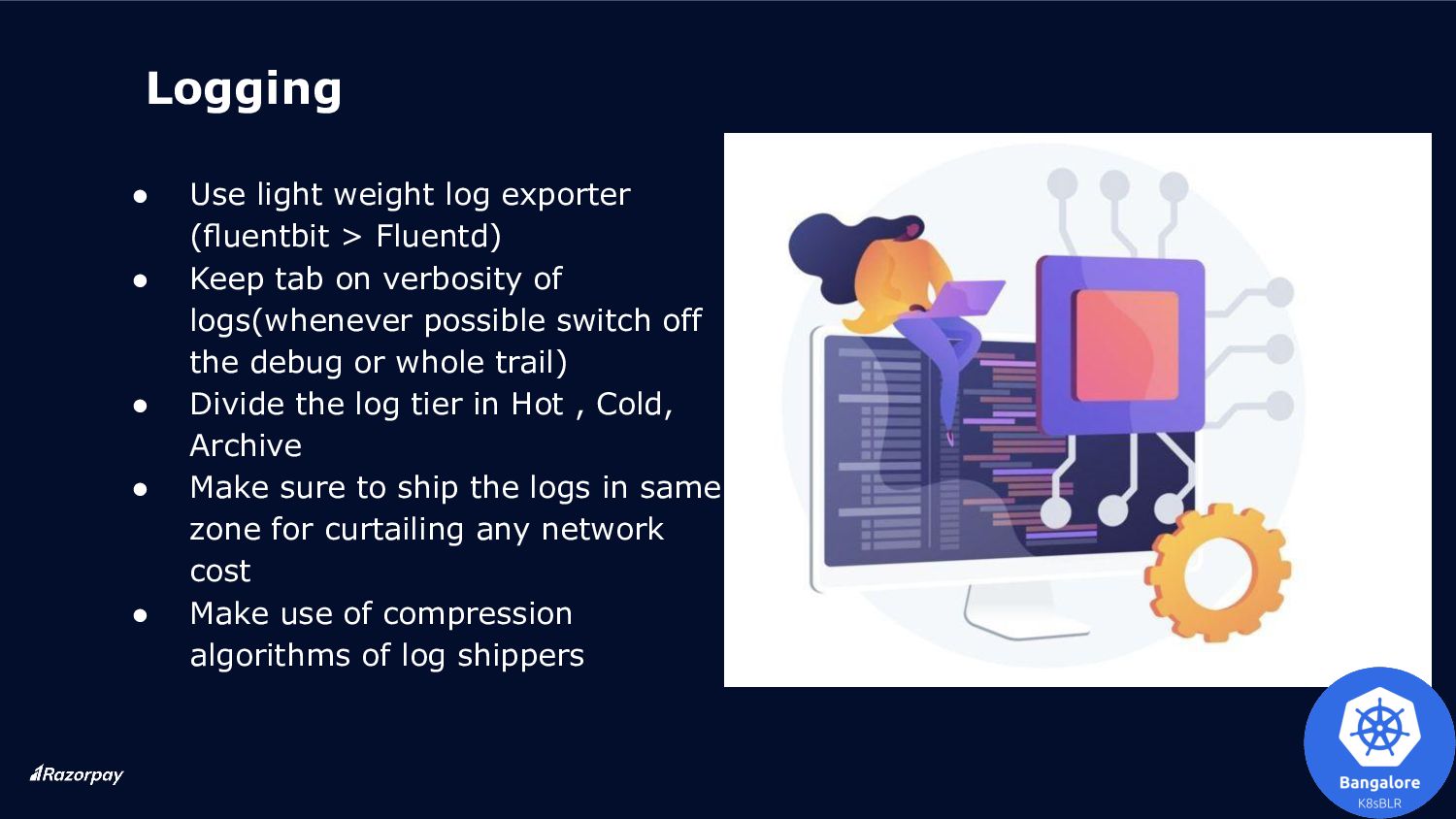
• Keep tab on verbosity of logs(whenever possible switch off the debug or whole trail) • Divide the log tier in Hot , Cold, Archive • Make sure to ship the logs in same zone for curtailing any network cost • Make use of compression algorithms of log shippers
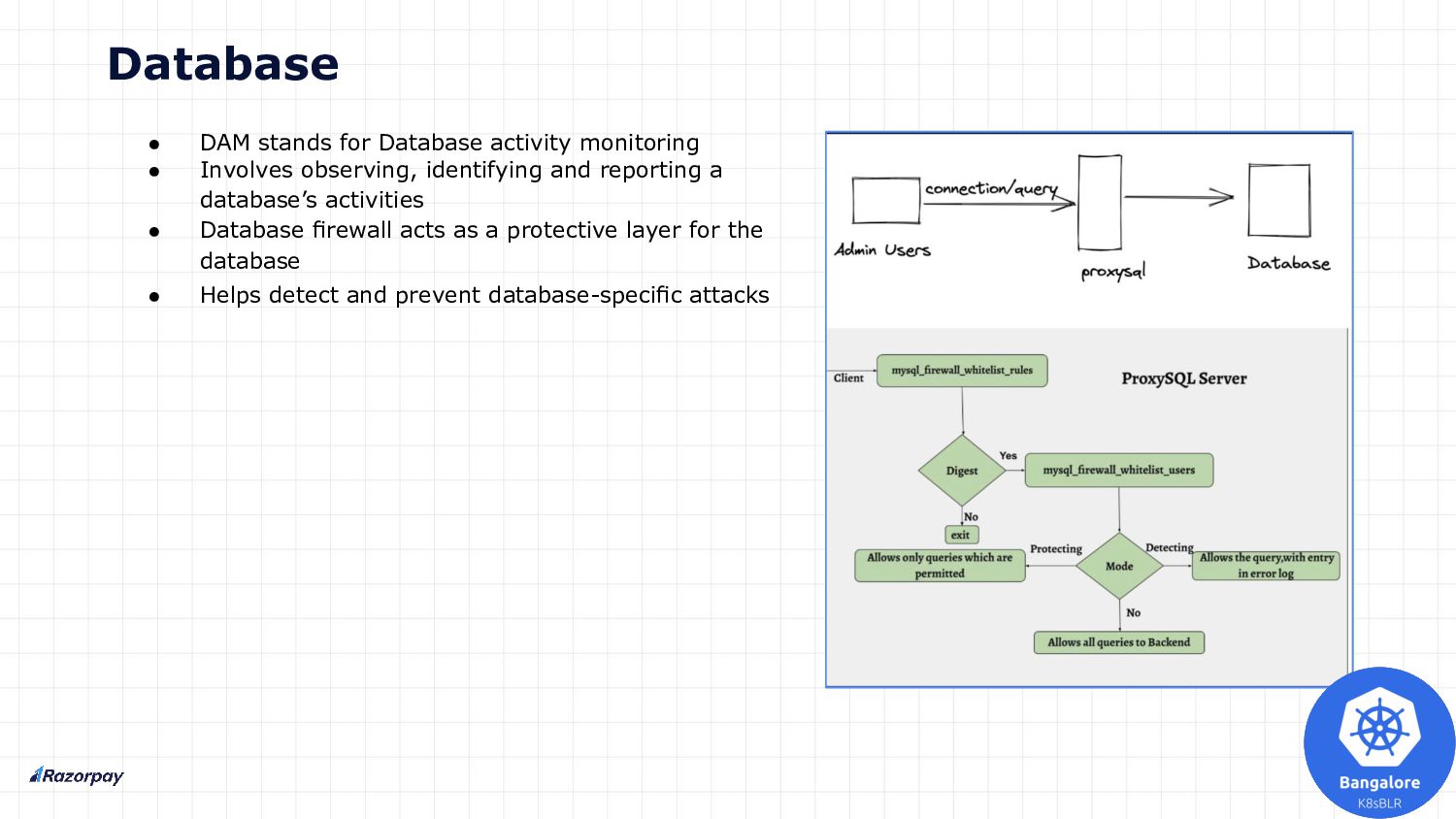
observing, identifying and reporting a database’s activities • Database firewall acts as a protective layer for the database • Helps detect and prevent database-specific attacks

 SiteGround - Reliable hosting with speed, security, and support you can count on.


 cnic
cnic
 hironobuiga
 chack411
 hacobu
 ymotongpoo
 tosite
 siromi
 kworkdev
 kawametho
 ktkrhr
 iwatatomoya
 kazukun0716
 dafujii
 aleyda
 malarkey
 skipperchong
 jonoalderson
 marktimemedia
 axbom
axbom
 holman
 bluesmoon
 mojombo
 coloredviolet
 twada
twada
 tmiket