must be maintained will have conflict. Conflict is common to all marriages. The goal is not to be conflict – free but to learn to handle conflict correctly when it occurs. Healthy conflict resolution occurs when couples are willing to seek and grant forgiveness.
quarrels and what causes fights among you? Is it not this, that your passions are at war within you? 2 You desire and do not have, so you murder. You covet and cannot obtain, so you fight and quarrel. ESV
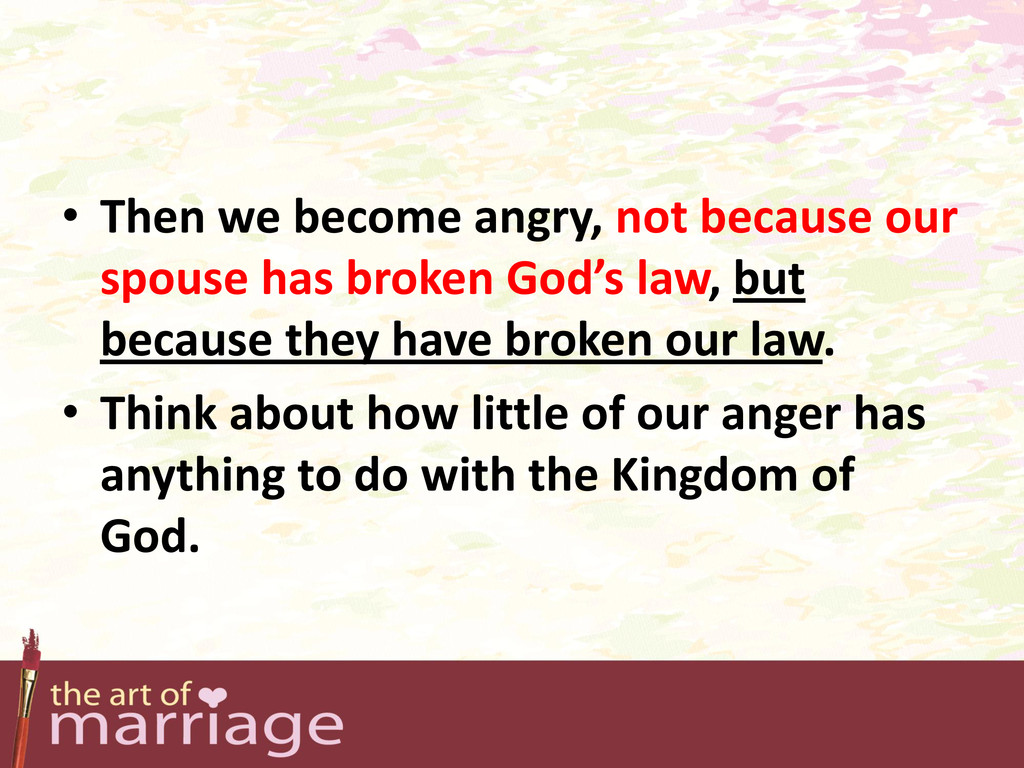
doesn’t locate our anger in our past. • He doesn’t locate our anger in our experience of oppression or the way we were parented. • He located it by the passions that are at war within us. No one, by James account, can make us angry, its our passion or the sin that resides in me that makes me just want my way.
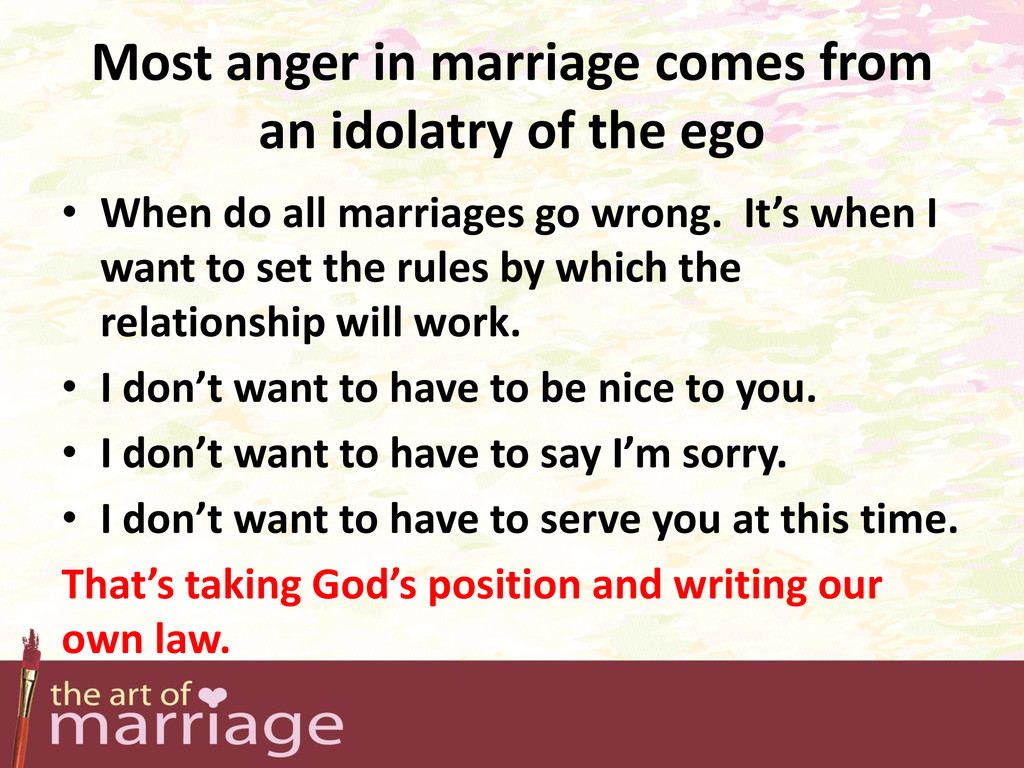
ego • When do all marriages go wrong. It’s when I want to set the rules by which the relationship will work. • I don’t want to have to be nice to you. • I don’t want to have to say I’m sorry. • I don’t want to have to serve you at this time. That’s taking God’s position and writing our own law.
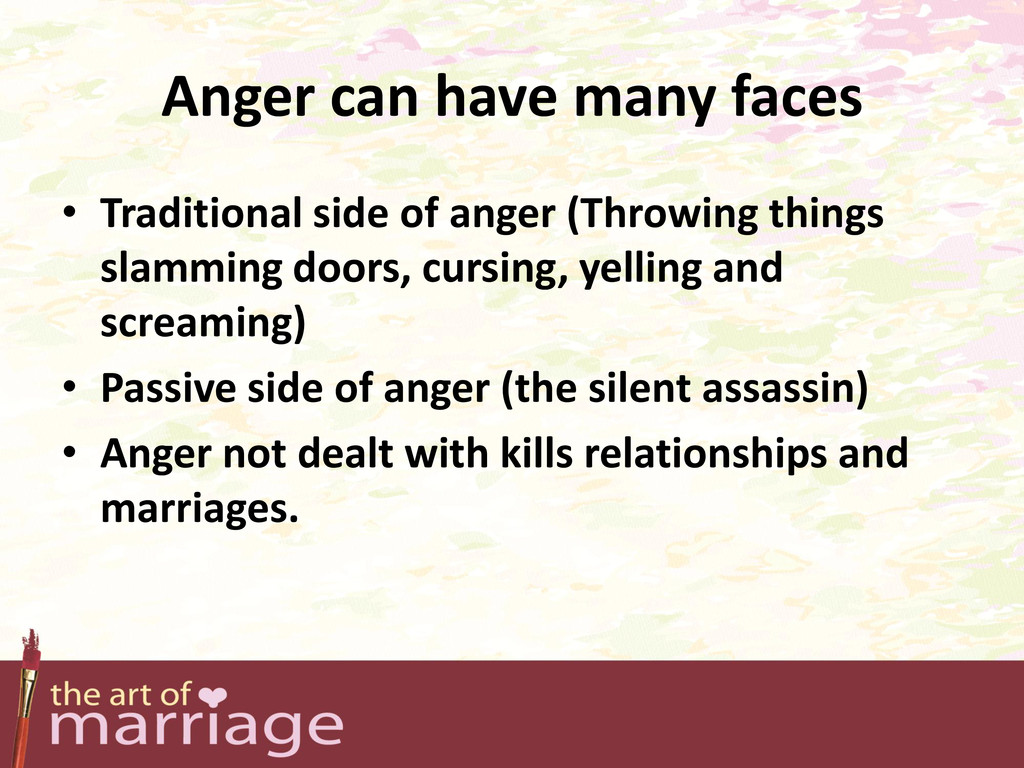
(Throwing things slamming doors, cursing, yelling and screaming) • Passive side of anger (the silent assassin) • Anger not dealt with kills relationships and marriages.
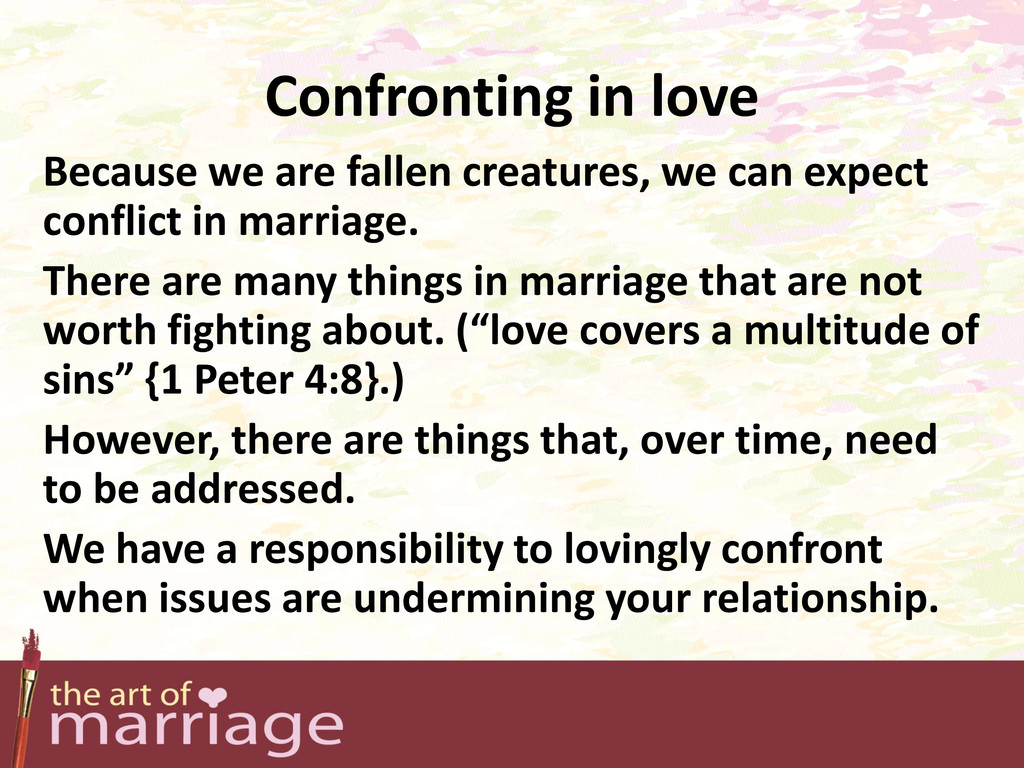
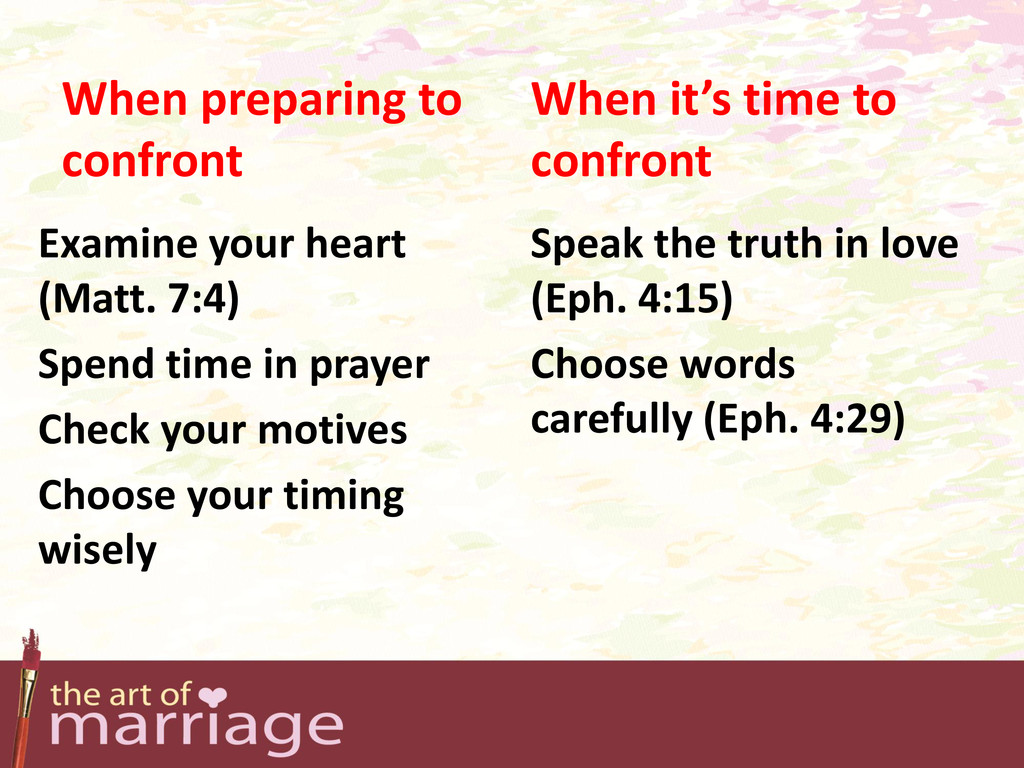
expect conflict in marriage. There are many things in marriage that are not worth fighting about. (“love covers a multitude of sins” {1 Peter 4:8}.) However, there are things that, over time, need to be addressed. We have a responsibility to lovingly confront when issues are undermining your relationship.
time in prayer Check your motives Choose your timing wisely When it’s time to confront Speak the truth in love (Eph. 4:15) Choose words carefully (Eph. 4:29)
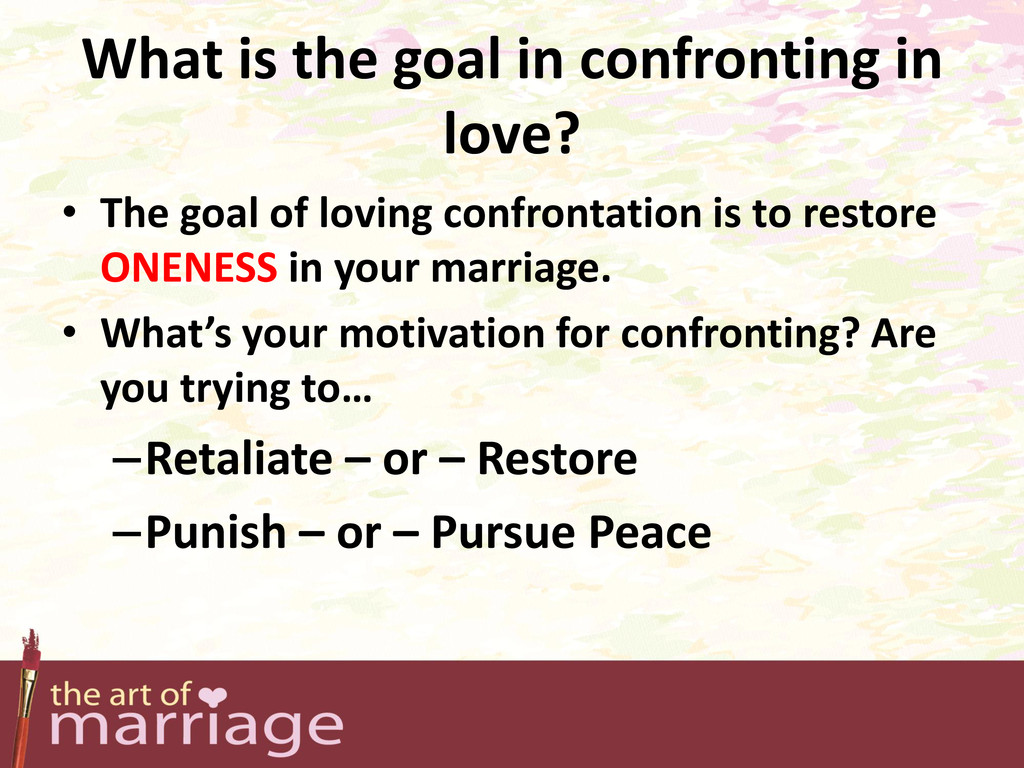
goal of loving confrontation is to restore ONENESS in your marriage. • What’s your motivation for confronting? Are you trying to… –Retaliate – or – Restore –Punish – or – Pursue Peace
granting forgiveness because of what God has done for us. Eph. 4:32 And be ye kind one to another, tenderhearted, forgiving one another, even as God for Christ's sake hath forgiven you. KJV
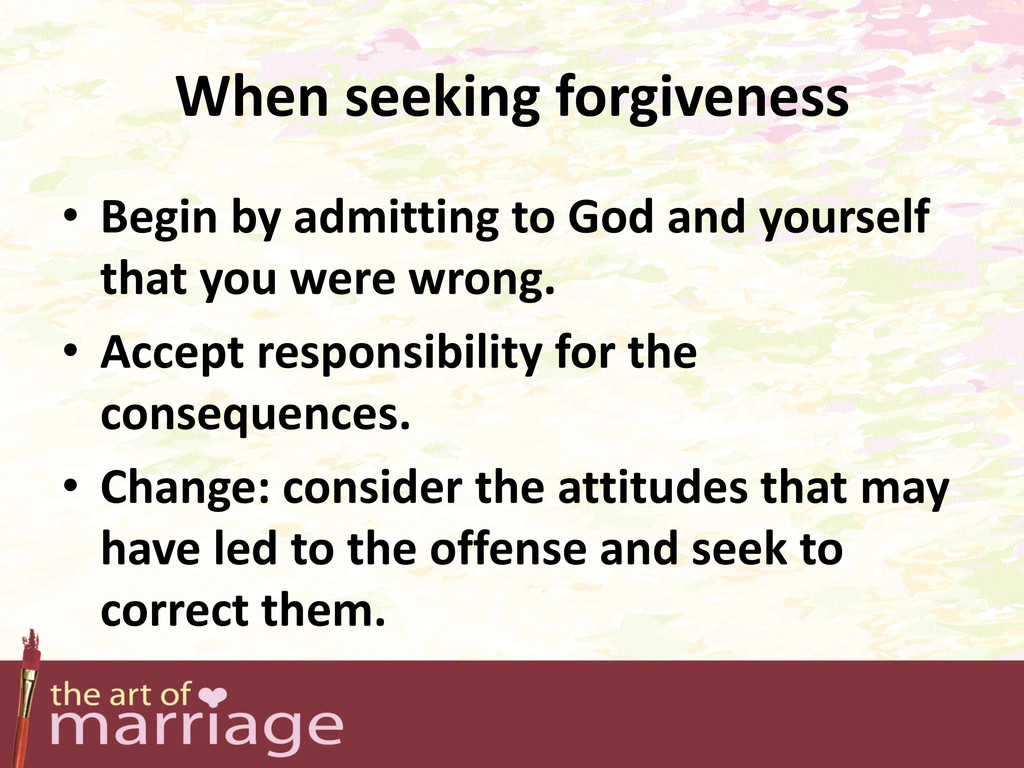
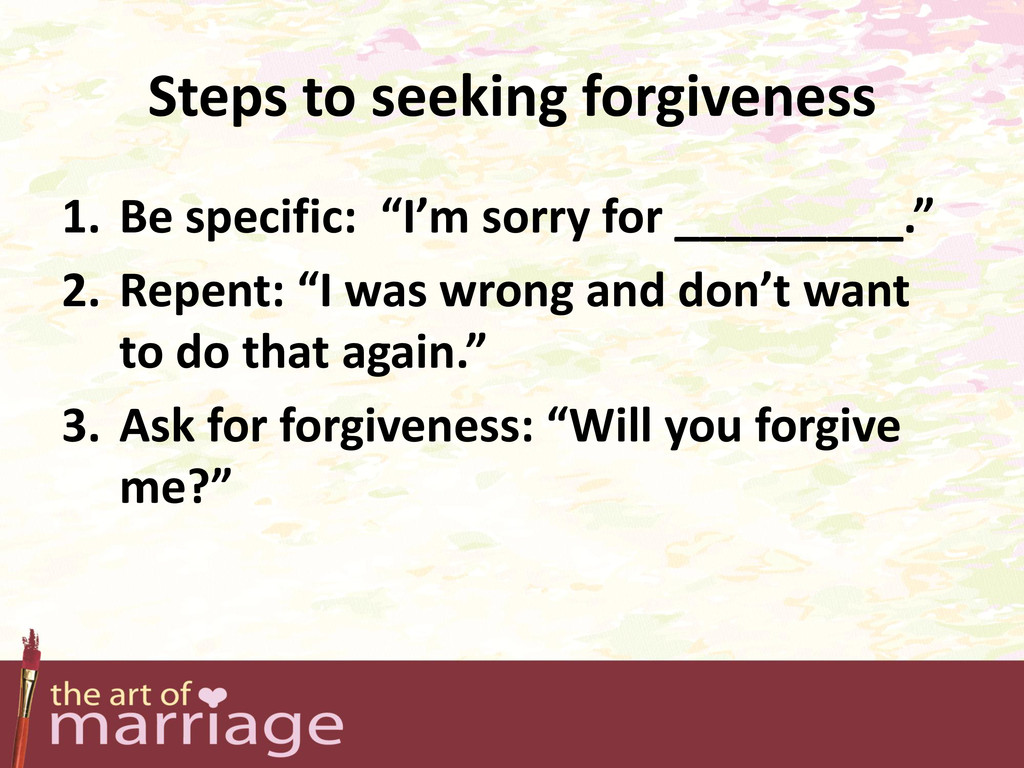
yourself that you were wrong. • Accept responsibility for the consequences. • Change: consider the attitudes that may have led to the offense and seek to correct them.
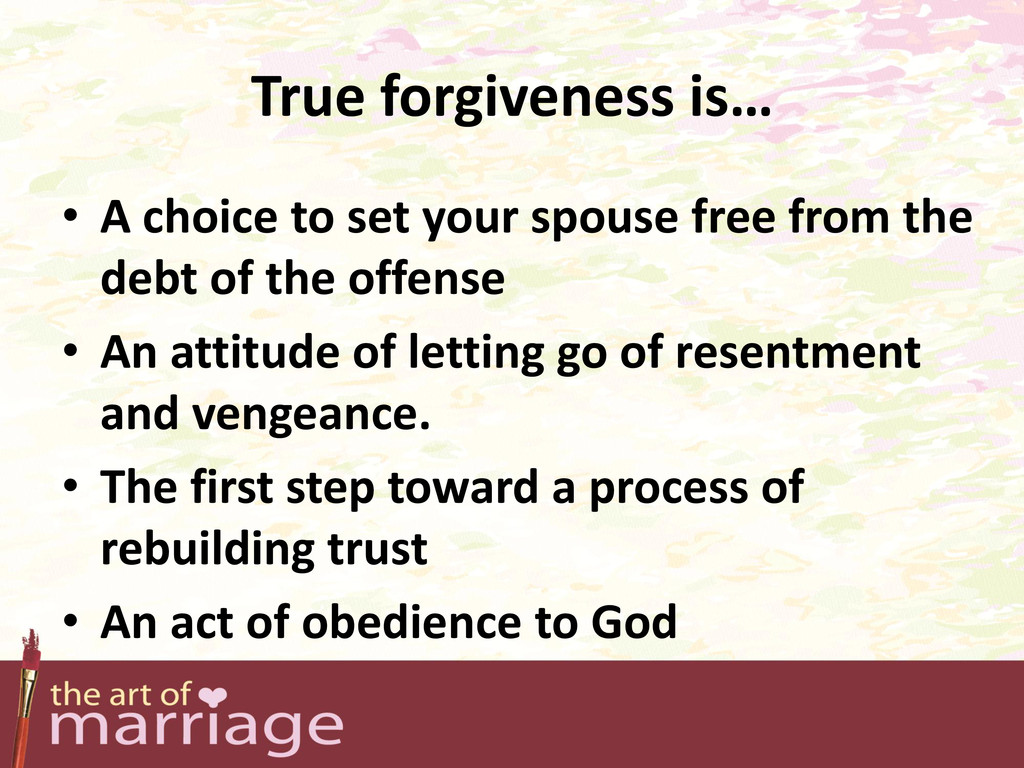
free from the debt of the offense • An attitude of letting go of resentment and vengeance. • The first step toward a process of rebuilding trust • An act of obedience to God
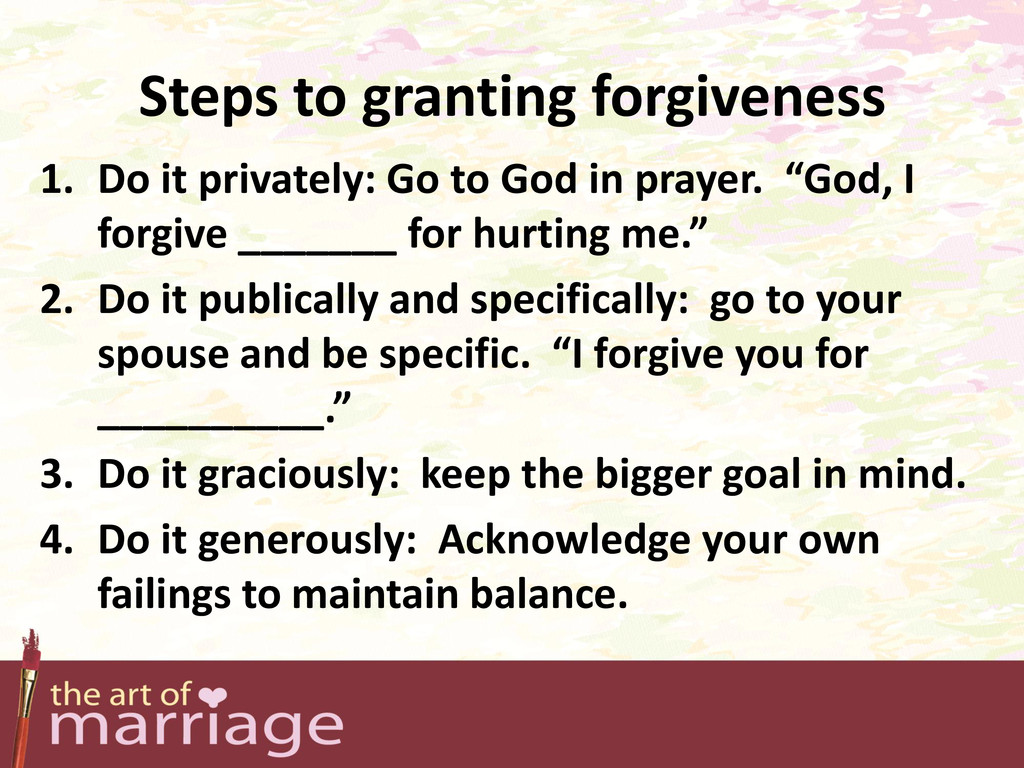
God in prayer. “God, I forgive _______ for hurting me.” 2. Do it publically and specifically: go to your spouse and be specific. “I forgive you for __________.” 3. Do it graciously: keep the bigger goal in mind. 4. Do it generously: Acknowledge your own failings to maintain balance.
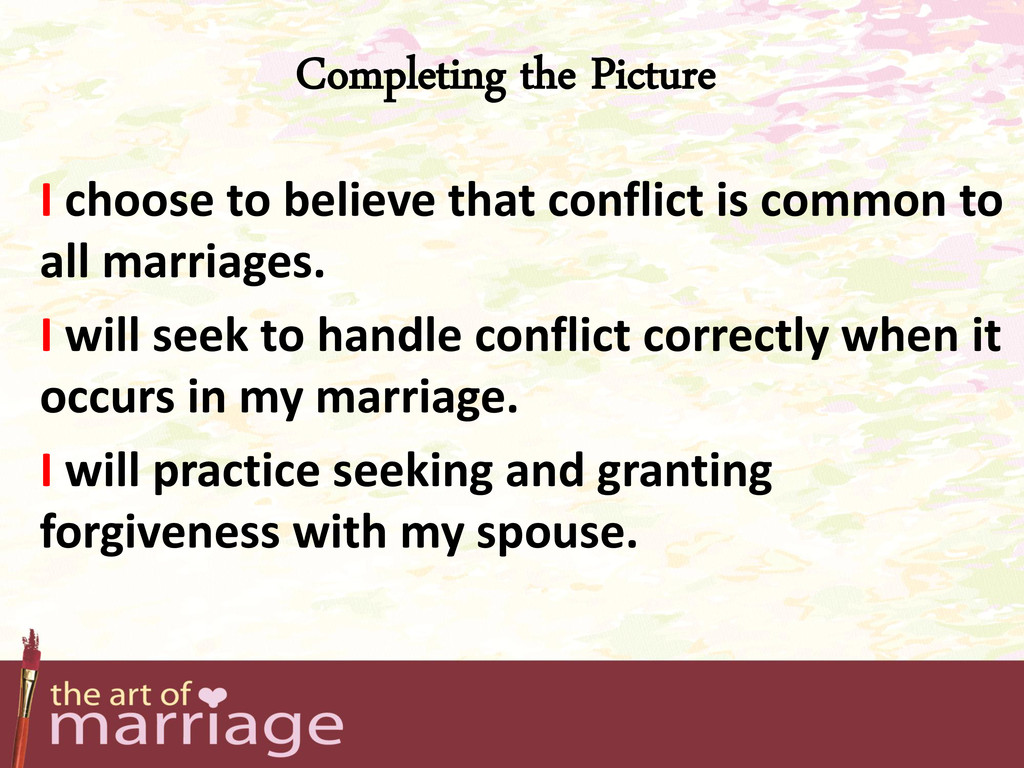
common to all marriages. I will seek to handle conflict correctly when it occurs in my marriage. I will practice seeking and granting forgiveness with my spouse.


 cocfh
 tammyeverts
 geoffreycrofte
 bkeepers
 jonoalderson
 inesmontani
 tmiket
 soysaucechin
 sstephenson
 frankvandijk
 panda_program
 aleyda
 malarkey