Upgrade to Pro — share decks privately, control downloads, hide ads and more …

Network Security Essentials: Protecting Your Di...

Network Security Essentials: Protecting Your Digital Perimeter

Cyber threats are constantly evolving—your network security shouldn’t fall behind. CodeGuardian’s Network Security Essentials safeguard your digital perimeter with real-time monitoring, threat detection, and advanced firewall protection. Stay ahead of breaches, protect sensitive data, and ensure business continuity. Secure your network today with CodeGuardian’s trusted security solutions.

Avatar for codeguardian

codeguardian

May 14, 2025

Other Decks in Technology

Transcript

  1. Protecting Digital Assets Network security safeguards against unauthorized access, use,

    disclosure, disruption, modification, or destruction of information. Cyber Threats and Attacks Cybersecurity threats include malware, phishing, denial- of-service attacks, and data breaches. Introduction to Network Security
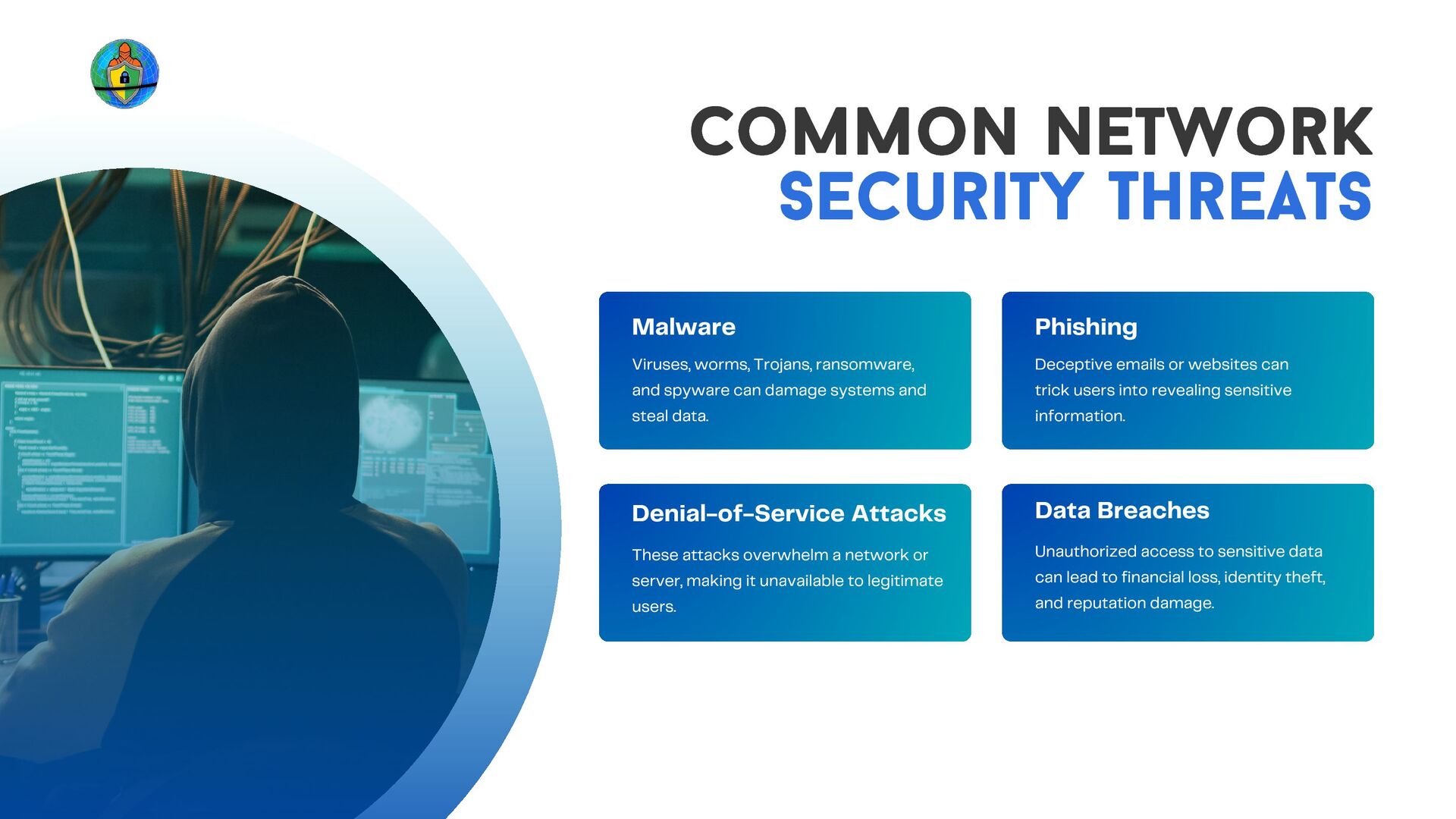
  2. Malware Phishing Data Breaches Denial-of-Service Attacks Viruses, worms, Trojans, ransomware,

    and spyware can damage systems and steal data. Deceptive emails or websites can trick users into revealing sensitive information. These attacks overwhelm a network or server, making it unavailable to legitimate users. Unauthorized access to sensitive data can lead to financial loss, identity theft, and reputation damage. Common Network Security Threats
  3. Firewalls Authentication Act as a barrier between a network and

    the outside world, blocking unauthorized traffic. Verifies the identity of users and devices before granting access to the network. Access Control Authorization Restricts access to specific resources based on user identity and permissions. Determines what actions users are allowed to perform once they are authenticated. Firewalls and Access Control
  4. Incident Response Plan Recovery and Mitigation Incident Analysis and Containment

    A documented process for handling security incidents. Restores affected systems and data and implements measures to prevent future incidents. Identifies the cause and scope of an incident and takes steps to contain it. Incident Response and Disaster Recovery
  5. Strong Passwords Employee Training Use complex and unique passwords for

    all accounts. Educate employees about security risks and best practices. Regular Updates and Patches Multi-Factor Authentication Keep software up to date with the latest security patches. Use multiple methods of authentication for critical accounts. Best Practices for Network Security