Determiner of Learning in Online/Hybrid Classrooms Damiana Gibbons Appalachian State Curriculum & Instruction: Media Studies Designs on Learning September 12, 2013 Wednesday, September 11, 2013
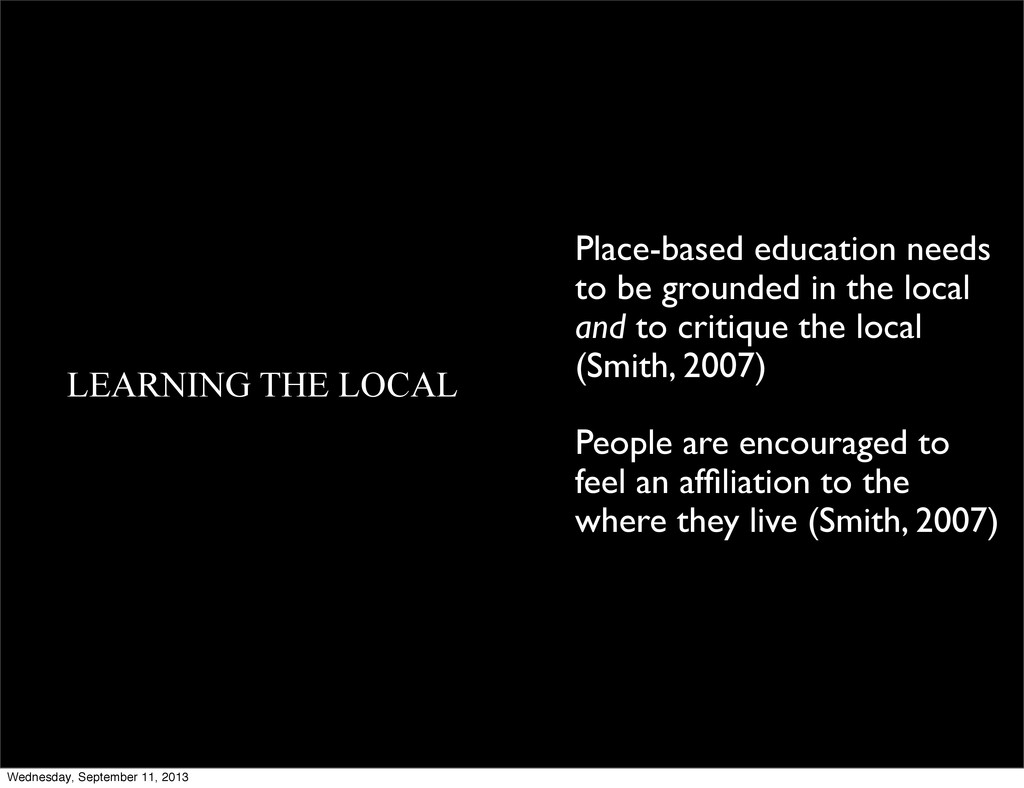
to critique the local (Smith, 2007) People are encouraged to feel an affiliation to the where they live (Smith, 2007) LEARNING THE LOCAL Wednesday, September 11, 2013
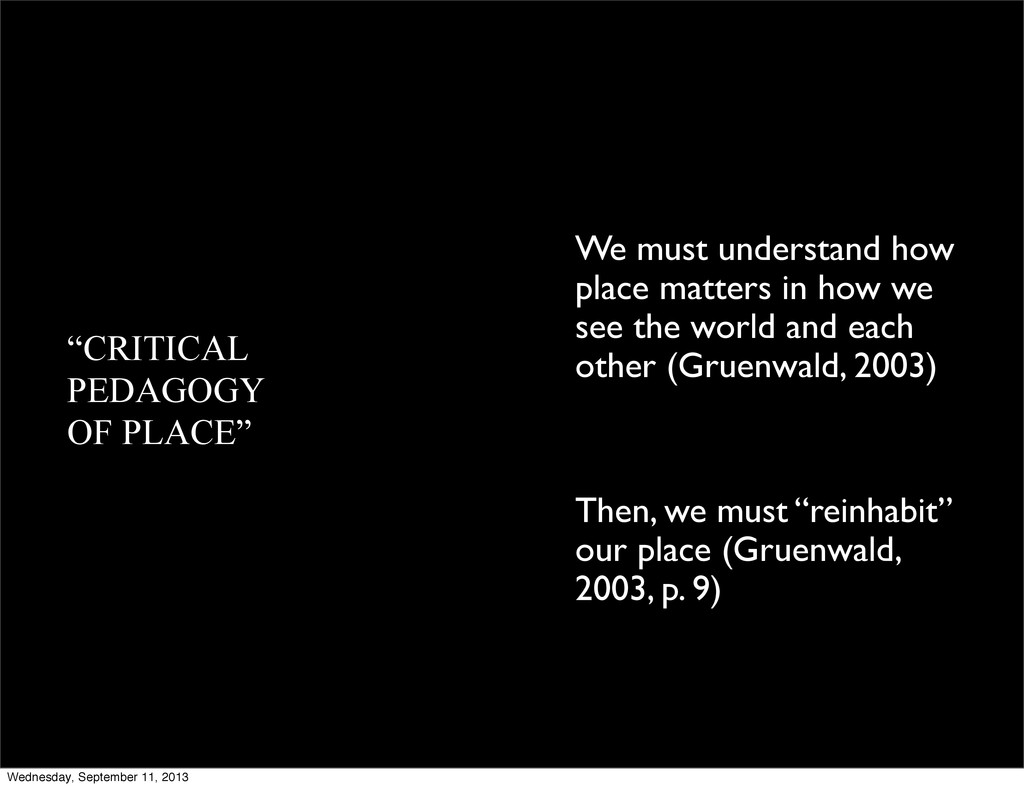
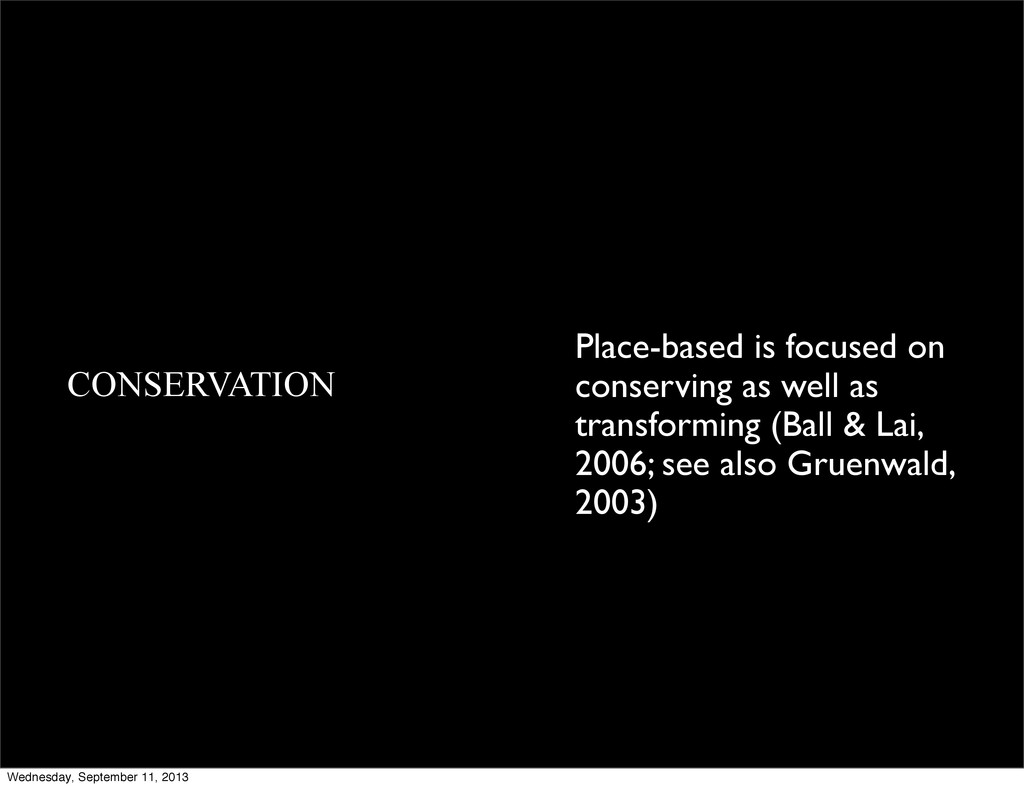
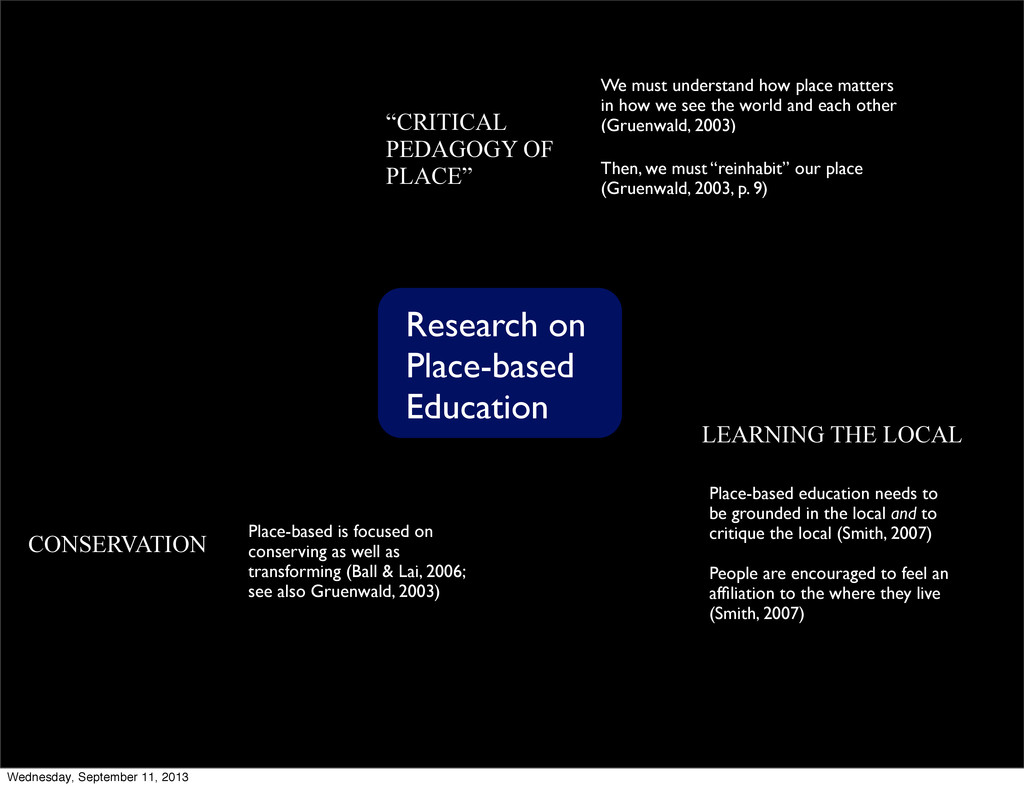
in the local and to critique the local (Smith, 2007) People are encouraged to feel an affiliation to the where they live (Smith, 2007) LEARNING THE LOCAL “CRITICAL PEDAGOGY OF PLACE” We must understand how place matters in how we see the world and each other (Gruenwald, 2003) Then, we must “reinhabit” our place (Gruenwald, 2003, p. 9) Place-based is focused on conserving as well as transforming (Ball & Lai, 2006; see also Gruenwald, 2003) CONSERVATION Wednesday, September 11, 2013
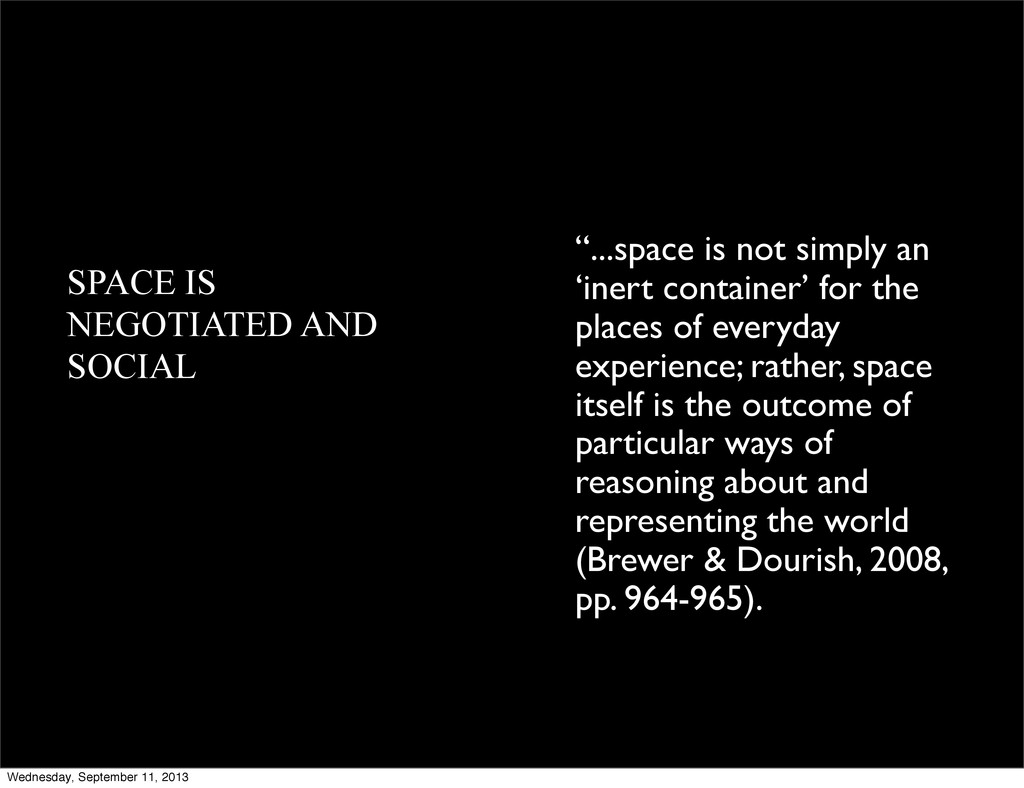
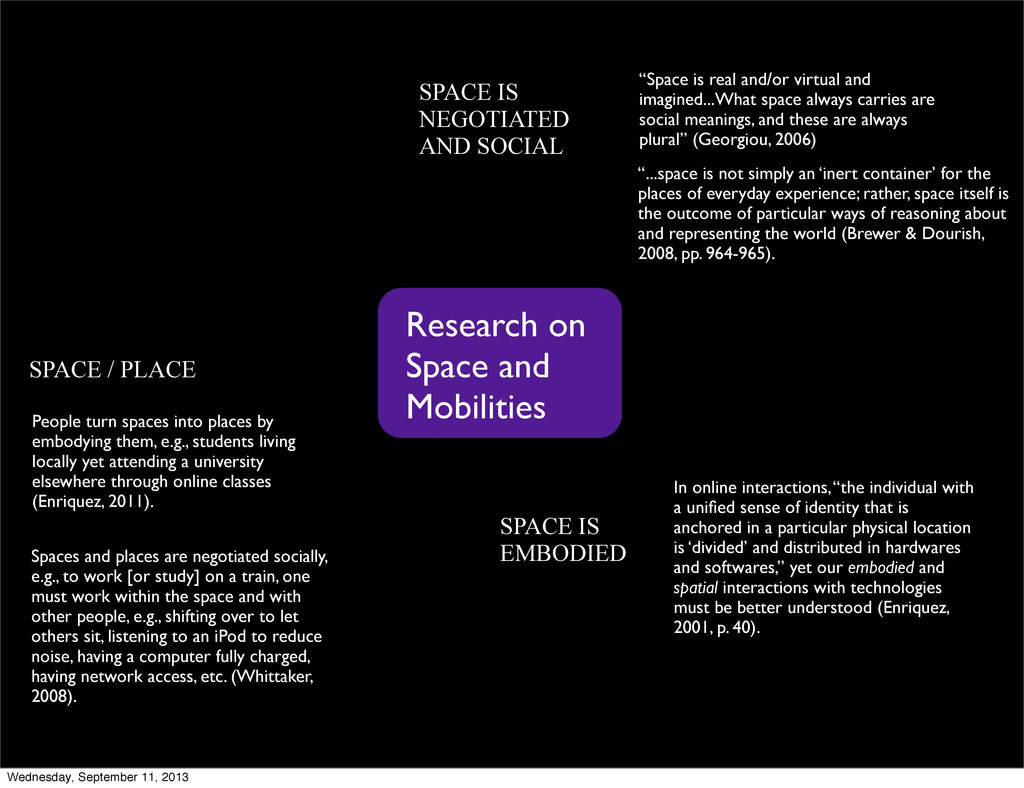
of everyday experience; rather, space itself is the outcome of particular ways of reasoning about and representing the world (Brewer & Dourish, 2008, pp. 964-965). SPACE IS NEGOTIATED AND SOCIAL Wednesday, September 11, 2013
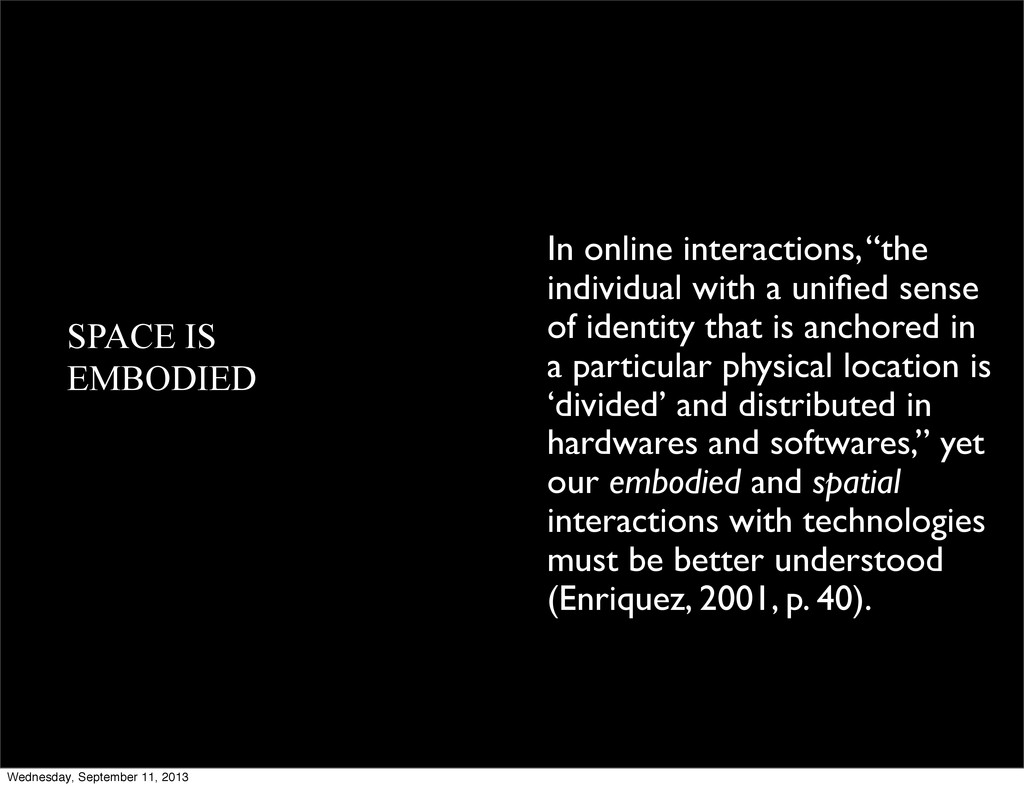
unified sense of identity that is anchored in a particular physical location is ‘divided’ and distributed in hardwares and softwares,” yet our embodied and spatial interactions with technologies must be better understood (Enriquez, 2001, p. 40). Wednesday, September 11, 2013
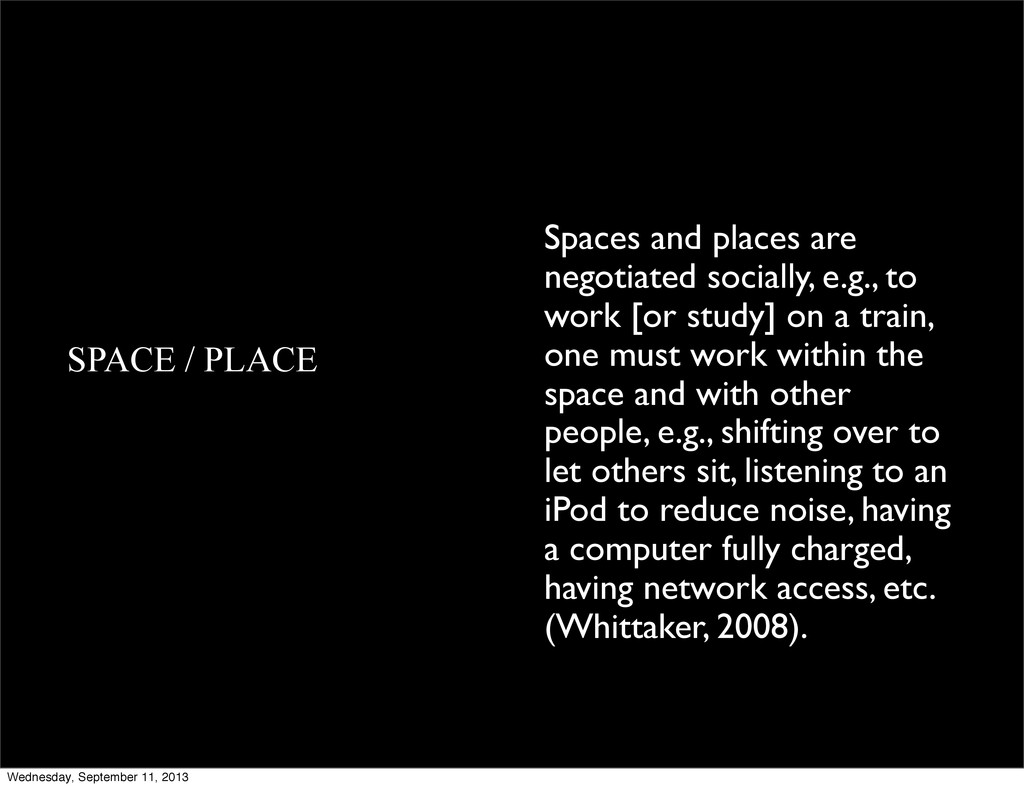
to work [or study] on a train, one must work within the space and with other people, e.g., shifting over to let others sit, listening to an iPod to reduce noise, having a computer fully charged, having network access, etc. (Whittaker, 2008). Wednesday, September 11, 2013
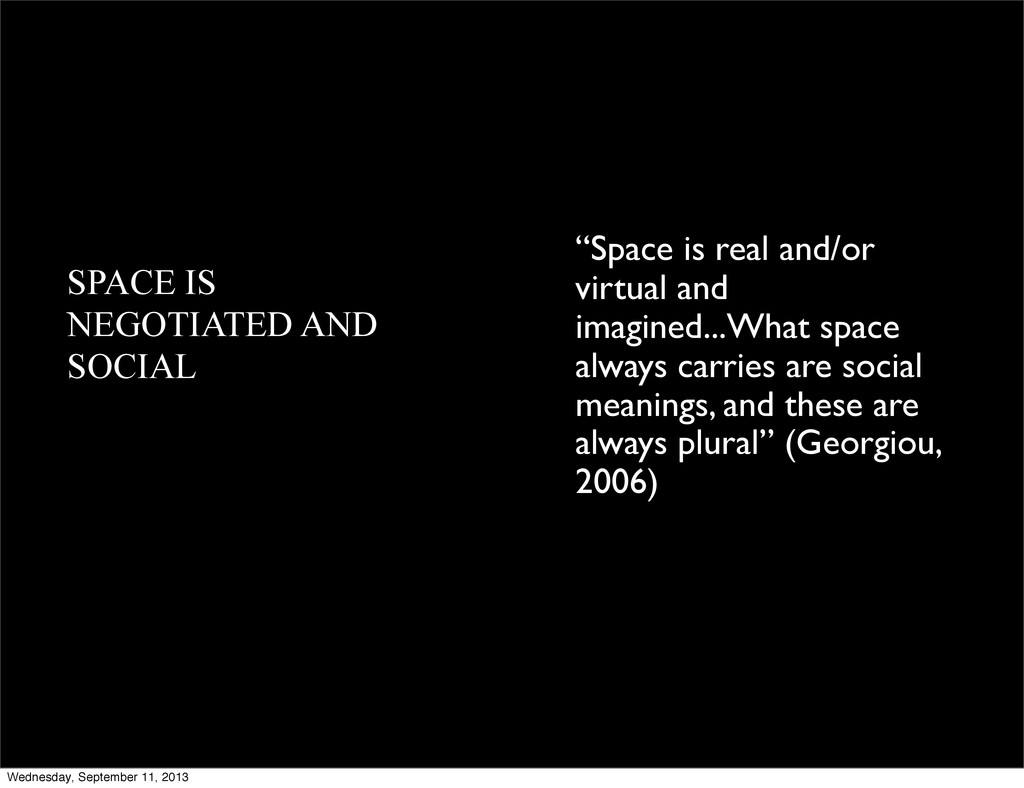
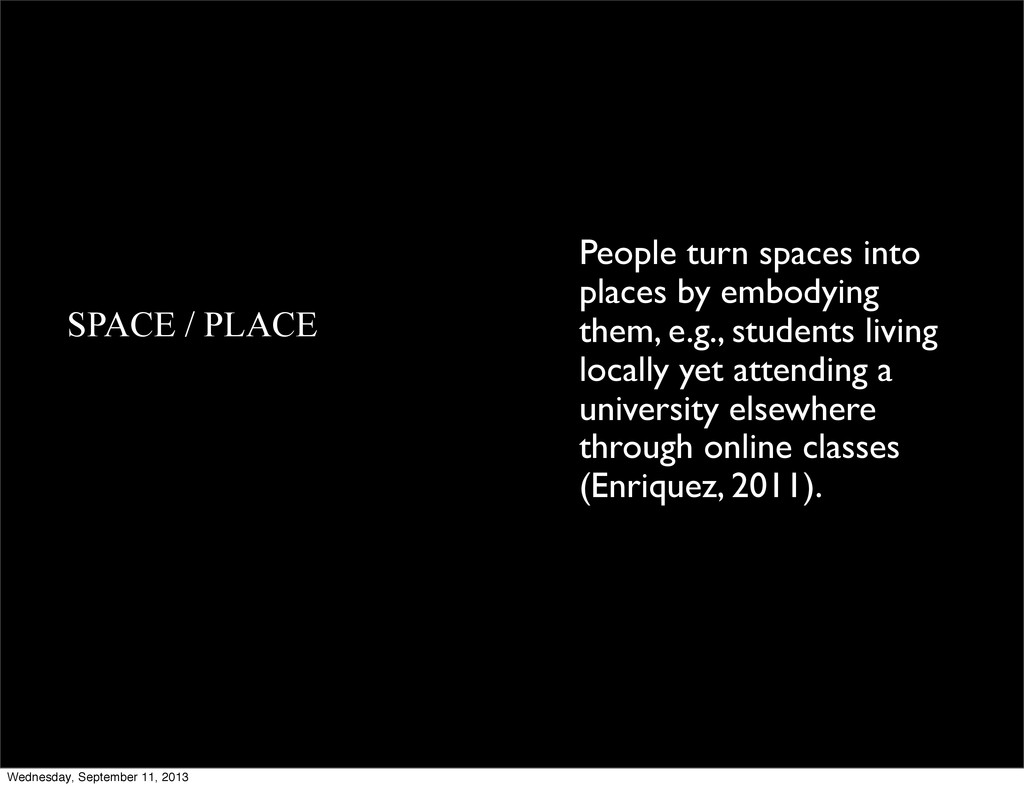
interactions, “the individual with a unified sense of identity that is anchored in a particular physical location is ‘divided’ and distributed in hardwares and softwares,” yet our embodied and spatial interactions with technologies must be better understood (Enriquez, 2001, p. 40). “Space is real and/or virtual and imagined...What space always carries are social meanings, and these are always plural” (Georgiou, 2006) SPACE IS NEGOTIATED AND SOCIAL Spaces and places are negotiated socially, e.g., to work [or study] on a train, one must work within the space and with other people, e.g., shifting over to let others sit, listening to an iPod to reduce noise, having a computer fully charged, having network access, etc. (Whittaker, 2008). SPACE / PLACE People turn spaces into places by embodying them, e.g., students living locally yet attending a university elsewhere through online classes (Enriquez, 2011). “...space is not simply an ‘inert container’ for the places of everyday experience; rather, space itself is the outcome of particular ways of reasoning about and representing the world (Brewer & Dourish, 2008, pp. 964-965). Wednesday, September 11, 2013
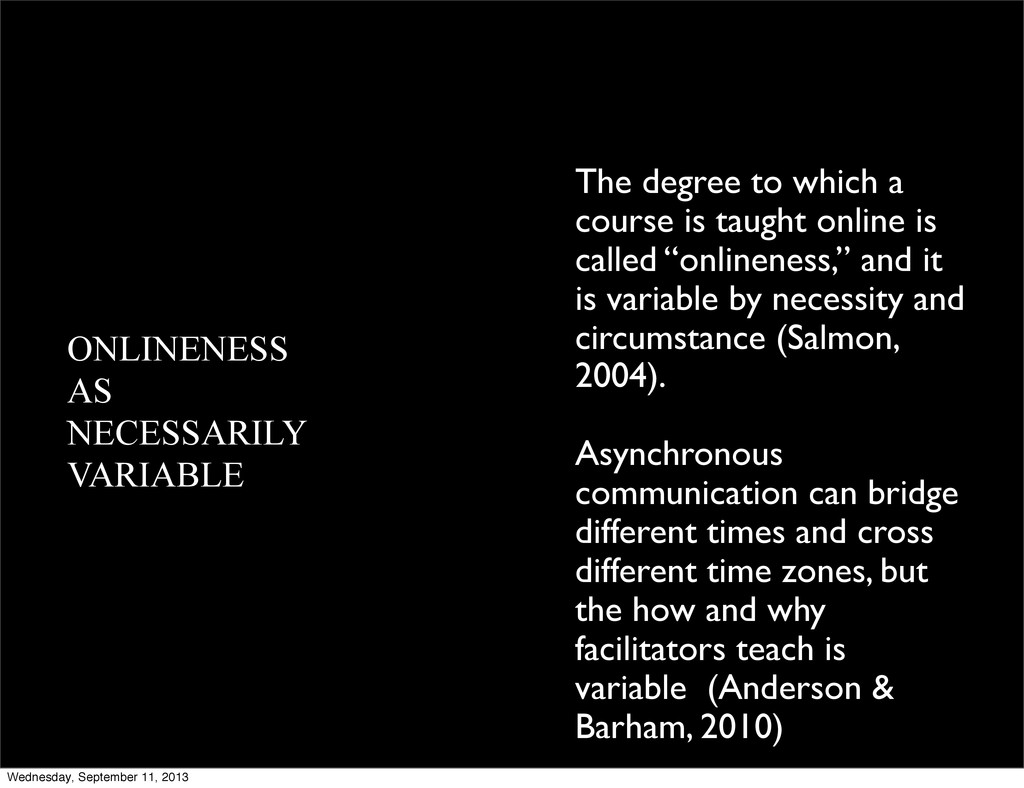
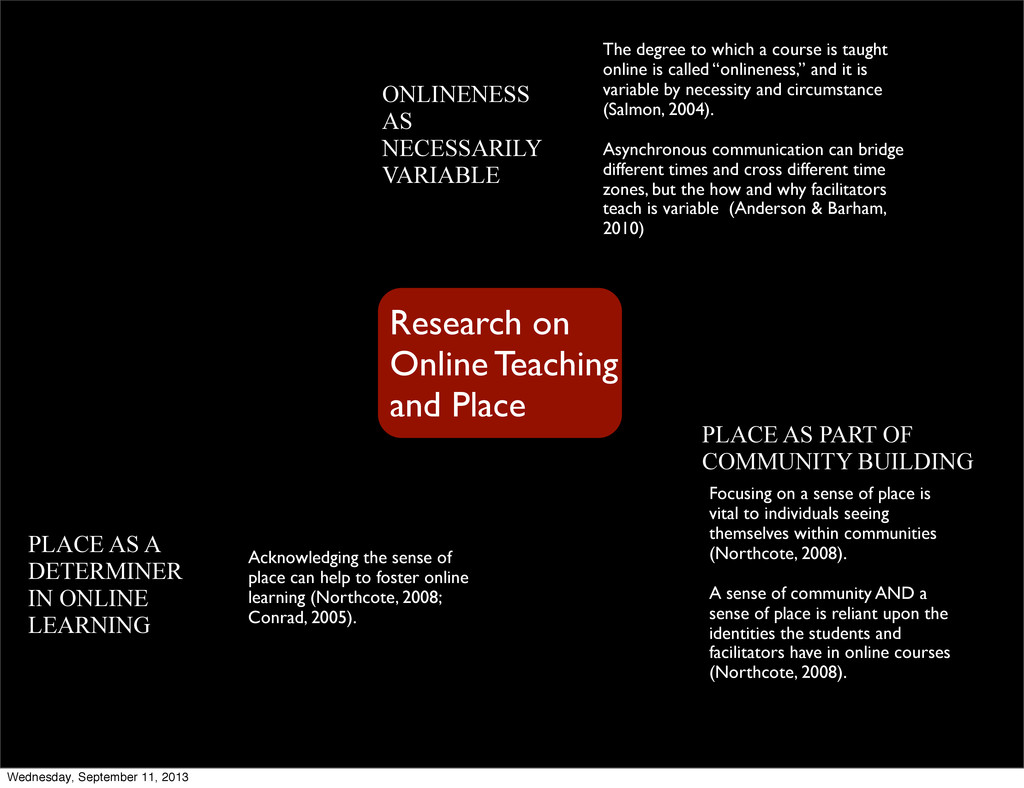
is taught online is called “onlineness,” and it is variable by necessity and circumstance (Salmon, 2004). Asynchronous communication can bridge different times and cross different time zones, but the how and why facilitators teach is variable (Anderson & Barham, 2010) Wednesday, September 11, 2013
reliant upon the identities the students and facilitators have in online courses (Northcote, 2008). PLACE AS PART OF COMMUNITY BUILDING Wednesday, September 11, 2013
of place is vital to individuals seeing themselves within communities (Northcote, 2008). A sense of community AND a sense of place is reliant upon the identities the students and facilitators have in online courses (Northcote, 2008). PLACE AS PART OF COMMUNITY BUILDING ONLINENESS AS NECESSARILY VARIABLE The degree to which a course is taught online is called “onlineness,” and it is variable by necessity and circumstance (Salmon, 2004). Asynchronous communication can bridge different times and cross different time zones, but the how and why facilitators teach is variable (Anderson & Barham, 2010) Acknowledging the sense of place can help to foster online learning (Northcote, 2008; Conrad, 2005). PLACE AS A DETERMINER IN ONLINE LEARNING Wednesday, September 11, 2013
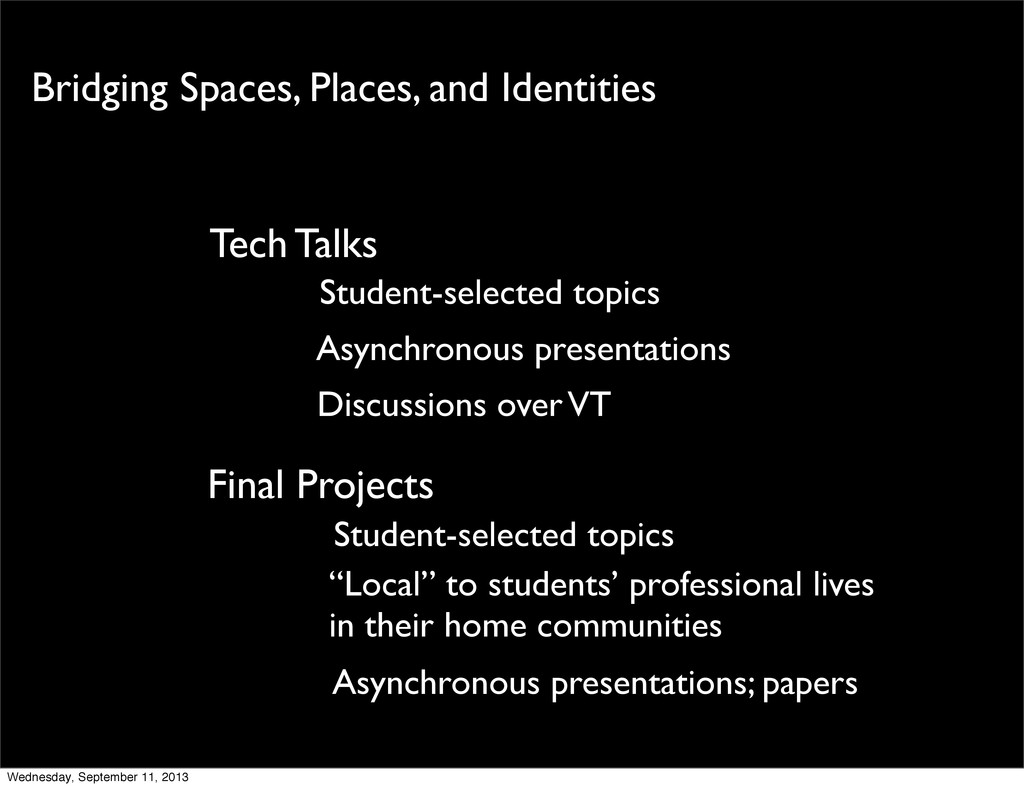
over VT Student-selected topics Final Projects Asynchronous presentations; papers Student-selected topics “Local” to students’ professional lives in their home communities Wednesday, September 11, 2013


 sachag
 dougneiner
 chriscoyier
 popppiees
 marcduiker
 palkan
 zakiyama
 tammielis
 cromwellryan
 destraynor
 bethany