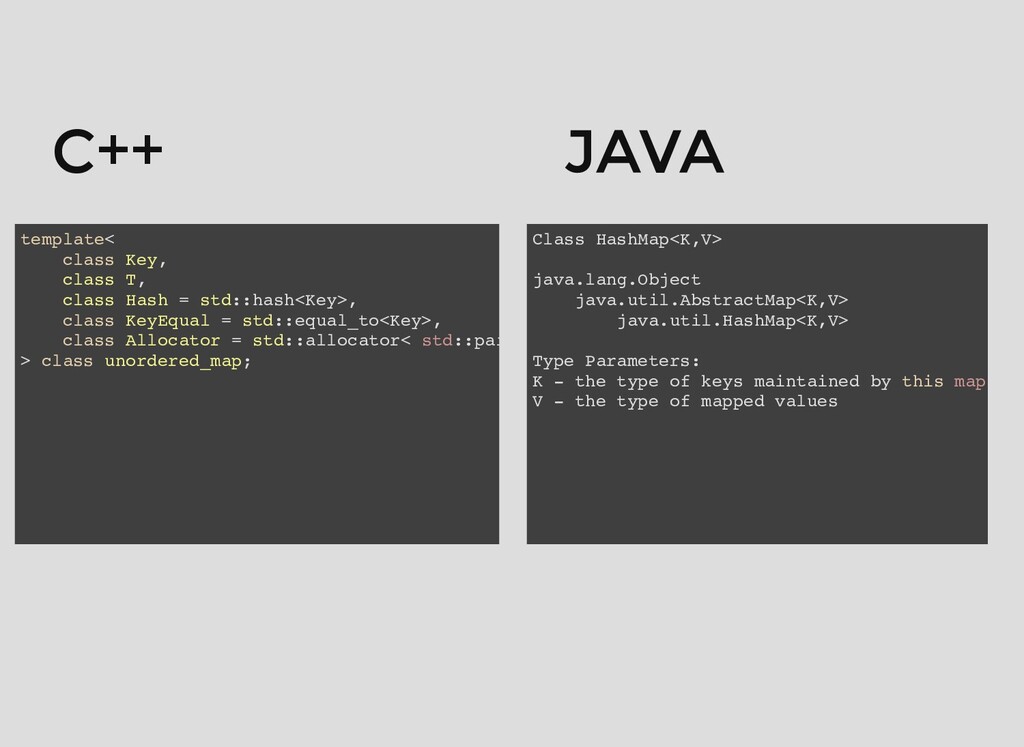
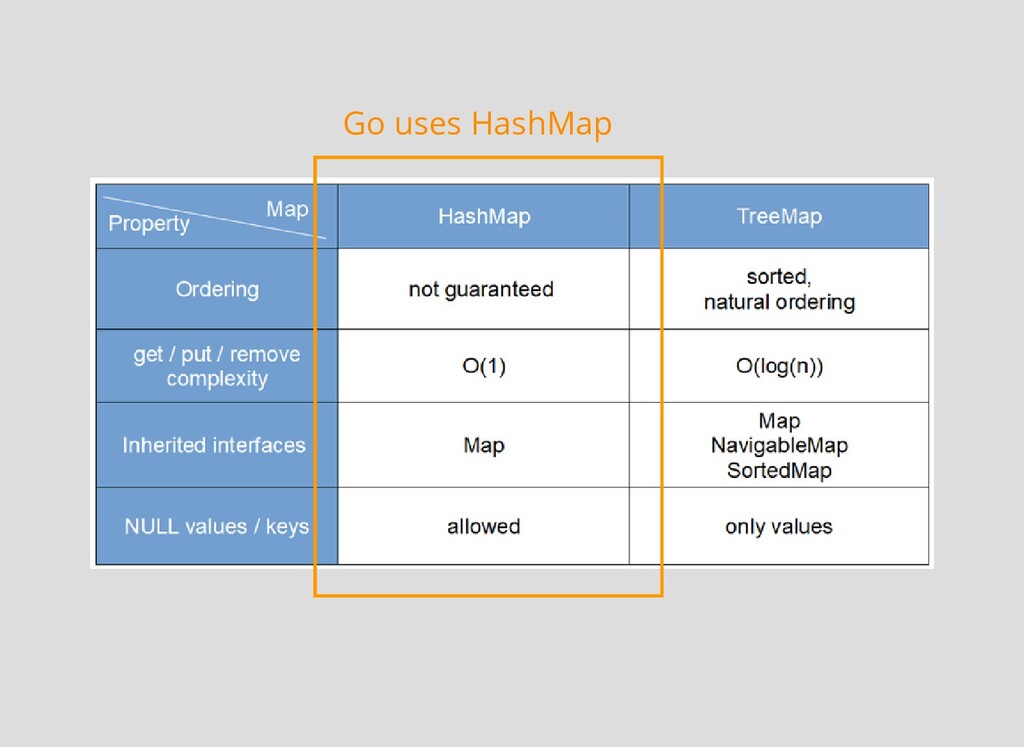
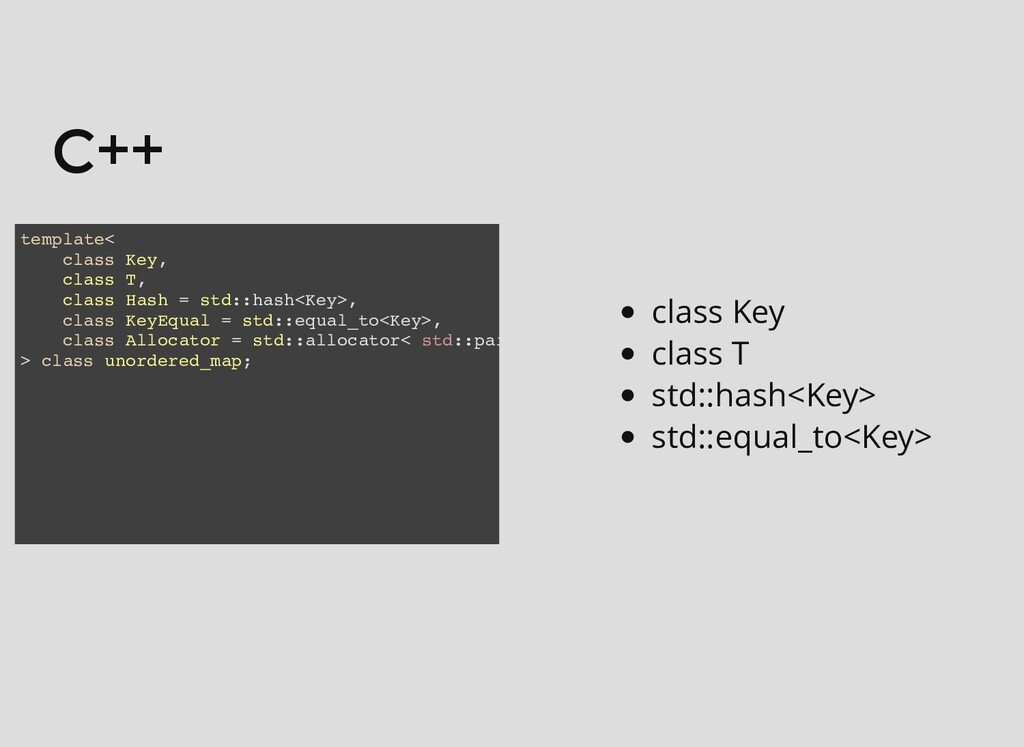
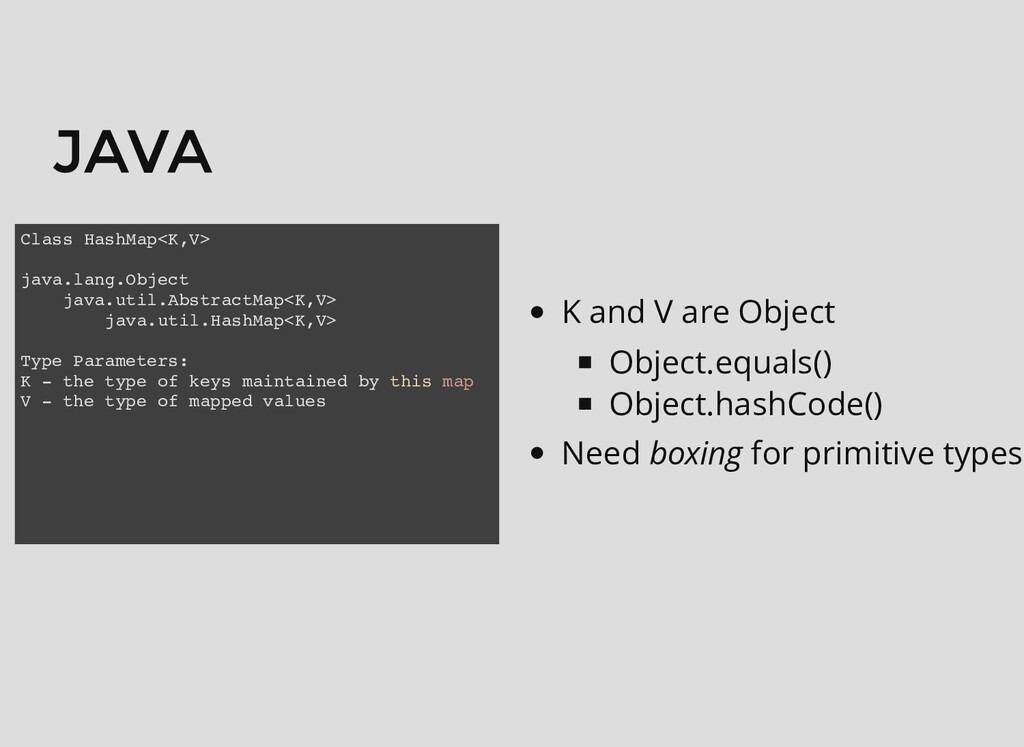
std::hash<Key>, class KeyEqual = std::equal_to<Key>, class Allocator = std::allocator< std::pai > class unordered_map; Class HashMap<K,V> java.lang.Object java.util.AbstractMap<K,V> java.util.HashMap<K,V> Type Parameters: K - the type of keys maintained by this map V - the type of mapped values
class KeyEqual = std::equal_to<Key>, class Allocator = std::allocator< std::pai > class unordered_map; class Key class T std::hash<Key> std::equal_to<Key>
the type of keys maintained by this map V - the type of mapped values K and V are Object Object.equals() Object.hashCode() Need boxing for primitive types
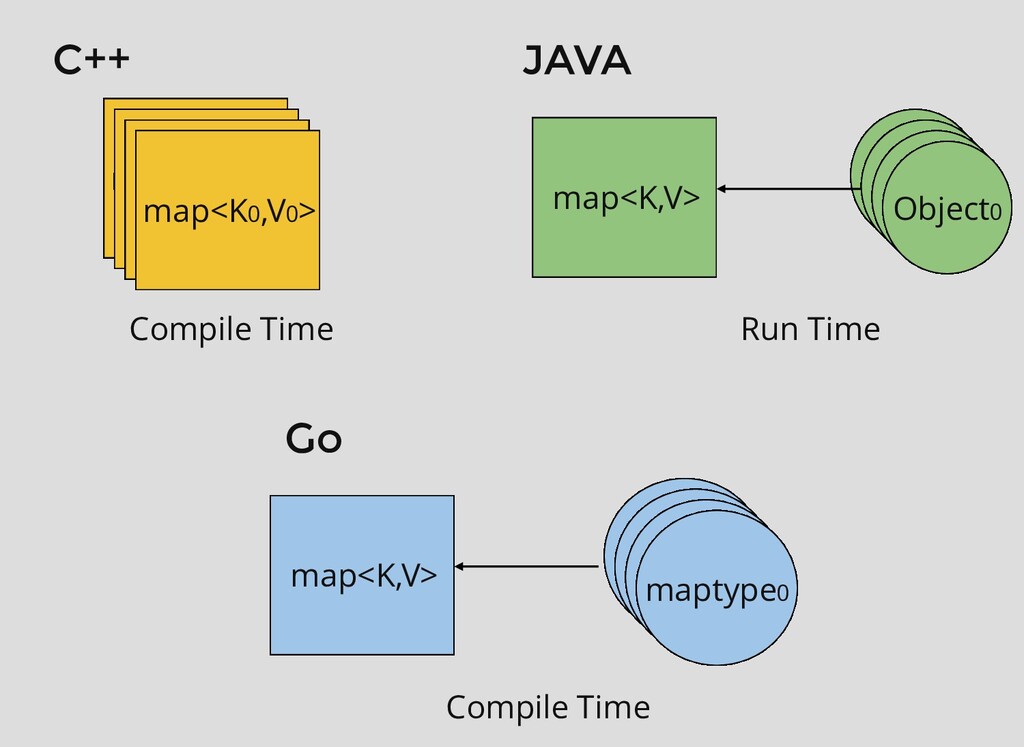
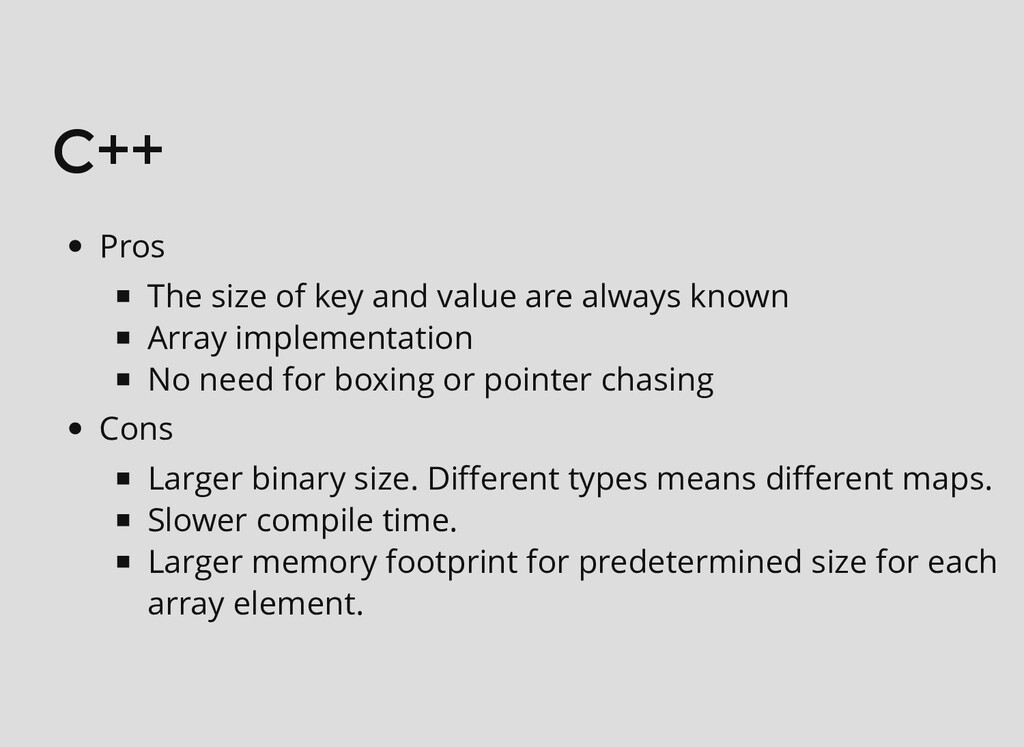
known Array implementation No need for boxing or pointer chasing Cons Larger binary size. Different types means different maps. Slower compile time. Larger memory footprint for predetermined size for each array element.
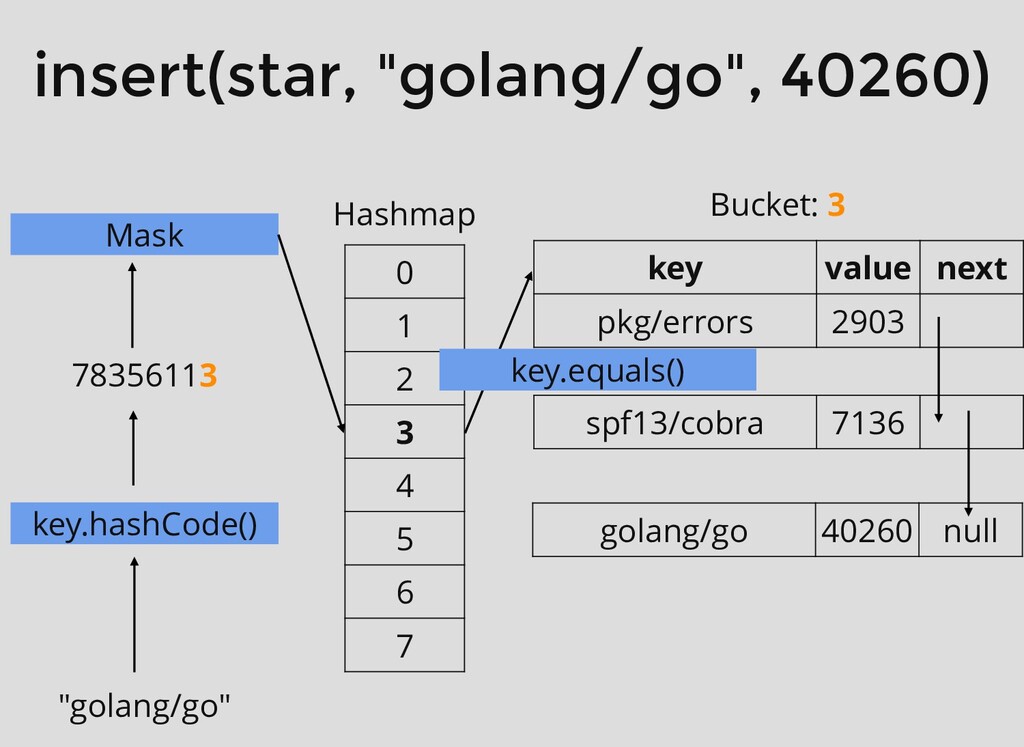
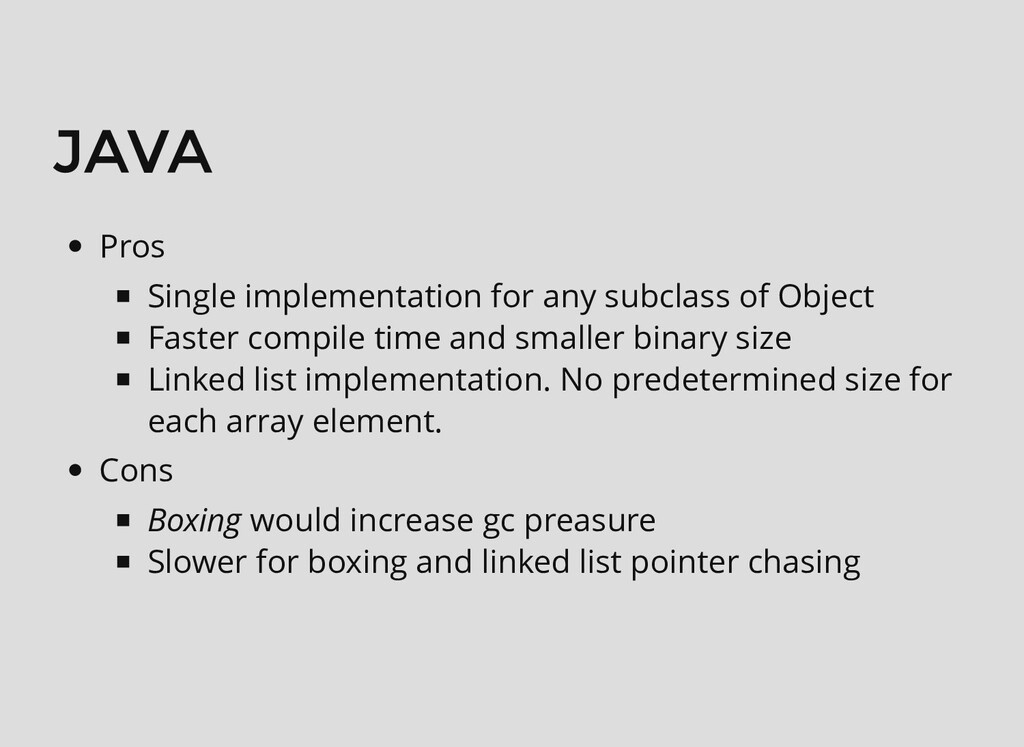
compile time and smaller binary size Linked list implementation. No predetermined size for each array element. Cons Boxing would increase gc preasure Slower for boxing and linked list pointer chasing
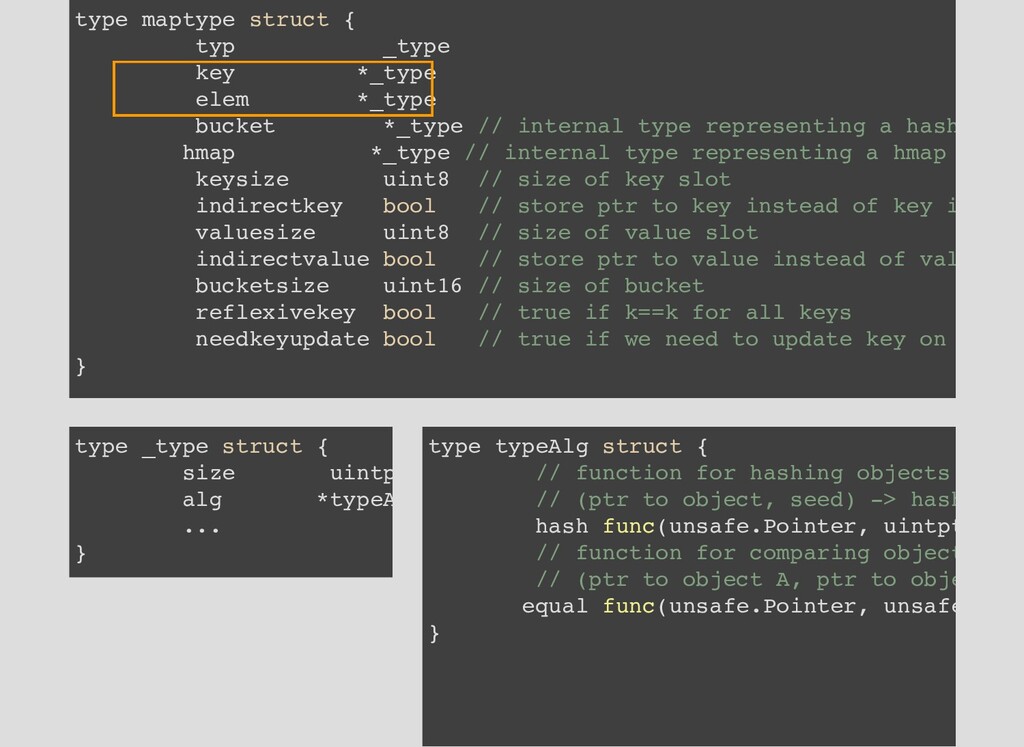
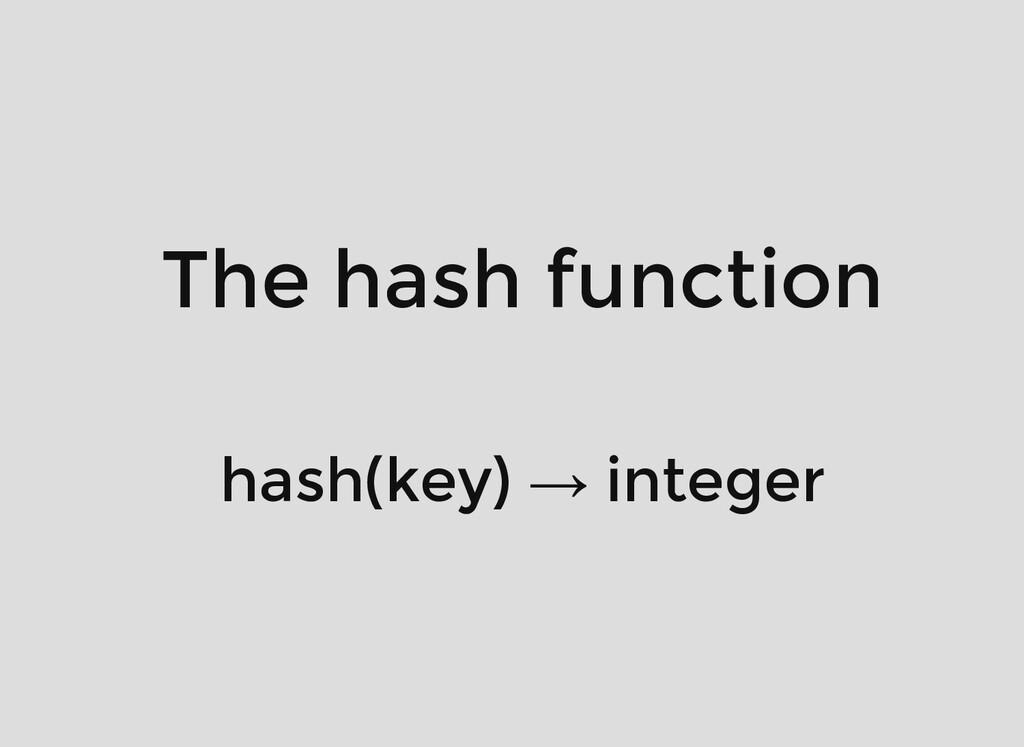
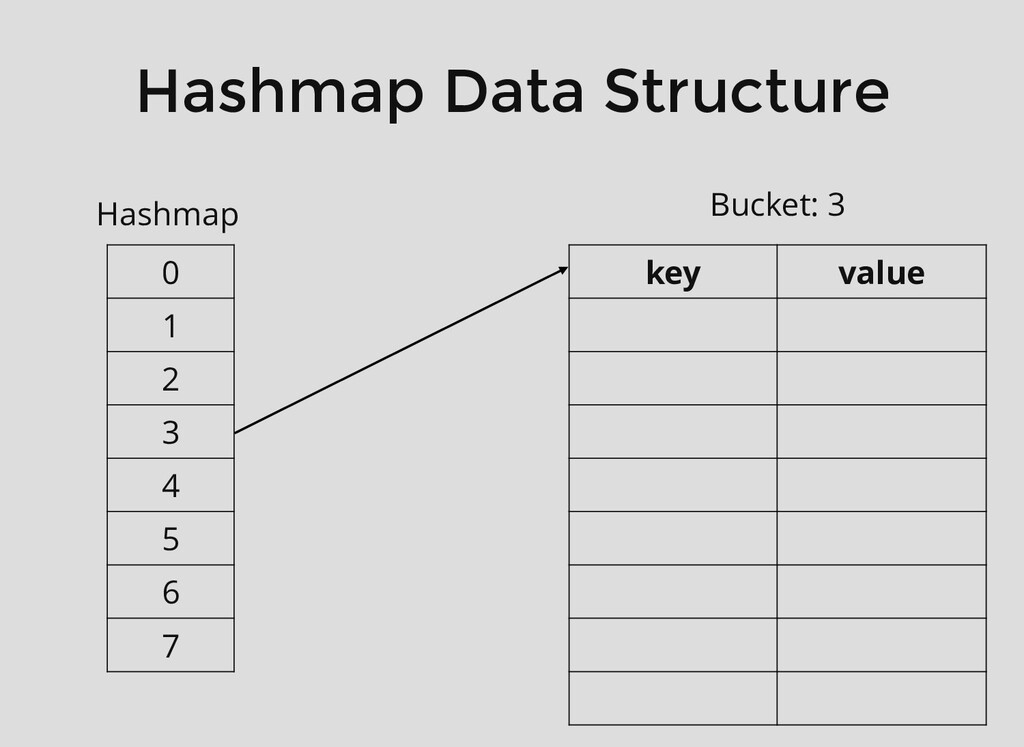
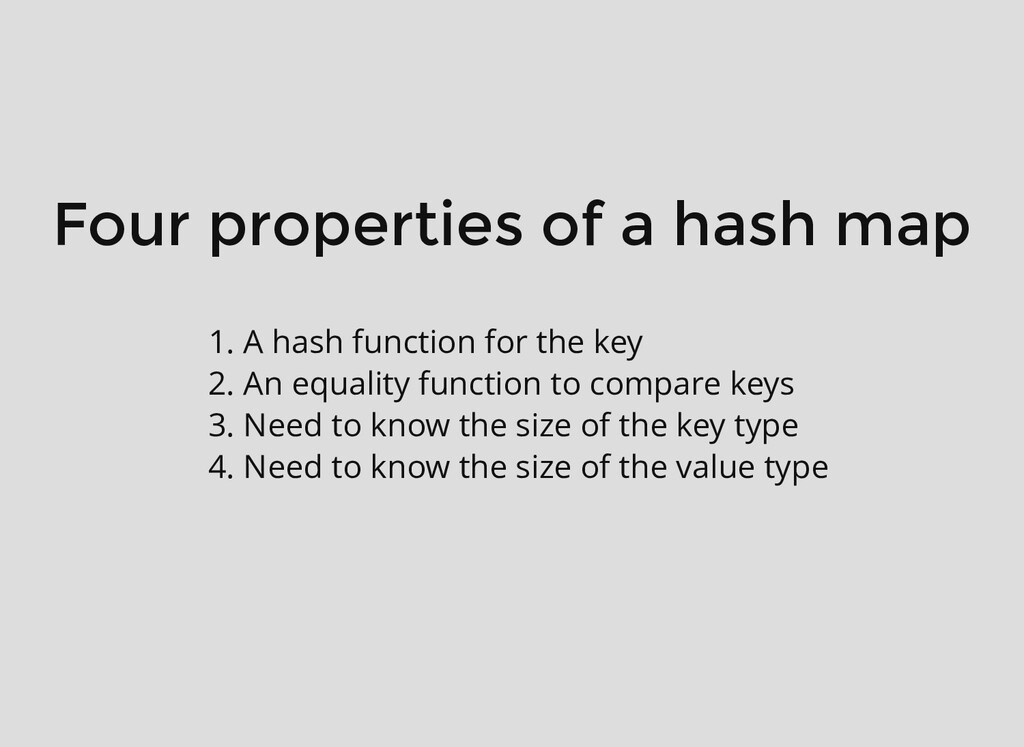
bucket *_type // internal type representing a hash hmap *_type // internal type representing a hmap keysize uint8 // size of key slot indirectkey bool // store ptr to key instead of key i valuesize uint8 // size of value slot indirectvalue bool // store ptr to value instead of val bucketsize uint16 // size of bucket reflexivekey bool // true if k==k for all keys needkeyupdate bool // true if we need to update key on } type _type struct { size uintp alg *typeA ... } type typeAlg struct { // function for hashing objects // (ptr to object, seed) -> hash hash func(unsafe.Pointer, uintpt // function for comparing object // (ptr to object A, ptr to obje equal func(unsafe.Pointer, unsafe }
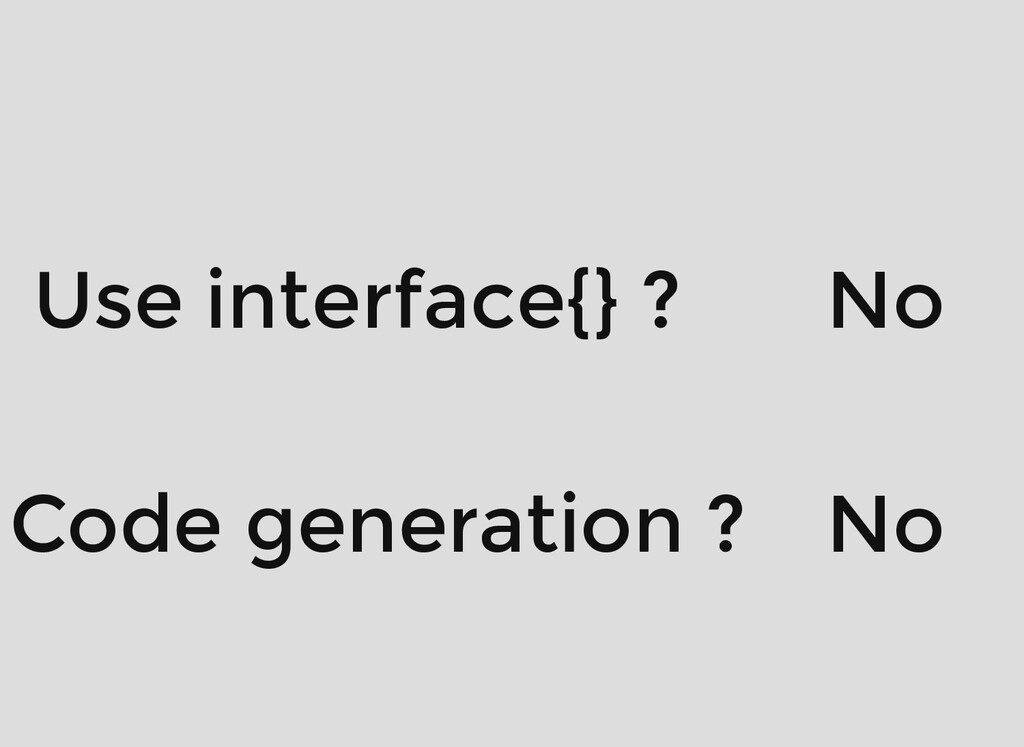
implementation to reduce binary size Already known the the size of key and value. Array implementation for better performance. Could use primitive types without boxing. No extra gc preasure


 david74chou
 lynnswap
 eed3si9n
 mofurune
 sorah
sorah
 mpyw
mpyw
 ivargrimstad
 tmikov2023
 steliosf
 ken_tunc
 elmetal
 akit37
 irinanazarova
 jonyablonski
 3n
3n
 marcoroth
 chrisshort
 baasie
 reverentgeek
 honzajavorek
 tmiket
 tonyrice
 smashingmag
 leimatthew05
 kimpetersen





![Go var m map[string]](https://files.speakerdeck.com/presentations/233de030743f42cb85f95bd6267c0ecc/slide_6.jpg)



![v := m["key"] → runtime.mapaccess1(m, ”key", &v) v, ok :=](https://files.speakerdeck.com/presentations/233de030743f42cb85f95bd6267c0ecc/slide_22.jpg)

![Different maptype values for each unique map declaration map[string]int →](https://files.speakerdeck.com/presentations/233de030743f42cb85f95bd6267c0ecc/slide_24.jpg)