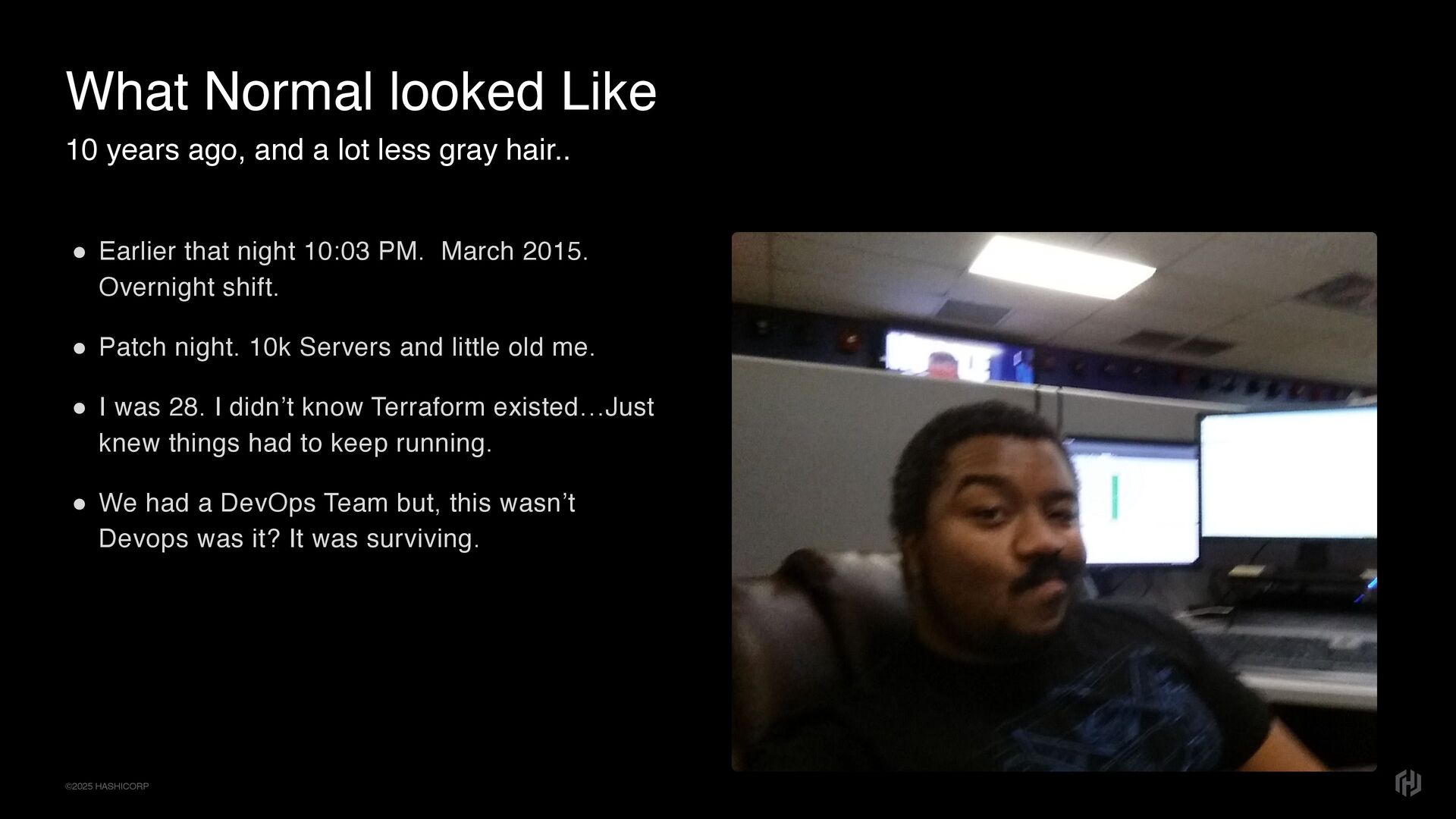
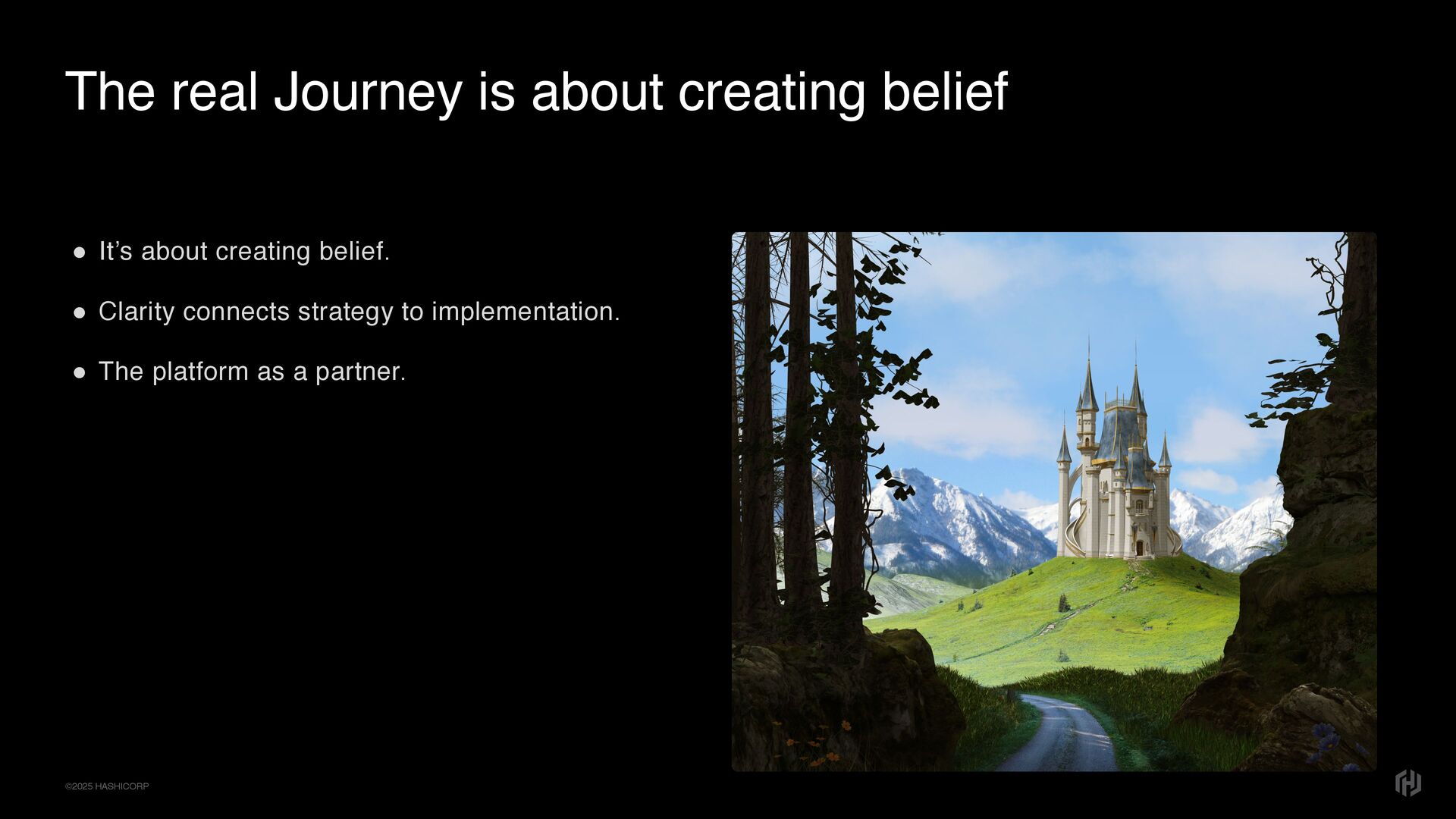
Overnight shift. • Patch night. 10k Servers and little old me. • I was 28. I didn’t know Terraform existed…Just knew things had to keep running. • We had a DevOps Team but, this wasn’t Devops was it? It was surviving. What Normal looked Like 10 years ago, and a lot less gray hair..
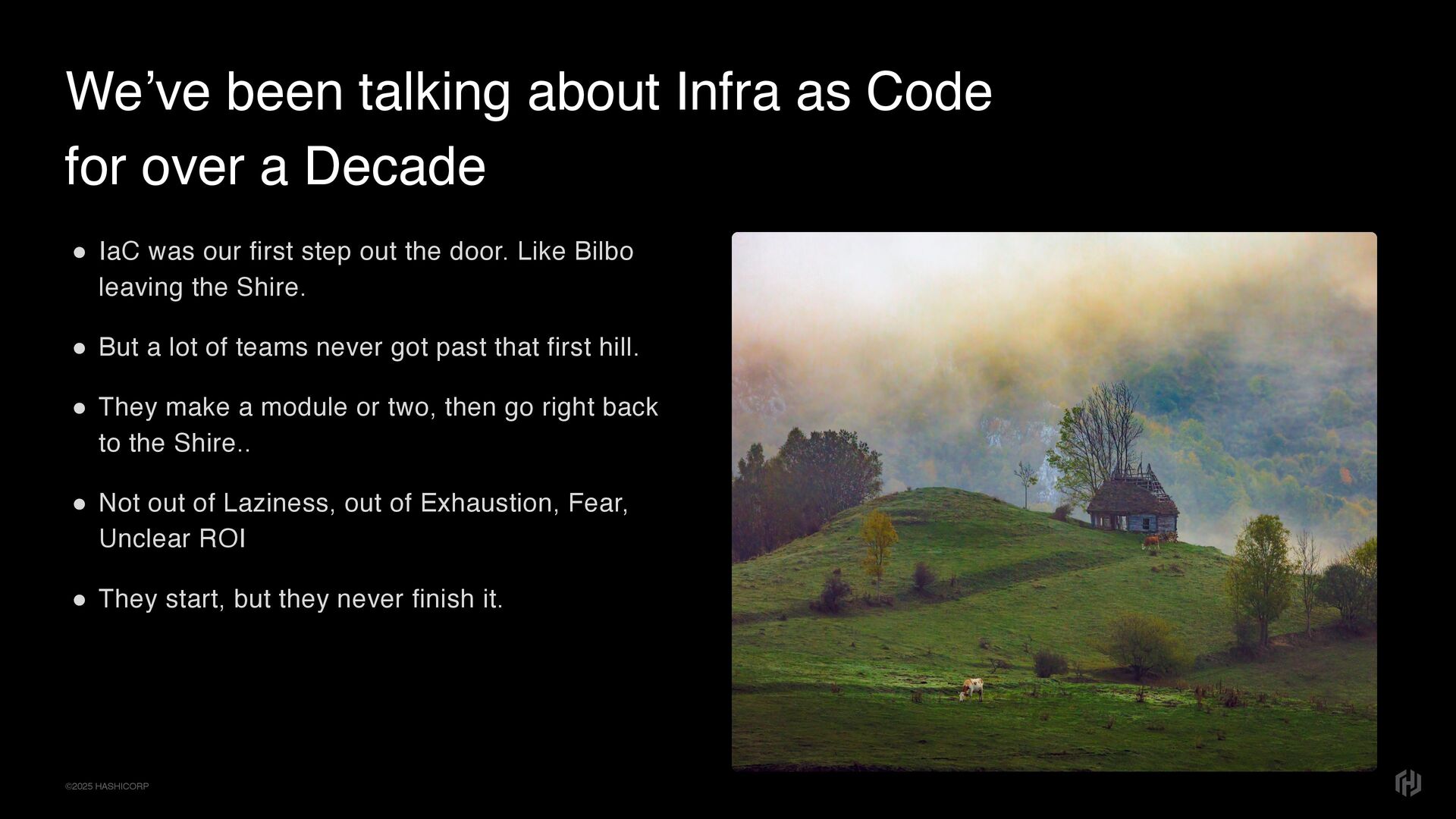
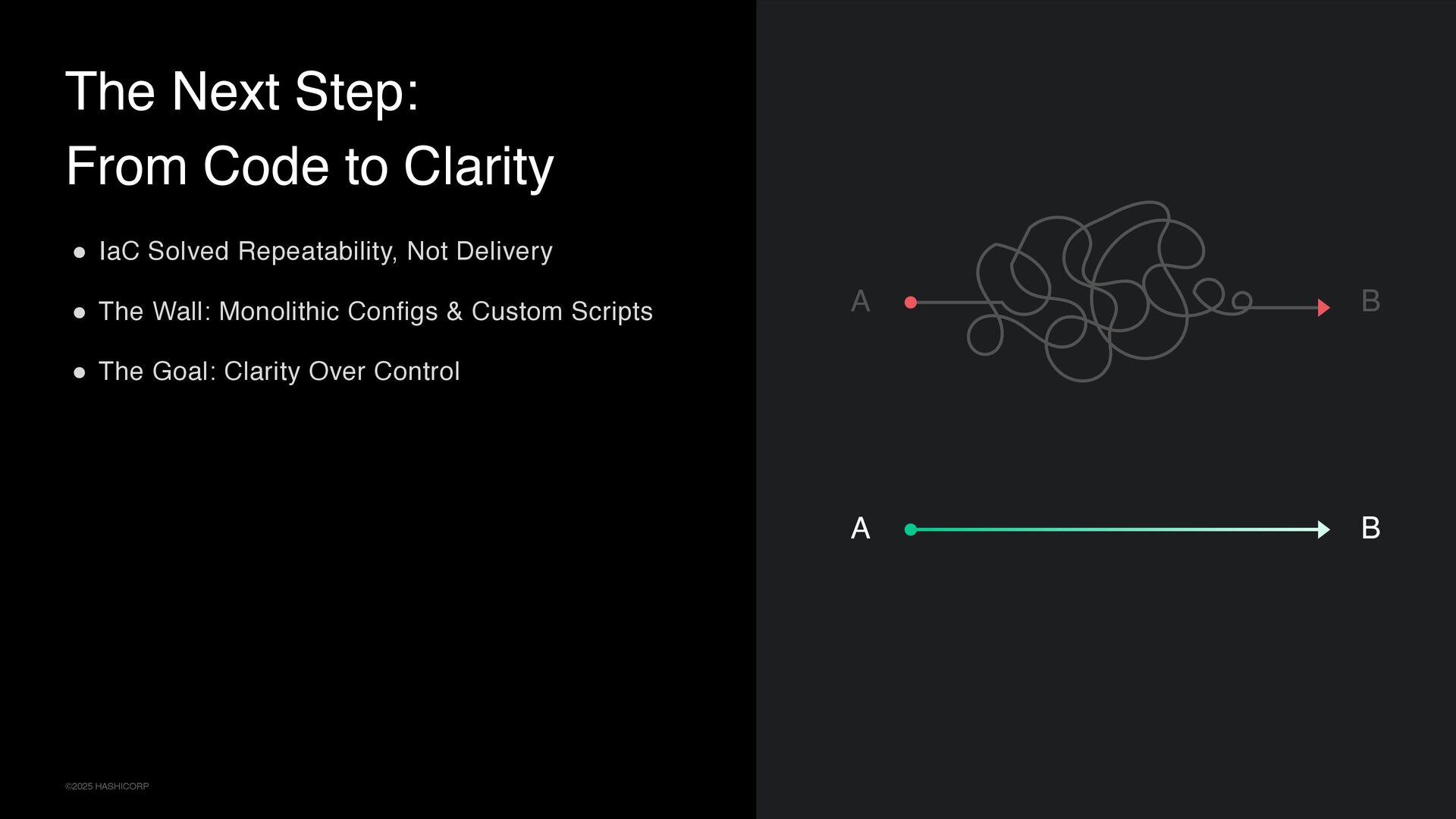
door. Like Bilbo leaving the Shire. • But a lot of teams never got past that first hill. • They make a module or two, then go right back to the Shire.. • Not out of Laziness, out of Exhaustion, Fear, Unclear ROI • They start, but they never finish it. We’ve been talking about Infra as Code for over a Decade
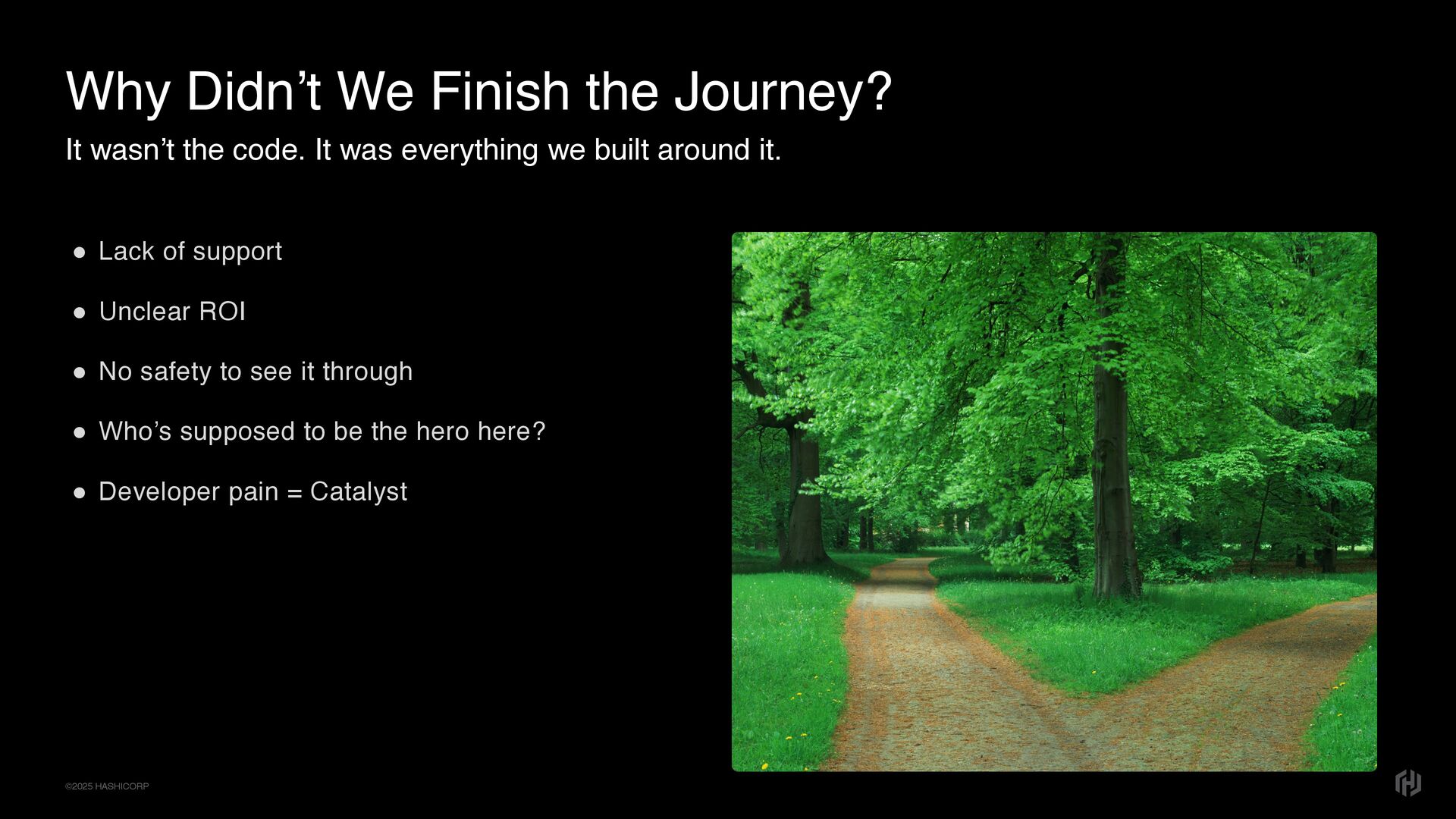
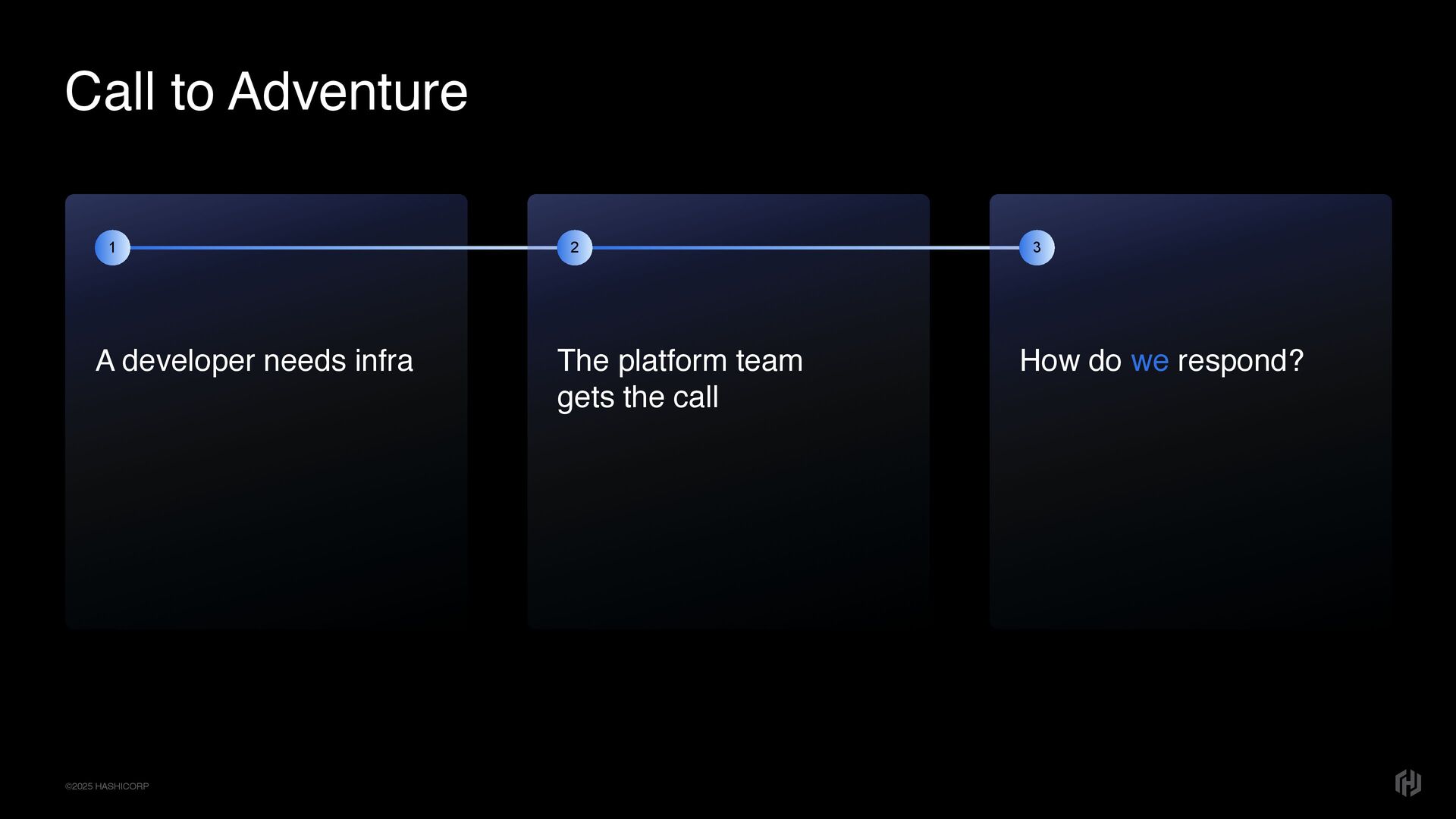
No safety to see it through • Who’s supposed to be the hero here? • Developer pain = Catalyst Why Didn’t We Finish the Journey? It wasn’t the code. It was everything we built around it.
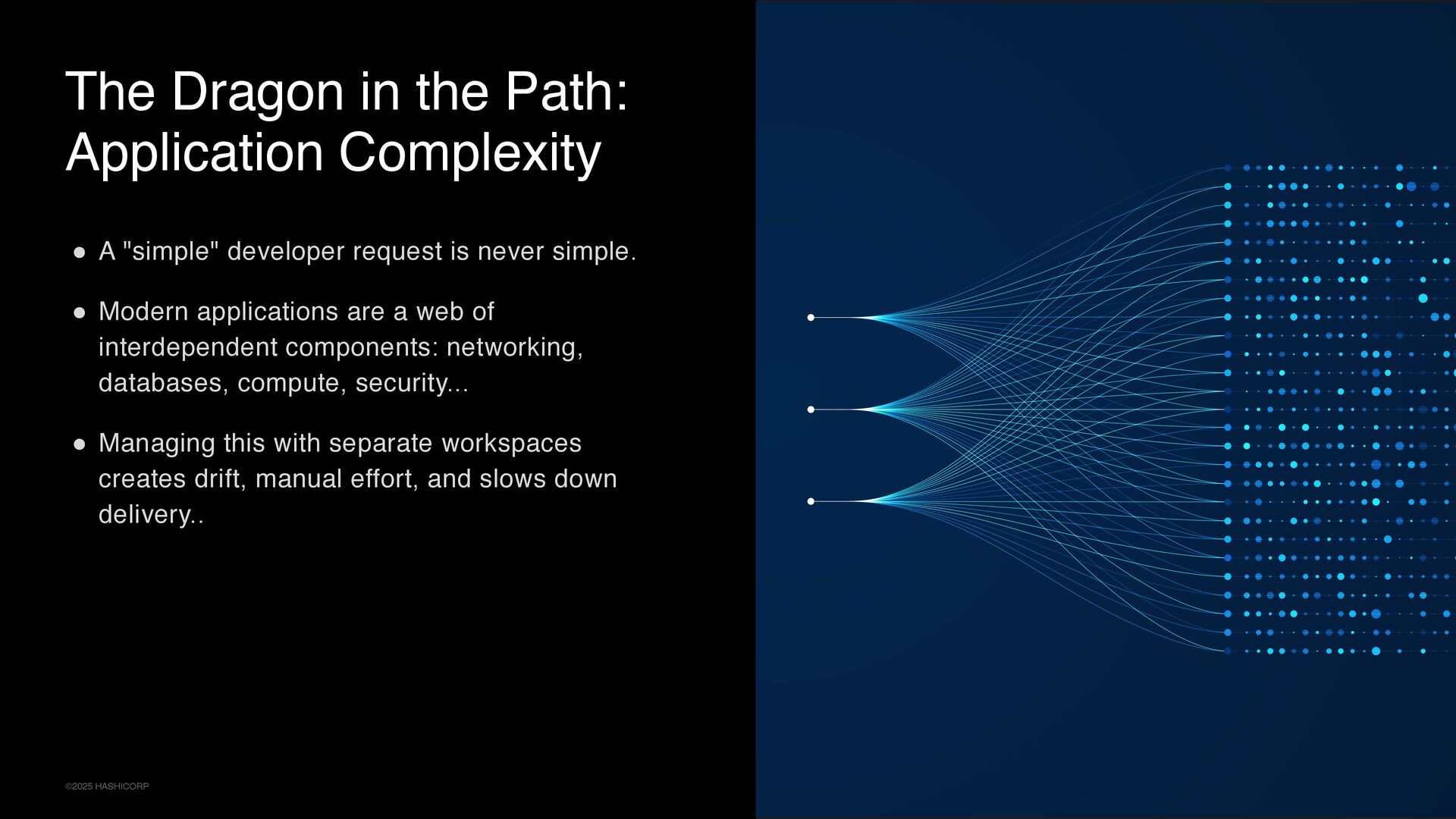
• Modern applications are a web of interdependent components: networking, databases, compute, security... • Managing this with separate workspaces creates drift, manual effort, and slows down delivery.. The Dragon in the Path: Application Complexity
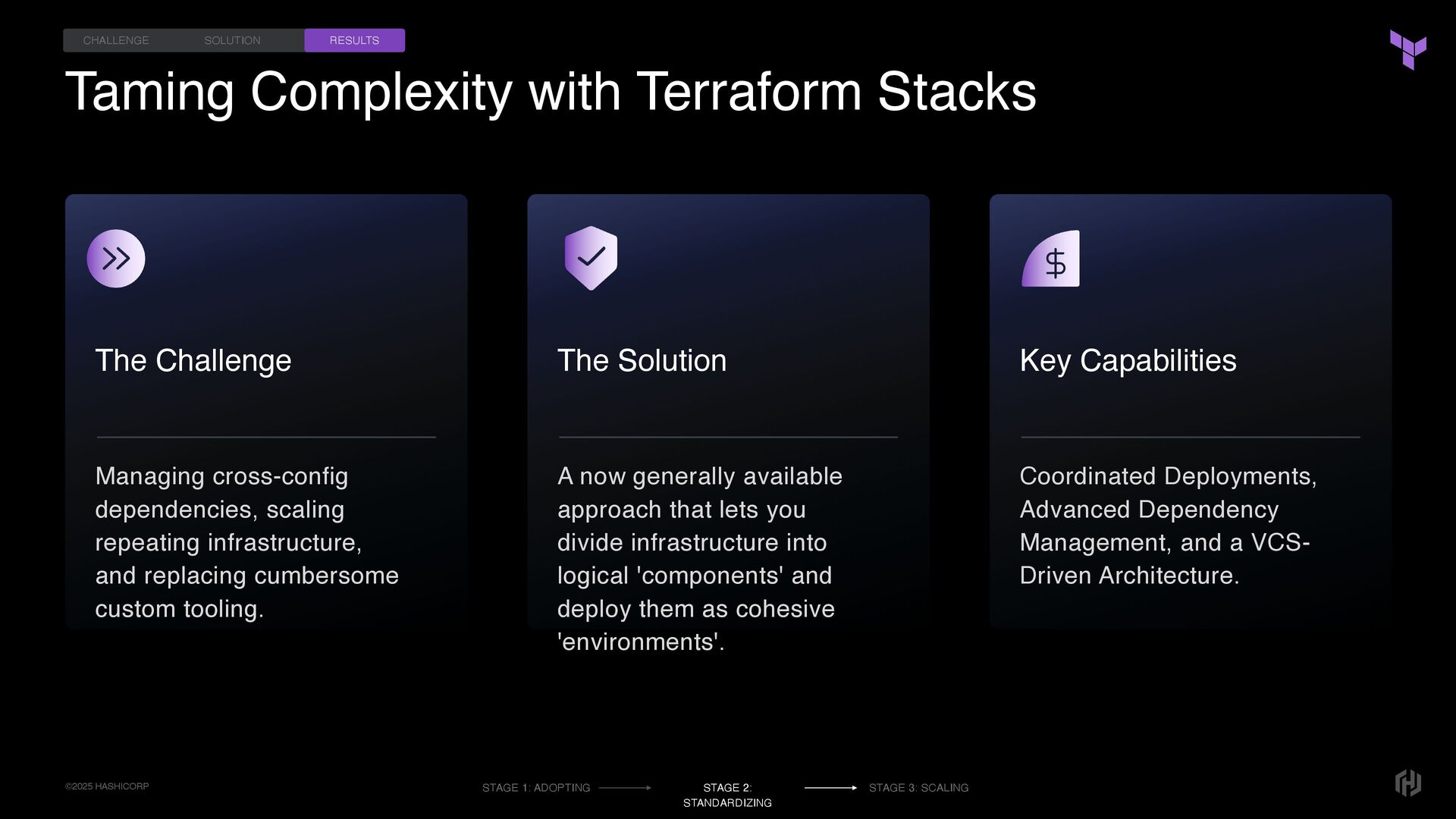
with Terraform Stacks Managing cross-config dependencies, scaling repeating infrastructure, and replacing cumbersome custom tooling. A now generally available approach that lets you divide infrastructure into logical 'components' and deploy them as cohesive 'environments'. Coordinated Deployments, Advanced Dependency Management, and a VCS- Driven Architecture. CHALLENGE SOLUTION RESULTS STAGE 1: ADOPTING STAGE 2: STANDARDIZING STAGE 3: SCALING
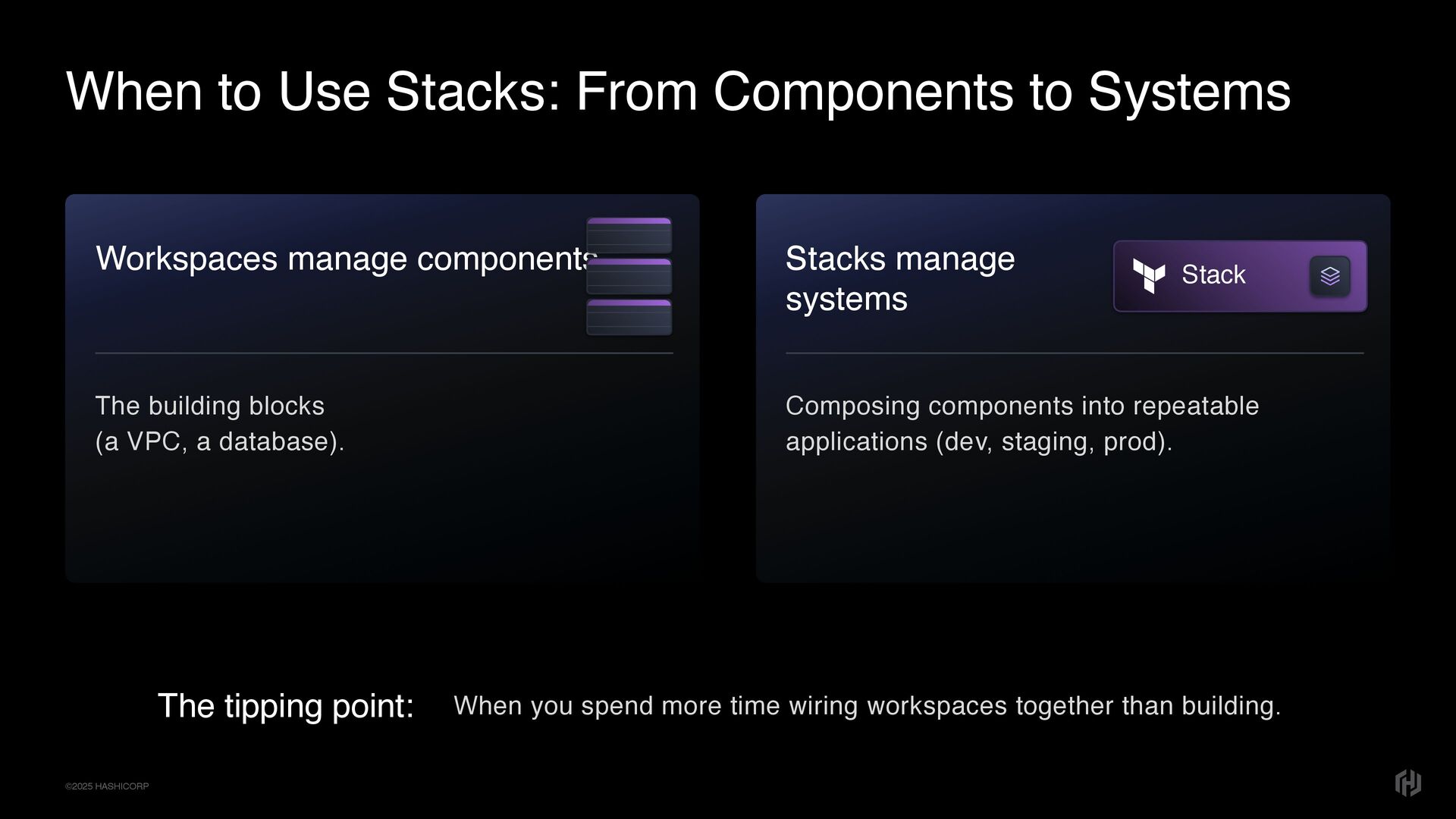
manage components Composing components into repeatable applications (dev, staging, prod). Stacks manage systems When to Use Stacks: From Components to Systems The tipping point: When you spend more time wiring workspaces together than building. Stack workspace workspace workspace
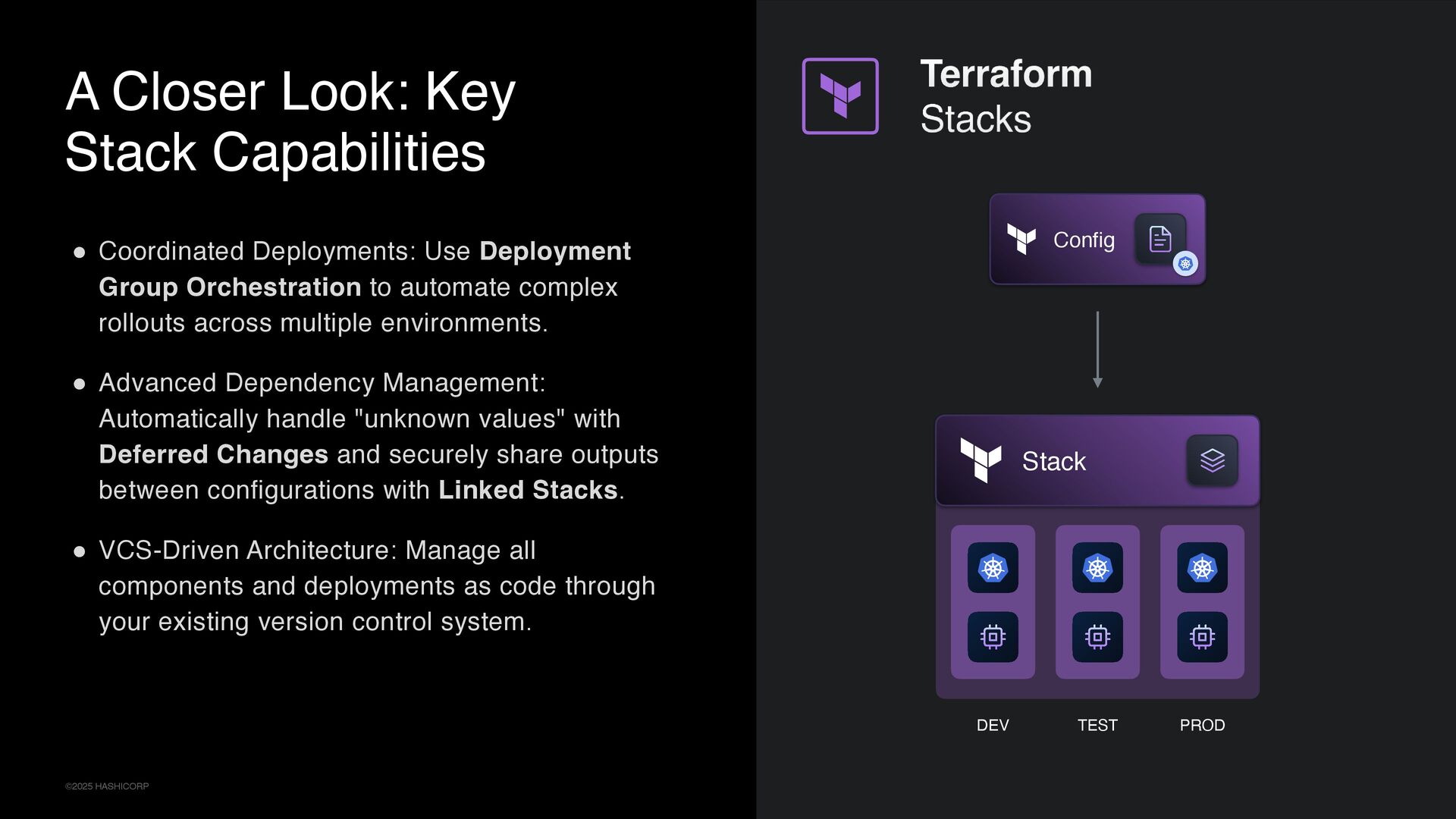
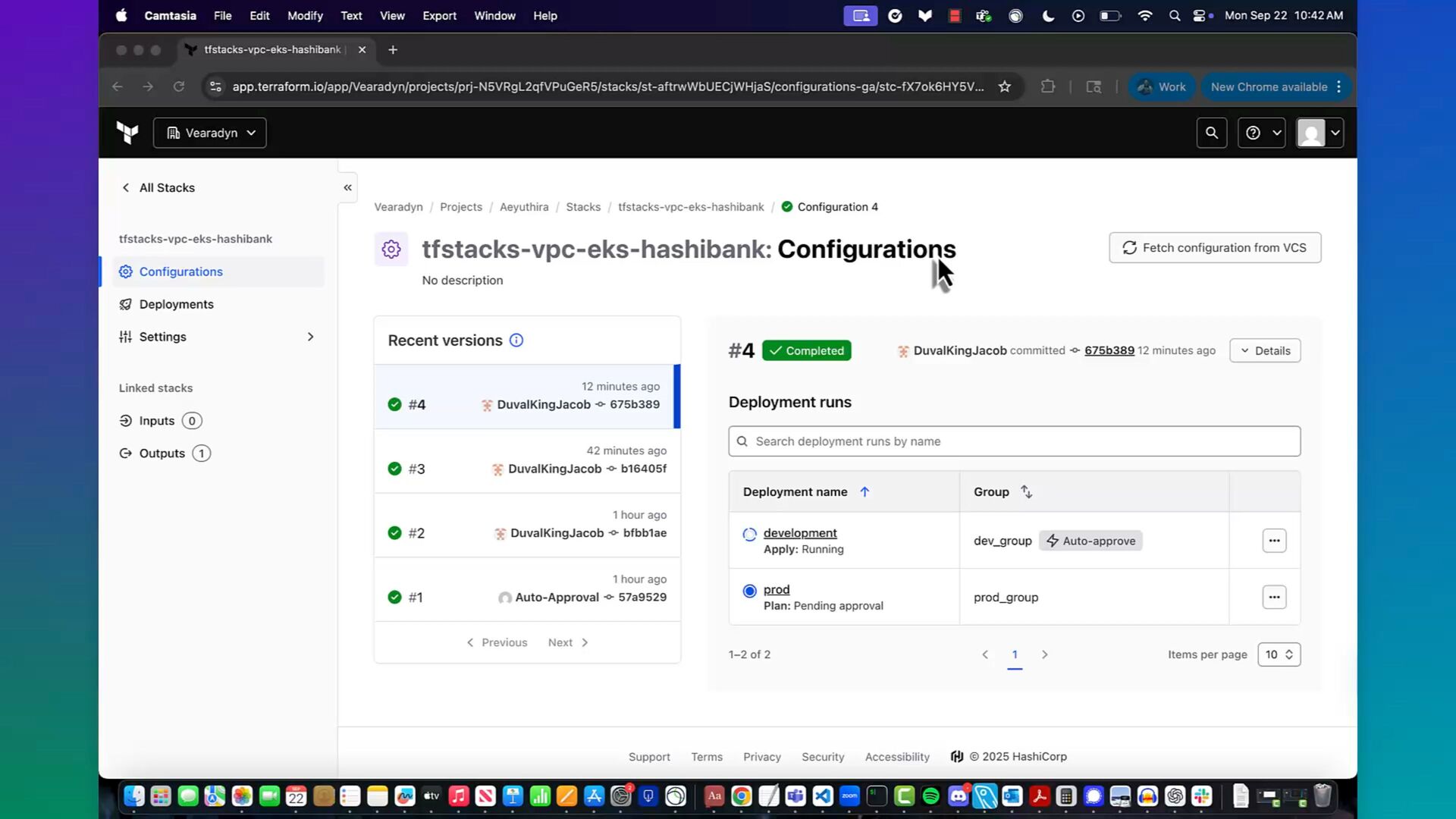
automate complex rollouts across multiple environments. • Advanced Dependency Management: Automatically handle "unknown values" with Deferred Changes and securely share outputs between configurations with Linked Stacks. • VCS-Driven Architecture: Manage all components and deployments as code through your existing version control system. A Closer Look: Key Stack Capabilities DEV TEST PROD Stack Terraform Stacks Con fi g
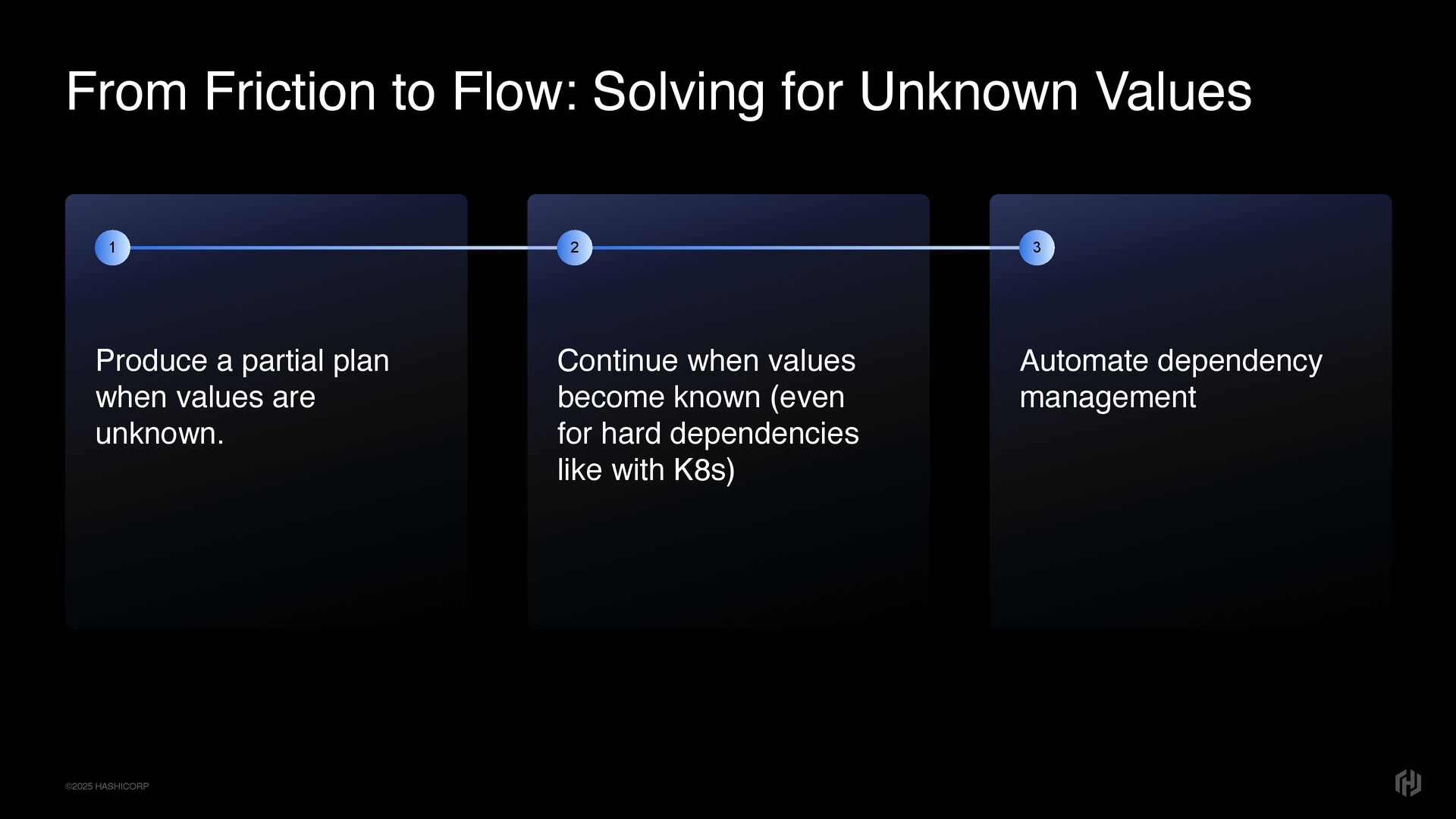
Produce a partial plan when values are unknown. 1 Continue when values become known (even for hard dependencies like with K8s) 2 Automate dependency management 3
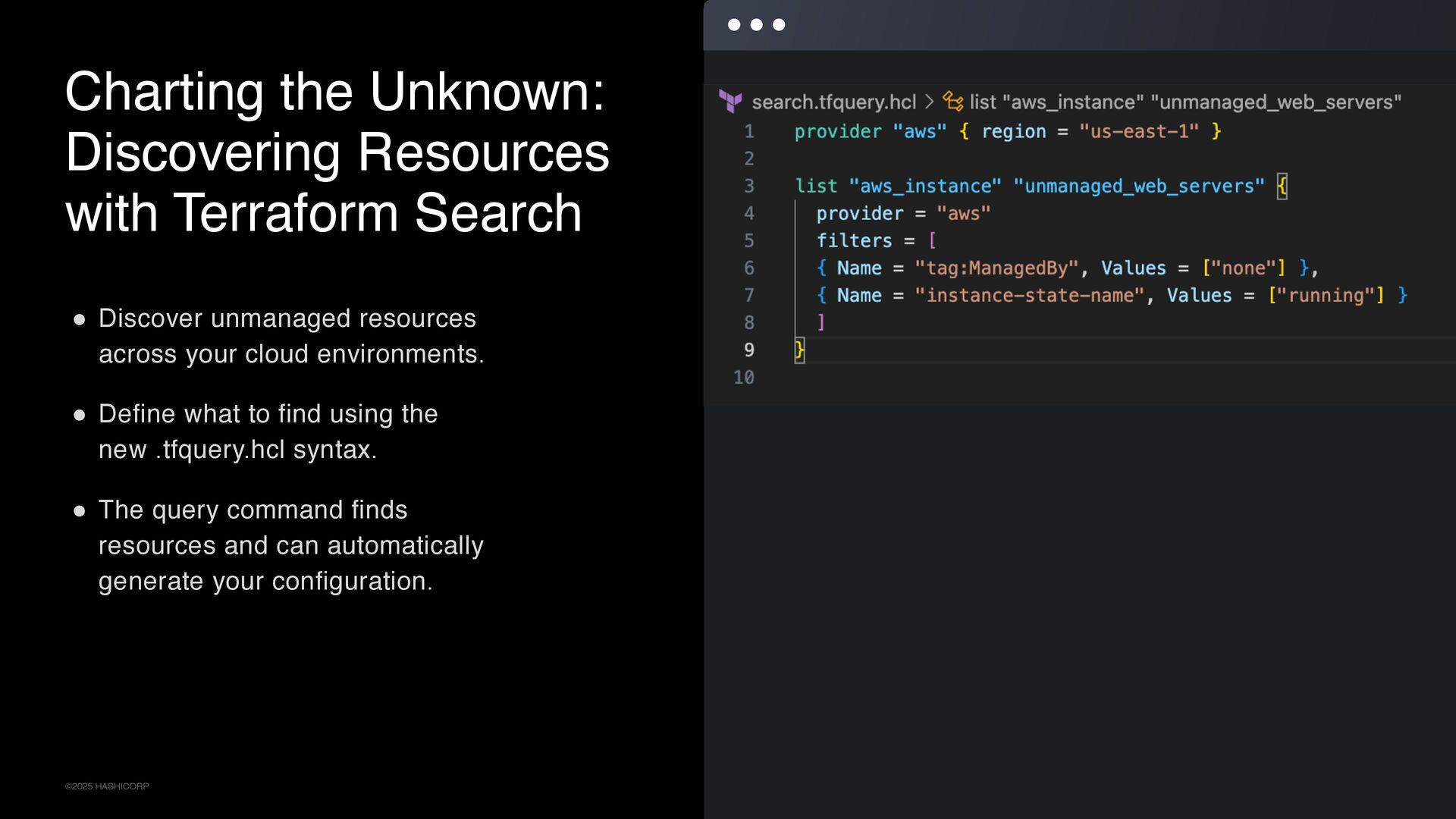
• Define what to find using the new .tfquery.hcl syntax. • The query command finds resources and can automatically generate your configuration. Charting the Unknown: Discovering Resources with Terraform Search
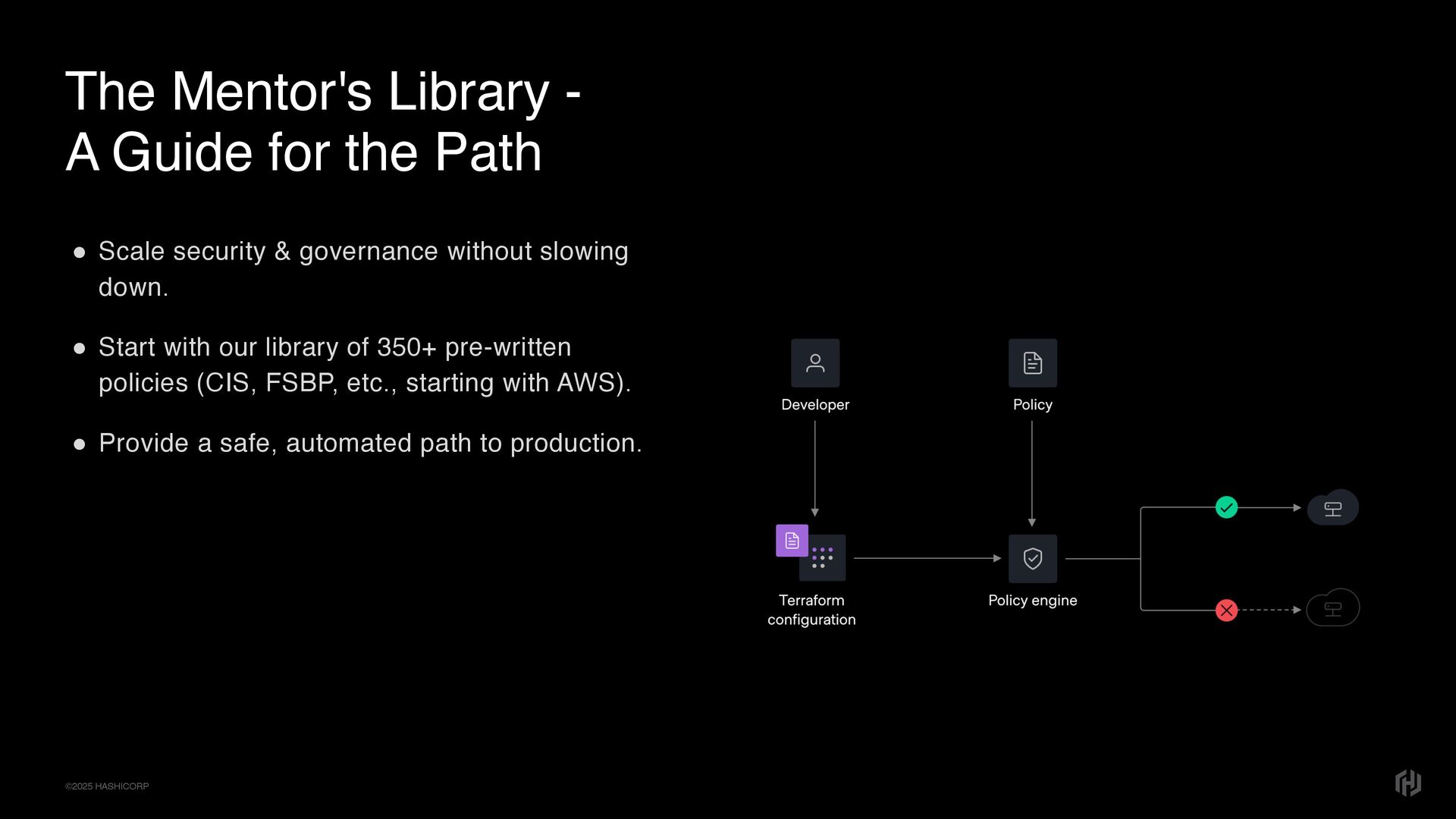
• Start with our library of 350+ pre-written policies (CIS, FSBP, etc., starting with AWS). • Provide a safe, automated path to production. The Mentor's Library - A Guide for the Path
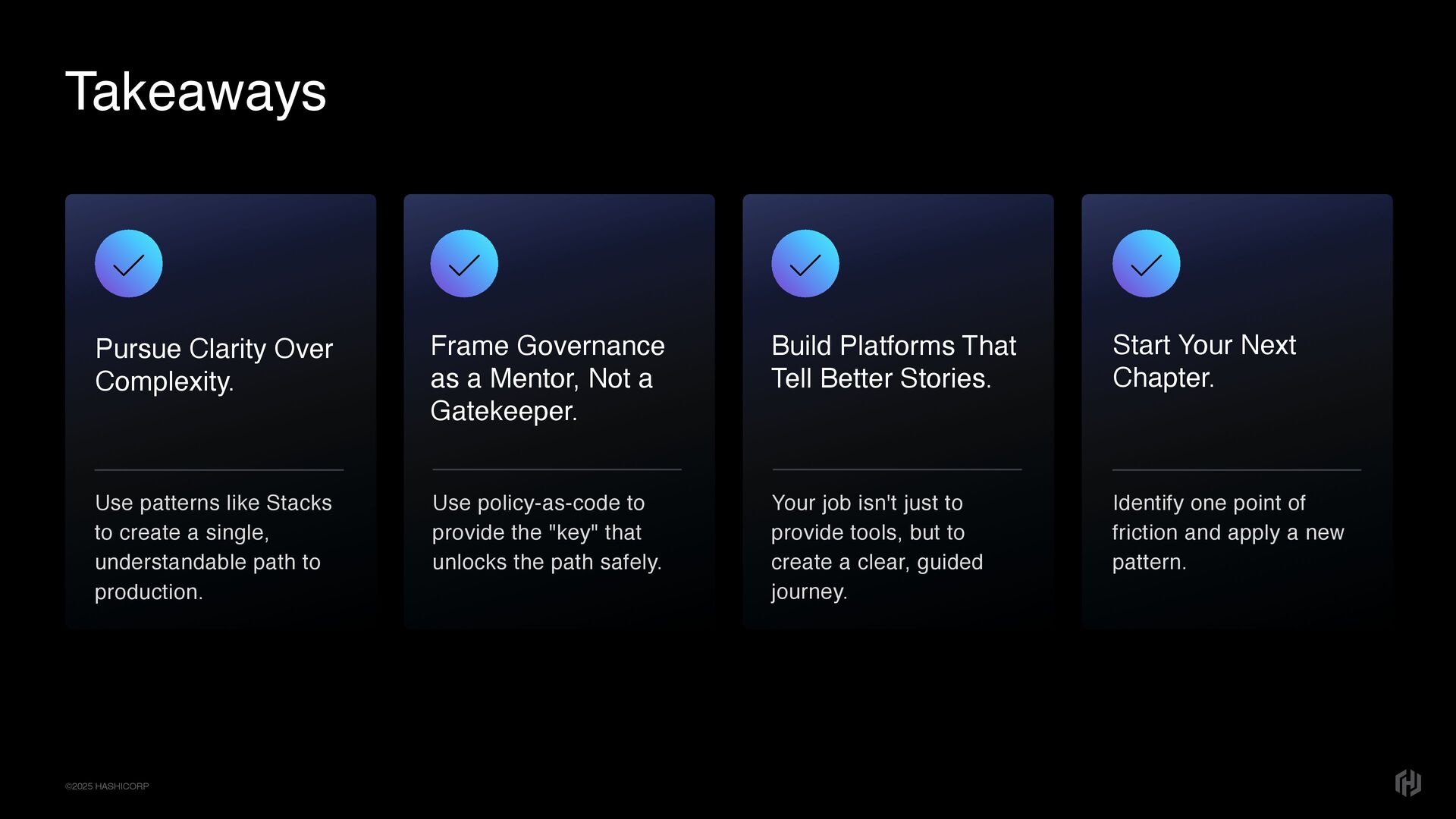
to create a clear, guided journey. Use policy-as-code to provide the "key" that unlocks the path safely. Identify one point of friction and apply a new pattern. Use patterns like Stacks to create a single, understandable path to production. Pursue Clarity Over Complexity. Build Platforms That Tell Better Stories. Start Your Next Chapter. Frame Governance as a Mentor, Not a Gatekeeper. Takeaways

 SiteGround - Reliable hosting with speed, security, and support you can count on.


 duvalkingjacob
 kentapapa
 moznion
 akitoshiga
 makocchi
 kaminashi
 nealle
 satomasahiro2005
 yamanoku
 maimyyym
 taketakekaho
 koukihosaka
 ivry_presentationmaterials
 addyosmani
 portentint
 thoeni
 nmsamuel
 tomoyanonymous
 jacobtomlinson
 tmiket
 greggifford
 frankvandijk
 axbom
 tammielis