Upgrade to Pro — share decks privately, control downloads, hide ads and more …

Securing PHP in the LLM age

Avatar for Volker Dusch Volker Dusch
September 25, 2026

Securing PHP in the LLM age

AI-assisted security research is increasing reported vulnerabilities across the PHP ecosystem.
Drawing on the PHP Foundation’s Ecosystem Security Team’s work, this talk shares what we’ve learned about scanning, validating reports, and working with maintainers.
It closes with practical steps for PHP projects and teams to prepare, patch, and keep users informed.

Avatar for Volker Dusch

Volker Dusch

September 25, 2026

More Decks by Volker Dusch

Other Decks in Technology

Transcript

  1. Securing PHP in the LLM age Volker "edorian" Dusch Ecosystem

    Security Lead at The PHP Foundation PHP 8.5 Release Manager Head of Engineering at Tideways phpdd 2026
  2. Why am I here? In March, the Linux Foundation announced

    a grant to strengthen open source security. https://www.linuxfoundation.org/press/linux-foundation-announces-12.5-million-in-grantfunding-from-leading-organizations-to-advance-open-source-security
  3. The Ecosystem Security Team The grant funded a new Ecosystem

    Security Team at The PHP Foundation. Secure the PHP ecosystem and support maintainers. Today I'll share what we learned.
  4. My background ~20 years of PHP Working at Tideways on

    PHP performance tooling PHP 8.5 Release Manager Ecosystem Security Lead at The PHP Foundation Thank you to Tideways for making this work possible.
  5. Agentic Security Models inspect code and use tools to test
    hypotheses. Static and dynamic analysis plus fuzzing.
  6. Industry reactions Divisive initial responses: "It's all nonsense slop. We

    can safely ignore it." "The world is ending. Unplug everything."
  7. The truth is in the middle No fundamentally new class

    of exploits It's still all just software With all the problems of a young industry There are impactful findings, at scale Finding issues takes a lot less effort now
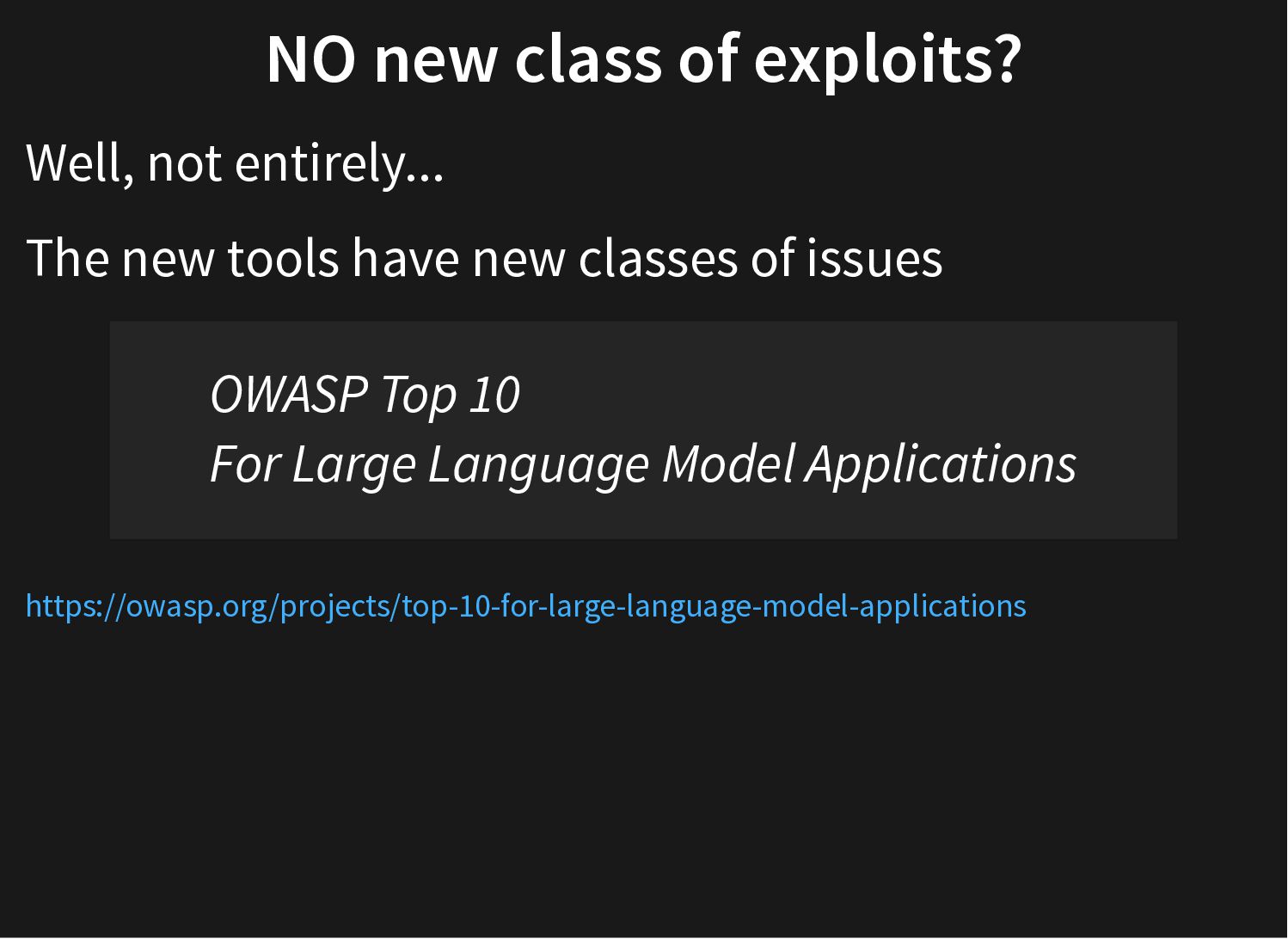
  8. NO new class of exploits? Well, not entirely... The new

    tools have new classes of issues OWASP Top 10 For Large Language Model Applications https://owasp.org/projects/top-10-for-large-language-model-applications
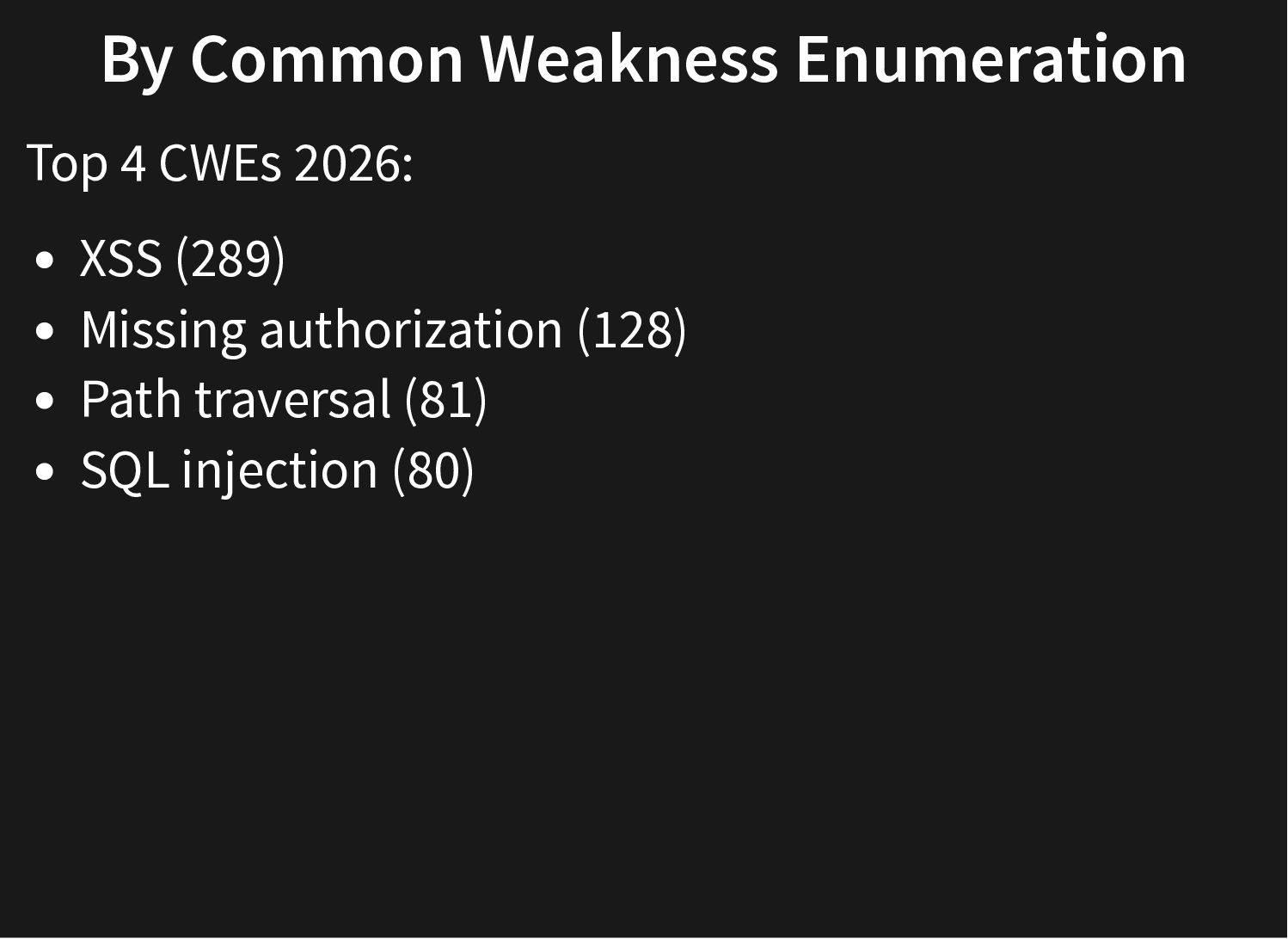
  9. By Common Weakness Enumeration Top 4 CWEs 2026: XSS (289)

    Missing authorization (128) Path traversal (81) SQL injection (80)
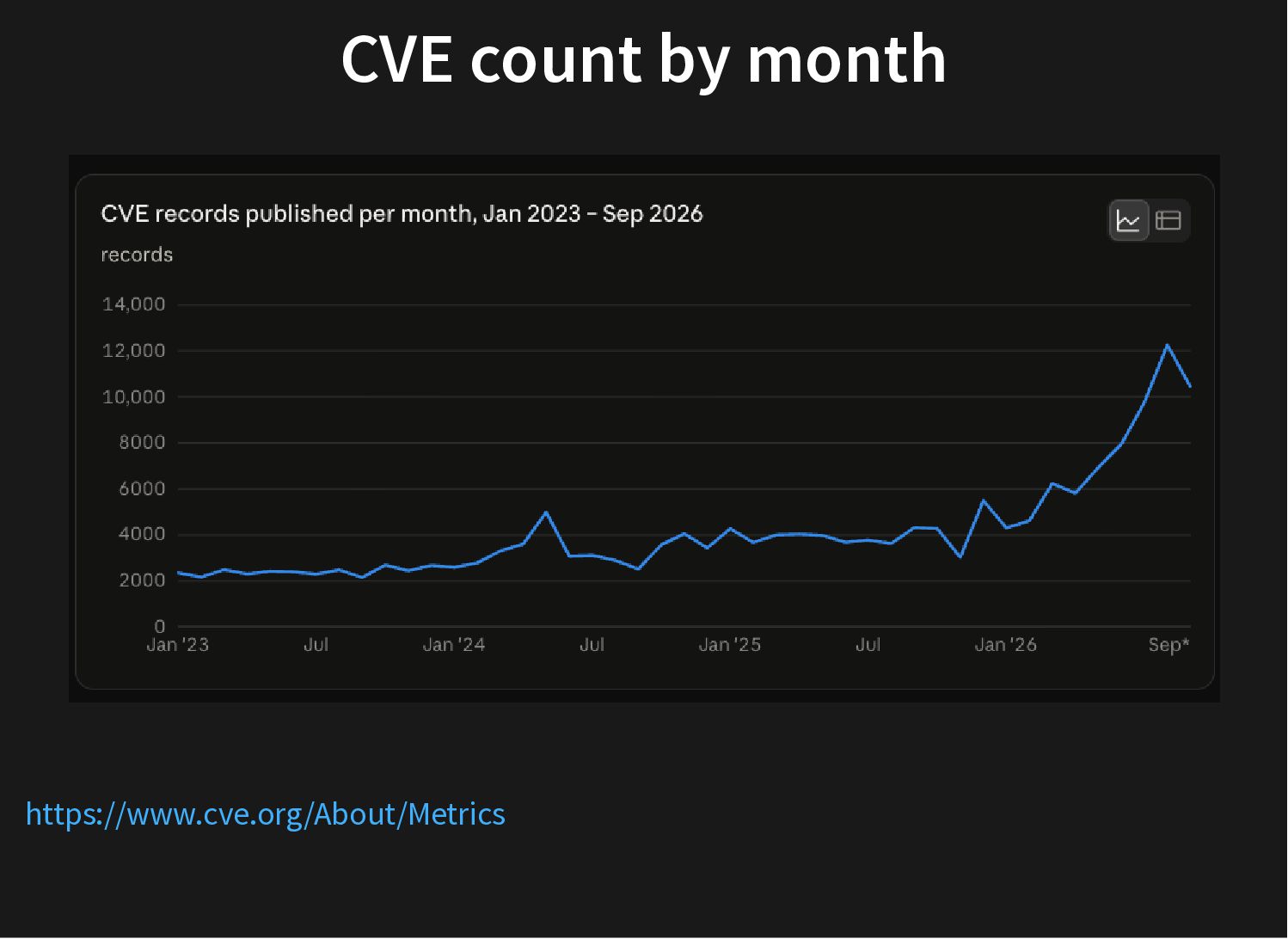
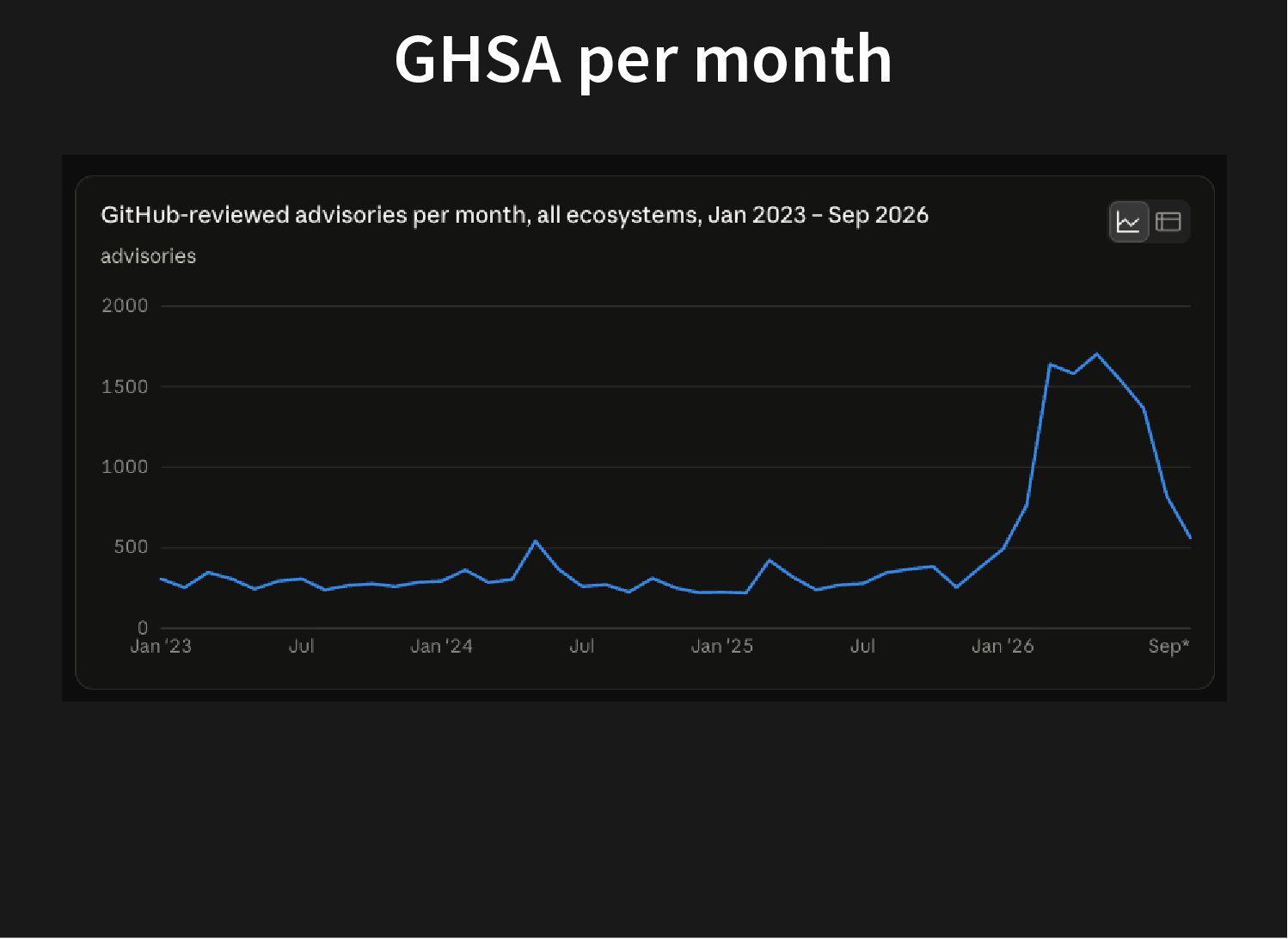
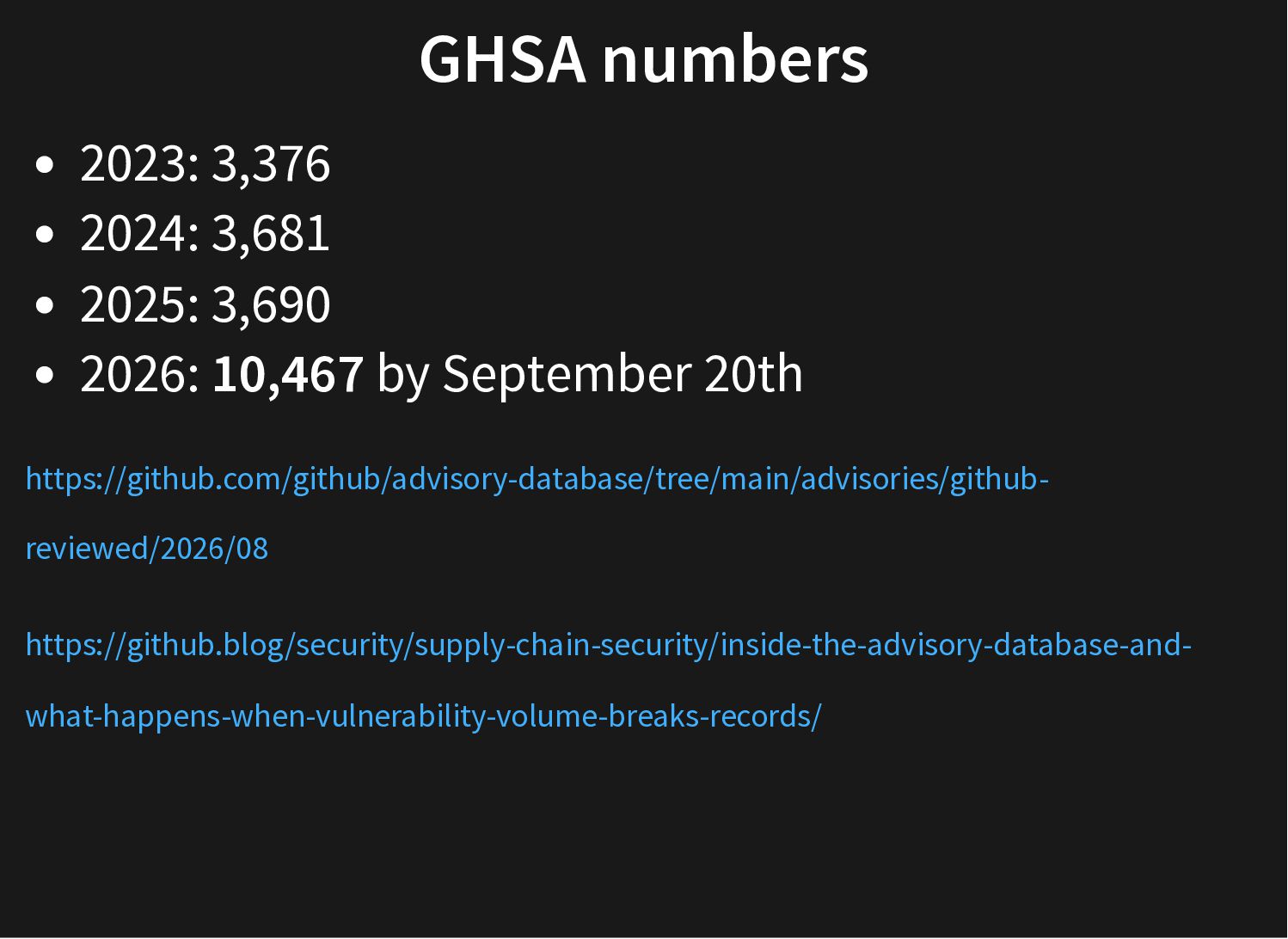
  10. GHSA numbers 2023: 3,376 2024: 3,681 2025: 3,690 2026: 10,467

    by September 20th https://github.com/github/advisory-database/tree/main/advisories/githubreviewed/2026/08 https://github.blog/security/supply-chain-security/inside-the-advisory-database-andwhat-happens-when-vulnerability-volume-breaks-records/
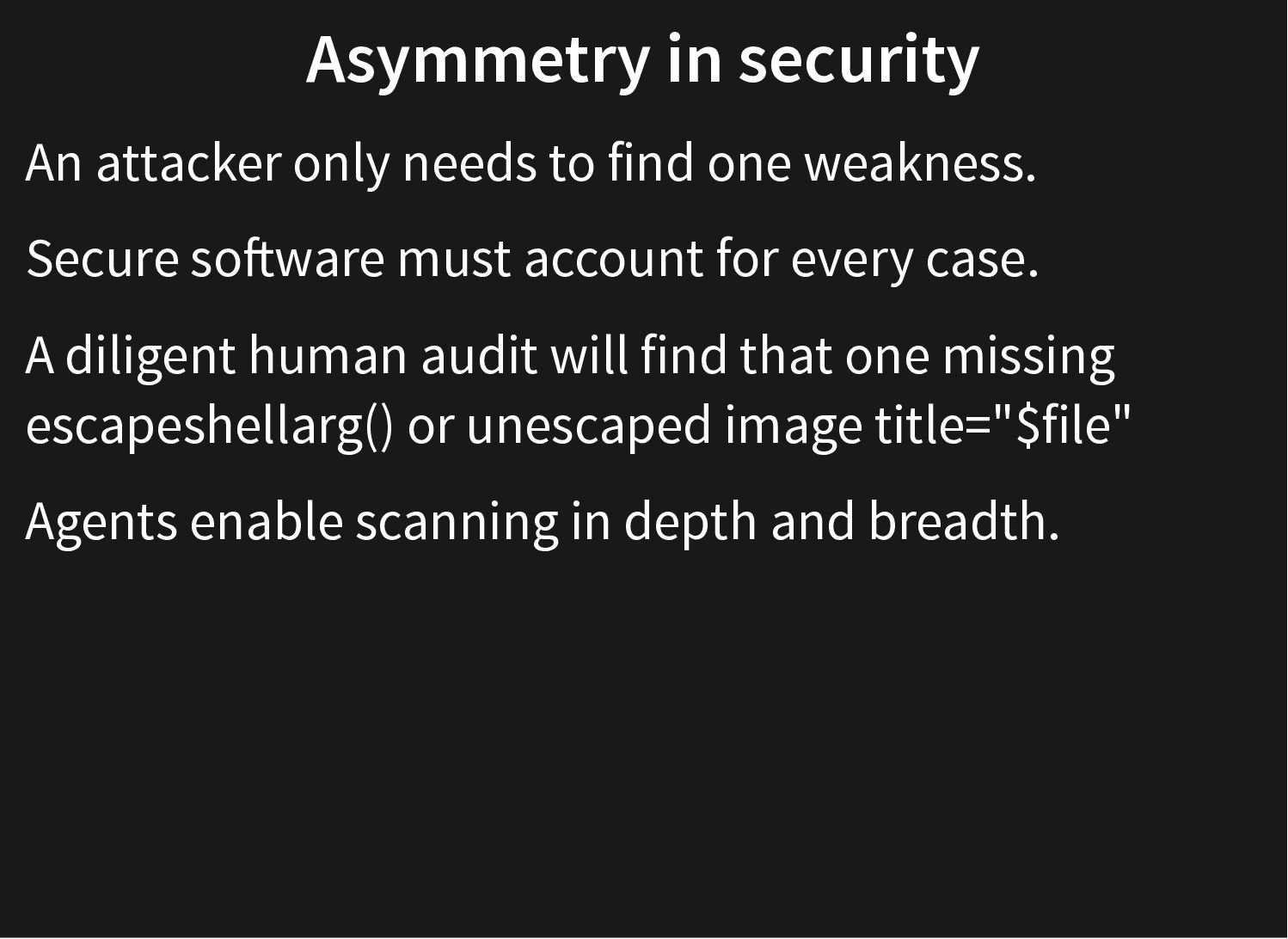
  11. Asymmetry in security An attacker only needs to find one

    weakness. Secure software must account for every case. A diligent human audit will find that one missing escapeshellarg() or unescaped image title="$file" Agents enable scanning in depth and breadth.
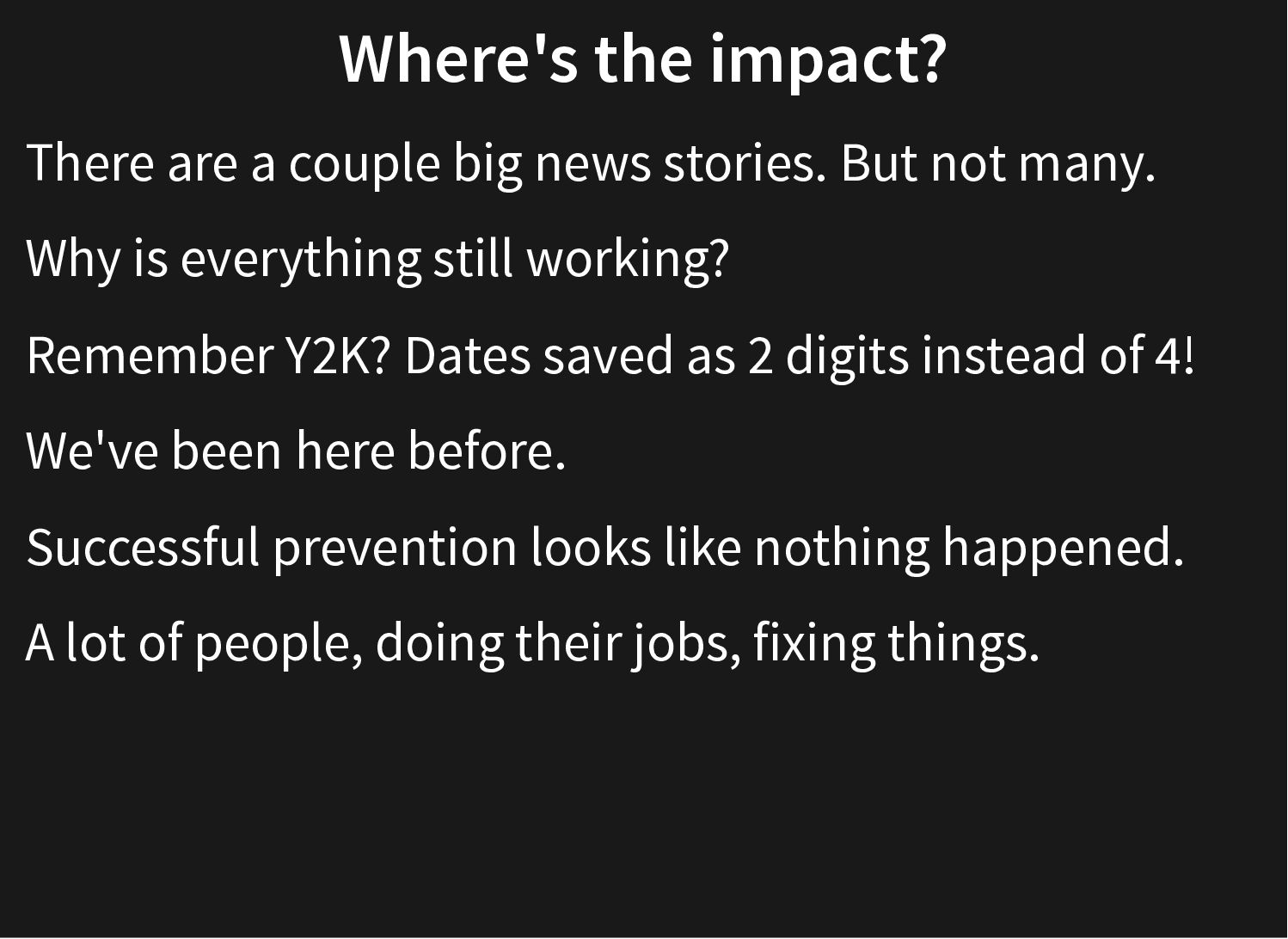
  12. Where's the impact? There are a couple big news stories.

    But not many. Why is everything still working? Remember Y2K? Dates saved as 2 digits instead of 4! We've been here before. Successful prevention looks like nothing happened. A lot of people, doing their jobs, fixing things.
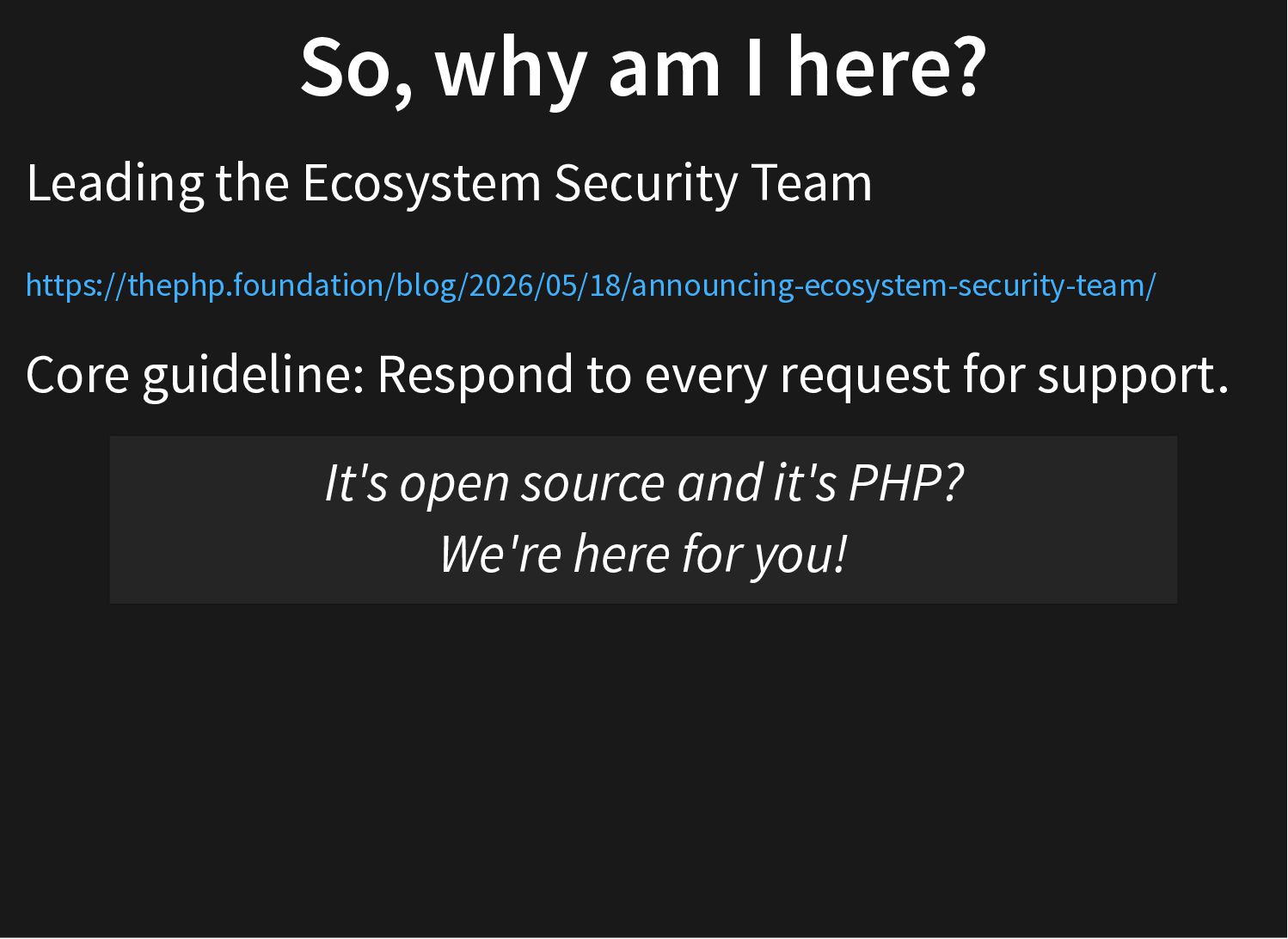
  13. So, why am I here? Leading the Ecosystem Security Team

    https://thephp.foundation/blog/2026/05/18/announcing-ecosystem-security-team/ Core guideline: Respond to every request for support. It's open source and it's PHP? We're here for you!
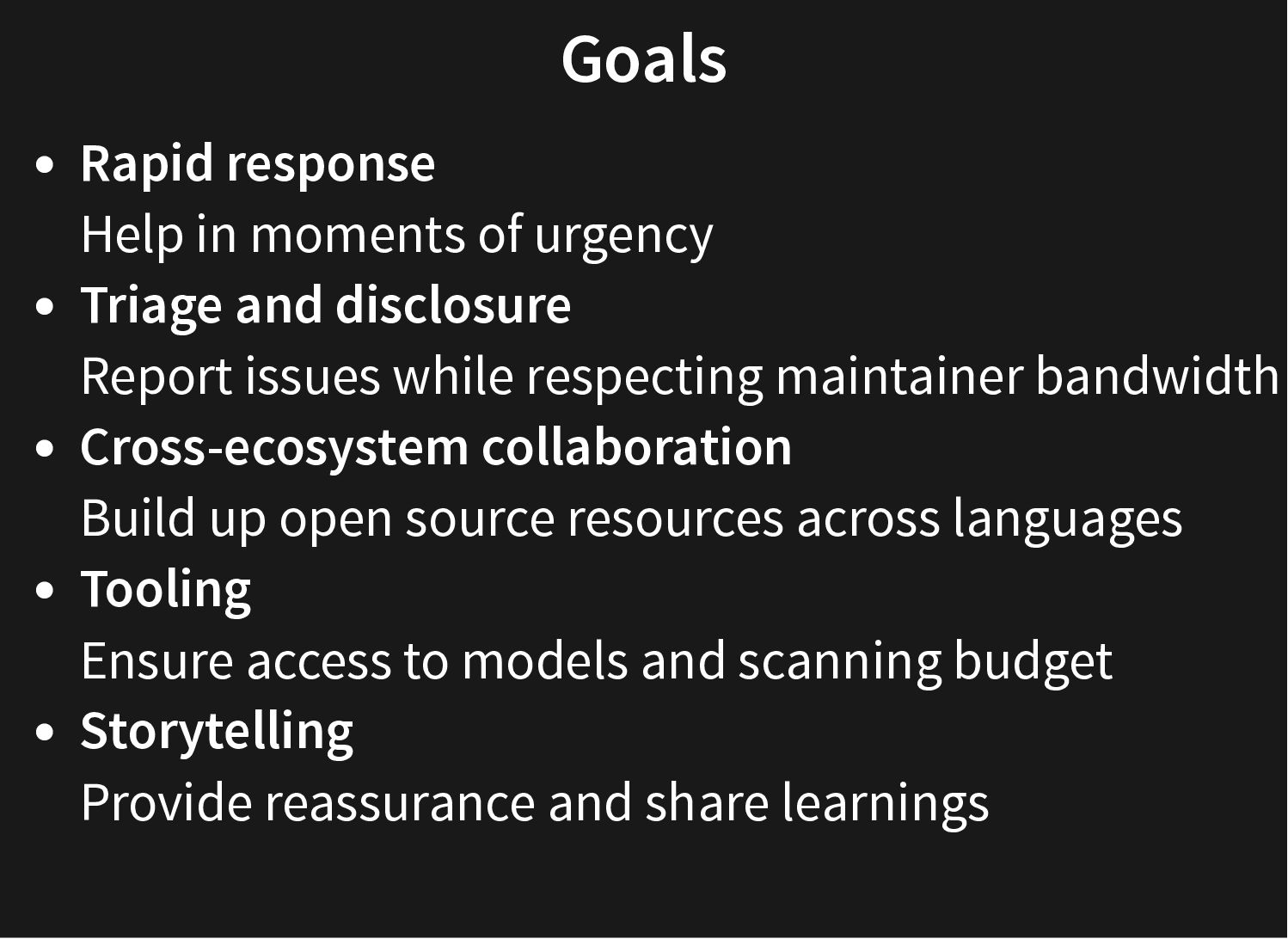
  14. Goals Rapid response Help in moments of urgency Triage and

    disclosure Report issues while respecting maintainer bandwidth Cross-ecosystem collaboration Build up open source resources across languages Tooling Ensure access to models and scanning budget Storytelling Provide reassurance and share learnings
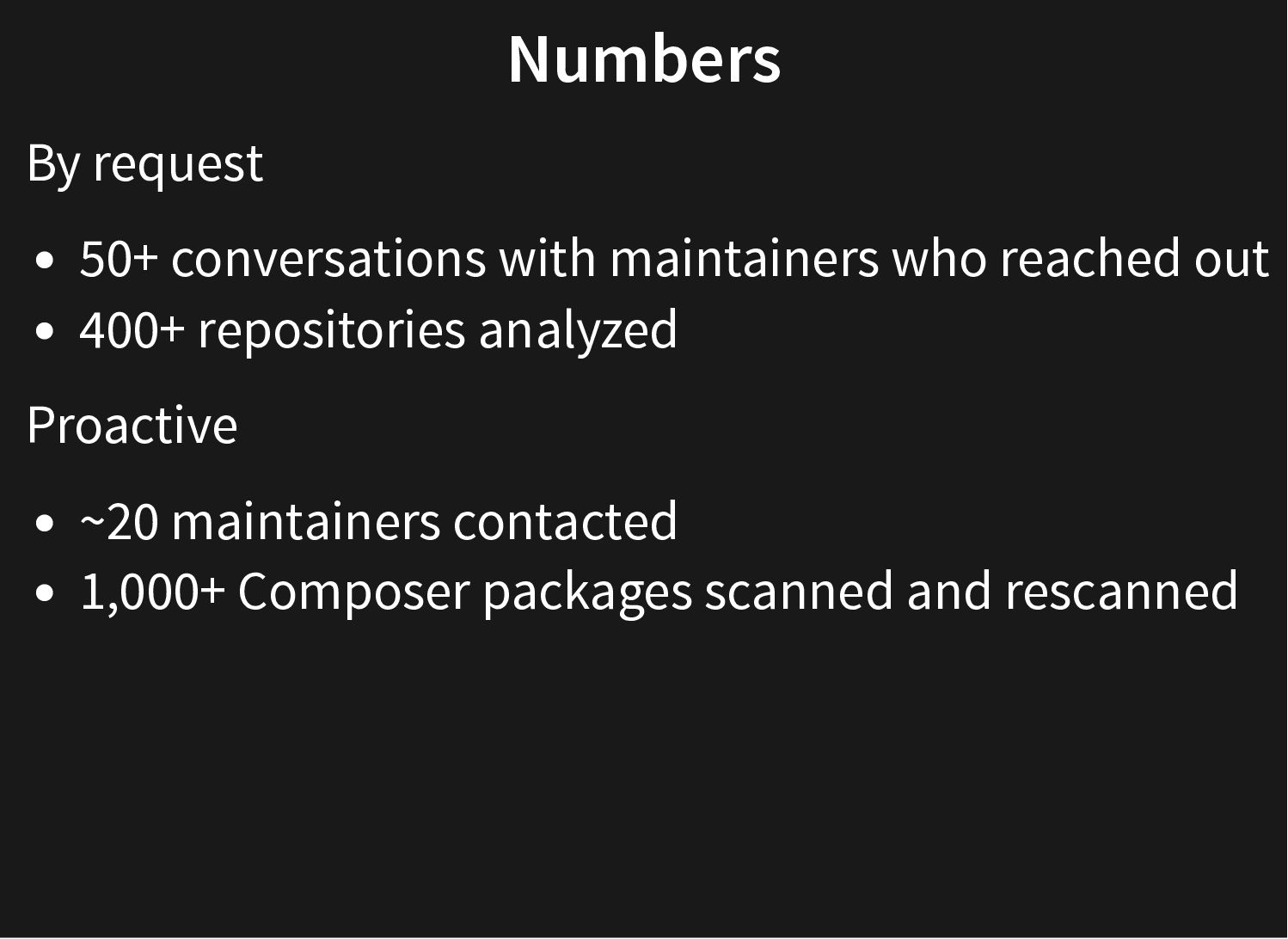
  15. Numbers By request 50+ conversations with maintainers who reached out

    400+ repositories analyzed Proactive ~20 maintainers contacted 1,000+ Composer packages scanned and rescanned
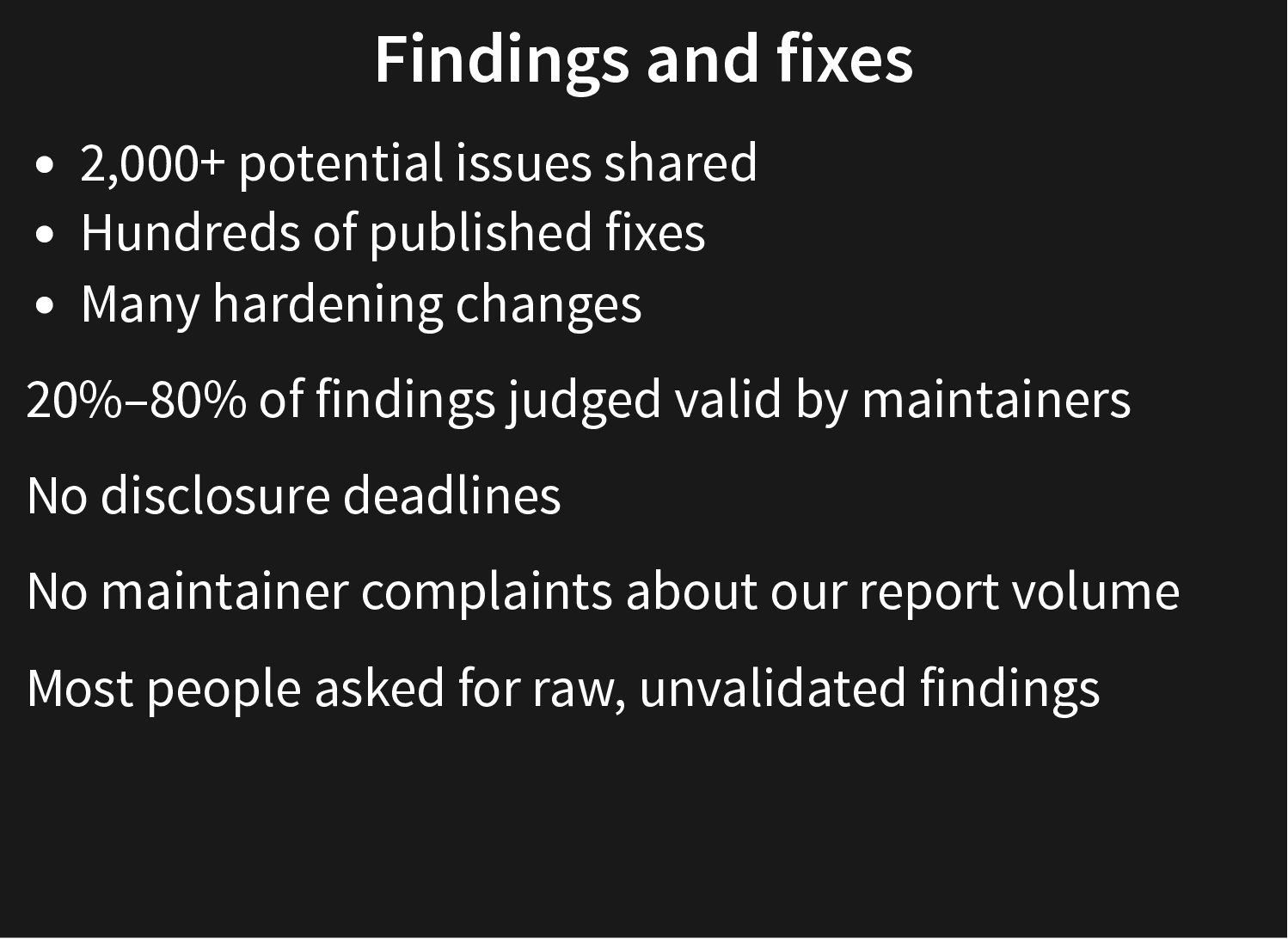
  16. Findings and fixes 2,000+ potential issues shared Hundreds of published

    fixes Many hardening changes 20%–80% of findings judged valid by maintainers No disclosure deadlines No maintainer complaints about our report volume Most people asked for raw, unvalidated findings
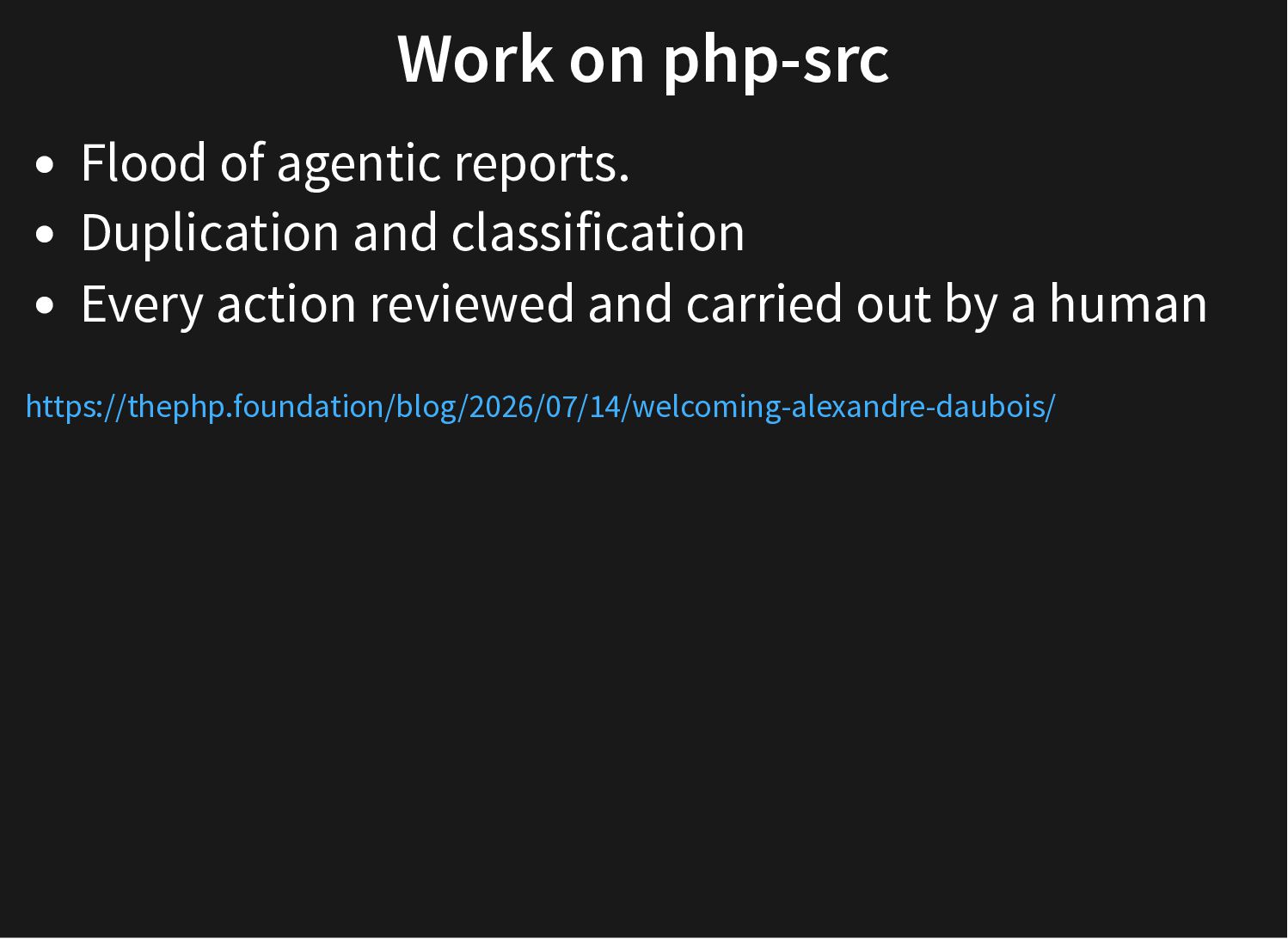
  17. Work on php-src Flood of agentic reports. Duplication and classification

    Every action reviewed and carried out by a human https://thephp.foundation/blog/2026/07/14/welcoming-alexandre-daubois/
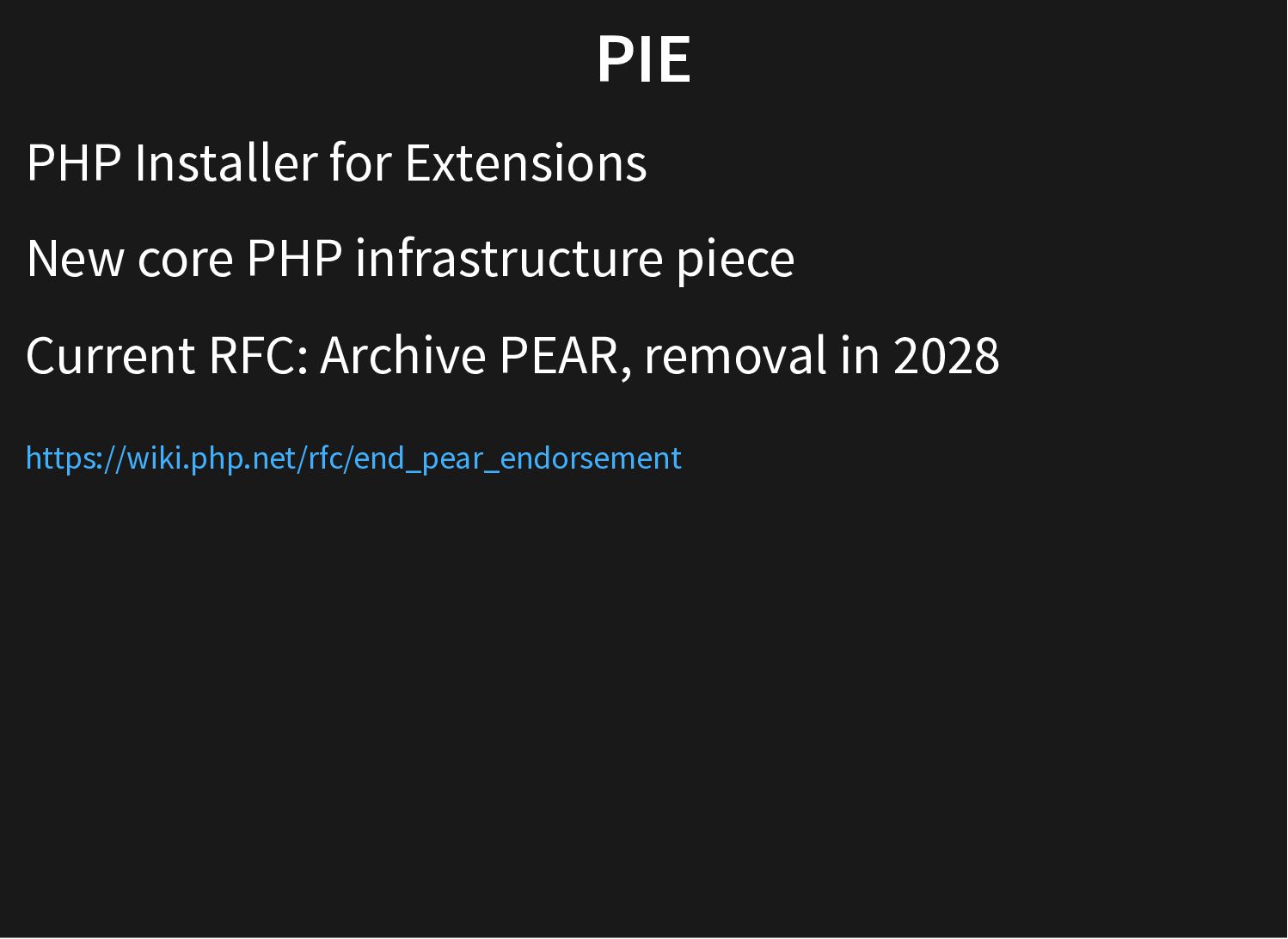
  18. PIE PHP Installer for Extensions New core PHP infrastructure piece

    Current RFC: Archive PEAR, removal in 2028 https://wiki.php.net/rfc/end_pear_endorsement
  19. Working with security teams AI companies fund security firms scanning

    projects. The Foundation enables us to participate.
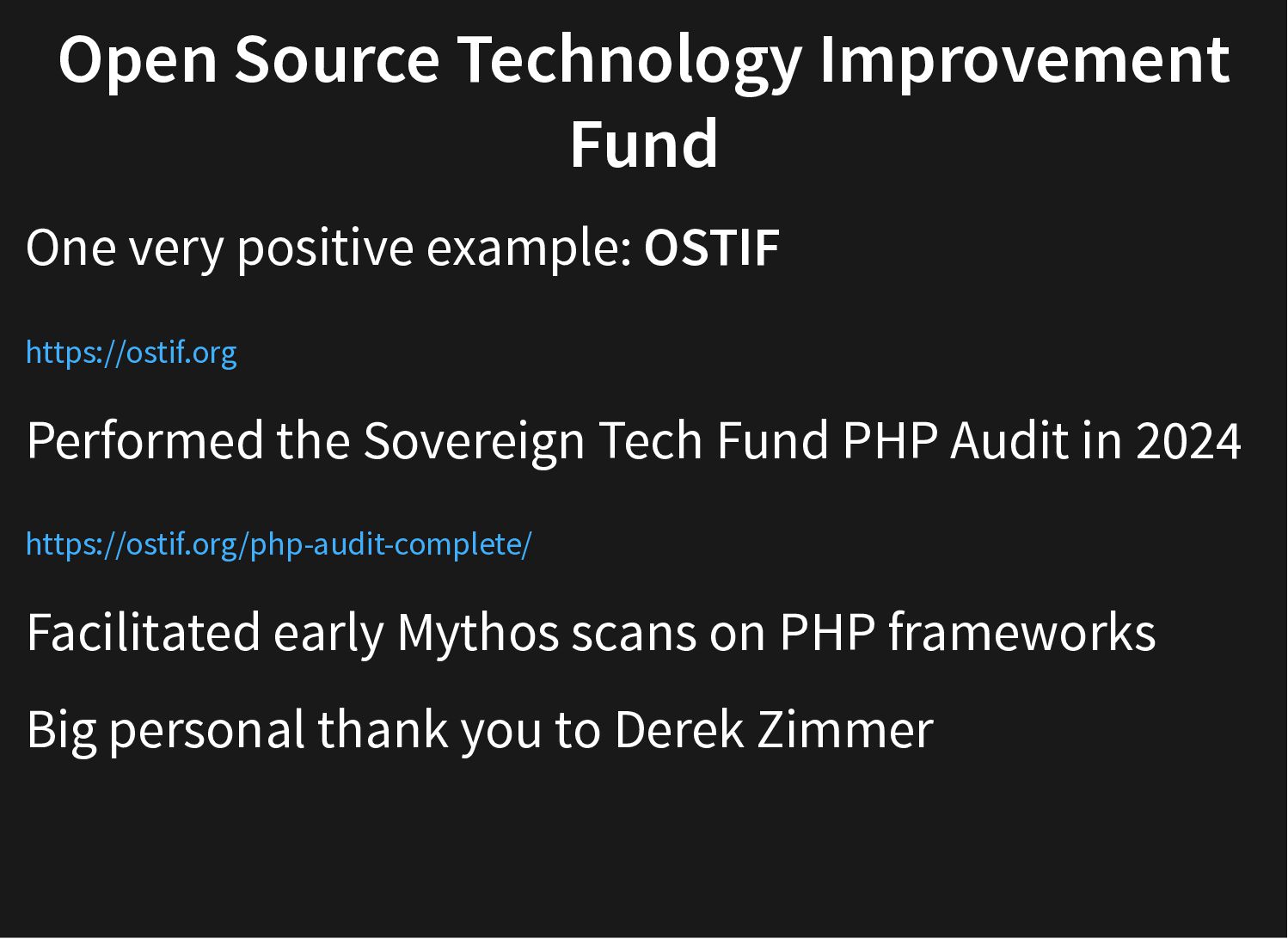
  20. Open Source Technology Improvement Fund One very positive example: OSTIF

    https://ostif.org Performed the Sovereign Tech Fund PHP Audit in 2024 https://ostif.org/php-audit-complete/ Facilitated early Mythos scans on PHP frameworks Big personal thank you to Derek Zimmer
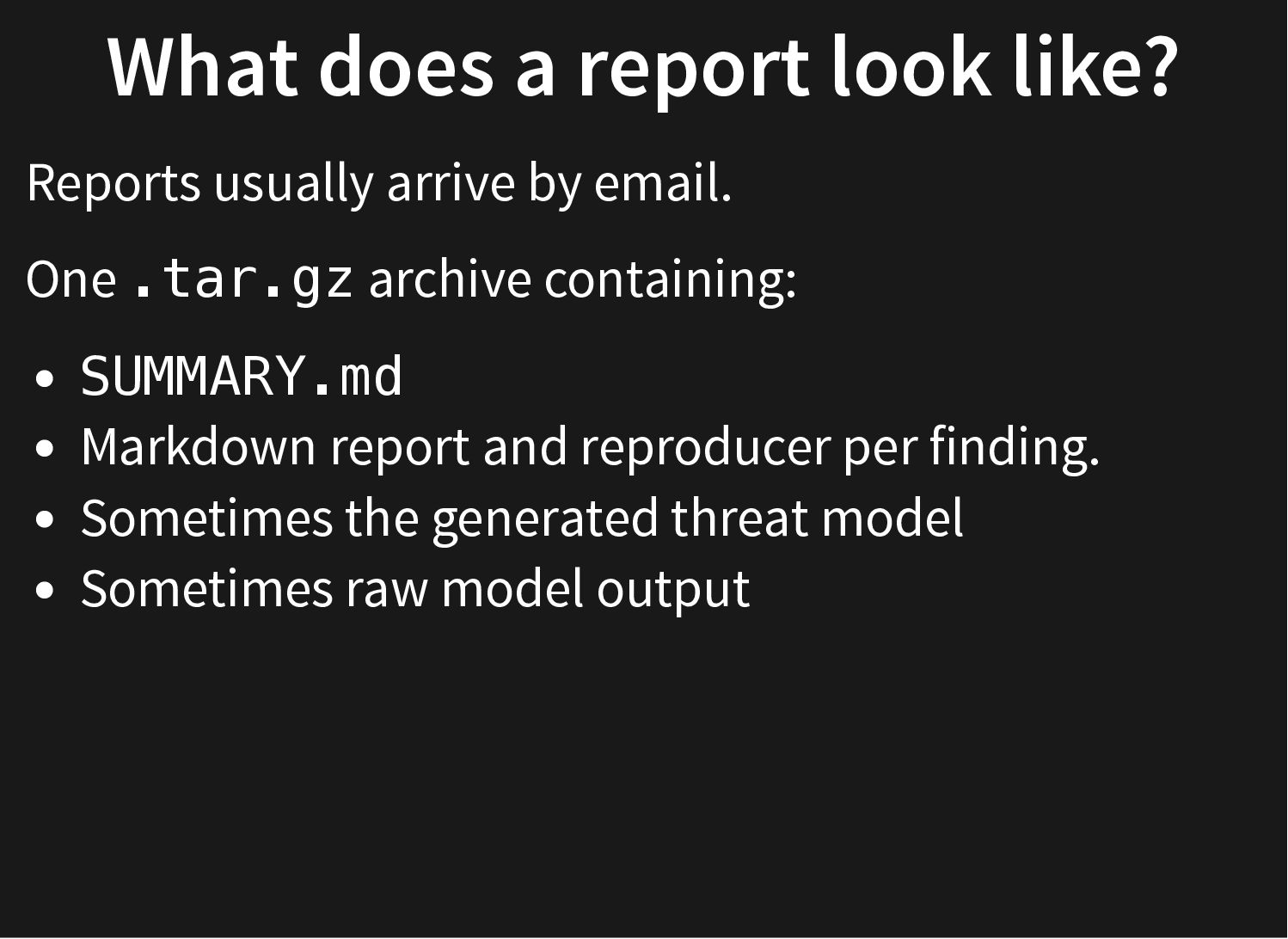
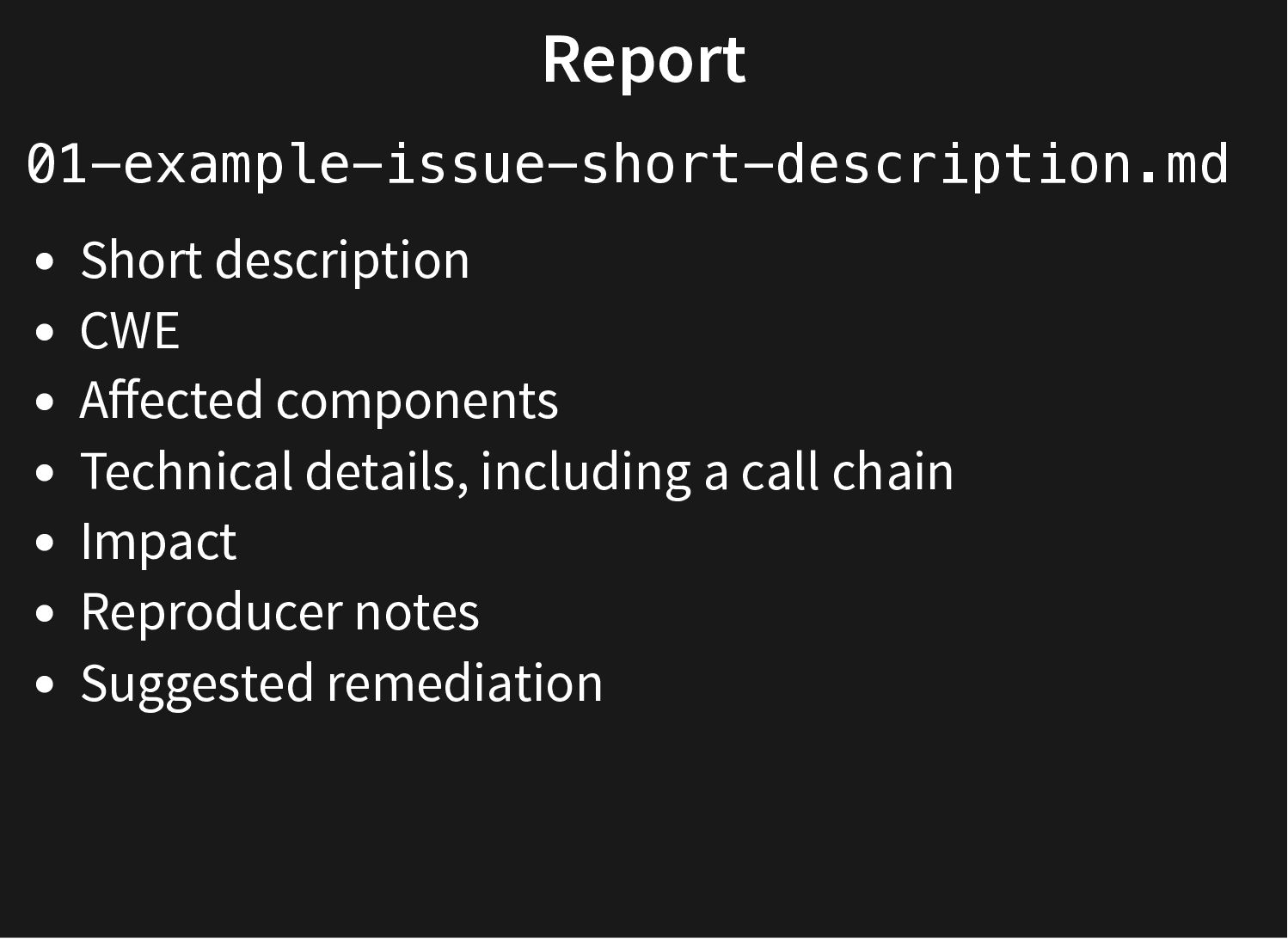
  21. What does a report look like? Reports usually arrive by

    email. One .tar.gz archive containing: SUMMARY.md Markdown report and reproducer per finding. Sometimes the generated threat model Sometimes raw model output
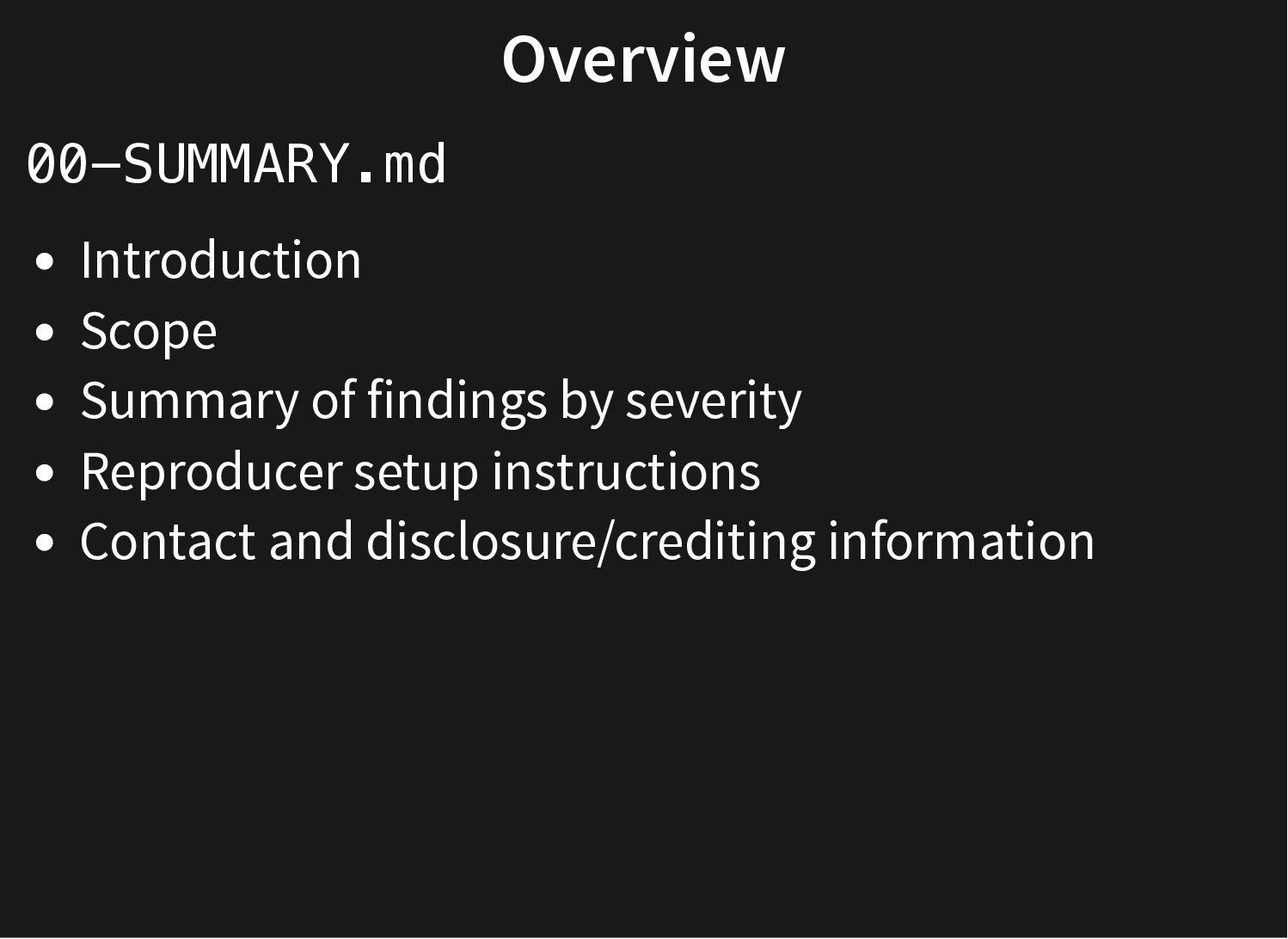
  22. Overview 00-SUMMARY.md Introduction Scope Summary of findings by severity Reproducer

    setup instructions Contact and disclosure/crediting information
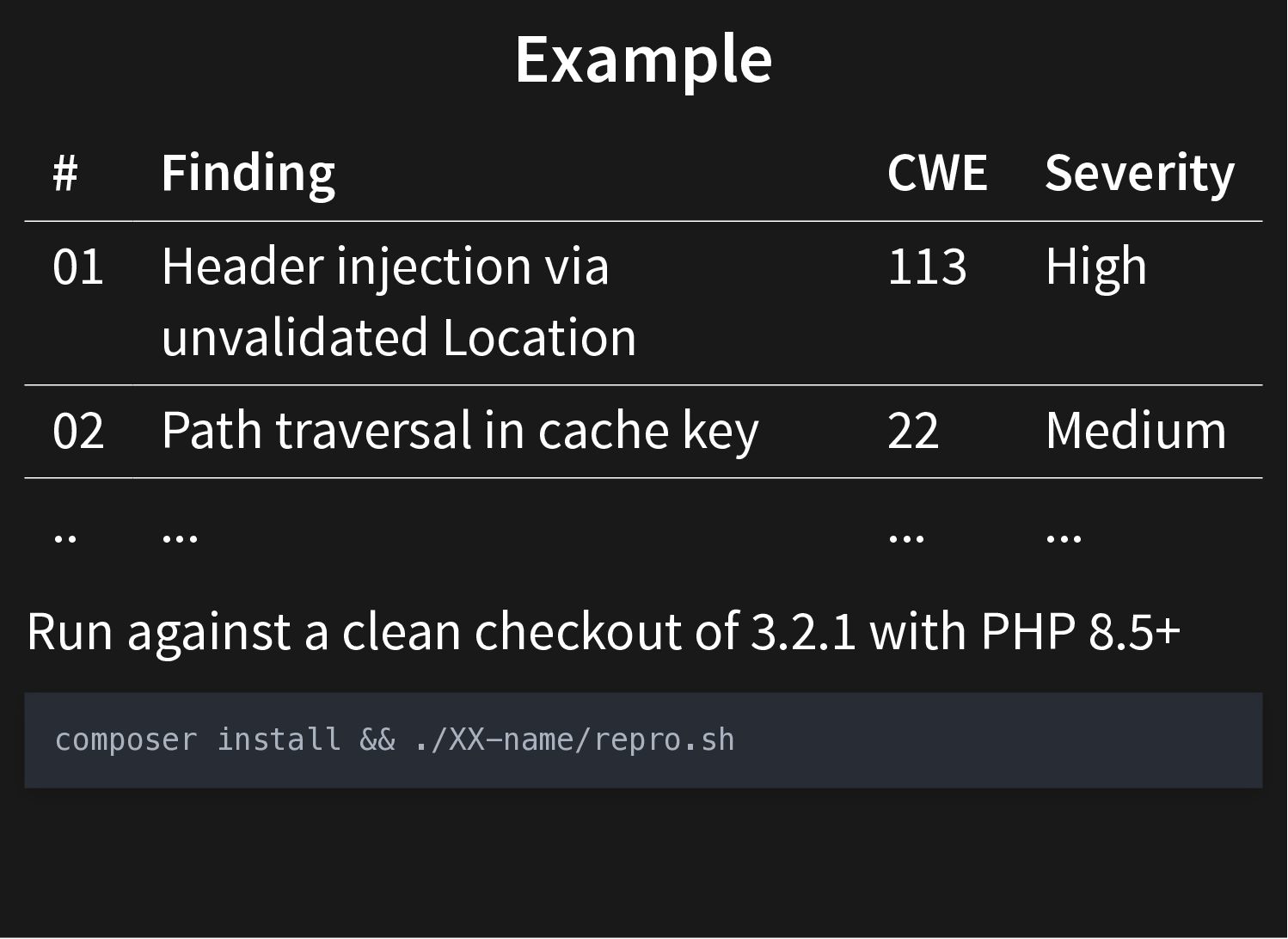
  23. Example # Finding CWE Severity 01 Header injection via unvalidated

    Location 113 High 02 Path traversal in cache key 22 Medium .. ... ... ... Run against a clean checkout of 3.2.1 with PHP 8.5+ composer install && ./XX-name/repro.sh
  24. Proactive security scanning You know your software best. Have a

    look at what the machines report. Run your own scans or work with people you trust. Avoid pressure, deadlines, and surprises.
  25. Reproduce safely Be ready to look at untrusted code. Evaluate

    what works for you. Docker Sandbox Full VM Throwaway cloud instances Dedicated machine The best approach is the one you actually will use. Targeted attacks do happen: https://blog.rust-lang.org/2026/09/17/targeted-attacks/
  26. Fix, Document, Define, Ignore Fix what needs fixing Hardening patches

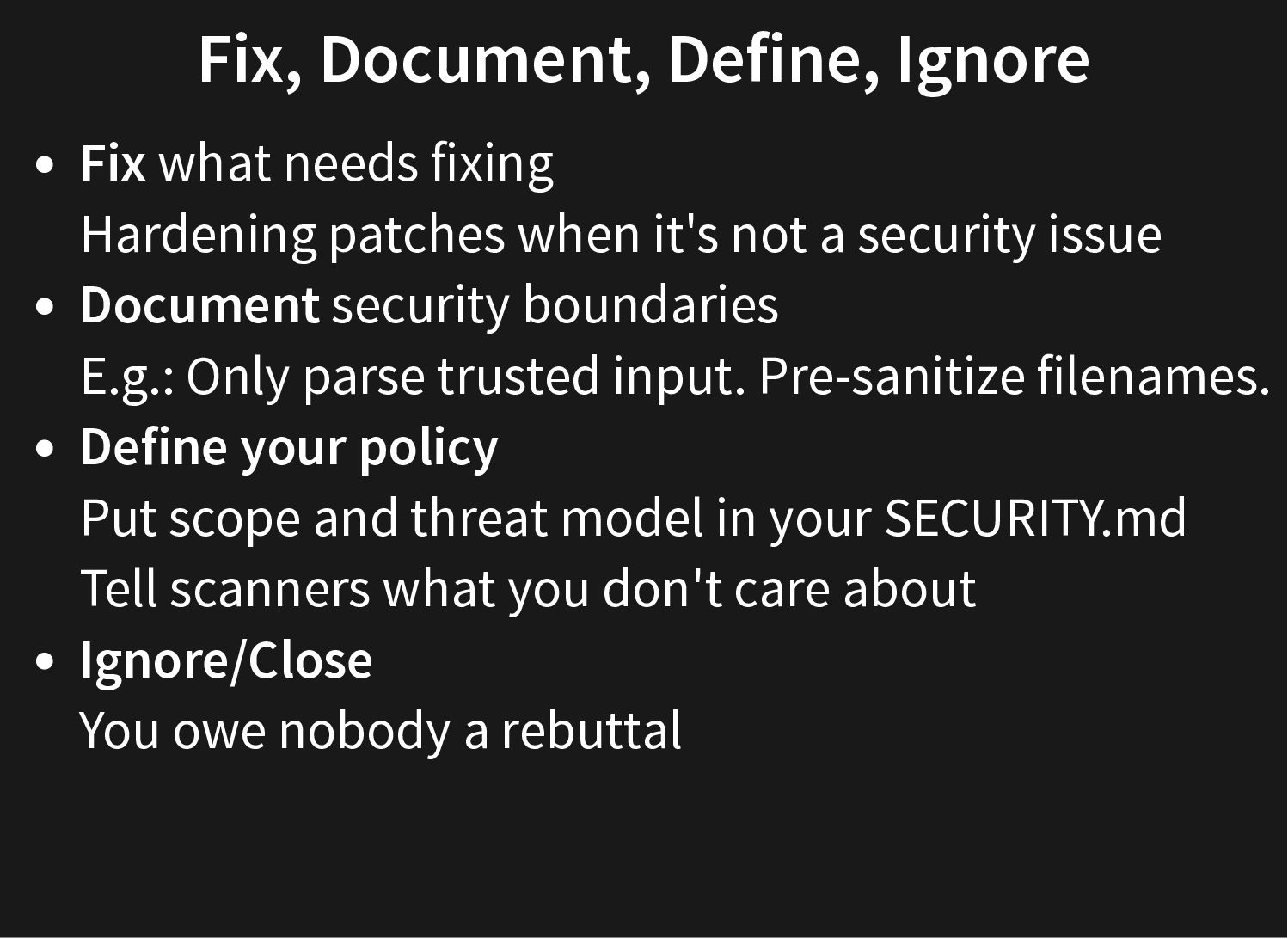
    when it's not a security issue Document security boundaries E.g.: Only parse trusted input. Pre-sanitize filenames. Define your policy Put scope and threat model in your SECURITY.md Tell scanners what you don't care about Ignore/Close You owe nobody a rebuttal
  27. Inform your users A silent fix leaves users unaware. composer

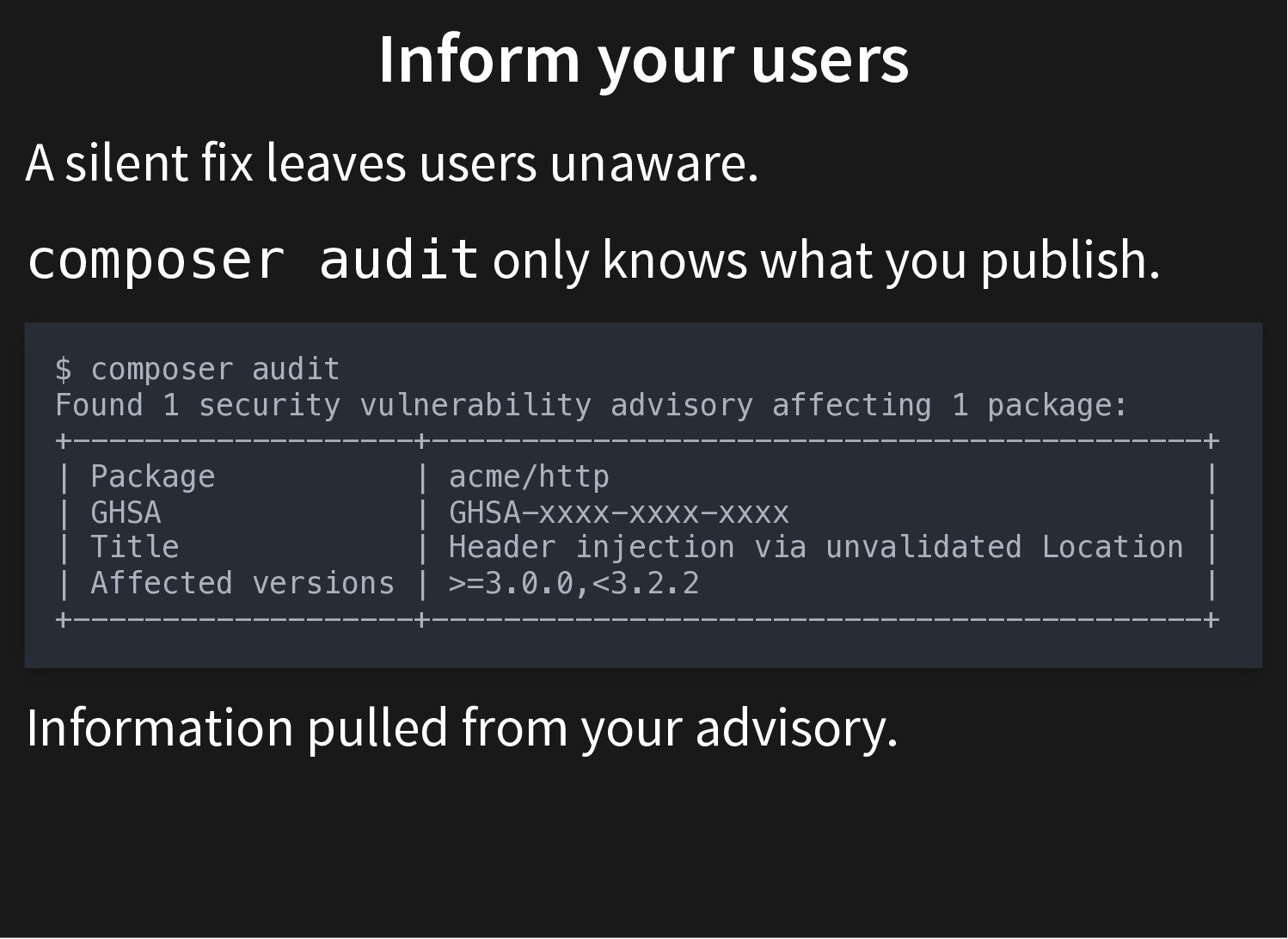
    audit only knows what you publish. $ composer audit Found 1 security vulnerability advisory affecting 1 package: +-------------------+-------------------------------------------+ | Package | acme/http | | GHSA | GHSA-xxxx-xxxx-xxxx | | Title | Header injection via unvalidated Location | | Affected versions | >=3.0.0,<3.2.2 | +-------------------+-------------------------------------------+ Information pulled from your advisory.
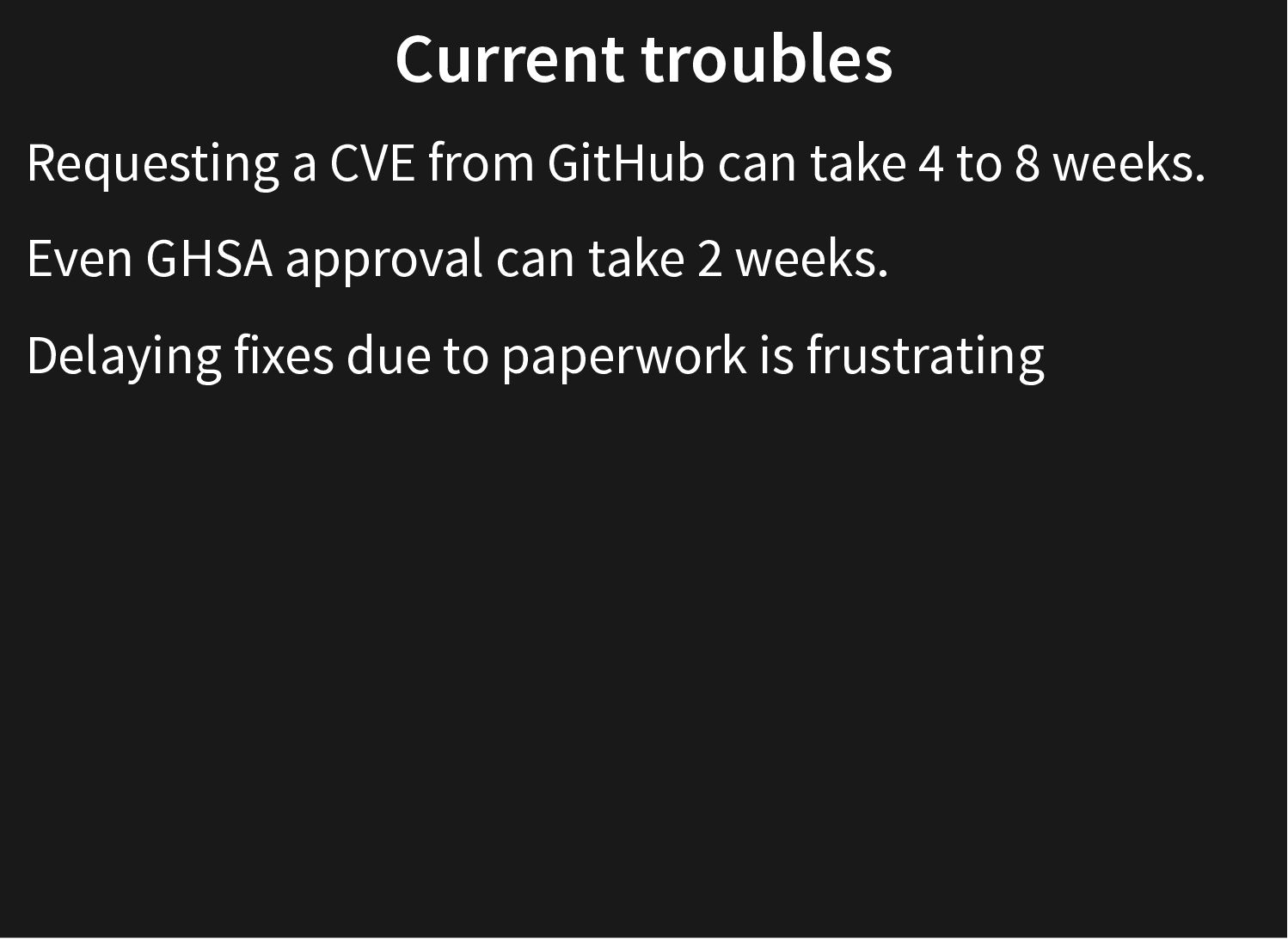
  28. Current troubles Requesting a CVE from GitHub can take 4

    to 8 weeks. Even GHSA approval can take 2 weeks. Delaying fixes due to paperwork is frustrating
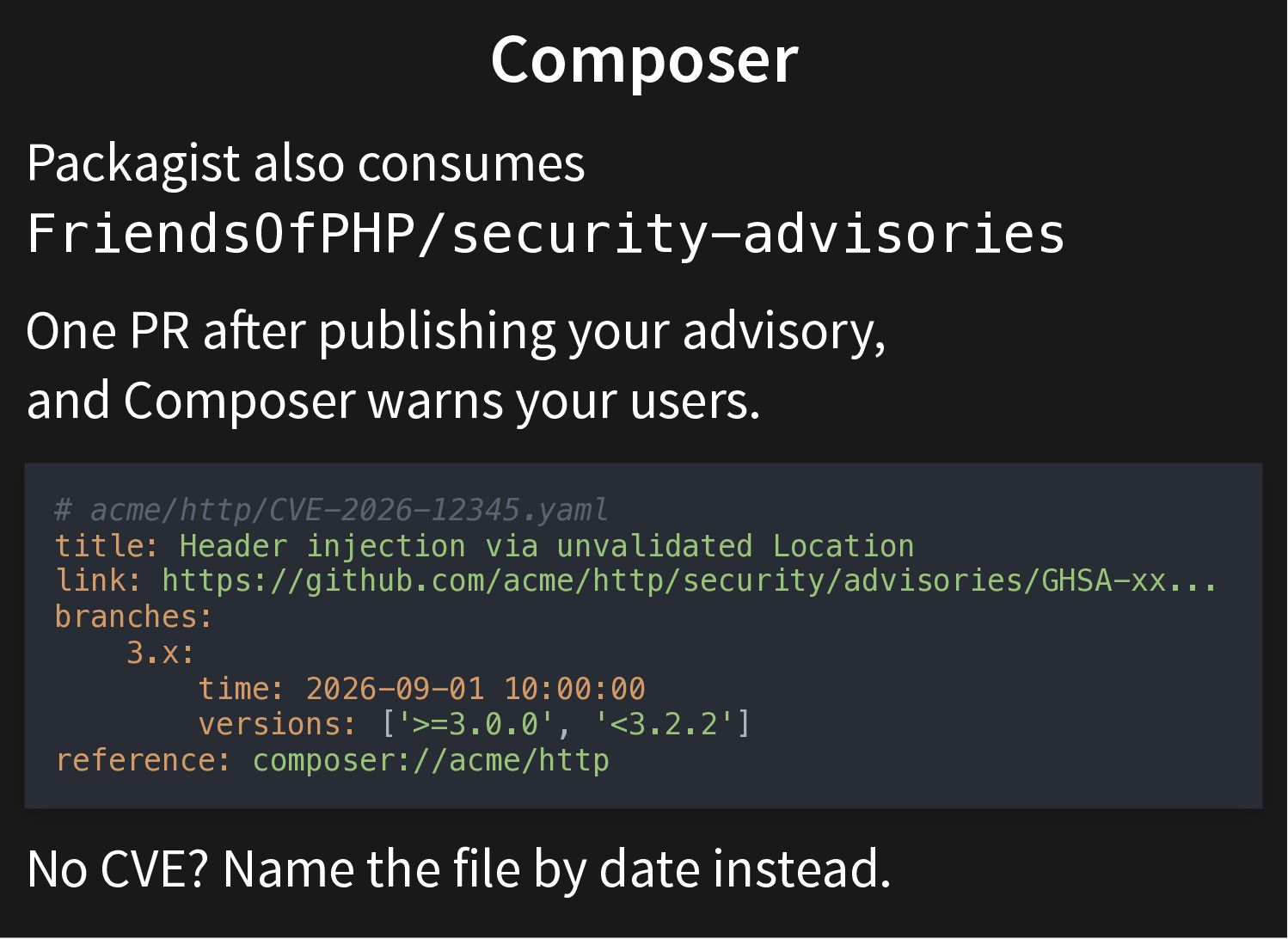
  29. Composer Packagist also consumes FriendsOfPHP/security-advisories One PR after publishing your

    advisory, and Composer warns your users. # acme/http/CVE-2026-12345.yaml title: Header injection via unvalidated Location link: https://github.com/acme/http/security/advisories/GHSA-xx... branches: 3.x: time: 2026-09-01 10:00:00 versions: ['>=3.0.0', '<3.2.2'] reference: composer://acme/http No CVE? Name the file by date instead.
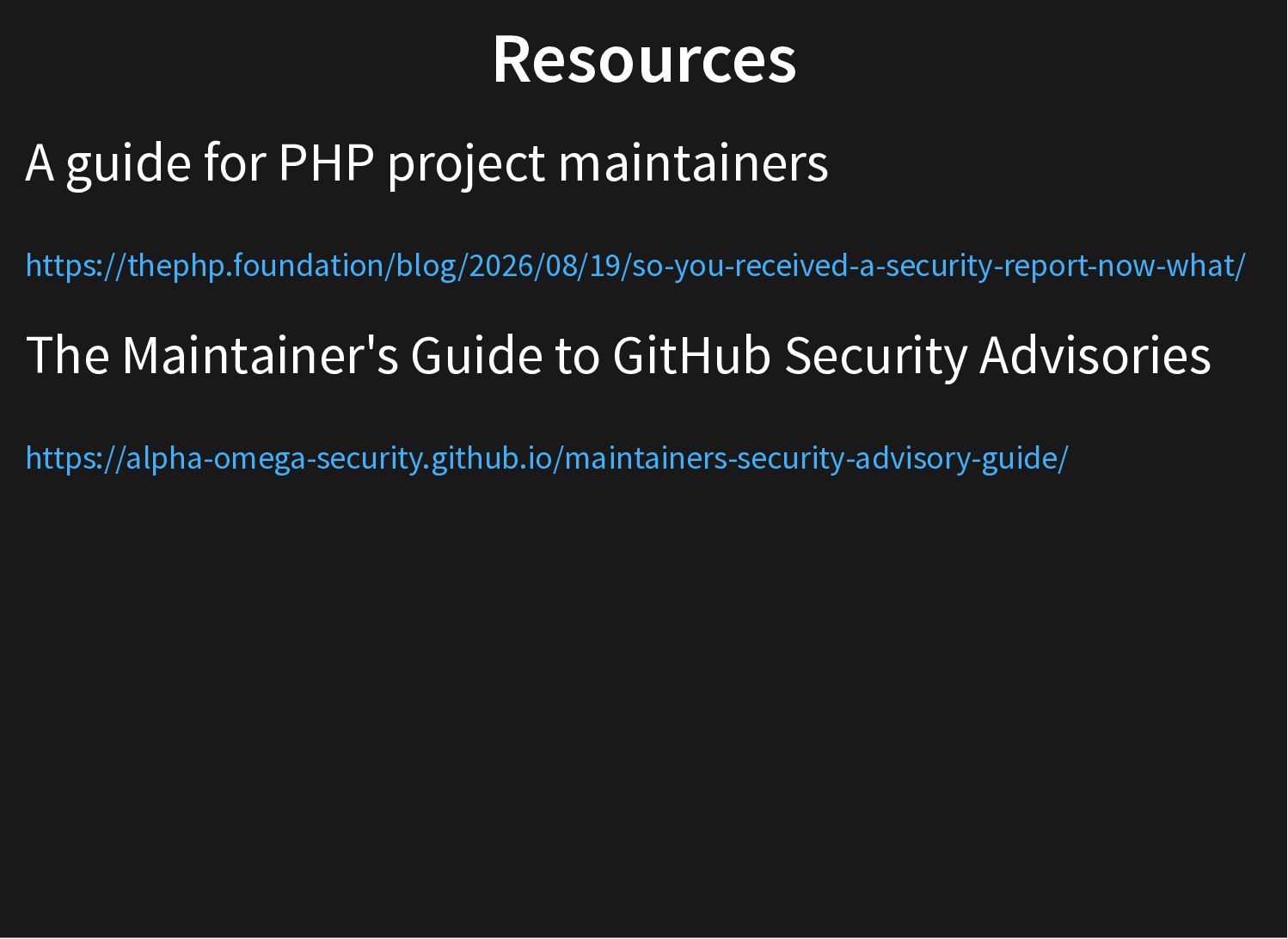
  30. Resources A guide for PHP project maintainers https://thephp.foundation/blog/2026/08/19/so-you-received-a-security-report-now-what/ The Maintainer's

    Guide to GitHub Security Advisories https://alpha-omega-security.github.io/maintainers-security-advisory-guide/
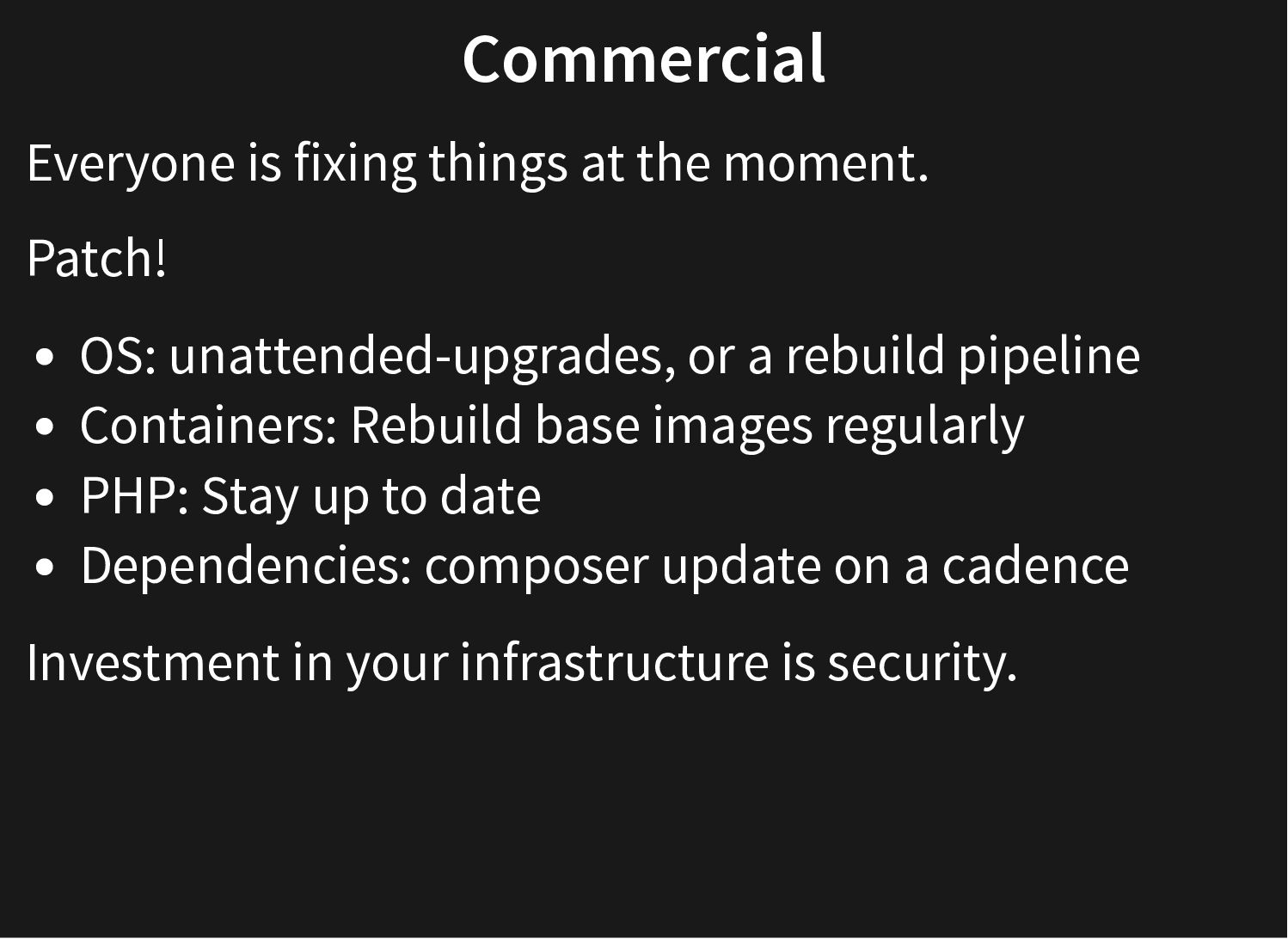
  31. Commercial Everyone is fixing things at the moment. Patch! OS:

    unattended-upgrades, or a rebuild pipeline Containers: Rebuild base images regularly PHP: Stay up to date Dependencies: composer update on a cadence Investment in your infrastructure is security.
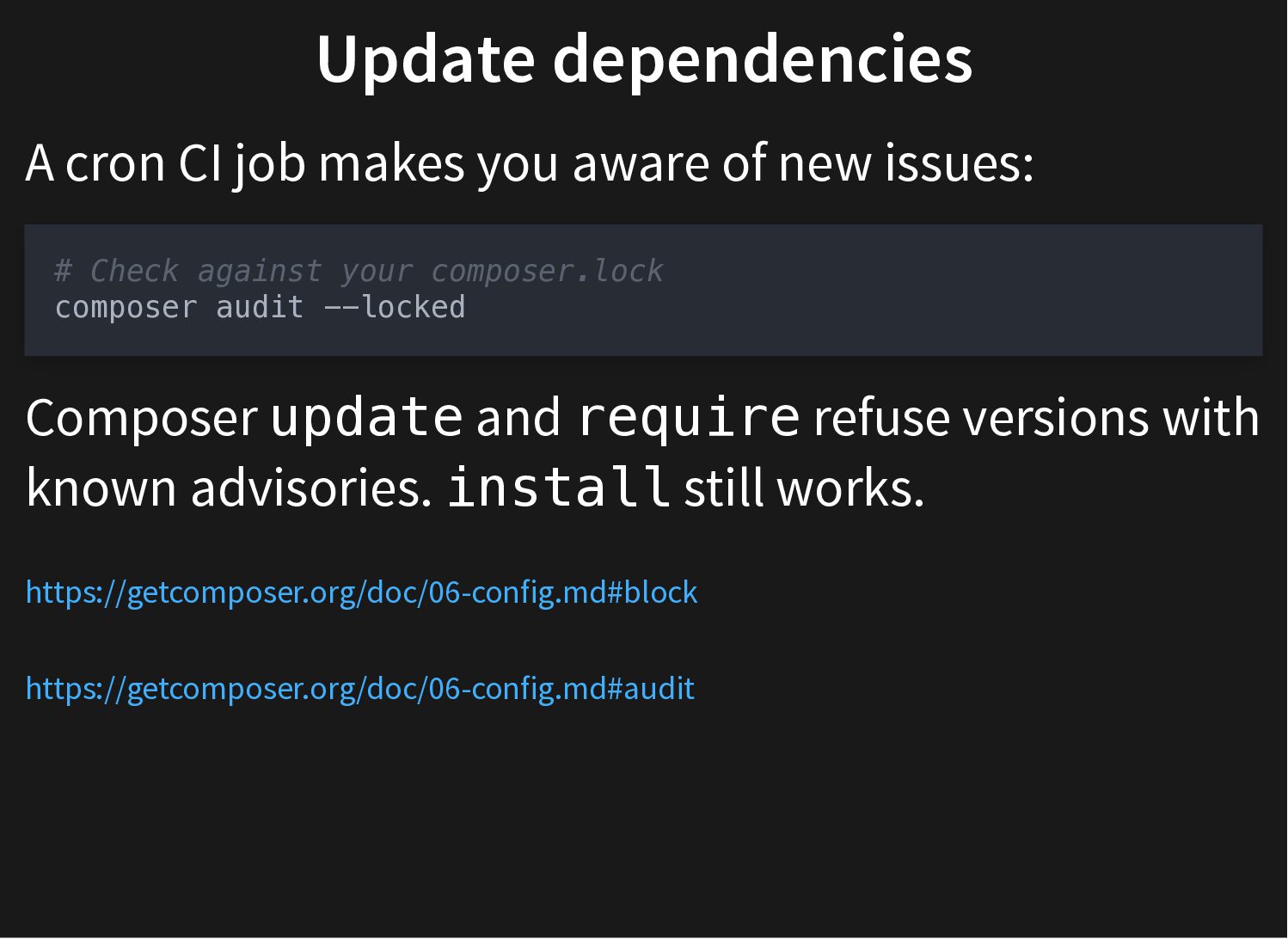
  32. Update dependencies A cron CI job makes you aware of

    new issues: # Check against your composer.lock composer audit --locked Composer update and require refuse versions with known advisories. install still works. https://getcomposer.org/doc/06-config.md#block https://getcomposer.org/doc/06-config.md#audit
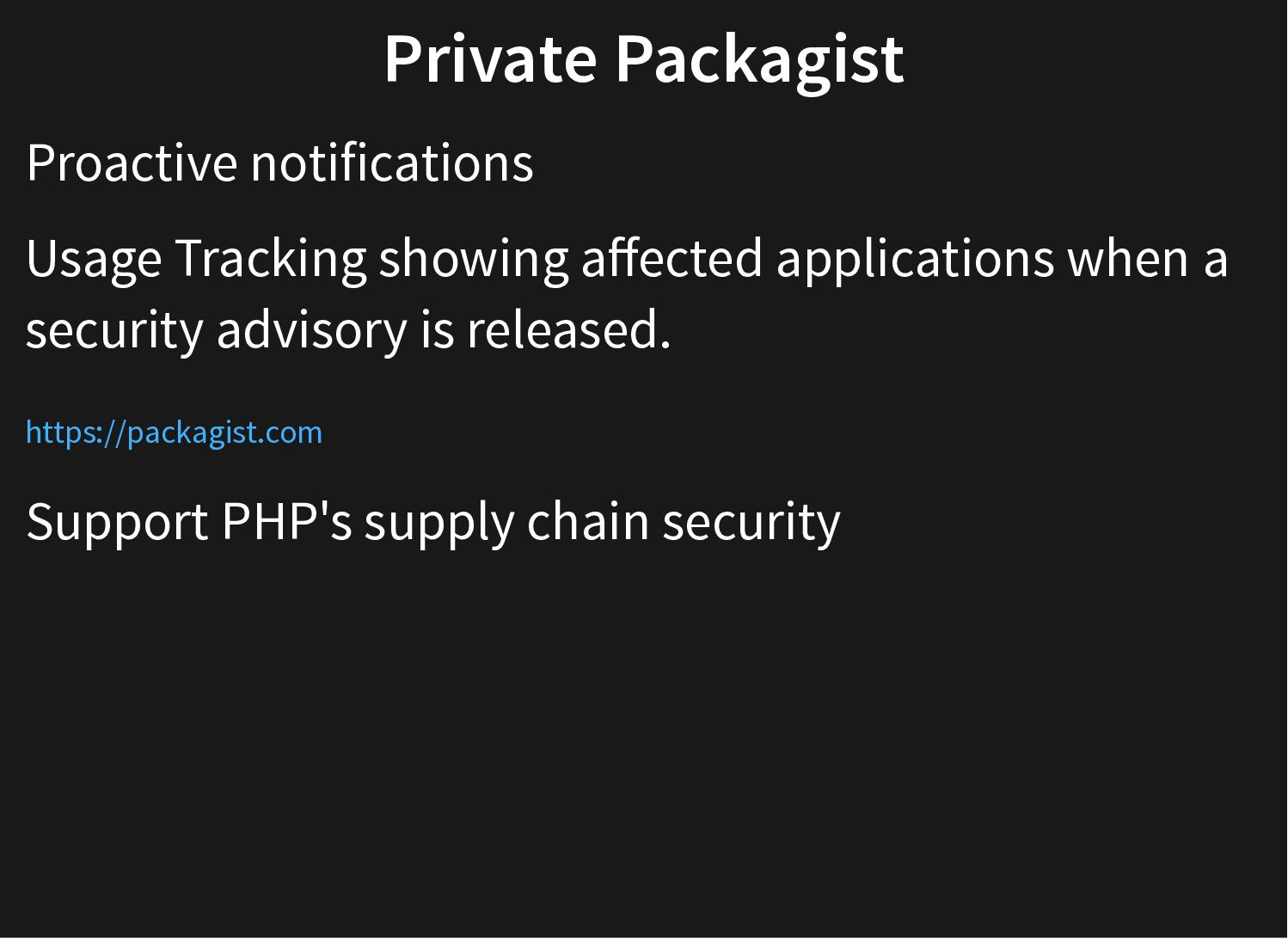
  33. Private Packagist Proactive notifications Usage Tracking showing affected applications when

    a security advisory is released. https://packagist.com Support PHP's supply chain security
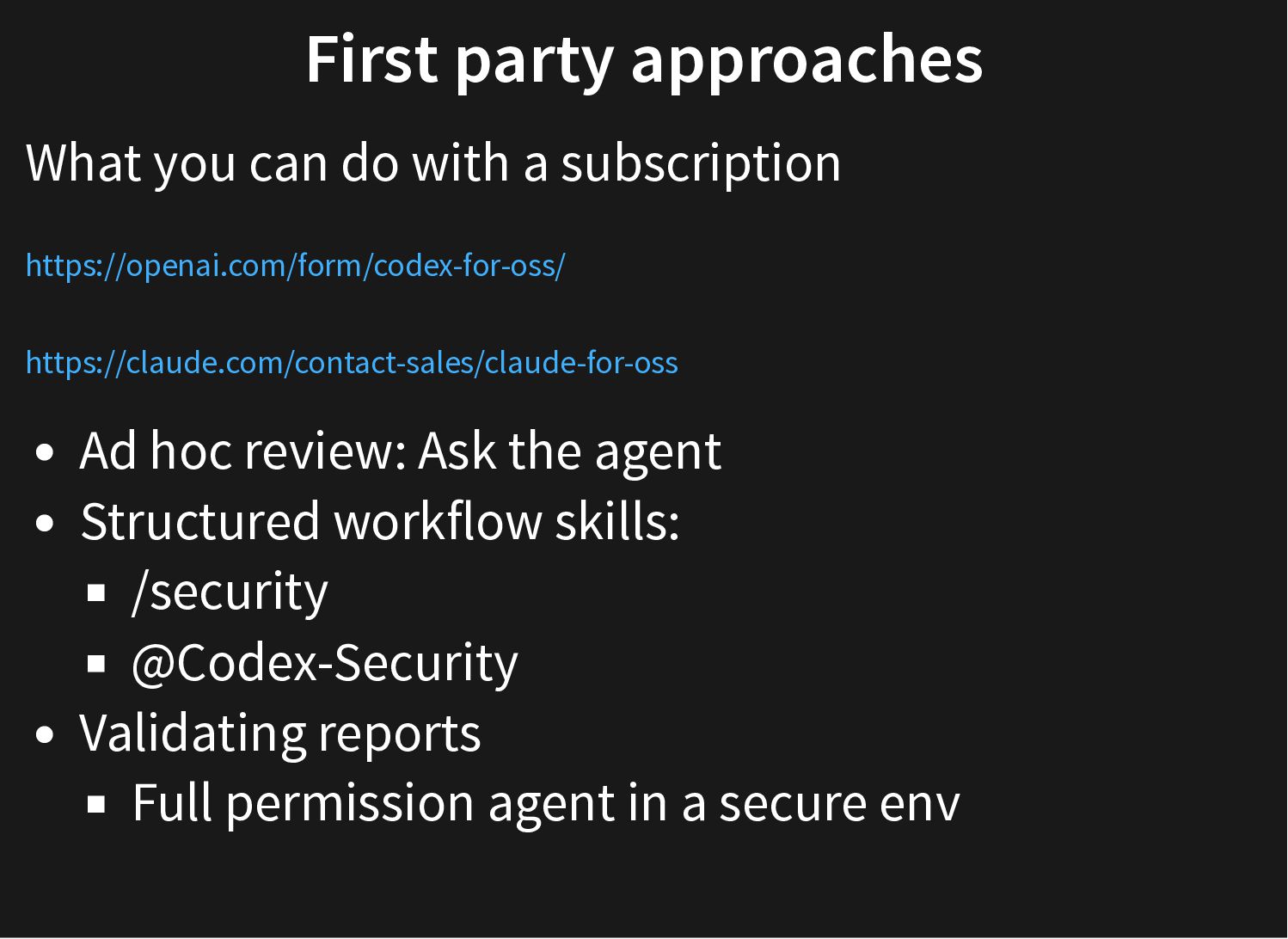
  34. First party approaches What you can do with a subscription

    https://openai.com/form/codex-for-oss/ https://claude.com/contact-sales/claude-for-oss Ad hoc review: Ask the agent Structured workflow skills: /security @Codex-Security Validating reports Full permission agent in a secure env
  35. The trouble with access Cybersecurity firms have unlocked models. The

    model AI companies sell you might just refuse to work on a security fix. Relaxed cyber safeguards: https://portal.anthropic.com/programs/cvp https://chatgpt.com/cyber Open-weight models as an alternative?
  36. Scrutineer A local tool for structured scanning Pluggable agent backends

    (Codex, Claude, OpenCode Uses your container infrastructure (Docker/Podman) Local web UI Workflow automation Custom SKILL support https://github.com/alpha-omega-security/scrutineer/
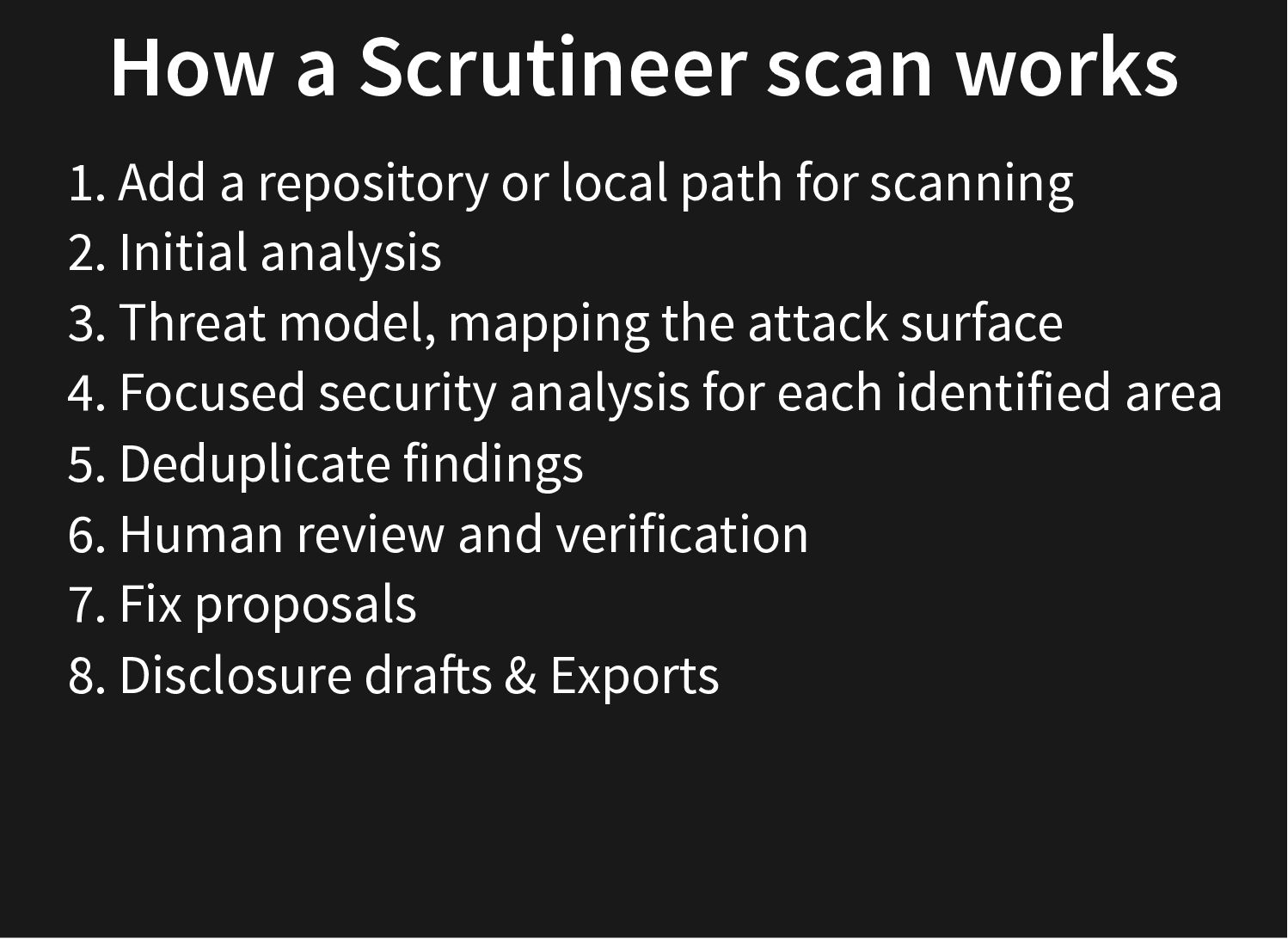
  37. How a Scrutineer scan works 1. Add a repository or

    local path for scanning 2. Initial analysis 3. Threat model, mapping the attack surface 4. Focused security analysis for each identified area 5. Deduplicate findings 6. Human review and verification 7. Fix proposals 8. Disclosure drafts & Exports
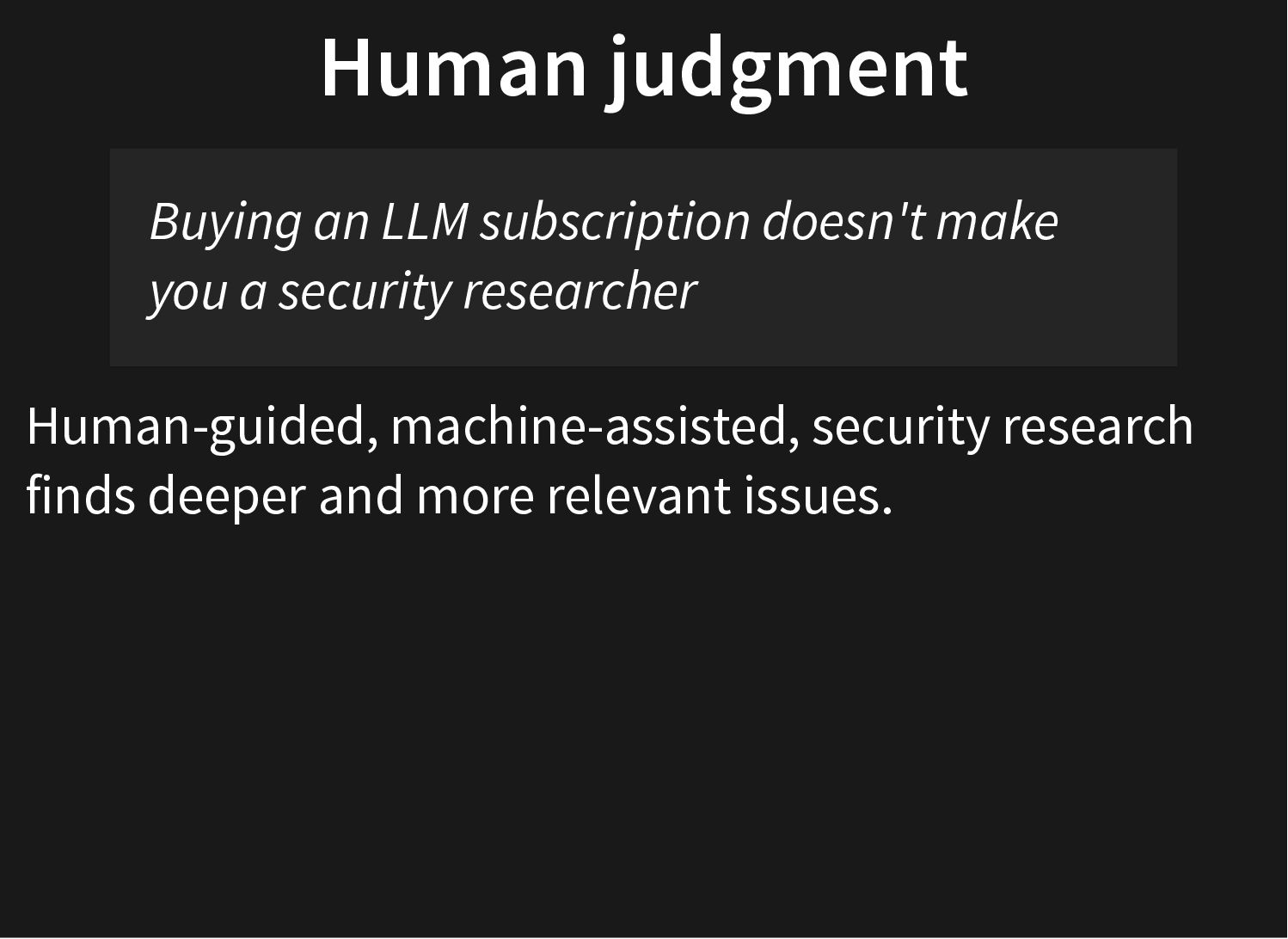
  38. Human judgment Buying an LLM subscription doesn't make you a

    security researcher Human-guided, machine-assisted, security research finds deeper and more relevant issues.
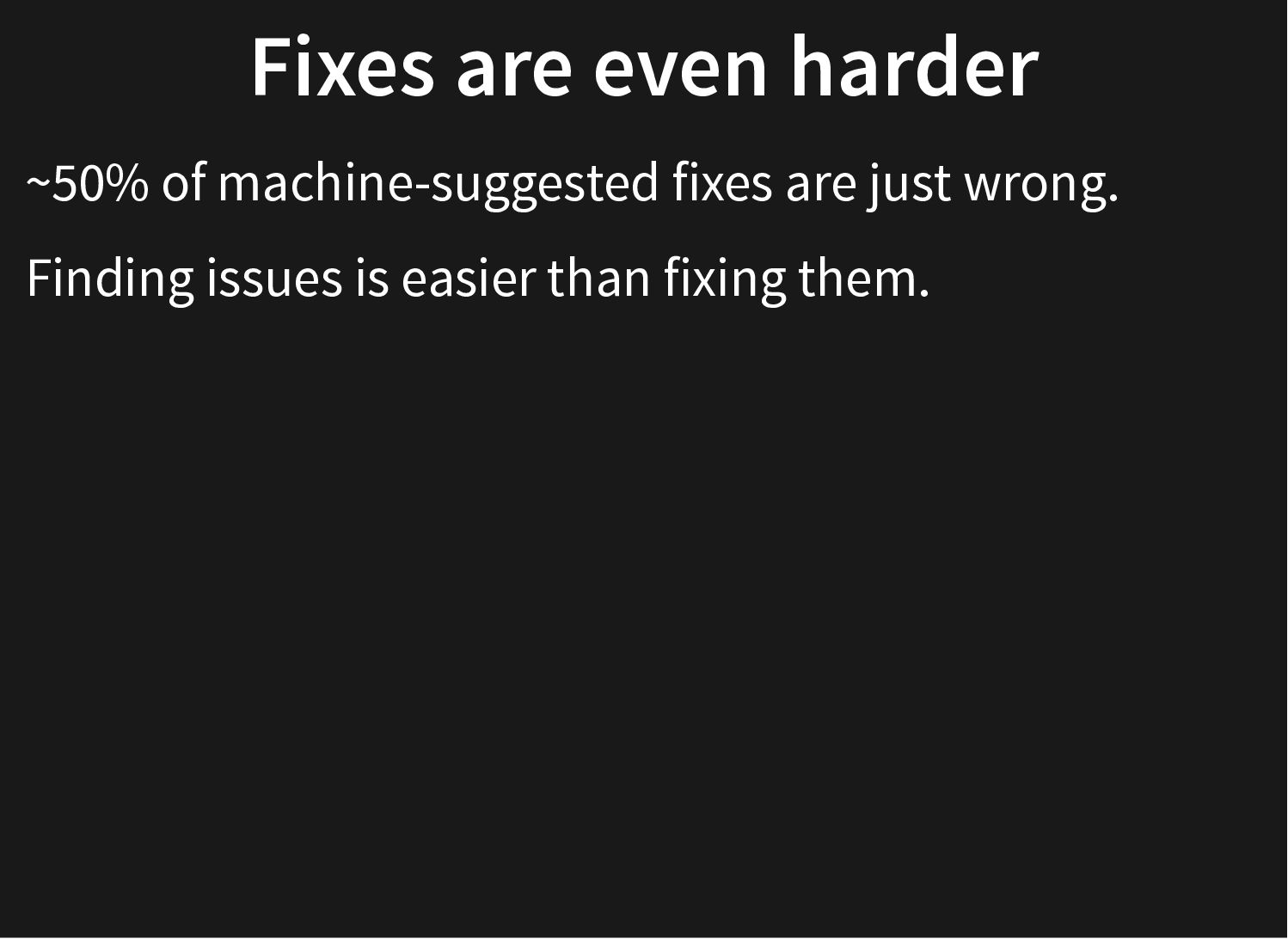
  39. Fixes are even harder ~50% of machine-suggested fixes are just

    wrong. Finding issues is easier than fixing them.
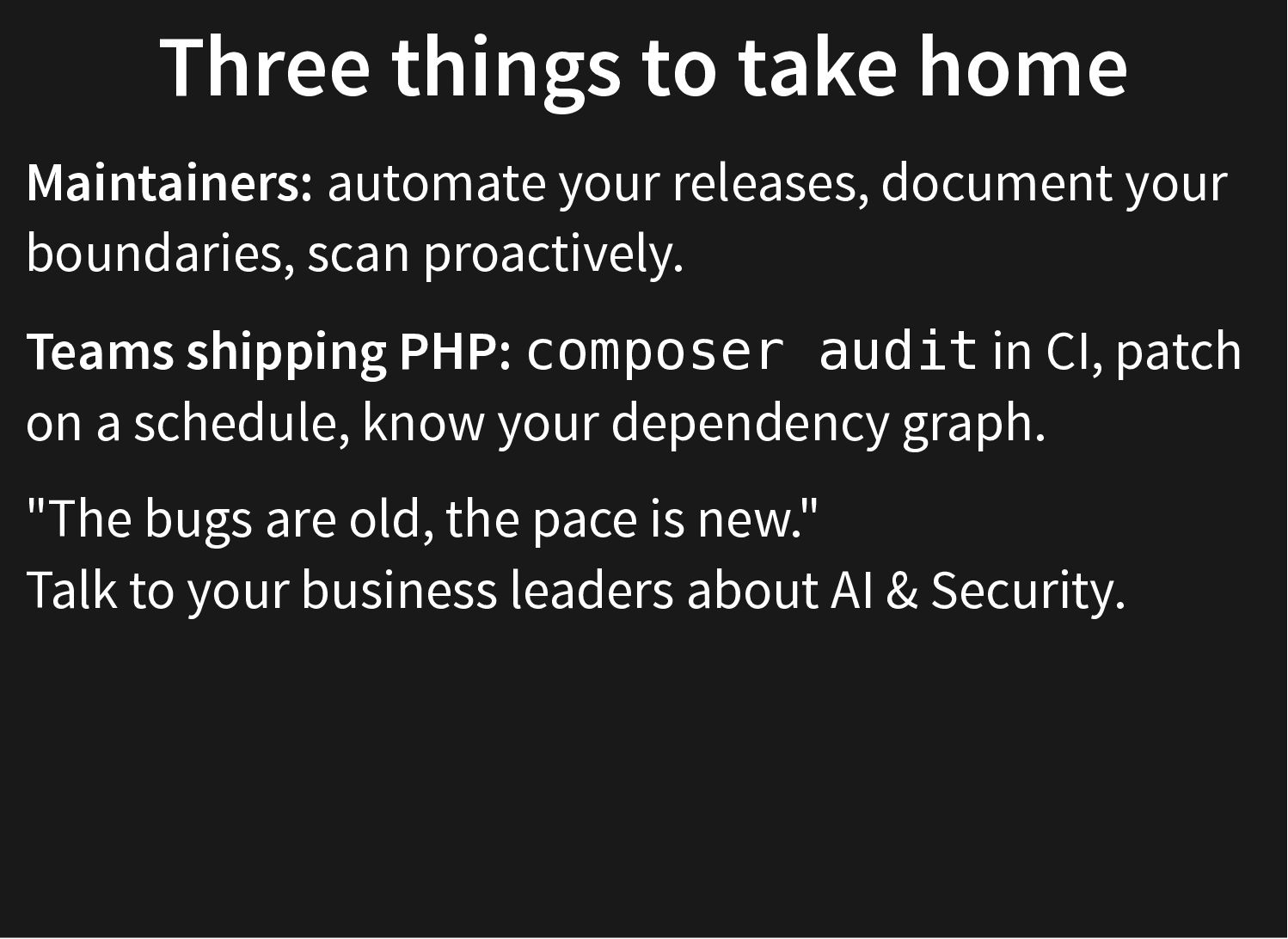
  40. Three things to take home Maintainers: automate your releases, document

    your boundaries, scan proactively. Teams shipping PHP: composer audit in CI, patch on a schedule, know your dependency graph. "The bugs are old, the pace is new." Talk to your business leaders about AI & Security.
  41. Things might be less fun right now This too shall

    pass. In a few years it might look like nothing much happened. Thanks to you.
  42. Thank you! Slides: https://speakerdeck.com/edorian Anything I can help with? Talk

    to me today! Or reach out later: [email protected] Discord: #ecosystem-security @ phpc Invite: https://discord.com/invite/RYajXKxuuK