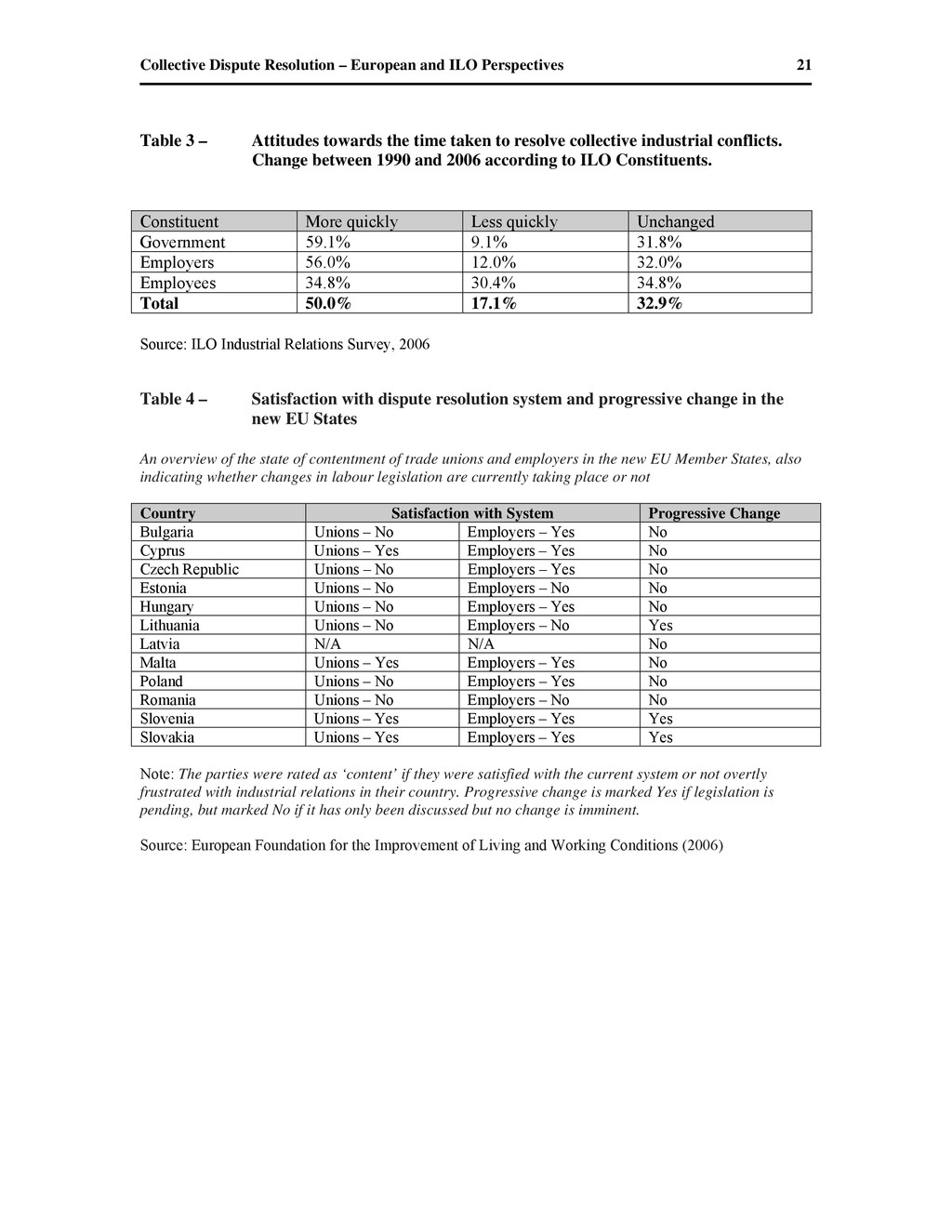
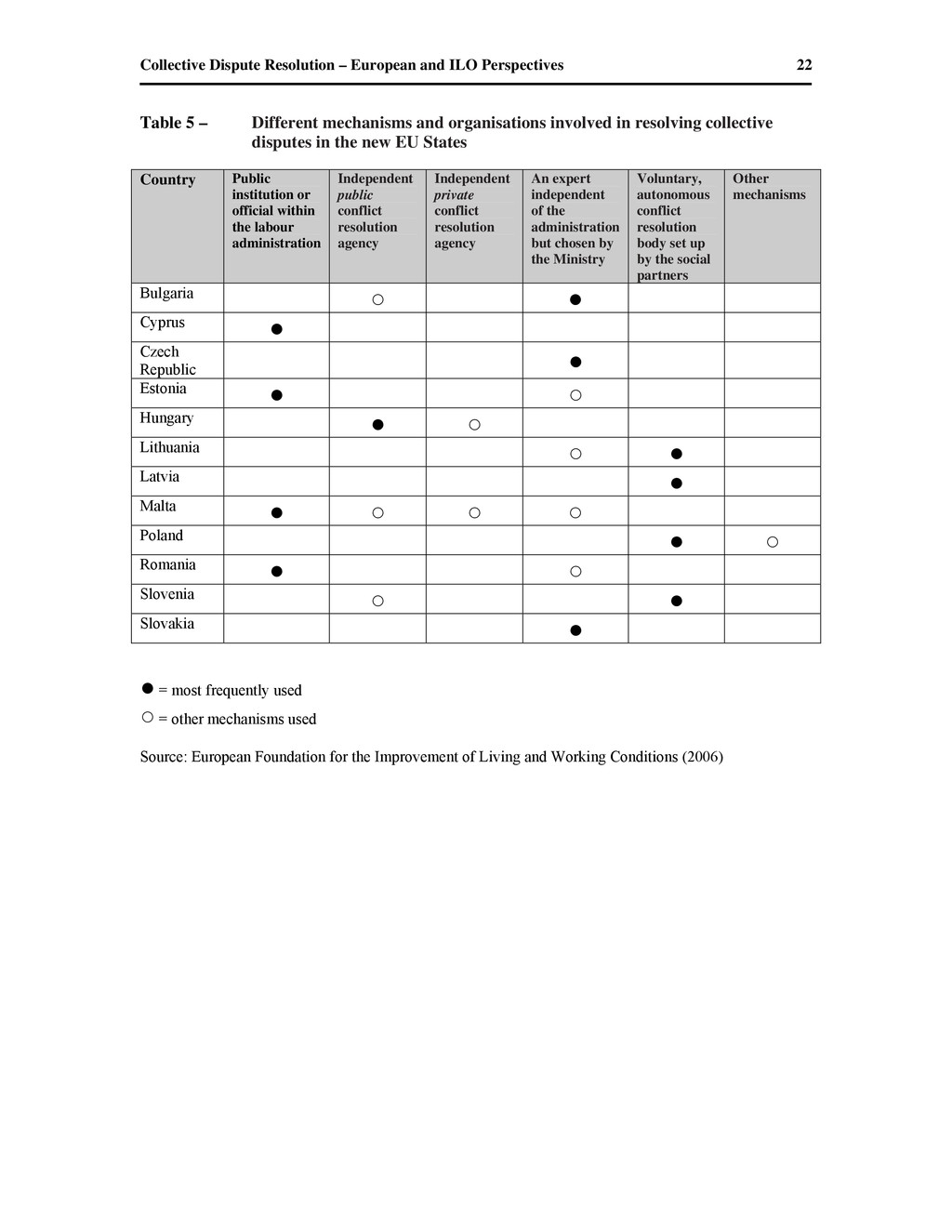
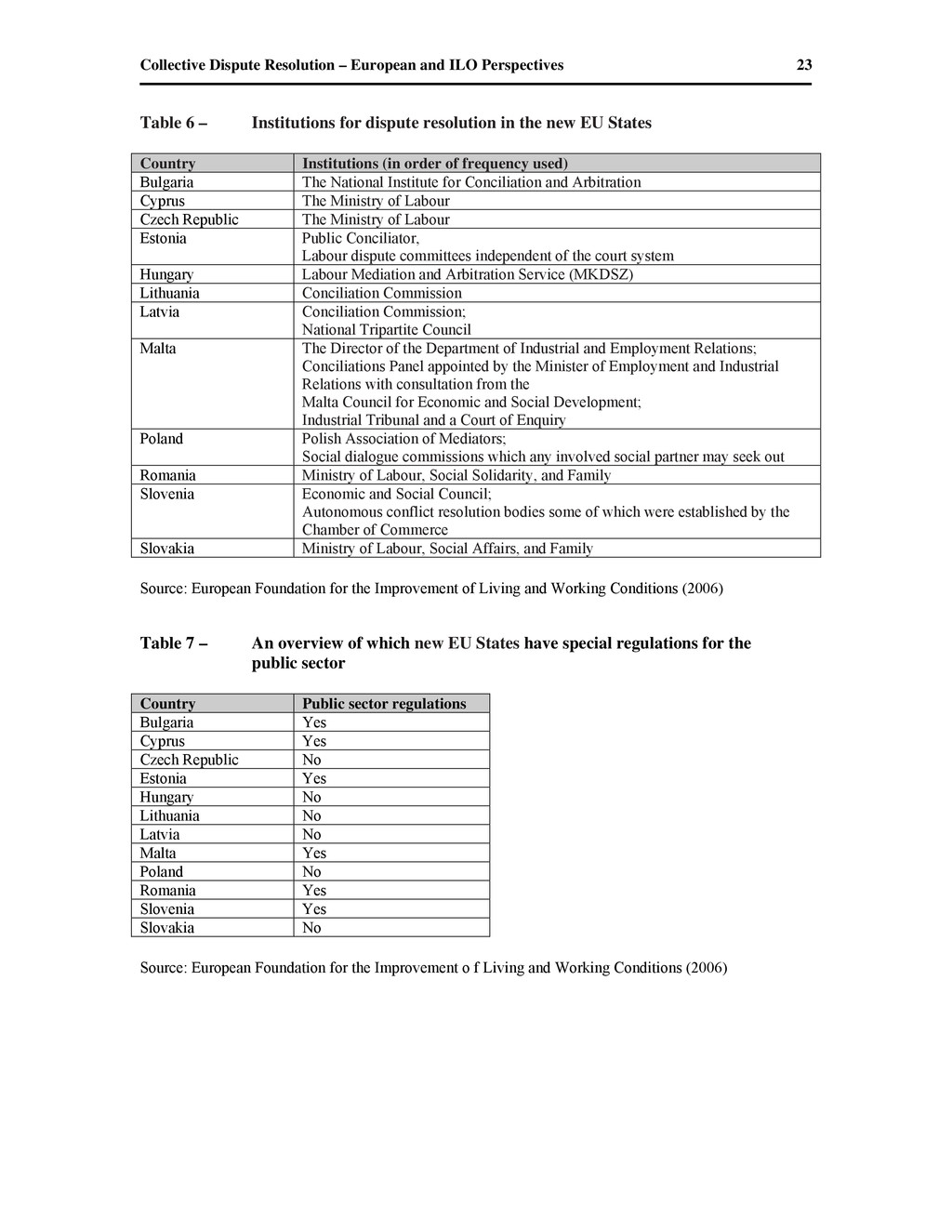
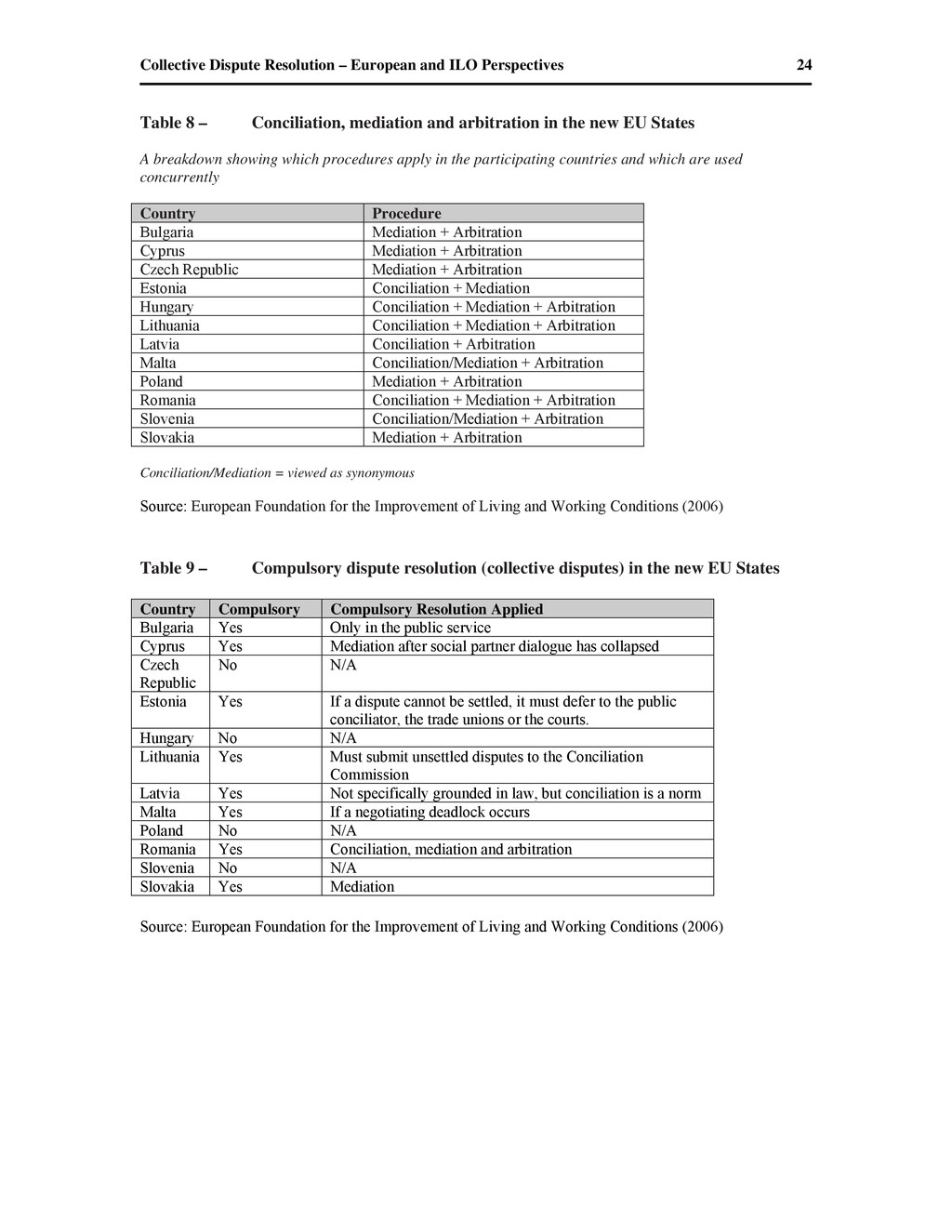
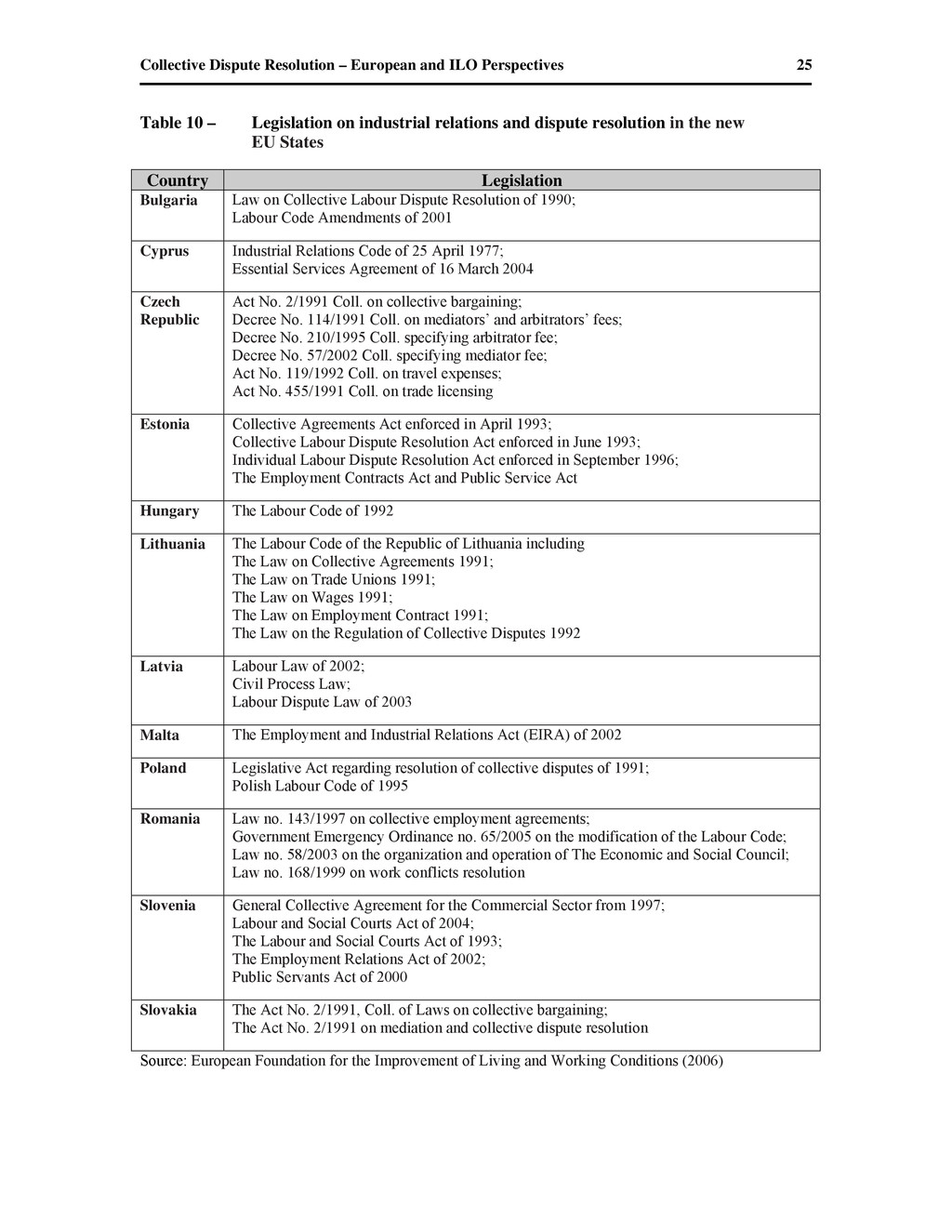
Public institution/official within the labour administration23 ii. Independent public conflict resolution agency24 iii. Independent private conflict resolution agency25 iv. Person independent of the labour administration26 v. Voluntary, autonomous conflict resolution bodies set up by the social partners27 Within Europe, it has been noted that there is a marked difference between dispute resolution frameworks of the EU 15 countries and those countries that joined the EU after 2004. Not surprisingly, according to the 2006 EIRO survey, the EU 15 countries were found to have more regulations and organisations dealing with conflict resolution than the new Member States who generally speaking are at the early stages of designing and implementing their own dispute resolution models.28 Case Study 3: Collective Dispute Resolution The US Federal Mediation and Conciliation Service (FMCS) Northrup Grumman Ship Systems and Pascagoula Metal Trades Department, IBEW, IAM, and OPEIU Northrop Grumman is a $15 billion, global aerospace and defense company with 800,000 employees and operations in 25 countries. Northrop Grumman Ship Systems (NGSS) is a division of Northrop Grumman, employing 17,000 shipbuilding professionals, 10,000 of which are represented by 13 different labour unions whose collective agreements were set to expire in late February 2003. Before the arrival of this deadline, attempts were made to reach agreement efficiently and avoid a work stoppage. Negotiations were handled by a single mediator and the parties started negotiating in November of 2002, meeting a total of 78 times. Over the course of these meetings, the parties addressed a number of complicated issues including health care premiums, drug costs and plan designs, wages, holidays, contract language, and contract duration. On February 24, 2003, tentative agreements were reached with the Metal Trades Council (9 of the unions involved), and, soon thereafter, agreements were reached with the remaining unions. However, ratification votes failed in every unit, and all the unions had strike-vote authorization. 23 This system can be found in Belgium, Finland, Denmark, Estonia, Cyprus and Malta. 24 While such an institution is beyond direct government control, it is usually staffed and financed by the public authorities. These agencies are found for example in the United Kingdom, Ireland and Sweden and Hungary. 25 In Europe, only Spain has such a mechanism. 26 Such a system is used in the Czech Republic and Slovakia and is not widespread among European Member States. 27 Consider Germany, Latvia, Lithuania, Poland and Slovenia. 28 EIRO Report, op. cit. note 17, p. 18. The same report suggests that the new EU Member States need to focus on implementing public sector regulations and, overall, on making their dispute resolution systems more effective.


 edvz
 inesmontani
 lindahogenes
 techseoconnect
 stephenakadiri
 sarafernandez
 sstephenson
 reverentgeek
 palkan
 garrettdimon
 baasie
 keavy
 kimpetersen