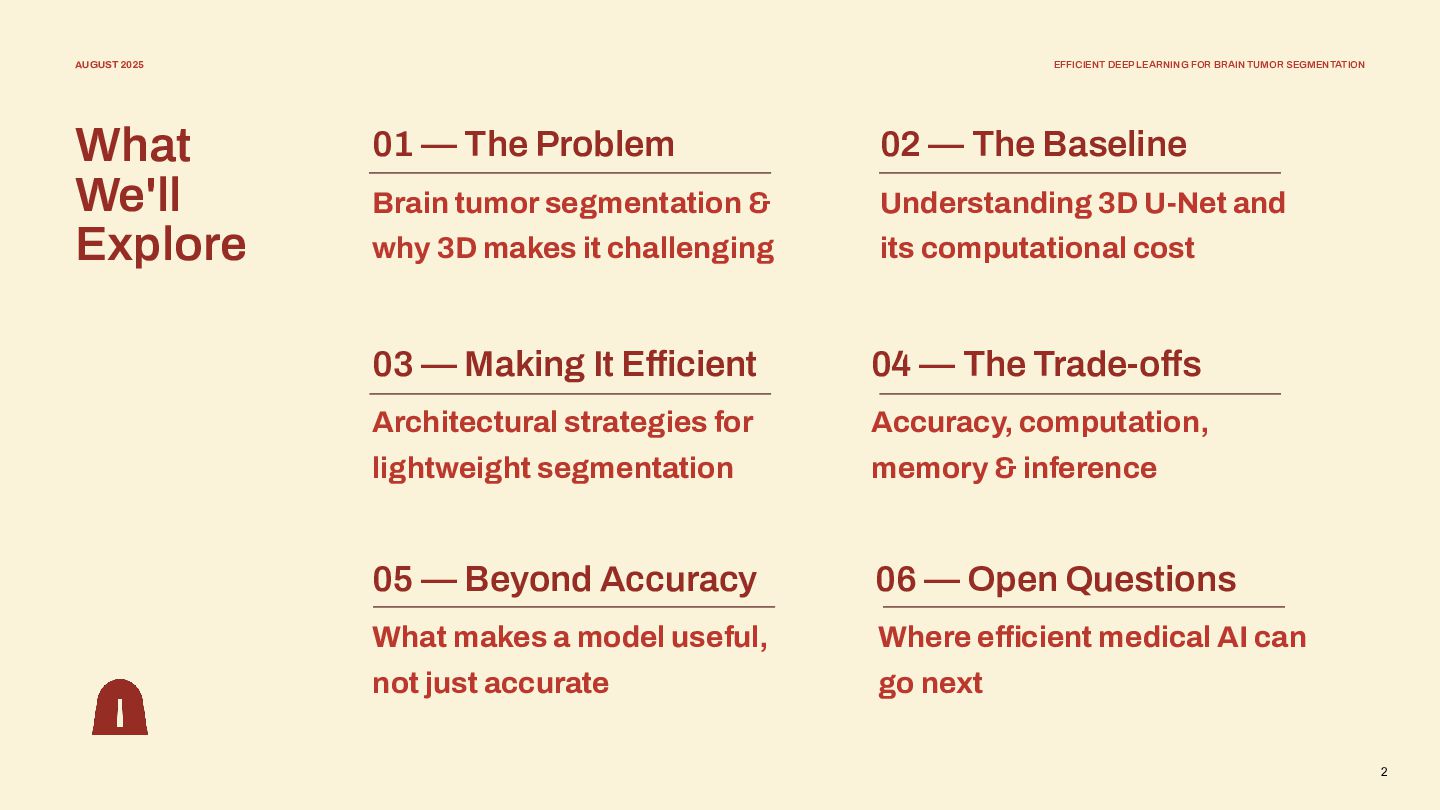
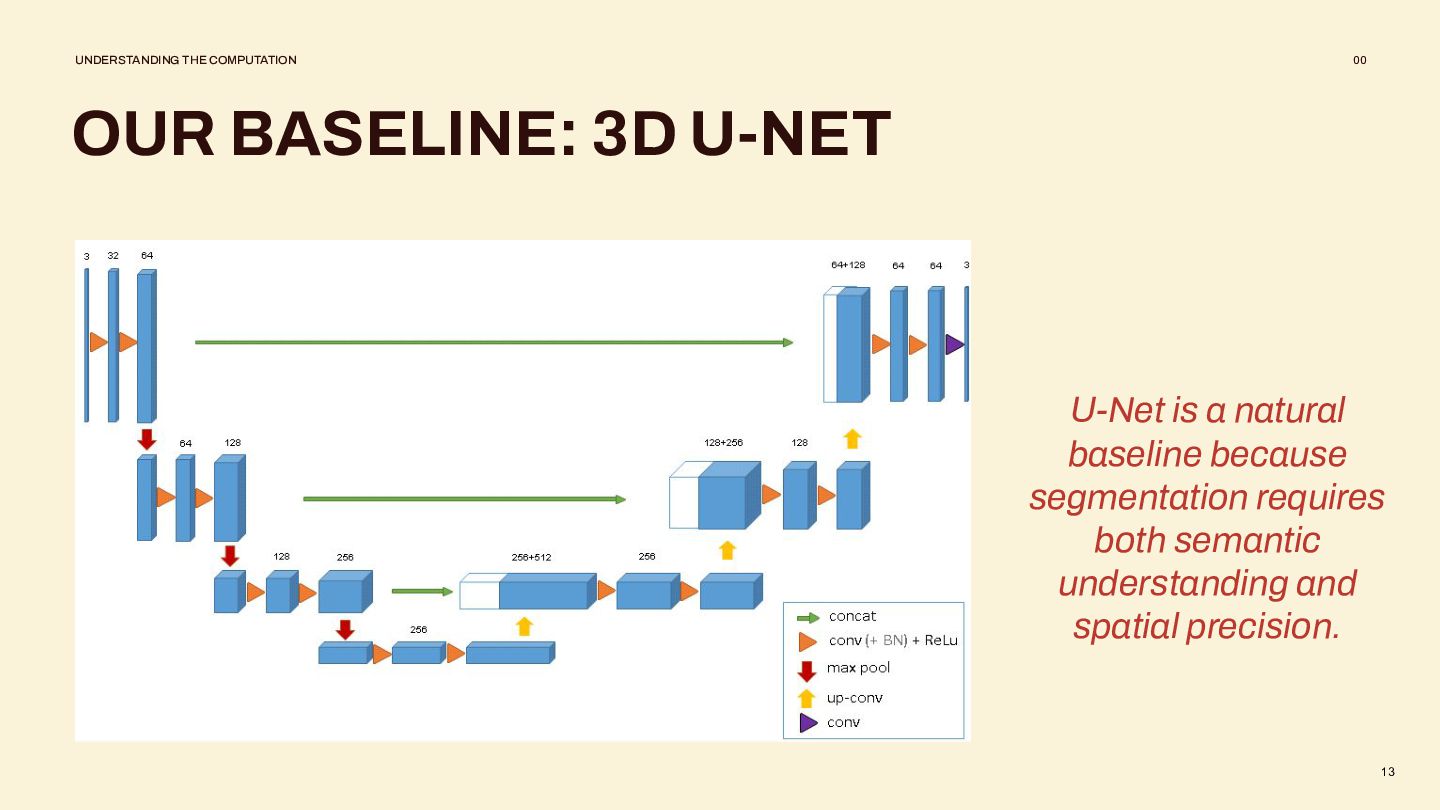
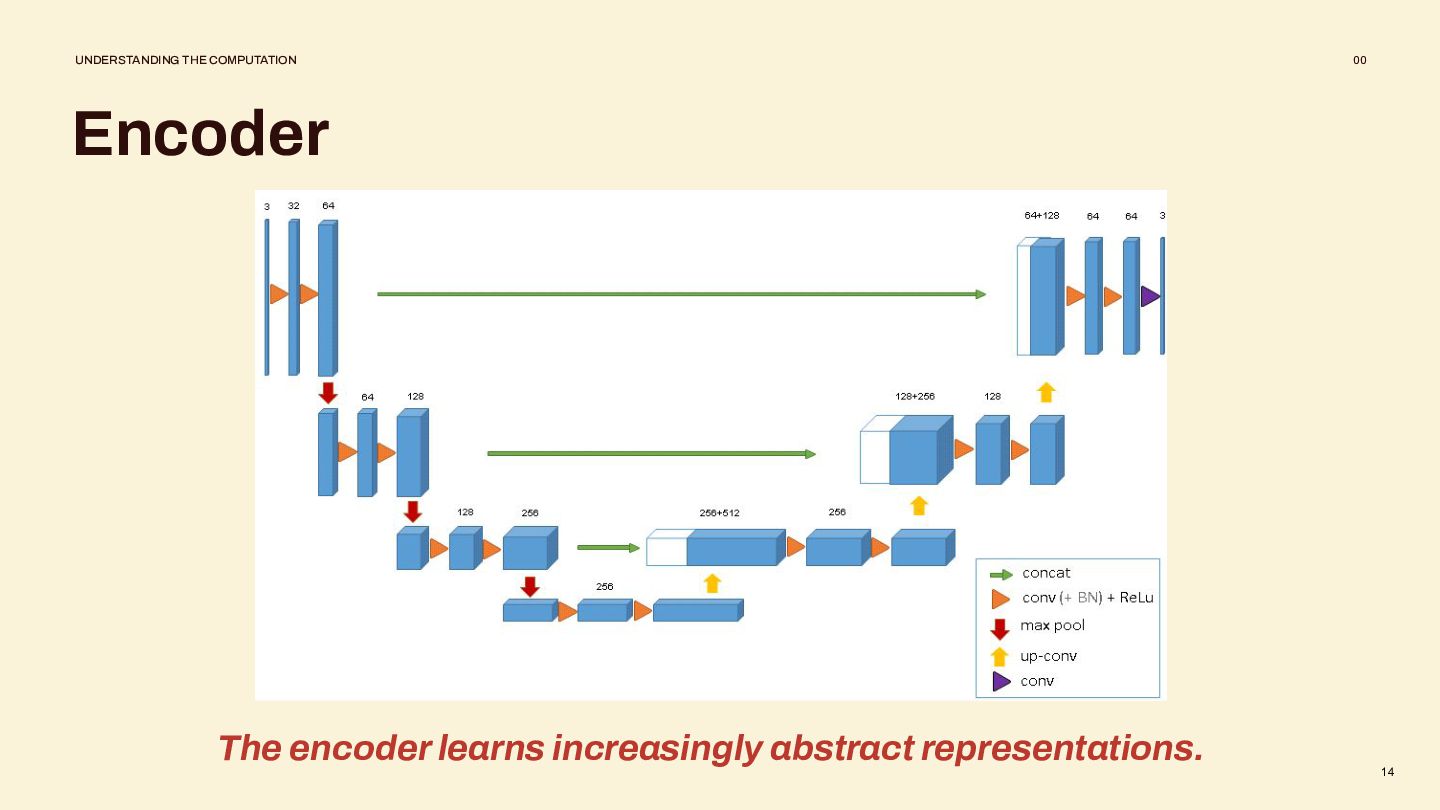
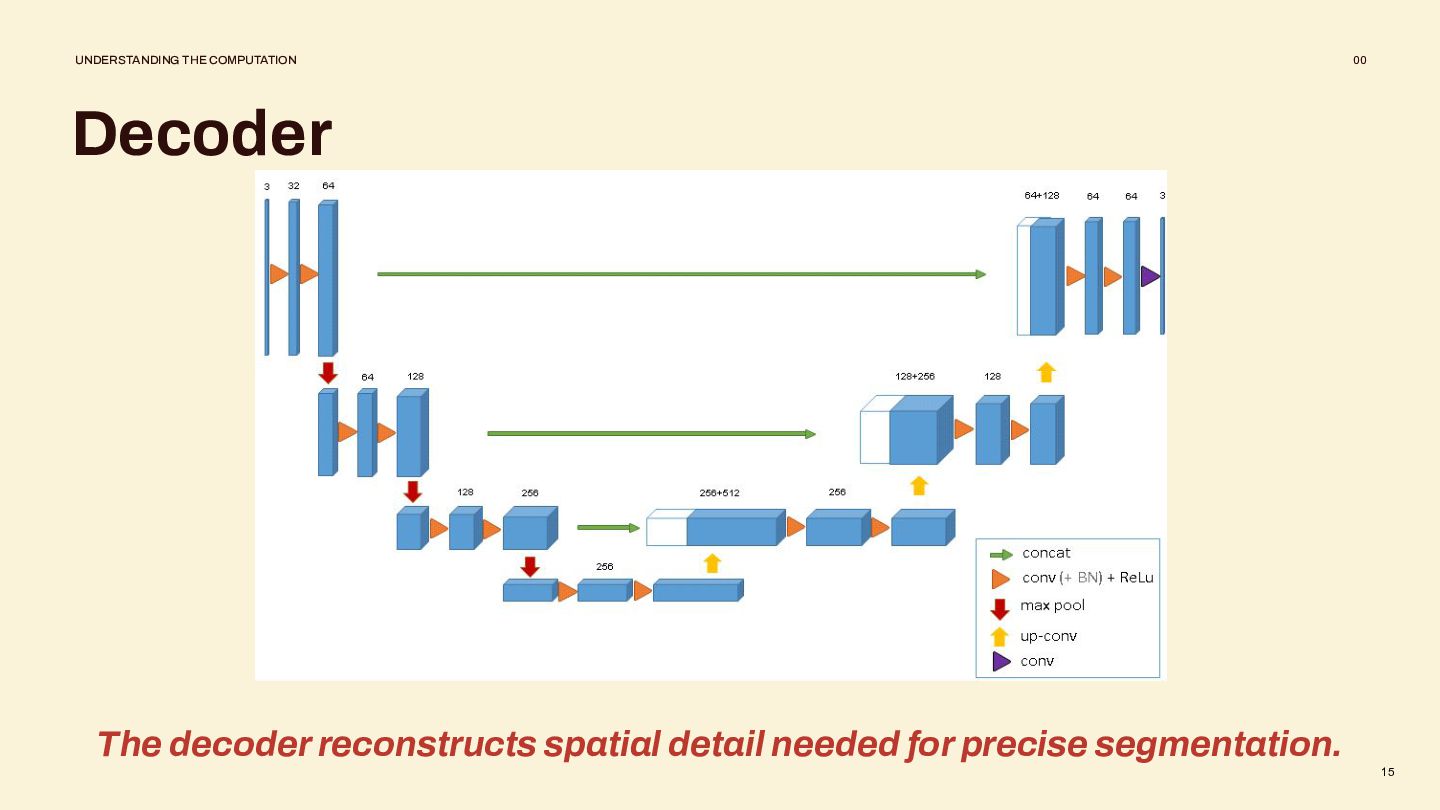
TUMOR SEGMENTATION 01 — The Problem 02 — The Baseline Brain tumor segmentation & Understanding 3D U-Net and why 3D makes it challenging its computational cost 03 — Making It Efficient 04 — The Trade-offs Architectural strategies for Accuracy, computation, lightweight segmentation memory & inference 05 — Beyond Accuracy 06 — Open Questions What makes a model useful, Where efficient medical AI can not just accurate go next 2
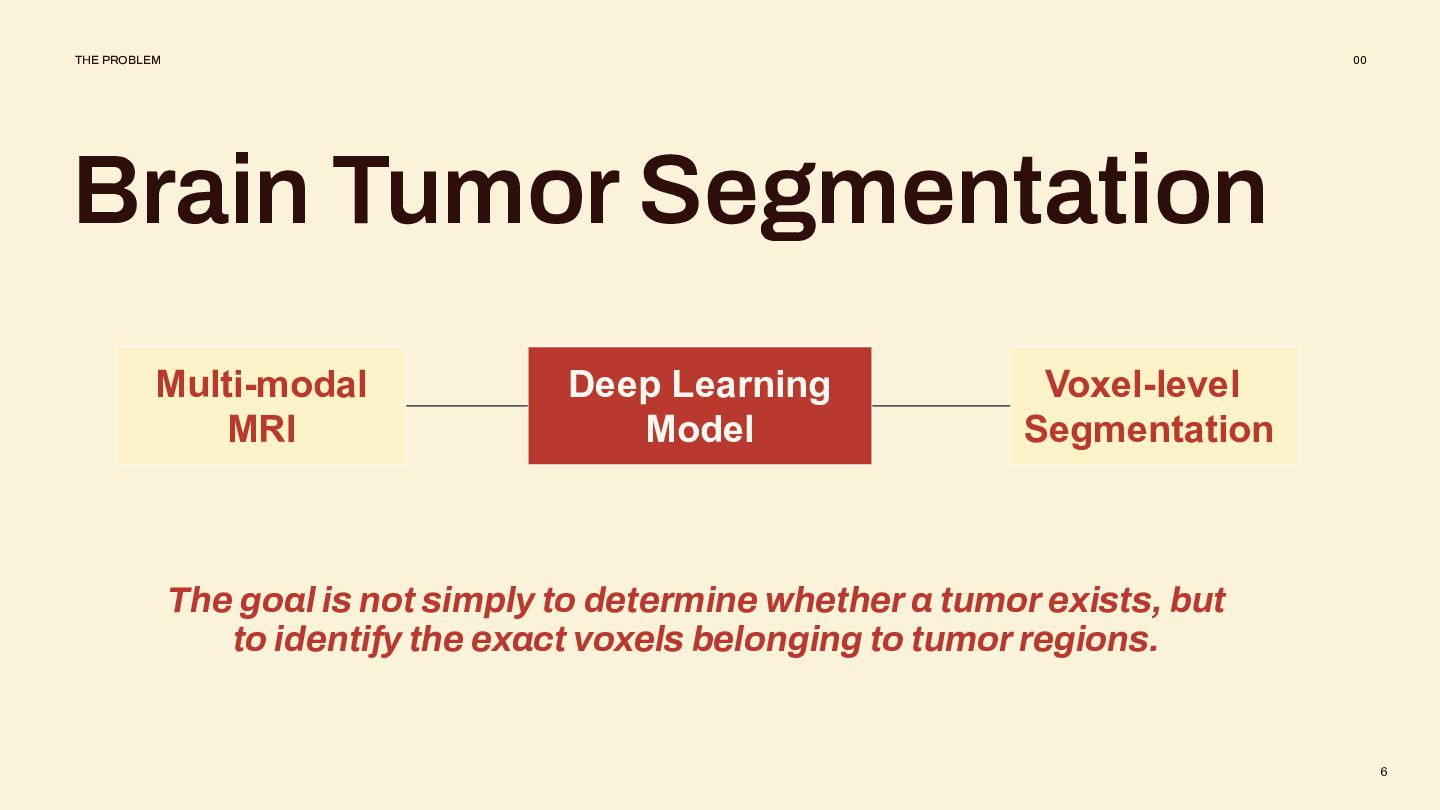
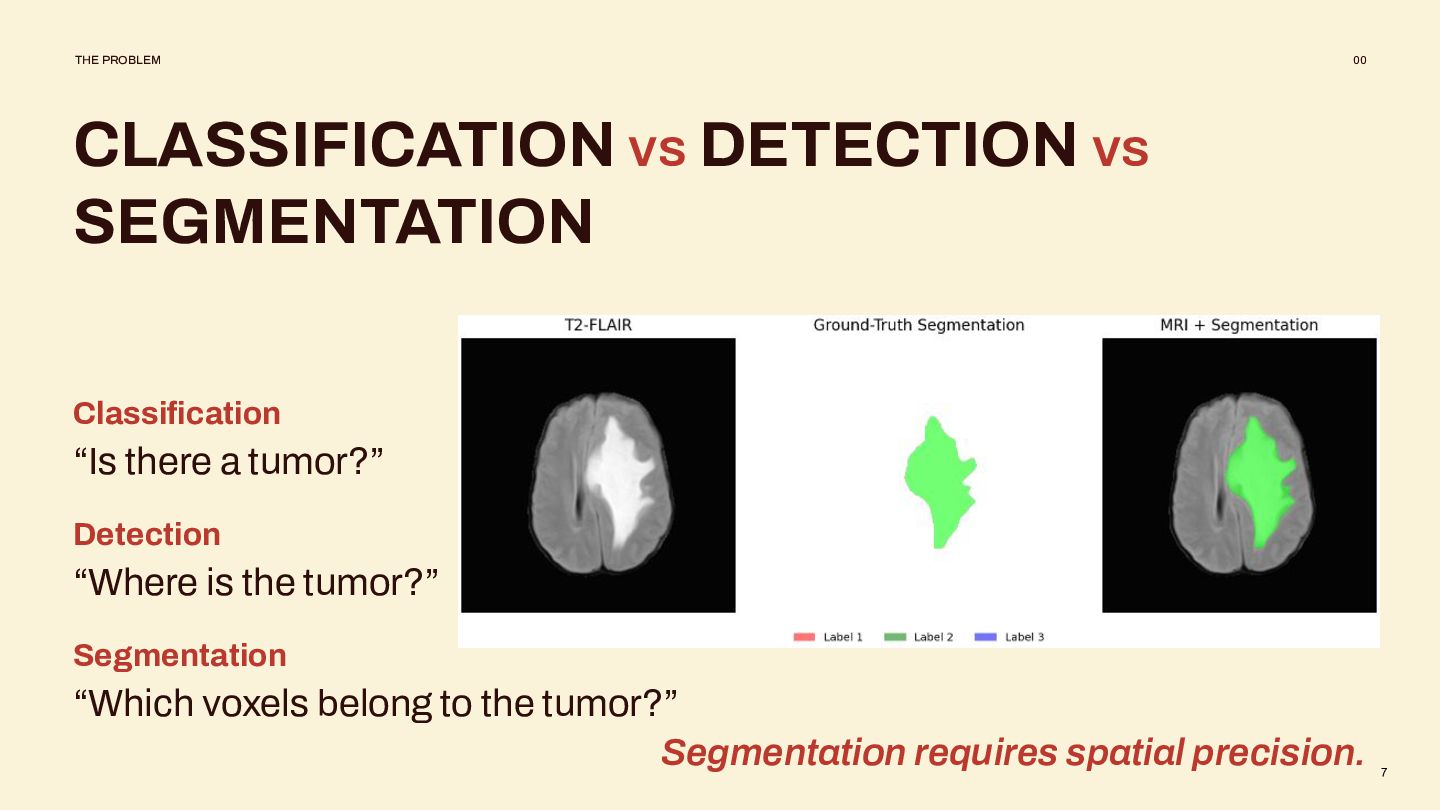
Model Voxel-level Segmentation The goal is not simply to determine whether a tumor exists, but to identify the exact voxels belonging to tumor regions. 6
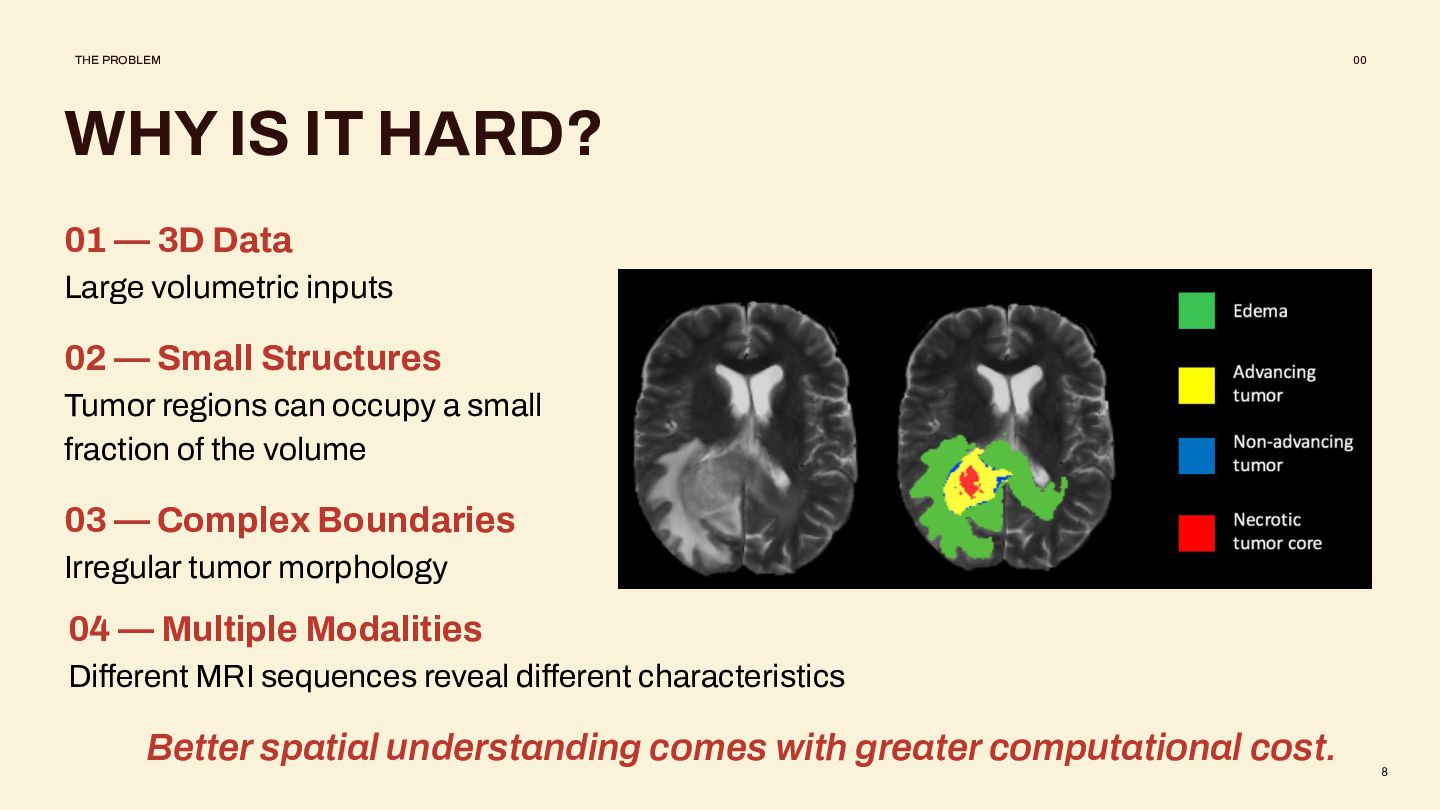
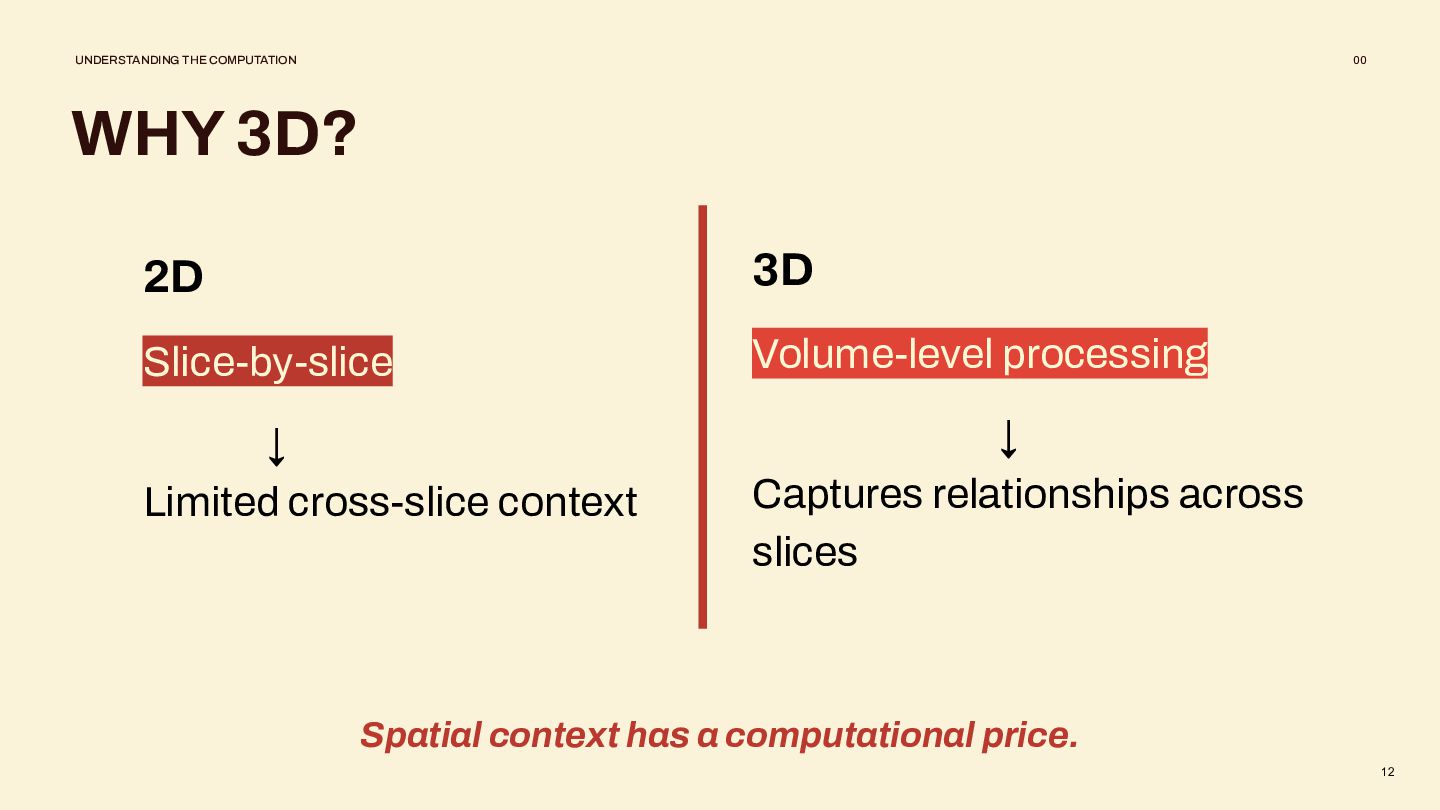
Data Large volumetric inputs 02 — Small Structures Tumor regions can occupy a small fraction of the volume 03 — Complex Boundaries Irregular tumor morphology 04 — Multiple Modalities Different MRI sequences reveal different characteristics Better spatial understanding comes with greater computational cost. 8
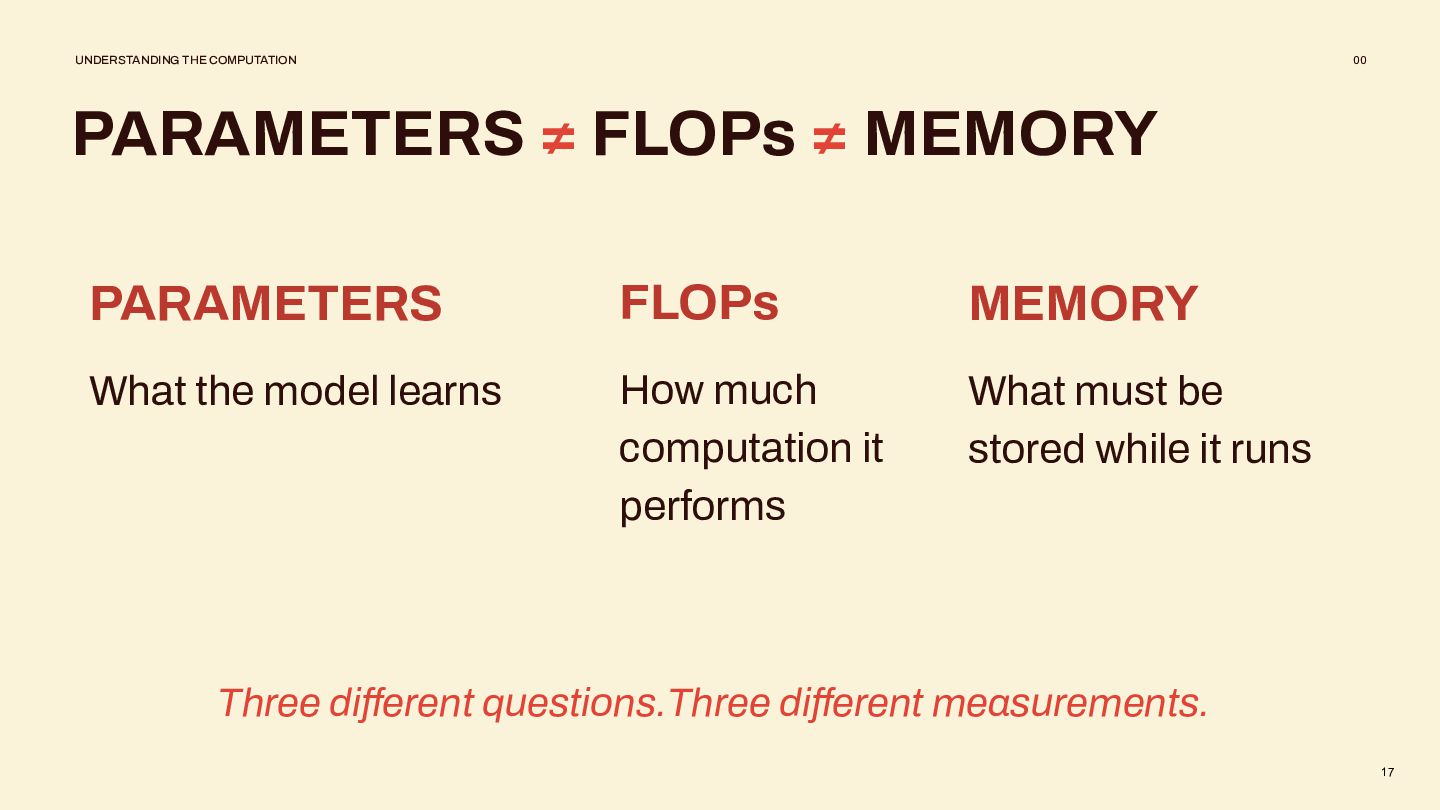
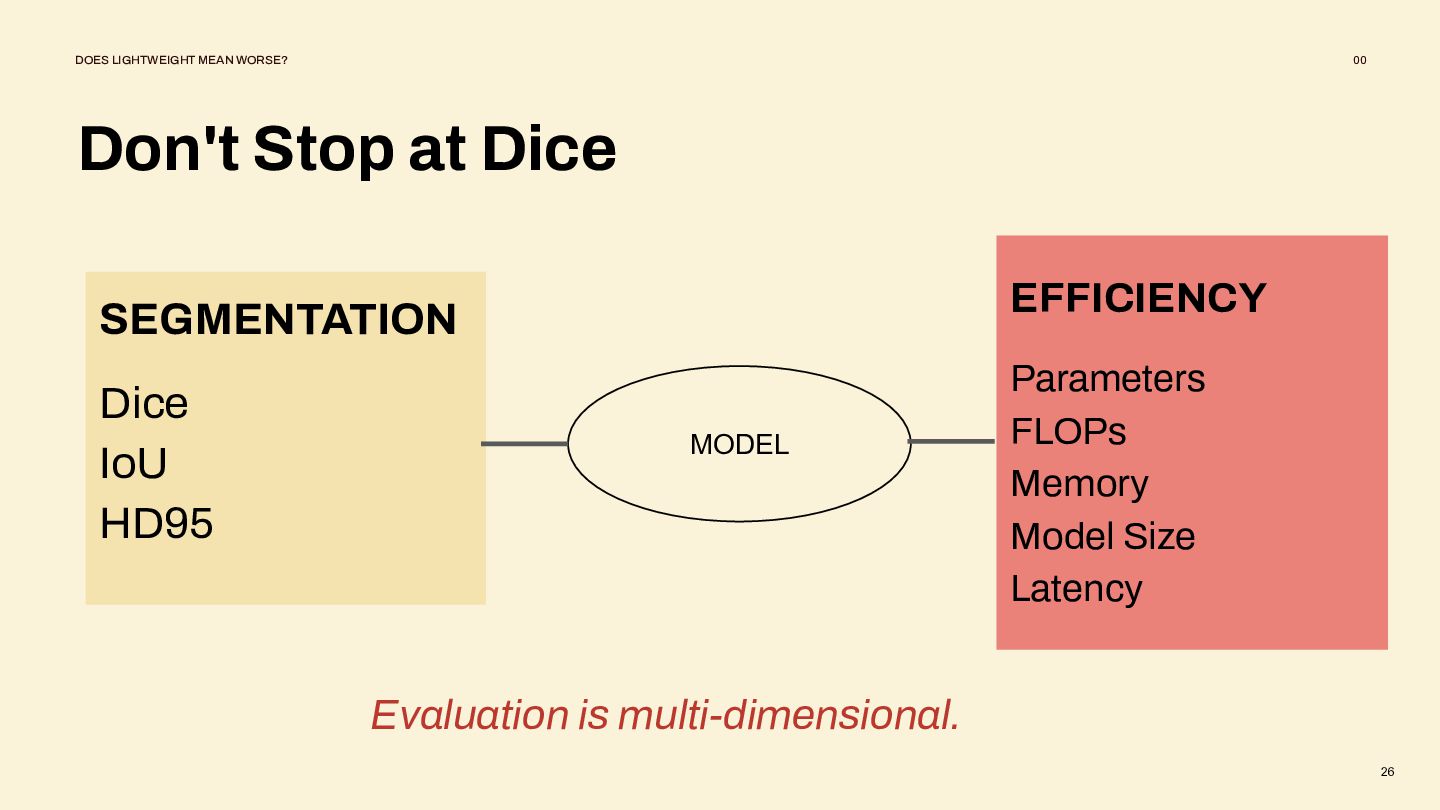
FLOPs MEMORY What the model learns How much computation it performs What must be stored while it runs Three different questions.Three different measurements. 17
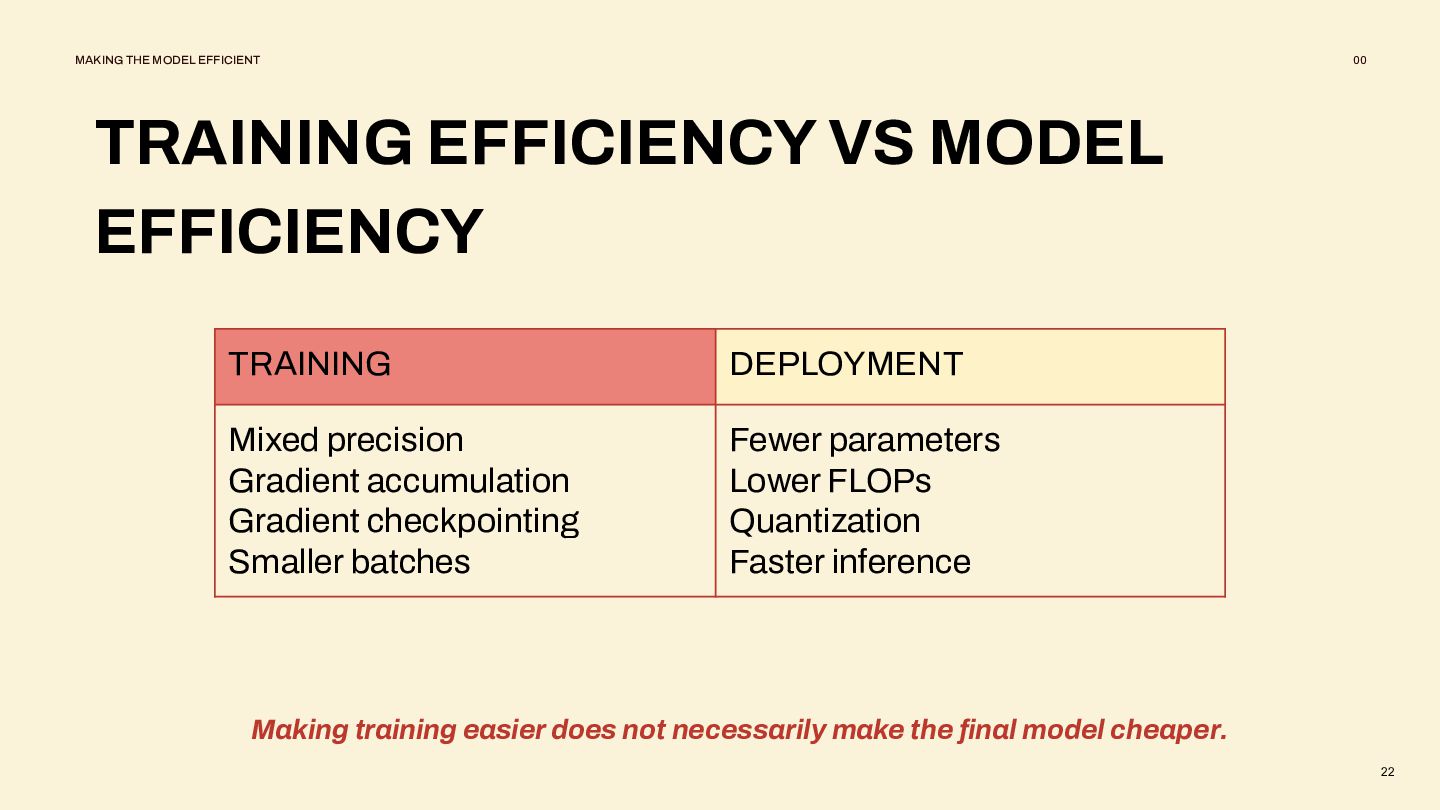
TRAINING DEPLOYMENT Mixed precision Gradient accumulation Gradient checkpointing Smaller batches Fewer parameters Lower FLOPs Quantization Faster inference Making training easier does not necessarily make the final model cheaper. 22
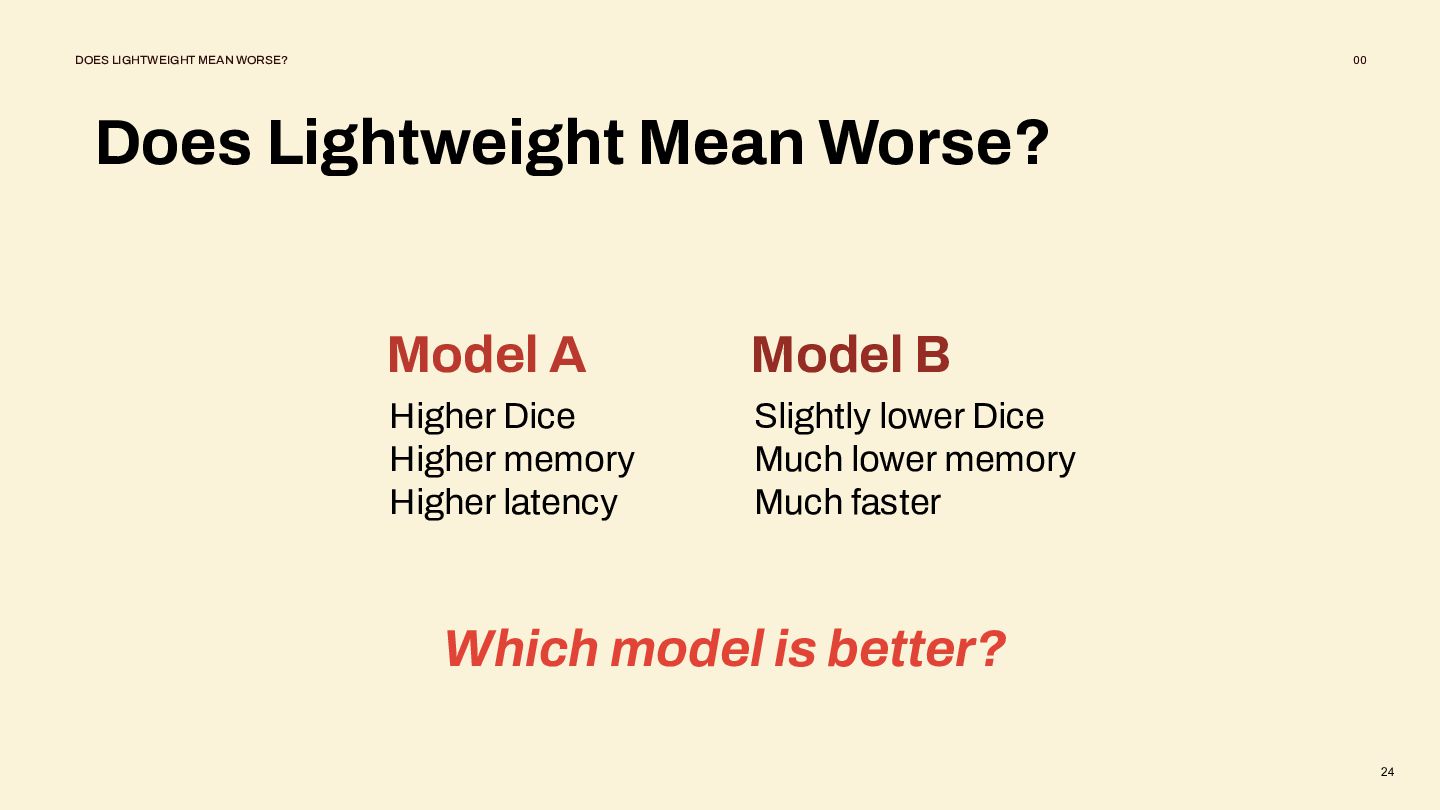
practical question is how wrong do they have to be to not be useful.” — George E. P. Box Does a 2% performance drop matter if computation falls dramatically? Machine Learning Lagos 27
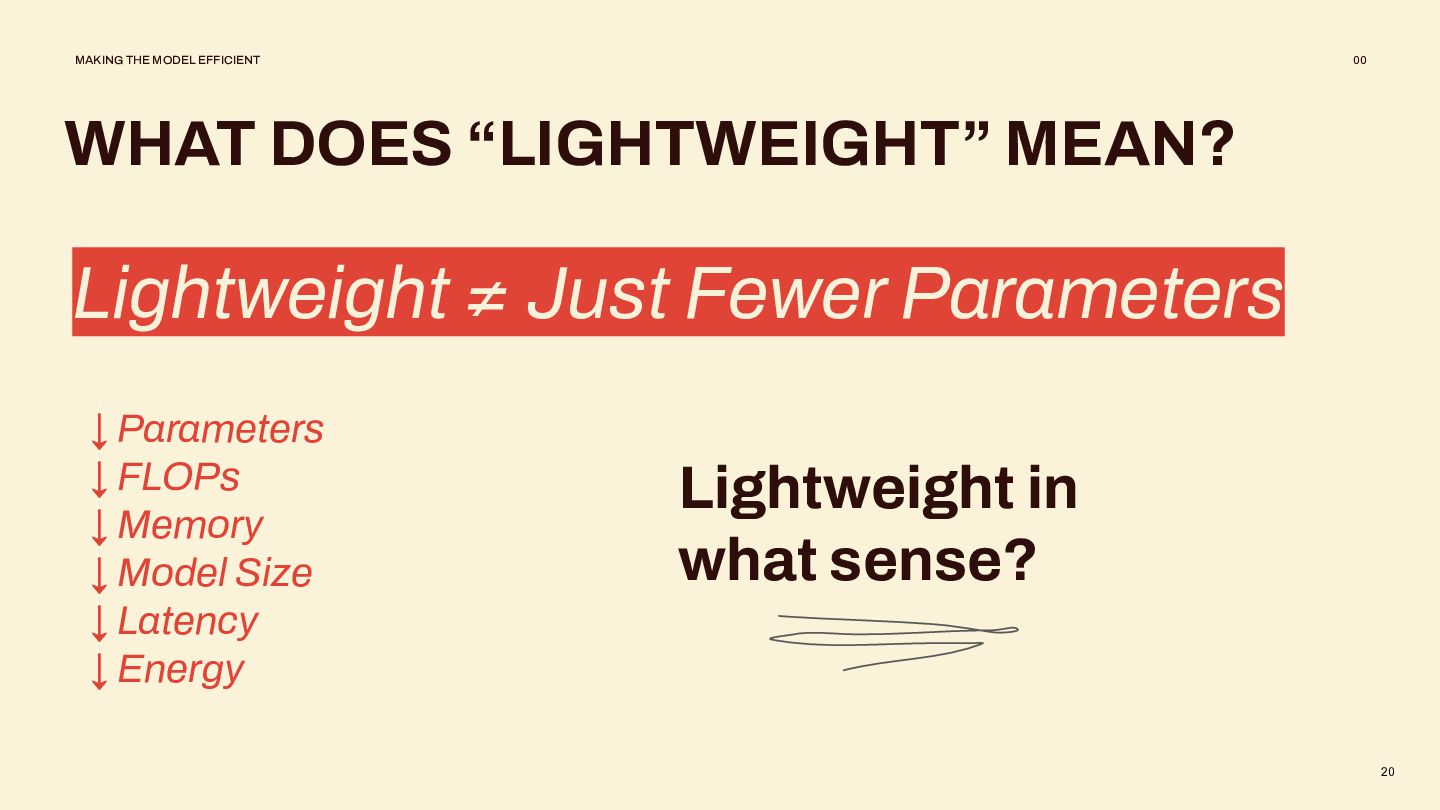
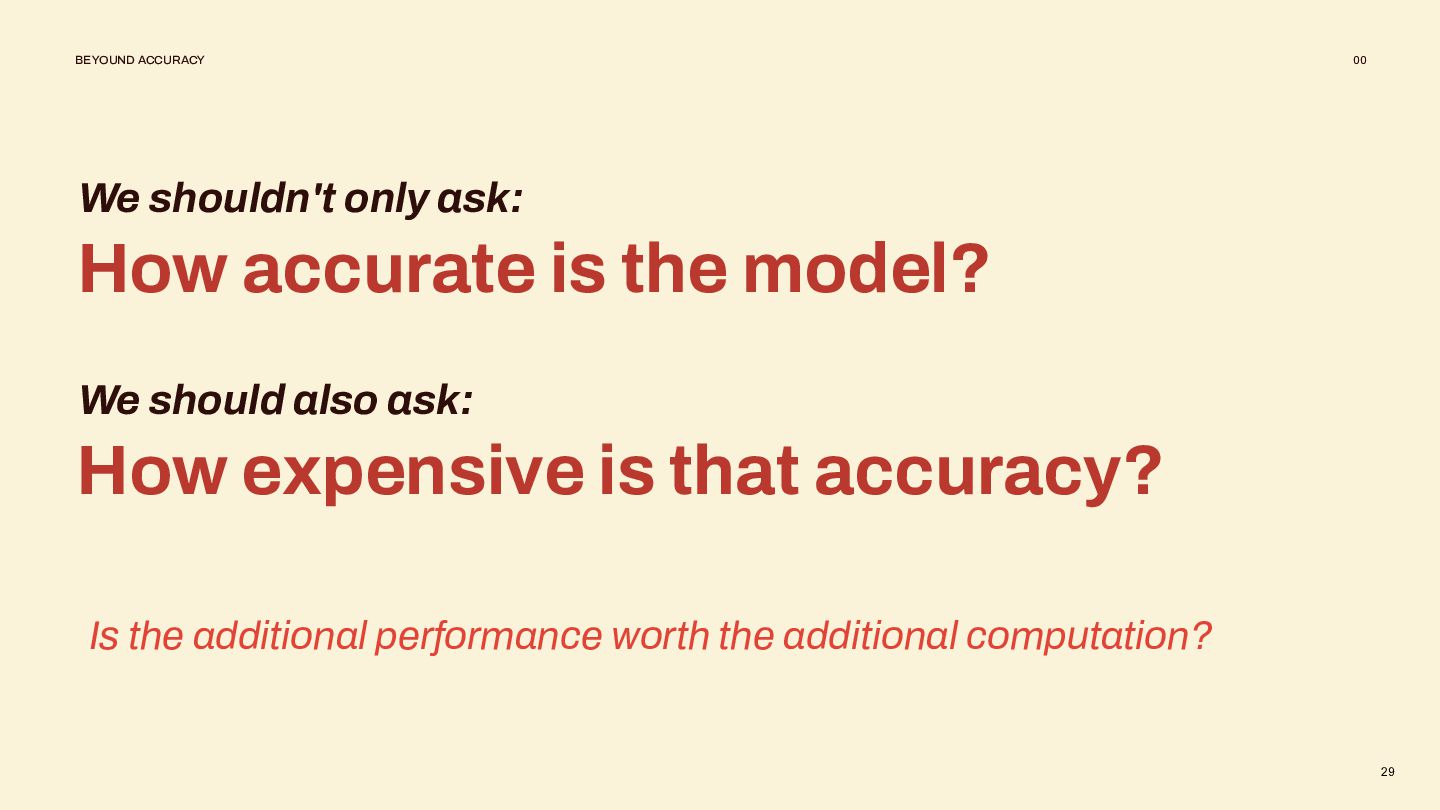
much segmentation performance can we afford to lose? What We Still Don't Know Does reducing parameters actually reduce inference time? Does lower FLOPs translate to lower memory? How do these trade-offs change across hardware? How well do lightweight models generalize? 31


 em07adoz
 aleyda
 trishagee
 eileencodes
 wayneb77
 baasie
 mojombo
 konakalab
 nonsquared
 tmiket
 rasagy