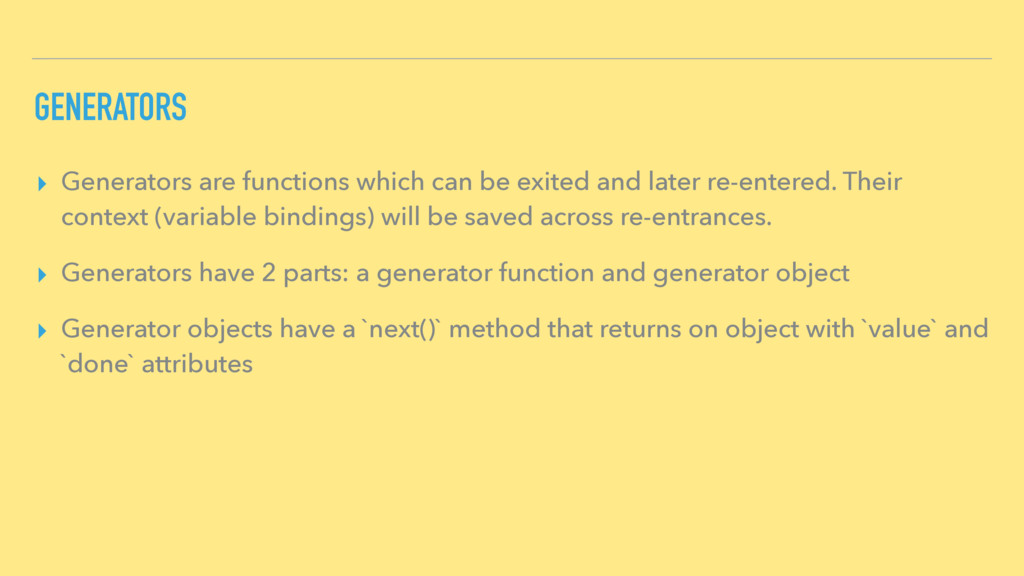
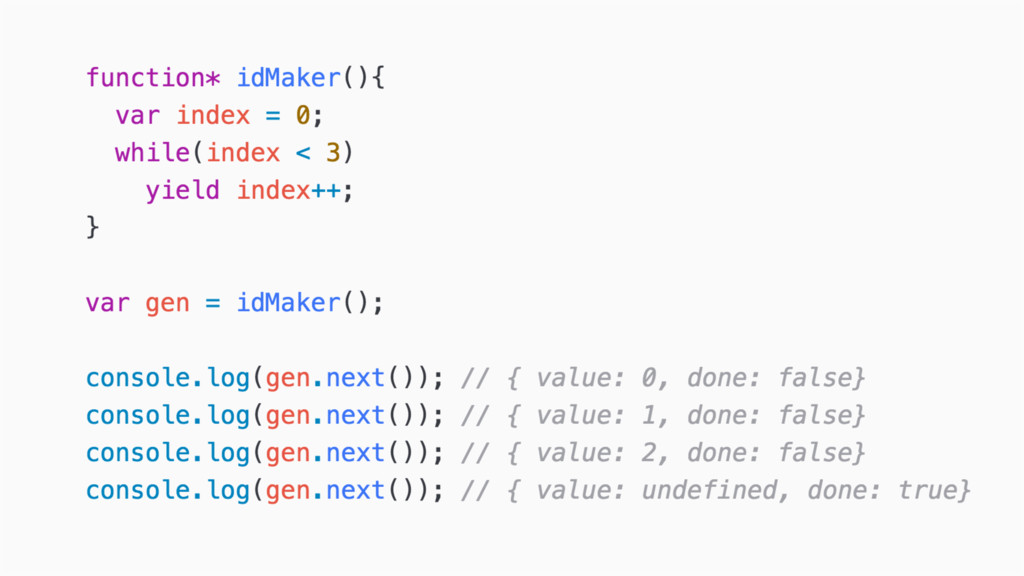
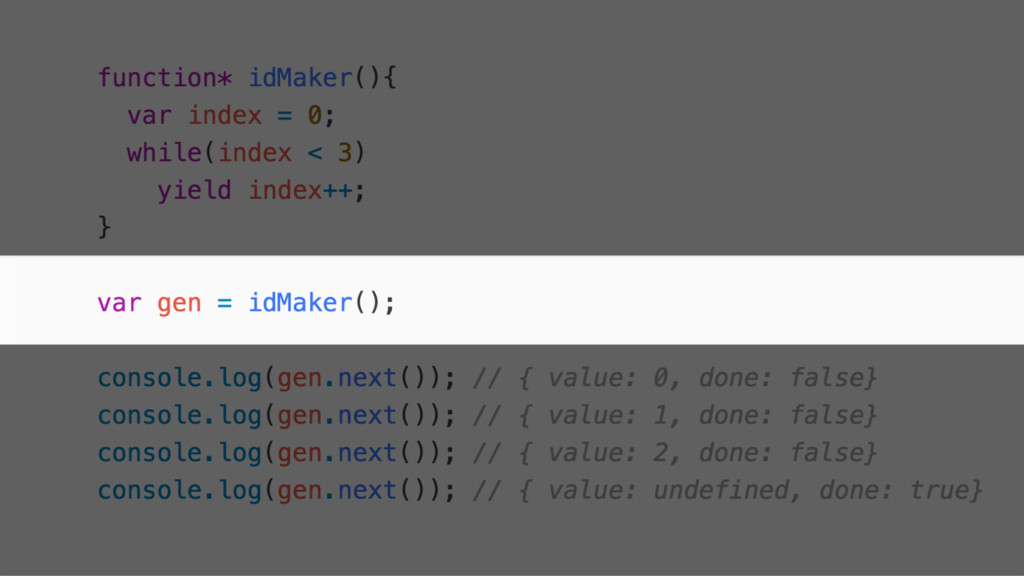
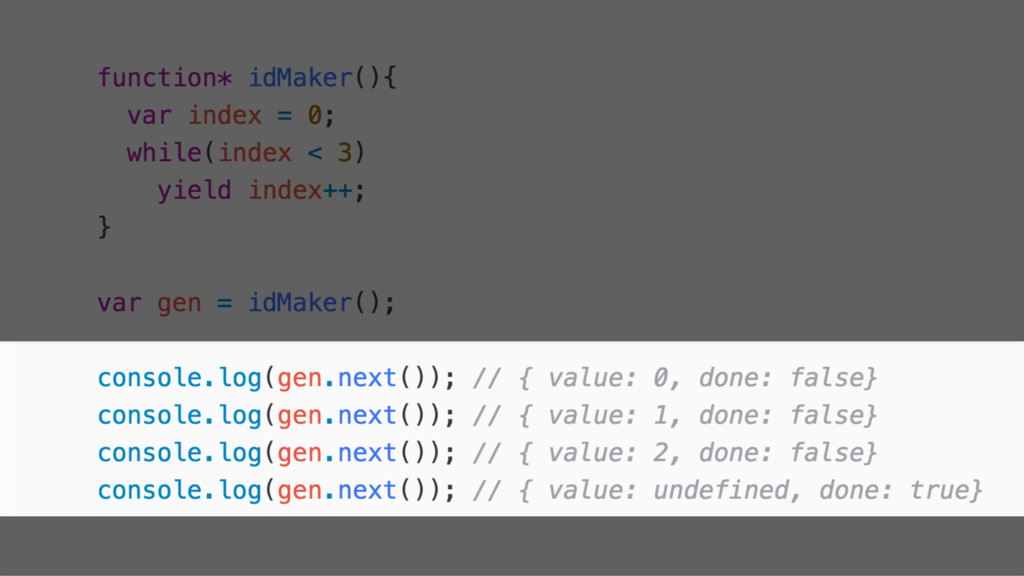
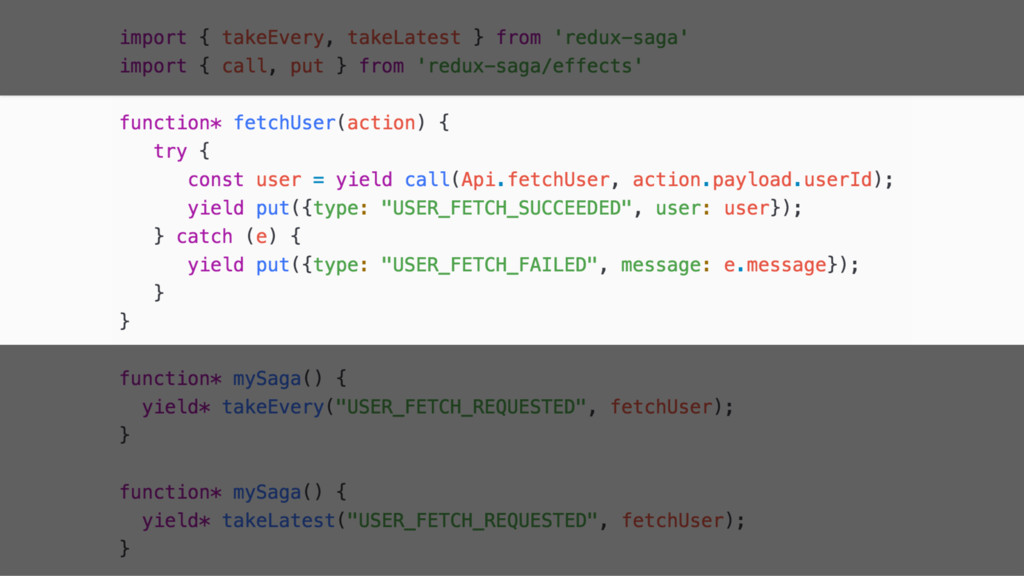
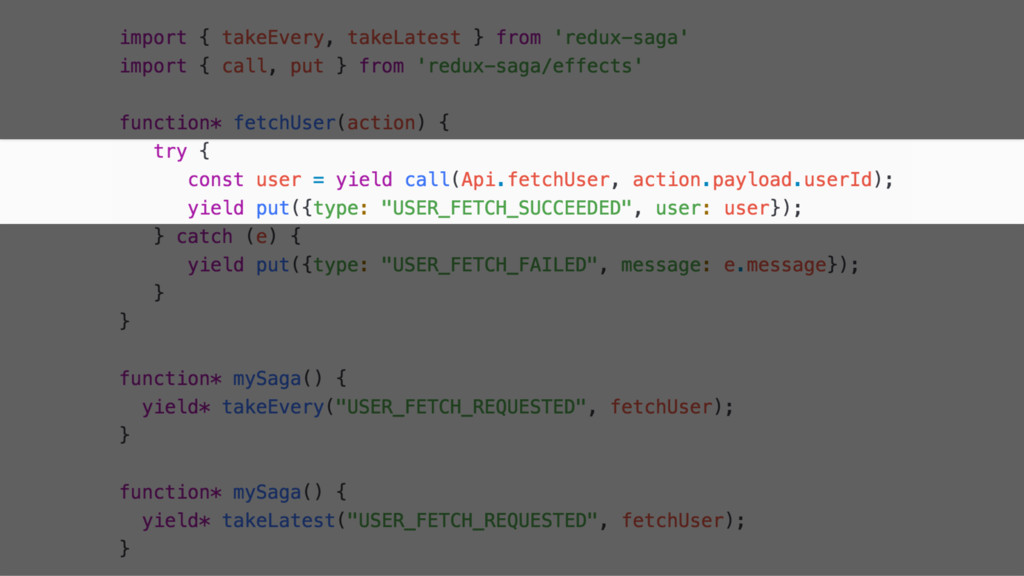
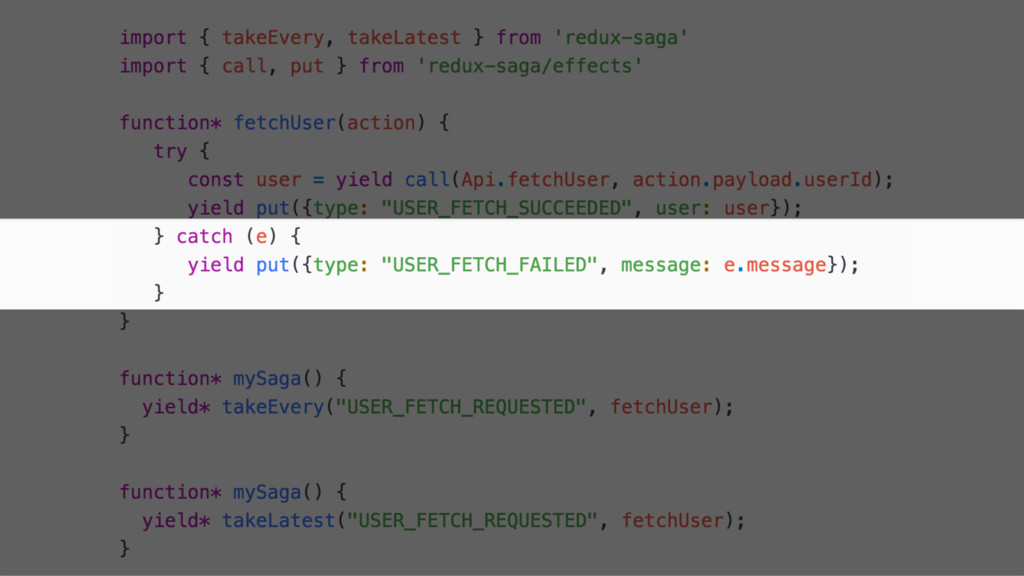
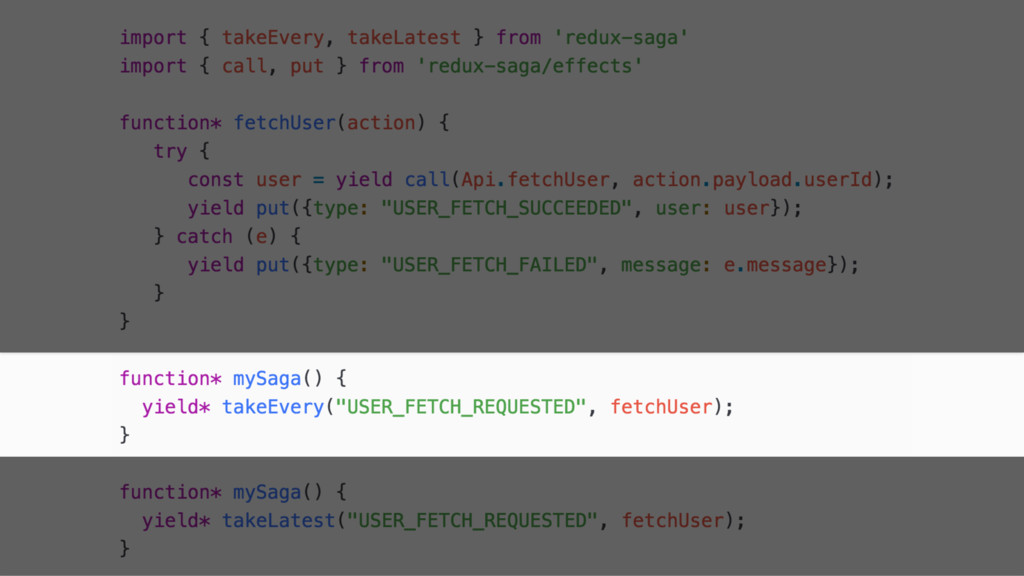
later re-entered. Their context (variable bindings) will be saved across re-entrances. ▸ Generators have 2 parts: a generator function and generator object ▸ Generator objects have a `next()` method that returns on object with `value` and `done` attributes
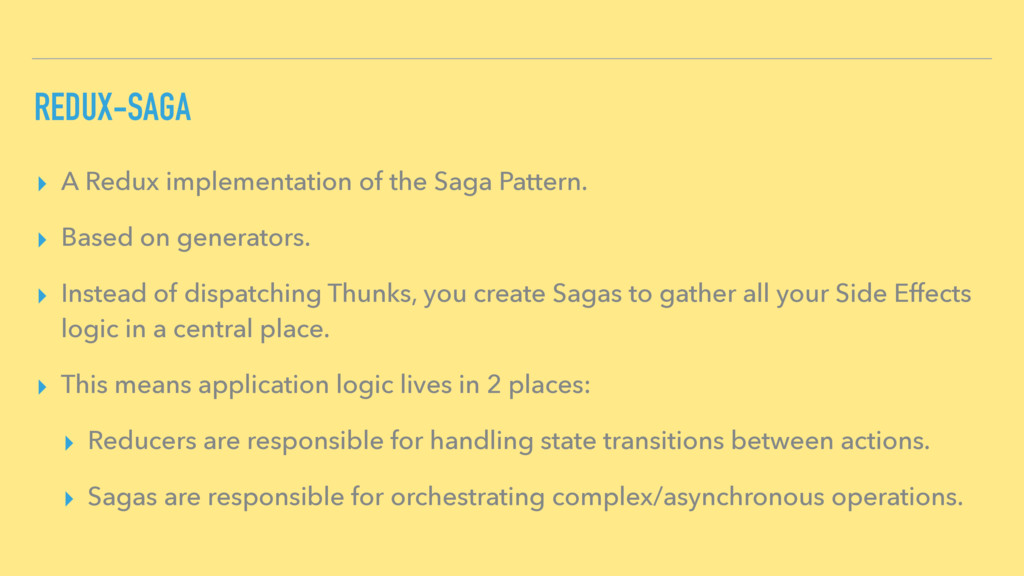
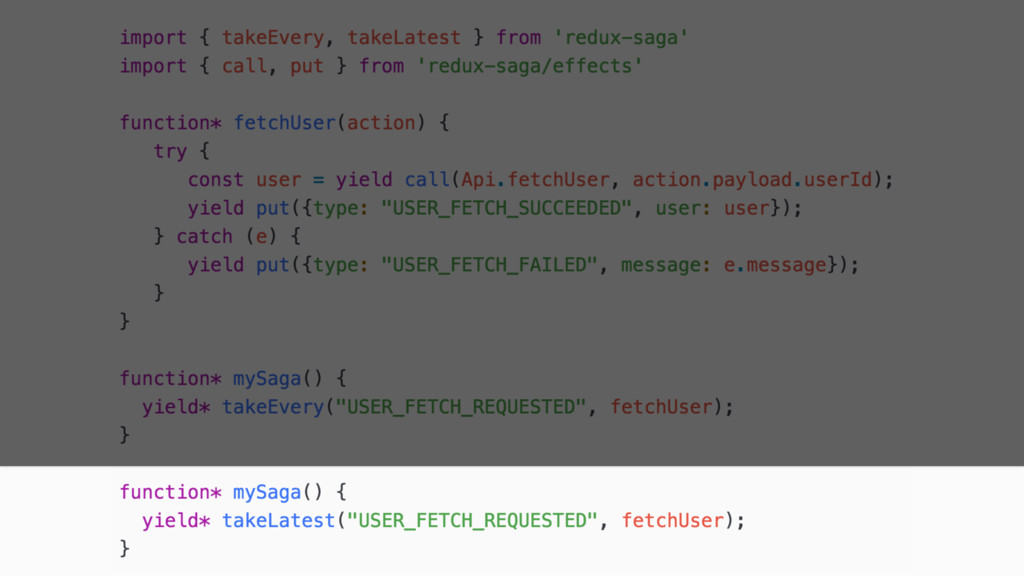
Based on generators. ▸ Instead of dispatching Thunks, you create Sagas to gather all your Side Effects logic in a central place. ▸ This means application logic lives in 2 places: ▸ Reducers are responsible for handling state transitions between actions. ▸ Sagas are responsible for orchestrating complex/asynchronous operations.
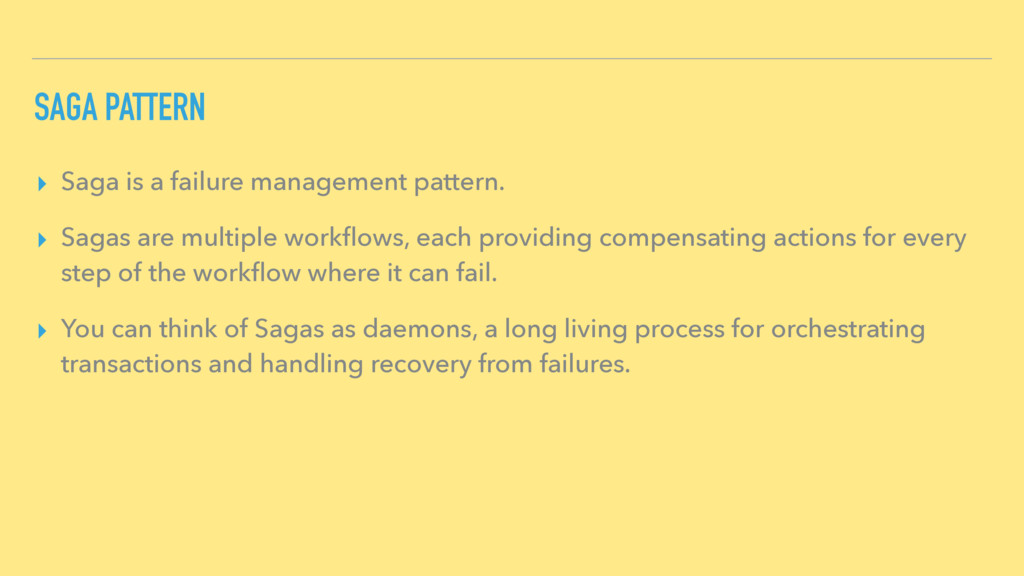
Sagas are multiple workflows, each providing compensating actions for every step of the workflow where it can fail. ▸ You can think of Sagas as daemons, a long living process for orchestrating transactions and handling recovery from failures.


 freddyrangel
 soudai
 sabderemane
 stephaniewalter
 mclloyd
 szymonslowik
 addyosmani
 danielanewman
 bethany
 quramy
 reverentgeek
 pedronauck
 marktimemedia