quick reset. The brain is not designed to be a perfect listener or speaker. Its main job is survival. Everything else—thinking, speaking, deciding—comes second. In work environments, especially under pressure, the brain is constantly asking: Am I safe? Am I being judged? Do I understand what’s expected of me?
to protection. That shift affects attention, memory, and language particularly in a second language. For leaders, this matters because your communication sets the conditions under which other people’s brains operate.
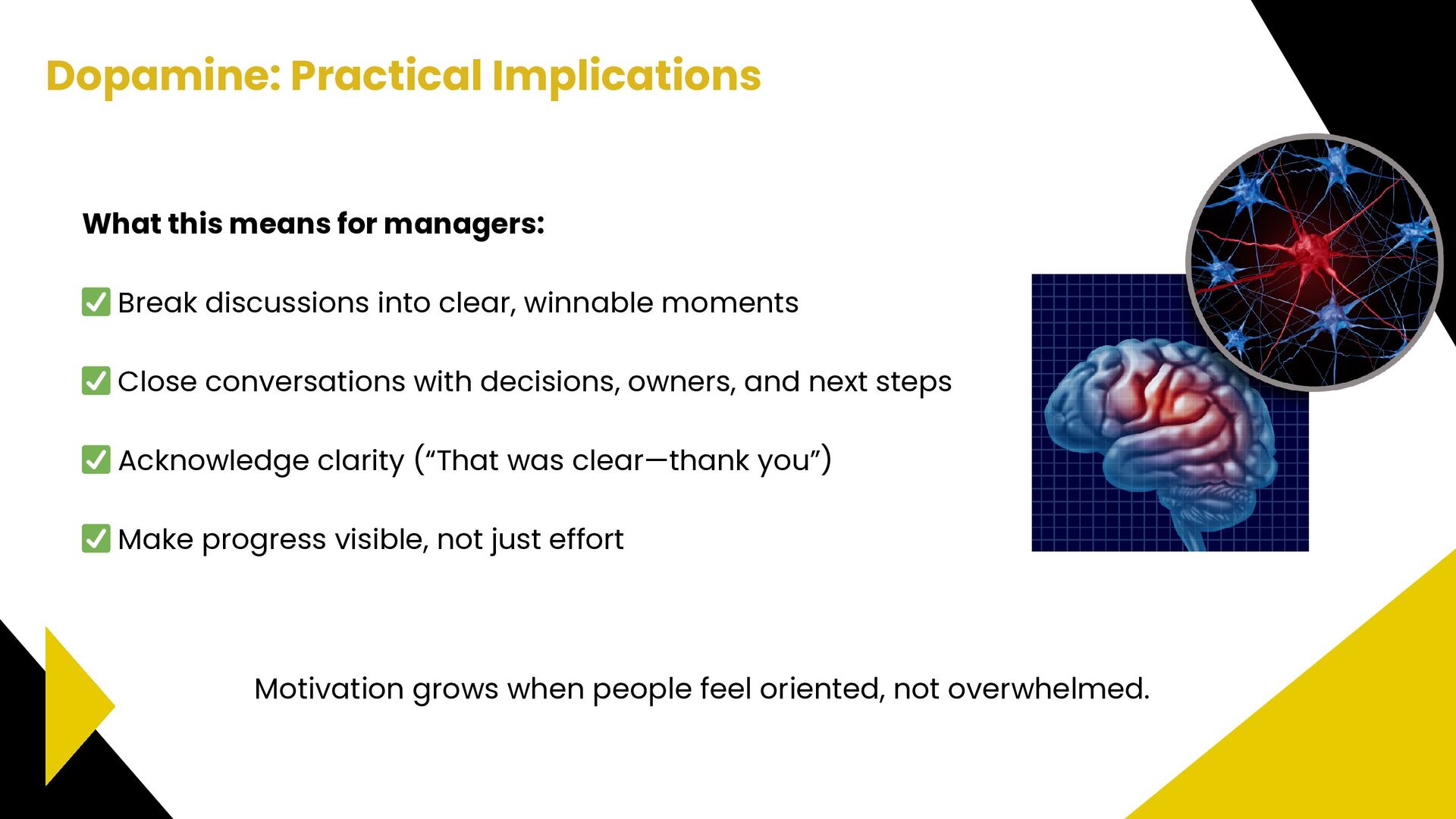
think, it looks for something else: progress. That’s where motivation comes in. The brain is wired to repeat what works. When people feel clarity, movement, or small wins, their brains release dopamine the chemical that fuels focus, motivation, and learning.
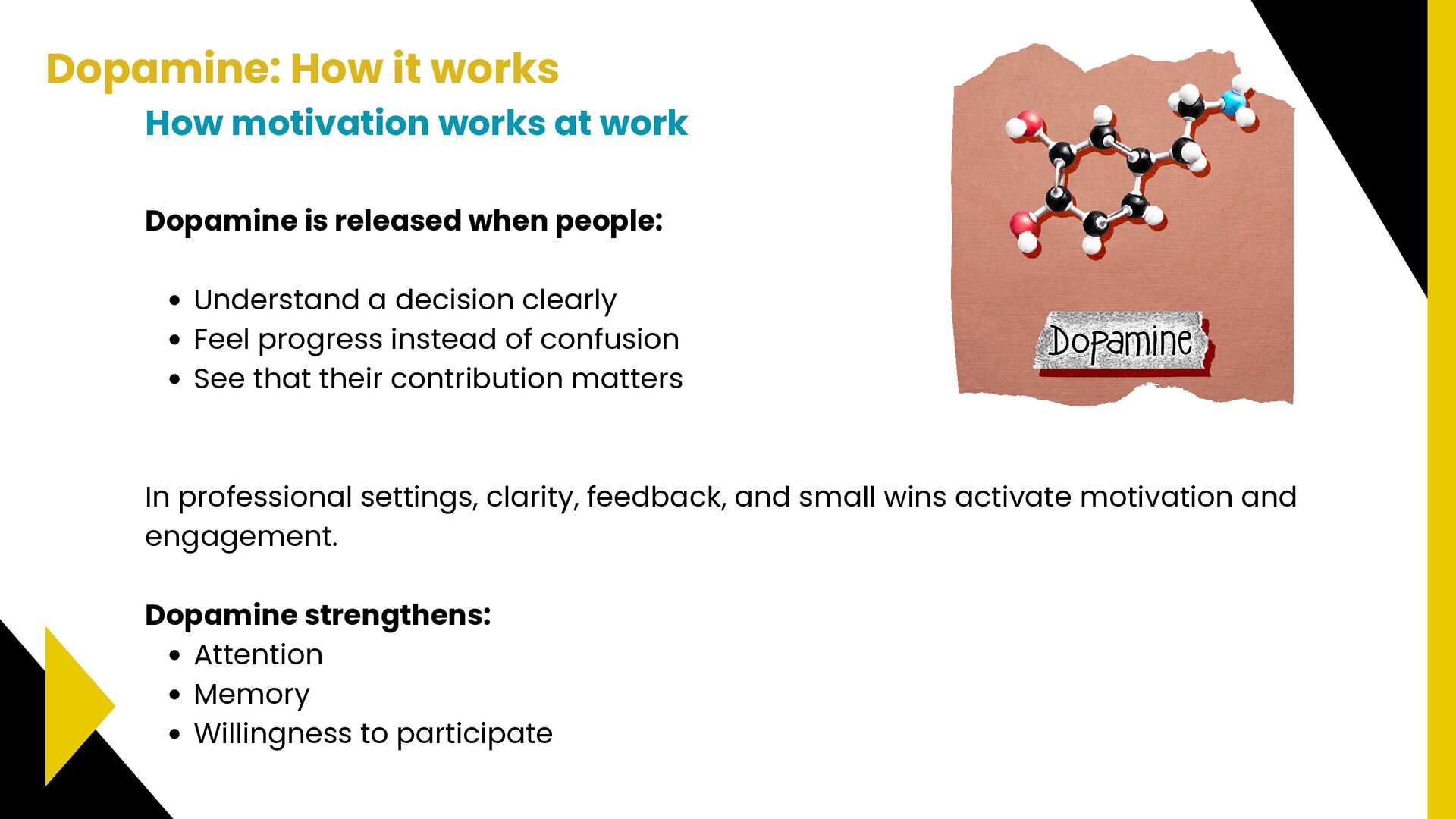
progress instead of confusion See that their contribution matters In professional settings, clarity, feedback, and small wins activate motivation and engagement. Dopamine strengthens: Attention Memory Willingness to participate How motivation works at work Dopamine: How it works
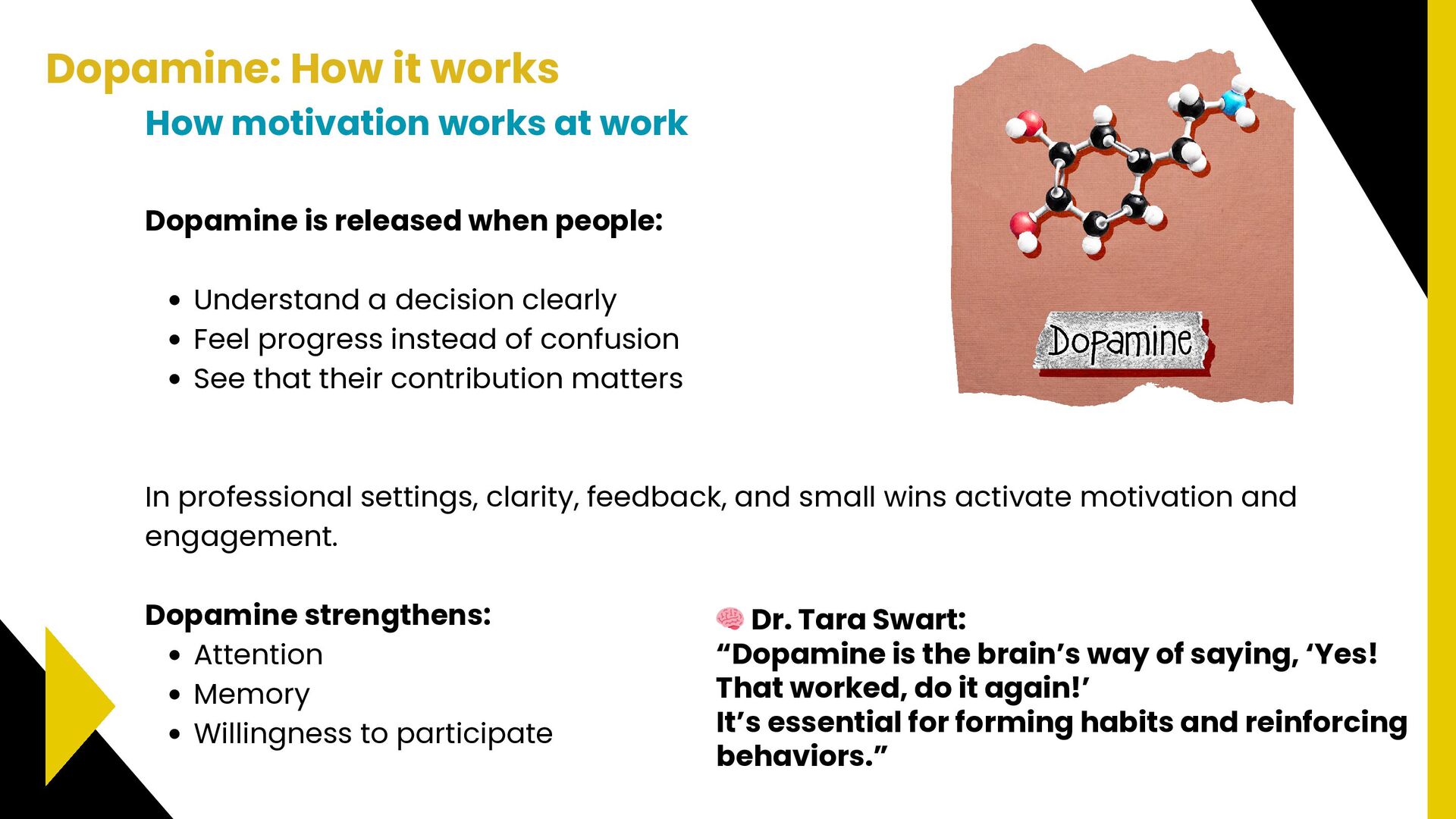
progress instead of confusion See that their contribution matters In professional settings, clarity, feedback, and small wins activate motivation and engagement. Dopamine strengthens: Attention Memory Willingness to participate How motivation works at work Dopamine: How it works 🧠 Dr. Tara Swart: “Dopamine is the brain’s way of saying, ‘Yes! That worked, do it again!’ It’s essential for forming habits and reinforcing behaviors.”
winnable moments ✅ Close conversations with decisions, owners, and next steps ✅ Acknowledge clarity (“That was clear—thank you”) ✅ Make progress visible, not just effort Dopamine: Practical Implications Motivation grows when people feel oriented, not overwhelmed.
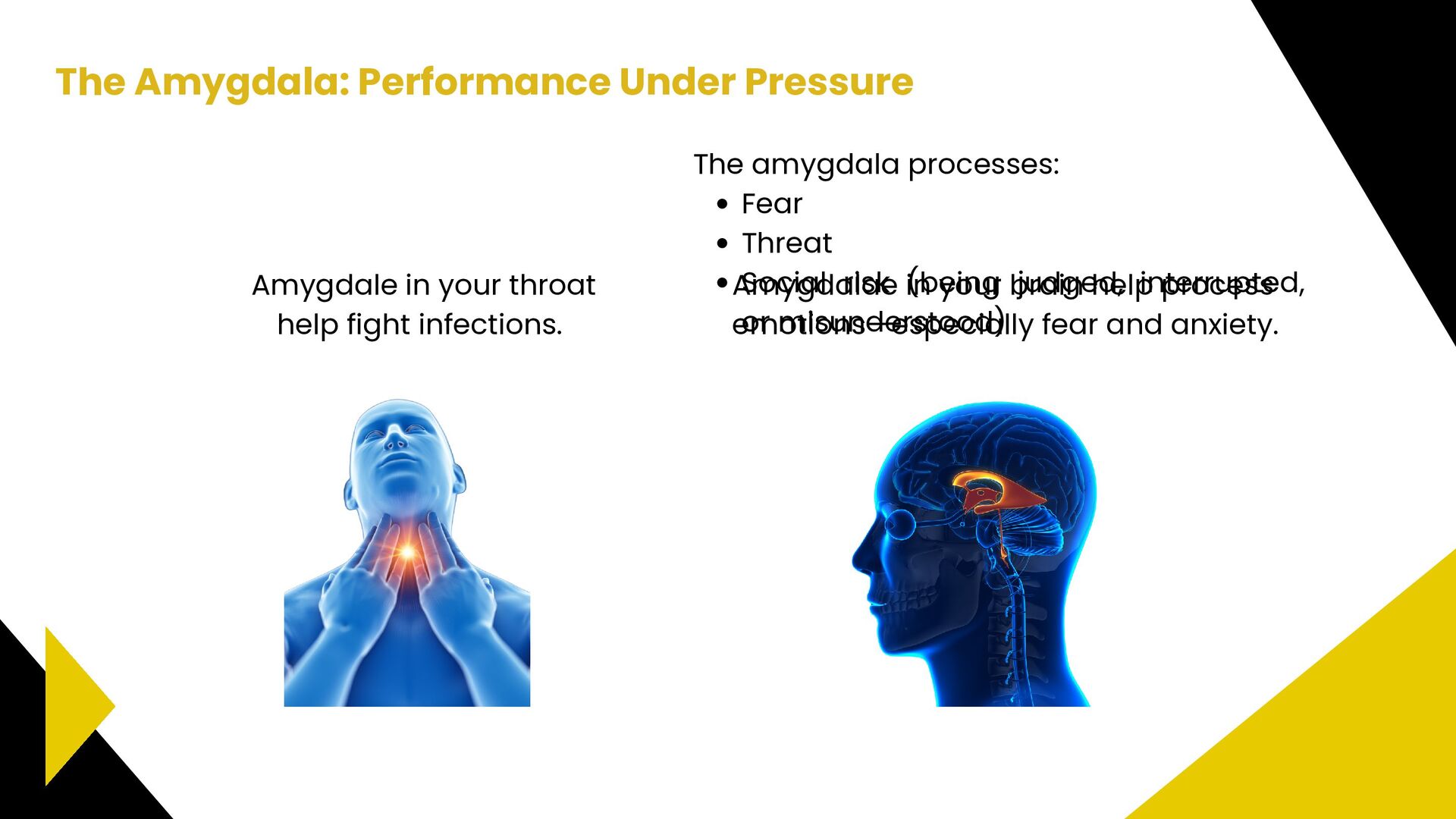
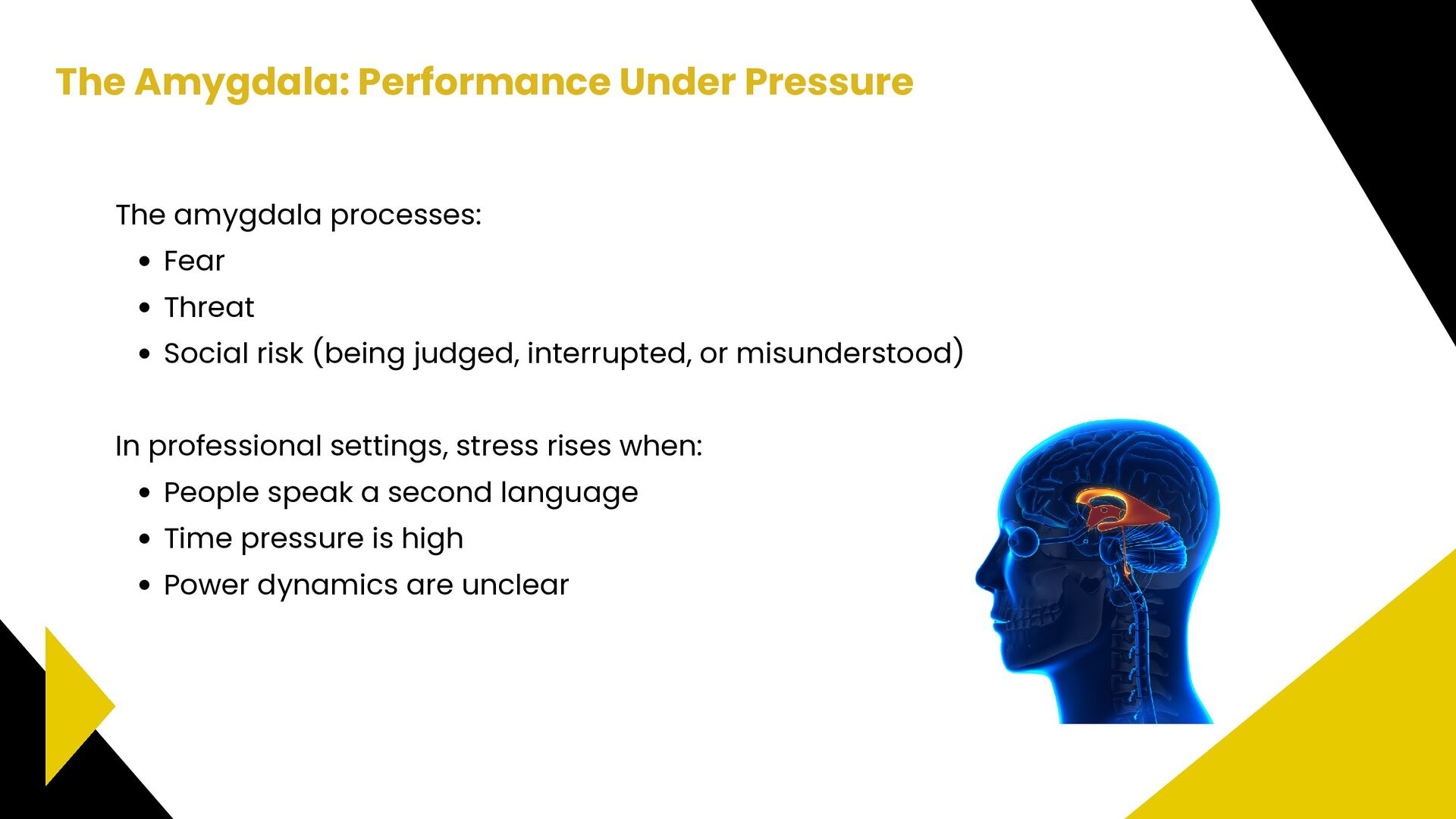
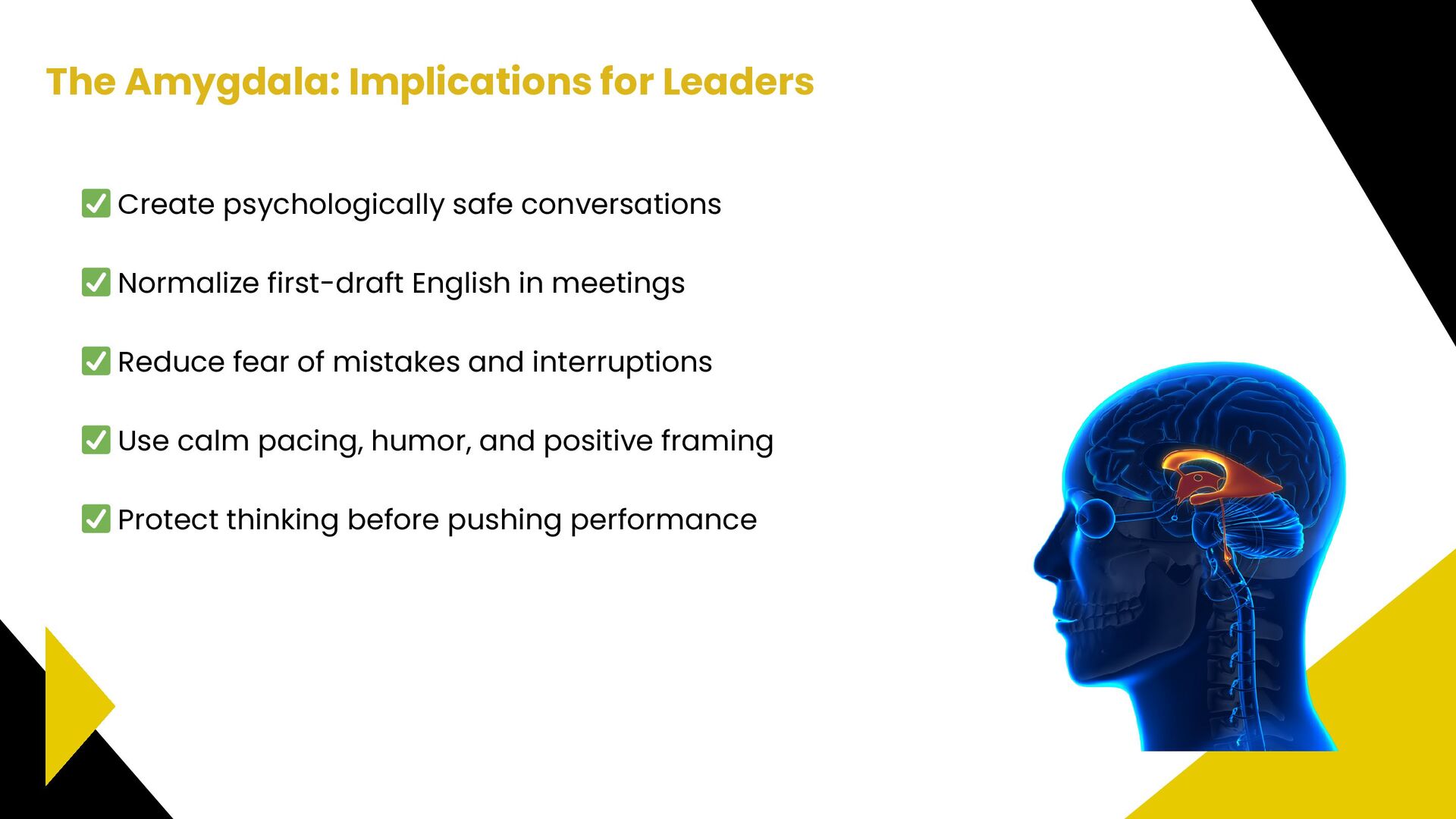
Under Pressure Amygdalae in your brain help process emotions—especially fear and anxiety. The amygdala processes: Fear Threat Social risk (being judged, interrupted, or misunderstood)
or misunderstood) In professional settings, stress rises when: People speak a second language Time pressure is high Power dynamics are unclear The Amygdala: Performance Under Pressure
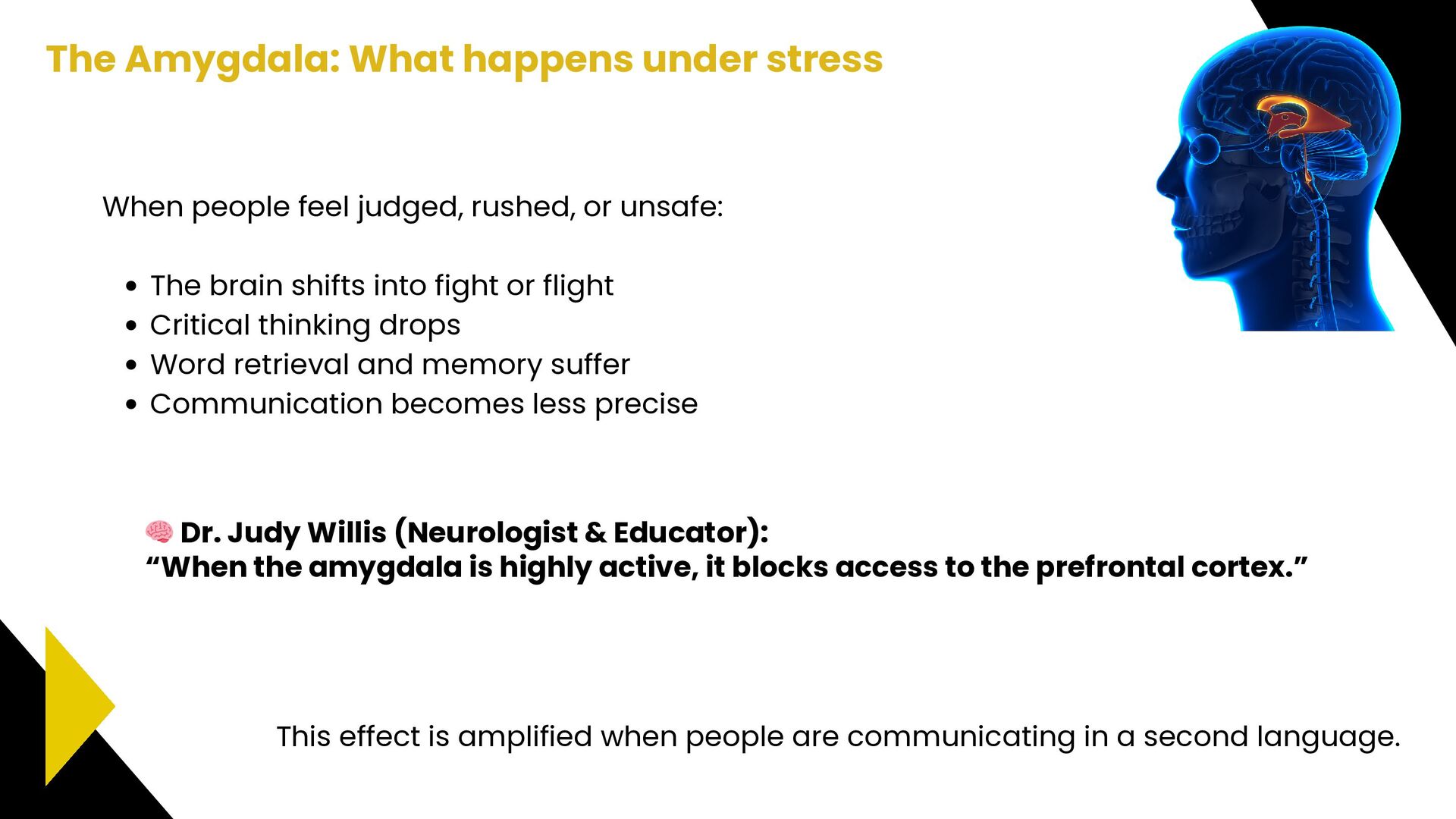
into fight or flight Critical thinking drops Word retrieval and memory suffer Communication becomes less precise The Amygdala: What happens under stress 🧠 Dr. Judy Willis (Neurologist & Educator): “When the amygdala is highly active, it blocks access to the prefrontal cortex.” This effect is amplified when people are communicating in a second language.
✅ Normalize first-draft English in meetings ✅ Reduce fear of mistakes and interruptions ✅ Use calm pacing, humor, and positive framing ✅ Protect thinking before pushing performance
explains why people think, speak, and decide differently under pressure especially in a second language. As a manager, your words, tone, and pacing don’t just share information. They directly shape: Attention Confidence Decision quality Leadership in English is not neutral. It carries cognitive and emotional consequences.


 gabbyrincon7
 destraynor
 stephenakadiri
 reverentgeek
 zakiyama
 inesmontani
 palkan
 yeseniaperezcruz
 irinanazarova
 ipullrank
 nikkihalliwell
 jacobian
 tammyeverts