Upgrade to Pro — share decks privately, control downloads, hide ads and more …

Rapid Threat Model Prototyping Process

Rapid Threat Model Prototyping Process

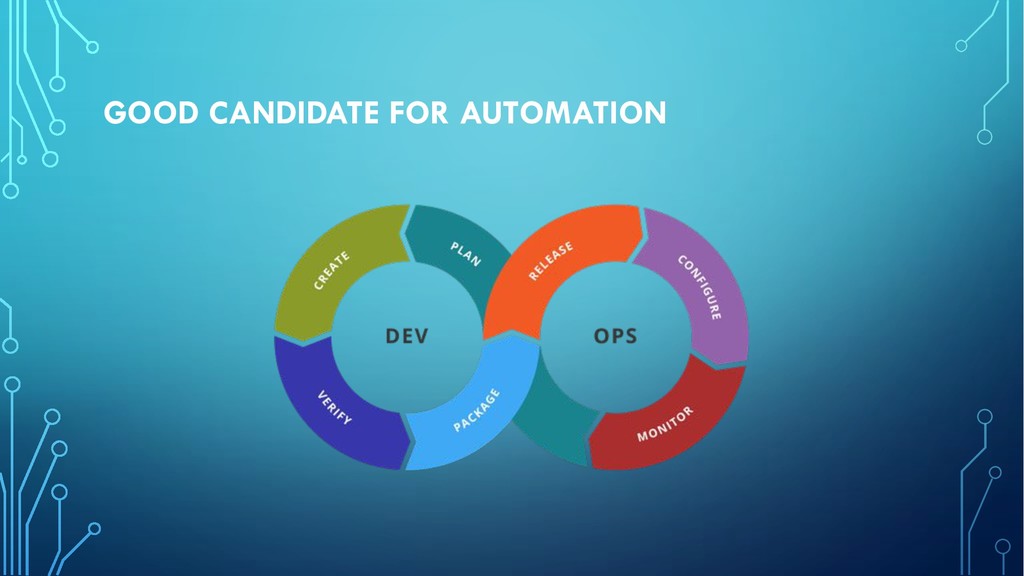
Threat Modelling can be a laborious and time-consuming exercise, and is not a happy marriage with CI/DevOps methodologies.

Introducing my Rapid Threat Model Prototyping paradigm, which I have been using at several sites. It enables automation with fast development cycles in today's IT environments.

Avatar for Geoffrey Hill - Tutamantic

Geoffrey Hill - Tutamantic

August 08, 2018

Other Decks in Programming

Transcript

  1. BRINGING RAPID PROTOTYPING TO THE THREAT MODEL PROCESS GEOFF HILL

    TUTAMANTIC OR... WHAT I HAVE DONE TO MAKE MY THREAT MODELLING LIFE EASIER
  2. LICENSE FOR USE This work is licensed under the Creative
    Commons Attribution-NonCommercial- ShareAlike 4.0 International License. To view a copy of this license, visit http://creativecommons.org/licenses/by-nc-sa/4.0/ or send a letter to Creative Commons, PO Box 1866, Mountain View, CA 94042, USA. https://creativecommons.org/licenses/by-nc-sa/4.0/legalcode
  3. STARTED WITH… • Microsoft in 2002, jumped into appSec right

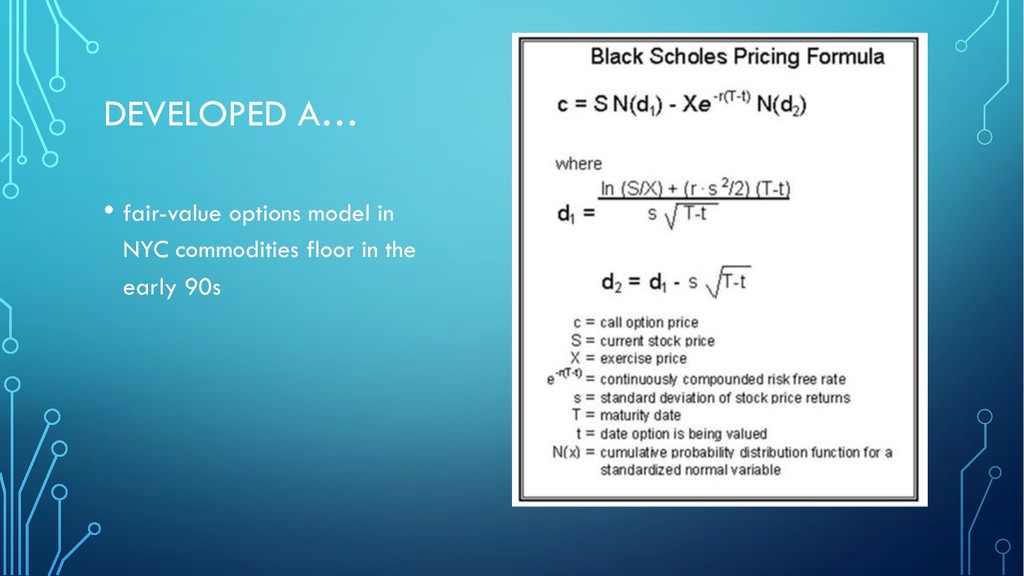
    away DEVELOPED A… • SDL for ‘customers using Agile’ in 2004 at Microsoft UK
  4. LET’S ROLL… • Steps in traditional TM • Why traditional

    TM fails in DevOps/CI world • Overview of Agile Architecture • Introduction to rapid prototyping • Introduction to Rapid TM prototyping
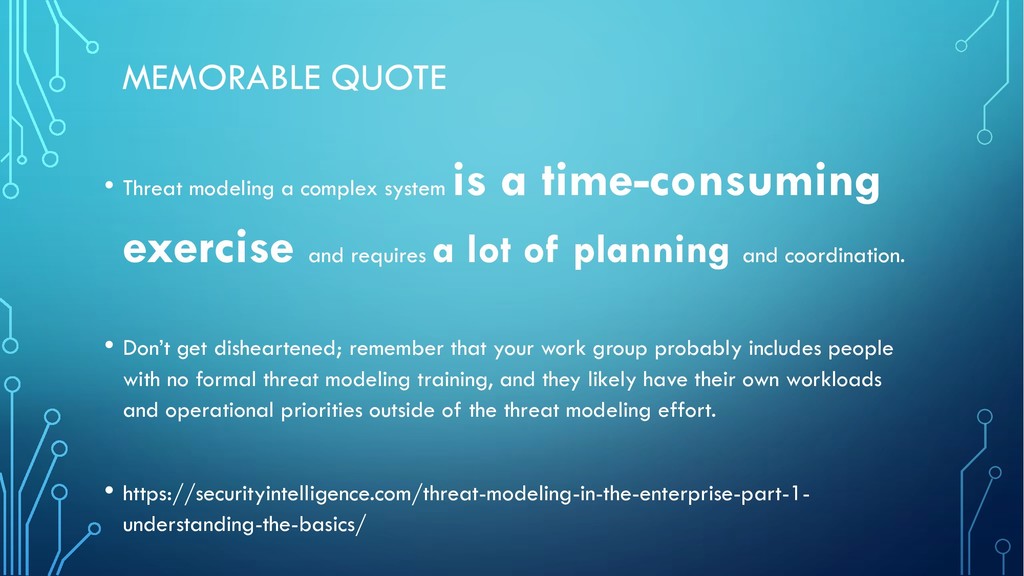
  5. MEMORABLE QUOTE • Threat modeling a complex system is a

    time-consuming exercise and requires a lot of planning and coordination. • Don’t get disheartened; remember that your work group probably includes people with no formal threat modeling training, and they likely have their own workloads and operational priorities outside of the threat modeling effort. • https://securityintelligence.com/threat-modeling-in-the-enterprise-part-1- understanding-the-basics/
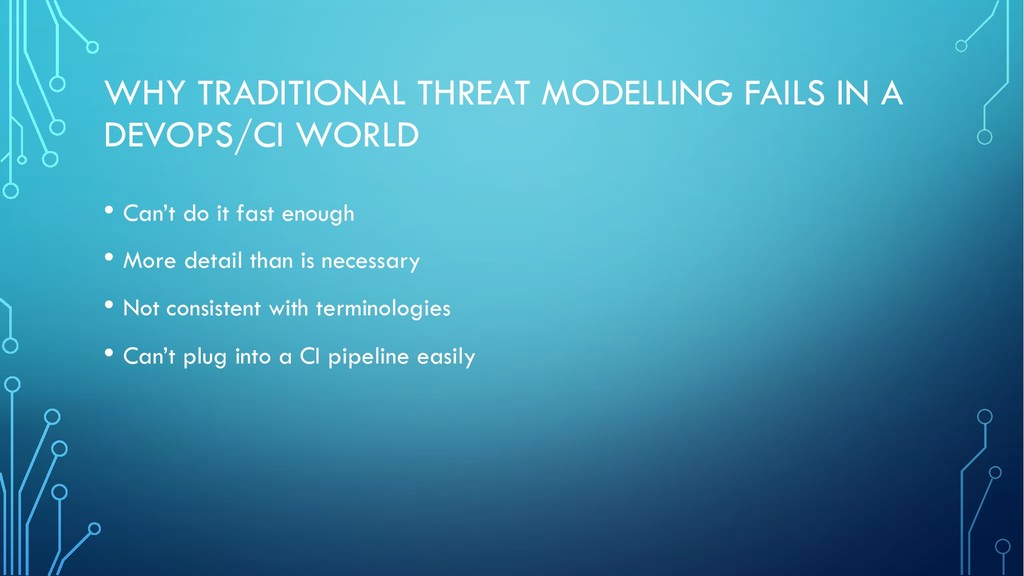
  6. WHY TRADITIONAL THREAT MODELLING FAILS IN A DEVOPS/CI WORLD •

    Can’t do it fast enough • More detail than is necessary • Not consistent with terminologies • Can’t plug into a CI pipeline easily
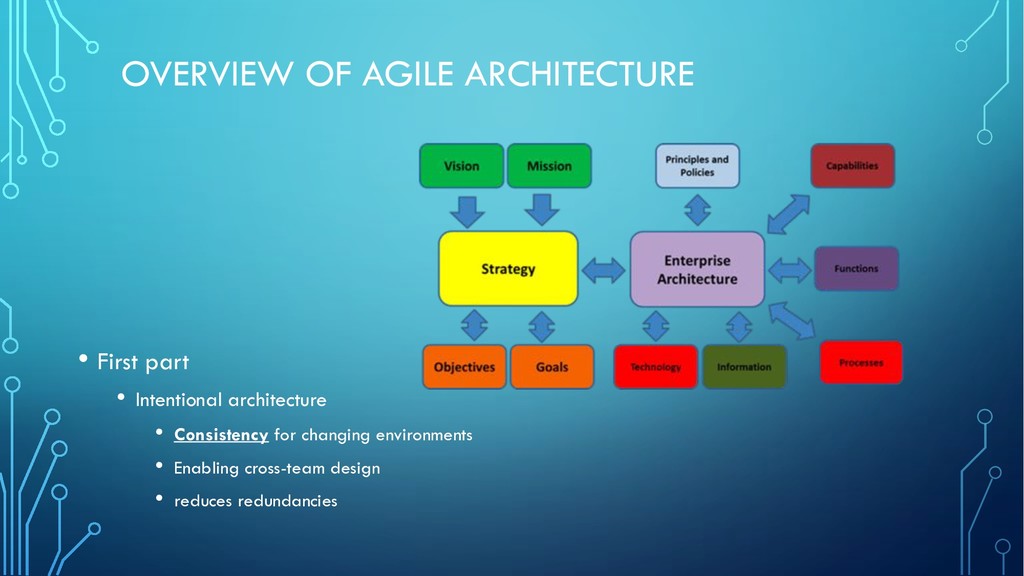
  7. OVERVIEW OF AGILE ARCHITECTURE • First part • Intentional architecture

    • Consistency for changing environments • Enabling cross-team design • reduces redundancies
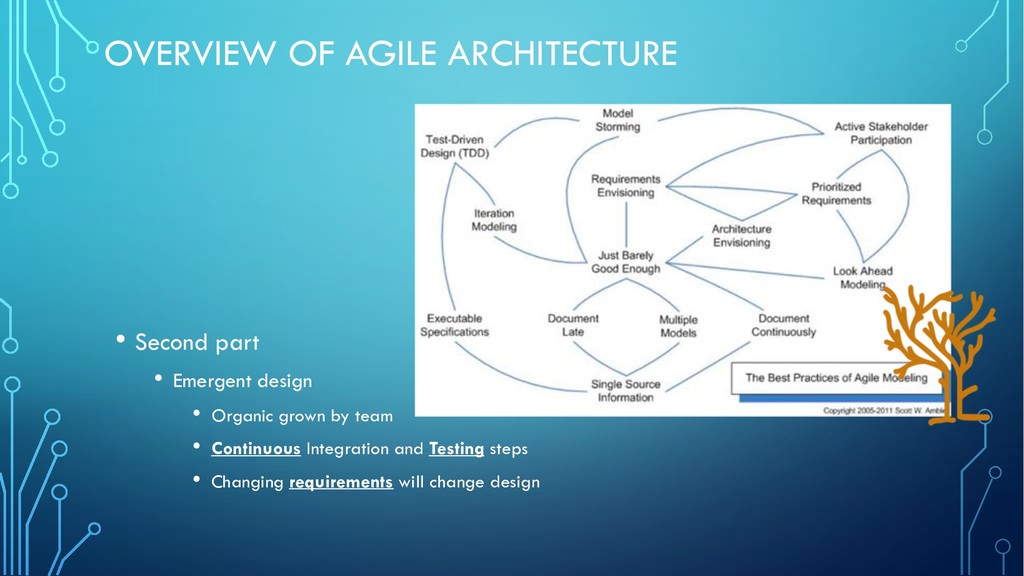
  8. OVERVIEW OF AGILE ARCHITECTURE • Second part • Emergent design

    • Organic grown by team • Continuous Integration and Testing steps • Changing requirements will change design
  9. INTRODUCTION TO RAPID PROTOTYPING • Identify basic requirements • Conceaptual

    Design • test the prototype and provide feedback • Revise and enhance
  10. RAPID THREAT MODEL PROTOTYPING - GOAL • Reduce confusing ………back-and-forth

    talks with the stakeholders • GOAL - Reduce steps in doing threat modelling
  11. RAPID THREAT MODEL PROTOTYPING - GOAL • quickly identify ELEVATION

    OF PRIVILEGE threats • Reduce misinterpretation of designs
  12. RAPID THREAT MODEL PROTOTYPING - GOAL • Build on current

    INTENTIONAL architecture • Don’t create new DFDs
  13. RAPID THREAT MODEL PROTOTYPING - GOAL • CONSISTENT data •

    REPEATABLE data • MEASURABLE data For CI/CD & DevOps
  14. RAPID THREAT MODEL PROTOTYPING - PURPOSE • Start the conversation

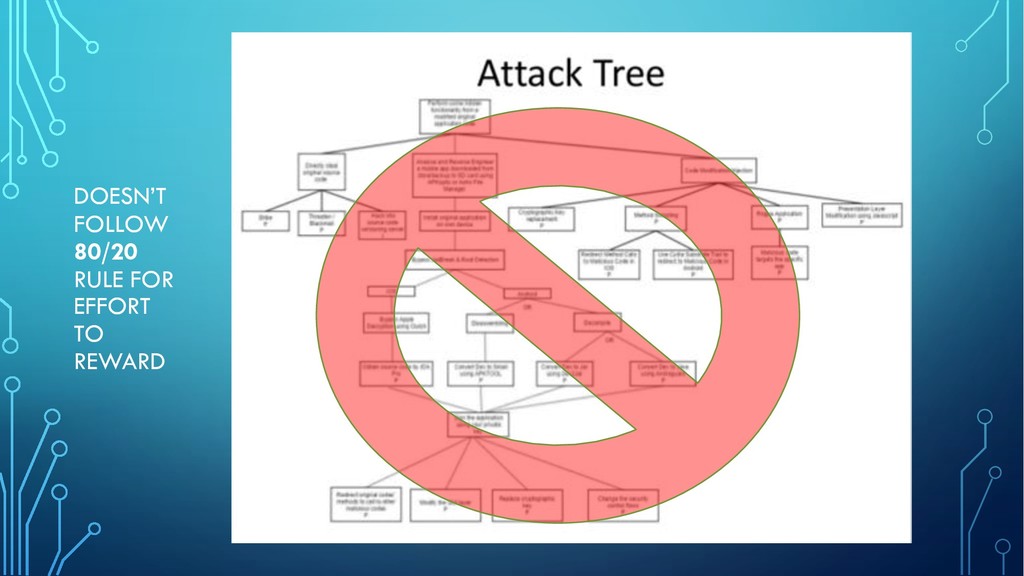
    • 80/20 rule • Just-enough information • Not comprehensive… initially
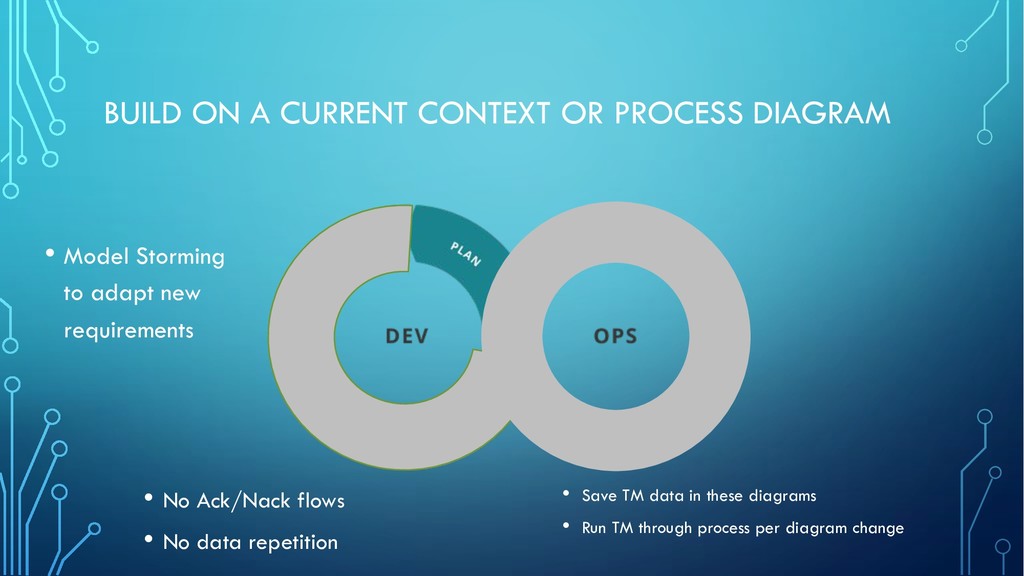
  15. BUILD ON A CURRENT CONTEXT OR PROCESS DIAGRAM • Model

    Storming to adapt new requirements • No Ack/Nack flows • No data repetition • Save TM data in these diagrams • Run TM through process per diagram change
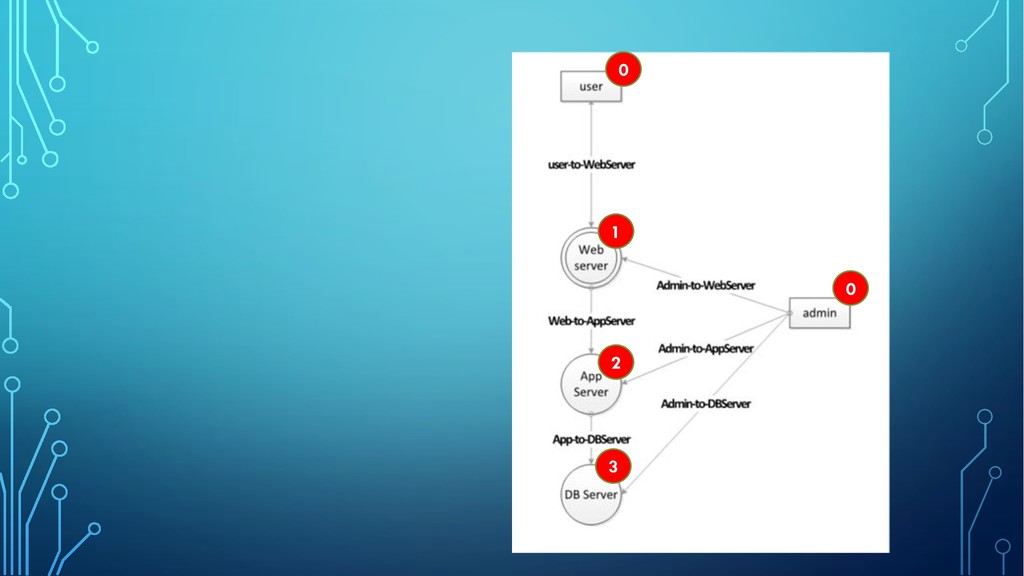
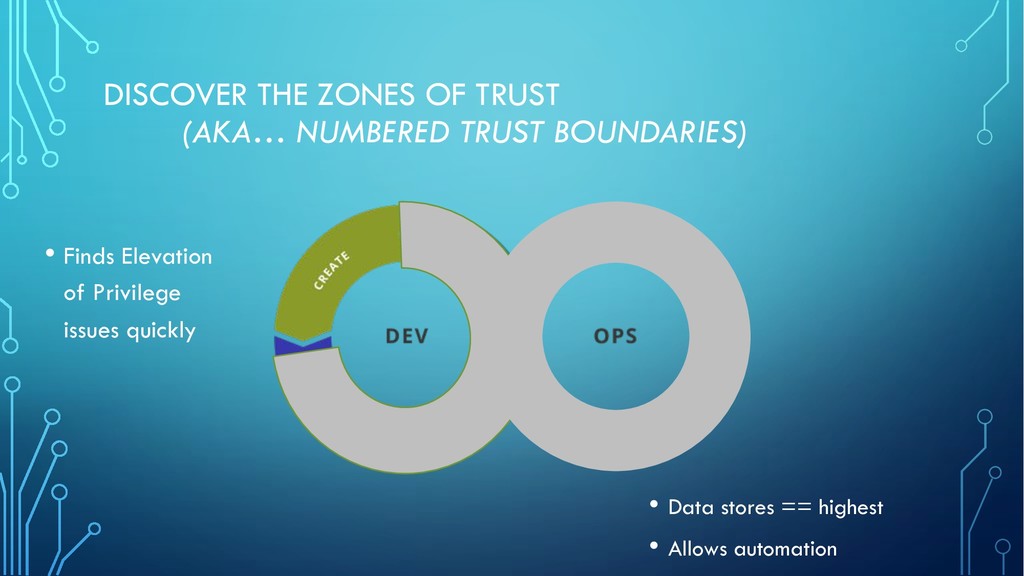
  16. DISCOVER THE ZONES OF TRUST (AKA… NUMBERED TRUST BOUNDARIES) •

    Finds Elevation of Privilege issues quickly • Data stores == highest • Allows automation
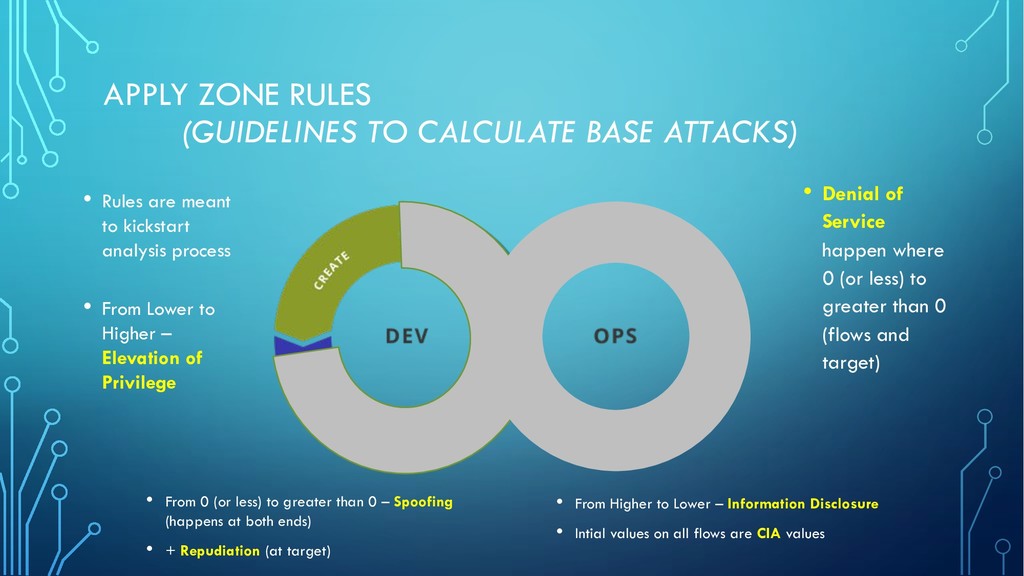
  17. APPLY ZONE RULES (GUIDELINES TO CALCULATE BASE ATTACKS) • Rules

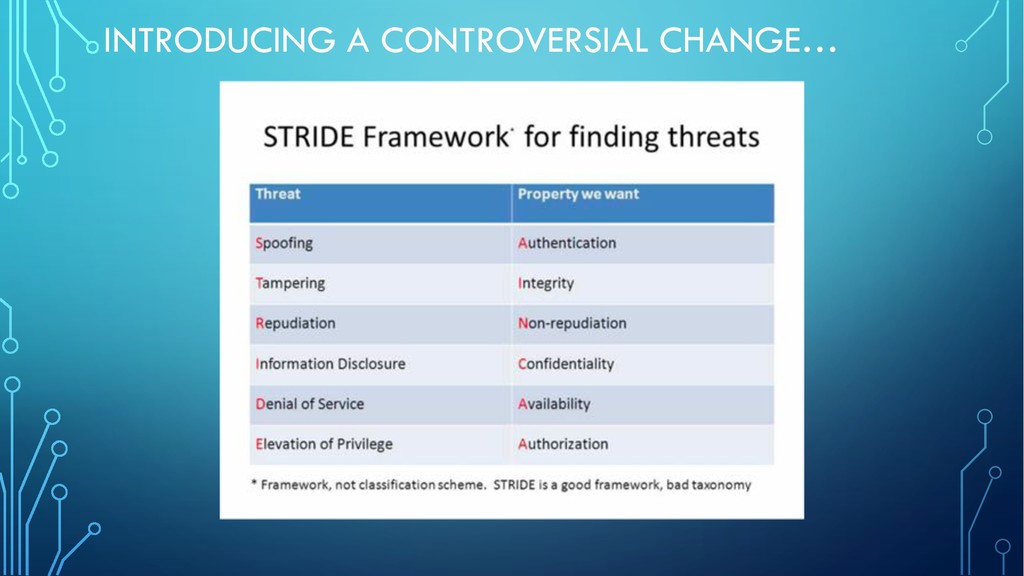
    are meant to kickstart analysis process • From Lower to Higher – Elevation of Privilege • From Higher to Lower – Information Disclosure • Intial values on all flows are CIA values • From 0 (or less) to greater than 0 – Spoofing (happens at both ends) • + Repudiation (at target) • Denial of Service happen where 0 (or less) to greater than 0 (flows and target)
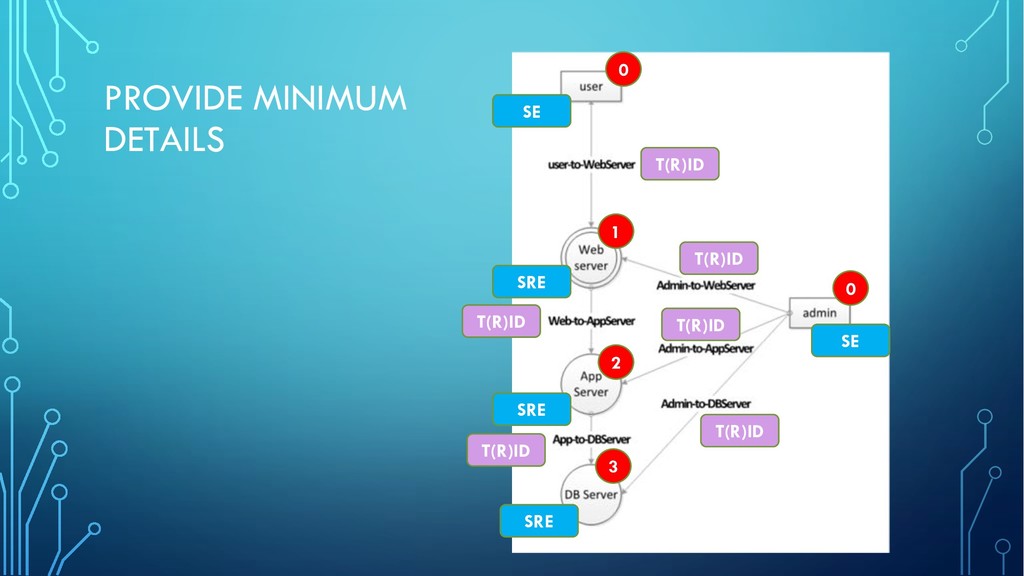
  18. PROVIDE MINIMUM DETAILS 0 1 0 2 3 SE SRE

    SRE SRE SE T(R)ID T(R)ID T(R)ID T(R)ID T(R)ID T(R)ID
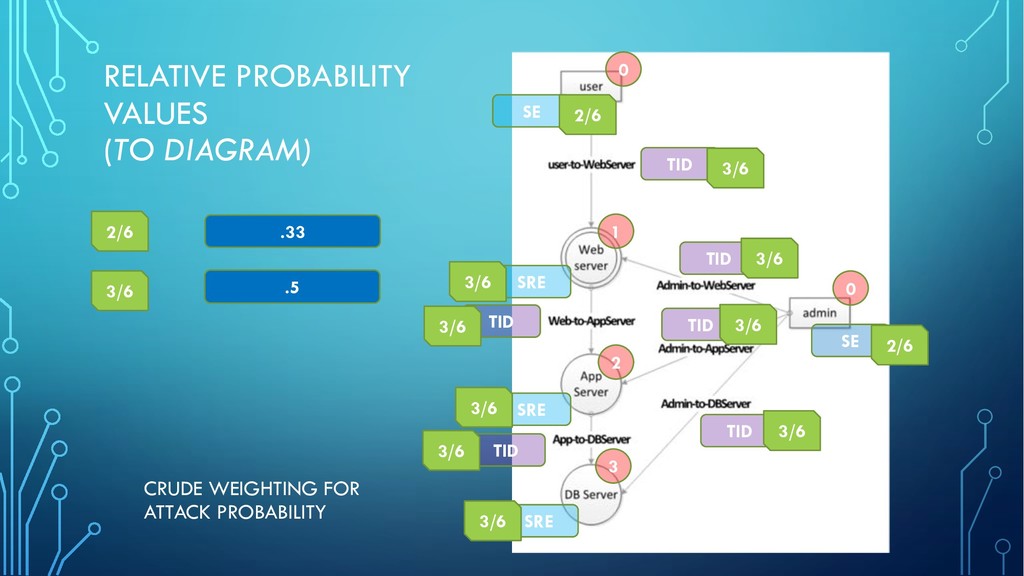
  19. RELATIVE PROBABILITY VALUES (TO DIAGRAM) 0 1 0 2 3

    SE SRE SRE SRE SE TID TID TID TID TID TID 2/6 3/6 3/6 3/6 3/6 2/6 3/6 3/6 3/6 3/6 3/6 2/6 3/6 .33 .5 CRUDE WEIGHTING FOR ATTACK PROBABILITY
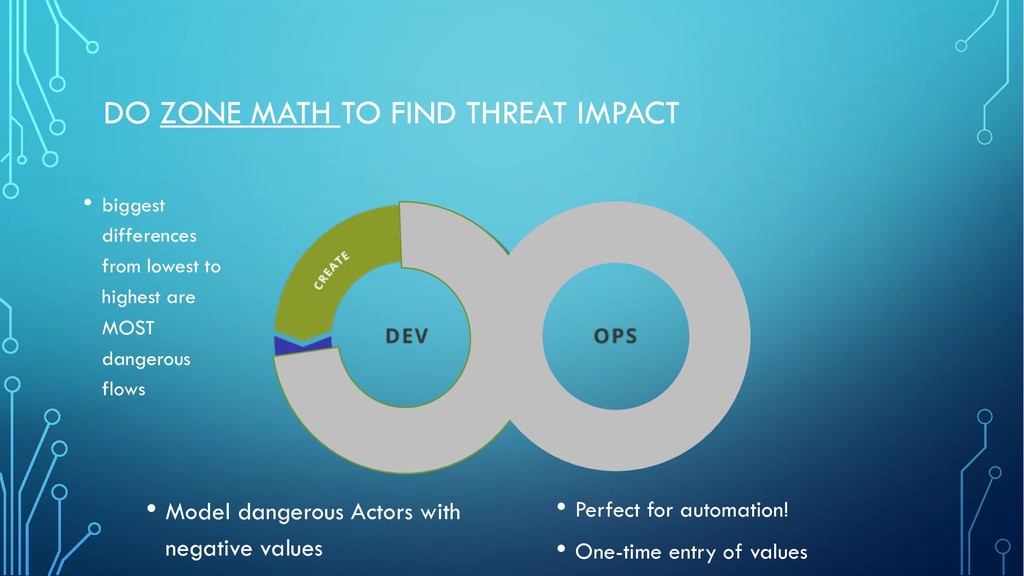
  20. DO ZONE MATH TO FIND THREAT IMPACT • biggest differences

    from lowest to highest are MOST dangerous flows • Perfect for automation! • One-time entry of values • Model dangerous Actors with negative values
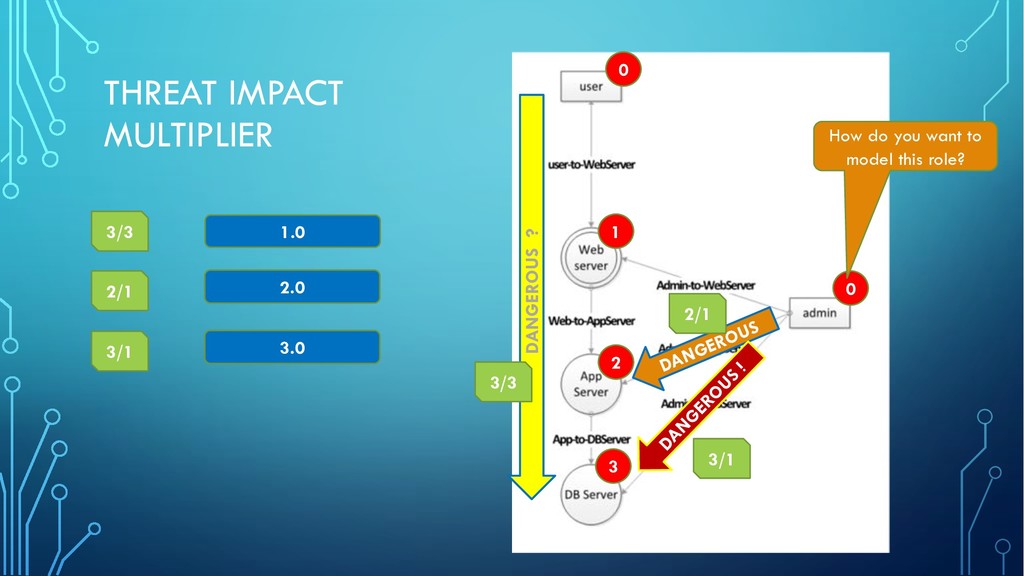
  21. THREAT IMPACT MULTIPLIER 0 1 0 2 3 DANGEROUS DANGERO

    US ! DANGEROUS ? 3/3 3/1 2/1 How do you want to model this role? 3/3 2/1 1.0 2.0 3/1 3.0
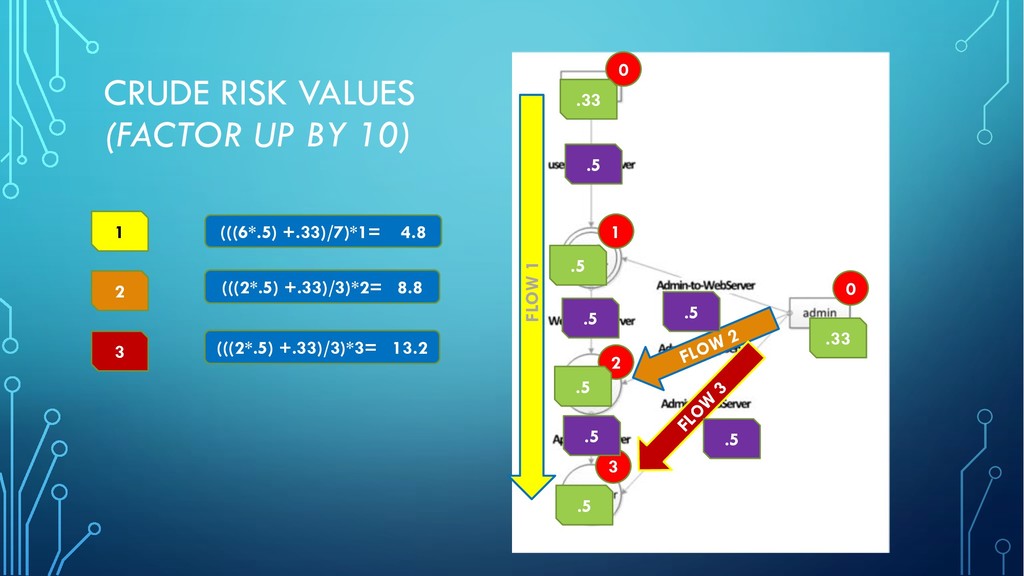
  22. CRUDE RISK VALUES (FACTOR UP BY 10) 0 1 0

    2 3 FLOW 2 FLO W 3 FLOW 1 .33 1 2 (((6*.5) +.33)/7)*1= 4.8 (((2*.5) +.33)/3)*2= 8.8 3 (((2*.5) +.33)/3)*3= 13.2 .5 .5 .5 .5 .5 .5 .33 .5 .5
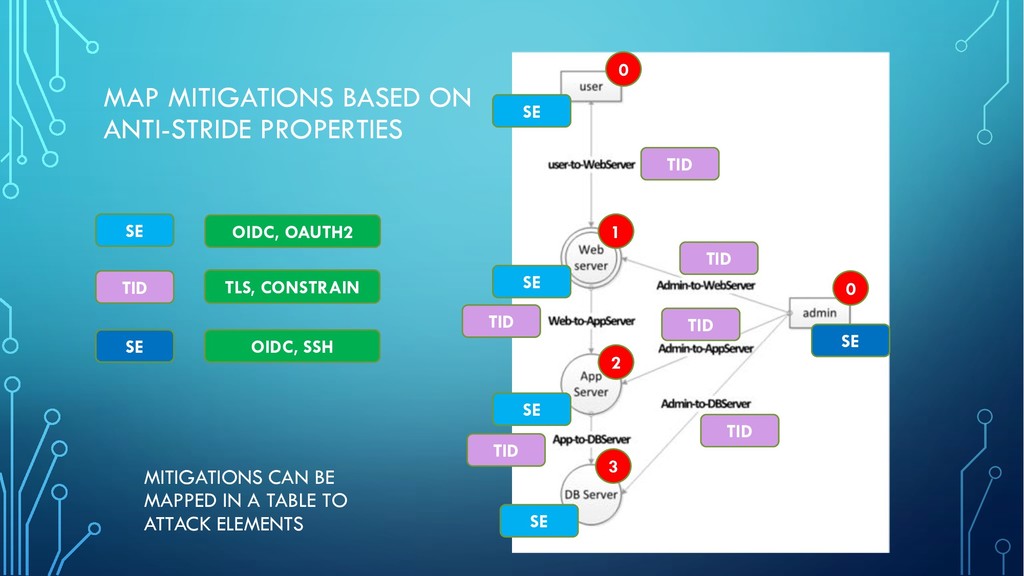
  23. MAP MITIGATIONS BASED ON ANTI-STRIDE PROPERTIES 0 1 0 2

    3 SE SE SE SE SE TID TID TID TID TID TID SE OIDC, OAUTH2 TID SE TLS, CONSTRAIN OIDC, SSH MITIGATIONS CAN BE MAPPED IN A TABLE TO ATTACK ELEMENTS
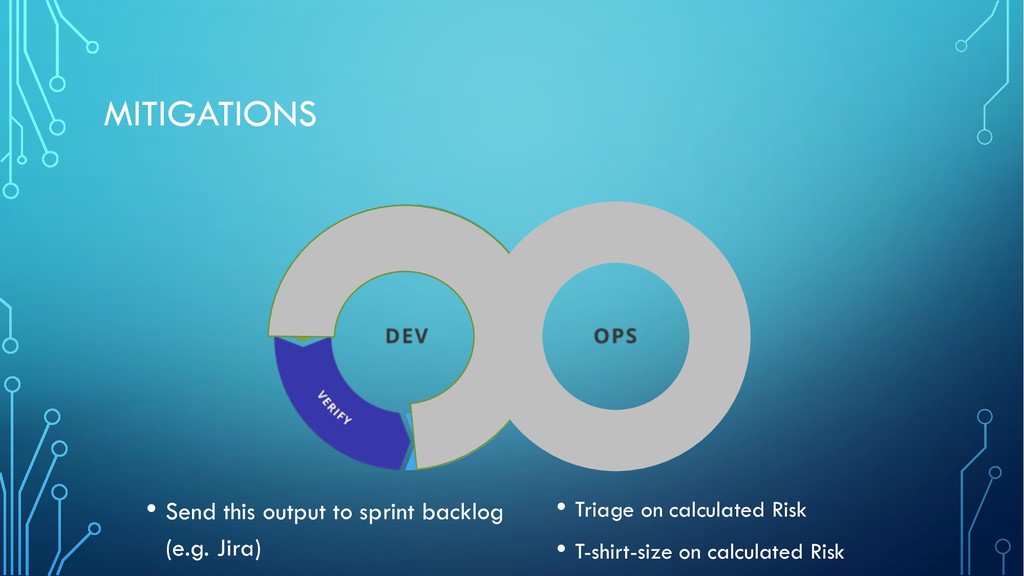
  24. MITIGATIONS • Triage on calculated Risk • T-shirt-size on calculated

    Risk • Send this output to sprint backlog (e.g. Jira)
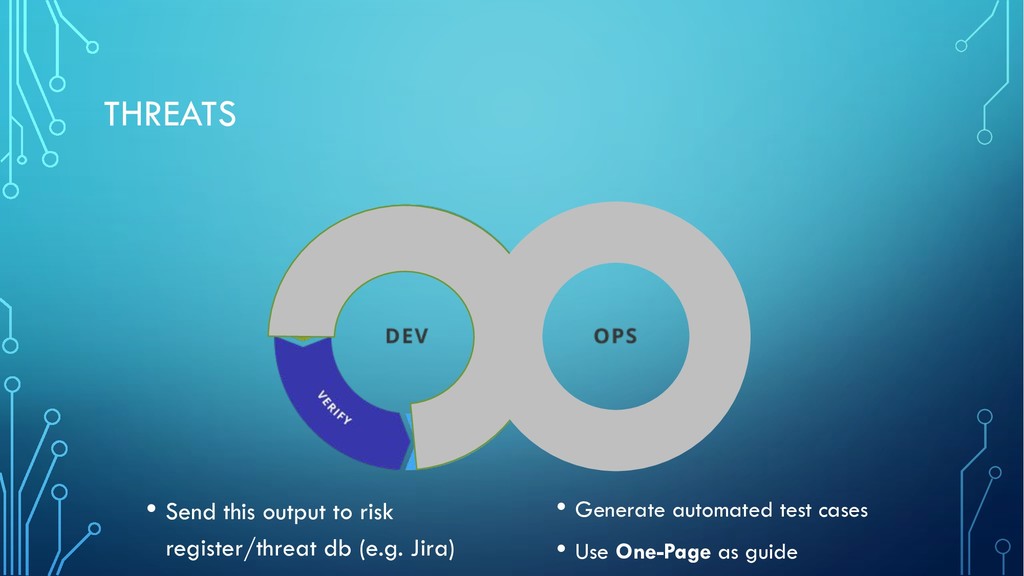
  25. THREATS • Generate automated test cases • Use One-Page as

    guide • Send this output to risk register/threat db (e.g. Jira)
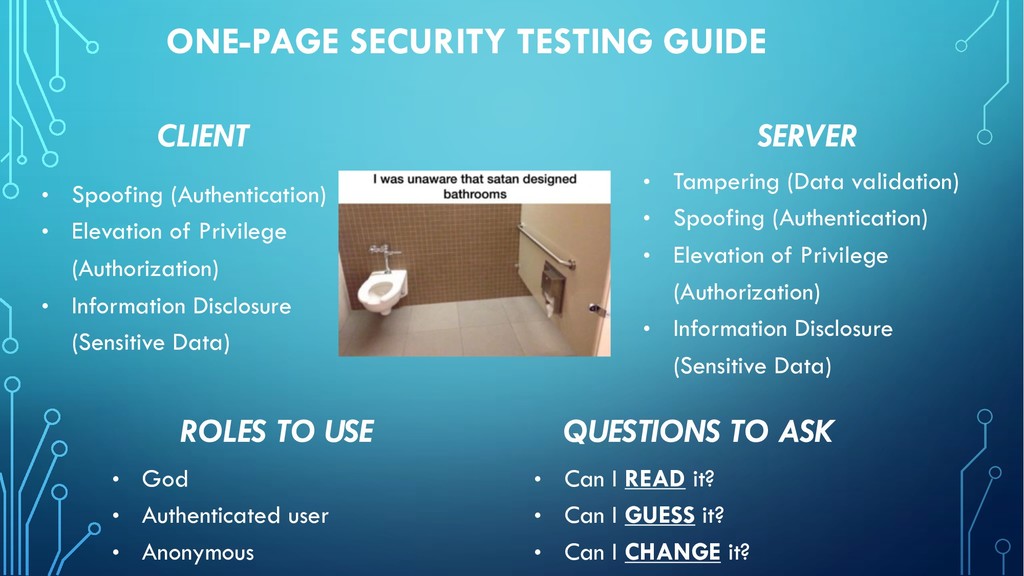
  26. ONE-PAGE SECURITY TESTING GUIDE • Spoofing (Authentication) • Elevation of

    Privilege (Authorization) • Information Disclosure (Sensitive Data) • Tampering (Data validation) • Spoofing (Authentication) • Elevation of Privilege (Authorization) • Information Disclosure (Sensitive Data) CLIENT SERVER ROLES TO USE QUESTIONS TO ASK • God • Authenticated user • Anonymous • Can I READ it? • Can I GUESS it? • Can I CHANGE it?