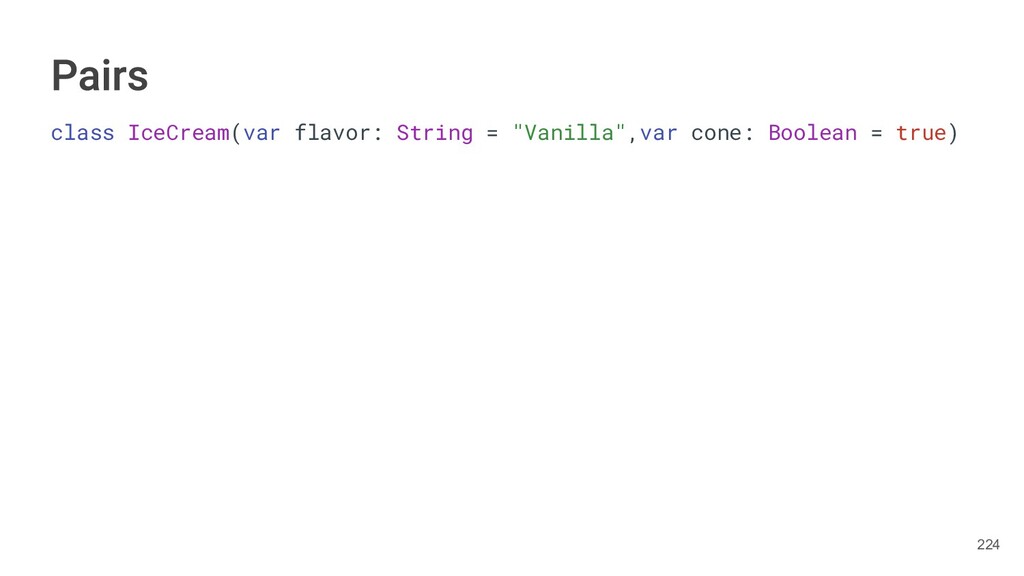
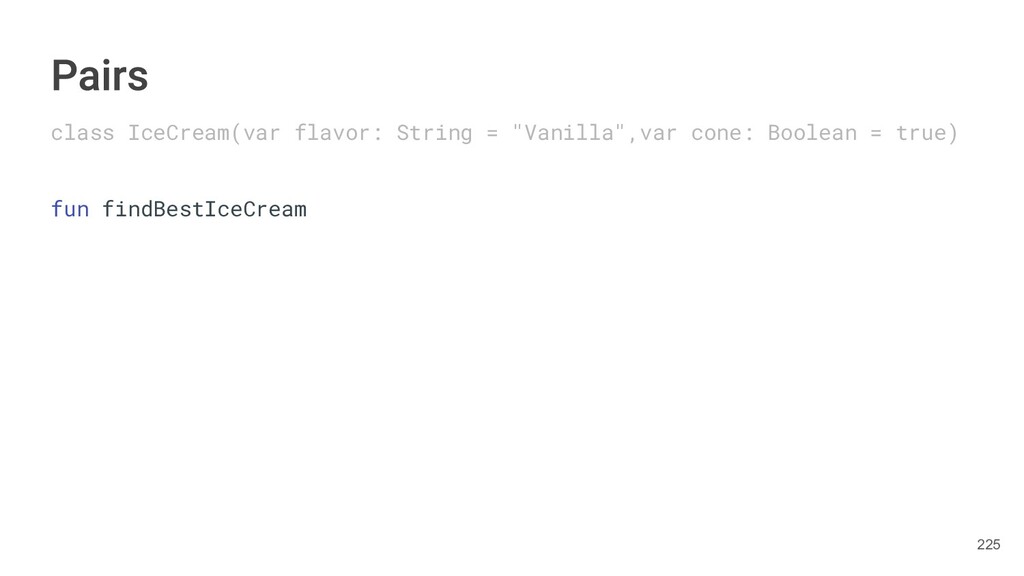
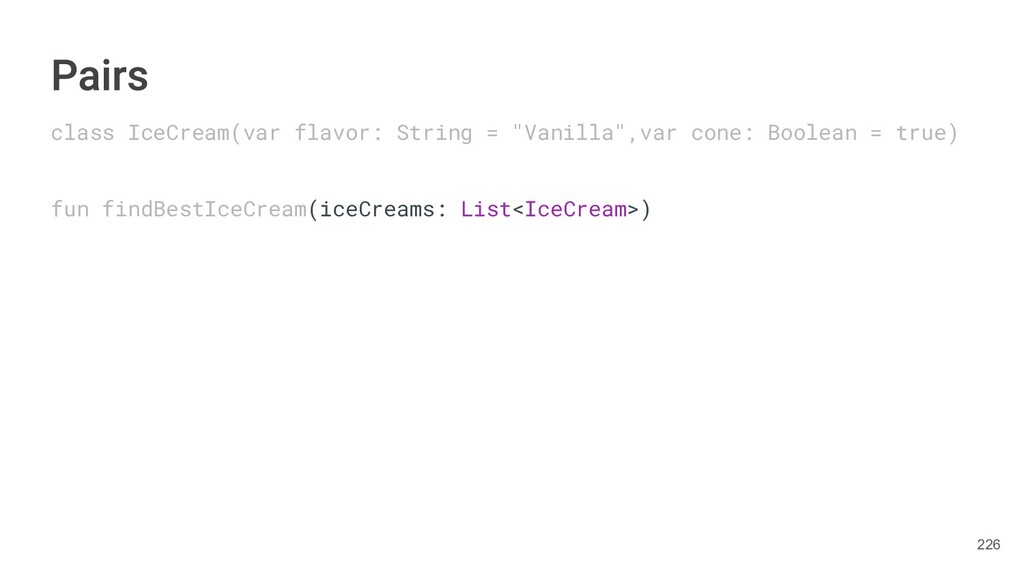
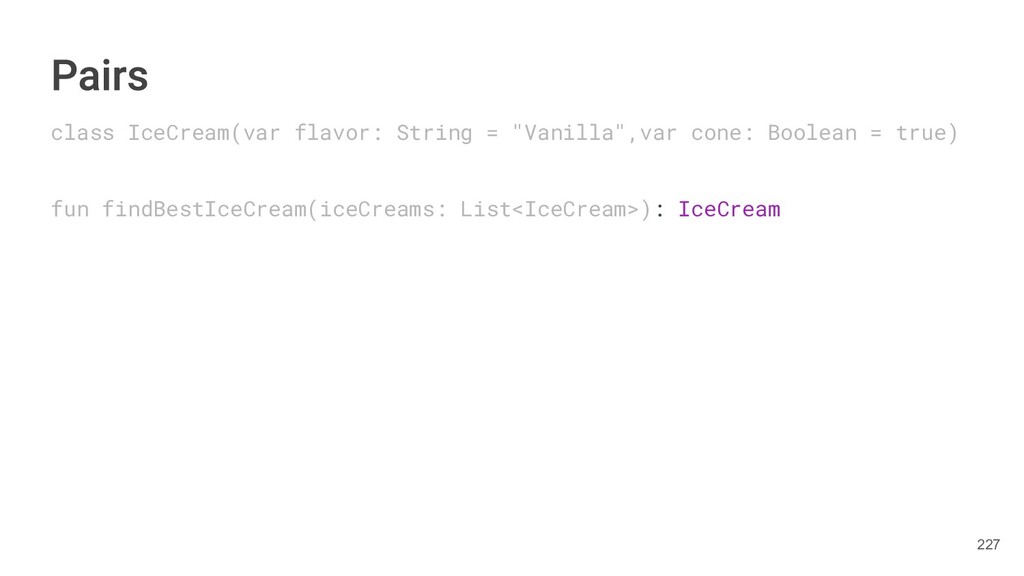
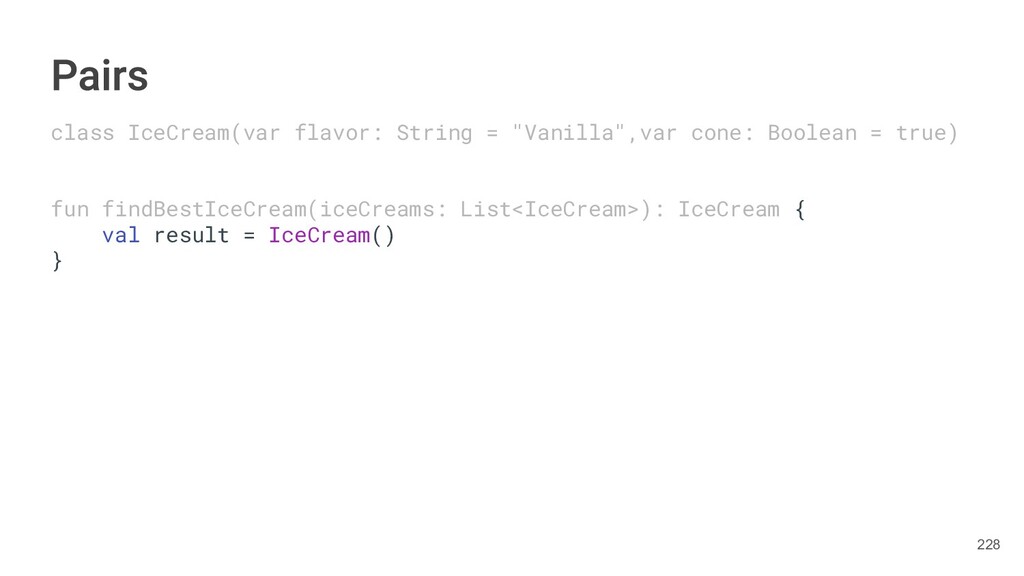
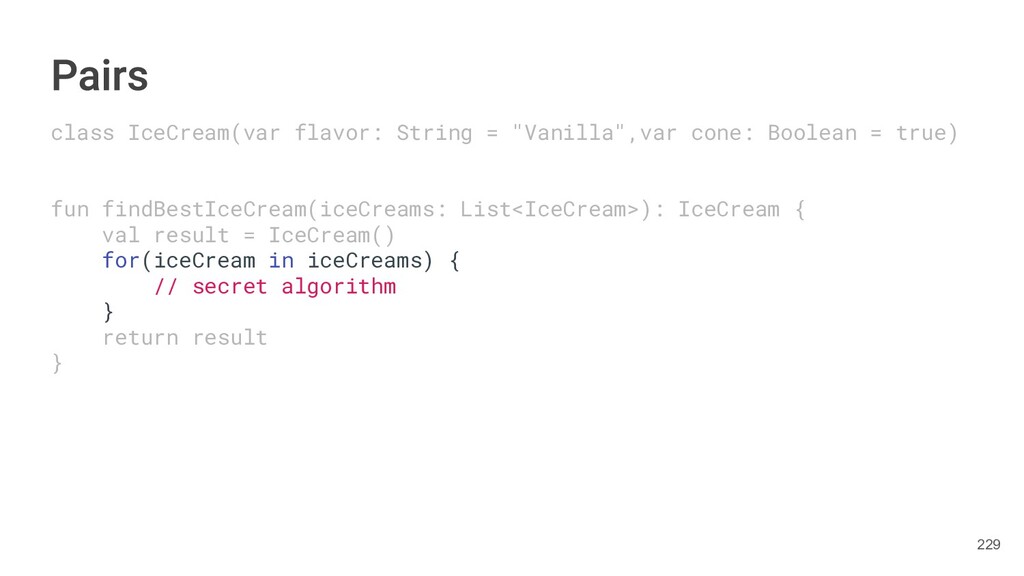
fun findBestIceCream(iceCreams: List<IceCream>): IceCream { val result = IceCream() for(iceCream in iceCreams) { // secret algorithm } return result } 229
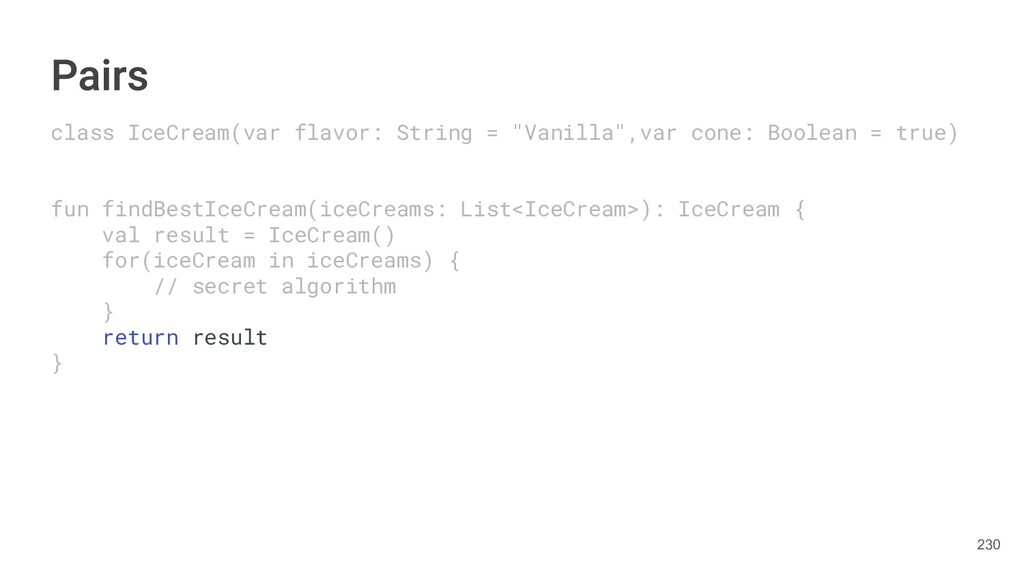
fun findBestIceCream(iceCreams: List<IceCream>): IceCream { val result = IceCream() for(iceCream in iceCreams) { // secret algorithm } return result } 230
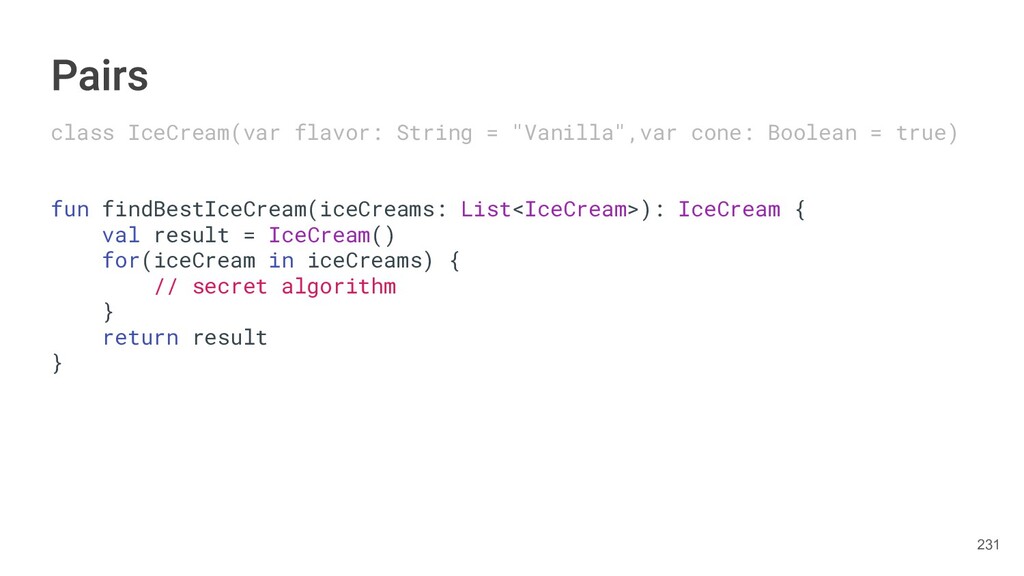
fun findBestIceCream(iceCreams: List<IceCream>): IceCream { val result = IceCream() for(iceCream in iceCreams) { // secret algorithm } return result } 231
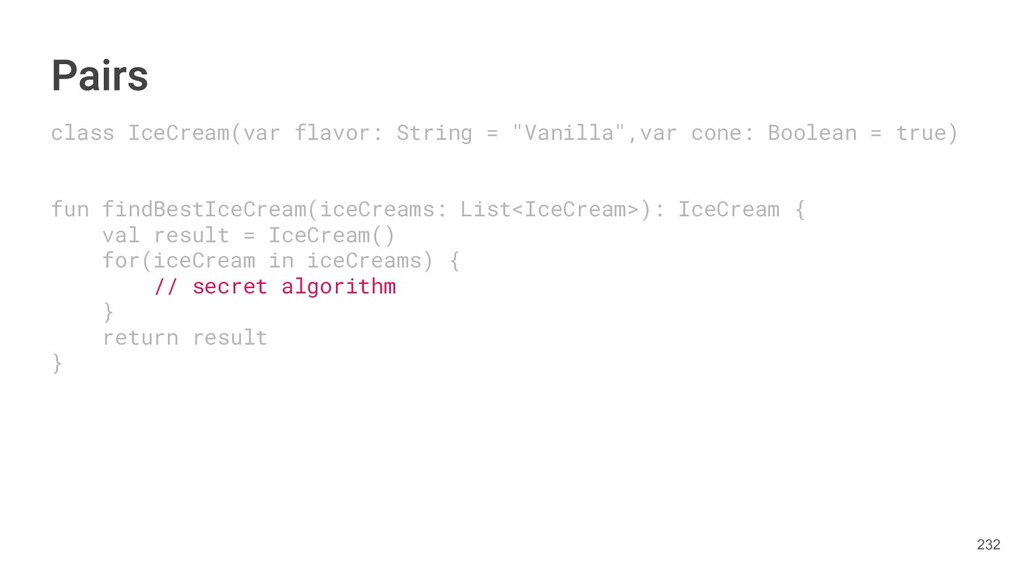
fun findBestIceCream(iceCreams: List<IceCream>): IceCream { val result = IceCream() for(iceCream in iceCreams) { // secret algorithm } return result } 232
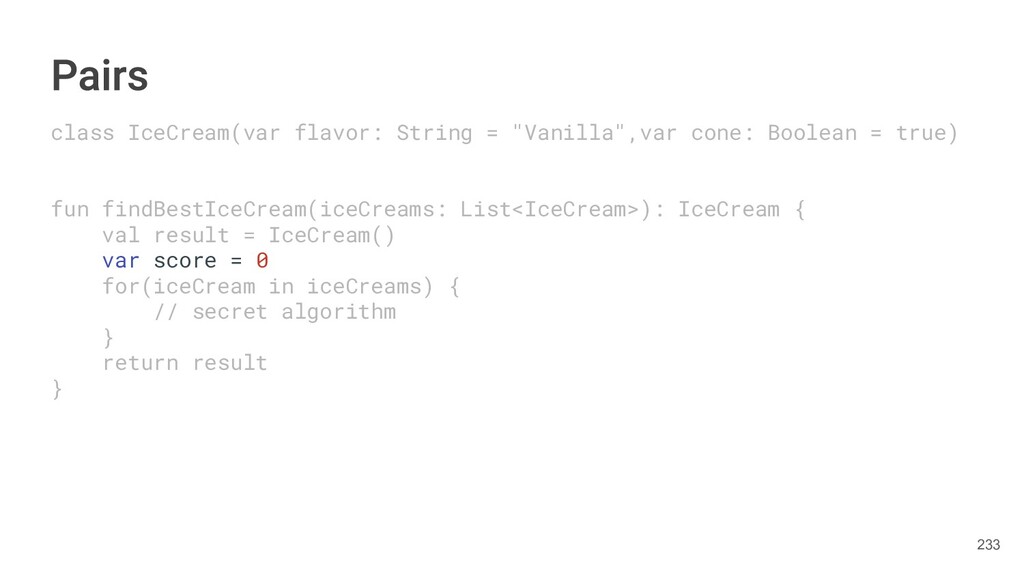
fun findBestIceCream(iceCreams: List<IceCream>): IceCream { val result = IceCream() var score = 0 for(iceCream in iceCreams) { // secret algorithm } return result } 233
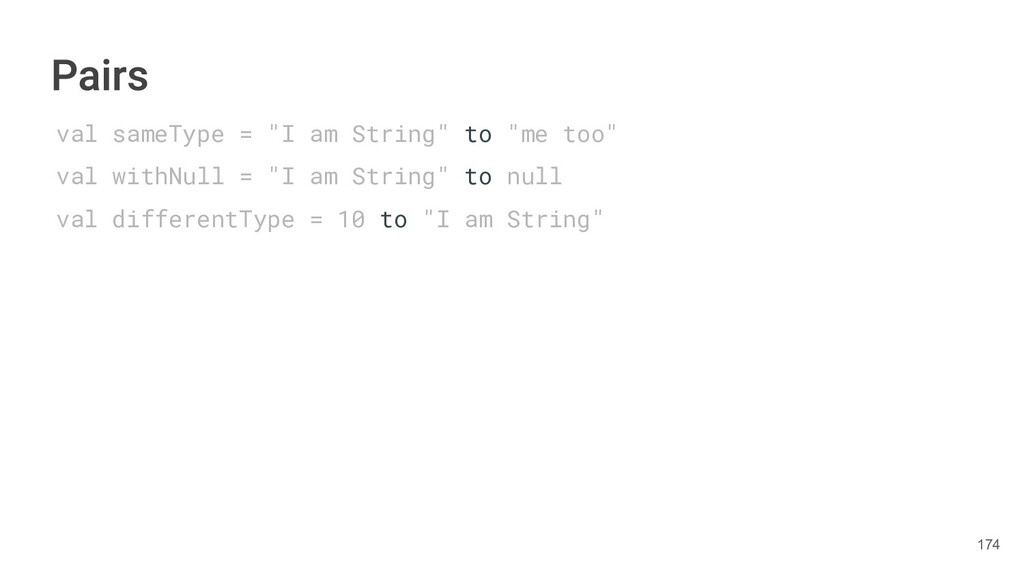
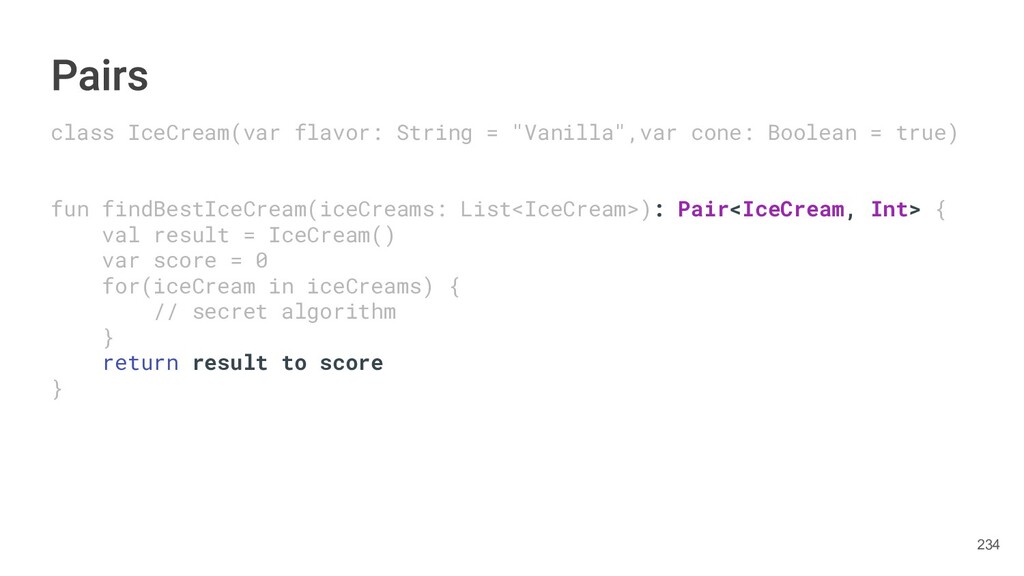
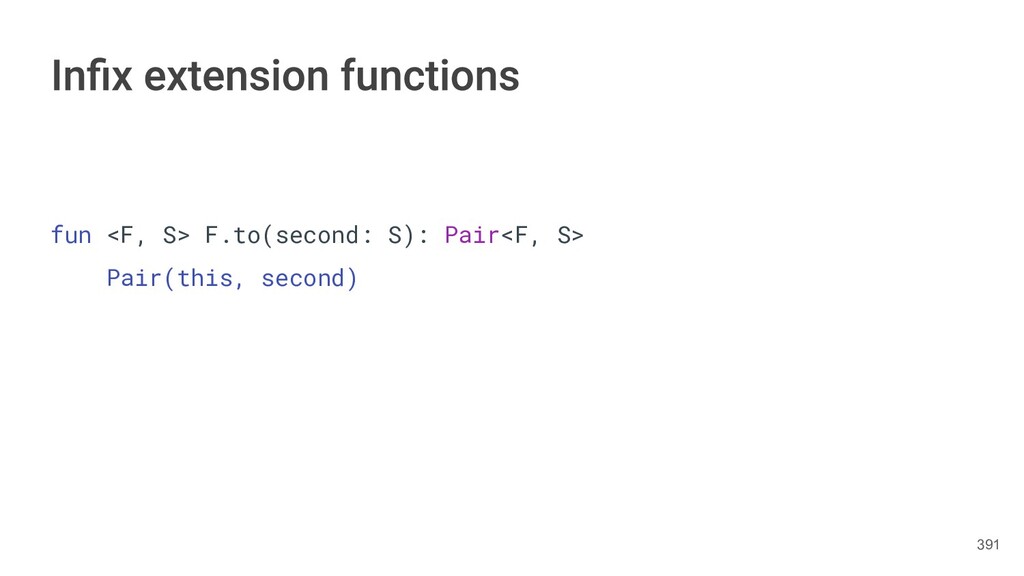
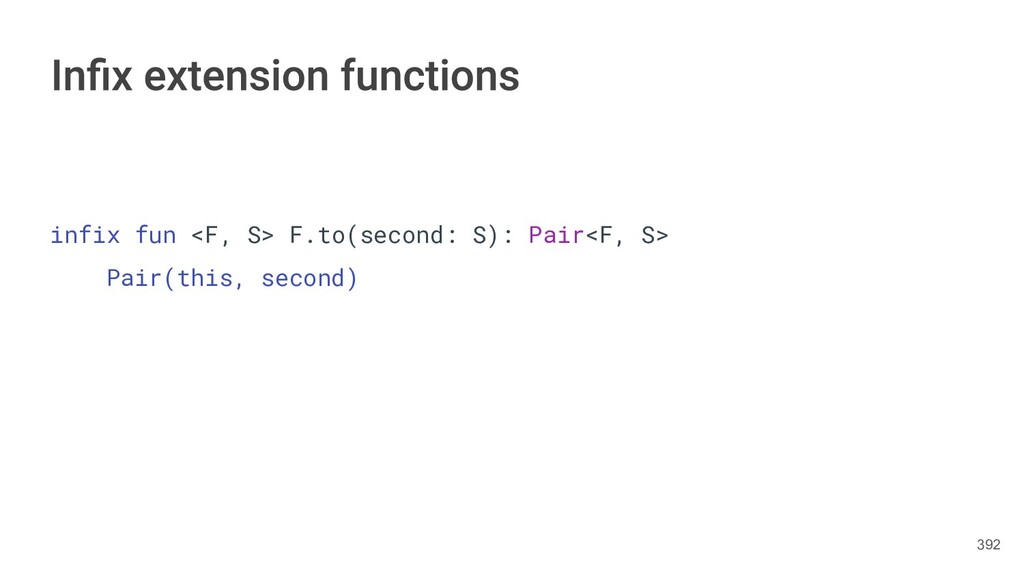
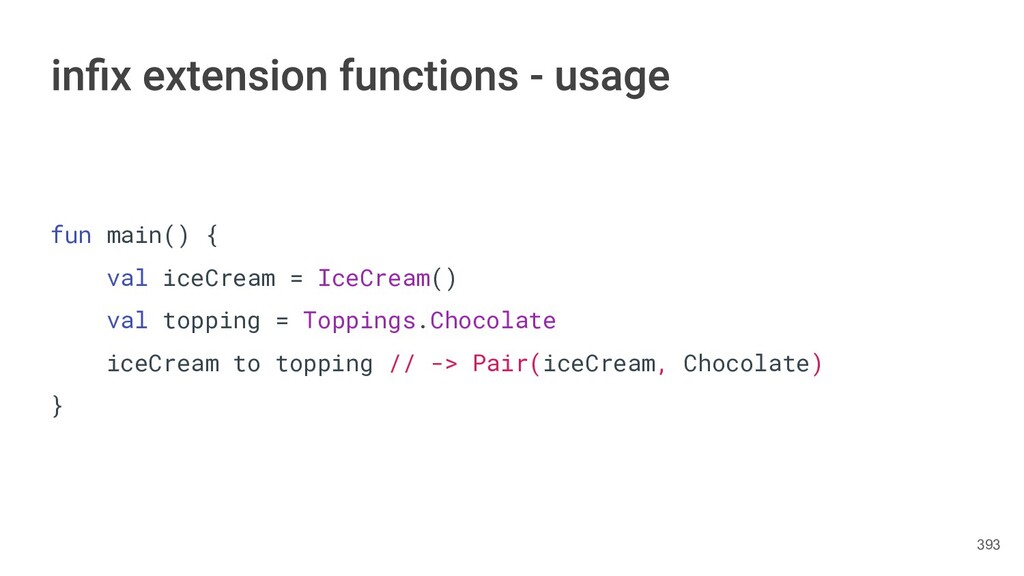
fun findBestIceCream(iceCreams: List<IceCream>): Pair<IceCream, Int> { val result = IceCream() var score = 0 for(iceCream in iceCreams) { // secret algorithm } return result to score } 234
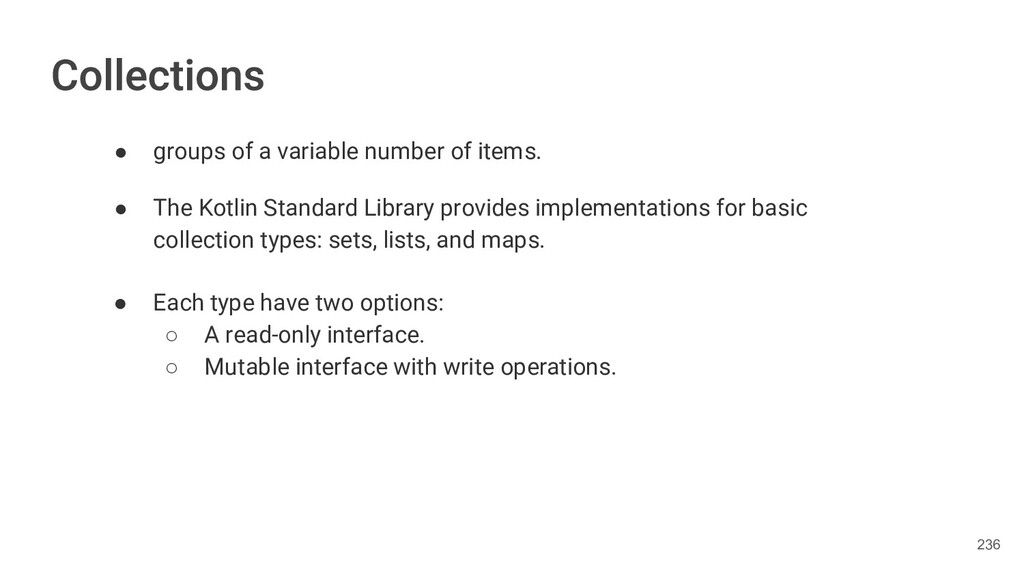
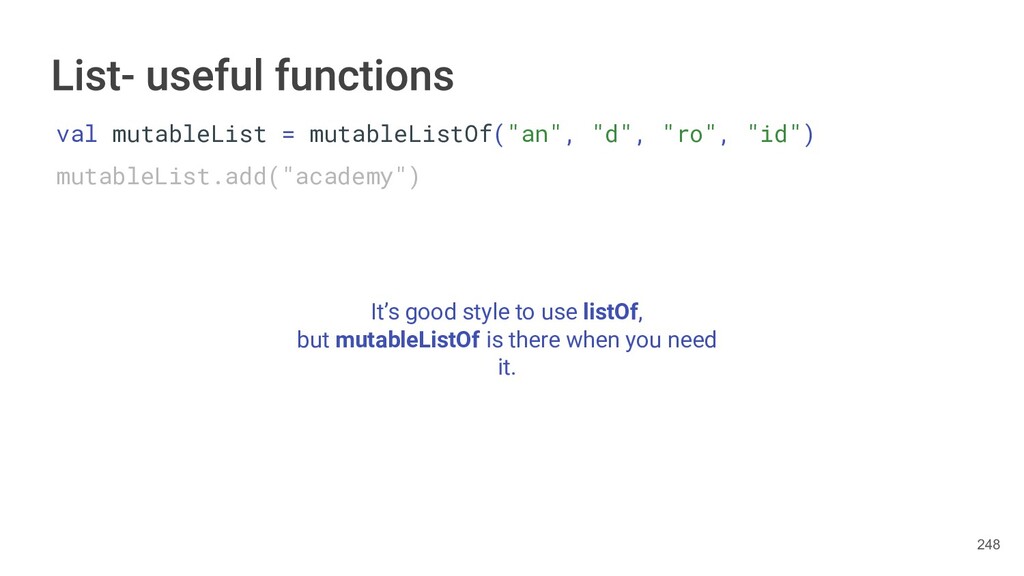
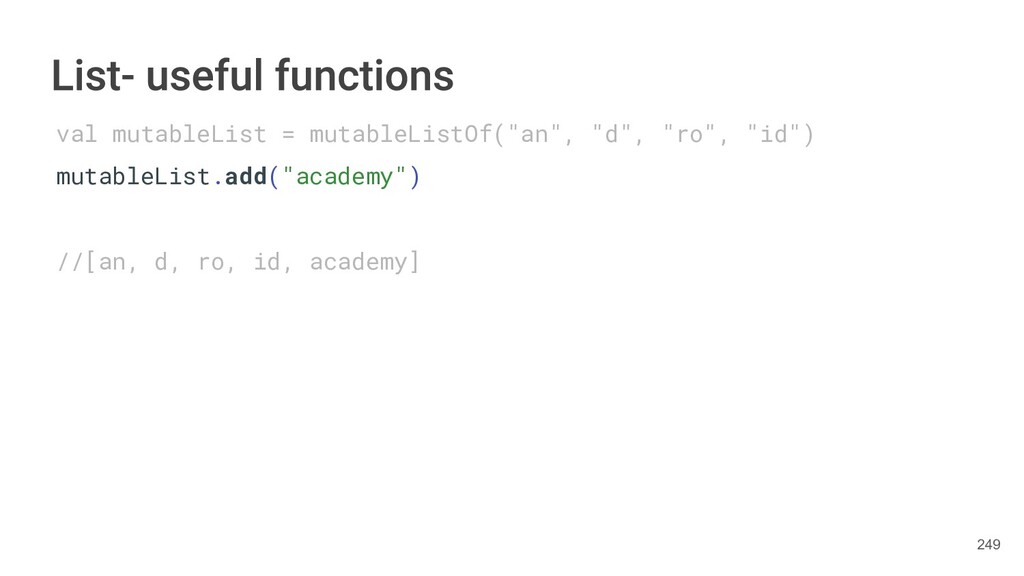
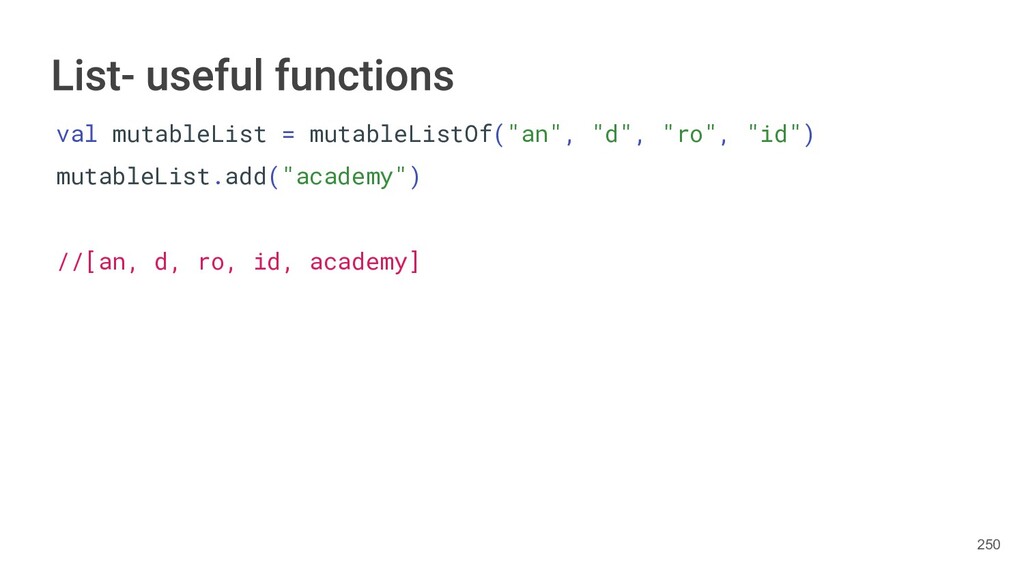
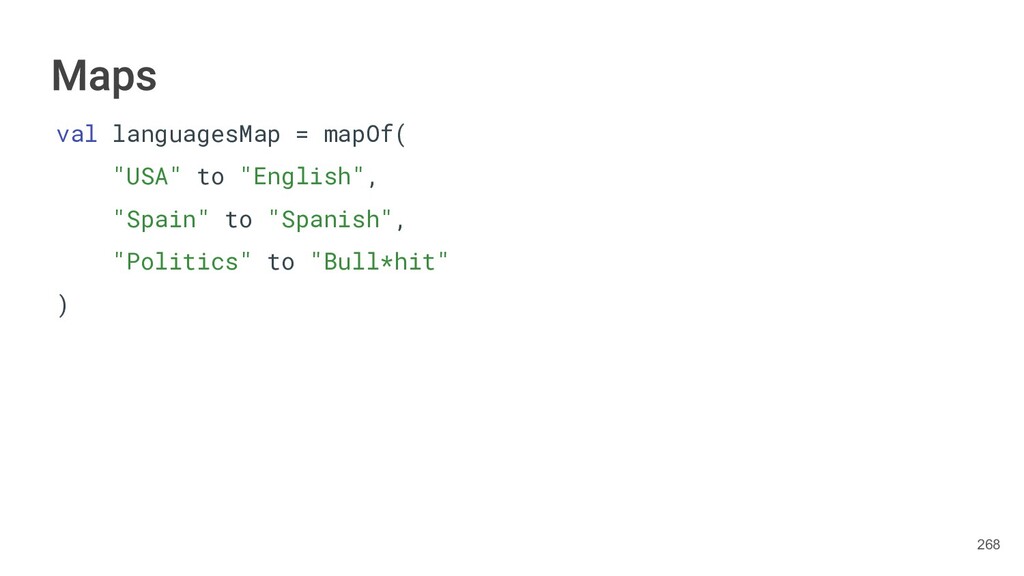
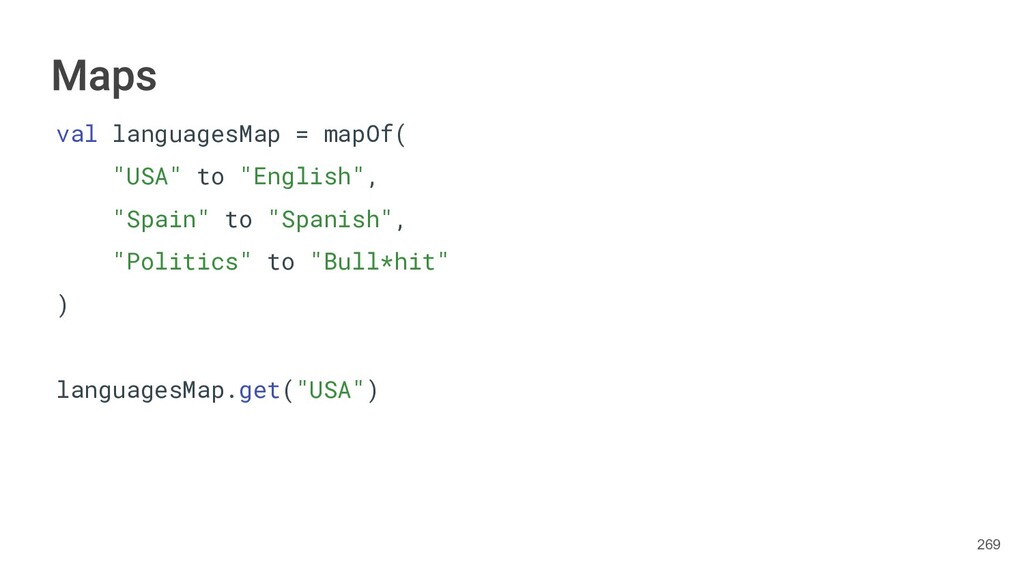
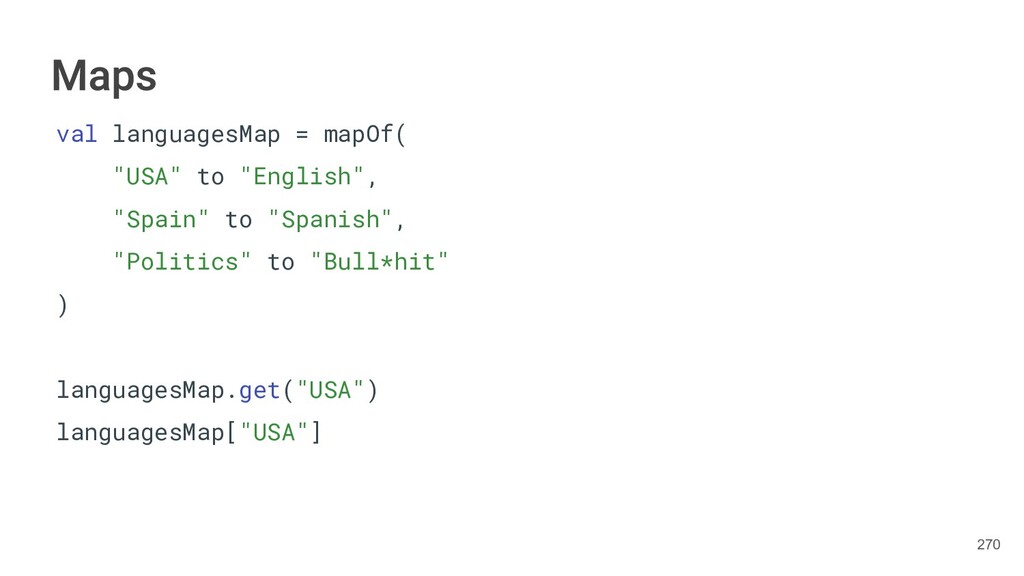
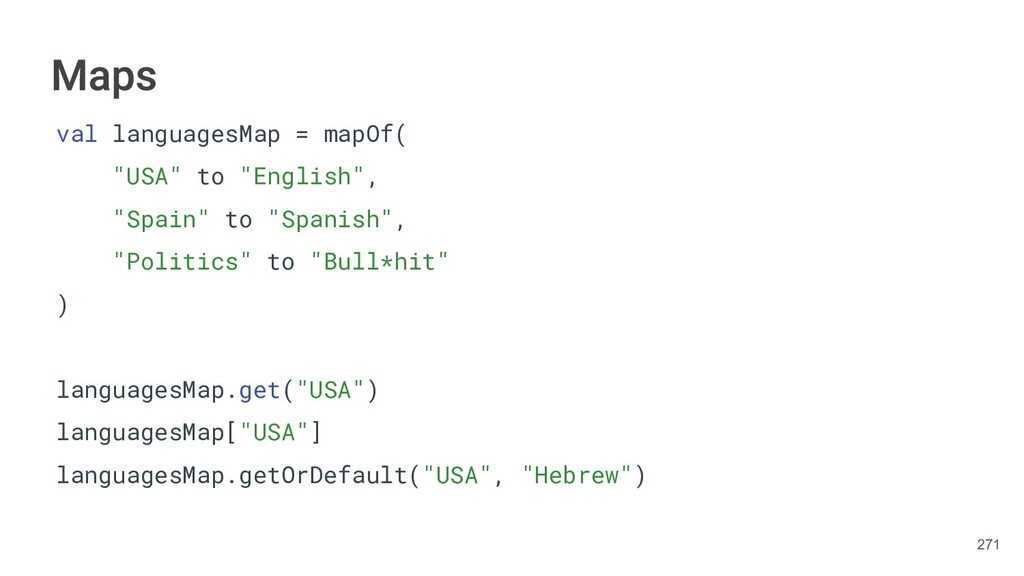
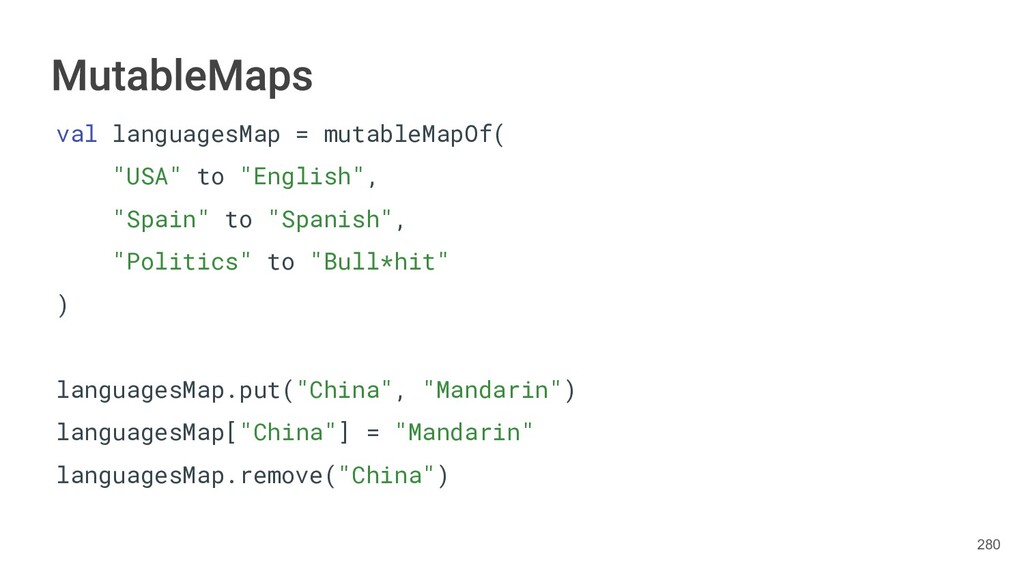
Kotlin Standard Library provides implementations for basic collection types: sets, lists, and maps. • Each type have two options: ◦ A read-only interface. ◦ Mutable interface with write operations. 236
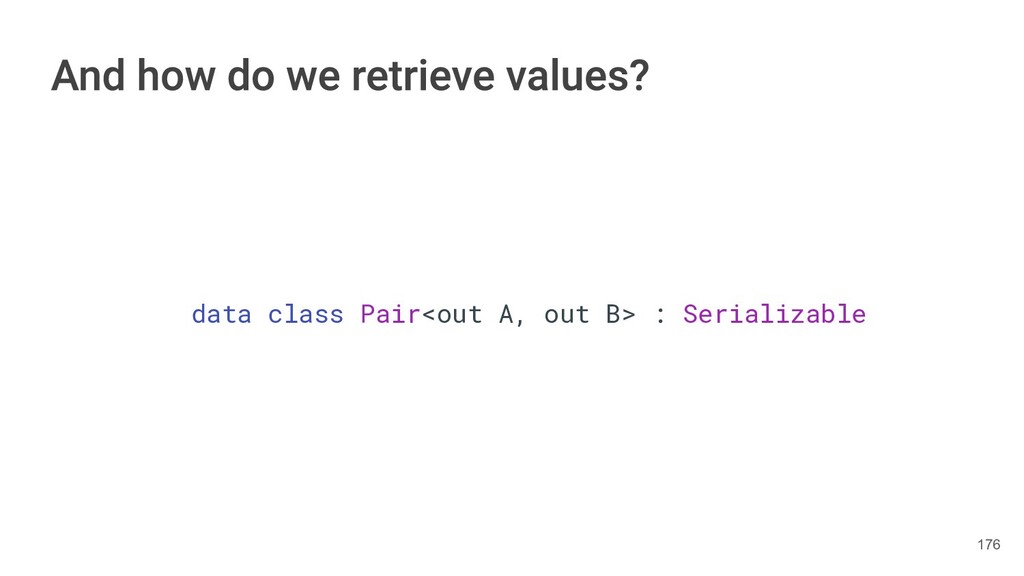
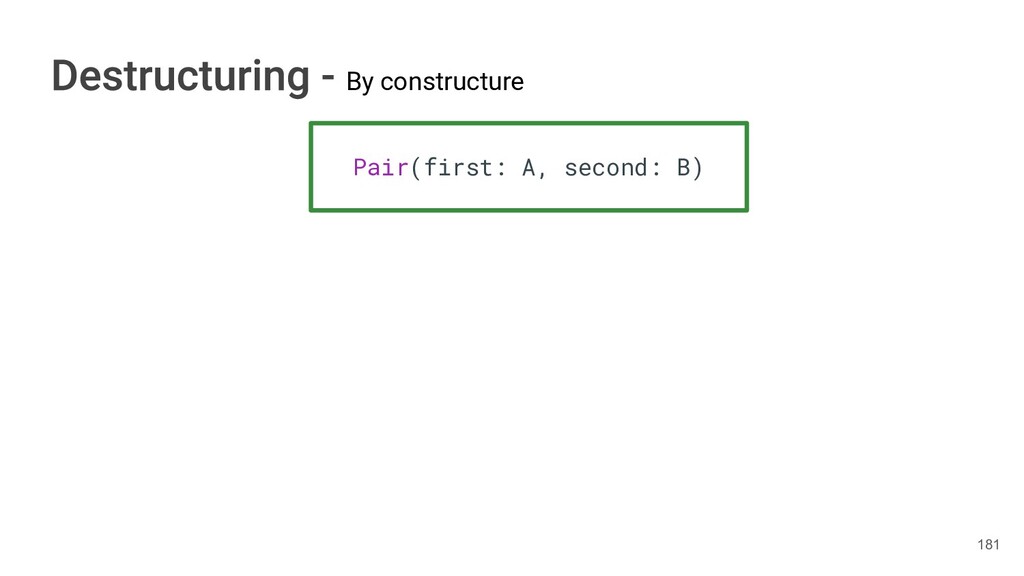
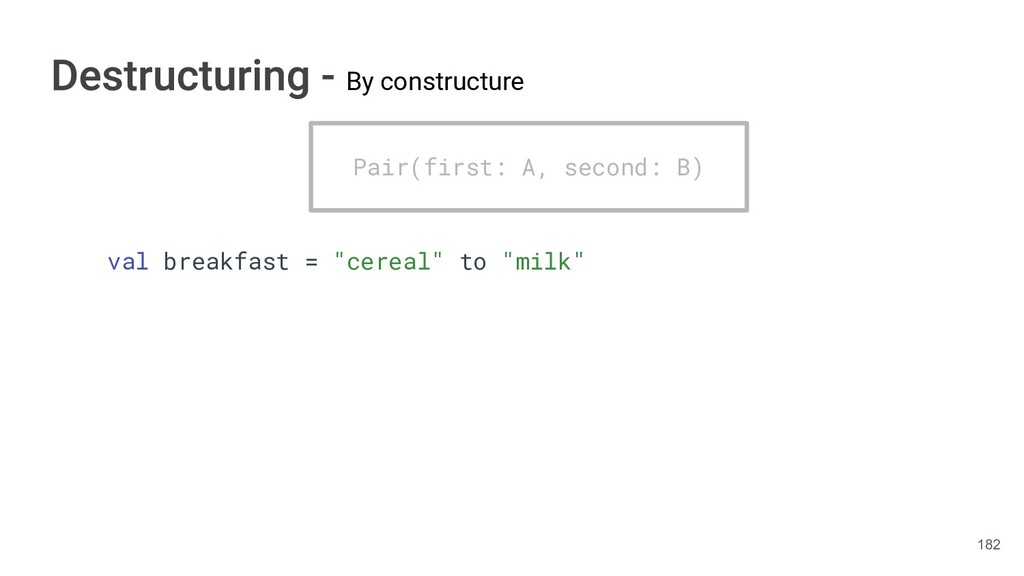
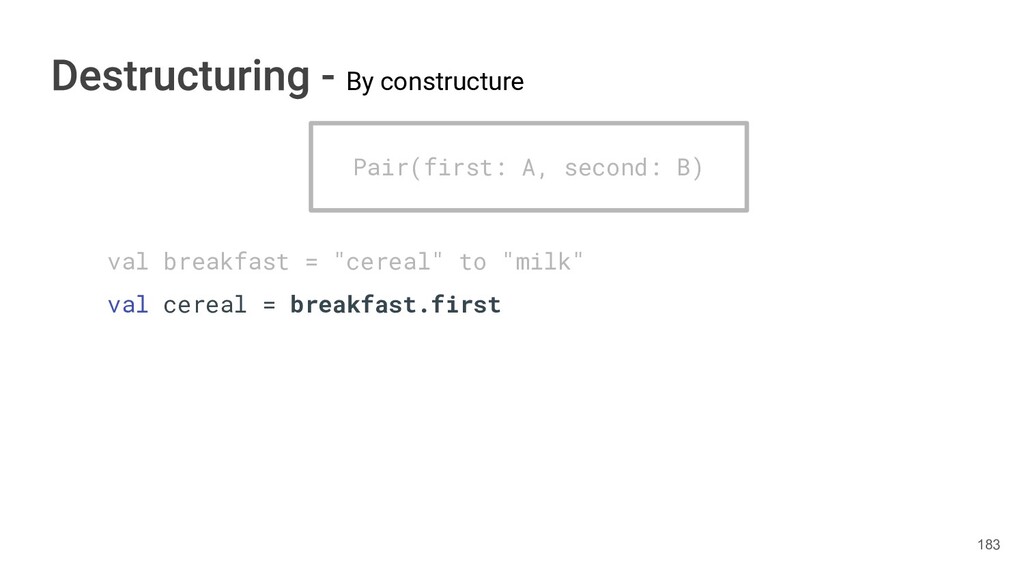
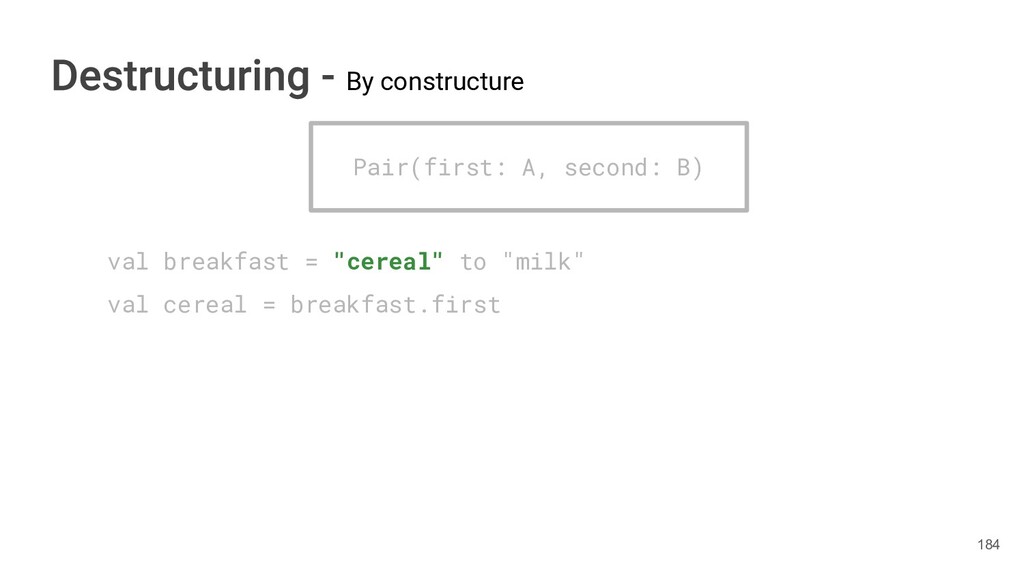
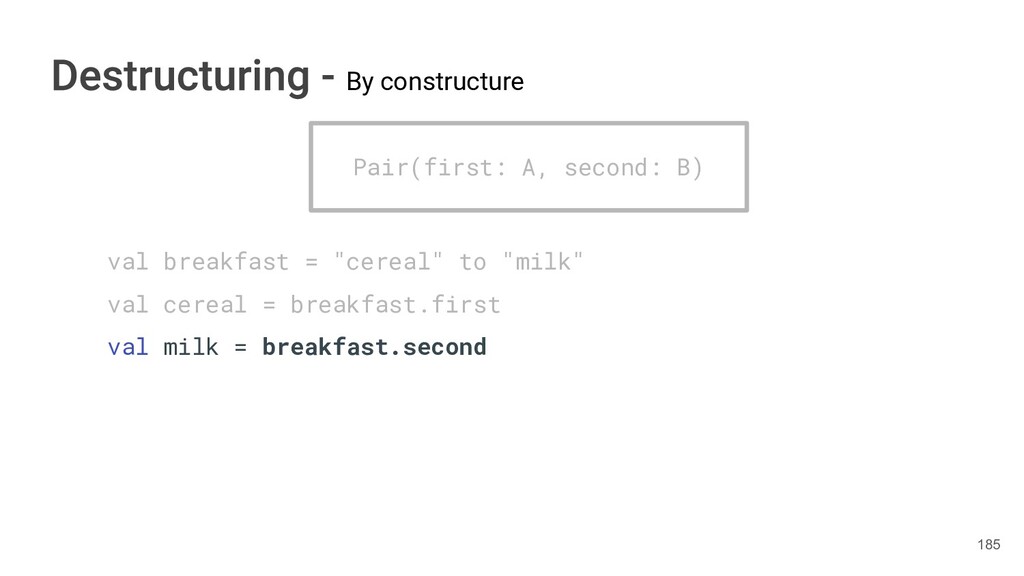
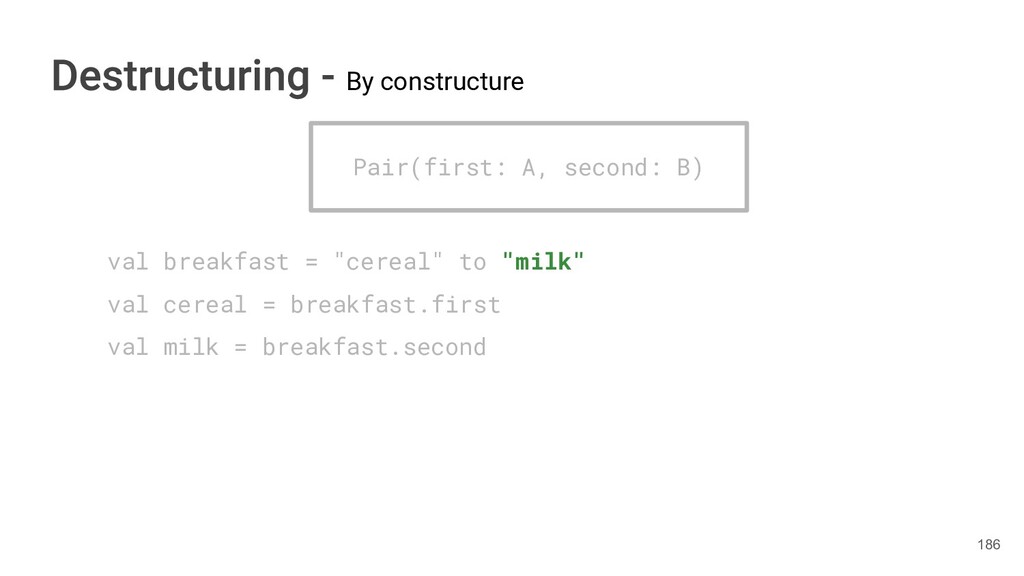
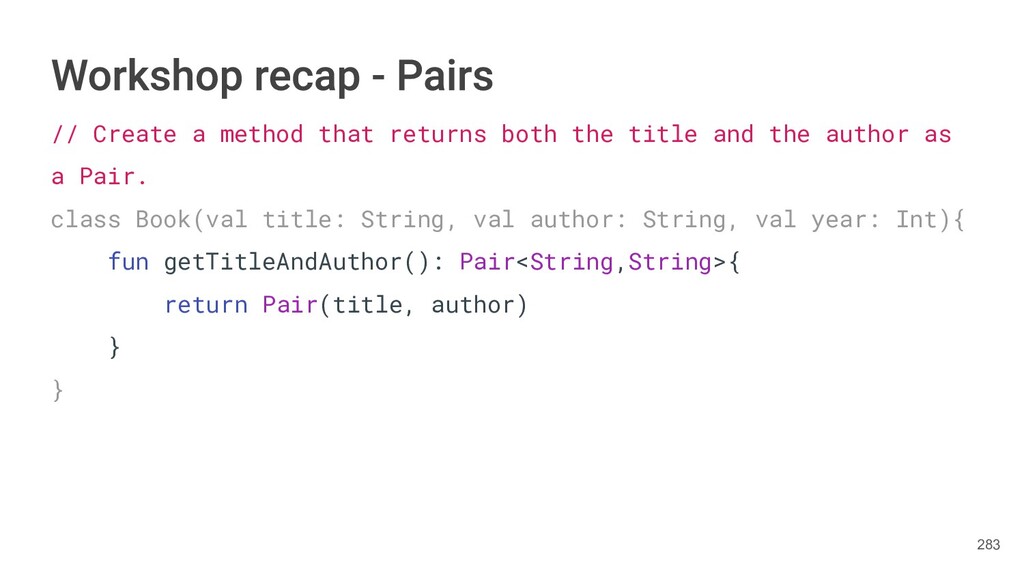
the author as a Pair. class Book(val title: String, val author: String, val year: Int){ fun getTitleAndAuthor(): Pair<String,String>{ return Pair(title, author) } } 283
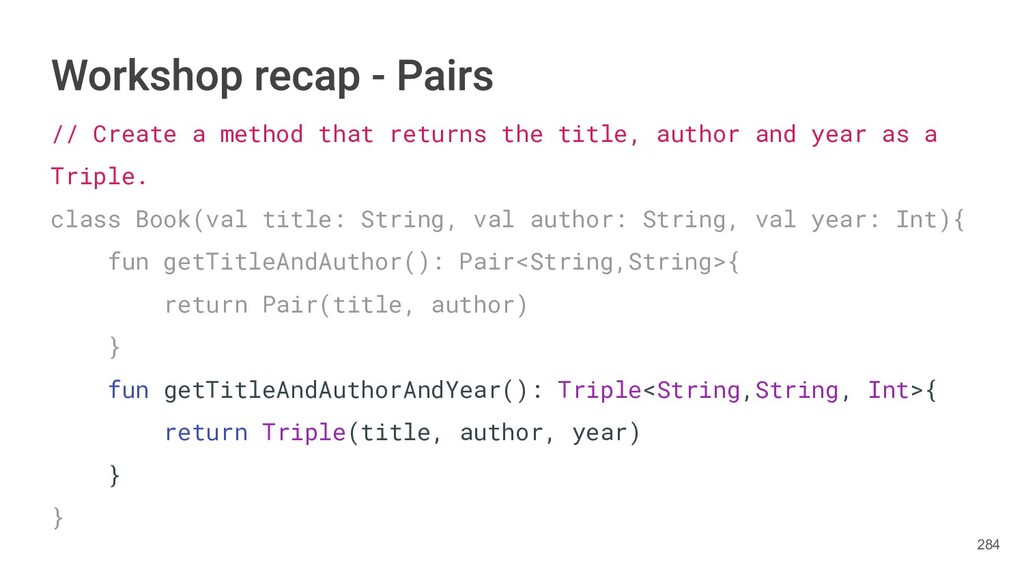
year as a Triple. class Book(val title: String, val author: String, val year: Int){ fun getTitleAndAuthor(): Pair<String,String>{ return Pair(title, author) } fun getTitleAndAuthorAndYear(): Triple<String,String, Int>{ return Triple(title, author, year) } } 284
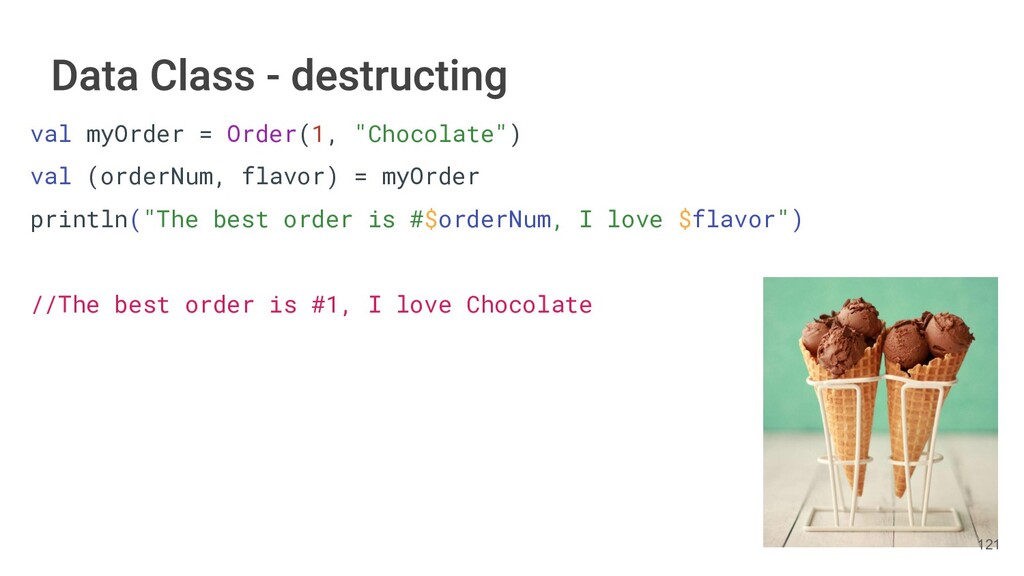
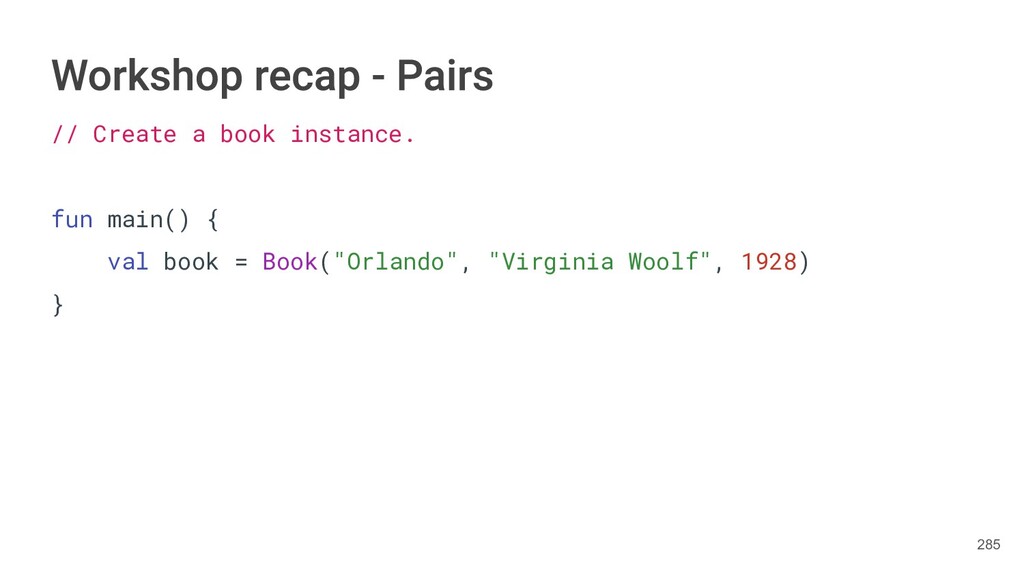
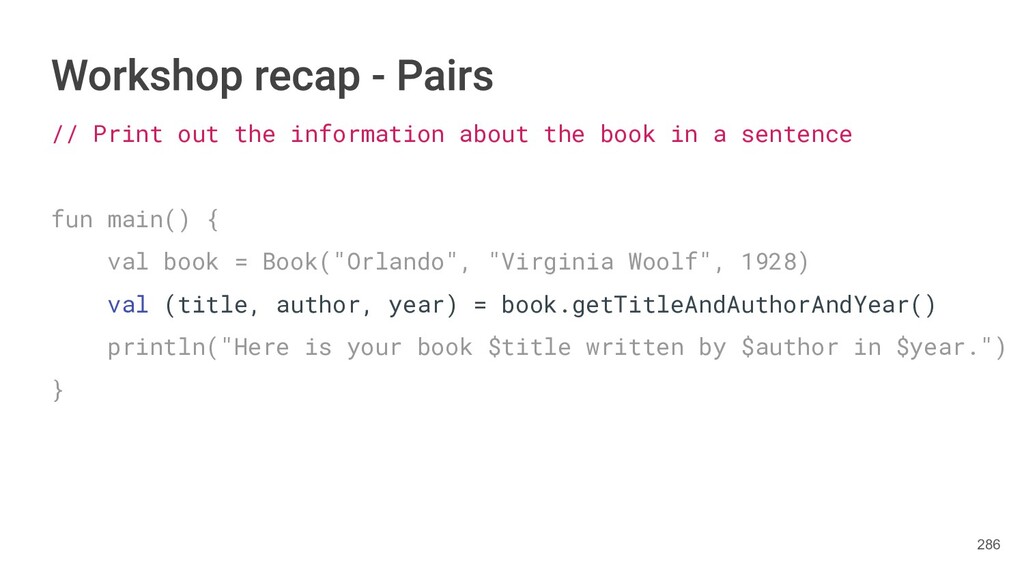
sentence fun main() { val book = Book("Orlando", "Virginia Woolf", 1928) val (title, author, year) = book.getTitleAndAuthorAndYear() println("Here is your book $title written by $author in $year.") } 286
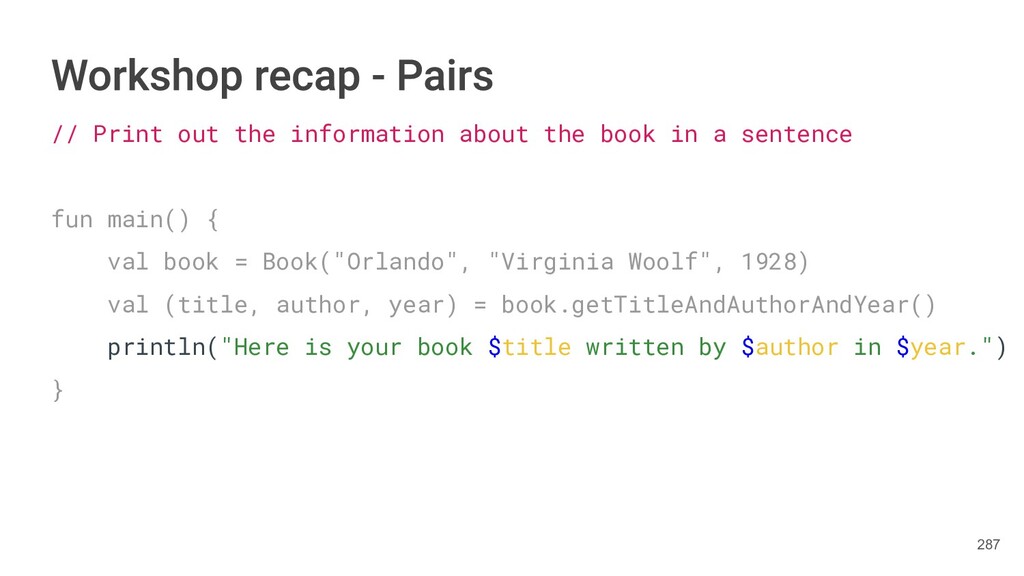
sentence fun main() { val book = Book("Orlando", "Virginia Woolf", 1928) val (title, author, year) = book.getTitleAndAuthorAndYear() println("Here is your book $title written by $author in $year.") } 287
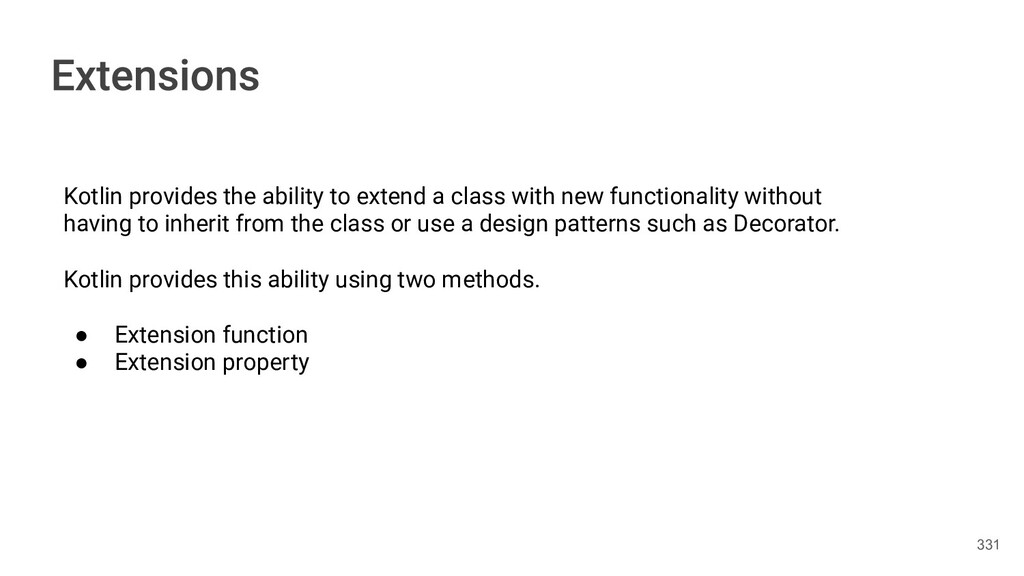
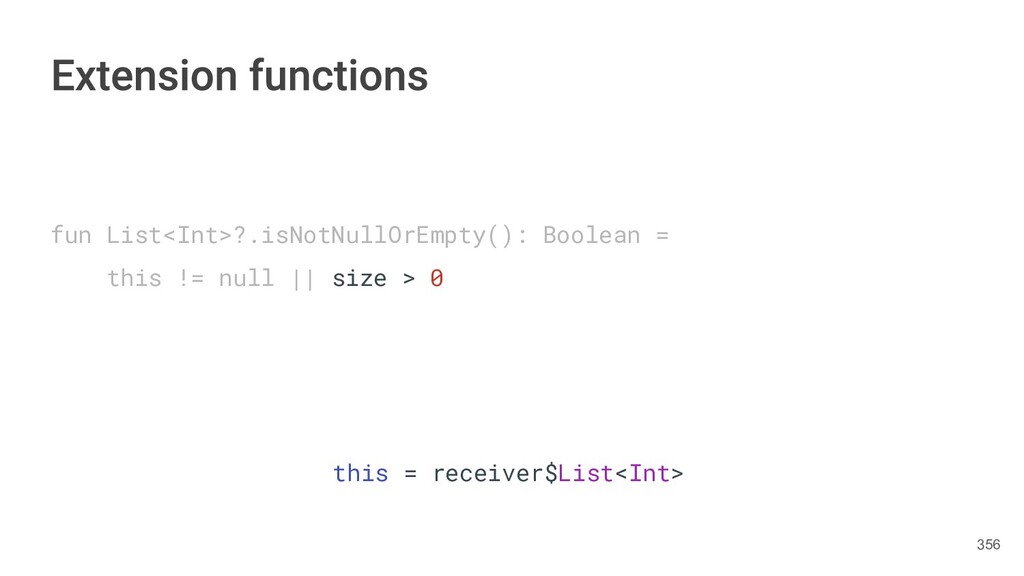
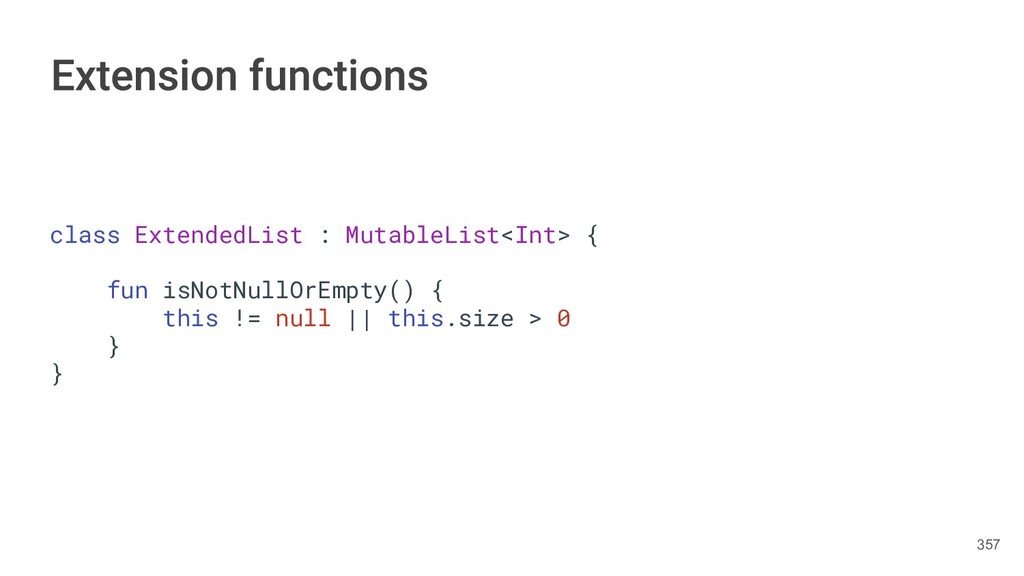
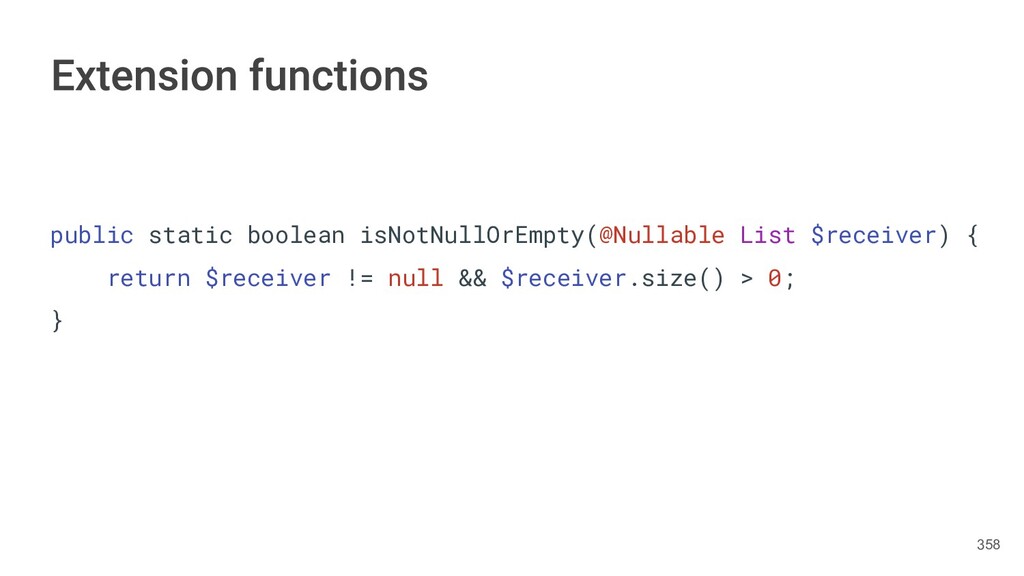
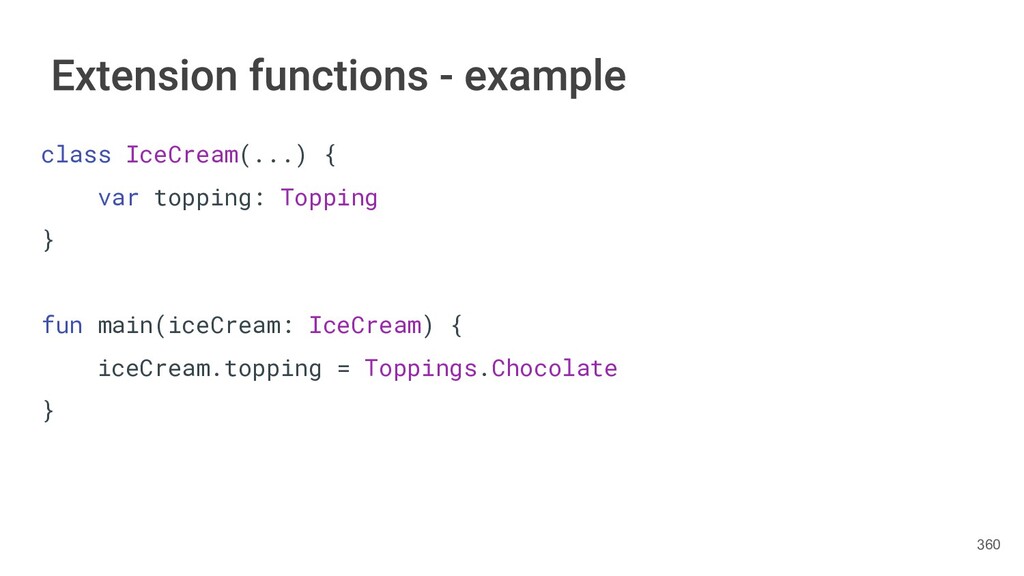
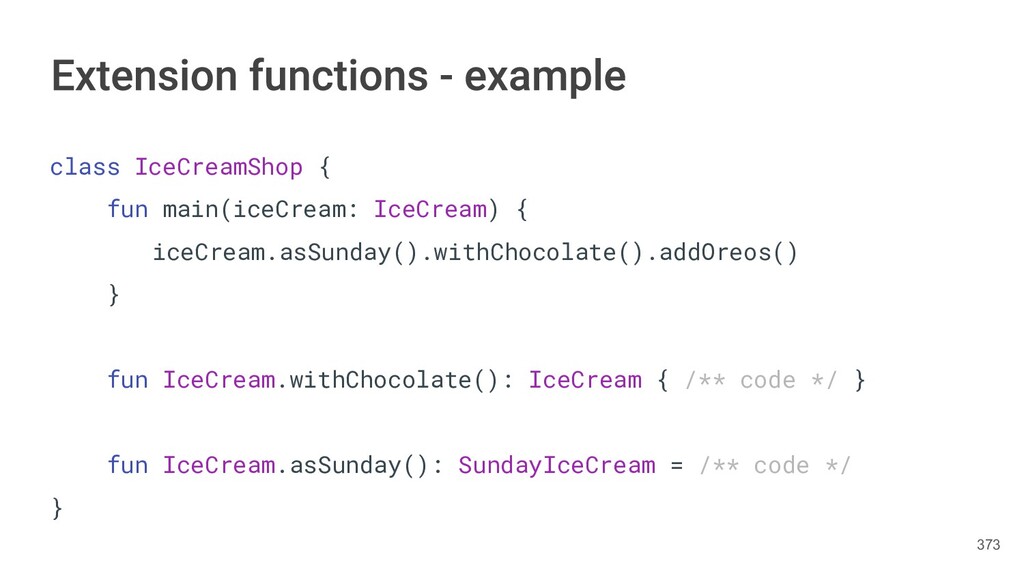
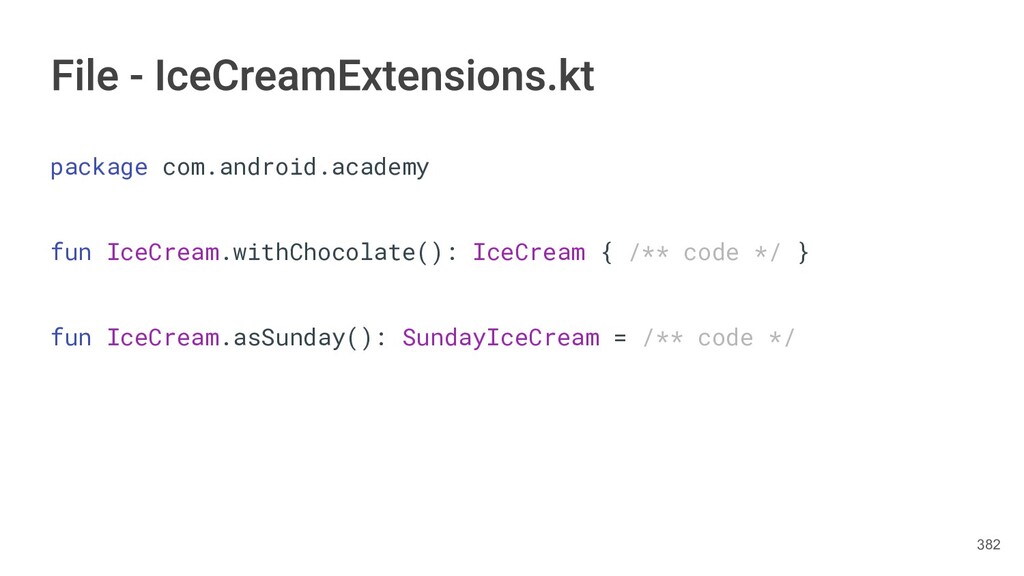
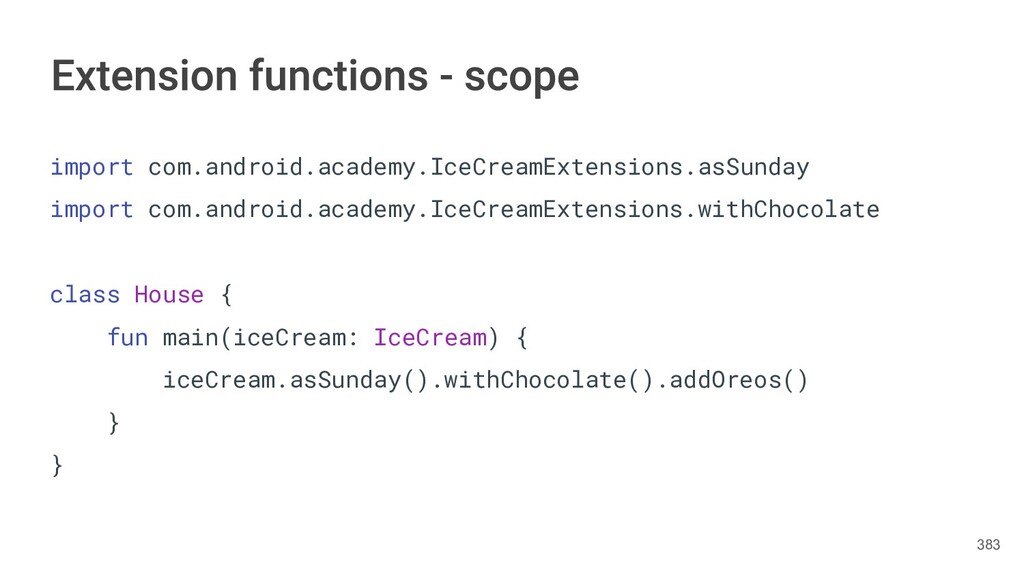
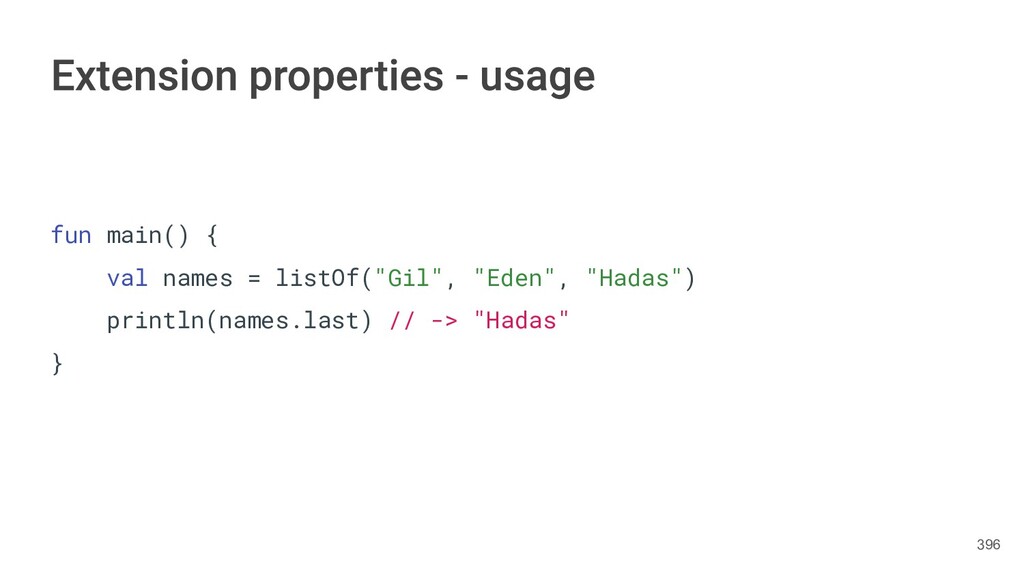
functionality without having to inherit from the class or use a design patterns such as Decorator. Kotlin provides this ability using two methods. • Extension function • Extension property 331


 gilgoldzweig
 drumath2237
 htkym
htkym
 akihisaikeda
 akase244
 oku053
 minodriven
 y0hgi
y0hgi
.jpg) yumnumm
yumnumm
 ivargrimstad
 hschwentner
 eed3si9n
 jeffersonlam
 lara
lara
 tanoku
 raygrieselhuber
 gurzu
gurzu
 techseoconnect
 joshbly
 tammielis
 greggifford
 aleyda
 morganepeng
 mojombo


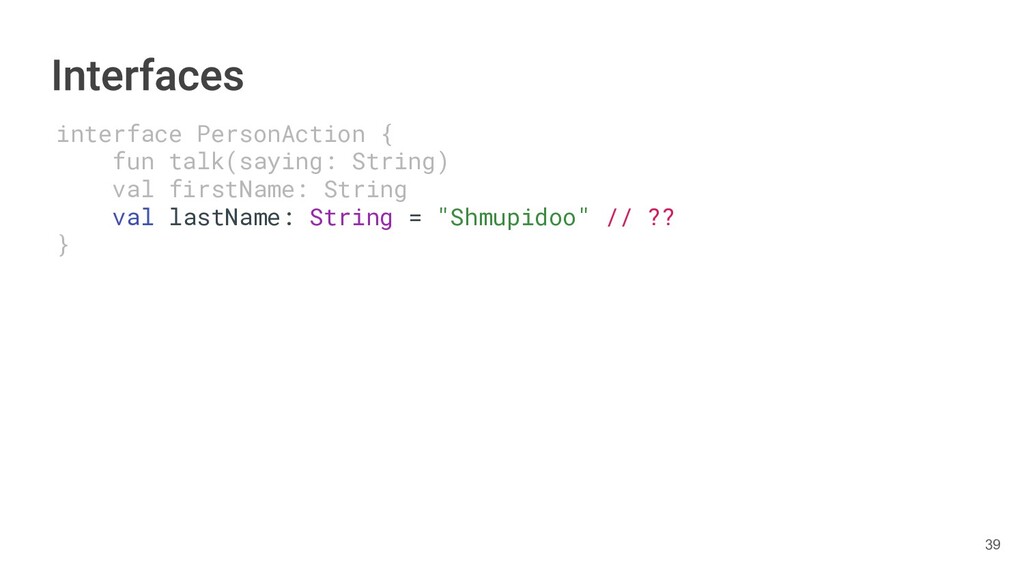
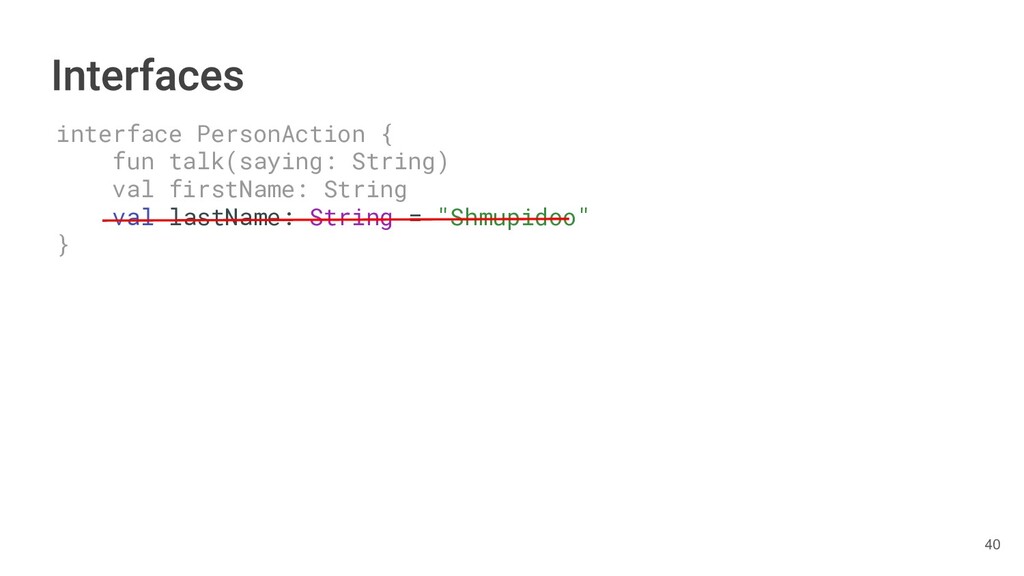
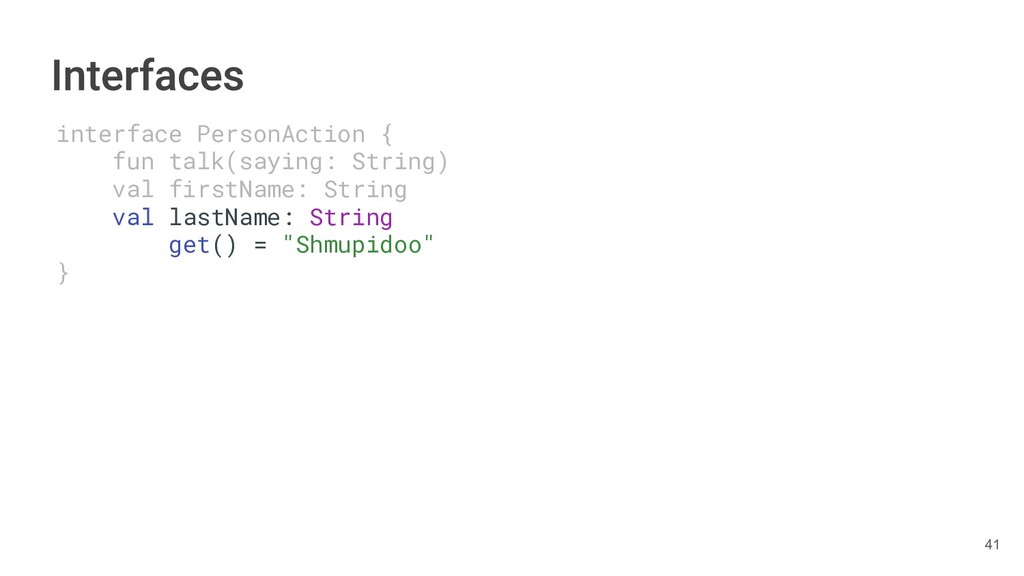
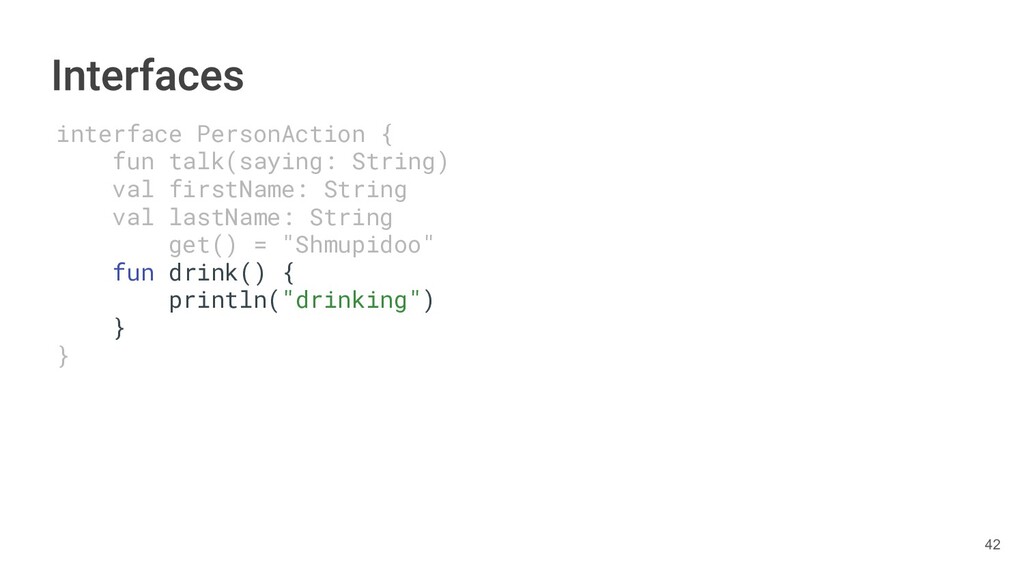






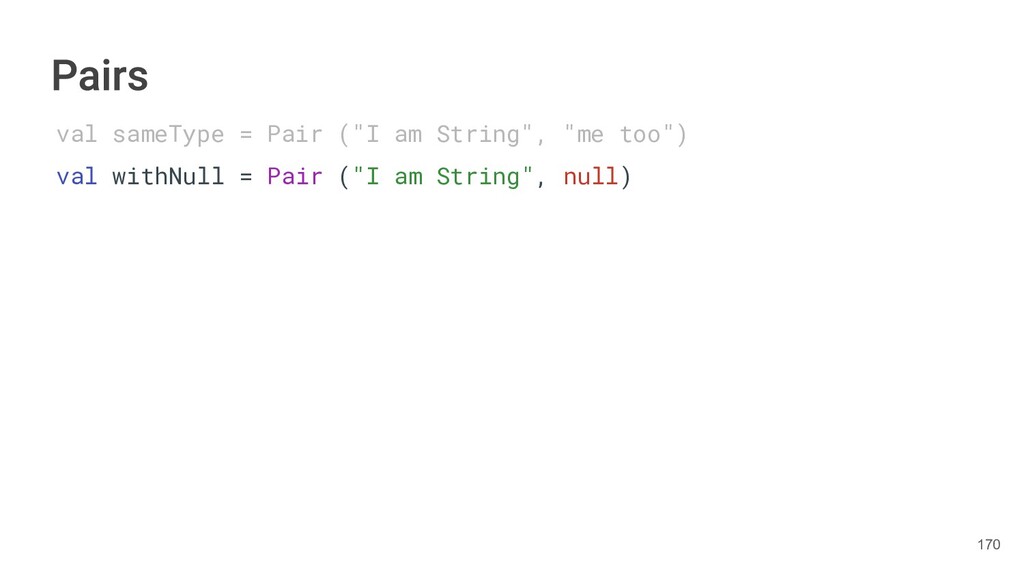
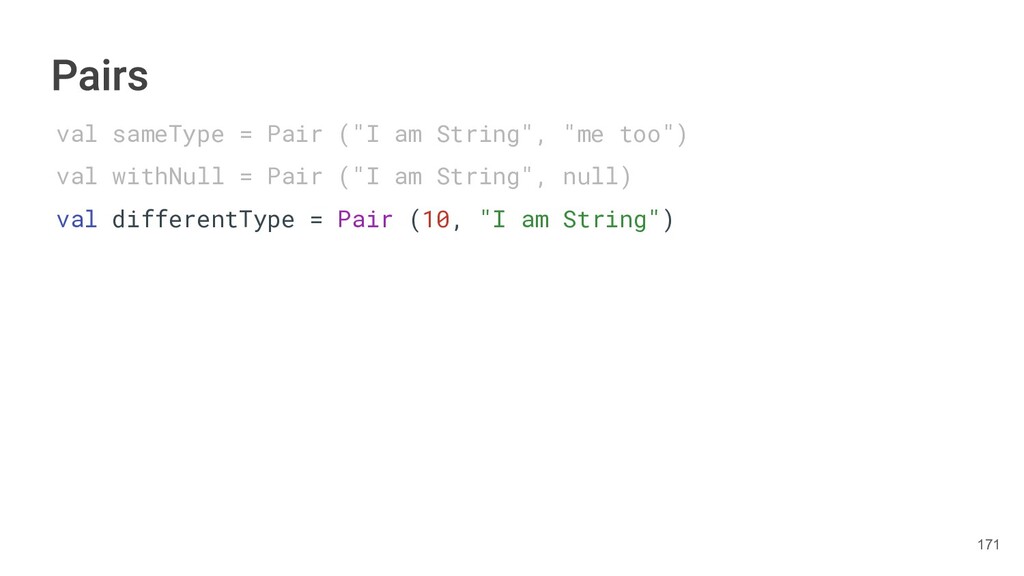
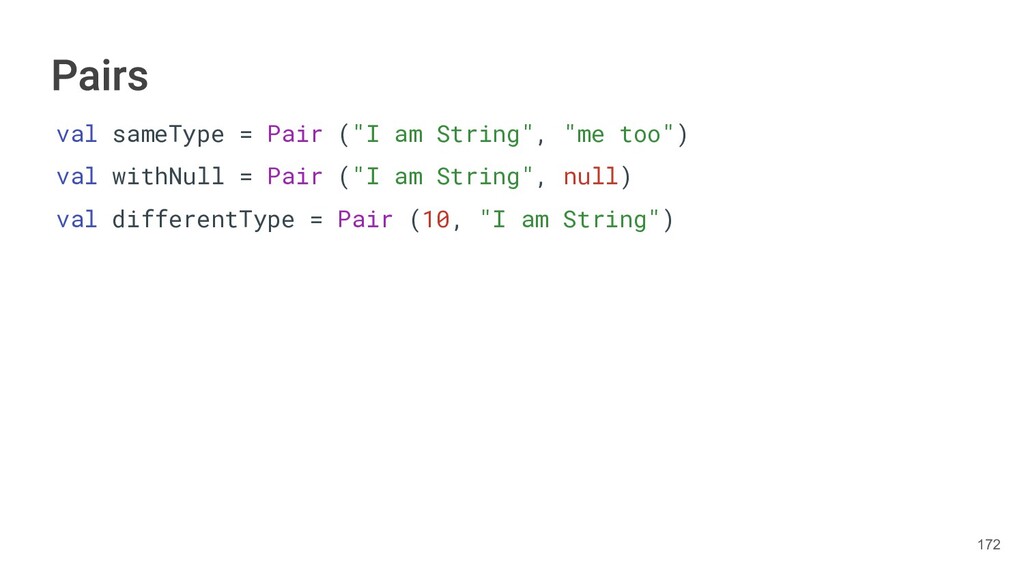
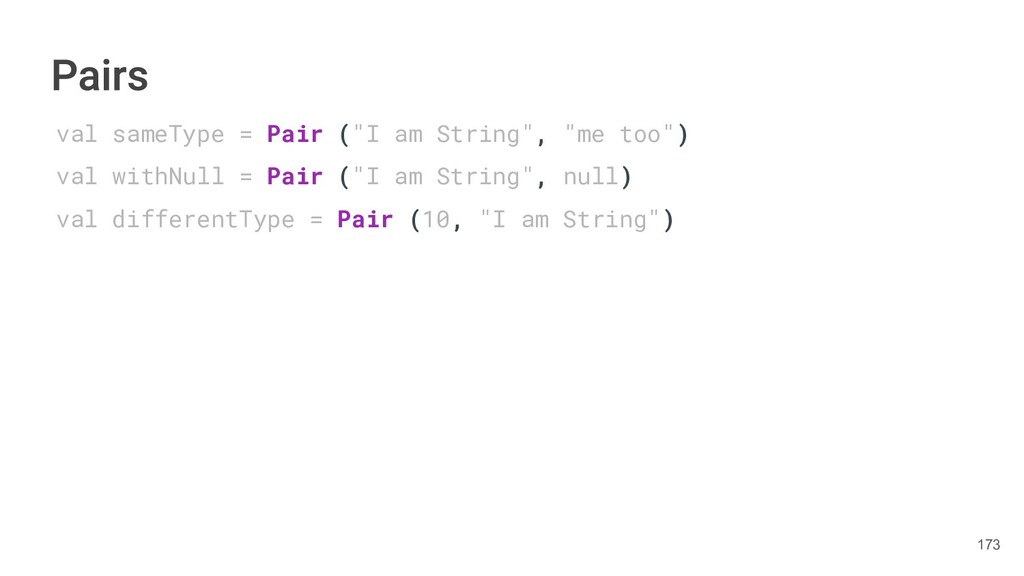

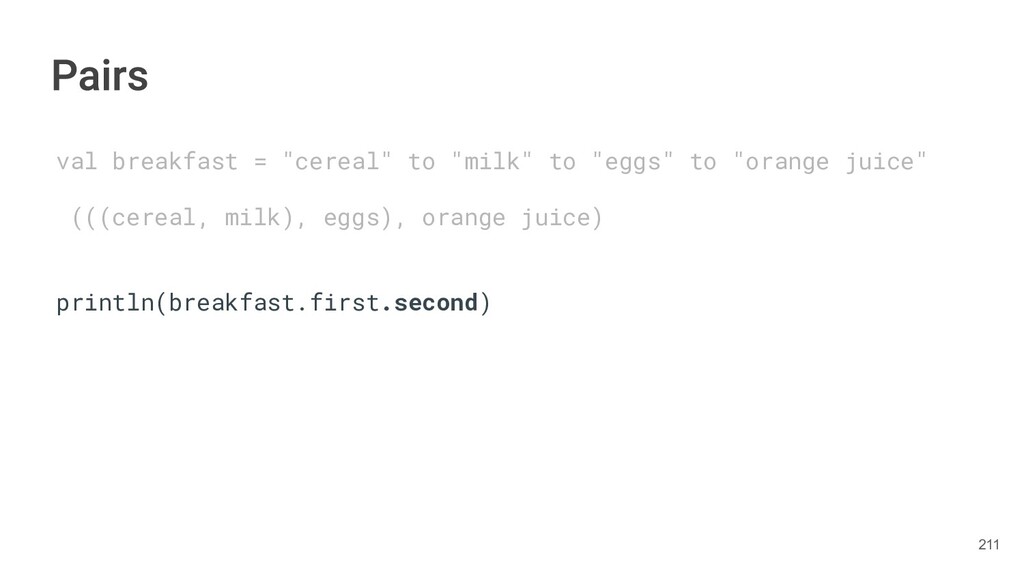
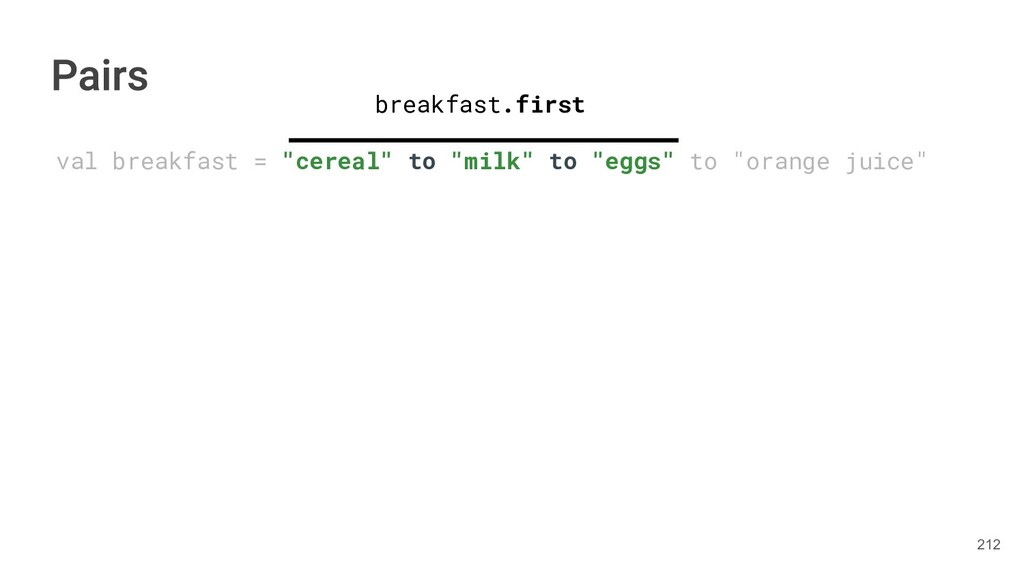
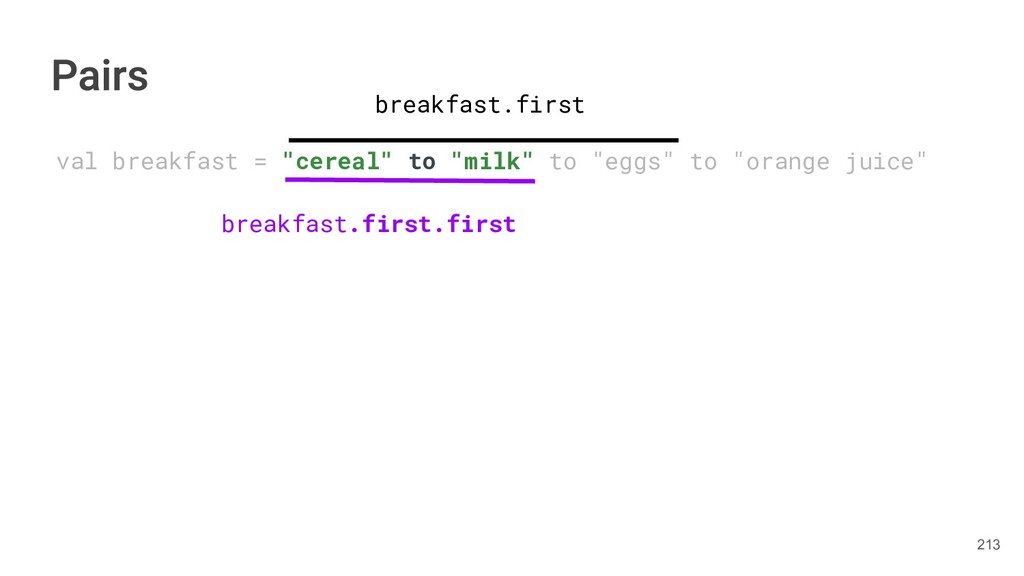
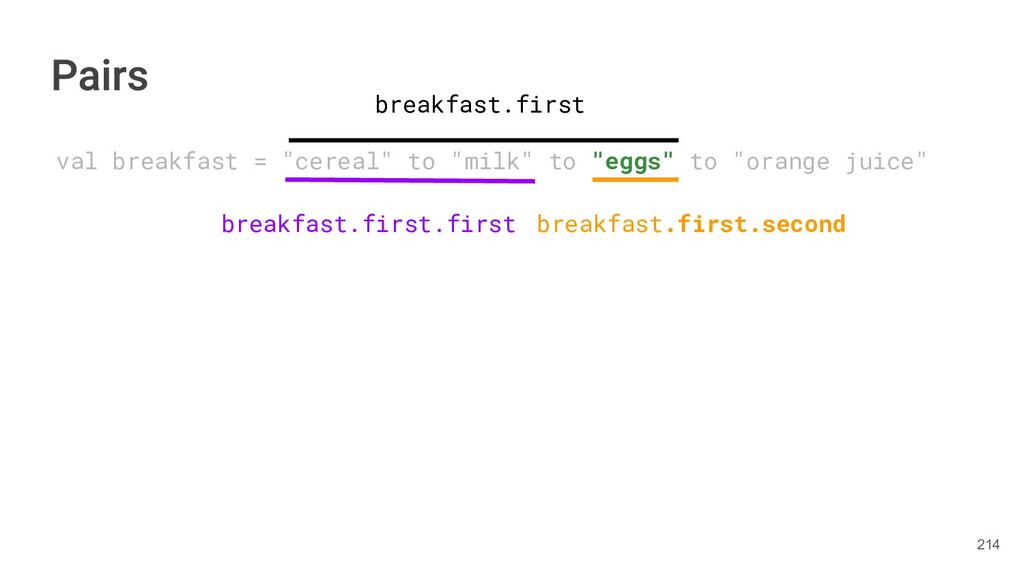

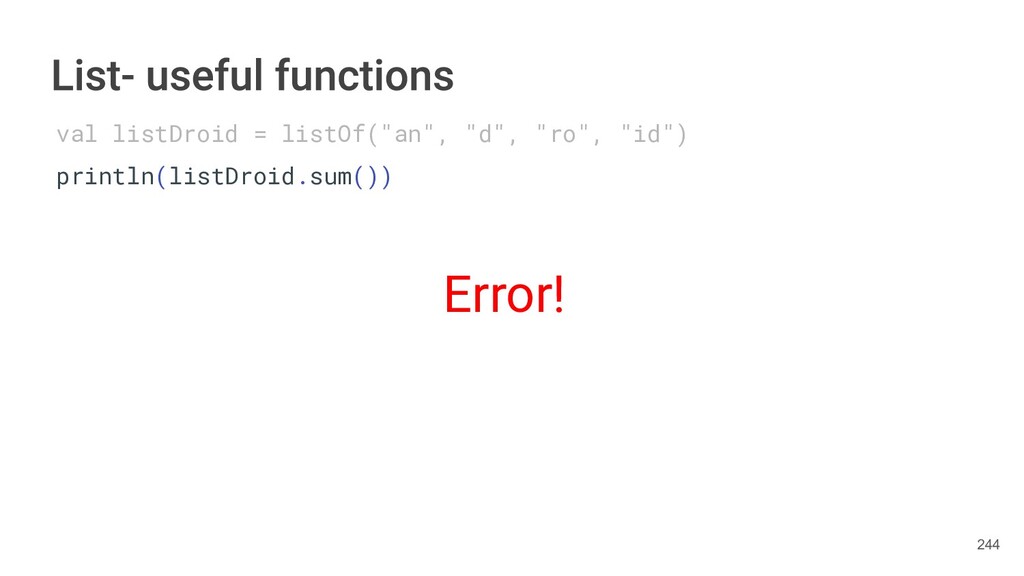
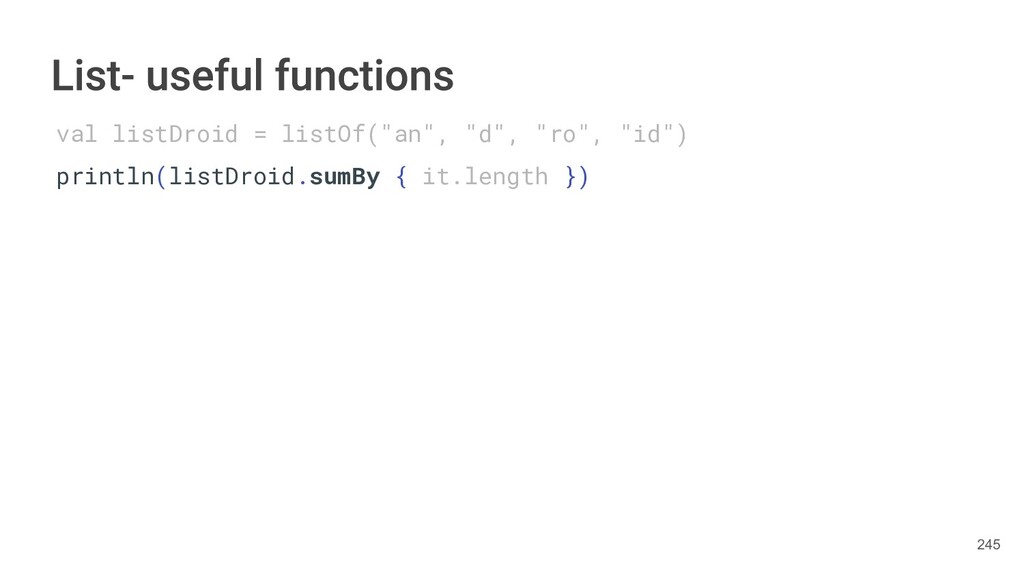
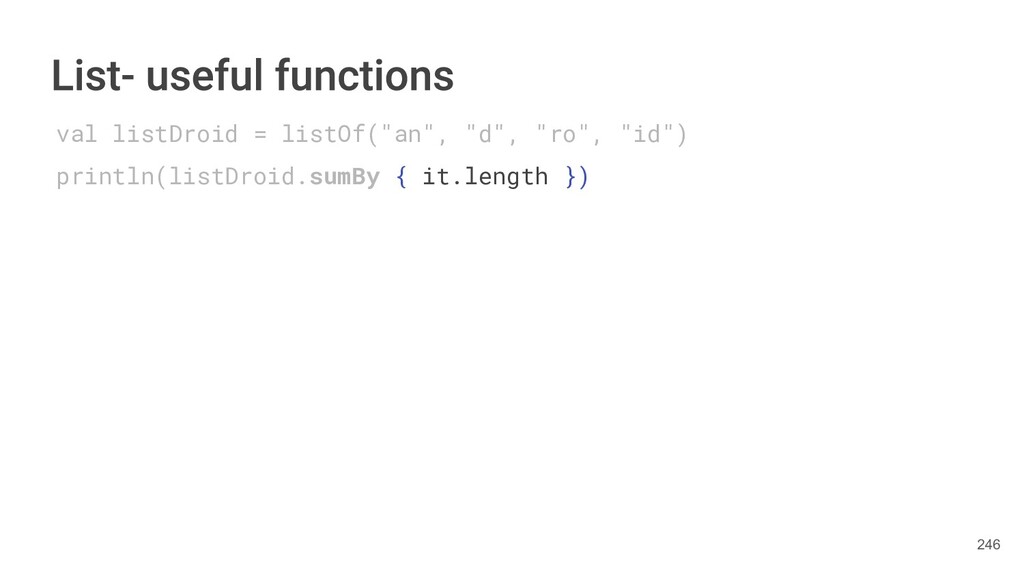
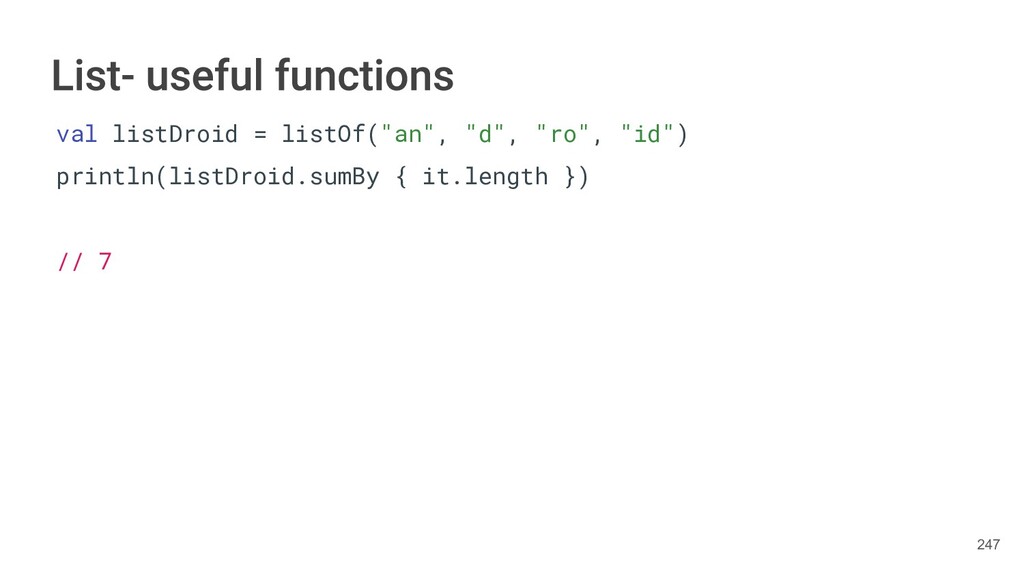


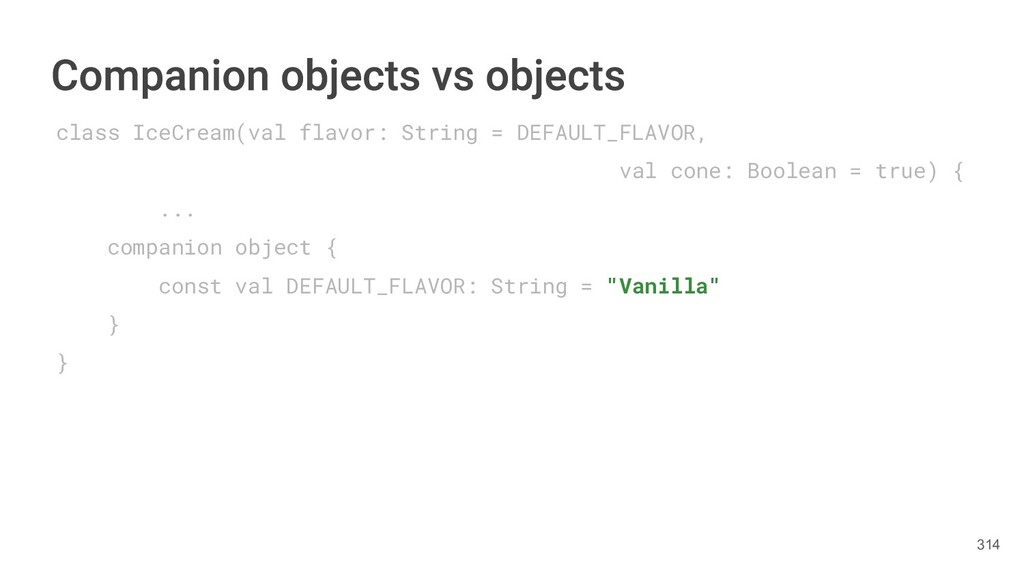
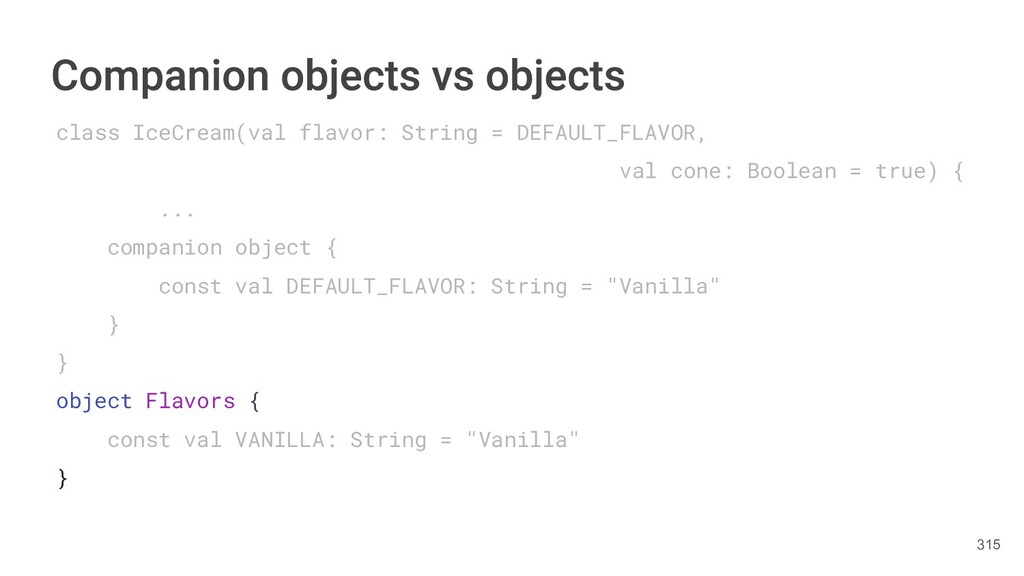
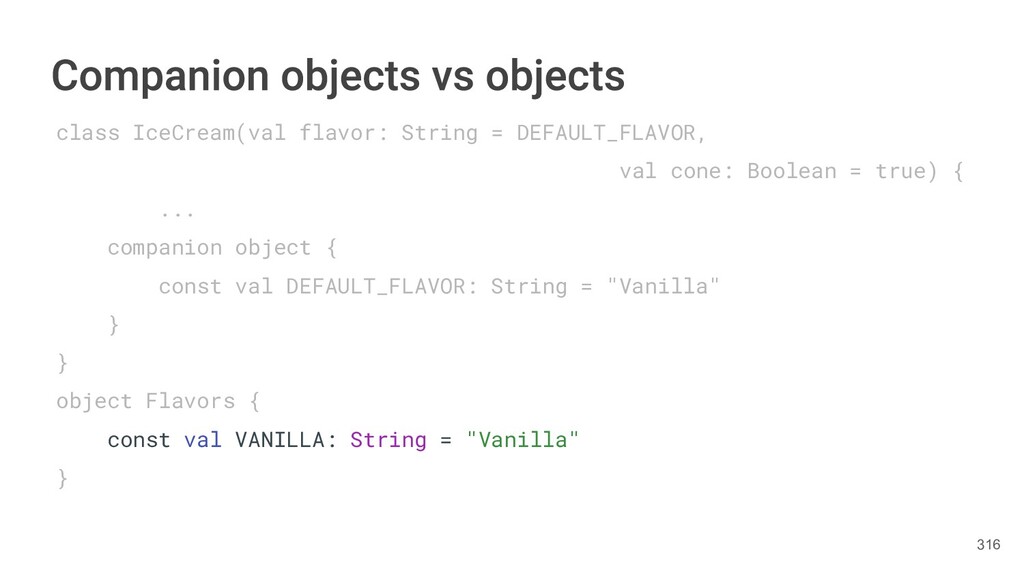
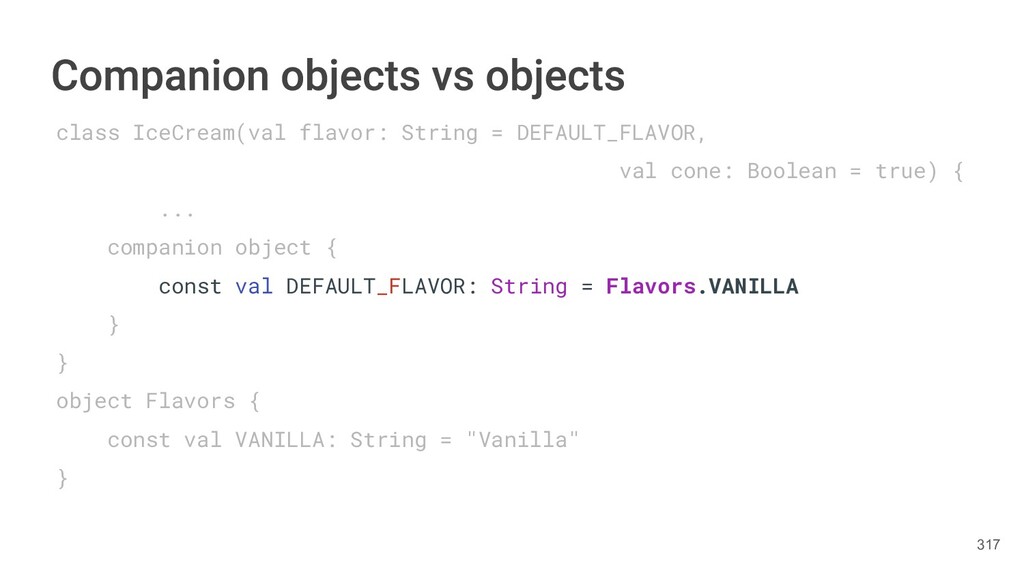

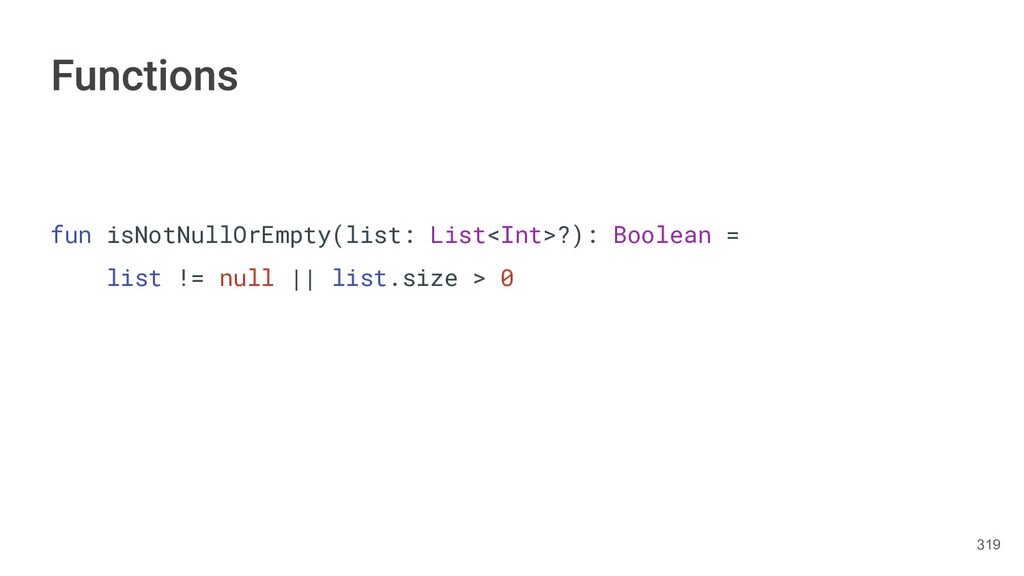
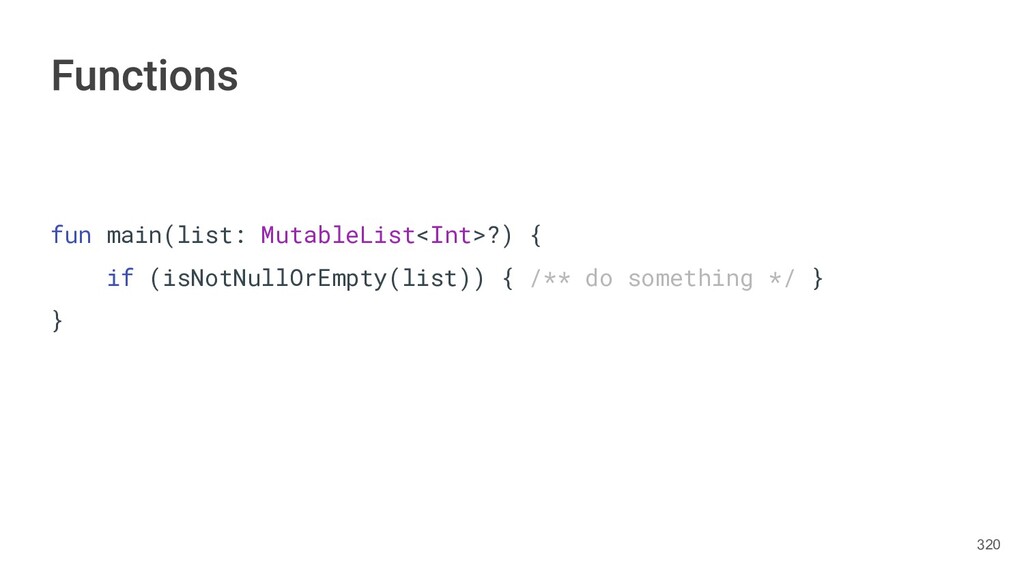
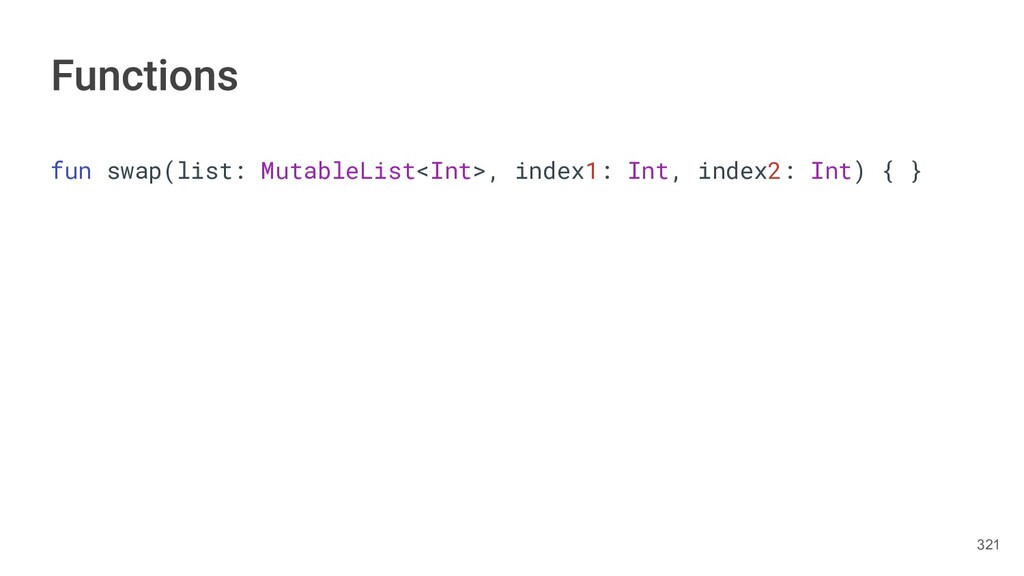
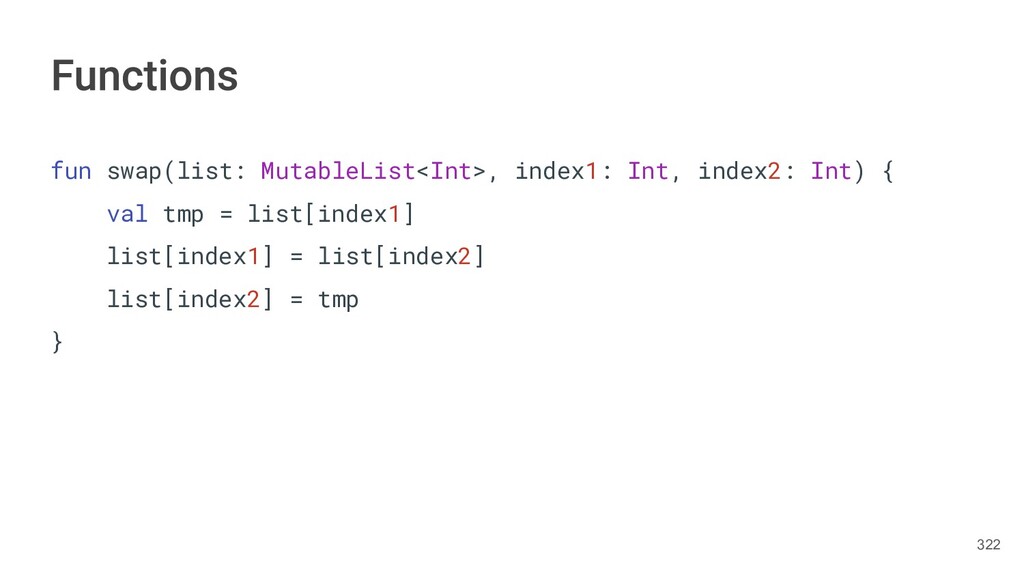
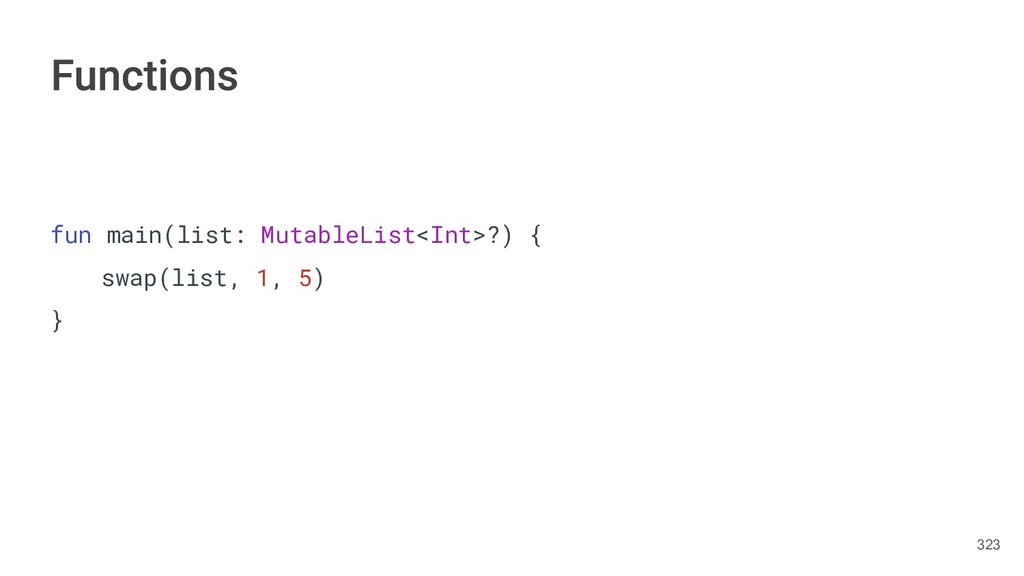
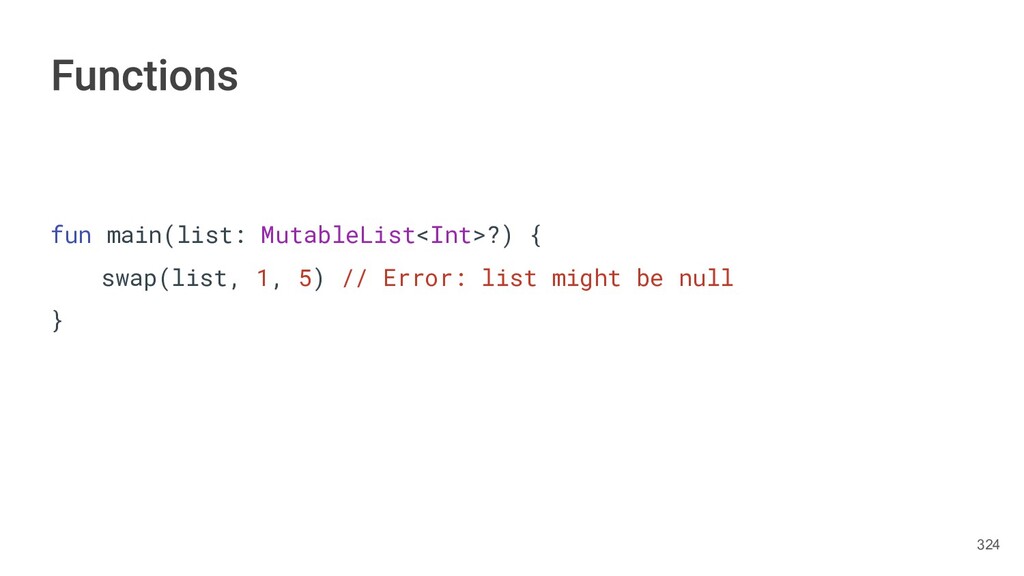
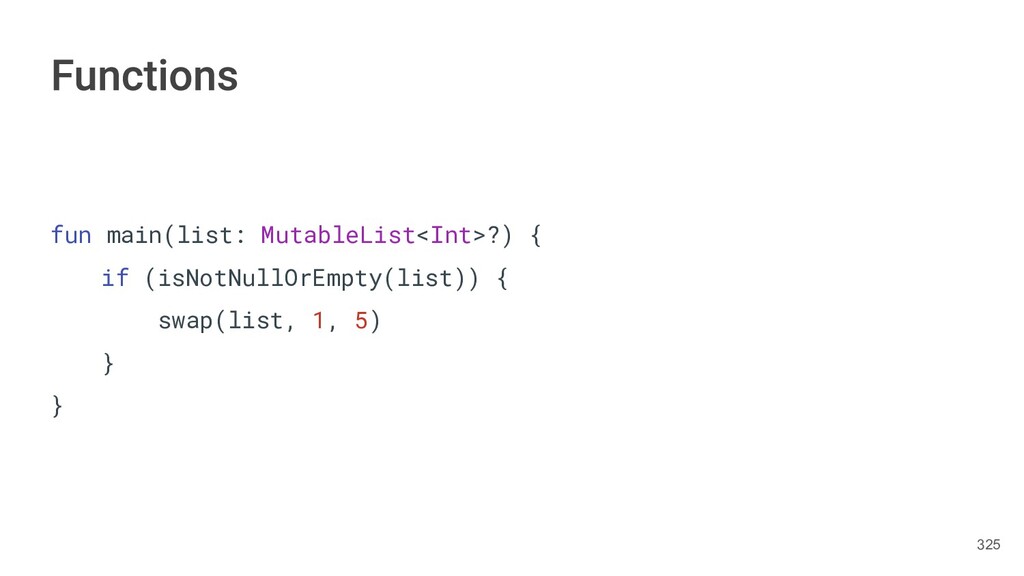
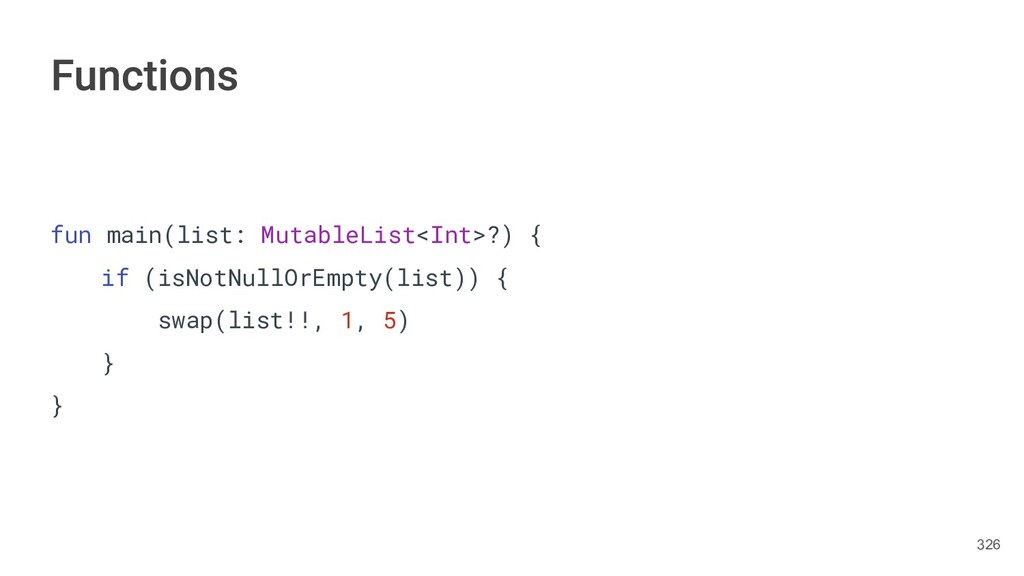
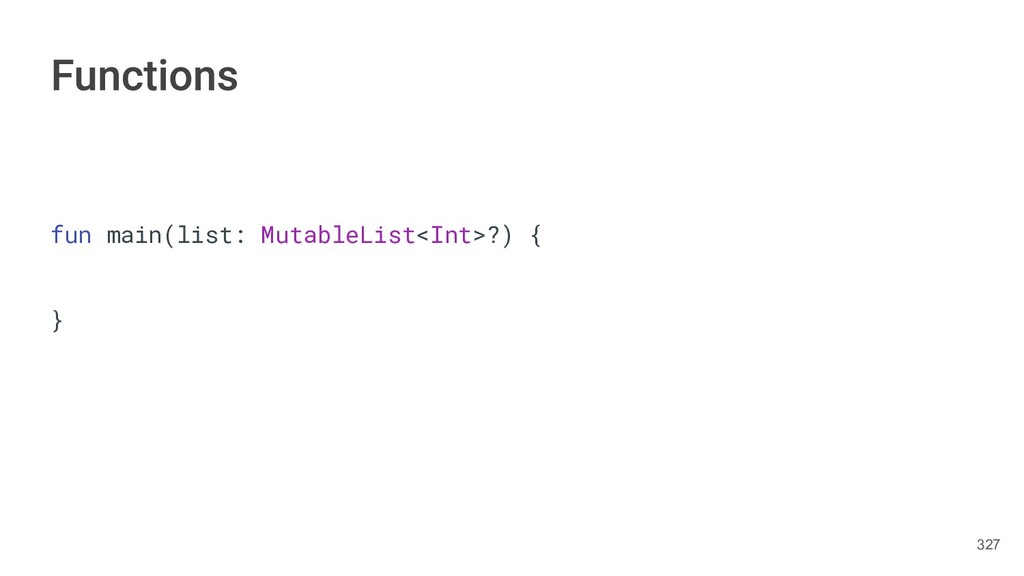
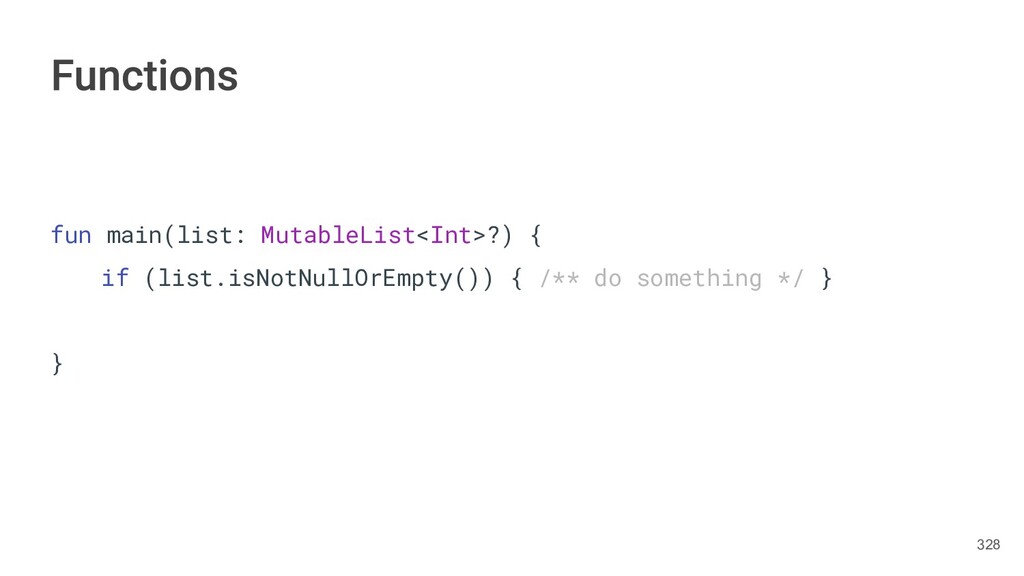
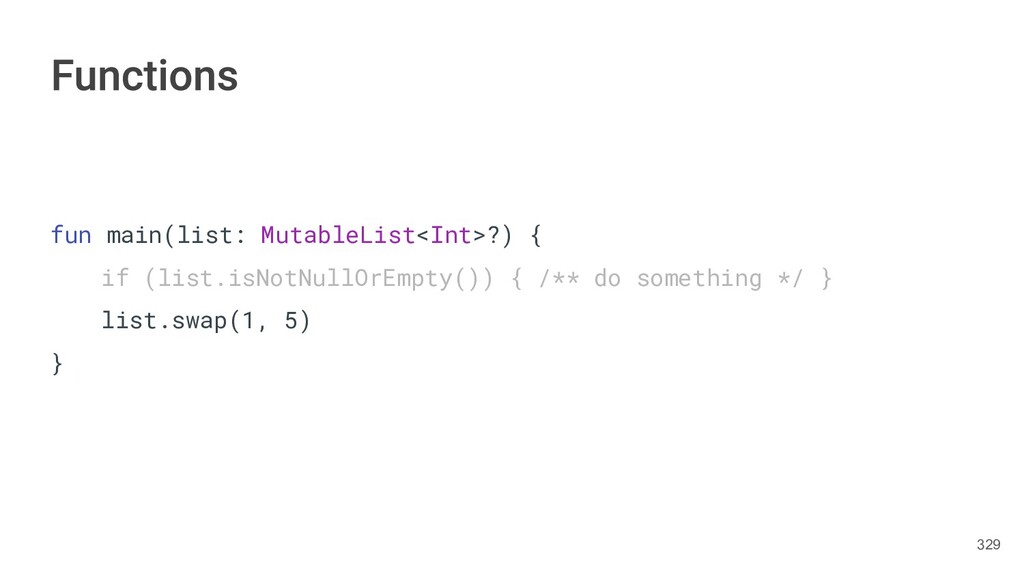
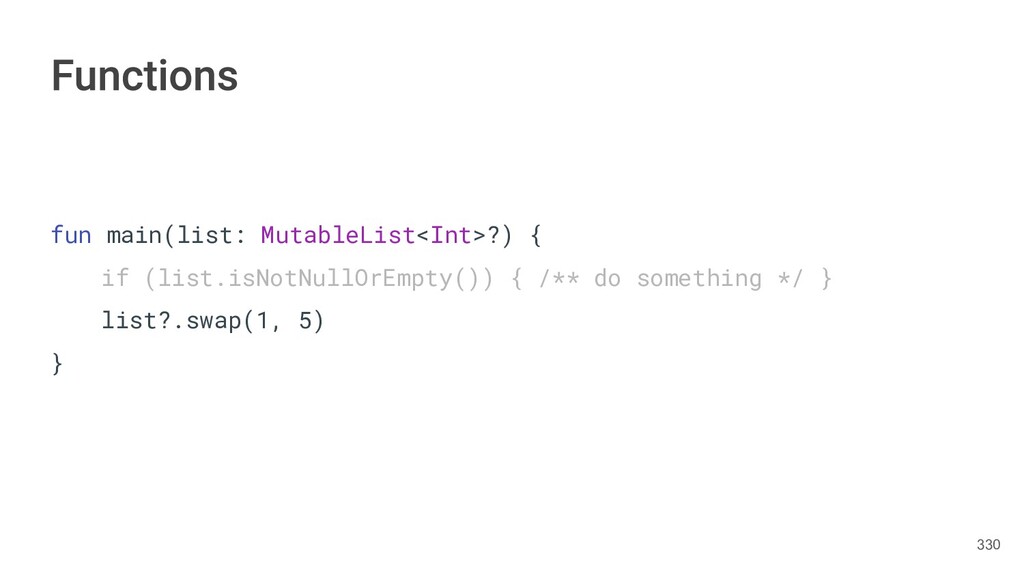
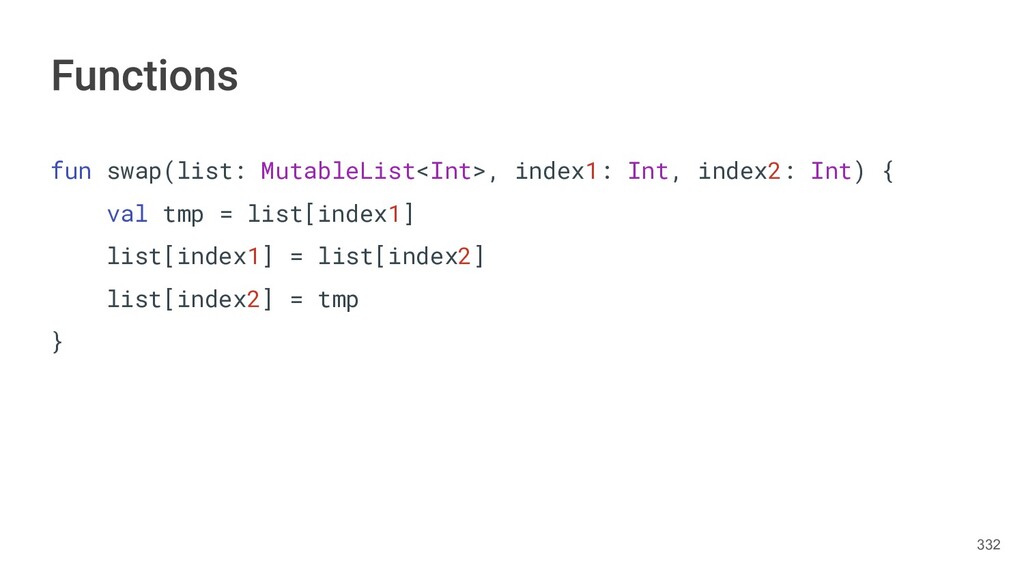
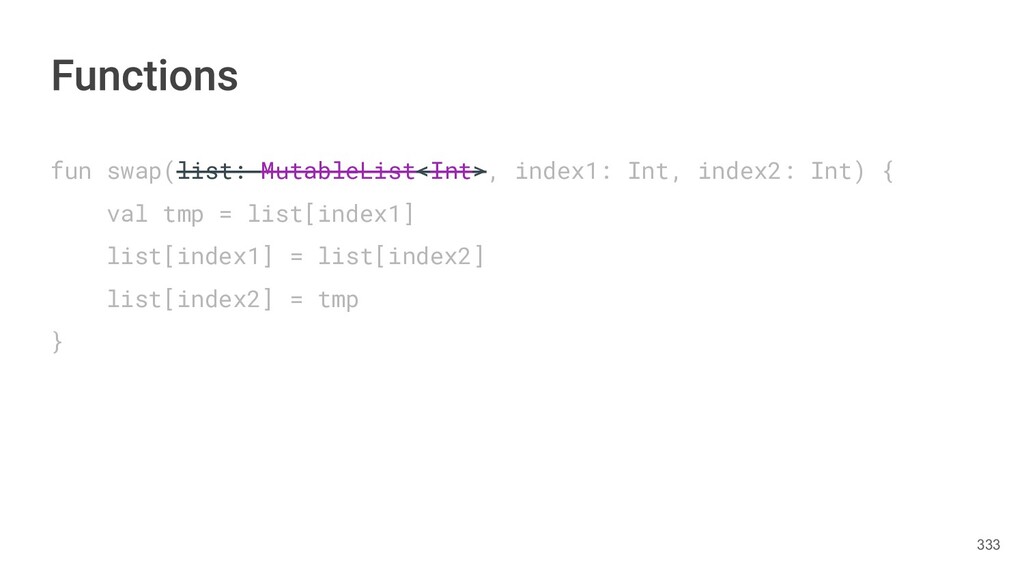
![fun swap(index1: Int, index2: Int) { val tmp = list[index1]](https://files.speakerdeck.com/presentations/cb70176c10414384adb214ff8ac49375/slide_333.jpg)
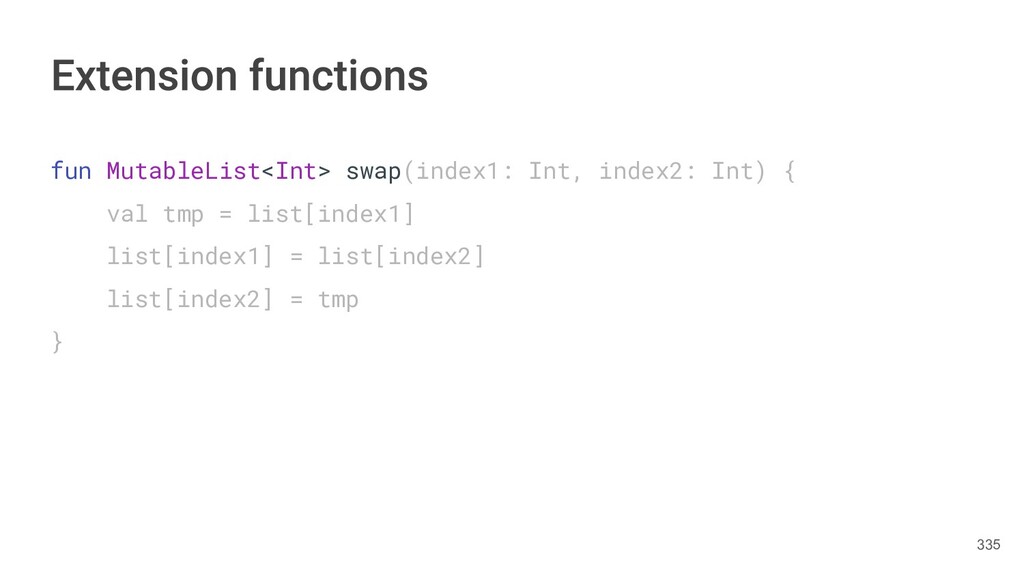
![fun MutableList<Int>.swap(index1: Int, index2: Int) { val tmp = list[index1]](https://files.speakerdeck.com/presentations/cb70176c10414384adb214ff8ac49375/slide_335.jpg)
![fun MutableList<Int>.swap(index1: Int, index2: Int) { val tmp = list[index1]](https://files.speakerdeck.com/presentations/cb70176c10414384adb214ff8ac49375/slide_336.jpg)
![fun MutableList<Int>.swap(index1: Int, index2: Int) { val tmp = list[index1]](https://files.speakerdeck.com/presentations/cb70176c10414384adb214ff8ac49375/slide_337.jpg)
![fun MutableList<Int>.swap(index1: Int, index2: Int) { val tmp = list[index1]](https://files.speakerdeck.com/presentations/cb70176c10414384adb214ff8ac49375/slide_338.jpg)
![fun MutableList<Int>.swap(index1: Int, index2: Int) { val tmp = list[index1]](https://files.speakerdeck.com/presentations/cb70176c10414384adb214ff8ac49375/slide_339.jpg)
![fun MutableList<Int>.swap(index1: Int, index2: Int) { val tmp = list[index1]](https://files.speakerdeck.com/presentations/cb70176c10414384adb214ff8ac49375/slide_340.jpg)
![fun MutableList<Int>.swap(index1: Int, index2: Int) { val tmp = this[index1]](https://files.speakerdeck.com/presentations/cb70176c10414384adb214ff8ac49375/slide_341.jpg)
![fun MutableList<Int>.swap(index1: Int, index2: Int) { val tmp = this[index1]](https://files.speakerdeck.com/presentations/cb70176c10414384adb214ff8ac49375/slide_342.jpg)
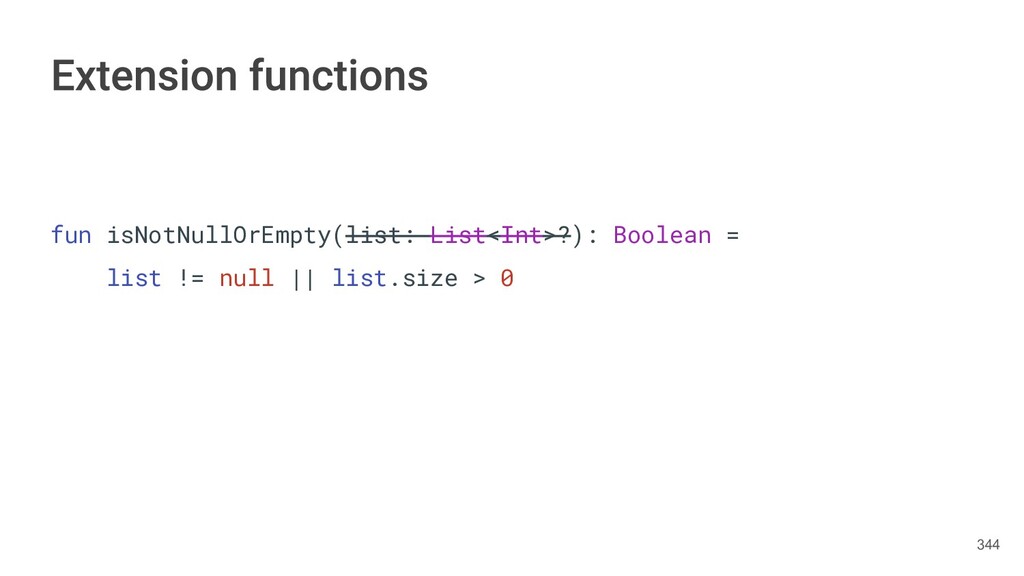
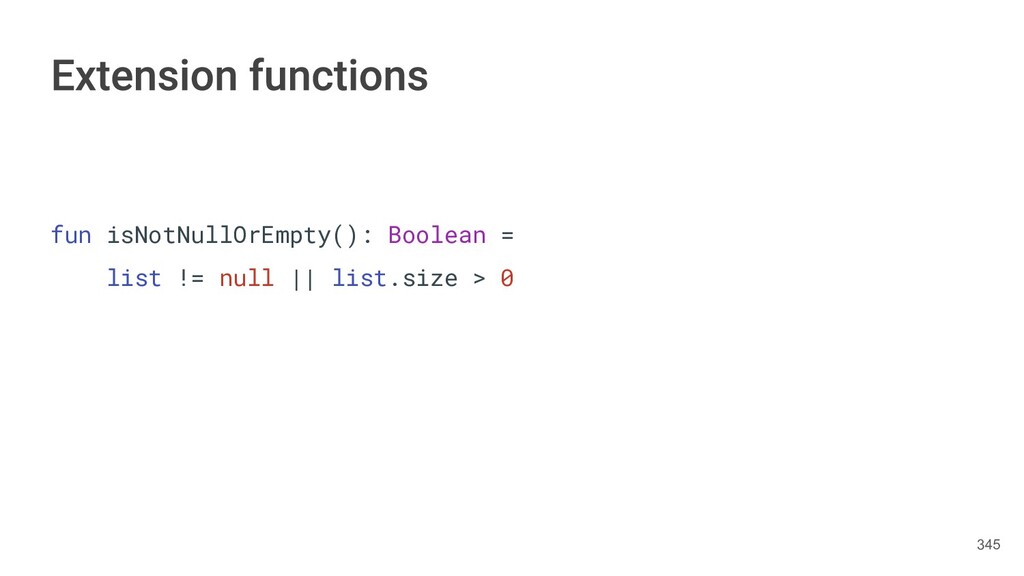
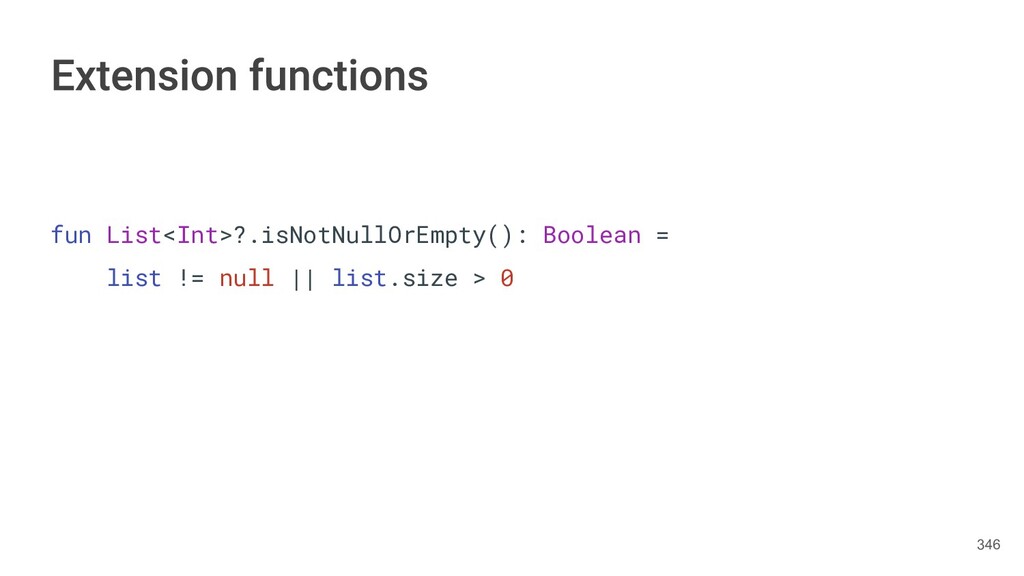
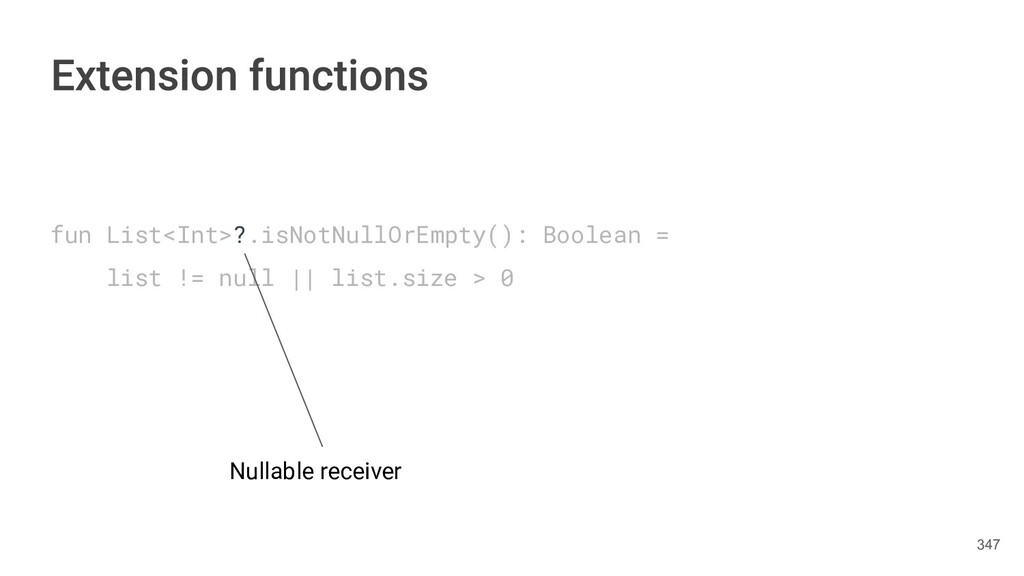
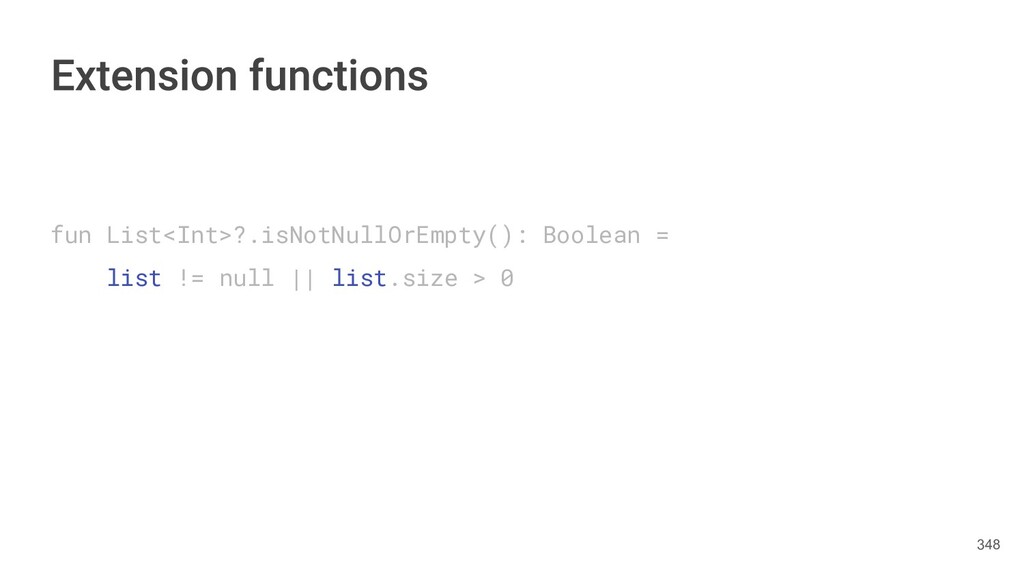
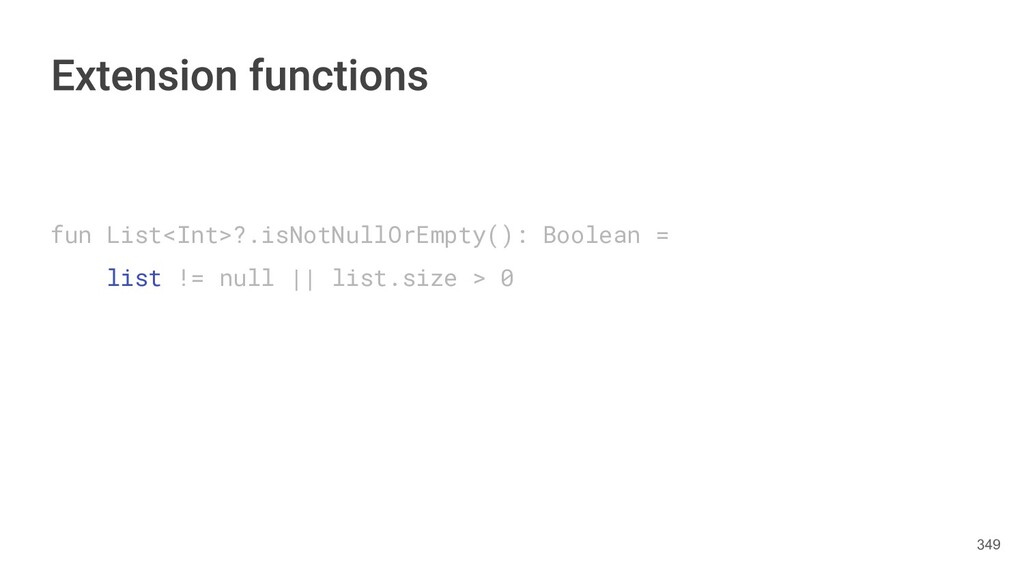
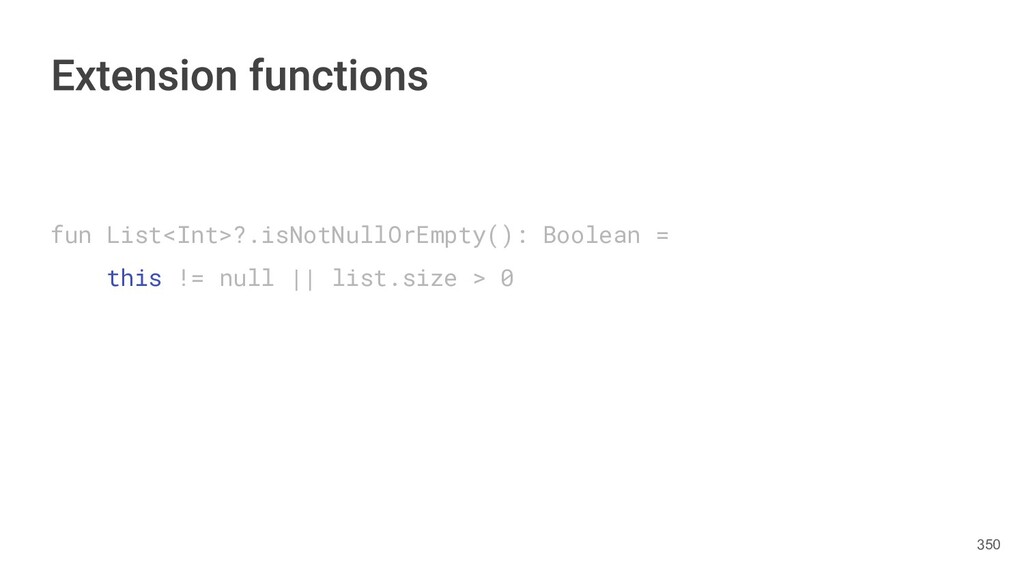
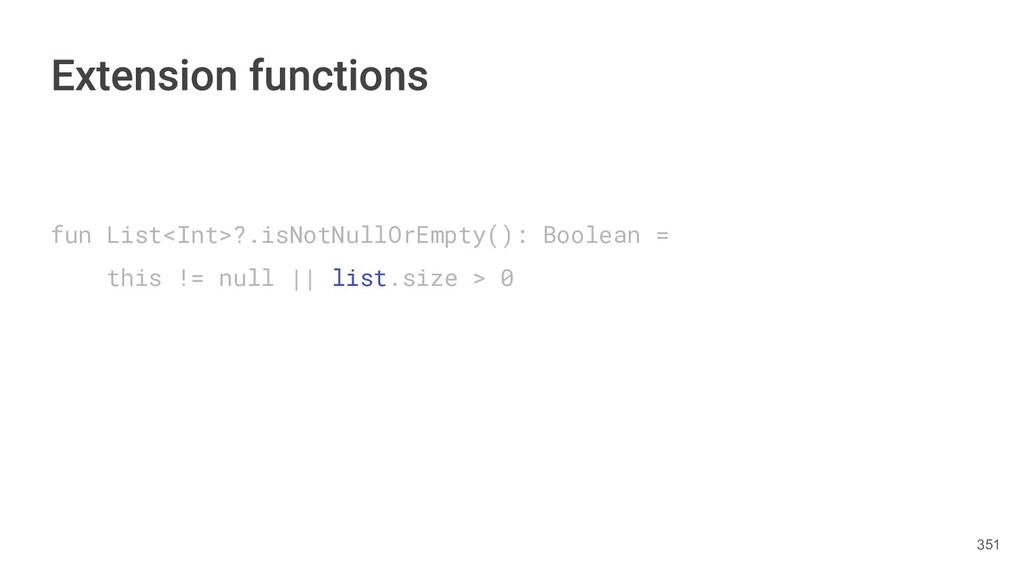
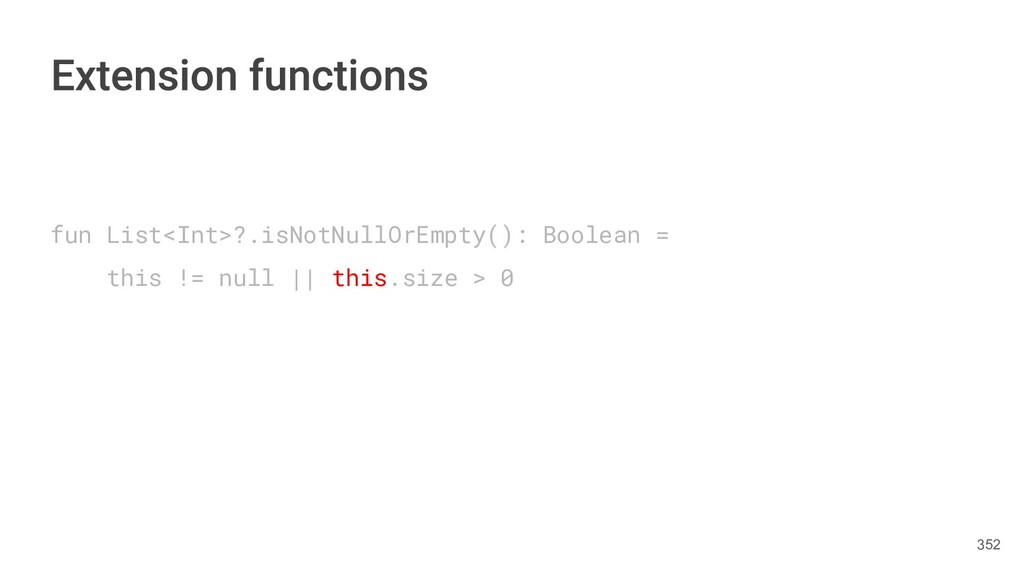
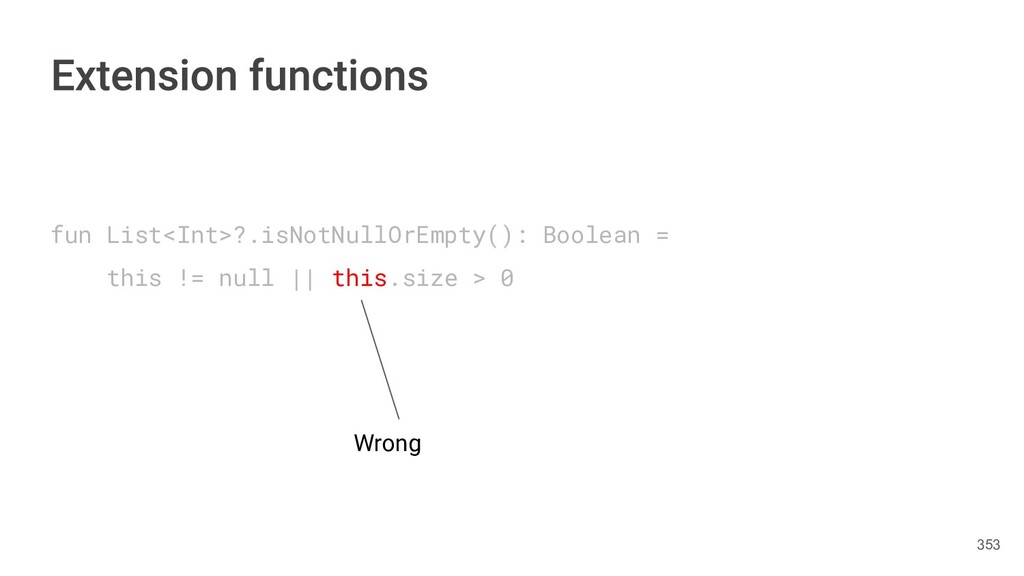
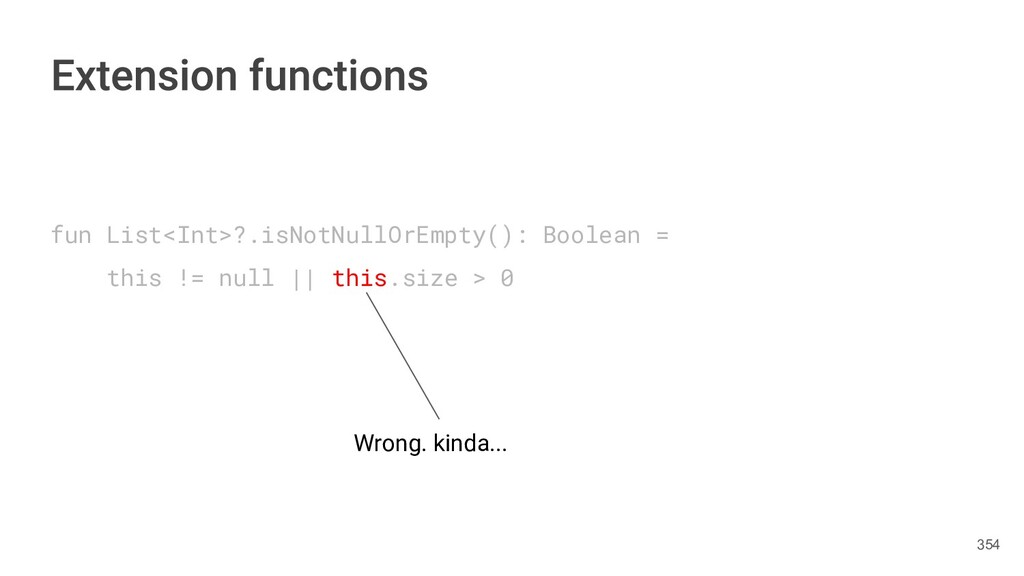
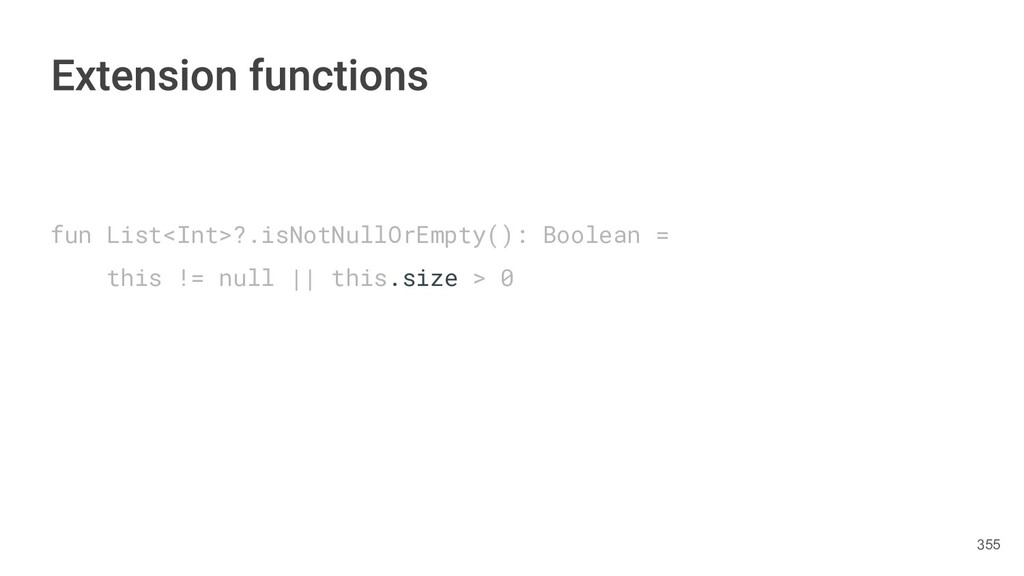

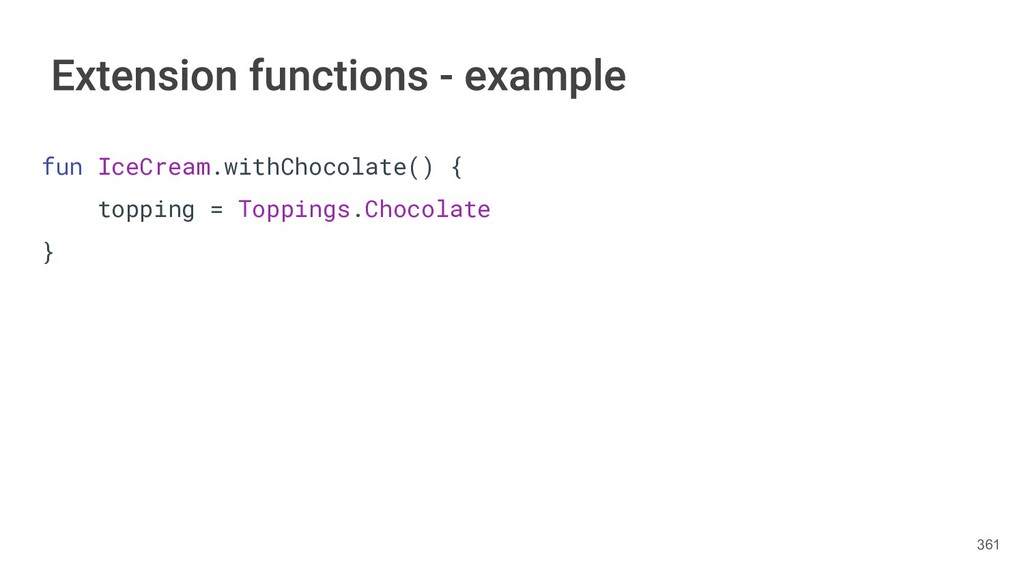
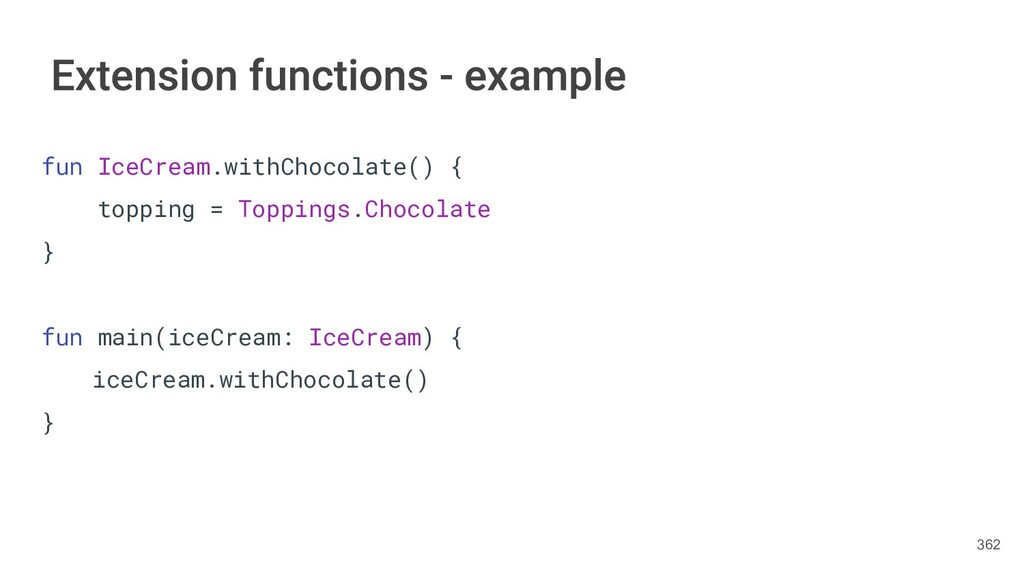
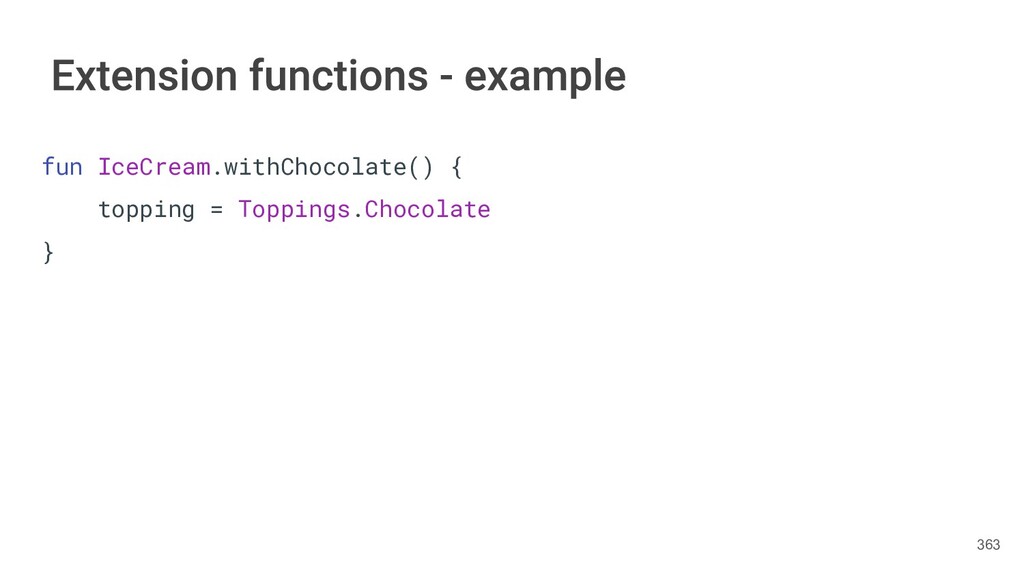
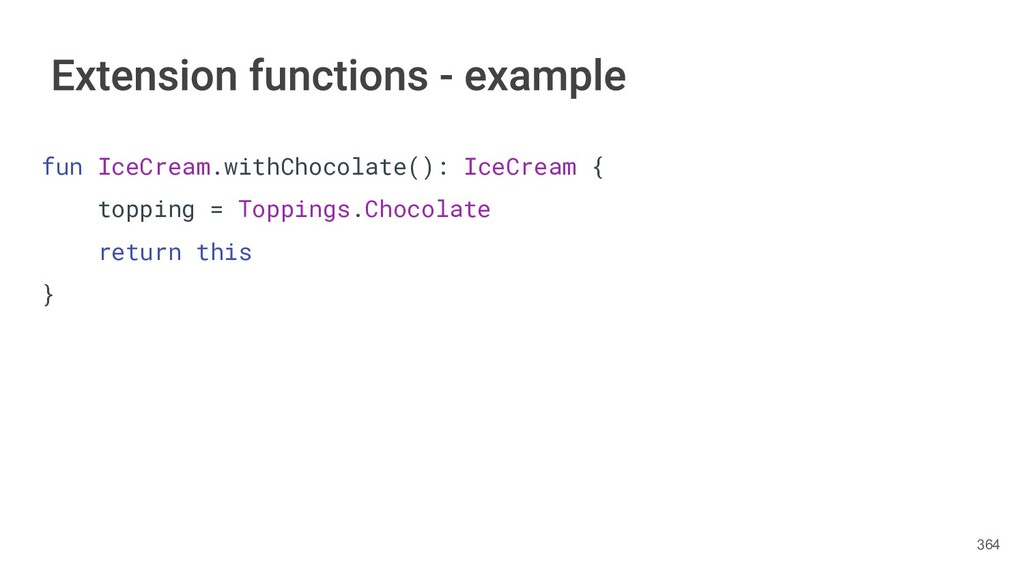
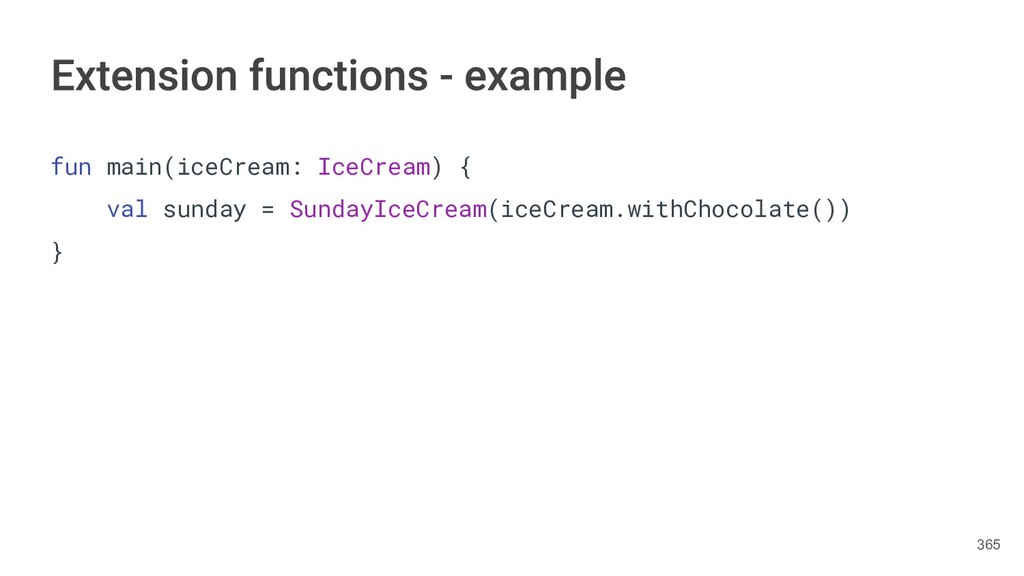
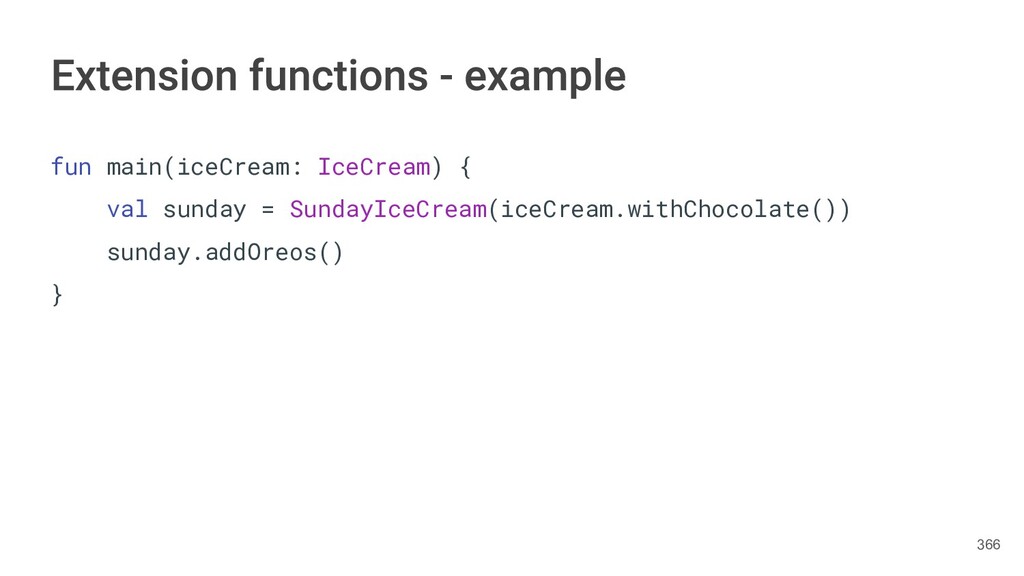
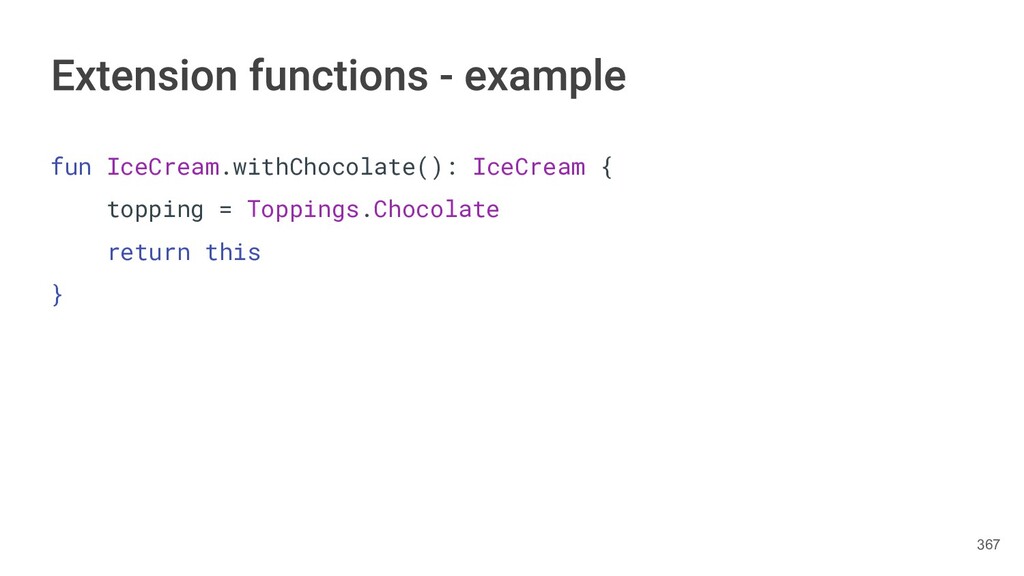
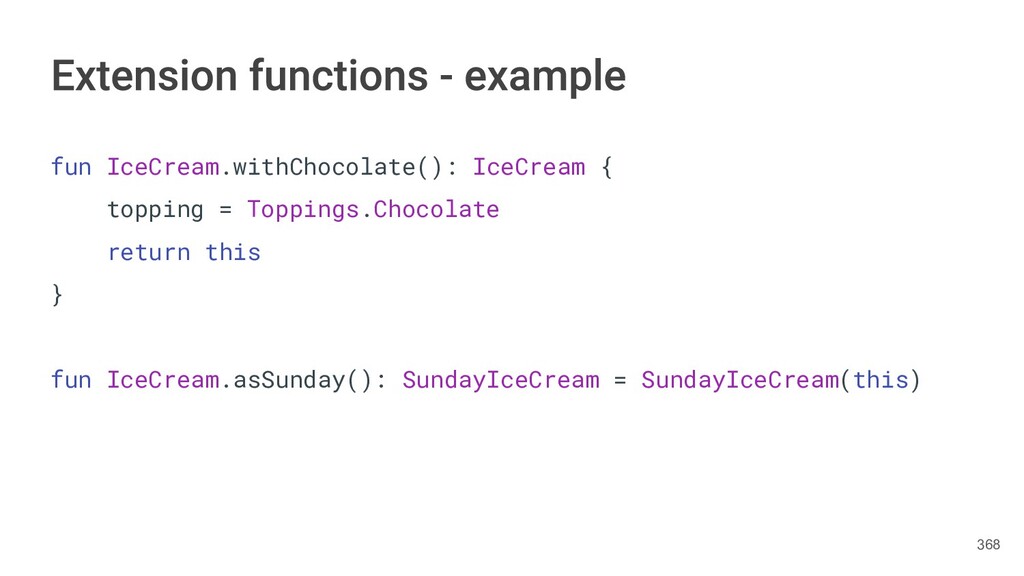
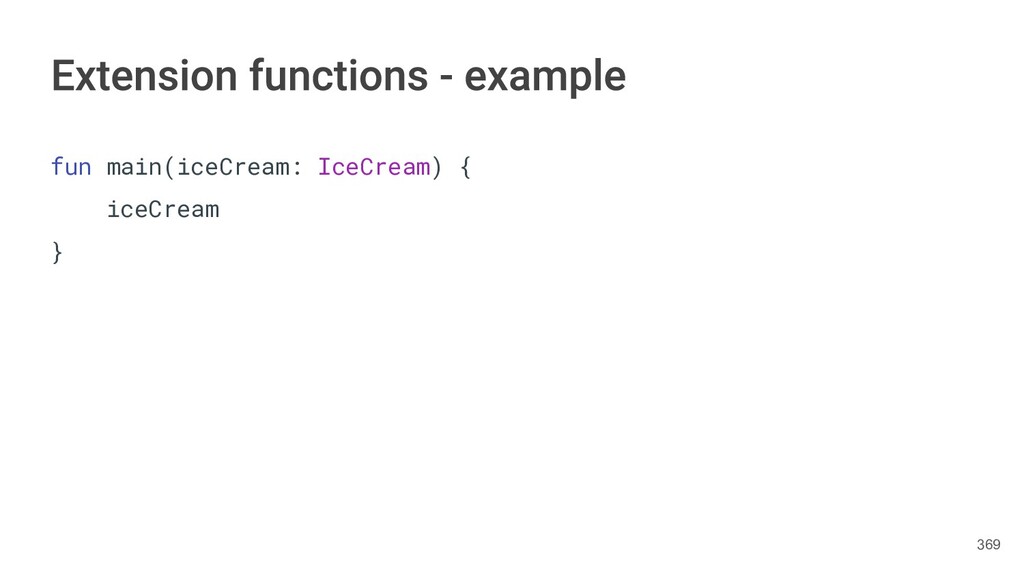
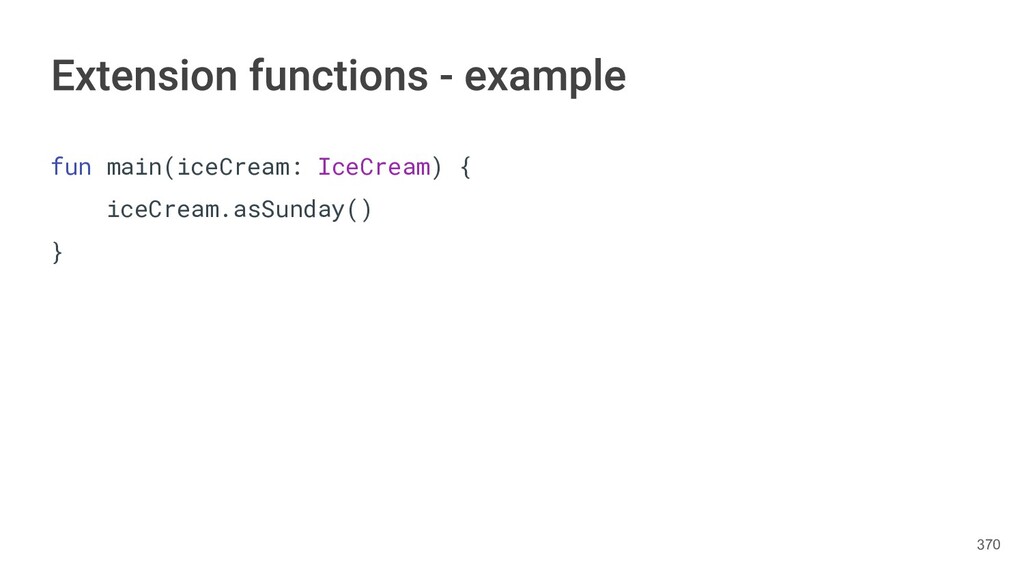
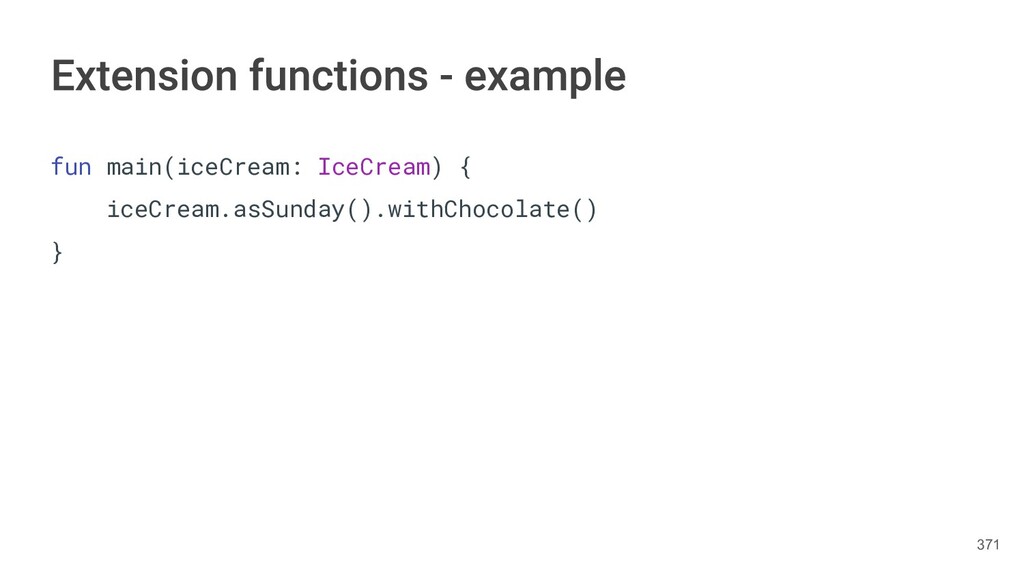
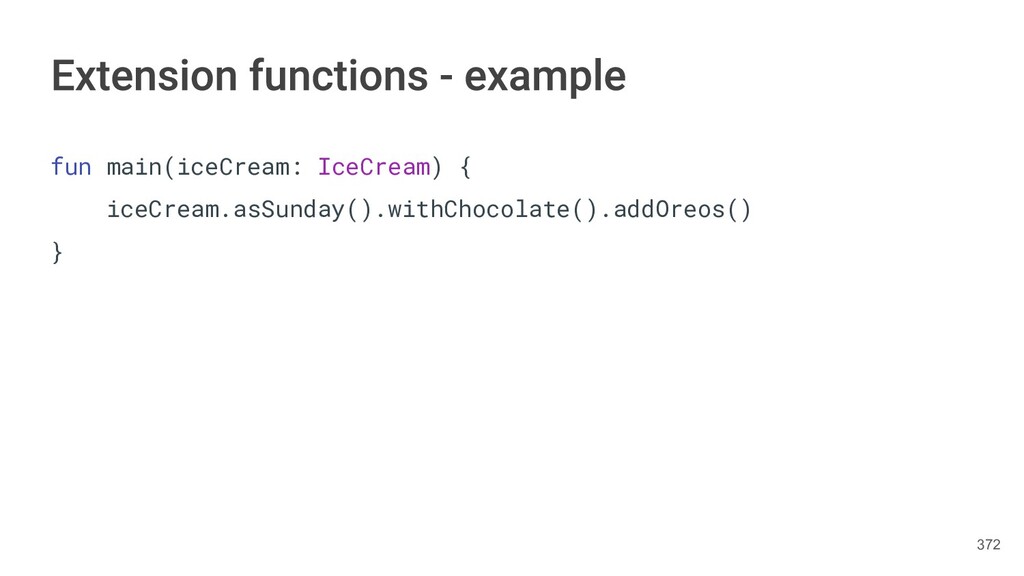
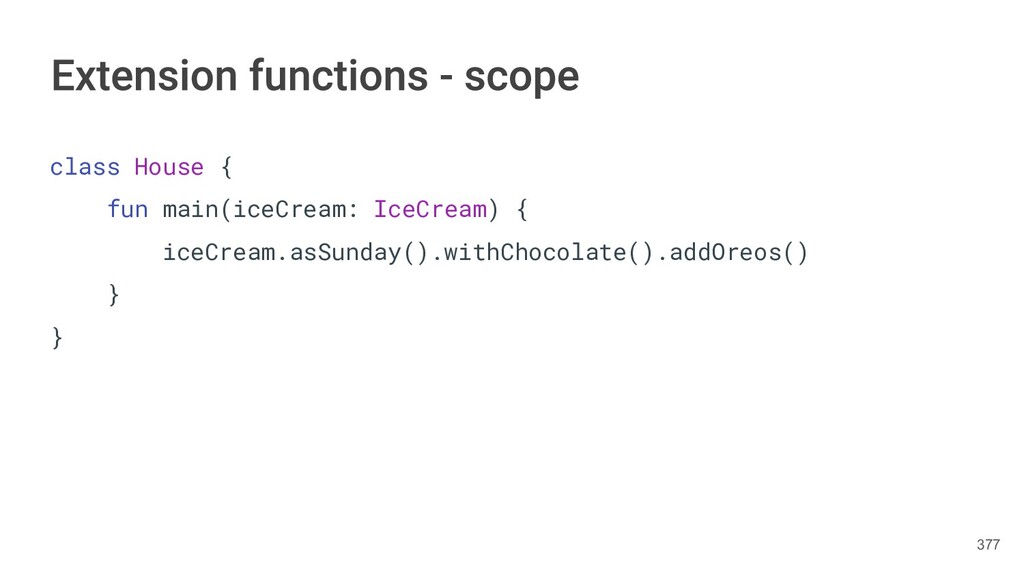
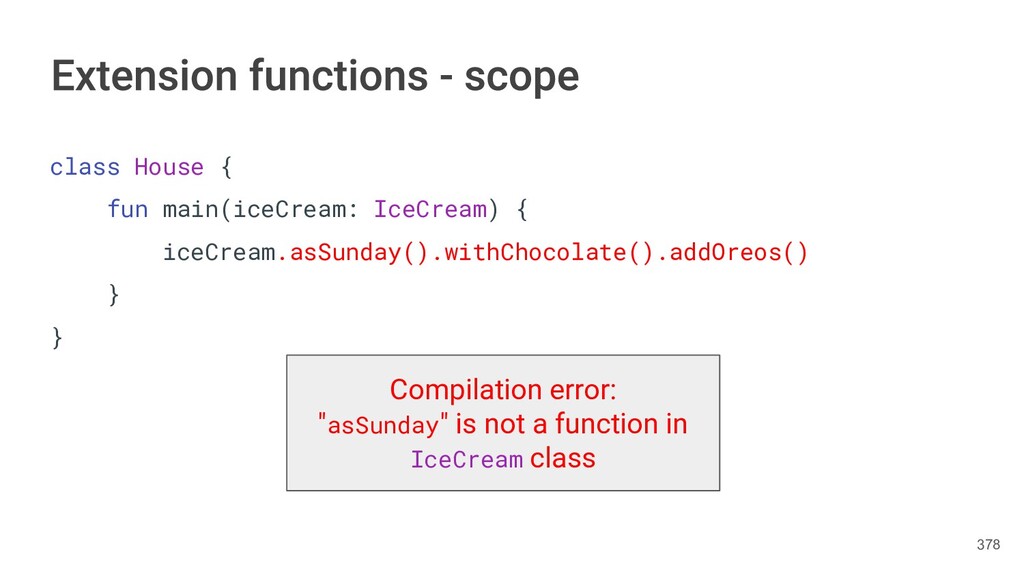
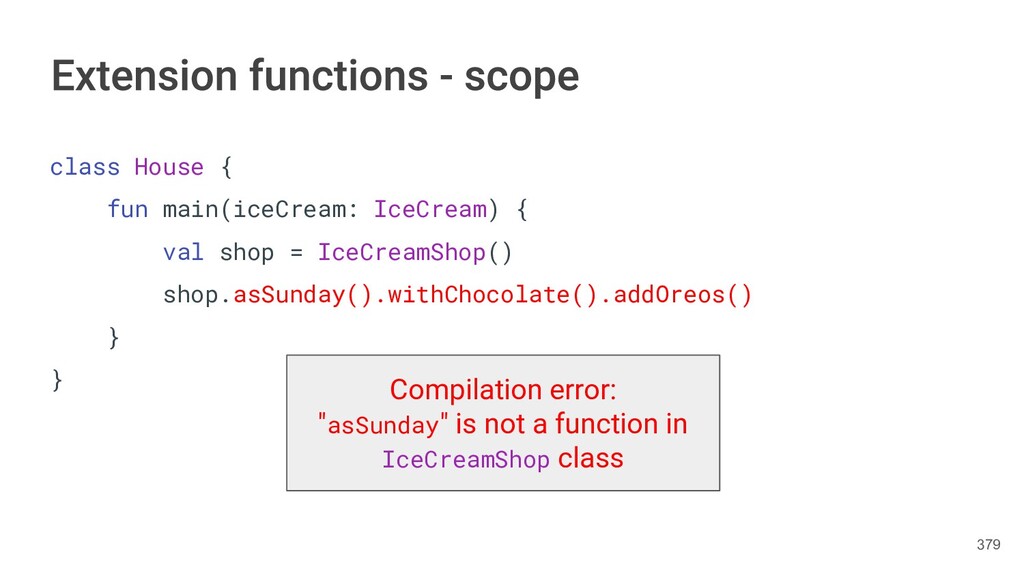


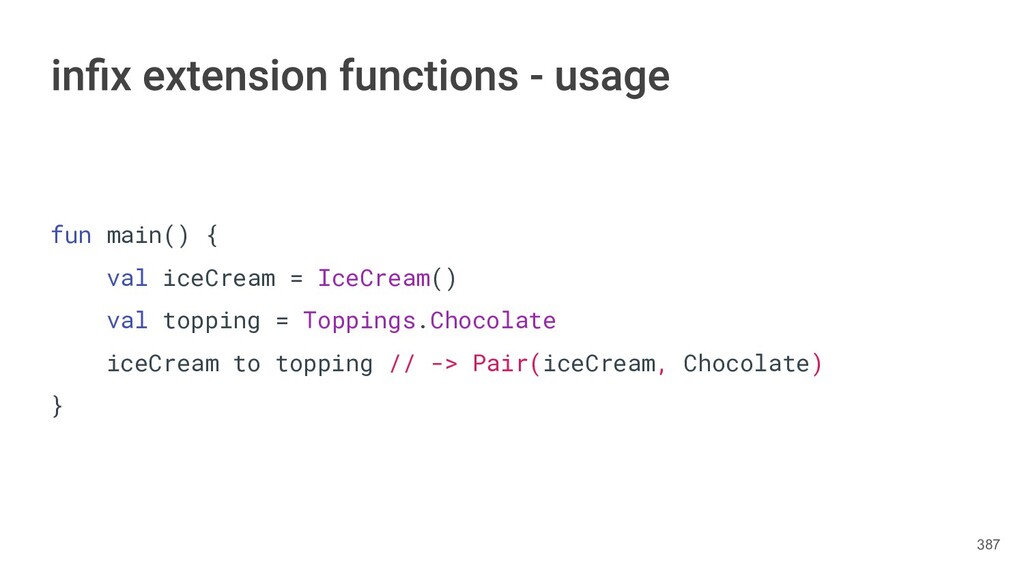
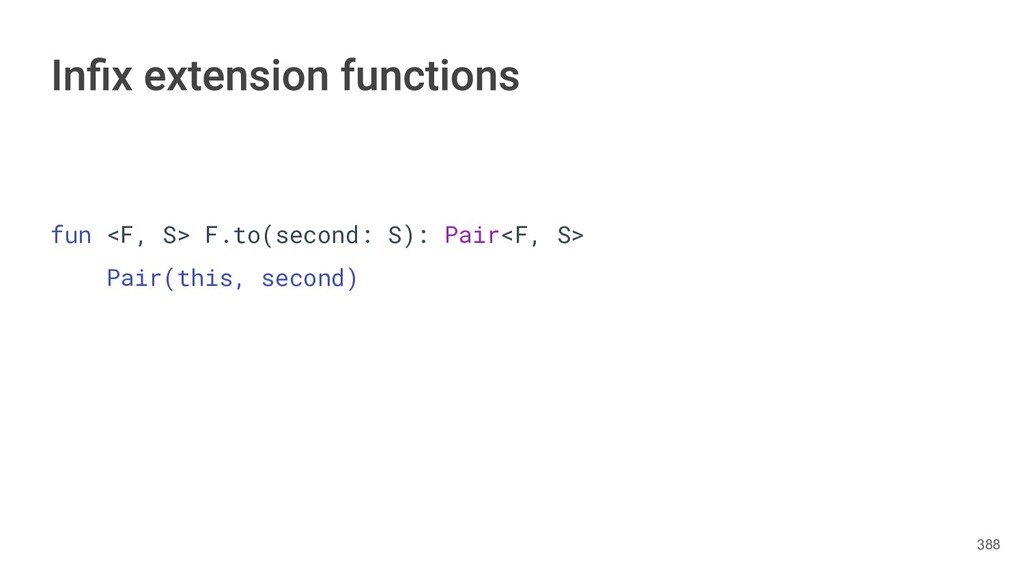
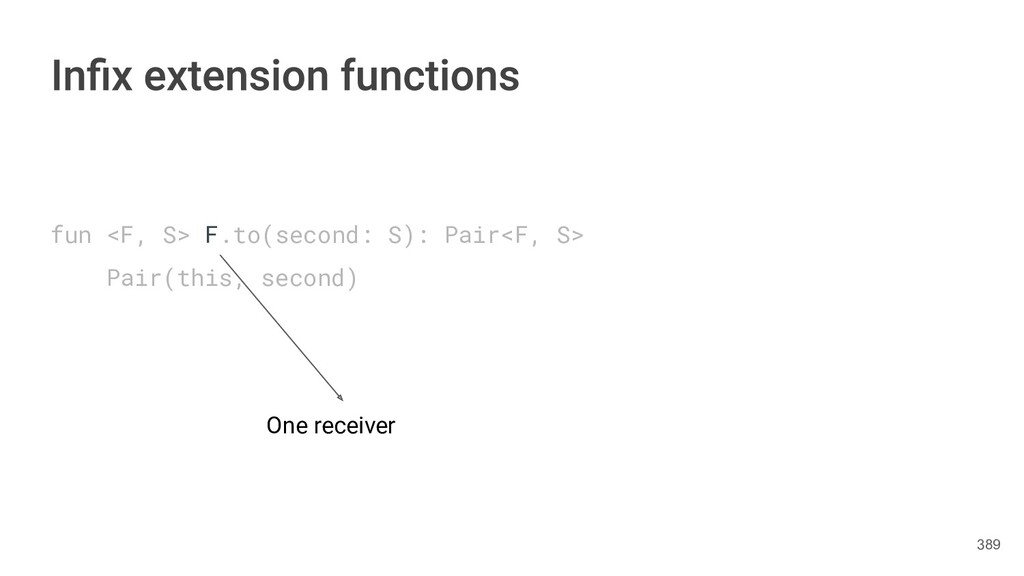
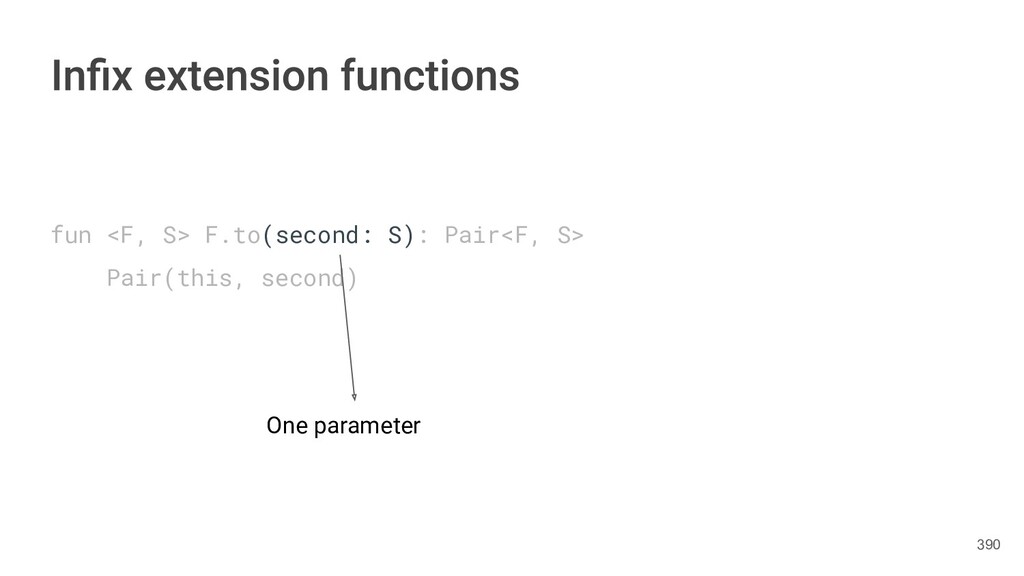
![val <E> List<E>.last: E get() = this[size] 395](https://files.speakerdeck.com/presentations/cb70176c10414384adb214ff8ac49375/slide_394.jpg)
![val <E> List<E>.last: E get() = this[size] 397](https://files.speakerdeck.com/presentations/cb70176c10414384adb214ff8ac49375/slide_396.jpg)
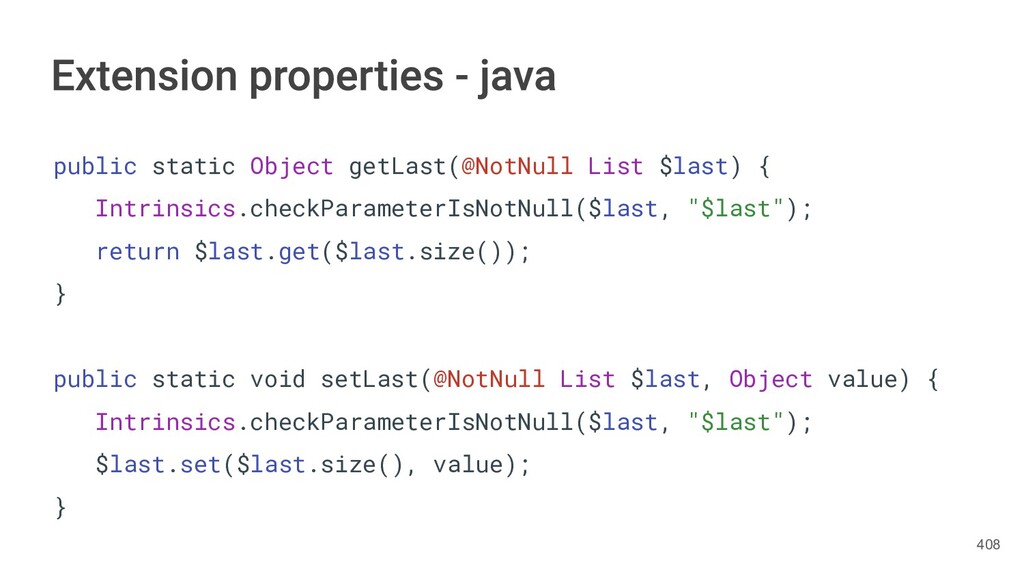
![var <E> MutableList<E>.last: E get() = this[size] val <E> List<E>.last:](https://files.speakerdeck.com/presentations/cb70176c10414384adb214ff8ac49375/slide_397.jpg)
![var <E> MutableList<E>.last: E get() = this[size] set(value) { this[size]](https://files.speakerdeck.com/presentations/cb70176c10414384adb214ff8ac49375/slide_398.jpg)