a developer on this team should be able to do within his or her first few months? What information or resources were helpful for you (or do you think would be helpful) in becoming familiar with the platform as a whole?
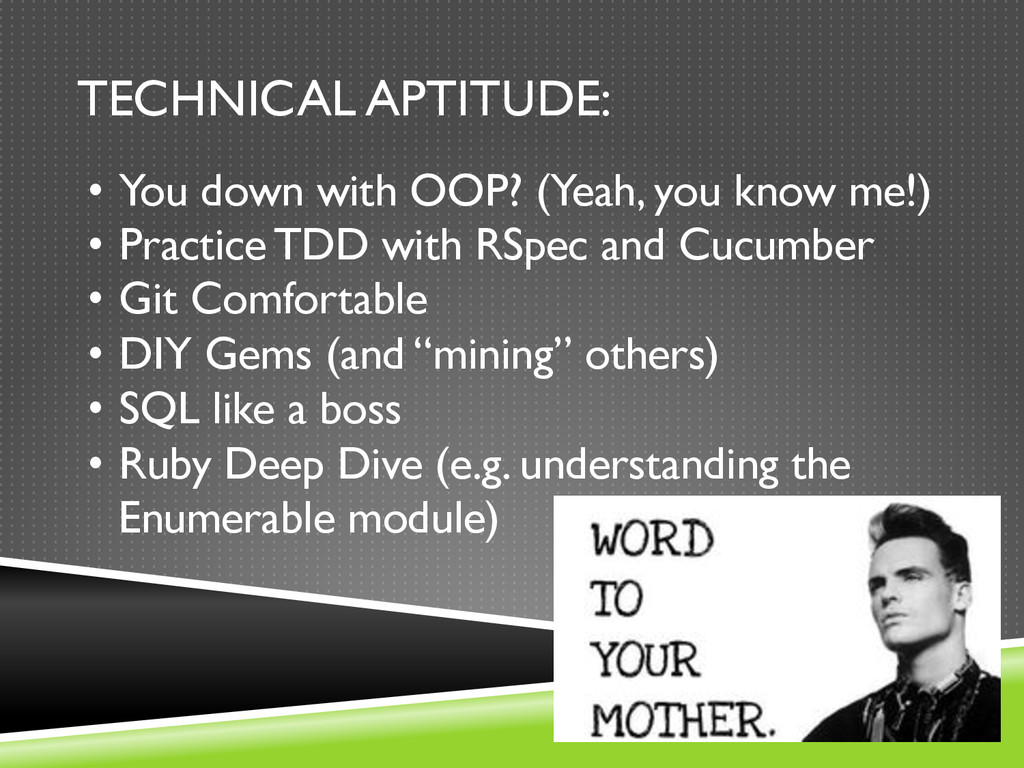
me!) • Practice TDD with RSpec and Cucumber • Git Comfortable • DIY Gems (and “mining” others) • SQL like a boss • Ruby Deep Dive (e.g. understanding the Enumerable module)
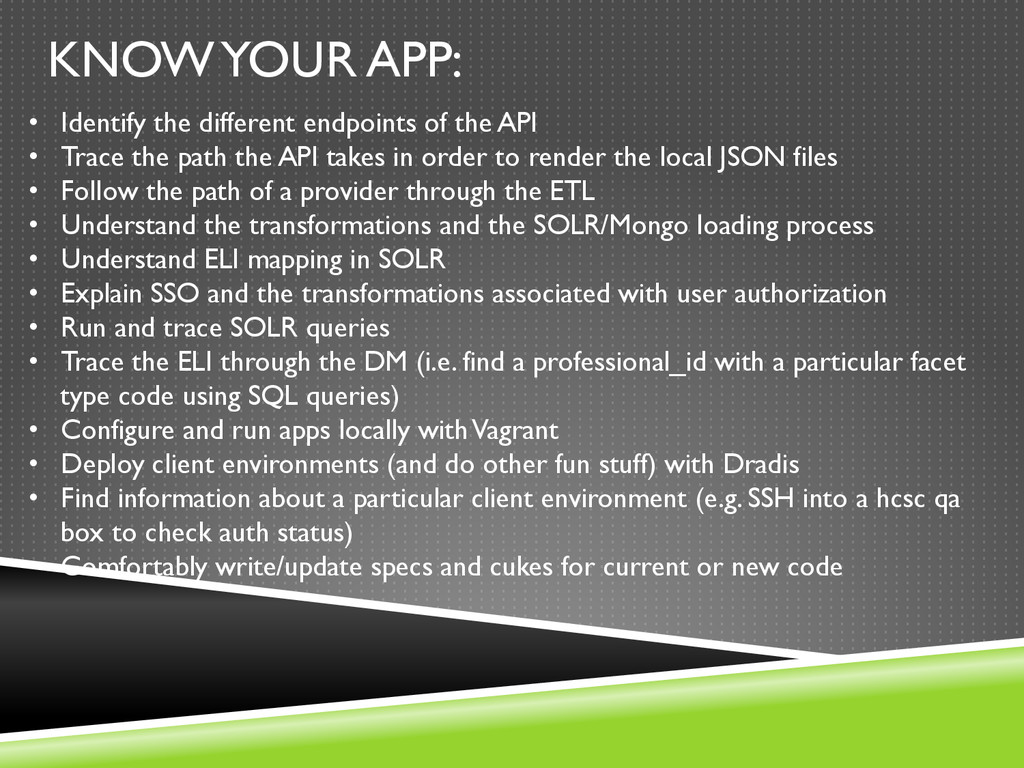
API • Trace the path the API takes in order to render the local JSON files • Follow the path of a provider through the ETL • Understand the transformations and the SOLR/Mongo loading process • Understand ELI mapping in SOLR • Explain SSO and the transformations associated with user authorization • Run and trace SOLR queries • Trace the ELI through the DM (i.e. find a professional_id with a particular facet type code using SQL queries) • Configure and run apps locally with Vagrant • Deploy client environments (and do other fun stuff) with Dradis • Find information about a particular client environment (e.g. SSH into a hcsc qa box to check auth status) • Comfortably write/update specs and cukes for current or new code
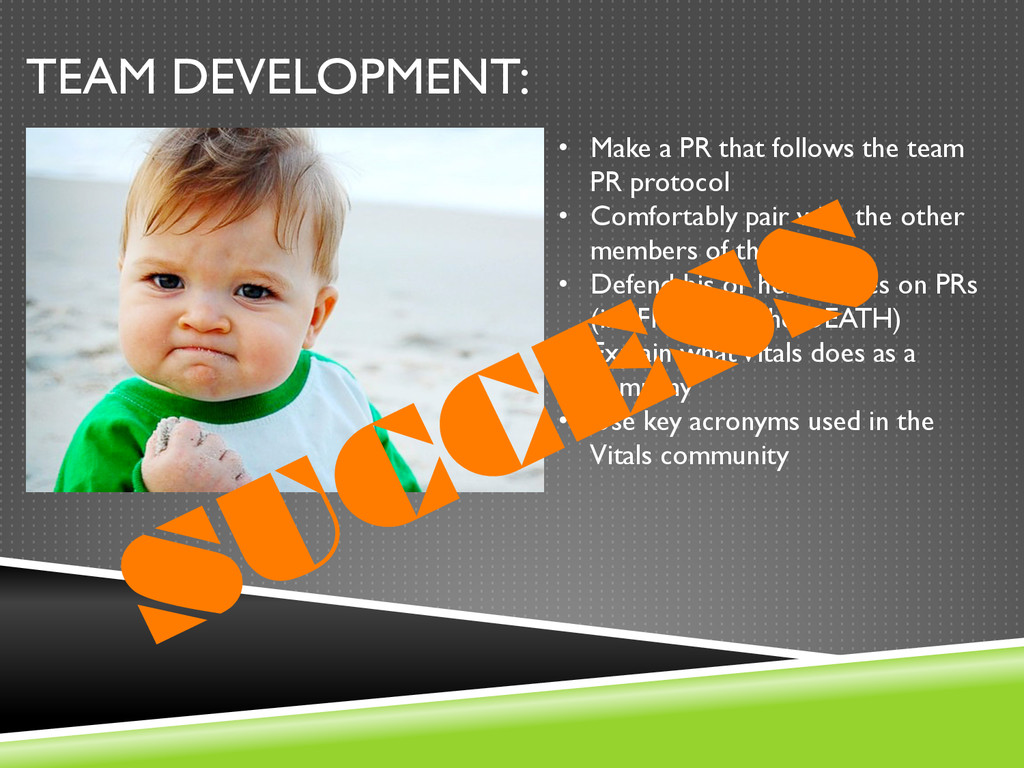
PR protocol • Comfortably pair with the other members of the team • Defend his or her choices on PRs (i.e. FIGHT to the DEATH) • Explain what Vitals does as a company • Use key acronyms used in the Vitals community
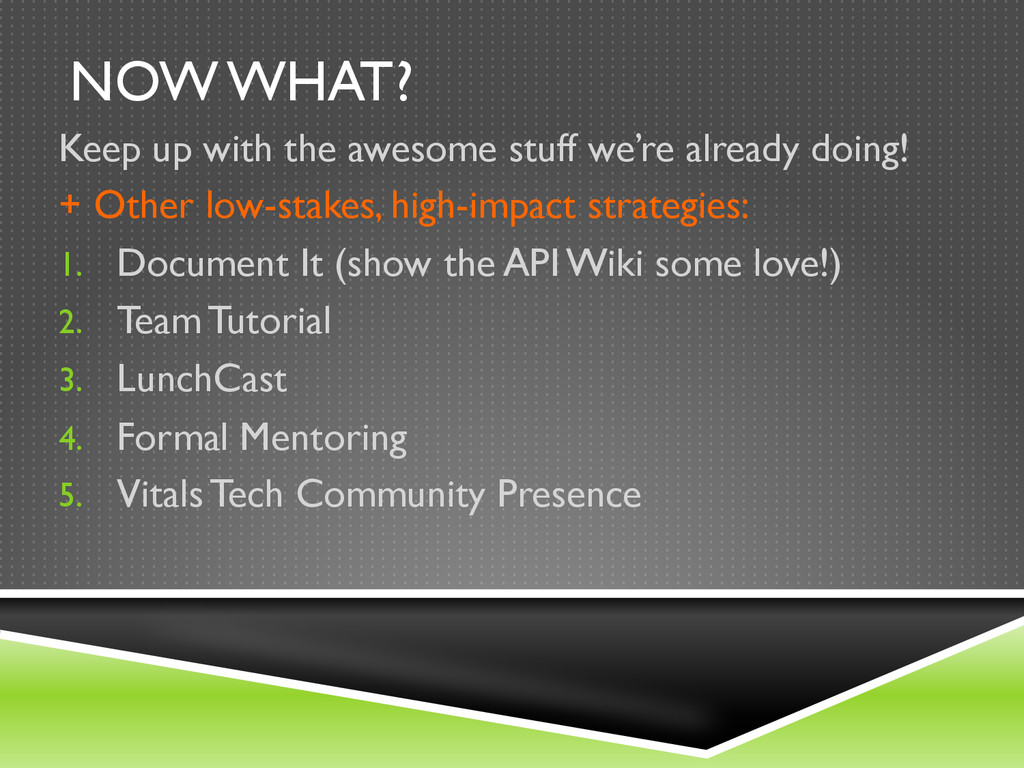
doing! + Other low-stakes, high-impact strategies: 1. Document It (show the API Wiki some love!) 2. Team Tutorial 3. LunchCast 4. Formal Mentoring 5. Vitals Tech Community Presence
and set the pace for the onboarding process • Meet weekly to establish goals and track progress during first 30-60 days • Identify knowledge gaps and help to build a learning plan • Assist in assigning tickets of increasing complexity • Review mentee’s code and provide feedback
weaknesses and develop achievable goals • Track progress through self- assessment • Come prepared to mentoring sessions with problems and/or questions • Become a mentor!
following strategies, given our current workload? Increased Documentation Team Tutorial LunchCasts Formal Mentoring Tech Community Participation & Outreach Are there other low-commitment strategies that we can implement to help acclimate new developers and/or further a culture of learning? Questions? Comments? Concerns?


 gretchenziegler
 bkeepers
 jct
 mclloyd
 jeffersonlam
 raygrieselhuber
 mkilby
 sarafernandez
 ryanjones
 speakerdeck
 tapps
 sergeychernyshev