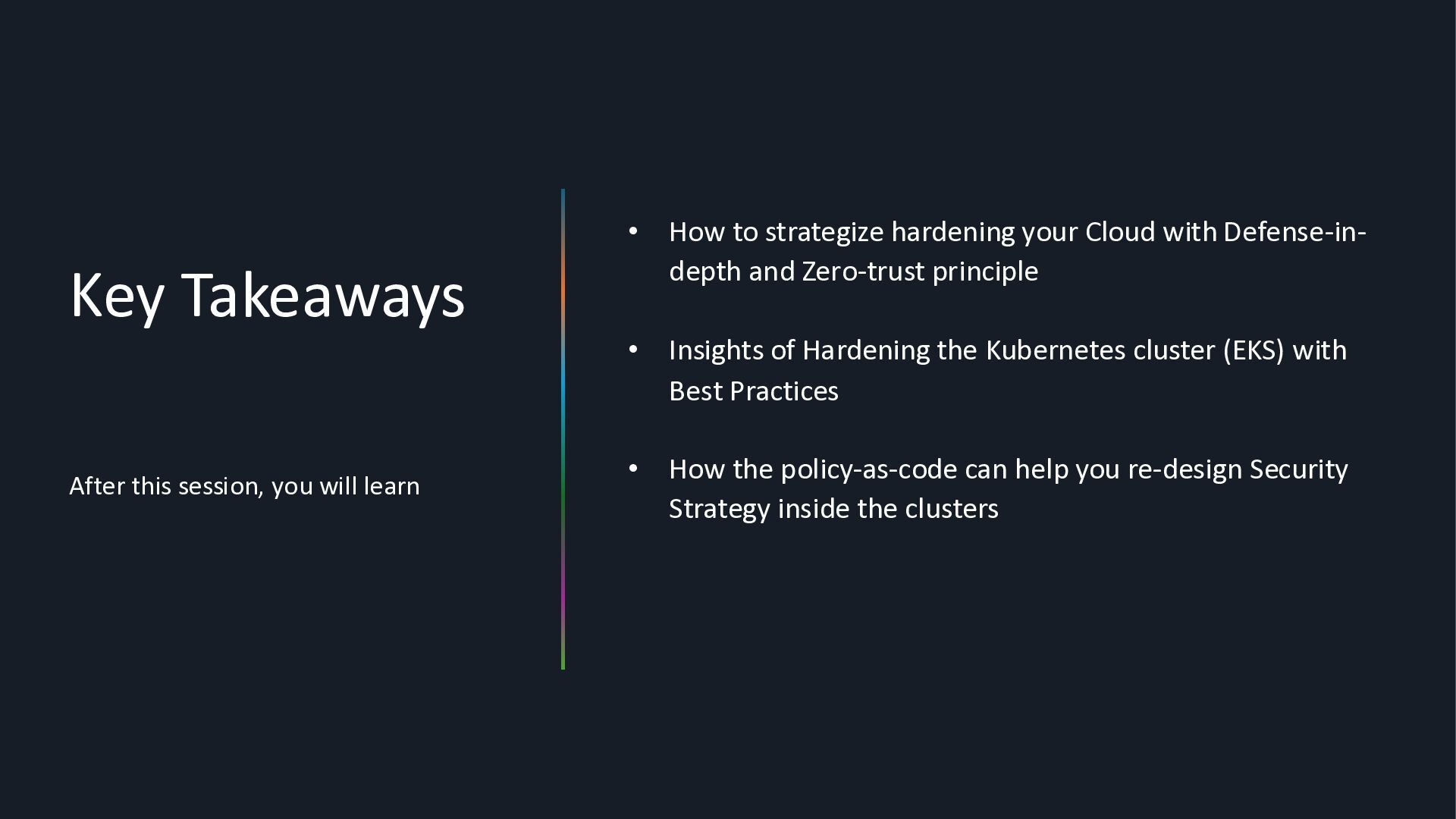
to strategize hardening your Cloud with Defense-in- depth and Zero-trust principle • Insights of Hardening the Kubernetes cluster (EKS) with Best Practices • How the policy-as-code can help you re-design Security Strategy inside the clusters
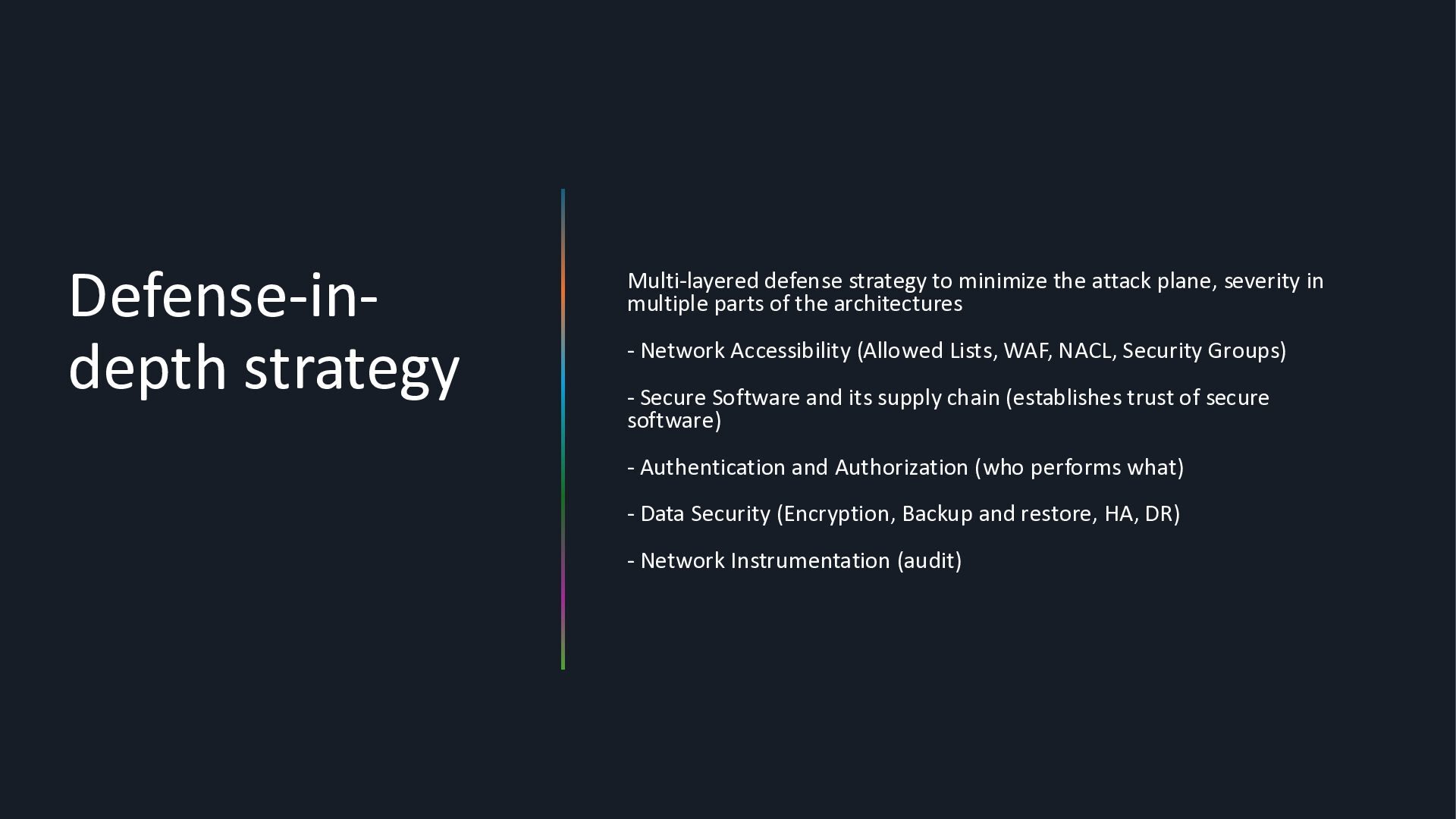
plane, severity in multiple parts of the architectures - Network Accessibility (Allowed Lists, WAF, NACL, Security Groups) - Secure Software and its supply chain (establishes trust of secure software) - Authentication and Authorization (who performs what) - Data Security (Encryption, Backup and restore, HA, DR) - Network Instrumentation (audit)
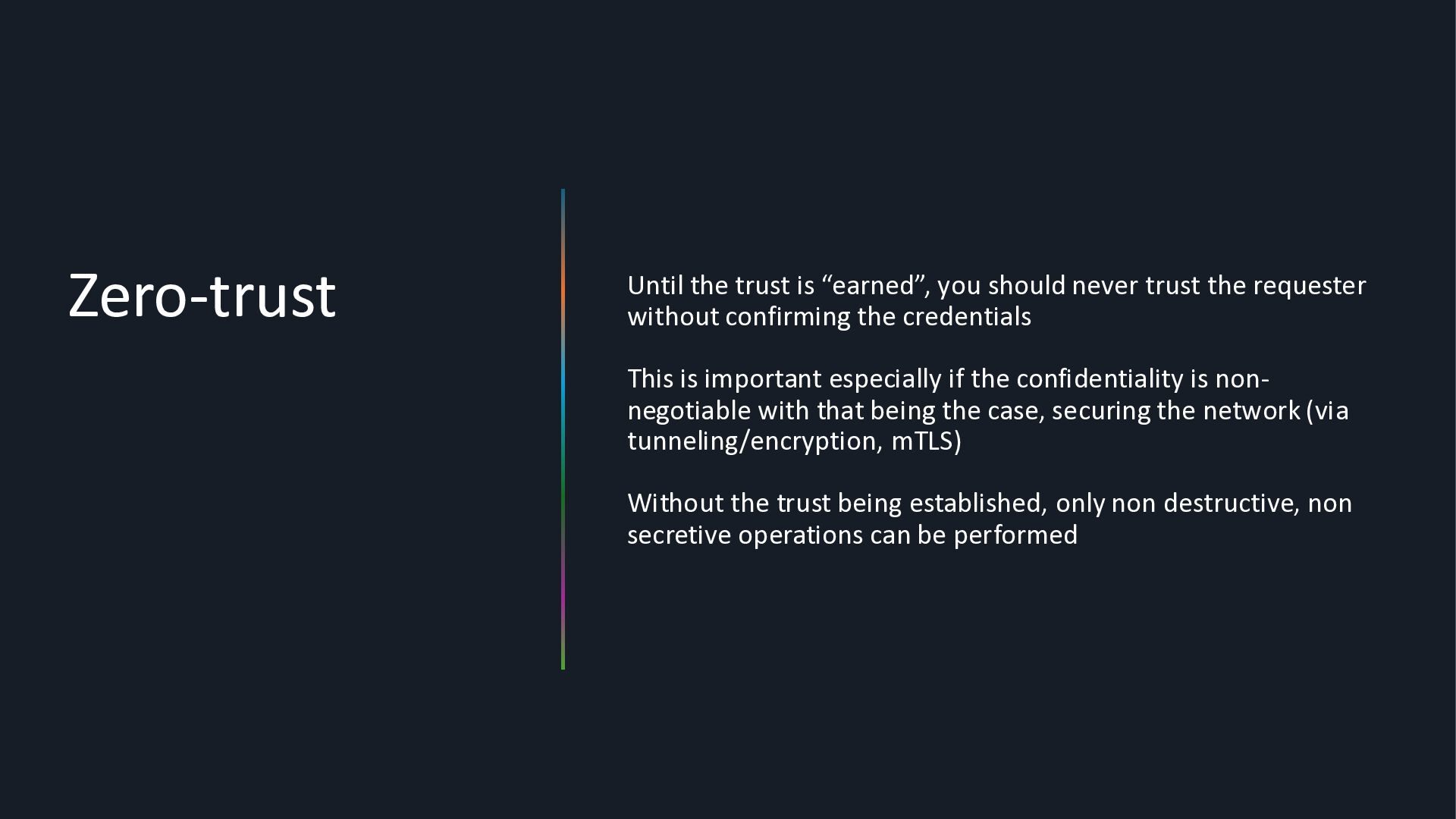
the requester without confirming the credentials This is important especially if the confidentiality is non- negotiable with that being the case, securing the network (via tunneling/encryption, mTLS) Without the trust being established, only non destructive, non secretive operations can be performed
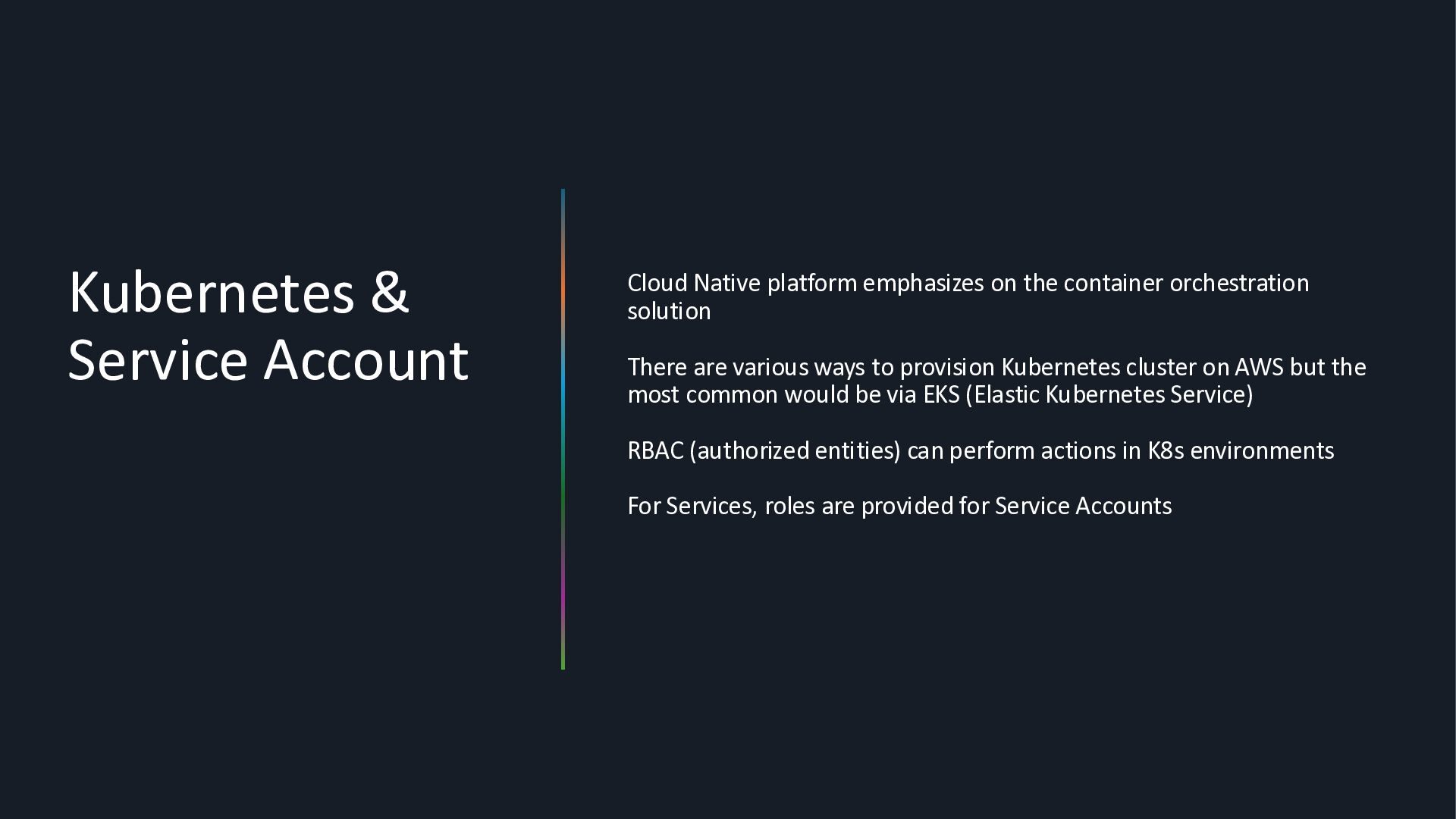
container orchestration solution There are various ways to provision Kubernetes cluster on AWS but the most common would be via EKS (Elastic Kubernetes Service) RBAC (authorized entities) can perform actions in K8s environments For Services, roles are provided for Service Accounts
what (actions) on which resources, based on explicitly defined permissions. Each policy can then be set its effect to be allowed/denied. Principal is mandatory for the resource-based policies. (as identity- based is explicitly defined via association, but resources such as S3 bucket has no such thing) IAM Role uses this concept to authorize the access to AWS services to authenticated identities
Service Accounts) are used to map RBAC for Services Accounts in EKS (via OIDC and STS) This has a real caveat with large scale clusters which can easily overwhelm the requests to STS and bottleneck the scaling EKS Pod Identity can help alleviate the issue via caching the responses on node (i.e., the same repetitive request can be responded from the cache instead of individually repeating the same request/response)
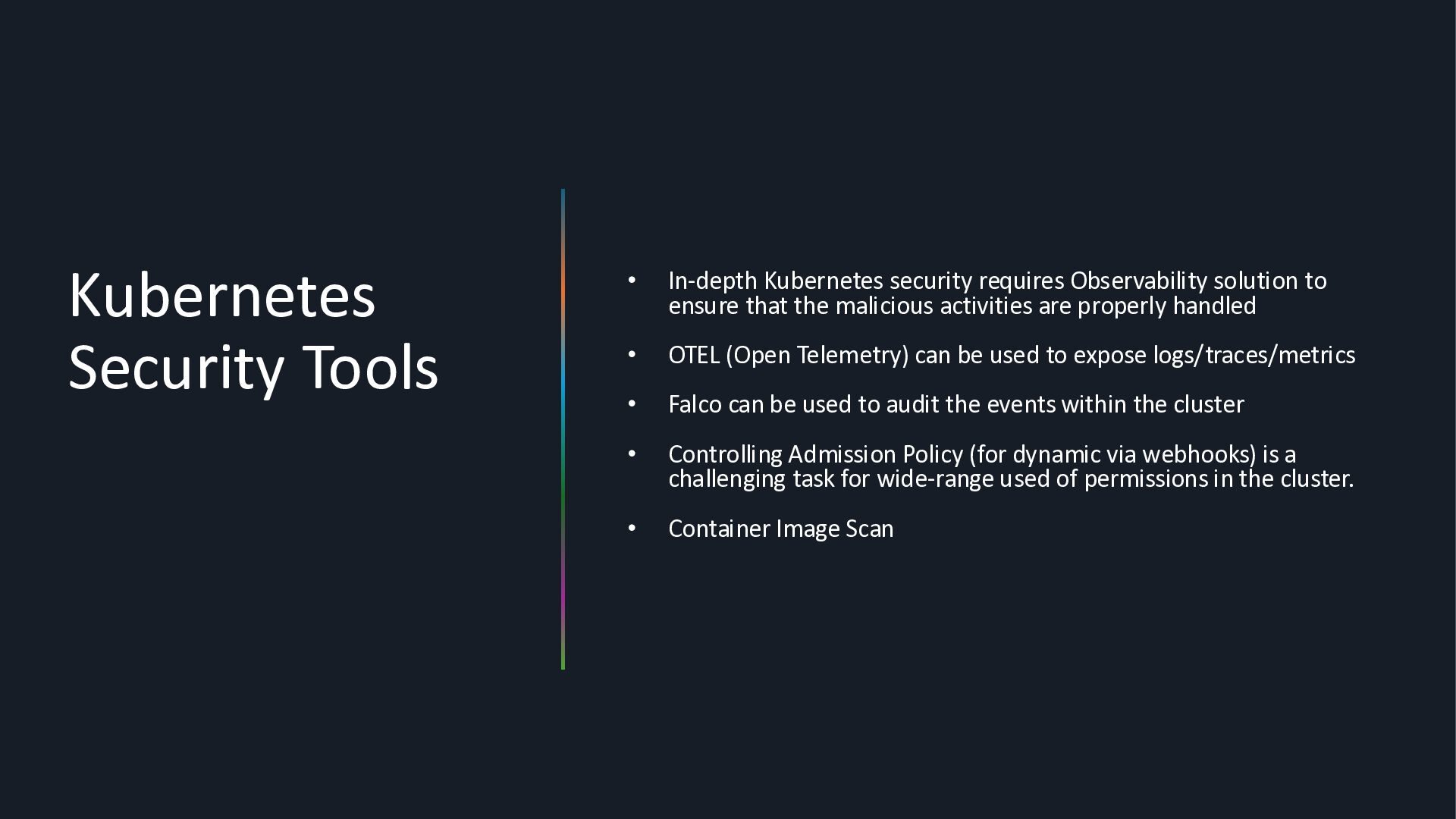
to ensure that the malicious activities are properly handled • OTEL (Open Telemetry) can be used to expose logs/traces/metrics • Falco can be used to audit the events within the cluster • Controlling Admission Policy (for dynamic via webhooks) is a challenging task for wide-range used of permissions in the cluster. • Container Image Scan
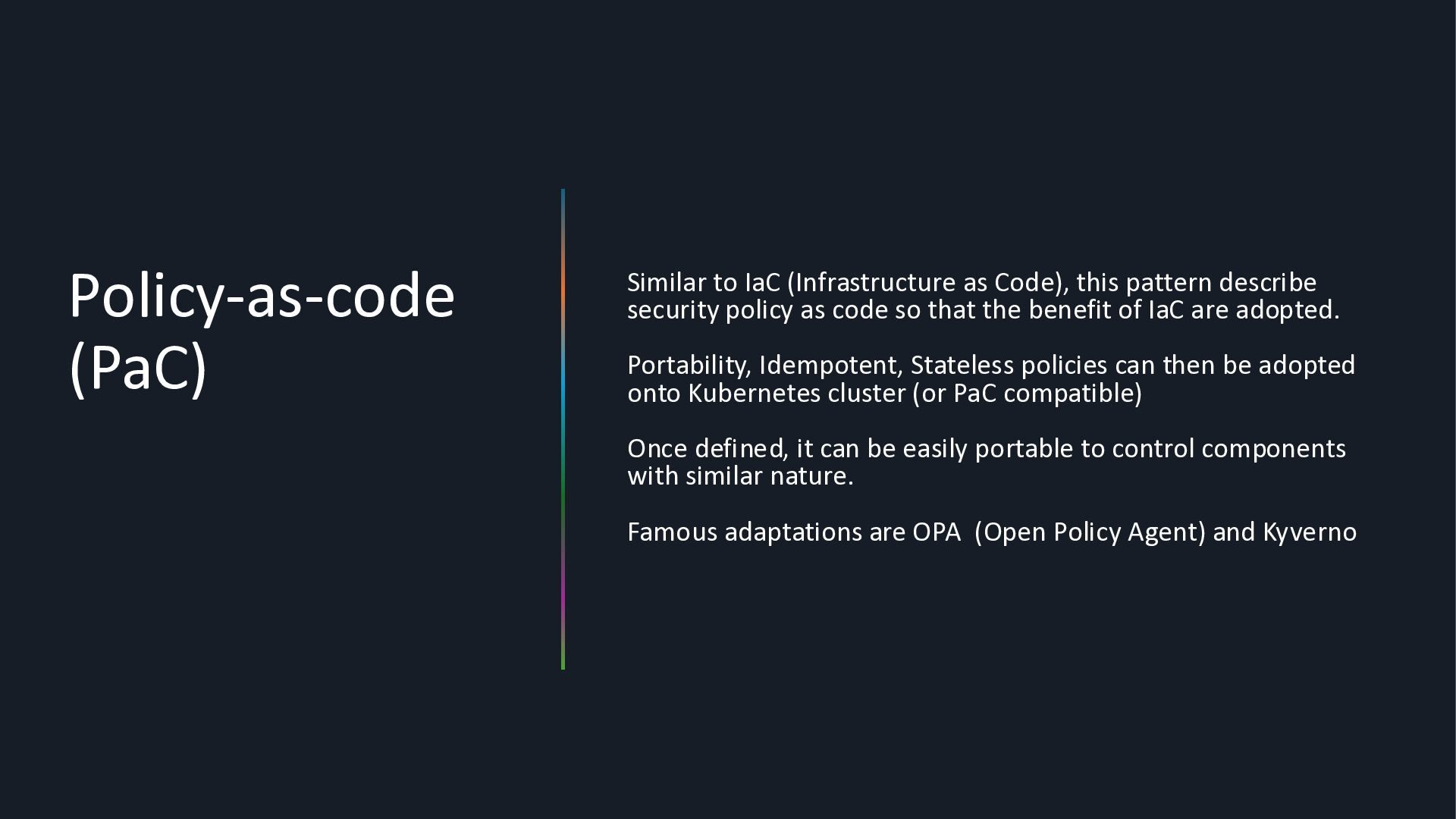
describe security policy as code so that the benefit of IaC are adopted. Portability, Idempotent, Stateless policies can then be adopted onto Kubernetes cluster (or PaC compatible) Once defined, it can be easily portable to control components with similar nature. Famous adaptations are OPA (Open Policy Agent) and Kyverno
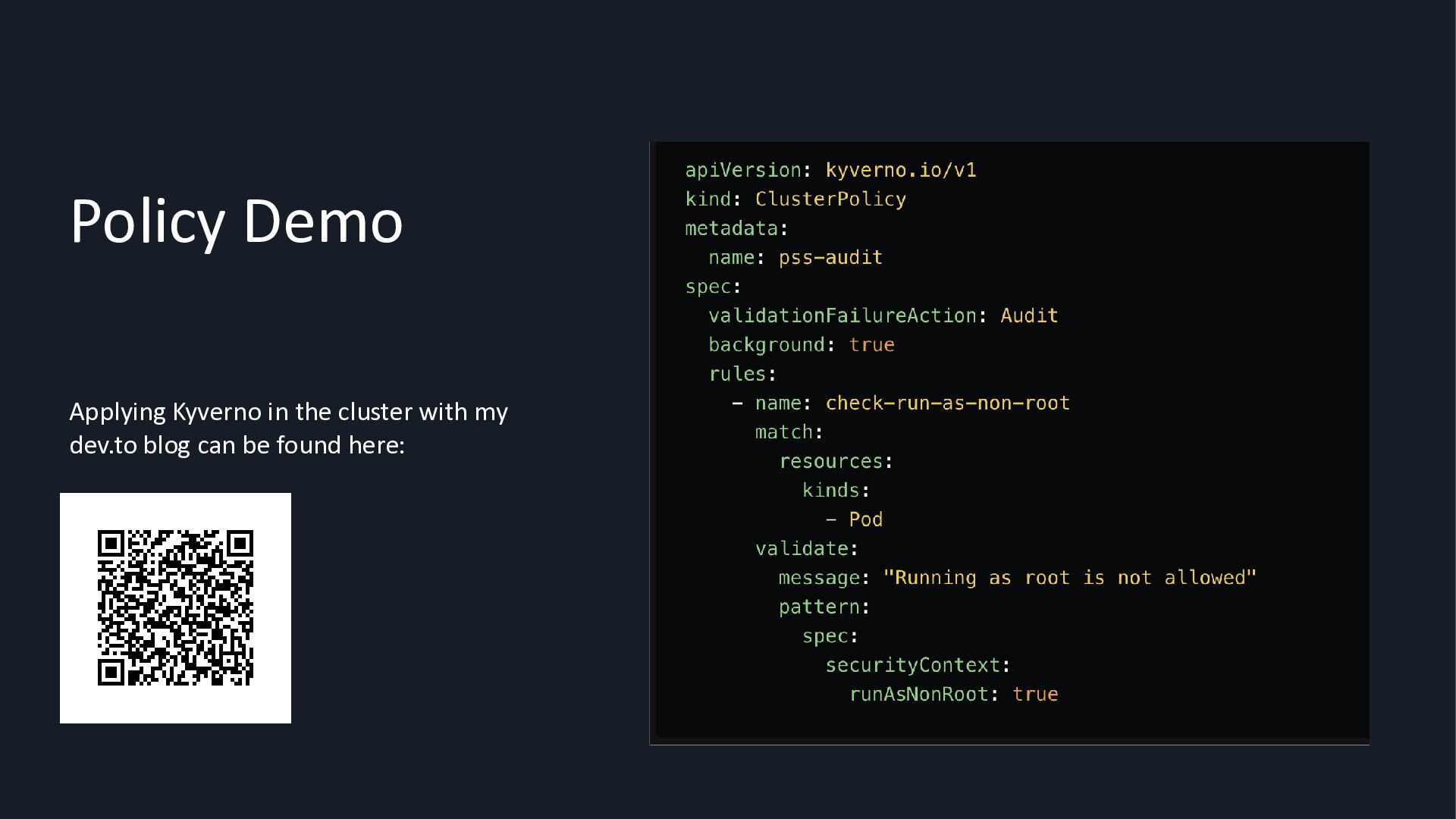
Code targeting Kubernetes Policies are broadly defined for real world use-cases with report (OpenReports) support built-in Many examples and playgrounds are made available to make it easy for early adaptations and testing Kyverno
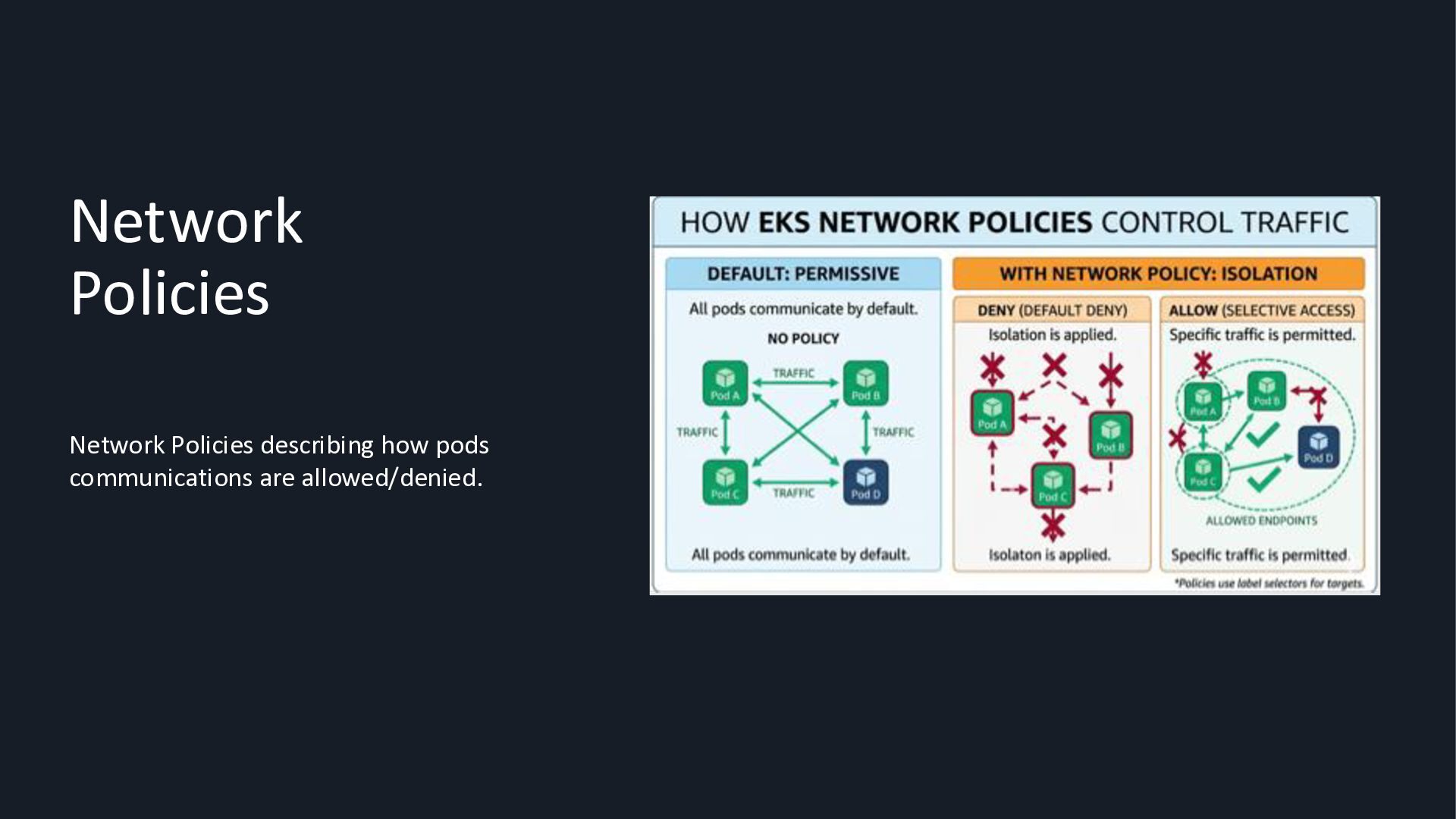
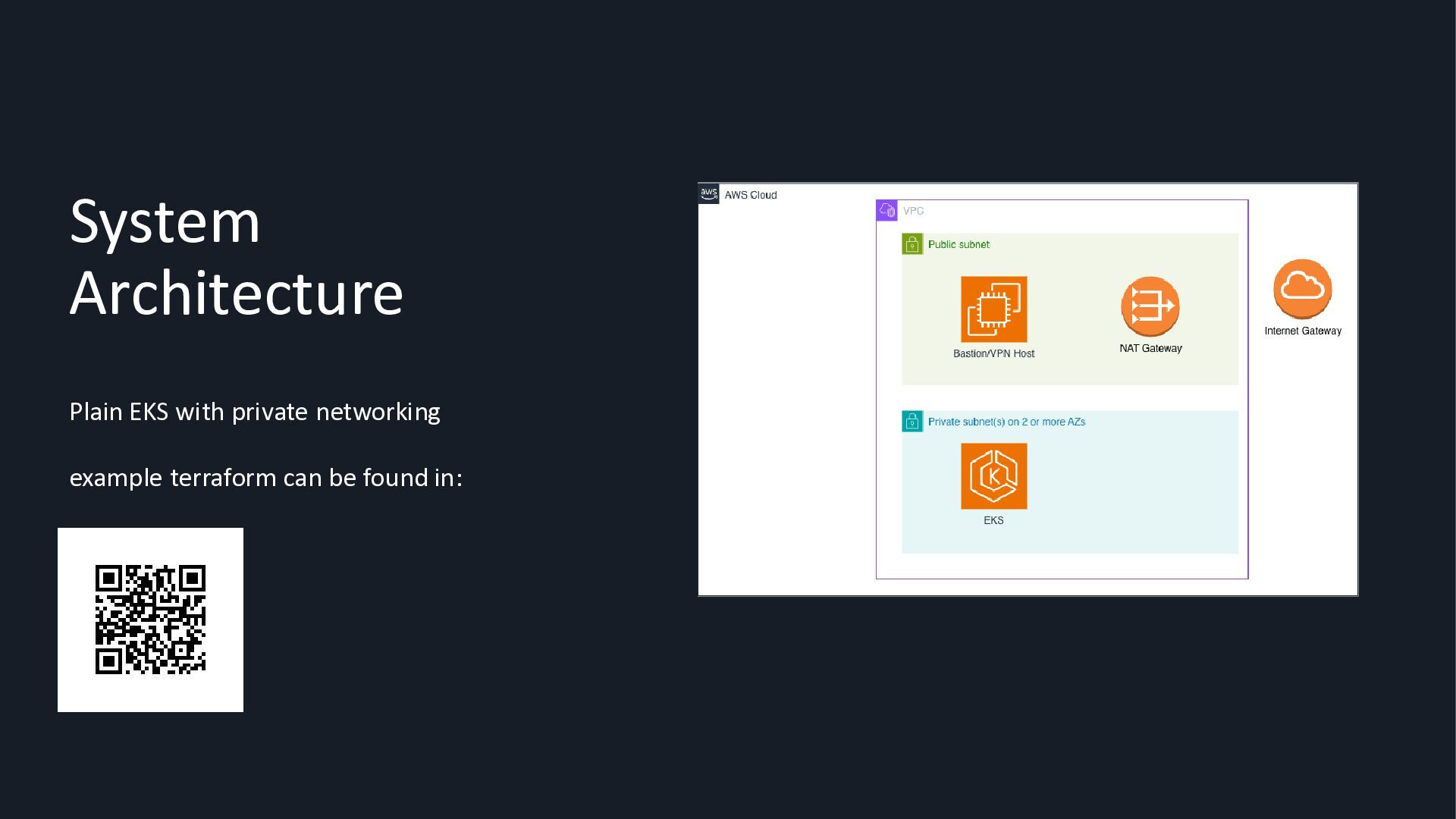
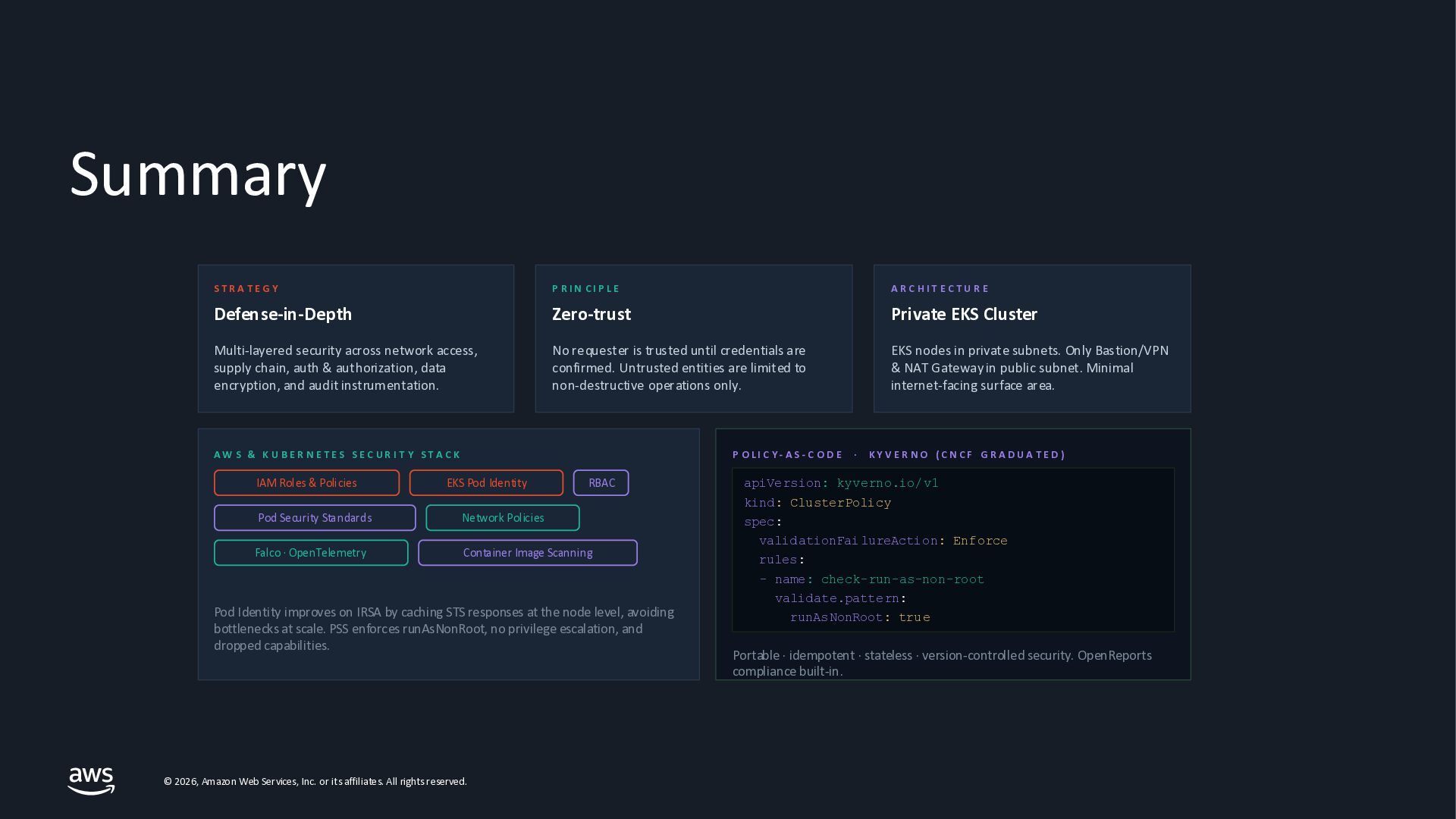
rights reserved. Summary S T R A T E G Y Defense-in-Depth Multi-layered security across network access, supply chain, auth & authorization, data encryption, and audit instrumentation. P R IN C I P L E Zero-trust No requester is trusted until credentials are confirmed. Untrusted entities are limited to non-destructive operations only. A R C H IT E C T U R E Private EKS Cluster EKS nodes in private subnets. Only Bastion/VPN & NAT Gateway in public subnet. Minimal internet-facing surface area. A W S & K U B E R N E T E S S E C UR I T Y ST A C K IAM Roles & Policies EKS Pod Identity RBAC Pod Security Standards Network Policies Falco · OpenTelemetry Container Image Scanning Pod Identity improves on IRSA by caching STS responses at the node level, avoiding bottlenecks at scale. PSS enforces runAsNonRoot, no privilege escalation, and dropped capabilities. P O L I C Y - A S - C O D E · K Y V E R N O ( C N C F G R A D UA T E D ) apiVersion: kyverno.io/v1 kind: ClusterPolicy spec: validationFailureAction: Enforce rules: - name: check-run-as-non-root validate.pattern: runAsNonRoot: true Portable · idempotent · stateless · version-controlled security. OpenReports compliance built-in.


 guxkung
 minodriven
 seike460
 tmikov2023
 prota
 sylph01
 nokomoro3
 ___akari11
 y0hgi
 ryu1013
 ivargrimstad
 artoy
 suneo3476
 denniskardys
 inesmontani
 keavy
 swwweet
 lindahogenes
 elsirapls
 csswizardry
 jonoalderson
 stephenakadiri
 ipullrank
 tmiket
 sonatard