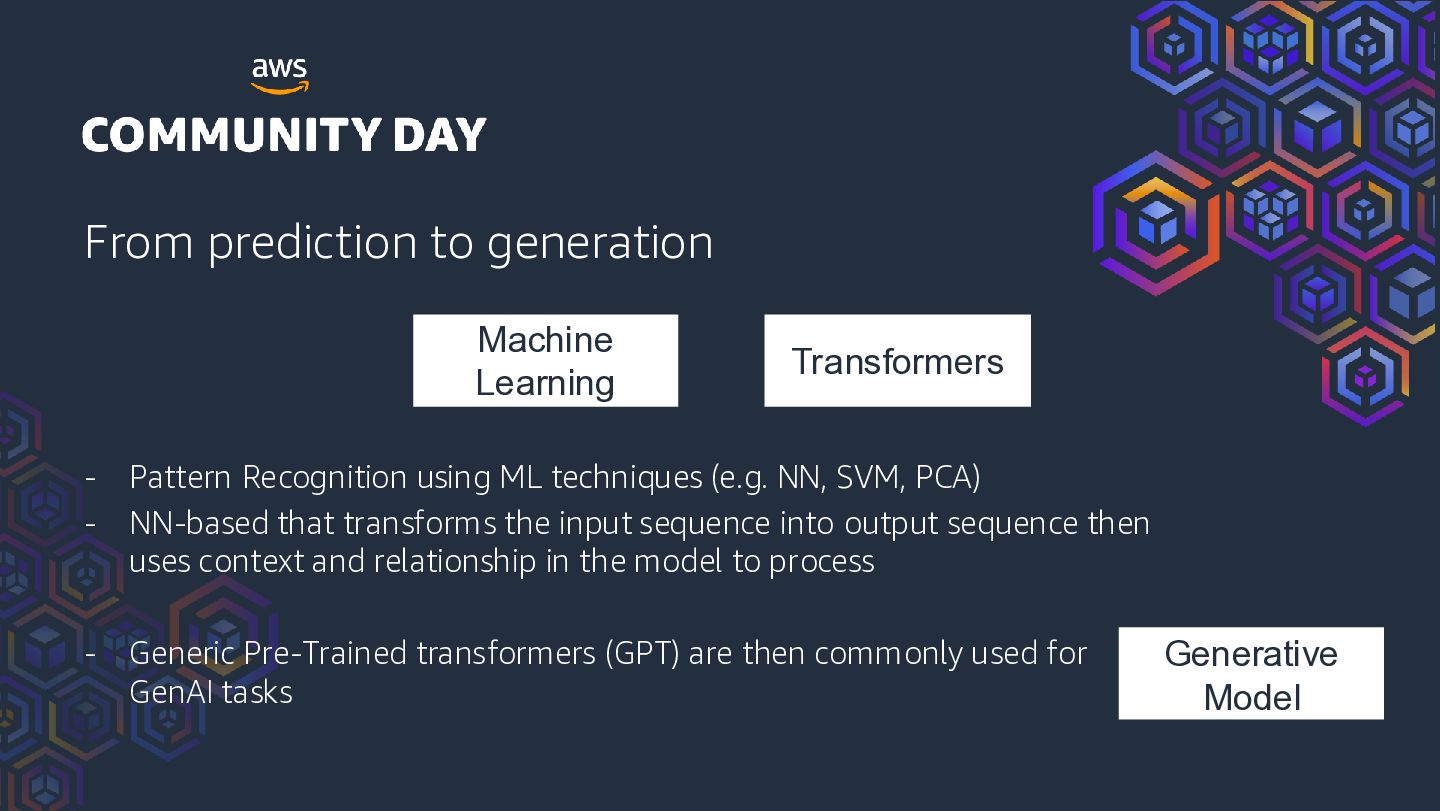
using ML techniques (e.g. NN, SVM, PCA) NN-based that transforms the input sequence into output sequence then uses context and relationship in the model to process - Generic Pre-Trained transformers (GPT) are then commonly used for GenAI tasks Generative Model
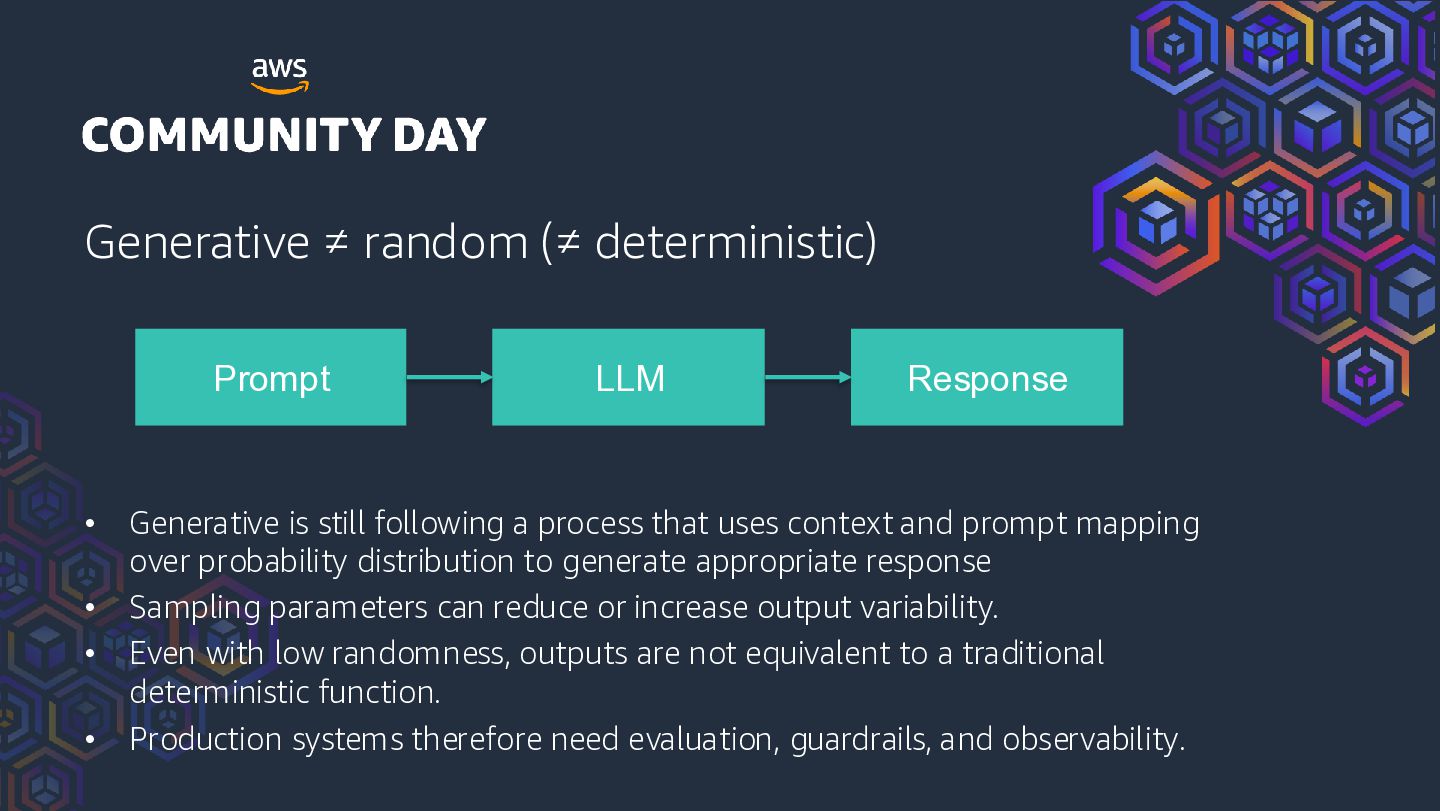
LLM Response Generative is still following a process that uses context and prompt mapping over probability distribution to generate appropriate response Sampling parameters can reduce or increase output variability. Even with low randomness, outputs are not equivalent to a traditional deterministic function. Production systems therefore need evaluation, guardrails, and observability.
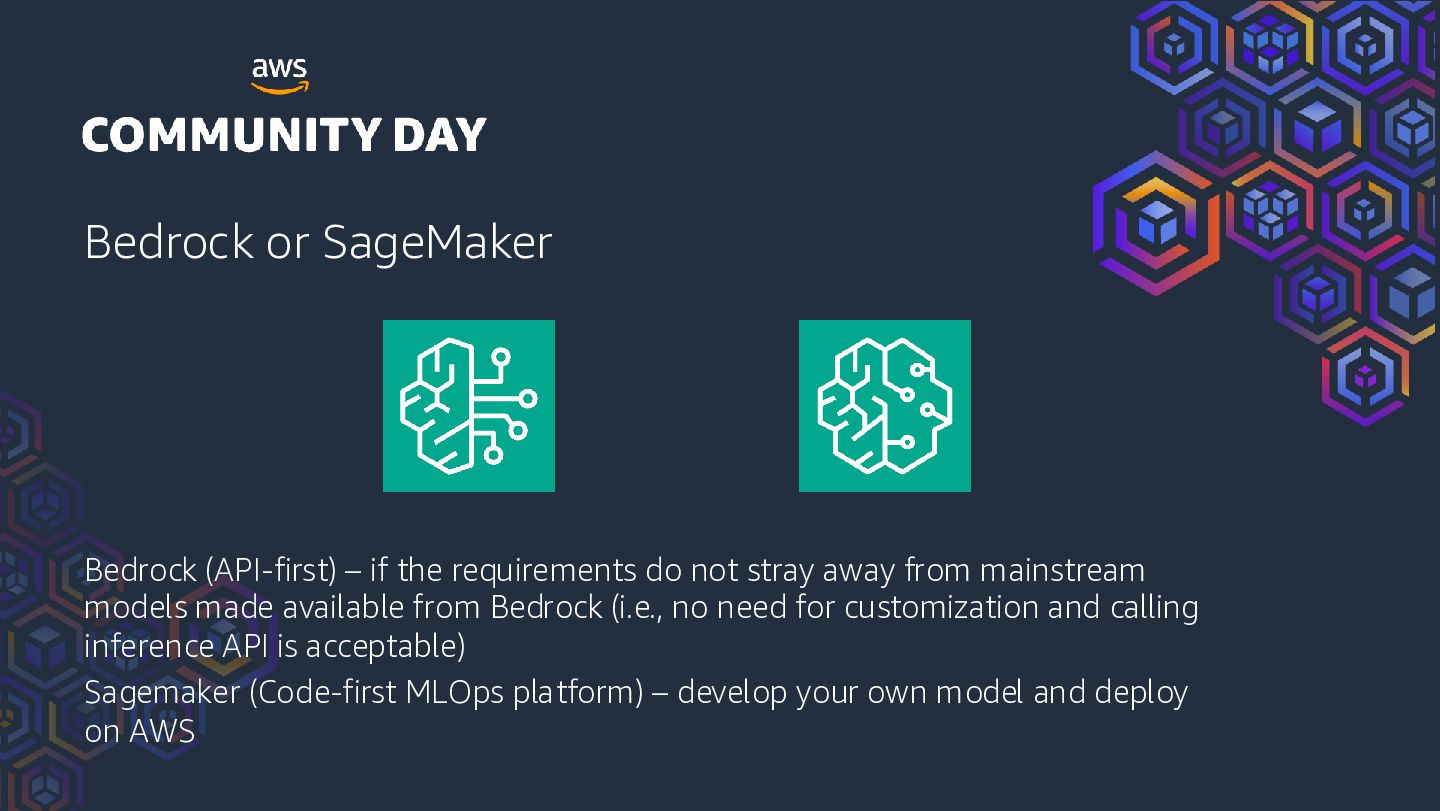
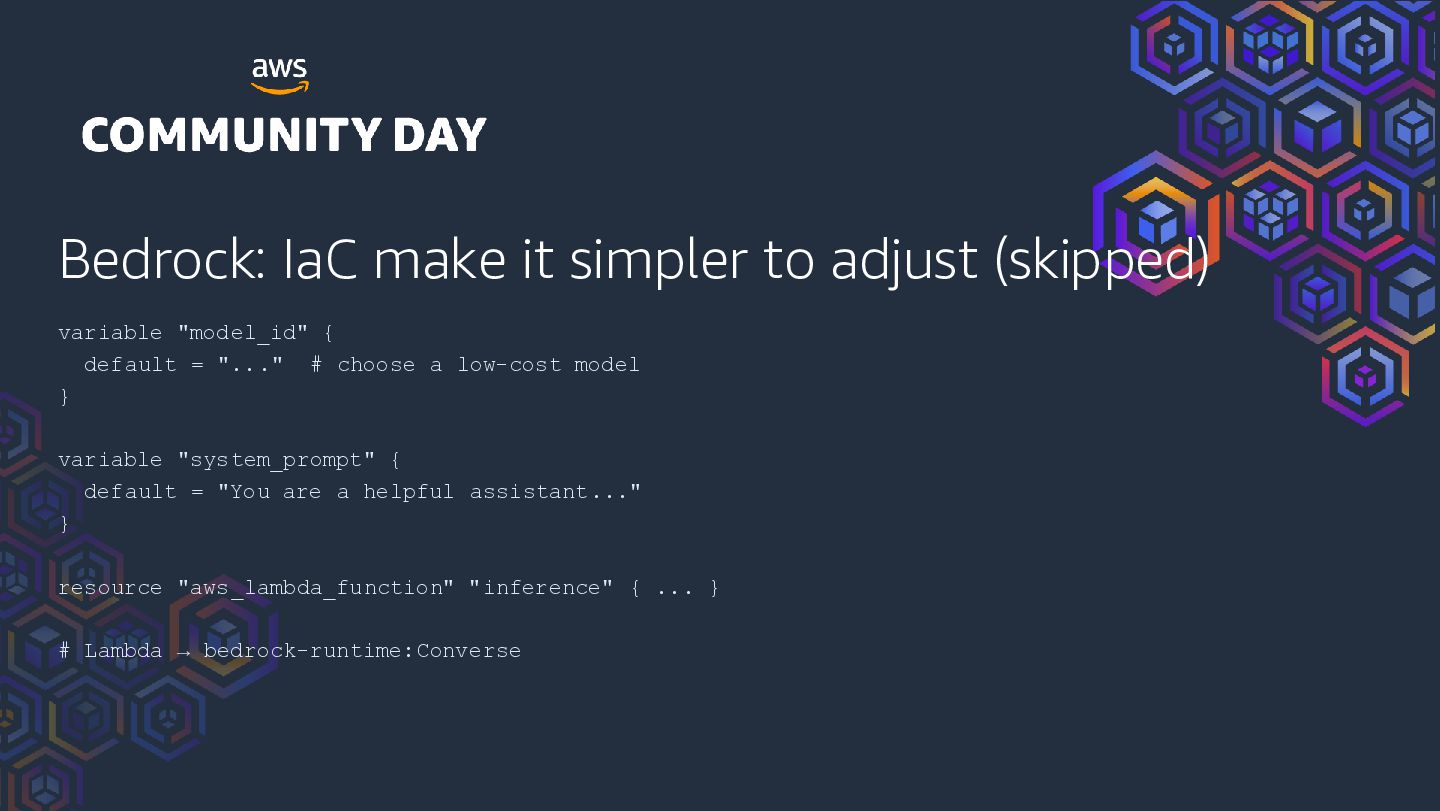
not stray away from mainstream models made available from Bedrock (i.e., no need for customization and calling inference API is acceptable) Sagemaker (Code-first MLOps platform) – develop your own model and deploy on AWS
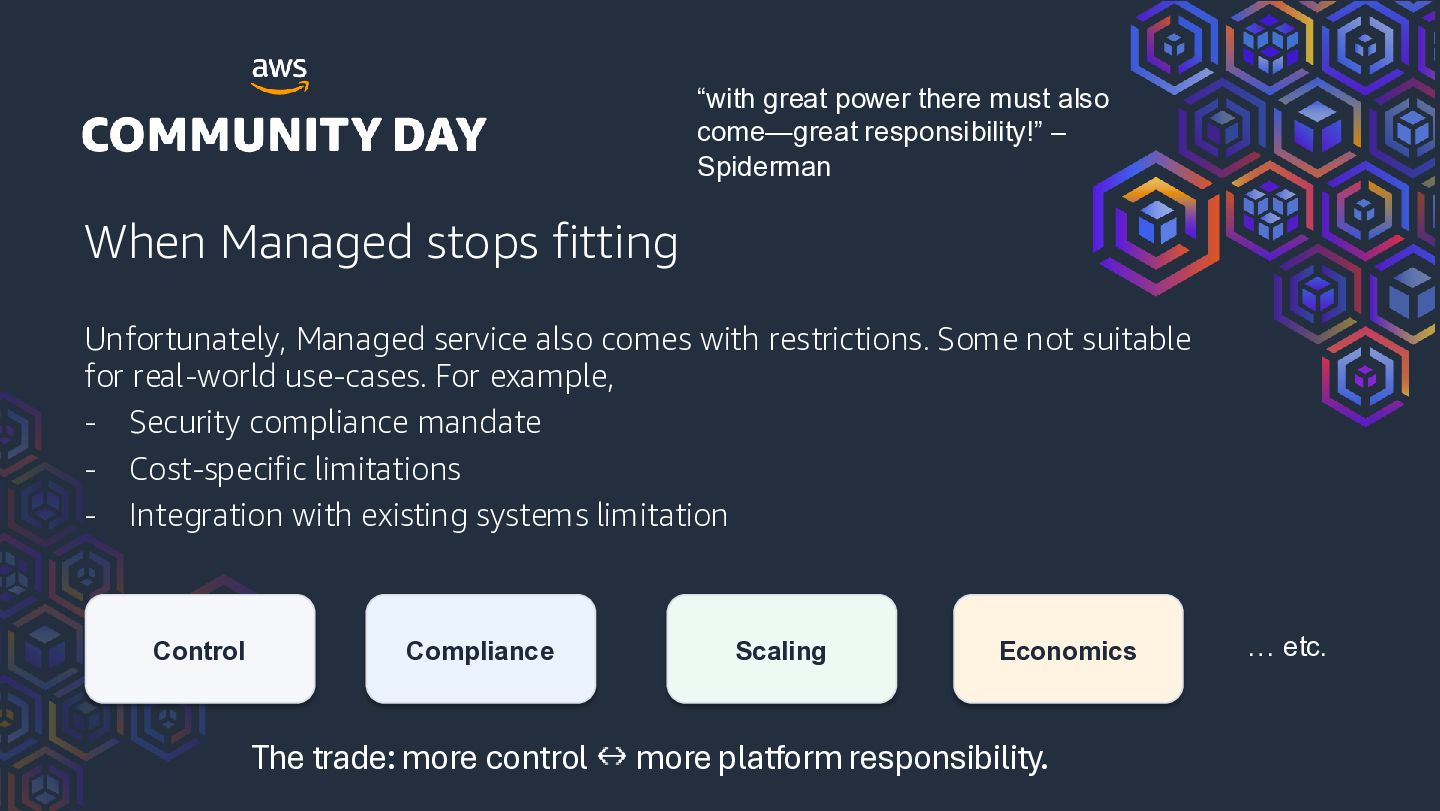
When Managed stops fitting Unfortunately, Managed service also comes with restrictions. Some not suitable for real-world use-cases. For example, - Security compliance mandate - Cost-specific limitations - Integration with existing systems limitation Control Compliance The trade: more control Scaling Economics more platform responsibility. … etc.
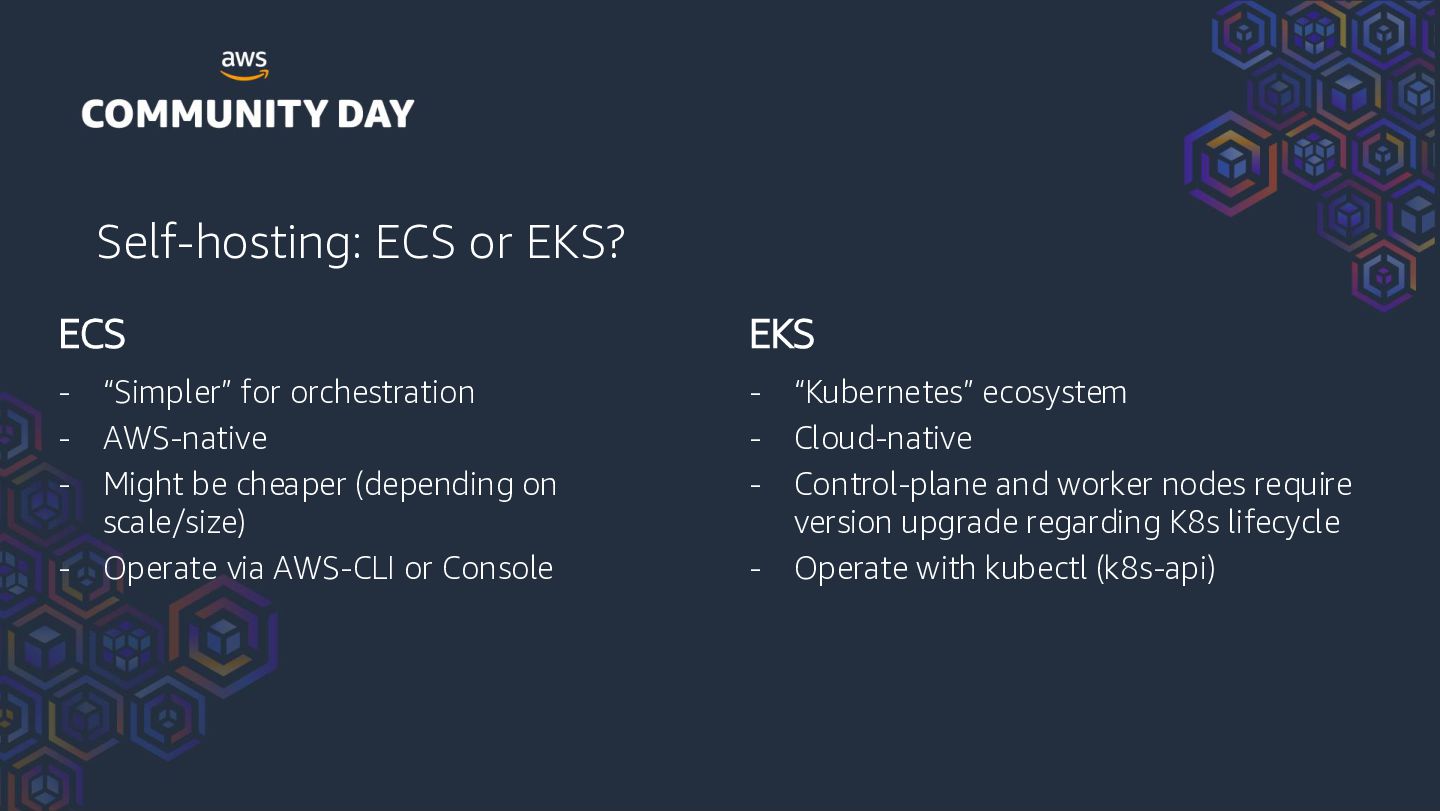
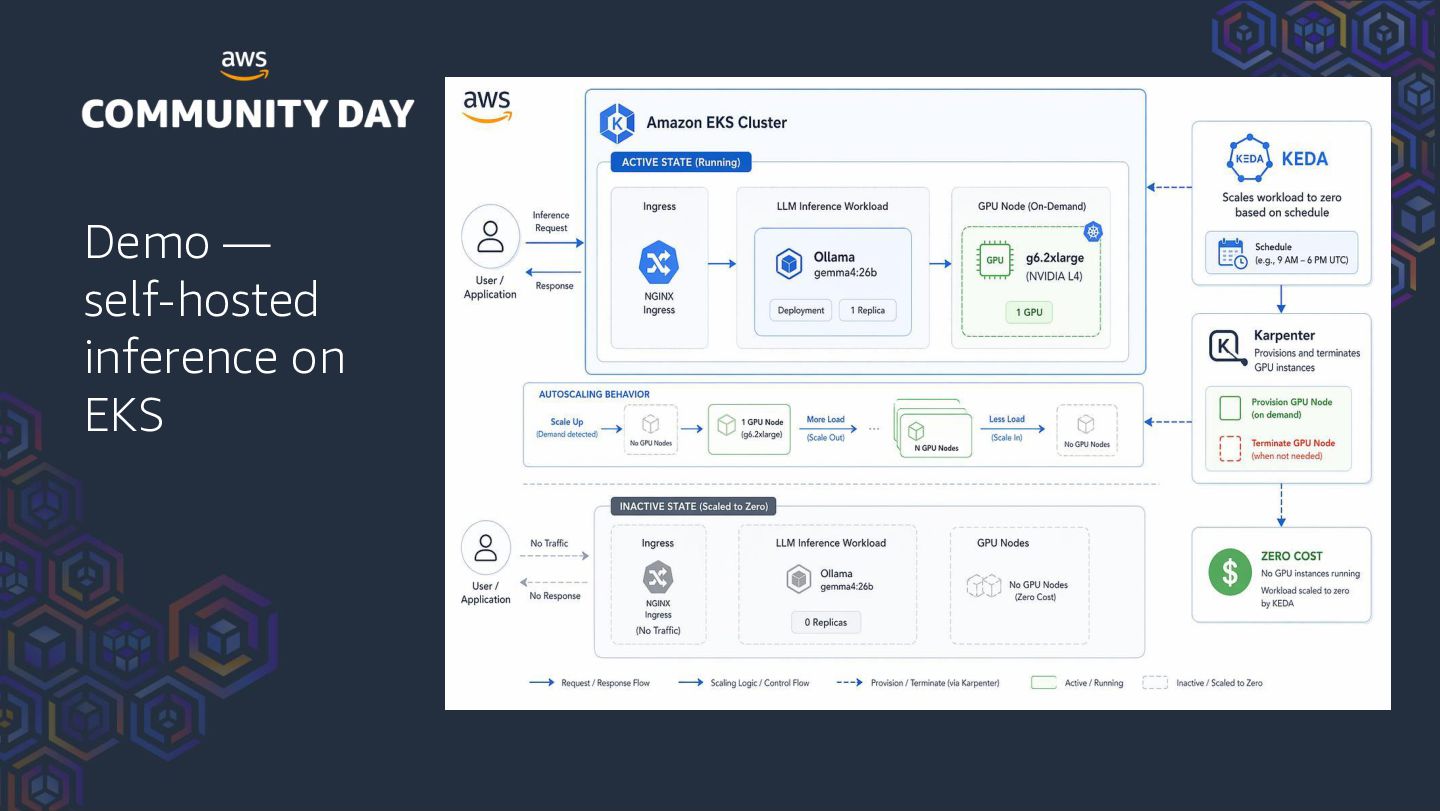
for orchestration AWS-native Might be cheaper (depending on scale/size) Operate via AWS-CLI or Console - “Kubernetes” ecosystem Cloud-native Control-plane and worker nodes require version upgrade regarding K8s lifecycle Operate with kubectl (k8s-api)
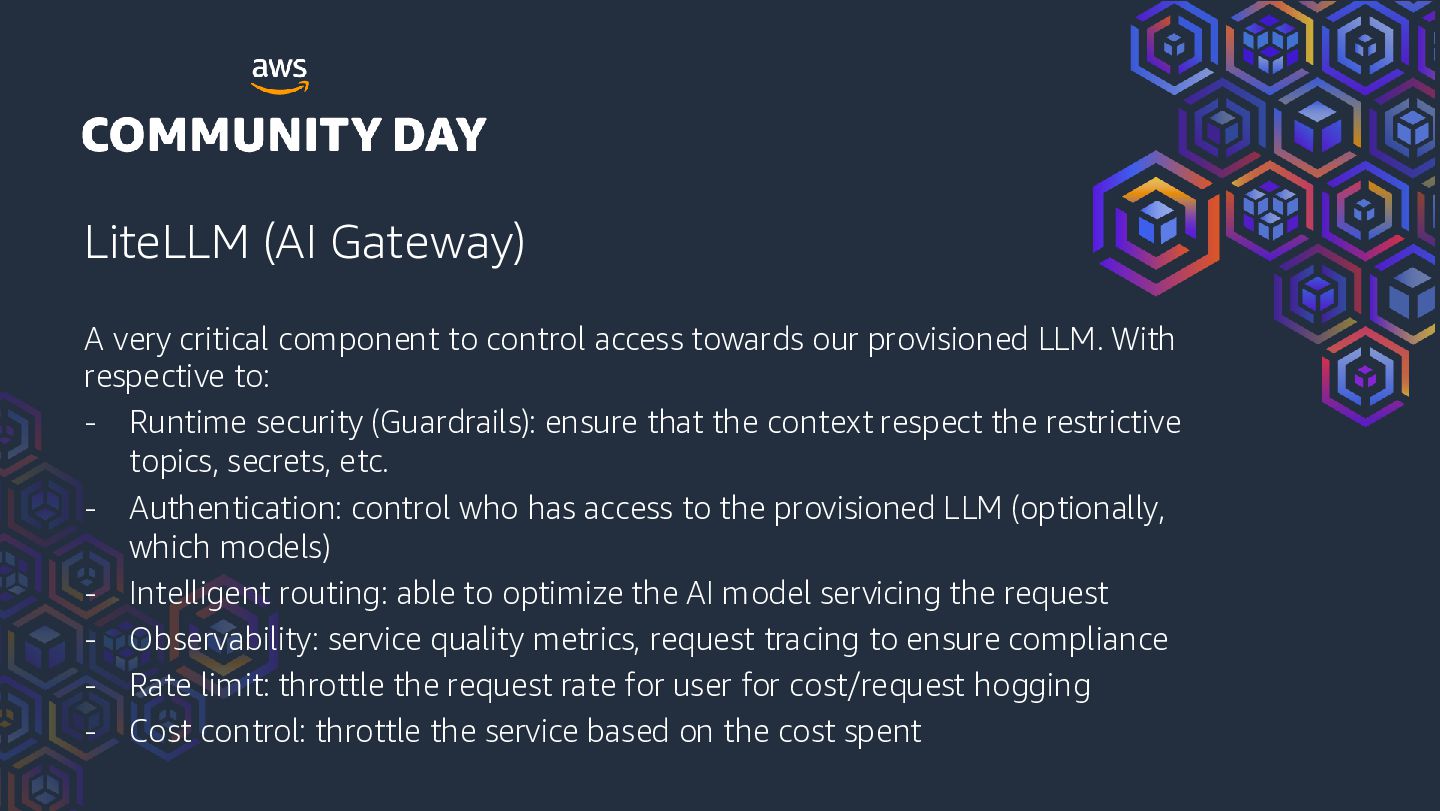
towards our provisioned LLM. With respective to: - Runtime security (Guardrails): ensure that the context respect the restrictive topics, secrets, etc. - Authentication: control who has access to the provisioned LLM (optionally, which models) - Intelligent routing: able to optimize the AI model servicing the request - Observability: service quality metrics, request tracing to ensure compliance - Rate limit: throttle the request rate for user for cost/request hogging - Cost control: throttle the service based on the cost spent
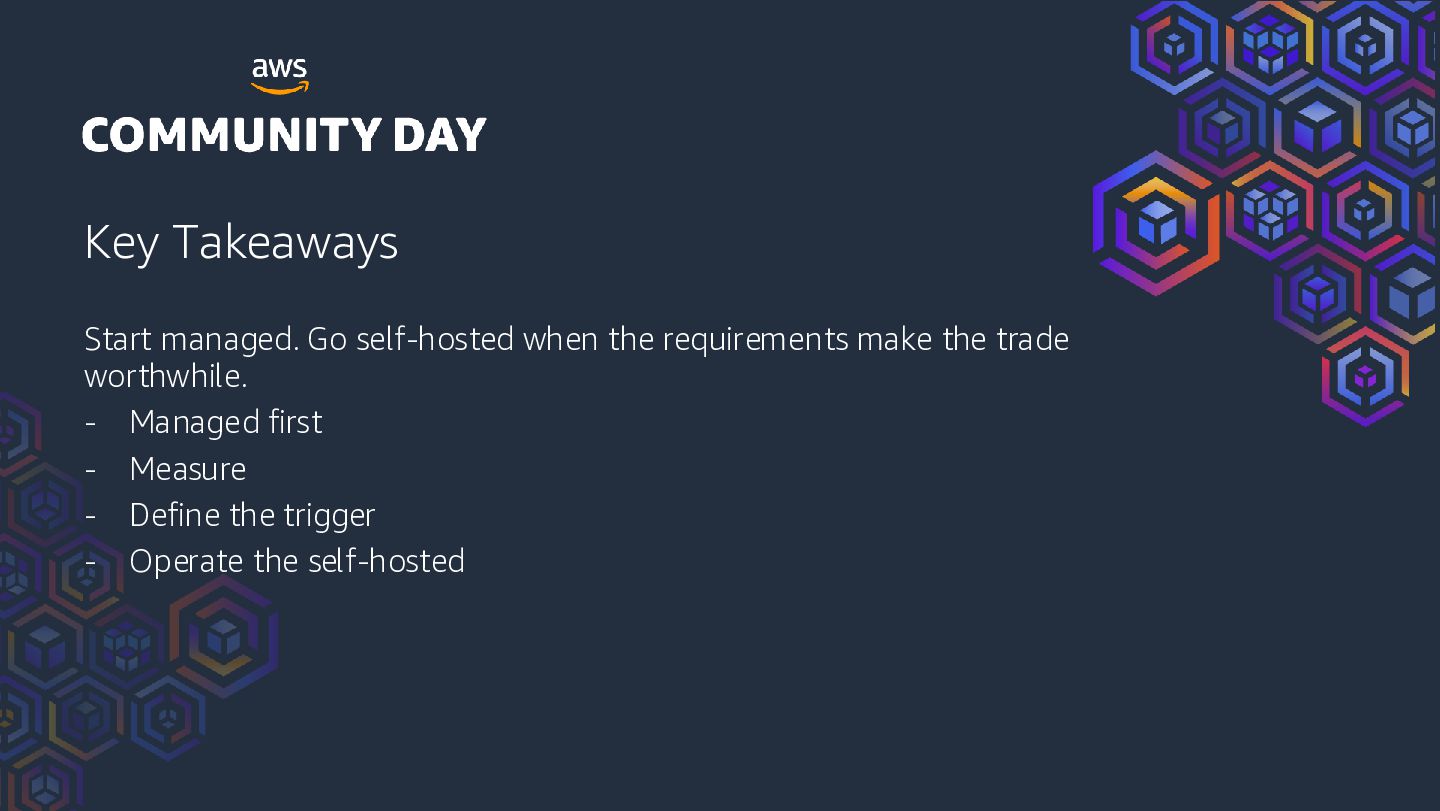
possible. Experiment around if required Measure: all the metrics (cost, latency, quality, governance, operational constraints) Trigger: would the managed service satisfy the requirements? Will the selfhosted option better suited in any “measurable” objective? Migration: beware, it is more of a platform instead of one container


 guxkung
 morizo_1984
 artoy
 texmeijin
 oku053
 moro
 satoshi256kbyte
 rkaga
 htkym
 yub0n
 syumai
 taiseiue
 aleyda
 schlessera
 minecr
 katiecoart
 cromwellryan
 codingconduct
 davetheseo
 sstephenson
 reverentgeek
 ammeep