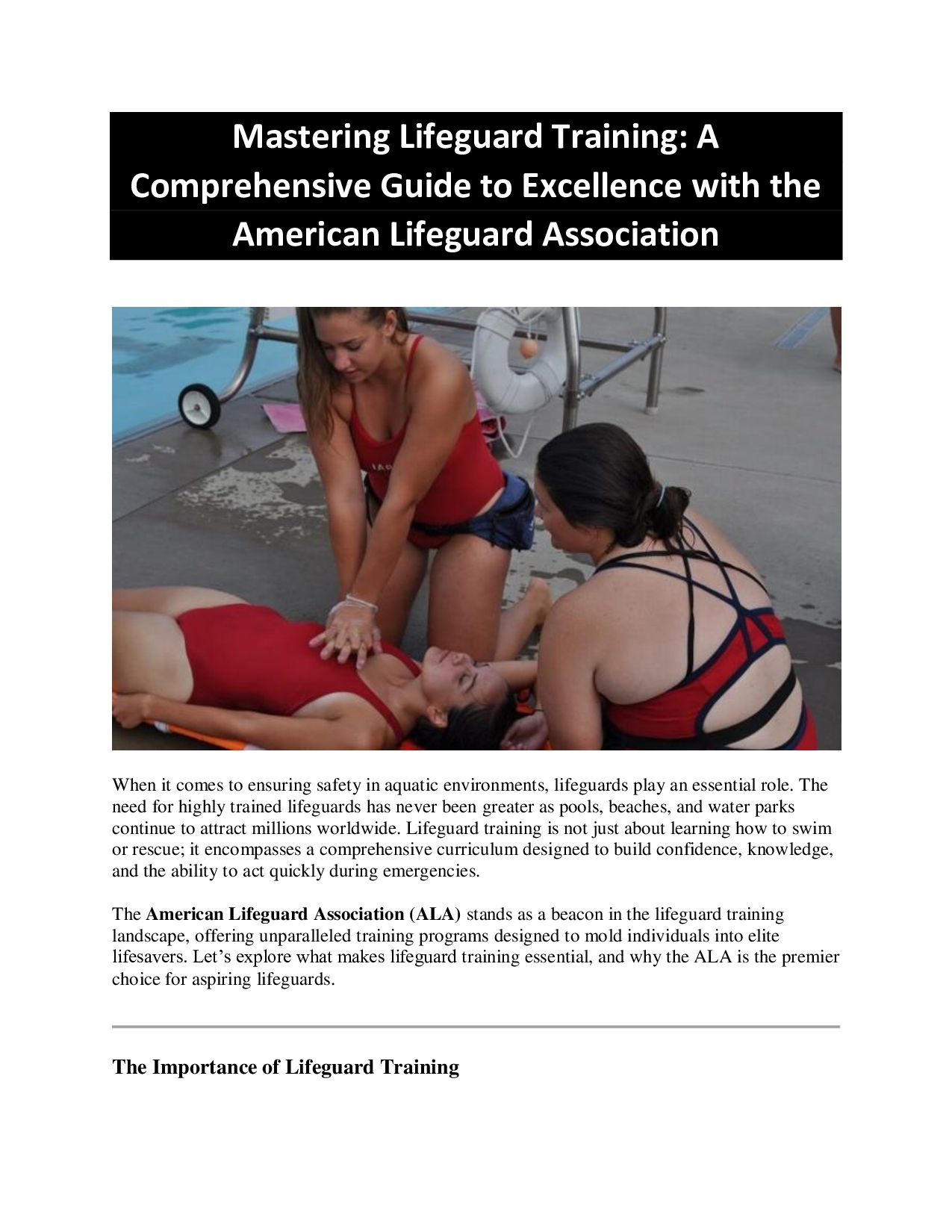
American Lifeguard Association When it comes to ensuring safety in aquatic environments, lifeguards play an essential role. The need for highly trained lifeguards has never been greater as pools, beaches, and water parks continue to attract millions worldwide. Lifeguard training is not just about learning how to swim or rescue; it encompasses a comprehensive curriculum designed to build confidence, knowledge, and the ability to act quickly during emergencies. The American Lifeguard Association (ALA) stands as a beacon in the lifeguard training landscape, offering unparalleled training programs designed to mold individuals into elite lifesavers. Let’s explore what makes lifeguard training essential, and why the ALA is the premier choice for aspiring lifeguards. The Importance of Lifeguard Training
high chair and scanning the water. Lifeguards must be prepared to respond effectively to various situations, including: Drowning prevention: Recognizing and preventing drowning situations before they escalate. First aid and CPR: Administering life-saving techniques until professional medical help arrives. Risk management: Ensuring safety protocols are followed and identifying potential hazards. Team coordination: Working seamlessly with other lifeguards and emergency responders. Comprehensive training not only equips lifeguards with these skills but also instills the confidence required to perform under pressure. What to Expect in Lifeguard Training A standard lifeguard training course covers a wide array of skills and knowledge areas. These include: 1. Water Rescue Techniques Participants are taught to identify and approach a distressed swimmer safely. Techniques such as reaching, throwing, and swimming rescues are practiced extensively. 2. CPR and AED Training Cardiopulmonary resuscitation (CPR) and automated external defibrillator (AED) usage are vital for lifeguards. These life-saving procedures are taught using real-world simulations. 3. First Aid Training From treating minor cuts and bruises to managing severe injuries like spinal damage, first aid is an essential component of lifeguard training. 4. Team Coordination Participants learn to work as part of a team during emergency scenarios, ensuring a cohesive response. 5. Scenario-Based Drills Trainees are exposed to realistic scenarios to develop quick decision-making skills and adaptability.
obligations helps lifeguards carry out their duties responsibly. Why Choose the American Lifeguard Association? The American Lifeguard Association has built a stellar reputation for its cutting-edge training programs. Here’s what sets them apart: 1. Comprehensive Curriculum The ALA provides an extensive curriculum that goes beyond basic lifeguarding skills. It covers advanced rescue techniques, professional communication, and workplace safety measures. 2. Certified and Experienced Instructors All ALA instructors are certified professionals with years of experience. Their expertise ensures that trainees receive top-notch education and hands-on experience. 3. Flexible Training Options The ALA understands the busy schedules of individuals. Their flexible programs include in- person training sessions and blended learning options, which combine online coursework with practical exercises. 4. National Recognition The ALA’s certifications are recognized nationwide, making it easier for lifeguards to secure employment at a variety of facilities. 5. Lifeguard Recertification Programs For those already certified, the ALA offers recertification programs to refresh skills and stay updated on the latest safety protocols. The Path to Becoming a Lifeguard To become a certified lifeguard, follow these steps:
the ALA, require candidates to be at least 15 years old and have basic swimming skills. 2. Select a Training Program: Choose a reputable organization like the American Lifeguard Association for comprehensive training. 3. Complete the Training: Successfully complete the required coursework, including water rescue, CPR, and first aid training. 4. Pass the Certification Test: The final certification involves a written test and practical examination to assess your knowledge and skills. 5. Start Your Lifeguard Career: With your certification in hand, you’re ready to apply for lifeguarding positions at pools, beaches, or water parks. Lifeguard Training with the ALA: A Step Above the Rest The American Lifeguard Association’s lifeguard training program combines theoretical knowledge with hands-on practice. Here’s what a typical training session looks like with the ALA: Day 1: Introduction to lifeguarding, risk management, and water rescue techniques. Day 2: CPR, AED, and first aid training with realistic simulations. Day 3: Advanced rescue drills and teamwork exercises. Final Day: Certification tests, including a written exam and practical evaluation. Participants leave the program fully equipped to handle real-life emergencies, making the ALA a trusted name in lifeguard training. Lifeguard Training Benefits beyond the Pool Lifeguard training doesn’t just prepare you for a job; it instills valuable life skills such as: Leadership: Taking charge during emergencies hones your leadership abilities. Communication: Clear and effective communication is critical in ensuring safety. Confidence: Training builds the self-assurance needed to handle high-pressure situations. Physical Fitness: Regular swimming and drills improve overall health and stamina. These skills are transferable to various aspects of life, making lifeguard training a rewarding investment.
to protect lives in aquatic environments. It requires dedication, focus, and a commitment to excellence. With its exceptional training programs, the American Lifeguard Association (ALA) stands as a trusted partner in preparing individuals for this vital role. Whether you’re starting your journey as a lifeguard or looking to renew your certification, the ALA offers the expertise and resources to help you succeed. Dive into lifeguard training with the ALA and become a guardian of safety, confidence, and life-saving skill.


 speakerdeck
 axbom
 techseoconnect
 tapps
 katarinadahlin
 sabderemane
 sarafernandez
 aki_iinuma
 katiecoart
 jonyablonski
 skipperchong
 gr2m