devices, and data from unauthorized access or malicious attacks. This field encompasses a variety of technologies, processes, and practices designed to ensure the integrity, confidentiality, and availability of information in the digital age.
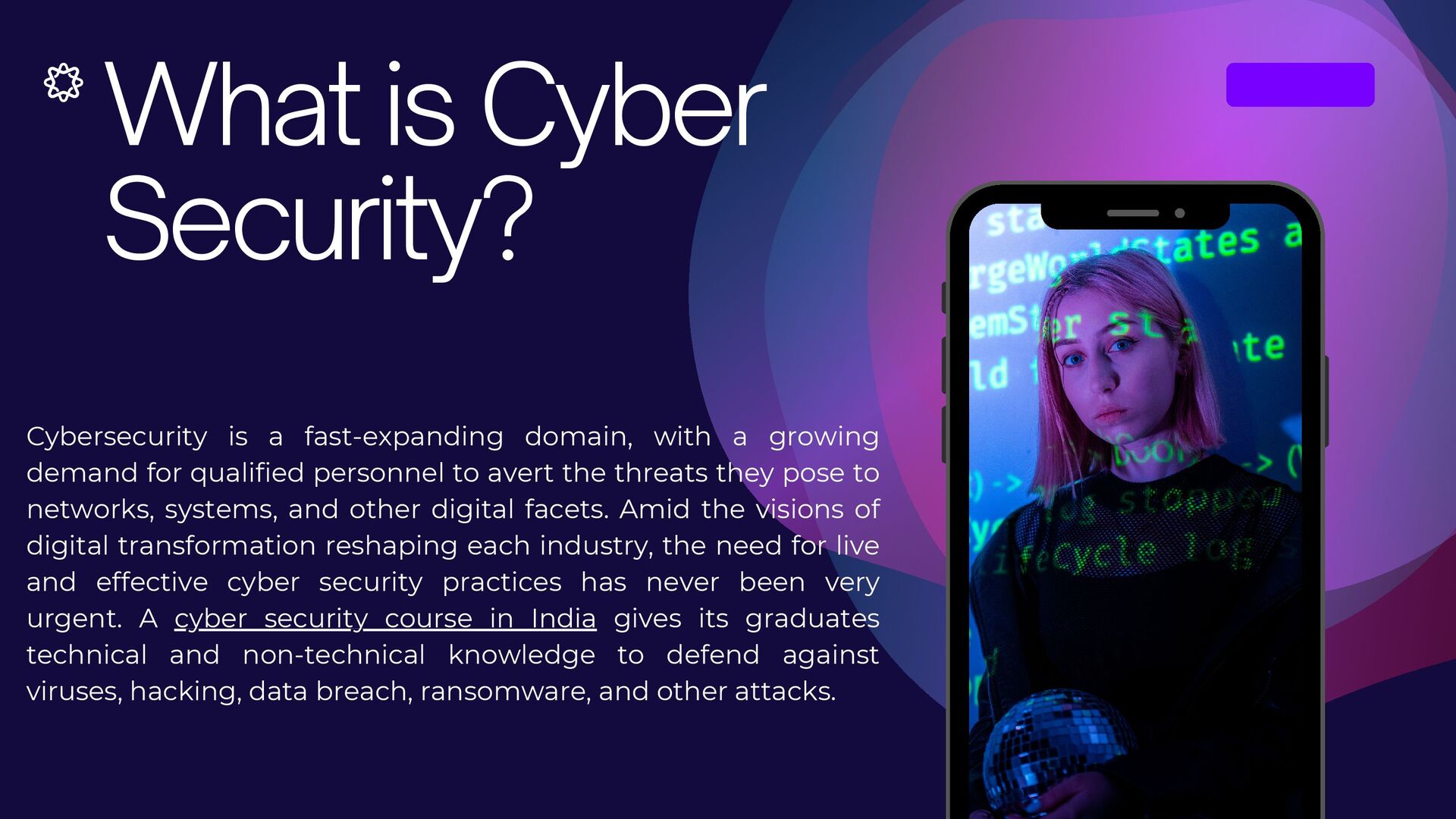
qualified personnel to avert the threats they pose to networks, systems, and other digital facets. Amid the visions of digital transformation reshaping each industry, the need for live and effective cyber security practices has never been very urgent. A cyber security course in India gives its graduates technical and non-technical knowledge to defend against viruses, hacking, data breach, ransomware, and other attacks. What is Cyber Security?
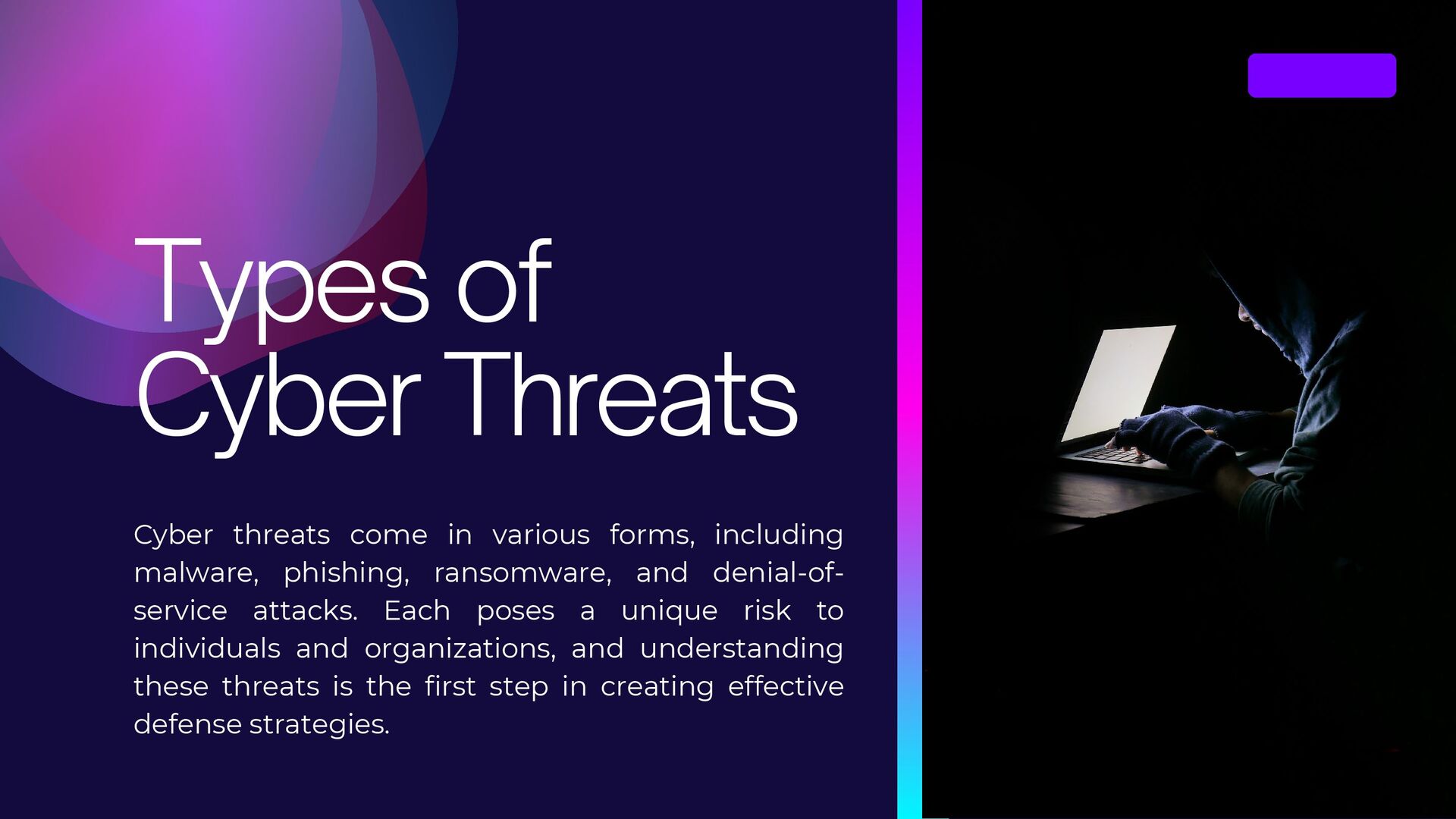
and denial-of- service attacks. Each poses a unique risk to individuals and organizations, and understanding these threats is the first step in creating effective defense strategies. Types of Cyber Threats
updates, firewalls, encryption, and secure passwords in efforts to prevent unauthorized access and consequently protect sensitive information. Educating users with respect to cyber hygiene is, therefore imperative for the purpose of reducing vulnerabilities. Building a Strong Defense
unreadable form that only authorized users can understand. By securing such sensitive data, one can guard against access by unauthorized users, whether this sensitive information is in storage or in transit, which means in communication to other networks. Role of Encryption in Cyber Security SECURING DATA THROUGH ENCRYPTION
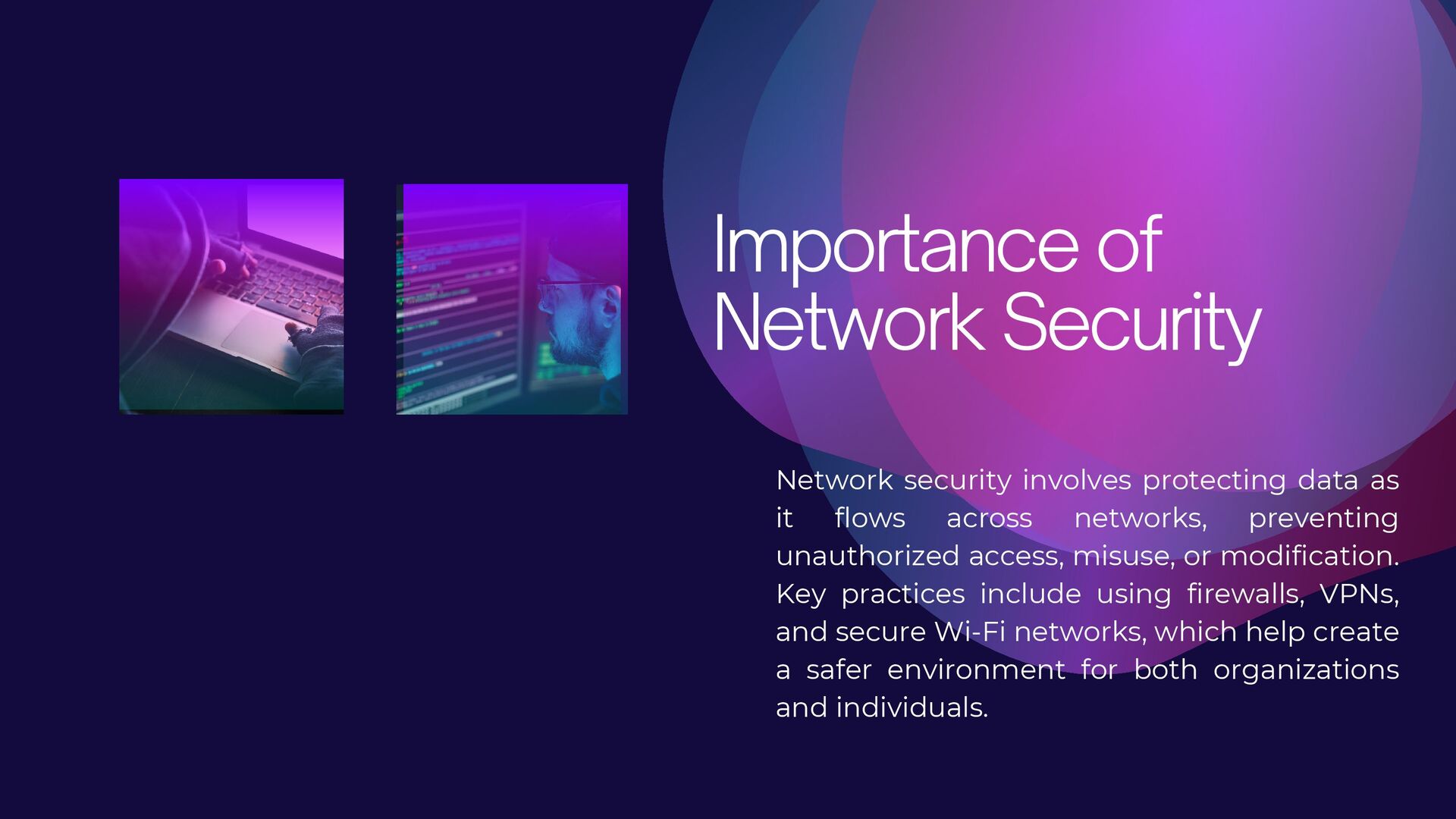
preventing unauthorized access, misuse, or modification. Key practices include using firewalls, VPNs, and secure Wi-Fi networks, which help create a safer environment for both organizations and individuals. Importance of Network Security
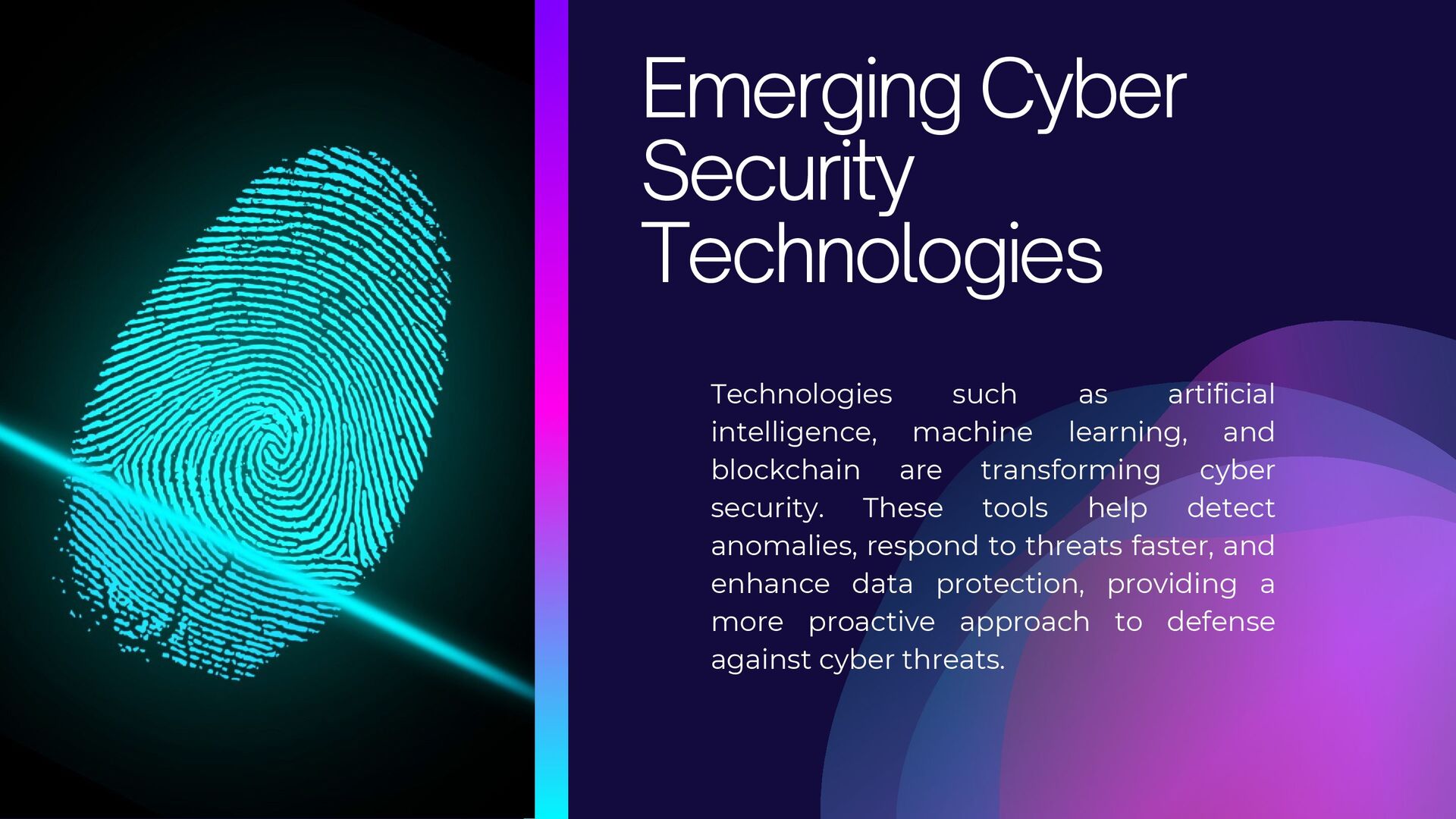
transforming cyber security. These tools help detect anomalies, respond to threats faster, and enhance data protection, providing a more proactive approach to defense against cyber threats. Emerging Cyber Security Technologies
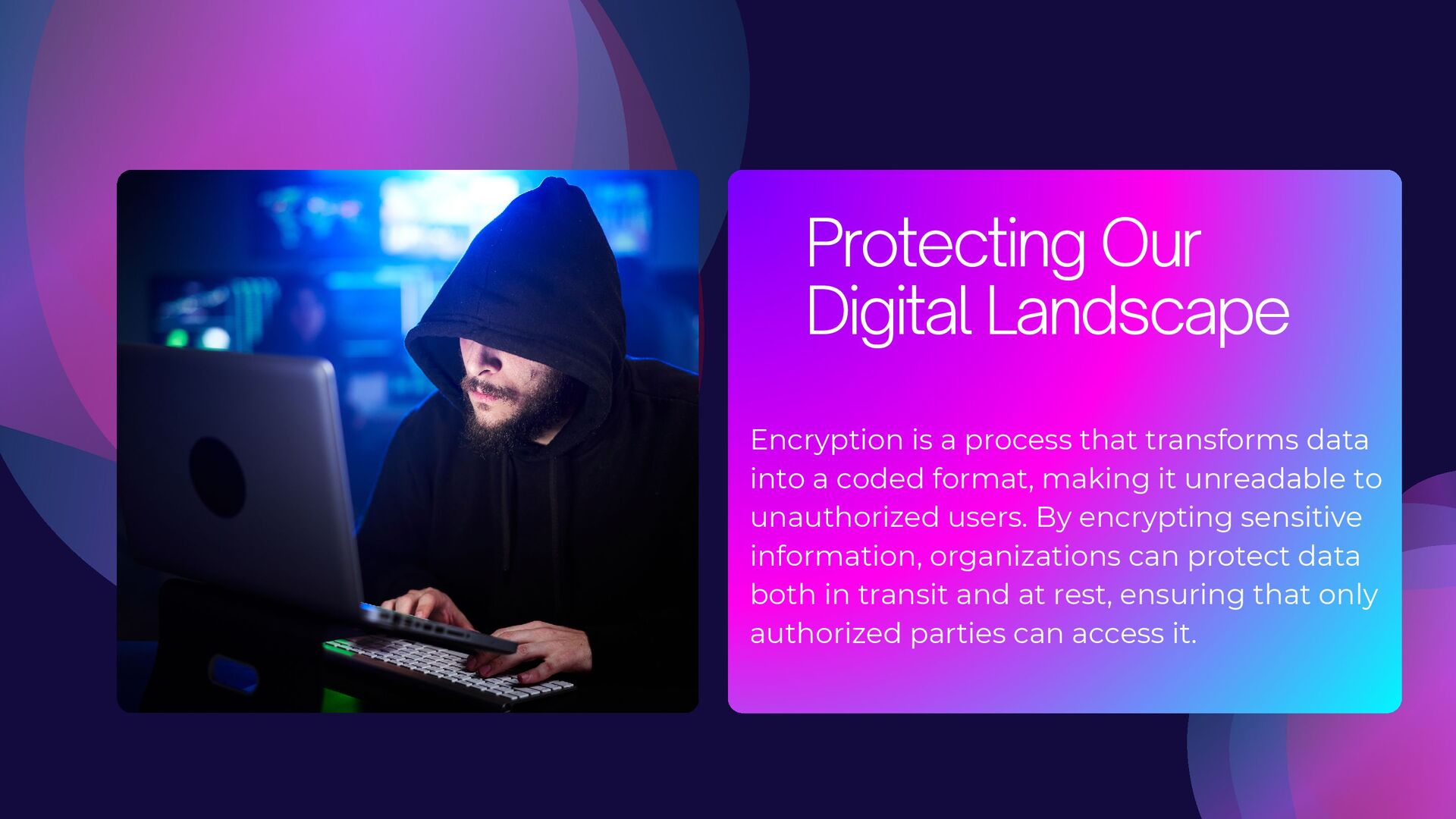
format, making it unreadable to unauthorized users. By encrypting sensitive information, organizations can protect data both in transit and at rest, ensuring that only authorized parties can access it. Protecting Our Digital Landscape
growth in such need for sophisticated security strategies. The future of cyber security, therefore, lies in preparing itself with a set of proactive, adaptive solutions that respond to ever-changing threats. Thynk Unlimited is committed to staying several steps ahead, fully ready to address any challenges it might face in the future with resilient capacities. The Future of Cyber Security


 hirannn
 jonrohan
 rakko
rakko
 csswizardry
 badams
 ryanjones
 smashingmag
 thoeni
 gurzu
gurzu
 rocio
rocio
 productmarketing
 kastner