Upgrade to Pro — share decks privately, control downloads, hide ads and more …

CA-Go#14 Queue, ErrGroup, Semaphore Story

CA-Go#14 Queue, ErrGroup, Semaphore Story

Step-by-step make the efficiency of using concurrency in the Golang application.

Avatar for HoangNguyen689

HoangNguyen689

June 04, 2024

Other Decks in Programming

Transcript

  1. 1.Background & Prerequisites 2.First design 3.v2: Worker-pool pattern with static

    number of workers 4.v3: Dynamic worker number with semaphore 5.v4: Simplify with ErrGroup 6.v5: Graceful shutdown
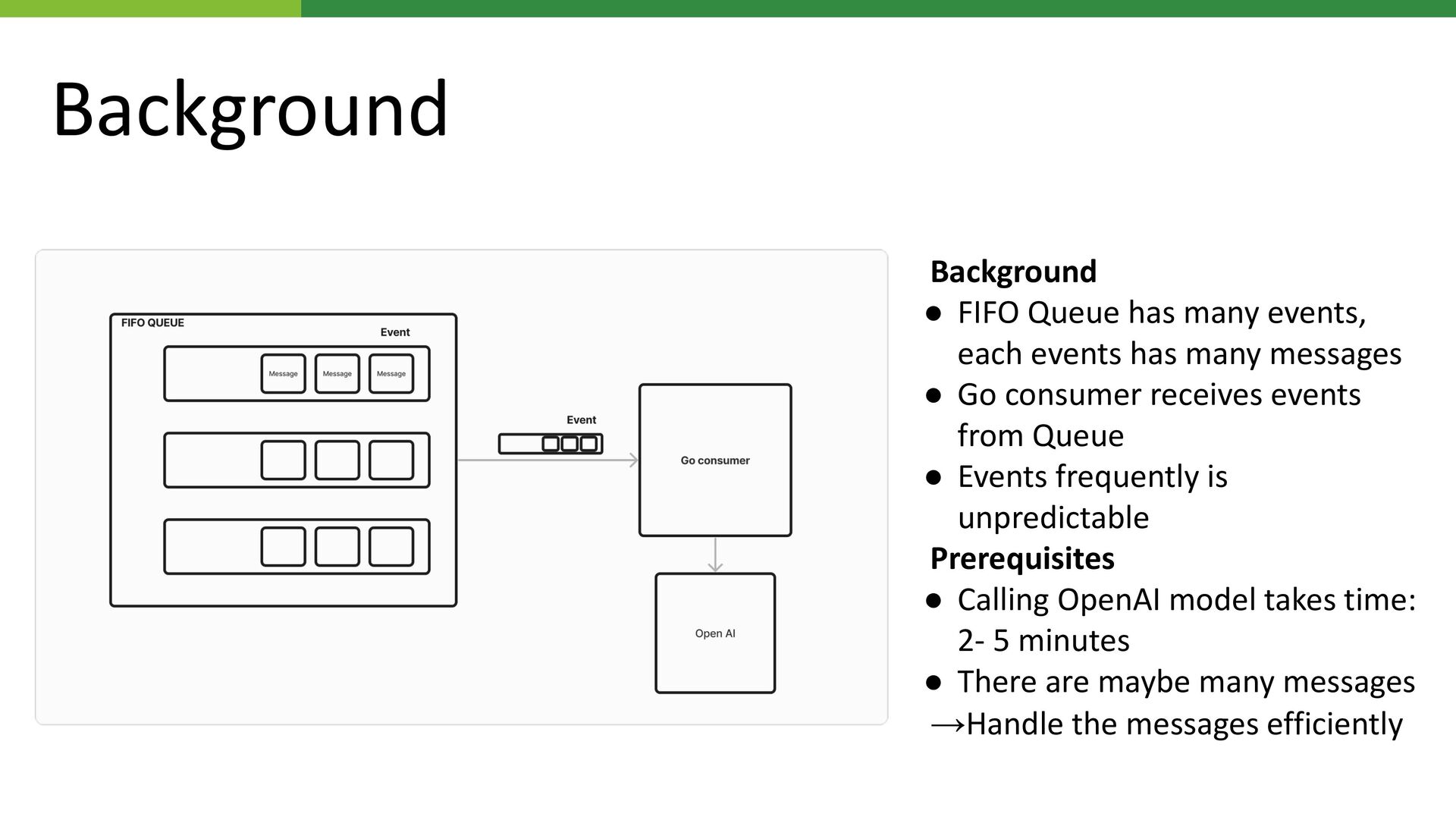
  2. Background Background • FIFO Queue has many events, each events

    has many messages • Go consumer receives events from Queue • Events frequently is unpredictable Prerequisites • Calling OpenAI model takes time: 2- 5 minutes • There are maybe many messages →Handle the messages efficiently
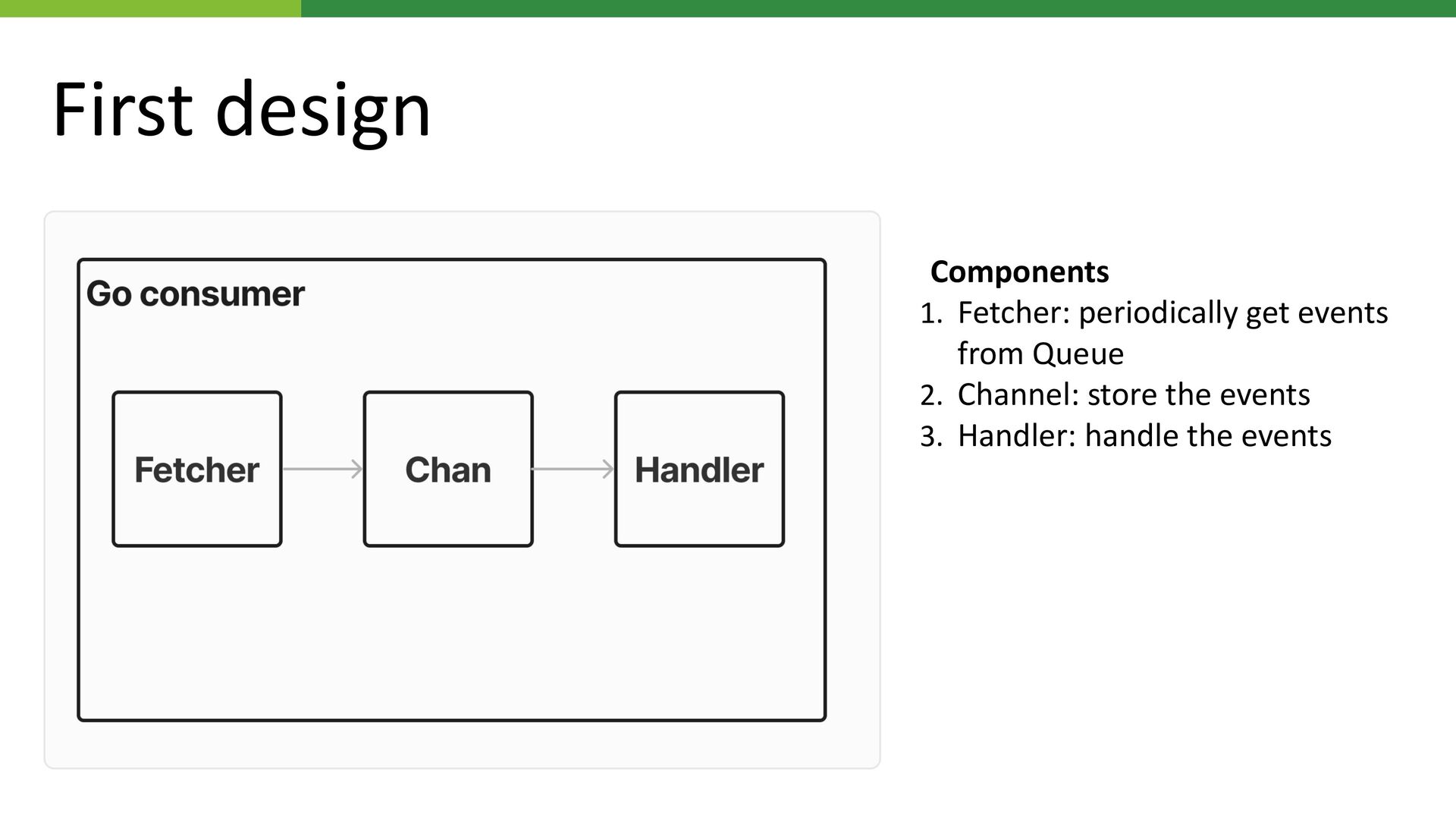
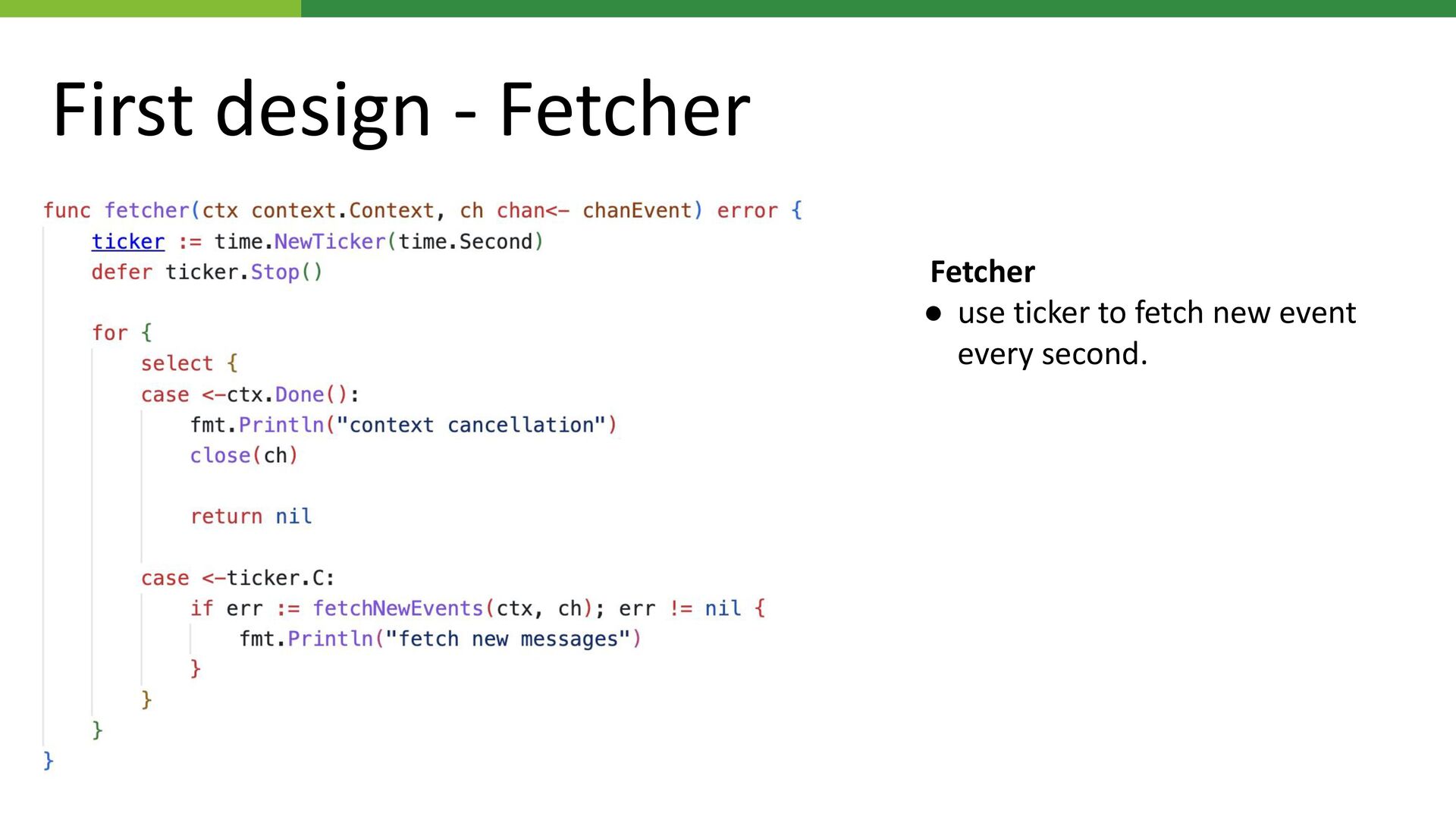
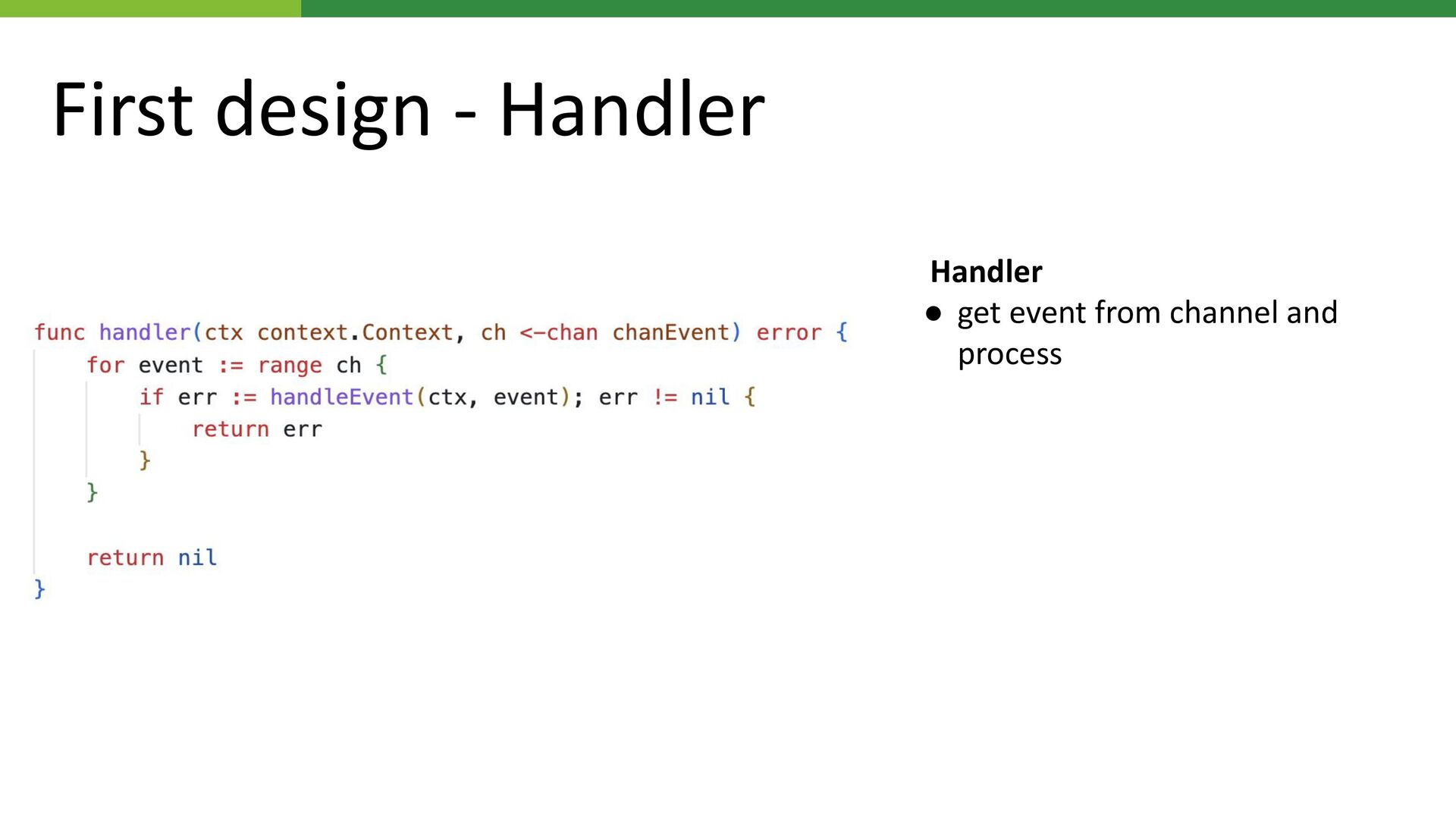
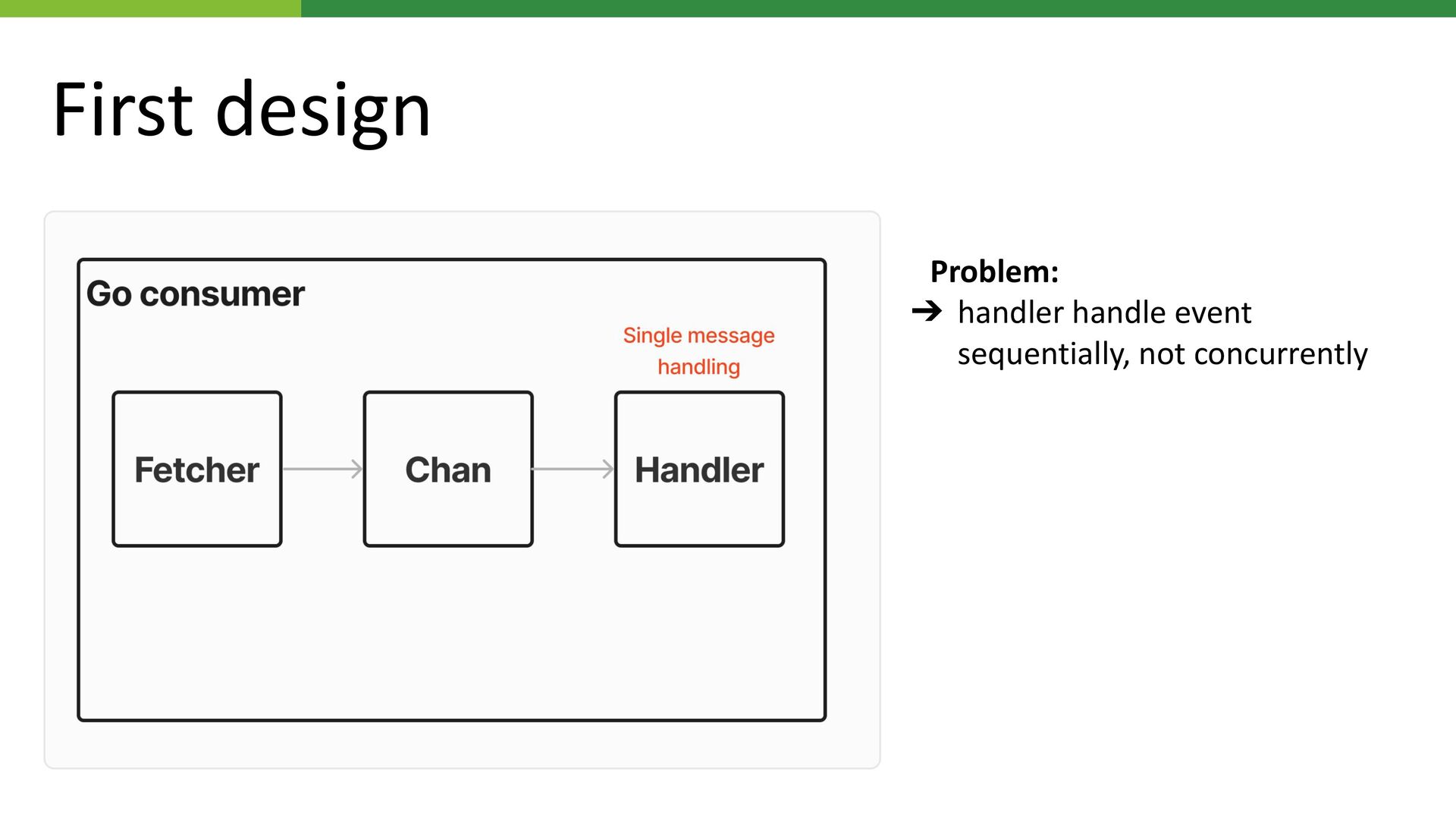
  3. First design Components 1. Fetcher: periodically get events from Queue

    2. Channel: store the events 3. Handler: handle the events
  4. First design In last: ➔ create a channel ➔ run

    goroutine to handle fetcher and handler Conclusion: ➔ Go consumer can process the message ➔ Can handle concurrently by multiple go consumer (multiple instances - scale by infra)
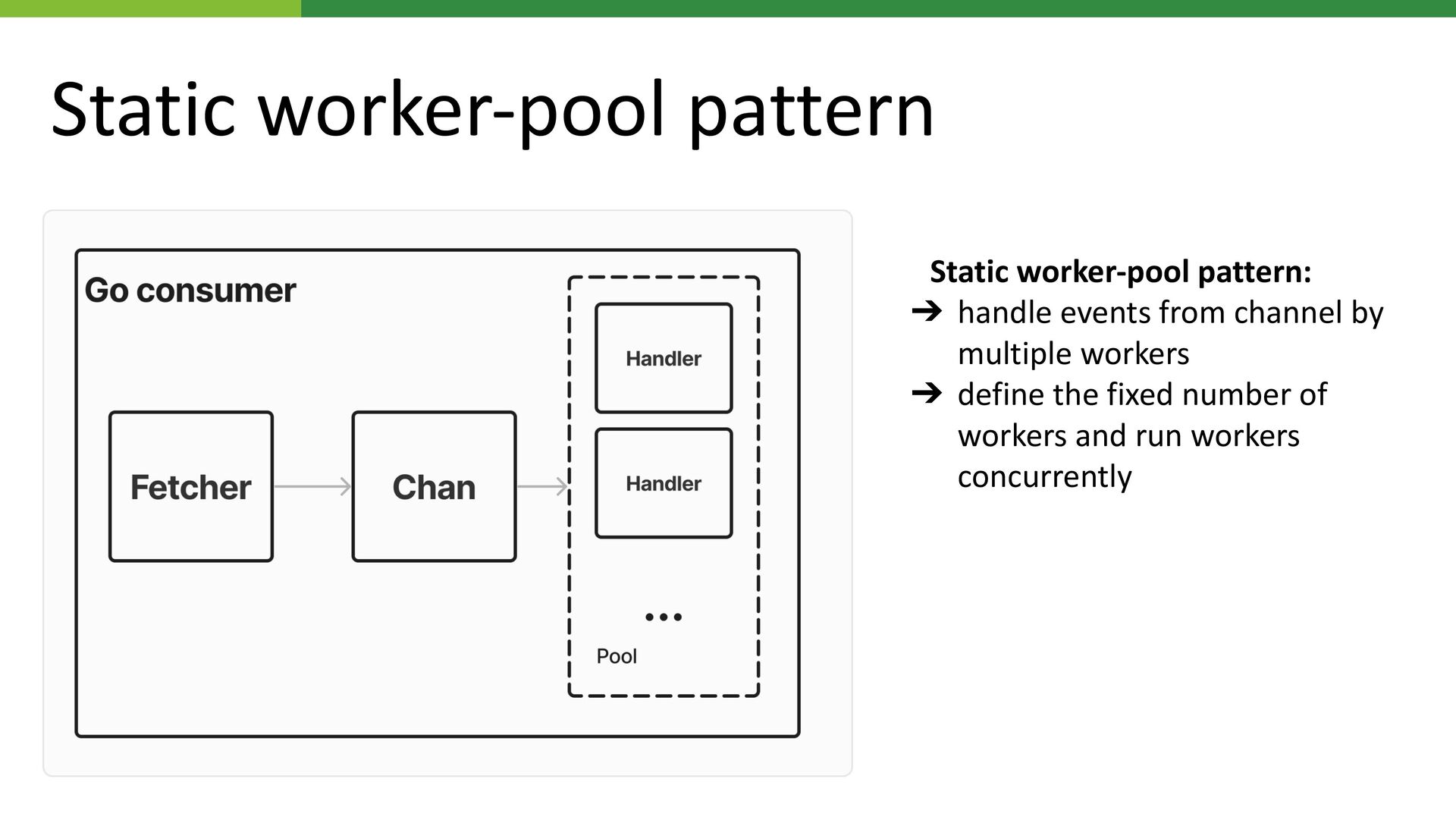
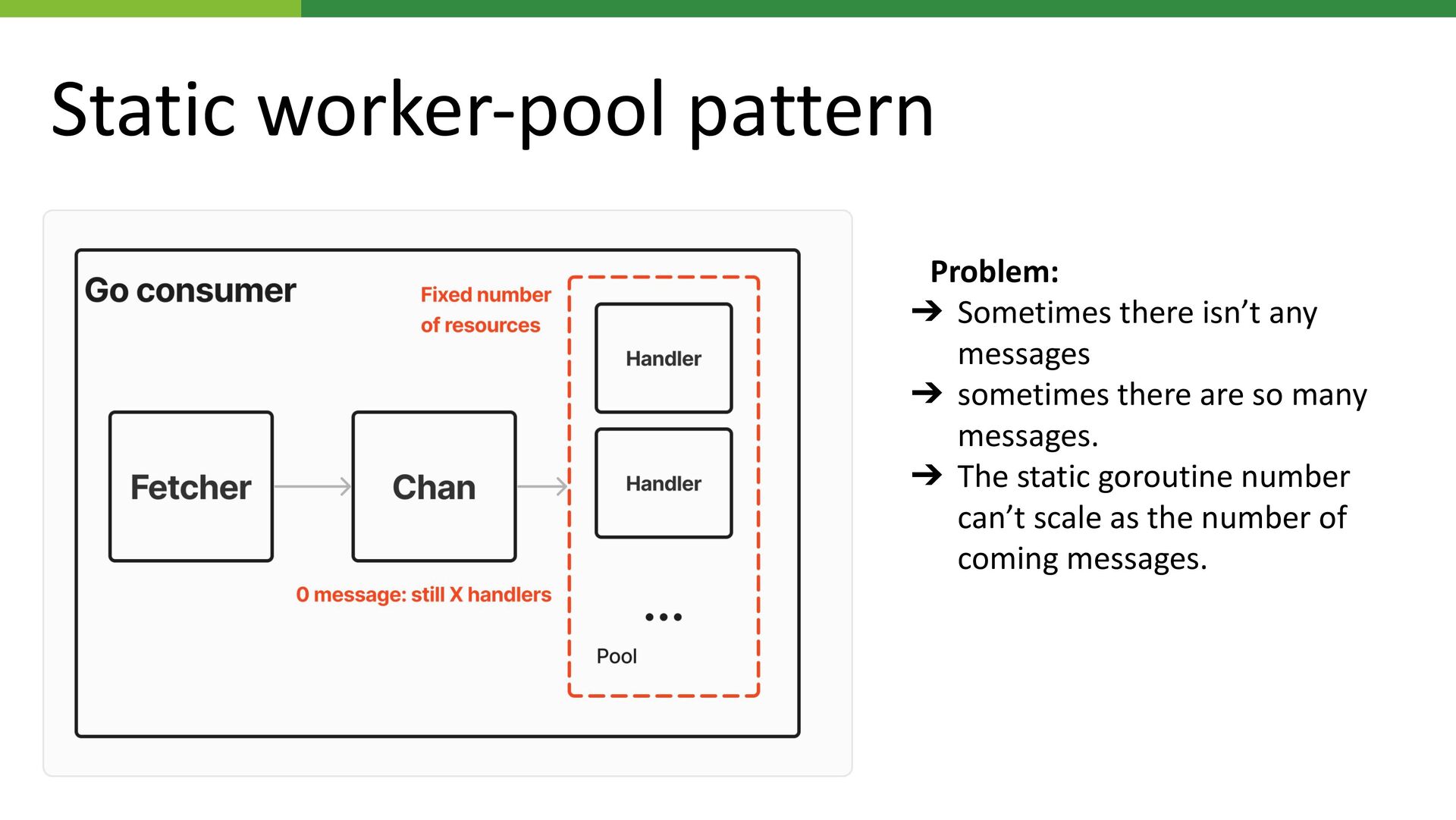
  5. Static worker-pool pattern Static worker-pool pattern: ➔ handle events from

    channel by multiple workers ➔ define the fixed number of workers and run workers concurrently
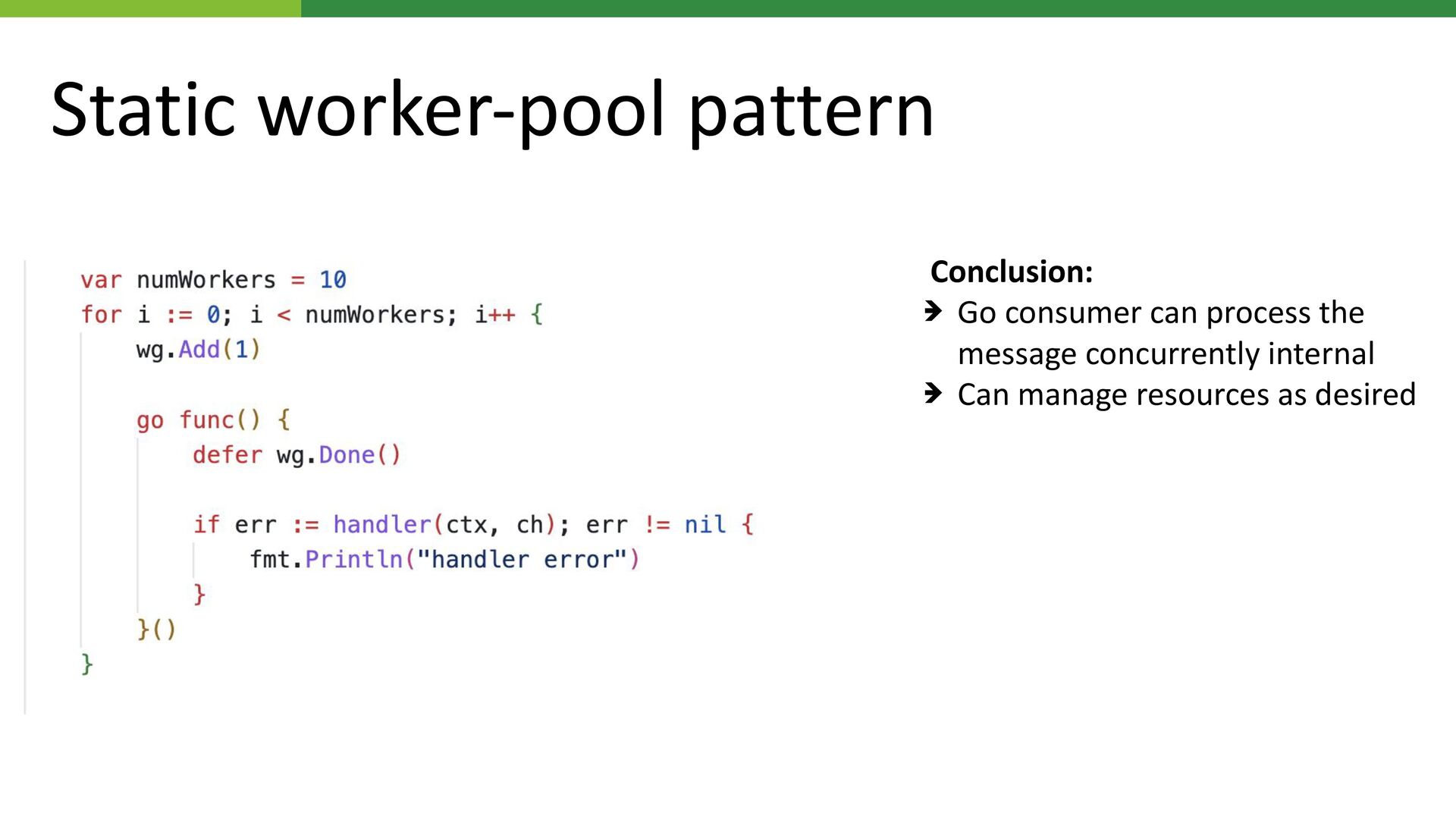
  6. Static worker-pool pattern Conclusion: ➔ Go consumer can process the

    message concurrently internal ➔ Can manage resources as desired
  7. Static worker-pool pattern Problem: ➔ Sometimes there isn’t any messages

    ➔ sometimes there are so many messages. ➔ The static goroutine number can’t scale as the number of coming messages.
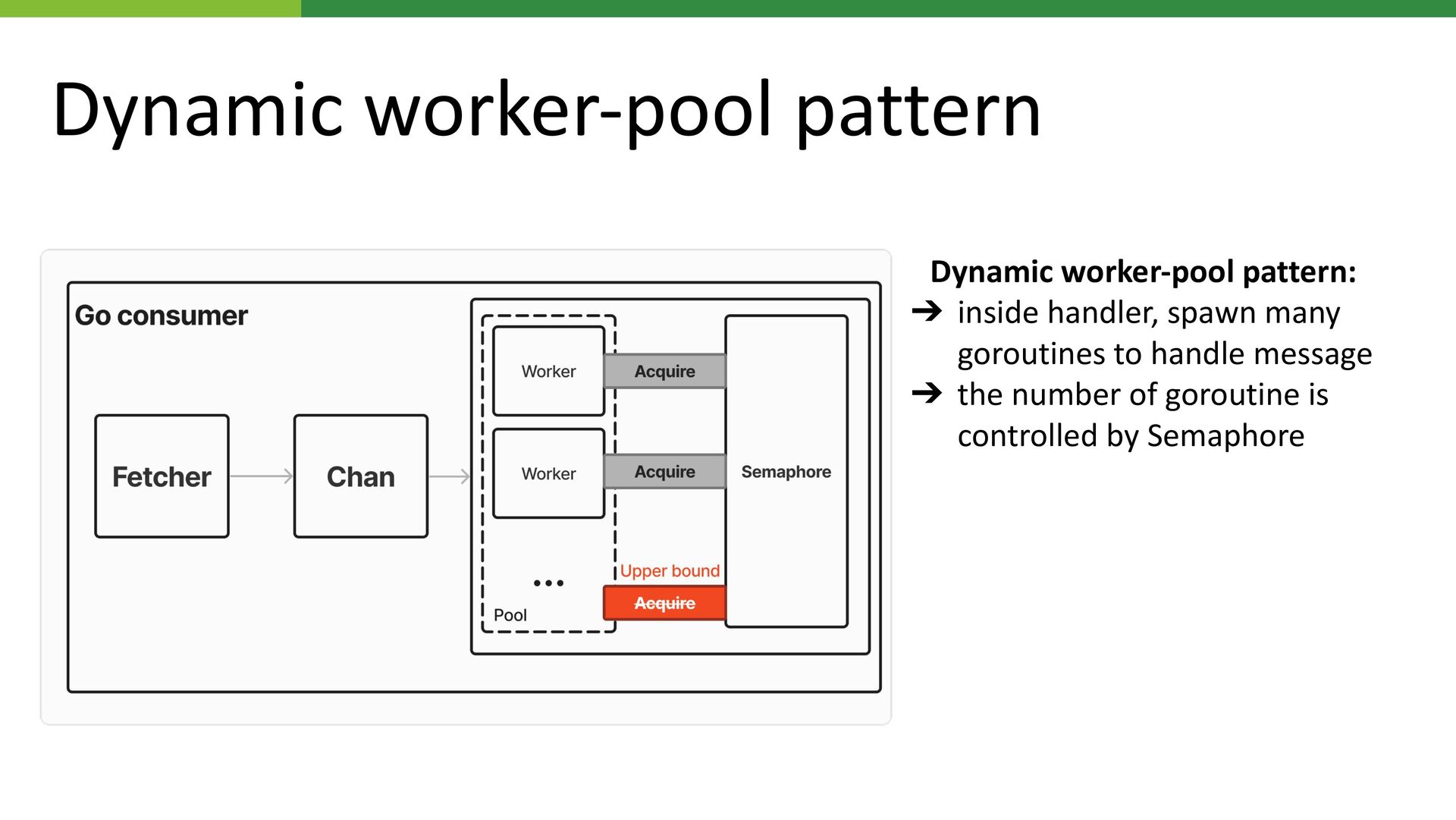
  8. Dynamic worker-pool pattern Dynamic worker-pool pattern: ➔ inside handler, spawn

    many goroutines to handle message ➔ the number of goroutine is controlled by Semaphore
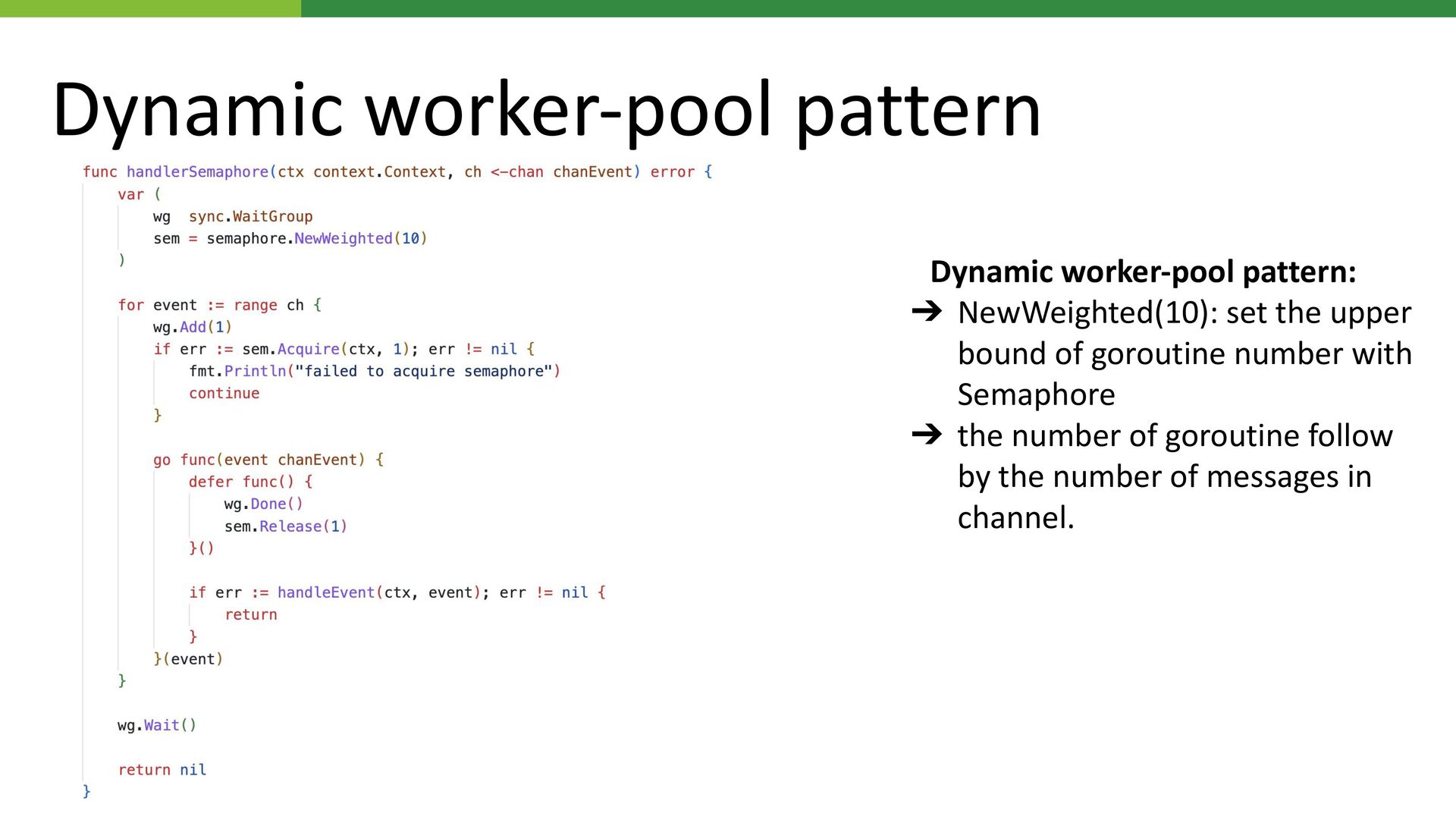
  9. Dynamic worker-pool pattern Dynamic worker-pool pattern: ➔ NewWeighted(10): set the

    upper bound of goroutine number with Semaphore ➔ the number of goroutine follow by the number of messages in channel.
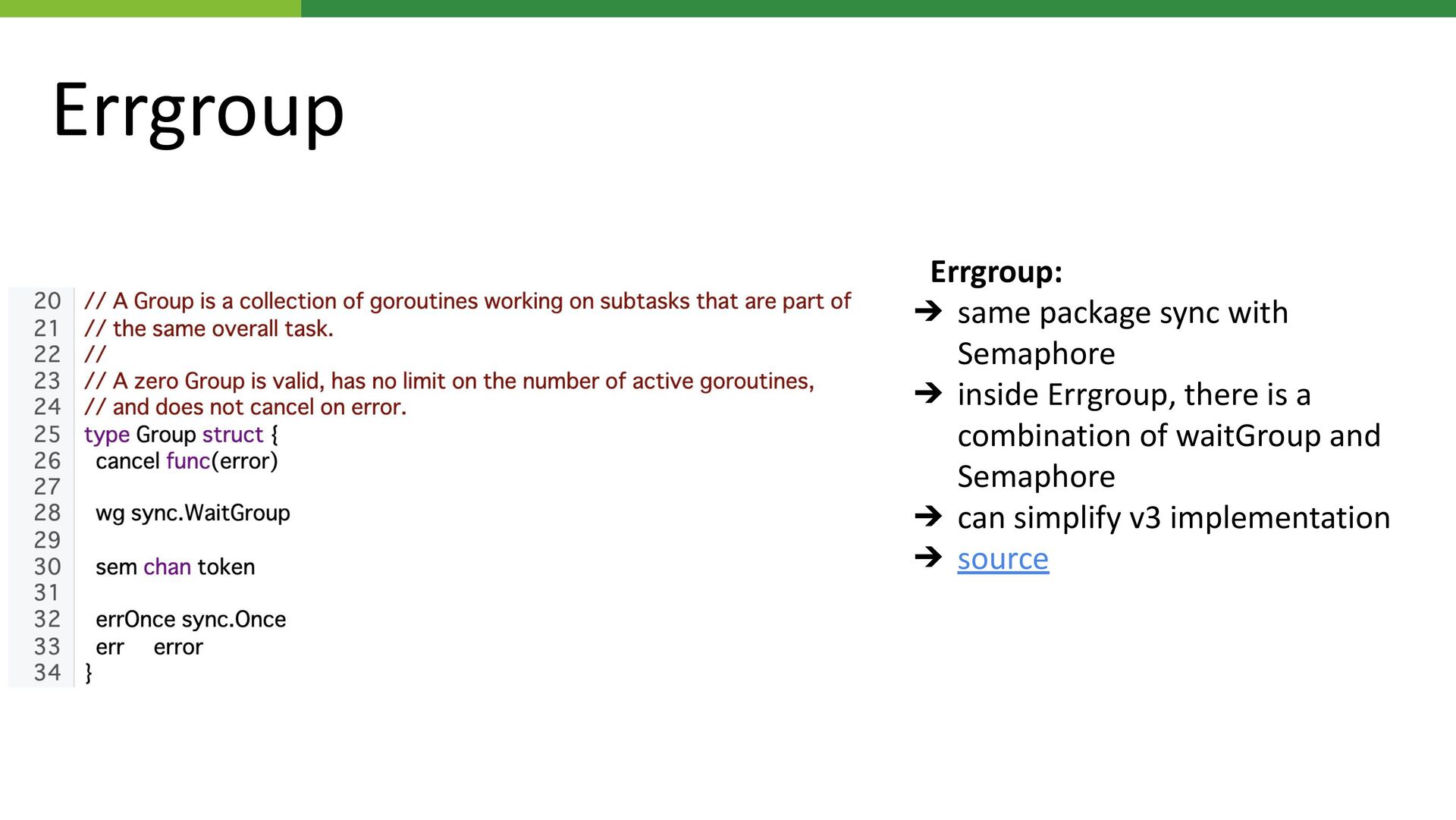
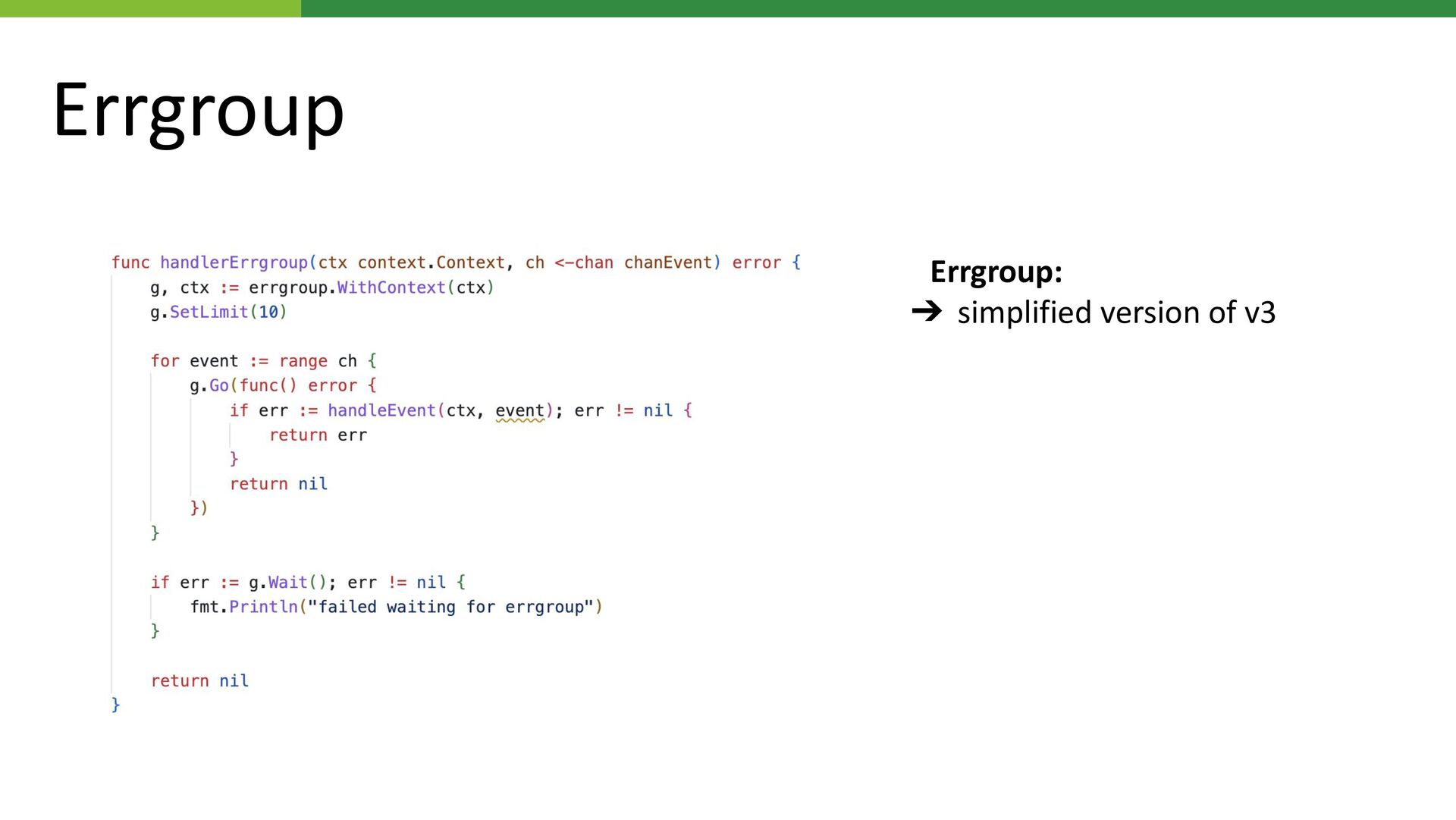
  10. Errgroup Errgroup: ➔ same package sync with Semaphore ➔ inside

    Errgroup, there is a combination of waitGroup and Semaphore ➔ can simplify v3 implementation ➔ source
  11. Graceful shutdown - Future Work ➔ Before app exits: ◆

    Complete ongoing tasks ◆ Release resources properly ◆ Clean up any necessary state ◆ … ➔ This case’s problems: ◆ Notify the exit signal. ◆ Handle the being processed messages.
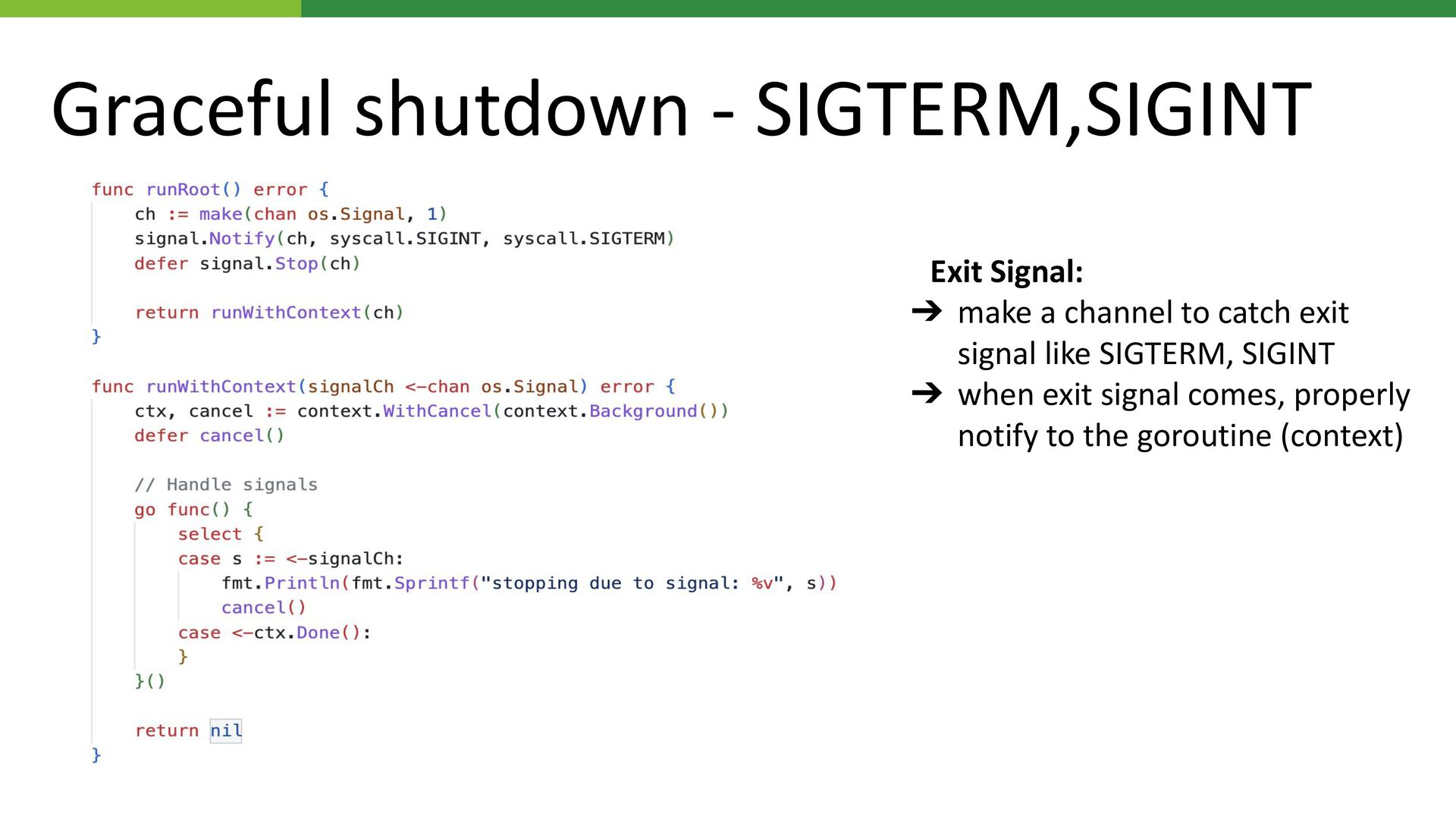
  12. Graceful shutdown - SIGTERM,SIGINT Exit Signal: ➔ make a channel

    to catch exit signal like SIGTERM, SIGINT ➔ when exit signal comes, properly notify to the goroutine (context)
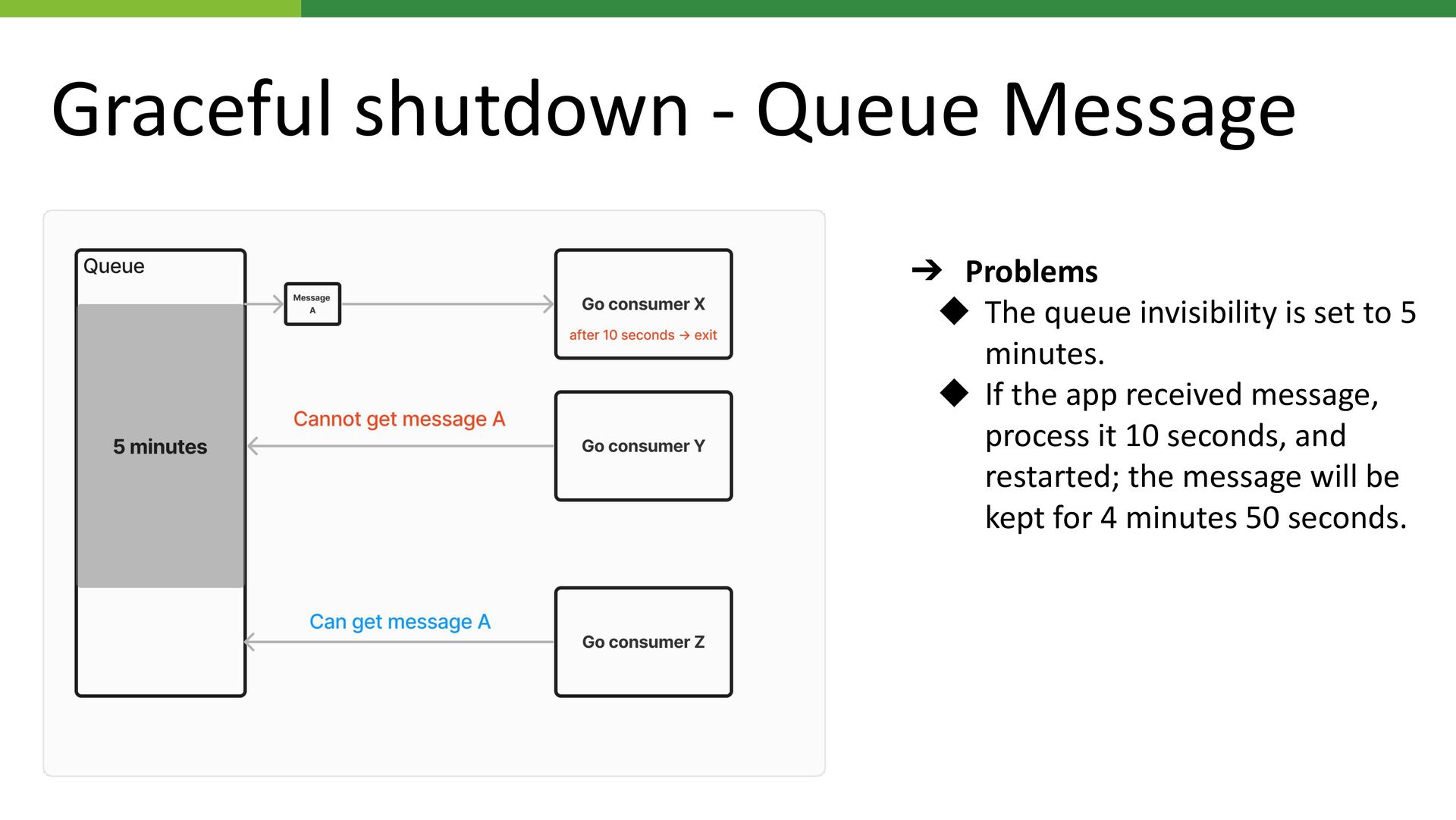
  13. Graceful shutdown - Queue Message ➔ Problems ◆ The queue

    invisibility is set to 5 minutes. ◆ If the app received message, process it 10 seconds, and restarted; the message will be kept for 4 minutes 50 seconds.
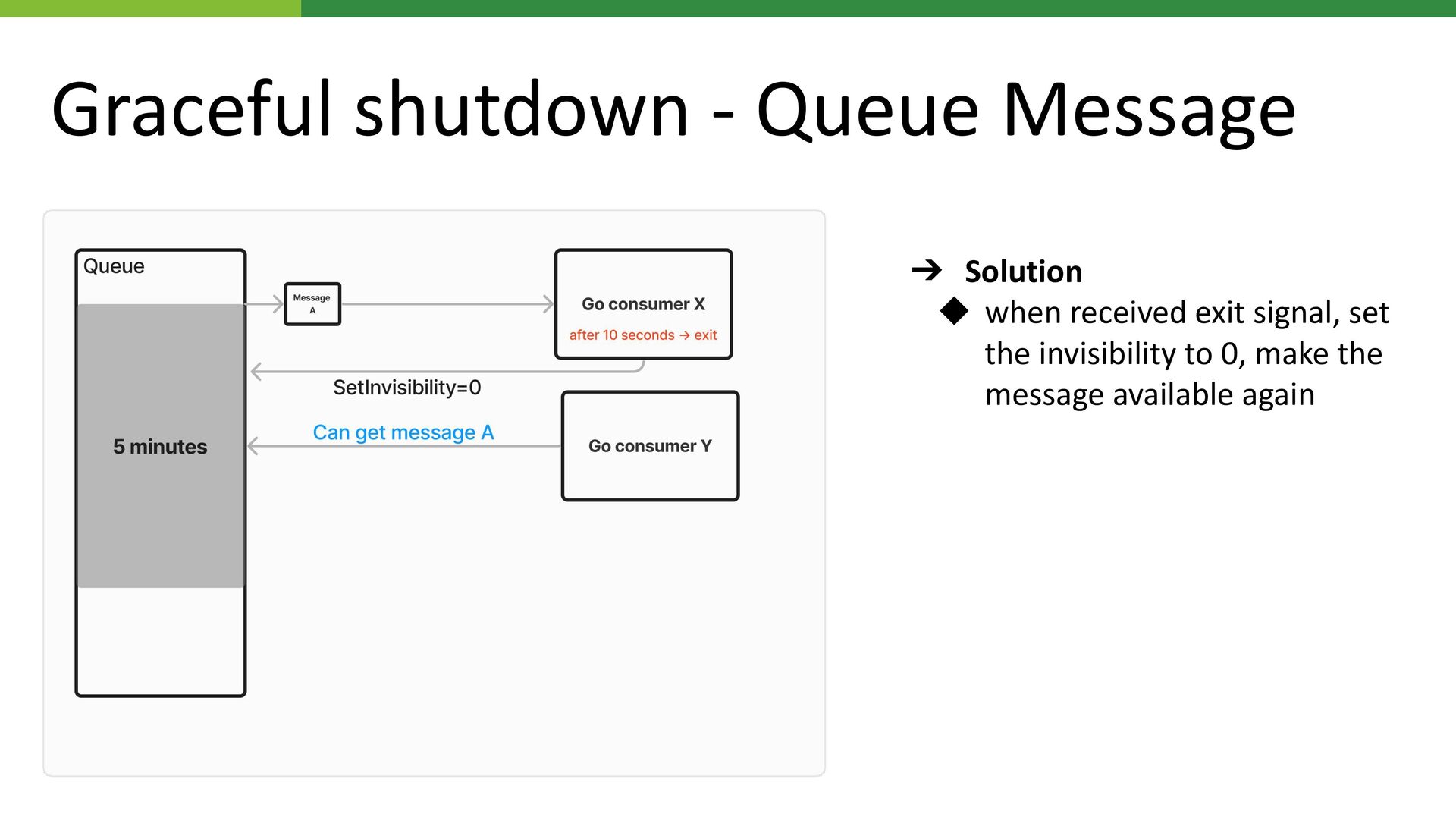
  14. Graceful shutdown - Queue Message ➔ Solution ◆ when received

    exit signal, set the invisibility to 0, make the message available again