Decoding the Google Leak: What It Means for SEO in 2026
Here is the full breakdown of the presentation "Decoding the Google Leak: What It Means for SEO in 2026" by Shaun Anderson at SMX Paris.
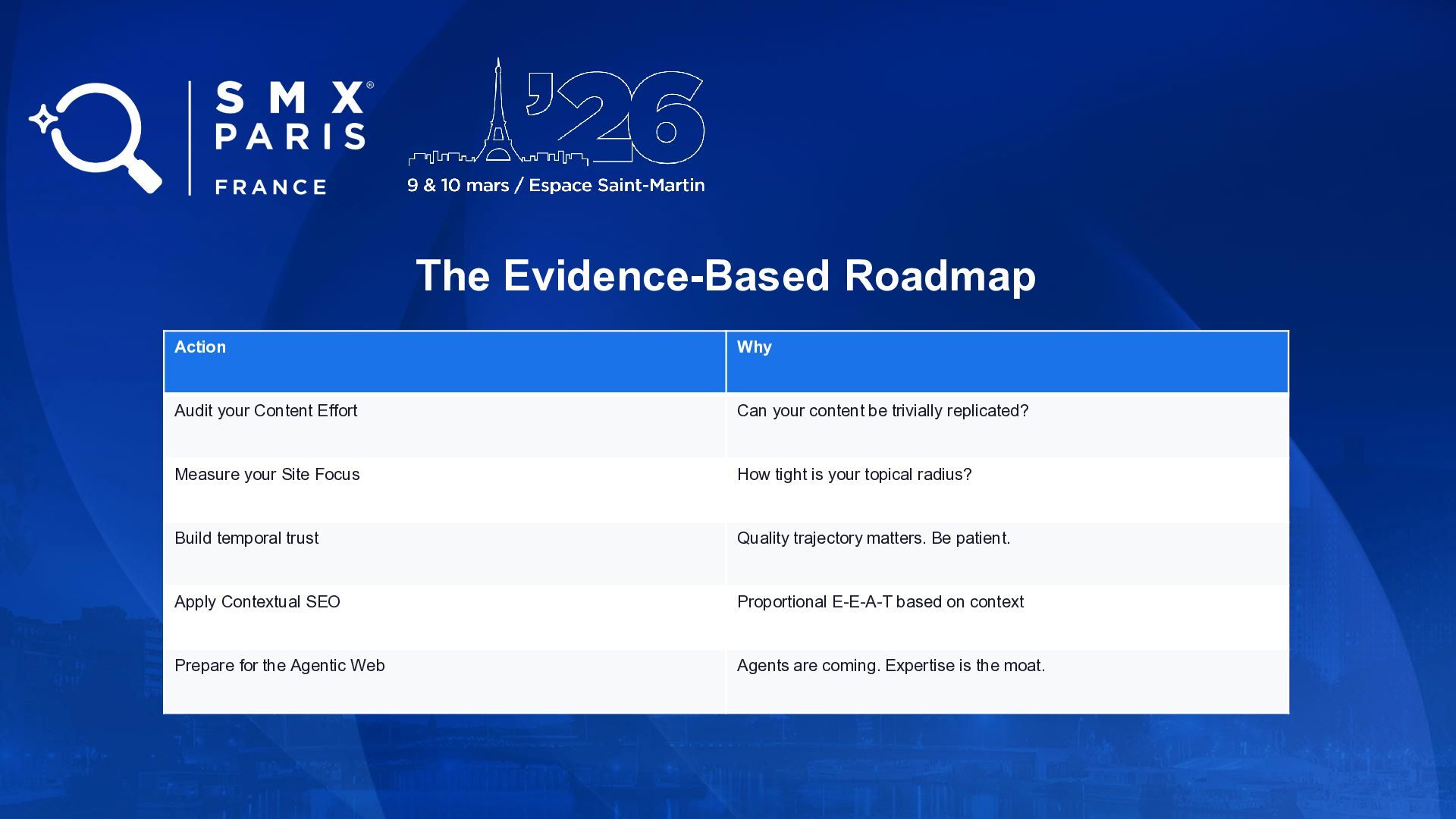
The presentation provides an evidence-based roadmap analyzing the 14,014 leaked Google ranking attributes and translates them into actionable framework layers based on E-E-A-T (Experience, Expertise, Authoritativeness, Trust).
Anderson told the audience this would be the last year at an SEO conference where everyone didnt have AI agents working 24 hours for them. This was the first SMX keynote focused on Content Effort.
📋 Overview of Presentation Structure.
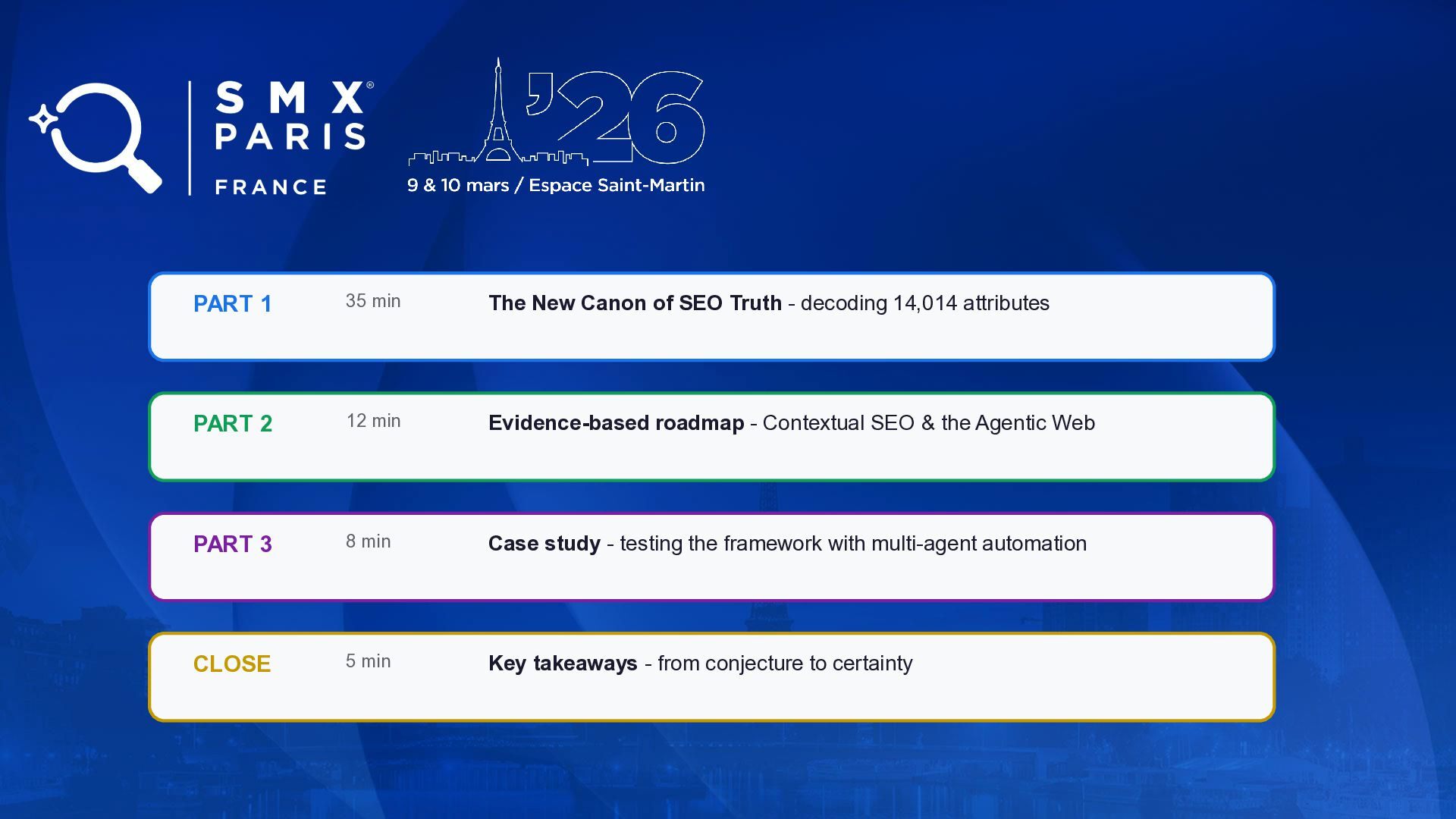
The presentation spans 60 minutes and is divided into three core technical parts plus a final takeaway section:
Part 1 (35 mins): The New Canon of SEO Truth – Decoding 14,014 attributes.
Part 2 (12 mins): Evidence-Based Roadmap – Contextual SEO & the Agentic Web.
Part 3 (8 mins): Case Study – Testing the framework with multi-agent automation.
Close (5 mins): Key Takeaways – From conjecture to certainty.
🔒 Part 1: The New Canon of SEO Truth (Trust & Authority).
This section unpacks the mechanics behind how Google translates user activity, technical markers, and content layout into ranking scores.
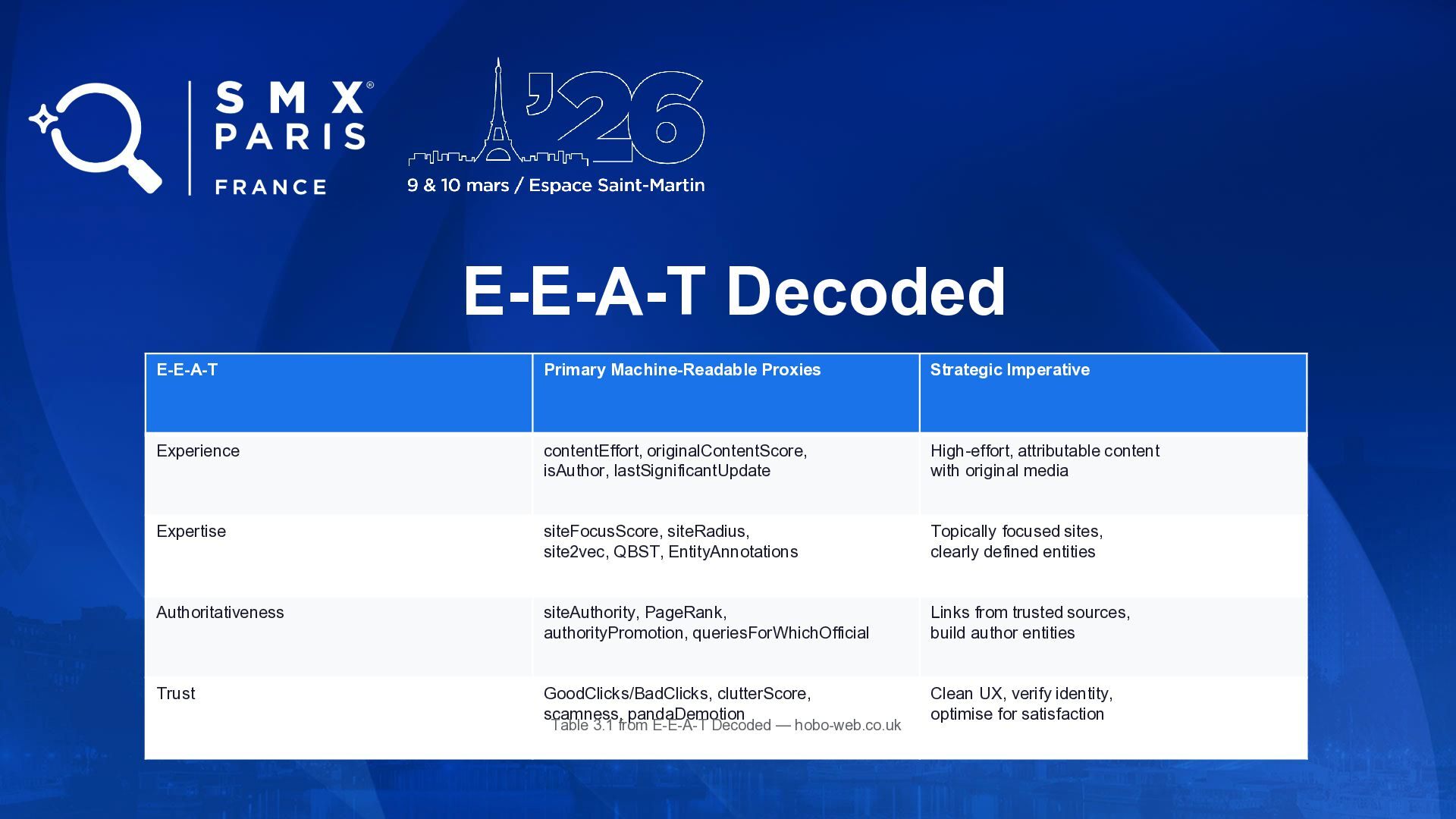
1. Core Paradigm of E-E-A-T.
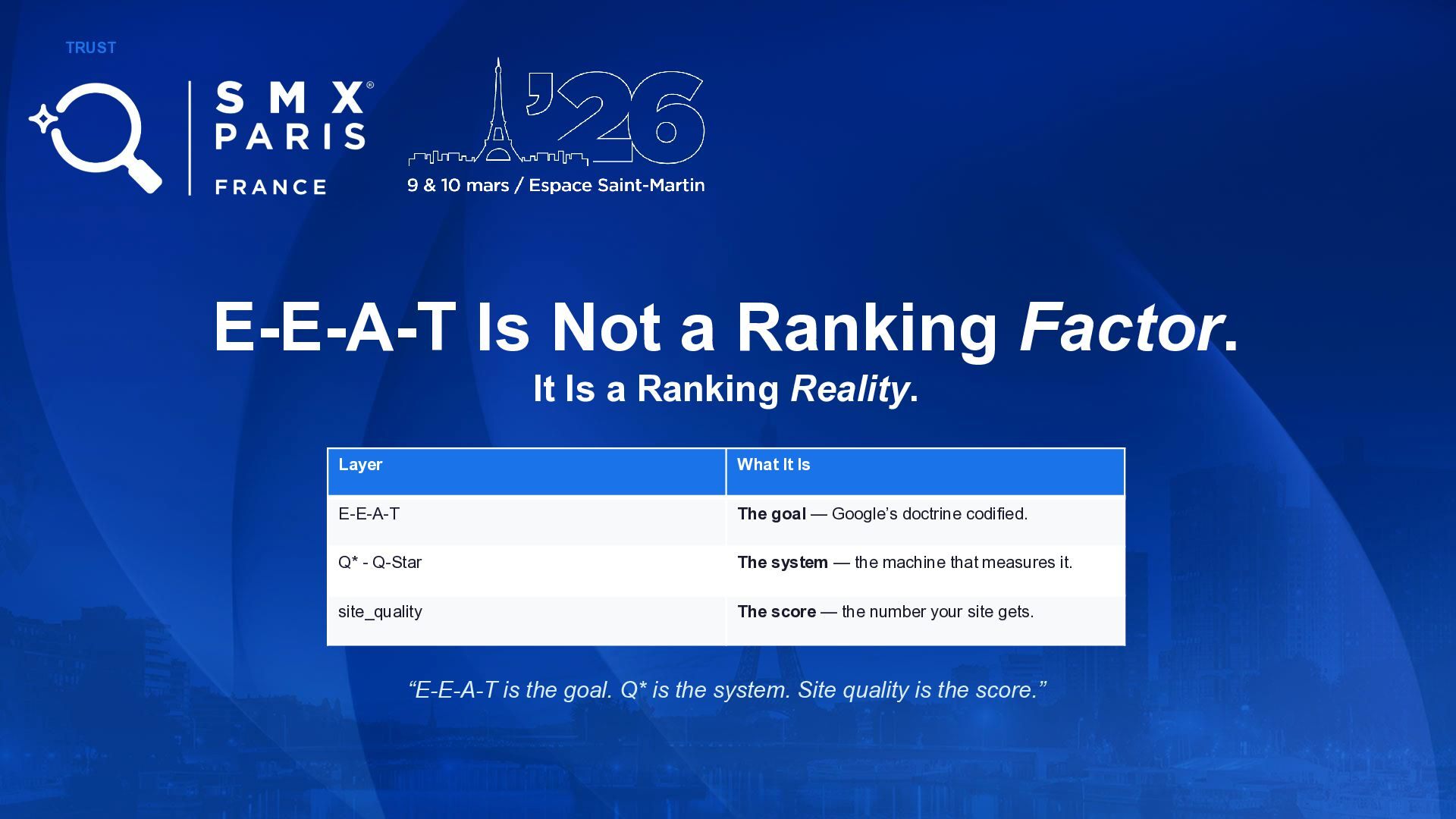
E-E-A-T is not a single factor; it is a framework.
The Goal: E-E-A-T acts as Google’s codified doctrine.
The System: Q* (Q-Star) is the actual machine system that measures it.
The Score: site_quality is the numeric value assigned to your domain.
2. SegIndexer (Tiered Indexing).
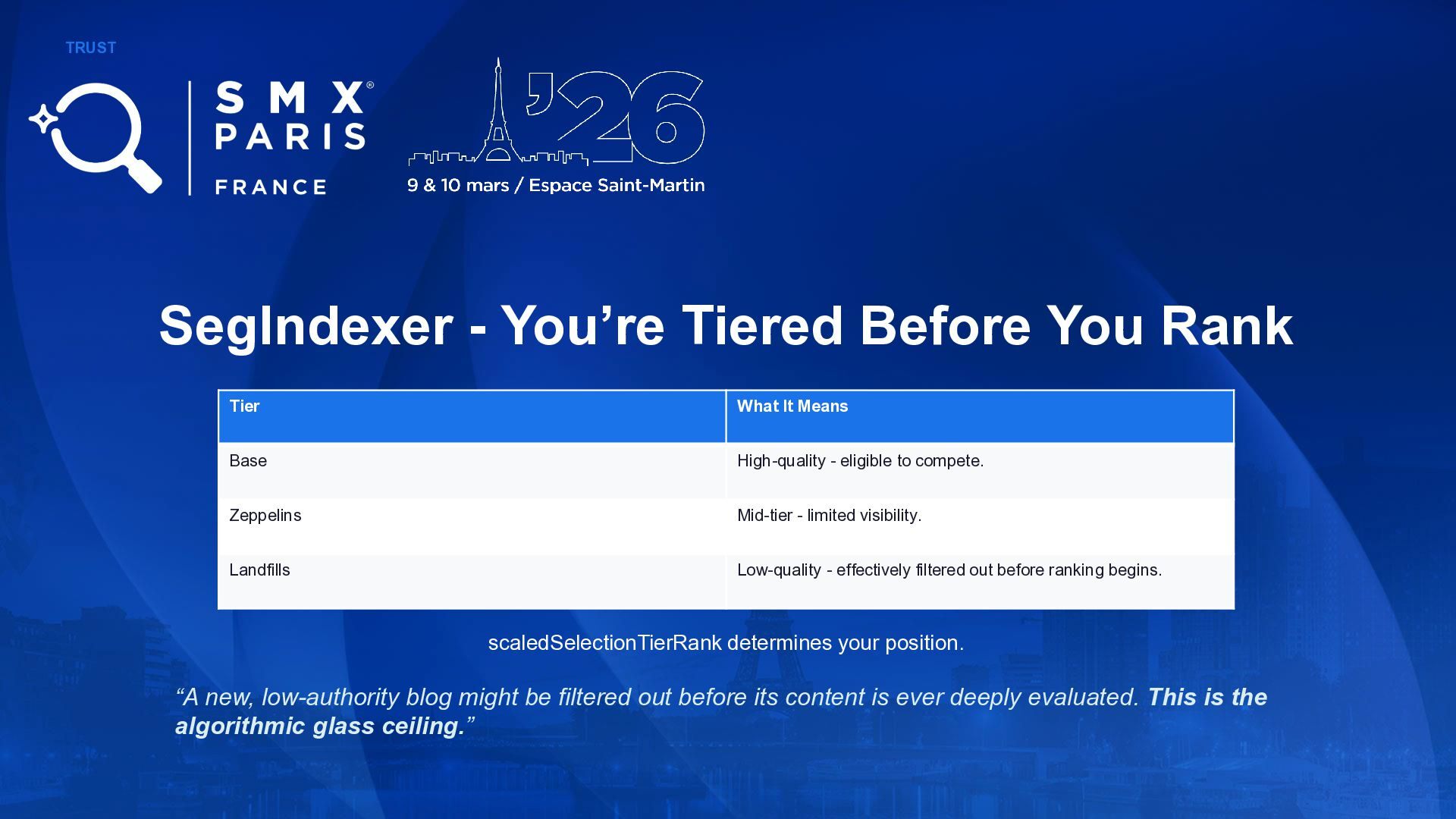
Before a site can rank, it is processed through SegIndexer, which places it into one of three structural tiers. This is referred to as the "algorithmic glass ceiling":
Base Tier: High-quality sites that are eligible to compete in main search results.
Zeppelins Tier: Mid-tier content that receives heavily limited visibility.
Landfills Tier: Low-quality content that is effectively filtered out before ranking calculations ever begin.
Ranking Vector: Position within this system is determined via scaledSelectionTierRank.
3. User Engagement: The CRAPS System & Navboost.
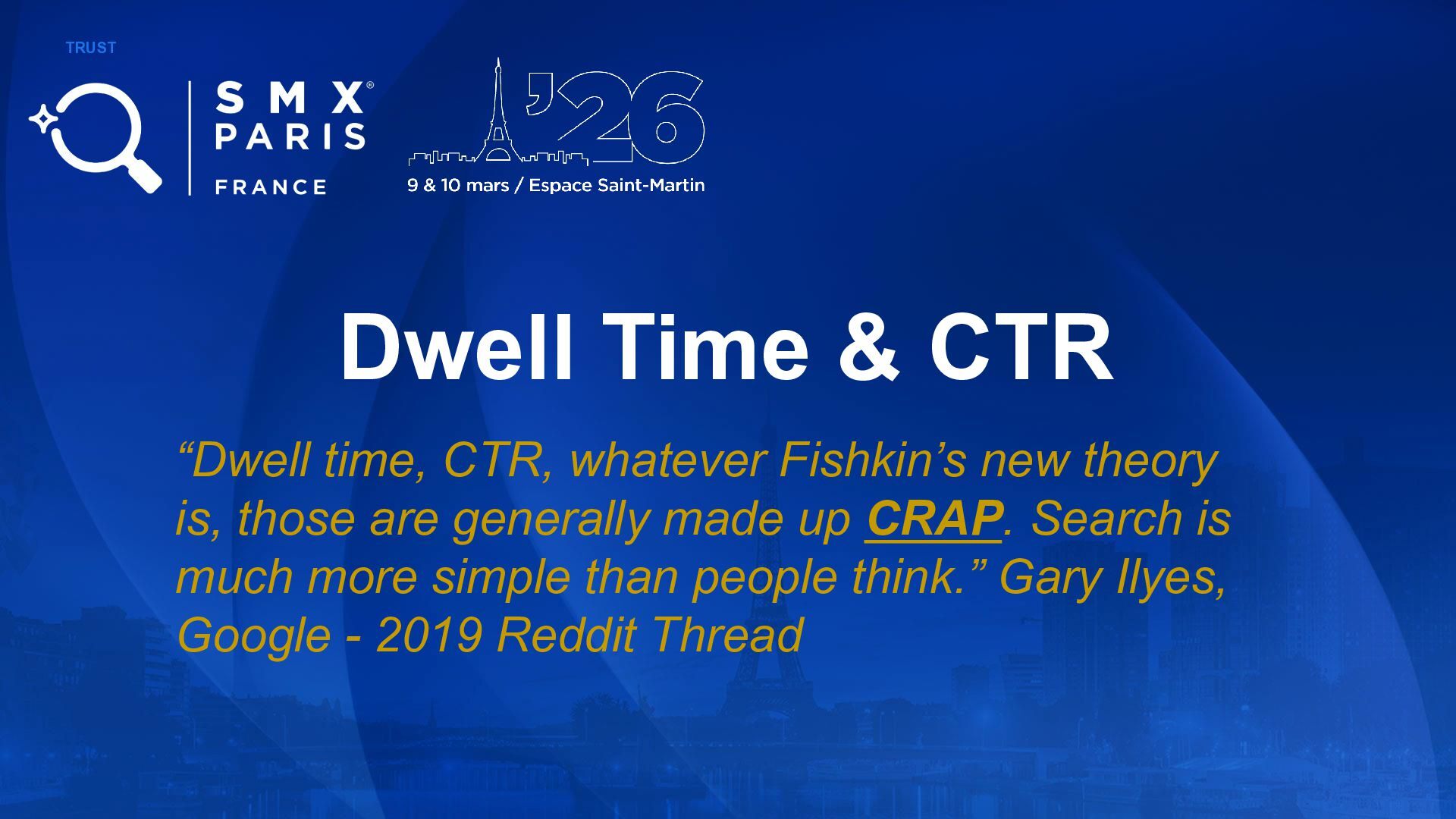
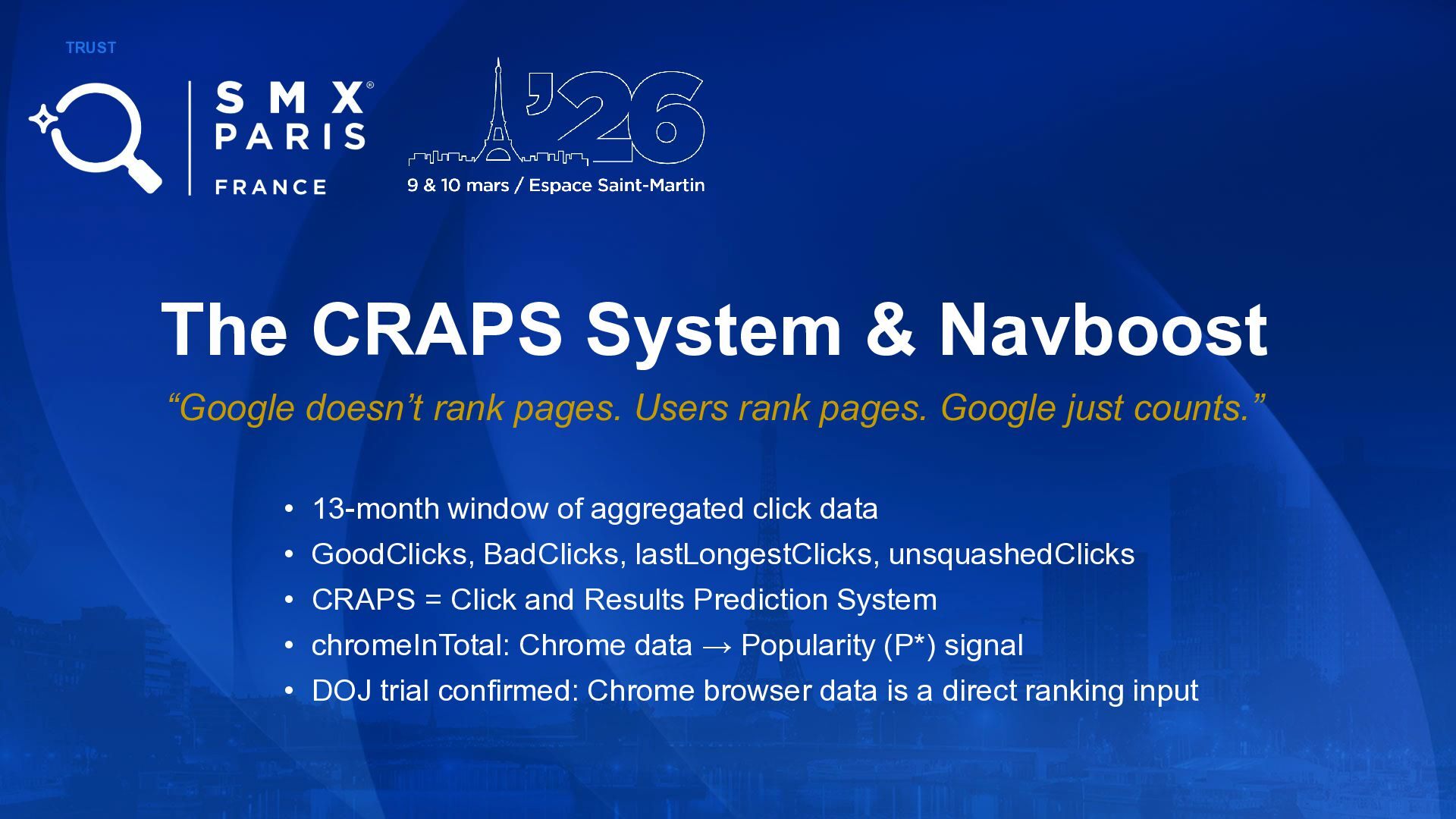
Despite historical public denials regarding click data (e.g., Gary Ilyes in 2019 calling it "crap"), DOJ trial evidence confirmed that Chrome data directly influences rankings.
CRAPS: A System mentioned in the API leaks.
Data Window: Tracks a 13-month window of aggregated user click history.
Tracked Attributes: Specifically evaluates GoodClicks, BadClicks, lastLongestClicks, and unsquashedClicks.
Popularity Signal: chromeInTotal parses Chrome browser data to generate a site Popularity (P*) signal.
4. The Title & Header Mechanics ("Goldmine").
Titles are treated like an election by user data:
goldmineNavboostFactor: Bad titles lead to poor click choices, resulting in systematic demotions.
goldmineBodyFactor: Your title tag must explicitly align with the actual copy in the body.
goldmineUrlMatchFactor: The title must semantically align with the URL structure.
goldmineHeaderIsH1: Gives specialized weight calculations directly to the H1 tag.
5. The Clutter Tax & Demotions.
A poor page experience can harm an entire domain via "smeared signals":
clutterScore: A negative user-experience metric scaled and distributed across the whole domain using isSmearedSignal.
violatesMobileInterstitialPolicy: Acts as a boolean (true/false) "kill switch" for mobile layouts.
adsDensityInterstitialViolationStrength: A severity slider scoring intrusive elements on a scale from 0 to 1000.
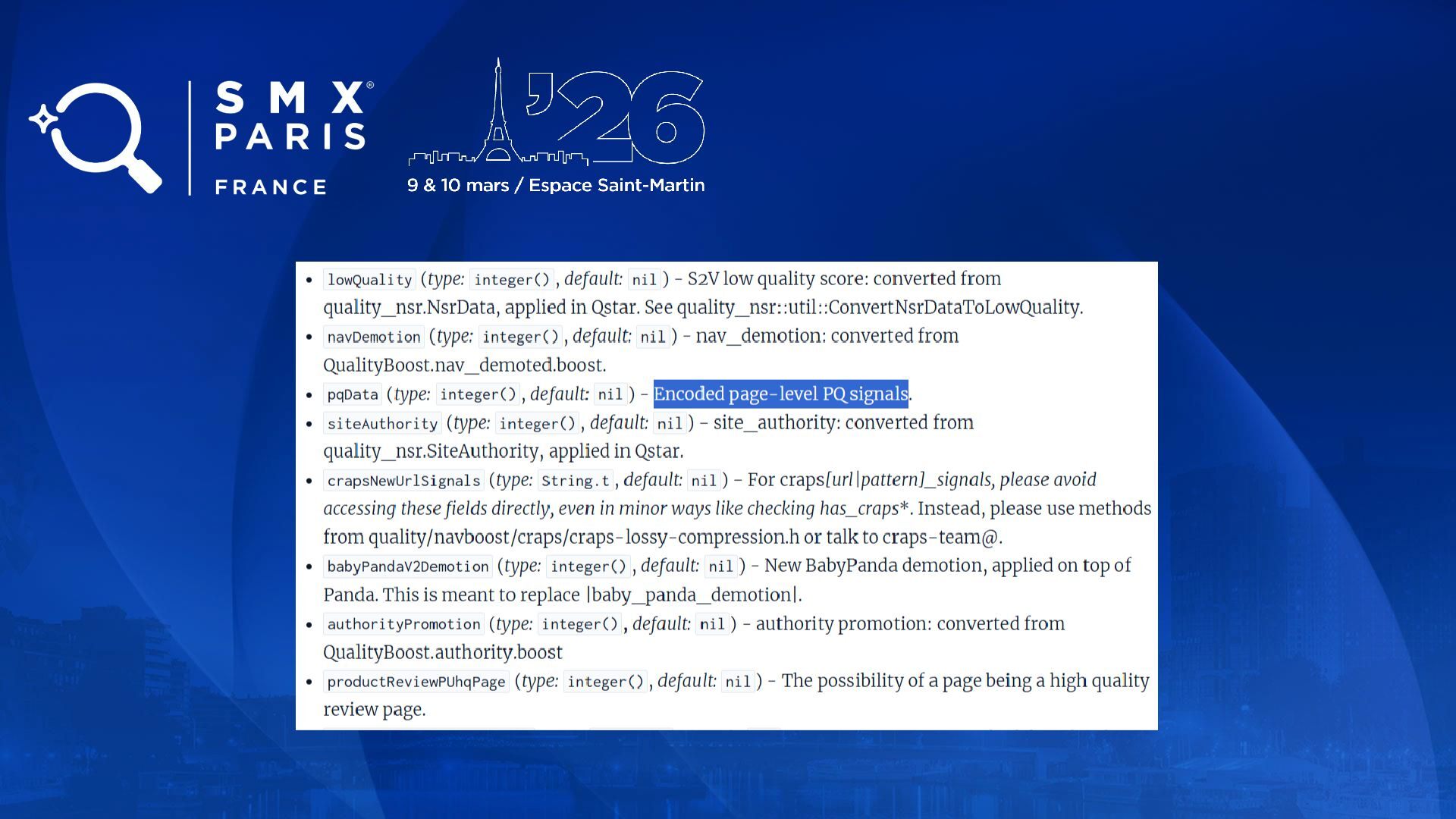
pandaDemotion: Generates a site-wide penalty referred to as "algorithmic debt".
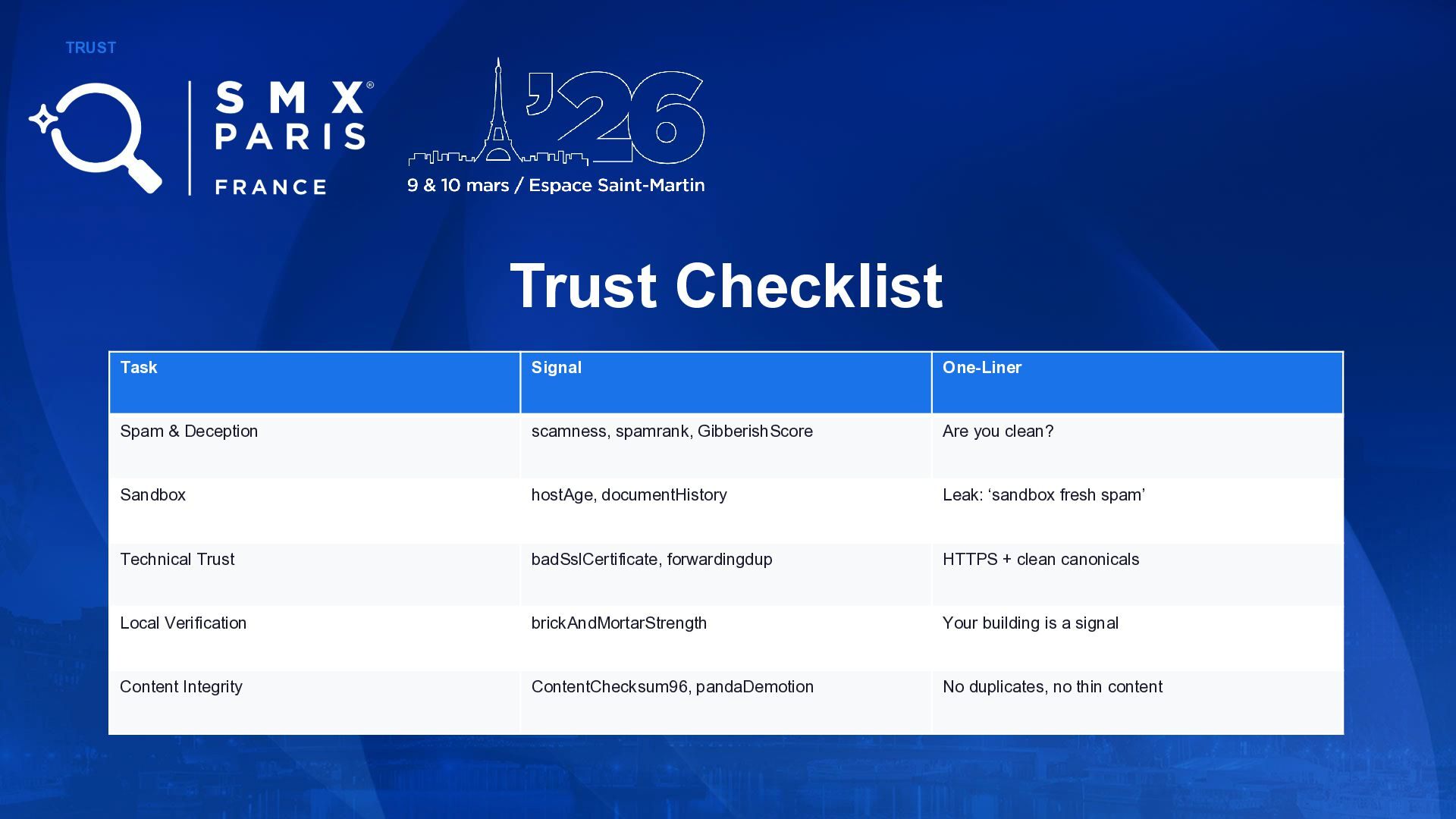
6. Trust Checklist Matrix.
Google uses explicit signals to cross-reference site legitimacy:
Spam & Deception: Tracked via scamness, spamrank, and GibberishScore.
Sandbox Environments: Checked via hostAge and documentHistory (aimed at filtering "sandbox fresh spam").
Technical Trust: Audited by flags for badSslCertificate and forwardingdup (requires clean canonical paths).
Local Verification: Looks for physical verification via brickAndMortarStrength.
Content Integrity: Evaluated using ContentChecksum96 and pandaDemotion to catch duplicate or thin writing.
🎨 Part 2: The Evidence-Based Roadmap (Experience & Expertise).
E-E-A-T is not a static checklist that can be "sprinkled" onto web pages; it is entirely contextual.
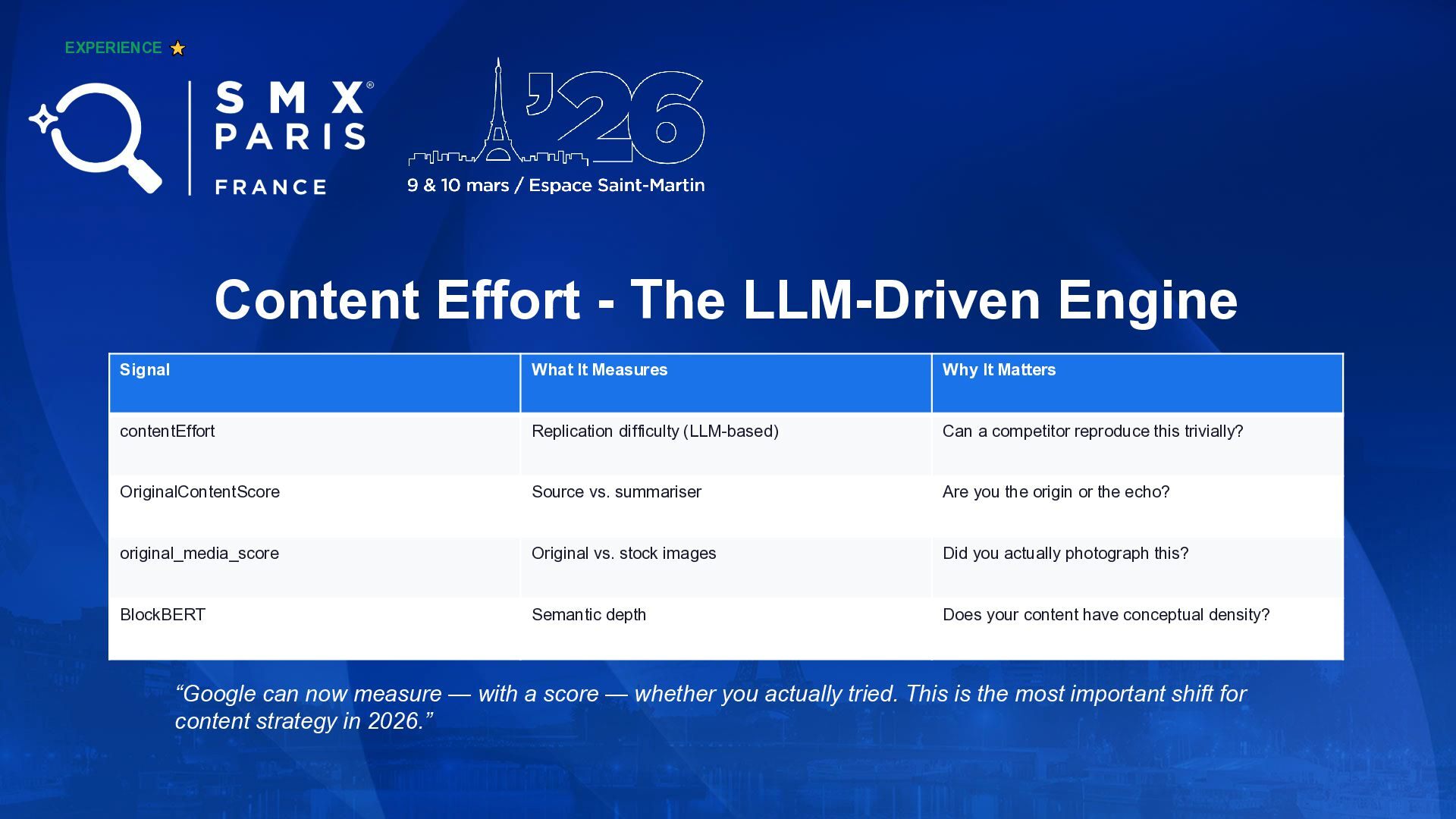
1. Content Effort Metrics.
Google evaluates the sheer human effort behind content generation to combat low-tier AI writing:
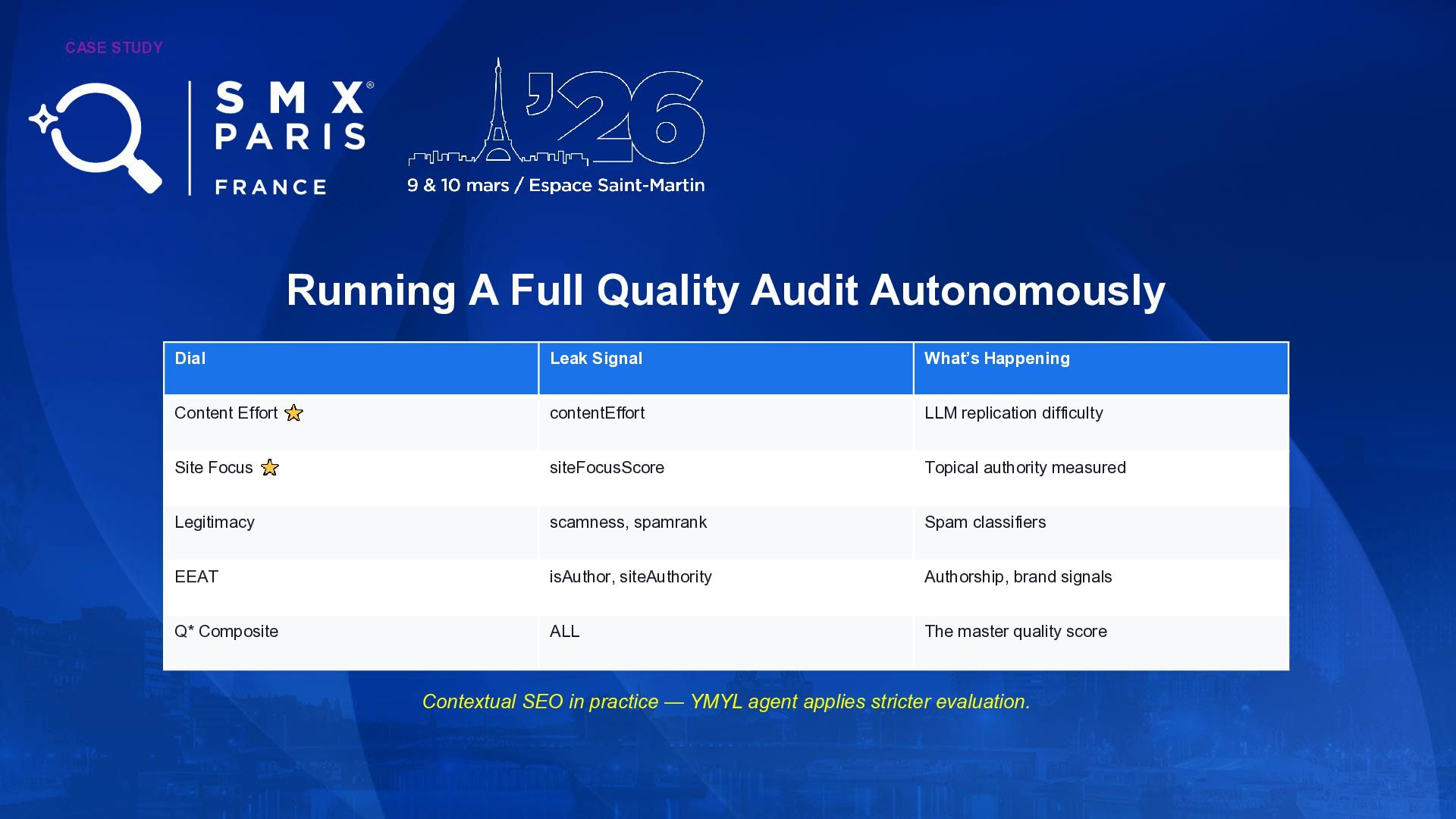
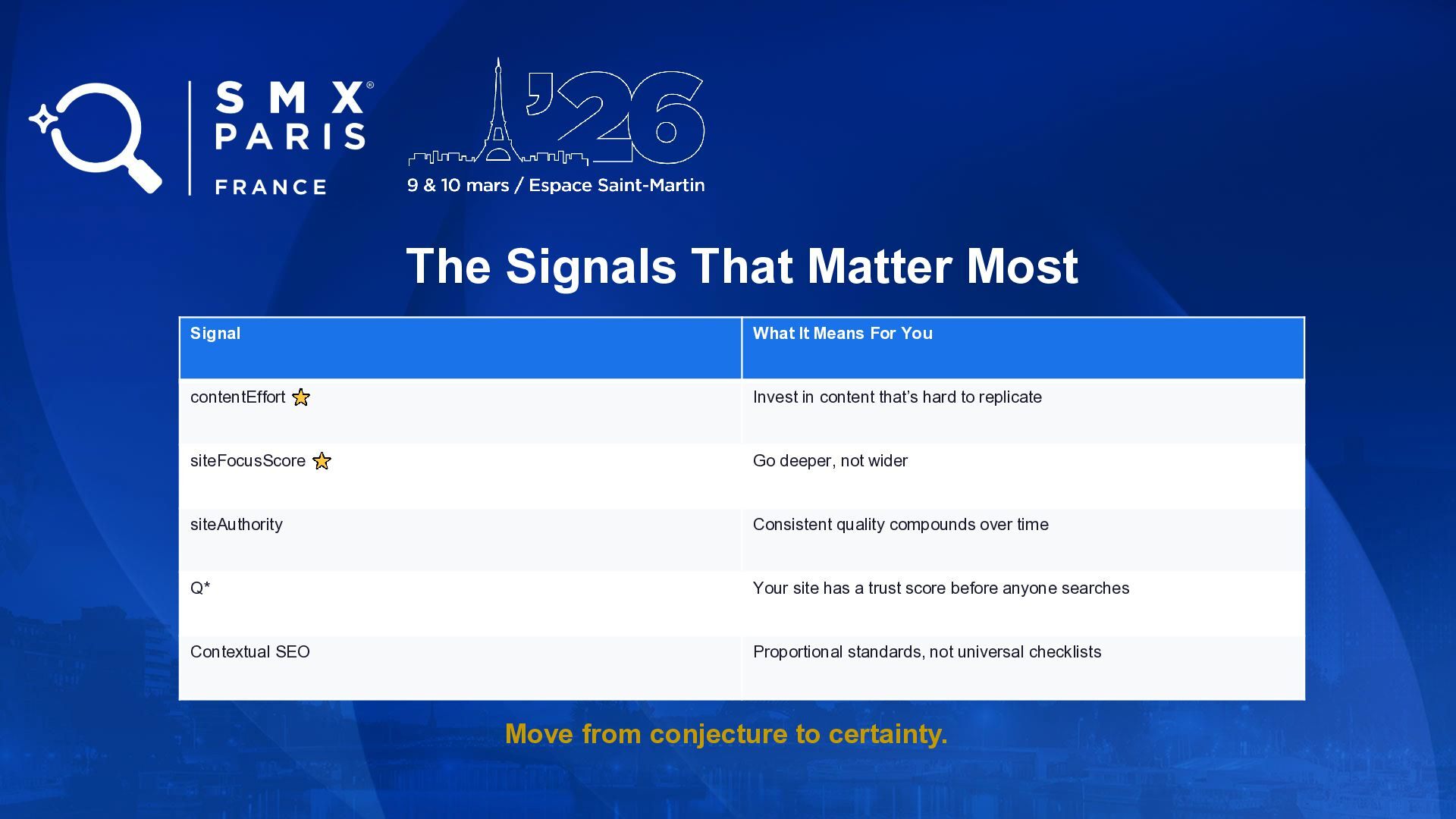
contentEffort: Measures replication difficulty using LLM-based detection models.
OriginalContentScore: Distinguishes whether your site is the primary source or merely a summarizer ("the origin or the echo").
original_media_score: Measures if images are unique photographs or generic stock photography.
BlockBERT: Evaluates semantic depth and conceptual density.
2. Graffiti vs. Authority.
Self-declared claims on your own site are treated by Google as "graffiti".
True authority occurs when external, authoritative domains back those claims with links.
Google uses isAuthor and authorObfuscatedGaiaStr to build a machine-readable experience profile for individual authors across the web.
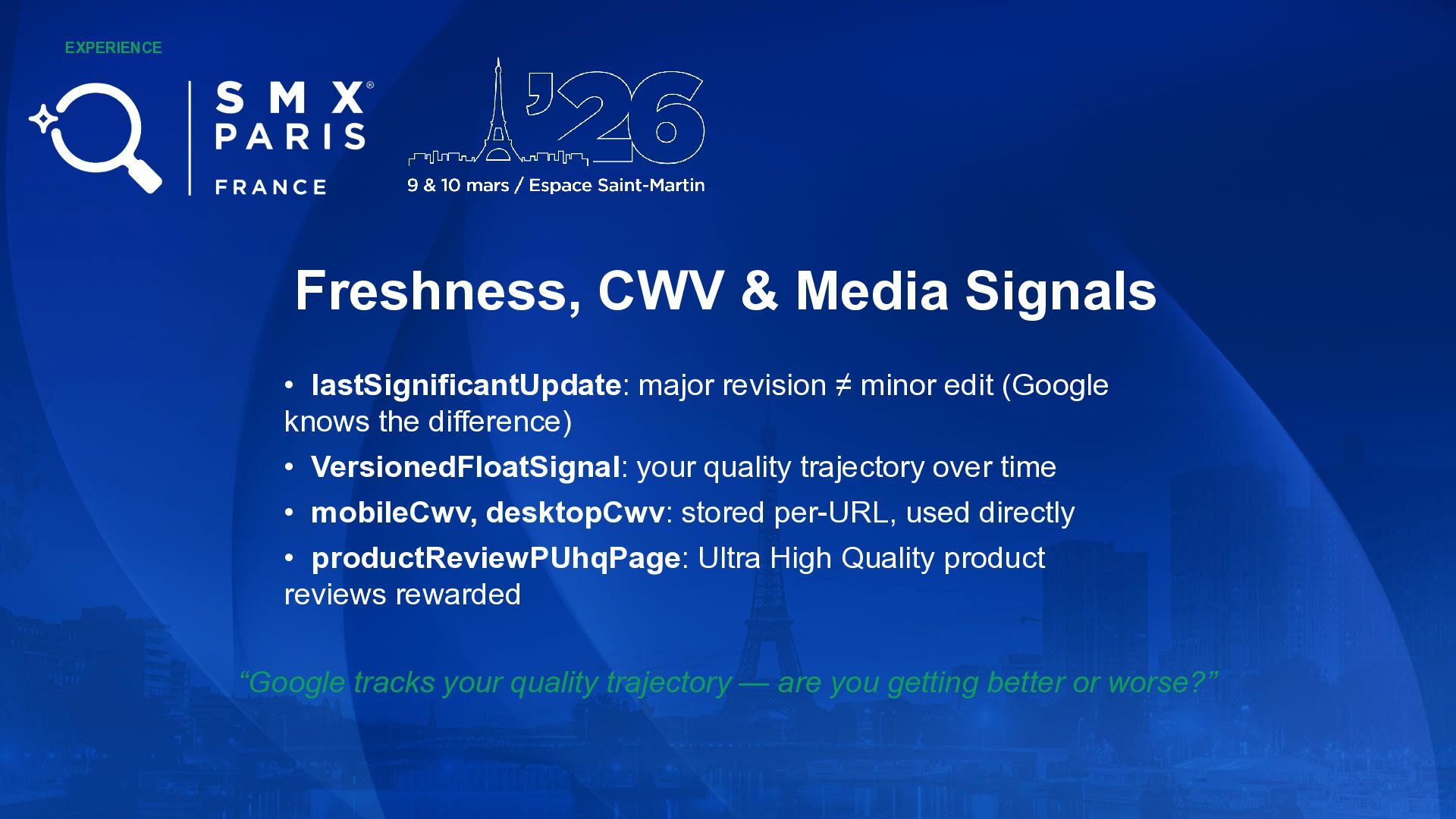
3. Freshness and Quality Trajectories.
lastSignificantUpdate: Google differentiates major topic revisions from minor textual edits.
VersionedFloatSignal: Tracks a site's overall quality trajectory over time to see if the content baseline is improving or worsening.
mobileCwv & desktopCwv: Core Web Vitals are calculated and stored directly on a per-URL basis.
productReviewPUhqPage: Specifically rewards Ultra High Quality product review pages.
4. The Context Stack & Topical Authority.
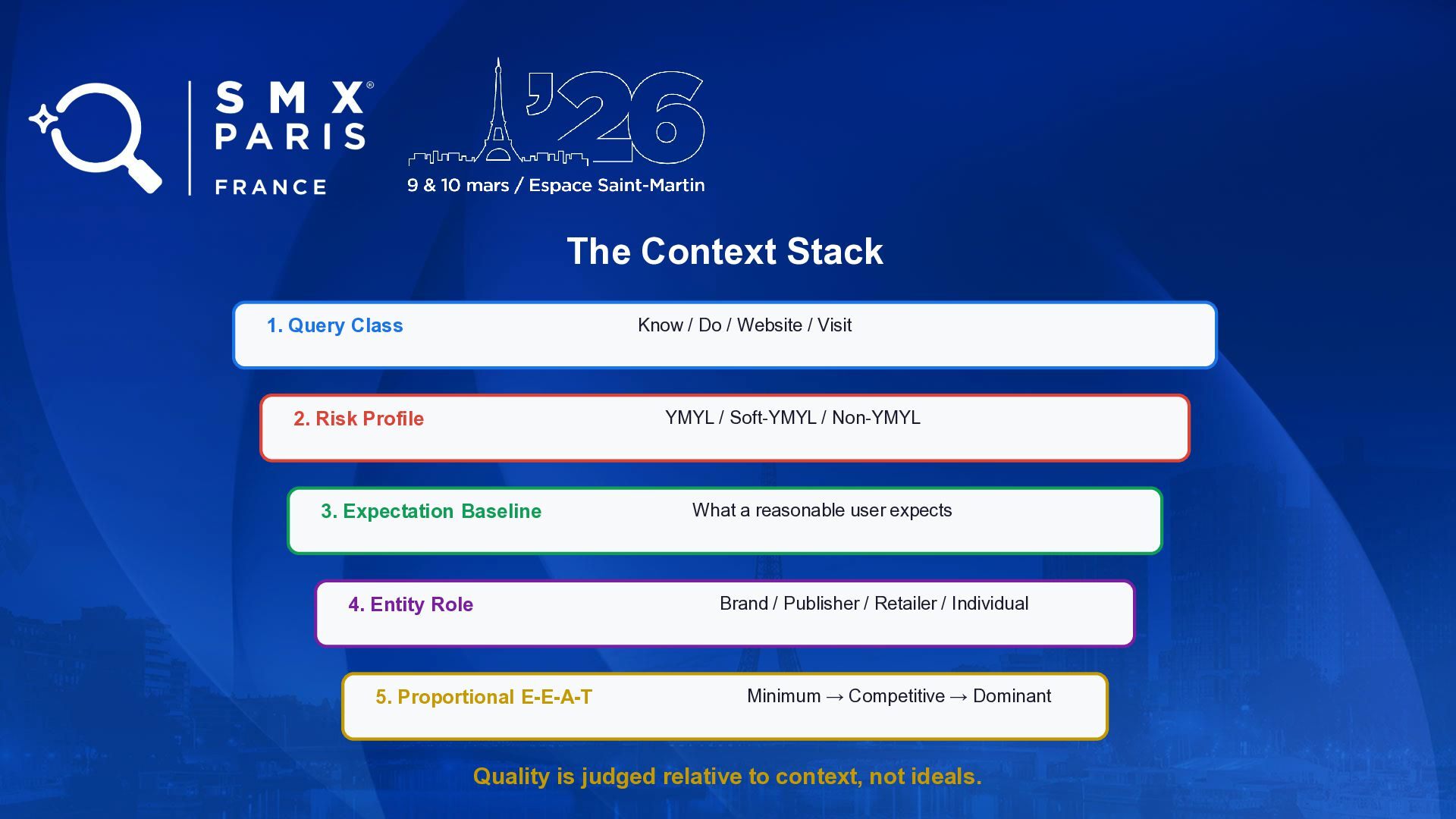
Topical authority is mathematically quantified through The Context Stack:
Query Class: Know / Do / Website / Visit.
Risk Profile: YMYL (Your Money Your Life) / Soft-YMYL / Non-YMYL.
Expectation Baseline: What a reasonable user expects.
Entity Role: Brand / Publisher / Retailer / Individual.
Proportional E-E-A-T: Minimum → Competitive → Dominant.
site2vecEmbeddingEncoded: Encodes your entire site as a multi-dimensional vector in semantic space.
siteFocusScore / siteRadius: Measures how far individual pages drift from your core niche topic. Every off-topic page increases the radius and dilutes your score.
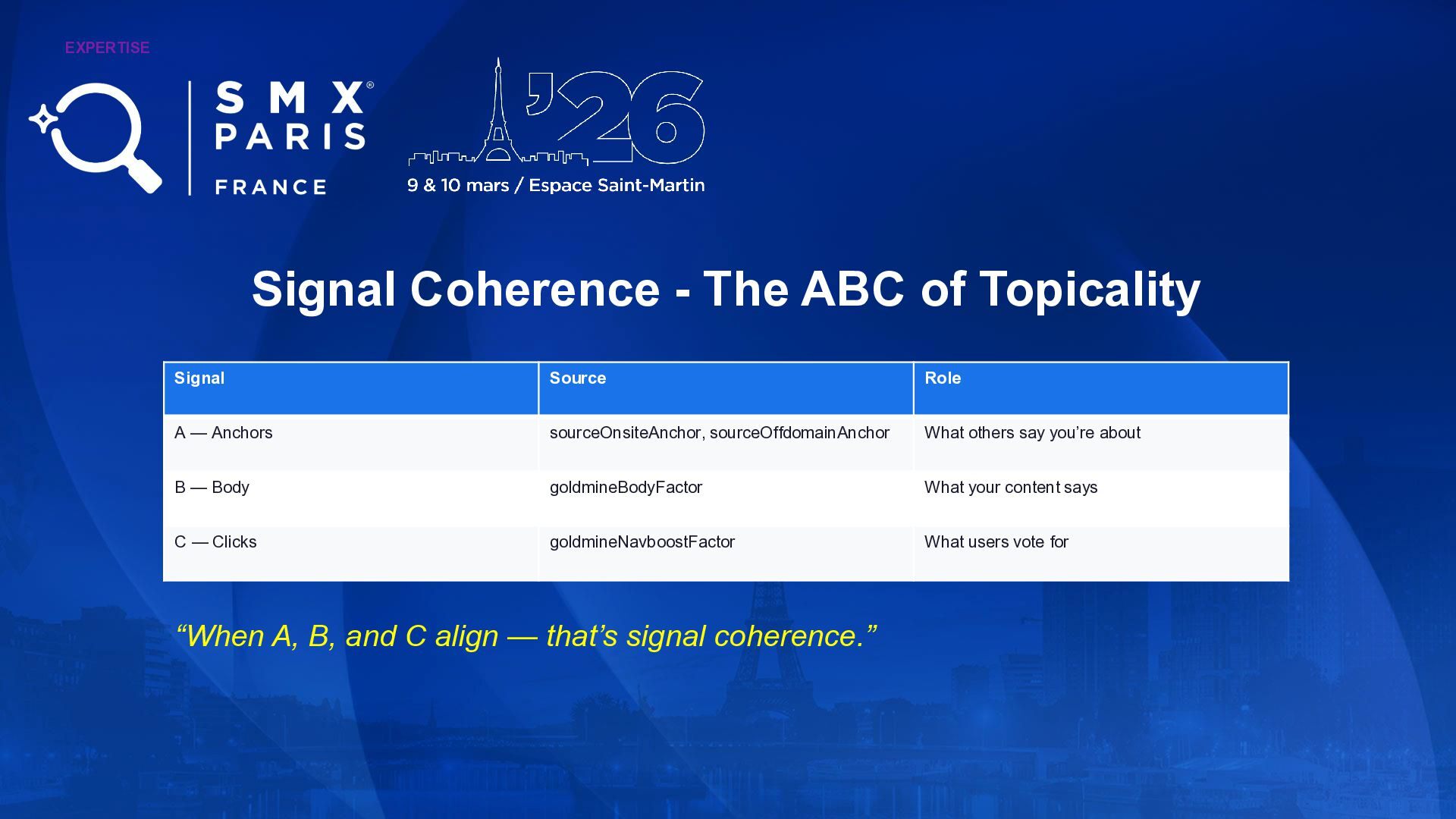
Signal Coherence (The ABCs of Topicality): Requires Anchors (sourceOnsiteAnchor), Body (goldmineBodyFactor), and Clicks (goldmineNavboostFactor) to align flawlessly.
Stricter Evaluations: YMYL niches are filtered using chard (initial content predictor) along with specialized ymylHealthScore and ymylNewsScore components.
🤖 Part 3: Case Study (Multi-Agent Automation).
This section demonstrates how a complex multi-agent AI system ("The Marketing Cyborg Technique") was built over 4 weeks by 1 developer to automate SEO audits at an unprecedented scale.
1. 6-Layer Grounding Architecture.
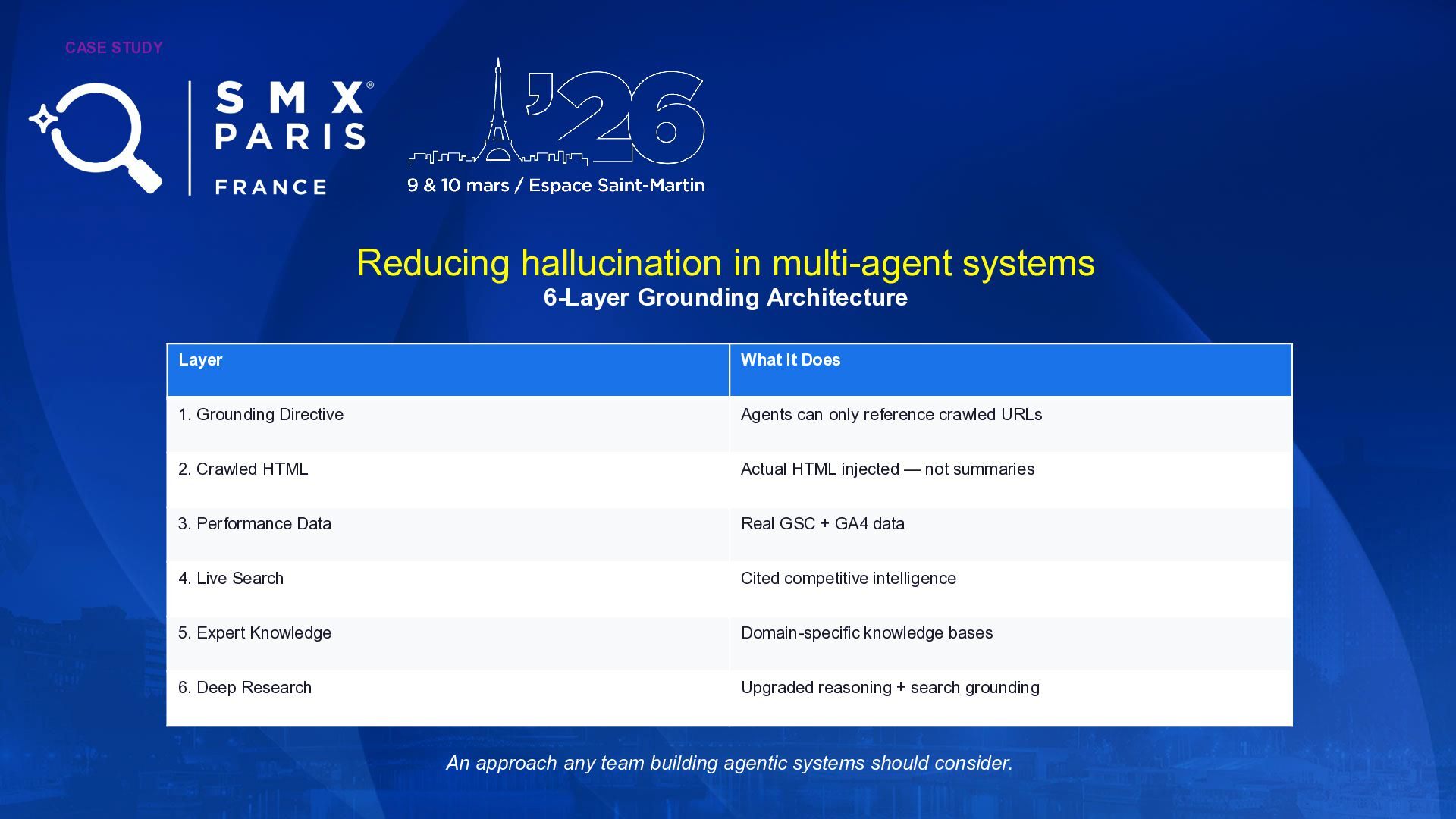
To prevent LLM hallucination during automated audits, the case study highlights a 6-layer structure:
Grounding Directive: Agents can only reference explicitly crawled URLs.
Crawled HTML: Injects raw HTML rather than summaries.
Performance Data: Pulls real Google Search Console (GSC) + Google Analytics 4 (GA4) metrics.
Live Search: Looks up and cites active competitive intelligence.
Expert Knowledge: Connects directly to domain-specific knowledge bases.
Deep Research: Implements upgraded reasoning systems backed by search grounding.
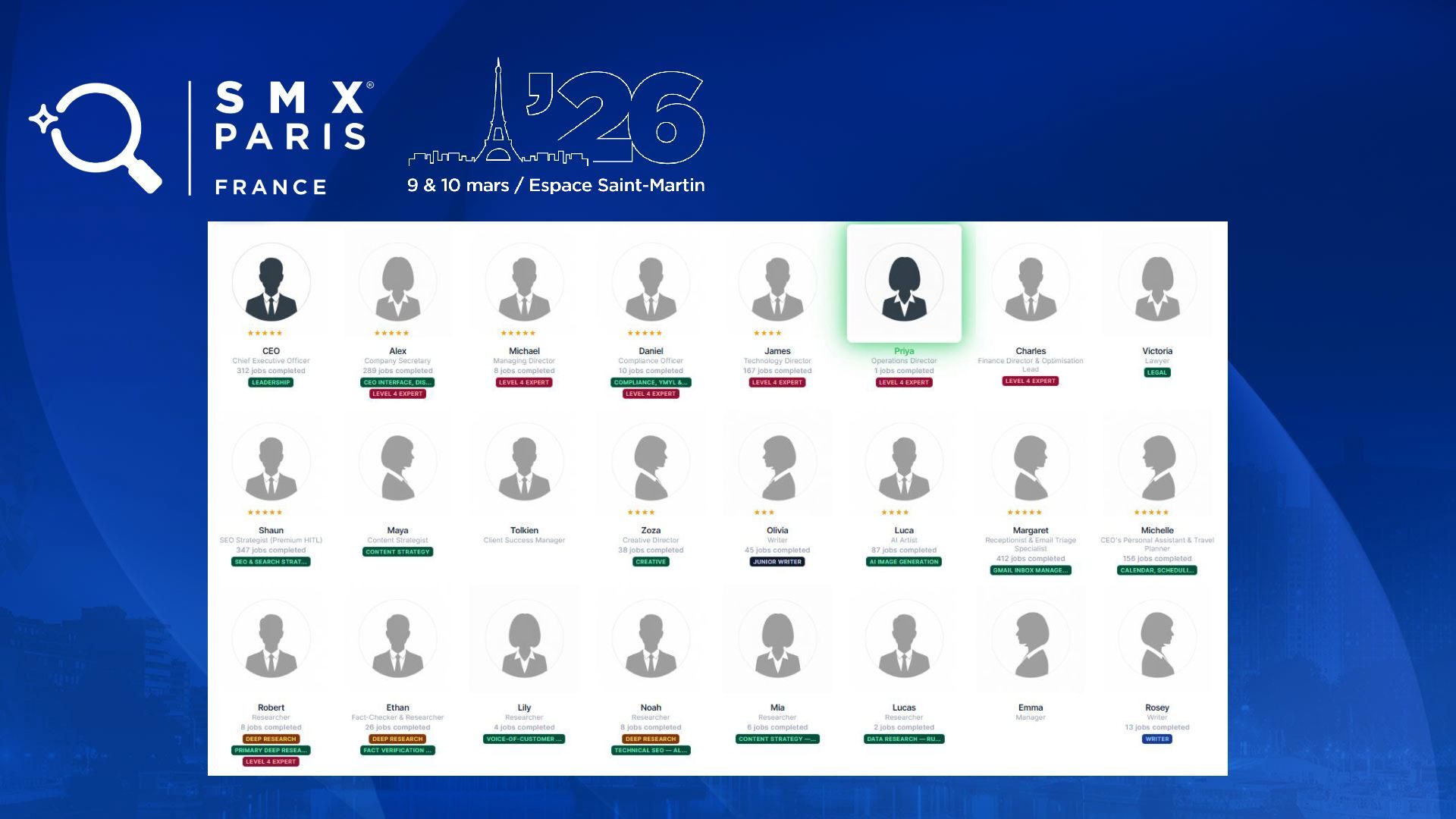
2. The Multi-Agent Org Chart.
The case study maps out an automated enterprise team structure powered by specialized digital agents across multiple levels of expertise.
🔄 The Ranking Pipeline.
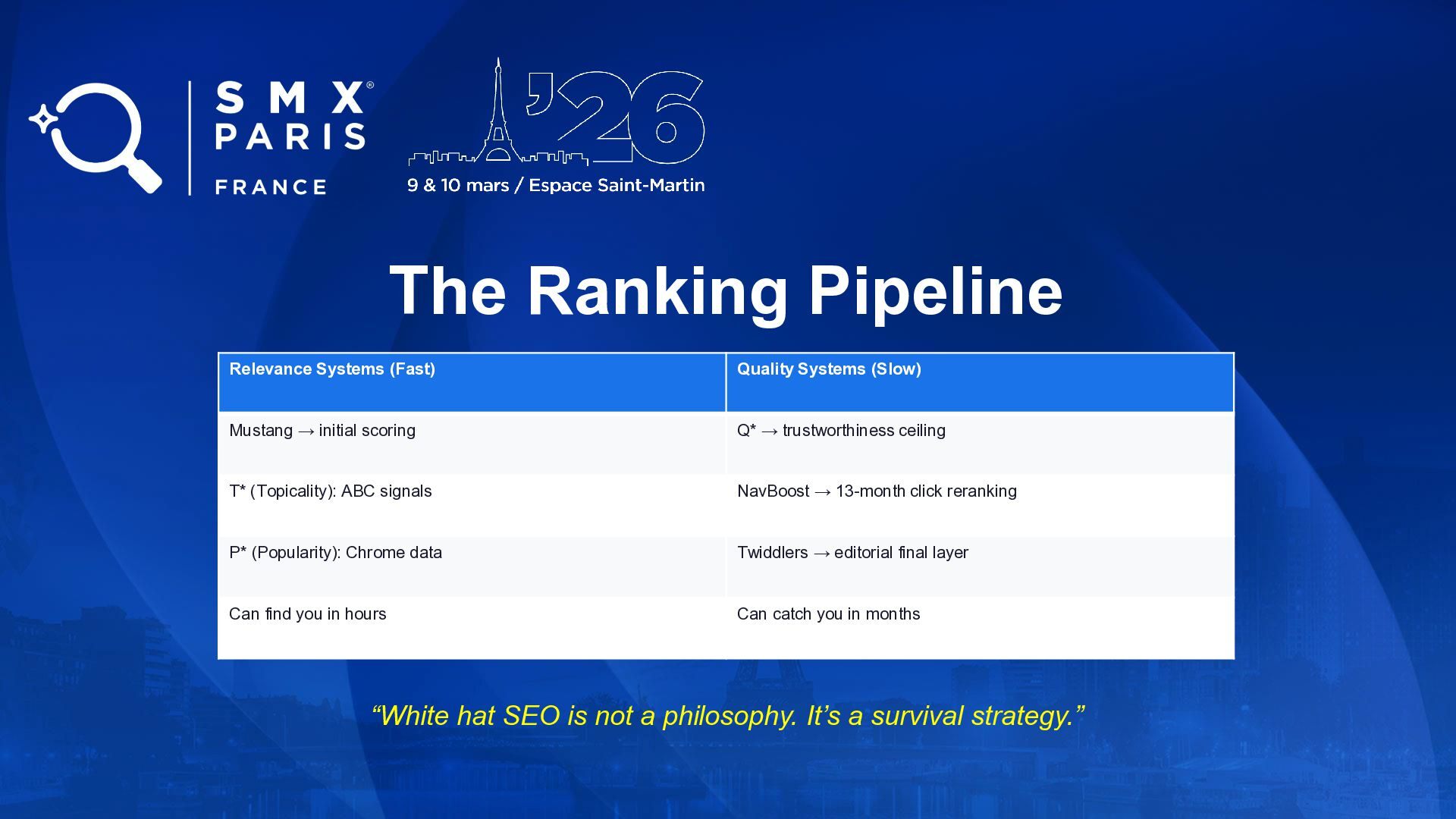
The final takeaway contrasts the speed of Google's dual evaluation pipelines:
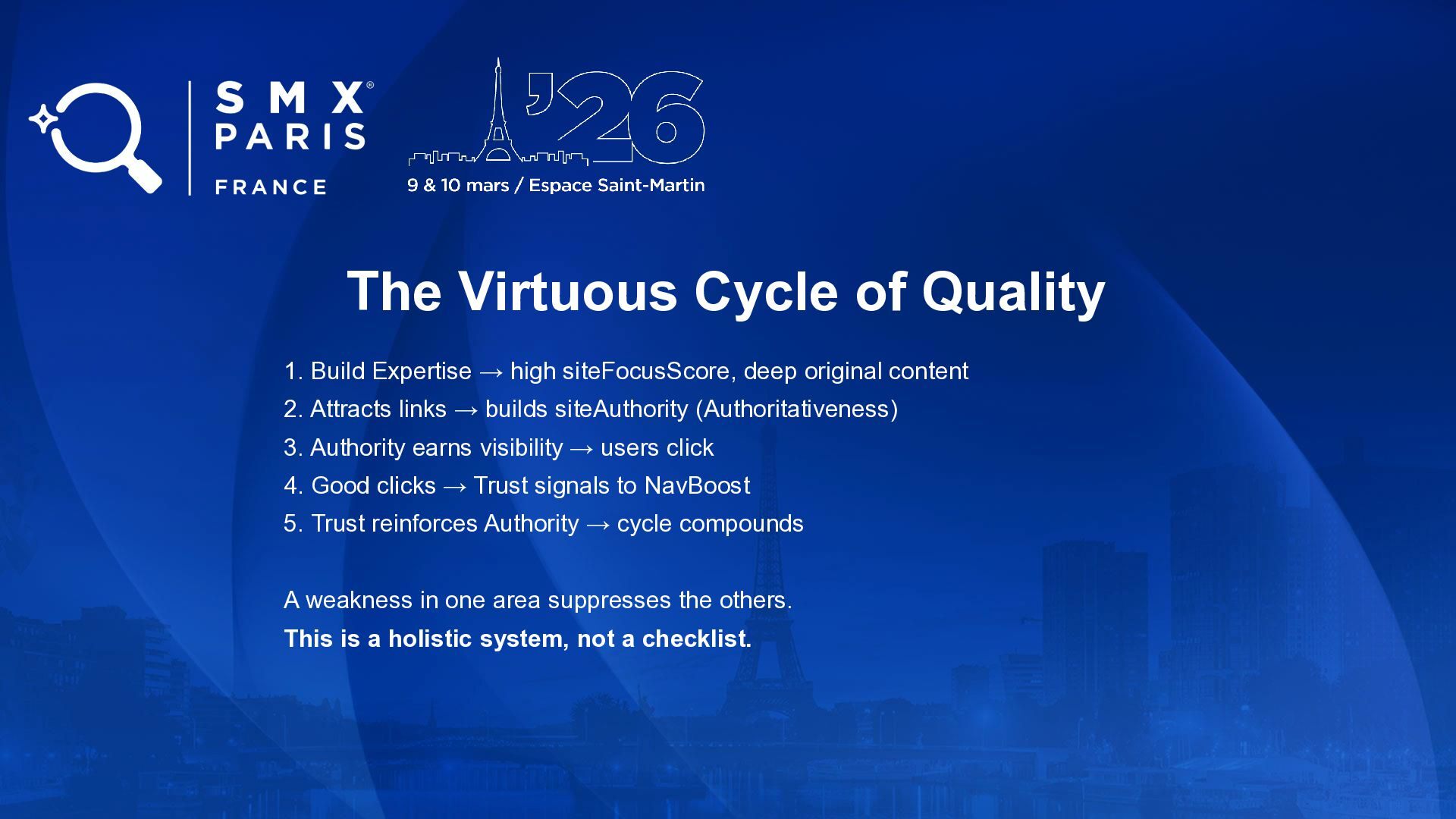
Relevance Systems (Fast): Uses Mustang for initial scoring, T* (Topicality via ABC signals), and P* (Popularity via Chrome data). These systems discover and index content changes within hours.
Quality Systems (Slow): Controlled by Q* (trustworthiness ceilings), Navboost (13-month click reranking loops), and Twiddlers (the final algorithmic filtering layer). These systems evaluate structural entity quality and can catch manipulative tactics over months.
📍 Venue, Dates & Scale
The 15th annual SMX Paris 2026 took place as a live conference on Monday, 9 March and Tuesday, 10 March 2026. https://www.hobo-web.co.uk/smx-paris-2026/
The Venue: Hosted entirely at the Espace Saint Martin in Paris.
The Crowd: Gathered over 1,000 attendees consisting of SEO managers, digital marketing directors, acquisition specialists, and agency executives.
The Experts: Featured more than 50 international and French speakers delivering over 20 focused sessions. [1], [2]
🔀 Event Format & Core Tracks
The event ran two parallel tracks across its two-day agenda to split technical execution from advertising strategy: [1], https://www.hobo-web.co.uk/smx-paris-2026
The SEO Track: Focused heavily on organic visibility in the AI era, Generative Engine Optimization (GEO), navigating massive engine leaks, entity structure, and algorithmic data mapping. [1]
The Paid Media (SEA) & Social Track: Covered advanced Google Ads automated tactics, lead generation, Meta Ads, multi-channel search (Pinterest, TikTok), and conversion rate ROI. [1]
🏢 Corporate & Industry Representation
The attendee and speaker directory represented a diverse split between major digital platforms, media groups, and consumer brands: [1]
Search, Tech & Software Platforms: Teams from Microsoft, Yoast, Semrush, Channable, and Uberall.
Enterprise, Retail & Transport: Representatives from Air France, BUT, Salomon, Bricoman, Legrand, Accor, and Aroma-Zone.
Media & Publishing: Digital acquisition leads from France Télévisions, BDM, Le Figaro, Radio France, and Les Echos Solutions.
Insurance, Health & Finance: Strategic professionals from Harmonie Mutuelle, Foyer Assurances, MAIF, MAAF Assurances, Matmut, Sofinco, and Meilleurtaux. [1], [2]
🏆 Key Event Components
The SEMY Awards: Held at the conclusion of the first day, the 9th annual SEMY Awards Paris celebrated the finest tactical search marketing campaigns across Europe. The primary competitive battles narrowed down to top-tier execution in SEO, SEA, and Innovation.
Independent Curriculum: The programming maintained strict vendor-neutrality. Sales pitches and sponsor-driven content were filtered out of the presentation roster to guarantee practical, data-first strategies.
🔬 Core Algorithmic Realities Disclosed
The overarching narrative across the sessions defined a shifting relationship with traditional search tracking:
The Reality of Click Data: Unpacking historical API data validated that search engines rely heavily on multi-month windows of aggregated user interaction data via browser loops (such as prolonged site stays or immediate bounces) to adjust visibility dynamically.
The "Cost of Replication": Linguistic and search platform experts detailed how advanced modern retrieval systems mathematically calculate the effort it takes to create copy. Low-tier, easily replicated text is algorithmically deprioritised in favour of unique research, first-hand data, and original media.
Topical Radius & Embedding Constraints: True authority is increasingly determined by site focus vectors. Straying too far from a brand's verified semantic core dilutes its core thematic tier rank, proving that modern strategy requires narrowing expertise rather than broadening thin keyword coverage.
Shaun Anderson AKA Hobo - https://www.hobo-web.co.uk/shaun-anderson/
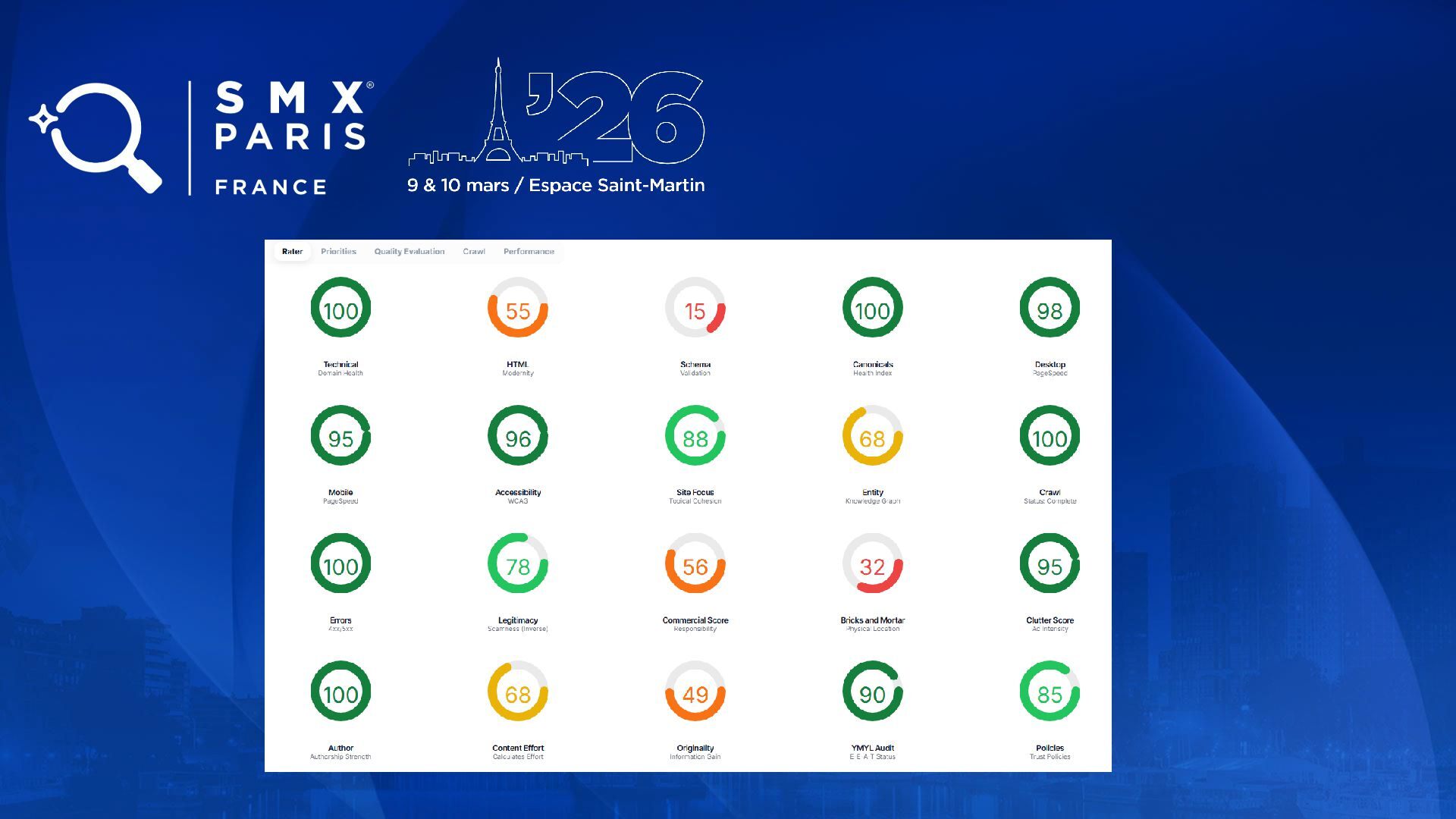
This is Agency Website Quality Evaluator - https://thisisagency.ai/the-website-quality-rater-emulator
https://www.linkedin.com/in/shaun-anderson-hobo/


 kimpetersen
 axbom
axbom
 kastner
 ryanjones
 addyosmani
 aleyda
 tonyrice
 jonoalderson
 codingconduct
 jakevdp
 skoyamalab
 destraynor